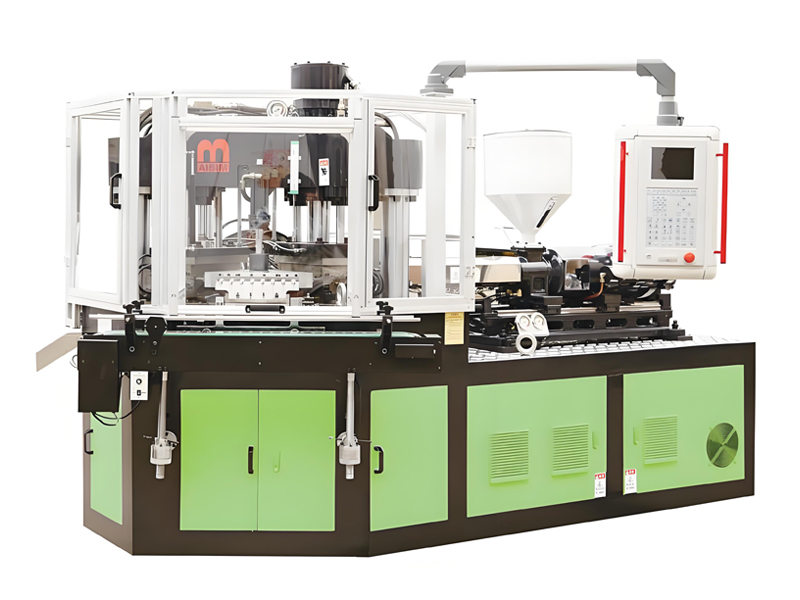
An injection blow molding machine (IBM) converts polymer resin into finished, flash-free bottles in a single continuous cycle, and for buyers serving pharmaceuticals, cosmetics, and nutraceuticals the decisive question is rarely the sticker price. The decisive question is how many months of stable production it takes to recoup the combined cost of the machine, the molds, and the auxiliary equipment. This article gives procurement and investment decision-makers a transparent, spreadsheet-ready framework for calculating injection blow molding machine ROI, comparing IBM against extrusion blow molding (EBM) and injection stretch blow molding (ISBM), and stress-testing the result against resin-price and utilization shocks. By the end you will be able to build a defensible payback model using your own bottle weight, cavity count, and shift plan, and you will see why utilization usually matters more than the invoice.
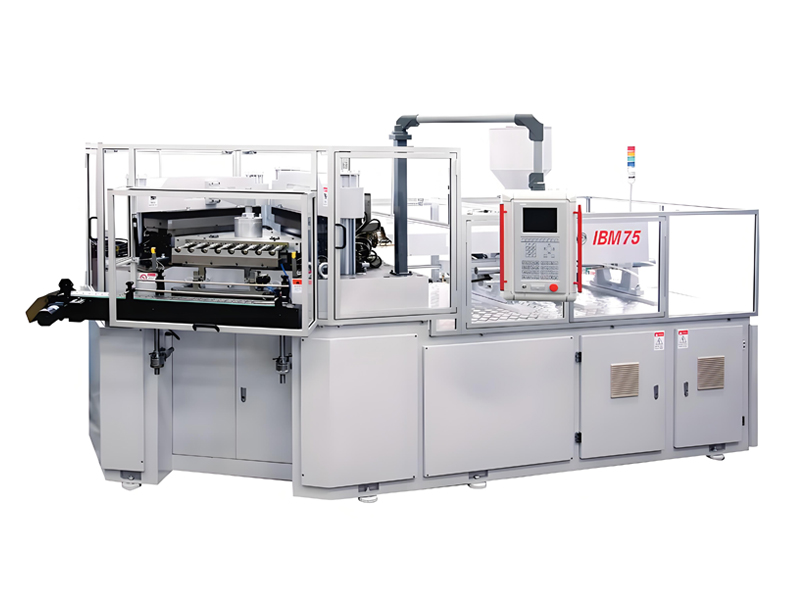
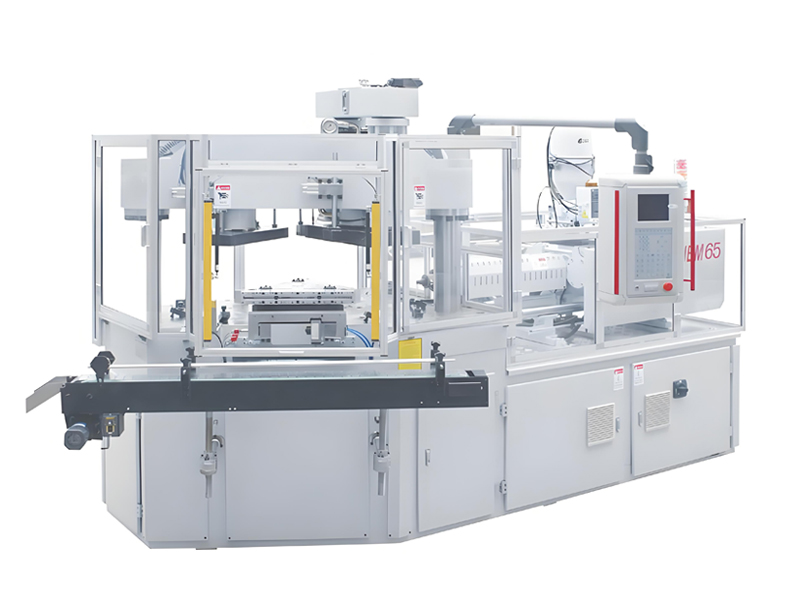
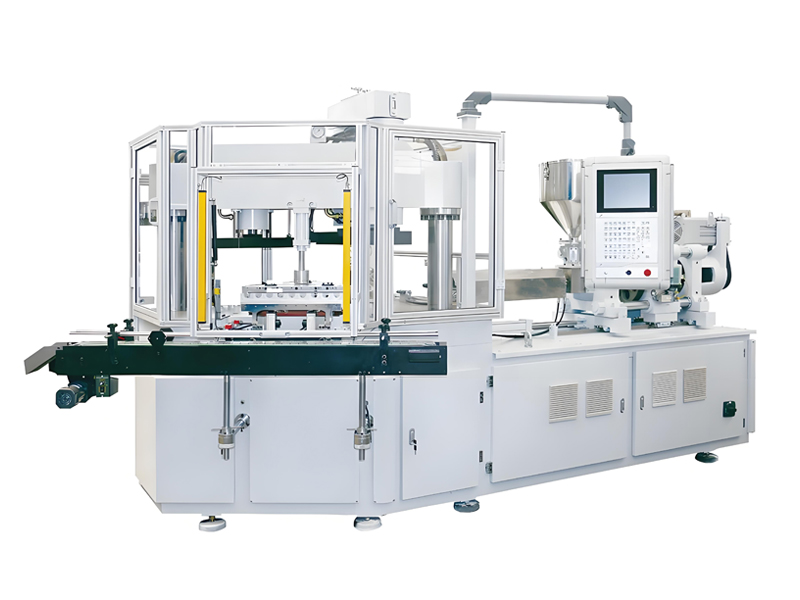
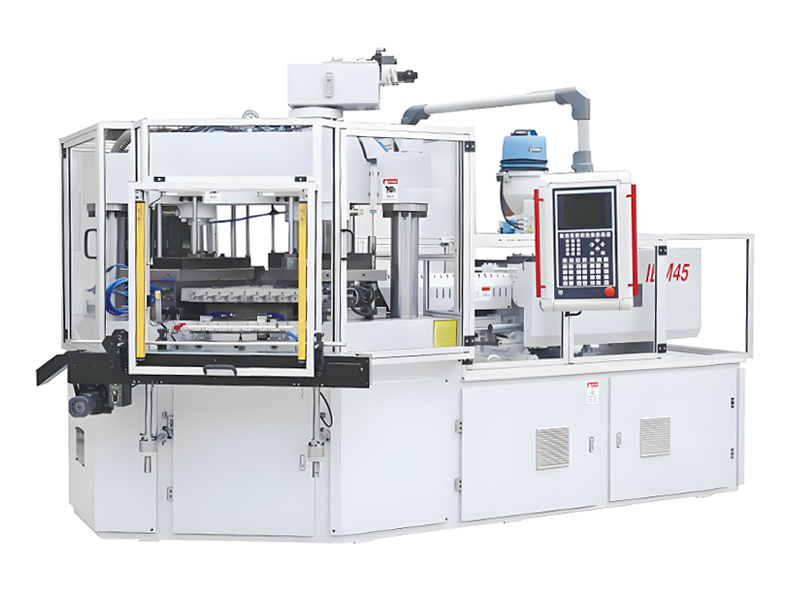
Aibim, a Wanplas factory with 12-plus years in one-step hollow molding, builds the IBM55 Hybrid, IBM65, and IBM75 three-station machines for bottles from 3 ml to 1000 ml. The models and numbers in this guide are drawn from that product range and from typical market data for comparable European, Japanese, and American IBM lines, so the methodology transfers directly to competitor equipment from Jomar, Bekum, Aoki, Milacron, or Sumitomo as well.
사출 블로우 몰딩이란 무엇이며 ROI 계산을 바꾸는 이유
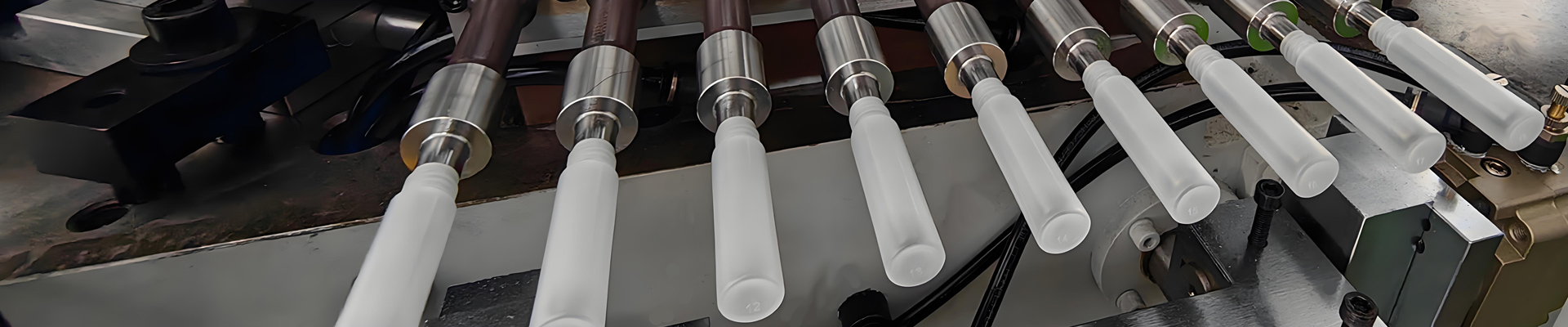
Injection blow molding is a three-station, one-step process in which polymer is first injected to form a preform-like parison, then the parison is blow-molded into the final bottle, and finally the finished part is ejected. Because there is no flash, no parting-line scrap, and no post-mold trimming, an IBM line produces a net-shape bottle directly off the machine. That single characteristic is the foundation of the entire ROI case.
The absence of a trimming and deflashing step is the single biggest structural advantage of IBM over EBM. Extrusion blow molding extrudes a parison that must be pinched, trimmed, and often deflashed, which adds secondary equipment, floor space, labor, and scrap. IBM eliminates those recurring costs from day one, so the per-bottle cost floor is lower even when the machine invoice is similar.
For the investment model, three consequences follow. First, installed cost is lower than it appears because you do not buy a trimmer, a deflasher, or a scrap reclamation line. Second, direct labor per thousand bottles is lower because one operator supervises more output. Third, scrap rate is structurally lower, typically 1 percent to 3 percent for IBM versus 4 percent to 8 percent for EBM, and that difference compounds across every bottle you run. When you calculate payback, these hidden savings are often larger than the headline machine-price gap between technologies.
IBM 대 EBM 대 ISBM: 초기 투자 비교
잘못된 공정을 선택하면 생산이 시작되기도 전에 회수 기간이 늘어납니다. 아래 표는 ROI에 영향을 미치는 차원에서 세 가지 중공 성형 방식을 비교합니다. 상대적 투자 범위를 사용하므로 비교는 통화와 시간에 관계없이 유효합니다.
| Dimension | Injection Blow Molding (IBM) | Extrusion Blow Molding (EBM) | Injection Stretch Blow Molding (ISBM) |
|---|---|---|---|
| Machine invoice band | Medium to High | Medium | High to Very High |
| Downstream trimming equipment | None required | Required (trimmer, deflasher) | None required |
| Typical scrap rate | 1 percent to 3 percent | 4 percent to 8 percent | 1 percent to 3 percent |
| Bottle finish quality | Excellent, no flash | Good, flash removed | Excellent, clear for PET |
| Best bottle size | 3 ml to 1000 ml | 50 ml to 1000 ml plus large | 100 ml to 3000 ml (PET) |
| Materials | PP, HDPE, PS, SAN, ABS, PC, PCTG | PE, PP, PVC, PETG | PET, PP (stretched) |
| Total installed cost | Medium to High | Medium to High (with trim line) | Very High to Premium |
EBM wins on the lowest machine invoice, but once you add the trimming and deflashing cell it needs, the total installed cost converges with IBM. ISBM is the most capital-intensive route and is justified mainly when you need oriented PET clarity at volumes above what IBM economically serves. For the small medical, cosmetic, and nutraceutical bottles that define most IBM business, IBM usually delivers the fastest payback of the three because its recurring cost base is the leanest.
장비 및 금형 투자 등급
투자는 기계와 금형이라는 두 가지 별개의 부분으로 구성됩니다. 금형 비용을 과소평가하는 것은 IBM 회수 모델에서 가장 흔한 초보 실수입니다. 멀티 캐비티 병 프로그램은 캐비티 구성별로 금형이 하나씩 필요하고 각 캐비티 세트는 정밀 도구이기 때문입니다.
기계 투자 등급
아래 가격대는 Aibim IBM55 Hybrid, IBM65 및 IBM75와 비교 가능한 새 IBM 라인의 2025~2026년 시장 가격을 반영하며, 기본 유압 또는 하이브리드 파워 유닛, 제어 시스템 및 표준 냉각 패키지를 포함하지만 금형과 운임은 제외합니다.
| Tier | Typical Model Class | 클램핑 포스 | Machine Investment |
|---|---|---|---|
| Entry | IBM55 Hybrid, 4 to 8 cavities | 550 kN | USD 75,000 to 95,000 |
| Mid | IBM65, 6 to 12 cavities | 650 kN | USD 90,000 to 130,000 |
| High | IBM75, 8 to 16 cavities | 750 kN | USD 120,000 to 170,000 |
| Premium | Multi-station high-cavity lines | 1000 kN plus | USD 180,000 to 260,000 |
금형 투자 등급
IBM 금형은 사출 코어, 블로우 캐비티, 스트리퍼의 3피스입니다. 캐비티 수는 비용을 대략 선형적으로 증가시키며, 의료용 표면 마감은 추가 비용을 더합니다.
| Mold Type | Cavities | Mold Investment | Typical Life |
|---|---|---|---|
| Single-cavity prototype | 1 | USD 3,000 to 6,000 | 5 to 8 million shots |
| Standard production | 4 to 8 | USD 12,000 to 28,000 | 8 to 15 million shots |
| High-cavity medical | 10 to 16 | USD 30,000 to 55,000 | 10 to 20 million shots |
생산 능력, 캐비티 및 가동률 가정
회수 기간 모델은 생산량 가정에 따라 성패가 결정됩니다. 핵심 공식은 단순하지만, 모든 항목은 명판 마케팅 수치가 아닌 실제 공장 조건에 근거해야 합니다.
Annual output equals cycles per hour multiplied by cavities, multiplied by operating hours, multiplied by effective utilization. Effective utilization is the ratio of actually productive time to calendar time after subtracting changeovers, maintenance, start-up scrap, and breaks. It is the most abused number in the industry.
| Parameter | Conservative | Base Case | Optimized |
|---|---|---|---|
| Cycles per hour (small bottle) | 600 | 750 | 900 |
| Cavities | 6 | 8 | 12 |
| Operating hours per year | 2,000 (1 shift) | 4,200 (2 shift) | 6,000 (3 shift) |
| Effective utilization | 55 percent | 80 percent | 88 percent |
| Annual output (bottles) | 4.0 million | 20.2 million | 57.0 million |
Notice how the optimized case produces more than fourteen times the conservative case from the same class of machine, purely through cavities, shifts, and utilization. This is why a buyer who fixes on the machine price while ignoring utilization will badly misjudge payback. Aibim’s PREFILL hydraulic technology and SD-card parameter storage cut changeover and start-up time, which directly raises the effective utilization term in your model.
운영 비용: 에너지, 인건비 및 감가상각
병당 운영 비용은 모든 ROI 비율의 분모입니다. 에너지, 인건비 및 감가상각의 세 가지 구성 요소가 지배적이며, 수지는 병 가격에 직접 전가되므로 별도로 처리됩니다.
에너지
IBM is an energy-efficient process. Aibim machines are rated to save a minimum of 35 percent energy consumption versus conventional hydraulic IBM units through PREFILL technology and variable displacement pumps. Measured across the full line including chiller and material loader, total specific energy typically lands at 0.35 to 0.55 kWh per kg of plastic processed. For a 12 g bottle, that is roughly 0.0042 to 0.0066 kWh per bottle. At an industrial electricity rate of 0.10 to 0.15 USD per kWh, energy cost per small bottle sits around 0.0005 to 0.0010 USD.
인건비
IBM lines are intrinsically low-labor. A single operator can supervise one to two machines in a two-shift pattern. Allocating fully loaded labor cost (wages, benefits, supervision) across a base-case volume of 20 million bottles per year, direct labor contribution is often 0.002 to 0.004 USD per bottle. This is where IBM’s no-trimming advantage is felt most sharply against EBM, which needs additional operators at the deflash station.
감가상각
Model the machine over a 7 to 10 year straight-line life and the mold over its shot life converted to years. A USD 150,000 machine over 8 years is roughly 18,750 USD per year, or 0.0009 USD per bottle at base-case volume. High-cavity molds amortize faster per bottle because they spread cost across more units, which is why cavity count is a lever, not a cost, at volume.
| Operating Cost Element | Typical per Bottle (12 g) | Main Driver |
|---|---|---|
| Energy (machine plus aux) | 0.0005 to 0.0010 USD | Specific kWh per kg, electricity rate |
| Direct labor | 0.002 to 0.004 USD | Shifts, operators per machine |
| Machine depreciation | 0.0007 to 0.0015 USD | Investment, depreciable years |
| Mold amortization | 0.001 to 0.003 USD | Cavities, shot life, volume |
| Maintenance and spares | 0.0005 to 0.0010 USD | Preventive plan, Wanplas 500 USD/yr policy |
Aibim의 모회사인 Wanplas 브랜드는 연간 500달러 상당의 무료 예비 부품 허용액과 품질 보증(품질 실패 시 환불에 10% 보상 추가)을 제공하여 유지보수 항목의 일부를 제한하고 투자 회수 일정의 예측 가능성을 향상시킵니다.
현금 흐름 및 회수 기간 모델 구축
회수 모델에는 입력 5개와 출력 1개만 필요합니다. 다음 행으로 스프레드시트에 구축하세요.
다섯 가지 입력 요소
- 이전 섹션의 생산 능력 공식에 따른 연간 생산량(연간 병 수).
- 병당 순 기여 = 판매 가격에서 수지, 착색제, 에너지, 인건비, 감가상각, 금형, 간접비를 뺀 값.
- 총 설치 투자 = 기계 + 몰드 + 칠러, 로더, 운송 및 설치.
- 병당 아직 배분되지 않은 연간 고정 간접비 (임대료, 관리비, QA).
- 기계를 리스하거나 대출로 조달하는 경우의 운전 자본 및 금융 비용.
계산된 기본 사례 예시
IBM65 8-캐비티 라인이 시간당 750사이클로 12g HDPE 의약품 병을 생산하고, 2교대, 80% 가동률, 연간 4,200 가동 시간이라고 가정합니다.
- 연간 생산량 = 750 x 8 x 4,200 x 0.80 = 20,160,000병.
- 수지 12 g x kg당 1.30 USD = 병당 0.0156 USD.
- 착색제 및 첨가제 = 병당 0.0015 USD.
- 에너지 + 인건비 + 감가상각 + 몰드 + 유지보수 = 병당 0.0060 USD.
- 병당 배분 간접비 = 0.0030 USD.
- 마진을 제외한 총 비용 = 병당 0.0261 USD.
- 충전업체에 대한 계약 판매 가격 = 병당 0.0520 USD.
- 순 기여도 = 병당 0.0259 USD.
- 연간 순현금흐름 = 20,160,000 x 0.0259 = 522,144 USD.
- 총 설치 투자액 = 130,000(기계) + 22,000(금형) + 18,000(보조 장비 및 설치) = 170,000 USD.
- 단순 회수 기간 = 170,000 ÷ 522,144 = 0.33년, 즉 약 4개월.
In this base case the injection blow molding machine pays back in roughly four months, because bottle molding at stable volume carries a structurally high contribution margin. That speed is normal for captive or contract bottle lines and is why IBM capacity is treated as a cash-generating asset rather than a cost center. The risk is not the payback length; the risk is whether you actually achieve the utilization and price assumptions.
계산 예 2: 3교대 30g 화장품 병
위의 기본 사례는 소형 의약품 병입니다. 규모가 계산을 어떻게 바꾸는지 보여주기 위해, 시간당 820사이클로 30g PP 화장품 용기를 생산하는 IBM75 12-캐비티 라인, 3교대, 88% 가동률, 연간 6,000 운영 시간을 모델링하십시오.
- 연간 생산량 = 820 x 12 x 6,000 x 0.88 = 51,955,200병.
- 수지 30 g x kg당 1.20 USD = 병당 0.0360 USD.
- 착색제 및 첨가제 = 병당 0.0030 USD.
- 에너지 + 인건비 + 감가상각 + 금형 + 유지보수 = 병당 0.0065 USD(이 물량에서는 고정 라인 비용이 급격히 희석됩니다).
- 병당 배분 간접비 = 0.0040 USD.
- 마진을 제외한 총 비용 = 병당 0.0495 USD.
- 브랜드 소유자에 대한 계약 판매 가격 = 병당 0.0850 USD.
- 순 기여도 = 병당 0.0355 USD.
- 연간 순현금흐름 = 51,955,200 x 0.0355 = 1,844,400 USD.
- 총 설치 투자액 = 160,000(기계) + 40,000(금형) + 25,000(보조 장비 및 설치) = 225,000 USD.
- 단순 회수 기간 = 225,000 ÷ 1,844,400 = 0.12년, 즉 약 1.5개월.
This second example makes the central lesson unavoidable: at high volume and high utilization the machine pays back in weeks, not months, because fixed cost per bottle collapses. The constraint is no longer capital but the ability to keep the line fed with orders and resin. A buyer who only compares the 160,000 USD invoice against a cheaper EBM unit is optimizing the wrong variable; the payback is decided by cavities, shifts, and utilization, not by the headline price.
할부 구매와 현금 구매 비교
If you finance the 170,000 USD at 8 percent over five years, the annual debt service is roughly 42,000 USD, leaving 480,000 USD of pre-finance cash flow and still a sub-twelve-month effective recovery of equity. Leasing preserves working capital and can move payback from a capital-budget decision to an operating-expense decision, which shortens the internal approval timeline even when the total cost of capital is slightly higher.
민감도 분석: 수지 가격 및 가동률 변동
단일 포인트 추정치는 결정이 아닙니다. 수지 가격과 가동률 두 가지 민감도를 실행하십시오. 이는 주문 서명 후 가장 움직일 가능성이 높은 변수입니다.
수지 민감도
Resin is the largest single cost component but it is usually passed through to the bottle price under index-linked contracts. If resin rises 20 percent (from 1.30 to 1.56 USD per kg) and you cannot pass it through, cost per 12 g bottle rises by 0.0031 USD, cutting contribution from 0.0259 to 0.0228 USD, a 12 percent drop in annual cash flow and a payback move from 4.0 to 4.5 months. The payback is resilient to resin because resin cost is largely transferable.
가동률 민감도
Utilization is the dangerous variable. Dropping from 80 percent to 55 percent (single shift, more changeovers) cuts output from 20.16 million to 13.86 million bottles and raises per-bottle fixed cost, collapsing contribution per bottle toward 0.0200 USD. Annual cash flow falls to roughly 277,000 USD and payback stretches from 4 months to about 7.4 months. Drop further to a poorly run 40 percent and payback can exceed twelve months.
| Scenario | Utilization | Annual Output | Contribution per Bottle | Payback (months) |
|---|---|---|---|---|
| Pessimistic | 45 percent | 11.3 million | 0.0190 USD | 9.4 |
| Conservative | 55 percent | 13.9 million | 0.0200 USD | 7.4 |
| Base case | 80 percent | 20.2 million | 0.0259 USD | 4.0 |
| Optimized | 88 percent | 22.2 million | 0.0270 USD | 3.6 |
교훈은 분명합니다: 가동률을 보호하면 수지 종류와 거의 무관하게 기계는 1년 이내에 투자 비용을 회수합니다. 가동률을 잃으면 저렴한 가격으로도 투자 회수를 구할 수 없습니다.
ROI 회수 기간 빠른 참조표
스프레드시트를 열기 전 빠른 스크리닝을 위해 비즈니스 모델별 다음 회수 기간 구간을 사용하십시오. 이는 지수 연동 수지 전가와 안정적인 병 가격을 가정합니다.
| Business Model | Shift Pattern | Utilization | Payback Range |
|---|---|---|---|
| Captive pharma, single SKU | 1 shift | 50 to 60 percent | 14 to 22 months |
| Contract molder, mixed SKU | 2 shift | 70 to 82 percent | 6 to 12 months |
| High-volume cosmetics | 3 shift | 84 to 90 percent | 3 to 7 months |
| Nutraceutical, dedicated line | 2 shift | 75 to 85 percent | 5 to 10 months |
3개월 미만의 투자 회수를 약속하는 견적은 비현실적인 가동률이나 판매 가격이 있는지 면밀히 검토해야 합니다. 24개월 이상을 보여주는 모델은 일반적으로 활용도가 낮은 기계나 잘못된 비용 기준을 숨깁니다. 잘 운영되는 IBM 라인의 정직한 중간값은 4~12개월입니다.
운전 자본, 세금 절감 효과 및 감가상각 일정
A payback model that stops at operating cash flow overlooks three financial levers that materially change the true recovery period: working capital, tax depreciation, and the time value of money. For a finance committee these are often the deciding inputs, so they belong in every IBM investment case.
Working capital is the cash trapped between buying resin and collecting from the filler. A line consuming 80 tonnes of resin per year at 1.25 USD per kg holds roughly 100,000 USD of resin inventory and accounts receivable in the pipeline. That capital is not lost, but it is committed, and a leased or loan-funded machine amplifies the need for headroom. Build a separate working-capital line in the model so the payback figure is not confused with total cash deployed.
Tax depreciation is a genuine shield. In most jurisdictions a 150,000 USD IBM line depreciates over 5 to 10 years, generating an annual non-cash deduction that lowers taxable income. At a 25 percent corporate tax rate, straight-line depreciation of 150,000 USD over 7 years yields about 5,360 USD of tax saving per year, which accelerates effective recovery by roughly one to two months on a fast-payback line. Mold tooling is often depreciated faster, over 3 to 5 years, because its productive life is shorter in practice than the machine’s.
The time value of money matters when payback is long. Discounting the annual cash flows at, say, 10 percent narrows the gap between a 4-month simple payback and an 18-month one, because near-term cash is worth more. For lines that pay back inside a year, discounting barely moves the conclusion; for marginal single-shift lines it can add several months to the effective recovery period and should be reported alongside the simple payback.
| Financial Factor | Base-Case Impact | Effect on Payback |
|---|---|---|
| Tax depreciation (7 yr, 25 percent) | ~5,360 USD per year saved | Faster by 1 to 2 months |
| Working capital commitment | 80,000 to 120,000 USD tied up | No P&L effect; affects liquidity |
| 10 percent discounting | Reduces NPV of later years | Adds 1 to 3 months if slow |
| Loan interest (8 percent, 5 yr) | ~42,000 USD per year service | Small if payback under 12 mo |
일반적인 ROI 과대평가 실수
대부분의 기각된 IBM 투자 제안은 같은 이유로 실패합니다. 재무 위원회에 도달하기 전에 이러한 오류를 피하십시오.
실수 1: 명판 사이클로 모델링
공급업체 브로셔는 시간당 900~1,100 사이클을 언급하지만, 실제 소형 병 라인은 냉각, 핸들링 및 스트리퍼 한계를 고려하면 600~900을 유지합니다. 브로셔 수치로 모델링하면 생산량을 15%~25% 과대평가하고 회수 기간을 그만큼 과소평가합니다.
실수 2: 전환 시간 무시
다중 SKU 계약 몰더는 전환당 2~6시간을 잃습니다. 주당 3회 전환 시 이는 6~18시간의 생산 손실로, 달력 시간의 약 3%~8%에 해당하며, 생산량을 계산하기 전에 가동률에서 차감해야 합니다.
실수 3: 총비용에서 금형을 간과하는 것
구매자는 기계 인보이스만 비교하여 EBM이 더 저렴하다고 결론을 내리지만, EBM 디플래시 셀과 트리밍에 필요한 추가 금형을 잊습니다. 총 설치 비용은 수렴하며, IBM의 더 낮은 반복 비용이 회수 기간에서 승리합니다.
실수 4: 수지 패스스루가 항상 작동한다고 가정
지수 연동 수지 조항은 이론적으로 마진을 보호하지만, 실제로는 충전재가 1~3개월 동안 가격 변동에 저항합니다. 투자 회수 탄력성을 테스트하려면 회수되지 않은 수지 상승분의 최소 1분기를 모델링하십시오.
오류 5: 단일 지점 추정
단일 낙관적 시나리오는 결정이 아닙니다. 이 가이드의 민감도 표와 정확히 동일하게 비관적, 기본 및 최적화 사례를 함께 제시하여, 위원회가 희망적인 숫자가 아닌 범위를 볼 수 있게 하십시오.
실수 6: Wanplas 서비스 수당 제외
Wanplas 브랜드는 연간 500 USD 상당의 무료 예비 부품 수당과 품질 보증(환불에 10% 보상 추가)을 제공합니다. 이를 제외하면 모델에서 가동 시간 지원이 과소평가되고 유지보수 위험이 과대평가됩니다.
자주 묻는 질문(FAQ)
사출 블로우 성형기의 투자 회수 기간은 얼마나 걸립니까?
For a typical single-cavity to eight-cavity IBM line running small pharma or cosmetics bottles, payback ranges from 6 months at three-shift high utilization to 24 months at single-shift low utilization. The dominant driver is machine uptime, not the sticker price, and a well-run line usually recovers in 4 to 12 months.
IBM은 초기 비용이 압출 블로우 성형보다 더 비싼가요?
IBM 기계 자체는 종종 중급 EBM 장치와 같은 가격대에 있지만, IBM은 EBM이 요구하는 후공정 트리밍, 디플래싱 및 스크랩 처리 장비를 제거하므로 일반적으로 총 설치 비용과 병당 인건비를 낮춥니다.
모델에서 가정해야 하는 가동률은 얼마인가요?
안정적인 2~3교대 운영에는 현실적인 75%~85%의 유효 가동률을, 단일 교대 스타터 라인에는 45%~60%를 사용하십시오. 전환 및 유지보수 시간을 공제하지 않고 명판의 시간당 사이클로 모델링하지 마십시오.
금형 비용은 회수 기간 계산에서 비용 처리해야 하나요, 아니면 상각해야 하나요?
금형을 연간 생산량으로 환산한 샷 수명에 걸쳐 상각하십시오. 1,200만 샷으로 평가된 USD 22,000의 8캐비티 금형은 병당 약 0.001~0.003 USD만 추가하므로, 부담이 아니라 생산량에 따라 개선되는 레버리지입니다.
에너지 효율은 ROI에 어떤 영향을 미치나요?
Aibim의 PREFILL 유압 기술과 가변 용량 펌프는 기존 IBM 대비 에너지 소비를 최소 35% 절감합니다. 처리 kg당 0.35~0.55 kWh에서 에너지는 병당 작은 비용이지만, 절감액은 대량 생산 3교대 라인에서 회수를 가속화합니다.
어떤 제조업체를 벤치마킹해야 하나요?
미국의 Jomar와 Milacron, 독일의 Bekum, 일본의 Aoki와 비교하여 Aibim의 IBM55, IBM65 및 IBM75를 벤치마킹하십시오. 기계 인보이스뿐만 아니라 총 설치 비용을 비교하고 각 공급업체의 스크랩률과 에너지 등급을 가중치로 고려하십시오.
병 무게가 회수 기간 계산을 바꿉니까?
무거운 병은 단위당 수지 비용을 높이지만 공헌 이익률은 종종 비슷하게 유지됩니다. 더 큰 영향은 병 크기가 커짐에 따라 감소하는 시간당 사이클 수입니다. 일반적인 가정이 아닌 실제 중량과 사이클 시간으로 생산량을 모델링하십시오.
결론
The injection blow molding machine ROI case is won on utilization, cavities, and the elimination of downstream trimming, not on a marginally lower machine invoice. Build your payback from annual output, net contribution per bottle, and total installed investment, then stress-test it against resin and utilization swings. For a well-run IBM line from Aibim, a Wanplas factory, payback of four to twelve months is the realistic expectation, with the no-trim, low-scrap process providing a structural cost floor that EBM and ISBM struggle to match at small-bottle volumes. Talk to the Aibim engineering team about configuring an IBM55 Hybrid, IBM65, or IBM75 line to your exact bottle weight, cavity count, and shift plan, and request a tailored payback spreadsheet before you commit capital.