Choosing between a custom mold and a standard mold for an injection blow molding (IBM) machine is one of the first and most consequential decisions a bottle manufacturer makes, yet it is often decided on price alone. That is a mistake. The mold is the true heart of an IBM line: the machine provides the stations, the core rods, and the pressurizing system, but the mold defines the bottle’s shape, neck accuracy, wall uniformity, and how quickly you can bring a product to market. This comparison breaks down cost, lead time, and flexibility for both mold types so you can match the tool to your business stage, volume, and brand ambition.
The short version is that a standard mold gets you into production faster and cheaper but locks you into someone else’s bottle geometry, while a custom mold costs more and takes longer but gives you a unique, optimized container and full design control. The right answer depends on whether you are validating a concept, filling an existing specification, or building a proprietary brand. Across the IBM field — from Aibim, a Wanplas factory, to established builders such as Milacron, Jomar, Bekum, and Techne — the same trade-off applies, because the mold decision is governed by physics and tooling economics, not by brand.
사출 블로우 몰딩의 금형 이해
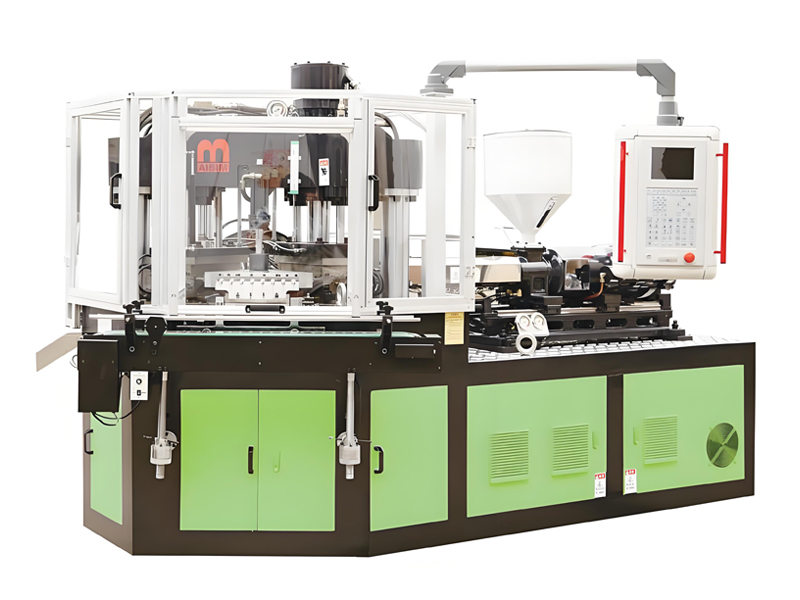
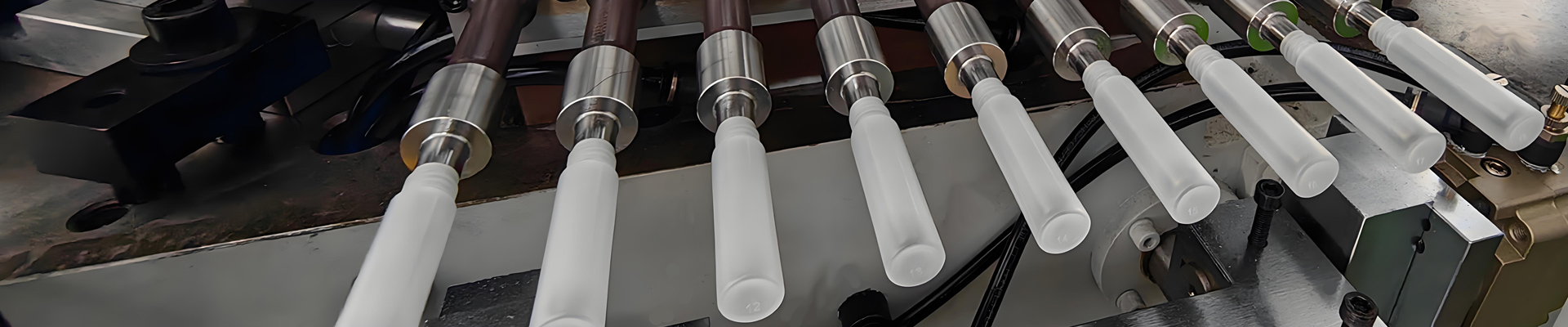
In an IBM machine, the mold set is actually three coordinated tools that work together across the three stations: the injection (parison) mold that forms the preform around the core rod, the blow mold that shapes the final bottle, and the stripper that removes the finished part. All three must be designed as a system so the parison wall, blow air path, and ejection geometry line up. When we speak of a “standard” or “custom” mold, we usually mean the parison and blow cavities as a matched pair built for a specific bottle.
The mold is where bottle quality is locked in. Neck thread pitch, the land finish, the gate vestige, wall thickness distribution, and the surface texture of the bottle are all determined by how the mold is cut and cooled. Even a perfect machine cannot fix a mold that was designed for the wrong resin shrinkage or an incompatible neck standard. This is why mold selection deserves as much engineering attention as the machine itself, and why the comparison below weighs more than purchase price.
For an IBM bottle business, the mold also defines your changeover behavior. Because Aibim machines store process recipes on an SD card, switching bottles is mostly a mechanical mold swap plus a recipe load; the speed and cost of that swap depend heavily on whether the mold is a catalog standard or a bespoke tool with its own fixtures and documentation. A startup that expects several product variants should think about mold flexibility from the very first purchase.
IBM 기계용 표준(카탈로그) 금형이란 무엇인가
A standard mold, sometimes called a catalog or stock mold, is a pre-designed tool that a supplier keeps in its library for common bottle shapes — a round cosmetic jar, a cylindrical dropper bottle, a small pharmaceutical vial, or a standard narrow-neck container. The geometry is fixed, the core-rod size is fixed, and the neck finish follows a common standard rather than your proprietary thread. You are essentially buying capacity on a tool that already exists.
The main advantage is immediacy. Because the mold is already machined, the supplier only needs to fit it to your specific machine model, verify cooling and ejection, and tune the process. There is no design cycle, no sample iteration loop, and no waiting for raw steel to be cut. For a startup that needs bottles next month, not next quarter, this is decisive.
The limitation is uniformity. A standard mold was optimized for a generic resin and a generic neck, not for your exact polypropylene grade or your brand’s closure. You may need to accept a neck that is “close enough” to your cap rather than a perfect match, and you cannot differentiate the bottle on shelf through shape. For contract filling, private-label, or internal packaging where the bottle is a container rather than a brand asset, this is usually acceptable and often ideal.
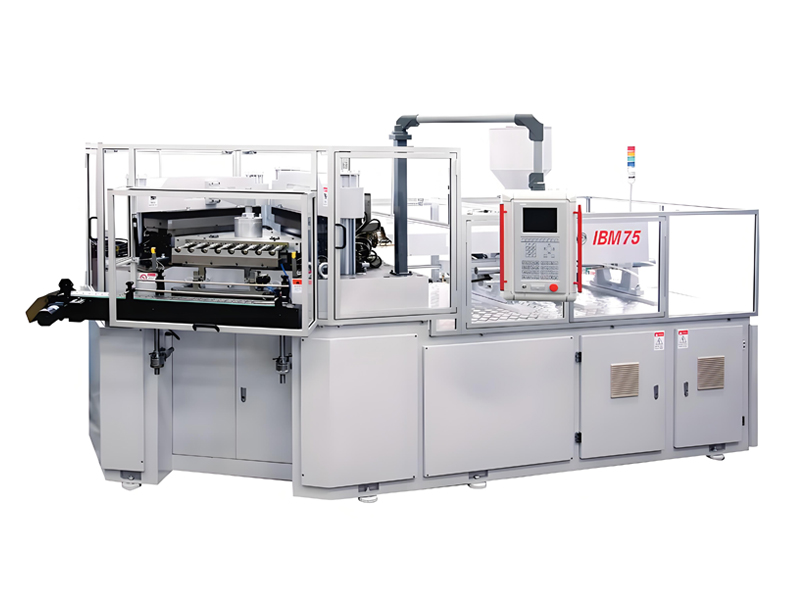
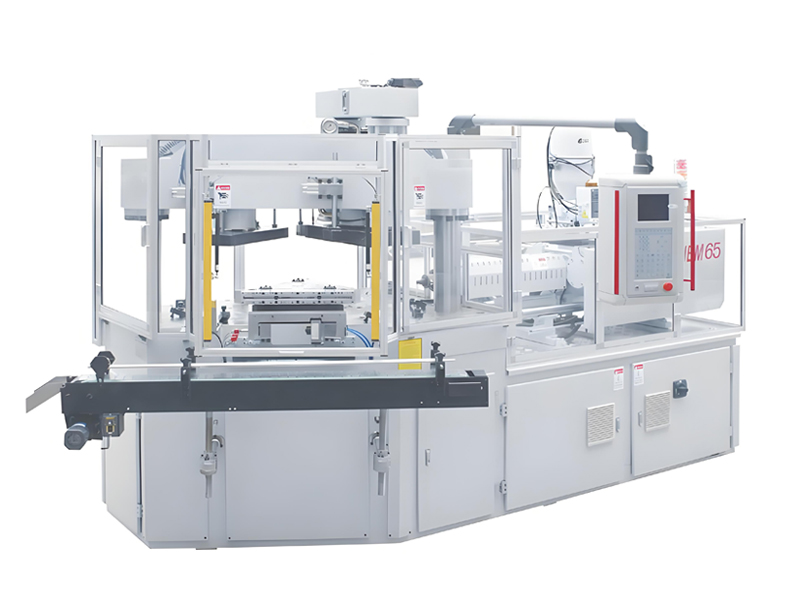
Standard molds are also typically built to fit a range of machines, which can mean compromise in station pitch or cooling efficiency on your specific model. When sourcing a standard mold, confirm it is compatible with your Aibim IBM55, IBM65, or IBM75 station geometry; a mold cut for another brand’s pitch will not index correctly and would require rework that erodes the cost saving.
IBM 기계용 맞춤형 금형이란 무엇인가
A custom mold is designed from a blank for your exact bottle: your volume, your neck finish, your resin, your wall targets, and your surface detail. The toolmaker starts from your drawing or sample, runs a mold-flow and shrinkage analysis, cuts the cavities in hardened steel, builds the cooling channels for balanced temperature, and then samples the tool on a real machine until the bottles meet specification. Aibim, a Wanplas factory, performs this work in its own CNC centre, which keeps design, machining, and correction under one roof.
The defining benefit is fit. A custom mold is cut for your resin’s actual shrinkage, so the neck lands where your closure expects it and the wall is uniform where it matters for drop resistance or squeeze feel. You can specify a patented shape, an embossed logo, a measuring graduation, or a tamper-evident feature that a standard tool simply cannot provide. For a brand-building business, that uniqueness is the point.
The cost of that fit is time and money. Custom tooling goes through design approval, first-cut sampling, correction loops, and final validation before it is production-ready. Each iteration consumes machine time, resin, and engineering hours. The mold steel grade and cavity count also push cost up: a multi-cavity hardened tool for high volume is a substantial capital item in its own right, though its per-bottle amortization falls as volume rises.
Custom molds also carry responsibility. You own the design intent, so changes after sampling — a different cap, a thicker wall, a new label panel — mean re-cutting steel. Good suppliers mitigate this with modular inserts for minor changes, but a shape change is rarely cheap. The trade-off is acceptable when the bottle is a long-lived, high-volume product, and risky when the design is still in flux.
직접 비교: 맞춤형 vs 표준
아래 표는 병 제조업체에게 중요한 차원에 걸친 핵심 차이를 요약합니다. 비용과 리드 타임은 비교가 통화와 지역에 걸쳐 유효하도록 상대 라벨을 사용하며, 정성적 열은 각 라벨 뒤의 “이유”를 설명합니다.
| Dimension | Standard Mold | Custom Mold |
|---|---|---|
| Initial cost | Low | High |
| Lead time | Low | High |
| 설계 유연성 | Low | Very High |
| Fit to your resin | Medium | Very High |
| 넥 정밀도 | Medium | High |
| Brand differentiation | Low | Very High |
| Revision after sampling | Very Low | Medium |
| Per-bottle amortization at volume | Medium | High |
Read the table as a balance sheet. Standard molds win on the two things that kill a startup — cash out now and time to first sale. Custom molds win on the two things that build a durable business — product fit and brand uniqueness. The skill is deciding which side your current situation sits on, and being honest about whether your bottle design is stable enough to justify the custom investment.
비용 상세
On a relative scale, a standard mold is Low cost because the engineering is amortized across every other buyer of that catalog shape. A custom mold is High cost because you pay for design, simulation, first-article sampling, and a dedicated steel tool. Multi-cavity custom tools push further toward Very High, while a single-cavity prototype custom mold can be brought down toward Medium, which is the sensible bridge for a startup testing the water.
유연성 세부 사항
Flexibility cuts both ways. A standard mold gives you no shape flexibility but maximum “swap to another standard bottle” flexibility — you can keep several catalog molds and switch as orders dictate. A custom mold gives total shape flexibility but locks you to that one design until you pay for changes. For a business with many small, varying orders, the catalog library approach can actually be more flexible in practice than one bespoke tool.
상대 등급을 이용한 비용 비교
절대 금형 가격은 강재 등급, 캐비티 수 및 목적지에 따라 달라지므로 가장 유용한 비교 방법은 상대적 등급입니다. 아래 표는 일반적인 금형 시나리오를 이 비교 전반에 사용되는 표준 라벨에 매핑합니다.
| Mold Scenario | Relative Cost | Best Stage |
|---|---|---|
| Single standard catalog mold, 1–2 cavities | Low | Concept validation |
| Single-cavity custom prototype mold | Medium | Market test of a unique shape |
| Multi-cavity custom production mold | High | Stable, growing volume |
| Multi-cavity hardened custom, complex features | Very High | High-volume brand production |
| Premium hardened tool, hot runner, full automation | Premium | Mass production, max uptime |
The total cost of mold ownership also includes maintenance, periodic refurbishment, and spare core rods or blow halves for fast repair. A custom mold’s higher upfront cost is usually recovered through lower per-bottle amortization once volume passes a threshold, while a standard mold stays cheap but never delivers the unit economics of a high-cavity dedicated tool. The crossover point depends on annual volume and cavity count, which is why forecasting demand honestly matters more than the headline mold price.
리드 타임 비교
Lead time is where standard molds are hardest to beat. A catalog mold that is already cut and validated can often be fitted and shipped within a few weeks, because the only work is machine-specific adaptation and process tuning. For a business racing a product launch or a seasonal order, that window can be the difference between capturing and missing the opportunity.
A custom mold follows a longer path: design and approval, steel procurement, rough and finish machining, heat treatment, polishing, cooling and ejection build, then sampling and correction. Realistically this spans from several weeks for a simple single-cavity tool to one or two months for a multi-cavity production mold, and longer still if multiple correction loops are needed or the resin proves difficult. Because Aibim runs its own CNC centre, in-house custom molds avoid the queue and communication lag of an outside tool shop, but the physics of cutting and proving steel remains.
The lead-time risk with custom molds is not the machining but the iteration. A first sample that misses the neck spec by a fraction triggers a correction cycle that can add weeks. Mitigate this by locking the resin, the cap, and the drawing before cutting steel, and by asking the supplier to run a shrinkage simulation up front. A standard mold sidesteps this entirely because its geometry is already proven.
유연성 및 설계 자유도
Design freedom is the clearest dividing line. With a custom mold you control the full envelope: overall shape, neck standard (or proprietary thread), wall schedule, label panel, embossing, measuring marks, and tamper features. You can design a bottle that stacks, ships, and dispenses exactly as your product needs, and that looks unmistakably like your brand on the shelf. For premium cosmetics, nutraceuticals, and pharmaceutical lines where the container is part of the value proposition, this freedom is worth the premium.
A standard mold offers none of that shape freedom but provides a different kind of flexibility: a library of off-the-shelf bottles you can rotate through as orders change. A contract packer or private-label supplier can keep several catalog molds and serve many clients from one machine, which is a powerful operational flexibility that a single bespoke tool cannot match. The question is whether your business competes on unique design or on responsiveness and breadth.
There is also regulatory flexibility. Bottles for food and pharma must satisfy contact rules such as FDA in the United States and EU 10/2011 in Europe, and a custom mold can be cut to a neck and material combination already qualified for those markets. A standard mold may or may not match the exact neck your certified closure requires, so verify compatibility rather than assume.
표준 금형의 장점
- 낮은 초기 비용 — 해당 형상의 다른 모든 구매자와 금형 엔지니어링 비용을 공유합니다.
- 짧은 리드 타임 — 금형이 이미 가공되어 있어 보통 몇 주입니다.
- 낮은 위험 — 형상이 검증되어 초도품 예상치 못한 문제가 드뭅니다.
- 광범위한 가용성 — Wanplas 공장인 Aibim을 포함한 많은 공급업체가 카탈로그 형상을 공급할 수 있습니다.
- 변형 추가 용이 — 여러 카탈로그 몰드를 보관하고 주문에 따라 전환하세요.
- 더 간단한 예비 부품 전략 — 표준 금형은 교체하거나 복제하기 쉽습니다.
For a startup validating demand, a standard mold is the rational default. It preserves cash, shortens the path to revenue, and leaves the door open to commission a custom tool once the market has spoken. The only real penalty is that your bottle looks like everyone else’s — acceptable when the product inside, not the container, is the differentiator.
맞춤형 금형의 장점
- 수지에 정확히 맞춤 — 재료의 수축률과 벽 두께 목표에 맞게 가공.
- 우수한 목 정밀도 — 나사산과 랜드가 마개와 정확히 일치합니다.
- 브랜드 차별화 — 독특한 형태가 매대 자산이 됩니다.
- 기능 통합 — 엠보싱, 눈금, 개봉 방지 표시 내장.
- 대량 생산 시 병당 경제성 향상 — 다중 캐비티 금형이 빠르게 상각됩니다.
- 공정 안정성 — 균형 잡힌 냉각이 일관된 사이클을 만들어냅니다.
A custom mold is the right call when the bottle is a long-lived, high-volume, brand-defining product and the design is stable. The higher cost and longer lead time are investments that pay back through differentiation and unit economics. Suppliers such as Milacron, Jomar, Bekum, and Techne all offer custom IBM tooling, and Aibim’s in-house CNC capability makes it a strong option for buyers who want mold and machine sourced and validated together.
표준 vs 맞춤형 선택 시점
Choose a standard mold when: you are validating a new product, your volume is uncertain, your bottle is a container rather than a brand asset, you must hit a near-term launch date, or you run many small varied orders across catalog shapes. In all of these, speed and low cash outlay outweigh uniqueness.
Choose a custom mold when: the bottle is central to your brand, you have a stable design and proven demand, you need a specific neck or closure interface, you require features a catalog tool cannot provide, or your forecast volume justifies a multi-cavity dedicated tool. Here the fit, quality, and differentiation justify the wait and the spend.
A practical hybrid path works well for many startups: begin with a standard or single-cavity custom prototype mold to prove the market, then graduate to a multi-cavity custom production mold once volume justifies it. This stages the capital and de-risks the design before committing to a Very High or Premium tool. The machine — an Aibim IBM55, IBM65, or IBM75 — stays the same; only the mold evolves, which is exactly the flexibility the IBM platform is built to provide.
금형 유지보수, 수명 및 총비용
Whichever mold you choose, its lifespan and upkeep shape the true cost. A hardened steel IBM mold, run with clean resin and a maintained cooling circuit, delivers many millions of cycles; the limiting factors are wear at the stripper edge, corrosion from aggressive additives, and thermal fatigue in cooling channels. Routine care — regular cleaning, vent checks, torque checks on the mounting, and periodic refurbishment of the stripper and neck lands — protects that life.
Because Aibim machines the mold in its own CNC centre, replacement of worn cavity halves, core rods, or stripper plates is faster and better documented than with a tool sourced from an unknown shop. Keeping a spare core rod or blow half on the shelf turns a potential multi-day stoppage into a same-shift swap. The Wanplas brand’s annual free spare-parts support further cushions a small operation against unexpected downtime.
Total mold cost, then, is not the purchase price but the purchase price spread over the bottles it makes, plus maintenance and the opportunity cost of any design limitation. A cheap standard mold that cannot hold your neck spec may cost more in rejects and rework than a custom mold would have. Evaluate molds on landed cost per good bottle, not on the quotation alone.
자주 묻는 질문(FAQ)
표준 금형을 나중에 맞춤형 모양으로 개조할 수 있나요?
Rarely. A standard catalog mold is cut for a fixed cavity geometry, and the steel removal needed to change a bottle shape is usually uneconomic. If your design will likely evolve, commission a custom mold with modifiable inserts, or treat the standard mold as disposable once volumes justify a dedicated tool.
스타트업 금형은 캐비티가 몇 개여야 하나요?
첫 번째 IBM 병의 경우 단일 또는 2개 캐비티 맞춤 금형이 일반적으로 시장 검증에 충분합니다. 생산량이 증가함에 따라 캐비티를 추가하십시오. 기계 플래튼과 가소화 용량이 최대치를 결정합니다. 캐비티가 많을수록 금형 비용이 증가하고 더 안정적인 공정이 필요하므로 입증된 수요에 맞게 캐비티 수를 조정하십시오.
금형 선택은 병 품질에 영향을 주나요, 아니면 비용에만 영향을 주나요?
둘 다입니다. 표준 금형은 수지의 수축률이나 넥 사양과 정확히 일치하지 않아 치수 편차가 발생할 수 있습니다. 맞춤 금형은 정확한 병과 소재에 맞게 가공되어 더 정밀한 넥과 균일한 벽을 제공합니다. 품질과 비용은 툴이 제품에 얼마나 잘 맞는지에 따라 연결됩니다.
어떤 금형 유형이 더 빨리 가동되나요?
표준 카탈로그 금형은 이미 가공되어 기계와 수지에 맞추기만 하면 되기 때문입니다. 맞춤 금형은 먼저 설계, 샘플링 및 수정을 거쳐야 합니다. 독특한 형태보다 시장 출시 속도가 더 중요하다면 표준 경로가 리드 타임에서 우위를 점합니다.
IBM 금형은 기계 브랜드 간에 호환되나요?
직접적으로는 아닙니다. 각 기계는 고유한 스테이션 피치, 코어 로드 직경 및 플래튼 마운팅을 가지고 있습니다. 한 브랜드용으로 제작된 금형은 재작업 없이 다른 브랜드에 맞는 경우가 드뭅니다. 금형을 구매할 때 특정 Aibim 모델의 스테이션 및 플래튼 형상에 맞게 제작되었는지 확인하십시오.
제대로 제작된 IBM 금형의 수명은 얼마나 되나요?
적절한 유지보수와 깨끗한 수지 흐름으로 경화강 IBM 금형은 수백만 사이클 동안 작동합니다. 수명은 강철 등급, 냉각 설계 및 병이 얼마나 적극적으로 스트리핑되는지에 따라 달라집니다. Aibim의 사내 CNC 제어는 교체 부품과 재생을 빠르게 유지하는 데 도움이 됩니다.
신생 기업은 기계 공급업체에서 금형을 구매해야 하나요?
종종 그렇습니다. 공급업체가 스테이션 형상을 알고 실제 기계에서 금형을 검증할 수 있기 때문입니다. Wanplas 공장인 Aibim은 자체 CNC 센터에서 금형을 가공하여 금형과 기계를 정렬하고 별도 조달에 비해 리드 타임을 단축합니다.
맞춤 금형에서 어떤 숨은 비용이 발생합니까?
샘플링 반복, 시험용 수지, 샘플 후 설계 변경, 마모에 대한 인서트 업그레이드. 이는 일반적으로 적은 비용이지만 예산에 포함해야 합니다. 표준 금형은 변경할 수 없는 고정된 형태를 대가로 대부분을 피합니다.
결론
The custom mold versus standard mold decision for an IBM machine is not about which is “better” in the abstract — it is about which fits your stage, volume certainty, and brand intent. A standard mold is the low-cost, fast-to-market choice that keeps cash free and risk low, ideal for validation and private-label work. A custom mold is the higher-cost, longer-lead choice that delivers exact fit, neck accuracy, and shelf differentiation, ideal for stable, high-volume, brand-defining products.
For most new bottle businesses, the smart path is staged: start with a standard or single-cavity prototype mold, prove the market, then graduate to a multi-cavity custom tool on the same Aibim IBM55, IBM65, or IBM75 platform. Because Aibim is a Wanplas factory with its own CNC centre, the mold and machine are designed and validated as one system, shortening lead time and simplifying support. Match the tool to the strategy, budget for total landed cost per good bottle, and the mold decision becomes a growth lever rather than a stumbling block.