적층 가능 플라스틱 용기 소개
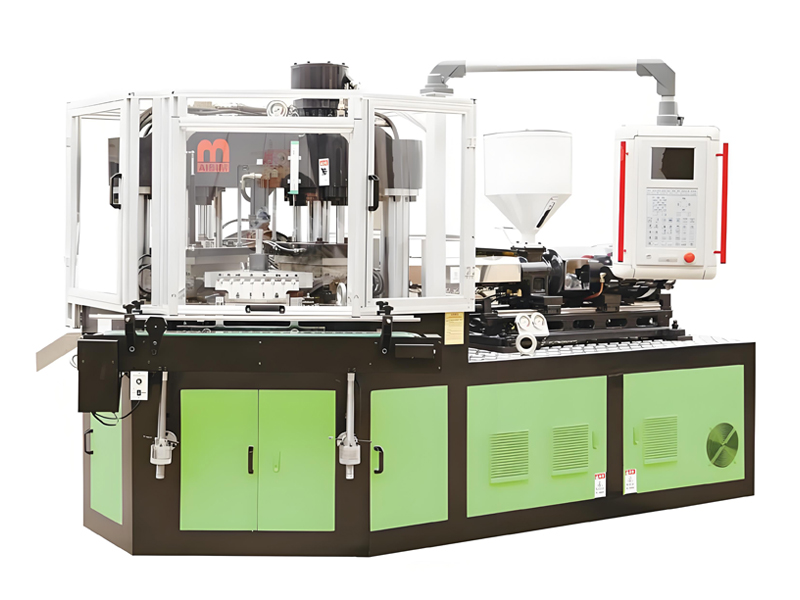
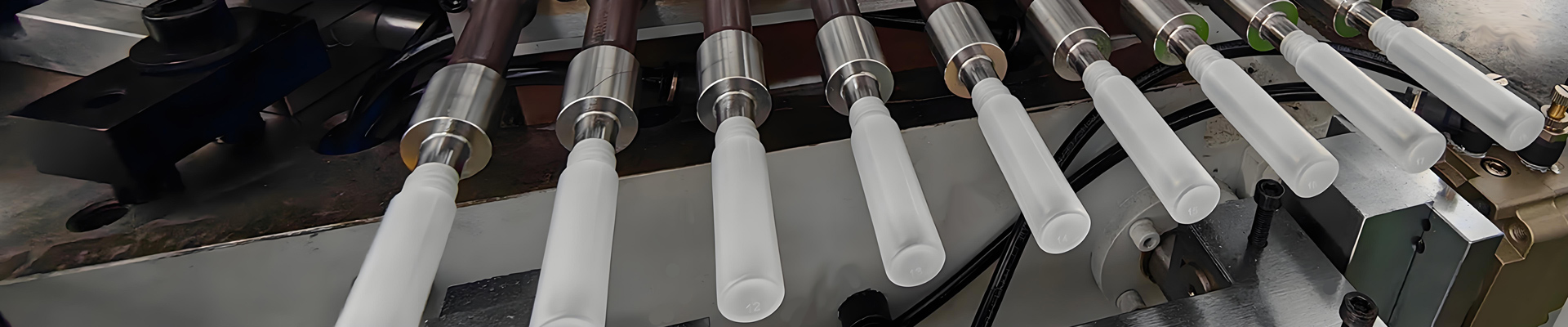
Stackable plastic containers represent essential packaging solutions across diverse industries including food and beverage, chemical, automotive, pharmaceutical, and consumer goods. The ability to nest and stack containers efficiently provides significant space savings, improved logistics efficiency, and reduced transportation costs. 사출 blow molding technology, particularly equipment from AiBiM with over 20 years of manufacturing experience, enables production of stackable containers with precise dimensional accuracy, consistent quality, and excellent structural integrity required for reliable stacking performance.
Stackable design requires precise engineering and manufacturing to ensure containers interlock properly while maintaining structural stability. The injection blow molding process delivers exceptional control over container dimensions, wall thickness distribution, and surface finish quality, enabling production of containers that stack reliably without deformation or instability. AiBiM injection blow molding machines with advanced control systems and precision engineering capabilities ensure stackable containers meet exacting specifications for dimensions, strength, and consistency.
The global market for stackable plastic containers continues growing across multiple industries driven by space optimization requirements in manufacturing, warehousing, and distribution operations. Manufacturers require equipment capable of producing containers with consistent quality and precise dimensions ensuring reliable stacking performance. AiBiM machines provide production capacities ranging from 400-2000 containers per hour depending on model and container size, enabling efficient production to meet growing market demand while maintaining strict quality standards for stackable design requirements.
적층 가능 용기 시장 요구 사항
적층 가능 용기에 대한 시장 요구 사항을 이해하면 적절한 장비 선택과 생산 최적화의 기반이 됩니다. 적층 가능 용기는 다양한 산업과 사용 사례에 걸쳐 다양한 요구 사항을 가진 다양한 응용 분야에 서비스를 제공합니다.
공간 효율성 및 보관 최적화
Space efficiency represents primary driver for stackable container adoption across industries. Warehouses, manufacturing facilities, and distribution centers face increasing space constraints and rising real estate costs, requiring efficient space utilization. Stackable containers enable vertical storage maximizing use of available space. Well-designed stackable containers can achieve 30-50% more storage density compared to non-stackable alternatives, providing significant space savings and reduced facility costs.
Storage optimization requirements vary by application. Automated storage and retrieval systems require precise dimensions ensuring compatibility with racking and handling equipment. Manual storage operations require containers with appropriate features for safe handling and stacking. Temperature-controlled storage requires containers with appropriate thermal properties for cold storage applications. AiBiM injection blow molding machines produce containers meeting these diverse storage requirements through precise dimensional control and material selection capabilities.
물류 효율 및 운송 최적화
물류 efficiency and transportation optimization represent critical requirements for stackable containers. Transportation costs represent significant portion of total product cost for many industries, making load density and utilization important factors. Stackable containers enable higher load density in trucks and containers, reducing transportation costs per unit. Improved load utilization reduces environmental impact through reduced transportation requirements.
Palletization efficiency depends on container design and stacking characteristics. Containers designed for optimal pallet fill enable higher load densities. Stacking strength requirements depend on load height and handling conditions. Forklift compatibility requires appropriate reinforcement and base design. International shipping considerations include container dimensions and weight distribution. AiBiM machines produce containers optimized for these logistics considerations through precise dimensional control and structural design capabilities.
내구성 및 재사용성 요구 사항
내구성 and reusability requirements vary by application and market segment. Single-use containers prioritize cost efficiency while providing adequate durability for one cycle. Reusable containers require enhanced durability for multiple use cycles. Industrial containers may require hundreds of use cycles, demanding exceptional material quality and design optimization. Consumer containers typically require fewer cycles but must maintain appearance and functionality through intended use.
Material selection affects durability and reusability. High-density polyethylene provides excellent impact resistance and chemical durability for demanding applications. 폴리프로필렌 offers good stiffness and chemical resistance for general-purpose applications. Reinforced materials provide enhanced strength and durability for heavy-duty applications. AiBiM machines process diverse materials enabling appropriate material selection for specific durability requirements. Precise control ensures consistent material properties throughout production runs, maintaining durability requirements.
세척 용이성 및 위생 요구 사항
Cleanability and hygiene requirements vary significantly by application. 식품 and pharmaceutical applications require containers with excellent cleanability and compliance with food safety regulations. Smooth interior surfaces, appropriate material grades, and design features facilitating cleaning are essential. Chemical applications require resistance to cleaning chemicals and solvents. Industrial applications may prioritize durability over cleanability.
식품-grade materials must meet FDA, 유럽 연합, and other regional food contact regulations. Smooth interior surfaces enable thorough cleaning and sanitization. Design features minimizing areas where contaminants can accumulate improve cleanability. Material compatibility with cleaning agents ensures long-term durability through repeated cleaning cycles. AiBiM machines produce containers meeting these cleanability requirements through appropriate material selection, surface quality, and design features ensuring compliance with hygiene requirements.
최적 적층성을 위한 AiBiM 금형 설계
AiBiM 금형 엔지니어링 역량은 정밀 엔지니어링과 고급 제조 기술을 통해 최적의 적층 가능 용기 설계를 가능하게 합니다. 금형 설계 원리를 이해하면 우수한 적층 성능을 가진 용기 생산이 가능합니다.
치수 정밀도 및 일관성
Dimensional precision and consistency represent fundamental requirements for stackable container design. Containers must interlock properly with consistent dimensions across production lots ensuring reliable stacking. Critical dimensions including overall height, base dimensions, and stacking features must be maintained within tight tolerances. AiBiM injection blow molding machines deliver exceptional dimensional control through precision components and advanced control systems.
Dimensional accuracy within plus or minus 0.1-0.3 millimeters for overall dimensions ensures reliable stacking. Critical stacking features including lips, grooves, and interlocking elements maintained within plus or minus 0.05-0.15 millimeters ensuring proper engagement. Statistical process control monitors dimensional trends and alerts operators to developing issues before defects occur. Consistent dimensions across production runs ensure reliable performance in storage and handling systems. AiBiM machines’ precise control enables stackable containers meeting the most demanding dimensional requirements.
벽 두께 분포
Wall thickness distribution affects container strength, material efficiency, and stacking capability. Stackable containers require adequate wall thickness for strength while optimizing material usage for cost efficiency. AiBiM injection blow molding machines feature advanced parison wall thickness control systems enabling precise wall thickness optimization. Wall thickness can be varied across container profile providing strength where needed while minimizing material usage in less critical areas.
Wall thickness typically ranges from 0.3-1.5 millimeters depending on container size, stacking load requirements, and material selection. Base areas requiring additional strength for stacking support may have increased wall thickness. Side walls optimized for strength-to-weight ratio balance performance and cost. Consistency within plus or minus 0.05-0.1 millimeters ensures uniform strength and performance. AiBiM machines’ wall thickness control capabilities enable optimization for specific stacking load requirements while minimizing material costs.
적층 기능 설계
Stacking features including lips, grooves, ribs, and interlocking elements enable reliable container stacking. Precise design of these features ensures proper engagement while preventing sticking or difficult separation. AiBiM mold engineering capabilities optimize stacking feature design for reliable performance. Features designed with appropriate angles, clearances, and dimensions ensure containers stack and separate reliably.
Stacking lip design typically includes chamfers or rounded edges facilitating engagement while preventing sharp edges that could cause injury. Groove design matches lip dimensions ensuring proper fit. Rib reinforcement in critical areas provides additional strength for stacking loads. Draft angles facilitate mold release while maintaining stacking functionality. AiBiM machines produce containers with precisely formed stacking features through precise mold manufacturing and process control, ensuring reliable stacking performance.
재료 흐름 및 금형 충전
Material flow and mold filling affect final container quality and dimensional accuracy. Precise control of material flow ensures uniform filling of mold cavity maintaining consistent wall thickness and dimensions. AiBiM injection blow molding machines feature precision temperature control, injection speed control, and pressure control optimizing material flow for consistent quality.
Temperature control within plus or minus 1 degree Celsius ensures consistent material viscosity affecting flow characteristics. 사출 speed control enables optimal filling rate preventing flow-related defects. Pressure control ensures complete mold filling while preventing flash formation. Gate design optimized for material type and container geometry ensures proper flow patterns. These advanced control capabilities ensure consistent quality and dimensions essential for stackable container performance.
용기 생산의 치수 정밀도 제어
치수 정밀도 제어는 적층 가능한 용기 생산의 핵심 역량입니다. AiBiM 사출 블로우 성형 기계는 탁월한 치수 정확도를 보장하는 여러 시스템과 기술을 통합하고 있습니다.
정밀 기계 부품
Precision machine components provide foundation for dimensional accuracy. AiBiM machines feature precision-machined components including injection screws, barrels, platens, and molds manufactured to tight tolerances. CNC machining centers ensure component accuracy within microns. Precision ground surfaces ensure proper alignment and smooth operation. These precision components enable consistent production meeting stringent dimensional requirements.
Clamping system precision ensures consistent mold alignment and closing force. Guide pins and bushings maintain precise mold positioning. Platens manufactured to high flatness specifications ensure uniform pressure distribution. Precision servo systems provide accurate positioning and repeatability. These precision machine components ensure consistent dimensional accuracy across production runs.
고급 제어 시스템
Advanced control systems provide precise parameter control affecting dimensional accuracy. PLC-based control systems with touch-screen interfaces enable precise parameter setting and monitoring. Closed-loop control systems maintain parameters within narrow tolerances despite disturbances. Recipe storage enables rapid recall of optimized parameters ensuring consistency.
Temperature control systems maintain processing temperatures within plus or minus 1 degree Celsius affecting material properties and flow characteristics. 사출 control provides precise speed, pressure, and position control affecting parison formation. Clamping control ensures consistent force and position affecting dimensional stability. Blowing control provides precise air pressure and timing affecting container formation. These advanced control systems ensure consistent dimensional accuracy for stackable containers.
공정 모니터링 및 품질 관리
Process monitoring and quality control systems detect dimensional variations enabling corrective action before defects occur. Statistical process control monitors key parameters and dimensions identifying trends and variations. Automated inspection systems measure critical dimensions on every container or at appropriate sampling frequencies. Operator feedback systems alert personnel to developing issues.
Vision inspection systems provide automated dimensional measurement with high accuracy and consistency. Statistical analysis of measurement data identifies process variations and correlations. 품질 data logging provides traceability and trend analysis. Early detection of dimensional variations enables corrective action preventing production of non-conforming containers. These monitoring and control capabilities ensure consistent dimensional accuracy for stackable containers.
금형 유지보수 및 캘리브레이션
Mold maintenance and calibration ensure ongoing dimensional accuracy. Regular mold maintenance prevents wear-related dimensional changes. Calibration procedures verify mold dimensions and adjust parameters as needed. Mold cleaning prevents contamination affecting surface quality and dimensions. Mold storage and handling prevent damage affecting dimensional accuracy.
Mold wear monitoring identifies components approaching wear limits requiring replacement. Dimensional verification procedures confirm mold accuracy after maintenance or repair. Preventive maintenance schedules maintain mold condition and performance. Documentation tracks maintenance history and dimensional trends. Proper mold maintenance and calibration ensure consistent dimensional accuracy throughout mold life.
최적화된 설계를 통한 재료 절감
최적화된 설계를 통한 재료 절감은 적층 가능한 용기 생산에 상당한 비용 이점을 제공합니다. AiBiM 사출 블로우 성형 기계는 정밀한 제어와 설계 유연성을 통해 재료 최적화를 가능하게 합니다.
벽 두께 최적화
Wall thickness optimization reduces material usage while maintaining required strength and performance. AiBiM machines’ parison wall thickness control systems enable precise wall thickness distribution optimization. Wall thickness can be reduced in areas with lower stress requirements while maintaining adequate thickness in critical areas. This optimization typically reduces material usage by 10-20% while maintaining performance requirements.
Computer-aided engineering analysis identifies stress distribution and optimal wall thickness distribution. Finite element analysis predicts container performance under stacking loads. Empirical testing validates design optimization. Iterative optimization achieves optimal balance between material usage and performance. Wall thickness optimization capabilities provided by AiBiM machines enable significant material cost savings while maintaining required performance.
재료 선정 및 활용
Material selection and utilization affect material efficiency and cost. Different materials provide different strength-to-weight ratios enabling material optimization. High-strength materials may enable thinner walls reducing material usage. Material blends provide tailored properties optimizing performance and cost. AiBiM machines process diverse materials enabling appropriate material selection for specific requirements.
Material properties including density, strength, and stiffness affect material efficiency. Material density affects weight and material cost per volume. Strength and stiffness enable thinner walls reducing material usage. Cost-performance analysis identifies optimal material choices. AiBiM machines’ material compatibility enables selection of optimal materials balancing performance, cost, and material efficiency.
스크랩 절감
Scrap reduction decreases material waste and cost. AiBiM machines achieve low scrap rates through precise control and quality management. Typical scrap rates below 3% significantly reduce material waste compared to less precise equipment. 품질 control prevents defective production minimizing scrap. Process optimization reduces start-up scrap and changeover losses.
Process monitoring detects issues early reducing scrap production. Precise control reduces variation preventing defects. Proper setup and parameter optimization minimize scrap during production start. Scrap recycling capabilities enable reprocessing of scrap reducing waste. These scrap reduction capabilities provided by AiBiM machines reduce material costs and waste.
재료 효율 분석
Material efficiency analysis identifies optimization opportunities. Material usage per container analysis compares design alternatives. Strength-to-weight analysis evaluates material efficiency. Cost analysis balances material savings against performance requirements. Life cycle analysis considers total cost implications.
Material usage tracking provides data for efficiency analysis. Statistical analysis identifies improvement opportunities. Benchmarking against industry standards identifies potential improvements. Material efficiency optimization typically reduces material costs by 15-25% while maintaining performance. AiBiM machines support comprehensive material efficiency analysis and optimization.
다양한 용기 크기의 생산 효율
생산 효율은 용기 크기와 설계에 따라 다릅니다. 다양한 크기 범위에 대한 생산 능력을 이해하면 적절한 기계 선택과 최적화가 가능합니다.
소형 용기 3ml-100ml
Small containers ranging from 3ml to 100ml require high precision and fast cycle times for efficient production. AiBiM IBM35 model provides excellent capability for small container production with production capacity of 800-1200 pieces per hour depending on specific size and complexity. Small containers benefit from multi-cavity molds increasing production output per cycle.
Small container production requires precise material control due to small shot sizes. Precise injection control and temperature control ensure consistent quality despite small shot sizes. Fast cooling enables short cycle times for high productivity. Automation options including robotic handling improve efficiency for small containers. IBM35 model provides optimal balance of precision and productivity for small container production.
중형 용기 100ml-500ml
Medium containers ranging from 100ml to 500ml represent popular size range for many applications. AiBiM IBM45 model provides optimal capacity for medium containers with production capacity of 1000-1800 pieces per hour depending on size and design. This size range balances production efficiency with flexibility enabling production of multiple designs on the same machine.
Medium containers benefit from moderate shot sizes enabling good material control and processing efficiency. Cycle times typically range 8-15 seconds depending on wall thickness and cooling requirements. Multi-cavity molds enable increased production for standard designs. IBM45 model provides excellent efficiency for medium container production with flexibility for design changes.
대형 용기 500ml-1000ml
Large containers ranging from 500ml to 1000ml require substantial shot capacity and robust construction. AiBiM IBM65 and IBM75 models provide appropriate capacity for large containers with production capacity of 500-1200 pieces per hour depending on size and complexity. Larger machines provide necessary clamping force and shot capacity for large containers.
Large container production requires careful thermal management due to material volume. Enhanced cooling systems maintain cycle times for large containers. Robust construction handles forces from large part weights and stacking loads. IBM65 and IBM75 models provide robust construction and capacity for large container production with excellent reliability.
생산 최적화 전략
Production optimization strategies improve efficiency across container size ranges. Mold optimization including cavity count, cooling design, and gate location maximizes productivity. Process optimization including temperature profiles, injection parameters, and cycle times improves efficiency. Quick changeover systems reduce downtime for design changes.
Automation including automatic loading, part handling, and quality inspection reduces labor requirements and improves consistency. Production scheduling optimizes machine utilization across different container designs. Efficiency monitoring identifies bottlenecks and improvement opportunities. These optimization strategies enable maximum productivity across diverse container sizes and designs.
사례 연구: 적층 가능한 용기 생산 라인 구축
사례 연구는 적층 가능 용기 생산 라인의 실질적인 구현을 보여줍니다. 실제 사례는 과제, 해결책, 달성된 결과를 설명합니다.
식품 용기 생산 라인
A food packaging manufacturer implemented stackable container production line for 250ml food containers using AiBiM IBM45 machine. The project required containers meeting food safety regulations with excellent stackability for warehouse optimization. Project challenges included achieving tight dimensional tolerances for stacking, meeting food-grade material requirements, and achieving target production capacity.
AiBiM provided comprehensive support including mold design, machine selection, installation, and training. Four-cavity mold enabled production of 1500 containers per hour. 식품-grade PP material processed with optimized parameters meeting food safety requirements. Dimensional control achieved within plus or minus 0.15 millimeters ensuring reliable stacking. Production achieved target capacity with reject rate below 2%. Customer achieved 40% warehouse space savings and 30% transportation cost reduction through stackable container implementation.
화학 용기 생산 라인
A chemical manufacturer implemented production line for 500ml chemical containers using AiBiM IBM65 machine. The project required containers with chemical resistance, durability for multiple use cycles, and stackability for efficient storage. Challenges included chemical resistance requirements, durability for 100+ use cycles, and stacking strength for 5-layer stacking.
AiBiM provided HDPE material processing capabilities with chemical resistance. Enhanced wall thickness and base reinforcement provided durability. Stacking features designed for 5-layer stacking with safety factor. Two-cavity mold produced 800 containers per hour. Testing confirmed chemical resistance and stacking performance. Customer achieved 35% storage density increase and reduced replacement costs through container durability.
산업용 용기 생산 라인
An industrial products company implemented production line for 750ml industrial containers using AiBiM IBM75 machine. Requirements included heavy-duty construction for 200+ use cycles, stackability for 8-layer stacking, and forklift handling capability. Challenges included exceptional durability requirements, high stacking loads, and forklift compatibility.
AiBiM provided reinforced HDPE material with enhanced durability. Heavy-duty base design included reinforcement for forklift handling. Stacking features designed for 8-layer stacking with adequate safety margin. Single-cavity mold produced 500 containers per hour. Load testing confirmed stacking strength and forklift compatibility. Customer achieved 50% storage density increase and extended container life reducing replacement costs.
결과 및 이점
Case study results demonstrate significant benefits from stackable container implementation. Storage density improvements of 30-50% reduce facility costs. Transportation cost reductions of 25-35% improve logistics efficiency. Container durability improvements reduce replacement costs. Production efficiency improvements reduce unit costs.
Return on investment for stackable container production lines typically ranges from 12-24 months depending on application and volume. AiBiM equipment and support enable successful implementation with minimal risk. Comprehensive project management ensures smooth implementation and optimal results. Case studies demonstrate proven results across diverse applications.
비용 비교: 적층 가능 대 비적층 용기 생산
적층 가능 용기와 비적층 용기 간의 비용 비교는 경제적 고려 사항에 대한 통찰력을 제공합니다. 비용 차이를 이해하면 정보에 기반한 의사 결정이 가능합니다.
초기 투자 비교
Initial investment for stackable container production includes similar equipment costs as non-stackable production. 사출 blow molding machine costs similar for comparable capacity. Mold costs may be 10-20% higher for stackable containers due to increased complexity of stacking features. 품질 inspection equipment may require additional capability for dimensional verification.
Typical investment for complete stackable container production line ranges USD 50,000-90,000 depending on machine model and configuration. This represents slightly higher investment than non-stackable production due to mold complexity and quality requirements. However, the additional investment is typically recovered quickly through operational cost savings.
생산 비용 비교
Production costs for stackable containers may be slightly higher or similar to non-stackable containers depending on design complexity. Material costs may be 5-15% higher due to additional material for stacking features and reinforcement. 에너지 costs similar for comparable container size. 인건비 costs similar. 품질 control costs may be slightly higher due to dimensional verification requirements.
Typical production cost difference ranges 0-15% higher for stackable containers compared to non-stackable alternatives. This small premium is offset by operational savings in storage and transportation. Overall cost per unit considering total supply chain costs typically lower for stackable containers.
보관 비용 비교
Storage costs significantly favor stackable containers. Stackable containers enable 30-50% higher storage density reducing facility requirements. Reduced storage space lowers rent, utilities, and overhead costs. For facilities with space constraints, stackable containers enable capacity expansion without additional facility investment.
적층 가능한 대안의 경우 용기당 보관 비용 절감은 일반적으로 20~40%입니다. 이러한 절감은 제조, 유통 및 고객 보관을 포함한 공급망 전체에 적용됩니다. 보관 비용 절감은 약간 더 높은 생산 비용을 상쇄하는 상당한 재정적 이점을 제공합니다.
운송 비용 비교
Transportation costs favor stackable containers through improved load density. Higher load density reduces number of shipments required for given volume. Reduced transportation requirements lower fuel costs, labor costs, and equipment utilization costs. Environmental benefits include reduced carbon footprint from transportation.
Transportation cost savings typically range 15-35% per unit for stackable containers. Savings greater for long-distance shipping. International shipping benefits particularly significant due to container utilization improvements. Transportation cost savings provide substantial benefits improving competitiveness.
총소유비용(TCO) 비교
Total cost of ownership considering production, storage, and transportation costs typically favors stackable containers. Despite slightly higher production costs, storage and transportation savings provide net cost reduction. Total cost reduction typically ranges 10-25% for stackable containers considering full supply chain costs.
Return on investment for stackable container capability typically achieved within 6-18 months depending on application and volume. Benefits increase over time as savings accumulate annually. Strategic benefits including space optimization, logistics flexibility, and sustainability improvements provide additional value beyond direct cost savings.
적층 가능한 플라스틱 용기 설계의 향후 추세
적층 가능한 플라스틱 용기 설계의 미래 트렌드는 진화하는 시장 요구 사항과 기술 발전을 반영합니다. 이러한 트렌드를 이해하면 전략적 계획과 투자 결정이 가능해집니다.
재료 혁신
Material innovations enable improved performance and sustainability. Bio-based and biodegradable materials provide environmental benefits while maintaining performance. Advanced polymer blends provide enhanced strength-to-weight ratios enabling further material reduction. Recycled content incorporation reduces environmental impact and material costs. Smart materials with sensing capabilities enable advanced functionality.
Material cost trends affect design optimization. Material price volatility encourages material efficiency. Sustainable material preferences drive material selection innovation. Material performance improvements enable new design possibilities. AiBiM machines’ material compatibility enables adoption of new materials as they become available.
설계 혁신
Design innovations improve functionality and efficiency. Optimized stacking geometries increase density while maintaining stability. Interlocking features enable novel stacking configurations. Modular designs enable multiple stacking options. Integrated features including handles, measuring marks, and labeling surfaces enhance functionality.
Computer-aided design and simulation capabilities enable advanced design optimization. Topology optimization identifies optimal material distribution. Finite element analysis predicts performance enabling design refinement. Generative design algorithms propose innovative solutions. These design capabilities enable continuous improvement in stackable container performance.
지속 가능성 중점
Sustainability focus drives innovation in stackable container design. Lightweight designs reduce material usage and transportation impact. Recyclable materials and designs enable circular economy. Reusable designs with extended durability reduce waste. Life cycle assessment informs design decisions optimizing environmental performance.
Environmental regulations increasingly affect design requirements. Extended producer responsibility regulations influence material and design choices. Carbon footprint considerations drive material and efficiency optimization. Sustainability reporting requirements track environmental impact. AiBiM equipment supports sustainability initiatives through energy efficiency and material optimization capabilities.
스마트 및 연결형 용기
Smart and connected containers represent emerging trend adding functionality. RFID and NFC tags enable tracking and identification. Sensors monitor contents including temperature, humidity, and fill level. Connectivity enables real-time inventory management. Smart features enhance logistics efficiency and product protection.
Smart container integration requires design considerations for electronics integration. Material compatibility with electronics affects material selection. Manufacturing processes accommodate additional components. Cost considerations balance functionality benefits against additional costs. Smart container capabilities provide differentiation in competitive markets.
적층 가능 용기를 위한 AiBiM 기계 모델
AiBiM은 다양한 크기 범위와 생산 요구 사항에 걸쳐 적층 가능한 용기 생산을 위한 포괄적인 기계 라인업을 제공합니다. 적절한 모델을 선택하면 최적의 성능과 효율성이 보장됩니다.
IBM35 모델
IBM35 model provides optimal solution for small stackable containers from 3ml to 500ml capacity. Compact design requires minimal floor space. Production capacity 500-1200 pieces per hour depending on size and complexity. Screw diameter 40 millimeter with injection capacity 176 gram. Clamping force 350 kilonewton provides adequate capacity for small containers.
기계 출력 25킬로와트로 에너지 효율적인 운영을 제공합니다. 무게 3.6톤으로 안정성을 보장합니다. 크기 3100 x 1200 x 2200밀리미터로 제한된 공간에 맞습니다. 가격 범위 USD 35,000~45,000으로 우수한 가치를 제공합니다. IBM35 모델은 정밀도와 효율성으로 소형 용기 생산에 이상적입니다.
IBM45 모델
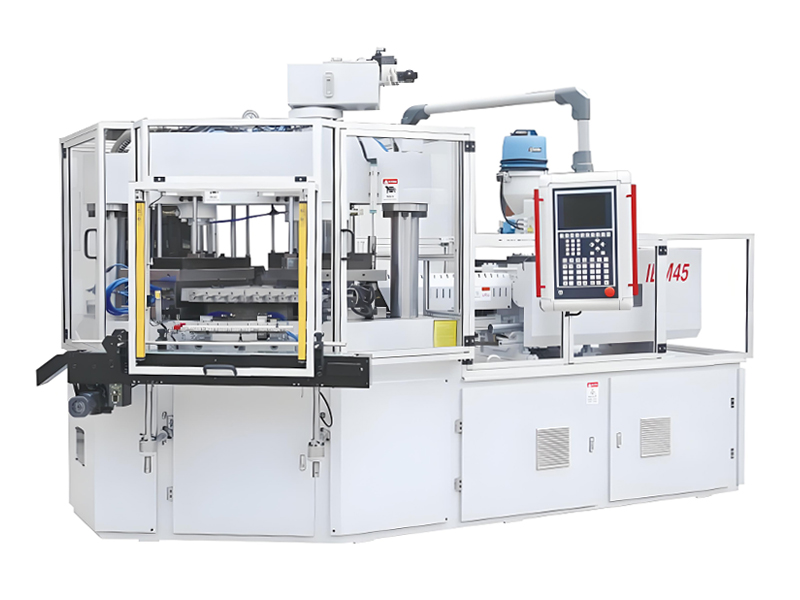
IBM45 model provides versatile solution for medium stackable containers from 50ml to 1000ml capacity. Balanced performance suits diverse applications. Production capacity 800-2000 pieces per hour depending on size and design. Screw diameter 45 millimeter with injection capacity 260 gram. Clamping force 450 kilonewton handles medium containers.
기계 출력 36킬로와트로 효율적인 작동을 제공합니다. 중량 5.5톤으로 안정성을 제공합니다. 치수 3500 x 1400 x 2300밀리미터. 가격 범위 USD 45,000~55,000. IBM45 모델은 다용성과 생산 능력을 갖춘 중형 용기 생산에 탁월한 선택입니다.
IBM65 모델
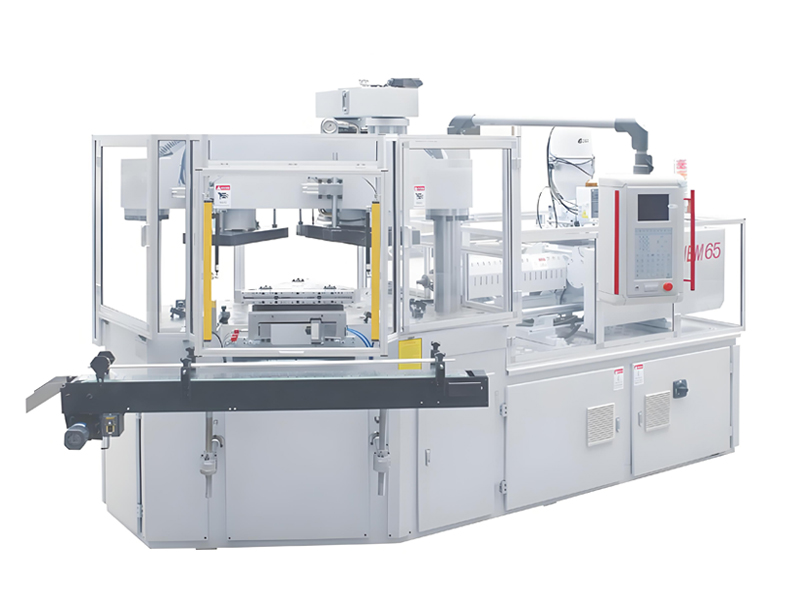
IBM65 model provides robust solution for large stackable containers up to 1000ml capacity. Enhanced construction handles demanding applications. Production capacity 500-1500 pieces per hour. Screw diameter 50 millimeter with injection capacity 314 gram. Clamping force 650 kilonewton provides substantial capacity.
52킬로와트의 기계 출력은 강력한 작동을 제공합니다. 6.5톤의 중량은 안정성을 보장합니다. 크기는 4000 x 1280 x 2350밀리미터입니다. 가격 범위는 USD 55,000~65,000입니다. IBM65 모델은 견고한 성능으로 대형 용기 생산에 이상적입니다.
IBM75 모델
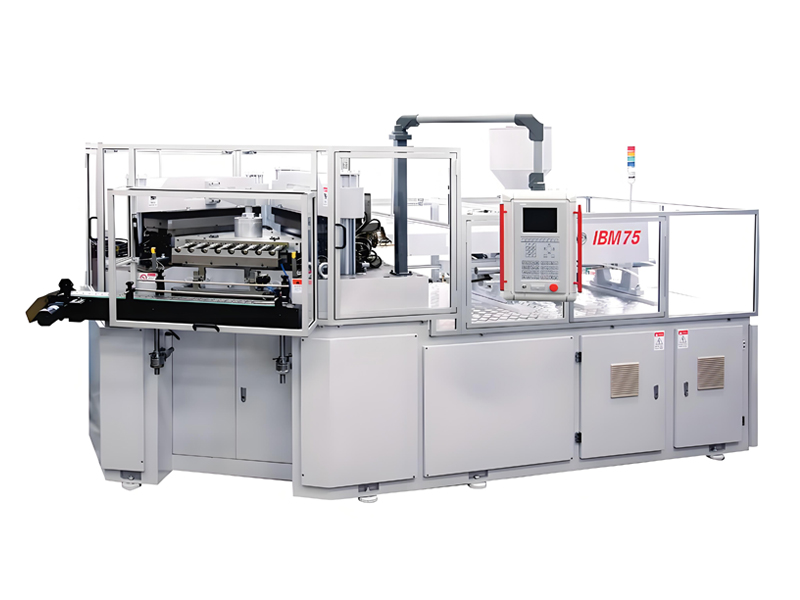
IBM75 model provides maximum capacity solution for extra-large stackable containers up to 1000ml capacity. High-performance design handles most demanding applications. Production capacity 400-1200 pieces per hour. Screw diameter 50 millimeter with injection capacity 400 gram. Clamping force 750 kilonewton provides maximum capacity.
듀얼 구동 모터를 갖춘 52킬로와트의 기계 출력. 10톤의 중량은 탁월한 안정성을 제공합니다. 크기는 4000 x 1700 x 2000밀리미터입니다. 가격 범위는 USD 60,000~70,000입니다. IBM75 모델은 고수요 응용 분야에 최대 역량을 제공합니다.
적층 가능 용기의 품질 보증
품질 보증은 적층 가능 용기가 치수, 강도, 성능 요구 사항을 충족하도록 보장합니다. 포괄적인 품질 시스템은 일관된 생산을 가능하게 합니다.
치수 품질 관리
Dimensional quality control verifies containers meet specifications for stackability. Critical dimensions measured including height, base dimensions, stacking feature dimensions, and wall thickness. Tolerances typically require measurements within plus or minus 0.1-0.3 millimeters for overall dimensions and plus or minus 0.05-0.15 millimeters for stacking features.
Coordinate measuring machines provide precise dimensional verification. Vision inspection systems provide automated high-speed measurement. Statistical process control monitors trends and variations. 품질 records provide traceability and trend analysis. Comprehensive dimensional control ensures reliable stacking performance.
강도 및 성능 시험
Strength and performance testing verifies container capability under stacking loads. Compression testing evaluates stacking strength. Drop testing verifies impact resistance. Repeated stacking testing simulates use cycles. Environmental testing evaluates performance under temperature and humidity variations.
테스트 프로토콜은 응용 분야 요구 사항에 따라 정의됩니다. 안전 계수는 적절한 성능 여유를 보장합니다. 가속 테스트는 장기간 사용을 시뮬레이션합니다. 테스트 데이터는 설계 및 공정 능력을 검증합니다. 성능 테스트는 용기가 응용 분야 요구 사항을 충족하는지 보장합니다.
표면 품질 및 마감
Surface quality and finish affect appearance and functionality. Visual inspection detects surface defects including scratches, sink marks, and contamination. Surface roughness measurements verify sealing surface quality. Color consistency verification ensures appearance requirements. Gloss measurements verify surface finish.
품질 standards defined according to application requirements. 화장품 standards for consumer applications require excellent surface quality. 기능적 requirements for industrial applications prioritize performance over appearance. Surface quality control ensures containers meet intended application requirements.
재료 품질 검증
Material quality verification ensures appropriate material properties. Material testing verifies mechanical properties including strength and stiffness. Thermal analysis verifies processing characteristics. Chemical resistance testing verifies compatibility with contents. 식품 safety verification for food-contact applications.
재료 인증 문서는 추적성을 보장합니다. 입고 재료 검사는 규격 미달 재료의 사용을 방지합니다. 공정 제어는 일관된 재료 특성을 유지합니다. 재료 품질 검증은 용기가 의도된 응용 분야에서 예상대로 성능을 발휘하도록 보장합니다.
결론: 적층 가능 용기 생산의 우수성
AiBiM injection blow molding machines provide exceptional solutions for stackable plastic container production with over 20 years of manufacturing experience. Comprehensive machine range from compact IBM35 to high-capacity IBM75 provides appropriate solutions for all container size requirements and production volumes. Advanced technology including precision control, wall thickness optimization, and quality assurance ensures production of stackable containers with excellent dimensional accuracy, consistent quality, and reliable performance.
Stackable container benefits including space savings, transportation efficiency, and cost reduction provide substantial competitive advantages. Material optimization capabilities reduce material usage while maintaining performance. Production efficiency enables competitive unit costs. 품질 assurance ensures reliable performance meeting application requirements.
For manufacturers requiring stackable container production, AiBiM provides comprehensive solutions including equipment, mold engineering, and technical support. With AiBiM equipment and expertise, manufacturers can produce stackable containers meeting the highest quality standards while achieving operational efficiency and cost savings. AiBiM’s proven experience, advanced technology, and commitment to customer success make AiBiM the ideal partner for stackable container production.