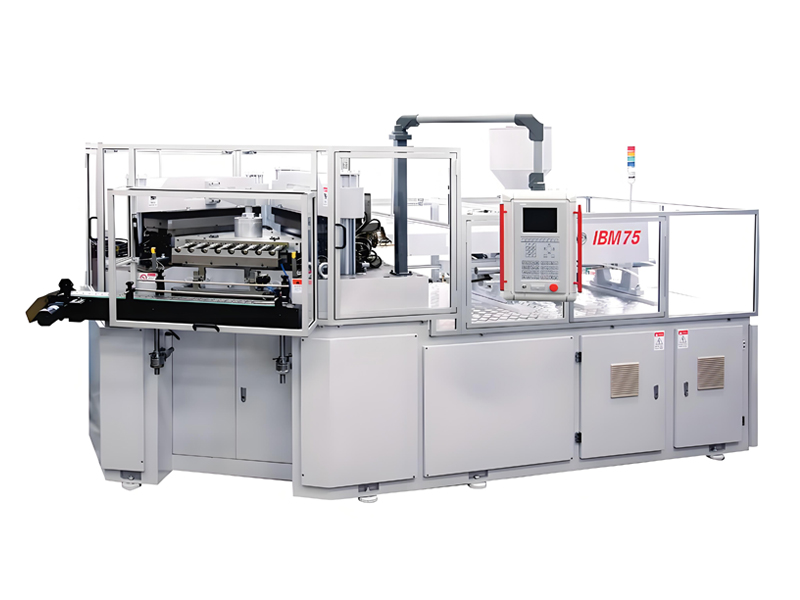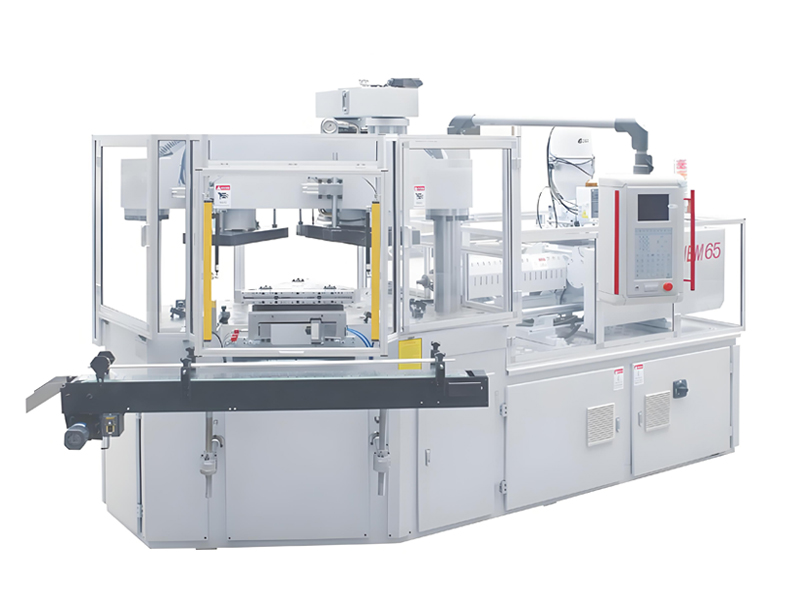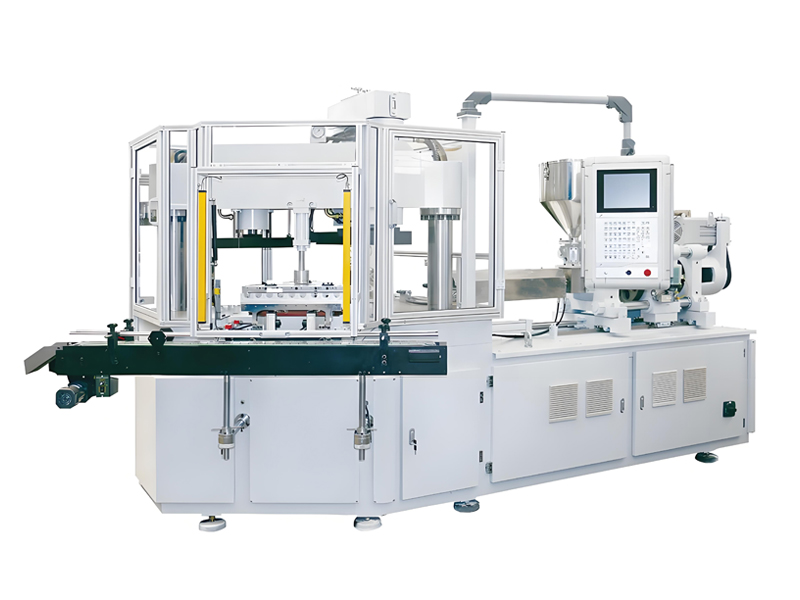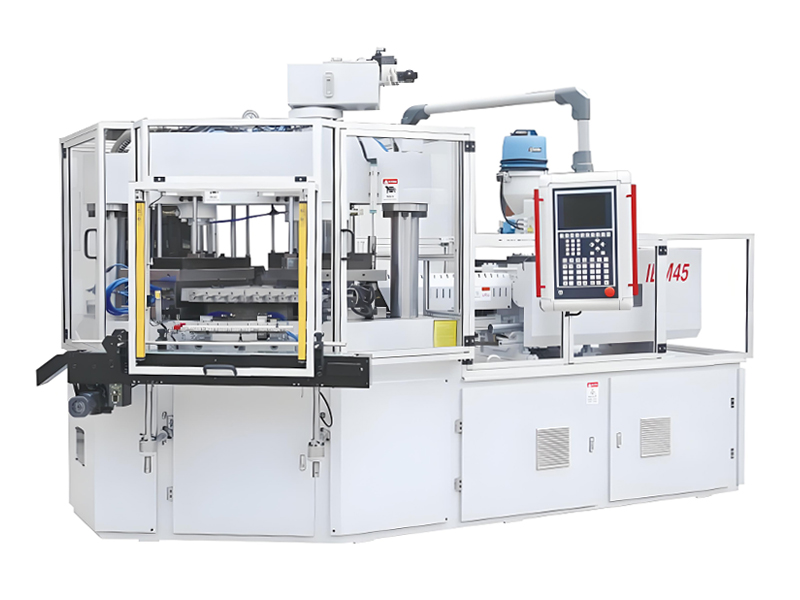
Against the backdrop of rising global energy prices and increasingly strict carbon emission regulations, energy efficiency has become a core competitive indicator for plastic processing equipment. As an important category of plastic molding equipment, injection blow molding machines consume a large amount of electric energy in the production process, among which the heating system accounts for 30% to 50% of the total energy consumption of the whole machine. Traditional resistance heating systems generally have problems such as low thermal efficiency, large heat loss and slow temperature response, which not only push up the production cost of enterprises, but also increase carbon emissions, making it difficult to meet the increasingly strict environmental protection and energy consumption standards. For plastic packaging manufacturers, choosing injection blow molding equipment with high-efficiency energy-saving heating systems has become an inevitable choice to reduce operating costs, improve product quality and achieve green transformation.
As a professional manufacturer of injection blow molding equipment in China, AiBiM has been deeply engaged in the research and development of energy-saving molding technology for many years. Its independently developed energy-saving heater system has been fully applied to the whole series of injection blow molding machines. Relying on advanced heating principles, optimized thermal insulation structure and intelligent temperature control algorithm, this system can achieve 30% to 50% energy saving effect compared with traditional heating systems, while significantly improving temperature control accuracy and production stability, helping customers reduce production costs while improving product qualification rate. This article will systematically analyze the energy consumption structure of injection blow molding machines, explain the core technical principles and composition of AiBiM energy-saving heater systems, compare the performance differences with traditional heating schemes, carry out detailed investment return and cost-benefit analysis, and share operation and maintenance guidelines, providing a comprehensive reference for plastic processing enterprises to select energy-saving equipment.
1. 사출 블로우 성형기의 에너지 소비 특성
1.1 기존 사출 블로우 성형 장비의 에너지 소비 구성
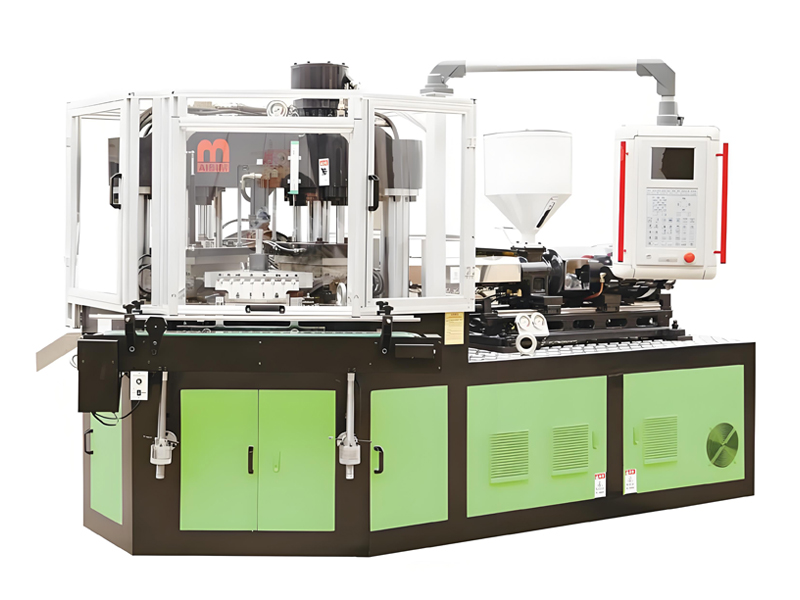
A complete injection blow molding machine mainly consists of injection system, die head heating system, clamping system, hydraulic drive system and electrical control system. The energy consumption of each part accounts for different proportions in the total power consumption of the whole machine. According to industry statistics, the heating system, including barrel heating and die head heating, accounts for the highest proportion, usually reaching 35% to 50% of the total energy consumption. The second is the hydraulic drive system, which accounts for about 30% to 40%. The rest of the systems such as cooling, traction and control account for about 10% to 25%.
The heating system is responsible for heating and melting solid plastic particles into a uniform molten state, providing qualified melt for subsequent blow molding. Its working principle is to convert electric energy into heat energy, which is transferred to the plastic inside through the barrel and die head wall. Traditional injection blow molding machines mostly use ordinary resistance heating rings, which generate heat through the resistance effect of electric heating wires, and then transfer the heat to the barrel through contact conduction. This heating method has low energy utilization rate. A large part of the heat is dissipated into the surrounding air in the form of radiation and convection, resulting in energy waste. At the same time, the surface temperature of the heating ring is very high, which also increases the ambient temperature of the workshop, increases the load of the workshop cooling system, and indirectly causes secondary energy consumption.
1.2 가열 시스템 성능이 생산 및 비용에 미치는 영향
The performance of the heating system directly affects multiple core indicators such as product quality, production efficiency and production cost. First of all, the accuracy and stability of temperature control determine the plasticizing quality of the melt. If the temperature fluctuation is large, it will lead to unstable melt viscosity, which will cause defects such as uneven wall thickness, flow marks and poor surface finish of the blow molded products, reducing the product qualification rate. For high-precision products such as medical devices and cosmetic packaging, small temperature deviations may lead to a large number of defective products.
Secondly, the heating speed and thermal efficiency affect the production efficiency. The heating system with fast temperature rise can shorten the preheating time of startup and improve the effective operation time of the equipment. The heating system with good thermal stability can reduce the temperature adjustment time during product change and improve the production flexibility of the equipment. More importantly, the energy consumption level of the heating system directly determines the electricity cost per unit product. For blow molding enterprises that operate continuously for 24 hours, the electricity cost saved every year is very considerable. Taking a medium-sized injection blow molding machine as an example, if the heating system saves 30% energy, it can save tens of thousands of dollars in electricity bills every year, which directly improves the profit level of enterprises.
1.3 에너지 절약형 가열 기술의 산업 발전 동향
With the global promotion of green manufacturing and the continuous rise of energy prices, energy-saving heating technology has become the main direction of technological upgrading of injection blow molding equipment. Governments of various countries have successively introduced energy efficiency standards for plastic machinery, requiring new equipment to meet higher energy efficiency indicators. At the same time, more and more end customers, especially large international brands, have put forward clear carbon emission reduction requirements for suppliers, forcing plastic processing enterprises to upgrade energy-saving equipment.
In this context, major equipment manufacturers in the world are increasing the research and development of energy-saving heating technology. From resistance heating to infrared heating, electromagnetic induction heating and other new heating methods, heating efficiency and control accuracy have been continuously improved. As a leading Chinese injection blow molding machine manufacturer, AiBiM has launched a new generation of energy-saving heater system after years of technical research and practical verification. This system not only achieves remarkable energy saving effect, but also has advantages in temperature control accuracy, service life and safety, reaching the international advanced level, and providing high cost-effective energy-saving solutions for global plastic processing enterprises.
2. AiBiM 에너지 절약 히터 시스템의 핵심 기술
AiBiM energy-saving heater system adopts a variety of advanced technologies to achieve comprehensive optimization from heat generation, heat transfer to heat preservation and control, significantly improving thermal energy utilization rate and temperature control accuracy. The system includes four core technical modules: high-efficiency heating element, optimized thermal insulation structure, multi-zone precision temperature control and intelligent control algorithm.
2.1 고효율 세라믹 적외선 가열 소자
The core of AiBiM energy-saving heater system is high-performance ceramic infrared heating element. Different from the traditional electric heating wire resistance heating, the ceramic heating element adopts the far-infrared radiation heating principle. After being energized, the heating element can generate far-infrared rays with a wavelength matching the absorption spectrum of plastic materials. This part of radiant heat can directly penetrate the barrel wall and be absorbed by the plastic material inside, reducing the intermediate heat transfer link and greatly improving the heat utilization rate.
The heating element is made of high-purity ceramic material, which has good thermal stability and insulation performance, and can work stably for a long time under high temperature environment. The service life of the heating element can reach more than 20,000 hours, which is 3 to 4 times that of the ordinary resistance heating ring, reducing the frequency and cost of later replacement. At the same time, the ceramic heating element has high safety performance, good insulation performance, and avoids the risk of electric leakage caused by oxidation and fracture of the traditional electric heating wire. Compared with the traditional resistance heating ring, the ceramic infrared heating technology can save 30% to 40% of electric energy under the same heating effect, which is the main source of energy saving benefit of the system.
2.2 다층 단열 구조 설계
While improving the heating efficiency, reducing ineffective heat loss is another important way to save energy. AiBiM energy-saving heater system is equipped with a specially designed multi-layer thermal insulation structure. A high-performance thermal insulation layer is added between the heating element and the outer shell, which is made of nano thermal insulation material with extremely low thermal conductivity, which can effectively block the outward conduction and radiation of heat, and reduce the heat dissipated into the air.
After adopting the thermal insulation structure, the surface temperature of the heater shell is reduced to below 50℃, which is much lower than the surface temperature of 150℃ to 200℃ of the traditional heating ring. This not only reduces heat loss, but also greatly improves the safety of the production site, avoiding the risk of scalding operators. At the same time, the reduction of heat dissipation to the workshop reduces the temperature rise of the production workshop, reduces the load of the workshop air conditioning and ventilation system, and saves the cooling energy consumption of the workshop, bringing secondary energy saving benefits. According to actual measurement, the optimized thermal insulation structure can reduce the heat loss of the heating system by more than 60%, further improving the comprehensive energy saving rate.
2.3 다중 구역 독립 정밀 온도 제어
The plasticizing process of injection blow molding requires different temperatures in different sections of the barrel and die head to ensure that the plastic gradually melts evenly from the feeding section to the metering section, avoiding material degradation caused by local overheating. AiBiM energy-saving heater system adopts multi-zone independent temperature control design, and each heating zone is independently controlled by an independent temperature control module, which can accurately set different temperatures according to the process requirements of each section.
The system is equipped with high-precision PT100 platinum resistance temperature sensors, with temperature detection accuracy up to ±0.1℃, which can feed back the real-time temperature of each zone to the control system at high speed. The temperature control module adopts advanced self-tuning PID algorithm, which can automatically adjust the output power according to the temperature deviation, so that the actual temperature is always stable near the set value. The temperature control accuracy can reach ±0.5℃, which is much higher than the ±2℃ to ±5℃ level of traditional temperature control systems. High-precision temperature control ensures the stability of melt plasticizing quality, reduces the fluctuation of product wall thickness and performance, and improves the product qualification rate. At the same time, precise temperature control also avoids energy waste caused by overheating, further improving energy utilization efficiency.
2.4 지능형 에너지 절감 제어 알고리즘
In addition to the optimization of hardware, AiBiM has also developed a special intelligent energy-saving control algorithm in terms of software control, which further reduces energy consumption through intelligent adjustment of heating output. The system can automatically identify the production state. In the standby state, the system automatically reduces the heating power and maintains the heat preservation temperature, avoiding the high-power continuous heating when there is no production demand. In the production state, the system dynamically adjusts the heating power of each zone according to the real-time load and temperature change rate, and maintains the temperature stability with the minimum energy consumption.
The algorithm also has a soft start function, which can gradually increase the temperature according to the set heating curve when starting up, avoiding the impact of instantaneous high-power start on the power grid, and also helping to extend the service life of the heating elements. For the production mode of frequent mold change and material change, the system can automatically call the corresponding temperature parameters and heating curve, which shortens the temperature adjustment time and reduces the energy waste and material waste in the debugging process. The intelligent control algorithm further improves the comprehensive energy saving rate of the system on the basis of hardware energy saving, and brings more stable production quality.
3. 기존 가열 시스템과의 성능 비교
3.1 에너지 절감률 및 전기 비용 비교
The most direct advantage of AiBiM energy-saving heater system compared with traditional resistance heating system is the significant reduction of energy consumption. According to a large number of actual customer production data, under the same production conditions and output, the energy-saving heater system can achieve a comprehensive energy saving rate of 35% to 50% in the heating part. Taking the common IBM-4S series injection blow molding machine as an example, the installed power of the traditional heating system is about 36kW, while the installed power of the energy-saving heating system is about 28kW, and the actual average operating power is reduced from 22kW to about 11kW, with an energy saving rate of 50%.
Calculated based on 7200 hours of annual operation and industrial electricity price of 0.1 US dollars per kWh, the traditional heating system consumes about 158,400 kWh of electricity per year, with an electricity cost of 15,840 US dollars. The energy-saving heater system consumes about 79,200 kWh of electricity per year, with an electricity cost of 7,920 US dollars. It can save 7,920 US dollars in electricity bills every year only for the heating part. If the indirect benefits such as workshop cooling energy saving and production efficiency improvement are included, the annual comprehensive cost savings are higher. For enterprises with multiple production lines, the annual cost savings are very considerable.
3.2 온도 제어 정확도 및 제품 품질 비교
In terms of temperature control accuracy, the traditional ordinary temperature control system has a temperature fluctuation range of ±2℃ to ±5℃ due to the limitations of heating elements and control algorithms, which is likely to cause unstable melt quality. The AiBiM energy-saving heater system adopts high-precision sensors and self-tuning PID control algorithm, and the temperature fluctuation is controlled within ±0.5℃, which greatly improves the stability of melt plasticizing effect.
Stable and uniform melt quality brings more stable product performance. The wall thickness deviation of blow molded products is reduced, the surface finish is improved, and the defective rate caused by temperature reasons is reduced from 3% to 5% of traditional equipment to less than 0.5%. Taking the production of 5 million cosmetic bottles per year as an example, reducing the defective rate by 2.5% can reduce 125,000 defective products, which is equivalent to saving tens of thousands of dollars in raw material costs. At the same time, stable product quality helps enterprises win more high-end customer orders and improve product added value.
3.3 수명 및 유지보수 비용 비교
Traditional resistance heating rings are prone to oxidation and fracture of heating wires due to long-term high-temperature work, with an average service life of about 3,000 to 5,000 hours. They need to be replaced frequently, which not only increases the cost of spare parts, but also causes production interruption and affects production efficiency. The ceramic heating elements used in AiBiM energy-saving heater system have excellent high temperature resistance and oxidation resistance, with an average service life of more than 20,000 hours, which is 4 to 6 times that of traditional heating rings.
Long service life reduces the frequency of replacement and the cost of spare parts. At the same time, it reduces the shutdown time caused by heating element failure and improves the effective operation rate of the equipment. In terms of daily maintenance, the energy-saving heater system has a modular design, which is easy to disassemble and replace, and the maintenance workload is small. Calculated comprehensively, the annual maintenance cost of the energy-saving heating system is only about 30% of that of the traditional heating system, which further reduces the long-term operation cost of the equipment.
3.4 안전 및 작업장 환경 비교
The surface temperature of the traditional resistance heating ring can reach 150℃ to 200℃ during operation, which has a high risk of scalding. At the same time, a large amount of heat is dissipated into the workshop, leading to an increase in the ambient temperature of the workshop. In summer, the temperature near the equipment can even reach more than 40℃, which worsens the working environment of workers and increases the load of the workshop cooling system.
The surface temperature of the AiBiM energy-saving heater system shell is below 50℃ due to the multi-layer thermal insulation structure, which is safe to touch and greatly reduces the risk of scalding. At the same time, the heat dissipated into the workshop is reduced by more than 60%, which effectively controls the temperature rise of the workshop, improves the working environment of employees, and reduces the energy consumption of workshop air conditioning. According to actual measurement, for a workshop equipped with air conditioning, each injection blow molding machine equipped with an energy-saving heating system can save about 30% of the air conditioning cooling load, bringing additional energy saving benefits.
4. AiBiM 기계의 에너지 절약형 히터 시스템 구성 및 적용
AiBiM은 모든 시리즈의 사출 블로우 성형 기계에 에너지 절약형 히터 시스템을 표준으로 완비했습니다. 고객은 또한 다양한 생산 시나리오와 재료 유형에 적응하기 위해 실제 필요에 따라 더 높은 구성 방식을 선택할 수 있습니다.
4.1 IBM-2S 시리즈 기계의 표준 구성
The IBM-2S series double-station injection blow molding machine is a cost-effective model of AiBiM, which is suitable for small and medium-sized production enterprises. This series of machines is equipped with AiBiM energy-saving heater system as standard, including ceramic infrared heating elements, multi-layer thermal insulation structure and multi-zone independent PID temperature control. The number of heating zones is reasonably configured according to the specifications of the screw, usually 4 to 6 zones for the barrel and 2 to 3 zones for the die head, which can meet the temperature control requirements of conventional PP, PE and other materials.
The standard energy-saving heater system can achieve a comprehensive energy saving rate of about 35% for the heating part, which significantly reduces the production cost for small and medium-sized customers. The system has a simple structure, stable performance and convenient maintenance, and is very suitable for conventional daily chemical packaging, pharmaceutical packaging and other product production. The FOB price of IBM-2S series machines equipped with standard energy-saving heater system ranges from 28,000 to 38,000 US dollars. Compared with the traditional configuration, the price increase is very small, but the long-term operation cost is greatly reduced, and the cost performance is very high.
4.2 IBM-4S 시리즈 기계의 고급 구성
The IBM-4S series four-station high-speed injection blow molding machine is the flagship model of AiBiM, which is oriented to large-scale mass production scenarios. This series of machines adopts a higher configuration energy-saving heater system, adding more heating zones, with 6 to 8 zones for the barrel and 3 to 5 zones for the die head, and the temperature control is more refined. The system is equipped with a more advanced intelligent temperature control algorithm module, which supports automatic formula calling and production state adaptive adjustment, further improving the energy saving effect and production stability.
The high-end configuration system can achieve a comprehensive energy saving rate of 40% to 50% in the heating part, and the temperature control accuracy is higher, which can meet the production needs of high-precision products such as cosmetic bottles and medical devices. For special materials such as PETG and PCTG that require high temperature control, the high-end configuration system can also achieve better plasticizing effect and product quality. The FOB price of IBM-4S series machines equipped with high-end energy-saving heater system ranges from 65,000 to 110,000 US dollars, which varies according to the number of cavities and automation configuration. Although the one-time investment is slightly higher, the energy cost saved every year and the improvement of product qualification rate can quickly recover the cost difference.
4.3 특수 소재를 위한 맞춤형 솔루션
For customers who need to process special materials such as high-temperature resistant engineering plastics, biodegradable plastics and transparent materials, AiBiM can provide customized energy-saving heater system solutions. According to the processing temperature range, melt characteristics and quality requirements of different materials, the system can adjust the heating power, number of zones, temperature control mode and heating curve to ensure that various materials can achieve the best plasticizing effect.
For example, for PETG transparent materials that are sensitive to temperature and prone to yellowing, the system can be equipped with a more precise low-temperature uniform heating scheme to avoid local overheating leading to material degradation, ensuring high transparency and surface quality of products. For degradable materials such as PLA, the system can be equipped with a special low-shear heating and plasticizing scheme to protect the molecular chain structure of materials and maintain the mechanical properties of products. Customized solutions meet the diversified production needs of customers and help enterprises expand the product range and market space.
5. 투자 수익 및 비용 편익 분석
에너지 절약형 히터 시스템에 투자하면 기업에 지속적인 비용 절감과 효율성 개선을 가져올 수 있습니다. 다음은 가장 널리 사용되는 IBM-4S 시리즈 4-캐비티 사출 블로우 성형 기계를 예로 들어 상세한 투자 회수 분석을 수행합니다.
5.1 증분 투자 계산
Compared with the traditional configuration injection blow molding machine, the price of the model equipped with AiBiM energy-saving heater system is slightly higher. Taking the IBM-4S 4-cavity machine as an example, the price of the traditional configuration model is about 70,000 US dollars, and the price of the model equipped with high-end energy-saving heater system is about 75,000 US dollars, with an incremental investment of about 5,000 US dollars. This part of the incremental investment is mainly used for the upgrading of heating elements, thermal insulation structure and temperature control system.
It should be noted that the above is only the price difference of new equipment. For existing old equipment, AiBiM also provides energy-saving transformation services. The cost of transforming the traditional heating system into an energy-saving heater system is about 3,500 to 5,500 US dollars per machine, which is lower than the price difference of new equipment, and can also achieve similar energy saving effects. This provides a low-cost upgrading path for enterprises that already have traditional equipment, without replacing the whole machine, and can achieve energy-saving and efficiency-increasing effects through transformation.
5.2 연간 종합 편익 계산
에너지 절약 히터 시스템이 가져오는 이점은 다면적이며, 직접적인 전기 비용 절감, 개선된 제품 합격률에 따른 원자재 비용 절감, 유지보수 비용 절감, 작업장 냉방 에너지 절감 등이 포함됩니다.
First of all, direct electricity cost savings. As calculated above, the heating part saves 7,920 US dollars in electricity bills every year. Secondly, the improvement of product qualification rate reduces raw material waste. According to the reduction of defective rate by 2%, with an annual output of 7.2 million products and a raw material cost of 0.025 US dollars per product, the annual raw material cost savings are about 36,000 US dollars. Thirdly, maintenance cost savings. The service life of heating elements is prolonged, reducing replacement and maintenance costs, saving about 1,200 US dollars per year. Fourthly, workshop cooling energy saving. The reduction of heat dissipation reduces the air conditioning load, saving about 1,500 US dollars in electricity bills every year.
요약하면, 에너지 절약형 히터 시스템이 가져오는 연간 종합 이익은 약 46,620달러입니다. 직접 전기 비용 절감과 유지보수 비용 절감만 계산하더라도 연간 직접 이익은 약 9,120달러입니다.
5.3 투자 회수 기간 계산
Calculated based on the incremental investment of 5,000 US dollars for new equipment and the annual comprehensive benefit of 46,620 US dollars, the static investment payback period is only about 5,000 / 46,620 ≈ 0.11 years, that is, about 1.3 months. Even if only the direct energy saving and maintenance cost savings are considered, the investment payback period is about 5,000 / 9,120 ≈ 0.55 years, that is, about 6.6 months.
For the energy-saving transformation of old equipment, the transformation cost is about 4,500 US dollars, and the investment payback period is shorter, only about 1 month for comprehensive benefits and about 6 months for direct benefits. It can be seen that whether it is purchasing new energy-saving equipment or transforming existing equipment, the energy-saving heater system has a very high return on investment, and the investment can be recovered in a very short time, and then continue to create cost savings for enterprises.
It should be emphasized that the above calculation is based on the general electricity price level. For regions with higher electricity prices, such as Europe and North America, the electricity cost saved is higher and the payback period is shorter. For large enterprises with multiple production lines, the total benefit is more considerable.
6. 에너지 절감 히터 시스템의 운영 및 유지보수 지침
에너지 절약형 히터 시스템의 장기적인 안정적인 운영과 최적의 에너지 절약 효과를 보장하려면 표준화된 일상 운영 및 유지보수가 필수적입니다. 다음은 AiBiM이 수년간의 경험을 바탕으로 정리한 최적의 운영 및 유지보수 관행입니다.
6.1 표준화된 운영 및 사용 규격
When using the equipment, operators should strictly follow the operation manual and set reasonable temperature parameters according to different material types and product process requirements. Do not set the temperature too high blindly, so as not to cause material degradation and energy waste. Make full use of the formula storage function of the control system, and call the corresponding temperature parameters directly when changing products, to avoid repeated debugging and reduce energy waste during debugging.
When starting the machine, use the soft start heating function to gradually increase the temperature according to the preset heating curve, which helps to protect the heating elements and extend their service life. During production shutdown, the system should be set to the heat preservation state first, and then the heating should be turned off after a period of time, to avoid frequent temperature rise and fall. Frequent start-stop will not only increase energy consumption, but also affect the service life of heating elements. For short-term shutdown, it is recommended to maintain the heat preservation state instead of completely turning off the heating, which can resume production faster and save more energy than reheating.
6.2 일일 점검 및 정기 유지보수
Establish a daily inspection system for the heating system. Before starting the machine every day, check whether the wiring of each heating zone is firm, whether there is looseness or aging, and whether the temperature sensor is installed in place. During operation, observe whether the temperature display of each zone is normal and whether there is alarm information. If abnormal temperature rise or large fluctuation is found, stop the machine for inspection in time.
Carry out regular maintenance once a month. Clean the dust and dirt on the surface of the heater to avoid affecting the heat dissipation and insulation effect. Check the fastening of the heating ring and the thermal insulation layer to ensure close fit and avoid affecting the heating efficiency due to gaps. Regularly calibrate the temperature sensor and temperature control module, usually once every 3 to 6 months, to ensure the accuracy of temperature detection and control. For long-term continuous operation equipment, check the resistance value of the heating element every quarter, judge the aging degree of the element, and replace it in time before failure, to avoid sudden shutdown during production.
6.3 일반적인 고장 및 문제 해결
에너지 절약 히터 시스템은 신뢰성이 높지만 장기간 사용 후 일부 간단한 고장이 발생할 수 있습니다. 일반적인 고장에는 온도 편차, 개별 존 가열 실패, 알람 프롬프트 등이 포함됩니다. 대부분의 고장은 간단한 검사와 처리를 통해 신속히 해결할 수 있습니다.
If the temperature deviation of a certain zone is large, first check whether the temperature sensor is loose or damaged, and then check whether the heating element works normally. If a certain zone does not heat up, check whether the corresponding circuit breaker is tripped and whether the wiring terminal is loose. If there is an over-temperature alarm, check whether the solid state relay is stuck and whether the temperature control module works normally. For complex faults that cannot be solved on site, you can contact AiBiM after-sales service team. With the help of the remote diagnosis function, most electrical control problems can be solved online, reducing downtime losses.
7. AiBiM 에너지 절약형 사출 블로우 성형기를 선택해야 하는 이유
7.1 독자적인 R&D 역량 및 성숙된 기술 검증
AiBiM has a professional R&D team composed of senior engineers with many years of experience in injection blow molding technology. The energy-saving heater system is independently developed by the company, and has undergone long-term laboratory testing and customer site verification. The technology is mature and reliable, and has obtained a number of technical patents. Different from some manufacturers who simply purchase finished heating rings for assembly, AiBiM carries out systematic optimization design from the aspects of heating principle, structural matching and control algorithm combined with the characteristics of injection blow molding process, so that the energy-saving system can give full play to the best effect in the actual production of blow molding.
At present, thousands of AiBiM injection blow molding machines equipped with energy-saving heater systems have been put into use in dozens of countries and regions around the world, and have been widely recognized by customers for their excellent energy saving effect and stable operation performance. Rich practical experience also enables AiBiM to continuously optimize and upgrade the system according to customer feedback, maintaining the leading position of technology.
7.2 엄격한 품질 관리 및 신뢰할 수 있는 제품 품질
AiBiM implements strict quality control on all components of the energy-saving heater system. Core components such as heating elements, temperature sensors and control modules all adopt well-known brands with stable performance, and undergo strict incoming inspection. Each set of heating system must undergo multiple tests such as power-on test, temperature uniformity test and insulation performance test before leaving the factory, and can be installed on the machine only after all indicators meet the standards.
Strict quality control ensures the stability and safety of the system, with low failure rate and long service life, reducing the later use cost for customers. All heating systems enjoy a 12-month free warranty, and core components enjoy a longer warranty period, so customers can use them with confidence.
7.3 완벽한 애프터세일즈 서비스 및 기술 지원
AiBiM provides customers with comprehensive after-sales service and technical support. After the equipment arrives at the site, professional engineers are responsible for installation, commissioning and operation training to ensure that customers’ operators can master the use and daily maintenance methods of the energy-saving system. During the warranty period, any quality problems are repaired free of charge. After the warranty period, lifetime technical support and preferential supply of spare parts are provided.
The equipment supports remote diagnosis function. After customer authorization, after-sales engineers can remotely check the operation status of the heating system, troubleshoot and solve most program and parameter problems online, greatly reducing downtime losses. For on-site maintenance needs, the global after-sales service network can respond quickly and provide on-site service in time. Perfect after-sales service ensures that customers can always maintain the best state of equipment and obtain sustained energy-saving benefits.
결론
Under the background of rising global energy costs and increasingly strict environmental protection requirements, energy-saving transformation has become an inevitable choice for the development of plastic processing industry. As a major energy consumer of injection blow molding machines, the upgrading of heating system is the most direct and cost-effective energy-saving measure. AiBiM energy-saving heater system achieves remarkable energy saving effect through advanced ceramic infrared heating technology, optimized thermal insulation structure, high-precision temperature control and intelligent control algorithm, which can reduce heating energy consumption by 35% to 50%, and bring multiple benefits such as improved product quality, reduced maintenance cost and improved workshop environment.
Whether purchasing new energy-saving injection blow molding machines or carrying out energy-saving transformation of existing equipment, the investment payback period is very short, usually only a few months, and then continues to create cost savings for enterprises. As a professional Chinese injection blow molding machine manufacturer, AiBiM is committed to providing global customers with high cost-effective energy-saving equipment solutions. With advanced technology, reliable quality and perfect service, it helps enterprises reduce production costs, improve market competitiveness, and achieve green and sustainable development. Choosing AiBiM injection blow molding machine with energy-saving heater system is not only an investment to reduce operating costs, but also a strategic choice to cope with future energy price risks and environmental regulatory requirements.