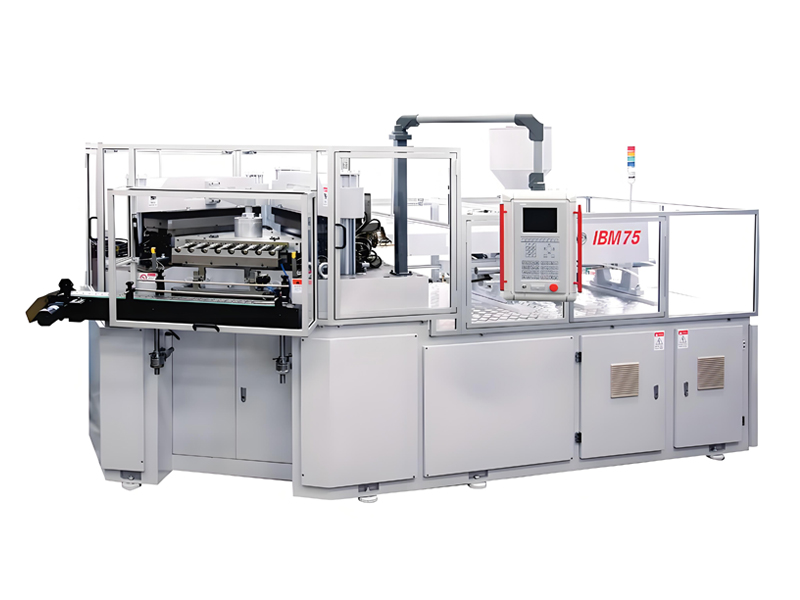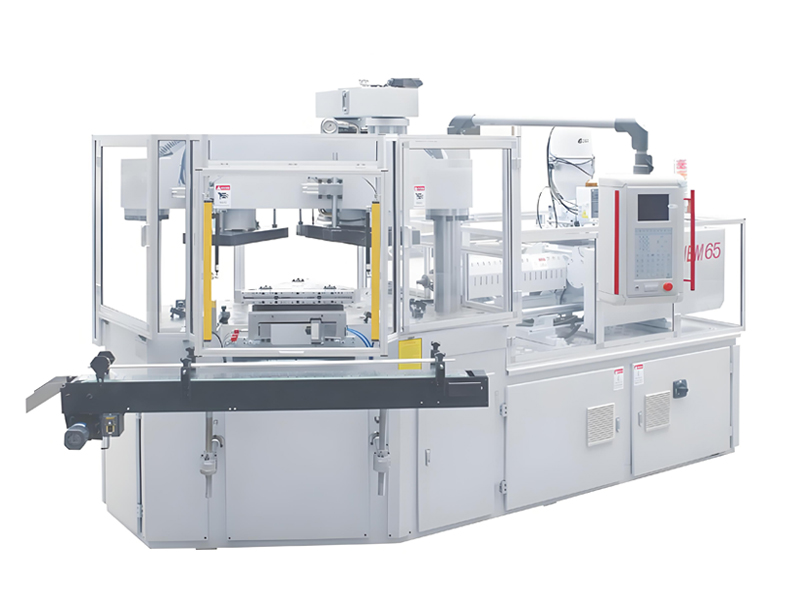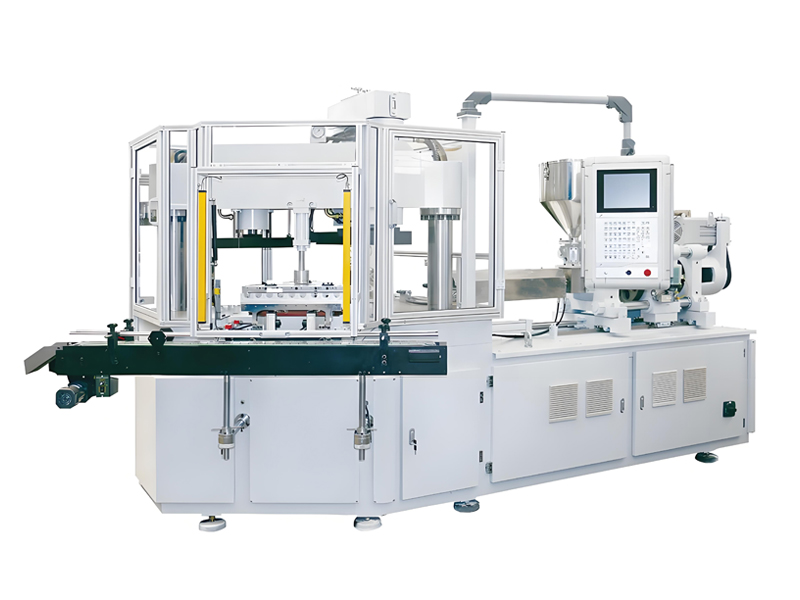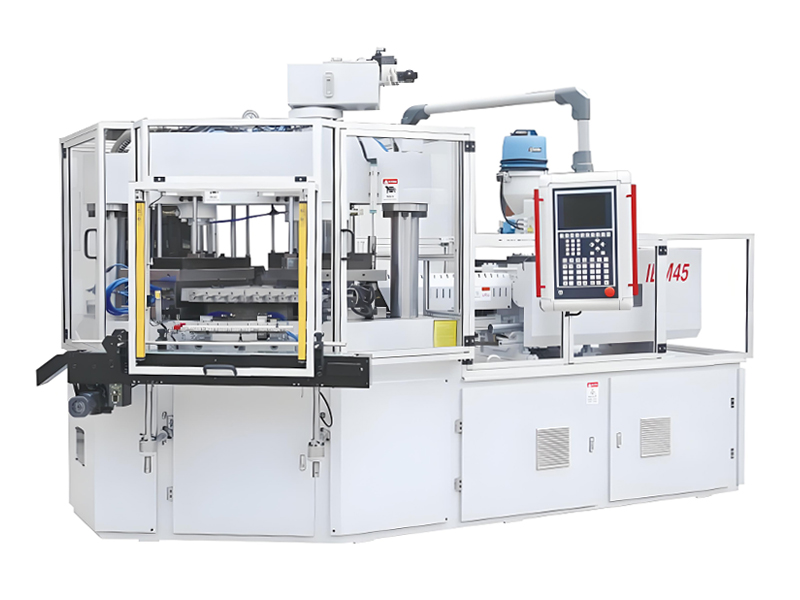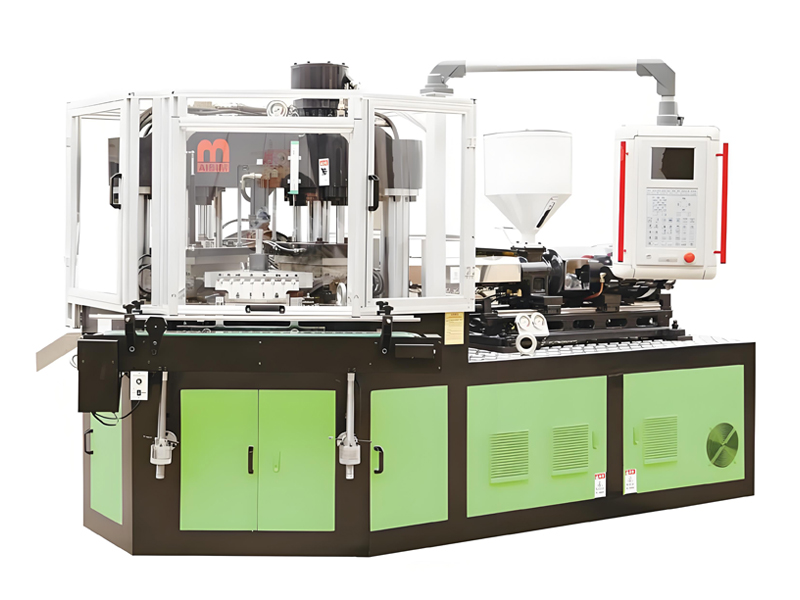
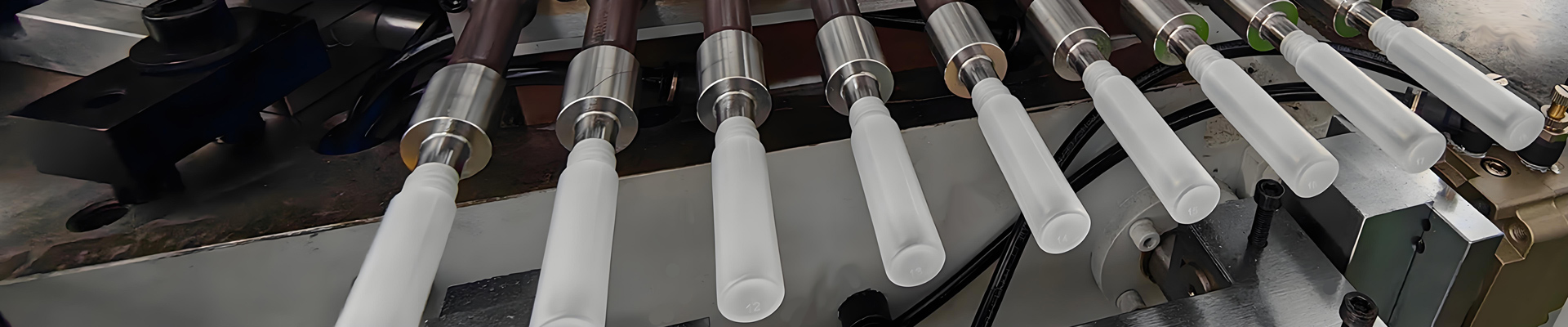
Running an injection blow molding line around the clock is no longer an exception reserved for the largest pharmaceutical and personal-care groups. For bottle makers that supply sterile pharmaceutical containers, oral syrup bottles, cosmetic essence bottles, and food condiment bottles under long-term contracts, 24/7 operation has become the normal way to recover equipment cost and meet steady demand. Aibim, a Wanplas factory with more than 12 years of experience in plastic machinery and two decades focused on injection blow molding, builds three-station, one-step IBM machines in the volume range from 3 ml to 1000 ml that are engineered for exactly this duty. This article explains what continuous production truly demands, how Aibim machines achieve running stability, and how a disciplined preventive maintenance schedule keeps them running for years without major unplanned stops.
The core idea is simple to state and hard to execute: stability is not a feature you buy once, it is a system you operate every shift. 사출 blow molding combines an injection stage that forms the preform, a transfer stage, and a blow stage that expands the preform against a chilled cavity in a single automatic sequence. Because there is no flash, no scrap parison, and no post-mold trimming, the IBM process is inherently clean and repeatable, which is why it fits sterile and high-clarity bottle programs so well. But that same closed loop only stays profitable when the machine, the mold, the auxiliary systems, and the people around them are all maintained on a planned calendar. The pages that follow give plant managers, maintenance leads, and production engineers a complete framework for running Aibim IBM lines seven days a week.
24/7 연속 생산이 IBM 기계에 의미하는 바와 적용 분야
Continuous production means the machine runs through all available hours except for planned stops, and those planned stops are themselves scheduled, recorded, and minimized. It is not the same as simply leaving a machine switched on. A true 24/7 program on an injection blow molding line assumes three shifts, a material supply that never runs dry, a packing and downstream buffer that never backs up, and a maintenance plan that converts most failures into predicted, calendar-based service events. When these conditions are met, an Aibim IBM line can deliver a utilization in the high 90 percent range, with the only lost time being the short windows for mold changes, grade changes, and the highest-tier service items.
The best-fit scenarios are surprisingly narrow, and that is a good thing. Continuous running pays off when a single product or a small family of products is ordered in large, repeatable volume with little variation. Pharmaceutical bottle programs are the classic case: a hospital-supply manufacturer may need the same 60 ml HDPE pill bottle or the same 100 ml PETG diagnostic bottle for years, with forecasts that change slowly. Daily-chemical makers running a stable 30 ml essence bottle or a 50 ml lotion bottle for a global brand also fit. 식품 condiment producers with a constant 200 ml sauce bottle program are another strong fit. In each case the mold stays mounted for months, the material grade is fixed, and the line becomes a utility that simply converts resin into finished bottles at a known rate.
Continuous running is the wrong choice for a job shop that changes bottle shape every few days. Every mold change costs setup time and the risk of first-piece scrap, so a low-mix, high-volume profile is what makes 24/7 economics work. The table below contrasts the two operating profiles so a plant can decide whether the continuous model fits its order book before committing to the maintenance discipline this article describes.
IBM 라인의 연속 가동 대비 배치 가동
| Operating Factor | 24/7 Continuous Profile | Batch or Single-Shift Profile |
|---|---|---|
| Order pattern | Stable, long contracts, low mix | Frequent changeovers, many SKUs |
| Mold mounted time | Months per setup | Days or weeks per setup |
| Maintenance model | Calendar-based, predictive | Run-to-failure tolerated |
| 인건비 need | Three shifts, technician rotating | One or two shifts |
| Cost recovery speed | Fast, high utilization | Slower, idle hours dominate |
| Best fit industry | Pharma, daily chemical, food | Custom packaging, trial runs |
The decision to run continuously should be made with the maintenance plan already in hand, because the plan is what protects the return on the machine. Aibim supports this decision with its own CNC center for spare parts, a 100+ lines per year production capacity, and export experience to more than 40 countries, so the supply of machines and parts behind a 24/7 program is itself steady. The next sections explain the engineering that keeps each running hour reliable.
안정성 엔지니어링: 중단 없는 IBM 운전의 네 가지 기둥
Stable 24/7 output from an injection blow molding machine rests on four independent engineering pillars: mechanical rigidity, thermal stability of the hydraulic and servo systems, temperature-control accuracy, and control-system immunity to electrical interference. If any one pillar is weak, the line will drift, and drift during continuous running accumulates into scrap, cycle-time loss, and eventually a forced stop. Aibim designs each IBM model around all four pillars at once rather than treating them as separate upgrades.
기둥 1: 형체 프레임의 기계적 강성
The clamping unit is where rigidity matters most. During the blow stage the cavity must hold a precise shape against internal air pressure while the preform is expanded, and during ejection the part must release cleanly. Aibim uses a single-crossbeam, double-pole clamping framework with enlarged mold-setting space. This geometry resists the deflection that causes wall-thickness variation and flash at the parting line. Tie bars, platens, and the crossbeam are sized so that under rated clamping force the platen deflection stays small even after months of continuous cycling. When the frame is rigid, the mold seats repeatably, the preform transfers without distortion, and the finished bottle neck finish stays within tolerance batch after batch.
두 번째 기둥: 유압 및 서보 열 안정성
Hydraulic and servo systems generate heat, and heat is the enemy of repeatability. Aibim IBM machines apply PREFILL technology together with a variable displacement pump pressurizing system in the hydraulic circuit. The variable displacement pump delivers flow only when the process demands it, which cuts the continuous energy loss that a fixed pump would dump as heat into the oil. Lower oil temperature means steadier viscosity, steadier injection speed, and a longer life for seals and valves. On the servo side, the drive and motor are sized with thermal margin and forced ventilation so that a 24/7 duty cycle does not push the inverter into thermal derating. Thermal stability is what lets the same shot weight repeat at 2 a.m. and at 2 p.m.
세 번째 축: 온도 제어 정밀도
사출 blow molding is a thermal process at every station. The barrel must plasticize the resin to a uniform melt with a controlled melt flow rate, the preform mold must set the parison at a temperature that still allows clean blow expansion, and the blow mold must chill the bottle quickly to hold clarity and shape. Aibim zones the barrel and the molds with independent closed-loop control, holding each zone near a setpoint with an accuracy on the order of plus or minus 1 degree Celsius. That tight band is what protects bottle weight consistency, neck dimensional stability, and surface gloss. In continuous running, the temperature loop must also reject disturbances from ambient swings and from the heat of neighboring zones, which is why zone isolation and good cooling-water control matter as much as the controller itself.
네 번째 기둥: 제어 시스템 내성 및 파라미터 이식성
The fourth pillar is the control system that ties the others together. Aibim stores complete process recipes on an SD card, so a proven parameter set can be carried from one machine to another without re-tuning by hand. This protects stability during expansion: when a second or third line is added, the first line’s recipe is the seed for the next. The controller also manages the stripper station through a long-distance digital laser sensor for mold safety and a light curtain for personal safety, so the machine can keep running with operators working safely around it. Electrical noise from servo drives, nearby compressors, and plant power fluctuation is handled through filtered supplies, proper grounding, and isolated signal lines, which keeps the temperature and position loops immune to interference that would otherwise show up as random scrap.
안정성은 하나의 핵심이 아니라 네 가지 기둥의 합입니다. 견고한 프레임, 시원한 유압 및 서보 트레인, 좁은 온도 대역, 간섭에 면역인 컨트롤러가 모두 동시에 유지되어야 24/7 IBM 라인이 수익성을 유지할 수 있습니다.
연속 운전을 위한 핵심 부품 수명 및 MTBF 참고치
Mean time between failures, expressed here as running hours or months under a 24/7 load, is the planning backbone of any preventive program. The values below are representative planning figures for Aibim IBM machines running three shifts with the maintenance tiers described later in this article. They are not guarantees and will shift with material abrasiveness, cooling-water quality, and ambient conditions, but they give maintenance leads a calendar to work against. The practical use of an MTBF number is to schedule the replacement or inspection just before the expected wear point, so the part is changed on a planned stop rather than after it fails.
24/7 가동 조건의 대표 부품 수명 표
| Component | Typical Life Under 24/7 | Failure Mode at Wear | Planning Action |
|---|---|---|---|
| Screw and barrel set | 18 to 30 months | Wear raises back pressure need, degrades plasticizing | Measure clearance at quarter tier; order ahead |
| 사출 cylinder seals | 9 to 15 months | External weep, pressure loss | Keep seal kit; replace at half-year tier |
| Hydraulic oil | 6 months to clean change | Contamination, varnish, valve stick | Sample monthly; replace at half-year |
| Servo drive cooling fan | 12 to 24 months | Over-temperature derating, alarm | Spare fan on site; swap at year tier |
| Heating band and thermocouple | 12 to 18 months | Open circuit, temperature drift | Spares stocked; calibrate at quarter tier |
| Mold guide pin and bushing | 15 to 24 months | Misalignment, parting-line flash | Lube weekly; inspect at half-year |
| Ejector pin and stripper | 15 to 24 months | Sticking, drag marks | Clean shift; refurbish at half-year |
| Clamp linkage bronze bush | 18 to 30 months | Play, uneven clamping force | Re-grease half-year; replace at year |
These numbers should be treated as a living record. The most mature plants keep a per-machine log that updates the real replacement date next to the plan, and over time the plan converges with reality. Aibim supplies the maintenance structure and the spare parts, while the plant owns the log. The combination is what turns a list of estimates into a dependable production calendar.
예방 정비 일정: 교대부터 연간 등급까지
The preventive maintenance schedule is the heart of this article and the single most important document for a 24/7 IBM program. It is organized into six tiers: shift, weekly, monthly, quarterly, half-year, and annual. Each tier lists the inspection item, the acceptance standard, the tool or method, the responsible person, and the record that must be made. The discipline of writing the record is what makes the plan real; a check that is not logged did not happen from an audit point of view. The same structure is applied identically across all Aibim IBM models so that a technician moving between an IBM55, an IBM65, and an IBM75 needs no new procedure.
8시간마다 수행되는 교대 등급 점검
| Tier | Inspection Item | Standard / Criterion | Tool / Method | Responsible | Record |
|---|---|---|---|---|---|
| Shift | Hydraulic oil temperature and level | Temp within band, level at mark | HMI readout, sight glass | Operator | Shift log |
| Shift | Cooling water temperature and flow | Setpoint plus or minus 2 C, flow steady | Thermometer, flow indicator | Operator | Shift log |
| Shift | Safety door and light curtain function | Stops cycle on open | Manual test | Operator | Shift log |
| Shift | Alarm and event history review | No active or repeated alarms | HMI alarm list | Operator | Shift log |
| Shift | First-piece inspection | Weight, neck, visual pass | Scale, gauge, visual | Operator or QC | QC sheet |
주간, 월간 및 분기별 단계
| Tier | Inspection Item | Standard / Criterion | Tool / Method | Responsible | Record |
|---|---|---|---|---|---|
| Weekly | Fastener torque recheck | At spec, no slack | Torque wrench | Technician | Weekly sheet |
| Weekly | Lubrication of lubrication points | Visible film, no excess | Grease gun | Technician | Weekly sheet |
| Weekly | Mold water line descaling | Flow restored | Descale solution, flush | Technician | Weekly sheet |
| Weekly | Cavity surface cleaning | No deposit, no scratch | Soft cloth, approved cleaner | Technician | Weekly sheet |
| Weekly | Sensor calibration check | Reads match reference | Reference gauge | Technician | Weekly sheet |
| Monthly | Hydraulic oil cleanliness | Within ISO 4406 / NAS grade | Patch test, lab or kit | Technician | Monthly report |
| Monthly | Electrical cabinet cleaning and terminals | No dust, no loose screw | Vacuum, screwdriver | Electrician | Monthly report |
| Monthly | Servo parameter backup | Backup saved off machine | SD card, PC | Electrician | Monthly report |
| Monthly | Air line filter drain | No water in bowl | Manual drain | Technician | Monthly report |
| Quarterly | Screw and barrel clearance | Within wear limit | Air gauge, feeler | Senior tech | Quarter report |
| Quarterly | Clamping force calibration | Within plus or minus a few percent | Hydraulic gauge, load cell | Senior tech | Quarter report |
| Quarterly | Temperature loop calibration | Zone matches reference | Surface probe | Senior tech | Quarter report |
| Quarterly | Vacuum and exhaust system | Pull steady, no block | Gauge, inspect line | Senior tech | Quarter report |
반기 및 연간 등급
| Tier | Inspection Item | Standard / Criterion | Tool / Method | Responsible | Record |
|---|---|---|---|---|---|
| Half-year | Hydraulic oil replacement | New oil, flushed system | Pump, filter change | Technician | 서비스 record |
| Half-year | Guide and gearbox lubrication | Fresh grease, no contamination | Lube, inspect | Technician | 서비스 record |
| Half-year | Mold overhaul and refurbish | Within tolerance, polished | Bench, polish, measure | Mold tech | 서비스 record |
| Half-year | Safety interlock function test | All interlocks verified | Function test | Electrician | 서비스 record |
| Annual | Full machine accuracy recheck | Per acceptance spec | Full gauge set | Senior tech | Annual report |
| Annual | Spare parts inventory count | Stock matches plan | Stock list | Planner | Annual report |
| Annual | 에너지 baseline review | kWh per thousand pieces set | Meter data | Planner | Annual report |
| Annual | Control firmware upgrade review | Decision logged | Review with supplier | Engineer | Annual report |
The schedule works only when the plant assigns a clear owner to each tier and treats the record as a quality document. Aibim supplies the checklists in both paper and digital form, and because recipes travel on the SD card, the maintenance history can travel with the machine when a line is relocated or resold. The cadence above is the baseline; plants with exceptionally abrasive fills or poor water quality may tighten the oil and descaling intervals, which is exactly the kind of local adjustment the framework is built to absorb.
상태 모니터링 및 예측 정비
Preventive maintenance keeps failure off the calendar by acting on time. Predictive maintenance goes one step further: it watches the machine’s vital signs and acts when the trend, not the clock, says a part is wearing out. For a 24/7 IBM line, predictive tools are the difference between a planned two-hour stop and a sudden weekend breakdown. The good news is that most of the signals are already present in the machine and only need to be observed with intent.
Vibration analysis on the servo motor, the hydraulic pump, and the clamp linkage catches imbalance and bearing wear weeks before a hard failure. Oil analysis, beyond the monthly patch test, tracks particle count and additive depletion to confirm the exact right moment for the half-year oil change. Motor current signature analysis reads the load drawn by the plasticizing screw and the clamp; a creeping current at constant output is an early sign of barrel wear or rising friction. Temperature trending across zones and cooling loops exposes a fouling heat exchanger long before it forces a cycle-time penalty. The table below ranks these methods by the effort they need and the downtime they typically avoid, expressed in relative levels and lost hours rather than cost.
노력과 이점에 따라 순위가 매겨진 예측 방법
| Method | Implementation Effort | Downtime Avoided | Best Target |
|---|---|---|---|
| Temperature trending | Low | Medium, several hours | Barrel, mold, oil |
| Hydraulic oil analysis | Medium | Medium, half-day | Valves, pump, seals |
| Motor current signature | Medium | High, up to a day | Screw, clamp, servo |
| Vibration analysis | Medium | High, up to a day | Pump, motor, linkage |
| Remote data review | Low | Medium, several hours | Whole line |
Aibim supports remote monitoring so that process data and alarm history can be reviewed from the service hub, which means a developing fault can be flagged and a corrective action planned into the next shift change instead of waiting for a stoppage. The combination of a fixed preventive calendar and a flexible predictive layer is what lets mature plants report year-over-year gains in availability without buying new hardware.
일반적인 다운타임 근본 원인 및 신속한 복구
Even with a strong plan, stops happen, and the cost of a stop is set mostly by how fast the crew diagnoses and recovers. The table below is a working playbook for the most common 24/7 IBM faults. Each row gives the observable symptom, the quick judgment, the corrective action, and the typical recovery time in hours when the crew is trained and the spare is on hand. The goal is to convert a vague “machine stopped” into a timed, scripted response.
IBM 라인용 가동 중단 대응 매뉴얼
| Fault | Symptom | Judgment | Action | Recovery |
|---|---|---|---|---|
| Material degrade and carbon build | Black specks, burnt smell | Residence too long or too hot | Purge barrel, lower zone, clean screw | 1 to 3 hours |
| Mold vent blocked | Short fill, silver streak | Gas trapped in cavity | Clean vent, check exhaust | 0.5 to 2 hours |
| Temperature zone runaway | Over temp alarm, scorch | Thermocouple or SSR failed | Swap thermocouple or band | 1 to 2 hours |
| Servo alarm | Drive fault, no motion | Over temp or overload | Cool fan, reset, check load | 0.5 to 3 hours |
| Wet compressed air | Water marks, rust spots | Dryer or drain failed | Drain, repair dryer, blow off | 0.5 to 2 hours |
| Ejection not smooth | Stuck part, drag mark | Pin wear or contamination | Clean, lube, swap pin | 0.5 to 2 hours |
The single biggest lever on recovery time is spare availability. Every fault above is measured in hours only because the right seal, thermocouple, pin, or fan is already on the shelf. If the plant waits for a long-lead item to be shipped, those same faults become multi-day events. That is why the spare-parts policy and inventory plan discussed later are not optional extras but part of the recovery time itself.
연속 생산을 위한 교체 전략
A 24/7 line is only as continuous as its slowest changeover. Even a stable product program eventually needs a mold change for a new bottle, a color change for a brand variant, or a material grade change for a different application. The objective of a changeover strategy is to move as much work as possible off the running clock, which is the core idea behind SMED, single-minute exchange of die. Applied to IBM, this means preparing everything that can be prepared before the machine is stopped.
The external work includes preheating the next mold to its setpoint, staging the tool cart, loading the new recipe onto the SD card, and confirming the material and downstream packing are ready. The internal work, done only while the machine is stopped, is the physical swap of the three-station mold set, the reconnect of water and air, and the first-piece confirmation. Trained crews routinely complete an IBM mold change in the 45 to 90 minute range, which fits inside a single shift handover so production is rarely lost across a full shift. Color changes on the same material are far faster: a barrel purge with the new color masterbatch can be done in minutes to an hour depending on contrast, and because IBM has no scrap parison, there is no regrind loop to contaminate.
The changeover also has a quality side. A new mold must be qualified with a first-piece check for weight, neck finish, wall distribution, and visual clarity before full-speed running resumes. Building this qualification into the changeover window, rather than discovering a defect an hour into production, protects the yield factor that the OEE math depends on. Aibim simplifies the qualification step because the process recipe is portable: the new mold’s proven parameters are loaded from the SD card, so the machine reaches stable output faster than a hand-tuned start.
IBM 라인의 OEE 분석 및 개선
Overall equipment effectiveness is the metric that tells a plant whether 24/7 running is actually productive. OEE equals availability multiplied by performance multiplied by quality. Each factor captures a different kind of loss, and the maintenance plan above targets all three at once. Understanding where the loss sits is the first step to reducing it.
OEE 요인 및 IBM 라인의 일반적인 손실
| OEE Factor | Typical Loss on IBM Line | Improvement Action |
|---|---|---|
| Availability | Unplanned stops, long changeovers | Preventive tiers, SMED changeover |
| Performance | Cycle creep, micro-stops | Temp and clamp calibration, cooling care |
| 품질 | Flash, short fill, contamination | Mold upkeep, vent cleaning, purge plan |
A newly commissioned IBM line often lands in the low 70 percent OEE range once real-world stops are counted. The same line under the full maintenance and changeover discipline described here typically climbs toward the mid 80 percent range, with world-class continuous lines reaching higher. The headline number matters less than the trend: a plant that watches OEE monthly and ties each dip to a maintenance action creates a feedback loop that compounds. Because Aibim machines hold process recipes on SD cards, adding a second and third line does not reset the learning curve, so the OEE of a multi-line cell improves faster than a single line alone.
에너지 소비 및 예비 부품 재고
Continuous running magnifies every unit of energy and every missing part. 에너지 is best tracked as specific consumption, the kilowatt-hours per thousand finished bottles, because that normalizes for bottle size and lets different molds be compared on one axis. Aibim IBM machines are built to save a minimum of 35 percent energy against conventional hydraulic designs, mainly through PREFILL technology and the variable displacement pump that avoid continuous relief-valve loss. Under 24/7 duty this saving is realized every hour, so the annual energy difference against an older machine is large even before counting the carbon benefit that some brand owners now require.
The energy baseline set at the annual tier is the reference. If specific consumption drifts upward without a product change, the usual causes are a fouled mold water line, a cooling tower losing efficiency, a hydraulic system running hotter than design, or a screw and barrel pair wearing past optimal clearance. Each of these is caught by the maintenance tiers, which is why energy and maintenance are the same conversation, not two.
Spare parts inventory is the other half of continuous readiness. The stock plan splits parts into three lead-time classes. High-runner consumables must be on the shelf at all times. Medium-lead parts are ordered on a forecast so they arrive before the planned service window. Long-lead items, such as a complete screw and barrel set or a servo drive module, are either pre-positioned at the Wanplas service hub or pre-ordered against the MTBF calendar so a failure never becomes a weeks-long wait. The table below is a starter inventory for one IBM line.
리드타임 등급별 예비 부품 재고 계획
| Lead-Time Class | Parts to Stock | Stock Level | Reorder Trigger |
|---|---|---|---|
| On-site, high runner | Seals, heater bands, thermocouples, ejector pins, filter elements, servo fan | High | Use one, order one |
| Medium lead | Mold guide pins, bronze bushes, sensors, relay modules | Medium | Quarterly review |
| Long lead | Screw and barrel set, servo drive, main pump | Low or hub-held | Pre-order by MTBF |
The Wanplas shared policy of USD 500 free parts per year covers a meaningful slice of the high-runner consumables, which directly reduces the cost of keeping the on-site shelf full. Plants should treat the free-parts allowance as the base layer of the inventory plan and budget the long-lead pre-positions separately, because those are the items that protect against the rare but expensive stop.
3교대 운전을 위한 인력 및 교대 관리
No machine runs itself for 8,760 hours a year. The people around an IBM line are the executable layer of the maintenance plan. A three-shift operation needs a skill matrix that maps each task to the role that owns it, a handover routine that passes state between shifts, and a first-line maintenance responsibility that catches small issues before they grow.
The skill matrix typically defines three levels. Level one operators run the machine, feed material, pack bottles, and perform the shift-tier checks. Level two technicians handle weekly and monthly tiers, basic fault recovery, and mold changes. Level three senior technicians and electricians own the quarterly, half-year, and annual tiers and the predictive program. Cross-training across levels means a night shift is never left without someone who can execute the downtime playbook, which is the real risk in 24/7 operation.
The handover record is short but non-negotiable: current output rate, any active alarm cleared in the shift, material lot in use, mold mounted, and open maintenance items. A good handover takes five minutes and prevents the classic failure where shift B does not know that shift A already saw a rising oil temperature. Aibim reinforces this with the HMI alarm history and recipe tracking, so the digital record backs up the written one. The responsibility areas are also物理 divided: each operator owns a zone of the line for cleanliness and first-line checks, which builds the habit that keeps the shift-tier items from being skipped.
연속 운전용으로 설계된 Aibim IBM 기계
Aibim offers a focused IBM lineup that covers the 3 ml to 1000 ml bottle range across three models, each engineered for the continuous duty described above. All three are three-station, one-step machines that inject the preform, transfer it, and blow it in a single automatic cycle with no flash and no post-trim. The single-crossbeam double-pole clamping frame, the PREFILL hydraulic system, and the SD-card recipe portability are common across the family, so a plant can mix models on one floor and train one crew.
The specification values below are typical configuration parameters for each model class and should be confirmed against the final quotation for a specific bottle and cavitation. They are presented to help planners size lines and match models to volume and bottle size before a detailed discussion with the factory.
Aibim IBM75 사출 블로우 성형기
| Specification | IBM75 Value |
|---|---|
| Clamping force | 75 metric ton (about 735 kN) |
| Screw diameter | 45 mm |
| Shot size (PS, theoretical) | 285 g |
| Cavity number (typical) | Up to 8, depends on bottle |
| Theoretical capacity | Around 1800 pcs/h for a 50 ml PP bottle at 6 cavities |
| Applicable bottle volume | 10 ml to 500 ml |
| Installed power | About 28 kW |
| Process stations | Three-station, one-step |
IBM75는 더 큰 프리폼과 더 넓은 넥이 필요한 중간 용량 의약품 및 일용 화학 병의 주력 기계입니다. 더 높은 형체력은 소형 병의 더 큰 캐비테이션과 크림 용기 및 보충제 병과 같은 광구 용기의 안정적인 벽 제어를 지원합니다.
Aibim IBM65 사출 블로우 성형기
| Specification | IBM65 Value |
|---|---|
| Clamping force | 65 metric ton (about 638 kN) |
| Screw diameter | 40 mm |
| Shot size (PS, theoretical) | 210 g |
| Cavity number (typical) | Up to 10, depends on bottle |
| Theoretical capacity | Around 2400 pcs/h for a 15 ml bottle at 8 cavities |
| Applicable bottle volume | 3 ml to 250 ml |
| Installed power | About 22 kW |
| Process stations | Three-station, one-step |
IBM65는 작은 프리폼에서 높은 캐비테이션이 최상의 개당 비용을 이끄는 경구 시럽 병, 점적기 병 및 소형 화장품 에센스에 가장 일반적인 선택입니다. 클램핑력과 에너지의 균형은 단일 대량 SKU를 위한 전용 24/7 셀에 적합합니다.
Aibim IBM55 하이브리드 전동 사출 블로우 성형기
| Specification | IBM55 Value |
|---|---|
| Clamping force | 55 metric ton (about 539 kN) |
| Screw diameter | 35 mm |
| Shot size (PS, theoretical) | 145 g |
| Cavity number (typical) | Up to 12, depends on bottle |
| Theoretical capacity | Around 3000 pcs/h for a 5 ml bottle at 10 cavities |
| Applicable bottle volume | 3 ml to 150 ml |
| Installed power | About 16 kW (electric servo driven) |
| Process stations | Three-station, one-step, hybrid electric |
The IBM55 Hybrid Electric adds servo-driven motion to the already efficient hydraulic design, pushing installed power and cycle energy lower still, which is attractive for plants with high electricity cost or strict carbon targets. It is the natural choice for very small bottles such as unit-dose containers, nasal spray reservoirs, and micro cosmetic samples where maximum cavitation is the path to lowest piece cost.
Aibim IBM 라인이 지원하는 응용 산업
Aibim IBM 기계는 네 가지 핵심 응용 분야에 사용되며, 각 분야는 24/7 기준으로 잘 작동하는 구체적인 최종 제품에 매핑됩니다. 깨끗하고 플래시가 없는 IBM 공정이 이러한 응용 분야를 대규모로 신뢰할 수 있게 만듭니다.
In pharmaceutics, the lines produce oral solid-dose bottles in HDPE and PP, oral syrup bottles with controlled wall distribution, dropper bottles for liquid medicine, and diagnostic reagent bottles in PETG and PC where clarity and low extractables matter. In food, the machines make condiment bottles, sauce bottles, and honey and spread containers where a tight neck and clean surface support secure capping. In drink, they produce small shot and sample bottles and concentrated beverage vials. In cosmetics, they make essence bottles, serum bottles, cream jars, and lotion bottles where surface gloss and neck precision define brand perception. Because the same barrel and screw accept PE, PP, PS, ABS, SAN, TPU, PC, and PCTG, a plant can serve several of these markets from one machine family by scheduling material grades rather than buying separate lines.
모델 선택 가이드: 병 용량, 생산량 및 재료
The fastest way to size a line is to start from the bottle volume, the required output in pieces per hour, and the material. The table below gives a starting recommendation using the real Aibim models. Final cavitation and output are confirmed by the factory after a bottle drawing and material sample are reviewed, but this guide removes the guesswork from a first inquiry.
Requirement to Model Recommendation
| Bottle Volume | Target Output (pcs/h) | Typical Material | Recommended Model |
|---|---|---|---|
| 3 ml to 30 ml | 2500 to 3500 | Pharmaceutical-grade PP, PE | IBM55 Hybrid Electric |
| 15 ml to 100 ml | 2000 to 2800 | PP, HDPE, PETG | IBM65 |
| 50 ml to 250 ml | 1500 to 2200 | HDPE, PP, PC | IBM65 or IBM75 |
| 200 ml to 500 ml | 1200 to 1800 | HDPE, PP, PETG | IBM75 |
| 500 ml to 1000 ml | 600 to 1200 | HDPE, PP | IBM75 (wide-mouth config) |
| Any, low energy target | Per volume above | Any IBM-grade resin | IBM55 Hybrid Electric |
When a program sits between two models, the deciding factor is usually cavitation and floor space rather than clamping force alone. Aibim engineers review the bottle drawing, the required annual volume, and the available utilities to confirm the final configuration, and because the models share a control philosophy, a plant can start on one model and add another later without relearning the platform.
중단 없는 생산을 위한 서비스 및 지원
A 24/7 program is only as supported as its supplier. Aibim, as a Wanplas factory, backs each machine with a service structure designed for continuous duty. Before shipment, every line is run and tested so that the commissioning at the customer site is a confirmation rather than a debug session. Installation and commissioning are carried out by Aibim engineers who train the local crew on operation, the maintenance tiers, and the downtime playbook at the same time.
The Wanplas shared after-sales policy applies to every Aibim machine: USD 500 free parts per year, free replacement of damaged parts within warranty, and an open-factory policy that welcomes customer visits to inspect production and quality control. Remote support lets the service hub review process data and alarm history, which shortens the time from fault to fix. For continuous operations, the most valued element is the spare-parts policy combined with the pre-positioned long-lead items at the Wanplas service level, because that is what keeps a rare failure from becoming a long stop. Training is not a one-time event; Aibim recommends refresh sessions as the crew grows, so the skill matrix stays filled as the plant scales from one line to a cell.
자주 묻는 질문(FAQ)
24/7 IBM 생산 라인에는 몇 명의 작업자가 필요합니까?
A single Aibim IBM line running three shifts typically needs three operators plus one rotating technician, because the machine performs injection, blow, and ejection in one automatic sequence with automatic part take-out. Manual labor concentrates on material feeding, packing, and first-piece inspection rather than machine attendance.
연속 운전 중인 IBM 기계의 유압 오일은 얼마나 자주 교체해야 하나요?
Under continuous 24/7 duty, hydraulic oil should be sampled for contamination every month and fully replaced at the half-year service tier. Machines built with PREFILL technology and a variable displacement pump keep system pressure stable, which reduces oil heating and extends service life, but the half-year replacement remains the safe baseline for uninterrupted operation.
Aibim IBM 기계는 긴 전환 시간 없이 서로 다른 소재를 가동할 수 있습니까?
Yes, the same barrel and screw accept PE, PP, PS, ABS, SAN, TPU, PC, and PCTG, so a color or grade change is fast. A full material-family change that requires barrel purge and screw cleaning is the longer task and should be planned into a scheduled maintenance window rather than attempted during peak production.
24/7 운영 시 주요 IBM 부품의 일반적인 MTBF는 얼마입니까?
Representative figures for continuous running are: barrel and screw set 18 to 30 months, injection cylinder seals 9 to 15 months, servo drive fans 12 to 24 months, heating bands and thermocouples 12 to 18 months, and mold guide pins and ejector pins 15 to 24 months. These are planning values that improve when the shift and monthly maintenance tiers are followed.
예방 정비는 IBM 라인의 OEE를 어떻게 개선하나요?
Preventive maintenance lifts the availability factor by removing unplanned stops, protects the performance factor by keeping cycle time and plasticizing consistency stable, and supports the quality factor by holding temperature and clamping force within tolerance. Together these actions are the most reliable way to move line OEE from the low 70 percent range toward the mid 80 percent range.
연속 운영을 위해 항상 재고로 보관해야 하는 예비 부품은 무엇입니까?
Keep high-runner consumables on site: injection cylinder seals, heater bands, thermocouples, ejector pins, mold guide pins, filter elements for air and hydraulics, and one spare servo fan. Long-lead items such as a complete screw and barrel set or a servo drive module should be pre-ordered or held at the Wanplas service hub so a failure never blocks production for weeks.
24/7 연속 가동이 보증 또는 무료 부품 정책을 무효화합니까?
No. Continuous running is the designed duty of Aibim IBM machines. The Wanplas shared policy of USD 500 free parts per year and warranty replacement applies as long as the maintenance log is kept and the machine is operated within its rated parameters. The maintenance record is in fact what protects both the machine and the warranty.
Aibim IBM 기계에서 일반적인 금형 교체는 얼마나 걸립니까?
예열된 금형, 준비된 툴 카트 및 사전 로드된 SD 카드 파라미터 세트를 통해 숙련된 작업 팀은 약 45~90분 안에 3스테이션 금형 교체를 완료합니다. SMED 사고 방식은 외부 작업을 클록 밖으로 밀어내어 실제 기계 정지가 단일 교대 인계 내에 유지되도록 합니다.
결론
Continuous 24/7 production on an injection blow molding line is an engineering discipline, not a setting on a switch. Stability comes from four pillars working together: a rigid clamping frame, a cool hydraulic and servo train, a tight temperature band, and an interference-immune controller. Those pillars are protected by a preventive maintenance schedule that runs from the shift check to the annual accuracy recheck, supported by predictive monitoring and a trained three-shift crew. Aibim, a Wanplas factory with more than 12 years in plastic machinery and two decades in injection blow molding, builds the IBM55, IBM65, and IBM75 as three-station, one-step machines that carry this discipline in their design, from PREFILL hydraulics to SD-card recipe portability.
If your operation runs steady, high-volume bottle programs in pharma, food, drink, or cosmetics, the right next step is to share your bottle drawing, target output, and material with the Aibim team. We will confirm the model and cavitation, run the line under test before shipment, commission it on site, train your crew on the maintenance tiers, and keep you covered with the Wanplas shared service policy including USD 500 free parts per year. You are also welcome to visit the factory to review production and quality control in person. The goal is simple: a line that runs this year, next year, and the year after with planned stops you control and output you can forecast.