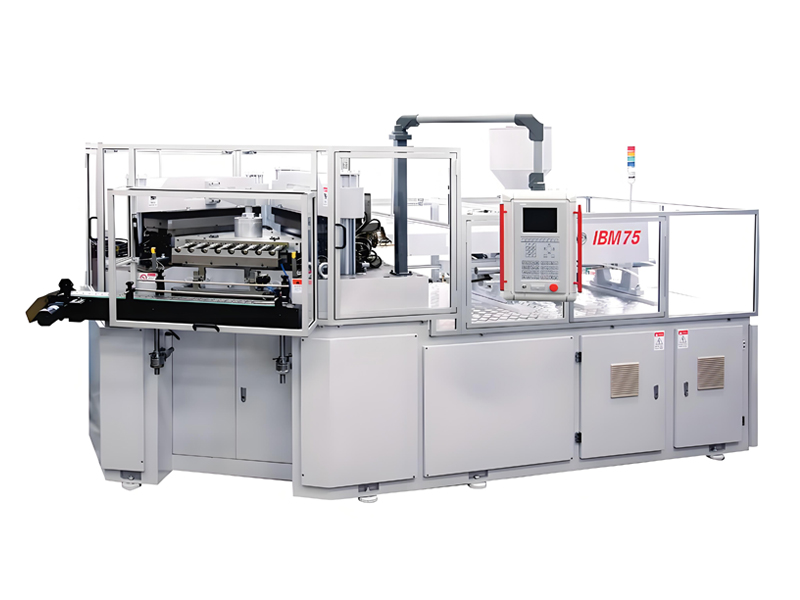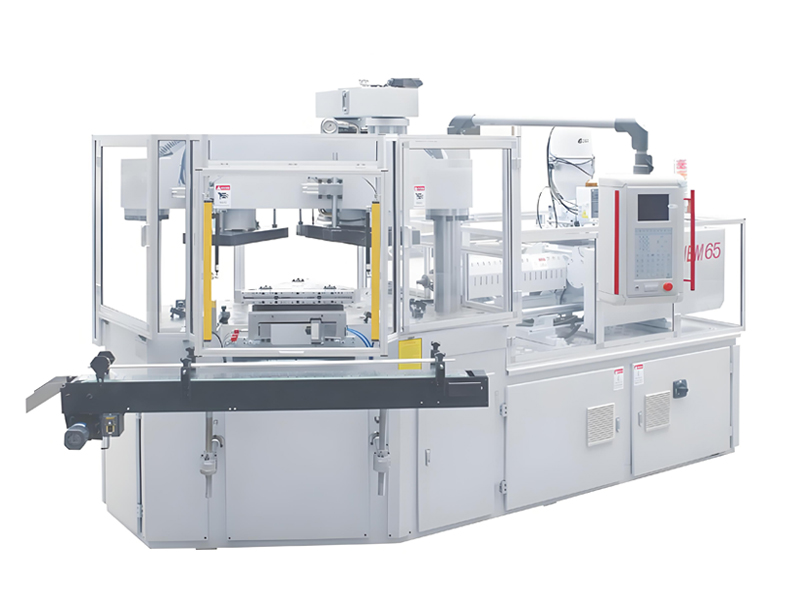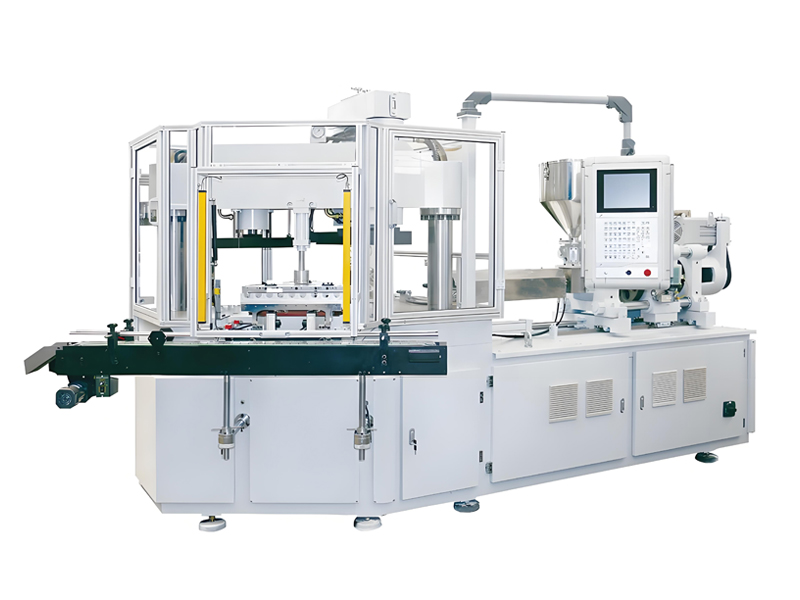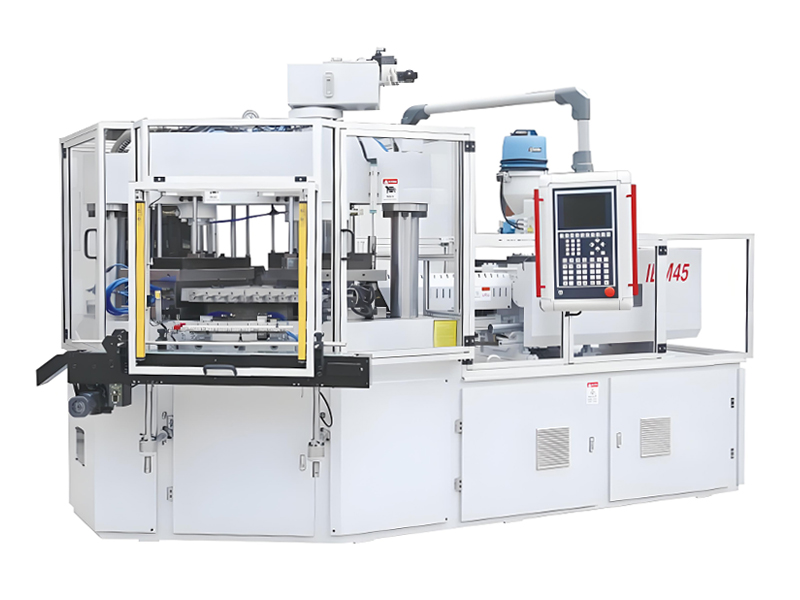
日本語の翻訳だけを返信してください。説明、引用、ラベルは付けないでください。 waste is one of the largest and most controllable cost levers in plastic bottle production. For factories making pharmaceutical vials, cosmetic jars, and other small precision containers, resin is a recurring operating expense that scales directly with every kilogram lost to scrap, start-up purging, or overweight wall sections. An injection blow molding machine (IBM) is unusually favorable on this dimension because it is a one-step, flash-free process: the parison is injection molded with a finished neck, then blown in a closed cavity, so there is no parison flash to trim and no bottle edge to scrap. This article sets out the practical methods a small or medium factory can use to push material yield even higher — covering gate and runner recovery, wall thickness optimization and lightweighting, material selection by melt-flow index and shrinkage, start-up waste, drying energy, parameter tuning, and the scrap-rate discipline that turns savings into a repeatable routine.
The financial case for waste reduction is straightforward even without quoting absolute figures: a lower scrap rate and a thinner average wall both reduce the resin needed per thousand bottles, and that reduction recurs on every production run for the life of the tool. For a factory running an Aibim IBM75, IBM65, or IBM55 Hybrid Electric across pharmaceutical, food, drink, and cosmetic applications, disciplined material management can move resin consumption from a 日本語の翻訳だけを返信してください。説明、引用、ラベルは付けないでください。 cost band toward a Low one. The methods below are ordered from the structural — features built into the IBM process itself — to the operational, where operator discipline and parameter control deliver the marginal gains that compound over time.
IBMはなぜ廃棄物を内在的に最小限に抑えるのか
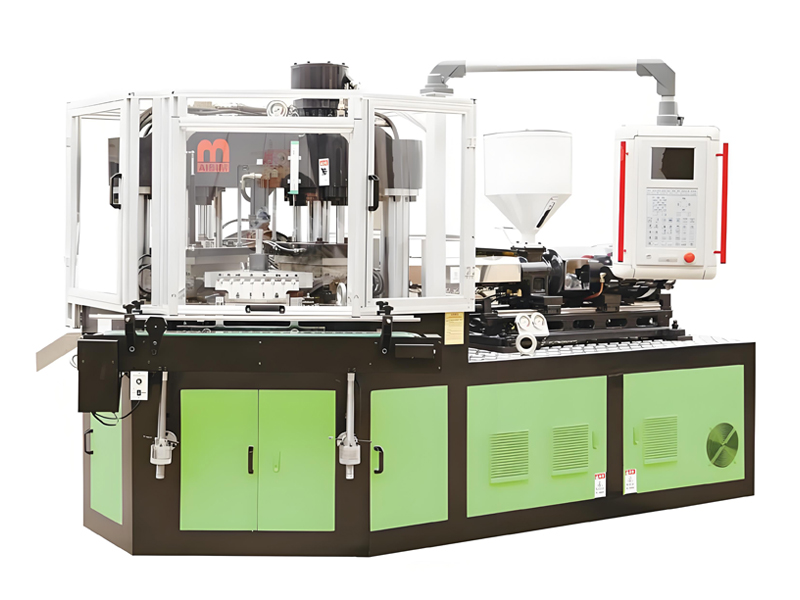
The defining waste advantage of injection blow molding is that it produces no flash and no trimmed scrap edges. In extrusion blow molding, a parison is extruded and pinched at the base, leaving a tail and a bottom weld that are trimmed away; in stretch blow molding, a preform is reheated and blown, and while scrap is low, the preform gate and neckring flashes still exist. In IBM, the three-station turret — injection of the parison onto a core rod, blow in the cavity, and ejection — keeps the molten material entirely inside tooling. The neck and thread are injection molded to final dimension, and the body is expanded against a closed mold wall, so the only material that leaves the machine is finished bottle plus a small gate.
This structural property matters for two reasons. First, it removes an entire waste category — edge and flash scrap — that other processes must granulate, regrind, or discard. Second, it removes the labor and energy associated with trimming and deflashing, which in other processes adds both direct cost and a secondary quality risk where trimming can introduce particles or nicks. For pharmaceutical and cosmetic primary packaging, where cleanliness is governed by GMP and ISO 15378, eliminating a trimming step also reduces a contamination pathway, so the waste benefit is compounded by a quality benefit.
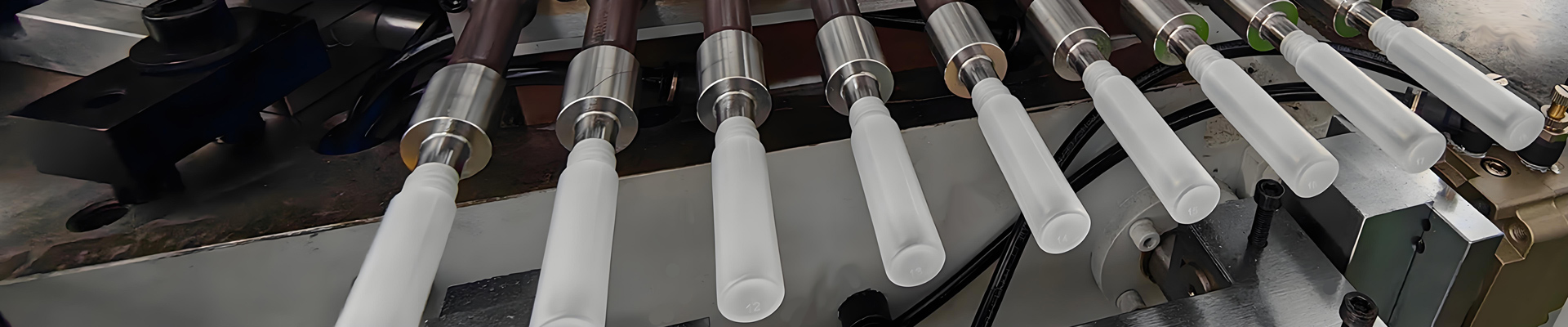
The core rod is central to this efficiency. Because the parison is formed on a temperature-controlled core rod and then transferred, the parison geometry is repeatable and the material is placed precisely where it is needed. There is no over-thick pinch zone or variable parison wall to compensate for, which lets the bottle wall be more uniform and therefore thinner on average for the same performance. Aibim’s three-station one-step architecture, covering containers from 3 ml to 1000 ml, is built around this principle, and its energy-saving design (the company cites a minimum 35 percent energy reduction versus older hydraulic baselines) further lowers the embedded energy per bottle, which is itself a form of resource waste.
IBM のゲートとランナー回復と他のプロセスの比較
フラッシュフリー工程でも、注入されたパラシオンとマシンノズルを接続する小さなゲートがあり、このゲートとスプルーは、安定したIBM生産の主要な固体廃棄物となります。廃棄物に関する意識の高い工場の場合、この材料を回収できるかどうかが問題となります。その答えは、材料のグレードと規制の状況によって異なります。多くの工業および化粧品用途では、ゲートとスプルーを粉砕して制御された再生粉砕として再導入することができますが、医薬品および食品接触用途では、GMP、FDA、EU 10/2011、またはGB 4806 の要件により、許容される再生粉砕比率が厳しく制限されているか、禁止されています。
The table below contrasts the recovery profile of IBM with two alternative blow-molding routes. The point is not that IBM always recycles more — it is that IBM generates far less recoverable-but-trimmed scrap in the first place, so the absolute mass sent to granulation is smaller and the regrind decision is simpler.
プロセス別の廃棄物と回収率のプロファイル
| 日本語の翻訳だけを返信してください。説明、引用、ラベルは付けないでください。 | 主な廃棄物流 | 復元可能ですか? | ネット材料損失帯 |
|---|---|---|---|
| 注入吹き型成形(IBM) | 小ゲート / スプールのみ | はい、レベルが許す範囲内で | Low |
| 押出吹き付け成形(EBM) | 下尾、フラッシュ、首のフラッシュ | はい、レベルが許す範囲内で | 日本語の翻訳だけを返信してください。説明、引用、ラベルは付けないでください。 |
| ストレッチブロー成形(ISBM/PET) | プレフォームゲート、ネックリング | 日本語の翻訳だけを返信してください。説明、引用、ラベルは付けないでください。 | 低~中 |
| 射出成形(密閉容器) | スプール、ランナー、ゲート | はい、レベルが許す範囲内で | 日本語の翻訳だけを返信してください。説明、引用、ラベルは付けないでください。 |
When regrind is permitted, the discipline that protects material properties is a capped and consistent regrind ratio. Introducing too much regrind, or regrind of inconsistent history, degrades melt-flow stability and can raise the reject rate — which would defeat the purpose by increasing total waste. A practical approach is to blend a controlled percentage of clean, same-grade granulate back into virgin feed and to monitor key properties such as melt-flow index and color shift. For medical-grade containers needing USP Class VI or ISO 13485 traceability, factories should follow the controlling specification; many such specs forbid post-consumer or even in-house regrind in the primary layer.
The gate design itself influences recoverable mass. A compact, well-placed gate minimizes the solid sprue that must be separated, and modern IBM tooling is optimized to keep this small. Because Aibim’s SD-card recipe storage lets a process be reproduced exactly across machines, the gate and transfer conditions stay consistent, which keeps the per-bottle gate mass predictable and makes any regrind stream uniform — a small but real contributor to stable material yield.
壁厚の最適化と軽量化
Once flash and edge scrap are removed, the largest remaining material-saving opportunity is the average wall thickness of the bottle itself. Lightweighting — reducing wall thickness while maintaining the mechanical and functional performance required — directly lowers resin per bottle. In IBM this is especially tractable because the blown wall is formed against a cavity and the parison wall on the core rod can be tuned, giving good control over the final distribution. The goal is to remove material from regions that do not carry load or seal function and retain it where it does, such as around the neck and thread.
構造化された軽量化プログラムは、3つのステップで進められます。まず、現在の壁プロファイルをセクション測定または非破壊測定を使用してマッピングし、過剰に太い部分を特定します。次に、パリション転送と吹き込み条件、必要に応じてコアロッドと空洞のジオメトリを調整して、重要でない部分を薄くします。最後に、軽量化されたボトルがその用途に対する落下、上からの荷重、およびシールの整合性要件を満たしていることを検証します。ネックは厳密な許容範囲で射出成形されるため、ボディーの壁が減らされる場合でも、重要なシーリング特徴は維持されます。そのため、IBM は、スレッドの一貫性を犠牲にすることなく、積極的な軽量化をサポートしています。
壁厚レバー
| 日本語の翻訳だけを返信してください。説明、引用、ラベルは付けないでください。 | 材料への影響 | 管理すべきリスク |
|---|---|---|
| 体壁のターゲットを減らす | 高い節約性 | ドロップ/トップロードの障害 |
| 比較データの配布を最適化する | 日本語のみで返信してください。説明、引用、ラベルは付けないでください。 | ローカルの薄い部分 |
| キャビティ冷却制御を強化する | 低~中 | サイクル時間の増加 |
| ネックの仕上げを標準化する | 中程度(過剰なデザインは避ける) | キャップ互換性 |
| 高いMFIグレードを使用する | より薄い壁を可能にします | プロパティのシフト、コスト |
The compounding effect of lightweighting is large because it multiplies across volume. A reduction of a few percent in average wall, sustained across millions of bottles per year, translates into a meaningful double-digit reduction in annual resin consumption for a high-volume line, moving material cost from one band toward a lower one without changing the number of bottles produced. The constraint is performance: pharmaceutical and cosmetic containers must still survive filling, capping, transport, and consumer use. Validating against the real duty cycle — not just a nominal specification — prevents the common failure where an over-aggressive weight cut raises the reject rate and therefore increases total waste.
複数のSKUを扱う工場では、可能な限りネックの仕上げとボディの直径を標準化することで、最適化されたウォールプロファイルのセットを再利用できるため、SKUごとのエンジニアリング作業と個々の最適化時に発生するスクラップが削減されます。この標準化により、後述するリグリンドと色変更の規則も簡素化されます。
材料選択:MFIとPP、PE、PS、PETGの収縮
材料の選択は、静かながら強力な廃棄削減策です。異なる樹脂はそれぞれ異なる溶融流動指数(MFI)と収縮特性を持ち、これらが、薄く均一な壁をどの程度容易に成形できるか、および成形後の収縮をどの程度補正しなければならないかを決定します。容器設計と加工可能性の範囲が一致するグレードを選ぶことで、フラッシュを排除した上で最も重要な廃棄物である不良品を削減できます。
PP and HDPE are generally forgiving: broad processing windows, low moisture sensitivity (no drying required), and predictable shrinkage make them low-reject materials in IBM. PS offers clarity and stiffness but is more brittle and sensitive to stress, so its scrap is more often driven by handling and ejection than by molding. PETG and PC deliver clarity and chemical resistance for premium cosmetic and medical applications but require tighter drying and temperature control; their scrap rate is more sensitive to process discipline. The table below summarizes typical directional behavior; exact MFI and shrinkage values vary by grade and should be confirmed against the resin supplier’s data sheet.
IBMにおける方向性の材料挙動
| 日本語の翻訳だけを返信してください。説明、引用、ラベルは付けないでください。 | 溶融流動傾向 | 収縮傾向 | 乾燥ニード | Reject-Risk Bandのみを返答してください。説明、引用、ラベルは付けないでください。のみを返答してください。説明、引用、ラベルは付けないでください。 |
|---|---|---|---|---|
| PP | 中~高MFI共通 | 日本語の翻訳だけを返信してください。説明、引用、ラベルは付けないでください。 | None | Low |
| HDPE / PE | 日本語のみで返答してください。説明、引用、ラベルは付けないでください。 共通 | 日本語のみで返信してください。説明、引用、またはラベルは付けないでください。 | None | Low |
| PS | 日本語のみで返答してください。説明、引用、ラベルは付けないでください。 共通 | 低~中 | Low | 中度(もろい) |
| PETG / PCTG | 日本語のみで返答してください。説明、引用、ラベルは付けないでください。 | 低~中 | 日本語の翻訳だけを返信してください。説明、引用、ラベルは付けないでください。 | 日本語の翻訳だけを返信してください。説明、引用、ラベルは付けないでください。 |
| PC | 日本語のみで返答してください。説明、引用、またはラベルは付けないでください。 | Low | High | 日本語のみで返信してください。説明、引用、またはラベルは付けないでください。 |
| ABS/SAN | 日本語のみで返答してください。説明、引用、ラベルは付けないでください。 | 低~中 | 日本語の翻訳だけを返信してください。説明、引用、ラベルは付けないでください。 | 日本語の翻訳だけを返信してください。説明、引用、ラベルは付けないでください。 |
Shrinkage matters for waste because over-sized or inconsistent shrinkage forces designers to add wall or tolerance margin, which means more material, and it drives dimensional rejects at the neck where the cap must seat. A material with predictable, moderate shrinkage lets the tool be cut closer to net shape, trimming both material and reject rate. MFI matters because a resin that flows readily at a safe temperature fills thin walls without over-packing, reducing both short shots (reject) and over-pack spikes (wasted material). Selecting the right grade — rather than defaulting to a familiar one — is a low-cost, high-leverage waste-reduction step that pairs naturally with the lightweighting work in the previous section.
Color and additive systems also affect waste. Frequent color changes generate purge loss, discussed next, and some additives (such as certain clarifiers or fragrances) narrow the processing window. A factory that consolidates its color palette and qualifies a small set of masterbatches reduces both changeover waste and the variability that drives rejects. Where regulatory contact compliance is required — FDA, EU 10/2011, GB 4806 for food, or USP Class VI and ISO 13485 for medical — the approved color and additive list should be the starting point, with waste optimization applied within those approved options.
起動時の廃棄物とパージの削減
フラッシュフリーのプロセスでは、主要な廃棄物は安定状態のスクラップではなく、起動時、色の変更時、グレードの変更時に失われる材料です。機械がオンラインに移行すると、最初のパリションは温度や転送タイミングが安定するまで規格外になることがあります。また、色や材質を変更すると、バレルとホットランナーを前の溶融物から洗浄する必要があります。これらの作業で使用される樹脂はスクラップとなります。このロスを削減することは、最高の効果をもたらす廃棄物削減策の一つであり、製品を変更することなく生産効率を向上させることができます。
Practical measures begin with disciplined warm-up and first-article qualification: rather than running full speed immediately, the operator stabilizes temperatures and takes a small set of qualification shots, discarding only those few rather than a long stream. Modern IBM controls, including recipe storage on SD card as used by Aibim machines, let the exact qualified parameter set be reloaded for a given SKU, which shortens the unstable window on every re-start and reduces the number of off-spec bottles. The PREFILL hydraulic technology also contributes by stabilizing injection pressure, which tightens the window between “not yet stable” and “in specification.”
For color and material changes, purge reduction techniques include using a compatible purge compound, sequencing changes from light to dark or from similar to dissimilar melt-flow grades to minimize cross-contamination, and, where the product mix allows, grouping production so that a given color runs in a continuous block rather than being interrupted. Each avoided partial purge is a direct material saving. For factories running many cosmetic shades, production scheduling — not machine modification — is frequently the largest single contributor to lower purge waste.
Another start-up lever is the hot-runner and manifold design. A compact manifold holds less melt, so less material must be displaced during a change. While the end user cannot redesign the machine at will, choosing a platform with an efficient melt path, and keeping it clean and well maintained, reduces the mass that must be purged at every transition. Aibim’s compact single-crossbeam clamping framework and efficient hydraulic design support shorter, more stable cycles that also help the machine reach specification faster after a start.
乾燥エネルギーと湿度管理
Drying is a form of resource consumption that is closely linked to material waste, because under-dried resin produces splay, brittleness, and dimensional rejects, while over-dried resin wastes energy and can degrade heat-sensitive grades. The good news for IBM is that the two largest-volume materials — PP and PE — require no drying at all, which removes a whole energy and quality-risk stream for those grades. 日本語の翻訳だけを返信してください。説明、引用、ラベルは付けないでください。s that do need drying, such as PETG, PC, ABS, and SAN, demand disciplined moisture control to keep both energy and scrap low.
The table below maps drying need to waste-related practice. The principle is to dry only what is necessary, to the specification, and no more, using a dehumidifying dryer sized to the actual throughput rather than the machine’s maximum. Oversized or poorly managed dryers waste energy continuously, and that energy is itself a resource cost that a waste-reduction program should count.
乾燥条件と実践
| 日本語の翻訳だけを返信してください。説明、引用、ラベルは付けないでください。 | 乾燥条件 | 不十分な乾燥の場合のリスク | 廃棄物を最小限に抑えるための実践 |
|---|---|---|---|
| PP / PE | None | 日本語の翻訳だけで返答してください。説明、引用、ラベルは付けないでください。 | 乾燥不要、エネルギーを節約 |
| PS | Low | 広がり、脆さ | 必要に応じて、乾燥させたり、露点を低くする |
| PETG / PCTG | 日本語の翻訳だけを返信してください。説明、引用、ラベルは付けないでください。 | 銀色の縁、弱い溶接 | 閉ループ式除湿乾燥機 |
| ABS/SAN | 日本語の翻訳だけを返信してください。説明、引用、ラベルは付けないでください。 | 表面不良、廃棄 | 制御されたホッパー滞在時間 |
| PC | High | 重度スプレイ、水溶性切断 | 厳密な露点と時間 |
水分管理は、材料を直接保護することにもなります。例えば、PCの水分分解は、分子量を永久に低下させ、その結果、特性も低下します。そのため、十分に乾燥されていないPCは単に見た目が悪いだけでなく、化学的に汚染され、廃棄する必要がある材料です。したがって、きちんと水分管理を行うことで、再生加工で回収できない廃棄物のカテゴリーを防ぐことができます。小規模な工場では、実用的な手順として、適切なサイズの除湿乾燥機、乾燥機から機械への密閉された運搬、そして設定が変動するとエネルギーの無駄が発生するため、GMPやISO 15378のドキュメンテーションをサポートする記録された乾燥記録が必要です。
エネルギーの無駄は、どのような材料生産量の議論においても考慮されるべきです。樹脂の埋め込まれたエネルギー量はかなり大きいためです。Aibim 氏は、PREFILL と可変排気量ポンプによる圧力調整を通じて、従来の油圧システムに比べて少なくとも 35% のエネルギー削減が可能であると述べています。これらを、適切なサイズの乾燥装置と可能な場合にはクリーン熱回収装置と組み合わせることで、ボトルごとの資源消費量を削減できます。エネルギー高い地域にある工場では、単にエネルギー削減だけでも、樹脂廃棄物を同様に削減するのと同等の経済的な意味を持つことになります。
不合格率を低減するためのプロセスパラメータのチューニング
ほとんどの安定したIBM廃棄物は、トリミングされたスクラップではなく、拒否されたボトルです。そのため、パラメータ管理は、生産率を保護する日常的な規律です。コアロッドの温度、注入速度と圧力、ブローエアの圧力とタイミング、キャビティ冷却など、すべての要素が相互作用し、パライソンがきれいに移動するか、ボトルがショートショット、溶接ライン、寸法のずれなく形成されるかを決定します。小さく、一貫した設定は、大きく、頻繁に変更されるものより優れています。
実用的なチューニングルーチンは、適格なベースラインレシピから始まり、変数を一度ずつ変更し、その結果を記録します。ネックが精密な部品であるため、各ラウンドの開始時にネックの直径と糸ゲージを監視することで、不良品のバッチになる前に変化を検出できます。キャビティ冷却には特に注意が必要です。冷却が不十分だとサイクル時間が長くなり、エジェクションの変形(不良品)を引き起こす可能性があります。また、過剰に冷却するとエネルギーが無駄になります。最適な冷却は、寸法的に安定したボトルを生成できる最短の冷却時間です。また、きちんと再現可能な冷却は、軽量化を目指した薄い壁を実現しながら不良品を増やさないようにします。
Blow-air management is another yield lever. Insufficient or mistimed air leaves the wall short of the cavity (thin or incomplete), while excessive air wastes compressed-energy and can stress the part. Stabilizing air pressure and sequencing the blow to coincide with the parison’s optimum formability window reduces both incomplete fills and over-stressed rejects. Aibim’s PREFILL hydraulics and consistent clamping framework help hold these conditions steady across long runs, which is exactly when small, cumulative reject increases do the most damage to annual yield.
Finally, preventive maintenance protects yield indirectly. Worn core rods, leaking heaters, or drifting temperature controllers introduce variability that shows up as rejects. A scheduled maintenance plan — the kind a supplier-backed rental agreement includes, or that an owning factory runs in-house — keeps the process centered. For pharmaceutical and cosmetic lines, this maintenance must be documented for GMP and ISO 15378, turning a waste-control activity into a compliance activity at the same time.
スクラップ率のベンチマークと継続的改善
What gets measured gets reduced. A factory serious about material waste should track scrap rate by category — start-up, color change, dimensional reject, cosmetic reject, regrind generated — and review it per SKU and per shift. The benchmark bands below are directional: a well-controlled IBM line typically operates at a low overall scrap band, with most loss concentrated in start-up and color-change rather than steady-state production. A line that shows high steady-state scrap usually has a parameter, material, or tooling issue to chase, not an inherent process limitation.
廃棄カテゴリと改善アクション
| 回答は日本語のみでお願いします。説明、引用、ラベルは付けないでください。 | 日本語の翻訳だけを返信してください。説明、引用、またはラベルは付けないでください。 | 主な改善策 |
|---|---|---|
| 起動 / 安定化 | 中~高いシェア | レシピの読み込み、適切なウォームアップ |
| 色/グレード変更パージ | 日本語の翻訳だけを返信してください。説明、引用、またはラベルは付けないでください。 | 生産スケジューリング、パージ化合物 |
| 寸法不合格 | 低シェア(IBM) | パラメータと冷却制御 |
| 化粧品不良品 | 低~中 | 乾燥、汚染制御 |
| ゲート / スプール | 低い、しばしば回復する | コンパクトゲート、許可されている場合は再粉砕 |
Continuous improvement works best when the scrap data feeds a simple loop: measure, identify the largest category, apply a countermeasure, re-measure. Because IBM’s waste is dominated by start-up and changeover rather than by inherent flash, the highest-leverage actions are usually scheduling and recipe discipline rather than capital investment. Over several cycles, this loop can move a line from a 日本語の翻訳だけを返信してください。説明、引用、ラベルは付けないでください。 scrap band to a Low one, and the resin saving recurs on every subsequent run.
認定された環境や品質の証明を目指す工場では、廃棄物生成率の測定値は、より広範な主張にも対応します。ボトルごとの樹脂量を減らすことで、原材料需要と埋め込まれたエネルギーが削減され、多くのブランドがパッケージングサプライヤーから求めるサステナビリティのメッセージに沿うものとなります。Aibimの親ブランドであるWanplasは、その工場ネットワーク全体で環境への責任を重視しており、IBMラインから得られる材料生成率のデータは、これらのプログラムに対する具体的で監査可能な要素となります。
クリーンルーム、GMP、および材料生産量
医薬品や高級化粧品の製造では、ボトルング環境自体が材料の生産率に影響します。GMPで運営されているクリーンルームでは、通常はボトルの充填中または空のボトルを廃棄せざるを得ない粒子汚染を低減できます。また、ドライヤーやブレンダーから機械への清潔で管理された運搬により、汚染による廃棄と、PCやPETGの廃棄を引き起こす水分の再吸収を防ぐことができます。
Compliance frameworks such as GMP, ISO 15378 for primary pharmaceutical packaging, ISO 13485 for medical devices, and contact regulations including FDA, EU 10/2011, and GB 4806 also shape what waste practices are permitted. Regrind restrictions in these contexts mean that the waste-reduction strategy shifts from “recover the scrap” to “avoid generating it” — which is precisely where IBM’s flash-free design, lightweighting, and tight parameter control earn their value. A factory that cannot freely regrind medical-grade material has even stronger reason to minimize start-up and reject waste at source, because that material cannot be recovered into the same product stream.
In practice, the cleanroom and the machine should be considered one system. Aibim’s CE-certified safety features, including a stripper station long-distance digital laser sensor and a light curtain, protect operators during the ejection phase, and the one-step enclosed process reduces the number of open handling steps where contamination — and therefore rejection — can enter. For a small factory serving regulated customers, treating material yield and cleanliness as a single program is more effective than optimizing each in isolation.
日本語の翻訳だけを返してください。説明、引用、またはラベルは付けないでください。
注入吹き型成形ではフラッシュやスクラップエッジが発生しますか。
いいえ。IBMの製造プロセスは、パリション首部を射出成形し、ボディを閉じた空洞で吹き込む一段階のプロセスです。そのため、パリショントリムやフラッシュは発生しません。主要な廃棄物は、起動時のパージとまれに発生する不良品ですが、エッジスクラップではありません。そのため、このプロセスは構造上の廃棄物が少ない状態から始まります。
IBMではゲートとランナーを再利用することはできますか。
IBM は、ネック部にコンパクトなゲートを使用しており、スプルーとゲートは小さくなっています。これらを粉砕し、材質とグレードが許容する場合には、制御された再粉砕比で再導入することができますが、医薬品や食品用途のグレードでは、GMP、FDA、EU 10/2011、またはGB 4806 に従って、再粉砕を制限または禁止することがあります。
IBMでは、どの材料で最も廃棄物が少ないでしょうか。
PPとHDPEは、一般的に広い加工窓と乾燥の必要性がないため、廃棄率が低くなります。PETGとPCは、より厳しい乾燥と温度管理が必要なので、その廃棄率はプロセスの規律と湿度管理に対してより敏感です。
壁の厚さを最適化することで、どれくらいのコスト削減が可能ですか。
わずかな平均壁厚の削減は、数百万本のボトルにわたって大きな影響を与えます。壁の数%の軽量化は、大容量ラインの年間樹脂消費量を有意な二桁減少に導き、出力を変えずに材料コストを削減できます。
IBMはエネルギーの乾燥に役立てていますか。
必要な材料については、そうします。注入されたパリゾンのみが溶融するため、全体の押出パリゾンではなくなり、また、PPとPEは乾燥を必要としないため、より大きな溶融量を前処理するプロセスよりも、熱処理と乾燥の負荷が小さくなり、エネルギー消費と水分関連の廃棄物が少なくなります。
うまく運営されているIBMラインはどのような廃棄率を目指すべきでしょうか。
よく管理されたIBMラインでは、通常、スクラップバンドが低く、損失の大部分は安定状態の生産ではなく、起動と色変更の段階に集中します。正確な目標は、材質、色、容器の形状によって異なり、SKUごとおよびシフトごとに追跡する必要があります。
リグリンドはボトルの品質にどのような影響を与えますか?
制御された同等品の再加工を一定の割合で混合することは通常ほとんど影響を与えませんが、過剰なまたは一貫しない再加工は、溶融流動性を低下させ、不良品を増やす可能性があります。規制のある医療や食品用途では、初期層に再加工を禁止することが多いため、原料の削減が推奨される方法となります。
薬品容器の軽量化は安全ですか?
公称仕様ではなく、実際のデューティサイクル(落下、トップロード、シール完全性)に対してバリデーションされた場合に安全です。射出成形されたネックとねじ山が完全な強度で保持されるため、IBMは重要なシール機能を無傷に保ちながら、積極的なボディ壁の薄肉化をサポートします。
結論を日本語でのみ返答してください。説明、引用、ラベルは付けないでください。
日本語の翻訳だけを返信してください。説明、引用、ラベルは付けないでください。 waste reduction in injection blow molding is best understood as a stack of methods, from the structural advantage of a flash-free, one-step process down to the daily discipline of start-up qualification, drying control, and parameter tuning. An injection blow molding machine such as Aibim’s IBM75, IBM65, or IBM55 Hybrid Electric already removes the largest waste category — flash and trimmed edges — and its energy-saving hydraulics lower the embedded energy per bottle. The remaining gains come from gate recovery where grades permit, wall thickness optimization and lightweighting, careful material selection by melt-flow index and shrinkage, purge-minimizing production scheduling, right-sized drying, and a measured scrap-improvement loop. For regulated pharmaceutical and cosmetic lines, where regrind is often restricted, the emphasis shifts to avoiding waste at source, which is exactly where IBM’s precision and cleanliness pay off. As a Wanplas factory, Aibim places these capabilities within a broader group portfolio, helping small and medium producers of precision containers turn material yield into a durable, repeatable competitive advantage.