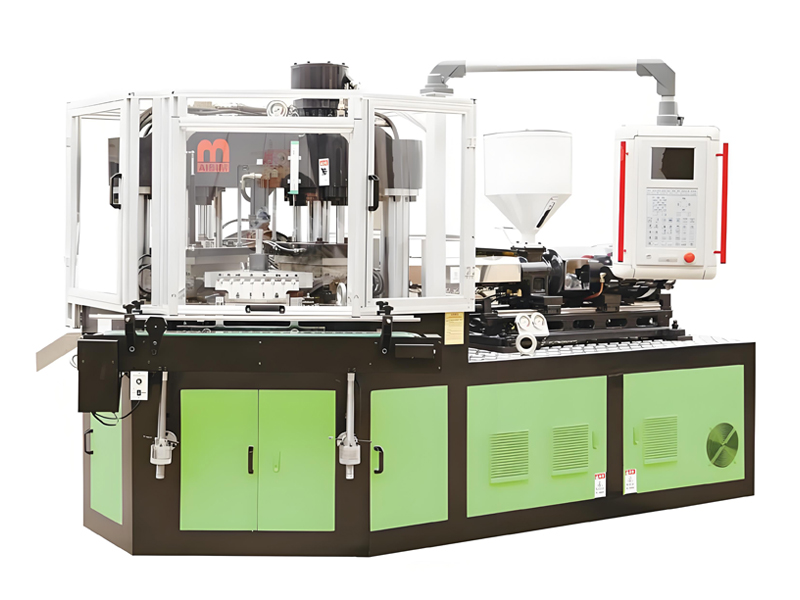
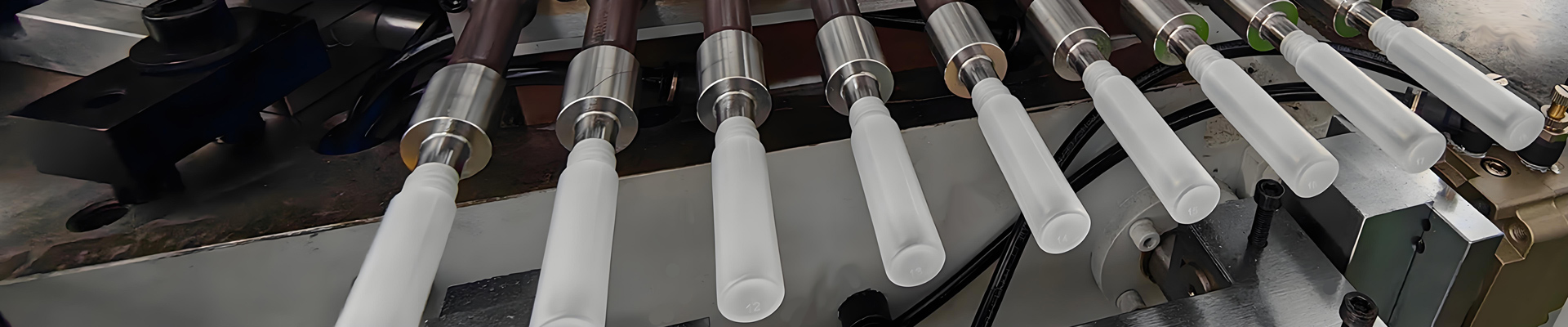
Temperature control represents one of the most critical factors in achieving consistent, high-quality production with an injection blow molding machine. When temperature fluctuations occur or temperature distribution becomes uneven, manufacturers face costly downtime, material waste, and product defects that can compromise entire production batches. Understanding how to identify, diagnose, and resolve temperature-related problems is essential for any operation seeking to maximize efficiency and product quality in injection blow molding processes. An injection blow molding machine requires precise thermal management across barrel, nozzle, and mold zones to produce containers meeting pharmaceutical, food, and cosmetic industry standards.
This comprehensive troubleshooting guide addresses the most common temperature issues encountered in injection blow molding operations. Whether you operate an IBM55, IBM65, or IBM75 series machine, the principles and procedures outlined here will help you maintain optimal temperature control, reduce energy consumption by up to 35 percent, and ensure consistent product quality across your entire production range from 3ml to 1000ml containers. Proper operation of an injection blow molding machine depends on understanding how temperature affects material viscosity, wall thickness distribution, and surface finish quality.
Understanding Temperature Control Systems in Injection Blow Molding
Before diving into troubleshooting procedures, it is essential to develop a thorough understanding of how temperature control systems function within an injection blow molding machine. A comprehensive grasp of these fundamentals enables operators to identify problems more quickly and implement appropriate solutions with confidence. Every injection blow molding machine incorporates multiple temperature zones that must operate in coordination to produce quality containers consistently.
Key Temperature Zones in Injection Blow Molding
The injection blow molding process requires precise temperature management across three distinct zones, each serving a specific function in the production of hollow plastic containers and bottles. Understanding these zones and their interactions is the foundation of effective temperature troubleshooting.
The barrel zone constitutes the first critical area where temperature control must be maintained with exceptional precision. Within this zone, plastic resin pellets are heated from ambient temperature to a molten state suitable for injection. The barrel typically contains multiple heating zones, each independently controlled to ensure gradual, even heating as the material progresses toward the injection nozzle. Temperature variations within the barrel can lead to inconsistent melt viscosity, which directly impacts the quality of the parison formed during the injection phase.
The nozzle zone represents the transition point between the injection unit and the mold cavity. This area requires careful temperature management because it must maintain the melt at optimal viscosity for flow into the mold while preventing material degradation from excessive heat exposure. The nozzle temperature also influences how the parison behaves during the blow molding phase, affecting wall thickness distribution and overall container strength.
The mold zone encompasses both the injection mold and the blow mold, each requiring independent temperature control. The injection mold must be maintained at a temperature that allows proper material solidification without causing surface defects, while the blow mold temperature affects the final container’s optical properties, wall thickness uniformity, and production cycle time. For pharmaceutical, food, and cosmetic applications where container quality is paramount, mold temperature control becomes especially critical.
How Temperature Affects Product Quality
Temperature exerts profound influence on virtually every aspect of product quality in injection blow molding. The relationship between temperature settings and finished product characteristics must be understood thoroughly by anyone responsible for machine operation or quality control.
Melt temperature directly determines the viscosity of the plastic material during injection. When melt temperature falls below optimal levels, the material becomes too viscous to fill the mold cavity completely, resulting in short shots, incomplete formation, and weak weld lines where material streams meet. Conversely, excessive melt temperature degrades the polymer chains, reducing material strength and causing discoloration, burning, or hydrolysis in sensitive materials.
Wall thickness distribution throughout the container depends heavily on temperature consistency during both injection and blow phases. Uneven temperature across the mold surface leads to inconsistent material cooling rates, which creates stress concentrations and thickness variations that compromise structural integrity. For pharmaceutical containers requiring precise dosing capabilities, these variations can render entire batches unacceptable.
Surface finish and optical clarity also respond dramatically to temperature conditions. Excessive temperature combined with moisture in the material produces steam bubbles and silver streaks on the container surface. Insufficient temperature prevents proper material wetting of the mold surface, resulting in matte finishes, flow lines, or incomplete surface replication where mold texturing fails to transfer properly.
Common Temperature Problem Categories
Temperature-related issues in injection blow molding generally fall into three primary categories, each presenting distinctive symptoms and requiring different diagnostic approaches. Recognizing which category a problem falls into is the first step toward effective troubleshooting.
Temperature exceeding specifications typically manifests as discoloration, burning odors, material degradation, or excessive flash where molten material escapes the mold cavity. These symptoms indicate that the cooling systems cannot adequately remove heat from the process, or that heating elements remain energized when they should be cycling off.
Temperature below specifications presents opposite symptoms including short shots, high injection pressure requirements, visible weld lines, poor surface finish, and excessive part ejection forces. These conditions suggest inadequate heating capacity, excessive heat loss to the environment, or insufficient preheating of materials before processing.
Temperature instability or uneven distribution creates the most challenging problems because symptoms vary depending on which portion of the process experiences the deviation. Fluctuating temperatures cause inconsistent product quality from cycle to cycle, making quality control extremely difficult. Uneven temperature across mold surfaces produces dimensional variations, wall thickness inconsistencies, and orientation variations that affect downstream filling and labeling operations.
Diagnosing and Resolving High Temperature Problems
When an injection blow molding machine operates at temperatures exceeding specified ranges, immediate action is required to prevent material degradation, product damage, and potential safety hazards. Understanding the root causes of high temperature conditions enables operators to implement effective solutions quickly.
Identifying Symptoms of Excessive Heat
Visual and sensory indicators provide the first clues when temperature exceeds safe operating limits. Operators should be trained to recognize these warning signs during regular production monitoring.
Discoloration of finished containers ranging from yellowing in polyethylene materials to browning in polypropylene indicates thermal degradation of the polymer. This color change occurs when extended exposure to elevated temperatures breaks down molecular chains, releasing chromophoric compounds that absorb visible light. The degree of discoloration correlates directly with both temperature magnitude and exposure duration.
Burning or charring marks on container surfaces, particularly near gate locations or along flow paths, signal that material has reached temperatures sufficient to carbonize. These defects render containers unusable for pharmaceutical and food applications where container purity is mandated. Additionally, carbonized material can accumulate within the machine, creating ongoing contamination risks for subsequent production runs.
Bubbles or voids within container walls indicate that moisture within the material has converted to steam due to excessive heat. While some bubble formation can result from material moisture content, excessive bubbling accompanied by a foamy appearance in the melt stream strongly suggests that temperatures have exceeded safe limits for the specific material being processed.
A pungent burning odor emanating from the machine indicates that polymer degradation is occurring. This smell results from volatile compounds released as polymer chains break down. If detected, production should be halted immediately to prevent further material degradation and potential safety hazards from accumulated volatiles.
Cooling System Inspection Procedures
The cooling system represents the primary mechanism for removing heat from the injection blow molding process. Systematic inspection of cooling system components often reveals the source of high temperature problems.
Water flow rates through mold cooling channels must be verified using flow meters or visual indicators at each circuit. Inadequate flow rates prevent sufficient heat removal, allowing temperatures to climb steadily during production. Restrictions within cooling channels from mineral deposits, scale accumulation, or biological growth can reduce effective flow by fifty percent or more without obvious external symptoms. Regular cleaning of cooling channels using appropriate descaling solutions prevents this common problem.
Cooling water temperature rise across the mold provides valuable diagnostic information. A temperature rise exceeding ten degrees Celsius between inlet and outlet suggests that the cooling system is working hard but may be undersized for the heat load being generated. This condition often develops when production rates increase beyond original design parameters or when material formulations change to include additives requiring different processing temperatures.
Water quality significantly affects cooling system performance. Hard water containing high mineral content deposits scale on channel walls, progressively reducing effective cooling capacity over time. Testing water hardness and implementing water treatment or periodic flushing protocols extends equipment life and maintains consistent cooling performance.
Heating Element Troubleshooting
Heating elements that fail to de-energize properly create runaway temperature conditions that rapidly exceed safe operating limits. Understanding how to test and diagnose heating element problems prevents these dangerous situations.
Resistance testing of individual heating elements using a multimeter provides baseline information about element condition. Normal resistance values vary by element size and type, but significant deviations from specifications indicate damaged or degraded elements. Open circuits where no continuity exists suggest burned-out elements that require replacement. Abnormally low resistance readings may indicate element shorting that could cause excessive current draw and overheating.
Solid-state relay failures represent a common cause of uncontrolled heating. These devices control power delivery to heating elements based on signals from temperature controllers. When relays fail in the closed position, power flows continuously to heating elements regardless of controller commands. Testing relay function by monitoring output voltage while commanding heating elements off reveals failed relays requiring replacement.
Temperature controller output verification ensures that control signals reach the heating elements properly. Using a multimeter to measure controller output voltage under various demand conditions confirms whether controllers are functioning correctly. Controllers producing inconsistent output voltages or failing to reduce output as temperatures approach setpoints require calibration or replacement.
Temperature Controller Calibration Methods
Accurate temperature measurement forms the foundation of effective temperature control. When controllers display incorrect temperatures, the entire control system operates incorrectly, leading to either excessive heat or insufficient heating.
Calibration using reference thermometers provides the most accurate verification of controller accuracy. Comparing controller display readings against a calibrated reference thermometer inserted in the same measurement location reveals any systematic errors requiring correction. Most modern controllers include adjustment procedures documented in manufacturer manuals.
Thermocouple placement verification ensures that sensors measure actual process temperatures rather than ambient conditions. Sensors positioned too close to heating elements, in dead air spaces, or without proper immersion depth provide readings that do not represent true process conditions. Relocating sensors according to manufacturer specifications often resolves apparent temperature control problems.
PID parameter optimization tailors controller response to the specific thermal characteristics of each machine and material combination. Proportional, integral, and derivative settings that are improperly configured can cause temperature overshooting or oscillating behavior. Running auto-tune procedures when available, or manually adjusting parameters based on observed response, optimizes control performance.
Preventing Material Degradation
Material degradation from excessive heat exposure creates both immediate quality problems and long-term equipment issues. Implementing preventive measures protects material investments and ensures consistent product quality.
Material data sheets specify maximum acceptable melt temperatures for each polymer grade. Operating consistently below these limits prevents thermal degradation regardless of other process conditions. Recording actual processing temperatures and comparing against material specifications provides documentation supporting continuous improvement efforts.
Residence time within the heated barrel directly affects degradation extent. Material that remains at elevated temperatures for extended periods experiences cumulative degradation even when peak temperatures remain within specifications. Calculating residence time based on shot size relative to barrel capacity and production rate ensures that materials are not held in the molten state longer than necessary.
Material changes between different polymer types require thorough purging of previous materials from the system. Residual material from previous production runs can degrade at lower temperatures than virgin material, creating contamination that affects both product quality and machine cleanliness. Establishing standardized purging procedures prevents cross-contamination issues.
Diagnosing and Resolving Low Temperature Problems
Insufficient temperature creates a different set of challenges in injection blow molding operations. Material that has not reached adequate melt temperatures exhibits poor flow characteristics, incomplete filling, and structural deficiencies that compromise product integrity.
Recognizing Cold Temperature Symptoms
Low temperature conditions produce characteristic symptoms that experienced operators learn to recognize quickly. Identifying these patterns enables rapid diagnosis and correction.
Short shots occur when molten material cools too rapidly during injection, solidifying before completely filling the mold cavity. This defect manifests as containers with missing sections, incomplete threads, or thin walls in extremities distant from the gate. Short shots resulting from low temperature conditions differ from those caused by insufficient shot size, because adjusting shot volume alone cannot resolve the underlying flow problem.
Visible weld lines form where separate material streams meet within the mold cavity. When material temperature drops below optimal levels, the streams do not fuse properly at their meeting point, creating visible lines where strength is reduced. Weld line severity increases as temperature decreases, making this symptom a reliable indicator of inadequate heating.
Surface roughness and poor finish quality result when material viscosity remains too high to conform properly to mold surface details. This defect appears as matte areas on surfaces that should exhibit high gloss, incomplete replication of mold texturing, or visible flow marks where material solidified in partially-filled conditions. Unlike surface defects caused by mold release or surface contamination, low temperature defects occur consistently across all containers in affected production runs.
Heating System Capacity Verification
When temperature remains below specifications despite heating element operation, the heating system may lack sufficient capacity to reach required temperatures. Evaluating heating system performance requires understanding both equipment capabilities and process demands.
Calculating heat requirements for specific production rates reveals whether installed heating capacity matches process demands. Heat energy must raise incoming material from ambient temperature to melt temperature, compensate for heat losses through barrel walls and openings, and maintain temperature against conductive losses to the mold assembly. When any of these requirements exceed heating system capacity, temperature goals cannot be achieved regardless of controller settings.
Individual zone temperature deficits identify which heating zones require attention. When some zones reach temperature while others remain low, localized problems such as failed heating elements, damaged insulation, or thermocouple malfunctions in the deficient zones become apparent. Comparing actual temperatures against expected values across all zones isolates problem areas.
Power consumption monitoring during heat-up provides diagnostic information about heating system condition. Systems operating at full power without reaching temperature setpoints indicate insufficient capacity. Systems reaching temperature quickly but then struggling to maintain setpoint may have insulation problems or excessive heat losses requiring investigation.
Evaluating Insulation Performance
Heat loss through insufficient insulation represents a significant source of temperature deficit that often goes unrecognized because it does not produce obvious error messages or alarms. Assessing insulation condition systematically reveals these hidden losses.
Barrel insulation degradation occurs over time as insulation materials compress, absorb oil or plastic residue, or suffer physical damage from handling. Touching barrel surfaces during operation provides a simple assessment method; properly insulated barrels remain cool enough to touch comfortably, while degraded insulation allows surface temperatures that would cause burns. More thorough assessment uses infrared thermography to map surface temperature distribution across barrel surfaces.
p>Nozzle and adapter insulation often receives less attention than barrel insulation but contributes significantly to overall thermal efficiency. These areas experience high heat flux due to their position between barrel heating zones and the relatively cool mold assembly. Installing high-quality nozzle insulators and maintaining adapter insulation reduces unnecessary heat loss at these critical junctions.
Heater band mounting condition affects how effectively heating elements transfer energy to the barrel. Loose or damaged heater bands create air gaps that dramatically reduce heat transfer efficiency. Inspecting heater band mounting during regular maintenance and ensuring proper spring tension maintains effective thermal contact between heating elements and barrel surfaces.
Analyzing Environmental Temperature Effects
Ambient conditions surrounding the injection blow molding machine influence temperature stability and achievable temperatures more than many operators realize. Environmental factors deserve consideration when troubleshooting persistent temperature problems.
Cold draft exposure from HVAC systems, exterior doors, or ventilation hoods removes heat from machine surfaces and affects temperature sensor readings. Machines located in areas with significant air movement may require draft shields or relocated positioning to achieve stable temperature control. Seasonal variations in ambient temperature often reveal previously masked insulation deficiencies as machines struggle to maintain temperature during winter months.
Adjacent equipment heat generation affects machine operation in facilities with multiple production lines. Other machines, compressed air systems, or process ovens may raise ambient temperatures enough to assist heating during summer months while creating competition for cooling water capacity. Understanding these interactions enables better scheduling decisions and equipment positioning.
Production room temperature control using dedicated HVAC systems maintains consistent ambient conditions that promote stable machine operation. When production environments experience wide temperature swings throughout the day or seasonally, temperature control performance varies correspondingly. Investing in environmental control often provides more cost-effective improvement than equipment modifications.
Material Preheating Recommendations
Proper material preparation before introduction to the injection blow molding machine reduces heating system burden and improves temperature stability throughout the process. Establishing effective preheating protocols addresses temperature problems at their source.
Material storage in temperature-controlled environments prevents moisture absorption that increases drying requirements and heating system burden. When materials arrive at production temperature rather than cold ambient temperature, less energy is required to reach processing temperatures. This is particularly important for hygroscopic materials like nylon and polycarbonate that absorb significant moisture from humid air.
Drying equipment properly sized for production throughput ensures that materials reach appropriate dryness levels before processing. Wet material requires additional heat energy to drive off moisture during melting, diverting heating capacity from temperature maintenance. Monitoring material moisture content using moisture analyzers verifies that drying systems are performing adequately.
Material staging areas located near processing equipment reduce cooling that occurs during material transfer from drying equipment to machine hoppers. Insulated material containers and short transfer paths minimize temperature loss before material enters the machine barrel.
Resolving Temperature Unevenness and Fluctuation Problems
Temperature stability and uniformity often prove more challenging to achieve than absolute temperature levels. Understanding the sources of temperature variation enables operators to implement targeted solutions for these complex problems.
h3>Understanding Causes of Temperature Fluctuation
Temperature oscillations and drift indicate dynamic problems within the temperature control system that simple setpoint adjustments cannot resolve. Identifying root causes requires systematic analysis of control system components and their interactions.
Improper PID tuning creates oscillatory temperature behavior where the system overshoots setpoint, then corrects by dropping below setpoint, creating a repeating cycle. This behavior stresses equipment, increases energy consumption, and produces inconsistent product quality. Auto-tune functions on modern controllers typically establish appropriate PID parameters, but manual adjustment may be required for unusual process conditions.
Thermal lag between temperature measurement locations and actual process temperatures creates response delays that complicate control. When controllers respond to measured temperature rather than actual process conditions, control actions are inevitably delayed, allowing temperatures to drift beyond acceptable ranges before correction occurs.
Material batch variations affect how temperature influences material behavior, creating apparent fluctuations in temperature control. Materials with different melt flow characteristics or thermal properties may process differently at identical temperature settings, requiring operator recognition and adjustment.
Thermocouple Position Verification
Temperature sensors positioned incorrectly provide misleading information that causes inappropriate control actions. Verifying thermocouple placement according to manufacturer specifications ensures that measurements reflect actual process conditions.
Thermocouple insertion depth affects reading accuracy significantly. Sensors that do not penetrate far enough into the measurement zone reflect surface temperatures rather than material temperatures. Insufficient immersion causes readings to respond slowly to actual temperature changes and to be influenced by ambient conditions outside the barrel or mold assembly.
Multiple thermocouples in the same zone should provide consistent readings if properly positioned and functioning correctly. Significant discrepancies between redundant sensors indicate that either positioning or sensor condition requires investigation. Documenting these comparisons during regular maintenance establishes baseline expectations and reveals developing problems.
Thermocouple lead wire routing affects measurement accuracy through electromagnetic interference and thermal conduction along lead wires. Routing leads away from high-current cables and heated surfaces prevents spurious signals that distort temperature measurements.
Hot Runner Balance Adjustment
In injection blow molding applications using hot runner systems, flow balance directly affects temperature uniformity across the process. Imbalanced flow creates temperature gradients as material residence times vary across different flow paths.
Nozzle tip temperature differences across multi-cavity hot runners indicate flow imbalances that require adjustment. Thermocouples at each nozzle tip reveal temperature variations caused by different flow rates or heat transfer conditions. Adjusting tip heating or flow restrictors balances temperatures by equalizing material flow and residence time.
Valve gate sequencing affects temperature distribution during sequential injection. When multiple cavities fill at different times, material in some runners and gates remains hot longer than in others, creating temperature variations affecting cycle-to-cycle consistency. Optimizing valve timing prevents these variations by equalizing thermal conditions across all cavities.
Manifold temperature profile adjustment creates graduated temperatures along the flow path that compensate for heat losses during material transit. Properly configured manifolds maintain consistent material temperature regardless of distance from the central zone, ensuring uniform processing conditions across all cavities.
Mold Cooling Channel Layout Optimization
Cooling channel design and condition fundamentally affect mold temperature uniformity. Even small variations in cooling rate across mold surfaces create significant quality problems in finished containers.
Cooling channel sizing must match heat removal requirements in each zone of the mold. Areas with higher heat flux due to thicker container walls or higher material volumes require larger or more numerous cooling channels. Insufficient cooling capacity in specific areas creates hot spots that cause warping, sink marks, or dimensional variations.
Channel spacing from mold surfaces and from each other determines temperature gradient magnitude within the mold. Channels spaced too closely create steep temperature gradients that stress tooling and produce uneven cooling. Channels positioned too far from the mold cavity reduce cooling effectiveness, extending cycle times and reducing productivity.
Bypass restrictions and flow blockages create uneven cooling by diverting flow away from portions of the cooling circuit. Parting line misalignment, damaged O-ring seals, or debris accumulation in channels can restrict flow to specific areas. Systematic flow testing of each cooling circuit reveals these problems before they cause quality issues.
PREFILL Technology Temperature Optimization
AiBiM IBM series machines incorporate PREFILL technology that fundamentally improves temperature management during the injection blow molding cycle. Understanding how to optimize PREFILL parameters enables operators to achieve temperature stability and product quality that conventional machines cannot match.
PREFILL technology optimizes material pre-compression before injection, reducing shear heating variations that create temperature inconsistencies. By controlling material movement within the barrel before injection, PREFILL ensures more consistent melt temperature regardless of shot size variations or material lot differences.
The prefill pressure profile works in conjunction with temperature control to maintain consistent material conditions throughout production. Adjusting prefill parameters for specific materials and container designs reduces sensitivity to temperature variations, creating a more robust process window that tolerates normal operating fluctuations.
Integration between PREFILL control and temperature management systems enables AiBiM machines to achieve the 35 percent energy savings documented across customer installations. This efficiency improvement results from optimized heat input matching actual process requirements rather than conservative over-temperature operation.
Temperature Sensor and Control System Troubleshooting
When physical temperature conditions appear correct but control systems report or behave incorrectly, the problem likely resides within sensors or control electronics. Systematic troubleshooting of these components isolates failures requiring component replacement or recalibration.
Thermocouple Failure Modes
Thermocouples experience several distinct failure modes that produce recognizable symptoms. Understanding these patterns enables rapid diagnosis of sensor-related problems.
Open circuit failures create infinite resistance readings that controllers interpret as extreme temperature conditions. Depending on controller configuration, open thermocouples may display extremely high temperatures, extremely low temperatures, or error messages. Measuring thermocouple resistance with a multimeter during troubleshooting reveals open circuits requiring sensor replacement.
Short circuit failures create artificially low temperature readings by bypassing portions of the thermocouple junction. These failures often result from insulation breakdown where thermocouple leads contact grounded metal surfaces. Insulation testing using a megohmmeter identifies compromised thermocouple insulation before failures become obvious during production.
Decalibration from extended use or thermal shock creates systematic measurement errors that controllers cannot detect because the sensor continues producing signal. Comparing thermocouple readings against reference thermometers during calibration verification reveals these drift problems. Periodic recalibration or replacement according to manufacturer recommendations prevents measurement drift from affecting product quality.
Temperature Probe Calibration Procedures
Regular calibration verification ensures that temperature measurement accuracy remains within acceptable tolerances throughout production. Establishing calibration schedules and procedures maintains measurement confidence.
Ice point calibration using a properly prepared ice bath provides a reference at zero degrees Celsius against which thermocouple accuracy can be verified. Inserting thermocouples into the ice bath and comparing readings against the known reference temperature identifies measurement errors requiring correction. This simple procedure requires only crushed ice and distilled water but provides reliable accuracy verification.
Reference thermometer comparison using calibrated instruments traceable to national standards establishes measurement accuracy for critical applications. For pharmaceutical or food contact containers where regulatory compliance requires documented measurement accuracy, formal calibration procedures using accredited standards provide required documentation.
Calibration certificates from accredited laboratories provide traceable verification of measurement accuracy for quality system documentation. Establishing relationships with calibration laboratories enables scheduled recalibration without burdening internal resources with this specialized work.
PID Parameter Optimization
Proportional-integral-derivative parameters control how aggressively temperature controllers respond to deviations from setpoint. Properly tuned PID parameters achieve stable temperature control with minimal oscillation or overshoot.
Proportional band settings determine how much output change occurs per degree of temperature deviation. Narrow proportional bands create aggressive response but risk overshoot and oscillation. Wide proportional bands provide stability but respond slowly to disturbances, allowing temperatures to drift before correction.
Integral action eliminates steady-state error by adjusting output based on accumulated temperature deviations over time. Too much integral action creates slow oscillation as the controller over-corrects for past errors. Too little integral action allows temperatures to settle below setpoint permanently because the controller never applies sufficient correction.
Derivative action anticipates future temperature behavior based on current rate of change, applying preemptive corrections that prevent overshoot. High derivative settings dampen oscillation effectively but amplify measurement noise, creating erratic control behavior. Low derivative settings allow temperature overshoot to occur before correction begins.
Auto-tune functions built into modern controllers automatically determine appropriate PID parameters by introducing controlled disturbances and analyzing system response. Running auto-tune during initial machine setup or after significant process changes establishes baseline parameters that typically provide acceptable performance without manual adjustment.
Control Panel Troubleshooting
Temperature controllers and operator interfaces occasionally experience problems that require troubleshooting beyond individual sensor or element replacement. Understanding control panel diagnostics accelerates problem resolution.
Controller error codes provide valuable diagnostic information when problems occur. Consulting controller documentation to interpret error codes identifies whether problems originate in sensors, output stages, or communication systems. Recording error codes during troubleshooting provides information that service technicians can use to accelerate repairs.
Communication problems between controllers and operator interfaces disrupt monitoring and control capabilities even when underlying processes operate correctly. Network cable inspection, connector verification, and network diagnostic tools identify communication failures requiring cable replacement, connector repair, or interface module replacement.
Touch screen or display problems may prevent operator interaction without affecting actual process control. When displays become unresponsive or show incorrect information, verifying that processes continue operating normally helps isolate display problems from control problems. Backup displays or portable operator terminals provide operation continuity while primary displays are serviced.
SD Card Parameter Storage Anomalies
AiBiM IBM series machines incorporate SD card parameter storage that enables rapid configuration changes and comprehensive process documentation. Problems with SD card function disrupt these capabilities and may indicate underlying data corruption or storage media failures.
SD card read errors during parameter load indicate potential media problems requiring card replacement or controller service. Formatting cards using FAT32 file system parameters recommended by AiBiM and using high-quality industrial-grade cards prevents most media-related problems. Cards that have experienced multiple write cycles may develop bad sectors requiring replacement.
Parameter verification after each SD card load ensures that parameters transferred correctly without corruption. Comparing loaded parameter values against expected values identifies transfer errors before they affect production. Automatic parameter verification using built-in checksums reduces reliance on manual verification procedures.
SD card backup procedures ensure that parameter configurations can be restored following any data loss event. Maintaining multiple backup copies in different locations protects against both media failure and localized disasters. Documenting parameter version history enables rollback to known-good configurations when problems occur.
AiBiM Machine Temperature Control Advantages
AiBiM IBM series injection blow molding machines incorporate advanced temperature control technologies that provide significant advantages over conventional machine designs. Understanding these advantages enables operators to maximize machine potential and achieve optimal production results. Each AiBiM injection blow molding machine combines precision engineering with intelligent control systems to deliver temperature performance that meets the demanding requirements of pharmaceutical, food, and cosmetic container production.
IBM Series Precision Temperature Control Systems
Each AiBiM IBM series model incorporates precision temperature control designed for the specific requirements of hybrid electric, standard, and high-capacity production configurations. These systems deliver performance levels appropriate to each machine class while maintaining common operational interfaces that simplify training and troubleshooting. An IBM series injection blow molding machine operates with temperature stability that conventional machines cannot match, reducing scrap rates and improving productivity across diverse container applications.
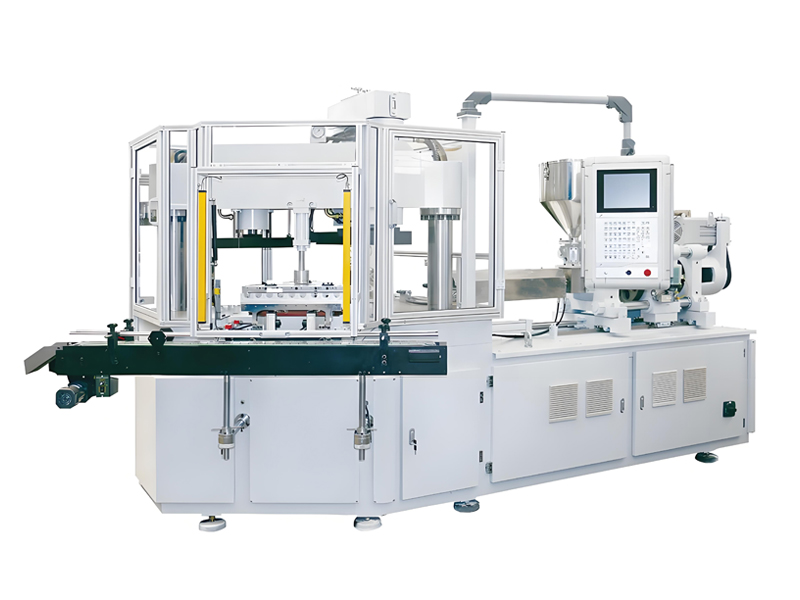
The IBM55 Hybrid Electric model utilizes precision temperature control optimized for the energy efficiency characteristics of hybrid electric drive systems. Temperature control parameters integrate with drive system energy management to achieve optimal overall machine efficiency while maintaining product quality. The compact footprint of the IBM55 injection blow molding machine does not compromise temperature control performance, demonstrating that precision temperature management does not require excessive machine size. This IBM55 injection blow molding machine delivers up to 35 percent energy savings compared to conventional hydraulic machines.
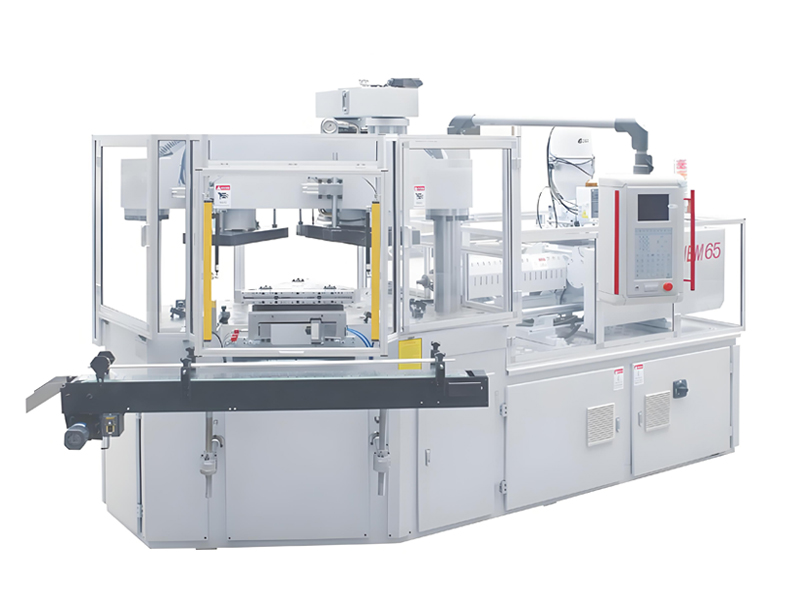
The IBM65 model extends temperature control capabilities to accommodate higher production rates and larger container volumes. Additional heating zones and expanded cooling capacity provide the thermal headroom required for demanding applications while maintaining the precision that smaller machines achieve. Temperature control response time improvements reduce cycle-to-cycle variation even as production speeds increase. The IBM65 injection blow molding machine handles containers from 50ml to 500ml with the same temperature precision that smaller machines provide for micro-scale containers.
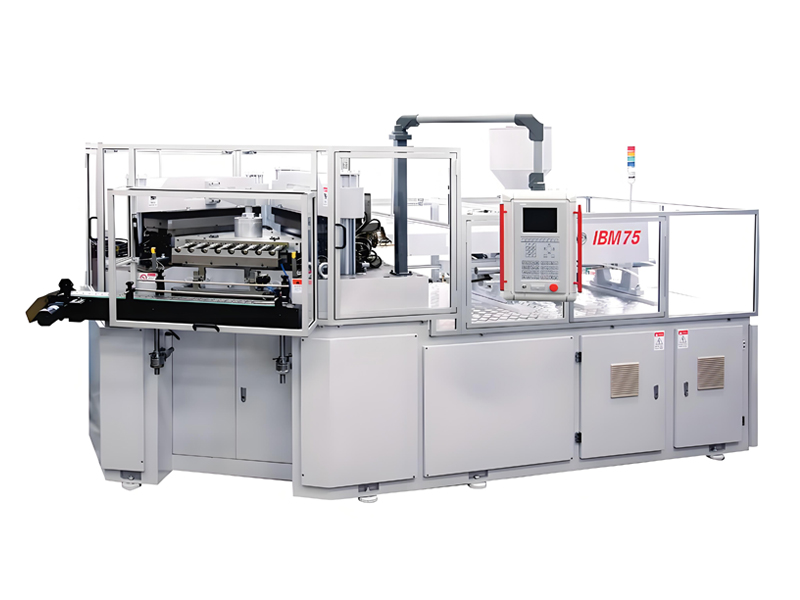
The IBM75 model incorporates the most advanced temperature control capabilities in the AiBiM lineup, designed for high-volume pharmaceutical and technical container production. Precision temperature control across extended shot sizes and complex multi-layer applications demonstrates the scalability of AiBiM temperature management philosophy from the smallest to the largest machines in the product range. The IBM75 injection blow molding machine serves pharmaceutical manufacturers requiring CE-certified quality systems and temperature control documentation meeting regulatory standards.
PREFILL Technology Temperature Management Benefits
PREFILL technology represents a fundamental advancement in injection blow molding temperature management that benefits both product quality and energy efficiency. The patented PREFILL system optimizes material preparation before injection, establishing consistent temperature conditions regardless of material variations or shot size fluctuations.
By controlling material pre-compression and movement before injection, PREFILL technology minimizes shear heating variations that conventional systems cannot address through barrel temperature control alone. This optimization creates a more consistent melt temperature entering the mold, improving wall thickness uniformity and reducing scrap rates significantly.
PREFILL technology enables tighter temperature control tolerances by reducing process variability at its source. When the material entering the mold arrives in optimal condition, downstream temperature variations have less impact on finished product quality. This robustness simplifies operation and reduces operator intervention requirements.
Energy Optimization Through Temperature Management
The 35 percent energy savings documented across AiBiM customer installations results primarily from optimized temperature management rather than simply reducing heating capacity. Understanding how temperature optimization achieves energy savings enables operators to realize full machine potential.
Precision temperature control minimizes heat waste by maintaining temperatures at optimal levels rather than conservative over-temperature conditions. Conventional machines often operate at elevated temperatures to provide safety margins against quality problems, consuming excess energy continuously. AiBiM precision control eliminates these margins through more accurate measurement and faster response.
Reduced cycle times resulting from optimized temperature distribution decrease energy consumption per container produced. When containers cool more uniformly and consistently, cycle times can be optimized without risking quality variations. Less time at temperature per container means less energy input required for equivalent production output.
Intelligent temperature monitoring identifies opportunities for energy reduction while maintaining product quality. SD card parameter storage enables systematic comparison of temperature profiles against energy consumption, revealing optimization opportunities that manual monitoring cannot identify. Data-driven temperature management drives continuous improvement in both quality and efficiency.
Intelligent Temperature Monitoring Capabilities
Modern injection blow molding requires temperature monitoring that extends beyond simple setpoint tracking to encompass comprehensive process understanding. AiBiM machines incorporate monitoring capabilities that provide visibility into temperature behavior that conventional systems cannot match.
Real-time temperature trending displays show temperature behavior over time, revealing patterns that single-point measurements cannot capture. Operators can observe whether temperatures are stable, drifting, or oscillating, enabling appropriate response before quality problems occur.
Alarm management systems alert operators when temperatures approach limits that might affect product quality, enabling preventive intervention. Configurable alarm thresholds allow appropriate response levels for different product requirements, preventing both excessive alarm activity and missed quality risks.
Production data logging creates records of temperature conditions throughout production runs, supporting quality documentation and troubleshooting when problems occur. This historical data enables correlation of temperature conditions with product quality outcomes, building process knowledge that improves future operations.
Maintenance Practices and Preventive Measures
Consistent temperature control performance requires regular maintenance that prevents degradation of temperature-critical components. Establishing effective maintenance procedures protects production quality and extends equipment life.
Daily Temperature Verification Checklist
Daily verification procedures establish baseline temperature performance and detect developing problems before they affect product quality. Consistent daily checks create process documentation and build operator awareness of normal machine behavior.
Temperature controller display verification at shift start confirms that all zones display temperatures within expected ranges. Recording these readings creates documentation supporting quality system requirements and provides early warning of developing control problems.
Visual inspection of heating elements, insulation, and cooling connections identifies physical conditions that might affect temperature control. Damaged insulation, loose heater bands, or cooling line leaks noted during daily inspection can be addressed during planned maintenance rather than causing emergency shutdowns.
Product quality monitoring during the first production runs of each shift verifies that temperature settings produce expected product characteristics. Containers exhibiting unexpected quality variations indicate temperature problems requiring investigation before full production continues.
Scheduled Maintenance Planning
Preventive maintenance scheduled at appropriate intervals prevents temperature-related failures that disrupt production and damage product quality. Establishing effective maintenance schedules requires understanding component wear patterns and production impacts.
Weekly maintenance activities include cleaning heating element surfaces, verifying thermocouple connections, and inspecting cooling system strainers. These brief activities prevent accumulation of debris that degrades heat transfer and identify connection problems before they cause failures.
Monthly maintenance extends to cleaning mold cooling channels, calibrating temperature controllers against reference standards, and inspecting insulation condition. More comprehensive than weekly activities, monthly maintenance addresses components that degrade gradually rather than suddenly.
Quarterly maintenance includes comprehensive thermal imaging surveys to identify insulation problems, flow testing of all cooling circuits, and review of temperature trending data to identify performance degradation trends. This systematic assessment reveals developing problems that daily and monthly checks cannot detect.
Replacement Intervals for Critical Components
Temperature-related components have predictable service lives that enable replacement before failure occurs. Establishing replacement intervals based on manufacturer recommendations and operational experience prevents unexpected failures.
Heating elements typically require replacement after 10,000 to 15,000 operating hours depending on thermal cycling frequency and maximum temperature exposure. Elements that show visual degradation, increased resistance, or inconsistent heating should be replaced proactively rather than awaiting complete failure.
Thermocouples may require replacement annually or after 5,000 operating hours, whichever occurs first, in production environments. Sensors exposed to high temperatures and thermal cycling gradually lose calibration accuracy, making periodic replacement more cost-effective than continuous recalibration.
Cooling system components including pumps, valves, and piping require inspection at intervals based on water quality and operating conditions. Hard water environments may require annual descaling, while treated water systems may operate for several years between major service events.
Operator Training Requirements
Effective temperature control requires operator understanding of underlying principles and practical troubleshooting skills. Training programs should address both theoretical knowledge and hands-on skill development.
Temperature control fundamentals training ensures operators understand how temperature affects product quality, what symptoms indicate temperature problems, and why specific troubleshooting procedures are effective. This theoretical foundation enables operators to respond appropriately to novel situations rather than only memorized procedures.
Troubleshooting simulation training using either dedicated simulators or intentionally degraded conditions during planned maintenance windows develops diagnostic skills without risking production quality. Operators learn to identify symptoms, isolate causes, and implement solutions in low-pressure training environments.
Continuing education through manufacturer training, industry seminars, and technical literature keeps operators current with evolving technology and best practices. AiBiM provides ongoing training support for customers operating IBM series machines, ensuring that operators maximize machine capabilities.
Preventive Maintenance Cost Analysis
Investment in preventive maintenance generates returns through reduced downtime, lower scrap rates, and extended equipment life. Quantifying these benefits enables informed decisions about maintenance resource allocation.
Downtime cost analysis considers both direct costs of lost production time and indirect costs of missed deliveries, expedited shipping, and customer dissatisfaction. When preventive maintenance prevents a single significant downtime event, the cost justification becomes straightforward.
Scrap reduction benefits from improved temperature stability compound across production runs, often exceeding preventive maintenance costs significantly. Documenting scrap rates before and after maintenance investments demonstrates return on investment clearly.
Extended equipment life from consistent operation at design temperatures rather than stress conditions from temperature excursions reduces capital replacement requirements. Tracking maintenance costs against equipment longevity provides complete financial perspective on preventive maintenance value.
Troubleshooting Flowchart and Decision Framework
Systematic troubleshooting approaches yield faster, more reliable results than trial-and-error methods. Establishing clear decision frameworks enables operators at all skill levels to troubleshoot effectively.
Quick Problem Location Steps
When temperature problems occur, rapid identification of the affected zone focuses troubleshooting efforts efficiently. Following a structured approach prevents wasted time investigating unaffected areas.
Step one involves verifying temperature display accuracy against reference measurements to confirm whether reported problems represent actual temperature conditions or measurement errors. Apparent problems that vanish when reference measurements confirm controller accuracy point toward sensor or controller problems rather than actual thermal conditions.
Step two identifies whether the problem affects all zones or specific zones only. Problems affecting all zones simultaneously suggest system-level issues like inadequate heating capacity, environmental changes, or material problems. Zone-specific problems indicate localized issues like failed heating elements, sensor failures, or cooling restrictions.
Step three determines whether the problem is stable or fluctuating. Stable deviations from setpoint suggest capacity or calibration problems that remain constant. Fluctuating temperatures indicate control system problems requiring PID adjustment or component replacement.
Symptom-to-Cause Correlation
Matching observed symptoms to probable causes enables targeted troubleshooting that resolves problems efficiently. Experience building symptom-to-cause correlations improves troubleshooting speed and accuracy over time.
Discoloration and burning indicate excessive temperature caused by cooling system failures, control system failures, or material degradation. Initial troubleshooting should verify actual temperatures against controller displays, then investigate cooling system and control system function sequentially.
Short shots and incomplete filling indicate low temperature or insufficient material delivery. Temperature verification distinguishes between thermal causes requiring heating system investigation and mechanical causes requiring shot size or injection pressure analysis.
Wall thickness variation indicates temperature distribution problems either within the melt or across mold surfaces. Investigating melt temperature consistency and mold temperature uniformity separately isolates the problem source.
Solution Reference Table
Having documented solutions readily available accelerates troubleshooting by preventing redundant investigation of previously resolved problems. Maintaining solution records builds organizational knowledge that benefits all operators.
Documentation should include problem symptoms, diagnostic findings, implemented solutions, and outcomes. This record enables operators facing similar problems to benefit from previous experience rather than repeating troubleshooting from the beginning.
Solution effectiveness verification ensures that implemented fixes provide lasting resolution rather than temporary improvement. Following up after implementation confirms that problems have been truly resolved rather than merely masked.
Temperature Problem Case Studies
Real-world examples illustrate how troubleshooting principles apply to actual production situations. These case studies demonstrate systematic approaches that operators can adapt to their own circumstances.
Case Study One: Beverage Bottle Discoloration
A pharmaceutical company producing PET beverage bottles experienced intermittent discoloration affecting approximately five percent of production output. Initial investigation revealed that affected bottles exhibited yellowing concentrated in areas distant from the injection gate, suggesting temperature variation across the mold surface.
Diagnostic findings showed that mold cooling channels in the affected areas had accumulated mineral deposits reducing flow by approximately forty percent. This flow reduction created hot spots where material temperature exceeded acceptable limits, causing thermal degradation visible as discoloration.
Solution implementation involved cleaning affected cooling channels using food-safe descaling solution and implementing water treatment to prevent recurrence. Post-maintenance production showed discoloration reduced to less than 0.1 percent, well within acceptable limits. The case demonstrates how cooling system maintenance directly affects product quality in temperature-sensitive applications. This same maintenance approach applies to any injection blow molding machine producing containers where visual quality standards are stringent.
Case Study Two: Pharmaceutical Container Wall Thickness Variation
A pharmaceutical manufacturer using IBM65 injection blow molding machines experienced wall thickness variations exceeding specifications in critical dosing containers. Investigation revealed that wall thickness variation correlated with ambient temperature changes, with the problem worsening during winter months when production room temperatures dropped.
Root cause analysis identified that mold temperature control was marginally adequate for warm-weather conditions but insufficient when ambient temperature reduced effective cooling capacity. The temperature control system lacked the reserve capacity required for winter operating conditions.
Solution options included environmental temperature control, expanded cooling capacity, and process optimization. The selected approach combined process optimization using PREFILL technology to reduce temperature sensitivity with adjusted temperature setpoints optimized for winter conditions. This case illustrates how environmental factors interact with temperature control systems in ways that may not be obvious during initial troubleshooting.
Case Study Three: Cosmetic Container Bubble Formation
A cosmetics manufacturer experienced intermittent bubble formation in PP cosmetic containers produced on IBM75 injection blow molding machines. Bubbles appeared inconsistently across production shifts, making correlation with specific process parameters difficult.
Extensive temperature monitoring revealed that barrel temperature fluctuations of approximately three degrees occurred irregularly throughout production. This fluctuation caused material degradation when temperatures spiked, releasing gases that formed bubbles in finished containers.
PID parameter adjustment resolved the oscillation by slowing controller response to reduce overshoot tendency. SD card parameter storage enabled saving the optimized PID configuration and transferring it to other machines with similar characteristics. The case demonstrates how subtle temperature control behavior can affect product quality without obvious symptoms during normal monitoring. This solution approach applies equally to IBM55, IBM65, and IBM75 injection blow molding machine configurations when temperature oscillations occur.
Conclusion: Expert Recommendations for Temperature Control
Temperature control excellence in injection blow molding requires commitment to systematic management practices, regular maintenance, and continuous improvement. The investment in temperature control capability generates returns through improved quality, reduced waste, and enhanced productivity.
Establishing baseline temperature performance through comprehensive documentation enables meaningful improvement tracking over time. Operators who understand normal machine behavior detect deviations quickly and implement corrective action before quality problems occur.
Preventive maintenance represents the most cost-effective approach to temperature control, preventing problems that would otherwise require emergency response and potentially compromise product quality. Scheduling maintenance activities based on actual equipment condition rather than arbitrary intervals optimizes maintenance resource utilization.
Technology selection significantly influences achievable temperature control performance. AiBiM IBM series machines with PREFILL technology and precision temperature management deliver performance levels that conventional machines cannot match. When temperature control excellence is critical to business success, machine selection should reflect this priority. Investing in an advanced injection blow molding machine with superior temperature control reduces long-term operating costs through improved quality, reduced scrap, and enhanced productivity.
Ongoing operator development ensures that personnel maintain and enhance troubleshooting capabilities throughout their careers. Investment in training yields compounding returns as operators develop increasingly sophisticated diagnostic skills and share knowledge across the organization.
Temperature control success ultimately depends on organizational commitment to excellence in this fundamental aspect of injection blow molding. The procedures, techniques, and principles outlined in this guide provide a foundation for achieving and maintaining temperature control excellence that differentiates leading manufacturers in competitive global markets. Whether you operate a compact IBM55 injection blow molding machine or a high-capacity IBM75 injection blow molding machine, the principles of temperature management remain constant while implementation details scale with production requirements. Operators who master these techniques position their operations for sustained quality and productivity in pharmaceutical, food, and cosmetic container production applications.