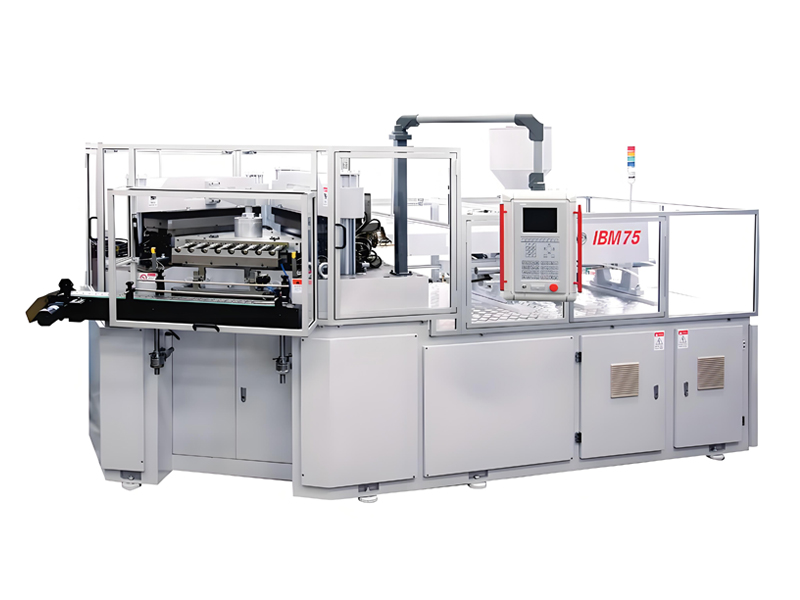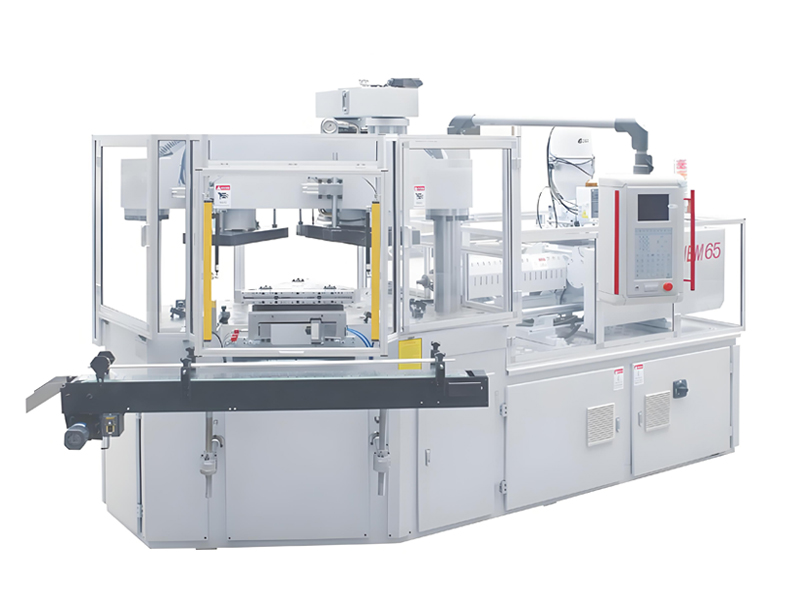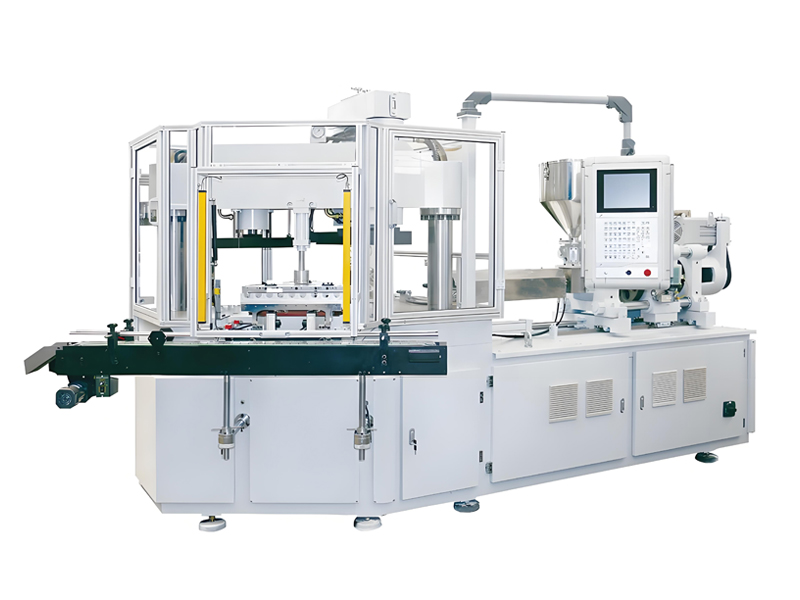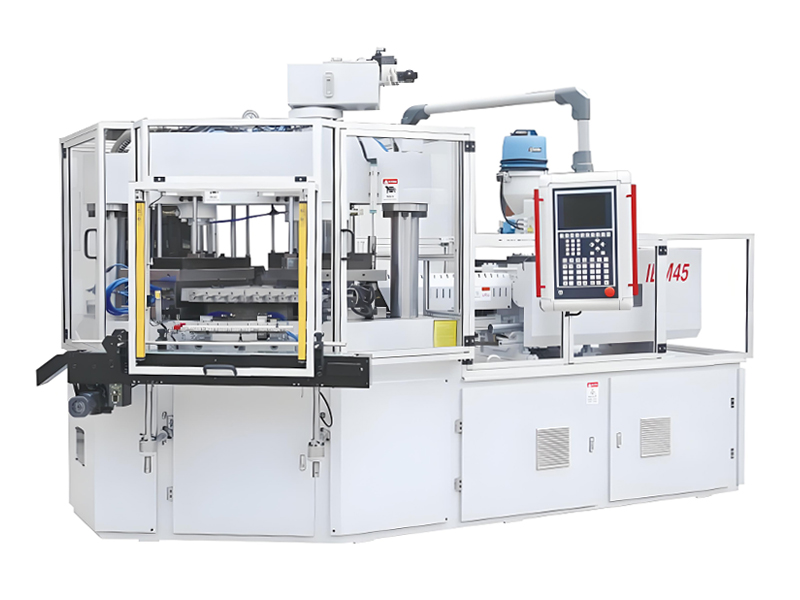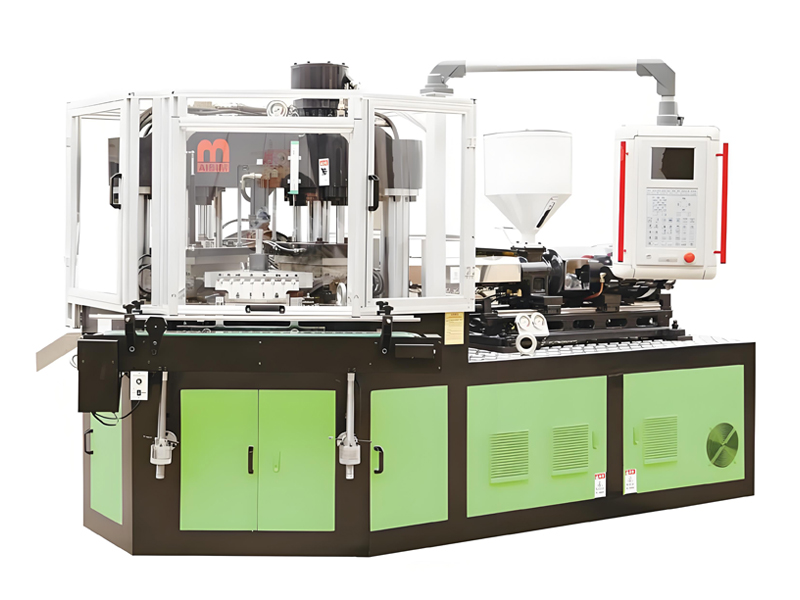
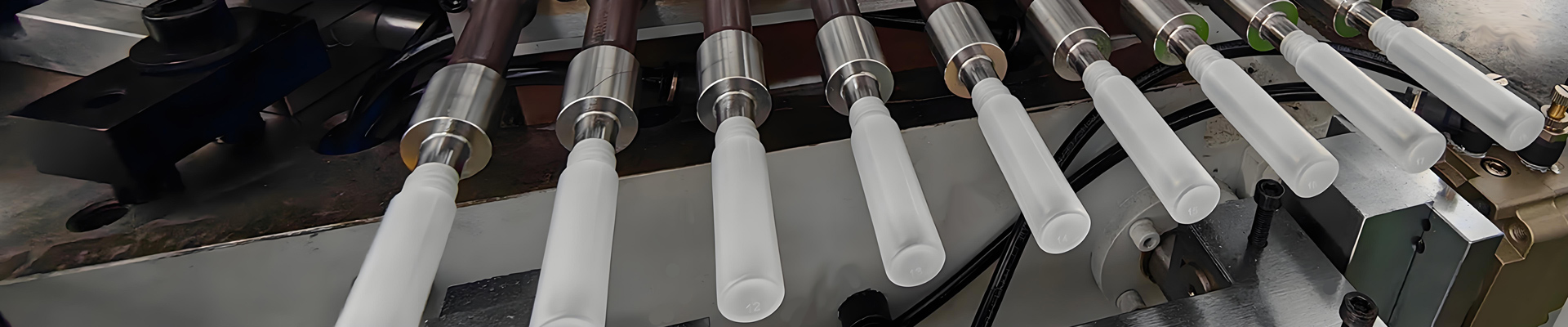
Thermoplastic Polyurethane (TPU) is a high-performance elastic polymer material widely used in flexible liquid storage bottles, soft squeeze packaging, medical flexible containers, and daily chemical soft packaging products. Featuring excellent elasticity, soft touch, abrasion resistance, oil resistance, and low-temperature flexibility, TPU soft bottles have irreplaceable advantages over traditional PE, PVC, and silicone soft bottles, including high transparency, stable chemical inertia, and reusable deformation recovery. The Injection Blow Molding Machine is the core special equipment for one-step integrated molding of high-quality TPU soft bottles, completing parison injection, stretch blowing, and cooling demolding in a continuous automated process.
AiBiM professional Injection Blow Molding Machine is specially optimized for the elastic molding characteristics of TPU materials, solving the technical pain points of ordinary blow molding equipment such as unstable elastic molding, easy deformation, and low finished product qualification rate. However, TPU materials have unique processing characteristics including high melt viscosity, strong elasticity, sensitive temperature response, and slow stress relaxation. Improper raw material pretreatment, unreasonable equipment parameter setting, defective mold design, and non-standard operation processes will easily cause various molding defects in TPU soft bottles during mass production, seriously affecting product appearance, structural stability, and service performance. This article comprehensively sorts out all common defects of TPU soft bottle injection blow molding, analyzes root causes from material, equipment, mold, and process dimensions, provides targeted troubleshooting and optimization schemes, and adds detailed equipment price and production cost analysis, providing systematic technical guidance for enterprises to achieve stable and high-yield production of TPU soft bottles.
1. Basic Molding Characteristics and Production Difficulties of TPU Soft Bottles
1.1 Unique Physical and Processing Properties of TPU Materials
TPU is a linear block copolymer composed of hard segments and soft segments, with excellent comprehensive physical properties suitable for flexible bottle molding. Different from rigid plastic materials, TPU has adjustable hardness ranging from 70A to 95A, good tensile elasticity, and strong deformation recovery ability, which can adapt to repeated squeezing and bending of soft bottles. In terms of chemical performance, TPU has excellent resistance to oil, solvent, and weak acid corrosion, and will not react with daily chemicals, skin care products, and mild medical liquids, meeting the safety standards of flexible packaging containers.
In terms of blow molding processing characteristics, TPU has significantly different performance from conventional plastic materials. It has high melt viscosity, poor fluidity at low temperature, and extremely sensitive temperature changes. A temperature deviation of 5 to 10℃ will lead to obvious changes in melt fluidity and molding effect. In addition, TPU materials have obvious melt elasticity and slow internal stress relaxation speed, and residual stress is easily generated after molding, which is the fundamental cause of deformation, warping, and shrinkage defects of TPU soft bottles.
Moreover, TPU materials are highly hygroscopic. Unprocessed damp raw materials will produce bubbles, silver lines, and rough surfaces during melt molding, which seriously reduces the surface finish and structural compactness of soft bottles. These unique processing characteristics make the injection blow molding production of TPU soft bottles more difficult than ordinary plastic products, putting forward higher requirements for the precision control performance of Injection Blow Molding Machine and the professionalism of the production process.
1.2 Technical Difficulties of TPU Soft Bottle Injection Blow Molding
The one-step injection blow molding process of TPU soft bottles includes three core links: parison injection molding, constant-pressure stretch blowing, and low-temperature cooling shaping. Each link has strict parameter matching requirements. In the parison injection stage, the high viscosity of TPU melt easily leads to uneven parison wall thickness and insufficient filling if the injection pressure and speed are not matched properly. Different from rigid plastic parisons, TPU parisons have strong elastic shrinkage, and the parison size is prone to shrinkage deviation after demolding, affecting subsequent blow molding accuracy.
In the stretch blowing stage, TPU’s elastic molecular structure leads to uneven stretching force transmission. Excessive blowing pressure will cause local over-stretching and thin-wall rupture of the soft bottle, while insufficient pressure will lead to incomplete mold fitting, unclear bottle outline, and poor surface flatness. In the cooling shaping stage, too fast cooling will lock internal stress, resulting in later bottle body warping and shrinkage; too slow cooling will cause bottle body deformation and low production efficiency, forming a mutual restriction between product quality and production speed.
Ordinary universal Injection Blow Molding Machines on the market lack targeted parameter optimization for TPU elastic materials, with low temperature and pressure control accuracy, unable to balance molding quality and production efficiency, resulting in frequent defects and high defective rate in TPU soft bottle production, which cannot meet the requirements of high-standard flexible packaging product mass production.
1.3 Impact of Molding Defects on TPU Soft Bottle Products
Various molding defects in TPU soft bottle injection blow molding will bring multi-dimensional losses to production enterprises. Appearance defects such as surface bubbles, silver lines, wrinkles, and material shortage will directly cause product scrapping, reduce the finished product qualification rate, and increase raw material waste costs. Structural defects such as uneven wall thickness, local thin walls, and elastic inconsistency will lead to unbalanced stress of the soft bottle, easy deformation and collapse during squeezing and use, affecting product user experience.
Potential internal defects such as residual stress and molecular stretching imbalance will cause delayed deformation, shrinkage, and cracking of TPU soft bottles during storage and use, triggering customer returns and after-sales disputes. Unstable batch product quality will affect enterprise order delivery and brand reputation, and low production efficiency caused by frequent defect debugging will also increase labor and equipment operation costs, reducing the overall profit margin of TPU soft bottle projects.
2. Technical Advantages of AiBiM Injection Blow Molding Machine for TPU Production
2.1 Targeted Hardware Optimization for TPU Elastic Molding
AiBiM Injection Blow Molding Machine is professionally optimized for the processing characteristics of TPU high-viscosity elastic materials, making up for the functional defects of ordinary blow molding equipment in flexible product production. The equipment adopts a high-torque servo injection system, which provides stable and sufficient injection pressure for high-viscosity TPU melt, ensuring uniform melt plasticization and full mold filling, and effectively solving the problems of material shortage and uneven parison caused by insufficient power of ordinary equipment.
The independent constant-temperature circulating mold temperature control system of AiBiM equipment realizes precise temperature control within ±0.5℃, perfectly adapting to the sensitive temperature response characteristics of TPU materials. It can stably control the melt plasticization temperature and mold cooling temperature, avoid quality fluctuation caused by temperature deviation, and effectively reduce residual internal stress of TPU products. The optimized low-resistance constant-pressure blowing system provides stable and uniform blowing pressure, ensuring synchronous and balanced stretching of TPU elastic melt, and maintaining consistent wall thickness and elastic uniformity of soft bottles.
In terms of mechanical structure, the equipment adopts a high-rigidity integral frame and high-precision rotary positioning structure, with stable operation and low vibration, avoiding parison deviation and molding deformation caused by mechanical jitter. The three-station one-step integrated molding process reduces manual intervention and secondary product transfer deformation, laying a hardware foundation for high-quality and low-defect production of TPU soft bottles.
2.2 Intelligent Process System for TPU Defect Prevention
AiBiM Injection Blow Molding Machine is equipped with a self-developed intelligent process control system, with a built-in exclusive TPU material molding parameter database, covering the optimal temperature, pressure, speed, and time parameters for different hardness TPU soft bottle production. Enterprises can realize one-click parameter calling according to product specifications, avoiding quality defects caused by manual parameter debugging errors and experience deviation.
The closed-loop real-time monitoring system can automatically track and correct key production parameters such as melt temperature, injection pressure, blowing pressure, and cooling time during the production process, eliminate parameter drift in long-term continuous operation, and maintain long-term stable production conditions. The system also has abnormal defect early warning function, which can timely identify parameter anomalies that may cause bubbles, wrinkles, deformation and other defects, and remind operators to adjust parameters in advance, greatly reducing the batch defective rate.
2.3 Mass Production Stability and Cost Performance Advantages
Compared with ordinary Injection Blow Molding Machines, AiBiM professional equipment can stabilize the defective rate of TPU soft bottles below 1.2%, far lower than the 5% to 8% defective rate of ordinary equipment. The stable molding performance greatly reduces raw material waste, rework labor costs, and product scrapping losses. At the same time, the intelligent parameter matching function simplifies the production debugging process, shortens the trial production cycle, and improves the overall production efficiency by 10% to 15%.
3. Classification, Causes and Complete Troubleshooting of TPU Soft Bottle Molding Defects
3.1 Surface Bubble and Void Defects
Surface bubbles and internal voids are the most common appearance defects in TPU soft bottle injection blow molding. The specific manifestations are tiny raised bubbles on the bottle surface, hollow voids inside the bottle wall, and uneven surface texture, which seriously affect the transparency and finish of TPU soft bottles, and easily cause local stress concentration and cracking during use.
The root causes of bubble defects are mainly divided into four aspects. First, raw material moisture exceeds the standard. TPU materials are highly hygroscopic, and un-dried raw materials contain a large amount of moisture, which vaporizes into water vapor during high-temperature melting, forming bubbles in the melt that cannot be discharged in time. Second, excessive air is mixed in the melt. Too high screw rotation speed and unreasonable feeding speed cause air entrainment during TPU plasticization, and the air remains in the bottle wall after blow molding.
Third, unreasonable mold exhaust design. Insufficient exhaust grooves of the injection and blow molds lead to unable discharge of air in the mold cavity, forming trapped air bubbles on the product surface. Fourth, excessive melt temperature. Over-high barrel temperature causes partial thermal decomposition of TPU materials, producing volatile gases and forming internal voids.
Targeted troubleshooting methods include standardizing raw material pretreatment, drying TPU materials at 80℃ to 90℃ for 4 to 6 hours before production to control moisture content below 0.02%. Appropriately reduce the screw rotation speed and increase back pressure to eliminate melt entrainment. Optimize the mold exhaust structure, expand and deepen exhaust grooves appropriately, and clean mold exhaust channels regularly to ensure smooth exhaust. Calibrate the equipment melting temperature, strictly control the barrel temperature within 195℃ to 210℃, avoid material thermal decomposition, and completely eliminate bubble and void defects.
3.2 Bottle Body Deformation and Irregular Shrinkage
TPU soft bottles are prone to overall shrinkage, local depression, bottle body warping, and irregular deformation after demolding and placement, which is a typical defect caused by unbalanced internal stress and uneven cooling. Different from rigid plastic products, TPU’s elastic molecular structure will continue to relax after molding, and unbalanced molding conditions will aggravate delayed deformation and shrinkage.
The main causes of deformation and shrinkage defects include uneven mold temperature, inconsistent cooling speed of each part of the bottle wall, resulting in asynchronous shrinkage stress. Insufficient holding pressure and short holding time lead to insufficient melt filling and volume compensation during TPU cooling and shrinkage. Excessively fast cooling speed locks residual internal stress inside the product, causing later stress release and deformation. In addition, unreasonable stretching speed and blowing pressure in the blow molding stage lead to uneven molecular orientation and unbalanced elastic stress of the bottle wall.
The troubleshooting scheme is to use the constant-temperature mold control system of AiBiM Injection Blow Molding Machine to stabilize the mold temperature at 40℃ to 50℃, ensure uniform temperature of all mold parts, and realize synchronous cooling of the inner and outer bottle walls. Appropriately increase the secondary holding pressure to 30 to 35MPa and extend the holding time to 2 to 4 seconds to fully compensate the cooling shrinkage volume of TPU melt. Adjust the segmented cooling parameters, appropriately extend the cooling time for thick-wall areas, balance the internal and external cooling speed, and eliminate residual stress. Optimize the blowing pressure to 0.6 to 0.7MPa with uniform stretching speed to ensure consistent molecular tension of the bottle wall and avoid stress deviation.
3.3 Uneven Wall Thickness and Local Thin-Wall Defects
Uneven wall thickness, local ultra-thin walls, and partial thick-wall accumulation of TPU soft bottles will lead to unbalanced elasticity of the bottle body, easy collapse and deformation during squeezing, and liquid leakage in severe cases, which is a key structural defect affecting product service life. This defect is mainly formed in the parison injection and stretch blowing stages.
The specific causes include unstable injection speed and pressure, resulting in uneven parison wall thickness. Unreasonable blowing pressure and stretching ratio cause over-stretching of local areas such as bottle shoulders and bottle bottoms, forming thin walls. Deviation of mold clamping positioning and uneven mold gaps lead to partial material accumulation or insufficient filling. In addition, inconsistent TPU melt fluidity caused by unstable raw material quality will also aggravate wall thickness deviation.
Troubleshooting and optimization methods: adopt the medium-speed stable injection mode of AiBiM equipment to maintain constant injection pressure and speed, ensure uniform parison molding. Adjust the blowing pressure and stretching ratio according to the bottle structure, appropriately reduce the stretching force of vulnerable thin-wall areas, and set balanced stretching parameters. Regularly calibrate the mold clamping accuracy and mold gap to eliminate mechanical positioning deviation. Standardize raw material selection and pretreatment to ensure stable melt fluidity, and match targeted process parameters to realize uniform wall thickness molding of TPU soft bottles.
3.4 Surface Wrinkle, Flow Mark and Material Overflow Defects
Surface wrinkles, obvious flow marks, and flash overflow on the edge of TPU soft bottles are common appearance defects affecting product aesthetics and assembly accuracy. Flow marks are strip texture traces formed by unsmooth melt flow and poor fusion during injection; wrinkles are fold deformation caused by uneven stretching and insufficient mold fitting; flash overflow is excess material burrs on the mold parting surface.
The causes of flow marks and wrinkles are low melt temperature, poor TPU melt fluidity, insufficient filling speed, and uneven melt flow in the mold cavity. Too low blowing pressure leads to insufficient stretching and fitting of the parison, resulting in surface wrinkles. Flash defects are caused by excessive injection pressure, too large mold gap, and insufficient mold locking force, leading to melt overflow from the parting surface.
Corresponding troubleshooting measures: appropriately increase the barrel front-end temperature and nozzle temperature to improve TPU melt fluidity, and match medium and high injection speed to ensure smooth melt filling. Increase the blowing pressure appropriately to ensure full mold fitting of the parison and eliminate surface wrinkles. Reduce the injection pressure within the process allowable range, check and adjust the mold locking force and parting surface tightness, clean mold surface sundries, and eliminate flash overflow defects. Optimize the melt flow path to ensure uniform melt flow and completely remove surface flow marks.
3.5 Demolding Difficulty and Product Adhesion Defects
TPU soft bottles are prone to adhere to the mold cavity after molding, resulting in difficult demolding, and forced demolding will cause bottle body deformation, surface scratch, and structural damage. This defect is unique to elastic soft material blow molding, and the incidence is far higher than that of rigid plastic products.
The main causes include low mold surface finish, rough cavity wall, and excessive friction between TPU melt and mold surface. Too high mold temperature leads to excessive adhesion of TPU elastic materials to the mold. Unreasonable demolding mechanism setting, insufficient demolding force, and unbalanced ejection position cause product jamming. Excessive residual internal stress of the product also increases the friction between the bottle body and the mold cavity.
Troubleshooting methods: polish and chrome-plate the mold cavity regularly to improve surface finish and reduce friction adhesion. Appropriately reduce the mold temperature to weaken the adhesion of TPU materials to the mold. Optimize the demolding ejection structure, adjust the ejection rod position and ejection speed, ensure balanced and smooth demolding. Match the stress elimination process to reduce product internal stress, and add a small amount of special TPU release agent appropriately to assist demolding without affecting product surface quality.
3.6 Yellowing and Surface Aging Defects
Yellowing, dull surface, and local aging discoloration of TPU soft bottles often occur in long-term continuous production. This defect does not affect the initial use performance but seriously reduces the product grade and weather resistance, and the yellowed products are prone to brittle aging in subsequent use.
The root causes include excessive melt temperature leading to thermal oxidation decomposition of TPU molecular chains. Long-term material residence in the barrel causes carbonization and aging of partial materials. Unclean production environment and residual sundries in the mold cause surface pollution and discoloration. In addition, poor raw material stability and excessive recycled material proportion will also accelerate product yellowing.
Optimization and troubleshooting schemes: strictly control the barrel heating temperature to avoid overheating and thermal decomposition. Clean the barrel and nozzle regularly to remove residual aged carbonized materials. Reduce the material residence time in the equipment, and avoid long-term idling heating of materials. Control the proportion of recycled TPU materials below 8%, and prioritize high-purity new materials for high-transparency products. Keep the mold cavity and production environment clean to ensure bright and uniform surface color of TPU soft bottles.
4. Systematic Optimization Scheme for Low-Defect Production of TPU Soft Bottles
4.1 Standardized Raw Material Management and Pretreatment Process
Raw material stability is the foundation of low-defect TPU soft bottle production. Enterprises must select high-quality TPU raw materials with stable melt index and uniform molecular structure, and match different hardness raw materials according to product usage scenarios. Strictly control the proportion of recycled materials, and prohibit the use of severely aged and impure recycled materials for high-end soft bottle production.
Implement standardized drying pretreatment process for all TPU raw materials. Set the drying temperature at 80℃ to 90℃ and drying time at 4 to 6 hours, and detect the material moisture content before production to ensure it is lower than 0.02%. For long-term placed raw materials with easy moisture absorption, extend the drying time appropriately and add secondary dehumidification treatment. Uniformly mix raw materials to avoid local material performance differences, ensuring consistent molding performance of each batch of raw materials.
4.2 Full-Process Parameter Matching of AiBiM Injection Blow Molding Machine
Aiming at the elastic molding characteristics of TPU, the exclusive optimal parameter scheme of AiBiM equipment can comprehensively reduce defect rate. The segmented barrel temperature is set as rear section 185℃ to 195℃, middle section 190℃ to 200℃, front section 195℃ to 205℃, and nozzle temperature 200℃ to 210℃, which ensures full melting of TPU materials without thermal decomposition.
The injection pressure is stably controlled at 50 to 60MPa with medium uniform injection speed to ensure full and smooth mold filling. The secondary holding pressure is 28 to 33MPa with holding time of 2 to 4 seconds to compensate cooling shrinkage. The blowing pressure is stabilized at 0.6 to 0.7MPa with constant-speed stretching to ensure uniform molecular stretching of the bottle wall. The mold temperature is maintained at 40℃ to 50℃, and the cooling time is adjusted to 10 to 16 seconds according to the bottle wall thickness, realizing balanced cooling and stress elimination.
Use the equipment’s intelligent parameter storage function to lock the optimal parameter combination for TPU production, realize one-click calling for batch production, and avoid quality fluctuation caused by manual parameter adjustment.
4.3 Mold Maintenance and Structural Optimization
Regular mold maintenance and structural optimization are key measures to reduce recurring defects. Clean the mold cavity, exhaust grooves, and flow channels before daily production to remove residual materials, dust, and oil stains, ensuring smooth exhaust and clean molding environment. Polish the mold surface regularly to maintain high finish and reduce product adhesion and scratch defects.
Optimize the mold exhaust system according to the TPU molding characteristics, appropriately increase the depth and width of exhaust grooves for thick-wall and complex structural parts to avoid trapped air bubbles. Optimize the cooling water circuit layout to ensure uniform cooling of all mold areas, eliminate differential cooling shrinkage, and reduce product warping and deformation defects. Regularly check mold clamping tightness and gap uniformity to avoid flash and uneven wall thickness defects.
4.4 Daily Operation Standardization and Batch Quality Control
Formulate standardized operation specifications for TPU soft bottle injection blow molding production. Complete equipment preheating and mold temperature stabilization 30 minutes before production, and conduct trial production sampling inspection. After confirming no defects in sample products, start formal batch production. Establish an hourly sampling inspection mechanism during production to detect product appearance, wall thickness, and dimensional stability in real time, and trace and adjust abnormal defects in time.
Complete equipment cleaning and parameter backup after daily production to avoid residual material aging affecting subsequent production quality. Regularly calibrate equipment pressure, temperature, and positioning accuracy every week to eliminate parameter drift and mechanical errors, ensuring long-term stable and low-defect batch production.
5. 2026 AiBiM Injection Blow Molding Machine Price and Project Cost Analysis
5.1 Equipment Procurement Price Grading Estimation
Combined with the 2026 market price of professional flexible material injection blow molding equipment, the AiBiM Injection Blow Molding Machine dedicated to TPU soft bottle production is divided into three configuration grades with clear price gradients. The standard basic configuration model, suitable for conventional low-hardness TPU soft bottle mass production, with basic constant-temperature control and stable blowing function, is priced at 25,500 to 28,500 US dollars per set. This model meets the basic low-defect production requirements and is suitable for small and medium-sized enterprises with conventional product demands.
The professional TPU special configuration model, equipped with high-precision servo injection system, constant-temperature mold control system, and intelligent defect early warning system, is specially optimized for elastic material molding, with stable parameter control and low defective rate, priced at 29,000 to 33,000 US dollars per set. This is the most cost-effective configuration for long-term batch production of high-quality TPU soft bottles.
The high-end intelligent customized model, with full-automatic parameter adaptive matching, real-time quality monitoring, and precise stress adjustment function, is suitable for high-precision medical-grade and high-elasticity TPU soft bottle production, priced at 34,000 to 38,000 US dollars per set, meeting high-standard product production demands.
5.2 Annual Operation and Maintenance Cost Analysis
AiBiM Injection Blow Molding Machine adopts energy-saving servo design and wear-resistant structural parts, with low long-term operation cost. The annual power consumption cost of a single equipment is 2,200 to 2,600 US dollars, which is about 23% lower than that of ordinary injection blow molding equipment. The daily maintenance of the equipment is simple, with annual vulnerable parts replacement and maintenance cost of 300 to 450 US dollars, far lower than the maintenance cost of ordinary equipment with high failure rate.
In contrast, ordinary universal equipment has unstable parameters and frequent defect problems, requiring frequent debugging and maintenance, with annual comprehensive operation cost up to 3,800 to 4,800 US dollars. AiBiM equipment can effectively reduce enterprise daily operation expenditure and stabilize production continuity.
5.3 Quality Loss and Comprehensive Cost Saving Benefit
Ordinary injection blow molding equipment has a defective rate of 5% to 8% in TPU soft bottle production. Calculated based on the annual output of 3.5 million TPU soft bottles, the annual raw material waste, rework, and manual sorting loss reaches 5,500 to 8,800 US dollars. AiBiM professional equipment stabilizes the product defective rate below 1.2%, reducing annual quality loss to less than 1,600 US dollars, saving a large amount of invalid production costs for enterprises every year.
At the same time, stable low-defect production reduces repeated debugging time, improves production efficiency by 10% to 15%, and increases annual output profit. High-quality defect-free products meet high-end customer procurement standards, improve product unit price profit margin, and bring stable incremental economic benefits to enterprises.
5.4 Investment Return Cycle Evaluation
The comprehensive annual cost savings of AiBiM Injection Blow Molding Machine in power consumption, maintenance, quality loss, and labor efficiency reach 8,500 to 11,500 US dollars. The one-time equipment investment can be fully recovered within 2.3 to 2.8 years. The equipment has a service life of more than 10 years with long-term stable performance, and the long-term comprehensive cost performance is far higher than ordinary equipment. For enterprises upgrading old equipment, the return cycle can be shortened to within 2 years, with significant economic benefits.
6. Common Debugging Mistakes and Avoidance Strategies in TPU Production
6.1 Blind Increase of Molding Temperature to Improve Fluidity
Many operators blindly increase the melting temperature when encountering poor TPU melt fluidity and filling difficulty. Excessively high temperature will cause thermal aging and yellowing of TPU materials, residual internal stress surge, and increased product shrinkage deformation. The correct optimization method is to appropriately increase the mold temperature and injection speed on the basis of maintaining a reasonable melting temperature, and improve fluidity through process matching rather than single temperature increase.
6.2 Excessive Blowing Pressure to Eliminate Wrinkles
Blindly increasing blowing pressure to solve surface wrinkles will cause over-stretching of TPU soft bottle walls, resulting in ultra-thin local walls, reduced elasticity, and easy rupture. The correct scheme is to adjust the matching of melt temperature and mold temperature first to improve melt flexibility, and appropriately increase blowing pressure in a small range, supplemented by extending blowing time to ensure full mold fitting without over-stretching.
6.3 Ignoring Post-Molding Stress Elimination
Most enterprises only focus on molding parameter debugging and ignore post-molding stress elimination, resulting in delayed deformation and shrinkage of TPU soft bottles after leaving the factory. The standardized operation is to place the newly demolded products in a constant-temperature environment of 23℃±2℃ for 24 hours of natural aging to release residual stress in advance, ensuring long-term dimensional stability of the products.
7. Industry Development Trend of TPU Soft Bottle Precision Blow Molding
With the continuous upgrading of flexible packaging safety standards and product quality requirements, the TPU soft bottle injection blow molding industry is developing towards high precision, low defect, intelligent control, and green production. Traditional experience-based debugging and extensive production modes are gradually eliminated, and refined process control and intelligent defect prevention have become the core competitiveness of the industry.
The new generation of AiBiM intelligent Injection Blow Molding Machine further optimizes the adaptive molding technology for TPU elastic materials, realizing automatic identification of material hardness and real-time matching of optimal process parameters. The built-in intelligent defect prediction system can pre-judge and avoid common molding defects, further reduce the product defective rate, and realize full-process intelligent and low-defect production of TPU soft bottles, leading the technological upgrading of the flexible material blow molding industry.
8. Conclusion
TPU soft bottle injection blow molding has unique processing difficulties due to the elastic and temperature-sensitive characteristics of TPU materials. Common defects such as bubbles, deformation, uneven wall thickness, wrinkles, and demolding difficulties are caused by the superposition of raw material, equipment, mold, and process factors. Systematic troubleshooting and standardized optimization must be carried out from multiple dimensions to achieve low-defect and high-quality mass production.
As professional and high-precision processing equipment for flexible materials, AiBiM Injection Blow Molding Machine has targeted technical advantages in TPU material molding adaptation, precise parameter control, and defect prevention. By matching standardized raw material pretreatment processes, scientific parameter debugging schemes, and daily production management specifications, enterprises can completely solve various common molding defects of TPU soft bottles, stabilize product quality and batch consistency, reduce comprehensive production costs and quality loss, and effectively improve market competitiveness in the high-end flexible packaging industry.