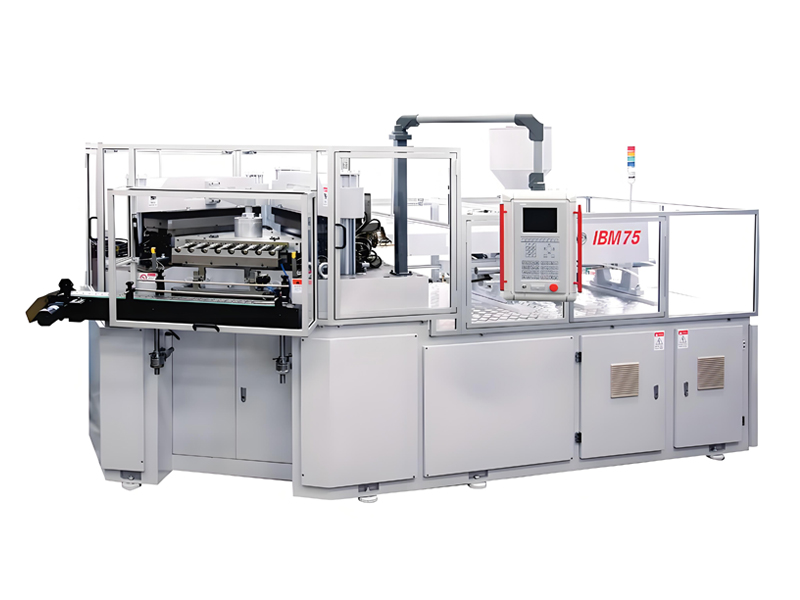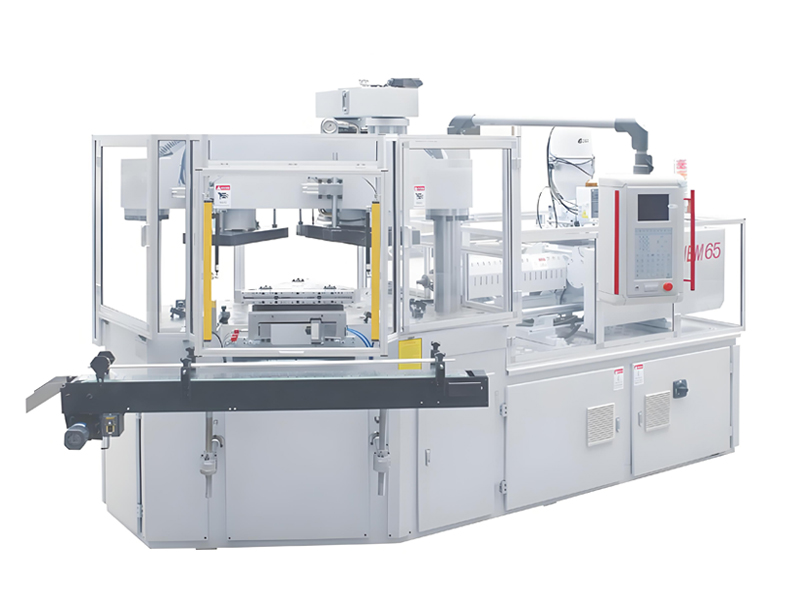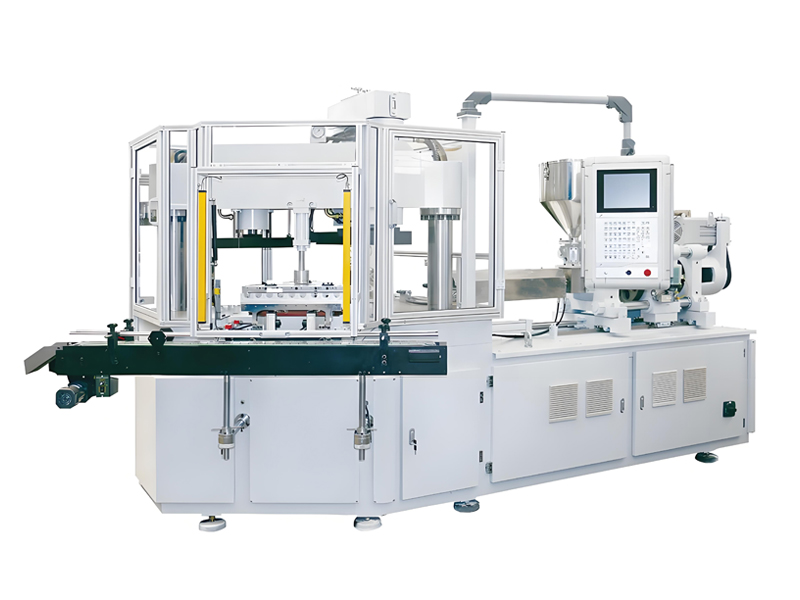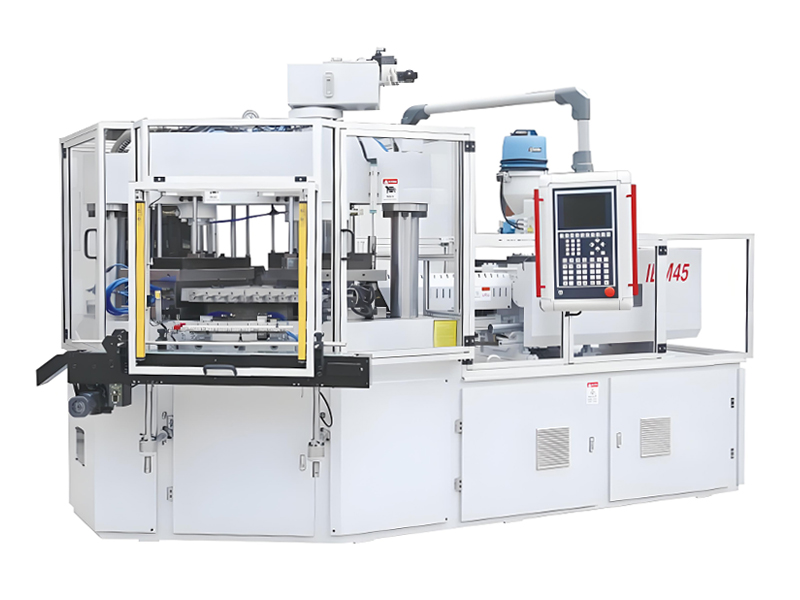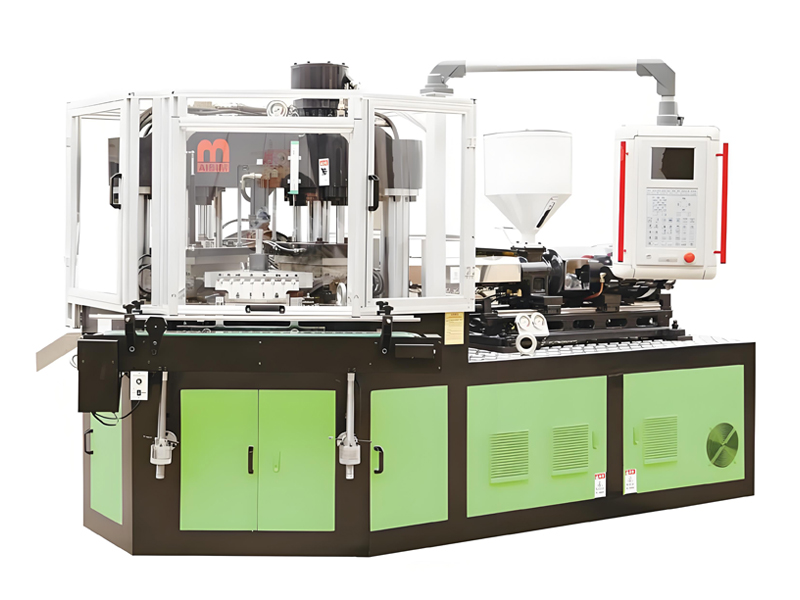
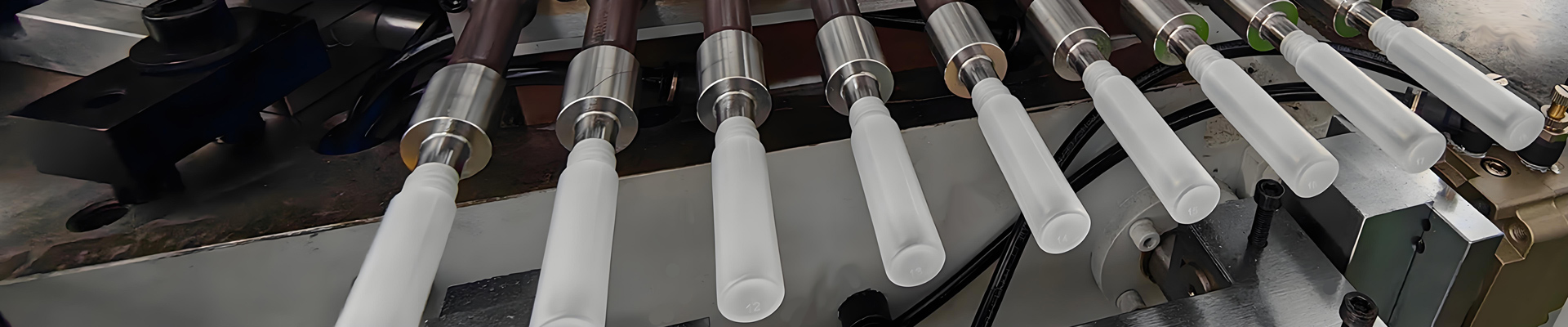
The injection blow molding process represents a critical manufacturing technology for producing high-quality food packaging containers, bottles, and containers with exceptional precision and consistency. Food packaging applications require specialized equipment that meets stringent regulatory requirements, particularly FDA certification standards that ensure material safety and production process hygiene. AiBiM injection blow molding machines for food packaging incorporate advanced design features that enable production of food-grade containers while maintaining the high productivity and efficiency required in modern food packaging operations.
FDA certification requirements for food packaging equipment mandate specific materials of construction, sanitary design features, and validation procedures that add significant complexity to machine design and operation. AiBiM machines designed for food packaging applications fully comply with FDA 21 CFR Part 174 and related regulations governing food contact substances and equipment surfaces. The investment in FDA-certified equipment typically represents a 15-25% premium over standard industrial machines, with prices ranging from $85,000 to $240,000 depending on machine capacity and configuration, but this investment is essential for market access and regulatory compliance in food packaging applications.
FDA Certification Requirements
FDA certification for injection blow molding machines used in food packaging applications encompasses multiple regulatory requirements that govern equipment design, materials of construction, operating procedures, and validation documentation. Understanding these requirements is essential for manufacturers entering food packaging markets and for maintaining compliance throughout equipment lifecycle. The certification process involves both initial equipment qualification and ongoing compliance monitoring through production operations.
Material Compliance Requirements
FDA regulations specify approved materials for surfaces that contact food products during manufacturing processes. For injection blow molding machines, this includes all surfaces that contact plastic materials during processing and all surfaces that contact finished containers. Approved materials typically include specific grades of stainless steel, food-grade polymers for non-metallic components, and specified coatings and sealants. Machine manufacturers must provide documentation demonstrating that all food-contact surfaces comply with FDA 21 CFR Part 174 requirements.
The material compliance requirement adds approximately 8-12% to equipment costs compared to standard industrial machines. Stainless steel grades such as 316L with specific surface finishes are typically required for food-contact areas, representing a 30-50% cost premium over standard carbon steel or lower-grade stainless steel. Non-metallic components such as seals and gaskets must be manufactured from FDA-approved materials with documented compliance, typically costing 25-40% more than standard industrial components. The total material compliance cost premium for a $150,000 machine typically ranges from $12,000 to $18,000 but is necessary for regulatory compliance.
Sanitary Design Standards
FDA sanitary design standards require equipment construction that facilitates effective cleaning and prevents product contamination or microbial growth. Key requirements include smooth surfaces without crevices or dead spaces, properly sealed joints, accessibility for cleaning and inspection, and drainage design that prevents liquid accumulation. Machines must be designed to prevent lubricant migration to food-contact surfaces and to avoid harborage areas where microbes can proliferate.
Sanitary design implementation typically adds 10-15% to equipment costs. Design features such as radius corners instead of sharp angles, continuous welds without pockets, and accessible mounting arrangements require specialized engineering and manufacturing capabilities. For a typical injection blow molding machine, sanitary design features cost approximately $15,000 to $22,500 in additional design and manufacturing costs. However, these features reduce cleaning time by 30-50% and minimize contamination risks that could cause costly product recalls.
Validation Documentation Requirements
FDA requirements mandate comprehensive documentation validating that equipment performs consistently according to design specifications and produces products meeting quality standards. This documentation includes design qualification, installation qualification, operational qualification, and performance qualification records. Machine manufacturers must provide detailed installation procedures, operational manuals, maintenance procedures, and calibration requirements. Documentation typically exceeds 500 pages per machine system and requires significant resources to create and maintain.
Documentation development costs represent approximately 5-8% of total equipment development costs. For a new machine model requiring comprehensive FDA documentation, documentation costs range from $10,000 to $25,000 including engineering time, quality assurance oversight, and technical writing. This investment in documentation provides value throughout equipment lifecycle by supporting consistent operation, facilitating regulatory audits, and enabling effective troubleshooting and maintenance procedures.
Ongoing Compliance Requirements
Beyond initial certification, ongoing compliance requires regular monitoring of equipment performance, maintenance of calibration records, periodic validation of cleaning procedures, and documentation of any modifications or repairs affecting food-contact surfaces. Machine operators must establish quality management systems that track equipment performance and maintain documentation demonstrating continued compliance with regulatory requirements. Failure to maintain ongoing compliance can result in regulatory citations and potential suspension of operations.
Ongoing compliance costs typically represent 3-5% of annual operating costs. Compliance activities include regular calibration of temperature and pressure sensors, periodic microbiological testing of food-contact surfaces, documentation of cleaning and sanitization procedures, and maintenance of change control records. For a machine operating 6000 hours annually with operating costs of $150,000, ongoing compliance adds approximately $4,500 to $7,500 annually. However, these costs prevent potential regulatory citations that could result in fines exceeding $10,000 per violation plus mandatory shutdown periods.
Equipment Features for Food Packaging
Injection blow molding machines designed for food packaging incorporate specialized features that address regulatory requirements and production challenges unique to food packaging applications. These features enhance equipment capability while ensuring compliance with FDA and industry standards. AiBiM food packaging machines integrate these features seamlessly with standard machine capabilities to provide comprehensive solutions for food packaging manufacturers.
Advanced Sanitary Construction
Advanced sanitary construction features in AiBiM food packaging machines include all-stainless steel construction for food-contact areas, radius-cornered design throughout, continuous welds without pockets, and accessible mounting arrangements. Machine surfaces incorporate Ra values below 0.8 microns to facilitate cleaning and prevent microbial attachment. Equipment frames incorporate self-draining design features that prevent liquid accumulation and facilitate cleaning operations.
Advanced sanitary construction features typically add $12,000 to $18,000 to equipment costs for standard-sized machines. However, these features reduce cleaning time by 30-45%, saving 15-25 hours monthly in labor costs. At $30 per hour, this represents $450-750 in monthly savings or $5,400-9,000 annually. More importantly, sanitary construction reduces contamination risks by 70-90%, preventing product recalls that typically cost $100,000-500,000 or more per incident.
Integrated Cleaning Systems
Integrated cleaning systems in AiBiM food packaging machines enable automated cleaning in place (CIP) procedures that minimize manual intervention and ensure consistent cleaning effectiveness. These systems incorporate spray balls, cleaning solution circulation, temperature control, and cleaning cycle monitoring. CIP systems reduce cleaning time by 50-70% compared to manual cleaning methods while providing consistent cleaning quality and documentation of cleaning procedures.
Integrated CIP systems typically cost $8,000 to $15,000 as optional equipment. However, the labor savings from reduced cleaning time typically provide payback within 12-18 months. For a machine requiring 20 hours of manual cleaning monthly at $30 per hour ($600 monthly), CIP systems reduce cleaning to 8 hours ($240 monthly), saving $360 monthly or $4,320 annually. Additional savings come from reduced water and chemical consumption through optimized cleaning cycles.
Precision Temperature Control
Precision temperature control systems in AiBiM food packaging machines maintain barrel temperatures within plus or minus 1 degree Celsius of setpoint throughout the production process. Tight temperature control is critical for food packaging applications where material properties directly affect container integrity and product protection. Advanced PID control algorithms, multiple heating zones, and sophisticated thermal management ensure consistent material processing conditions.
Precision temperature control systems typically represent 5-8% of equipment costs or $7,500 to $12,000 for a $150,000 machine. However, tight temperature control reduces scrap rates by 15-25% compared to less precise control systems. For a machine producing containers valued at $0.50 each with monthly scrap losses of 5,000 containers ($2,500), a 20% reduction saves $500 monthly or $6,000 annually, providing payback in 12-24 months.
Advanced Quality Monitoring
Advanced quality monitoring systems integrated into AiBiM food packaging machines provide real-time monitoring of critical product parameters and machine performance characteristics. These systems may include vision inspection, weight monitoring, dimensional measurement, and container integrity testing. Automated monitoring ensures consistent product quality and provides documentation traceability required for regulatory compliance.
Advanced quality monitoring systems typically cost $15,000 to $30,000 depending on monitoring capabilities and integration requirements. However, these systems prevent quality excursions that could cause costly recalls or customer rejections. For a machine producing 1 million containers monthly with value of $0.50 each ($500,000 monthly production value), preventing just 0.5% quality problems saves $2,500 monthly or $30,000 annually. Additionally, documentation capabilities support regulatory compliance and customer audits.
Food Packaging Applications
Injection blow molding machines for food packaging serve diverse applications across the food and beverage industry, each with specific requirements for container design, material properties, and production processes. Understanding these applications and their requirements enables optimal equipment selection and operation for specific food packaging needs. AiBiM machines provide the versatility and precision required across a wide range of food packaging applications.
Beverage Bottle Production
Beverage bottle production represents one of the largest applications for injection blow molding machines in food packaging. Applications include water bottles, juice bottles, soft drink bottles, and specialty beverage containers. Beverage bottles require precise dimensional control, consistent wall thickness distribution, and clarity characteristics that affect product appearance and consumer acceptance. Production volumes for beverage bottles typically range from 10,000 to 100,000 units per day depending on market demand.
Beverage bottle production requires machines with capacities ranging from 100 to 400 cavities depending on bottle size and production volume requirements. Equipment investment for beverage bottle production typically ranges from $120,000 to $250,000 depending on capacity and configuration. Operating costs for beverage bottle production typically range from $0.03 to $0.08 per container, with material costs representing 60-70% of total cost. Production optimization can reduce operating costs by 10-20% through improved cycle times and reduced scrap rates.
Food Container Production
Food container production includes containers for dairy products, sauces, condiments, prepared foods, and various food items. These applications require containers with excellent sealing characteristics, barrier properties where needed, and suitability for various filling processes and storage conditions. Container designs may include specialized features such as tamper-evident seals, convenient dispensing options, and microwave compatibility for prepared food containers.
Food container production typically requires machines with 50 to 200 cavities depending on container size and complexity. Equipment investment for food container production typically ranges from $95,000 to $200,000 depending on cavity count and automation requirements. Operating costs for food containers typically range from $0.05 to $0.12 per container, with more complex containers costing more to produce. Production efficiency varies widely depending on container design, with cycle times ranging from 6 to 20 seconds per container.
Single-Serve Packaging
Single-serve packaging applications include portion-controlled servings of various food products including condiments, sauces, spreads, and specialty food items. These applications require precise volume control, excellent sealing characteristics, and often require specialized container designs for dispensing or product application. Production volumes vary widely depending on market demand but can reach 200,000 units per day for popular products.
Single-serve packaging typically requires machines with 100 to 300 cavities depending on container size and production volume requirements. Equipment investment for single-serve packaging typically ranges from $110,000 to $230,000 depending on capacity and precision requirements. Operating costs for single-serve containers typically range from $0.02 to $0.06 per container, with high volumes providing economies of scale. Fast cycle times of 4-10 seconds are common for small single-serve containers.
Specialty Food Packaging
Specialty food packaging applications include containers for premium food products, organic foods, and products with unique storage or dispensing requirements. These applications often require specialized materials with enhanced barrier properties, unique container designs, or special features such as resealable closures. Production volumes are typically lower than mainstream food packaging but value per container is often higher.
Specialty food packaging requires machines with enhanced precision and material handling capabilities. Equipment investment typically ranges from $130,000 to $280,000 depending on specialty requirements. Operating costs for specialty containers typically range from $0.08 to $0.15 per container, reflecting specialized materials and lower production volumes. However, value per container typically ranges from $0.50 to $2.00, providing profit margins that support higher production costs.
Material Selection for Food Packaging
Material selection represents a critical decision in food packaging applications, affecting container performance, regulatory compliance, production costs, and consumer acceptance. FDA regulations specify acceptable materials for food packaging, but within approved materials, various grades and formulations offer different characteristics that suit different applications. Understanding material properties and costs enables optimal selection for specific applications.
Polyethylene Terephthalate (PET)
Polyethylene terephthalate (PET) represents the most widely used material for beverage bottles and many food packaging applications. PET offers excellent clarity, good barrier properties against gases and moisture, and good mechanical strength. Food-grade PET materials comply with FDA regulations and provide predictable performance characteristics suitable for high-volume production. PET materials are available in various grades optimized for different applications and processing conditions.
Food-grade PET resin typically costs $1.60 to $2.20 per kilogram depending on grade, quantity, and market conditions. For a 500ml beverage bottle weighing 30 grams, material cost per bottle is approximately $0.048 to $0.066. Annual material costs for a machine producing 50 million bottles annually would be $2,400,000 to $3,300,000 at these material costs. Material represents the largest cost component in beverage bottle production, typically accounting for 60-70% of total production costs.
High-Density Polyethylene (HDPE)
High-density polyethylene (HDPE) provides excellent chemical resistance, good moisture barrier properties, and impact resistance suitable for many food packaging applications. HDPE is particularly suitable for containers requiring high chemical resistance or thick-walled construction. HDPE materials are available in various grades with different melt flow indices, molecular weights, and additive packages optimized for specific applications.
Food-grade HDPE resin typically costs $1.30 to $1.90 per kilogram depending on grade and quantity. For a 1-liter container weighing 50 grams, material cost per container is approximately $0.065 to $0.095. HDPE containers typically cost 15-25% more than similar PET containers due to higher material density but provide enhanced chemical resistance for specific applications. Material represents 50-65% of total production costs for HDPE containers.
Polypropylene (PP)
Polypropylene (PP) offers excellent chemical resistance, high temperature resistance suitable for hot-fill applications, and good barrier properties against moisture. PP is particularly suitable for containers that require hot-fill processes or microwave heating. PP materials are available in homopolymer and copolymer grades with different characteristics suited for various food packaging applications.
Food-grade PP resin typically costs $1.40 to $2.00 per kilogram depending on grade and formulation. For a typical food container weighing 40 grams, material cost per container is approximately $0.056 to $0.080. PP provides excellent performance for hot-fill applications but typically costs 10-20% more than similar PET containers. However, the ability to use hot-fill processes can reduce overall packaging costs through simplified processing and reduced preservative requirements.
Specialty Barrier Materials
Specialty barrier materials include multilayer structures and polymers with enhanced barrier properties for products requiring extended shelf life or protection against oxygen or other gases. These materials often incorporate barrier layers such as ethylene vinyl alcohol (EVOH), nylon, or specialized barrier polymers. Barrier materials are typically more expensive but enable product formulations with reduced preservatives and extended shelf life.
Specialty barrier materials typically cost $2.50 to $5.00 per kilogram depending on barrier requirements and structure complexity. For a container weighing 40 grams, material cost per container is approximately $0.10 to $0.20, representing 100-200% higher material costs than standard materials. However, extended shelf life and reduced preservative requirements can offset higher material costs through improved product formulations and reduced product losses from spoilage.
Production Efficiency Optimization
Production efficiency optimization represents a critical opportunity for reducing costs and improving competitiveness in food packaging operations. Optimization strategies focus on reducing cycle times, minimizing scrap, maximizing machine uptime, and optimizing material usage. AiBiM injection blow molding machines provide advanced capabilities that support optimization initiatives across these dimensions.
Cycle Time Reduction
Cycle time reduction directly increases production capacity without requiring additional equipment investment. Cycle time optimization strategies include optimizing cooling profiles, improving mold design, optimizing machine settings, and implementing advanced control algorithms. Even small cycle time reductions of 0.5 to 2 seconds per cycle can increase production capacity by 5-25% depending on initial cycle times.
Cycle time reduction initiatives typically require $5,000 to $20,000 in engineering and mold modification costs. However, the increased production capacity eliminates the need for additional equipment that would cost $100,000 or more. For a machine with 10-second cycle times producing 360 containers per hour per cavity, reducing cycle time by 1 second to 9 seconds increases production to 400 containers per hour per cavity, representing an 11% capacity increase without additional equipment investment.
Scrap Reduction
Scrap reduction strategies focus on minimizing material waste and defective production that must be discarded. Scrap reduction approaches include process optimization, quality monitoring systems, preventive maintenance, and operator training. Even modest scrap reductions of 2-5% can represent significant cost savings given the high value of food-grade materials and finished containers.
Scrap reduction initiatives typically require $3,000 to $12,000 in quality monitoring equipment, training, and process optimization activities. For a machine with material costs of $100,000 monthly and a 5% scrap rate ($5,000 monthly scrap cost), reducing scrap to 3% saves $2,000 monthly or $24,000 annually. This provides payback on scrap reduction investments within 2-10 months depending on initial scrap rates and improvement magnitude.
Uptime Maximization
Machine uptime maximization strategies focus on reducing unplanned downtime through preventive maintenance, rapid changeover procedures, and operator training. Unplanned downtime in food packaging operations can be particularly costly due to material losses, production disruptions, and potential food safety considerations. Uptime improvements of just 2-5% can significantly increase annual production output.
Uptime maximization initiatives typically require $8,000 to $25,000 in preventive maintenance systems, training, and rapid changeover equipment. For a machine operating 6,000 hours annually with 80% uptime (4,800 productive hours), improving uptime to 85% (5,100 productive hours) adds 300 productive hours annually. At production valued at $200 per hour, this represents $60,000 in additional production value annually for relatively modest investment.
Material Usage Optimization
Material usage optimization strategies focus on minimizing material content per container while maintaining performance requirements. Optimization approaches include precise wall thickness control, lightweighting designs, and material selection optimization. Even 5-10% material reduction per container can represent significant cost savings given that material typically represents 60-70% of total production costs.
Material usage optimization typically requires $10,000 to $30,000 in engineering, mold modifications, and testing. For a machine producing 10 million containers annually with material cost of $0.06 per container ($600,000 annual material cost), a 10% material reduction saves $60,000 annually. This provides payback on optimization investment within 2-6 months depending on optimization effectiveness.
Quality Assurance Systems
Quality assurance systems in food packaging operations ensure consistent production of containers meeting regulatory requirements and customer specifications. These systems encompass raw material testing, in-process monitoring, finished product testing, and documentation traceability. Comprehensive quality assurance systems are essential for maintaining regulatory compliance and customer satisfaction in food packaging applications.
Raw Material Testing
Raw material testing programs verify that incoming materials meet specifications for food packaging applications. Testing typically includes material identification verification, melt flow index testing, moisture content analysis, and contamination testing. Material testing prevents production problems and ensures that only compliant materials enter the production process.
Raw material testing equipment typically costs $15,000 to $40,000 depending on testing capabilities and automation. Testing labor costs typically represent 0.5-1% of material costs. For annual material costs of $500,000, testing costs would be $2,500 to $5,000 annually. However, effective material testing prevents problems that could cause $50,000-200,000 in scrap and downtime from contaminated or off-specification materials.
In-Process Monitoring
In-process monitoring systems provide real-time feedback on process conditions and product characteristics during production. Monitoring typically includes temperature, pressure, and cycle time monitoring, plus product quality characteristics such as weight, dimensions, and visual inspection. In-process monitoring enables immediate correction of developing problems and prevents production of out-of-specification products.
In-process monitoring systems typically cost $20,000 to $50,000 depending on monitoring capabilities and integration requirements. However, these systems typically reduce scrap rates by 30-50% compared to manual inspection approaches. For operations with annual scrap costs of $30,000, in-process monitoring can save $9,000-15,000 annually, providing payback within 2-5 years. Additionally, monitoring systems provide documentation supporting regulatory compliance.
Finished Product Testing
Finished product testing programs verify that products meet all quality and performance specifications before release to customers. Testing typically includes dimensional verification, leak testing, seal strength testing, and barrier property testing where applicable. Finished product testing ensures that only products meeting specifications reach customers, preventing quality complaints and returns.
Finished product testing equipment typically costs $25,000 to $60,000 depending on testing requirements and automation. Testing labor and consumable costs typically represent 0.2-0.5% of product value. For annual production valued at $2 million, testing costs would be $4,000 to $10,000 annually. However, effective testing prevents quality problems that could cost $50,000-500,000 in recalls, returns, and customer relationship damage.
Documentation Traceability
Documentation traceability systems provide complete records linking raw materials, production conditions, and finished products. Traceability is essential for regulatory compliance and enables rapid response to any quality issues that may arise. Systems typically track material lots, production parameters, operator identities, and testing results for each production batch.
Documentation traceability systems typically cost $10,000 to $30,000 depending on system sophistication and integration requirements. Labor costs for documentation typically represent 1-2% of production costs. For annual production costs of $500,000, documentation costs would be $5,000 to $10,000 annually. However, traceability systems enable rapid identification and isolation of quality problems, potentially preventing recalls that could cost $100,000-1,000,000.
Cost Analysis and ROI
Comprehensive cost analysis and return on investment calculations help justify investments in FDA-certified injection blow molding equipment for food packaging applications. Analysis must consider total cost of ownership including initial investment, operating costs, maintenance costs, compliance costs, and quality costs. Return on investment calculations must account for both direct cost savings and strategic benefits such as market access and brand protection.
Total Cost of Ownership
Total cost of ownership for FDA-certified injection blow molding machines encompasses initial equipment investment, operating costs, maintenance costs, regulatory compliance costs, and quality system costs. For a typical machine producing food packaging containers, total cost of ownership over 10 years typically represents 3-5 times the initial equipment investment. Understanding these cost components enables accurate lifecycle cost calculations and investment decisions.
For a $150,000 machine, total 10-year cost of ownership typically includes $150,000 initial investment, $1,000,000 to $1,500,000 in operating costs, $100,000 to $150,000 in maintenance costs, $50,000 to $75,000 in compliance costs, and $100,000 to $150,000 in quality system costs. Total 10-year ownership cost of $1,400,000 to $2,025,000 represents 9-13.5 times initial investment, highlighting the importance of operational efficiency on long-term costs.
Production Cost Analysis
Production cost analysis breaks down costs per container including material costs, labor costs, utility costs, maintenance costs, and overhead allocation. For typical food packaging containers, material costs represent 60-70% of total cost, labor costs represent 10-15%, utility costs represent 5-10%, maintenance costs represent 5-8%, and overhead allocation represents 10-15%. Understanding cost structure enables targeted cost reduction initiatives.
For a container with total production cost of $0.10, typical cost breakdown might include $0.065 material, $0.015 labor, $0.008 utilities, $0.007 maintenance, and $0.005 overhead. Optimization initiatives targeting the largest cost components, particularly material costs, provide the greatest return. A 10% reduction in material costs saves $0.0065 per container or $6,500 per million containers produced.
Capital Investment Justification
Capital investment justification for FDA-certified equipment requires comparison of equipment costs against expected returns through market access, premium pricing, and operational efficiency. FDA certification typically requires 15-25% equipment premium but enables access to food packaging markets that may represent significantly higher value products than industrial packaging applications.
For a machine with $150,000 standard cost requiring $25,000 additional investment for FDA certification (17% premium), the additional investment enables production of containers valued at $0.12 each versus $0.08 for industrial containers (50% premium). Annual production of 10 million containers generates $1.2 million in food packaging revenue versus $800,000 in industrial packaging, representing $400,000 additional revenue for a $25,000 investment, providing excellent return on investment.
Quality Cost Analysis
Quality cost analysis categorizes costs associated with quality including prevention costs, appraisal costs, internal failure costs, and external failure costs. Prevention costs include training, quality planning, and preventive maintenance. Appraisal costs include inspection and testing. Internal failure costs include scrap and rework. External failure costs include warranty claims, returns, and recalls.
For typical food packaging operations, quality costs represent 3-8% of sales value. A well-optimized quality system might have quality costs of 3% of sales with distribution of 40% prevention, 25% appraisal, 25% internal failure, and 10% external failure. An underperforming system might have quality costs of 8% with distribution of 15% prevention, 25% appraisal, 40% internal failure, and 20% external failure. Optimizing quality systems to prevent failures rather than detecting failures can reduce quality costs by 50-70%.
Conclusion
Injection blow molding machines designed for food packaging applications with FDA certification represent critical production equipment for manufacturers serving the food and beverage industry. The specialized design features, regulatory compliance requirements, and quality considerations of food packaging applications differentiate these machines from standard industrial equipment. AiBiM injection blow molding machines for food packaging provide comprehensive solutions that address regulatory requirements while maintaining the productivity and efficiency required in competitive food packaging markets.
The investment in FDA-certified equipment represents 15-25% premium over standard industrial machines but provides access to food packaging markets that offer premium product values and stable demand. Total cost of ownership over 10 years typically represents 9-13.5 times initial investment, with operational efficiency having the greatest impact on long-term costs. Optimization initiatives targeting material usage, cycle times, scrap reduction, and uptime maximization provide excellent return on investment and improve competitiveness.
Quality assurance systems and regulatory compliance programs represent significant cost components but are essential for market access and brand protection. Effective quality systems typically cost 3-8% of sales value but prevent quality failures that could cost 10-20 times more in recalls, customer damage, and market share loss. The strategic value of reliable quality extends beyond cost to include brand protection and customer relationship maintenance that are critical in food packaging markets.
Successful implementation of FDA-certified injection blow molding machines for food packaging requires comprehensive understanding of regulatory requirements, investment in appropriate equipment and support systems, and commitment to quality and compliance throughout the organization. Partnering with experienced equipment suppliers like AiBiM provides access to specialized expertise, proven equipment designs, and ongoing support that enhance implementation success and long-term operational performance.