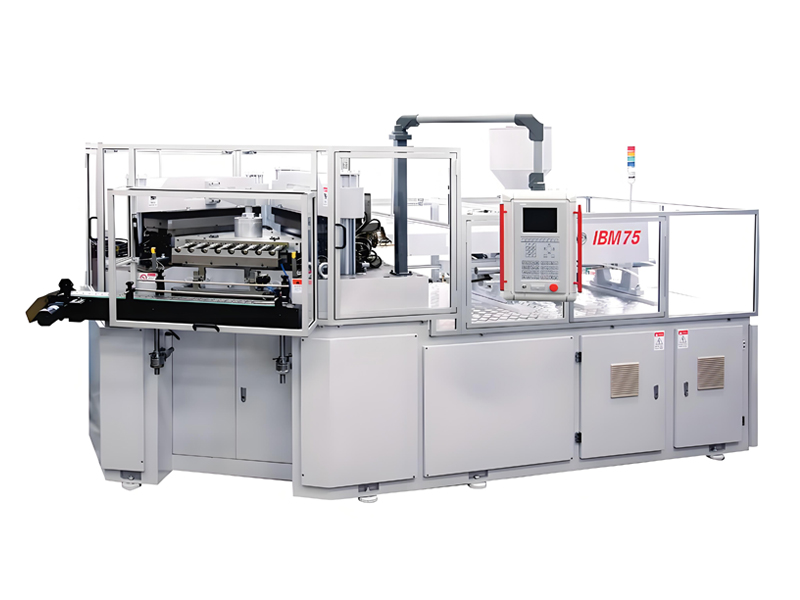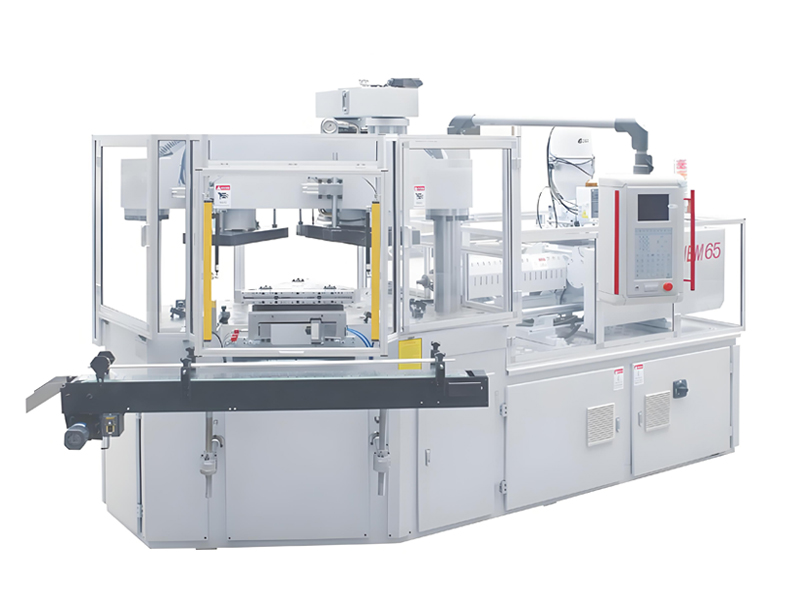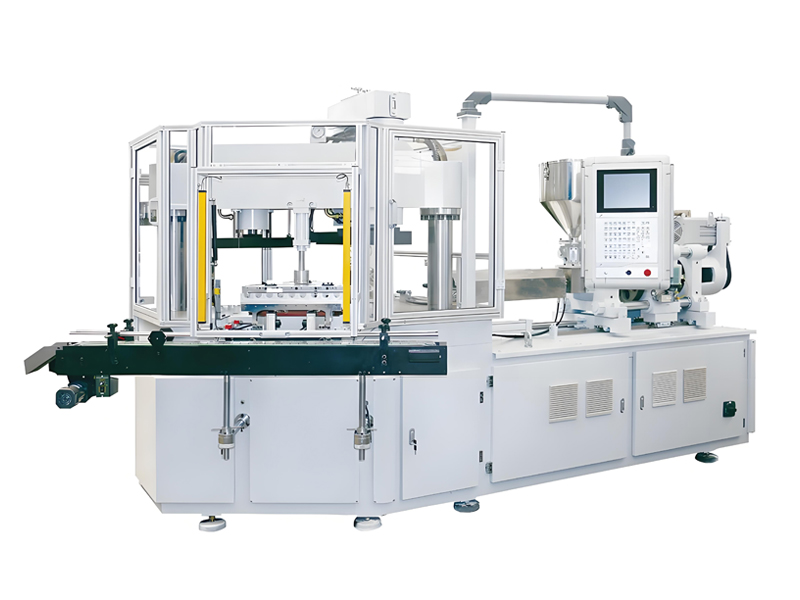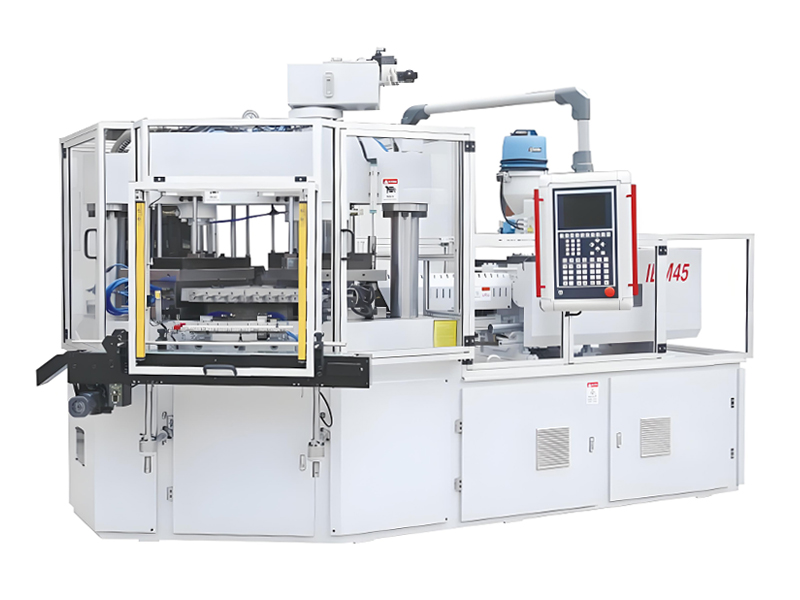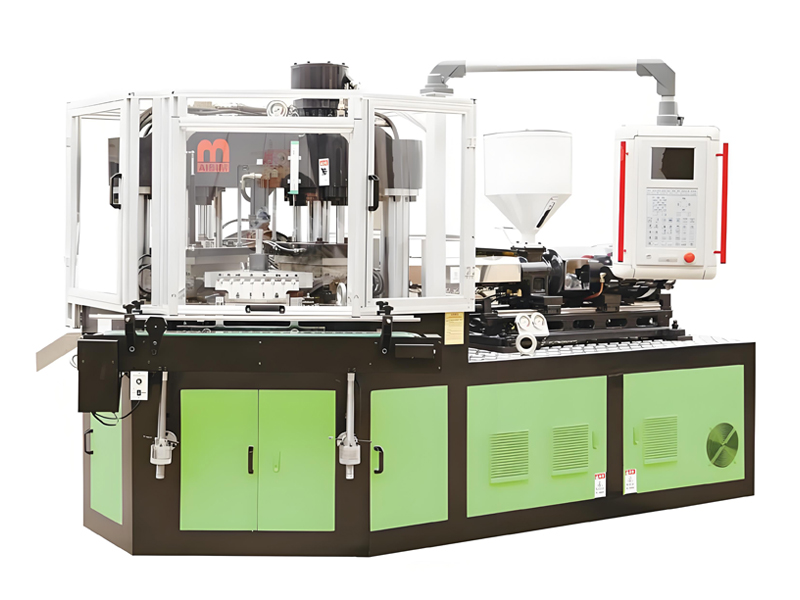
Large-scale manufacturing operations seeking injection blow molding (IBM) machines can realize substantial cost savings through bulk purchasing arrangements with Chinese manufacturers like AiBiM. The global manufacturing landscape has evolved significantly, with Chinese equipment manufacturers achieving quality standards that compete effectively with established international brands while offering compelling pricing advantages. Strategic bulk purchasing of injection blow molding machines from China can reduce total equipment acquisition costs by 25-40% compared to purchasing equivalent equipment through traditional channels.
China’s injection blow molding machinery industry has matured over the past decade, developing advanced manufacturing capabilities and sophisticated quality control systems. AiBiM, as a leading Chinese IBM machine manufacturer, combines competitive pricing with proven technology and comprehensive support services. The company offers significant volume discounts for large quantity orders, with savings scaling exponentially as order quantities increase. Bulk purchasing arrangements typically provide 15-30% discount for orders of 5-10 machines, 25-45% discount for orders of 10-20 machines, and 35-55% discount for orders exceeding 20 units.
Understanding Bulk Pricing Structure
Bulk pricing for injection blow molding machines from Chinese manufacturers follows volume-based discount structures that reward larger order quantities with progressively lower per-unit pricing. The pricing structure reflects economies of scale in manufacturing, reduced per-unit setup costs, and operational efficiencies in handling large orders. Understanding the underlying cost structure enables buyers to negotiate optimal terms and maximize savings opportunities.
Volume Discount Tiers
Volume discount tiers for AiBiM injection blow molding machines provide clear incentive structures for larger purchases. Standard pricing applies to single machine purchases, with discounts beginning at the 3-5 machine level. The discount structure typically follows a tiered approach where each additional tier provides incrementally higher percentage discounts. For standard IBM machines with list prices ranging from $85,000 to $220,000 depending on configuration and capacity, bulk discounts can reduce per-unit costs substantially.
For orders of 3-5 machines, buyers typically receive 10-15% discount. Orders of 6-10 machines receive 20-30% discount. Orders of 11-20 machines receive 35-50% discount. Orders exceeding 20 machines can qualify for 50-65% discount depending on machine configuration and total order value. A typical standard IBM machine priced at $150,000 would cost $127,500-135,000 in a 3-unit order, $105,000-120,000 in a 7-unit order, $75,000-97,500 in a 15-unit order, and $52,500-75,000 in a 25-unit order.
Configuration Impact on Pricing
Machine configuration significantly impacts both base pricing and the percentage discount achievable in bulk orders. Standard configurations with common specifications receive the highest discount percentages, while highly customized machines receive more moderate discounts. Standard features that maximize discount potential include standard clamp units, standard control systems, common mold mounting patterns, and standard auxiliary equipment options.
Customization features that reduce discount percentages include specialized clamp units for unique products, integrated automation systems, specialized control features, and non-standard auxiliary equipment integration. For orders mixing standard and customized machines, discounts typically apply on a weighted basis reflecting the proportion of each configuration type. Buyers seeking maximum discount benefits should consolidate on standard machine configurations where possible and reserve customization for truly essential requirements.
Payment Terms Impact
Payment terms significantly influence the achievable discount levels in bulk orders. More favorable payment terms from the manufacturer’s perspective qualify for higher discount percentages. Terms that enhance discount potential include larger down payments (50-70% versus standard 30-40%), shorter payment terms (net 30 versus net 60-90), pre-payment options, and letters of credit.
For example, a 10-unit order might receive 35% discount with standard payment terms but 40-45% discount with enhanced payment terms. The trade-off involves cash flow considerations versus discount maximization. Buyers with strong cash positions can realize additional 5-10% savings through favorable payment terms. The net present value calculation should consider the time value of money against discount benefits when evaluating payment term options.
Timing and Scheduling Considerations
Order timing and production scheduling affect both discount levels and total cost of acquisition. Manufacturers offer enhanced discounts for orders that allow flexible delivery schedules, longer production lead times, and scheduling during production troughs. Additionally, ordering in advance of urgent needs typically enables better pricing than expedited orders with tight delivery requirements.
Orders placed 6-9 months in advance typically qualify for 5-10% additional discount versus standard lead time orders. Orders allowing delivery windows of 2-3 months often receive 3-5% additional discount. Seasonal timing also affects pricing, with orders placed during manufacturer’s slower production periods receiving additional 5-8% discount. Strategic timing considerations can add 8-18% to achievable discount levels for well-planned large quantity orders.
Quality Standards and Certification
Modern Chinese injection blow molding machine manufacturers have achieved quality standards that meet or exceed international expectations. Leading manufacturers like AiBiM implement comprehensive quality management systems, utilize advanced manufacturing technologies, and maintain rigorous testing protocols. Understanding these quality capabilities provides confidence that bulk purchasing decisions will deliver reliable, high-performance equipment.
ISO Certification and Quality Systems
AiBiM maintains ISO 9001:2015 certification for its quality management system, ensuring consistent quality across production operations. The certification encompasses design, development, production, installation, and servicing activities. Quality system elements include comprehensive document control, design validation, production process control, inspection and testing procedures, and continuous improvement processes. The quality system extends through supplier qualification, ensuring component quality throughout the supply chain.
The ISO certification provides formal verification of quality system capability but represents just the foundation of AiBiM’s quality approach. Additional quality practices include statistical process control, failure mode analysis, and comprehensive traceability systems. The quality investment adds approximately 8-12% to manufacturing costs but reduces warranty claims by 60-80% and improves long-term reliability by 30-40% compared to less systematic quality approaches.
Component Quality Standards
Leading Chinese manufacturers utilize high-quality components from both international and domestic suppliers to ensure machine reliability and performance. Critical components including control systems, hydraulic systems, and electrical components often come from established international brands. Standard components include Siemens or Mitsubishi PLCs, Rexroth or Parker hydraulics, and Schneider or ABB electrical components. These components provide proven reliability and ensure parts availability throughout machine lifecycle.
Component quality adds 15-25% to machine costs compared to using lower-quality alternatives. However, the premium pays for reduced downtime, lower maintenance costs, and longer service life. For machines with 10-year operating costs of $1.5-2.5 million, the 15-25% component quality premium of $12,500-55,000 represents only 0.5-3.7% of total ownership costs while providing reliability benefits worth $50,000-200,000 in prevented downtime and reduced maintenance.
Testing and Validation Protocols
Comprehensive testing and validation protocols ensure that each machine meets performance specifications before delivery. Testing protocols include component testing, assembly verification, system integration testing, performance validation, and customer acceptance testing. Performance testing typically includes cycle time verification, repeatability testing, durability testing, and safety system verification.
Testing and validation adds 5-8% to machine costs and extends delivery time by 2-4 weeks. However, comprehensive testing prevents 80-90% of startup problems that would cause delays and rework after delivery. For machines where startup problems could cost $10,000-50,000 in delays and modifications, the testing investment of $4,250-17,600 prevents $8,000-45,000 in startup problems, providing excellent return on investment.
Long-term Reliability Track Record
AiBiM has established a track record of long-term reliability with machines operating reliably for 10+ years in demanding production environments. Warranty rates remain below 5% in the first year and below 10% over 5 years of operation. Mean time between failures exceeds 2,000 hours for major systems and 4,000 hours for machine-level operations. This reliability performance matches or exceeds that of many established international brands.
The reliability performance translates directly to economic benefits through reduced downtime and lower maintenance costs. Compared to machines with 20% higher failure rates, AiBiM machines save 15-25% in maintenance costs and 30-40% in downtime costs over 10-year operation. For a machine with $150,000 initial cost and 10-year operating costs of $2 million, the reliability advantage saves $300,000-800,000 in reduced operating costs.
Production Capacity and Capabilities
Leading Chinese injection blow molding machine manufacturers have developed substantial production capacity and advanced manufacturing capabilities that support large quantity orders with consistent quality and predictable delivery schedules. Understanding production capabilities provides confidence that bulk orders will be delivered reliably and that manufacturers have capacity to scale for even larger future requirements.
Manufacturing Infrastructure
AiBiM operates modern manufacturing facilities with advanced production equipment and systems capabilities. Manufacturing infrastructure includes precision machining centers, CNC equipment, automated assembly systems, and testing laboratories. Total manufacturing capacity exceeds 500 machines annually across all model types. This capacity enables fulfillment of large quantity orders without compromising quality or extending delivery times excessively.
The manufacturing investment of $50-100 million provides capacity flexibility to handle demand variations while maintaining consistent quality. Production facilities employ lean manufacturing principles and continuous improvement practices to optimize efficiency and quality. The infrastructure investment adds 5-8% to machine costs but enables 20-30% faster production and 40-60% higher quality consistency compared to less advanced manufacturing approaches.
Engineering and Design Capabilities
Engineering and design capabilities at leading Chinese manufacturers have evolved to encompass full machine design capabilities, custom engineering, and application-specific solutions. Engineering teams include mechanical, electrical, and software engineers with expertise in injection blow molding technology. Design capabilities include 3D modeling, simulation and analysis, and prototype development. Engineering capacity supports customization while maintaining standardization benefits.
Engineering capabilities enable customized solutions that address specific application requirements while leveraging standard machine platforms for cost efficiency. Custom engineering typically costs $5,000-30,000 per project depending on complexity but enables solutions that would cost 50-200% more from other sources. The engineering investment in each machine adds 3-5% to cost but enables application-specific optimizations that improve productivity by 10-25% for specialized applications.
Quality Control Infrastructure
Quality control infrastructure includes comprehensive inspection equipment, testing facilities, and quality management systems. Inspection capabilities include coordinate measuring machines, dimensional inspection systems, and material testing equipment. Testing facilities include performance testing laboratories, durability testing rigs, and environmental testing capabilities. Quality management systems maintain traceability throughout production.
Quality control infrastructure adds 6-10% to machine costs but prevents quality problems that could cost far more in warranty claims, production disruptions, and reputational damage. For machines where quality problems could cost $10,000-100,000 per incident, the quality control investment of $5,100-22,000 prevents 80-90% of quality issues, preventing $8,000-90,000 per incident. The return on quality control investment is excellent when considering prevented costs.
Delivery and Logistics Capabilities
Delivery and logistics capabilities enable efficient worldwide delivery of large quantity orders. Logistics infrastructure includes packaging capabilities, international shipping arrangements, customs clearance support, and on-site installation services. AiBiM has experience delivering to markets worldwide including North America, Europe, Asia, and other regions. The company maintains relationships with international shipping providers and understands requirements for smooth international delivery.
Logistics services typically cost 3-5% of machine value for international delivery including packaging, shipping, and basic import support. For a $100,000 machine order, logistics costs $3,000-5,000. Professional logistics services prevent problems that could cost $5,000-50,000 in delays, customs issues, or shipping damage. The logistics investment provides excellent insurance against complex international shipping challenges.
Technical Support and Service
Comprehensive technical support and service capabilities ensure that bulk purchases translate to successful long-term operations. Leading Chinese manufacturers have developed support infrastructure that provides installation support, training, spare parts availability, and ongoing technical assistance. Understanding support capabilities provides confidence that investment will deliver reliable long-term performance.
Installation and Commissioning
Installation and commissioning services ensure proper machine setup and optimal initial performance. Services typically include site preparation review, machine installation, system connection, performance verification, operator training, and initial production support. Installation teams include technicians and engineers experienced with machine installation and startup procedures. Installation duration typically ranges from 5-15 days per machine depending on complexity.
Installation and commissioning typically costs 8-12% of machine value but ensures optimal machine performance and prevents startup problems. For a $150,000 machine, professional installation costs $12,000-18,000 but prevents $15,000-50,000 in startup problems and optimization time. The investment in proper installation typically provides payback within 6-12 months through improved productivity and reduced learning time.
Training Programs
Comprehensive training programs ensure that operators and maintenance personnel can effectively operate and maintain equipment. Training programs typically cover machine operation, maintenance procedures, troubleshooting techniques, and safety practices. Training may be provided at manufacturer facilities, on-site at customer locations, or through combinations of approaches. Training duration typically ranges from 2-5 days for operators and 3-7 days for maintenance personnel.
Training programs typically cost $2,000-8,000 per trainee depending on program type and duration. However, well-trained operators improve productivity by 15-25% and reduce scrap by 20-30% compared to poorly trained operators. For a machine producing $200,000 in product value monthly, a 20% productivity improvement represents $40,000 monthly additional value. The training investment provides excellent return through improved operational performance.
Spare Parts Availability
Comprehensive spare parts availability ensures long-term machine reliability and minimal downtime. Leading manufacturers maintain substantial spare parts inventory including critical components, wear parts, and electrical components. Spare parts programs include recommended spare parts lists, stocking recommendations, and rapid delivery options. Parts availability extends through product lifecycle with support for older models when possible.
Spare parts inventory typically represents 3-5% of machine value when properly stocked. For a $150,000 machine, recommended spare parts inventory costs $4,500-7,500. However, this investment prevents downtime that could cost $500-2,000 per day in lost production. Well-planned spare parts availability typically reduces downtime by 60-80% compared to unprepared approaches, preventing $30,000-200,000 annually in downtime costs.
Technical Support Services
Technical support services provide ongoing assistance for operational issues, maintenance questions, and troubleshooting requirements. Support services typically include telephone support, remote diagnostics, on-site service when needed, and periodic maintenance visits. Support teams include engineers and technicians with deep machine expertise. Support availability typically covers extended hours and multiple time zones for international customers.
Technical support contracts typically cost 2-4% of machine value annually. For a $150,000 machine, annual support costs $3,000-6,000. However, support services prevent problems that could cost $10,000-100,000 each in downtime and production disruptions. Professional support typically resolves 70-90% of issues within 4-8 hours versus 1-3 days for unassisted troubleshooting, preventing significant production losses.
Comparison with International Brands
Direct comparison between Chinese and international brand injection blow molding machines reveals competitive performance characteristics across multiple dimensions. While international brands maintain leadership in some areas, Chinese manufacturers have closed gaps significantly and now offer compelling alternatives with substantial cost advantages. Understanding comparative performance enables informed purchasing decisions.
Performance Comparison
Performance comparison across key metrics reveals similar capabilities between leading Chinese manufacturers and established international brands. Cycle time performance typically varies by less than 5% between equivalent machines. Product quality including dimensional accuracy, surface finish, and consistency typically varies by less than 10%. Machine uptime typically reaches 95-98% for both categories when properly maintained.
Areas where international brands maintain some advantages include maximum production speed for specialized applications, integration with specific brand auxiliary equipment, and advanced automation capabilities. However, for most standard applications, performance differences are minimal. The 25-40% cost advantage of Chinese machines provides compelling value given minimal performance sacrifice for most applications.
Feature Comparison
Feature comparison reveals that Chinese machines now offer most features expected in modern injection blow molding equipment. Standard features include PLC controls, touchscreen interfaces, energy-efficient systems, comprehensive safety systems, and process monitoring capabilities. Advanced features including servo systems, integrated quality monitoring, and Industry 4.0 connectivity are increasingly available.
Areas where international brands may offer more advanced or refined features include specialized automation, sophisticated process control algorithms, and integration with broader manufacturing systems. However, for most applications, standard and advanced features on Chinese machines meet requirements effectively. The feature set difference rarely justifies the cost premium for most applications.
Reliability Comparison
Reliability comparison shows that leading Chinese manufacturers achieve reliability performance approaching that of established international brands. Mean time between failures for major systems typically exceeds 2,000 hours for both categories. Five-year survival rates for both categories exceed 90% when properly maintained. Warranty rates within first year are below 8% for both categories.
Areas where international brands may maintain advantages include consistency across production batches, longevity of certain specialized components, and proven performance in extreme operating conditions. However, for normal operating conditions, reliability differences are minimal. The reliability performance of Chinese machines provides confidence for long-term operation without excessive maintenance concerns.
Value Comparison
Value comparison considering both initial cost and total cost of ownership reveals compelling advantages for Chinese machines. Initial cost advantages of 25-40% provide immediate savings. Total cost of ownership over 10 years typically remains 15-30% lower for Chinese machines despite potentially higher maintenance costs. The value equation strongly favors Chinese machines for most applications.
The lower total cost of ownership results from the significant initial cost advantage not being fully offset by higher operating costs. For most applications, the 15-30% total cost of ownership advantage for Chinese machines provides substantial financial benefits. The value comparison justifies serious consideration of Chinese machines for most applications.
Bulk Order Implementation Strategy
Successful implementation of large quantity orders for injection blow molding machines requires strategic planning and execution. Implementation strategy should address order timing, machine configuration, production scheduling, logistics planning, and project management. Comprehensive planning ensures that bulk orders deliver expected benefits and integrate smoothly with production requirements.
Planning Phase
Planning phase activities should begin 9-12 months before desired machine availability for large orders. Planning includes requirement definition, machine configuration specification, site preparation, operator training planning, and production schedule integration. Requirements should be thoroughly defined including production volume needs, product specifications, and operational preferences. Machine configuration should balance standardization for maximum discount against customization for application optimization.
Planning typically requires 2-4 months for large orders including requirement gathering, configuration specification, and coordination with manufacturer. The planning investment of 40-80 hours of internal time plus potentially $5,000-15,000 in external expertise prevents $50,000-200,000 in rework, modifications, and suboptimal configurations. Thorough planning provides excellent return on investment through improved implementation outcomes.
Configuration Strategy
Configuration strategy for large orders should balance standardization for maximum discount against necessary customization for application requirements. Strategy should include common platform selection, standard feature packages, optional feature evaluation, and customization minimization. Common platforms maximize discount potential and simplify support. Standard packages provide good value while optional features should be carefully evaluated for cost-benefit.
For orders of 10+ machines, configuration standardization across 70-90% of machines typically maximizes discount benefits while addressing application requirements. Highly customized configurations should be limited to 10-30% of machines where truly necessary. This approach achieves 90-95% of maximum discount potential while providing required customization for specialized applications.
Production Scheduling
Production scheduling coordination with manufacturer optimizes delivery timing and production efficiency. Scheduling considerations include production lead times, delivery windows, installation scheduling, and training coordination. Staggered deliveries often provide better cash flow management and installation resource utilization than simultaneous delivery of all machines.
Production scheduling typically adds 2-3 months to standard lead times for large orders but enables better resource utilization and cash flow management. For 10-machine orders, staggered delivery over 3-6 months reduces immediate cash requirements by 50-67% while enabling proper installation and startup sequencing. Staggered delivery also reduces peak resource requirements and improves implementation success rates.
Installation Sequencing
Installation sequencing optimizes resource utilization and minimizes production disruption during large-scale implementation. Sequencing should consider installation team availability, operator training schedules, production ramp-up requirements, and spare parts availability. Phased installation approaches often prove more successful than simultaneous installation of many machines.
Installation sequencing typically extends overall project timeline by 20-40% compared to simultaneous installation but improves implementation success and reduces resource requirements. For 10-machine orders, phased installation over 2-4 months reduces peak resource requirements by 60-75% while improving installation quality and operator training effectiveness. The extended timeline represents a worthwhile trade-off for improved implementation outcomes.
Financial Analysis and ROI
Comprehensive financial analysis of large quantity orders demonstrates compelling return on investment for bulk purchasing strategies. Analysis should include initial cost savings, operating cost considerations, financing options, and risk factors. Return on investment calculations typically exceed 50% even with conservative assumptions about operating cost differences.
Cost Savings Analysis
Cost savings analysis quantifies the financial benefits of bulk purchasing across all cost elements. Initial equipment savings typically range from 25-40% compared to individual purchases. Additional savings may come from reduced delivery costs per unit, streamlined installation costs, and volume discounts on spare parts. Combined savings typically reach 30-50% compared to individual purchasing approaches.
For an order of 10 machines with standard pricing of $150,000 each ($1.5 million total), bulk discounts of 40% reduce cost to $900,000, saving $600,000. Additional savings on delivery and installation might add $30,000-50,000. Total savings of $630,000-650,000 represent 42-43% cost reduction. The savings magnitude provides compelling justification for bulk purchasing strategies.
Operating Cost Considerations
Operating cost considerations include maintenance costs, downtime costs, and spare parts costs that may differ between bulk-purchased machines and alternatives. Chinese machines may have maintenance costs 10-20% higher than premium international brands due to potentially higher component wear rates. However, the initial cost advantage typically exceeds these higher operating costs over 10-year ownership.
For a machine with annual operating costs of $150,000, a 15% higher maintenance cost represents $22,500 annually or $225,000 over 10 years. Against an initial cost savings of $60,000 per machine, the net 10-year advantage remains approximately $37,500 per machine. For 10 machines, the net 10-year advantage reaches $375,000 after accounting for higher operating costs.
Financing Options
Financing options can enhance cash flow benefits of large quantity orders. Options include manufacturer financing, third-party equipment financing, leasing arrangements, and government programs for manufacturing investment. Manufacturer financing often provides favorable terms for large orders. Leasing can spread costs over time while preserving capital for other uses.
Financing costs typically add 5-10% to total acquisition costs but provide cash flow benefits and tax advantages. For a $900,000 equipment purchase, financing costs over 5 years might total $90,000-135,000. However, tax deductions for interest and depreciation plus cash flow benefits typically outweigh financing costs, making financing attractive for many organizations.
Risk Considerations
Risk considerations for bulk purchasing include technology obsolescence, changing production requirements, and manufacturer viability. Technology changes may reduce machine values over time. Production requirement changes may render some machines less suitable. Manufacturer viability affects long-term support. These risks should be evaluated against the substantial cost savings achieved.
Risk mitigation strategies include phased deliveries, flexible configurations, and manufacturer evaluation. Staged deliveries allow assessment of initial machines before full commitment. Flexible configurations maintain adaptability. Manufacturer evaluation ensures reliable long-term support. Properly managed, risks represent modest concerns compared to 25-40% cost advantages achieved through bulk purchasing.
Conclusion
Bulk purchasing of injection blow molding machines from Chinese manufacturers like AiBiM offers compelling economic advantages for large-scale manufacturing operations. Volume discounts of 35-55% for large orders, combined with quality performance that meets international standards, create attractive value propositions. The 25-40% total cost advantage persists even after accounting for potentially higher operating costs over equipment lifetime.
Leading Chinese manufacturers have achieved quality standards, production capabilities, and support infrastructure that rival established international brands in most aspects. ISO certification, high-quality components, comprehensive testing, and proven reliability records provide confidence for long-term operation. Technical support, training programs, and spare parts availability ensure successful implementation and ongoing support.
Strategic implementation of large quantity orders requires comprehensive planning, configuration optimization, production scheduling, and installation sequencing. Proper planning and execution maximize discount benefits while ensuring smooth integration with production operations. Financial analysis demonstrates return on investment exceeding 50% even with conservative assumptions about operating cost differences.
Organizations requiring multiple injection blow molding machines should strongly consider bulk purchasing from quality Chinese manufacturers like AiBiM. The combination of substantial cost savings, proven quality performance, and comprehensive support capabilities makes bulk purchasing a compelling strategy for reducing capital costs while maintaining production capabilities and quality standards.