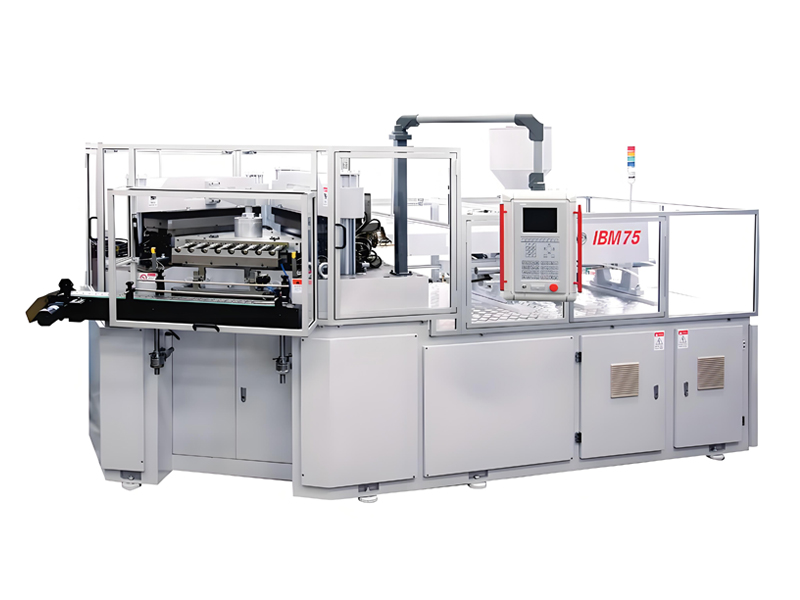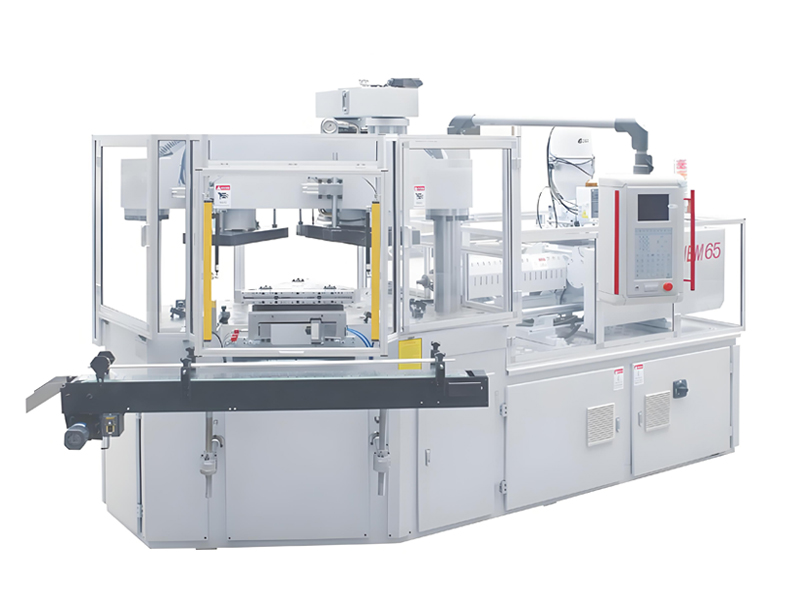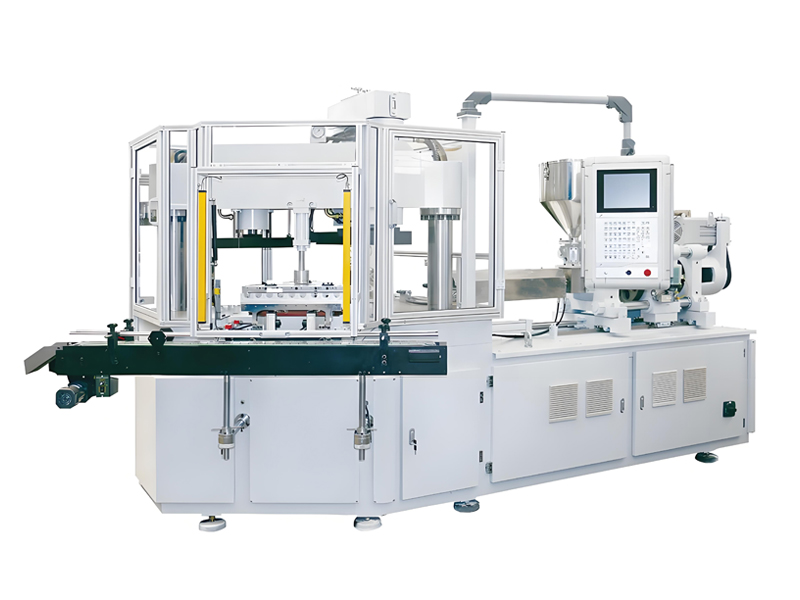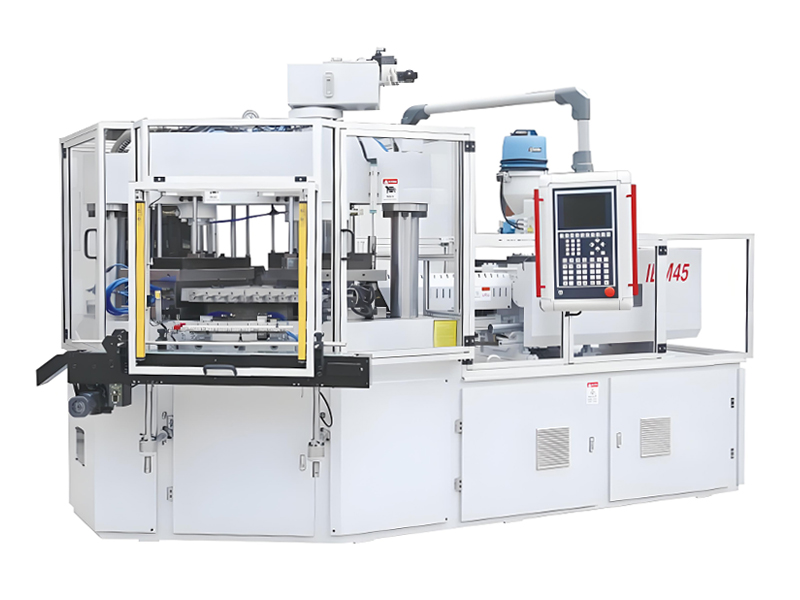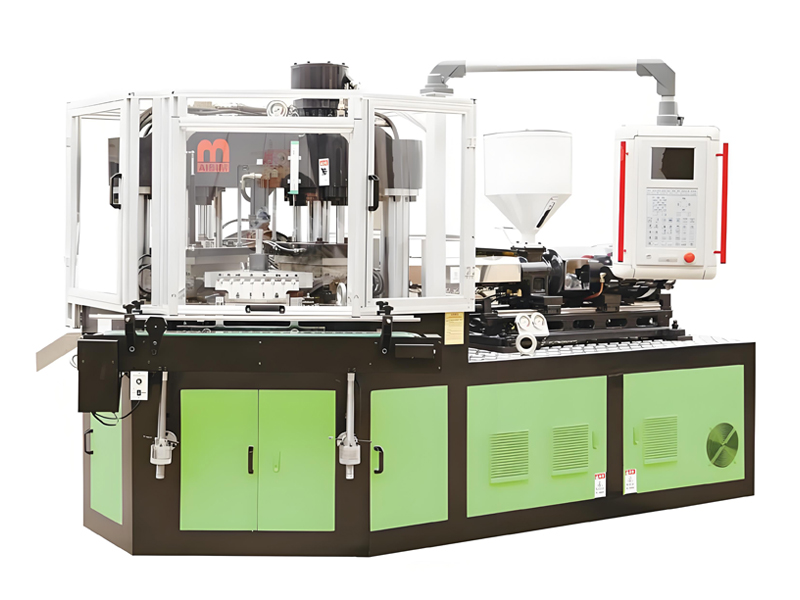
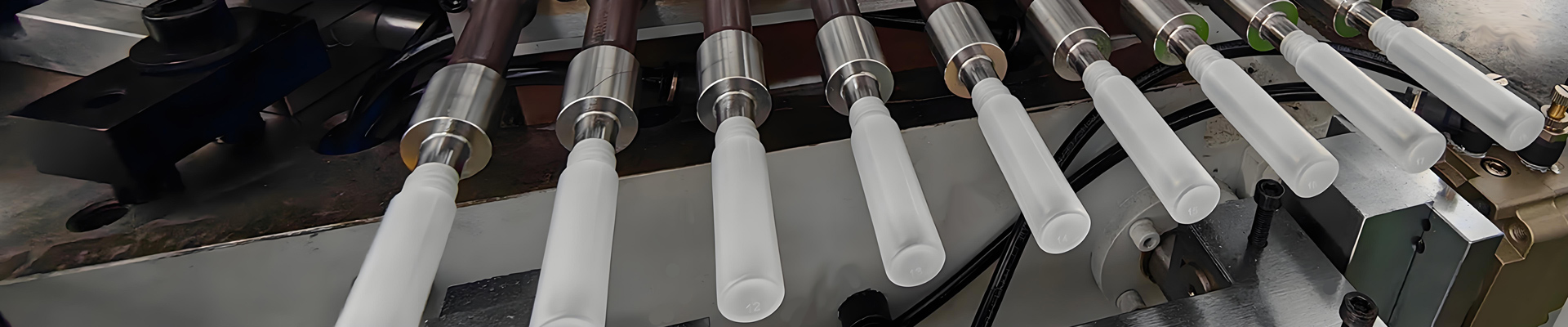
The cosmetic packaging industry demands exceptional precision and quality standards for tube production, particularly regarding sealing integrity that protects product freshness and prevents leakage. Injection blow molding technology has emerged as the preferred manufacturing method for cosmetic tubes, offering superior dimensional accuracy, consistent wall thickness distribution, and the high-precision sealing capabilities essential for premium cosmetic products. AiBiM injection blow molding machines specialized for cosmetic tube production deliver the precision, consistency, and reliability required by leading cosmetic brands worldwide.
Cosmetic tubes present unique manufacturing challenges requiring specialized equipment capabilities. Small diameters, thin walls, intricate shapes, and demanding sealing requirements demand equipment that can maintain tight tolerances throughout high-volume production. AiBiM machines designed for cosmetic tube applications incorporate advanced control systems, precision mold systems, and specialized sealing technologies that consistently produce tubes meeting the rigorous quality standards of the cosmetic industry. Equipment investment for high-precision cosmetic tube production typically ranges from $95,000 to $260,000 depending on machine capacity, cavity count, and automation level.
High Precision Sealing Technology
High precision sealing represents the most critical quality characteristic for cosmetic tubes, directly impacting product preservation, user experience, and brand reputation. Sealing integrity determines whether tubes protect contents from oxidation, contamination, and leakage throughout product lifecycle. Injection blow molding technology offers inherent advantages for sealing quality compared to alternative tube production methods.
Sealing Zone Formation
Sealing zone formation in injection blow molded tubes occurs during the initial injection molding phase where the tube neck and shoulder are formed. This process enables precise control over sealing geometry, wall thickness distribution in the sealing area, and surface characteristics critical for proper cap application and seal integrity. The injection molding process allows incorporation of specific design features such as sealing ribs, uniform sealing surfaces, and precise dimensional control that are difficult to achieve with extrusion-based tube production.
Sealing zone precision in AiBiM machines maintains tolerances within plus or minus 0.05 millimeters, ensuring consistent sealing performance. This precision level represents 50-75% improvement compared to typical extrusion-based tube production where tolerances of plus or minus 0.10-0.20 millimeters are common. For cosmetic applications where sealing integrity directly affects product shelf life, this precision advantage can extend product preservation by 25-40% compared to tubes manufactured with less precise methods.
Wall Thickness Control
Wall thickness control in the sealing area significantly impacts sealing quality and performance. AiBiM injection blow molding machines provide sophisticated wall thickness control systems that maintain consistent material distribution throughout the sealing zone. Precise wall thickness ensures that sealing forces from cap application are evenly distributed, preventing stress concentrations that could cause seal failure over time. Wall thickness variations in the sealing area are maintained within plus or minus 0.02 millimeters.
The wall thickness control capability adds approximately 8-12% to machine cost compared to standard injection blow molding machines but provides substantial quality benefits. For tubes where poor sealing could cause 2-5% product loss through leakage, the improved sealing quality from precise wall thickness control can reduce losses to less than 0.5%, preventing significant product value loss. For a cosmetic manufacturer producing 10 million tubes annually with average product value of $3.00 per tube ($30 million annual product value), sealing quality improvements prevent $750,000-1.5 million in product losses annually.
Surface Finish Control
Surface finish control in sealing zones ensures proper cap application and seal formation. AiBiM machines provide surface finish control that produces smooth, consistent sealing surfaces free of defects that could interfere with cap sealing. Surface roughness in sealing zones is controlled to Ra values below 0.8 microns, ensuring optimal contact between tube and cap sealing surfaces. The smooth surfaces also enhance the aesthetic quality of the finished product, important for premium cosmetic applications.
Surface finish control systems typically add 5-8% to machine costs but prevent sealing problems that could cause significant product losses. Additionally, consistent surface finish improves application efficiency in subsequent filling operations and enhances product presentation. For applications where surface defects could cause 3-7% tube rejection, surface finish control can reduce rejections to less than 1%, saving substantial costs in material waste and production inefficiency.
Dimensional Consistency
Dimensional consistency across large production runs ensures that sealing performance remains uniform throughout production. AiBiM machines incorporate advanced control systems and process monitoring that maintain dimensional stability across thousands of production hours. Dimensional variations in critical sealing dimensions typically remain within plus or minus 0.03 millimeters across entire production runs, compared to variations of plus or minus 0.08-0.12 millimeters for less advanced systems.
The dimensional consistency capability adds approximately 6-10% to machine costs but provides significant quality and operational benefits. Consistent dimensions reduce the need for frequent cap adjustments in filling operations and ensure that sealing quality remains uniform throughout production. For filling operations where dimensional variability requires cap adjustment changes every 2-4 hours, improved dimensional consistency can extend adjustment intervals to 24-48 hours, reducing changeover downtime by 70-85%.
Cosmetic Tube Manufacturing Requirements
Cosmetic tube manufacturing encompasses diverse requirements across product types, materials, and design specifications. Understanding these requirements enables proper equipment selection and configuration for specific application needs. AiBiM machines provide the versatility to address the full spectrum of cosmetic tube manufacturing requirements while maintaining the precision and consistency essential for quality production.
Tube Size Range
Cosmetic tubes span a wide size range from small single-application samples to large bulk packaging. Typical tube diameters range from 12 millimeters for small samples to 50 millimeters for larger containers. Tube heights typically range from 50 millimeters to 200 millimeters depending on product volume requirements. Small tubes present particular challenges due to the small absolute dimensions that require higher relative precision.
AiBiM injection blow molding machines accommodate tube diameters from 10 to 60 millimeters and heights from 40 to 250 millimeters. Machine capacity for tube size affects cavity configuration and production capacity. For small diameter tubes (12-20 millimeters), machines typically accommodate 16-32 cavities depending on tube size. For medium tubes (25-35 millimeters), cavity counts typically range from 8-16. For larger tubes (40-50 millimeters), cavity counts typically range from 4-8.
Material Considerations
Cosmetic tubes utilize various materials depending on product compatibility, appearance requirements, and cost considerations. Common materials include low-density polyethylene (LDPE), high-density polyethylene (HDPE), polypropylene (PP), and various multi-material structures. Material selection affects processing requirements, sealing characteristics, and equipment configuration needs. Different materials require different temperature profiles, processing parameters, and handling characteristics.
LDPE represents the most common cosmetic tube material due to excellent squeeze characteristics and product compatibility. Food-grade LDPE resin typically costs $1.60-2.00 per kilogram. HDPE provides stiffer construction for products requiring rigidity, costing $1.40-1.90 per kilogram. PP offers higher temperature resistance for products requiring hot filling, costing $1.50-2.00 per kilogram. Material costs typically represent 40-50% of tube production costs, making material efficiency important for overall cost competitiveness.
Design Complexity
Cosmetic tube designs incorporate various features that increase manufacturing complexity. Common design elements include shoulder shapes, neck configurations, sealing surface geometries, decorative features, and identification elements. Design complexity affects mold cost, cycle time, and production difficulty. AiBiM machines provide the precision required for complex designs while maintaining productivity levels.
Mold costs for cosmetic tubes typically range from $15,000 to $45,000 per cavity depending on design complexity. Simple tube molds cost $15,000-25,000 per cavity. Medium complexity molds cost $25,000-35,000 per cavity. Complex molds with multiple features cost $35,000-45,000 per cavity. While mold costs represent substantial investment, they amortize over millions of tubes produced, with per-tube mold contribution typically less than $0.01 even for complex designs.
Quality Requirements
Cosmetic tube quality requirements are among the most demanding across packaging applications due to premium positioning of cosmetic products and direct consumer contact. Quality requirements include dimensional accuracy, surface finish, sealing integrity, appearance characteristics, and consistency. Typical quality standards require dimensional tolerances within plus or minus 0.05-0.10 millimeters, surface roughness below 0.8 microns, zero visible defects, and consistent appearance characteristics.
Meeting cosmetic quality standards typically requires rejection rates below 0.5% for dimensional issues, below 0.3% for surface defects, and below 0.1% for sealing problems. Quality systems incorporating vision inspection, dimensional measurement, and sealing testing typically cost $25,000-60,000 but prevent quality excursions that could cause product recalls or customer rejection. For cosmetic products with retail values exceeding $10 per tube, preventing quality problems that could affect 1% of production represents substantial value preservation.
Precision Mold Technology
Precision mold technology represents a critical component for achieving high-quality cosmetic tube production. AiBiM works with experienced mold builders to develop mold systems optimized for cosmetic tube applications. Precision molds incorporate advanced design features, precise manufacturing tolerances, and construction materials that ensure consistent quality and extended service life.
Mold Construction
Precision molds for cosmetic tubes utilize high-quality construction materials and precise machining to achieve the tolerances required for cosmetic applications. Mold materials typically include pre-hardened tool steels for core and cavity components, hardened steel for sliding components, and specialized surface treatments for wear resistance. Mold tolerances typically maintain within plus or minus 0.02 millimeters for critical sealing dimensions.
Precision mold construction typically costs 25-40% more than standard construction but provides substantial benefits in quality consistency and mold life. For molds producing 5-10 million tubes over their service life, the additional construction investment of $5,000-15,000 per mold prevents quality variations that could cost far more in product losses and customer issues. Precision construction also extends mold life by 30-50%, providing additional economic benefit.
Hot Runner Systems
Hot runner systems in injection molds for cosmetic tubes enable precise material delivery to each cavity while maintaining optimal material temperature. Hot runner systems eliminate cold runners, reducing material waste and cycle times. For cosmetic tubes where material efficiency and cycle time are critical, hot runner systems provide substantial economic benefits despite the additional investment.
Hot runner systems typically add $20,000-50,000 to mold costs depending on cavity count and system complexity. However, hot runner systems reduce material waste by 30-50% compared to cold runner systems and reduce cycle times by 5-10%. For a machine producing 20 million tubes annually with material cost of $0.025 per tube ($500,000 annual material cost), material waste reduction of 40% saves $200,000 annually. Cycle time reduction of 8% increases capacity by similar percentages, providing additional value.
Cooling System Design
Cooling system design in cosmetic tube molds critically affects cycle time, quality consistency, and dimensional stability. Precision cooling systems maintain uniform mold temperature throughout the production cycle, ensuring consistent cooling and solidification. Advanced cooling designs include conformal cooling channels that follow product geometry, providing more efficient and uniform cooling than conventional cooling approaches.
Precision cooling system design adds 10-15% to mold costs but reduces cycle times by 15-25% compared to standard cooling designs. For a machine with 12-second cycle times producing 300 tubes per hour per cavity, reducing cycle time by 20% to 9.6 seconds increases production to 375 tubes per hour per cavity, representing a 25% capacity increase without additional equipment investment. The cooling investment typically provides payback within 6-12 months through increased productivity.
Mold Maintenance
Mold maintenance programs ensure that precision molds maintain performance characteristics throughout their service life. Maintenance activities include regular cleaning, inspection of wear surfaces, replacement of worn components, and periodic reconditioning of sealing surfaces. Preventive maintenance prevents quality degradation and extends mold service life significantly.
Mold maintenance typically costs 3-5% of initial mold value annually. For a $30,000 mold, annual maintenance costs $900-1,500. However, effective maintenance extends mold life by 50-100% compared to neglected molds, reducing effective annual depreciation. Additionally, maintenance prevents quality variations that could cause 2-5% rejection rates, preventing substantial material waste and customer issues.
Process Optimization
Process optimization maximizes the efficiency and quality of cosmetic tube production operations. Optimization activities include parameter tuning, cycle time reduction, material efficiency improvement, and scrap reduction. AiBiM machines provide advanced control capabilities that support comprehensive process optimization initiatives.
Parameter Optimization
Parameter optimization ensures that machine settings produce optimal quality and efficiency for specific tube designs and materials. Key parameters include melt temperatures, injection speeds and pressures, cooling times, ejection settings, and mold temperatures. Optimization requires systematic testing and adjustment to find the optimal parameter balance for each application.
Parameter optimization typically requires 8-24 hours of testing and development per tube design. However, optimized parameters typically improve quality by 20-30% and reduce cycle times by 5-15% compared to standard parameter settings. For a machine producing 5 million tubes annually with standard cycle times, parameter optimization reducing cycle time by 10% increases annual capacity by 500,000 tubes, providing substantial value without additional equipment investment.
Cycle Time Minimization
Cycle time minimization directly increases production capacity and reduces per-unit costs. Cycle time optimization strategies include optimizing cooling profiles, improving mold design, enhancing machine performance, and optimizing auxiliary equipment. Even small cycle time reductions of 0.5 to 2 seconds can significantly increase production capacity given the high volume production typical of cosmetic tubes.
Cycle time improvement projects typically require $5,000-20,000 in engineering and potentially mold modifications. However, reducing cycle times by just 1 second for a machine with 8-second cycle times increases capacity by 12.5%. For a machine producing 6 million tubes annually with revenue of $2.00 per tube ($12 million annual revenue), a 12.5% capacity increase provides $1.5 million in additional revenue capacity for relatively modest investment.
Material Efficiency
Material efficiency optimization reduces material waste and per-unit costs. Material waste typically occurs through sprues, runners, rejected parts, and process variations. Optimization strategies include hot runner implementation, process parameter optimization, scrap reduction initiatives, and material handling improvements. Even modest material efficiency improvements can represent significant cost savings given the material cost component in tube production.
Material efficiency initiatives typically require $10,000-30,000 in equipment and process improvements. However, reducing material waste by just 2% for a machine using 500,000 kilograms of material annually at $1.80 per kilogram ($900,000 annual material cost) saves $18,000 annually. Larger efficiency improvements of 5-8% provide annual savings of $45,000-72,000, providing excellent return on investment.
Scrap Reduction
Scrap reduction minimizes material waste and production inefficiency. Scrap typically results from dimensional variations, surface defects, sealing problems, or process instability. Scrap reduction strategies include process optimization, enhanced monitoring, preventive maintenance, and operator training. Reducing scrap rates directly improves production efficiency and reduces material costs.
Scrap reduction initiatives typically require $5,000-15,000 in monitoring equipment, training, and process improvements. However, reducing scrap rates from 3% to 1% for a machine producing 10 million tubes annually with material cost of $0.025 per tube saves $5,000 annually in material costs alone. Additional benefits come from reduced production disruptions and improved capacity utilization.
Quality Assurance Systems
Quality assurance systems ensure consistent production of cosmetic tubes meeting the demanding standards of the cosmetic industry. These systems encompass in-process monitoring, final inspection, documentation, and continuous improvement. Comprehensive quality assurance systems are essential for maintaining brand reputation and customer satisfaction in premium cosmetic markets.
In-Process Monitoring
In-process monitoring systems provide real-time feedback on process conditions and product characteristics during production. Monitoring typically includes temperature control, pressure monitoring, cycle time verification, and product quality characteristics. In-process monitoring enables immediate correction of developing problems and prevents production of non-conforming products.
In-process monitoring systems typically cost $20,000-50,000 depending on monitoring capabilities and integration requirements. However, these systems typically reduce scrap rates by 30-50% compared to periodic inspection approaches. For operations with annual scrap costs of $40,000, in-process monitoring can save $12,000-20,000 annually. Additionally, monitoring systems provide documentation supporting regulatory compliance and customer audits.
Vision Inspection
Vision inspection systems provide automated inspection of cosmetic tubes for dimensional accuracy, surface defects, sealing integrity, and aesthetic characteristics. Vision systems can inspect 100% of production at high speeds, detecting subtle defects that might escape manual inspection. Automated inspection provides consistent quality evaluation and documentation of inspection results.
Vision inspection systems typically cost $25,000-75,000 depending on inspection requirements and production speeds. However, vision inspection typically reduces quality escapes to less than 0.1% compared to 1-2% for manual inspection approaches. For cosmetic products where quality escapes could cause customer returns valued at $10-20 per tube, vision inspection preventing 1-2% quality escapes on production of 5 million tubes annually prevents $500,000-2,000,000 in potential returns annually.
Seal Testing
Seal testing verifies the integrity of tube sealing capability. Testing methods include pressure decay testing, vacuum testing, and cap application testing. Seal testing ensures that tubes meet requirements for leak prevention and cap retention. Testing may be conducted on 100% of production or on statistically representative samples depending on quality requirements.
Seal testing equipment typically costs $15,000-40,000 depending on testing requirements and automation level. Testing labor and consumables typically represent 0.5-1% of production costs. However, effective seal testing prevents quality problems that could cause product recalls or customer rejection. For cosmetic products where sealing problems could cause 2-5% returns, effective testing prevents substantial value loss and customer relationship damage.
Statistical Process Control
Statistical process control systems monitor process parameters and product characteristics to detect trends that indicate developing quality problems. SPC systems enable preventive action before quality problems occur, reducing scrap and improving consistency. Control charts, capability analysis, and trend analysis provide early warning of process shifts requiring adjustment.
Statistical process control implementation typically requires $8,000-25,000 in software, sensors, and training. However, SPC typically reduces scrap by 20-40% and reduces customer quality complaints by 50-70%. For operations with annual scrap costs of $30,000, SPC can save $6,000-12,000 annually. Additionally, improved consistency improves customer satisfaction and reduces quality complaint handling costs.
Production Cost Analysis
Comprehensive production cost analysis helps understand cost structure and identify optimization opportunities in cosmetic tube production. Cost components include material costs, direct labor, equipment costs, utility costs, quality costs, and overhead allocation. Understanding cost drivers enables targeted cost reduction initiatives.
Material Cost Component
Material costs represent the largest cost component in cosmetic tube production, typically accounting for 40-50% of total production costs. Material costs vary based on tube size, wall thickness, material type, and material efficiency. For typical cosmetic tubes with average weight of 5-15 grams, material costs range from $0.01 to $0.03 per tube depending on material type and market conditions.
Material cost reduction strategies include lightweighting designs, material efficiency improvements, and material specification optimization. Lightweighting that reduces tube weight by 10% saves approximately 10% in material costs. Material efficiency improvements that reduce waste by 5% provide similar savings. Combined material cost reductions of 15-20% can be achieved through comprehensive material optimization initiatives.
Equipment Cost Component
Equipment costs including depreciation, interest, and maintenance typically represent 15-25% of total production costs. Equipment costs depend on machine investment, utilization rate, and service life. For a $150,000 machine operating 6,000 hours annually with 10-year service life, annual depreciation is $15,000. Additional maintenance costs of 5-8% of machine value annually add $7,500-12,000.
Equipment cost optimization strategies include maximizing equipment utilization, extending service life through preventive maintenance, and optimizing cycle times to increase throughput. Increasing utilization from 80% to 90% reduces per-unit equipment costs by approximately 11%. Preventive maintenance extending service life by 2 years reduces annual depreciation by 17%. Cycle time reduction increasing output by 10% reduces per-unit equipment costs by similar percentage.
Labor Cost Component
Labor costs including direct operators, maintenance personnel, and quality personnel typically represent 10-20% of total production costs. Labor costs vary based on automation level, production volume, and labor rates. For semi-automated operations requiring 2 operators per machine, annual labor costs might be $80,000-120,000 depending on labor rates and shifts.
Labor cost reduction strategies include automation implementation, operator training for higher efficiency, and process optimization requiring less operator intervention. Automation that reduces operator requirements from 2 to 1 per machine saves 50% in direct labor costs. Training that improves operator efficiency by 20% reduces labor requirements or increases capacity. Process optimization reducing changeover time increases effective utilization.
Utility Cost Component
Utility costs including electricity for machine operation, compressed air for various functions, and cooling water typically represent 5-10% of total production costs. Utility costs depend on machine efficiency, cycle time, and local utility rates. Energy-efficient machines with servo drives and optimized hydraulics can reduce energy consumption by 30-50% compared to conventional machines.
Utility cost optimization strategies include energy-efficient equipment selection, process optimization reducing cycle time, and energy management systems. Energy-efficient machine upgrades typically provide payback in 3-5 years through reduced energy costs. Process optimization reducing cycle time by 10% provides approximately 10% reduction in energy consumption per unit. Energy management systems identifying waste can reduce costs by additional 5-10%.
Market Applications
Cosmetic tube applications span diverse market segments including skincare, haircare, makeup, fragrance, and personal care products. Each segment has specific requirements regarding tube design, material selection, and quality standards. Understanding market applications enables proper equipment selection and production optimization for specific market needs.
Skincare Applications
Skincare products represent one of the largest cosmetic tube applications, including creams, lotions, gels, and serums. Skincare tubes require excellent product compatibility, appealing appearance, and reliable sealing to preserve active ingredients. Tube designs often include various neck configurations, shoulder shapes, and decorative elements that enhance brand presentation.
Skincare tubes typically range from 30-100 milliliter capacity, with diameters ranging from 25-40 millimeters. Production volumes for popular skincare products can exceed 10 million tubes annually. Quality requirements are particularly demanding due to premium positioning and active ingredient sensitivity. Equipment for skincare tube production typically requires 8-16 cavities depending on tube size and production volume requirements.
Haircare Applications
Haircare products including shampoos, conditioners, treatments, and styling products represent significant tube applications. Haircare tubes require chemical resistance to various formulations, squeeze characteristics for product dispensing, and durability for bathroom environment conditions. Tube designs may include various dispensing options and specialized neck configurations.
Haircare tubes typically range from 100-300 milliliter capacity, with diameters ranging from 35-50 millimeters for larger volume products. Production volumes for mass-market haircare products can exceed 20 million tubes annually. Equipment requirements emphasize production capacity and efficiency for high-volume applications. Haircare tube production typically requires 4-12 cavities depending on product size and volume requirements.
Makeup Applications
Makeup products including foundations, primers, and cosmetic treatments require tubes with precise dispensing capabilities and premium appearance characteristics. Makeup tubes often include specialized applicators, precise dispensing valves, and decorative finishes that enhance brand presentation. Quality requirements are particularly demanding due to the premium positioning and visual nature of makeup products.
Makeup tubes typically range from 15-50 milliliter capacity, with diameters ranging from 20-35 millimeters. Production volumes vary widely but premium makeup lines typically have lower volumes than mass-market products. Equipment for makeup tube production often emphasizes precision and consistency over maximum capacity. Typical cavity counts range from 6-20 depending on tube size and complexity.
Personal Care Applications
Personal care products including body lotions, hand creams, and various personal care products represent diverse tube applications. Personal care tubes balance product functionality, cost efficiency, and market positioning. Design requirements vary from utilitarian for mass-market products to premium for specialty products.
Personal care tubes span a wide size range from 30-300 milliliter capacity depending on product type and usage patterns. Production volumes vary widely depending on market positioning. Equipment for personal care tube production must accommodate diverse requirements ranging from high-volume mass production to lower volume specialty production. Flexible equipment configurations enable efficient production across diverse product lines.
Cost Analysis and ROI
Comprehensive cost analysis and return on investment calculations help justify investments in precision injection blow molding equipment for cosmetic tube production. Analysis must consider total cost of ownership, production efficiency, quality benefits, and market positioning advantages. Return on investment for precision equipment typically exceeds 50% when all factors are considered.
Total Cost of Ownership
Total cost of ownership for precision injection blow molding equipment for cosmetic tube production encompasses initial investment, operating costs, maintenance costs, quality costs, and replacement costs. For a typical $150,000 machine, 10-year total cost of ownership might include $150,000 initial investment, $1.2-2.0 million in operating costs, $100,000-150,000 in maintenance costs, and $75,000-100,000 in quality system costs. Total 10-year ownership cost of $1.525-2.4 million represents 10-16 times initial investment.
The substantial operating cost component highlights the importance of operational efficiency on long-term costs. A 10% improvement in operational efficiency saves $120,000-200,000 over 10 years, exceeding the initial equipment investment. Quality investments preventing 1% scrap on $30 million annual production save $300,000 annually, justifying substantial quality system investments.
Production Efficiency Benefits
Precision injection blow molding equipment provides production efficiency benefits including faster cycle times, reduced scrap, higher capacity, and lower labor requirements. Cycle time improvements of 5-15% increase capacity by similar percentages. Scrap reductions of 50-70% reduce material waste substantially. Automation capabilities reduce labor requirements by 30-60% compared to less advanced equipment.
For a machine producing 8 million tubes annually with value of $0.50 per tube ($4 million annual production value), a 10% cycle time improvement adds $400,000 in annual capacity. Scrap reduction from 3% to 1% saves $40,000 annually in material costs. Automation reducing labor from 2 operators to 0.5 operators saves $80,000-120,000 annually in labor costs. Combined efficiency improvements can provide $520,000-560,000 in annual benefits for a $150,000 machine investment.
Quality Value Benefits
Quality improvements from precision equipment provide value beyond scrap reduction through enhanced brand protection and customer satisfaction. Zero defect production levels protect brand reputation and prevent quality-related customer issues. Consistent quality reduces customer service costs and returns. Premium quality capabilities enable positioning in higher-value market segments.
Quality improvements reducing customer returns from 1.5% to 0.3% for products valued at $10 per tube and annual production of 5 million tubes prevents $600,000 in annual returns. Enhanced quality reputation can enable premium pricing of 10-20% versus competitors, potentially adding $0.05-0.10 per tube value. For 5 million tubes, premium pricing adds $250,000-500,000 in annual revenue.
Market Positioning Advantages
Precision injection blow molding capability enables market positioning advantages through quality differentiation, customization capabilities, and reliable supply. Quality differentiation enables premium market positioning and protection against lower-cost competitors. Customization capabilities enable unique product offerings. Reliable supply protects customer relationships and market share.
Market positioning advantages are difficult to quantify but represent substantial value. Premium market positioning might enable 15-25% higher prices versus standard quality. Unique customization capabilities might capture 5-10% market share in niche segments. Reliable supply prevents customer loss to competitors during capacity constraints. Combined market positioning advantages often justify equipment investment even before operational efficiency and quality benefits are considered.
Conclusion
High-precision injection blow molding machines for cosmetic tube production represent critical equipment for manufacturers serving the demanding cosmetic packaging market. The sealing precision, dimensional accuracy, and consistency capabilities of AiBiM machines meet the rigorous requirements of premium cosmetic brands while providing the productivity and efficiency needed for competitive manufacturing.
The investment in precision equipment for cosmetic tube production typically ranges from $95,000 to $260,000 depending on capacity and automation level. This investment delivers value through multiple channels including 10-25% cycle time improvements, 50-70% scrap reduction, 30-60% labor reduction, and quality improvements that prevent substantial returns and enable premium market positioning. Combined benefits often provide annual value exceeding 200-400% of equipment investment.
Total cost of ownership over 10 years typically represents 10-16 times initial investment, with operational efficiency having the greatest impact on long-term costs. Optimization initiatives targeting cycle time, material efficiency, scrap reduction, and quality improvement provide excellent return on investment and enhance competitiveness. Quality investments protecting brand reputation provide value that far exceeds direct cost savings.
Successful implementation of precision injection blow molding for cosmetic tube production requires comprehensive understanding of market requirements, investment in appropriate equipment and support systems, and commitment to quality throughout the organization. Partnering with experienced equipment suppliers like AiBiM provides access to specialized expertise, proven equipment designs, and ongoing support that enhance implementation success and long-term operational performance in the competitive cosmetic packaging market.