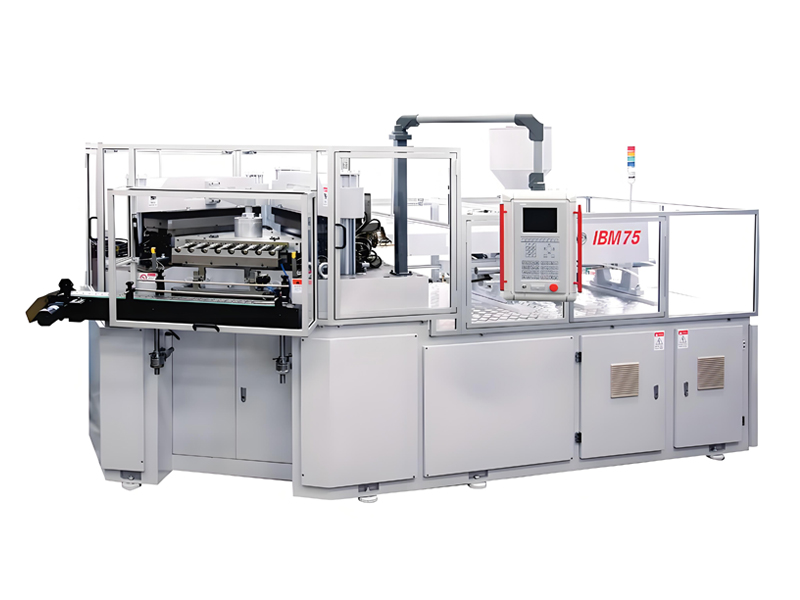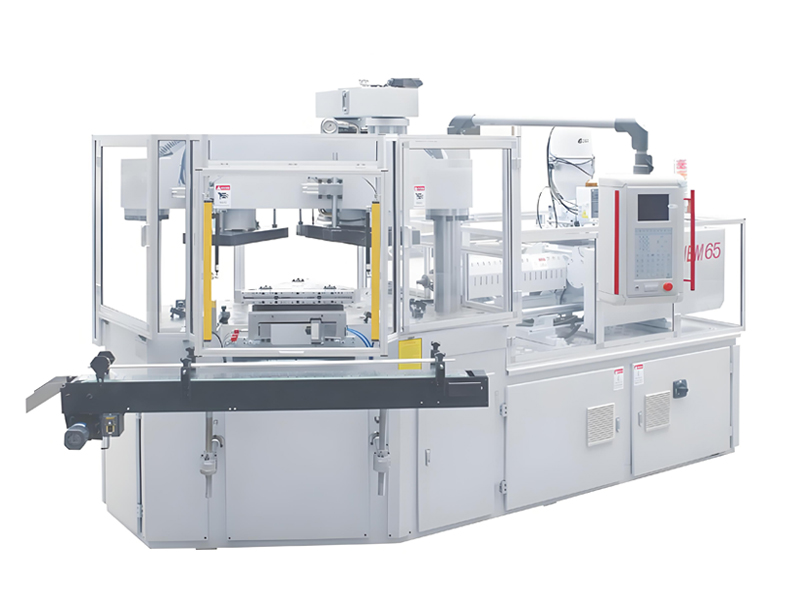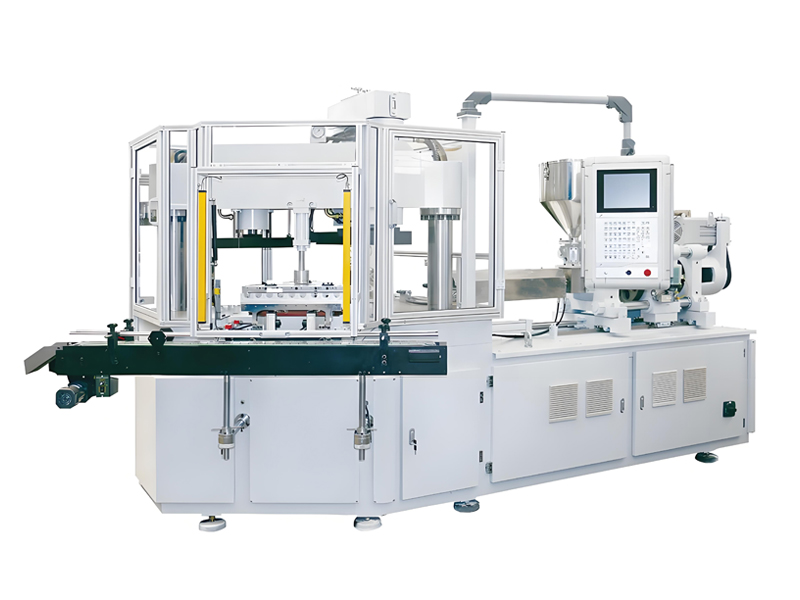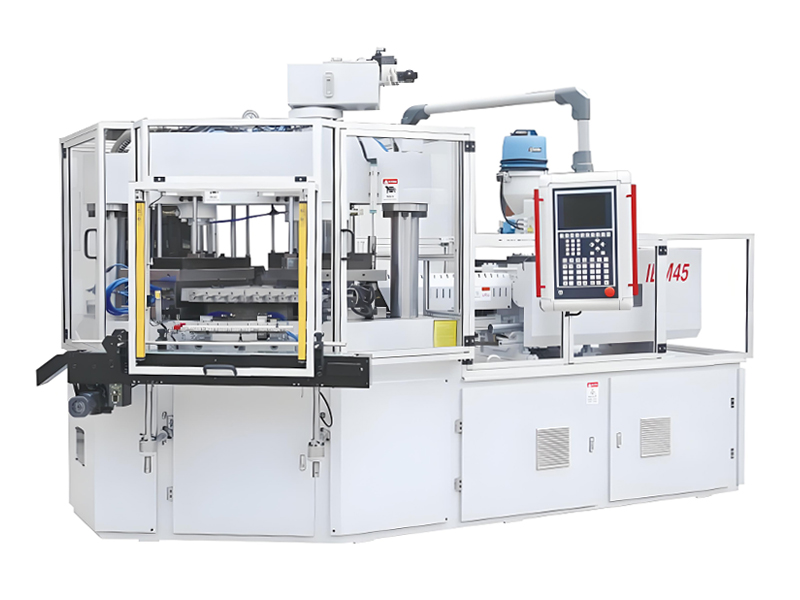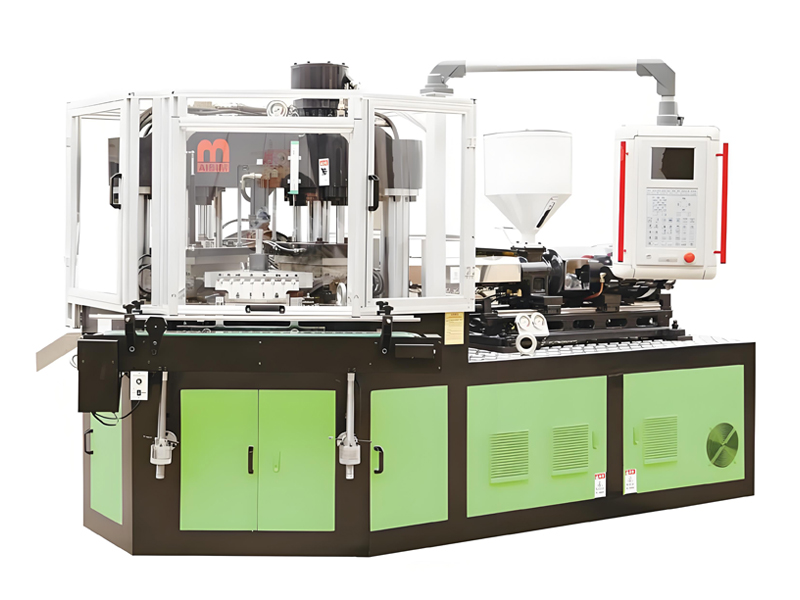
Introduction to Custom Capacity Injection Blow Molding Machines
Custom capacity injection blow molding machines represent the pinnacle of manufacturing flexibility in the plastics industry, designed and engineered to meet specific production requirements that standard machines cannot adequately address. The concept of custom capacity extends beyond simple volume specifications to encompass a comprehensive suite of performance characteristics, production rates, material capabilities, and technical specifications tailored to unique manufacturing needs. AiBiM Plastic Machinery, with over 12 years of experience in manufacturing plastic machines, has established itself as a leader in developing custom capacity injection blow molding machines that precisely match customer requirements while maintaining the quality, reliability, and efficiency standards expected from premium equipment manufacturers.
The demand for custom capacity injection blow molding machines has grown significantly as industries increasingly recognize the competitive advantages of production equipment optimized for their specific applications. Standard injection blow molding machines, while versatile, often represent compromises that sacrifice performance in certain areas to achieve acceptable capabilities across a broad range of applications. Custom capacity machines eliminate these compromises by delivering optimal performance across all critical parameters tailored to specific production requirements. This optimization can improve production efficiency by 15-25% while reducing per-unit production costs by 10-20% compared to using standard equipment that operates outside its optimal performance envelope.
The development process for custom capacity injection blow molding machines begins with a comprehensive analysis of production requirements, including target products, materials, production volumes, quality standards, and future expansion considerations. This detailed analysis enables manufacturers like AiBiM to specify machine characteristics that will deliver optimal performance for the intended application. The investment in custom capacity injection blow molding machines typically ranges from 20-40% above standard machine costs, but this premium investment delivers returns through improved production efficiency, reduced operating costs, and enhanced product quality. For high-volume operations, the return on investment period for custom capacity machines typically ranges from 18-30 months, after which the operational cost savings provide ongoing competitive advantages.
Custom capacity injection blow molding machines can be tailored across multiple dimensions beyond simple production capacity. These customizations include mold design and configuration, material handling systems, clamping force and speed, injection pressure profiles, cooling systems, control systems, and automation integration. Each of these customizations contributes to optimizing machine performance for specific applications, creating equipment that operates more efficiently and produces higher quality products than standard machines adapted to similar tasks. The comprehensive nature of customization options means that virtually any production requirement can be accommodated through thoughtful engineering and design.
Understanding Custom Capacity Specifications
Custom capacity specifications for injection blow molding machines encompass multiple interconnected parameters that collectively define machine performance characteristics. The most fundamental specification is production capacity, which defines the number of complete cycles the machine can perform per hour under specific operating conditions. Custom capacity injection blow molding machines can be engineered for cycle times ranging from 3-8 seconds for high-volume small containers to 15-30 seconds for larger containers or complex geometries. The production capacity specification directly impacts capital efficiency, with higher capacity machines typically offering lower per-unit production costs but requiring higher initial investment and greater production volumes to justify the investment.
Mold capacity represents another critical specification, defining the number of cavities and the size range of containers the machine can produce simultaneously. Standard injection blow molding machines typically offer 2-8 cavities depending on container size, while custom capacity machines can be engineered for single-cavity precision production or multi-cavity high-volume production as required. Custom mold configurations can accommodate container volumes from 3ml to 1000ml in a single machine, with specialized configurations possible for specific product families. The cost of custom mold design and manufacturing typically ranges from $8,000 to $25,000 per mold set, with production tooling life of 1-5 million cycles depending on materials and operating conditions.
Clamping force specifications determine the maximum force the machine can apply to keep the mold closed during injection and blowing operations. Custom capacity injection blow molding machines can be engineered with clamping forces ranging from 30 tons for small container production to 150 tons for large container applications. The appropriate clamping force depends on multiple factors including projected area of the container, material viscosity, injection pressure, and safety margins. Custom clamping systems can be optimized for specific applications, reducing energy consumption by 10-15% compared to standard machines with higher clamping force than required. The cost premium for custom clamping systems typically ranges from $10,000 to $25,000 depending on force requirements and configuration complexity.
Shot capacity specifications define the maximum volume of plastic material the injection system can deliver in a single injection cycle. Custom capacity injection blow molding machines can be engineered with shot capacities ranging from 20 grams for small containers to 500 grams for larger applications. The shot capacity must be carefully matched to production requirements to ensure adequate material delivery without excessive capacity that increases machine size and cost without operational benefit. Custom shot capacity optimization typically reduces machine size by 15-25% compared to standard machines with larger shot capacity than required, with corresponding reductions in energy consumption and initial investment requirements.
Custom Mold Design and Configuration
Custom mold design represents one of the most critical aspects of custom capacity injection blow molding machines, as molds directly determine product quality, dimensional accuracy, and production efficiency. AiBiM’s extensive experience in mold manufacturing enables development of custom molds that optimize product quality while maximizing production efficiency. Custom mold design considers multiple factors including material flow characteristics, cooling requirements, ejection mechanisms, and dimensional tolerances. The investment in custom mold design typically ranges from $12,000 to $30,000 for engineering and development, but this investment delivers substantial benefits through improved product quality and reduced cycle times.
Mold cavity configuration can be customized to match specific production requirements, ranging from single-cavity production for specialized medical containers to multi-cavity production for high-volume consumer packaging. The optimal number of cavities depends on production volume requirements, container size, and quality requirements. Multi-cavity molds can increase production capacity by 2-8 times compared to single-cavity molds, but require more complex engineering and greater initial investment. Custom cavity configuration typically increases mold costs by 30-50% per additional cavity, but reduces per-unit production costs by 15-25% through higher output and improved capital efficiency.
Cooling system design within molds represents a critical customization factor that significantly impacts cycle times and product quality. Custom cooling channel configurations optimize heat removal from mold surfaces, reducing cooling times by 15-25% compared to standard cooling designs. Advanced cooling technologies including conformal cooling channels, baffle systems, and optimized channel geometries provide superior temperature control and reduced cycle times. The cost of custom cooling system design typically ranges from $5,000 to $15,000 per mold, but the resulting cycle time reductions provide substantial productivity improvements that quickly recover this investment, especially in high-volume production applications.
Specialized surface treatments and mold coatings can be applied to custom molds to address specific production challenges. Hard coatings such as titanium nitride or chromium nitride increase mold life by 2-3 times compared to untreated surfaces, reducing replacement costs and production downtime. Low-friction coatings reduce ejection forces and prevent sticking, improving cycle times and product quality. Anti-corrosion coatings protect against aggressive materials and extend mold life in challenging applications. The cost of surface treatments typically ranges from $2,000 to $8,000 per mold depending on coating type and application complexity, but provides substantial benefits through extended mold life and reduced maintenance requirements.
Material Handling and Processing Customization
Custom material handling systems enable injection blow molding machines to process specific materials efficiently while maintaining consistent quality and minimizing material waste. AiBiM injection blow molding machines can process a wide range of materials including HDPE, LDPE, LLDPE, PP, PS, ABS, SAN, TPU, PC, and PCTG, with custom material handling systems optimized for each material type. Material-specific handling considerations include drying requirements, temperature control, material conveying, and feed system configuration. Custom material handling systems typically cost $8,000 to $20,000 but reduce material waste by 25-35% and improve product quality consistency.
Custom drying systems address the specific moisture removal requirements of different materials, with hygroscopic materials such as PET and nylon requiring particularly careful drying to achieve optimal processing conditions. Standard drying systems may not provide adequate capacity or precise temperature control for demanding materials, resulting in quality problems and reduced productivity. Custom drying systems can be engineered with capacities from 10 to 200 pounds per hour, temperature accuracy of ±2°F, and dew point control to -40°F. The cost of custom drying systems ranges from $5,000 to $25,000 depending on capacity and specifications, but prevents quality problems that would result in scrap rates exceeding 10% with inadequate drying.
Material conveying systems can be customized to match production facility layouts and material handling requirements. Custom conveying solutions include vacuum conveying systems for clean material transfer, gravimetric conveying for precise material metering, and multi-material systems for applications requiring material changes or blends. Custom conveying systems typically cost $4,000 to $15,000 but reduce labor requirements by 30-50% compared to manual material handling while preventing contamination that would compromise product quality. The improved material handling efficiency also reduces material waste by 10-15%, providing substantial savings in material costs.
Gravimetric and volumetric feeding systems can be customized to provide precise material metering for consistent product quality. Gravimetric feeding systems provide the highest accuracy by weighing material as it is fed, enabling precise control of material usage and consistency. These systems can maintain accuracy within ±0.1% of target feed rate, significantly reducing material waste compared to volumetric systems. The cost of custom gravimetric feeding systems ranges from $8,000 to $20,000, but the material savings of 5-8% typically recover this investment within 18-24 months while improving product quality consistency and reducing process variability.
Advanced Control System Customization
Custom control systems for injection blow molding machines provide the intelligence that enables precise process control and optimization for specific applications. Modern injection blow molding machines incorporate sophisticated controllers that can be customized to match specific production requirements and quality standards. AiBiM injection blow molding machines feature specified controllers and software that allow all settled parameters to be saved using SD cards for storage and reinstallation into other machines, providing exceptional flexibility for production changes and equipment migration. Custom control system development typically costs $10,000 to $30,000 but delivers substantial benefits through improved process control, reduced setup times, and enhanced quality consistency.
Touchscreen interfaces can be customized to provide operator-friendly controls focused on specific production parameters relevant to particular applications. Custom interfaces can simplify operation by emphasizing critical control parameters while reducing complexity for routine operations. Advanced interfaces include real-time monitoring of key process parameters, trend analysis, and quality prediction capabilities. The cost of custom interface development typically ranges from $5,000 to $15,000, but the improved operator efficiency reduces training time by 30-50% and reduces operator errors by 20-30%, providing substantial benefits in productivity and quality.
Recipe management systems can be customized to optimize production changeovers for facilities producing multiple products. Custom recipe systems can store hundreds of product-specific parameter sets, enabling rapid automated changeovers that minimize downtime between production runs. Advanced recipe systems include parameter optimization algorithms that automatically adjust settings based on material variations, ambient conditions, and other factors. The cost of custom recipe systems ranges from $8,000 to $20,000, but the reduced changeover times typically save 5-10 minutes per changeover, accumulating substantial savings in facilities with frequent product changes.
Quality monitoring and closed-loop control systems can be customized to ensure consistent product quality while minimizing scrap and rework. These systems incorporate sensors that monitor critical quality parameters such as wall thickness, weight, and dimensions in real-time, with automatic adjustments to process parameters when variations are detected. Advanced systems can reduce scrap rates by 40-60% compared to manual quality control methods. The cost of custom quality monitoring systems ranges from $15,000 to $40,000, but the reduced scrap and rework typically recovers this investment within 12-24 months while improving product quality consistency.
Automation and Integration Options
Custom automation systems transform injection blow molding machines into integrated production cells that minimize labor requirements while maximizing productivity and quality consistency. Automation options range from simple part ejection systems to fully automated cells including material handling, quality inspection, packaging, and palletizing. AiBiM can design and integrate comprehensive automation solutions tailored to specific production requirements and facility constraints. Custom automation systems typically represent investments of $25,000 to $150,000 depending on complexity and capabilities, but reduce labor costs by 60-90% while improving consistency and reducing human error.
Robotic part removal systems can be customized to handle parts efficiently without damage while maintaining high cycle times. Custom robotics can include integrated quality inspection functions, oriented placement for downstream operations, and multi-cell serving capabilities for high-volume production. Robotic systems typically reduce cycle times by 5-15% compared to manual removal while eliminating human variability in handling. The cost of custom robotic systems ranges from $30,000 to $80,000 per robot, but the productivity improvements and labor savings typically recover this investment within 24-36 months.
Integrated quality inspection systems can be customized to verify critical quality parameters automatically as parts are produced. These systems can perform dimensional measurements, weight checks, visual inspection, and leak testing without manual intervention. Advanced systems can segregate non-conforming parts automatically while maintaining production flow. Custom quality inspection systems typically cost $20,000 to $60,000 depending on inspection requirements, but prevent shipping of defective products and provide data for continuous process improvement, delivering substantial benefits in quality assurance and customer satisfaction.
Downstream equipment integration creates complete production lines that seamlessly connect injection blow molding machines with processes such as labeling, filling, packaging, and palletizing. Custom integration ensures smooth material flow between process steps, minimizes intermediate handling, and optimizes overall production line efficiency. Integrated line control systems coordinate equipment operation to maximize throughput while minimizing work in process and energy consumption. The cost of custom integration ranges from $15,000 to $50,000 depending on complexity, but the improved line efficiency typically increases overall production capacity by 10-20% while reducing labor requirements.
Cost Analysis and Pricing
The cost structure of custom capacity injection blow molding machines reflects the engineering and development required to create equipment optimized for specific applications. Base machine costs typically range from $45,000 to $120,000 depending on size and capabilities, with custom configurations adding 20-50% to base costs. The total investment for a custom capacity injection blow molding machine typically ranges from $55,000 to $180,000 depending on the extent of customization and performance specifications. This investment represents a significant premium over standard machines, but the optimized performance delivers substantial operational benefits that recover the additional investment over time.
Engineering and development costs for custom injection blow molding machines typically range from $15,000 to $40,000 for complex customizations. This investment covers design analysis, detailed engineering, prototype development, and validation testing. While these costs add to initial investment, they prevent costly modifications and production problems that can occur with standard machines adapted to applications they are not optimized for. The engineering investment also provides valuable process knowledge that supports ongoing optimization and troubleshooting throughout equipment life.
Mold costs represent another significant component of total investment for custom capacity injection blow molding machines. Custom molds typically cost $15,000 to $40,000 depending on complexity, material, and cavitation. While this represents a substantial investment compared to standard molds, custom molds provide superior product quality, longer service life, and better performance for specific applications. The reduced scrap rates and improved quality consistency delivered by custom molds typically recover the additional investment within 18-30 months through reduced material waste and fewer quality problems.
Total cost of ownership analysis reveals that custom capacity injection blow molding machines often deliver lower total costs over equipment life despite higher initial investment. The optimized performance of custom machines reduces energy consumption by 15-25%, labor requirements by 20-40%, maintenance costs by 15-30%, and scrap rates by 30-50% compared to standard machines adapted to similar applications. Over a typical equipment life of 10-15 years, these operational savings can total $200,000 to $500,000 or more, far exceeding the additional initial investment in custom equipment.
Design and Development Process
The design and development process for custom capacity injection blow molding machines follows a systematic approach that ensures the final equipment meets all production requirements while maintaining AiBiM’s quality and reliability standards. The process begins with a comprehensive needs assessment that analyzes production requirements including target products, materials, volumes, quality standards, and future expansion considerations. This assessment typically requires 2-4 weeks of collaborative effort between customer and AiBiM engineering teams and forms the foundation for all subsequent development work.
Conceptual design phase follows needs assessment, with AiBiM engineers developing initial machine concepts that address identified requirements. This phase includes preliminary engineering analysis, technology selection, and cost estimation. Conceptual design typically takes 3-6 weeks and produces preliminary specifications, performance predictions, and investment estimates for customer review and approval. The conceptual design phase is critical for identifying potential challenges and opportunities early in the development process, minimizing expensive changes later in development.
Detailed engineering follows approved concepts and produces complete engineering documentation including mechanical drawings, electrical schematics, control system specifications, and manufacturing plans. This phase typically requires 8-12 weeks and involves detailed analysis, simulation, and verification of design concepts. Advanced engineering tools including finite element analysis, computational fluid dynamics, and kinematic simulation ensure optimal design before any manufacturing begins. The detailed engineering phase represents the largest portion of development effort and establishes the technical foundation for equipment manufacturing.
Prototype development and testing validate that the custom design meets all performance requirements before full production begins. Prototyping may involve building and testing specific subsystems or complete machine prototypes depending on project complexity and requirements. Testing includes performance verification, durability testing, and production simulation under actual operating conditions. The prototype and testing phase typically takes 4-8 weeks and may require modifications to the design based on test results. While this phase adds to development time and cost, it prevents problems that would be far more expensive to address after production begins.
Installation and Commissioning
Installation and commissioning services for custom capacity injection blow molding machines ensure that equipment operates optimally in the production environment from the first day of operation. AiBiM provides comprehensive installation services that include equipment placement, utility connections, system integration, and operator training. Professional installation typically takes 1-3 weeks depending on machine complexity and facility preparation. The cost of installation services typically ranges from $8,000 to $25,000 but prevents installation problems that can cause equipment damage, poor performance, or extended downtime.
Commissioning activities verify that the custom injection blow molding machine meets all performance specifications and operates reliably under production conditions. Commissioning includes functional testing of all machine systems, production trial runs with actual products and materials, and performance verification against specified parameters. This phase typically takes 1-2 weeks and may involve iterative adjustments to optimize performance. Thorough commissioning ensures that the machine delivers the expected benefits from the investment and prevents problems that could develop later in operation.
Operator training programs ensure that personnel can operate and maintain the custom injection blow molding machine effectively. Training typically includes machine operation fundamentals, parameter optimization, routine maintenance procedures, troubleshooting techniques, and safety protocols. Training can be conducted at AiBiM’s facility or at the customer’s site and typically takes 2-5 days depending on machine complexity and operator experience. Well-trained operators maximize machine performance and minimize downtime, recovering the training investment many times over through improved efficiency and reduced problems.
Documentation packages provide comprehensive information for ongoing operation and maintenance of custom injection blow molding machines. Documentation typically includes operation manuals, maintenance procedures, technical specifications, spare parts lists, and troubleshooting guides. Comprehensive documentation ensures that the knowledge developed during design and commissioning is preserved for long-term equipment support. Well-prepared documentation reduces downtime during troubleshooting and maintenance while supporting training of new personnel over the equipment life.
Support and Maintenance
Ongoing support services for custom capacity injection blow molding machines ensure reliable operation and optimal performance throughout equipment life. AiBiM provides comprehensive support including technical assistance, spare parts supply, and preventive maintenance services. The annual cost for comprehensive support services typically ranges from 3-5% of machine value, or $2,000 to $8,000 per year for typical machines. This investment prevents problems that could cause extended downtime and lost production while maintaining optimal performance.
Spare parts availability for custom machines requires dedicated inventory management due to unique components not used in standard equipment. AiBiM maintains recommended spare parts lists for custom machines to ensure critical components are available when needed. The initial spare parts investment typically ranges from $5,000 to $15,000, depending on machine complexity and criticality. This investment prevents extended downtime waiting for custom components while supporting preventive maintenance activities that extend equipment life.
Preventive maintenance programs for custom injection blow molding machines address specific characteristics and requirements of customized equipment. Custom maintenance plans consider actual operating conditions, production requirements, and component specifications to optimize maintenance intervals and activities. Preventive maintenance typically costs 2-3% of machine value annually but prevents 80-90% of unplanned downtime events while extending equipment life by 20-30%. The reduced downtime and maintenance costs typically recover the preventive maintenance investment multiple times over equipment life.
Technical support services provide rapid assistance when problems occur or optimization is required. Support may include remote diagnostics, on-site service, and performance optimization activities. Remote support can resolve many issues quickly without travel costs, while on-site support addresses more complex problems that require hands-on expertise. Technical support typically costs $100-200 per hour for remote support and $150-300 per hour plus travel for on-site support, but rapid problem resolution prevents extended downtime that could cost thousands of dollars per hour in lost production.
Case Studies and Success Stories
A pharmaceutical packaging manufacturer required custom injection blow molding machines to produce specialized containers with precise dimensional tolerances and cleanroom compatibility. Standard machines could not consistently meet the required tolerances, resulting in scrap rates exceeding 15% and frequent production interruptions. AiBiM developed custom machines with enhanced control systems, precision molds, and cleanroom-compatible features. The $180,000 investment in custom machines reduced scrap rates to less than 1% while increasing production capacity by 30%. The annual savings from reduced scrap and increased capacity exceeded $250,000, recovering the investment in less than 9 months while improving product quality and customer satisfaction.
A consumer goods company producing multiple product lines required equipment capable of rapid changeovers between different container sizes and types while maintaining high production efficiency. Standard machines required 2-4 hours for changeovers, resulting in substantial lost production time. AiBiM developed custom machines with quick-change mold systems, automated recipe management, and integrated material handling that reduced changeover times to 15-20 minutes. The $220,000 investment in custom machines saved 40-60 production hours per month, worth $30,000-45,000 in production capacity, while reducing labor requirements and changeover-related quality problems. The investment was recovered in 6-8 months through increased production and reduced costs.
A food packaging processor required machines capable of processing challenging materials with strict food safety requirements while maintaining high production volumes. Standard machines experienced material handling problems, inconsistent quality, and frequent downtime due to material contamination. AiBiM developed custom machines with specialized material handling systems, enhanced cleaning capabilities, and process controls optimized for the specific materials. The $160,000 investment in custom machines reduced material waste by 35%, increased production capacity by 25%, and reduced downtime by 40%. The annual savings of $180,000 recovered the investment in less than 11 months while improving food safety compliance and product quality.
A startup medical device manufacturer required custom injection blow molding machines to produce specialized containers with unique features not possible with standard equipment. The custom requirements included specialized geometries, integrated features, and tight tolerances beyond standard machine capabilities. AiBiM collaborated extensively during design and development to create machines that met all requirements while staying within startup budget constraints. The $140,000 investment enabled production of proprietary products that provided competitive advantages and rapid market growth. The custom machines delivered performance that supported scaling from prototype to high-volume production without equipment changes, providing flexibility that would have cost much more with multiple standard machines.
Future Trends and Innovations
The future of custom capacity injection blow molding machines lies in increasingly sophisticated customization capabilities enabled by advanced technologies and manufacturing approaches. Additive manufacturing technologies are enabling production of mold components with complex geometries that were previously impossible or prohibitively expensive. These advanced molds can include conformal cooling channels that follow the mold cavity geometry precisely, providing superior temperature control and reducing cycle times by 20-30%. While currently costing 2-3 times more than conventional molds, these advanced technologies deliver substantial performance benefits that are rapidly decreasing in cost as technologies mature.
Artificial intelligence and machine learning are being integrated into custom injection blow molding machine control systems to enable autonomous optimization and predictive capabilities. These intelligent systems can learn optimal process parameters for specific applications, automatically adjust to variations in materials or conditions, and predict maintenance requirements before problems occur. AI-enabled systems can reduce energy consumption by 10-15%, improve quality consistency by 20-30%, and reduce unplanned downtime by 40-50% compared to conventional control systems. The cost of AI integration currently ranges from $20,000 to $50,000 per machine but is expected to decrease rapidly as technologies mature and become more widely adopted.
Digital twin technology creates virtual replicas of custom injection blow molding machines that enable simulation, optimization, and troubleshooting without affecting actual production. Digital twins can simulate new products and process parameters before physical production begins, reducing development time and costs by 30-50%. The technology enables predictive maintenance by simulating wear and performance degradation, enabling proactive maintenance before failures occur. Implementation of digital twin technology currently costs $25,000 to $75,000 but provides substantial benefits through reduced development time, improved troubleshooting, and enhanced performance optimization.
Sustainability considerations are increasingly influencing custom injection blow molding machine design and development. Energy-efficient designs, reduced material waste, and compatibility with recycled materials are becoming standard requirements for many applications. Future custom machines will incorporate advanced energy recovery systems, biodegradable material processing capabilities, and closed-loop material handling systems. These sustainability features often increase initial costs by 10-20% but reduce operating costs and environmental impact while meeting increasing customer and regulatory expectations for sustainable production practices.
Conclusion
Custom capacity injection blow molding machines represent the ultimate solution for manufacturers seeking optimal performance for specific production requirements. The comprehensive customization capabilities available from manufacturers like AiBiM enable creation of equipment precisely matched to production needs, delivering performance improvements that far exceed the capabilities of standard machines adapted to similar applications. While the initial investment in custom machines exceeds that of standard equipment by 20-50%, the optimized performance delivers substantial operational benefits that recover this investment typically within 18-30 months and provide ongoing competitive advantages throughout equipment life.
The benefits of custom capacity injection blow molding machines extend beyond improved production efficiency to include enhanced product quality, reduced operating costs, improved reliability, and strategic advantages in competitive markets. The ability to produce products with unique characteristics or superior quality can create market differentiation and command premium prices. The reduced scrap rates, lower energy consumption, and decreased maintenance requirements all contribute to lower total cost of ownership compared to standard equipment that operates outside its optimal performance envelope.
As manufacturing continues to evolve with increasing requirements for specialized products, higher quality standards, and greater production efficiency, the demand for custom capacity injection blow molding machines will continue to grow. The integration of advanced technologies including AI, digital twins, and additive manufacturing will expand customization possibilities while reducing costs and development times. Manufacturers who invest in custom equipment today will be well-positioned to benefit from these technological advances while maintaining competitive advantages in their markets.
For manufacturers considering custom capacity injection blow molding machines, a thorough evaluation of production requirements, quality standards, and strategic objectives provides the foundation for successful custom equipment development. Partnering with experienced manufacturers like AiBiM who understand both the technical requirements and business implications of custom equipment ensures successful development and deployment of machines that deliver intended benefits. The journey toward custom capacity equipment requires careful planning and investment but delivers substantial returns through optimized performance that supports business growth and competitive success.