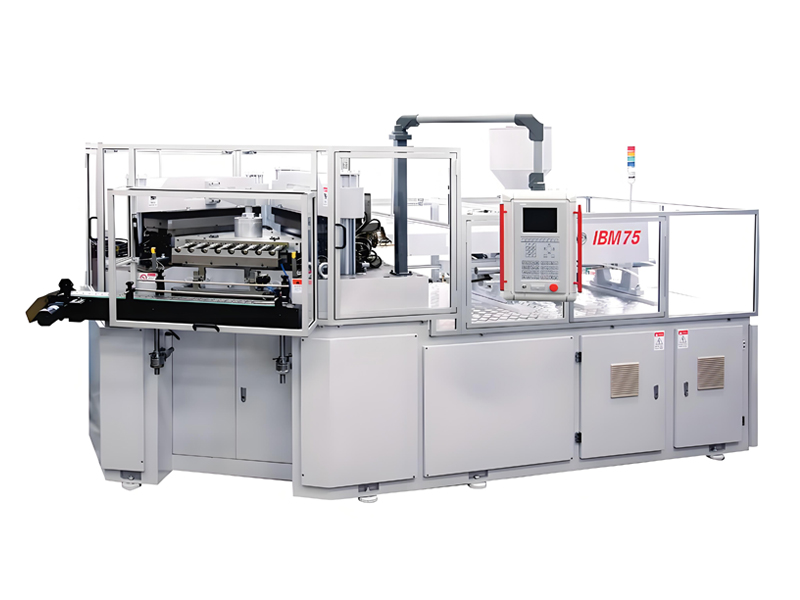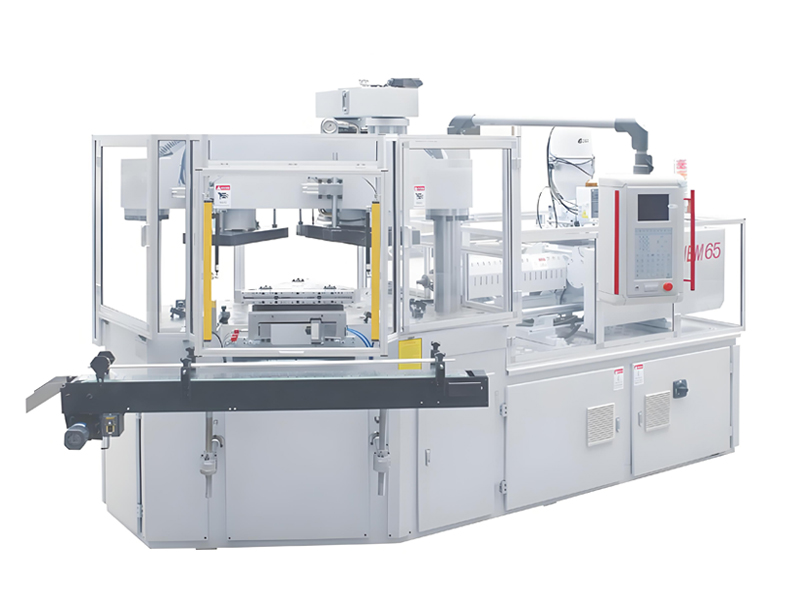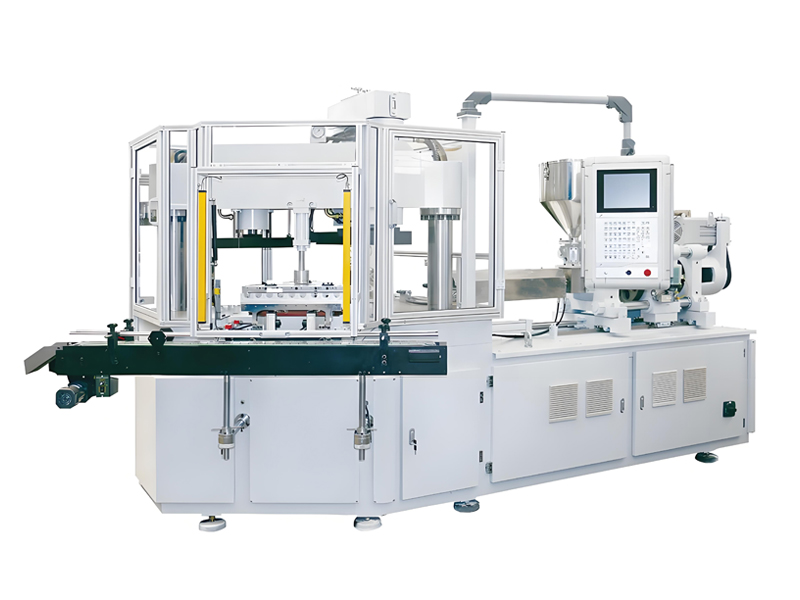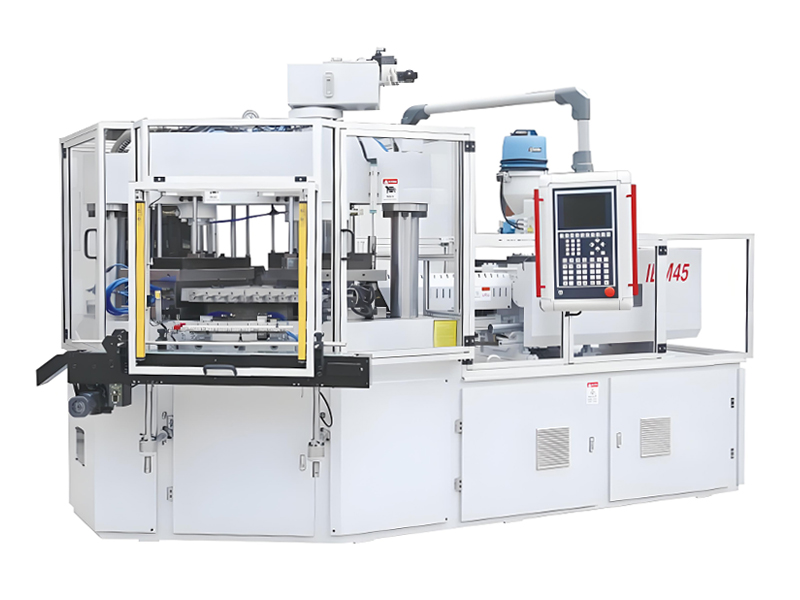
Injection blow molding is the preferred one-step process for producing seamless, flash-free, high-precision small bottles in the 10-200 ml range used by pharmaceutical, cosmetic, food, and drink manufacturers. For buyers evaluating the Aibim IBM series, the central question is straightforward: which model delivers the right capacity range and production output without overspending on clamping force or cavity capacity they will never use. This article gives a full comparison of the three Aibim injection blow molding machines, IBM55, IBM65, and IBM75, covering clamping force, injection shot, cavity count, bottle size range, and calculated bottles-per-hour output so that procurement and production engineers can match a machine to their real demand.
Aibim, a Wanplas factory, is a specialized manufacturer of injection blow molding machines with more than 12 years of experience in plastic machinery and a track record of 20 years in the injection blow molding field. The company operates its own CNC center for machine-part production, runs an annual production capacity of more than 100 lines, and ships machines to over 40 countries. With a new factory purchased in 2022, Aibim focuses entirely on the three-station one-step IBM platform and the matching molds, which is why its model range stays tight and deeply optimized rather than broad and shallow. The IBM55, IBM65, and IBM75 share one engineering philosophy but scale across clamping force and bottle size so that a buyer can right-size the investment.
Throughout this comparison we use model numbers that correspond to clamping-force class, a common and practical convention in injection blow molding. We explain how to convert cavity count and cycle time into hourly output, list the realistic capacity windows for each model, and finish with a requirement-to-model selection table, a service-and-support section, and a set of frequently asked questions. All figures below represent typical production configurations; the exact parameters for a specific bottle are confirmed in the quotation based on the customer’s bottle drawing and mold layout.
What Is Injection Blow Molding and Why Compare IBM55, IBM65, IBM75
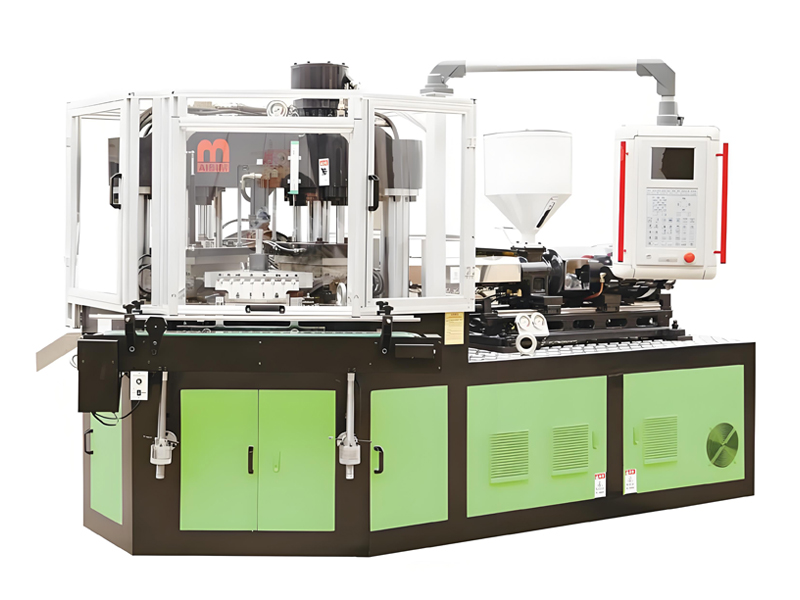
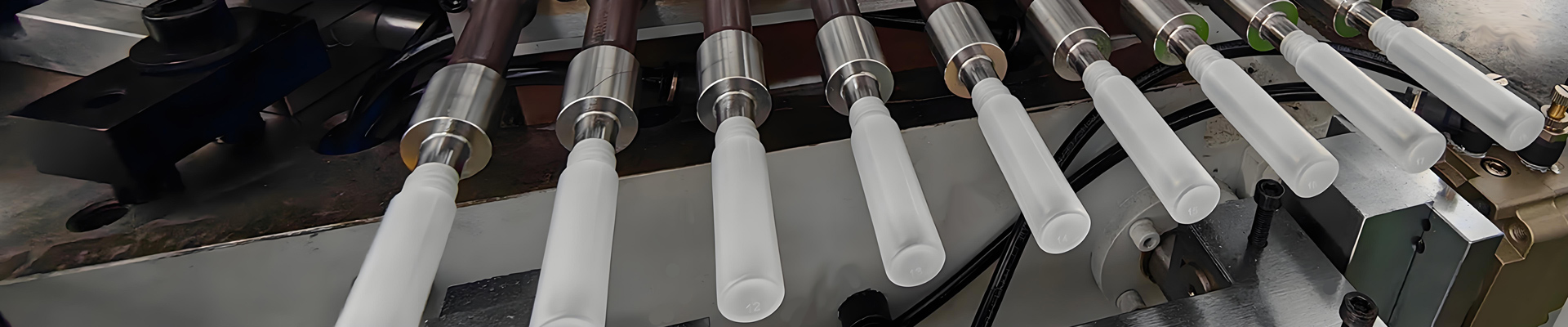
Injection blow molding, abbreviated IBM, is a one-step hollow molding process that forms a plastic bottle by first injecting a precise parison on a core rod and then blowing that parison into the final bottle shape inside a blow mold, all without a secondary reheating step. The Aibim IBM series is built as a three-station, one-step machine: an injection station forms the parison, a blow station expands it against the cavity wall, and a discharge station ejects the finished bottle.
The three-station layout removes the scrap, flash, and post-trimming associated with many alternative blow molding routes. Because the parison is injection-molded rather than extruded, wall thickness is controlled to tight tolerances, neck finish is molded to high precision, and the bottle leaves the machine ready to fill. This is exactly why pharmaceutical and cosmetic producers choose IBM for containers that must look uniform and seal reliably.
The reason buyers compare IBM55, IBM65, and IBM75 is that all three run the same three-station process but occupy different points on the capacity curve. IBM55 is the compact hybrid-electric model, IBM65 is the mid-range workhorse, and IBM75 is the large-platform model for bigger bottles and higher shot volumes. Choosing the wrong size means either paying for unused clamping force or starving a production line that has outgrown its cavities, so a specification-level comparison is the fastest way to avoid both mistakes.
The comparison also matters because output scales with cavity count, and cavity count scales with available clamping force and shot size. A 15 ml vial can be molded in many cavities on IBM55, while a 500 ml cosmetic jar needs the larger platen and shot of IBM75. Reading the three models side by side makes the trade-off visible before any capital is committed.
Aibim IBM Series at a Glance
The Aibim IBM lineup consists of three production models that cover the full 3 ml to 1000 ml container range with a consistent three-station one-step architecture. The IBM55 is the hybrid-electric entry model, the IBM65 is the standard mid-size model, and the IBM75 is the high-capacity model for larger bottles and higher shot volumes.
Every model in the series uses Aibim PREFILL technology and a variable displacement pump in the hydraulic system, which reduces energy consumption by a minimum of 35 percent compared with conventional hydraulic machines. The IBM55 adds a servo assist on the plasticizing and clamping functions, making it the most energy-efficient configuration in the range. All models are CE certified, with a stripper station protected by a long-distance digital laser sensor and a light curtain for personal safety.
The shared design language includes a single-crossbeam, double-pole clamping framework that enlarges mold-setting space, and an SD card system for parameter storage and fast reinstallation across machines on the same floor. For the buyer, this means that once an operator learns one Aibim IBM model, moving to another is a short training step rather than a new skill set.
The table below positions the three models by their primary role and bottle-size window so the rest of the comparison can be read in context.
Model Positioning Overview
| Model | Drive Type | Primary Bottle Range | Best-Fit Output Tier | Relative Cost Tier |
|---|---|---|---|---|
| IBM55 | Hybrid electric | 3-250 ml | Low to Medium | Medium |
| IBM65 | Hydraulic with PREFILL | 5-500 ml | Medium to High | Medium to High |
| IBM75 | Hydraulic with PREFILL | 10-1000 ml | High | High |
Because the three models share tooling logic and controls, a buyer can start on IBM55 and later add IBM65 or IBM75 on the same floor without relearning the platform. That scalability is a practical advantage for contract packers whose bottle sizes change with each customer program.
Aibim IBM55 Hybrid Electric: Specification and Capacity
The IBM55 is the compact hybrid-electric model in the Aibim IBM series and the natural starting point for pharmaceutical vials, diagnostic bottles, and small cosmetic containers in the 3-250 ml range. Its 55-ton clamping class supports high cavity counts on small bottles, which is where unit economics matter most.
The hybrid-electric design pairs a servo-driven plasticizing and clamping assist with a hydraulic core, so the machine trims idle power and recovers energy during low-demand phases of the cycle. Combined with Aibim PREFILL technology and the variable displacement pump, the IBM55 reaches the highest energy saving in the series, a minimum 35 percent reduction versus conventional hydraulic machines.
For a 10-30 ml pharmaceutical vial, IBM55 typically runs in the highest cavity counts of the three models, which pushes bottles-per-hour output up while keeping each bottle’s power cost down. The table below lists typical specifications for a standard IBM55 configuration; final values are confirmed against the bottle drawing and mold layout at quotation.
IBM55 Typical Specification Table
| Parameter | IBM55 Typical Value | Notes |
|---|---|---|
| Clamping force | 55 ton (539 kN) | Model number indicates clamp class |
| Max injection shot | 160 g / 185 cc | Sufficient for high-cavity small bottles |
| Screw diameter | 35 mm | Optimized for PP, PE, PS |
| Bottle size range | 3-250 ml | Covers most vials and mini bottles |
| Max cavity count | Up to 12 (small bottles) | Drops with bottle size |
| Typical cycle time | 11-14 s | Depends on bottle and material |
| Installed power | Approximately 22 kW | Hybrid drive lowers running load |
| Machine weight | Approximately 4.5 ton | Smallest footprint of the three |
| Footprint (L x W) | About 3.0 x 1.6 m | Fits compact cleanroom layouts |
IBM55 is the right answer when the bottle is small, the cavity count is high, and energy per thousand bottles must stay low. It is the default recommendation for pharmaceutical vials and unit-dose cosmetic bottles produced in long, steady runs.
Aibim IBM65: Specification and Capacity
The IBM65 sits in the middle of the Aibim IBM series and is the most common choice for mid-size bottles from 5 ml up to 500 ml, including many cosmetic jars, oral-care bottles, and food condiment containers. Its 65-ton clamping class opens more platen space and a larger shot, so it supports bigger single bottles or a balanced cavity count on mid-size containers.
IBM65 uses the same three-station one-step architecture and PREFILL hydraulic technology as the rest of the series. It is a hydraulic machine with the variable displacement pump rather than the hybrid-electric drive, which keeps the purchase cost moderate while still delivering the series minimum 35 percent energy saving versus conventional hydraulic units.
For a 50-200 ml cosmetic bottle, IBM65 typically runs in the 6-10 cavity range with cycle times around 12-16 seconds, producing a steady hourly volume that suits both in-house filling lines and contract manufacturing. The specification table below reflects a standard IBM65 configuration.
IBM65 Typical Specification Table
| Parameter | IBM65 Typical Value | Notes |
|---|---|---|
| Clamping force | 65 ton (638 kN) | Mid-range clamp class |
| Max injection shot | 320 g / 360 cc | Supports larger mid-size bottles |
| Screw diameter | 42 mm | Balanced plasticizing rate |
| Bottle size range | 5-500 ml | Cosmetic jars to food bottles |
| Max cavity count | Up to 10 (mid-size bottles) | Fewer cavities on 500 ml items |
| Typical cycle time | 12-16 s | Scales with wall thickness |
| Installed power | Approximately 30 kW | Hydraulic with PREFILL pump |
| Machine weight | Approximately 6.0 ton | Moderate floor load |
| Footprint (L x W) | About 3.4 x 1.7 m | Standard plant bay fit |
IBM65 is the balanced choice: enough clamp and shot for most mid-size bottles, enough cavity flexibility for seasonal volume swings, and a moderate relative cost tier that keeps payback realistic for medium-volume brands.
Aibim IBM75: Specification and Capacity
The IBM75 is the high-capacity model of the Aibim IBM series and covers the upper end of the container range, from 10 ml up to 1000 ml. Its 75-ton clamping class and larger injection shot make it the model for big cosmetic jars, wide-mouth bottles, and high-shot applications where IBM55 or IBM65 would be cavity-limited.
IBM75 keeps the three-station one-step process, PREFILL technology, and variable displacement pump, so it inherits the series minimum 35 percent energy saving. Because it is hydraulic rather than hybrid-electric, its installed power is higher than IBM55, but its output per cavity on large bottles is unmatched in the Aibim range.
For a 500-1000 ml bottle, IBM75 typically runs in the 4-8 cavity range with cycle times around 14-18 seconds. The larger shot and platen also help when a bottle needs a long core rod or a complex neck finish. The specification table below reflects a standard IBM75 configuration.
IBM75 Typical Specification Table
| Parameter | IBM75 Typical Value | Notes |
|---|---|---|
| Clamping force | 75 ton (736 kN) | Largest clamp class in series |
| Max injection shot | 520 g / 580 cc | Handles up to 1000 ml bottles |
| Screw diameter | 50 mm | High plasticizing capacity |
| Bottle size range | 10-1000 ml | Full top of IBM range |
| Max cavity count | Up to 8 (large bottles) | Fewer cavities as size grows |
| Typical cycle time | 14-18 s | Longer cooling on thick walls |
| Installed power | Approximately 40 kW | Highest of the three models |
| Machine weight | Approximately 8.5 ton | Needs reinforced floor bay |
| Footprint (L x W) | About 3.8 x 1.9 m | Largest footprint of the three |
IBM75 is selected when bottle size or shot volume pushes past the practical limit of IBM65. It is the model for large cosmetic jars, wide-mouth containers, and any program where a single bottle needs more material than the smaller machines can deliver in one shot.
IBM55 vs IBM65 vs IBM75: Head-to-Head Comparison
The fastest way to see the difference between the three models is a side-by-side specification table. The values below are typical production configurations; the relative ranking is stable across bottle programs even when absolute numbers shift with the mold design.
Full Specification Comparison Table
| Specification | IBM55 | IBM65 | IBM75 |
|---|---|---|---|
| Clamping force | 55 ton | 65 ton | 75 ton |
| Max injection shot | 160 g / 185 cc | 320 g / 360 cc | 520 g / 580 cc |
| Screw diameter | 35 mm | 42 mm | 50 mm |
| Bottle size range | 3-250 ml | 5-500 ml | 10-1000 ml |
| Max cavity count | Up to 12 | Up to 10 | Up to 8 |
| Typical cycle time | 11-14 s | 12-16 s | 14-18 s |
| Drive type | Hybrid electric | Hydraulic PREFILL | Hydraulic PREFILL |
| Installed power | Approximately 22 kW | Approximately 30 kW | Approximately 40 kW |
| Relative cost tier | Medium | Medium to High | High |
The comparison shows a clear ladder: clamping force, shot, screw diameter, and bottle range all increase from IBM55 to IBM75, while maximum cavity count decreases because larger bottles consume more platen and shot per cavity. The practical reading is that IBM55 wins on small-bottle unit cost, IBM65 wins on mid-size flexibility, and IBM75 wins on large-bottle capability.
Energy saving is constant across the three because all share PREFILL technology, but IBM55’s hybrid-electric drive gives it the lowest running cost per thousand bottles. Buyers who run mostly small vials should not move to IBM75 just for “more machine”; the extra clamp and shot would sit idle while power and floor cost rise.
Production Output Calculation: Cavities, Cycle Time, Utilization
Production output for any injection blow molding machine is calculated from three variables: cavity count, cycle time, and utilization. The formula is simple and applies equally to IBM55, IBM65, and IBM75.
The formula is: bottles per hour equals cavity count multiplied by 3600, divided by cycle time in seconds, then multiplied by the utilization factor. The utilization factor accounts for mold change, material change, startup, and minor stops, and a realistic factory value is 0.82 to 0.88. A plant that runs one bottle nonstop with quick tooling can approach 0.90, while a job shop with frequent changeovers sits closer to 0.80.
The table below applies the formula to representative configurations of each model at a utilization factor of 0.85. These numbers are planning estimates; the quoted output for a specific bottle is confirmed after mold trial.
Representative Output by Model and Cavity Count
| Model | Bottle Size | Cavities | Cycle (s) | Bottles per Hour at 0.85 Utilization |
|---|---|---|---|---|
| IBM55 | 15 ml vial | 12 | 12 | Approximately 3060 |
| IBM55 | 100 ml bottle | 8 | 13 | Approximately 1870 |
| IBM65 | 50 ml bottle | 10 | 13 | Approximately 2340 |
| IBM65 | 250 ml bottle | 6 | 15 | Approximately 1150 |
| IBM75 | 500 ml jar | 6 | 16 | Approximately 1080 |
| IBM75 | 1000 ml bottle | 4 | 18 | Approximately 640 |
The table makes one point obvious: small bottles on IBM55 can out-produce large bottles on IBM75 by a wide margin because cavity count is the dominant term. A buyer should therefore start from required daily volume and bottle size, then solve backward for cavities, and only then pick the model that can hold those cavities. Choosing the model first and hoping cavities fit is the most common capacity-planning error.
Cycle time is driven mostly by cooling, which depends on wall thickness, material, and bottle geometry. Thinner walls and faster-cooling materials such as PP shorten the cycle; thick PC or PCTG walls lengthen it. When comparing machines, always compare at the same bottle, not at a generic cycle number.
Application Industries: Pharmaceutical, Cosmetic, and Precision Small Bottles
The Aibim IBM series is built for industries where bottle uniformity, clean neck finish, and flash-free walls matter more than maximum container size. The three application fields named in the Aibim profile are pharmaceutics, food and drink, and cosmetics, with the precision small-bottle segment spanning 10-200 ml as the core sweet spot.
In pharmaceutics, IBM bottles are used for oral liquid bottles, eye-drop containers, nasal spray bodies, diagnostic vials, and unit-dose containers. The injection-molded neck gives a tight, repeatable sealing surface for droppers and child-resistant closures, and the one-step process avoids the scrap and post-trimming that could introduce contamination risk. For these programs, IBM55 is usually the first choice because vials sit in the 3-100 ml range where its cavity count peaks.
In cosmetics, IBM bottles appear as cream jars, lotion bottles, serum bottles, and mascara barrels. The seamless wall and glossy neck finish suit premium branding, and the material range, including PS, SAN, PC, and PCTG, supports both clarity and impact resistance. Cosmetic programs often span 15-250 ml, so IBM55 and IBM65 split the work, with IBM75 reserved for large jars.
In food and drink, IBM containers serve condiment bottles, sauce bottles, and specialty beverage mini-bottles where a precise neck and clean wall are required. PP and PE are common here for chemical resistance and compliance with food-contact expectations, and the no-flash one-step process reduces cleaning and inspection load on the filling line.
The table below maps each model to typical end products so application engineers can place their program on the right machine.
Model to Application Mapping
| Model | Pharmaceutical | Cosmetic | Food and Drink |
|---|---|---|---|
| IBM55 | Vials, dropper bodies, diagnostic tubes | Serum, mini lotion, mascara barrels | Mini sauce, sample condiment |
| IBM65 | Oral liquid, larger dropper bottles | Cream jars, lotion, mist bottles | Condiment, specialty beverage |
| IBM75 | Large medical jars, bulk containers | Wide-mouth jars, premium large bottles | Large sauce, refill bottles |
For regulated pharmaceutical and food contact programs, Aibim machines are built to support compliance workflows, and the buyer should validate material grade and process against the applicable regional standard, such as FDA or EU 10/2011 for food and pharmaceutical contact, during mold and material qualification.
Material Compatibility Across the IBM Series
Material choice decides both bottle performance and machine setup. The Aibim IBM series processes PE, PP, PS, ABS, SAN, TPU, PC, and PCTG, a range that covers most precision small-bottle programs without changing the core machine.
PP and PE are the workhorses for pharmaceutical and food bottles because of their chemical resistance and easy processing; PP also offers a good balance of stiffness and hinge life. PS and SAN deliver high clarity for display-facing cosmetic bottles, though they are more brittle and need careful ejection settings. PC and PCTG are selected when transparency plus impact resistance is required, such as premium cosmetic jars, at the cost of higher processing temperature and longer cooling.
ABS brings surface quality and toughness for closures and specialized bottles, while TPU serves flexible or soft-touch applications. The screw and barrel temperature profile, melt temperature, and cooling time are adjusted per material, which is why Aibim stores parameter sets on an SD card that can be moved between machines of the same floor.
Material Processing Reference
| Material | Typical Use | Clarity | Processing Note |
|---|---|---|---|
| PP | Pharma, food, cosmetic | Translucent | Easy flow, fast cooling |
| PE (HDPE/LDPE/LLDPE) | Pharma, food | Opaque to translucent | Chemical resistant |
| PS | Cosmetic display | High | Brittle, gentle ejection |
| SAN | Cosmetic, clarity | High | Rigid, clear |
| ABS | Closures, special bottles | Opaque | Tough surface |
| PC | Premium clear | Very high | High temp, long cooling |
| PCTG | Premium cosmetic | Very high | Clear and impact resistant |
| TPU | Soft-touch | Varies | Flexible grade needed |
Because all three models share the same plasticizing philosophy, a material qualified on one Aibim IBM machine transfers to the others with only fine tuning. That portability lowers validation cost when a brand runs the same bottle material across two model sizes.
How to Choose: Requirement to Model Recommendation
The selection question is not “which model is biggest” but “which model holds the cavities my volume needs at the bottle size I must make.” The recommendation table below converts common buyer requirements into a model, using the capacity ranges and cavity limits reviewed earlier.
Requirement to Model Selection Table
| Buyer Requirement | Bottle Size | Target Volume | Recommended Model |
|---|---|---|---|
| Pharma vials, high cavity | 10-50 ml | Up to 3000 bottles per hour | IBM55 |
| Cosmetic serum, steady run | 15-100 ml | 1500-2500 bottles per hour | IBM55 or IBM65 |
| Mid-size lotion and jar | 100-300 ml | 1000-2000 bottles per hour | IBM65 |
| Food condiment, moderate volume | 200-500 ml | 800-1500 bottles per hour | IBM65 or IBM75 |
| Large cosmetic jar | 500-1000 ml | 600-1100 bottles per hour | IBM75 |
| Mixed small and large program | 10-1000 ml | Varies by SKU | IBM55 plus IBM75 |
When a single bottle size dominates the forecast, pick the smallest model that holds the required cavities; the saved clamp, power, and floor space drop straight to unit cost. When the product mix spans the full range, a two-machine combination such as IBM55 plus IBM75 covers small vials and large jars without either machine running idle.
If the program is growing, start with the model that fits today’s peak and confirm with Aibim that the mold base and parameter set will transfer to the next model up. That forward planning protects the tooling investment as volume climbs.
Energy, Footprint, and Total Cost of Ownership
Total cost of ownership for an injection blow molding machine is more than the purchase price. It includes energy, floor space, mold cost, maintenance, and scrap, and the three Aibim models differ most on energy and footprint.
All three models share PREFILL technology and the variable displacement pump, which cut energy use by at least 35 percent versus conventional hydraulic machines. The IBM55 hybrid-electric model goes further by trimming idle power with its servo assist, so it carries the lowest energy cost per thousand bottles. IBM65 and IBM75 are hydraulic and use more installed power, but their larger shot and platen earn that power on bigger bottles where IBM55 would be cavity-limited.
Footprint scales with model size: IBM55 needs about 3.0 by 1.6 meters, IBM65 about 3.4 by 1.7 meters, and IBM75 about 3.8 by 1.9 meters, plus service clearance. In a cleanroom or a rented plant bay, that difference affects layout and air-handling cost. Mold cost is set by cavity count and bottle complexity rather than by model, so a 12-cavity IBM55 mold and a 12-cavity IBM65 mold are comparable in tooling spend.
Ownership Profile by Model
| Factor | IBM55 | IBM65 | IBM75 |
|---|---|---|---|
| Energy cost per 1000 bottles | Low | Medium | Medium to High |
| Floor space need | Low | Medium | High |
| Purchase cost tier | Medium | Medium to High | High |
| Best unit economics at | Small bottles, high cavity | Mid-size bottles | Large bottles |
The ownership picture rewards right-sizing. A buyer who runs 15 ml vials should not pay for IBM75 clamp they will never fill; the extra energy and floor cost would erode margin on every bottle. Equally, a buyer who needs 1000 ml jars should not force IBM65, because cavity limits would cap output and extend payback.
Installation, Service, and Support
Because Aibim is a Wanplas factory, every IBM machine ships with the group’s shared service commitments as well as Aibim’s own machine-specific support. The most concrete of these is USD 500 free spare parts every year, which covers wear items and routine replacement parts without adding to the operating budget.
Before shipment, Aibim runs factory acceptance testing so the machine and mold are verified producing good bottles, not just rotating. After arrival, Aibim engineers support on-site installation and commissioning, bringing the line to stable production and training the customer’s operators on setup, changeover, and daily checks. The SD card parameter system means a qualified setting can be saved and reinstalled, which shortens later changeovers.
During the warranty period, damaged parts are replaced free of charge, and remote support lets the Aibim team read diagnostic data and guide correction without waiting for a site visit. The Wanplas “open factory” policy welcomes customers to inspect the plant, review the CNC center, and witness a trial run before committing, which is especially useful for pharmaceutical and cosmetic buyers with supplier-qualification requirements.
Spare-parts logistics follow the Wanplas group promise of USD 500 free parts per year, and Aibim keeps common IBM wear parts in stock to shorten lead time on urgent replacements. For buyers planning multi-shift operation, Aibim can advise on spare-part inventory levels and preventive maintenance intervals so unplanned stops stay rare.
Maintenance and Daily Operation Tips
Injection blow molding machines reward disciplined maintenance because the three-station cycle keeps the mold, core rod, and blow station in continuous contact with heat and motion. A simple routine protects output and extends tool life across IBM55, IBM65, and IBM75.
Daily checks should cover melt temperature stability, hydraulic oil level and temperature, cooling water flow to each station, and the condition of the stripper and ejection sensors. The CE-certified safety system on Aibim machines uses a long-distance digital laser sensor at the stripper station and a light curtain for personal safety, and these should be tested at the start of each shift as part of the lockout and startup routine.
Weekly maintenance should include cleaning the mold venting, inspecting core rods for buildup, verifying the blow pin seal, and checking the SD card backup of the current parameter set. Monthly work covers hydraulic filter condition, lubrication of the clamping linkage, and a review of scrap rate by cavity so a drifting cavity is caught before it becomes a quality escape.
Material change is the highest-risk operation for contamination in pharmaceutical and food programs. Purge the barrel fully, confirm the parameter set for the new material, and run a short qualification batch before resuming production. Because the IBM series supports many materials on one machine, disciplined purge and documentation are the difference between a clean changeover and a rejected lot.
Finally, keep utilization realistic in planning. A line quoted at 0.85 utilization that is actually stopped for mold cleaning every few hours will underperform; the maintenance routine above is what keeps the realized utilization close to the planned number and protects the return on the machine.
Injection Blow Mold Design and Maintenance Across the IBM Series
The mold system is where the three Aibim IBM models show the most practical difference in daily production, because the mold, not the machine clamp, decides cavity count, neck precision, and cooling speed. Each Aibim IBM machine carries three coordinated mold sets that travel through the three stations: an injection mold that forms the parison around the core rod, a blow mold that expands the parison against the cavity wall, and a discharge mold that strips the finished bottle. The machine size decides how many cavities and how large a neck insert these mold sets can physically hold.
Cavity count is the first mold constraint. As reviewed in the specification tables, IBM55 supports up to 12 cavities on small bottles, IBM65 up to 10, and IBM75 up to 8, because a larger clamp and shot class are needed as the bottle grows. The cavity pitch, the fixed distance between cavity centers set by the mold base, means a bottle with a wide body cannot reach the maximum cavity count even on IBM75. For buyers, this means the mold layout should be finalized from the bottle drawing before the model is locked, so the chosen machine actually fits the planned cavities rather than forcing a lower cavity count than the volume needs.
Neck Insert and Quick Neck Change
The neck finish is molded by a replaceable neck insert, often called the neck ring, which sits at the top of each cavity. Aibim designs use a standardized neck insert seat within a model size, so a bottle program can switch between a screw finish, a child-resistant closure seat, a dropper finish, or a snap-fit edge by changing only the neck insert rather than the whole mold. The maximum neck insert diameter scales with the model platen: IBM55 accepts the smallest neck seats suited to vials and mini bottles, IBM65 covers standard cosmetic and pharmaceutical necks, and IBM75 supports wide-mouth and large jar necks. Keeping a spare neck insert on the shelf shortens a neck change from a full mold swap to a localized insert exchange, which protects utilization on mixed programs.
Cooling Water Circuits and Temperature Control
Cooling decides cycle time, so the number and balance of temperature-control water circuits in the mold matters as much as the steel grade. Aibim molds route independent water circuits through the core rods, the blow cavity, and the neck insert, and the count of independent circuits grows with model size and cavity count. IBM55 molds typically run two to three isolated circuits per station, IBM65 runs three to four, and IBM75 runs four to six, allowing the operator to tune core, cavity, and neck temperatures separately for thick-wall or high-clarity materials such as PC and PCTG. Balanced flow across cavities prevents one cavity from running hotter, which would show as uneven wall thickness or a warped neck finish that fails sealing.
| Mold Attribute | IBM55 | IBM65 | IBM75 |
|---|---|---|---|
| Max cavities on small bottle | Up to 12 | Up to 10 | Up to 8 |
| Neck insert seat range | Vial to mini bottle | Standard pharma and cosmetic | Wide-mouth and large jar |
| Independent water circuits per station | 2 to 3 | 3 to 4 | 4 to 6 |
| Core rod material | Hardened steel, polished | Hardened steel, polished | Hardened steel, polished |
Mold maintenance follows the same discipline as machine maintenance. After every production run, the venting slots should be cleaned so gas escapes during blow, the core rods should be inspected for residual material or scratch marks that would transfer to the parison, and the blow pin seal should be checked to avoid leaks that thin one side of the bottle. The water circuits should be flushed on a scheduled basis to remove scale, because restricted flow raises the neck and cavity temperature and lengthens the cycle. Aibim stores the full mold parameter set on the SD card, so the qualified cooling profile for a bottle can be reinstalled exactly after a mold returns from service or moves to a second machine.
Because the mold base, neck insert seat, and water-circuit philosophy are consistent within each model size, a buyer who starts on IBM55 and later adds IBM65 or IBM75 keeps the same mold-handling knowledge on the floor. The main change is scale: larger neck seats, more water circuits, and fewer but bigger cavities, all of which are planned at the quotation stage from the bottle drawing and target output so the mold arrives ready to reach the planned bottles per hour.
الأسئلة الشائعة
What is the difference between IBM55, IBM65, and IBM75?
The three models share a three-station one-step injection blow molding platform but scale in clamping force, shot capacity, and maximum bottle size. IBM55 is the compact hybrid-electric entry model for 3-250 ml vials, IBM65 covers 5-500 ml, and IBM75 is the largest, reaching up to 1000 ml with the highest clamping force and shot volume. The practical difference is which bottle sizes and cavity counts each can hold, not a change in process quality.
How is production output calculated for IBM machines?
Output in bottles per hour equals cavity count multiplied by 3600 and divided by the cycle time in seconds, then multiplied by the utilization factor. A typical utilization factor is 0.82 to 0.88 after accounting for mold change, material change, and minor stops. Because cavity count is the dominant term, a small bottle on IBM55 can out-produce a large bottle on IBM75 by a wide margin.
Which Aibim IBM model is best for 10-50 ml pharmaceutical vials?
For 10-50 ml pharmaceutical and diagnostic vials, the IBM55 hybrid-electric model is usually the most economical choice because it supports the highest cavity counts in the small-bottle range and offers the lowest energy consumption per thousand bottles. IBM65 is selected when output demand exceeds what IBM55 cavities can deliver or when the bottle size moves toward 100 ml and above.
What materials can Aibim IBM machines process?
The Aibim IBM series processes PE, PP, PS, ABS, SAN, TPU, PC, and PCTG. Material selection depends on the end use: PP and PE for pharmaceutical and cosmetic containers, PS and SAN for clarity, and PC or PCTG where high transparency and impact resistance are required. Each material is set up through its own temperature and cooling profile, saved on the machine SD card.
Does the IBM55 use a hybrid electric drive?
Yes. The IBM55 is the hybrid-electric model in the Aibim lineup. It combines a servo-driven plasticizing and clamping assist with a hydraulic core, using Aibim PREFILL technology and a variable displacement pump to cut energy consumption by at least 35 percent compared with conventional hydraulic machines. IBM65 and IBM75 use the hydraulic PREFILL drive.
How much energy do Aibim IBM machines save?
Across the IBM series, Aibim designs target a minimum 35 percent reduction in energy consumption versus conventional hydraulic injection blow molding machines. The IBM55 hybrid-electric configuration delivers the highest saving because its servo assist recovers and trims idle power, while IBM65 and IBM75 reach the same percentage through the PREFILL variable displacement pump.
What bottle size range do these machines cover?
The Aibim IBM series covers containers from 3 ml to 1000 ml. IBM55 serves 3-250 ml, IBM65 serves 5-500 ml, and IBM75 serves 10-1000 ml, so most pharmaceutical, cosmetic, food, and drink small bottles fall inside the combined range. The model choice then depends on cavity count and output rather than on whether the size is possible at all.
ما دعم ما بعد البيع الذي توفره Aibim؟
As a Wanplas factory, Aibim provides USD 500 free spare parts every year, free replacement of damaged parts within warranty, factory acceptance testing before shipment, on-site installation and commissioning, operator training, and remote support. Customers are welcome to visit the factory for inspection under the Wanplas open-factory policy, which helps with supplier qualification in regulated industries.
الخلاصة
The comparison of IBM55, IBM65, and IBM75 comes down to one rule: match the model to the bottle size and the cavity count your volume requires, not to the biggest clamp available. IBM55 is the compact hybrid-electric model for 3-250 ml vials and the lowest energy cost per thousand bottles, IBM65 is the balanced mid-size workhorse for 5-500 ml bottles, and IBM75 is the high-capacity model for 10-1000 ml containers where shot and platen decide output.
All three share the Aibim three-station one-step process, PREFILL technology, CE-certified safety, and at least 35 percent energy saving versus conventional hydraulic machines, so quality and running cost stay consistent as you scale. With more than 12 years of plastic machinery experience, shipments to over 40 countries, an own CNC center, and a 100-plus lines per year capacity, Aibim as a Wanplas factory backs the IBM series with USD 500 free spare parts every year, factory acceptance testing, on-site commissioning, and remote support.
If you are planning a new pharmaceutical, cosmetic, food, or drink bottle program, send your bottle drawing, target daily volume, and material to the Aibim team for a tailored configuration and a factory trial run. The right model, cavity count, and mold layout can be confirmed on the floor before you commit, so the machine you receive matches the output you planned.