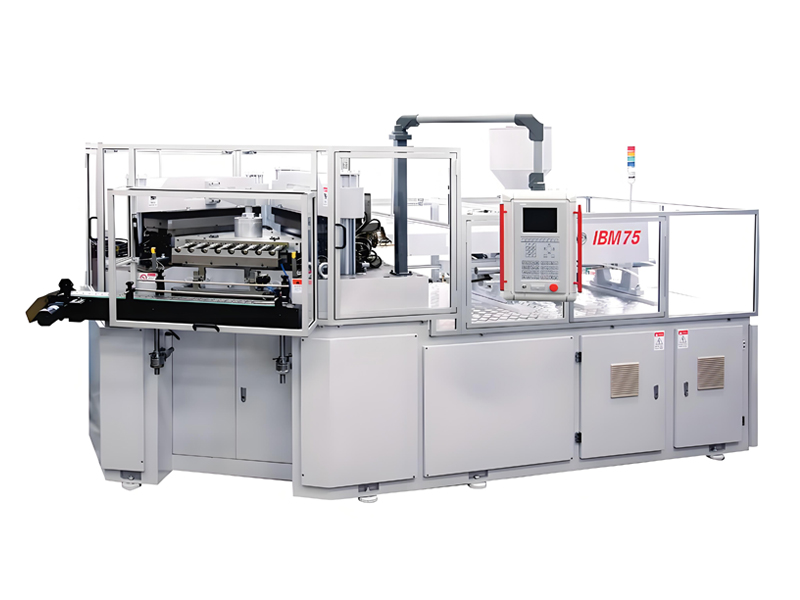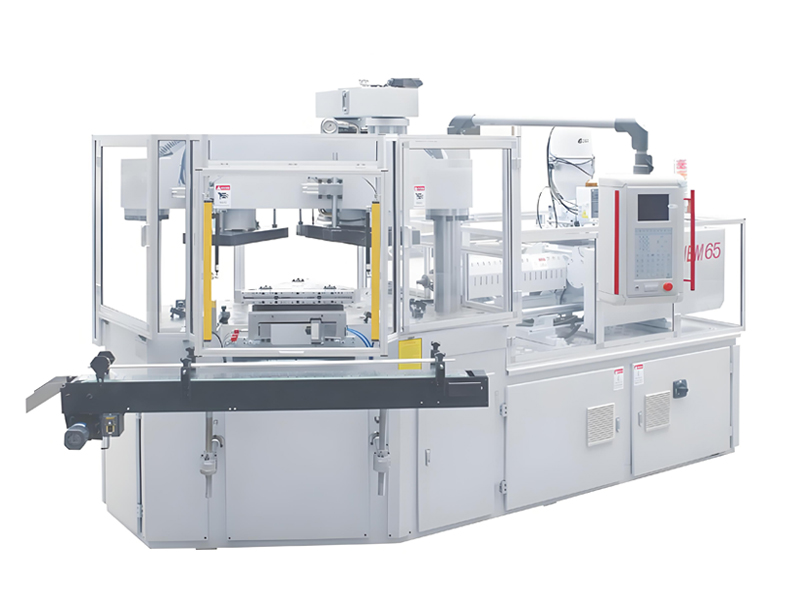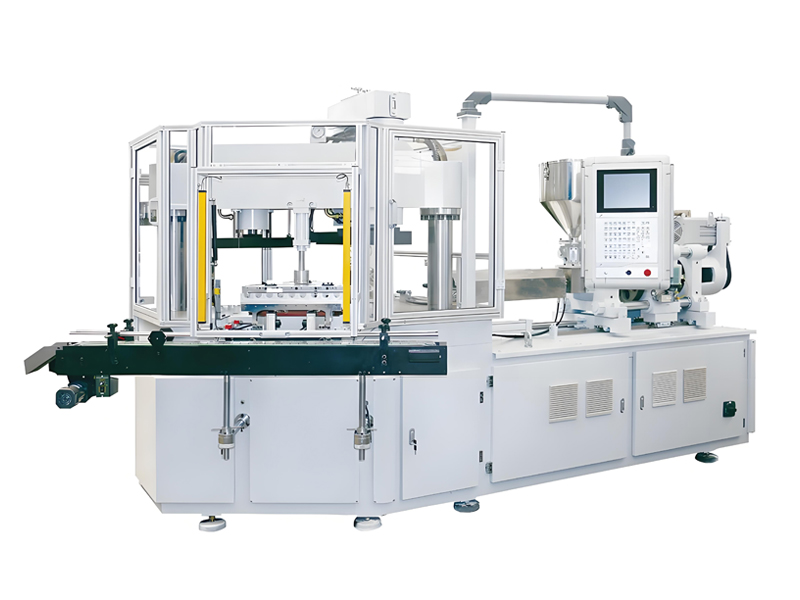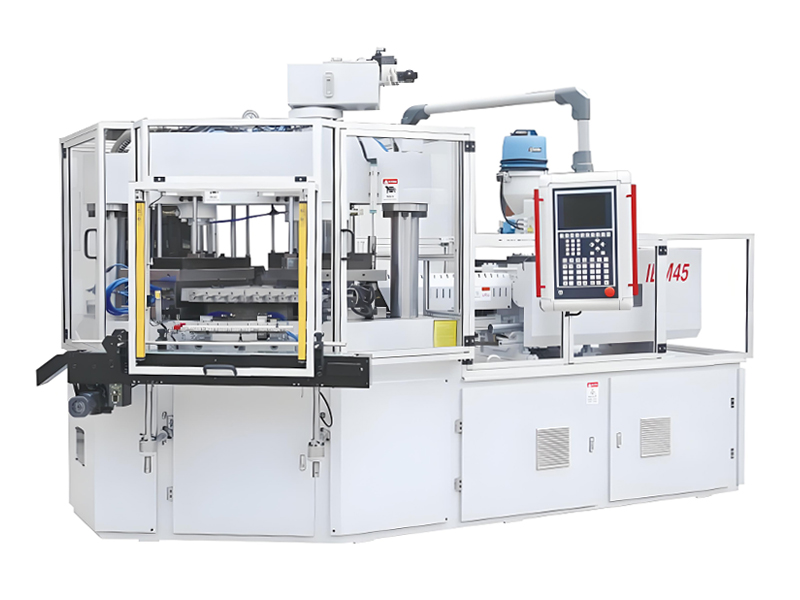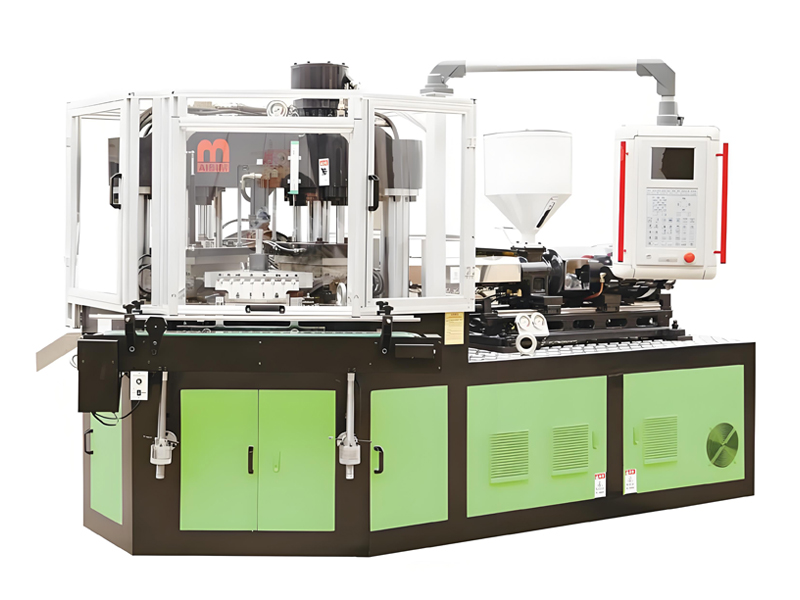
Aibim, a Wanplas factory with 12+ years of experience in plastic machine manufacturing and exports to 40+ countries, has built its reputation on a single focused mission: make injection blow molding machines that are precise, flexible and economical for bottle makers of every scale. Aibim operates its own CNC machining center to produce critical machine parts in house, and in 2022 it purchased a new, larger factory that lifted annual production capacity to more than 100 lines per year. This article explains the full-range injection blow molding machine concept, a platform approach in which one coordinated machine family covers the entire 3ml to 1000ml bottle spectrum with interchangeable mold sets and quick mold change. If your production plan includes tiny pharma droppers, mid-size cosmetic bottles and large wide-mouth jars at the same site, the full-range approach removes the need to buy three separate machine classes. Instead, you choose the right base module from the IBM55, IBM65 and IBM75 series, then switch mold sets to move between bottle sizes without changing the core platform.
الحقن blow molding (IBM) is a one-step, three-station process that combines injection molding and blow molding into a single automated cycle. A plasticizing barrel melts the resin, an injection unit forms a parison with a finished neck finish around a core rod, the core rod transfers the parison to a blow station where compressed air expands it against the cavity wall, and a final station ejects the finished bottle. Because the neck is molded, not cut, IBM bottles feature accurate thread geometry, no flash and no scrap, which is why the process dominates pharmaceutical, food, drink and cosmetic packaging below the 1000ml mark. The full-range concept described here applies this proven process across the whole volume band from 3ml vials to 1000ml jars using a shared control architecture and a family of matched molding units.
What Is a Full-Range آلة قولبة النفخ بالحقن?
A full-range injection blow molding machine is a coordinated platform in which the same engineering philosophy, control system and tooling interface let a producer manufacture bottles from 3ml up to 1000ml without leaving one machine family. The phrase “one machine covers all bottle sizes” does not mean a single physical mold produces every volume; rather, it means one platform strategy, built on the IBM55, IBM65 and IBM75 base modules, spans the full range through standardized, quick-change mold sets. A buyer who needs 5ml droppers today and 800ml jars next year does not purchase a completely different technology; they select the appropriate base module and swap molds.
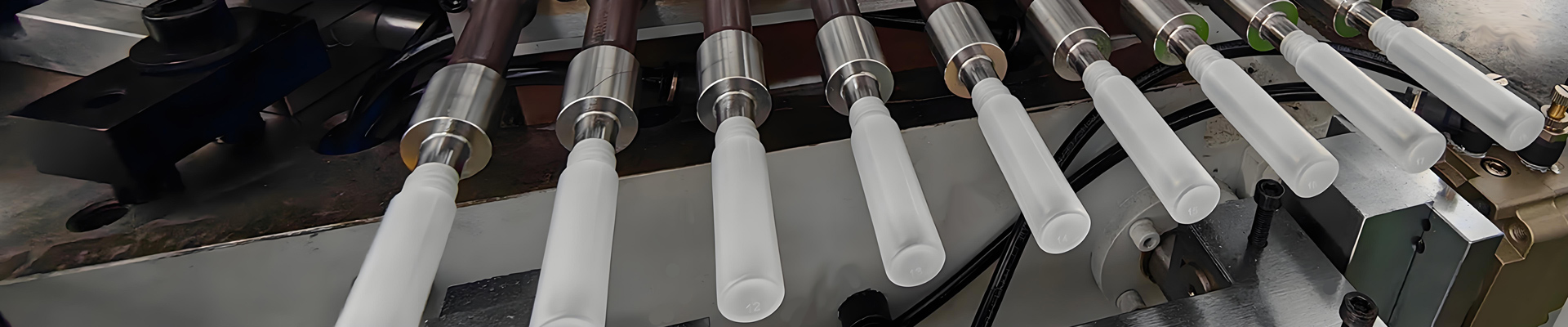
The defining technical feature of IBM is the three-station rotary or indexing platen. In the first station, the plasticizing unit meters and injects melt into a parison cavity mounted on a heated core rod. In the second station, the parison is conditioned and blown to the final shape. In the third station, the finished container is stripped from the core rod and ejected. This one-step method yields containers with tight wall-thickness tolerance, burr-free necks and consistent weight, which are essential for dosing accuracy in pharma and for premium appearance in cosmetics. Compared with two-step processes that first mold a preform and later reheat and blow it, IBM keeps the thermal history simpler and the part count lower.
Why does a full-range platform matter for a modern bottle maker? التغليف programs increasingly require SKU diversity: a pharmaceutical customer may need 10ml oral liquid bottles, 30ml droppers and 100ml sprays under one roof; a cosmetic brand may need 50ml serum bottles, 200ml lotion bottles and 500ml jars in the same campaign. Buying separate machine classes for each size band multiplies floor space, spare-parts inventory and operator training. A full-range IBM platform consolidates these into one coherent system where operators learn a single interface and maintenance follows one spare-parts list. The result is lower total cost of ownership and faster response to changing order books.
The full-range approach also supports lean manufacturing. When demand shifts from small bottles to large jars, the producer reconfigures the existing base module instead of idling a separate machine. Mold sets are standardized to a common platen and core-rod interface, so changeover is a planned logistics task rather than a re-engineering project. For contract packagers and private-label manufacturers who must bid on many different bottle规格 in a single year, this flexibility is often the difference between winning and losing a tender. Aibim designs the IBM series specifically around this flexibility, with enlarged mold setting space and recipe storage that makes every changeover reproducible.
From a quality perspective, full-range IBM production keeps every bottle size on the same validated process logic. Temperature profiles, injection pressure curves and blow timing are stored per mold set, so a 3ml vial and a 1000ml jar are both produced under documented, repeatable parameters rather than ad-hoc setups. This consistency is valued by regulated industries where audit trails and process validation are mandatory. It also simplifies documentation for food-contact and pharmaceutical-grade production, because the same machine family and the same material handling path serve the entire product range.
How the One-Machine Platform Covers 3ml to 1000ml
The Aibim full-range platform is built on three base modules whose volume bands intentionally overlap, so the combined family covers 3ml to 1000ml without gaps. The IBM55 is the entry and small-bottle module, suited to 3ml up to roughly 250ml containers. The IBM65 extends the mid range, comfortable from about 50ml to 500ml. The IBM75 is the large module, covering 250ml through 1000ml wide-mouth jars. Because the bands overlap, a producer can standardize on two modules and still reach the entire spectrum, or deploy all three for maximum parallelism and throughput.
Overlap is deliberate engineering, not a coincidence. If the IBM55 stopped at 200ml and the IBM65 started at 200ml, borderline sizes such as 250ml would force a hard hand-off between machines with different platen geometries. By overlapping, Aibim lets the customer choose the most economical module for borderline volumes based on cavity count and cycle time rather than being forced by a single boundary. For example, 250ml bottles can run on either the IBM65 for higher cavitation or the IBM75 for slower, larger-shot production, giving the plant manager a real optimization decision instead of a constraint.
Coverage is achieved through interchangeable mold sets rather than a single universal mold. A mold set for a 5ml dropper has many small cavities and a fine core-rod pitch; a mold set for a 1000ml jar has one or two large cavities and a heavy core rod. Both mount to the same standardized platen interface on their respective base module. The machine frame, injection unit, plasticizing barrel and hydraulic or hybrid drive remain constant, so the capital invested in the base stays productive across the whole product life cycle of the packaging program.
This modular logic is what lets Aibim describe the offer as “one machine covers all bottle sizes.” The customer is not buying three disconnected machines; they are adopting one platform with a scalable base and a library of mold sets. As the business grows from droppers into jars, the incremental investment is a mold set and, where volume justifies it, an additional base module in the same family. Training, service, spare parts and process knowledge all carry over, which protects the original investment and shortens the learning curve for every new bottle size.
The platform also standardizes the control and recipe layer. Every base module runs the same human-machine interface and the same parameter structure, so an operator trained on the IBM55 can run the IBM75 with minimal additional instruction. Recipes are portable across the family in the form of SD-card parameter files, which removes the risk of “lost setup” when a mold moves between machines or when a second shift takes over. For multi-plant groups, this portability means a validated recipe developed at one site can be deployed at another site running the same Aibim base module, supporting consistent global quality.
Finally, covering the full range on one platform simplifies capacity planning. A plant manager can balance load by shifting mold sets between base modules according to order priority. If the small-bottle line is saturated and the jar line has spare capacity, a mid-size order can be routed to whichever module has the better cavity efficiency. This load-balancing freedom is a direct benefit of the overlapping, standardized full-range design and is difficult to achieve when different bottle sizes are tied to incompatible machine classes.
Aibim IBM Series Product Modules and Specifications
Aibim offers three product modules that together form the full-range platform: the IBM75, the IBM65 and the IBM55 Hybrid Electric. All three are CE certified, all use PREFILL hydraulic technology for at least 35 percent energy savings relative to conventional hydraulic IBM units, and all share the same SD-card recipe storage and single-crossbeam double-pole clamping structure. The differences are in clamping force, shot volume, practical cavity count and the volume band each serves. The specification tables below present the design parameters of each module.
IBM75 Large and Mid-Capacity Module
The IBM75 is the workhorse for 250ml to 1000ml containers, including the wide-mouth jars that are common in food, cosmetic and supplement packaging. Its larger clamping force and shot volume accommodate the heavy parisons required by big bottles while still running multiple smaller cavities where the volume allows. The IBM75 is the natural choice when the product mix leans toward jars and large bottles but still needs to share the platform with smaller sizes through mold change.
IBM65 Mid-Range Module
The IBM65 sits in the heart of the range, from about 50ml to 500ml. It is often the most versatile single module because it serves the bulk of cosmetic bottles, food squeezable containers and medium pharma bottles. With high cavity counts for 50ml to 150ml bottles, the IBM65 delivers strong output for the high-volume mid-size segment that dominates many packaging programs.
IBM55 Hybrid Electric Module
The IBM55 Hybrid Electric adds an electric assist to the hydraulic base, improving repeatability and further reducing energy use for the small-bottle segment from 3ml to 250ml. It is especially attractive for pharmaceutical and precision cosmetic production where shot-to-shot consistency and clean operation are priorities. The hybrid drive keeps the benefits of hydraulic clamping force while trimming idle consumption, a good match for the many-cavity small-bottle runs typical of droppers and vials.
| Specification | IBM75 | IBM65 | IBM55 Hybrid Electric |
|---|---|---|---|
| Clamping force | 75 ton | 65 ton | 55 ton |
| Max shot volume | 600 cc | 350 cc | 160 cc |
| Max cavities (smallest bottle) | up to 6 | up to 8 | up to 12 |
| Cycles per minute | 6 to 10 | 8 to 12 | 10 to 15 |
| Suitable volume range | 250 to 1000 ml | 50 to 500 ml | 3 to 250 ml |
| Drive type | Hydraulic with PREFILL | Hydraulic with PREFILL | Hybrid electric + PREFILL |
| الطاقة saving vs conventional | min 35 percent | min 35 percent | min 35 percent plus electric assist |
| Certification | CE | CE | CE |
The table above shows how the three modules combine into a continuous coverage map. Because the IBM55 reaches 250ml, the IBM65 starts at 50ml and reaches 500ml, and the IBM75 starts at 250ml and reaches 1000ml, every volume from 3ml to 1000ml falls inside at least one module and most volumes fall inside two. This redundancy is what makes the “one machine covers all bottle sizes” claim practical rather than theoretical.
Each module is delivered as a complete three-station line with the plasticizing barrel, injection unit, blow station, ejection station, hydraulic or hybrid power unit, cooling interface and the control cabinet. Aibim’s own CNC center machines the critical structural and moving parts, which helps control fit and finish across the family and keeps dimensional consistency between modules so mold sets behave identically on every base. The new 2022 factory expanded the space and capacity needed to build and test these lines before shipment.
| Module | Representative cavity count | Best-fit bottle examples | Cost level |
|---|---|---|---|
| IBM75 | 1 to 2 for 1000ml; up to 6 for 250ml | Wide-mouth jars, large lotion bottles, supplement jars | High |
| IBM65 | up to 8 for 50 to 150ml | مستحضرات التجميل bottles, food squeezables, pharma mid bottles | Medium |
| IBM55 Hybrid | up to 12 for 3 to 30ml | Droppers, vials, nasal and ocular bottles | Medium |
Quick Mold Changeover and Parameter Management
The commercial value of a full-range platform depends entirely on how fast and how reliably a producer can move between bottle sizes. Aibim addresses this with three coordinated design choices: SD-card parameter storage, a single-crossbeam double-pole clamping structure, and an enlarged mold setting space. Together these turn mold change from a lengthy re-engineering task into a planned, repeatable operation measured in hours rather than days.
SD-card parameter storage is the key to recipe portability. Every mold set carries a digital file that records its complete process recipe: barrel temperatures by zone, injection speed and pressure profiles, holding pressure, core-rod conditioning time, blow pressure and timing, ejection settings and cooling parameters. When a mold is mounted on any IBM base module in the family, the operator loads the SD card and the machine adopts the validated recipe instantly. This eliminates manual re-entry, reduces setup scrap and protects the process knowledge that took time to develop. For regulated production, the SD file also acts as a recorded parameter set that supports validation and audit requirements.
The single-crossbeam double-pole clamping framework simplifies the mechanical interface between the machine and the mold. By using a rigid single crossbeam supported on two poles, the clamping structure stays stable while leaving generous access for mold handling. This geometry reduces the number of alignment references the technician must manage during changeover, which shortens the physical swap and lowers the chance of misalignment that would otherwise cause flash or dimensional defects on the first bottles of a new run.
Enlarged mold setting space is what makes one base module compatible with such different mold sizes. A 1000ml jar mold is physically much larger than a 3ml dropper mold, yet both must fit the same platen envelope on their respective modules. Aibim designs the mold space to accept the largest realistic mold for each module’s volume band, so the producer is never blocked from a size because the platen is too small. This is especially important for wide-mouth jars, which need both large cavity dimensions and room for the core-rod transfer motion.
Changeover procedure in practice is straightforward. The operator ends the current run, retracts the clamp, removes the mold set, mounts the new mold set, loads the SD recipe, performs a short dry and wet check, and resumes production. Because parameters are stored rather than relearned, the first acceptable bottles appear quickly and scrap during startup stays low. The same SD file can be reused weeks later or moved to a sister machine, which is valuable for seasonal products that return to production on a fixed calendar.
| Feature | Benefit for full-range production | Impact on changeover |
|---|---|---|
| SD-card parameter storage | Recipe portability and repeatability across the platform | Instant recipe load, minimal startup scrap |
| Single-crossbeam double-pole clamping | Stable, accessible mold interface | Fewer alignment steps, faster swap |
| Enlarged mold setting space | احصل على عرض أسعارs small dropper and large jar molds | No platen-size limit within the volume band |
Processable Materials and Their Suitability
A full-range IBM platform is only as useful as the materials it can process. Aibim machines handle PE (including HDPE, LDPE and LLDPE), PP, PS, ABS, SAN, TPU, PC and PCTG. This material set spans rigid and flexible, transparent and opaque, commodity and engineering grades, which lets one platform serve pharmaceutical, food, drink and cosmetic programs without switching technology. The table below maps each material to its typical bottle applications and notes the property that makes it suitable.
| Material | Typical bottles in 3 to 1000ml range | Key property | Relative material cost |
|---|---|---|---|
| PE (HDPE, LDPE, LLDPE) | Squeeze bottles, droppers, jars, pharma containers | Chemical resistance, toughness, easy processing | Low |
| PP | Medical bottles, food jars, caps, cosmetic jars | Heat resistance, fatigue resistance, food safety | Low |
| PS | Transparent vials, cosmetic jars, sampling bottles | Clarity, stiffness, low cost | Low |
| ABS | Durable cosmetic bottles, technical containers | Impact strength, surface quality | Medium |
| SAN | Clear pharma and cosmetic bottles | Clarity plus chemical resistance | Medium |
| TPU | Soft-touch cosmetic and flexible bottles | المرونة, soft feel, abrasion resistance | High |
| PC | Premium clear bottles, reusable jars | High impact, high clarity, heat resistance | Very High |
| PCTG | Premium cosmetic and food-contact bottles | Toughness, clarity, low residual | Premium |
Material selection interacts directly with bottle size. Small pharma droppers are frequently made from PP, PE, PS or SAN because these resins mold cleanly at low shot weights and meet food and pharmaceutical contact requirements. Mid-size cosmetic bottles often use PS, SAN, ABS or PCTG where appearance drives the choice, while large jars favor HDPE, PP or PCTG for stiffness and chemical resistance at higher volumes. Because the full-range platform processes all of these materials, a producer can standardize material handling, drying and regrind policy across the whole bottle program rather than maintaining separate lines for different resins.
Optimizing the plasticizing settings per material is part of the recipe stored on the SD card. Each resin has a distinct melt temperature window, shear sensitivity and shrinkage behavior, and the stored recipe captures the barrel profile and injection speed needed for a clean parison. When the same mold set is later produced in a different resin, the operator simply loads the corresponding recipe for that material and mold combination. This disciplined approach avoids the trial-and-error that wastes material and machine time, and it keeps wall thickness and weight consistent batch to batch.
Two engineering notes are worth flagging for buyers. First, hygroscopic materials such as PC, PCTG and some ABS grades should be dried before processing to avoid splay and haze; Aibim can advise on dryer specifications as part of the turnkey setup. Second, regrind from in-house scrap can often be reused at controlled percentages for non-critical bottles, reducing material cost, though regulated pharma and food grades may require virgin resin only. These are standard best practices and are addressed during line commissioning rather than left to the operator to discover.
Application Fields by Bottle Size
The full-range IBM platform serves four primary application fields: pharmaceutics, food, drink and cosmetic. The one-machine coverage is especially powerful in these fields because each field typically spans multiple bottle sizes in a single product line. A pharmaceutical producer may need 10ml oral liquid, 30ml dropper and 100ml spray bottles; a cosmetic brand may need 50ml serum, 200ml lotion and 500ml jar; a food or drink producer may need 100ml sauce, 250ml dressing and 500ml container. The table below maps bottle size bands to typical applications.
| Volume band | Pharmaceutics | الغذاء | المشروبات | مستحضرات التجميل |
|---|---|---|---|---|
| 3 to 30 ml | Droppers, vials, nasal, ocular | Flavor, additive samples | Concentrate shots | Eye serum, sample vials |
| 50 to 250 ml | Oral liquid, spray, shampoo medic | Sauce, honey, dressing | Juice, shake, functional drink | Lotion, shampoo, toner |
| 500 to 1000 ml | Large supplement jars | Wide-mouth jars, bulk containers | Large drink jars, dispensers | Body butter, mask, cream jars |
In pharmaceutics, the finished neck and absence of flash are decisive. Dosing devices such as droppers and sprays require a precise thread and sealing surface, and IBM delivers that directly from the mold. Small volumes also benefit from IBM’s tight weight control, because every milligram of active ingredient cost is meaningful in a 5ml or 10ml bottle. Aibim machines process the PP, PE, PS و SAN grades commonly specified for pharma contact, and validated recipes help customers meet documentation expectations.
In food and drink, the appeal is clean production with no trim scrap and good barrier and chemical resistance from PE and PP. Wide-mouth jars in the 500ml to 1000ml band are popular for honey, sauce, spread and functional drink concentrates, and they run naturally on the IBM75 with its larger shot volume. Because the same platform also makes the small 50ml to 250ml sauce and dressing bottles, a food producer can consolidate a diverse jar and bottle program onto one family of machines.
In cosmetics, appearance and feel dominate. Clear resins such as PS, SAN, PC and PCTG produce the glossy, transparent look that premium brands want, while TPU adds a soft-touch option for flexible tubes and squeezable bottles. The full-range platform lets a cosmetic manufacturer run a 50ml serum, a 200ml lotion and a 500ml jar on coordinated modules, supporting a coherent product family with consistent quality and simplified production planning. The quick mold change means seasonal or limited-edition sizes can be introduced without long machine downtime.
Across all four fields, the platform’s shared process logic helps with certification. الغذاء-contact and pharmaceutical production often require documented material conformity and clean processing; because the same machine family and material path serve the whole range, the validation effort is concentrated rather than repeated for each bottle size. Aibim supports this with CE-certified machines and guidance on material selection suited to the target market’s contact regulations.
How to Select the Right Model for Your Bottle
Selecting the right base module is a function of three variables: the bottle volume you need to produce, the material you plan to use, and the output you must achieve. The selection table below maps common requirements to the recommended Aibim module. The guiding principle is to pick the smallest module that comfortably serves your largest regular volume, then use mold sets for the smaller sizes, because smaller modules deliver higher cavitation and faster cycles for small bottles while the larger module is reserved for jars and big containers.
| Bottle size | Typical material | Recommended module | Notes |
|---|---|---|---|
| 3 to 15 ml | PP, PE, PS, SAN | IBM55 Hybrid Electric | Highest cavitation, best precision |
| 15 to 50 ml | PP, PE, PS, SAN | IBM55 or IBM65 | Choose by required output |
| 50 to 250 ml | PS, SAN, ABS, PCTG | IBM65 | Core cosmetic and pharma band |
| 250 to 500 ml | PE, PP, PC, PCTG | IBM65 or IBM75 | Borderline; pick by cavity efficiency |
| 500 to 1000 ml | HDPE, PP, PCTG | IBM75 | Wide-mouth jars, large containers |
Output planning requires matching cavity count and cycle time to annual volume. A 10ml dropper on the IBM55 with up to 12 cavities and 10 to 15 cycles per minute produces a very high unit count per hour, ideal for high-volume pharma or cosmetic samples. A 1000ml jar on the IBM75 with one or two cavities and 6 to 10 cycles per minute produces far fewer units per hour but each unit is large, so the machine is correctly sized to the physical constraint of the container rather than to a generic speed number. The platform concept means you do not compromise either end of the range with a one-size machine.
Material also influences the choice. Engineering and premium resins such as PC and PCTG require careful drying and stable processing; pairing them with the module whose volume band matches the bottle avoids oversized clamping forces and energy waste. For a mixed program, the practical recommendation is to deploy two modules: an IBM55 or IBM65 for the small-to-mid band and an IBM75 for jars, connected by shared mold-set standards and SD recipes. This two-module footprint already covers the full 3ml to 1000ml range with redundant capacity for maintenance and peak load.
Buyers should also consider future SKUs. A common mistake is to size the machine exactly to today’s largest bottle and then struggle when a new 1000ml jar appears. Because the IBM75 already serves up to 1000ml, selecting the IBM65 as the mid module and keeping the IBM75 available for large jars prevents a future capacity gap. Aibim’s team can analyze your full product roadmap and propose the minimum module set that covers every planned size, which protects capital while preserving growth headroom.
توفير الطاقة, تقنية PREFILL and CE Safety
Operating cost is a decisive factor in any bottle line, and the Aibim full-range platform is engineered for low energy consumption from the ground up. Every module uses PREFILL technology, a unique hydraulic design that combines a prefill valve with a variable displacement pump. In a conventional hydraulic IBM machine, the pump often runs at fixed displacement and dumps excess flow as heat and loss; PREFILL with a variable displacement pump delivers flow on demand and recovers energy during the clamp-open and idle phases. The measured result is a minimum 35 percent reduction in energy consumption compared with conventional hydraulic IBM units, a meaningful saving across thousands of operating hours per year.
The IBM55 Hybrid Electric goes further by adding an electric drive to the hydraulic base. Electric axes improve repeatability for the small, precise shots typical of 3ml to 250ml bottles while the hybrid architecture keeps the strong clamping force of hydraulics. For pharmaceutical and premium cosmetic production where shot-to-shot consistency affects fill accuracy and appearance, the hybrid module is often the best fit even though its acquisition cost sits at a Medium to High level. The energy saving compounds with the PREFILL benefit, lowering the cost per thousand bottles.
CE certification is standard across the IBM family. Safety is built into both the machine and the process. The stripper station is protected by a long-distance digital laser sensor that detects mold and part position to prevent collision and damage, while a light curtain guards the personal safety of operators around the moving area. These features satisfy European machinery safety requirements and are valuable for any export-oriented producer who must demonstrate compliance with recognized safety standards. Because CE is a plain-text certification reference in this article, it appears as text only and is not linked.
Beyond certification, the platform supports safe and clean operation through its one-step, enclosed process. Because IBM produces no flash and no trim, there is less airborne fragment, less handling of sharp scrap and a tidier work cell. The enclosed three-station layout also reduces operator exposure to the hot parison and moving clamp. For food and pharmaceutical sites, this cleaner footprint simplifies hygiene zones and reduces contamination risk compared with processes that generate more post-mold scrap.
| Capability | IBM75 / IBM65 | IBM55 Hybrid Electric |
|---|---|---|
| الطاقة saving vs conventional hydraulic | min 35 percent (PREFILL) | min 35 percent plus electric assist |
| Hydraulic architecture | PREFILL + variable displacement pump | Hybrid electric + PREFILL |
| Mold safety | Laser sensor at stripper station | Laser sensor at stripper station |
| Personnel safety | Light curtain | Light curtain |
| Certification | CE | CE |
When evaluating total cost of ownership, energy is only one line. The combination of low scrap, quick mold change, high cavitation on small bottles and consolidated spare parts across the platform typically outweighs the difference in acquisition cost between a basic single-size machine and a full-range platform. Aibim positions the platform as a long-term production asset, supported by the Wanplas group’s shared quality standards and service commitments rather than as a disposable piece of equipment.
الخدمة, Spare Parts and Factory Support
Buying a full-range platform is a long-term commitment, and Aibim, as a Wanplas factory, backs it with concrete service guarantees rather than vague promises. The cornerstone is the Wanplas brand’s shared spare-parts policy: every customer receives USD 500 free parts per year, which helps control maintenance cost over the machine’s life. Damaged parts within the warranty period are replaced free of charge, reducing the financial risk of unexpected failures during the early years of operation.
Before shipment, each line is built, wired and tested so that it arrives ready for installation and commissioning. Aibim’s engineers support installation, commissioning and operator training, and the SD-recipe system means that once a mold set is qualified, its parameters travel with it, reducing the support burden for future changeovers. Remote monitoring capability lets the technical team check PLC data and process status, which shortens the time to diagnose issues that may arise after the machine is in service at the customer’s plant.
The open-factory policy, also described as an open factory policy, is a distinctive part of the Wanplas group’s approach. Customers are welcome to visit the Aibim factory to inspect manufacturing quality, review the CNC center, and even witness a trial run of their own mold set before purchase. For a full-range platform decision that involves multiple modules and many mold sets, an on-site visit lets the buyer verify build quality, ask engineering questions face to face, and align the proposed configuration with real production conditions. This transparency builds confidence that the platform will perform as specified.
| الخدمة item | What Aibim provides |
|---|---|
| Free spare parts | USD 500 free parts per year |
| Warranty | Free replacement of damaged parts within warranty |
| Commissioning | Engineer support for installation and start-up |
| Training | Operator and maintenance training on the platform |
| Remote support | PLC data check and diagnosis via remote monitoring |
| Factory visit | Open-factory policy, welcome to visit and trial run |
The Wanplas group also shares broader promises that apply to the Aibim platform: a transportation guarantee, a production capacity guarantee and a quality standards guarantee under which quality failure triggers refund and compensation. These group-level commitments sit behind the factory-level service and give buyers an additional layer of assurance when investing in a multi-module full-range line. For producers scaling from a single bottle size to a complete 3ml to 1000ml program, this support structure is as important as the machine specifications themselves.
Spare-parts logistics are simplified by platform standardization. Because the IBM55, IBM65 and IBM75 share structural philosophy, control architecture and many consumable items, a single spare-parts list covers the family. The USD 500 free parts allowance each year offsets routine wear items, and the free warranty replacement covers unexpected failures. This consolidation reduces the inventory a customer must hold and the number of supplier relationships to manage, which is a quiet but real saving in day-to-day operations.
الأسئلة الشائعة
What bottle sizes can a full-range injection blow molding machine produce?
A full-range IBM machine platform covers the complete spectrum from 3ml pharma vials and dropper bottles up to 1000ml wide-mouth jars. The Aibim IBM55, IBM65 and IBM75 models overlap in capacity so one coordinated platform handles 3ml to 1000ml without changing the base machine frame.
How long does a mold change take between different bottle sizes?
Mold changeover is fast because each mold set stores its full processing recipe on an SD card and the clamping system uses a single-crossbeam double-pole structure with enlarged mold space. Most bottle-size changeovers are completed within a short shift using standard tooling, and recipes are reloaded instantly from the SD card.
Which materials are supported by Aibim injection blow molding machines?
The machines process PE (HDPE, LDPE, LLDPE), PP, PS, ABS, SAN, TPU, PC and PCTG. This range covers rigid and flexible, transparent and opaque, food-contact and pharmaceutical-grade bottles across the full 3ml to 1000ml volume span.
What is PREFILL technology and how does it save energy?
PREFILL is a unique hydraulic design that combines a prefill valve with a variable displacement pump. It reduces idle and pressure-build losses so the machine consumes at minimum 35 percent less energy than conventional hydraulic IBM units while maintaining stable clamping and injection pressure.
Is the machine CE certified and what safety features are included?
Yes. The line is CE certified. Safety features include a stripper station with a long-distance digital laser sensor for mold protection and a light curtain for personal safety around the operating area, meeting European machinery safety requirements.
What spare parts and service support does Aibim provide?
Aibim, as a Wanplas factory, provides USD 500 free parts per year, free replacement of damaged parts within warranty, remote monitoring and commissioning support, and an open-factory policy that welcomes customer visits and trial runs before purchase.
Can one machine produce both pharma vials and wide-mouth jars?
Yes. The full-range platform is designed for exactly this flexibility. A 3ml to 30ml pharma dropper uses a small-cavity mold set on the IBM55 or IBM65, while a 500ml to 1000ml jar uses a large-cavity mold set on the IBM75. The same base frame and control platform serve both through quick mold change.
How does injection blow molding compare with extrusion blow molding for small bottles?
For bottles below 1000ml, IBM gives a finished neck finish, no flash, no scrap and tight wall tolerance in a one-step three-station process. Extrusion blow molding is better suited to larger containers. IBM is therefore the preferred choice for pharma, cosmetic and food bottles where finish precision and clean production matter.
الخلاصة
The full-range injection blow molding machine is the most efficient way for a bottle producer to serve the entire 3ml to 1000ml spectrum without fragmenting production across incompatible machine classes. Built on the Aibim IBM55, IBM65 and IBM75 modules, the platform combines one-step three-station IBM quality with interchangeable mold sets, SD-card recipe portability, single-crossbeam double-pole clamping and enlarged mold space for fast changeover. With PREFILL technology delivering at least 35 percent energy saving, CE-certified safety, support for PE, PP, PS, ABS, SAN, TPU, PC and PCTG, and application coverage across pharmaceutics, food, drink and cosmetic fields, the platform turns bottle-size diversity from a burden into a managed, repeatable process.
Aibim, a Wanplas factory with more than 12 years of experience, exports to over 40 countries, operates its own CNC center and runs production from a new 2022 factory with capacity above 100 lines per year. Backed by USD 500 free parts per year, warranty replacement, commissioning support, remote diagnosis and an open-factory invitation, the full-range IBM platform is a confident long-term investment for any packager scaling from tiny droppers to large jars. We invite you to share your bottle sizes, materials and output targets with our engineering team so we can propose the optimal module and mold-set configuration, arrange a factory visit, and run a trial of your own product on the platform before you commit.