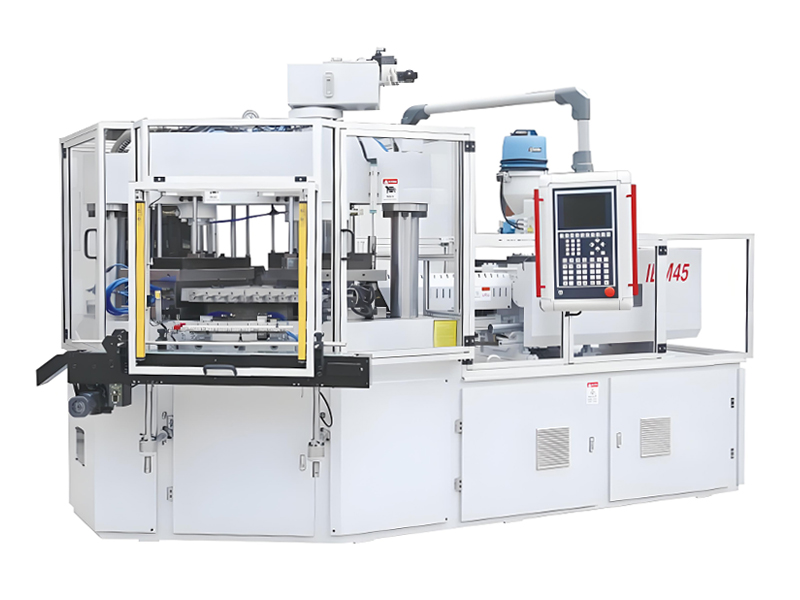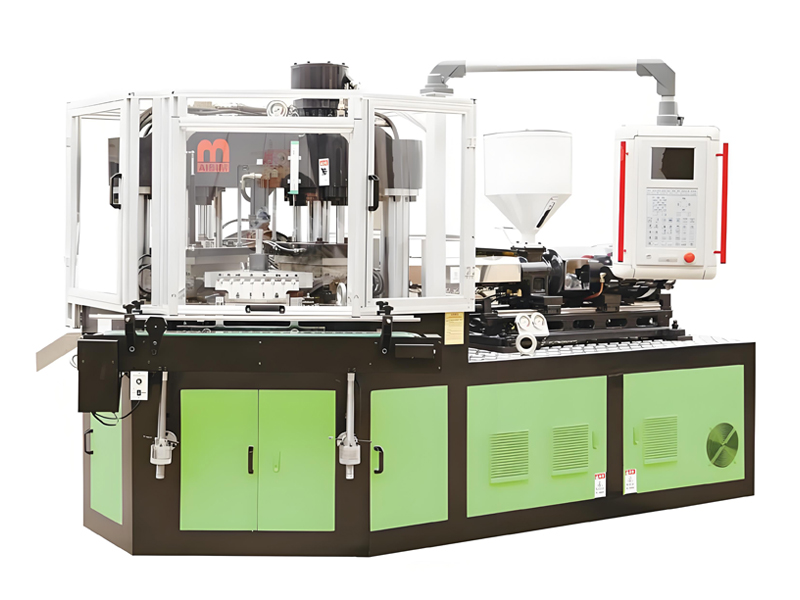
Choosing the right IBM machine for 50-200ml bottle production is one of the most consequential decisions a packaging buyer makes, because the machine class determines neck precision, scrap rate, clean-room fit, and total cost of ownership for years. An injection blow molding (IBM) machine builds small hollow containers in a single enclosed cycle, which is why it has become the default choice for pharmaceutical dropper bottles, oral care samples, cosmetic serums, and precision lab vials in the 50-200ml band. This guide explains the process requirements of that size range, maps each capacity window to a concrete Aibim model, presents real specification tables, and shows how to estimate output before you request a quote. Aibim, a Wanplas factory, has spent more than 12 years building injection blow molding machines and now runs a 100+ lines per year capacity from its own CNC-equipped plant, serving 40+ countries with three-station one-step IBM systems rated from 3ml up to 1000ml. By the end of this article you will know whether the IBM75, IBM65, or IBM55 Hybrid Electric matches your bottle, your material, and your volume target.
Why 50-200ml Bottles Demand الحقن النفخ
The 50-200ml bottle is the workhorse of the personal-care and healthcare shelf. It is large enough to hold a month of lotion yet small enough to travel, and it sits in a size band where the neck finish carries more functional weight than the body. A 50ml serum bottle, a 100ml shampoo bottle, and a 200ml mouthwash bottle all share the same commercial pressure: the closure must seal, the label must sit flat, and the wall must stay uniform. الحقن blow molding answers that pressure better than any other hollow-forming method for this volume class.
الحقن blow molding starts by injecting a preformed parison inside a precision neck cavity, so the thread, the land, and the sealing surface are molded, not pinched. That single fact removes the trimming scrap that other blow methods leave behind and locks neck tolerance to injection-mold standards. For a 50-200ml bottle the neck is the only part the consumer touches and the only part the capper grips, so molding it precisely is the difference between a clean fill line and a leaky return.
The second reason IBM wins this band is the absence of a scrap tail. Extrusion-based methods pinch a parison and leave flash that must be reclaimed or discarded; IBM produces a flash-free bottle with a finished bottom and a defined neck. At 50-200ml, where unit weight is low and cavity count is high, eliminating scrap directly lifts material yield and lowers the cost per finished bottle. The third reason is enclosure: the parison is transferred between stations on a core rod without touching the open air, which suits pharmaceutical and clean cosmetic production far better than an exposed parison path.
Finally, IBM gives tight wall control. A 200ml bottle blown from a precisely injected parison holds a consistent wall from shoulder to base, which stabilizes drop performance and reduces the resin needed to pass a drop test. When resin is the largest variable cost in a 50-200ml program, shaving 5-8 percent off shot weight through better wall control pays back the machine quickly. These four properties, neck precision, no flash, enclosed transfer, and uniform walls, are why buyers evaluating 50-200ml volumes should shortlist an IBM machine first.
How IBM Works: The Three-Station One-Step Process
Understanding the machine is the fastest route to a correct selection. An IBM machine combines injection molding and blow molding into one continuous, three-station, one-step cycle. The three stations are the injection station, the blow station, and the ejection station, and a rotating cantilever or rotary table carries the core rod from one to the next without removing the parison from its mandrel.
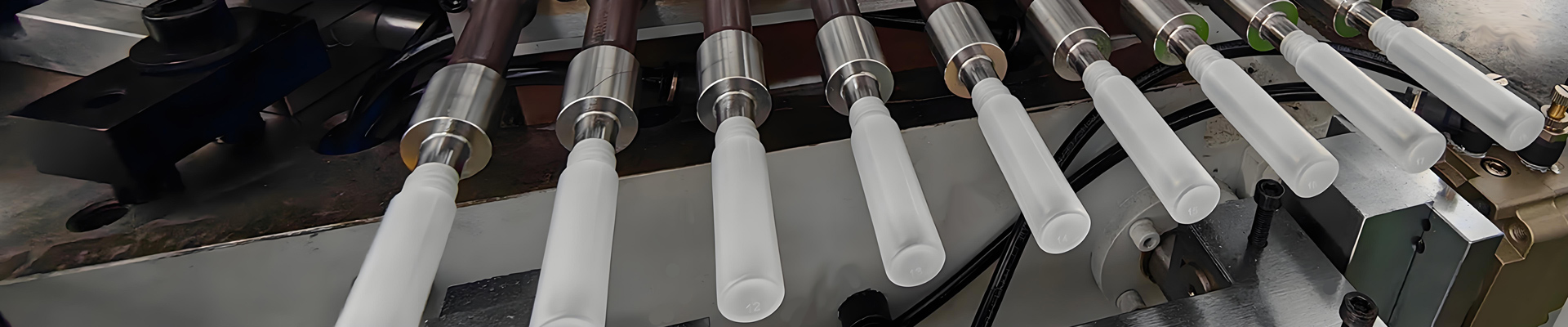
At the injection station, the screw plasticizes the resin and injects it into a neck-and-parison cavity around a core rod. The neck finish, including threads and a tamper band, is formed here with injection accuracy. The core rod, now carrying a hot parison with a finished neck, indexes to the blow station. There, trapped air expands the parison against a cooled blow cavity that defines the body, shoulder, and base. The bottle cools against the mold wall while the neck stays supported on the core rod, so it cannot distort.
At the ejection station, the finished bottle is stripped from the core rod and dropped or conveyed out. Because the bottle never leaves the core rod until it is complete, the neck never sees blow pressure and never deforms, which is the root cause of IBM neck accuracy. The whole sequence is one-step: there is no reheating of a preform and no separate blow machine, so floor space, energy, and handling are all lower than a two-step route.
This architecture shapes every selection decision that follows. The injection clamp must be large enough to fill the parison cavity at the required shot weight, the blow clamp must hold the body cavity firmly, and the plasticizing unit must deliver enough melt for the chosen cavity count within the cycle. For 50-200ml bottles the shot per cavity is modest, so the practical limit is cavity count and cooling time rather than clamp tonnage, and that is why Aibim offers three machine sizes that trade cavities, footprint, and energy.
Process Requirements for 50-200ml Pharmaceutical and مستحضرات التجميل Bottles
Before matching a model, write down the four process requirements that dominate the 50-200ml band. Miss any one and the line will struggle regardless of machine brand. These requirements are the checklist Aibim engineers use when configuring a mold for a new bottle.
The first requirement is neck precision. Pharmaceutical bottles often carry a child-resistant closure or a dropper insert, and cosmetic bottles carry pumps and snap caps. Both need a neck with a controlled thread profile and a flat sealing land. IBM holds the neck to injection tolerances, typically within a fraction of a millimeter, which lets the capper seat without cross-threading. For a 50-200ml bottle, specify the neck finish, the thread standard, and the torque range up front so the neck cavity is cut to match.
The second requirement is a flash-free body. Regulatory and brand teams reject bottles with a visible parting line or a ragged tail because both read as low quality and can trap residue. IBM produces a clean, flash-free side wall and base, which removes a finishing step and supports clean appearance claims. This matters most for transparent cosmetic copolyester bottles where any defect shows through the wall.
The third requirement is a clean, controlled process. Pharmaceutical bottles are filled under hygiene controls, so the machine must keep the parison enclosed and must be cleanable to the plant standard. Aibim machines are built around the three-station one-step path that limits open parison exposure, and the clamping frame and stainless contact points are arranged for routine sanitation. Pair the machine with a controlled environment and the bottle leaves the mold ready for the filling island.
The fourth requirement is consistent wall and weight. A 200ml bottle that varies by 0.2mm around the body will vary in drop performance and in resin use. IBM parison injection gives a known parison weight, so the blown wall stays predictable. Buyers should set a target gram weight per bottle and confirm it during the factory trial, because that single number drives both quality and resin cost across the program life.
Capacity-Based Selection: 50-100, 100-150, and 150-200 ml
The cleanest way to pick a model is to start from the bottle volume, because volume sets the wall area, the gram weight, and therefore the cavity count the machine can cool in one cycle. The table below maps the three sub-bands of 50-200ml to a realistic cavity range and the Aibim model that fits. Cavity counts are typical for standard PP and PE bottles; transparent copolyester may run one or two cavities lower because of longer cooling.
Capacity Window to Cavity and Model
| Capacity window | Typical gram weight (PP/PE) | Recommended cavities | Best-fit Aibim model | Relative equipment cost |
|---|---|---|---|---|
| 50-100 ml | 6-12 g | 8-12 cavities | IBM75 (max output) or IBM65 | Medium to High |
| 100-150 ml | 10-18 g | 6-8 cavities | IBM75 or IBM65 | Medium to High |
| 150-200 ml | 14-24 g | 4-6 cavities | IBM75 (preferred) or IBM65 | Medium to High |
| 50-200 ml pilot / low volume | 6-24 g | 2-6 cavities | IBM55 Hybrid Electric | Low to Medium |
Read the table as a first filter, not a final answer. A 50ml bottle in thin-wall PETG may need fewer cavities than the same volume in thick PE, and a 200ml bottle with a complex shoulder may need a longer cycle that lowers the practical cavity count. The model decision is then confirmed by the output math in the capacity-planning section, where cycle time converts cavities into bottles per hour and bottles per year.
For most 50-200ml programs the IBM75 is the volume leader because its larger plasticizing unit and clamp support the highest cavity counts and the shortest cycles. The IBM65 is the balanced choice when floor space, budget, or a mixed product mix matter more than peak output. The IBM55 Hybrid Electric is the entry and pilot choice for low volumes, clean labs, and boutique cosmetic lines where quiet, efficient operation beats raw throughput.
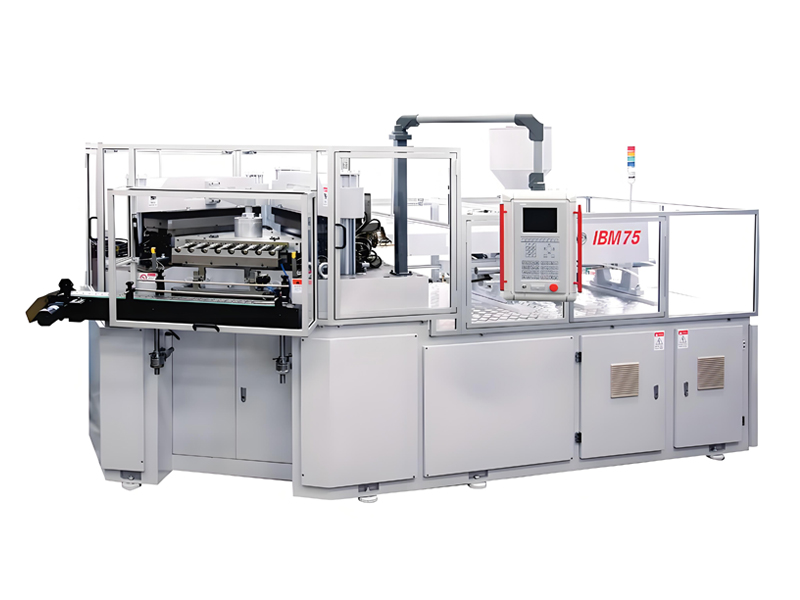
آلة القولبة بالنفخ بالحقن Aibim IBM75
The IBM75 is Aibim’s highest-throughput three-station IBM machine and the natural anchor for 50-200ml volume programs. It carries the largest plasticizing unit in the Aibim lineup, which lets it feed 10-12 cavities on a 50-100ml bottle or 4-6 cavities on a 150-200ml bottle without starving the parison cavity. Its single-crossbeam, double-pole clamping frame gives an enlarged mold-setting space, so mold makers can fit multi-cavity blocks and still leave room for cooling lines and core-rod motion.
Technically the IBM75 uses Aibim’s PREFILL technology and a variable displacement pump in the hydraulic system, which reduces energy draw during the clamp hold phase and contributes to the brand’s minimum 35 percent energy saving versus older hydraulic designs. CE certification covers the stripper station with a long-distance digital laser sensor for mold safety and a light curtain for personal safety, so the operator is protected while the high-speed cycle runs. An SD card stores the full parameter recipe, so a proven bottle setup can be copied to another IBM75 in minutes rather than re-tuned by hand.
The specification table below lists typical reference figures for a standard mold configuration. Final values are confirmed against the bottle drawing and cavity layout during the factory trial, because screw and clamp settings shift slightly with material and wall target.
Aibim مواصفات IBM75
| Parameter | Typical reference value | Notes for 50-200ml use |
|---|---|---|
| الحقن clamp force | 75 ton | Fills parison cavity at required shot weight |
| Blow clamp force | 12 ton | Holds body cavity during expansion |
| Screw diameter | 45 mm | Largest plasticizing capacity in lineup |
| Plasticizing capacity | about 80 kg/h | Supports 10-12 cavities at small volumes |
| Container range | 10-1000 ml | Covers full 50-200ml band |
| Max cavities (50-100ml) | 10-12 | Peak hourly output |
| Max cavities (150-200ml) | 4-6 | Wall and cooling limited |
| Drive | Hydraulic with PREFILL pump | Minimum 35% energy saving |
| Installed power | about 38 kW | Confirm with final mold |
| Safety | CE, laser sensor, light curtain | Stripper and operator protection |
| Recipe storage | SD card | Fast transfer across machines |
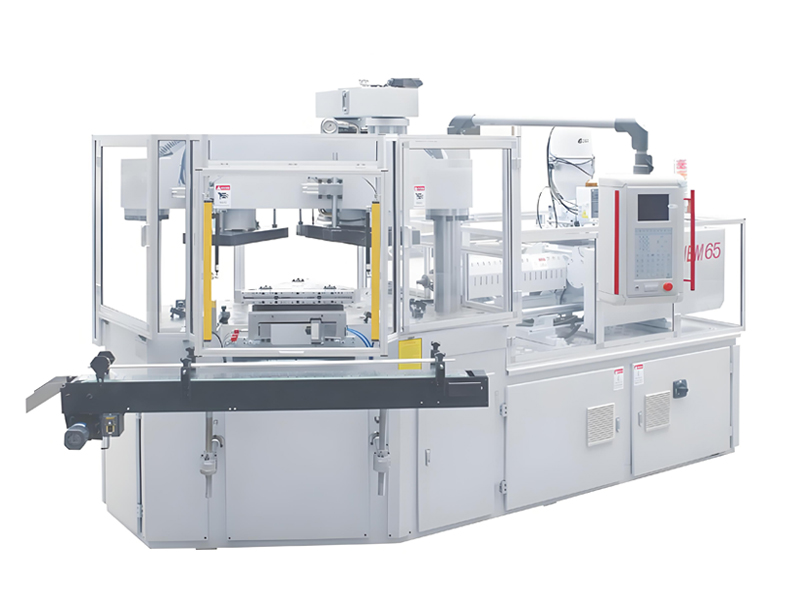
آلة القولبة بالنفخ بالحقن Aibim IBM65
The IBM65 is the balanced workhorse of the Aibim range and the model most 50-200ml buyers choose when they run several bottle sizes or when peak output is not the only goal. It delivers enough plasticizing capacity for 8-10 cavities on a 50-100ml bottle and 4-6 cavities on a 150-200ml bottle, while occupying less floor space and carrying a lower purchase cost than the IBM75. For a plant with a mixed cosmetic lineup, the IBM65 lets one machine serve serums, lotions, and samples by swapping mold blocks.
Like the IBM75, the IBM65 uses the three-station one-step process, the PREFILL hydraulic technology, the CE safety package, and SD-card recipe storage. It keeps the single-crossbeam double-pole frame, so mold-setting space stays generous even at this smaller class. The energy saving floor of 35 percent versus conventional hydraulic machines still applies, which keeps utility cost predictable across a multi-shift schedule.
The IBM65 is also the safer first IBM purchase for a team moving from another blow method, because its cavity counts and cycle times are easy to validate on a short trial and its mold cost per cavity is lower than the IBM75. When volume grows, the same bottle recipe can be ported to an IBM75 by copying the SD card, protecting the original development work.
Aibim مواصفات IBM65
| Parameter | Typical reference value | Notes for 50-200ml use |
|---|---|---|
| الحقن clamp force | 65 ton | Covers mid-range shot weights |
| Blow clamp force | 10 ton | Stable body formation |
| Screw diameter | 40 mm | Balanced melt delivery |
| Plasticizing capacity | about 60 kg/h | Good for 6-10 cavities |
| Container range | 5-500 ml | Strong fit for 50-200ml |
| Max cavities (50-100ml) | 8-10 | High output at lower cost |
| Max cavities (150-200ml) | 4-6 | Comparable to IBM75 here |
| Drive | Hydraulic with PREFILL pump | Minimum 35% energy saving |
| Installed power | about 30 kW | Confirm with final mold |
| Safety | CE, laser sensor, light curtain | Same package as IBM75 |
| Recipe storage | SD card | Portable to IBM75 |
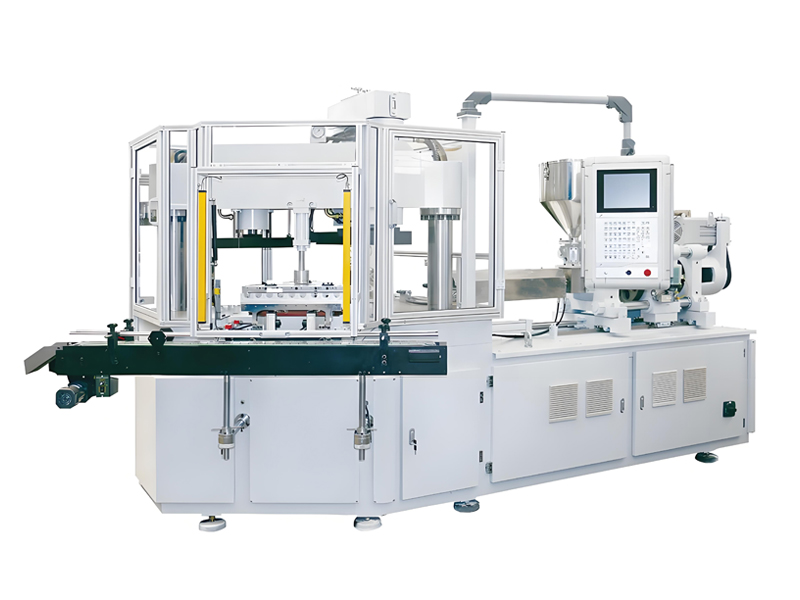
آلة القولبة بالنفخ بالحقن الهجينة الكهربائية Aibim IBM55
The IBM55 Hybrid Electric is the entry point to the Aibim range and the right answer for pilot lines, laboratories, and boutique cosmetic houses that need a clean, quiet 50-200ml bottle without the throughput of a high-cavity line. It pairs servo-driven motions with a hydraulic clamp, which cuts energy use and noise while keeping the purchase cost below a fully electric unit. For low-to-medium volume the hybrid design removes the case for a larger machine and fits a smaller footprint.
The IBM55 still runs the three-station one-step IBM process, so it keeps the neck precision and flash-free body that define the method. It suits 2-6 cavities across the 50-200ml band, which is enough for sample runs, clinical batches, and regional cosmetic launches. Because it is quiet and dry, it is often placed close to filling and inspection rather than in a separate molding hall, shortening the material path and simplifying quality control.
Buyers use the IBM55 to validate a new bottle before scaling. Once the neck, wall, and gram weight are proven, the recipe moves to an IBM65 or IBM75 by SD card, so the pilot investment is not wasted. The hybrid drive also makes it attractive where power supply is limited or where the plant targets a lower carbon footprint for premium green packaging.
Aibim IBM55 Hybrid Electric Specification
| Parameter | Typical reference value | Notes for 50-200ml use |
|---|---|---|
| الحقن clamp force | 55 ton | Entry-class shot weight |
| Blow clamp force | 7 ton | Adequate for small bodies |
| Screw diameter | 35 mm | Compact plasticizing unit |
| Plasticizing capacity | about 45 kg/h | For 2-6 cavities |
| Container range | 3-200 ml | Covers 50-200ml low end |
| Max cavities (50-100ml) | 4-6 | Pilot and low volume |
| Max cavities (150-200ml) | 2-4 | Sample and clinical batches |
| Drive | Hybrid electric (servo + hydraulic) | Low noise, lower energy |
| Installed power | about 22 kW | Smallest in lineup |
| Safety | CE, laser sensor, light curtain | Full safety package |
| Recipe storage | SD card | Scales to IBM65/IBM75 |
Material Compatibility: PP, PE, and Transparent Copolyester
Material choice changes the selection because each resin plasticizes, cools, and conforms differently in the IBM cavity. Aibim machines process PE (HDPE, LDPE, LLDPE), PP, PS, ABS, SAN, TPU, PC, and transparent copolyester in the PCTG and PETG family. For 50-200ml pharmaceutical and cosmetic bottles the three most common picks are PP, PE, and a clear copolyester, and each carries a different set of rules.
البولي بروبيلين is the default for cosmetic bottles and many pharmaceutical containers because it is light, chemically tolerant, and easy to process. PP flows well, releases cleanly from the core rod, and holds a sharp neck. It needs modest drying and runs at a melt temperature around 200-260 degrees Celsius depending on the grade. For a 50-200ml bottle, PP gives the best balance of cost, weight, and surface finish, which is why most standard serum and lotion bottles use it.
Polyethylene, especially HDPE, is chosen when chemical resistance and squeezability lead. HDPE is the classic pharmaceutical tablet bottle resin and is also used for thicker cosmetic jars and tubes. It has a lower processing temperature than PP and a slightly higher shrinkage, so the mold must allow for recovery after demolding. PE is forgiving on the IBM process and supports high cavity counts, which keeps unit cost low on volume programs.
Transparent copolyester, the PCTG and PETG family, is the premium choice for clear cosmetic bottles that must show the product. These resins need thorough drying before plasticizing to keep moisture from causing splay, and they run at a tighter melt window than polyolefins. The reward is glass-like clarity and gloss with the impact resistance of plastic. Because cooling is slower for a clear amorphous wall, expect one or two fewer cavities than the same volume in PP or PE, and plan the cycle accordingly.
The material table below summarizes the fit for the 50-200ml band. Treat the figures as typical ranges; the final grade is selected with the filler’s regulatory and appearance requirements, and the mold is tuned during the trial to lock wall and weight.
Material Fit for 50-200ml IBM Bottles
| Material | Clarity | Chemical resistance | Drying need | Typical use | Relative resin cost |
|---|---|---|---|---|---|
| PP | Translucent to opaque | Good | Low | Serum, lotion, shampoo | Low |
| PE (HDPE) | Opaque | Very good | Low | Tablet bottle, thick jar | Low |
| PCTG / PETG | Clear | Good | High | Premium cosmetic bottle | Medium to High |
| PS | Clear to glossy | Moderate | Low | Sample, display vial | Low |
| PC | Clear, tough | Good | High | Reusable premium bottle | High |
One caution worth stating plainly: the copolyester and PC grades must be dried to a low moisture level before plasticizing, or the bottle wall will show silver streaks and lose clarity. Aibim lays out the drying and barrel temperature profile during commissioning, and the SD-card recipe stores it so the next run repeats the same condition. This is the kind of process detail that separates a clean cosmetic bottle from a rejected batch.
Output Estimation and Capacity Planning
Output is the number that decides payback, so estimate it before choosing cavities. The formula is simple: bottles per hour equals cavities multiplied by 3600 divided by the cycle time in seconds. Cycle time for a 50-200ml IBM bottle typically runs 11-16 seconds, set by cooling rather than injection. Larger volume and thicker wall need longer cooling, so the 150-200ml band sits at the slow end.
The table below applies the formula to representative configurations on the IBM75 and IBM65. Annual output assumes 6,000 operating hours per year, which is a common planning figure after two shifts, weekends, and scheduled maintenance. Replace the 6,000 with your own operating hours to match the plant. The point is not the exact number but the ranking: higher cavities and shorter cycles on the IBM75 win volume, while the IBM65 wins on flexibility and cost.
Representative Output by Capacity and Model
| Capacity | Model | Cavities | Cycle (s) | Bottles/hour | Bottles/year (6000 h) |
|---|---|---|---|---|---|
| 50-100 ml | IBM75 | 10 | 11 | about 3,270 | about 19.6 million |
| 100-150 ml | IBM75 | 8 | 13 | about 2,215 | about 13.3 million |
| 150-200 ml | IBM75 | 6 | 15 | about 1,440 | about 8.6 million |
| 50-100 ml | IBM65 | 8 | 11 | about 2,618 | about 15.7 million |
| 100-150 ml | IBM65 | 6 | 13 | about 1,661 | about 10.0 million |
| 150-200 ml | IBM65 | 4 | 15 | about 960 | about 5.8 million |
| 50-200 ml | IBM55 Hybrid | 4 | 14 | about 1,030 | about 6.2 million |
Use these numbers to size the line against demand. If the annual need is 8 million 150-200ml bottles, a single IBM75 at 8.6 million covers it with margin; if demand is 20 million 50-100ml bottles, one IBM75 at 19.6 million is tight and a second cavity block or a second machine should be planned. The output math also exposes the resin saving: at 19.6 million bottles a year, a 0.1 gram wall reduction saves close to 2 tonnes of resin, which often exceeds the energy saving from the PREFILL pump. Wall control and output planning must be done together.
توصية اختيار الطراز Table
The recommendation table below turns the earlier sections into a direct lookup. Start from the row that matches your bottle volume, annual volume, and material, then read the recommended Aibim model and the reason. This is the same logic Aibim applies during a configuration call, simplified for a first pass.
Requirement to Model Recommendation
| Your requirement | Recommended model | Why |
|---|---|---|
| 50-100ml, over 15M bottles/year | IBM75 | Highest cavity count and shortest cycle for peak output |
| 50-100ml, 5-15M bottles/year | IBM65 | Lower cost, still high cavity count |
| 100-150ml, over 12M bottles/year | IBM75 | 8 cavities at 13s meets volume with margin |
| 100-150ml, under 12M bottles/year | IBM65 | Balanced cost and output |
| 150-200ml, over 8M bottles/year | IBM75 | 6 cavities at 15s covers demand |
| 150-200ml, under 8M bottles/year | IBM65 | 4 cavities sufficient, lower investment |
| Pilot, clinical, or boutique run | IBM55 Hybrid Electric | Low volume, clean, quiet, scalable recipe |
| Clear copolyester bottle, any volume | IBM75 or IBM65 | Strong cooling and drying control for clarity |
If your demand spans two rows, choose the model for the larger volume and confirm the smaller bottle runs on the same machine with a second mold block. Because all three Aibim models share the SD-card recipe system and the same three-station architecture, moving a proven bottle between machines is a configuration task, not a redevelopment. That shared platform is what lets a buyer start on the IBM55 and grow into the IBM75 without losing the original mold investment.
Flash-Free Advantage and Clean Production
A direct technology comparison helps justify IBM against other hollow-forming methods for the 50-200ml band. The table below compares injection blow molding with extrusion blow molding on the points that matter to pharmaceutical and cosmetic buyers. This is a technology-to-technology comparison; the decision should rest on the process properties, not on any supplier name.
IBM Versus Extrusion النفخ for 50-200ml
| Property | الحقن blow molding | Extrusion blow molding |
|---|---|---|
| Neck precision | الحقن-standard, very tight | Pinched, wider tolerance |
| Flash and scrap | None, flash-free | Flash tail, reclaim needed |
| Wall uniformity | High, parison injected | Variable along parison |
| Parison exposure | Enclosed on core rod | Open before transfer |
| Material yield | High | Lower with scrap |
| Best volume band | Small to mid (3-1000ml) | Mid to large |
| Relative equipment cost | Medium to High | Low to Medium |
For the 50-200ml pharmaceutical and cosmetic bottle the comparison is decisive on neck precision and scrap. A flash-free bottle also simplifies the downstream line: there is no flash to trim, no regrind to manage, and no trim dust near the filling island. That cleanliness is a quiet but real contributor to lower rejection rates at the inspection station. The trade-off is equipment cost, which is why Aibim offers three machine sizes so the buyer pays only for the throughput the program needs.
Clean production extends beyond the bottle. The IBM process runs without hydraulic oil near the parison path on the hybrid model, and the enclosed transfer reduces airborne fiber and particle contact versus an open parison. When the plant maps the bottle to a controlled environment, the machine becomes a clean link in a clean chain rather than a source of contamination. This is the argument Aibim makes most often to pharmaceutical teams evaluating the method.
الخدمة والدعم
Buying the machine is the start; running it for years is the test. Aibim ships every IBM machine under the Wanplas group service policy, which is shared across the Wanplas network of specialized factories. The policy is built around four promises: free parts, transport guarantee, production capacity guarantee, and quality standards guarantee with refund plus compensation if quality fails to meet the agreed specification.
The most concrete promise is USD 500 free spare parts every year for the life of the standard support term, which covers wear items such as seals, heaters, and sensor components without a separate purchase order. Damaged parts within warranty are replaced free of charge. Beyond parts, Aibim provides on-site installation and commissioning by engineers who set the machine, dry the resin, tune the barrel profile, and run the first accepted bottles with your team present. Operator training covers mold changeover, recipe loading from the SD card, and daily sanitation so the plant is independent after handover.
Remote monitoring lets the Aibim engineering team read PLC data and spot abnormal trends before they become downtime, and the open-factory policy welcomes buyers to audit production and witness the trial run before the machine leaves the plant. The new factory purchased in 2022 and the own CNC center mean core parts are made in-house, which shortens lead time on replacements and keeps the spare-parts promise realistic. For a 50-200ml program where a stopped line means missed fill slots, that support structure is as important as the spec sheet.
التطبيقات Across Pharmaceutical and مستحضرات التجميل Lines
The 50-200ml bottle is where Aibim machines earn their place on the production floor. In pharmaceuticals the band covers oral liquid bottles, tablet and capsule bottles, eye-drop and ear-drop bottles, and single-dose sample vials. These products demand a precise neck for child-resistant and tamper-evident closures, a clean flash-free body for inspection, and a stable wall for drop safety during transport. IBM meets all three, which is why Aibim lists pharmaceutics as a primary application field alongside food, drink, and cosmetic.
In cosmetics the same volumes appear as serums, essences, lotions, shampoos, conditioners, and travel sizes. Here the neck must accept a pump or a snap cap, the wall must look uniform through a clear or tinted resin, and the surface must read premium on the shelf. Transparent copolyester bottles from the PCTG and PETG family are especially strong in this segment because IBM delivers the clarity without a trimming line. Aibim machines process the full resin set needed for these lines, from low-cost PP and PE to clear copolyester and tough PC, so one machine family serves both pharmaceutical and cosmetic programs.
الغذاء and drink uses of the 50-200ml band include sauce, honey, and concentrated beverage samples, where chemical resistance and a clean seal matter. Because the Aibim process is dry and enclosed, these bottles leave the mold ready for the filling island without a trimming step that could introduce foreign material. The three-station one-step design keeps the parison on the core rod from injection through blow to ejection, which is the structural reason the bottle stays clean and consistent across long runs.
For a plant running both pharmaceutical and cosmetic bottles, the shared Aibim platform is a logistics advantage: one spare-parts list, one recipe system, and one service team cover the whole 50-200ml portfolio. That consolidation lowers training overhead and lets the same operators move between lines, which is exactly the operating model the Wanplas group promotes across its specialized factories.
الأسئلة الشائعة
What is the difference between IBM and extrusion blow molding for small bottles?
الحقن blow molding forms the parison by injection into a precision neck mold, then blows it in a second station. The result is a flash-free bottle with a tight neck tolerance and no scrap tail. Extrusion blow molding extrudes a parison that must be pinched and trimmed, leaving flash and a wider neck tolerance. For 50-200ml pharmaceutical and cosmetic bottles where neck precision and clean appearance matter, IBM is the stronger choice.
Which Aibim model should I choose for 50-100ml bottles?
For 50-100ml bottles the Aibim IBM75 and IBM65 both support high cavity counts. The IBM75 reaches up to 10-12 cavities in this range for maximum hourly output, while the IBM65 typically runs 8-10 cavities at a lower equipment cost. Choose IBM75 when annual volume is high and IBM65 when space and budget are tighter.
Can Aibim IBM machines run PETG or PCTG for clear cosmetic bottles?
Yes. Aibim IBM machines process transparent copolyesters in the PCTG and PETG family, along with PP, PE, PS, ABS, SAN, TPU, and PC. Drying is required for the copolyester and PC grades to control moisture before plasticizing. A dry, controlled process gives clear, glossy walls acceptable for premium cosmetic packaging.
How is the output of a 50-200ml IBM line calculated?
Output equals cavities multiplied by 3600 divided by the cycle time in seconds. A 50-100ml bottle at 10 cavities and an 11-second cycle yields roughly 3,270 bottles per hour. Annual output depends on operating hours; most plants plan around 6,000 operating hours per year after shifts and maintenance.
Do Aibim IBM machines need a clean room for pharmaceutical bottles?
The machine itself is dry and flash-free, but pharmaceutical bottles must be filled and finished under controlled conditions. Aibim machines are built to integrate with clean-room layouts, and the three-station one-step process keeps the parison enclosed, reducing contamination risk versus open parison transfer.
What does the Wanplas group service package include?
Every Aibim machine ships under the Wanplas group policy that includes USD 500 free spare parts every year, free replacement of damaged parts within warranty, on-site installation and commissioning, operator training, remote monitoring support, and an open-factory visit policy so buyers can audit production before delivery.
Why does the IBM55 use a hybrid electric design?
The IBM55 Hybrid Electric combines servo-driven motions with a hydraulic clamp to reduce energy use and noise while keeping purchase cost below a fully electric unit. It suits low-to-medium volume 50-200ml lines in laboratories, pilot plants, and boutique cosmetic houses where clean, quiet operation matters.
How long does mold changeover take between bottle sizes?
Aibim machines use a single-crossbeam double-pole clamping frame with enlarged mold-setting space and SD-card recipe storage, so parameters transfer quickly between molds. A trained crew can complete a size changeover within a few hours, and modular mold blocks shorten the physical swap.
الخلاصة
The right IBM machine for 50-200ml bottle production is decided by volume first and material second. For high-volume 50-100ml and 150-200ml programs the Aibim IBM75 delivers the cavity count and cooling to hit millions of bottles per year; for balanced mixed-size lines the Aibim IBM65 offers the same three-station one-step quality at a lower cost; and for pilot, clinical, or boutique runs the Aibim IBM55 Hybrid Electric brings clean, quiet operation that scales into the larger models through the shared SD-card recipe system. All three mold the neck by injection for tight tolerance, produce a flash-free body, and keep the parison enclosed for clean transfer, which is why IBM leads the pharmaceutical and cosmetic 50-200ml band.
Send your bottle drawing, target gram weight, annual volume, and resin to the Aibim team for a tailored configuration and a factory trial. You are welcome to visit the plant, witness the machine run your bottle, and confirm the neck, wall, and output before delivery. With the Wanplas group service promise behind every line, including USD 500 free spare parts every year and on-site commissioning, the selection is the start of a supported partnership rather than a one-time purchase.