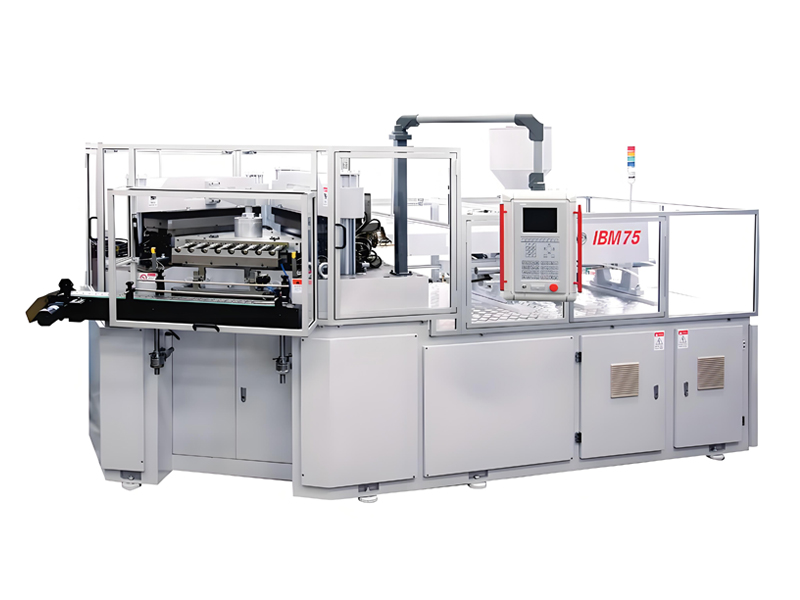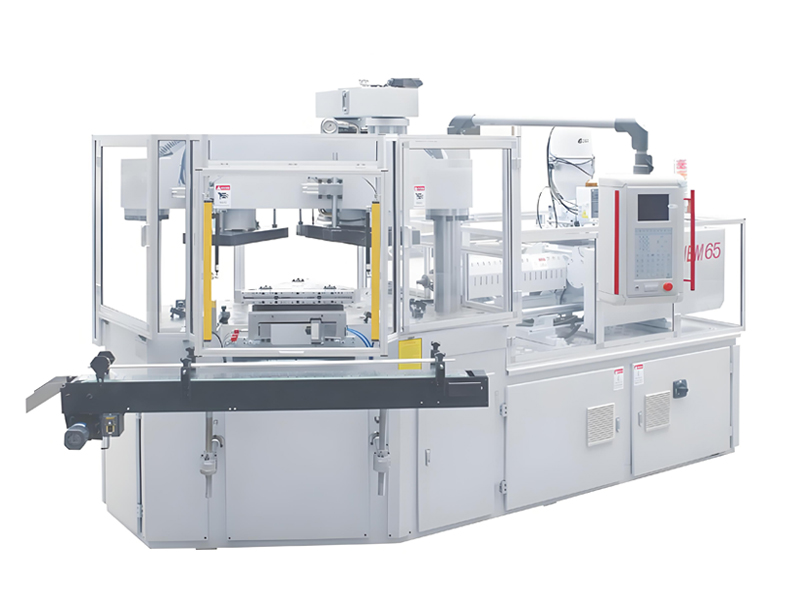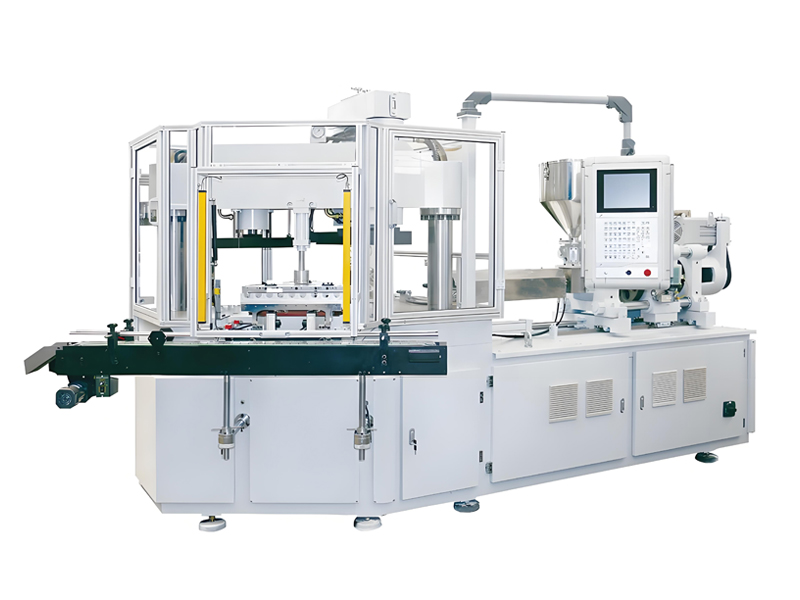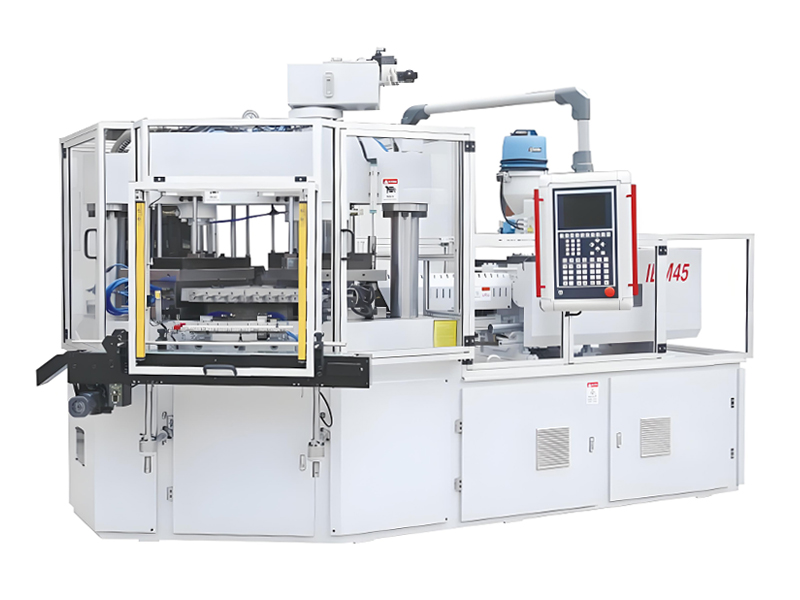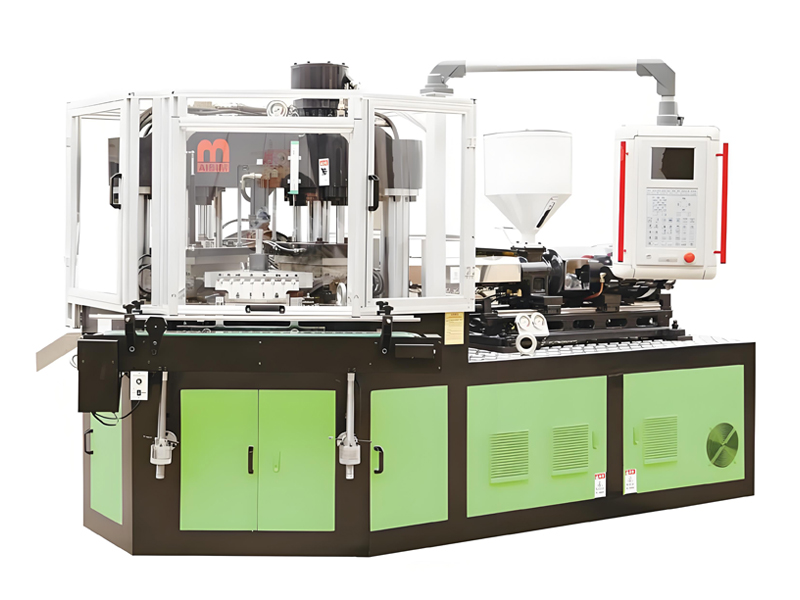
When specifying an injection blow molding machine for small precision bottles, one decision shapes the entire lifetime budget: the drive architecture. A full hydraulic IBM machine uses hydraulic power for clamping, injection, and blow, while a hybrid electric IBM machine pairs servo-electric motion for indexing and auxiliary axes with hydraulic power for the high-force steps. The choice is not simply electric versus hydraulic; it is a trade-off between acquisition cost, energy use, maintenance, cycle control, and residual value. Aibim, a Wanplas factory, builds both philosophies, including the full hydraulic IBM75 and IBM65 and the IBM55 Hybrid Electric, so this guide compares them honestly using relative cost labels rather than prices, helping you build a defensible total cost of ownership case for your 2026 capital plan. Benchmark suppliers such as جومار, Nissei ASB, and Milacron are referenced where useful to contextualize Aibim’s position in the global IBM market.
ماذا تعني آلات IBM الهجينة الكهربائية والهيدروليكية الكاملة
A full hydraulic IBM machine generates all major motions from a hydraulic power unit: the clamp, the preform injection, the core-rod transfer, and the blow. Hydraulics are robust, scalable in force, and well understood, which is why many mature IBM lines still run hydraulic clamps. The downside is continuous oil pumping, heat generation, and energy draw even when the machine is between high-force events.
A hybrid electric IBM machine keeps hydraulics where force density matters but replaces intermittent motions with servo-electric drives. On Aibim’s IBM55 Hybrid Electric, the variable displacement pump and PREFILL technology handle pressurization efficiently, while servo-electric control improves repeatability on indexing and auxiliary movement. The result is a machine that behaves more like an all-electric unit for control and energy, yet retains hydraulic muscle for the molding step.
Wanplas, the parent brand, positions Aibim as its dedicated injection blow molding factory, so the hybrid-versus-hydraulic question is resolved inside one product roadmap rather than across competing brands. Market context in 2026 reinforces the hybrid trend. Rising energy costs and corporate carbon targets push buyers to question the continuous pump losses of fixed hydraulic machines, while labor shortages raise the value of stable, low-scrap processes that need less intervention. At the same time, many established lines still run full hydraulic IBM machines reliably, and their lower purchase price remains attractive for secondary or low-duty applications. The pragmatic answer is a mixed fleet: hybrid electric for high-runner precision bottles where energy and scrap dominate, and full hydraulic for intermittent or budget-sensitive jobs. Aibim supports both from one platform, so a buyer can standardize training and spares while still optimizing each line. Suppliers such as جومار, Nissei ASB, and Milacron show the same divergence in the broader market, confirming that drive architecture is now a primary selection criterion rather than a minor detail in capital planning. That makes Aibim a useful reference point because the same three-station one-step platform is offered in both drive styles, and the comparison becomes a like-for-like study of drive architecture rather than a comparison of unrelated machines. For buyers, this reduces risk because training, tooling concepts, and spare-part strategy stay consistent across the two choices.
كيف تعمل كل بنية محرك
التدفق الهيدروليكي الكامل
In a full hydraulic IBM machine, an electric motor drives a pump that pressurizes hydraulic oil. Directional and proportional valves route oil to cylinders that close the clamp, inject the preform, index the core rod, and actuate blow. A relief and cooling loop manage pressure and temperature. Because oil is always available, the machine is forgiving and simple to service, but the pump often runs near continuous load, which is the main source of energy and heat cost.
التدفق الكهربائي الهجين
In a hybrid electric IBM machine, servo motors drive the motions that benefit most from precise positioning, such as core-rod indexing and auxiliary axes, while a smart hydraulic unit with variable displacement pump and PREFILL technology supplies only the oil demanded by the current step. Aibim’s design reduces deadhead losses common to fixed-pump hydraulics, supporting a minimum 35 percent energy saving. The operator gets electric-level repeatability with hydraulic-level force where it counts, and the SD card parameter storage lets proven settings be saved and reloaded across machines for fast, consistent changeovers. Cooling water is the silent partner in this comparison. Full hydraulic machines generate substantial oil heat that must be removed by plant water or a chiller, and that cooling load is itself an energy cost that rarely appears on the machine quote. Hybrid machines produce far less oil heat, so the associated cooling demand drops, lowering both utility spend and the size of cooling infrastructure required. In hot climates or water-constrained sites, this difference can be decisive for uptime and operating cost. Aibim’s on-demand hydraulics therefore help not only the electricity meter but also the cooling system, a benefit that compounds across a multi-machine line. When evaluating bids, buyers should ask for cooling capacity and expected heat rejection alongside power draw, because the true energy footprint of a full hydraulic IBM machine is larger than its motor rating suggests once the chiller is included.
المزايا والعيوب وملف التشغيل
The strengths of hybrid electric IBM machines are concentrated in efficiency, control, and floor environment, while the weaknesses are higher acquisition and somewhat greater electronic complexity. Hybrid pros include lower energy use from servo and on-demand hydraulics, better repeatability from electric indexing, a cleaner floor with less oil heat and mist, a smaller utility footprint with reduced chiller and compressor burden, and stronger residual value thanks to modern drive architecture. Hybrid cons include higher acquisition with the purchase label at High or Premium, more electronics requiring servo and controller skills, and costlier servo spare parts to stock.
Full hydraulic IBM machines remain popular for their simplicity, force density, and lower entry cost, but they carry ongoing energy and oil-related expenses. Hydraulic pros include lower acquisition with the purchase label at Low to Medium, easy high force that scales with cylinder size, familiar service because most teams know hydraulics, and robustness under shock and sustained clamping. Hydraulic cons include higher energy use from continuous pumping and fixed-pump losses, oil management through cooling, filtration, leaks, and periodic changes, more heat and noise on the floor, and lower residual value as drive architecture ages. In short, hydraulic wins the first line of the budget while hybrid wins the operating lines, and the right choice depends on how those lines are weighted for your plant. Reading the two lists side by side reveals a clear pattern: hydraulic is a capital-light, mechanically familiar choice, while hybrid is a capital-heavy, efficiency-led choice. A custom molder serving many short-run SKUs may prefer hydraulic because the lower machine price and universal hydraulic skill base protect margin on infrequent jobs. A branded manufacturer running a hero SKU continuously for years will usually recover the hybrid premium through energy, cooling, and scrap savings long before the machine is depreciated. The crossover point depends on runtime; as a rule of thumb, the more shifts per day and the higher the energy tariff, the more hybrid electric wins. Neither list is universally correct, which is why the total cost of ownership model in the next section matters more than any single specification on a datasheet, and why a buyer should resist choosing on acquisition price alone.
- يستهدف IBM55 Hybrid Electric من Aibim توفير طاقة لا يقل عن 35 بالمائة مقارنة بماكينات IBM الهيدروليكية التقليدية ذات المضخة الثابتة.
- تخدم منصات IBM من Aibim الحاويات من 3 مل إلى 1000 مل بعملية بخطوة واحدة وثلاث محطات.
- تدير Aibim مركز CNC خاصًا بها لإنتاج أجزاء الماكينات وبطاقة سنوية تزيد عن 100 خط.
- بحلول عام 2026، تعمل خطوط Aibim في أكثر من 40 دولة كمصنع Wanplas.
مقارنة التكلفة الإجمالية للملكية
Total cost of ownership for an IBM machine spans acquisition, energy, maintenance, consumables, scrap, floor utilities, and residual value across the asset life. Because exact prices vary by configuration and region, the table below uses relative labels only: Low, Medium, High, Very High, and Premium. Use these labels to score options against your operating profile rather than relying on a single upfront number.
| Cost Element (relative) | Full Hydraulic IBM | Hybrid Electric IBM |
|---|---|---|
| Acquisition cost | Low to Medium | High to Premium |
| الطاقة cost per unit | Medium to High | Low to Medium |
| Hydraulic oil and cooling | Medium to High | Low to Medium |
| Maintenance labor | Medium | Medium |
| Spare parts profile | Low to Medium | Medium to High |
| Scrap and reject cost | Medium | Low to Medium |
| Residual value at trade-in | Low to Medium | Medium to High |
The pattern is clear: full hydraulic wins on the first line of the budget but hybrid electric recovers through the operating lines. For a low-utilization, intermittent plant, the hydraulic savings upfront may dominate. For a high-runner producing millions of precision bottles per year, the hybrid’s energy and scrap advantages compound and often make its lifetime cost the lower of the two. When building the model, weight each label by your annual operating hours and energy tariff, and include the carbon cost if your organization reports emissions, because that further favors the hybrid in continuous operation. A simple weighting exercise makes this concrete. Assign each label a score from one to five and multiply by an importance weight from zero to one based on your plant. If energy and scrap each weigh heavily because you run three shifts, the hybrid’s Low labels there dominate despite its High acquisition label. If acquisition price weighs most because the machine runs only one shift, the hydraulic’s Low to Medium acquisition may win. The method forces honesty about priorities and exposes assumptions such as energy being cheap or scrap never being sold. Buyers should also include residual value, because a hybrid’s Medium to High trade-in value offsets part of its higher purchase, narrowing the apparent gap. Financing interacts with this as well: leasing a higher-priced hybrid converts a large capital outflow into a predictable operating expense justified by the energy saving it produces, and lessors often favor equipment with strong residual value, which further helps the hybrid. Done properly, this relative-label model is defensible to finance teams without disclosing confidential price information.
الطاقة والصيانة وأنماط الأعطال والسلامة
Quantifying the operating differences helps justify the choice with data rather than opinion. The figures below are representative relative ranges for planning and depend on bottle size, cavity count, and plant conditions. Hybrid electric machines cut energy through on-demand hydraulics and servo motion, while full hydraulic machines keep the pump near continuous load and shed excess energy as heat, which then requires cooling energy on top of molding energy.
| Operating Indicator | Full Hydraulic IBM | Hybrid Electric IBM |
|---|---|---|
| Relative energy draw at idle | Medium | Low |
| Relative energy draw at full cycle | High | Medium |
| Oil cooling load | High | Low to Medium |
| Audible noise level | Medium to High | Low to Medium |
| Positioning repeatability | Medium | High |
| Typical payback driver | Low purchase price | الطاقة and scrap savings |
Failure modes also differ by drive. Full hydraulic IBM machines tend to fail around seals, valves, and oil condition; a worn proportional valve can shift injection speed, a leaking cylinder can drop clamp force, and degraded oil raises temperature and accelerates wear. These faults are usually visible to an experienced hydraulic technician. Hybrid electric machines shift risk toward servo components such as amplifier faults, encoder drift, and cable wear, while the hydraulic portion carries the usual oil-related risks on a smaller scale. The advantage is that electric faults often announce themselves through alarms before causing scrap, whereas a slowly degrading hydraulic valve may quietly change part weight. Aibim mitigates downtime with SD card parameter storage so proven settings reload quickly after a repair.
Safety certification is non-negotiable. Aibim machines carry CE certification, and the IBM platforms include a stripper station protected by a long-distance digital laser sensor for mold safety plus a light curtain for personal safety, meeting essential machinery safety requirements for the European market. ISO quality management standards such as ISO 9001 underpin how Aibim documents design, controls suppliers, and manages nonconformities, giving buyers confidence in consistent build quality across the 100 plus lines produced annually. Maintenance strategy should follow the drive. Full hydraulic fleets rely on seals, valves, and oil analysis, and most maintenance teams already carry that competence, so spare coverage is straightforward and local. Hybrid fleets add servo amplifiers, encoders, and controller diagnostics, which demand electrical training and a small inventory of electronic spares, though faults are usually flagged early by alarms. Aibim’s SD card parameter storage reduces one risk for both: when a mold or machine is serviced, its proven process can be reloaded precisely, limiting startup scrap and guesswork. Plants with mixed fleets should cross-train technicians on both hydraulic and servo basics to avoid a single point of failure in the skills matrix, and should plan operator training length accordingly, since electric diagnostics feel different from pressure-gauge hydraulics. Either way, the Wanplas group’s shared service promises, including on-site engineer support and an open factory policy, shorten commissioning and reduce long-term risk for Aibim buyers regardless of drive choice. Training should cover both operation and changeover, because precision bottles often run in short campaigns with frequent mold swaps, and Aibim’s parameter storage reduces startup scrap when a mold returns to service.
المصنعون والاستدامة وإطار القرار
The IBM market spans several established suppliers, and comparing at least three helps anchor expectations. Aibim, a Wanplas factory, offers both full hydraulic (IBM75, IBM65) and hybrid electric (IBM55 Hybrid Electric) three-station one-step machines for 3 ml to 1000 ml bottles. On the global stage, جومار in the الولايات المتحدة, Nissei ASB in Japan, and Milacron with its Uniloy heritage each provide IBM equipment with varying drive strategies and regional service networks. When benchmarking, ask each supplier for energy data at your cycle, not just nameplate ratings, and confirm which motions are electric versus hydraulic. Aibim’s differentiator is the combination of PREFILL hydraulic technology with a variable displacement pump and servo-electric control, plus an own CNC center that keeps critical part quality in-house. The broader Wanplas group, including Apollo for extrusion blow molding, means a buyer can consolidate multiple molding technologies under one brand umbrella. When benchmarking, request a like-for-like energy and cycle dataset rather than comparing nameplate ratings. Ask each supplier for power draw at your actual bottle, cavity count, and resin, and for scrap rate at steady state, because those two numbers drive most of the lifetime cost difference between hybrid and hydraulic. Confirm which motions are servo versus hydraulic, since a machine marketed as electric may still rely on hydraulics for clamp or injection, changing its heat and cooling profile. Review service coverage in your region and the lead time for critical spares, because downtime cost often exceeds the energy saving. Aibim’s advantages to verify include the PREFILL hydraulic system, the own CNC center for critical parts, and the three-station one-step platform shared across drive types. Document the comparison so the final choice is auditable and not based on the most recent sales conversation, and revisit it as volumes and energy prices change through 2026.
Sustainability is an increasingly decisive factor in 2026. Hybrid electric machines cut energy through on-demand hydraulics and servo motion, and Aibim’s PREFILL technology with variable displacement pump pressurizing supports a minimum 35 percent energy saving versus conventional fixed-pump hydraulic IBM machines. Over a year of continuous running, that saving is substantial in both cost and carbon terms. Full hydraulic machines, by contrast, keep the pump near continuous load and require additional cooling energy, making the hydraulic footprint larger per bottle. Both Aibim drive styles share the same three-station one-step, flash-free IBM process, so scrap from flash is already minimal, and the hybrid’s tighter process control can further reduce startup and cavity-variation scrap, lowering resin use and embedded package carbon. When total cost of ownership is expanded to include carbon cost, hybrid electric often strengthens its lead in high-utilization plants. A carbon example illustrates the stakes. If a hybrid electric IBM machine reduces energy per bottle by roughly a third versus a fixed hydraulic unit, and the plant runs hundreds of millions of bottles over the asset life, the avoided electricity translates into a meaningful reduction in reported scope two emissions. For brands with science-based targets or customer-facing sustainability scorecards, that reduction can be as strategically valuable as the direct cost saving, especially as regulators and retailers tighten packaging carbon rules through 2026 and beyond. The flash-free IBM process compounds the benefit by minimizing scrap resin, whose embedded energy is otherwise wasted. Buyers who report environmental metrics should therefore include carbon cost in the total cost of ownership model, because doing so strengthens the case for hybrid electric in exactly the high-volume scenarios where its energy advantage is largest and where the acquisition premium is recovered fastest.
To decide, score your situation against four questions. First, what is your annual operating hours profile? High-runner plants favor hybrid electric because energy and scrap savings accumulate. Second, what is your energy sensitivity? Where power and cooling are expensive, the hybrid’s Low energy label matters more. Third, what is your maintenance capability? If your team is hydraulic-only, a hydraulic machine eases service, though Aibim’s parameter storage and training help either way. Fourth, what is your residual value expectation? If you refresh equipment every few years, the hybrid’s stronger residual value protects capital. A practical rule: choose full hydraulic when acquisition budget is the binding constraint and utilization is moderate; choose hybrid electric when lifetime cost, energy, and precision dominate. For most 2026 buyers scaling small precision bottle output, hybrid electric is the forward-looking default, while hydraulic remains the value choice for secondary or low-duty lines. A typical decision scenario helps close the loop. A contract packer running a hero 15 ml serum bottle across three shifts, with expensive local electricity and a cleanroom requirement, will almost always choose hybrid electric: the Low energy and low scrap labels, plus reduced cooling and cleaner floor, outweigh the High acquisition label over the asset life. A regional brand making a handful of low-volume promotional bottles on one shift may reasonably choose full hydraulic to keep capital low, accepting Medium energy and scrap as acceptable for the volume. The framework is not about which technology is superior in the abstract, but about matching drive architecture to duty cycle, energy context, and quality needs. Because Aibim offers both, the buyer can apply this logic per line and build a balanced, future-proof IBM fleet for 2026 and beyond, revisiting the mix as production scales. Ultimately, the hybrid electric versus full hydraulic decision is less about a universal winner and more about matching the machine to the duty cycle, energy context, and quality expectations of each bottle family. Aibim, a Wanplas factory, makes this easier by offering both drive styles on the same three-station one-step platform, so the buyer is never forced to change brand or tooling philosophy when requirements shift. The discipline that matters most is to model the full lifetime cost with relative labels, validate the assumptions with real energy and scrap data, and review the choice as volumes and energy prices evolve through 2026 and the years that follow.
الأسئلة الشائعة
هل تكلف آلة IBM الكهربائية الهجينة دائمًا أكثر من الآلة الهيدروليكية الكاملة؟
تكلفة اقتناء آلة IBM الهجينة الكهربائية أعلى عادةً، لكن التكلفة الإجمالية للملكية يمكن أن تكون أقل لأن تكاليف الطاقة والتبريد وصيانة الزيت والهالك تُخفض. يعتمد استردادها على ساعات تشغيلك وتعرفة الطاقة ومزيج منتجاتك.
هل IBM الهيدروليكية الكاملة أفضل للإغلاق بوزن عالٍ جدًا؟
تبقى الأنظمة الهيدروليكية الكاملة قوية لواجب الإغلاق الثقيل المستمر لأن القوة الهيدروليكية سهلة التوسع ومتسامحة تحت الحمل المستمر. بالنسبة لمعظم الزجاجات الدقيقة الصغيرة حتى 1000 مل، يوفر النظام المؤازر الكهربائي الهجين قوة كافية مع تحكم أفضل.
أي نظام قيادة (Drive) أكثر هدوءًا ونظافةً في أرضية المصنع؟
الآلات الكهربائية الهجينة أكثر هدوءًا عمومًا وتنتج حرارة وضبابًا أقل في الزيت الهيدروليكي، مما يحسن بيئة العمل ويقلل حمل التبريد. تولد الآلات الهيدروليكية الكاملة حرارة أكبر وتحتاج إلى تبريد وترشيح نشط للزيت.
ما الذي يجعل هجين IBM55 من Aibim مختلفًا؟
Aibim’s IBM55 Hybrid Electric combines servo-electric indexing and auxiliary motion with its PREFILL hydraulic technology and variable displacement pump pressurizing, targeting a minimum 35 percent energy saving versus conventional fixed-pump hydraulic IBM machines while keeping three-station one-step precision.
كيف أقارن التكلفة الإجمالية للملكية (TCO) دون أسعار دقيقة؟
قيّم كل آلة بتسميات نسبية للاقتناء والطاقة والصيانة والتبريد والهالك والقيمة المتبقية، ثم وزنها بساعات تشغيلك السنوية. غالبًا ما يُظهر الطراز الهجين الكهربائي تكلفة عمر أقل في المصانع عالية التشغيل حتى عندما تكون تسمية شرائه أعلى.
ما هي العلامات التجارية العالمية التي يجب أن أقارن بها Aibim؟
إلى جانب Aibim، مصنع تابع لـ Wanplas، قارن مع موردي IBM الراسخين مثل جومار في الولايات المتحدة وNissei ASB في اليابان وMilacron بتراثها Uniloy، مقارنةً بهندسة الدفع وبيانات الطاقة والتغطية الخدمية لمنطقتك.
الخلاصة
Neither hybrid electric nor full hydraulic IBM is universally superior; the right choice follows your utilization, energy cost, precision needs, and residual value goals. Full hydraulic IBM machines win on Low to Medium acquisition and hydraulic familiarity, while hybrid electric IBM machines win on energy, control, floor environment, and lifetime cost for high-runner plants. Aibim, a Wanplas factory, offers both through its IBM75, IBM65, and IBM55 Hybrid Electric platforms, so you can match drive architecture to each production line. In 2026, the smartest buyers build a total cost of ownership model with relative labels and let the operating profile decide.
اطلب مقارنة التكلفة الإجمالية للملكية (TCO) من Aibim لخط الإنتاج الخاص بك
Contact Aibim, a Wanplas factory, to compare the IBM55 Hybrid Electric against the full hydraulic IBM75 or IBM65 for your bottle and resin. The team can walk you through energy, maintenance, and scrap assumptions using relative cost labels and arrange a factory visit under the Wanplas open factory policy. Reach out today to build a defensible 2026 capital case for your injection blow molding investment.