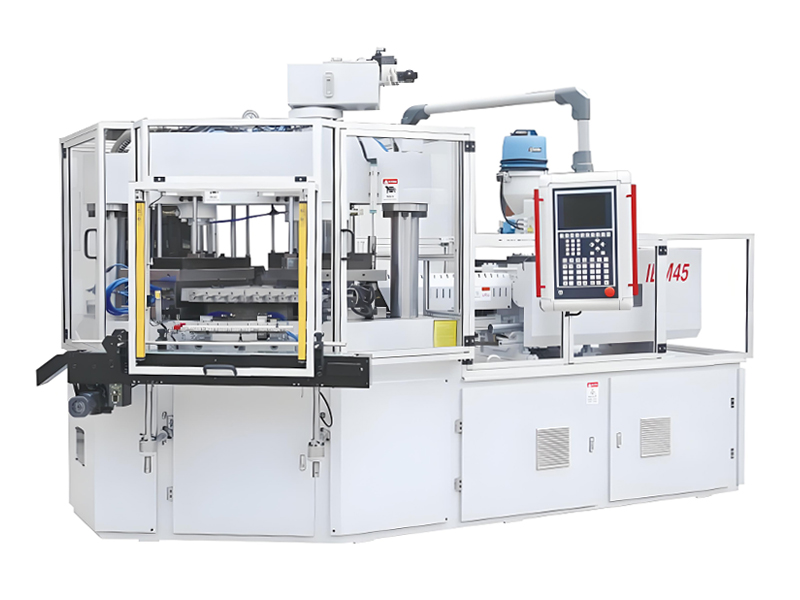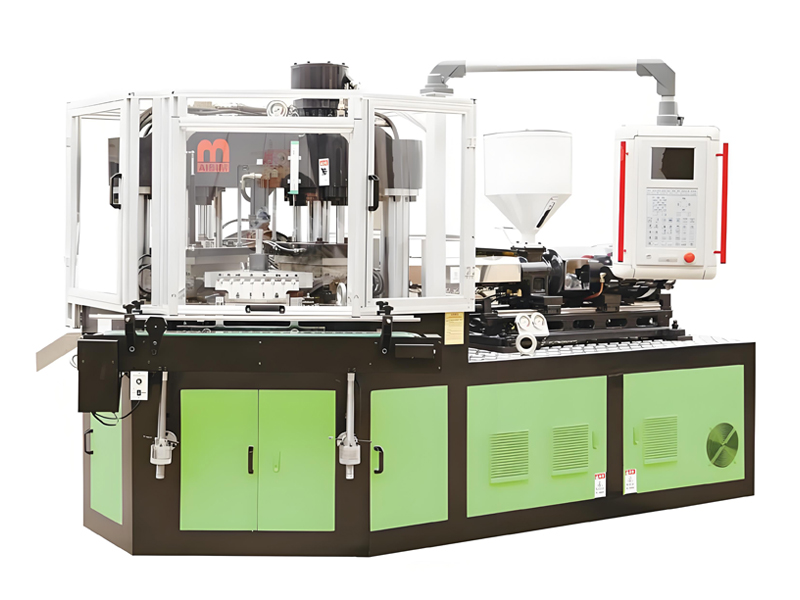
An injection blow molding (IBM) machine is one of the most pragmatic choices a new plastic bottle manufacturer can make when the product demands consistent wall thickness, a clean neck finish, and zero post-molding flash that would otherwise need trimming. For startups entering the pharmaceutical, cosmetic, food, drink, or nutraceutical packaging market in 2026, the question is rarely whether IBM technology works — it is which IBM model fits a limited budget, a small factory floor, and an uncertain first-year volume. This guide explains what an injection blow molding machine does, compares the models that matter most for a new business, and lays out the practical engineering details you need before you commit capital to your first production line.
Choosing the right IBM machine for a startup is different from choosing one for an established plant. A mature manufacturer optimizes for throughput and automation; a startup must balance a modest entry investment against the flexibility to pivot bottle designs, the ability to run small batches profitably, and the supplier relationship that will carry it through the steep early learning curve. The good news is that modern IBM machines, particularly the hybrid-electric and servo-hydraulic designs built by specialists such as Aibim, a Wanplas factory, are far more accessible to small businesses than the large industrial units of a decade ago.
ما هي آلة IBM ولماذا تختارها الشركات الناشئة
An injection blow molding machine is a one-step plastic molding system that forms a hollow bottle by first injecting molten polymer into a parison (a hollow preform on a core rod) and then blowing that parison against the contours of a blow mold. Unlike extrusion blow molding, which extrudes a tube of melt and pinches it closed, IBM produces a finished bottle in a single continuous cycle with no flash, no pinch-off weld line, and no separate trimming operation. The result is a container with a precisely controlled neck, tight thread tolerances, and a uniform wall that is difficult to achieve any other way at this scale.
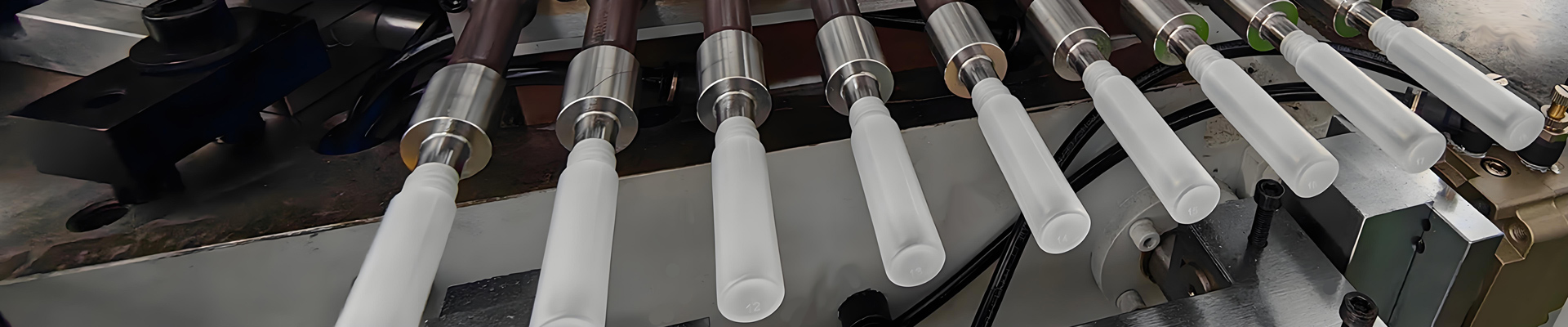
The three-station, one-step architecture is the defining feature of the IBM process. In the first station the parison is injection molded around a heated core rod; in the second station that core rod carries the still-soft parison to a blow cavity where compressed air expands it into the bottle shape; in the third station the finished bottle is stripped from the core rod and ejected. Because the neck is molded by injection rather than blown, dimensional accuracy is excellent, which is why IBM dominates applications such as pharmaceutical dropper bottles, nasal spray containers, cosmetic jars, and small food and drink bottles.
For a startup, the appeal of an IBM machine comes down to three operational realities. First, there is no flash to trim, which means no secondary labor station, no trimming scrap, and a cleaner production cell. Second, wall thickness is highly repeatable, so material usage is predictable and low, protecting thin margins. Third, the process is forgiving enough that a small team can reach stable output quickly with proper training. Aibim’s machines, for example, run a product range from roughly 3 millilitres up to 1000 millilitres, which covers the vast majority of premium small-bottle opportunities a new business would target.
Another reason startups lean toward IBM is regulatory fit. Bottles for pharma and food contact must satisfy standards such as FDA rules in the الولايات المتحدة and EU 10/2011 in Europe, and the clean, flash-free neck of an IBM bottle reduces contamination risk and simplifies validation. Combined with CE certification on the machine and ISO 9001 quality management at the factory, a startup can build a credible compliance story from day one.
كيف تعمل آلة الحقن والنفخ: عملية المرحلة الواحدة ثلاثية المحطات
The IBM cycle is best understood as three coordinated operations happening on a rotating or indexing turret, so that while one station molds a parison, a second blows a bottle, and a third ejects a finished part. This parallel structure is what keeps cycle times short even on a compact machine. Understanding each station helps a startup specify the right model and avoid surprises during commissioning.
محطة الحقن
At the injection station, a reciprocating screw plasticizes the resin and injects it into a parison cavity that surrounds a temperature-controlled core rod. The core rod defines the inner diameter and length of the parison, while the cavity defines its outer shape. Precise control of melt temperature, injection speed, and holding pressure determines the parison’s wall distribution. Aibim’s PREFILL technology, combined with variable-displacement pump pressurizing in the hydraulic system, reduces energy spikes during this stroke and contributes to the minimum 35 percent energy saving the company quotes versus conventional fixed-pump machines.
محطة النفخ
The core rod then indexes to the blow station carrying the parison at the correct temperature window. Low-pressure or high-pressure compressed air enters through the core rod and expands the soft parison against the blow mold wall. Because the parison wall is already uniform, the final bottle wall is uniform too, with no thin spots at the corners. Blow air pressure, timing, and exhaust design govern surface definition and the absence of webbing between close features such as multi-cavity cosmetic jars.
محطة النزع (القذف)
After the bottle cools sufficiently to hold its shape, the core rod indexes to the stripper station where a stripper plate pushes the finished container off the rod. Aibim machines use a stripper station fitted with a long-distance digital laser sensor for mold safety plus a light curtain for personal safety, both part of the CE-certified guarding package. Finished bottles then drop to a conveyor or, on automated lines, are transferred to an inspection and packing station.
A practical detail startups appreciate is parameter portability. Aibim stores process recipes on an SD card, so a validated set of temperatures, pressures, and timings can be carried from one machine to another or restored after a changeover in seconds rather than re-developed from scratch. For a business that will run several bottle designs, this cuts downtime and protects quality between jobs.
أفضل طرازات IBM للشركات الناشئة: مقارنة Aibim IBM55 و IBM65 و IBM75
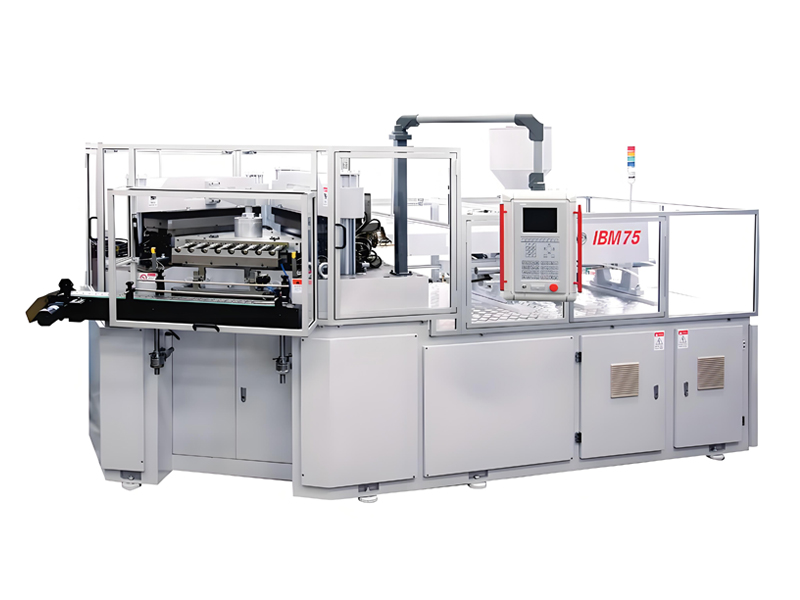
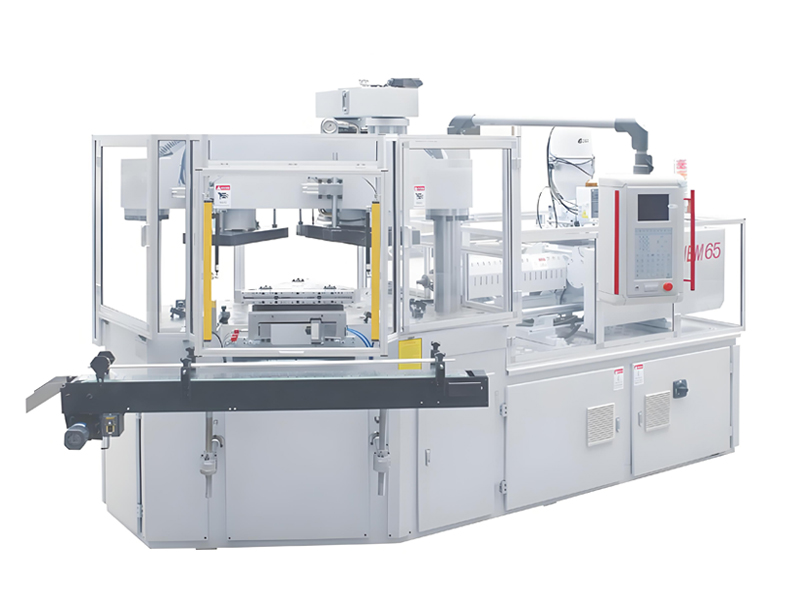
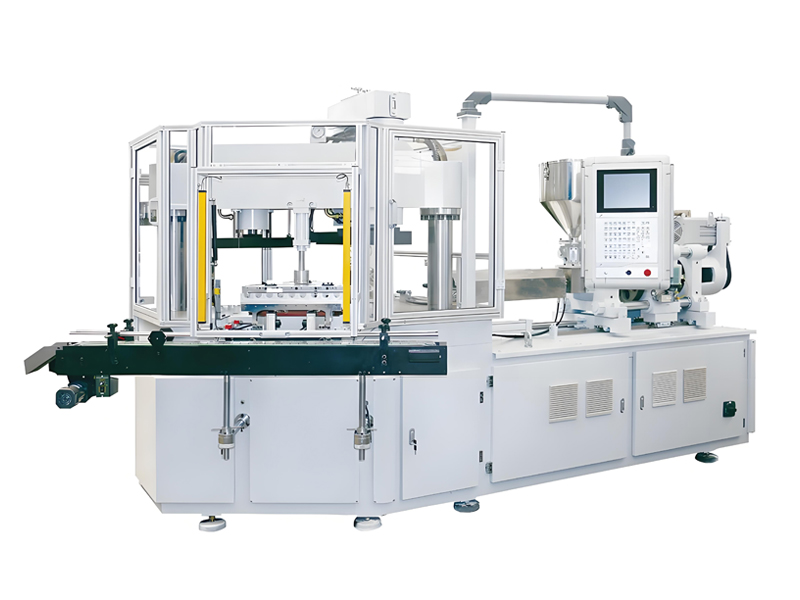
Aibim, a Wanplas factory, builds three core models that together cover the startup spectrum: the IBM55 Hybrid Electric, the IBM65, and the IBM75. The numbering reflects clamping and platen scale rather than a single linear capability, and each model is positioned for a different stage of business growth. The comparison below uses relative cost labels rather than price figures, because final delivered cost depends on mold complexity, voltage, options, and destination.
| Model | Typical Bottle Range | Drive Type | الطاقة Profile | Relative Investment | Best For |
|---|---|---|---|---|---|
| IBM55 Hybrid Electric | 3 ml – small bottles | Hybrid electric-hydraulic | Lowest consumption | Medium | Pilot runs, R&D, low-volume premium bottles |
| IBM65 | Small – medium bottles | Servo-hydraulic | Medium | High | Growing startups, multi-cavity cosmetic and pharma |
| IBM75 | Up to 1000 ml | Servo-hydraulic | Medium-High | Very High | Scale-up, wider bottle range, higher output |
The IBM55 Hybrid Electric is the natural entry point for a first-time bottle maker. Its hybrid drive pairs electric precision on the clamping and indexing axes with efficient hydraulic assist, keeping power draw and heat generation low while preserving the robustness startups need. Because it is the smallest of the three, it fits an ordinary workshop, draws less utilities, and lets a founder prove the business before scaling.
The IBM65 is the workhorse for a startup that has validated demand and wants multi-cavity production. With a larger platen and clamping frame it accepts bigger molds and more cavities per shot, lowering the per-bottle cost substantially once volume climbs. The IBM75 sits at the top of the range and is the right call when the product plan includes bottles approaching one litre or when forecast volume justifies the higher throughput and larger mold investment.
It is worth noting that Aibim is not the only supplier in this space. Established IBM builders elsewhere include Milacron and جومار in the الولايات المتحدة, Bekum in Germany, and Techne in Italy, while Chumpower in Taiwan is active in blow molding more broadly. A startup should benchmark at least three suppliers, and the comparison should weigh not just machine price but mold lead time, spare-part availability, and the strength of local technical support — areas where a focused factory such as Aibim, backed by the wider Wanplas brand network, is competitive for small and mid-size buyers.
المواصفات الرئيسية التي يجب على كل شركة ناشئة تقييمها
يمكن أن تبدو المواصفات في عرض أسعار IBM كحساء من الحروف. القيم الثماني أدناه هي التي تحدد فعلاً ما إذا كانت الآلة ستصنع زجاجتك بالجودة والتكلفة التي تحتاجها. تعلم قراءتها قبل مقارنة العروض.
قوة الإغلاق وحجم اللوحة
Clamping force, measured in tonnes, must hold the blow mold shut against internal air pressure. Platen size sets the maximum mold footprint. For a startup the trap is buying a machine whose platen is too small to accept a multi-cavity mold later, which caps your scaling path. Aibim’s single-crossbeam, double-pole clamping framework enlarges mold-setting space, giving a little more room than comparable frames.
سعة التلدين وحجم الحقنة
Shot size is the maximum weight of polymer the screw can inject per stroke, and plasticizing capacity is how fast it can melt enough material to keep up with cycle demand. These values must exceed your heaviest parison times cavity count with margin, or you will hit a hard output ceiling. Undersizing here is a common startup error that no amount of cycle tuning can fix.
زمن الدورة وعدد التجاويف
Output per hour equals cavities divided by cycle time. A four-cavity mold at an eight-second cycle yields far more than a single cavity at six seconds. Startups should model output from these two numbers rather than from a supplier’s headline “bottles per hour” claim, which is usually quoted under ideal conditions.
نظام التحكم وتخزين الوصفات
يتيح المتحكم الحديث مع تخزين الوصفات على بطاقة SD، كما تستخدمه Aibim، التبديل بين المنتجات دون إعادة اشتقاق نوافذ العملية. بالنسبة لشركة ناشئة تدير عينات ودفعات تجريبية ودورات إنتاج صغيرة، فإن هذه المرونة تساوي أكثر من دورة جافة أسرع قليلاً.
| Specification | Why It Matters for a Startup | What to Check |
|---|---|---|
| Clamping force | Holds mold shut under blow pressure | Must match largest planned mold |
| Platen size | Limits future cavity count | Room to scale without new machine |
| Plasticizing rate | Sets true output ceiling | Exceeds parison weight times cavities |
| الطاقة use | Drives operating cost | Hybrid/electric beats fixed-pump |
| Recipe storage | Speeds product changeover | SD card or network recipe save |
اعتبارات التكلفة لمشروع زجاجات جديد: مستويات الاستثمار
Cost is where most startup decisions are won or lost, yet the machine price is only part of the story. The table below frames the investment using relative labels so the comparison stays valid across regions and currencies. The real economics come from total cost of ownership: machine, mold, utilities, labor, maintenance, and scrap.
| Cost Element | Entry (IBM55) | Mid (IBM65) | Scale (IBM75) |
|---|---|---|---|
| Machine investment | Medium | High | Very High |
| Mold cost (per design) | Medium | High | High |
| الطاقة per bottle | Low | Medium | Medium |
| العمالة per bottle | Low | Low | Low |
| Per-bottle economics at volume | Medium | High | Very High |
A startup should budget for the mold as a separate and significant line item. The mold is where bottle quality is truly locked in, and a poorly cut mold will waste the best machine. Because Aibim operates its own CNC centre, it controls mold machining in-house, which usually shortens lead time and simplifies later revisions compared with a supplier that outsources everything.
Operating cost is dominated by energy and resin. The minimum 35 percent energy saving from PREFILL and variable-displacement hydraulics is meaningful on a machine running multiple shifts, and the flash-free process saves resin that extrusion blow molding would lose to trim scrap. For a new business watching every unit of margin, these compounding savings matter more than the headline machine price.
خيارات المواد: أي الراتنجات تعمل على آلة IBM
IBM is material-specific in a helpful way: it excels with the polyolefins and styrenics that make up most premium small bottles. Aibim machines process polyethylene (including HDPE, LDPE and LLDPE), polypropylene, polystyrene, ABS, SAN, TPU, PC and PCTG. The choice of resin must be fixed before the mold is cut, because gate location, cooling channels, and shrinkage allowance all depend on the material’s flow and thermal behavior.
For pharmaceutical and food bottles, polypropylene and polyethylene are the default because they are inert, tough, and accepted under FDA and EU 10/2011 contact rules. البولي بروبيلين also survives autoclaving and radiation where needed. For cosmetic jars that must look premium, PCTG and SAN deliver clarity and a glass-like feel, though they demand tighter process control. البولي كربونات offers impact resistance but carries more regulatory scrutiny for food contact in some markets, so confirm local rules before specifying it.
| Resin | Typical Use | Processing Note |
|---|---|---|
| البولي بروبيلين (PP) | Pharma, food, cosmetics | Low shrinkage control needed; widely certified |
| Polyethylene (PE) | Pharma, squeeze bottles | Soft feel; good chemical resistance |
| PCTG / SAN | Premium cosmetics | Clarity; tighter process window |
| ABS | Technical containers | Tough; less common for food contact |
A startup should also think about color and additive masterbatch. IBM handles standard let-down ratios well, but very high pigment loads or filler content change shrinkage and may need mold adjustment. Discuss the exact compound with the machine and mold supplier up front so the tool is cut for the real production resin, not a sample grade.
المساحة والمرافق وتجهيز المصنع لخط IBM صغير
One of the friendliest facts about IBM for startups is its compact footprint. A single IBM55 hybrid line with its chiller, granulator for start-up scrap, and unloading conveyor can often fit inside a small bay, and the flash-free process means you do not need a trimming and deflashing cell taking up floor space. Even so, plan the layout before delivery.
Utilities are the bigger consideration. Industrial IBM machines run on three-phase electricity, and a process-water chiller is needed to hold stable mold temperatures; stable temperature is what protects cycle time and wall consistency. You will also need a clean, dry compressed-air supply for the blow station, with filtration appropriate to the product’s hygiene class. For pharmaceutical or high-end cosmetic bottles, budget for a controlled-environment room or at least a dedicated clean area with positive pressure and filtered intake.
Ventilation and material handling round out the setup. Resin arrives in gaylords or bags and is conveyed to the machine throat by a loader; finished bottles are conveyed to inspection and packing. Aibim’s reasonable, open structure and enlarged mold space make robot or conveyor integration straightforward, so the line can grow from manual packing to automated packing without a plant rebuild.
لماذا تختار Aibim، مصنع Wanplas، لخط IBM الأول
Aibim is a Wanplas factory specializing in injection (stretch) blow molding machines, with more than twelve years building plastic machinery and roughly twenty years of accumulated experience in the IBM field. That specialist focus shows in details a generalist supplier may miss: the three-station one-step philosophy, the PREFILL hydraulic innovation, and the energy-saving design that the company backs with a quoted minimum 35 percent reduction versus conventional machines.
The factory statistics matter to a startup weighing risk. Aibim runs its own CNC centre for machine and mold parts, which shortens lead times and keeps revision control in-house. It commissioned a new factory in 2022 and holds an annual production capacity above one hundred lines, serving more than forty countries. CE certification, a laser-safety stripper station, and a light curtain for operator protection are standard, not optional extras.
Being part of the Wanplas brand network adds a layer of assurance. Wanplas, whose mission is to “Warm Global Customers With China Plastic Machinery,” bundles shared brand promises across its factories: free spare parts support each year, a transportation guarantee, a production-capacity guarantee, and a quality-standards guarantee. For a startup without a large maintenance team, that safety net — plus remote PLC monitoring where available — reduces the chance that a single fault stalls the whole business.
خطوة بخطوة: من أمر الشراء إلى أول زجاجة
يمر المسار من قرار شراء آلة IBM إلى تشغيل زجاجات قابلة للبيع بتسلسل يمكن التنبؤ به. إن السير فيه بعناية يحمي الشركة الناشئة من أغلى فشلين: قالب لا يناسب الآلة، ومصنع غير جاهز في يوم التسليم.
- حدد الزجاجة. ثبّت الحجم وتشطيب العنق والراتنج والإنتاج المستهدف. هذه الحقائق الأربع تقود كل قرار لاحق.
- اختر الطراز. طابق حجم الزجاجة وسعتها مع IBM55 أو IBM65 أو IBM75 باستخدام فحوصات اللوحة واللدن أعلاه.
- اقطع القالب. اعتمد رسم القالب والعينة قبل التشغيل الكامل. لأن Aibim تشغل القالب داخليًا، تكون المراجعات أسرع.
- جهز المرافق. ثبّت طاقة ثلاثية الأطوار ومبردًا وهواءً مضغوطًا مفلترًا والمنطقة النظيفة إذا لزم الأمر، قبل وصول الماكينة.
- ركّب ودرّب. اجعل مهندسي المورد يشغلون الخط ويُدرّبون المشغلين على الإعداد والتبديل والاستجابة الأساسية للأعطال.
- تحقق. شغّل عينات، وافحص الأبعاد مقابل مواصفة العنق، ووثّق وصفة المعالجة على بطاقة SD.
- أنتج. ابدأ بدفعات تجريبية، ثم توسع إلى الحجم المتوقع، مع مراقبة معدل الهدر وزمن الدورة كمؤشرات صحية لك.
طوال هذا التسلسل، احتفظ بوصفات بطاقة SD وتقرير التشغيل التجريبي معًا. إنها الأصول المعرفية التي تتيح لك تكرار النجاح وتسليم الخط إلى مشغل جديد دون إعادة تعلم العملية من الصفر.
أخطاء بدء التشغيل الشائعة التي يجب تجنبها
Most IBM startup failures are predictable and avoidable. The first is underestimating mold cost and lead time, then discovering the bottle cannot be made until weeks after the machine is sitting idle. The second is choosing a machine by lowest price rather than by platen and plasticizing headroom, which caps scaling and forces a second purchase sooner than planned.
The third mistake is ignoring resin certification until after the mold is cut, then finding the chosen material fails a food or pharma contact rule. The fourth is skipping operator training to save a few days, which prolongs the unstable startup period when scrap is highest. The fifth is poor utility planning — no chiller, unstable air, or wrong voltage — that produces inconsistent walls and mysterious defects no setting change will fix.
خطأ أكثر دقة هو المبالغة في تحديد الأتمتة مبكرًا جدًا. الخط اليدوي أو شبه الآلي يعلم الفريق العملية؛ الأتمتة الثقيلة المضافة قبل استقرار الزجاجة والراتنج تخفي المشكلات فقط. ابدأ بسيطًا، أثبت الزجاجة، ثم أتمتة نهاية التعبئة حيث يكون العائد أوضح.
الأسئلة الشائعة
ما الحد الأدنى لحجم الزجاجة الذي يمكن لآلة IBM إنتاجه؟
Modern injection blow molding machines such as the Aibim range cover containers from roughly 3 millilitres up to 1000 millilitres. The lower practical limit is set by the core-rod diameter and the ability to inject a stable parison, while the upper limit is governed by clamping force and platen space.
هل آلة IBM مناسبة لشركة ناشئة صغيرة جدًا بحجم شهري منخفض؟
Yes. Because the three-station one-step process produces flash-free parts with no secondary trimming, a single-cavity or low-cavity IBM line can be run profitably at modest volumes. The main constraint is mold cost, which is shared across every part produced, so per-unit economics improve as volume rises.
ما الراتنج الذي يجب أن تختاره شركة زجاجات جديدة للاستخدام الصيدلاني أو التجميلي؟
البولي بروبيلين and polyethylene are the most common choices for IBM because they process cleanly and meet food and pharma contact rules such as FDA and EU 10/2011. For clarity and premium feel, PCTG or SAN are used. The resin must be selected before the mold is cut because gate and cooling design depend on the material.
كم تبلغ مساحة أرضية المصنع التي يحتاجها خط IBM الابتدائي؟
خط IBM55 الهجين المدمج مع مبرده ومطحنته وناقل التفريغ يتناسب عادةً ضمن بصمة بضعة أمتار مربعة، غالبًا أقل من عشرين مترًا مربعًا بما في ذلك مساحة عمل صغيرة. يعتمد المتطلب الدقيق على عدد التجاويف ومستوى الأتمتة وما إذا كانت الغرفة النظيفة مطلوبة.
هل تتطلب آلات IBM طاقة ثلاثية الطور ومبرّدًا (Chiller)؟
تعمل معظم آلات IBM الصناعية على كهرباء ثلاثية الأطوار وتحتاج إلى مبرد مياه معالجة للحفاظ على درجات حرارة قالب مستقرة. يمكن لآلة هجينة صغيرة أحيانًا العمل على إمداد كهربائي مخفض، لكن لا يزال يُنصح بشدة باستخدام مبرد لاتساق الدورة وجودة القطعة.
ما دعم ما بعد البيع الذي يجب أن تتوقعه الشركة الناشئة من المورّد؟
توقع التركيب في الموقع وتدريب المشغّلين ومراقبة PLC عن بُعد وبدل قطع غيار مجاني سنوي من شبكة علامة Wanplas التجارية. نظرًا لأن Aibim تدير مركز CNC خاصًا بها، فإن مهلات القوالب وقطع الغيار أقصر من الموردين الذين يستعينون بمصادر خارجية للتصنيع.
هل يمكن لنفس آلة IBM تشغيل أشكال زجاجات مختلفة؟
نعم، عن طريق تغيير مجموعة القوالب. تبقى محطات الآلة وقضبان القلب ونظام هواء النفخ كما هي؛ فقط يتم تبديل قالب الحقن وقالب النفخ والنازع. يستغرق التبديل عادةً بضع ساعات مع تخزين المعايير على بطاقة SD الذي يستعيد إعدادات العملية المحفوظة.
كيف تقارن IBM مع قولبة النفخ بالبثق لشركة ناشئة؟
IBM gives tighter necks, no flash and uniform walls, ideal for pharma, cosmetic and narrow-neck bottles up to about one litre. Extrusion blow molding handles larger containers and a wider material range but needs trimming. For a startup focused on small, high-finish bottles, IBM is usually the stronger fit.
الخلاصة
For a startup entering plastic bottle manufacturing in 2026, an injection blow molding machine offers a rare combination of low labor, consistent quality, and a clean regulatory profile that larger, flash-producing processes struggle to match at small scale. The Aibim IBM55 Hybrid Electric is the sensible entry model for proving a business, the IBM65 the natural scale-up to multi-cavity production, and the IBM75 the choice when bottle size or volume demands more. Because Aibim is a Wanplas factory with its own CNC centre, CE-certified safety, in-house mold making, and a shared brand support promise, a first-time buyer gets both specialist focus and group-level backing.
The right next step is to define your bottle precisely — volume, neck, resin, and volume forecast — then match it to a model using platen and plasticizing headroom rather than price alone. With the mold planned in parallel, utilities ready, and operators trained at commissioning, a new bottle business can move from purchase order to stable production without the costly surprises that derail less prepared startups. An IBM machine is not the cheapest way to make a container, but for the small, high-finish bottles that build premium brands, it is frequently the smartest.