Choosing between an IBM machine and an EBM machine is one of the most consequential decisions a packaging engineer or procurement manager makes when planning a small precision plastic bottle project. The two technologies both produce hollow containers, yet they differ fundamentally in how the parison is formed, how tightly the neck and threads can be held, how much scrap is generated, and which materials and bottle shapes are practical. For bottles in the 3 ml to 1000 ml range where finish accuracy, wall uniformity, and clean appearance matter, the gap between the two processes becomes decisive. This article compares injection blow molding and extrusion blow molding across process, precision, materials, efficiency, cost, defects, and compliance so you can select the right machine for your 2026 production plan. The analysis draws on the product ranges of Aibim, a Wanplas factory specializing in IBM, and Apollo, a Wanplas factory specializing in EBM, and it benchmarks them against global suppliers such as جومار, Nissei ASB, Milacron, and Bekum.
ما الفرق بين IBM و EBM؟
الحقن blow molding, abbreviated IBM, forms a preform by injecting molten plastic into a metal cavity, then transfers that precisely shaped parison to a blow station where it is inflated against the bottle mold. Extrusion blow molding, abbreviated EBM, continuously extrudes a hollow tube of melt, called a parison, which is captured between two mold halves and blown into shape. The simplest distinction is that IBM molds the parison by injection to net shape, while EBM extrudes the parison as a free tube that is then pinched, welded, and trimmed.
That single difference cascades into everything else. Because the IBM parison is injection molded, the neck finish, thread, and sealing surface are created in the injection cavity with injection-molding accuracy. Because the EBM parison is extruded and pinched, the neck must often be trimmed or reamed after molding, and the bottom weld line is a structural feature rather than a molded detail. For small pharmaceutical, cosmetic, and food bottles where the closure must seat perfectly every time, this distinction is the core of the IBM versus EBM debate.
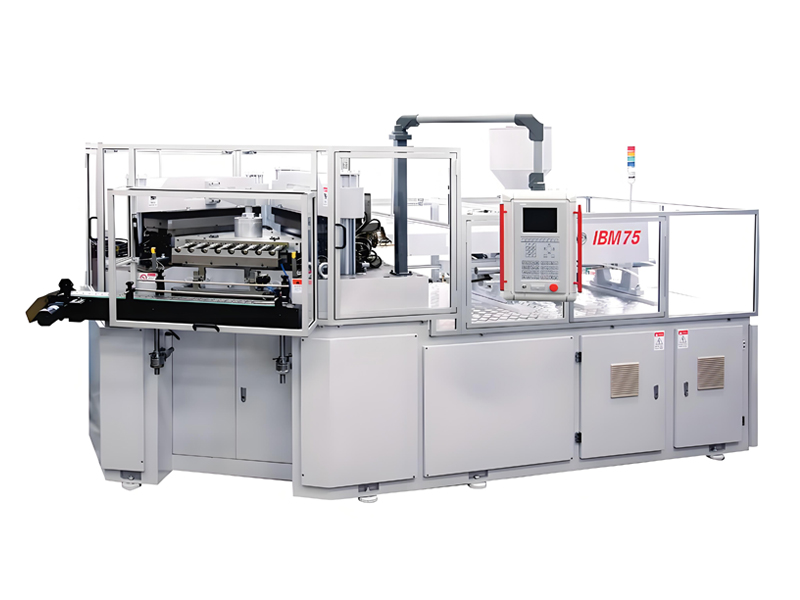
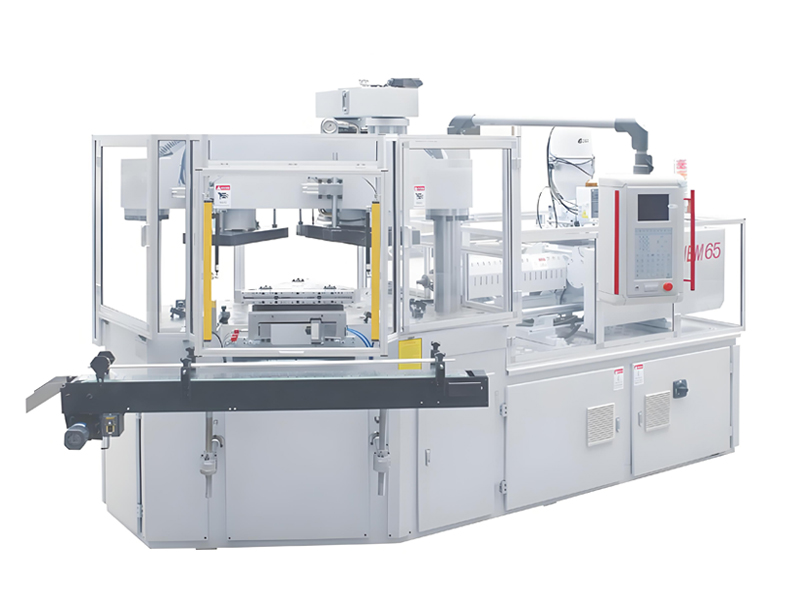
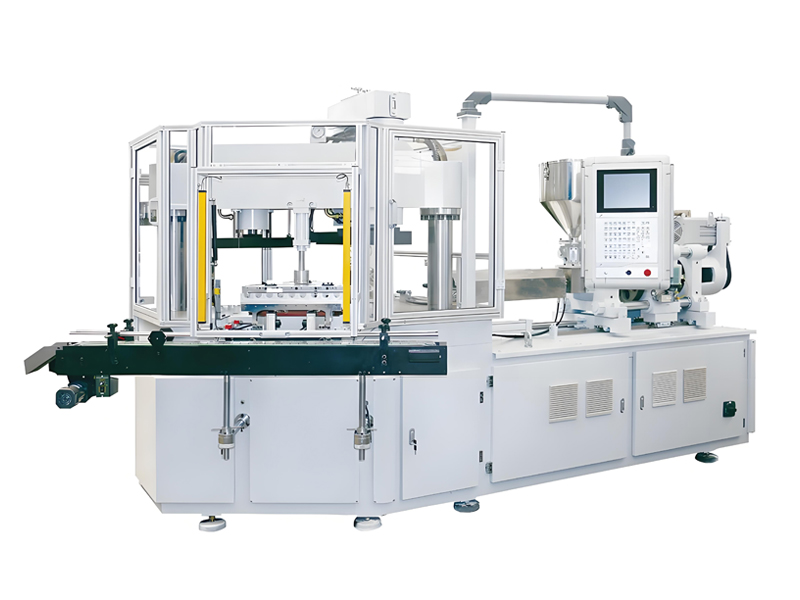
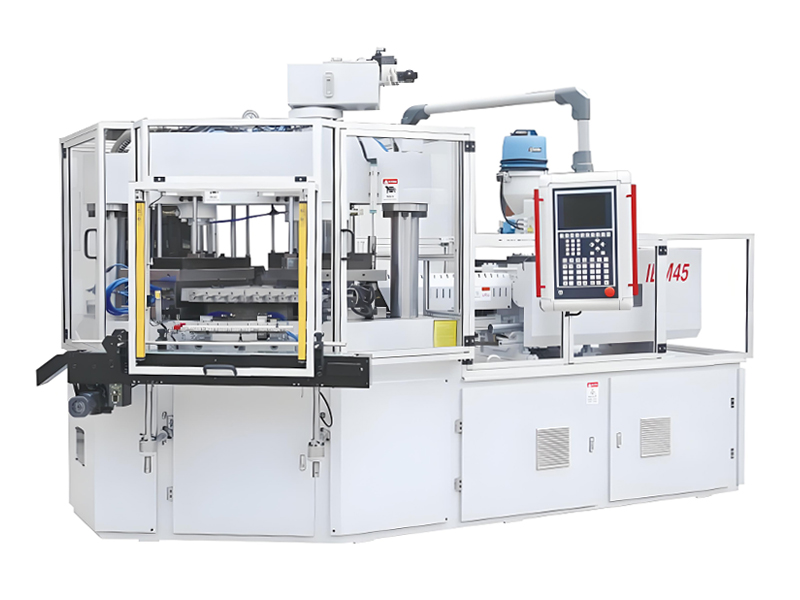
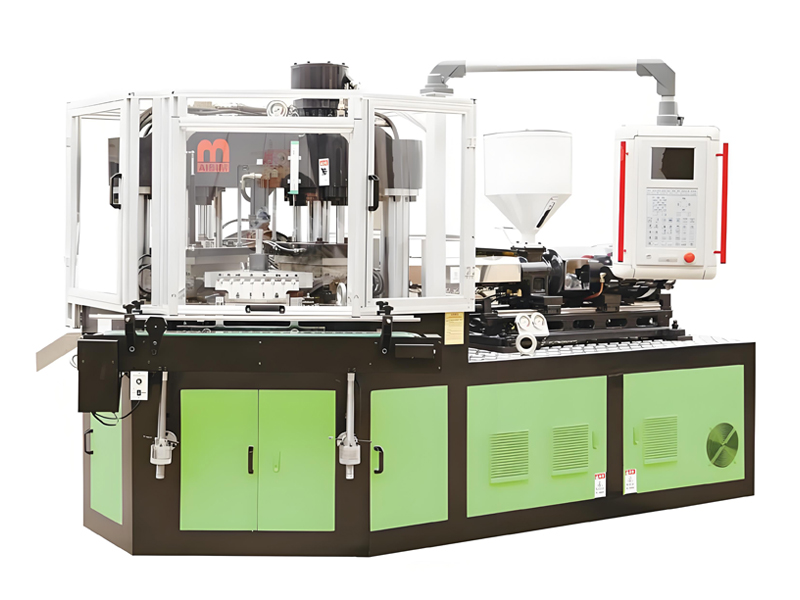
Wanplas, the parent brand behind several specialized molding factories, positions IBM and EBM as complementary rather than competing technologies. Aibim focuses on injection blow molding for small precision containers, while Apollo focuses on extrusion blow molding for a wider range of hollow products. Understanding both helps buyers match the process to the bottle rather than forcing one machine to do every job. Aibim’s IBM product line, including the IBM75, IBM65, and IBM55 Hybrid Electric models, is built around a three-station one-step architecture for containers from 3 ml to 1000 ml, and it carries CE certification with a stripper station protected by a long-distance digital laser sensor plus a light curtain for operator safety. Apollo, by contrast, supplies EBM machines such as the ABLB series for 200 ml to 20 L containers, the ABLD series for 20 L to 1500 L industrial parts, and a fully electric series for 200 ml to 20 L applications.
كيف تعمل كل عملية
النفخ بالقولبة بالحقن خطوة بخطوة
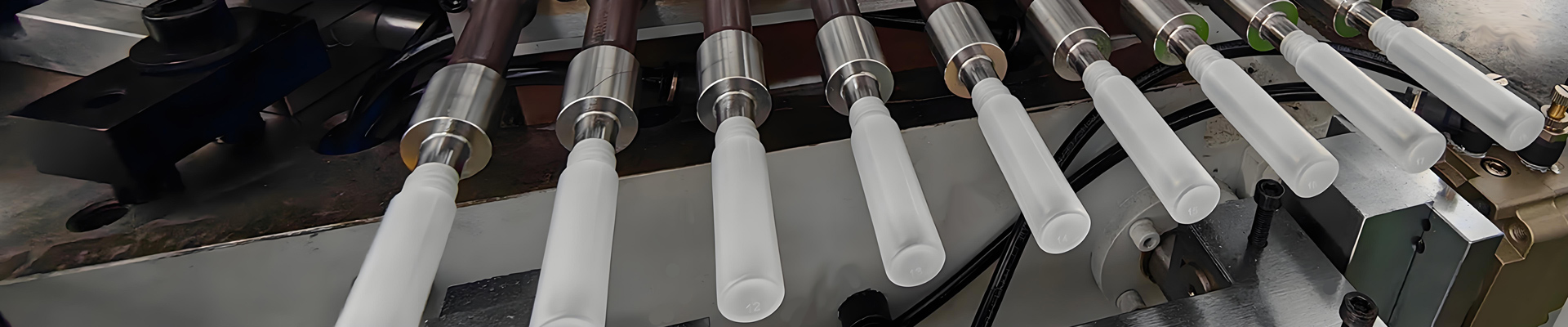
In a three-station one-step IBM machine, the process runs continuously across injection, blow, and ejection stations. At the injection station, plastic is melted and injected into a preform cavity around a core rod, producing a hollow parison with a fully formed neck and thread. The core rod then indexes to the blow station, where the parison is inflated against the bottle cavity to form the body and base. Finally, the finished bottle is stripped from the core rod at the ejection station. Because all three steps occur on one machine in one cycle, there is no separate reheating stage and no flash at the parting line.
Aibim’s machines use a single-crossbeam, double-pole clamping framework with enlarged mold setting space. Their PREFILL technology combined with variable displacement pump pressurizing in the hydraulic system contributes to a minimum 35 percent energy saving versus conventional fixed-pump designs, and an SD card stores process parameters so they can be reloaded across machines. The core rod and cavity design deserves attention because it determines bottle geometry and quality. In IBM, the preform is molded around a core rod that sets the internal shape, and the blow cavity sets the external shape, so wall distribution is engineered rather than left to parison swell. Multi-cavity molds let a single machine produce four to eight or more bottles per cycle, and Aibim’s enlarged mold setting space accommodates a range of cavity layouts for 3 ml to 1000 ml containers. In EBM, the die head and parison programmer control wall thickness, and tooling is generally simpler but less precise at the neck. For contract manufacturers running many small bottle styles, IBM’s repeatable cavity approach reduces setup variability once the mold is qualified, which is valuable in regulated industries where every change must be documented and validated before production. These features make the IBM process both precise and efficient for long runs of small bottles.
النفخ بالقولبة بالبثق خطوة بخطوة
In EBM, an extruder melts and pushes plastic through a die head to form a continuous hollow parison. The parison is clamped between two mold halves, the molds close and pinch the parison at the base, and compressed air expands the parison against the cavity. After cooling, the mold opens and the part is ejected, typically with a tail and flash that must be removed. Multilayer EBM can co-extrude barrier layers for extended shelf life, an option that is far more common in extrusion than in injection blow molding.
Apollo, a Wanplas factory, supplies EBM machines with more than 20 years of history and over 4000 sets running in 90 plus countries. The ABLB series covers 200 ml to 20 L, the ABLD series covers 20 L to 1500 L, and the fully electric series addresses high environmental requirements. For large or handled containers, EBM remains the workhorse, while IBM dominates the small precision segment. From a market perspective in 2026, the small precision bottle segment continues to shift toward IBM as brands demand tamper-evident and child-resistant closures with consistent torque, and as regulatory pressure on pharmaceutical and cosmetic packaging tightens. الحقن blow molding’s ability to deliver a molded neck without secondary operations aligns with automated filling lines that penalize any closure inconsistency. Extrusion blow molding retains a strong position for larger and multilayer containers, and the two technologies are best viewed as a portfolio rather than rivals. Buyers who understand both can specify the right machine per SKU and avoid over-engineering a bottle that only needs to be good enough, or under-engineering one that must be precise. This balanced view is why Wanplas maintains both Aibim for IBM and Apollo for EBM under one brand umbrella, letting a single sourcing relationship cover complementary processes.
الدقة والتفاوت وملاءمة المادة
For small precision bottles, dimensional tolerance is usually the deciding factor. IBM produces necks and threads to injection-molding tolerances because the neck is literally molded, not pinched. EBM necks are formed by pinching and often require post-mold trimming or reaming, which widens the achievable tolerance band and adds a process step. The table below summarizes the practical differences buyers should expect when specifying a bottle.
| Attribute | الحقن النفخ (IBM) | Extrusion النفخ (EBM) |
|---|---|---|
| Neck and thread accuracy | Very High (injection-molded finish) | Medium (often trimmed or reamed) |
| Typical neck tolerance | ±0.05 mm to ±0.10 mm | ±0.15 mm to ±0.40 mm |
| Wall thickness uniformity | High (molded parison control) | Medium (parison programming dependent) |
| Flash and trim scrap | Very Low (essentially flash-free) | Medium to High (tail and flash removed) |
| Surface finish at neck | Clean, no secondary operation | May need deflashing |
| Best bottle size range | 3 ml to 1000 ml small precision | 50 ml to 1500 L broad range |
The takeaway is direct: if the bottle’s value depends on a precise, clean neck finish and consistent threads, such as a tamper-evident dropper bottle or a cosmetic therapy pump bottle, IBM holds the advantage. EBM remains excellent for containers where the neck tolerance is less critical and where larger volumes, handles, or multilayer barrier structures are needed.
Material fit differs too. IBM favors resins that mold cleanly into a parison and then blow reliably: PE (HDPE, LDPE, LLDPE), PP, PS, ABS, SAN, TPU, PC, and PCTG. These cover the bulk of pharmaceutical, food, drink, and cosmetic packaging and are especially strong with clear, rigid materials such as PP, PS, SAN, PC, and PCTG used in premium bottles. EBM accepts a broader list including PE, PP, PVC, PA, PC, ABS, PS, EVA, TPU, and PETG, and it is the natural home for PVC and PA where the extrusion die and parison programming suit the material. EBM also supports multilayer co-extrusion for barrier bottles, attractive for aggressive chemicals and personal care formulas sensitive to permeation. Application fit by bottle type favors IBM for pharmaceutical dropper and oral-dose bottles, cosmetic serums and cream jars, and small food shots, while EBM fits household and industrial chemical bottles, large squeezable bottles, and wide-mouth jars. Concrete bottle examples clarify the fit. A 15 ml pharmaceutical dropper bottle with an integrated pipette collar is almost always IBM because the collar and thread must match the dropper assembly exactly. A 30 ml cosmetic serum bottle with a pump actuator benefits from IBM’s glossy, flash-free finish that supports premium shelf appearance. A 50 ml food shot or sample bottle can be either, with IBM preferred when the closure is precise and EBM preferred for squeezable feel. A 500 ml household cleaner bottle is squarely EBM territory because size, handle options, and low tooling cost dominate. A 1 L industrial chemical container is EBM by default, often with a multilayer barrier. Mapping each SKU to its real requirements prevents the common mistake of selecting a process based on familiarity rather than on the bottle’s actual performance and compliance needs, which is where many packaging projects lose money.
- تغطي آلات IBM من Aibim نطاق حاويات من 3 مل إلى 1000 مل بعملية بخطوة واحدة وثلاث محطات.
- تحافظ تشطيبات عنق IBM عادةً على تفاوتات في نطاق ±0.05 مم إلى ±0.10 مم، مقابل ±0.15 مم إلى ±0.40 مم النموذجية لـ EBM.
- تدعم تقنية الهيدروليك PREFILL من Aibim توفير طاقة لا يقل عن 35 بالمائة مقارنة بماكينات IBM التقليدية ذات المضخة الثابتة.
- بحلول عام 2026، تشغّل أكثر من 40 دولة خطوط Aibim، بقدرة سنوية تزيد عن 100 خط.
سرعة الإنتاج ومعدل الهالك والكفاءة
Cycle time and scrap rate together define real throughput. IBM runs a continuous three-station cycle where injection, blow, and ejection overlap, which keeps the machine productive and yields a finished, flash-free bottle. EBM cycle time depends on parison extrusion, blow, and cooling, and the tail and flash add a trimming step that consumes labor or auxiliary equipment unless a regrind loop is integrated. The data table below illustrates representative operating profiles for small precision bottles; values are illustrative ranges for planning and depend on bottle geometry, material, and mold cavity count.
| Operating Metric | IBM (small precision, 4 to 8 cavity) | EBM (small bottle, continuous extrusion) |
|---|---|---|
| Typical cycle time per shot | 8 to 16 seconds | 10 to 25 seconds |
| Scrap from flash or tail | Very Low (under 2 percent) | Medium (5 to 15 percent before regrind) |
| Secondary trimming needed | Rarely | Frequently |
| Neck reaming operation | Not required | Often required |
| الطاقة profile per unit | Low to Medium with hybrid drive | Medium to High |
| Cleanroom compatibility | High (flash-free, enclosed) | Medium |
IBM’s flash-free output simplifies downstream operations. Bottles can move straight to filling and capping without deflashing, which reduces handling, contamination risk, and labor. For pharmaceutical and cosmetic lines where cleanroom compatibility and low particle generation matter, this is a meaningful operational edge. EBM remains competitive on raw throughput for large bottles and on cost per unit when scrap is recovered through regrind. Common defects also differ by process: EBM parts carry a pinch-off weld and often a tail that becomes flash, while IBM parts are essentially flash-free, removing an entire class of defect. Neck and thread inconsistency is more likely in EBM because the neck is pinched and reamed, whereas IBM molds the neck to injection accuracy. Wall thickness variation is easier to control in IBM because the parison wall is set in the injection cavity, reducing leakers and improving dose consistency for metering applications. العمالة and floor footprint also separate the processes. IBM’s flash-free output removes deflashing and reaming stations, so a line needs fewer operators and less handling between molding and filling, which reduces both cost and contamination risk in clean environments. EBM lines typically budget for trimming, regrind handling, and inspection of the pinch weld, which adds labor and equipment even when automated. IBM machines also tend to be more self-contained and enclosed, supporting cleaner rooms and simpler material logistics. EBM lines with regrind loops need space for granulators and blending, increasing the footprint per effective good bottle. For plants constrained by labor availability or cleanroom classification, the operational simplicity of IBM can be as important as its dimensional advantages, and it should be counted in any honest comparison of the two technologies for small precision production rather than ignored as a soft factor.
التكلفة والعيوب والامتثال التنظيمي
Cost must be judged across the full picture: tooling, energy, scrap, labor, and reject rate, not just the machine tag. IBM tooling is more complex because the injection preform cavity, blow cavity, and core rod must be coordinated, so the relative tooling investment is Medium to High. However, the scrap is Very Low and secondary operations are minimal, which lowers per-unit conversion cost for precision bottles. EBM tooling is generally Low to Medium relative to IBM, and the machine is more flexible for fast shape changes, which appeals to custom molders serving many SKUs. The offset is Medium to High scrap before regrind and the need for trimming or reaming, which adds labor and equipment. For low-volume precision bottles, the hidden cost of neck rework can erase the tooling saving.
Relative cost summary helps planning without quoting prices: IBM machine and tooling sit at Medium to High acquisition with Low scrap and Low secondary cost; EBM machine and tooling sit at Low to Medium acquisition with Medium scrap and Medium secondary cost; a hybrid IBM drive carries a higher acquisition than fixed hydraulic but Low energy and faster payback; and per-unit precision bottle cost is usually lower total conversion under IBM when finish accuracy is required. Buyers should also weigh Wanplas group service policies that apply across its factories: an open factory policy welcoming visits, engineers for on-site installation, and shared brand promises covering transport, production capacity, and quality standards.
Regulatory compliance is another differentiator. Aibim machines carry CE certification, which covers machinery safety and signals conformity for the European market. For the bottles themselves, materials must comply with the relevant food contact and pharmaceutical frameworks. In the الولايات المتحدة, food and drug contact plastics are evaluated under FDA provisions, while in the الاتحاد الأوروبي, plastic food contact materials must meet EU 10/2011, which sets specific migration limits for substances released from plastic. مستحضرات التجميل packaging falls under EU cosmetics regulation, and pharmaceutical primary packaging must satisfy good manufacturing practice expectations. ISO quality management standards such as ISO 9001 guide how manufacturers document processes and control nonconformities. IBM’s flash-free, enclosed, three-station one-step process helps compliance because it reduces human handling and particulate generation, supporting cleanroom-class production for sensitive products. Risk and validation effort should also enter the decision. IBM’s enclosed, flash-free process reduces the variables that quality teams must control, which shortens validation for pharmaceutical and cosmetic lines and lowers the chance of a deviation during an audit. EBM’s trimming and reaming steps introduce post-mold variables that must be qualified and monitored, including potential particulate generation from cutting. Buyers should therefore weigh not only the sticker price but the cost of quality: the labor of inspection, the risk of a recall from a leaking or misfitting closure, and the documentation overhead of an additional operation. In regulated segments, a process that is inherently cleaner and more repeatable often proves cheaper over the asset life than a process that appears cheaper to buy. This is why total cost of ownership, not acquisition price, should drive the IBM versus EBM choice for precision bottles where failure is not an option.
المصنعون والاستدامة وإطار القرار
The IBM and EBM landscapes each include established global suppliers, and naming them helps buyers benchmark. For injection blow molding, Aibim, a Wanplas factory, offers the IBM75, IBM65, and IBM55 Hybrid Electric models for 3 ml to 1000 ml precision bottles. Long-standing specialists include جومار in the الولايات المتحدة, Nissei ASB in Japan, and Milacron (Uniloy heritage) serving both IBM and EBM markets. For extrusion blow molding, Apollo, a Wanplas factory, covers 200 ml to 1500 L through its ABLB, ABLD, and fully electric series, while globally recognized EBM names include Bekum in Germany, Uniloy Milacron, and Kautex. Comparing at least three manufacturers per technology is sound procurement practice because it exposes differences in clamping design, parison control, and after-sales support.
Sustainability is increasingly decisive in 2026. IBM is inherently material efficient because the parison is injection molded to the exact shape required, leaving almost no flash or tail to regrind, and scrap rates typically stay under a few percent. EBM generates more offcut from the tail and flash, though a well-designed regrind loop recovers much of it. Aibim’s PREFILL technology with variable displacement pump pressurizing supports a minimum 35 percent energy saving versus conventional fixed-pump IBM machines, and the IBM55 Hybrid Electric extends those savings with servo-electric motion. Lower energy per bottle reduces both utility cost and carbon footprint, and uniform IBM walls make bottle lightweighting easier, saving resin per unit and cutting transport weight.
Use this decision logic to match process to product. First, define bottle size and the importance of neck accuracy; if the bottle is 3 ml to roughly 500 ml and the closure must seat with injection-molded precision, IBM is the stronger choice, while larger, handled, or multilayer bottles favor EBM. Second, weigh scrap and secondary operations; if your business case is hurt by trimming, reaming, and reject rework, IBM’s flash-free output protects margin. Third, consider material and appearance; for clear, rigid, premium cosmetic and medical bottles, IBM’s molded finish is hard to beat. Fourth, evaluate supplier fit by visiting the factory, running your resin, and confirming support. Because Aibim and Apollo are both Wanplas factories, a buyer can consolidate sourcing and service expectations across the group while still picking the right process per bottle. In 2026, the smartest packaging lines often run both technologies in parallel, assigning each bottle to the process where it is most profitable. A worked example shows the logic. Suppose a brand runs 20 million 20 ml dropper bottles per year across three closures. Choosing IBM gives molded necks that seat every closure first time, scraps under a few percent, and needs no trimming labor, so the per-unit conversion cost stays low despite Medium to High tooling. Choosing EBM would save on tooling but add trimming, regrind, and higher scrap, and risk closure inconsistencies that surface only at the filling line. The economic crossover is usually reached quickly at volume. Conversely, a brand making 5,000 units of a 1 L industrial bottle annually should choose EBM for its low tooling and material flexibility. The framework is not ideological; it is a function of size, volume, closure precision, and compliance, and the same plant can rationally run both Aibim IBM and Apollo EBM machines side by side to optimize each product family.
الأسئلة الشائعة
هل IBM أم EBM أفضل لزجاجات القطارة الصيدلانية؟
IBM is generally better for pharmaceutical dropper bottles because it delivers tight dimensional tolerances, a clean flash-free neck finish, and consistent thread geometry that supports reliable tamper-evident and child-resistant closures. EBM is workable for larger medical containers but typically needs secondary trimming on the neck.
هل يمكن للقولبة بالنفخ بالبثق إنتاج زجاجات أقل من 10 مل؟
يمكن لـ EBM إنتاج زجاجات صغيرة لكنها تواجه صعوبة في الحفاظ على تفاوتات العنق الدقيقة وتجانس الجدار التي تتطلبها الزجاجات الدقيقة الصغيرة جدًا. IBM هي التقنية المفضلة للحاويات في نطاق 3 مل إلى 100 مل حيث تكون دقة التشطيب حاسمة.
أي عملية تنتج نفايات أقل؟
إن IBM خالية أساسًا من الوميض لأن الباريسون يُشكَّل بالحقن بالشكل النهائي، لذا تكون معدلات الهالك منخفضة جدًا عادةً. يولد EBM ذيلاً ووميضًا يجب تشذيبه وإعادة طحنه، مما يرفع معدل الهالك الفعلي ما لم توجد حلقة إعادة طحن قوية.
هل تتعامل آلات IBM من Aibim مع درجات مستحضرات التجميل والأغذية؟
نعم. تنتج Aibim، كمصنع من Wanplas، ماكينات IBM ثلاثية المحطات أحادية الخطوة مصنفة لتطبيقات الأدوية والغذاء والمشروبات ومستحضرات التجميل، بمواد قابلة للمعالجة تشمل PE وPP وPS وABS وSAN وTPU وPC وPCTG.
متى يجب أن أختار EBM بدلاً من IBM؟
اختر EBM عندما تحتاج إلى حاويات كبيرة أعلى من حوالي 500 مل إلى 1000 مل، أو أشكال متعددة الطبقات معقدة أو ذات مقابض، أو أقل تكلفة دخول ممكنة للأدوات للتغليف غير الدقيق. للزجاجات الصغيرة عالية الدقة، عادةً ما تكون IBM هي الخيار الأقوى.
ما إطار التثبيت والقولبة النموذجي على آلات Aibim؟
تستخدم Aibim إطار تثبيت أحادي العارضة مزدوج الأعمدة مع مساحة إعداد قالب موسعة، بالإضافة إلى محطة قذف معتمدة من CE بمستشعر ليزر رقمي بعيد المدى لسلامة القالب وستارة ضوئية للسلامة الشخصية.
الخلاصة
For small precision plastic bottles, injection blow molding is usually the better technology when neck accuracy, flash-free finish, and low scrap are priorities, while extrusion blow molding remains the better fit for large, handled, or multilayer containers where lower tooling entry matters. Aibim, a Wanplas factory, delivers this precision through its IBM75, IBM65, and IBM55 Hybrid Electric three-station one-step machines, and the broader Wanplas group including Apollo covers EBM for complementary applications. In 2026, the right answer is rarely one machine for everything; it is the right process assigned to each bottle.
تحدث مع فريق Aibim حول زجاجتك
If you are planning a small precision bottle line, contact Aibim, a Wanplas factory, to discuss the IBM75, IBM65, or IBM55 Hybrid Electric and to request sample bottles in your resin. The Wanplas group welcomes factory visits and offers engineering support for installation, commissioning, and mold development. Reach out today to match the right injection blow molding machine to your 2026 production goals.