Material waste is one of the largest and most controllable cost levers in plastic bottle production. For factories making pharmaceutical vials, cosmetic jars, and other small precision containers, resin is a recurring operating expense that scales directly with every kilogram lost to scrap, start-up purging, or overweight wall sections. An injection blow molding machine (IBM) is unusually favorable on this dimension because it is a one-step, flash-free process: the parison is injection molded with a finished neck, then blown in a closed cavity, so there is no parison flash to trim and no bottle edge to scrap. This article sets out the practical methods a small or medium factory can use to push material yield even higher — covering gate and runner recovery, wall thickness optimization and lightweighting, material selection by melt-flow index and shrinkage, start-up waste, drying energy, parameter tuning, and the scrap-rate discipline that turns savings into a repeatable routine.
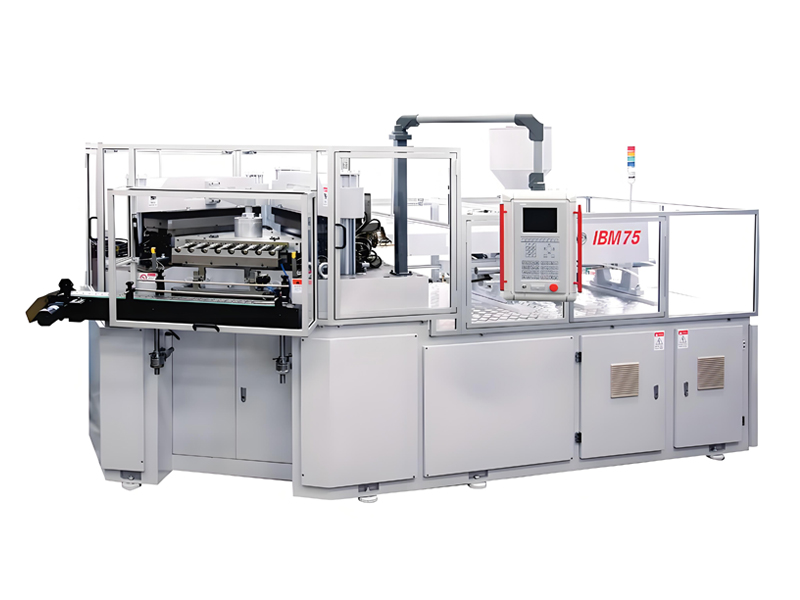
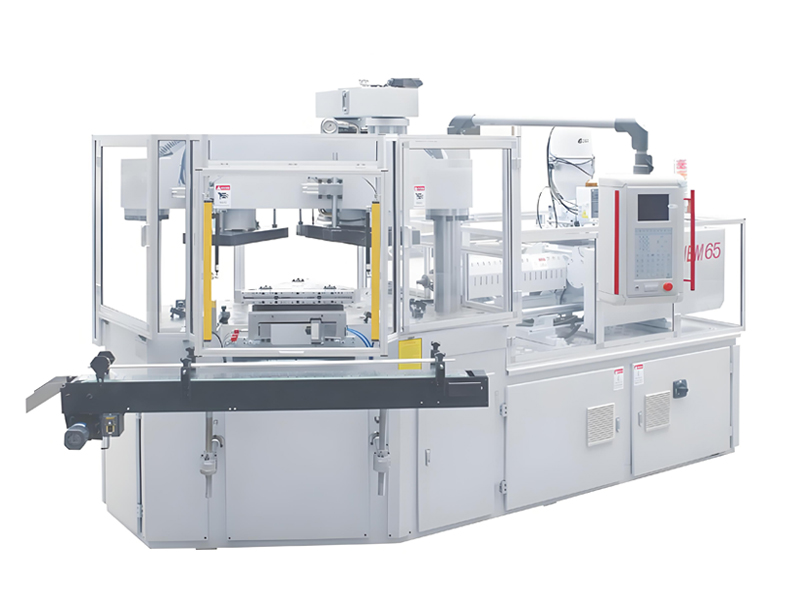
The financial case for waste reduction is straightforward even without quoting absolute figures: a lower scrap rate and a thinner average wall both reduce the resin needed per thousand bottles, and that reduction recurs on every production run for the life of the tool. For a factory running an Aibim IBM75, IBM65, or IBM55 Hybrid Electric across pharmaceutical, food, drink, and cosmetic applications, disciplined material management can move resin consumption from a Medium cost band toward a Low one. The methods below are ordered from the structural — features built into the IBM process itself — to the operational, where operator discipline and parameter control deliver the marginal gains that compound over time.
Why IBM Inherently Minimizes Scrap
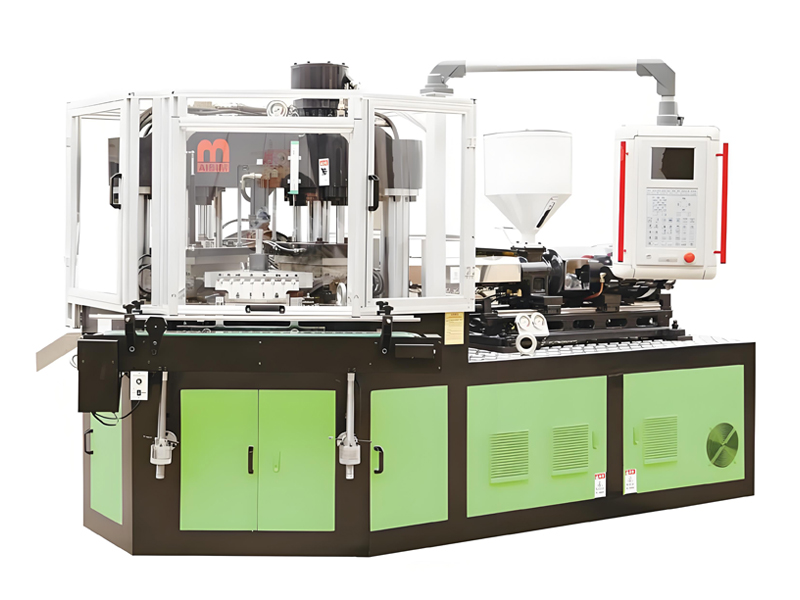
The defining waste advantage of injection blow molding is that it produces no flash and no trimmed scrap edges. In extrusion blow molding, a parison is extruded and pinched at the base, leaving a tail and a bottom weld that are trimmed away; in stretch blow molding, a preform is reheated and blown, and while scrap is low, the preform gate and neckring flashes still exist. In IBM, the three-station turret — injection of the parison onto a core rod, blow in the cavity, and ejection — keeps the molten material entirely inside tooling. The neck and thread are injection molded to final dimension, and the body is expanded against a closed mold wall, so the only material that leaves the machine is finished bottle plus a small gate.
This structural property matters for two reasons. First, it removes an entire waste category — edge and flash scrap — that other processes must granulate, regrind, or discard. Second, it removes the labor and energy associated with trimming and deflashing, which in other processes adds both direct cost and a secondary quality risk where trimming can introduce particles or nicks. For pharmaceutical and cosmetic primary packaging, where cleanliness is governed by GMP and ISO 15378, eliminating a trimming step also reduces a contamination pathway, so the waste benefit is compounded by a quality benefit.
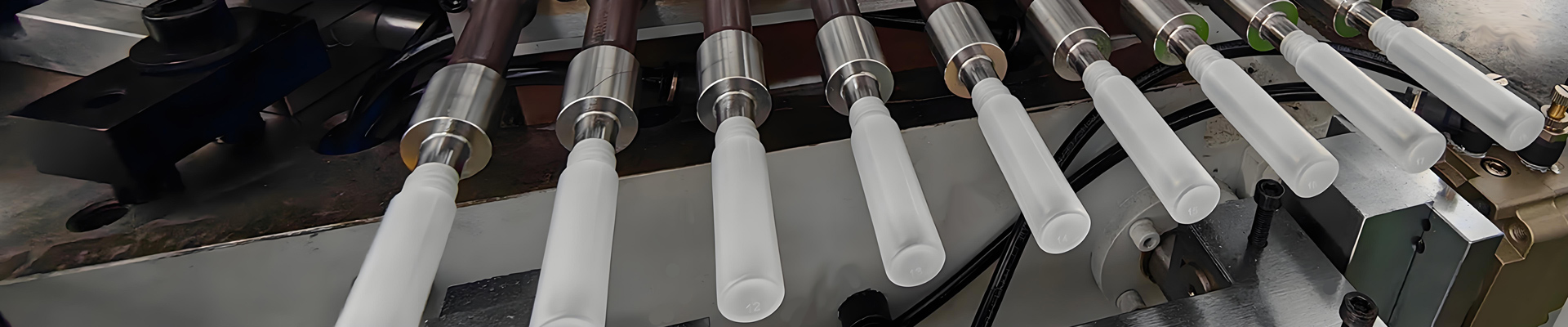
The core rod is central to this efficiency. Because the parison is formed on a temperature-controlled core rod and then transferred, the parison geometry is repeatable and the material is placed precisely where it is needed. There is no over-thick pinch zone or variable parison wall to compensate for, which lets the bottle wall be more uniform and therefore thinner on average for the same performance. Aibim’s three-station one-step architecture, covering containers from 3 ml to 1000 ml, is built around this principle, and its energy-saving design (the company cites a minimum 35 percent energy reduction versus older hydraulic baselines) further lowers the embedded energy per bottle, which is itself a form of resource waste.
Gate and Runner Recovery in IBM Versus Other Processes
Even in a flash-free process, a small gate connects the injected parison to the machine nozzle, and this gate, together with any sprue, becomes the primary solid waste of steady-state IBM production. The question for a waste-conscious factory is whether this material can be recovered. The answer depends on the material grade and the regulatory context: in many industrial and cosmetic applications, the gate and sprue can be granulated and re-introduced as controlled regrind, whereas in pharmaceutical and food-contact applications the permitted regrind ratio is tightly restricted or prohibited by GMP, FDA, EU 10/2011, or GB 4806 requirements.
The table below contrasts the recovery profile of IBM with two alternative blow-molding routes. The point is not that IBM always recycles more — it is that IBM generates far less recoverable-but-trimmed scrap in the first place, so the absolute mass sent to granulation is smaller and the regrind decision is simpler.
Scrap and Recovery Profile by Process
| Process | Primary Waste Stream | Recoverable? | Net Material Loss Band |
|---|---|---|---|
| Injection Blow Molding (IBM) | Small gate / sprue only | Yes, where grade permits | Low |
| Extrusion Blow Molding (EBM) | Bottom tail, flash, neck flash | Yes, where grade permits | Medium |
| Stretch Blow Molding (ISBM / PET) | Preform gate, neck ring | Limited | Low to Medium |
| Injection Molding (closed containers) | Sprue, runners, gates | Yes, where grade permits | Medium |
When regrind is permitted, the discipline that protects material properties is a capped and consistent regrind ratio. Introducing too much regrind, or regrind of inconsistent history, degrades melt-flow stability and can raise the reject rate — which would defeat the purpose by increasing total waste. A practical approach is to blend a controlled percentage of clean, same-grade granulate back into virgin feed and to monitor key properties such as melt-flow index and color shift. For medical-grade containers needing USP Class VI or ISO 13485 traceability, factories should follow the controlling specification; many such specs forbid post-consumer or even in-house regrind in the primary layer.
The gate design itself influences recoverable mass. A compact, well-placed gate minimizes the solid sprue that must be separated, and modern IBM tooling is optimized to keep this small. Because Aibim’s SD-card recipe storage lets a process be reproduced exactly across machines, the gate and transfer conditions stay consistent, which keeps the per-bottle gate mass predictable and makes any regrind stream uniform — a small but real contributor to stable material yield.
Wall Thickness Optimization and Lightweighting
Once flash and edge scrap are removed, the largest remaining material-saving opportunity is the average wall thickness of the bottle itself. Lightweighting — reducing wall thickness while maintaining the mechanical and functional performance required — directly lowers resin per bottle. In IBM this is especially tractable because the blown wall is formed against a cavity and the parison wall on the core rod can be tuned, giving good control over the final distribution. The goal is to remove material from regions that do not carry load or seal function and retain it where it does, such as around the neck and thread.
A structured lightweighting program proceeds in three steps. First, map the current wall profile using sectioning or non-destructive measurement to find over-thick zones. Second, adjust the parison transfer and blow conditions, and where needed the core-rod and cavity geometry, to thin the non-critical sections. Third, validate that the lighter bottle still meets drop, top-load, and seal-integrity requirements for its application. Because the neck is injection molded to tight tolerance, the critical sealing feature is preserved even as the body wall is reduced, which is why IBM supports aggressive lightweighting without sacrificing thread consistency.
Wall Thickness Levers
| Lever | Effect on Material | Risk to Manage |
|---|---|---|
| Reduce body wall target | High saving | Drop / top-load failure |
| Optimize parison distribution | Medium saving | Local thin spots |
| Tighten cavity cooling control | Low to Medium | Cycle-time increase |
| Standardize neck finish | Medium (less over-design) | Cap compatibility |
| Use higher-MFI grade | Enables thinner walls | Property shift, cost |
The compounding effect of lightweighting is large because it multiplies across volume. A reduction of a few percent in average wall, sustained across millions of bottles per year, translates into a meaningful double-digit reduction in annual resin consumption for a high-volume line, moving material cost from one band toward a lower one without changing the number of bottles produced. The constraint is performance: pharmaceutical and cosmetic containers must still survive filling, capping, transport, and consumer use. Validating against the real duty cycle — not just a nominal specification — prevents the common failure where an over-aggressive weight cut raises the reject rate and therefore increases total waste.
For factories running multiple SKUs, standardizing neck finishes and body diameters where possible lets a smaller set of optimized wall profiles be reused, reducing the engineering effort per SKU and the scrap generated during each individual optimization. This standardization also simplifies the regrind and color-change discipline discussed later.
Material Selection: MFI and Shrinkage of PP, PE, PS, PETG
Material choice is a quiet but powerful waste lever. Different resins have different melt-flow index (MFI) and shrinkage behavior, and these determine how easily a thin, uniform wall can be molded and how much post-mold shrinkage must be compensated. Choosing a grade whose processing window matches the container design reduces rejects, which is the waste that matters most once flash is eliminated.
PP and HDPE are generally forgiving: broad processing windows, low moisture sensitivity (no drying required), and predictable shrinkage make them low-reject materials in IBM. PS offers clarity and stiffness but is more brittle and sensitive to stress, so its scrap is more often driven by handling and ejection than by molding. PETG and PC deliver clarity and chemical resistance for premium cosmetic and medical applications but require tighter drying and temperature control; their scrap rate is more sensitive to process discipline. The table below summarizes typical directional behavior; exact MFI and shrinkage values vary by grade and should be confirmed against the resin supplier’s data sheet.
Directional Material Behavior in IBM
| Material | Melt-Flow Tendency | Shrinkage Tendency | Drying Need | Reject-Risk Band |
|---|---|---|---|---|
| PP | Medium to High MFI common | Medium | None | Low |
| HDPE / PE | Medium MFI common | Medium to High | None | Low |
| PS | Medium MFI common | Low to Medium | Low | Medium (brittle) |
| PETG / PCTG | Medium MFI | Low to Medium | Medium | Medium |
| PC | Lower MFI | Low | High | Medium to High |
| ABS / SAN | Medium MFI | Low to Medium | Medium | Medium |
Shrinkage matters for waste because over-sized or inconsistent shrinkage forces designers to add wall or tolerance margin, which means more material, and it drives dimensional rejects at the neck where the cap must seat. A material with predictable, moderate shrinkage lets the tool be cut closer to net shape, trimming both material and reject rate. MFI matters because a resin that flows readily at a safe temperature fills thin walls without over-packing, reducing both short shots (reject) and over-pack spikes (wasted material). Selecting the right grade — rather than defaulting to a familiar one — is a low-cost, high-leverage waste-reduction step that pairs naturally with the lightweighting work in the previous section.
Color and additive systems also affect waste. Frequent color changes generate purge loss, discussed next, and some additives (such as certain clarifiers or fragrances) narrow the processing window. A factory that consolidates its color palette and qualifies a small set of masterbatches reduces both changeover waste and the variability that drives rejects. Where regulatory contact compliance is required — FDA, EU 10/2011, GB 4806 for food, or USP Class VI and ISO 13485 for medical — the approved color and additive list should be the starting point, with waste optimization applied within those approved options.
Start-up Waste and Purging Reduction
In a flash-free process the dominant waste is not steady-state scrap but the material lost during start-up, color change, and grade change. When a machine is brought online, the first parisons may be off-spec until temperatures and transfer timing stabilize; when a color or material is changed, the barrel and hot runner must be purged of the previous melt. Both events consume resin that becomes scrap. Reducing this loss is among the highest-return waste initiatives because it improves yield without altering the product.
Practical measures begin with disciplined warm-up and first-article qualification: rather than running full speed immediately, the operator stabilizes temperatures and takes a small set of qualification shots, discarding only those few rather than a long stream. Modern IBM controls, including recipe storage on SD card as used by Aibim machines, let the exact qualified parameter set be reloaded for a given SKU, which shortens the unstable window on every re-start and reduces the number of off-spec bottles. The PREFILL hydraulic technology also contributes by stabilizing injection pressure, which tightens the window between “not yet stable” and “in specification.”
For color and material changes, purge reduction techniques include using a compatible purge compound, sequencing changes from light to dark or from similar to dissimilar melt-flow grades to minimize cross-contamination, and, where the product mix allows, grouping production so that a given color runs in a continuous block rather than being interrupted. Each avoided partial purge is a direct material saving. For factories running many cosmetic shades, production scheduling — not machine modification — is frequently the largest single contributor to lower purge waste.
Another start-up lever is the hot-runner and manifold design. A compact manifold holds less melt, so less material must be displaced during a change. While the end user cannot redesign the machine at will, choosing a platform with an efficient melt path, and keeping it clean and well maintained, reduces the mass that must be purged at every transition. Aibim’s compact single-crossbeam clamping framework and efficient hydraulic design support shorter, more stable cycles that also help the machine reach specification faster after a start.
Drying Energy and Moisture Control
Drying is a form of resource consumption that is closely linked to material waste, because under-dried resin produces splay, brittleness, and dimensional rejects, while over-dried resin wastes energy and can degrade heat-sensitive grades. The good news for IBM is that the two largest-volume materials — PP and PE — require no drying at all, which removes a whole energy and quality-risk stream for those grades. Materials that do need drying, such as PETG, PC, ABS, and SAN, demand disciplined moisture control to keep both energy and scrap low.
The table below maps drying need to waste-related practice. The principle is to dry only what is necessary, to the specification, and no more, using a dehumidifying dryer sized to the actual throughput rather than the machine’s maximum. Oversized or poorly managed dryers waste energy continuously, and that energy is itself a resource cost that a waste-reduction program should count.
Drying Requirement and Practice
| Material | Drying Requirement | Risk if Under-Dried | Practice to Minimize Waste |
|---|---|---|---|
| PP / PE | None | Minimal | Skip drying, save energy |
| PS | Low | Splay, brittleness | Dry to low dewpoint if needed |
| PETG / PCTG | Medium | Silver streak, weak weld | Closed-loop dehumidifying dryer |
| ABS / SAN | Medium | Surface defect, reject | Controlled hopper residence |
| PC | High | Severe splay, hydrolytic cut | Strict dewpoint and time |
Moisture control also protects material directly. Hydrolysis in PC, for example, permanently reduces molecular weight and therefore properties, meaning under-dried PC is not merely a cosmetic reject but a material that has been chemically spoiled and must be scrapped. Tight moisture management thus prevents a category of waste that cannot be recovered by regrind. For small factories, the practical steps are a correctly sized dehumidifying dryer, sealed conveying from dryer to machine to avoid re-absorption, and a logged drying record that supports GMP and ISO 15378 documentation while also revealing energy waste when settings drift.
Energy waste deserves a place in any material-yield discussion because the embedded energy of resin is substantial. Aibim cites a minimum 35 percent energy reduction versus older hydraulic baselines through PREFILL and variable-displacement pump pressurization; pairing that with right-sized drying and clean heat recovery where available lowers the total resource footprint per bottle. For factories in regions with High energy tariffs, the energy saving alone can be as financially meaningful as a comparable reduction in resin scrap.
Process Parameter Tuning to Reduce Reject Rate
Most steady-state IBM waste is reject bottles rather than trimmed scrap, so parameter control is the daily discipline that protects yield. The core-rod temperature, injection speed and pressure, blow-air pressure and timing, and cavity cooling all interact to determine whether the parison transfers cleanly and the bottle forms without short shots, weld lines, or dimensional drift. Small, consistent settings beat large, frequently changed ones.
A practical tuning routine starts from a qualified baseline recipe and changes one variable at a time, recording the result. Because the neck is the precision feature, monitoring neck diameter and thread gauge at the start of each run catches drift before it becomes a batch of rejects. Cavity cooling deserves special attention: under-cooling lengthens cycle time and can cause ejection deformation (a reject), while over-cooling wastes energy; the optimum is the shortest cooling that still yields a dimensionally stable bottle. Tight, repeatable cooling also supports the thinner walls targeted in lightweighting without increasing rejects.
Blow-air management is another yield lever. Insufficient or mistimed air leaves the wall short of the cavity (thin or incomplete), while excessive air wastes compressed-energy and can stress the part. Stabilizing air pressure and sequencing the blow to coincide with the parison’s optimum formability window reduces both incomplete fills and over-stressed rejects. Aibim’s PREFILL hydraulics and consistent clamping framework help hold these conditions steady across long runs, which is exactly when small, cumulative reject increases do the most damage to annual yield.
Finally, preventive maintenance protects yield indirectly. Worn core rods, leaking heaters, or drifting temperature controllers introduce variability that shows up as rejects. A scheduled maintenance plan — the kind a supplier-backed rental agreement includes, or that an owning factory runs in-house — keeps the process centered. For pharmaceutical and cosmetic lines, this maintenance must be documented for GMP and ISO 15378, turning a waste-control activity into a compliance activity at the same time.
Scrap Rate Benchmarks and Continuous Improvement
What gets measured gets reduced. A factory serious about material waste should track scrap rate by category — start-up, color change, dimensional reject, cosmetic reject, regrind generated — and review it per SKU and per shift. The benchmark bands below are directional: a well-controlled IBM line typically operates at a low overall scrap band, with most loss concentrated in start-up and color-change rather than steady-state production. A line that shows high steady-state scrap usually has a parameter, material, or tooling issue to chase, not an inherent process limitation.
Scrap Category and Improvement Action
| Scrap Category | Typical Share | Primary Improvement Action |
|---|---|---|
| Start-up / stabilization | Medium to High share | Recipe reload, qualified warm-up |
| Color / grade change purge | Medium share | Production scheduling, purge compound |
| Dimensional reject | Low share (IBM) | Parameter and cooling control |
| Cosmetic reject | Low to Medium | Drying, contamination control |
| Gate / sprue | Low, often recovered | Compact gate, regrind where allowed |
Continuous improvement works best when the scrap data feeds a simple loop: measure, identify the largest category, apply a countermeasure, re-measure. Because IBM’s waste is dominated by start-up and changeover rather than by inherent flash, the highest-leverage actions are usually scheduling and recipe discipline rather than capital investment. Over several cycles, this loop can move a line from a Medium scrap band to a Low one, and the resin saving recurs on every subsequent run.
For factories pursuing recognized environmental or quality credentials, the scrap-yield metric also supports broader claims. Lower resin per bottle reduces raw-material demand and embedded energy, which aligns with the sustainability messaging many brands now require from packaging suppliers. Wanplas, the parent brand of Aibim, emphasizes environmental responsibility across its factory network, and material-yield data from IBM lines is a concrete, auditable input to those programs.
Cleanroom, GMP and Material Yield
For pharmaceutical and high-end cosmetic production, the bottling environment itself affects material yield. A cleanroom operated under GMP reduces particle contamination that would otherwise force rejection of filled or empty bottles, and disciplined material handling reduces the chance that a batch is scrapped for foreign matter. Clean, controlled conveying from dryer or blender to machine prevents both contamination rejects and the moisture re-absorption that drives PC and PETG scrap.
Compliance frameworks such as GMP, ISO 15378 for primary pharmaceutical packaging, ISO 13485 for medical devices, and contact regulations including FDA, EU 10/2011, and GB 4806 also shape what waste practices are permitted. Regrind restrictions in these contexts mean that the waste-reduction strategy shifts from “recover the scrap” to “avoid generating it” — which is precisely where IBM’s flash-free design, lightweighting, and tight parameter control earn their value. A factory that cannot freely regrind medical-grade material has even stronger reason to minimize start-up and reject waste at source, because that material cannot be recovered into the same product stream.
In practice, the cleanroom and the machine should be considered one system. Aibim’s CE-certified safety features, including a stripper station long-distance digital laser sensor and a light curtain, protect operators during the ejection phase, and the one-step enclosed process reduces the number of open handling steps where contamination — and therefore rejection — can enter. For a small factory serving regulated customers, treating material yield and cleanliness as a single program is more effective than optimizing each in isolation.
Frequently Asked Questions
Does injection blow molding produce flash or scrap edges?
No. IBM is a one-step process where the parison neck is injection molded and the body is blown in a closed cavity, so there is no parison trim and no flash. The dominant waste streams are start-up purging and occasional rejects, not edge scrap, which is why the process starts from a structurally low-waste position.
Can the gate and runner be recycled in IBM?
IBM uses a compact gate at the neck, and the sprue and gate are small. They can be granulated and, where the material and grade permit, re-introduced at a controlled regrind ratio, though pharma and food-contact grades often restrict or forbid regrind under GMP, FDA, EU 10/2011, or GB 4806.
Which material gives the lowest scrap in IBM?
PP and HDPE are generally forgiving with broad processing windows and no drying requirement, giving lower reject rates. PETG and PC need tighter drying and temperature control, so their scrap rate is more sensitive to process discipline and moisture management.
How much can wall thickness optimization save?
Even a small reduction in average wall thickness compounds across millions of bottles; lightweighting of a few percent in wall can translate into a meaningful double-digit reduction in annual resin consumption for a high-volume line, lowering material cost without changing output.
Does IBM help with drying energy?
Yes, for the materials that need it. Because only the injected parison is melted rather than an entire extruded parison, and because PP and PE need no drying at all, the thermal and drying load is lower than in processes that precondition larger melt masses, reducing both energy and moisture-related rejects.
What scrap rate should a well-run IBM line target?
A well-controlled IBM line typically operates at a low scrap band, with the majority of loss concentrated in start-up and color-change sequences rather than steady-state production. Exact targets depend on material, color, and container geometry, and should be tracked per SKU and per shift.
How does regrind affect bottle quality?
Controlled, same-grade regrind blended at a capped ratio usually has negligible effect, but excessive or inconsistent regrind degrades melt-flow stability and can raise rejects. In regulated medical or food applications, regrind is often prohibited in the primary layer, making source reduction the preferred strategy.
Is lightweighting safe for pharmaceutical containers?
It is safe when validated against the real duty cycle — drop, top-load, and seal integrity — rather than a nominal spec. Because the injection-molded neck and thread are preserved at full strength, IBM supports aggressive body-wall reduction while keeping the critical sealing feature intact.
Conclusion
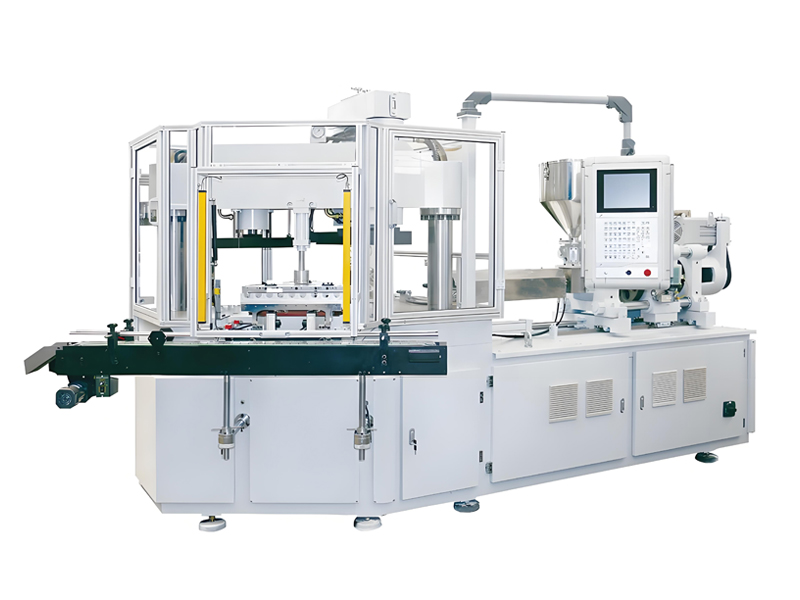
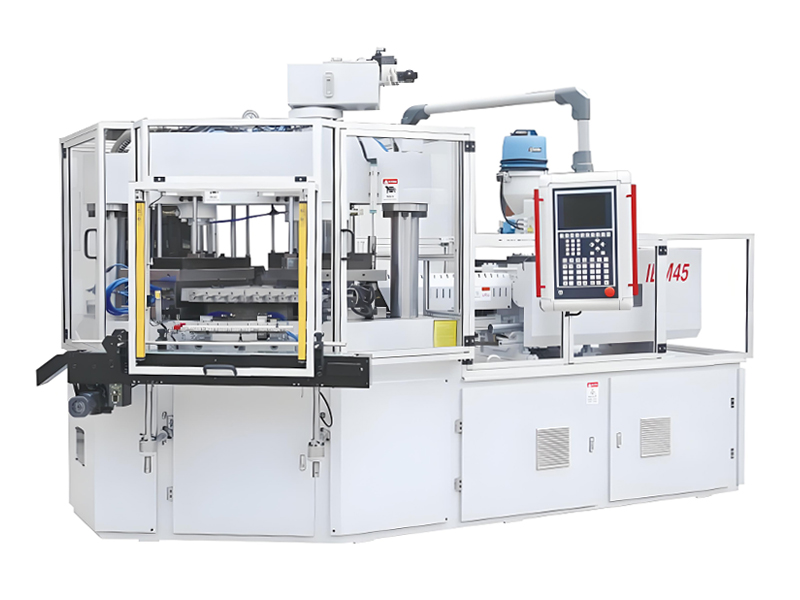
Material waste reduction in injection blow molding is best understood as a stack of methods, from the structural advantage of a flash-free, one-step process down to the daily discipline of start-up qualification, drying control, and parameter tuning. An injection blow molding machine such as Aibim’s IBM75, IBM65, or IBM55 Hybrid Electric already removes the largest waste category — flash and trimmed edges — and its energy-saving hydraulics lower the embedded energy per bottle. The remaining gains come from gate recovery where grades permit, wall thickness optimization and lightweighting, careful material selection by melt-flow index and shrinkage, purge-minimizing production scheduling, right-sized drying, and a measured scrap-improvement loop. For regulated pharmaceutical and cosmetic lines, where regrind is often restricted, the emphasis shifts to avoiding waste at source, which is exactly where IBM’s precision and cleanliness pay off. As a Wanplas factory, Aibim places these capabilities within a broader group portfolio, helping small and medium producers of precision containers turn material yield into a durable, repeatable competitive advantage.