For a small factory producing pharmaceutical vials, cosmetic jars, or other small precision containers, the decision between buying and renting an injection blow molding machine sits at the center of every five-year business plan. An injection blow molding machine (IBM) manufactures bottles in a single, flash-free operation, making it the natural choice for tight-tolerance pharmaceutical and cosmetic packaging where neck finish and thread consistency decide whether a cap seats correctly. Yet the machine is only one side of the equation. The financing structure around it — outright purchase, hire purchase, or operating rental — shapes cash flow, maintenance exposure, technology currency, and ultimately the unit economics of every bottle that leaves the plant. This article compares buying and renting across the dimensions that matter most to small manufacturers: capacity utilization, maintenance responsibility, technology upgrade, cash flow, depreciation, and second-hand residual value.
Small factories rarely enjoy the balance-sheet cushion of large contract packagers, so a wrong call on acquisition strategy can tie up working capital for years or leave the business paying a premium for flexibility it rarely uses. The right answer is not universal; it depends on how many hours per day the machine will run, how stable the order book is, and how quickly the relevant process technology is moving. Below we build a structured comparison using relative cost bands — Low, Medium, High, Very High, and Premium — rather than absolute figures, because resin, freight, and financing conditions vary by region and quarter. By the end, a small factory manager should be able to map their own utilization profile onto a decision framework and choose with confidence.
Understanding the Injection Blow Molding One-Step Process
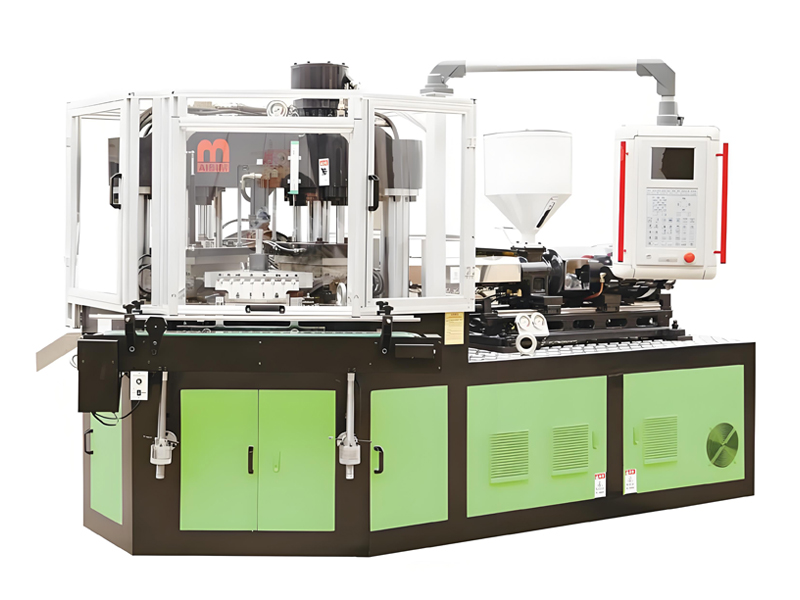
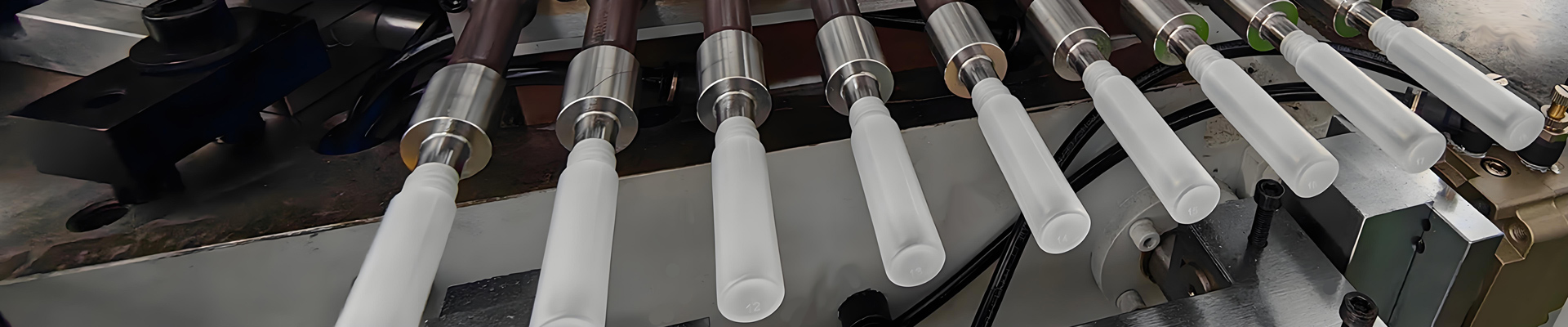
An injection blow molding machine is a three-station, one-step hollow molding system that converts plastic resin into a finished bottle without an intermediate handling step. In the first station, a precisely metered shot is injected around a core rod to form a parison — a hollow, pre-shaped tube with a fully formed neck and thread. In the second station, the heated parison on its core rod is transferred into a blow mold where compressed air expands it against the cavity wall to create the bottle body. In the third station, the finished container is stripped from the core rod and ejected. Because the neck and thread are molded by injection rather than cut or blown, the result is a flash-free article with exceptionally consistent opening dimensions, which is why IBM dominates unit-dose pharma and high-end cosmetic packaging.
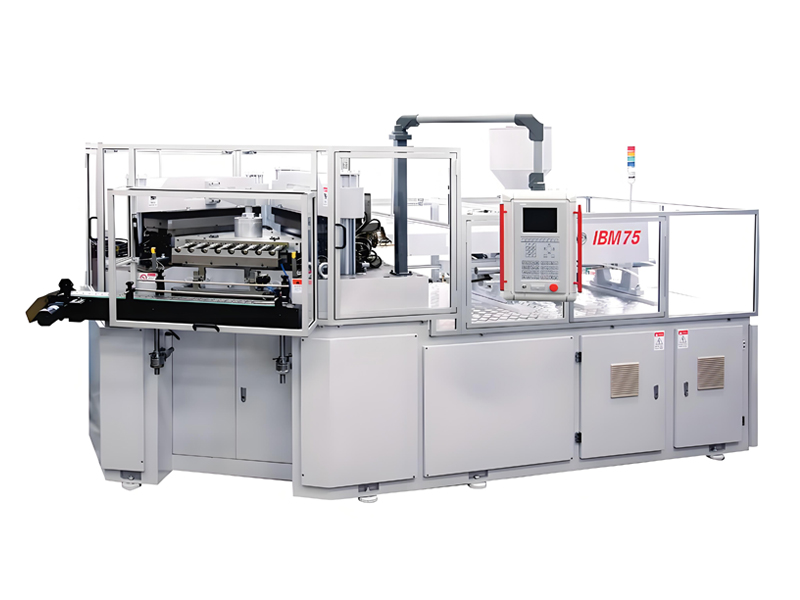
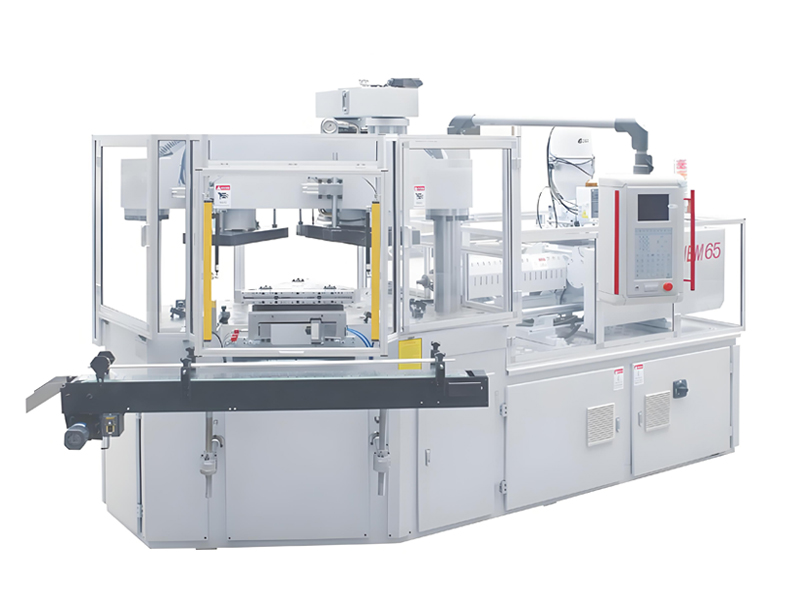
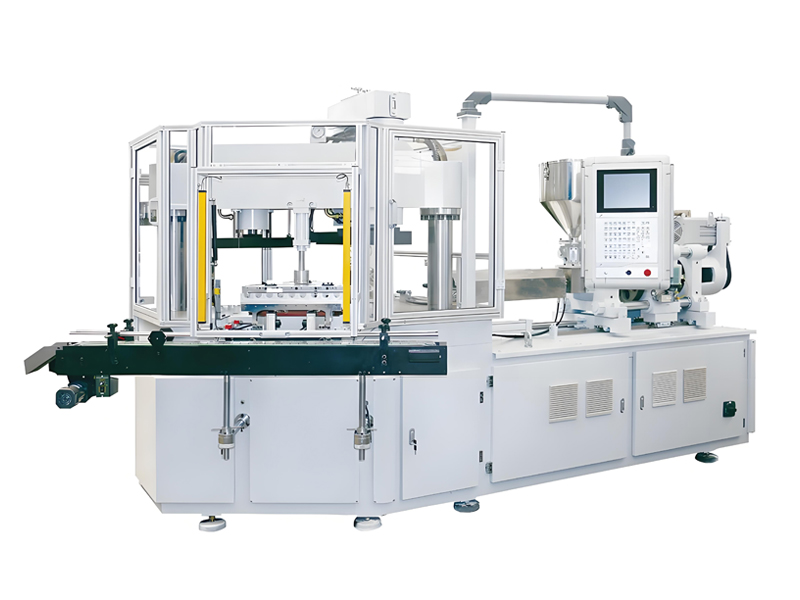
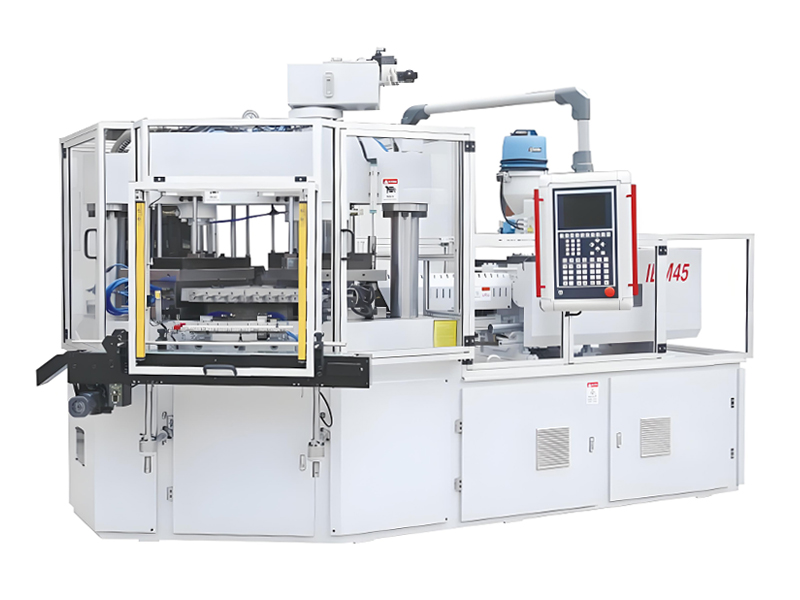
The three-station turret — injection, blow, and ejection — rotates on a central index, and some advanced platforms extend to a four-station layout to add conditioning or inspection. The core rod is the defining component: it carries the parison, sets the internal bottle geometry, and must hold a tight temperature window so the parison stays formable yet dimensionally stable during transfer. Aibim, a Wanplas factory, builds this architecture into its IBM75, IBM65, and IBM55 Hybrid Electric models, covering container sizes from 3 ml to 1000 ml. The one-step nature matters directly for the buy-versus-rent question because it concentrates all process risk, energy use, and maintenance onto a single integrated asset rather than a chain of separate machines.
Materials processed on IBM equipment typically include PP, PE (HDPE, LDPE, LLDPE), PS, ABS, SAN, TPU, PC, and PCTG, each with distinct melt-flow index and shrinkage behavior that influence cycle time and reject rate. Processable materials, bottle-size range, and neck-precision requirements all feed into how intensively a factory will use the machine, and utilization is the single largest driver of whether ownership or rental is cheaper. Before weighing financing, a small factory should be clear that IBM is chosen for precision and cleanliness — often under GMP and ISO 15378 for pharmaceutical primary packaging — and that these compliance burdens exist regardless of whether the machine is owned or rented.
Capital Outlay: Buying Versus Renting at a Glance
The most obvious difference between buying and renting an injection blow molding machine is when and how the money leaves the business. Buying concentrates cost upfront: the machine price, the mold set for each bottle design, freight, installation, and operator training. Renting spreads the same capability across a stream of periodic payments and usually folds maintenance, consumables, and sometimes molds into that stream. For a small factory with limited working capital, the upfront concentration of ownership is the primary barrier, while the recurring nature of rental is its primary attraction.
The table below summarizes the relative cost posture of each model across the lifecycle. Bands are indicative; the exact position of any individual factory depends on machine size, automation level, and local financing terms.
Relative Cost Posture by Lifecycle Stage
| Cost Dimension | Buying (Outright / Hire Purchase) | Renting (Operating Lease) | Notes for Small Factories |
|---|---|---|---|
| Initial cash outlay | Very High | Low | Rental typically needs only a deposit and first period |
| Monthly fixed cost | Low (after payoff) to Medium (with loan) | Medium to High | Rental stays constant across the term |
| Mold investment | High (owned asset) | Medium (often shared or financed) | Molds are needed in both cases |
| Maintenance burden | High (buyer funded) | Low (supplier funded) | Key differentiator for small teams |
| Technology refresh cost | Very High (new purchase) | Low (return at term) | Rental decouples from obsolescence |
| End-of-term value | Residual asset on books | Zero (no equity) | Ownership builds balance-sheet value |
| Total cost at low use | High (idle asset still depreciates) | Medium (pay for access) | Rental protects against idle capacity |
| Total cost at high use | Low per unit (fully amortized) | High (continuous payments) | Ownership wins on throughput |
Reading the table, the pattern is clear: ownership front-loads cost and back-loads savings, while rental smooths cost but never reaches the low marginal cost of a fully paid machine. A small factory must therefore estimate how many shifts it will realistically run before choosing. The next sections quantify that judgment across the six dimensions requested.
Capacity Utilization and Output Volume
Capacity utilization is the pivot on which the entire buy-versus-rent decision turns. An injection blow molding machine earns its keep only when the turret is indexing through real production rather than sitting idle. At low utilization — say a single shift running well below nameplate rate, or sporadic orders that leave the machine idle for days — the fixed cost of ownership is spread over few bottles, driving unit cost upward. At high utilization across two or more shifts, the owned machine amortizes its acquisition cost over a large volume, and per-unit economics improve dramatically compared with a rental whose payments never stop.
For small factories, the honest utilization question is uncomfortable: many underestimate how often the machine will actually run. A cosmetic startup with one hero SKU may project strong volume that fails to materialize, leaving an expensive asset idle. A contract packager with several stable pharma clients may run near-continuously. The table below maps typical utilization bands to the relative advantage of each model.
Utilization Band Versus Ownership Advantage
| Utilization Profile | Typical Annual Run Hours | Cost Advantage | Recommended Model |
|---|---|---|---|
| Seasonal / pilot (one shift, intermittent) | Low (under 2,000) | Rental | Rent to preserve cash and flexibility |
| Single steady shift | Medium (2,000 to 4,000) | Neutral to slight buy | Buy if order book is contracted |
| Double shift, mixed SKUs | Medium-High (4,000 to 6,500) | Buy | Ownership with spare molds |
| Near-continuous (multi-shift) | High (6,500 plus) | Strong buy | Own multiple units, stagger maintenance |
| Uncertain / ramp-up | Variable | Rental then buy | Rent during validation, buy at scale |
A useful discipline is to model the per-bottle cost contribution of the machine under each scenario before committing. When a small factory rents, the machine cost per bottle stays roughly proportional to volume because payments are fixed in time, not in units — so low volume means high per-unit machine cost. When a factory owns and the machine is paid off, the machine cost per bottle falls toward the energy-and-labor floor. Aibim’s IBM55 Hybrid Electric, for example, is positioned for smaller containers and lower output needs, making it a candidate where a small factory anticipates the medium utilization band and wants to avoid the Very High upfront cost of a larger platform.
Output volume also interacts with mold strategy. Each bottle design requires its own mold set, and changeovers consume time. A factory with many SKUs but low volume per SKU may find that the idle time between changeovers keeps effective utilization low regardless of nominal shift count — another argument for rental during the exploration phase, with a later transition to ownership once the SKU mix stabilizes.
Maintenance Responsibility and Downtime Risk
Maintenance is where the buy-versus-rent gap becomes operational rather than financial. An injection blow molding machine integrates hydraulic, electrical, servo, and thermal subsystems: the injection unit, the clamping framework, the rotary turret, the core-rod temperature control, and the blow-air system. Any of these can fail, and a failure stops every station at once because the process is one integrated step. For a small factory without a dedicated maintenance crew, that single point of failure is a serious risk.
Under a rental or operating-lease agreement, maintenance responsibility typically stays with the supplier. The small factory reports a fault and the supplier dispatches an engineer, supplies parts, and absorbs the cost. This transfers both the expense and the expertise requirement away from the buyer. Under ownership, every filter, seal, heater band, and controller failure is the factory’s cost and the factory’s problem to diagnose. The trade-off is that the rental payments embed a maintenance premium, so the small factory pays for coverage it may rarely use.
Maintenance Burden Comparison
| Maintenance Element | Ownership (Buyer) | Rental (Supplier) | Impact on Small Factory |
|---|---|---|---|
| Routine preventive service | Buyer schedules and pays | Supplier includes | Rental reduces planning load |
| Spare parts inventory | Buyer stocks critical spares | Supplier holds stock | Ownership ties up working capital |
| Unplanned breakdown cost | High (lost output plus repair) | Low (covered, minus downtime) | Rental limits financial shock |
| Technical expertise needed | Medium to High | Low | Rental suits lean teams |
| Calibration for GMP / ISO 15378 | Buyer documents | Supplier often supports | Both must keep records |
| Response time control | Buyer controls priority | Contractual SLA | Ownership gives direct control |
Downtime risk deserves special attention for pharmaceutical and cosmetic producers, where a missed shipment can breach a supply agreement. A owned machine lets the factory prioritize its own repair and keep a deeper spare-parts buffer, but only if it has invested in the skill to do so. A rented machine offers predictable support but introduces dependence on the supplier’s response time and the terms of the service-level agreement. Small factories with one or two technicians usually find rental’s bundled maintenance the lower-stress path, whereas factories building an in-house engineering capability may prefer ownership and its full control.
Technology Upgrade and Obsolescence
Plastic molding technology does not stand still. Control systems migrate from relay logic to servo-electric and hybrid platforms; energy-saving hydraulics such as variable-displacement pump pressurization replace fixed pumps; and connectivity for remote monitoring becomes standard. An injection blow molding machine purchased today will be several generations old by the time its depreciation schedule ends. For a small factory, the question is whether locking in one generation is acceptable or whether staying current is strategically necessary.
Rental structurally solves obsolescence. At the end of the rental term, the small factory returns the machine and can take a newer model on a fresh agreement, keeping pace with efficiency and compliance features without a second capital outlay. Ownership, by contrast, commits the factory to the purchased generation. Upgrading then requires disposing of the old machine — at a residual value that may be modest — and funding a new purchase, a Very High cost event.
This matters for energy consumption in particular. Newer IBM platforms, including hybrid-electric designs, can deliver meaningful energy reduction per cycle compared with older hydraulic units. Over a multi-year horizon, that efficiency gap compounds into a real operating-cost difference. A renting factory captures the improvement automatically at renewal; an owning factory captures it only by reinvesting. For small factories in regions with High energy tariffs, the cumulative saving from a newer platform can shift the calculation toward rental even at moderate utilization.
Obsolescence also has a compliance dimension. Pharmaceutical primary packaging increasingly expects traceability, data logging, and validation-friendly controls aligned with GMP, ISO 15378, and ISO 13485. Older machines can often be retrofitted, but retrofits cost money and may not satisfy every auditor. A rental fleet refreshed on a regular cycle tends to stay within the accepted compliance envelope more easily than a fleet of aging owned machines.
Cash Flow, Depreciation, and Balance Sheet Impact
Cash flow is where small factories feel the financing decision most acutely. Buying an injection blow molding machine removes a Very High sum from the business at once, or commits it through a hire-purchase loan with regular repayments. Either way, the asset sits on the balance sheet and depreciates over its useful life. Renting keeps the outflow as a recurring operating expense that is easier to model and, in many jurisdictions, treated differently for tax, though specific treatment depends on local rules and should be confirmed with the factory’s accountant.
Depreciation is a non-cash charge that still shapes how the business looks to lenders and investors. An owned machine contributes a depreciating asset and, eventually, a fully written-down tool that still produces value — favorable for balance-sheet strength. A rented machine leaves no asset and no equity; the capability is consumed as it is paid for, which can be attractive for a factory that prioritizes liquidity over asset accumulation. The table below contrasts the two on financial-structure grounds.
Financial Structure Comparison
| Financial Aspect | Buying | Renting | Small-Factory Implication |
|---|---|---|---|
| Working capital impact | Very High upfront drain | Low, predictable outflow | Rental protects liquidity |
| Balance-sheet asset | Yes (depreciating) | No | Ownership builds collateral |
| Predictability of cost | Variable (repairs, parts) | Fixed per period | Rental eases budgeting |
| Interest / financing cost | Medium to High (loan) | Embedded in rent | Compare total over term |
| Flexibility to exit | Low (must sell asset) | Medium (term end) | Rental easier to exit |
| Cost per unit at scale | Low | High (ongoing) | Ownership rewards volume |
The cash-flow argument is rarely about which is absolutely cheaper in theory; it is about which keeps the factory solvent during the inevitable uneven months. A small factory with a Medium but stable order book may comfortably own, because repayments are predictable and the asset backs future borrowing. A small factory with volatile demand may prefer rental precisely because the outflow scales with the decision to keep the machine rather than with a fixed loan covenant. Depreciation, meanwhile, is an accounting reflection of the machine’s declining value — relevant because the eventual resale price will rarely match the book value, a point expanded in the next section.
Residual Value and the Second-Hand Market
When a small factory buys an injection blow molding machine, it acquires an asset that will later be sold, traded, or scrapped. The second-hand value recovered at end of life offsets part of the original cost and is a genuine component of total cost of ownership. The catch is that IBM equipment, while durable, does not hold value as strongly as some general machinery, because buyers of used units worry about hidden wear in the turret bearings, core-rod condition, and control electronics, and because model-specific molds may not transfer.
A well-maintained machine from a recognized brand retains a moderate fraction of its original value, while a neglected or obsolete-control unit depreciates much faster. Factors that protect residual value include: documented maintenance history, availability of original control software, a healthy supply of compatible molds, and continued manufacturer support. Aibim’s policy of an own CNC center for machine parts and a new factory established in 2022 supports longer-term spare-parts availability, which indirectly protects the resale value of its installed base.
Residual Value Drivers
| Factor | Effect on Residual Value | Action to Protect Value |
|---|---|---|
| Maintenance records | Strong positive | Keep full service log |
| Control generation | High if current | Prefer upgradeable controls |
| Core-rod wear | Negative if heavy | Monitor and refurbish |
| Mold compatibility | Positive if common | Standardize neck finishes |
| Brand support | Positive if active | Choose supported brand |
| Obsolescence | Strong negative | Plan refresh before cliff |
Rental eliminates residual-value thinking altogether: the small factory never owns equity, so it neither gains from a strong resale nor suffers from a weak one. That is liberating for a factory that dislikes forecasting used-equipment markets, but it also means the factory never converts machine payments into a salable asset. For some small businesses, the inability to pledge the machine as collateral is a real disadvantage when seeking later financing.
Decision Framework: Which Model Fits Your Factory
Combining the six dimensions yields a practical decision framework. A small factory should score itself on utilization stability, maintenance capability, technology sensitivity, cash-flow headroom, balance-sheet preference, and exit flexibility, then read the result against the patterns below. No single factor is decisive, but utilization and cash-flow headroom usually dominate.
Decision Matrix
| If your factory… | Then prefer | Because |
|---|---|---|
| Runs near-continuous, stable orders | Buy | Lowest per-unit cost at high utilization |
| Has thin working capital | Rent | Protects liquidity and avoids Very High outlay |
| Lacks maintenance staff | Rent | Supplier carries maintenance responsibility |
| Needs latest energy / compliance tech | Rent (or buy and refresh) | Avoids obsolescence risk |
| Wants asset collateral | Buy | Builds balance-sheet value |
| Faces uncertain demand | Rent then buy | Flexibility during ramp-up |
A common and pragmatic path for small factories is a hybrid: rent during product validation and demand ramp, then purchase once the SKU mix and volumes are proven. This sequencing captures rental’s flexibility when uncertainty is highest and ownership’s unit-cost advantage once the business case is confirmed. It does require discipline to plan the transition rather than perpetually renting out of habit, because perpetual rental at high utilization is the most expensive steady state.
Another nuance is scale of container and material. A factory focused on very small precision vials (3 ml to 100 ml) in PP or PS may find the IBM55 Hybrid Electric sufficient and the Medium utilization band realistic, making ownership attractive earlier. A factory producing a wide range of cosmetic jars in PETG or PC with frequent design changes may lean rental to absorb the changeover and technology churn. Cross-reference also helps: where a factory’s volume exceeds IBM’s sweet spot or requires larger containers, Wanplas’s Apollo factory supplies extrusion blow molding machines, and Wanplas’s YuDa factory supplies PET stretch-blow lines — different processes, but part of the same group’s portfolio a small factory can mix and match.
Regional financing conditions add a further layer. In markets where equipment loans carry High interest or where import duties raise the upfront price of a bought machine, the gap between buying and renting narrows or widens accordingly, and the relative cost bands above should be re-anchored to local terms. A small factory should therefore run the comparison twice — once on global list economics and once on its own landed, financed cost — before committing. The framework’s logic is unchanged, but the threshold utilization at which ownership becomes cheaper shifts with the local cost of capital, which is precisely why a generic global figure is less useful than a factory-specific model.
How Aibim Supports Both Ownership Models
Aibim, a Wanplas factory, designs its injection blow molding machines to serve small and medium producers whether they buy or rent. The product line — IBM75, IBM65, and IBM55 Hybrid Electric — spans the 3 ml to 1000 ml container range that defines pharmaceutical, food, drink, and cosmetic packaging. Several features speak directly to the cost dimensions discussed above. The PREFILL technology and variable-displacement pump pressurization in the hydraulic system target energy reduction, which lowers the operating cost that ownership exposes most. CE certification, with a stripper station long-distance digital laser sensor and light curtain, addresses safety and compliance that both owners and renters must evidence.
For factories choosing ownership, Aibim’s own CNC center supports longer-term spare-parts production, which protects the residual value argument made earlier. The SD-card parameter storage system lets process recipes be saved and re-installed across machines, shortening changeover and protecting utilization — the factor most correlated with ownership success. For factories preferring rental or a rent-to-own path, the energy-saving and compact single-crossbeam double-pole clamping framework reduces the footprint and running cost that a rental agreement must recover. As part of the Wanplas brand, Aibim shares the group’s service commitments, including an annual spare-parts allowance and an open-factory policy that lets buyers verify build quality before committing — useful evidence whether the eventual choice is to buy or to rent.
Small factories should also note that the Wanplas brand aggregates multiple specialized factories, so a single relationship can cover IBM for precision containers, EBM for larger hollow parts, PET blow molding for water and beverage bottles, and compounding extruders from the Kerke factory for in-house masterbatch. This breadth means the financing decision need not be made in isolation; a factory can phase its investment across processes as demand justifies, renting the uncertain ones and owning the proven ones.
Frequently Asked Questions
At what annual output does buying an injection blow molding machine beat renting?
For most small factories, the break-even point where ownership becomes cheaper than a multi-year rental falls in the medium-to-high utilization band. Below that band, recurring rental payments keep total cost lower and protect cash flow, while above it the amortized owned machine delivers a lower per-unit cost.
Who handles maintenance under a rental agreement?
In a typical rental or operating-lease structure, the supplier retains maintenance responsibility and supplies consumables, which transfers downtime risk away from the small factory. Ownership places that responsibility, and its cost, fully on the buyer, requiring either in-house skill or a paid service contract.
Does an injection blow molding machine hold second-hand value?
Yes, but at a level below many conventional machine tools. A well-maintained unit from a recognized brand retains a moderate fraction of its original value, while neglected or obsolete-control machines depreciate much faster due to concerns over turret, core-rod, and electronic wear.
Can a small factory upgrade technology while renting?
Rental agreements make technology refresh comparatively easy because the asset is returned at term end and a newer model can be taken on a fresh agreement. Ownership locks the buyer into the purchased generation unless they absorb a separate trade-in and replacement cost.
How does IBM compare with extrusion blow molding for small batches?
IBM produces flash-free, neck-finished bottles in one step and suits precision pharma and cosmetic containers. Extrusion blow molding, supplied by Wanplas’s Apollo factory, fits larger volumes and bigger containers where flash trimming is acceptable and per-unit machine cost may be lower.
What hidden costs should a small factory budget for when buying?
Beyond the machine price, ownership carries mold cost, installation, operator training, spare parts inventory, energy, and periodic calibration for GMP and ISO 15378 compliance. Rental bundles many of these into the periodic fee, though usually with a margin that raises the long-run total.
Is the IBM55 Hybrid Electric suitable for a first-time small factory?
The IBM55 Hybrid Electric targets smaller containers and lower output needs, making it a realistic entry point where a small factory expects the medium utilization band. Its hybrid design also reduces energy consumption, softening the operating-cost exposure of ownership for a lean team.
Should a factory rent during product validation?
Renting during validation and demand ramp is a sound sequence for uncertain projects, because it preserves flexibility and avoids a Very High commitment before the SKU mix is proven. The factory can then transition to ownership once volumes and margins are confirmed.
Conclusion
Buying and renting an injection blow molding machine are not simply two prices for the same capability; they are two different risk profiles. Ownership concentrates cost upfront and rewards high, stable utilization with the lowest per-unit economics, while building a balance-sheet asset and granting full control over maintenance and upgrades. Rental protects working capital, transfers maintenance responsibility to the supplier, and decouples the factory from technology obsolescence, at the price of a perpetual payment and no residual equity. For most small factories, the deciding variables are capacity utilization, cash-flow headroom, and in-house maintenance capability. A rent-during-ramp then buy-at-scale sequence captures the best of both. Aibim, a Wanplas factory, supports either path with its IBM75, IBM65, and IBM55 Hybrid Electric platforms, energy-saving PREFILL hydraulics, and group-level service commitments, helping small producers of pharmaceutical, cosmetic, food, and drink containers make the choice that fits their own utilization reality.