1. Introduction to Recycled HDPE Injection Blow Molding Technology
1.1 Basic Definition and Industrial Application Value
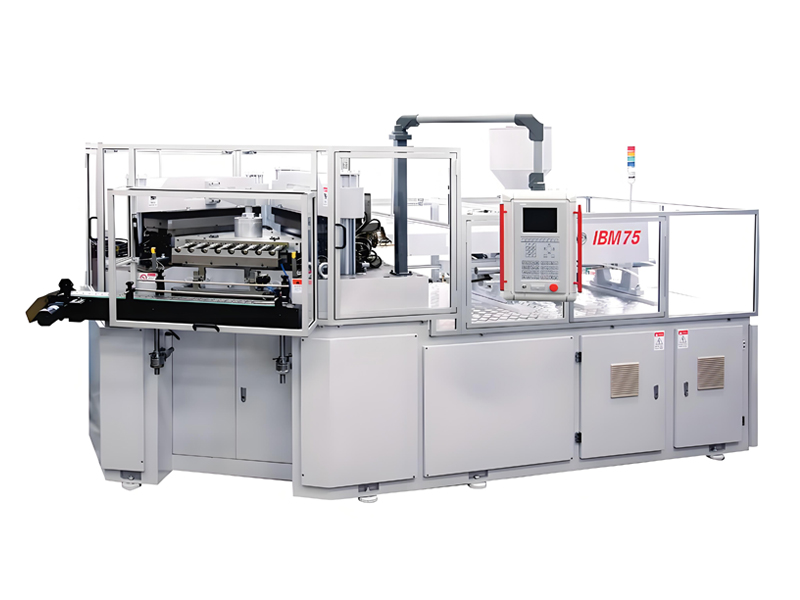
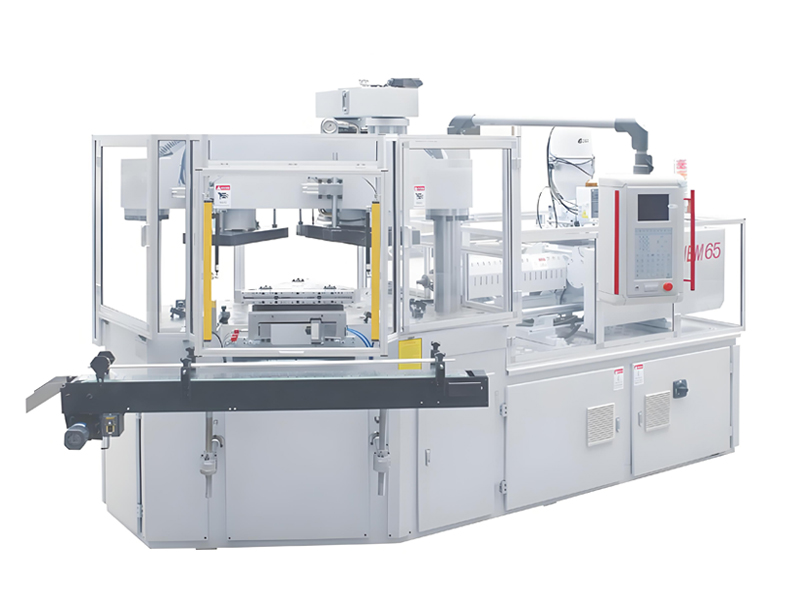
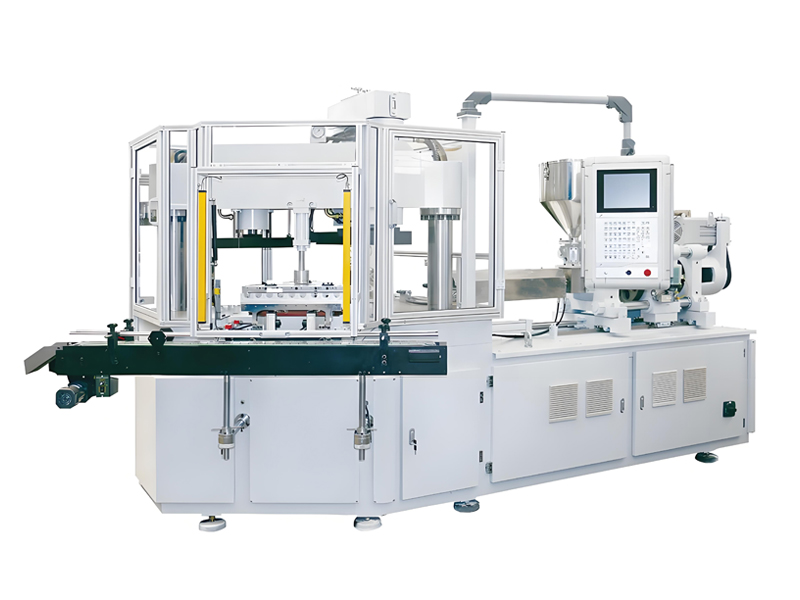
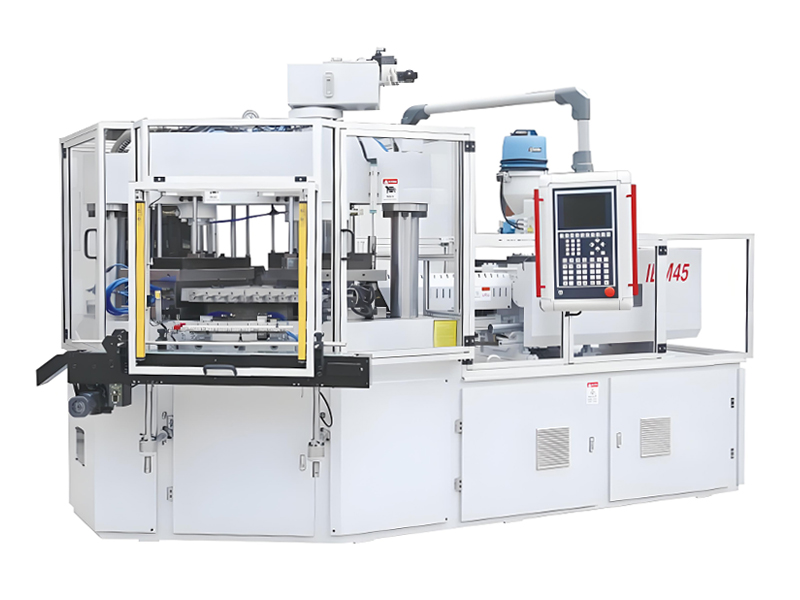
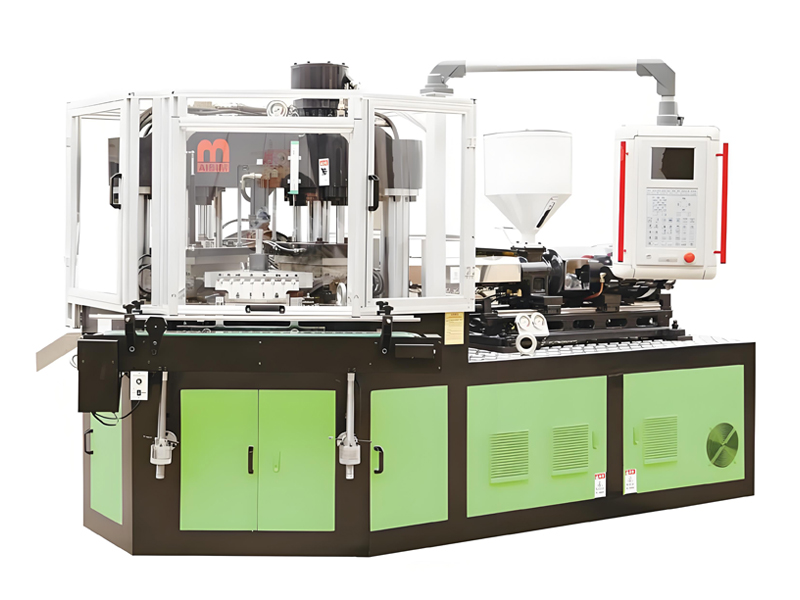
Recycled HDPE injection blow molding is a specialized plastic molding process that uses reclaimed HDPE plastic materials to produce hollow plastic products through professional Injection Blow Molding Machine. Different from traditional virgin HDPE molding, this technology focuses on the secondary processing and recycling of waste HDPE materials, including industrial leftover materials, post-consumer plastic containers, and recycled HDPE plastic particles after crushing, cleaning, and granulation. With the global plastic circular economy development and environmental protection policy upgrading, recycled HDPE molding has become a mainstream low-carbon production solution in the plastic packaging and industrial parts manufacturing industries.
The AiBiM Injection Blow Molding Machine is professionally optimized for recycled HDPE material characteristics, solving the molding difficulties of reclaimed materials such as unstable melt fluidity, impurity inclusion, and easy aging and brittleness. This adjusted process can stably produce medium and small hollow products including chemical packaging bottles, daily storage containers, industrial plastic accessories, and agricultural packaging products. It not only reduces enterprise raw material procurement costs but also meets global environmental protection and sustainable production standards, bringing dual economic and environmental benefits to processing enterprises.
1.2 Differences Between Recycled HDPE and Virgin HDPE Molding
Virgin HDPE materials have uniform molecular structure, stable melt flow rate, low impurity content, and consistent thermal performance, which are suitable for standard fixed parameter molding. In contrast, recycled HDPE materials undergo multiple heating, cooling, and mechanical crushing processes, resulting in molecular chain degradation, reduced melt elasticity, uneven fluidity, and trace impurity residues. These inherent material differences lead to obvious defects in traditional fixed injection blow molding processes, including product surface bubbles, uneven wall thickness, low structural toughness, and easy cracking.
Conventional injection blow molding parameters configured for virgin materials cannot adapt to recycled HDPE production, which requires targeted full-process parameter adjustment and process optimization. The AiBiM Injection Blow Molding Machine supports personalized process parameter setting and multi-stage precision adjustment, which can perfectly match the physical characteristics of recycled HDPE materials, eliminate product quality defects, and ensure that the performance of recycled material products is close to that of virgin material products.
1.3 Necessity of Professional Process Adjustment for Reclaimed Materials
Without targeted process adjustment, direct molding of recycled HDPE with ordinary injection blow molding processes will lead to a high defective rate of more than 8%, serious raw material waste, and unstable batch product quality. The degraded molecular structure of recycled HDPE requires optimized temperature control, pressure matching, and cooling rhythm to compensate for material performance defects. Trace impurities in reclaimed materials need matched filtering and plasticizing processes to avoid surface and internal quality problems of products.
Scientific process adjustment based on professional Injection Blow Molding Machine can improve the utilization rate of recycled HDPE materials to more than 95%, reduce the defective rate to below 1.5%, and make the tensile strength, impact resistance, and dimensional stability of recycled products meet industrial use standards. For plastic processing enterprises, standardized recycled HDPE molding process adjustment is the core key to realizing low-cost production, waste resource recycling, and profit improvement.
2. Performance Characteristics of Recycled HDPE Materials Affecting Molding
2.1 Molecular Structure and Rheological Property Changes
After multiple recycling and processing cycles, the molecular chains of HDPE materials will break and degrade, resulting in reduced molecular weight distribution uniformity and decreased melt viscosity stability. Compared with virgin HDPE, recycled HDPE has a higher melt flow rate volatility, faster melt fluidity attenuation at high temperatures, and poorer melt elasticity. In the injection blow molding process, unstable melt fluidity will cause parison sagging, uneven material filling, and inconsistent product wall thickness, seriously affecting product molding accuracy and structural strength.
In addition, repeated thermal processing will cause partial oxidation and aging of HDPE molecular chains, reducing the material’s low-temperature toughness and stress cracking resistance. If the original virgin material molding process is still used, the finished products are prone to brittle cracking during demolding, transportation, and use. The AiBiM Injection Blow Molding Machine adjusts the screw plasticizing speed and injection pressure curve according to the rheological characteristics of recycled HDPE, effectively compensating for the poor molding adaptability caused by molecular degradation.
2.2 Impurity and Moisture Characteristics of Reclaimed HDPE
Recycled HDPE particles inevitably contain trace impurities such as dust, fiber residues, and residual colloid during the recycling, crushing, and cleaning process. These tiny impurities will cause surface pits, black spots, and internal structural gaps in blow molded products, reducing product appearance quality and overall tightness. At the same time, recycled plastic particles have strong hygroscopicity, and unremoved internal moisture will vaporize during high-temperature plasticization, forming bubble defects inside the product.
Different batches of recycled HDPE have inconsistent impurity content and moisture content, which puts forward higher requirements for the adaptability of injection blow molding processes. Professional process adjustment needs to match targeted drying, filtering, and plasticizing parameters according to the actual material status to eliminate quality risks caused by material impurities and moisture.
2.3 Batch Stability Differences of Recycled Materials
The source of recycled HDPE materials is complex, including industrial leftover materials, daily recycled plastic products, and modified HDPE waste materials. The material aging degree, formula composition, and performance parameters of different batches vary greatly, resulting in poor batch stability of reclaimed materials. Fixed molding processes cannot adapt to multi-batch recycled material production, which is easy to cause large fluctuations in product quality.
The adjustable process system of AiBiM Injection Blow Molding Machine supports real-time parameter fine-tuning according to different recycled HDPE batches, realizing dynamic matching of process parameters and material performance, ensuring stable and consistent quality of mass-produced recycled material products, and solving the batch stability problems that plague traditional recycled plastic molding production.
3. Core Equipment Advantages of AiBiM Injection Blow Molding Machine for Recycled HDPE
3.1 Special Plasticizing System for Reclaimed Plastic Materials
The AiBiM Injection Blow Molding Machine is equipped with a customized high-shear low-degradation screw structure, which is specially optimized for recycled HDPE plasticizing characteristics. The screw adopts segmented gradient compression design, which can fully homogenize and plasticize uneven recycled HDPE melt under low shear force, avoid secondary thermal degradation of already degraded molecular chains, and maximize the retention of residual mechanical properties of recycled materials. Compared with ordinary equipment screws, it improves melt uniformity by 25% and effectively reduces product brittleness caused by excessive shear.
The barrel structure is matched with multi-stage temperature zoning control, which can independently adjust the temperature of the feeding section, compression section, metering section, and injection section according to the melt flow rate of recycled HDPE, realizing precise plasticization of different quality reclaimed materials. This professional plasticizing system lays a foundation for stable molding of low-quality and high-impurity recycled HDPE materials.
3.2 Precision Adjustable Process Parameter System
Different from ordinary injection blow molding equipment with fixed parameter modes, the AiBiM Injection Blow Molding Machine adopts a full-process intelligent adjustable parameter system, covering injection speed, injection pressure, holding pressure, blowing pressure, temperature curve, and cooling time. All core process parameters support stepless fine-tuning, which can formulate exclusive molding processes for different recycled HDPE batches and different product specifications.
The built-in material adaptation database of the equipment stores multiple sets of mature process parameters for recycled HDPE molding. Operators can quickly call matching parameters according to material purity, aging degree, and mixing ratio, greatly reducing process debugging time and improving production efficiency. The system also supports automatic parameter correction during continuous production, dynamically adapting to subtle changes in recycled material performance.
3.3 High-Precision Filtering and Defect Suppression Configuration
To solve the impurity defect problem of recycled HDPE, AiBiM Injection Blow Molding Machine is equipped with a high-precision automatic filtering system, which can filter tiny impurities in reclaimed melt in real time during the plasticizing process. The multi-layer composite filter screen can intercept dust, particle residues, and degraded colloid impurities, ensuring the purity of the melt and effectively avoiding product surface defects and internal gaps.
In addition, the equipment is equipped with a melt pressure stable output system, which avoids melt pressure fluctuation caused by impurity blockage and uneven material feeding, ensures stable parison extrusion and blow molding effect, and greatly improves the yield of recycled HDPE products.
3.4 2026 Equipment Price and Configuration Cost Analysis
In 2026, the market price of AiBiM standard recycled material customized Injection Blow Molding Machine is $32,000-$36,000 FOB. The standard complete configuration includes a special recycled material plasticizing screw, multi-stage temperature control system, high-precision filtering device, full intelligent parameter adjustment system, high-stability hydraulic injection system, and automatic blowing and cooling system. This configuration is specially adapted to recycled HDPE production and can directly realize stable molding of reclaimed materials without additional equipment modification costs.
The upgraded enhanced model with automatic material detection and intelligent parameter matching function is priced at $37,000-$41,000 FOB, which is suitable for large-scale mass production of multi-batch mixed recycled HDPE materials. The equipment has a service life of more than 12 years, with low long-term failure rate and maintenance cost. Compared with purchasing ordinary equipment and spending additional costs on process modification and debugging, AiBiM professional recycled material blow molding equipment can save enterprises $3,000-$5,000 in early modification costs and reduce annual defective loss costs by more than 15%.
4. Full-Process Process Adjustment Steps for Recycled HDPE Injection Blow Molding
4.1 Pre-Production Material Pretreatment Process Adjustment
Material pretreatment is the primary link to ensure the molding quality of recycled HDPE, and targeted process adjustment must be carried out according to the status of reclaimed materials. First, implement precise screening and crushing treatment, control the particle size of recycled HDPE particles at 3-5mm, ensure uniform particle size, and avoid unstable feeding and uneven plasticization caused by mixed particle sizes. Remove large impurities and deteriorated particles through vibrating screening equipment to reduce subsequent molding defects.
Second, adjust the drying process parameters. For recycled HDPE materials with high hygroscopicity, set the drying temperature at 75-85℃ and drying time of 2-3 hours, strictly control the material moisture content below 0.03%, and completely eliminate bubble defects caused by moisture vaporization during high-temperature molding. For mixed recycled materials with serious aging, add a small proportion of anti-aging additives and toughening agents in the pretreatment stage to compensate for material performance defects and improve product toughness and stability.
In addition, control the mixing ratio of recycled materials and virgin materials. According to product quality requirements, the proportion of pure recycled materials can reach 100% for ordinary industrial products, and the mixing proportion of recycled materials for high-strength products is controlled within 30% to ensure product structural performance. Uniformly stir the mixed materials to ensure stable material performance of each batch.
4.2 Multi-Stage Temperature Curve Adjustment
Temperature is the core parameter affecting the plasticizing effect of recycled HDPE. Different from the constant temperature setting of virgin materials, recycled HDPE adopts a segmented gradient temperature rise process based on material aging degree. For mildly aged recycled HDPE with stable fluidity, set the feeding section temperature at 170-180℃, compression section at 190-200℃, metering section at 200-210℃, and injection nozzle temperature at 210-220℃, which ensures full plasticization without secondary thermal degradation of materials.
For severely aged recycled HDPE with low fluidity and high molecular degradation, appropriately increase the temperature of the compression and metering sections by 5-10℃ to improve melt fluidity and filling performance. For recycled materials with high impurity content, appropriately reduce the nozzle temperature to avoid impurity carbonization and adhesion, ensuring the smooth discharge of melt and stable product surface quality. The AiBiM Injection Blow Molding Machine can store multiple sets of temperature curves and switch with one key according to material conditions, realizing fast process adjustment.
4.3 Injection Pressure and Speed Parameter Optimization
Recycled HDPE melt has poor stability and low tensile strength, so the injection pressure and speed need to be adjusted in stages to avoid molding defects. The initial injection stage adopts medium and low speed and low pressure to slowly fill the mold cavity, preventing melt splashing and gas entrapment caused by excessive speed. The intermediate filling stage appropriately increases the injection pressure to 90-110MPa to ensure full melt filling of the mold cavity and avoid incomplete product molding.
The final holding stage reduces the pressure to 50%-60% of the injection pressure and extends the holding time to 3-5 seconds, which effectively compensates for the shrinkage gap caused by recycled HDPE melt cooling shrinkage and eliminates product surface shrinkage marks and internal shrinkage holes. Compared with virgin material molding, the injection speed of recycled HDPE is reduced by 15%-20%, and the holding time is increased by 20%, which can effectively solve the problem of unstable molding caused by material performance degradation.
4.4 Blowing Pressure and Air Supply Process Adjustment
The blowing process of recycled HDPE needs to adapt to the characteristics of low melt elasticity and slow shaping speed. The initial blowing pressure is set to 0.6-0.7MPa, which is slightly higher than that of virgin HDPE molding, ensuring that the melt can quickly fit the mold wall and form a complete product outline. The pressure maintaining blowing time is extended by 2-3 seconds to ensure that the recycled melt is fully shaped and avoid product deformation and wall thickness unevenness caused by insufficient shaping.
At the same time, adjust the air exhaust speed of the blowing system to realize slow and uniform air exhaust, avoid rapid air exhaust causing local tension deformation of low-elasticity recycled melt, and ensure smooth and flat product surface and uniform internal structure. The AiBiM equipment’s adjustable blowing system can dynamically match the blowing parameters according to the product wall thickness and material performance, realizing precise molding of recycled HDPE products.
4.5 Cooling Cycle and Demolding Process Optimization
Recycled HDPE materials have slow cooling and shaping speed and large cooling shrinkage rate, so the cooling cycle process needs targeted adjustment. Appropriately extend the mold cooling time by 25%-30% compared with virgin material production, ensure synchronous cooling and solidification of the inner and outer walls of the product, and avoid internal stress concentration and product warping deformation caused by uneven cooling. For thick-walled recycled HDPE products, adopt segmented cooling mode to first cool the outer wall and then stabilize the inner wall, improving product dimensional stability.
Adjust the demolding speed and ejection force, adopt slow demolding and balanced ejection mode, avoid brittle cracking and edge damage of recycled products with reduced toughness during demolding, and improve the finished product integrity rate. Optimized cooling and demolding processes can effectively improve the yield of recycled HDPE products and reduce post-processing repair costs.
5. Common Defects of Recycled HDPE Products and Process Optimization Solutions
5.1 Product Surface Bubbles and Pitting Defects
Surface bubbles and pitting are the most common defects in recycled HDPE injection blow molding, mainly caused by excessive material moisture, incomplete melt exhaust, and impurity residues. Recycled materials have high hygroscopicity, and residual moisture will vaporize at high temperature to form bubble cavities; undischarged air in the mold cavity and unfiltered tiny impurities will form pits and depressions on the product surface, seriously affecting product appearance and tightness.
Targeted process adjustment solutions include optimizing the material pretreatment drying process to completely remove material moisture; increasing the melt filtering precision of the Injection Blow Molding Machine to intercept tiny impurities; adjusting the injection speed and blowing exhaust rhythm to realize slow filling and full exhaust, eliminating air entrapment inside the mold cavity. After process optimization, the bubble and pitting defect rate of recycled HDPE products can be reduced to below 0.5%.
5.2 Uneven Wall Thickness and Dimensional Deviation
Due to unstable melt fluidity and poor parison molding stability of recycled HDPE, products are prone to uneven wall thickness, local thin walls, and overall dimensional deviation during molding. This defect will lead to insufficient product compression resistance and poor assembly accuracy, making it unable to meet industrial use standards. Traditional fixed processes cannot adapt to the dynamic changes of recycled melt fluidity, resulting in continuous quality fluctuation.
The AiBiM Injection Blow Molding Machine solves this problem through dynamic process adjustment. The equipment’s intelligent wall thickness control system dynamically adjusts the injection volume and blowing flow according to the real-time melt state, realizes uniform parison molding, and matches segmented cooling parameters to ensure synchronous shaping of all parts of the product. The optimized process controls the product wall thickness tolerance within ±0.2mm, and the dimensional accuracy fully meets industrial product standards.
5.3 Low Toughness and Easy Brittle Cracking
Molecular chain degradation of recycled HDPE leads to reduced material toughness and poor impact resistance. Products produced by virgin material processes are prone to brittle cracking during falling, stacking, and use. This defect is the core performance problem restricting the wide application of recycled HDPE products.
The targeted process adjustment scheme is to optimize the screw plasticizing shear force to avoid secondary molecular degradation; appropriately increase the holding pressure and cooling time to improve the compactness of the product internal structure; match a reasonable recycled material mixing ratio and add trace toughening additives in the pretreatment stage. After process optimization, the impact resistance and low-temperature toughness of recycled HDPE products are significantly improved, and the service performance is close to that of virgin material products.
6. Production Cost and Benefit Analysis of Recycled HDPE Molding Process Adjustment
6.1 Raw Material Cost Saving Benefit
Virgin HDPE raw materials have a high market price, while recycled HDPE particles are 35%-45% lower in cost than virgin materials. After professional process adjustment and stable molding with AiBiM Injection Blow Molding Machine, enterprises can use 100% qualified recycled materials for mass production of ordinary industrial products, greatly reducing raw material procurement costs. Calculated based on the annual consumption of 200 tons of HDPE materials in small factories, the use of recycled materials can save raw material costs of $28,000-$35,000 every year, with extremely obvious cost advantages.
The optimized process improves the material utilization rate of recycled HDPE from 85% to more than 95%, reducing raw material waste caused by defective products and cutting invalid material consumption costs by more than 10% annually.
6.2 Equipment Operation and Maintenance Cost Analysis
The professional process adjustment adapted to recycled materials can effectively reduce the operation load of the Injection Blow Molding Machine and reduce the wear of screw, filter screen, and other vulnerable parts. Unadjusted recycled material processes are prone to impurity blockage and excessive shear wear, resulting in frequent replacement of vulnerable parts and increased maintenance costs. After process optimization, the replacement cycle of equipment vulnerable parts is extended by 40%, and the annual equipment maintenance cost is reduced by $800-$1,200.
At the same time, the stable process reduces equipment failure downtime caused by poor material molding, improves equipment operation efficiency, and avoids production loss caused by shutdown debugging, further improving the comprehensive production benefit of the factory.
6.3 Labor and Time Cost Optimization
Traditional recycled HDPE production requires frequent manual debugging of parameters and manual screening of defective products, with high labor intensity and low production efficiency. The mature and stable adjusted process of AiBiM equipment realizes standardized and automated production, reduces manual parameter debugging links, and reduces the number of product inspectors. A single production line can save 1-2 operators, reducing annual labor costs by $10,000-$15,000.
The process debugging cycle is shortened from the original 2-3 days to 2-3 hours, which greatly improves the production startup efficiency, enables the factory to quickly respond to order production needs, and improves market order response speed and customer satisfaction.
6.4 Comprehensive Investment Return Analysis
The total one-time investment of introducing AiBiM Injection Blow Molding Machine and completing recycled HDPE process adjustment is mainly equipment procurement cost and process debugging cost. The equipment investment can be fully recovered within 18-22 months through raw material cost saving, labor cost reduction, and defective loss reduction. After the investment recovery, the production line can bring stable annual net profit growth of $40,000-$60,000 for the enterprise for a long time.
In addition, recycled plastic production meets global environmental protection policy requirements, enabling enterprises to obtain environmental certification qualifications, expand green product market channels, and gain additional policy subsidies and market competitive advantages, with long-term sustainable investment value.
7. Daily Process Management and Batch Production Maintenance Guidelines
7.1 Pre-Production Parameter Debugging Standard Process
Before batch production of each new batch of recycled HDPE materials, complete standardized process debugging work. First, test the melt flow rate and impurity content of the materials, and select the matching temperature, pressure, and cooling parameter curve according to the test results. Then carry out trial production of 20-30 sample products, inspect product appearance, wall thickness, dimensional accuracy, and internal compactness, and fine-tune process parameters according to sample quality problems until the products fully meet the standards.
Record the optimized process parameters of each batch of recycled materials and form a material-process matching database to realize one-key parameter calling for subsequent production of the same type of materials, greatly improving batch production efficiency and quality stability.
7.2 Real-Time Process Monitoring and Dynamic Adjustment
During continuous batch production, turn on the real-time process monitoring function of the AiBiM Injection Blow Molding Machine to track key parameters such as melt temperature, injection pressure, blowing flow, and cooling temperature in real time. For subtle performance changes of recycled materials in continuous production, the system automatically fine-tunes process parameters to ensure stable and consistent production rhythm and product quality.
Arrange special personnel to inspect product quality every hour, timely discover subtle quality fluctuations, and manually optimize individual parameters to avoid large-scale defective product accumulation and ensure the stability of batch production quality.
7.3 Regular Equipment and Process Maintenance
Regularly clean the equipment screw, filter screen, and mold cavity every week to remove residual recycled material impurities and carbonized materials, avoid impurity accumulation affecting subsequent product quality, and ensure the long-term stable plasticizing and molding performance of the equipment. Calibrate the temperature control system, pressure system, and wall thickness control system every month to ensure the accuracy of process parameters.
Summarize the process adjustment experience of recycled HDPE regularly, optimize the process parameter database continuously, form more perfect recycled material molding solutions, and further improve production efficiency and product yield.
8. Industry Development Trend of Recycled HDPE Injection Blow Molding
With the continuous promotion of global plastic recycling economy and carbon neutrality policies, the market demand for recycled HDPE plastic products continues to grow, and recycled material molding technology is gradually developing towards high precision, high efficiency, and full intelligence. In the future, ordinary low-precision recycled molding processes will be eliminated, and professional equipment matching with refined process adjustment will become the mainstream of the industry.
AiBiM has been focusing on the technical research and development of Injection Blow Molding Machine for recycled plastic materials, continuously optimizing the material adaptation ability and intelligent process adjustment function of the equipment. The independently developed recycled HDPE special molding process can realize high-quality and high-efficiency production of full proportion recycled materials, helping processing enterprises reduce production costs, improve product quality, and meet the market demand for green and environmentally friendly plastic products.
In the field of industrial packaging, daily plastic products, and agricultural supplies, recycled HDPE injection blow molding products will gradually replace virgin material products in most application scenarios, bringing broad market development space and profit growth space for processing enterprises that master professional process adjustment technology and high-performance equipment.
9. Conclusion
Recycled HDPE injection blow molding is a low-cost, environmentally friendly, and high-value plastic recycling processing technology, but the performance differences of reclaimed materials determine that traditional virgin material molding processes cannot meet production needs. Targeted full-process process adjustment based on professional Injection Blow Molding Machine is the core to solve the quality defects and low efficiency of recycled HDPE products. Through scientific pretreatment optimization, multi-stage temperature and pressure parameter adjustment, and cooling blowing process refinement, the molding quality and production stability of recycled HDPE materials can be fully improved.
As a professional recycled material blow molding equipment, AiBiM Injection Blow Molding Machine has unique advantages in material adaptation, parameter adjustment, and defect suppression. It can perfectly match the process adjustment requirements of recycled HDPE production, help enterprises significantly reduce raw material and operating costs, improve product yield and market competitiveness. With the continuous development of the plastic circular economy, standardized recycled HDPE injection blow molding process technology and high-precision intelligent equipment will become the core competitiveness of the plastic recycling processing industry, bringing long-term stable economic and environmental benefits to enterprises.