Understanding Small Plastic Products Manufacturing Requirements
Small plastic products represent a diverse category including containers, bottles, caps, closures, and precision components with capacities typically ranging from 5 milliliters to 500 milliliters. These products find applications across pharmaceutical, cosmetic, food packaging, automotive, and consumer goods industries, each presenting unique requirements for dimensional accuracy, surface finish quality, and functional performance characteristics. The global market for small plastic containers is projected to reach $85 billion by 2028, growing at a compound annual growth rate of 5.8 percent, driven by increasing demand for convenient, lightweight, and cost-effective packaging solutions.
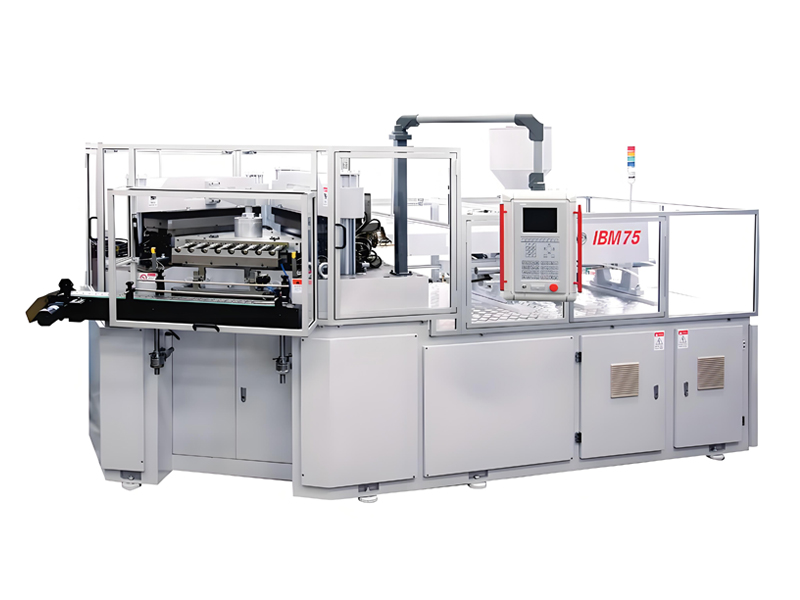
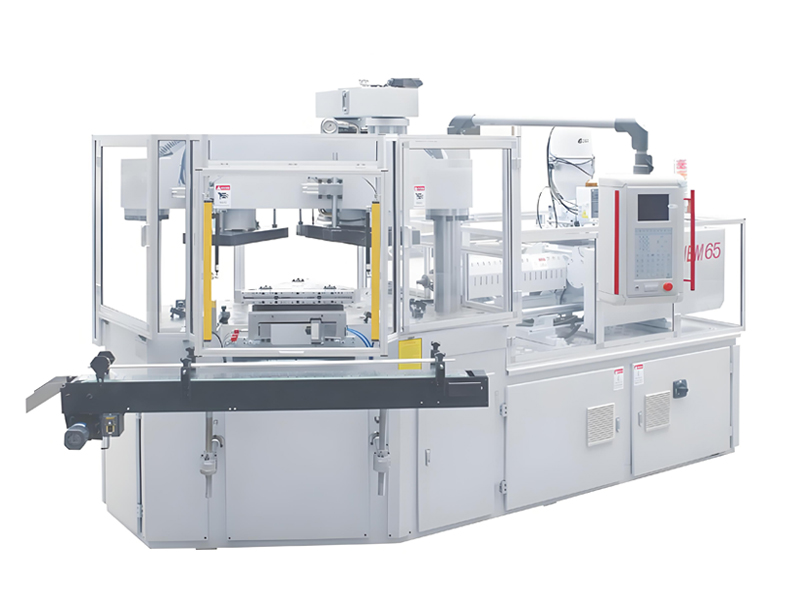
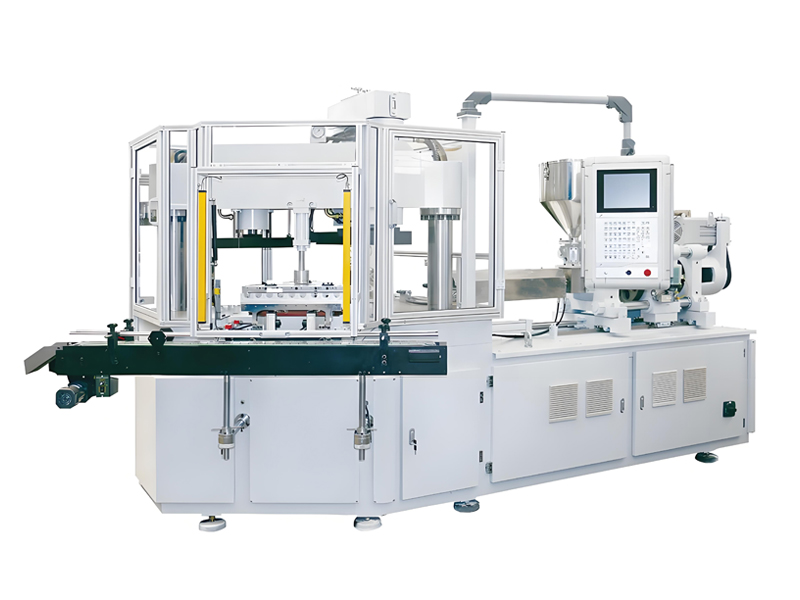
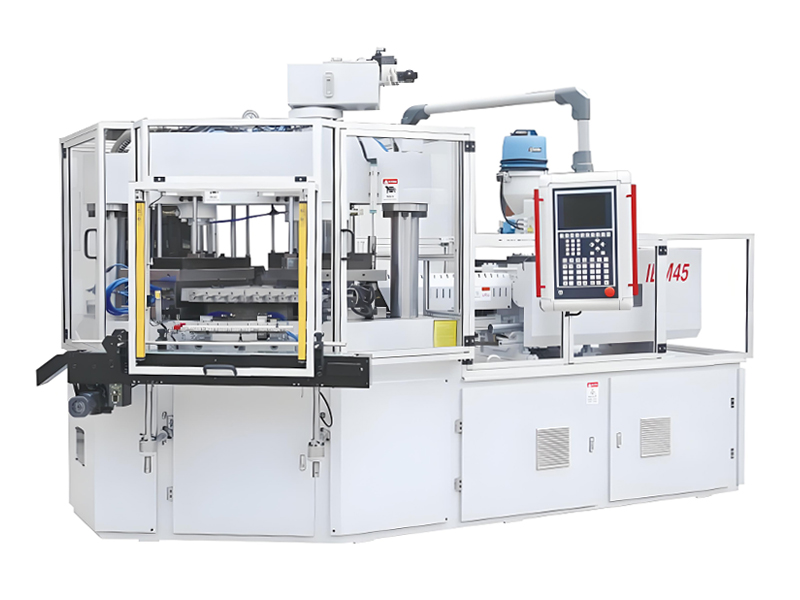
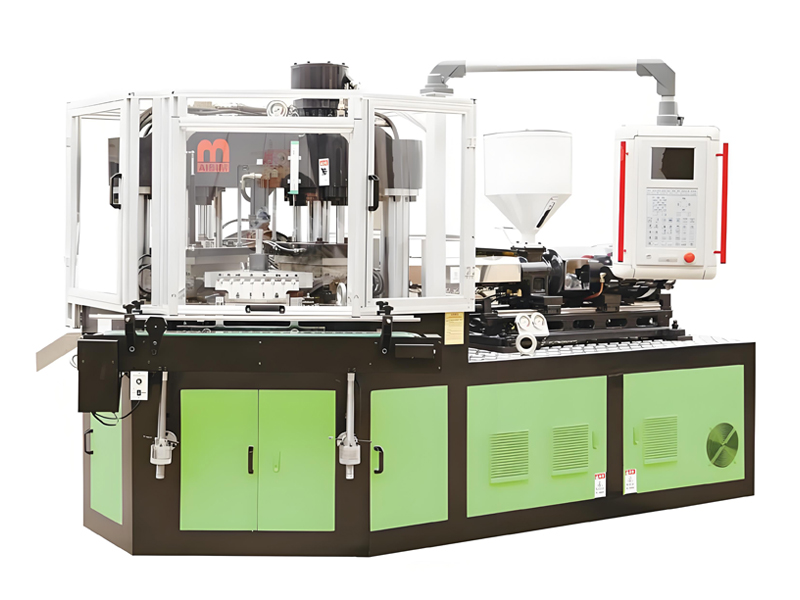
AiBiM injection blow molding machines provide precision manufacturing capabilities specifically engineered for small plastic products production. The machines achieve exceptional dimensional tolerances within plus or minus 0.05 millimeters for critical dimensions, ensuring consistent product quality and reliable performance characteristics. The injection blow molding process produces homogeneous products without weld lines or material discontinuities, providing superior mechanical properties compared to alternative manufacturing technologies including extrusion blow molding or thermoforming for small product applications.
Small plastic products present unique manufacturing challenges due to their size, precision requirements, and high-volume production needs. Thin wall thicknesses typically ranging from 0.2 to 2 millimeters require precise material distribution and rapid solidification to achieve acceptable cycle times. Complex geometries including tapered walls, rib patterns, and integrated features demand advanced mold design and precise process control. High-volume production requirements exceeding 5 million units annually for popular product types demand efficient multi-cavity configurations and rapid changeover capabilities. AiBiM machines address these challenges through specialized design features optimizing small product production efficiency and quality.
Precision Engineering and Technical Specifications
AiBiM injection blow molding machines incorporate advanced engineering features specifically designed to meet the exacting requirements of small plastic products manufacturing. Precision control systems, advanced cooling capabilities, and specialized tooling options enable production of consistently high-quality products meeting stringent industry specifications.
Clamping force requirements for small plastic products typically range from 20 to 100 tons depending on product size, wall thickness, and cavity count. AiBiM machines provide precise clamping force control with accuracy within 0.5 percent of set value, ensuring consistent mold clamping throughout the molding cycle while avoiding excessive force that wastes energy and accelerates component wear. The clamping system features optimized platen design providing uniform pressure distribution across mold surface area, critical for achieving consistent product quality across all cavities in multi-cavity molds. Clamping force control accuracy enables production of products with consistent wall thickness distribution despite varying cavity flow characteristics.
Shot capacity for small products ranges from 5 to 150 grams depending on product size and cavity count. AiBiM machines provide precise shot size control with accuracy within 0.1 gram, essential for maintaining consistent product weight and wall thickness characteristics. The injection system employs precise metering control enabling small shot sizes with accuracy exceeding 99 percent, critical for small products where material variations have significant impact on product dimensions and mechanical properties. Advanced screw and barrel designs optimized for small shot production ensure consistent melt quality and temperature homogeneity despite the relatively small material volumes processed per cycle.
Cooling systems represent a critical component for small products production, as cooling time often dominates cycle times for thin-walled small products. AiBiM machines incorporate advanced cooling capabilities including conformal cooling channels, high-velocity coolant flow, and precision temperature control. Conformal cooling channels follow mold cavity contours providing uniform cooling throughout product geometry, eliminating hot spots that cause warpage or dimensional variations. Cooling system efficiency improvements typically reduce cycle times by 20 to 40 percent compared to conventional cooling designs, directly translating to increased production capacity and reduced unit costs for high-volume applications.
Process control systems provide comprehensive monitoring and adjustment capabilities enabling consistent product quality. AiBiM machines feature PLC-based control systems with touchscreen interfaces providing real-time monitoring of process parameters including injection pressure, blow pressure, cavity pressure, melt temperature, and cooling temperature. Statistical process control capabilities track process capability indices and automatically adjust parameters to maintain production within specification limits. Advanced control algorithms optimize cycle times while maintaining quality requirements, maximizing production efficiency without sacrificing product quality. Control system precision enables process repeatability with variation under 1 percent for critical parameters, essential for maintaining consistent quality across millions of production units.
Multi-Cavity Production for High-Volume Applications
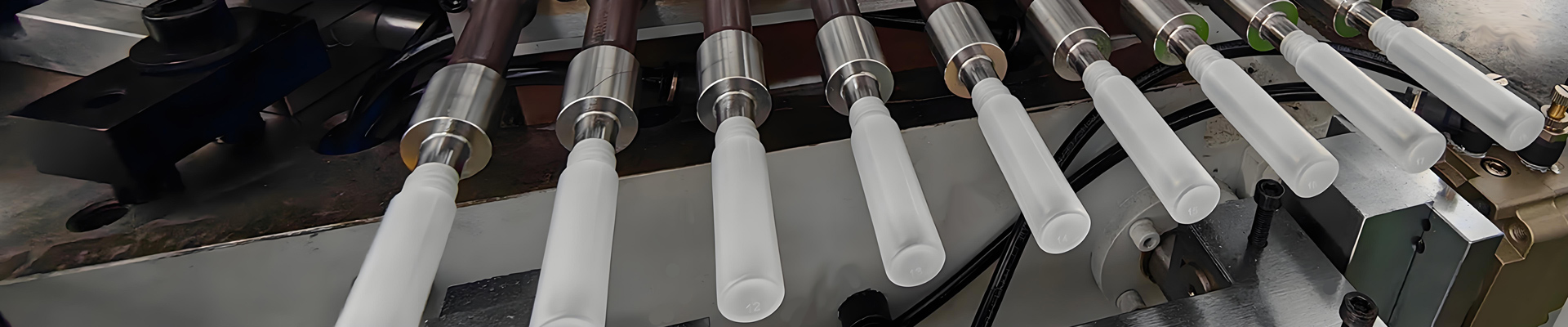
Multi-cavity injection blow molding enables high-efficiency production of small plastic products by producing multiple identical units simultaneously per molding cycle. AiBiM provides multi-cavity solutions ranging from 2 to 16 cavities, enabling manufacturers to achieve production rates exceeding 20,000 units per hour for popular small product types.
Cavity configuration optimization balances production efficiency with mold complexity and cost considerations. For products under 50 milliliters, 8 to 16 cavity configurations typically provide optimal cost-effectiveness, with cavity numbers potentially increasing to 24 or 32 cavities for very small products below 10 milliliters. Products between 50 and 200 milliliters typically benefit from 4 to 8 cavity configurations. AiBiM application engineers provide cavity configuration recommendations based on annual production volume, required production rates, product geometry, and economic considerations. Proper cavity selection ensures production capacity requirements are met without over-investment in excessive cavities that increase mold costs without providing commensurate economic benefits.
Mold design for multi-cavity small products production presents unique challenges including flow balancing, thermal management, and cavity alignment. AiBiM provides comprehensive mold design services including computational fluid dynamics analysis, thermal simulation, and stress analysis ensuring optimal mold performance across all cavities. Hot runner systems provide precise temperature control for manifold and nozzle systems, maintaining consistent melt temperature to each cavity eliminating shot size variations caused by temperature differences. Balanced runner systems ensure equal flow resistance to each cavity, preventing filling imbalances that cause weight variations or quality differences between cavities. Precision cavity alignment maintains consistent wall thickness distribution and dimensional accuracy across the entire cavity array.
Multi-cavity mold costs represent significant investment, typically ranging from $25,000 to $120,000 depending on cavity count, product complexity, and required precision levels. Mold costs increase approximately exponentially with cavity count due to increased complexity and precision requirements. For example, a 4-cavity mold might cost $30,000, while an 8-cavity mold might cost $60,000, and a 16-cavity mold might cost $120,000. Despite the higher initial investment, multi-cavity molds provide unit cost reductions of 60 to 80 percent compared to single-cavity production, providing rapid return on investment for high-volume applications. The economic payback period for multi-cavity molds typically ranges from 6 to 18 months depending on production volume and efficiency gains achieved.
Quick mold change systems enable rapid product changeovers essential for manufacturers producing multiple product types or responding to changing market demands. AiBiM offers quick mold change systems reducing changeover times from typical 2 to 4 hours to under 30 minutes for experienced operators. These systems include standardized mold mounting, automated clamping, and rapid electrical and fluid connections. Quick change capabilities reduce production downtime during product changeovers, increase manufacturing flexibility, and enable efficient small batch production. The investment in quick mold change systems typically ranges from $15,000 to $35,000 depending on machine size and system complexity, but provides substantial economic benefits through increased production capacity and reduced changeover labor costs.
Material Selection and Processing Considerations
AiBiM injection blow molding machines process a wide range of materials suitable for small plastic products applications. Material selection depends on specific application requirements including chemical resistance, mechanical properties, optical clarity, cost considerations, and regulatory compliance requirements.
Polyethylene (PE) represents the most commonly used material for small plastic products due to its excellent balance of properties and cost-effectiveness. High-density polyethylene (HDPE) provides good chemical resistance, impact strength, and stiffness, making it ideal for applications including industrial containers, household chemical packaging, and automotive fluid containers. Low-density polyethylene (LDPE) offers superior clarity, flexibility, and stress crack resistance, making it suitable for applications including cosmetic packaging and squeeze bottles. AiBiM machines process HDPE with melt temperatures between 190 and 240 degrees Celsius and LDPE between 160 and 200 degrees Celsius, with cycle times ranging from 15 to 45 seconds depending on product size and wall thickness. PE materials typically cost $1.20 to $2.00 per kilogram, providing excellent value for high-volume production applications.
Polypropylene (PP) offers higher temperature resistance and excellent chemical resistance, making it suitable for applications requiring hot-fill capability or exposure to aggressive chemicals. PP products can withstand temperatures up to 100 degrees Celsius for continuous use and 120 degrees Celsius for short-term exposure, making them ideal for hot-fill food and beverage applications. PP also provides excellent clarity and gloss characteristics for cosmetic and personal care packaging. AiBiM machines process PP with melt temperatures between 200 and 250 degrees Celsius, with cycle times similar to PE materials. PP materials typically cost $1.50 to $2.50 per kilogram, representing moderate cost increase compared to PE while providing enhanced performance characteristics.
Polyethylene Terephthalate (PET) provides exceptional clarity, gas barrier properties, and mechanical strength, making it the material of choice for many food, beverage, and cosmetic applications. PET offers excellent oxygen and carbon dioxide barrier properties extending product shelf life for sensitive products. The material also provides good chemical resistance and can be recycled through established PET recycling streams. AiBiM machines process PET with melt temperatures between 250 and 280 degrees Celsius, requiring precise temperature control to avoid material degradation. PET processing typically requires 20 to 50 percent longer cycle times compared to PE or PP due to higher crystallinity requiring more time for solidification. PET materials typically cost $1.80 to $3.00 per kilogram depending on grade and required performance characteristics.
Polycarbonate (PC) provides exceptional clarity, heat resistance, and impact strength, making it suitable for applications requiring durability and thermal stability. PC products can withstand continuous use temperatures up to 130 degrees Celsius and provide excellent dimensional stability. The material is commonly used for applications including automotive headlamp lenses, medical device components, and reusable containers requiring sterilization capability. AiBiM machines process PC with melt temperatures between 280 and 320 degrees Celsius, requiring specialized machine components capable of withstanding elevated processing temperatures. PC materials typically cost $3.50 to $6.00 per kilogram, representing significant premium over commodity plastics but providing superior performance for demanding applications.
Specialty materials including recycled plastics, bio-based polymers, and engineered plastics enable meeting specific application requirements or sustainability objectives. Recycled PET and HDPE materials offer environmental benefits with costs typically 10 to 20 percent lower than virgin materials depending on quality and purity. Bio-based polyethylene derived from sugarcane provides identical performance characteristics to petroleum-based PE with costs 20 to 30 percent higher but offering reduced carbon footprint and sustainability marketing advantages. Engineered plastics including PETG, PCTG, and TPU provide specialized properties including enhanced clarity, chemical resistance, or flexibility for specific applications. AiBiM machines provide the flexibility to process diverse material types through adjustable screw designs, temperature control systems, and processing parameter optimization capabilities.
Quality Control and Precision Assurance
Consistent product quality represents the critical success factor for small plastic products manufacturing. AiBiM machines incorporate comprehensive quality control systems ensuring products meet dimensional specifications, functional requirements, and aesthetic standards throughout production runs.
In-process monitoring systems provide real-time quality verification during production, enabling rapid detection and correction of quality issues before they generate significant scrap. AiBiM machines include cavity pressure sensors monitoring internal pressure during blowing, ensuring consistent wall thickness distribution and preventing over- or under-blowing. Shot size monitoring systems verify precise material delivery for each cycle, maintaining consistent product weight across production runs. Dimensional monitoring systems use optical or mechanical sensors to verify critical dimensions including height, diameter, and neck finish specifications automatically, rejecting non-conforming products before they reach packaging operations. In-process inspection typically catches 80 to 95 percent of quality issues before completion, significantly reducing scrap rates and production costs.
Statistical process control systems track process parameters and quality metrics over time, identifying trends that may indicate developing quality issues before they produce defects. AiBiM machines record data including injection pressure, melt temperature, cavity pressure, cycle times, and product dimensions automatically, providing comprehensive datasets for process analysis. Statistical process control algorithms identify parameter shifts beyond normal operating ranges and alert operators to potential quality issues before defective products are produced. Proactive quality control based on statistical analysis reduces scrap rates by 30 to 50 percent compared to reactive quality control approaches that detect issues only after defective products are produced.
Automated inspection and rejection systems provide end-of-line quality verification ensuring only conforming products reach customers. Vision systems inspect product surfaces for cosmetic defects including scratches, blemishes, or contamination. Dimensional measurement systems verify critical product dimensions against specification tolerances. Leak testing systems verify product integrity for applications requiring leak resistance, particularly important for pharmaceutical and food packaging applications. Automated inspection capabilities reduce labor requirements while improving inspection consistency compared to manual inspection methods. The investment in automated inspection systems typically ranges from $20,000 to $80,000 depending on inspection requirements and production rates, but provides substantial benefits through reduced labor costs and improved quality consistency.
Traceability systems enable comprehensive tracking of products throughout production and distribution processes, supporting quality management and regulatory compliance requirements. AiBiM machines provide capabilities including product marking with lot codes, production date/time stamps, and traceability numbers linking products to production batches, material lots, and processing parameters. Barcode or RFID tagging systems enable automated data capture throughout distribution and handling processes. Traceability systems facilitate rapid investigation and response to quality issues, enabling targeted product recalls if necessary rather than broad recall strategies that impact much larger product volumes. Traceability capabilities are particularly important for pharmaceutical and food packaging applications where regulatory requirements mandate comprehensive tracking capabilities.
Industry Applications and Specialized Requirements
Small plastic products produced on AiBiM injection blow molding machines find applications across diverse industries, each presenting unique requirements for precision, quality, and regulatory compliance.
Pharmaceutical packaging represents one of the most demanding applications for small plastic products, requiring precise dimensional accuracy, excellent chemical resistance, and compliance with stringent regulatory requirements. Pharmaceutical containers must meet USP Class VI biocompatibility standards, FDA food contact requirements, and GMP manufacturing guidelines. AiBiM machines produce pharmaceutical containers meeting these exacting requirements with dimensional tolerances within plus or minus 0.05 millimeters for critical dimensions including neck finishes, closure threads, and volume accuracy. The machines feature cleanroom-compatible construction, sanitary design features, and comprehensive validation documentation supporting regulatory submissions. Pharmaceutical applications typically require material grades meeting FDA 21 CFR 177.1520 for olefin polymers or 21 CFR 177.1630 for polyesters, with material costs ranging from $3.00 to $8.00 per kilogram depending on grade and purity requirements.
Cosmetic and personal care packaging demands exceptional aesthetic quality, precise dimensional accuracy, and compatibility with various formulations including creams, lotions, and liquids. Cosmetic containers require excellent surface finish with uniform gloss, consistent wall thickness providing premium feel, and precise neck finishes ensuring proper closure fit. AiBiM machines produce cosmetic containers meeting these requirements with surface roughness values under 0.5 micrometers Ra, dimensional tolerances within plus or minus 0.08 millimeters, and wall thickness uniformity within plus or minus 5 percent. The machines accommodate diverse material options including PE, PP, PET, PETG, and TPU depending on specific formulation compatibility and aesthetic requirements. Cosmetic packaging production typically involves multiple product variations with frequent changeovers, requiring quick mold change capabilities and flexible production scheduling capabilities.
Food and beverage packaging applications require compliance with food contact regulations, excellent barrier properties for sensitive products, and consumer-friendly design characteristics. Food containers must meet FDA regulations or EU equivalent depending on target market, with specific material requirements for acidic, alcoholic, or high-fat foods. Beverage containers require oxygen and carbon dioxide barrier properties extending product shelf life, particularly important for juices, sports drinks, and other oxygen-sensitive products. AiBiM machines produce food and beverage containers meeting these requirements while maintaining cost-effectiveness for high-volume production. Barrier enhancement options including multi-layer construction or specialty barrier materials extend shelf life capabilities for sensitive products, though adding 30 to 50 percent to production costs compared to standard materials.
Automotive and industrial applications require durability, chemical resistance, and thermal stability often exceeding requirements for consumer packaging applications. Automotive fluid containers including coolant, washer fluid, and brake fluid reservoirs must withstand temperature extremes from minus 40 degrees Celsius to plus 120 degrees Celsius while maintaining chemical compatibility with various automotive fluids. Industrial containers for chemical storage, cleaning solutions, and industrial lubricants require exceptional chemical resistance and structural integrity under loading conditions. AiBiM machines produce automotive and industrial containers meeting these demanding requirements using engineered plastics including HDPE, PP, and specialty materials offering enhanced performance characteristics. Automotive applications typically require material grades meeting automotive industry specifications including ISO 16750 for environmental conditions and ISO 16750-2 for electrical loads for containers with integrated fluid level sensors.
Cost Analysis and Economic Considerations
Understanding the cost structure for small plastic products production enables informed decisions regarding equipment selection, production methods, and pricing strategies. AiBiM injection blow molding machines provide cost-effective solutions through production efficiency, material utilization, and operational optimization capabilities.
Machine investment costs vary significantly based on production requirements and automation level. Entry-level single-cavity machines for small products start at $45,000 to $70,000, providing basic capabilities suitable for niche applications or low-volume production. Multi-cavity machines for medium-volume production range from $120,000 to $300,000 depending on cavity count and configuration. High-speed fully automated production systems for high-volume applications range from $250,000 to $500,000 including automation, quality inspection, and packaging integration. Machine selection should balance production requirements with economic considerations, avoiding over-investment in excessive capacity while ensuring capability to meet market demands.
Mold costs represent significant capital investment, particularly for multi-cavity configurations. Single-cavity molds for simple products cost $8,000 to $20,000 depending on product complexity and required precision. Multi-cavity molds increase costs substantially, with 4-cavity molds typically costing $25,000 to $60,000, 8-cavity molds costing $50,000 to $120,000, and 16-cavity molds costing $100,000 to $250,000. Mold life typically ranges from 500,000 to 5,000,000 cycles depending on material, product design, and maintenance quality, providing amortization periods from 3 months for high-volume production to 5 years for low-volume specialized applications.
Material costs represent the largest component of unit production costs, typically accounting for 40 to 60 percent of total costs depending on material selection and product size. For a 100-milliliter HDPE bottle weighing 30 grams, material cost at $1.50 per kilogram equals $0.045 per unit. The same bottle in PET weighing 28 grams at $2.50 per kilogram equals $0.07 per unit. Material cost optimization through design optimization reducing wall thickness without compromising performance can save 10 to 30 percent of material costs, representing significant savings for high-volume production. Material utilization efficiency through precise control and minimal scrap further reduces material costs, with injection blow molding typically achieving material utilization rates exceeding 98 percent compared to 85 to 95 percent for alternative technologies.
Labor costs vary significantly based on automation level and production volume. Manual operations require one operator per machine for loading, monitoring, and product handling, with labor costs ranging from $0.02 to $0.10 per unit depending on labor rates and production rates. Semi-automated operations reduce labor requirements through automated product handling, quality inspection, and packaging systems, enabling one operator to monitor 2 to 4 machines and reducing per-unit labor costs by 50 to 75 percent. Fully automated production cells eliminate direct operator requirements except for material replenishment and system monitoring, reducing labor costs to under $0.01 per unit for high-volume production. The investment in automation typically provides return on investment within 1 to 3 years depending on labor rates and production volumes.
Energy costs account for 5 to 15 percent of total production costs depending on machine technology and local energy prices. Conventional hydraulic machines consume 40 to 80 kilowatt-hours per hour depending on size and configuration. AiBiM machines incorporate energy-efficient servo-hydraulic or all-electric systems reducing energy consumption by 25 to 40 percent compared to conventional hydraulic machines. For a machine operating 6,000 hours annually with electricity costs of $0.12 per kilowatt-hour, annual energy costs range from $2,900 to $5,800 for energy-efficient models compared to $3,900 to $9,600 for conventional hydraulic systems. Per-unit energy costs range from $0.005 to $0.03 depending on production rates and energy prices, representing relatively small but manageable component of total production costs.
Advanced Technologies and Future Developments
Continued technological advancement drives innovation in small plastic products manufacturing, with AiBiM machines incorporating emerging technologies to enhance precision, efficiency, and quality capabilities.
Industry 4.0 technologies including Internet of Things connectivity, big data analytics, and artificial intelligence enable smart manufacturing capabilities previously unavailable. AiBiM machines feature connectivity options enabling remote monitoring, predictive maintenance, and real-time production optimization. Cloud-based data platforms collect operational data from multiple machines enabling factory-wide performance analysis and benchmarking. Artificial intelligence algorithms optimize process parameters automatically based on historical data and real-time conditions, maximizing efficiency while maintaining quality standards. These smart capabilities reduce downtime by 30 to 50 percent through predictive maintenance alerts and improve overall equipment effectiveness by 10 to 20 percent through process optimization.
Advanced materials including bio-based polymers, recycled content, and engineered composites enable meeting sustainability objectives and enhanced performance requirements. AiBiM machines process bio-based polyethylene derived from sugarcane providing identical performance to conventional PE with 70 percent lower carbon footprint. Recycled materials including post-consumer recycled PET and HDPE enable circular economy initiatives while reducing material costs by 10 to 30 percent compared to virgin materials. Engineered composites including fiber-reinforced polymers provide enhanced strength-to-weight ratios enabling material reduction while maintaining performance characteristics. These advanced materials typically cost 10 to 100 percent more than conventional materials depending on type and availability but provide environmental benefits or performance advantages justifying premium pricing for specific applications.
Precision manufacturing technologies including micro-molding capabilities enable production of extremely small products and features previously impossible or impractical. Micro-injection blow molding enables production of containers as small as 1 milliliter with wall thicknesses under 0.2 millimeters and dimensional tolerances within plus or minus 0.02 millimeters. These capabilities open new applications in medical devices, laboratory supplies, and precision industrial components requiring extremely small containers with tight dimensional tolerances. Micro-molding typically requires specialized equipment costing 50 to 100 percent more than standard machines and demands higher material purity levels but enables premium pricing for specialized applications requiring unique capabilities.
Additive manufacturing technologies complement traditional injection blow molding for prototyping, small batch production, and highly customized applications. 3D printing enables rapid prototyping of product designs and mold inserts without requiring expensive tooling investments, accelerating product development cycles by 50 to 80 percent. Hybrid manufacturing approaches combine 3D printed mold components with conventional tooling for complex geometries difficult to produce through traditional machining methods. For production volumes under 5,000 units, additive manufacturing often provides more cost-effective solutions than traditional tooling despite slower production rates. AiBiM offers consulting services for optimal manufacturing technology selection based on production volume, product complexity, and cost considerations.
Conclusion
AiBiM injection blow molding machines provide precision manufacturing capabilities for small plastic products across diverse industry applications. The combination of advanced engineering, comprehensive quality control systems, and flexible production capabilities enables manufacturers to achieve consistent quality while maintaining cost-effectiveness for high-volume production requirements.
Technical capabilities including precise control systems, advanced cooling designs, and multi-cavity configurations enable production of products meeting the most demanding dimensional, aesthetic, and functional specifications. Material processing flexibility accommodates diverse material requirements from commodity plastics to engineered polymers, enabling tailored solutions for specific application requirements.
Economic advantages achieved through production efficiency, material utilization optimization, and automation capabilities provide competitive unit costs enabling manufacturers to maintain profitability while meeting market demands for high-quality small plastic products. The total cost of ownership advantages combined with rapid return on investment make AiBiM machines attractive investments for both established manufacturers and new market entrants.
As manufacturing requirements evolve with increasing emphasis on precision, quality, and sustainability, AiBiM machines provide flexible production solutions addressing emerging trends through continuous technology development and application engineering support. The ongoing commitment to innovation ensures manufacturers have access to state-of-the-art production capabilities enabling ongoing competitive advantage in dynamic global markets for small plastic products.