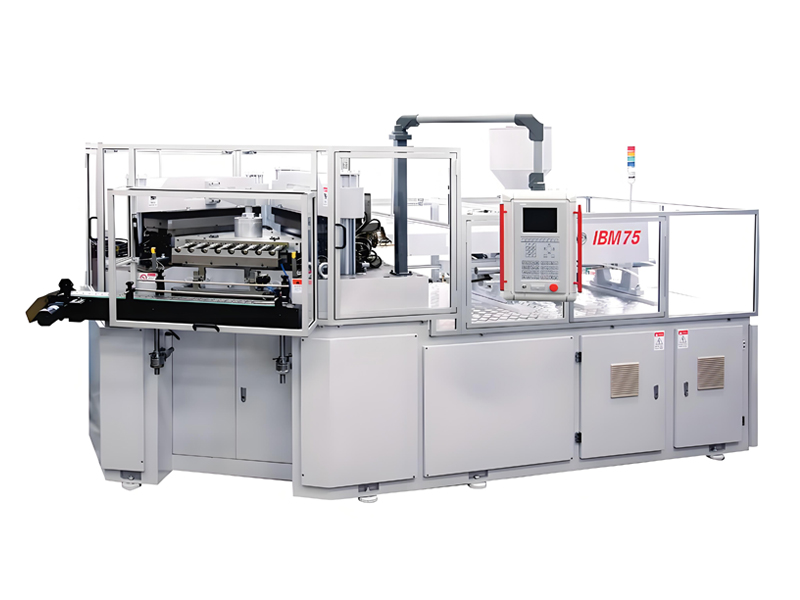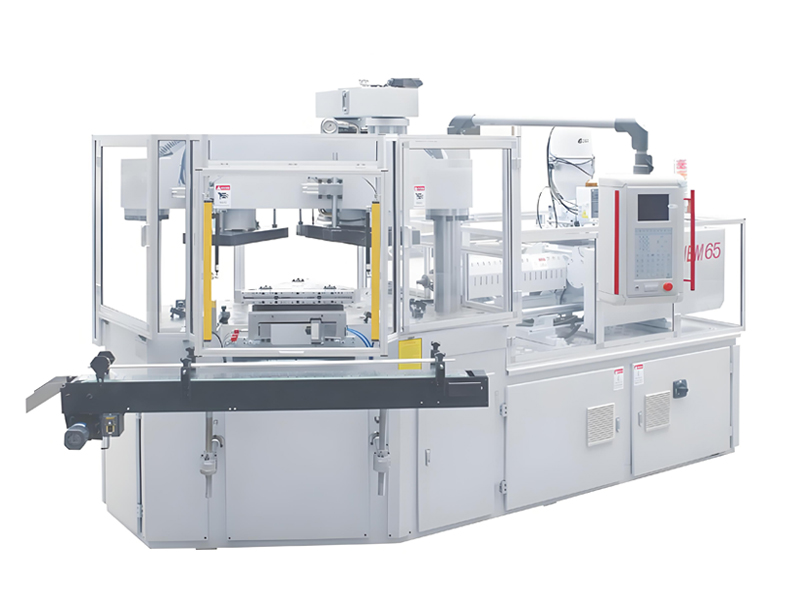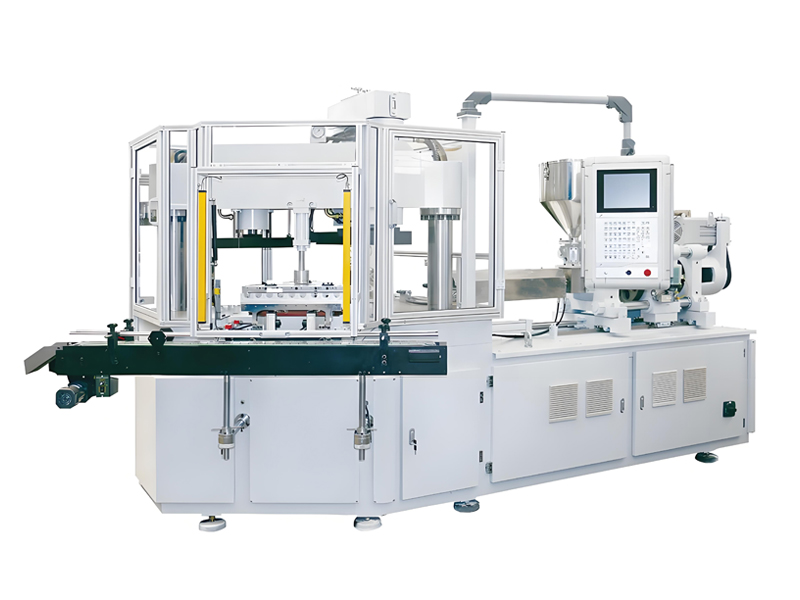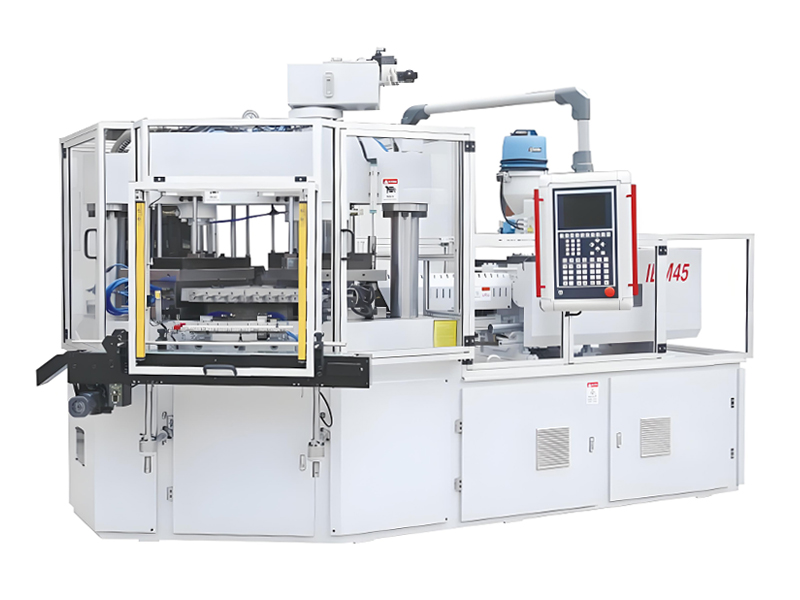
The global pharmaceutical and healthcare industry continues to grow rapidly, driving strong demand for high-quality plastic vial packaging. Plastic vials are widely used for liquid medicines, powders, eye drops, diagnostic reagents, cosmetic essences and other products due to their light weight, good impact resistance and easy processing. Unlike ordinary plastic packaging, vials used in pharmaceutical and high-end cosmetic fields must meet strict sterility and cleanliness requirements. Any microbial contamination or impurity residue during the production process may directly affect product safety and even cause serious medical accidents. As the core equipment for vial molding, the injection blow molding machine plays a decisive role in ensuring the sterility and quality stability of products.
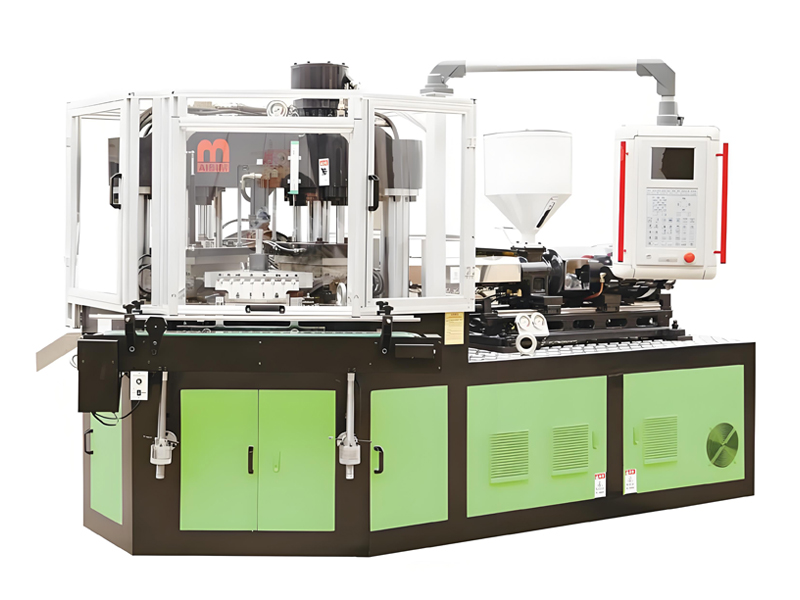
Traditional semi-automatic or open-type blow molding equipment has a high risk of contamination due to more manual participation and open production process, which is difficult to meet the requirements of sterile production. As a professional Chinese manufacturer of injection blow molding equipment, AiBiM has developed a special injection blow molding machine for plastic vials compatible with sterile production based on years of technical accumulation in the medical packaging industry. The machine adopts a fully enclosed clean structure, automated production design and GMP-compliant material selection, which can effectively control the risk of contamination in the production process and help customers produce high-quality sterile plastic vials that meet international standards such as FDA and CE. This article will systematically analyze the sterility requirements of plastic vial production, explain the sterile design features of AiBiM injection blow molding machines in detail, provide specific equipment configuration and investment return analysis, and share best practices for sterile production management, providing a comprehensive reference for pharmaceutical packaging manufacturers and healthcare product enterprises.
1. Market Demand and Sterility Requirements for Plastic Vials
1.1 Rapid Growth of Medical and Healthcare Packaging Market
With the improvement of global health awareness and the aging population, the pharmaceutical and healthcare industry maintains a steady growth trend, which drives the continuous expansion of plastic vial packaging market. In the pharmaceutical field, plastic vials are gradually replacing traditional glass vials in many application scenarios because of their advantages of not being easy to break, light weight and low transportation cost. Common products include oral liquid bottles, eye drop bottles, spray bottles, powder injection bottles and reagent packaging bottles. In the high-end cosmetics and personal care industry, small-capacity essence bottles, serum bottles and sample bottles also have huge demand, and the requirements for packaging cleanliness and appearance quality are getting higher and higher.
At the same time, the global epidemic has raised public awareness of health, and the demand for disposable medical supplies and disinfection products has increased significantly, further driving the market demand for plastic vials. However, the expanding market has also put forward higher requirements for product quality and production safety. More and more countries and regions have strengthened the supervision of pharmaceutical packaging materials, and sterile production has become a basic threshold for enterprises to enter the high-end market.
1.2 Strict Sterility and Cleanliness Standards
Plastic vials used in the pharmaceutical industry must comply with strict drug packaging material specifications. The most representative ones are the US FDA standards and the EU GMP (Good Manufacturing Practice) system. These standards have clear and strict requirements for the production environment, equipment materials, production process and quality testing of packaging materials. First of all, the production workshop must reach a certain level of cleanliness, usually requiring Class 100,000 or even Class 10,000 clean rooms, with strict control of the number of dust particles and microorganisms in the air.
Secondly, the production equipment must meet the design requirements of easy cleaning, no dead corners, no pollution and easy disassembly and maintenance. All parts in contact with raw materials and products must be made of non-toxic, corrosion-resistant and non-shedding materials to ensure that no harmful substances and impurities migrate into the product. In addition, the production process should minimize manual contact with products, adopt automated and closed production as much as possible, and reduce the risk of artificial contamination. The finished vials must undergo strict sterility testing, endotoxin testing and physicochemical performance testing before they can leave the factory. For high-end cosmetic vials, although the requirements are slightly lower than those for pharmaceutical use, they also need to meet relevant food contact and hygiene safety standards to ensure product safety during use.
1.3 Why Injection Blow Molding Is Suitable for Sterile Vial Production
At present, the main processes for producing plastic vials include extrusion blow molding, injection blow molding and injection stretch blow molding. Among them, injection blow molding (IBM) has natural advantages in producing high-precision and high-cleanliness vial products, and is the preferred process for sterile vial production.
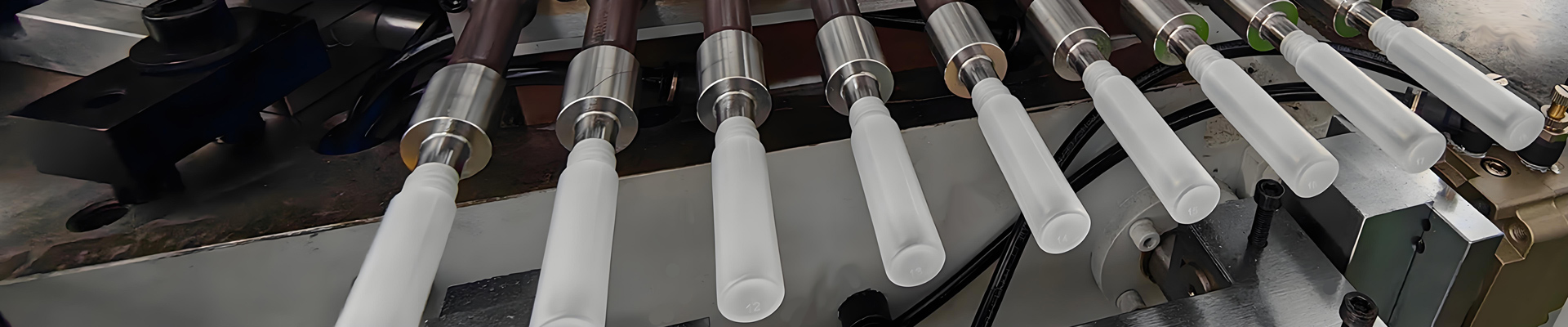
The injection blow molding process first injects molten plastic into a preform mold to form a preform with a precise mouth size, then transfers the preform to a blow mold for blow molding, and finally demolds to obtain a finished product. The whole molding process is completed in a closed mold cavity, and the product has no flash and trim, which reduces the chance of product exposure to the external environment. At the same time, the injection blow molded vial has extremely high dimensional accuracy of the bottle mouth, which can be perfectly matched with the bottle cap and dropper to ensure the sealing performance of the product after filling, which is crucial for sterile products to maintain sterility during shelf life.
In addition, the inner and outer surfaces of the vial formed by injection blow molding are smooth and flat, with no secondary processing traces, which is not easy to hide dirt and is convenient for subsequent cleaning and sterilization treatment. With automated production equipment, the whole process from raw material melting to finished product output can be basically closed, minimizing manual intervention and effectively controlling the risk of microbial contamination. These characteristics make injection blow molding the most suitable molding process for sterile plastic vials.
2. Core Challenges in Sterile Production of Plastic Vials
Although injection blow molding has natural process advantages, to achieve stable sterile production, it is necessary to overcome many challenges in equipment design, production management and environmental control. Many ordinary injection blow molding machines on the market are difficult to meet the requirements of sterile production due to design defects.
2.1 Contamination Risks Caused by Open Production
Many traditional injection blow molding machines adopt an open structural design. During the production process, the preform transfer and product demolding links are directly exposed to the workshop environment. If the workshop cleanliness is insufficient, dust and microorganisms in the air will easily fall on the surface of the product, resulting in microbial exceeding the standard. At the same time, open equipment is prone to accumulate dust and dirt on the surface, which is difficult to clean thoroughly, and becomes a potential source of contamination in long-term production.
In addition, traditional equipment usually requires manual picking of finished products or manual trimming, which increases the chance of manual contact with products. Workers’ hands, clothing and breathing may bring microbial contamination, which is a major hidden danger affecting the sterility of products. For vial products used in ophthalmology and injection, even a small amount of microbial contamination may lead to serious safety accidents, so open production equipment cannot meet the requirements of sterile production.
2.2 Equipment Materials and Structural Design Defects
Some low-end injection blow molding machines use ordinary carbon steel materials in the parts in contact with materials and products, which are easy to rust and fall off impurities, causing pollution to raw materials and products. Some equipment has unreasonable structural design with many dead corners and gaps, which are easy to accumulate dust and residual materials, and are difficult to clean and disinfect thoroughly. After long-term operation, these parts will become hotbeds for microbial growth, bringing continuous contamination risks to production.
At the same time, the hydraulic system of traditional equipment is prone to oil leakage, which will not only pollute the production environment, but also may be mixed into products if it is serious, leading to product scrapping. The lubricating oil and grease used in the transmission part may also volatilize into the air and fall on the product surface, affecting product cleanliness. These design defects make it difficult for ordinary equipment to meet the strict hygiene requirements of sterile production.
2.3 Difficulty in Quality Stability and Batch Consistency
Sterile vial products have extremely high requirements for batch consistency. Any fluctuation in product size, wall thickness and surface quality may affect the sealing performance and cleanliness of subsequent filling. Traditional equipment relies heavily on manual adjustment of process parameters. Operators of different levels will produce products with different quality, and the stability between batches is poor. If the melt temperature and injection pressure fluctuate greatly, it will also lead to changes in the internal stress and surface state of the product, which may affect the product sterilization effect and storage stability.
In addition, the lack of perfect online quality testing means that defective products are difficult to be eliminated in time, and may flow into the finished product link, bringing quality risks. For pharmaceutical packaging enterprises, unstable product quality will not only increase the cost of waste products, but also face serious compliance risks and legal liabilities once quality problems occur.
3. Sterile Production Design of AiBiM Injection Blow Molding Machines
Focusing on various pain points and challenges in sterile vial production, AiBiM has carried out targeted optimization design of its injection blow molding machine from multiple dimensions such as overall structure, material selection, automation degree and cleanability, ensuring that the equipment can fully meet the requirements of sterile production and be compatible with clean workshop environments of different levels.
3.1 Fully Enclosed Clean Production Structure
AiBiM medical-grade injection blow molding machine adopts a fully enclosed protective cover design. The whole molding area, including preform injection, preform transfer, blow molding and demolding, is enclosed in a clean protective cover, isolating the production process from the external workshop environment. The protective cover is made of high-quality stainless steel and transparent safety glass, which is smooth and seamless on the inside, easy to clean and disinfect, and facilitates operators to observe the production status.
The top of the protective cover is reserved with a high-efficiency filter air supply interface, which can be connected with the clean air supply system of the workshop to maintain a micro positive pressure inside the protective cover, preventing external unpurified air from entering the molding area and ensuring the cleanliness of the local production environment. Through the fully enclosed structure design, the contact between the product and the external environment during the molding process is greatly reduced, and the risk of air dust and microbial contamination is effectively controlled. Even in workshops with general cleanliness, the local clean environment inside the equipment can ensure the basic cleanliness requirements of products, reducing the construction cost of high-standard clean workshops for enterprises.
3.2 GMP-Compliant Material Selection
All parts of AiBiM equipment that come into contact with raw materials and products are made of food-grade or medical-grade stainless steel materials that meet FDA and EU food contact standards, including hoppers, feed pipes, screw barrels, mold cavities and finished product conveying channels. These materials have the characteristics of non-toxicity, no precipitation, corrosion resistance and smooth surface, which will not pollute raw materials and products, and are easy to clean and disinfect.
The surface of the product contact parts is polished precisely, with low roughness, not easy to adhere to materials and dirt, and convenient for thorough cleaning. The sealing elements are made of medical-grade silicone or fluororubber, which are resistant to high temperature and corrosion, do not produce harmful precipitates, and can adapt to various disinfection methods. For the hydraulic system, the fully enclosed design is adopted to eliminate the risk of oil leakage. The lubrication parts all adopt non-volatile food-grade lubricating grease, which will not produce oil mist volatilization and will not pollute the production environment and products. Strict material selection from the source eliminates the hidden danger of equipment material pollution.
3.3 Fully Automated Production Without Manual Intervention
AiBiM injection blow molding machine realizes full automation of the whole production process from raw material feeding, plasticizing injection, blow molding demolding to finished product conveying and packaging. The raw materials are automatically transported to the hopper through the closed vacuum feeding system without manual feeding, reducing the chance of manual contact with raw materials. The whole molding process runs automatically under the control of the PLC system, and the mechanical arm completes the transfer of preforms and the demolding of products without manual operation.
The demolded finished products are automatically transported to the packaging or sterilization process through the closed conveying channel, and the whole process from raw materials to finished products is closed. Workers only need to operate and monitor the equipment through the touch screen outside the protective cover, and do not need to directly contact the products, which fundamentally eliminates the risk of artificial contamination. The automated production also ensures the stability of process parameters, reduces the quality fluctuation caused by human factors, and improves the consistency of product quality between batches.
3.4 Cleanable and Maintainable Structural Design
Combined with the requirements of daily cleaning and disinfection in sterile production, AiBiM has optimized the internal structure of the equipment. The interior adopts a smooth arc transition design, avoiding dead corners and gaps that are easy to accumulate dirt, and there is no place for microorganisms to hide. The protective cover is equipped with a detachable access door, which is convenient for operators to enter the interior for cleaning and maintenance. The quick-connection structure is adopted for pipelines and components that need frequent cleaning, which is convenient for disassembly and assembly and shortens cleaning time.
The equipment is compatible with various common disinfection methods, including alcohol wiping, ultraviolet disinfection, hydrogen peroxide fumigation, etc., and will not cause corrosion and damage to equipment materials. For production scenarios with higher requirements, an online cleaning (CIP) interface can be reserved to connect with the enterprise’s cleaning system to realize automatic internal cleaning and disinfection, reducing manual cleaning workload and ensuring the standardization of cleaning effects. Good cleanability is an important guarantee for maintaining long-term stable sterile production.
3.5 Precision Control System for Stable Product Quality
Stable product quality is the basis of sterile production. AiBiM injection blow molding machine is equipped with a high-precision control system. The temperature control accuracy of each section of the barrel and die head reaches ±0.5℃, and the injection pressure and blowing pressure are controlled by closed-loop servo, with small parameter fluctuation, ensuring the stability of each molding cycle. The system can store hundreds of sets of production formulas. When changing products, you only need to call the corresponding parameters with one key, avoiding the quality difference caused by manual debugging, and ensuring the consistency of product quality between different batches.
The equipment is also optional with an online visual inspection system, which can automatically detect the appearance, size and defects of each vial, automatically eliminate unqualified products, and ensure that all finished products meet quality standards. The production data recording function can save all process parameters and quality data in the production process in real time, which is convenient for product quality traceability and meets the data management requirements of GMP specifications.
4. AiBiM Product Portfolio for Plastic Vial Manufacturing
AiBiM provides different models of injection blow molding machines for plastic vial production to meet the needs of customers with different production scales and product requirements.
4.1 IBM-2S Double-Station Injection Blow Molding Machine
The IBM-2S series is a cost-effective model suitable for small and medium-sized pharmaceutical packaging enterprises, laboratories and start-up brands. It adopts a double-station design, which can alternately complete injection preform and blow molding processes, with moderate production capacity and high cost performance. This series of machines is suitable for producing plastic vials with a capacity of 1ml to 100ml, and can process various pharmaceutical grade materials such as PP, PE, PETG and PCTG.
The standard configuration includes a fully enclosed clean protective cover, food-grade material contact parts, PLC touch screen control system and automatic finished product conveying device, which can meet the basic requirements of sterile production. Customers can also choose to upgrade the servo drive system, online visual inspection device and automatic feeding system according to actual needs to further improve production accuracy and automation. The FOB Shanghai price of the standard 2-cavity IBM-2S injection blow molding machine ranges from 32,000 US dollars to 45,000 US dollars. The specific price varies according to the configuration grade and optional functions. This model has a small footprint and low initial investment, and is very suitable for enterprises with many product types and small batch size of single product, as well as production scenarios with cleanliness requirements.
4.2 IBM-4S Multi-Cavity High-Speed Injection Blow Molding Machine
The IBM-4S series is a high-efficiency model for large-scale mass production, adopting a four-station rotary design, which can simultaneously complete multiple processes such as injection preform, blow molding, demolding and preheating, with greatly improved production efficiency. This series of machines is suitable for producing vials with a capacity of 2ml to 200ml, and can be configured with 4 cavities, 6 cavities or even 8 cavities according to product size, with high output per unit time, suitable for large orders of well-known pharmaceutical and cosmetic brands.
The IBM-4S series is equipped with a servo-driven rotary indexing mechanism as standard, with accurate positioning and fast station switching, which effectively shortens the molding cycle. The whole machine adopts a fully enclosed clean protective cover with HEPA high-efficiency filtration and ventilation system, which can realize local Class 10000 clean environment inside the equipment and meet higher sterile production requirements. It is equipped with automatic product conveying and testing system, which can realize fully automatic production from raw materials to finished product packaging, with less manual intervention and more stable product quality.
The FOB Shanghai price of the standard 4-cavity IBM-4S injection blow molding machine ranges from 72,000 US dollars to 95,000 US dollars. The price of high-configuration models with 6 cavities and full servo drive and online detection function ranges from 100,000 US dollars to 125,000 US dollars. Although the initial investment of this model is relatively high, its production efficiency is 2 to 3 times that of the double-station model, and the unit production cost is lower. For enterprises with stable large orders, the investment return speed is faster.
4.3 Cost Analysis and ROI Calculation
Taking the most widely used IBM-4S 4-cavity injection blow molding machine as an example, we calculate the investment cost and return in detail for producing 10ml sterile eye drop bottles.
In terms of initial investment, the main engine of the standard medical-grade configuration IBM-4S 4-cavity machine costs about 85,000 US dollars. A set of 4-cavity precision vial mold costs about 8,500 US dollars. Supporting auxiliary equipment including automatic vacuum feeder, raw material dehumidification dryer and closed finished product conveyor costs about 12,000 US dollars in total. Installation, commissioning and GMP compliance training services are included in the equipment quotation. For overseas customers, only the round-trip travel expenses of engineers need to be paid, about 4,000 US dollars. The initial spare parts package costs about 2,500 US dollars. The total initial investment is about 112,000 US dollars.
In terms of annual operating costs, calculated based on 300 working days per year and 20 hours of effective production per day, the equipment produces about 9,600 qualified vials per hour, with an annual output of about 57.6 million pieces. The raw material cost of a single 10ml PP vial is about 0.008 US dollars, and the annual raw material cost is about 460,800 US dollars. The total installed power of the equipment is about 32kW, the actual average operating power is about 20kW, calculated at an industrial electricity price of 0.1 US dollars per kWh, the annual electricity cost is about 12,000 US dollars. A production line is equipped with 2 operators, and the annual labor cost is about 12,000 US dollars based on an average monthly salary of 500 US dollars per person. The annual maintenance and spare parts cost is about 3% of the equipment price, about 2,550 US dollars. The annual plant rent and other management expenses are about 9,000 US dollars. Excluding raw material costs, the annual operating cost is about 35,550 US dollars.
In terms of revenue, the ex-factory price of each qualified sterile vial is about 0.022 US dollars, and the gross profit per unit product excluding raw materials is 0.014 US dollars. The annual gross profit is about 806,400 US dollars. After deducting operating costs such as electricity, labor and maintenance, the annual net profit is about 770,850 US dollars. Calculated in this way, the static investment payback period is about 0.15 years, that is, about 1.8 months. Even if calculated based on 70% capacity utilization, the investment payback period is only about 2.5 months, and the return on investment is very considerable.
Compared with ordinary injection blow molding machines, although AiBiM medical-grade equipment has a higher initial purchase price, it can help enterprises enter the high-end sterile packaging market and obtain higher product profits. The product qualification rate of ordinary equipment is usually only about 92%, while AiBiM sterile-grade equipment can reach more than 99%, which can save a lot of raw material waste costs every year. At the same time, high-quality equipment has a longer service life and lower long-term total cost of ownership. For enterprises focusing on the pharmaceutical and high-end cosmetics market, choosing AiBiM professional sterile injection blow molding machines is a more cost-effective investment decision.
5. Best Practices for Sterile Vial Production Management
With high-quality injection blow molding equipment, it is also necessary to match scientific production management systems and standardized operating procedures to ensure long-term stable sterile production. The following are the best practical experience summarized by AiBiM based on years of industry service experience.
5.1 Workshop Environment and Personnel Management
The production environment is the primary condition for ensuring sterile production. Enterprises should reasonably plan the clean area and non-clean area of the workshop according to product requirements, and set up personnel access channels and material transfer windows that meet the requirements. The clean workshop should maintain the specified cleanliness level and positive pressure state, and regularly test the air cleanliness, temperature and humidity and number of microorganisms to ensure that the environmental parameters meet the standards. The air conditioning and ventilation system should be maintained regularly, and the high-efficiency filter should be replaced regularly.
Personnel management is equally important. All personnel entering the clean area must undergo strict training, master sterile operation knowledge and standard operating procedures. They must change into clean work clothes, masks and gloves according to the prescribed procedures, and undergo wind shower cleaning before entering the production area. It is strictly forbidden to bring personal items into the clean area, and personnel should minimize unnecessary walking and talking during operation. Regular health checks should be carried out for production personnel, and personnel suffering from infectious diseases are not allowed to engage in sterile production work.
5.2 Raw Material and Packaging Material Quality Control
The quality of raw materials directly affects the quality and safety of finished vials. Enterprises should establish a strict raw material procurement and inspection system, and select raw material suppliers that meet pharmaceutical grade standards. Each batch of raw materials must be inspected and accepted, and can only be put into use after passing the test. The storage environment of raw materials should be clean and dry to avoid pollution and moisture during storage. The recycled materials produced in the production process must be strictly managed. It is necessary to ensure that the recycled materials are not polluted and the addition ratio is controlled within a safe range to avoid affecting product quality.
The packaging materials for finished products should also meet the corresponding hygiene standards, and the packaging process should be completed in a clean environment to avoid secondary pollution of products during packaging. The product identification should be clear and complete, so as to realize the traceability of the whole process from raw materials to finished products.
5.3 Equipment Cleaning and Maintenance System
Establish a perfect equipment cleaning and maintenance system, and formulate clear cleaning procedures, cleaning cycles and acceptance standards. After each production batch, the parts in contact with the product should be thoroughly cleaned and disinfected to avoid residual materials from breeding microorganisms. Before resuming production after long-term shutdown, comprehensive cleaning and disinfection should be carried out again, and production can be resumed only after passing the cleanliness verification.
Do a good job in daily equipment maintenance, regularly check the sealing performance of the equipment, the operation status of the filter device and the wear of vulnerable parts, and replace and maintain them in time to avoid the impact of equipment failure on production sterility. Establish complete equipment maintenance and cleaning records to achieve traceability of the whole process of equipment management. Regularly carry out performance verification of the equipment to ensure that the equipment is always in good operating condition.
5.4 Production Process and Quality Monitoring
Formulate standardized production operation procedures, clearly define the process parameters and operation steps of each link, and minimize the random operation of personnel. Make full use of the formula storage function of the equipment control system to ensure the consistency of process parameters for each production. The production process should be monitored in real time. If abnormal parameters are found, they should be dealt with in time to avoid quality problems.
Establish a perfect quality inspection system, including incoming material inspection, process inspection and finished product inspection. Conduct regular sampling inspection on the appearance, size, sealing performance, sterility and physicochemical indexes of finished vials to ensure that products meet quality standards. The unqualified products should be clearly marked and processed separately to find out the causes and take corrective measures. Complete quality files should be established for each batch of products, recording raw material information, production process parameters, quality inspection results and other information, so as to facilitate quality traceability and problem investigation.
6. Why Choose AiBiM as Your Sterile Packaging Equipment Partner
6.1 Rich Industry Experience and Compliance Support
AiBiM has been focusing on the research and development and manufacturing of injection blow molding equipment for many years, and has accumulated rich project experience in the field of medical and cosmetic packaging. The company has a professional technical team familiar with GMP specifications and FDA standards, and can provide professional compliance suggestions and scheme design according to customers’ different product requirements and regulatory environments. From equipment selection, process design to workshop layout guidance, the whole process supports customers to build a production system that meets sterile standards.
The company has provided sterile-grade injection blow molding equipment for many pharmaceutical packaging enterprises and well-known cosmetic brands at home and abroad, helping customers successfully pass various system certifications and product audits. Rich industry experience enables AiBiM to accurately grasp the needs of sterile production and provide customers with mature and reliable solutions.
6.2 Strict Quality Control and Reliable Equipment Performance
AiBiM implements strict quality control throughout the whole process of equipment production. All key components are made of high-quality materials that meet hygienic standards, and each processing link is strictly inspected to ensure processing accuracy and assembly quality. Before leaving the factory, each set of equipment must undergo a long-term continuous operation test and performance test, and can only leave the factory after all indicators meet the design standards and sterile design requirements.
Strict quality control ensures the long-term stable operation of the equipment, with low failure rate and stable product quality, reducing the production risk of customers. The equipment has a long service life and can maintain stable performance during long-term use, creating continuous value for customers.
6.3 Comprehensive After-Sales Service and Technical Support
AiBiM provides customers with full-cycle after-sales service and technical support. After the equipment arrives at the site, senior engineers will be sent to guide the installation and commissioning, be responsible for the normal operation of the equipment and the production of qualified products that meet the quality standards. At the same time, systematic operation and maintenance training will be provided for customers’ personnel, including equipment operation, daily cleaning, maintenance methods, common fault handling, etc., to ensure that customers’ teams can skillfully operate the equipment and master the sterile production specifications.
The whole machine provides a 12-month free warranty period, and core components enjoy a longer warranty period. During the warranty period, parts damaged due to quality problems are replaced free of charge. After the warranty period, lifetime technical support and preferential supply of spare parts are provided. The equipment supports remote diagnosis function. After customer authorization, after-sales engineers can remotely check the operation status of the equipment and solve most program and parameter problems online, reducing downtime losses. Perfect after-sales service ensures that customers have no worries in the production process.
Conclusion
With the continuous improvement of global medical and health standards and consumer safety awareness, the market demand for sterile plastic vials will continue to grow, and the requirements for production quality and regulatory compliance will become higher and higher. As the core equipment for vial molding, the injection blow molding machine with sterile production compatibility has become an essential hardware condition for enterprises to enter the high-end pharmaceutical and high-end cosmetic packaging market. Choosing professional sterile-grade production equipment can not only ensure product safety and compliance, but also help enterprises improve production efficiency, reduce quality risks and enhance market competitiveness.
As a professional Chinese injection blow molding machine manufacturer, AiBiM is committed to providing high-quality sterile production solutions for global customers. Its series of medical-grade injection blow molding machines start from the details of structure, materials, automation and cleanability, fully meet the requirements of sterile production, and can help customers stably produce high-quality plastic vials that meet FDA, CE and GMP standards. At the same time, the equipment has excellent cost performance and short investment payback period, which can bring considerable economic benefits to investors. Whether you are a pharmaceutical packaging enterprise seeking product upgrading or a health care product brand planning to build its own packaging production line, AiBiM can provide targeted solutions and perfect supporting services to help you achieve success in the high-quality sterile packaging market.