Introduction to Plastic Bucket Manufacturing
The demand for high-quality plastic buckets continues to grow across diverse industries including food processing, construction, chemical handling, and industrial applications. Plastic buckets provide essential storage and transportation solutions that combine durability, versatility, and cost-effectiveness. Injection blow molding machines represent the preferred technology for producing high-quality plastic buckets, offering precise control over wall thickness, dimensional accuracy, and surface finish that meet stringent industry requirements. AiBiM injection blow molding machines have been specifically engineered to address the unique challenges of bucket manufacturing, delivering superior quality and production efficiency.
Plastic buckets must withstand demanding service conditions including heavy loads, impact during handling, exposure to various chemicals, and stacking loads during storage and transportation. The injection blow molding process provides exceptional control over material distribution, enabling production of buckets with uniform wall thickness and consistent mechanical properties throughout the product. This control is particularly important for stackable buckets where uniformity ensures stable stacking behavior and prevents deformation under load. The precision of injection blow molding makes it ideal for producing buckets that must meet exacting dimensional specifications for automated handling and stacking systems.
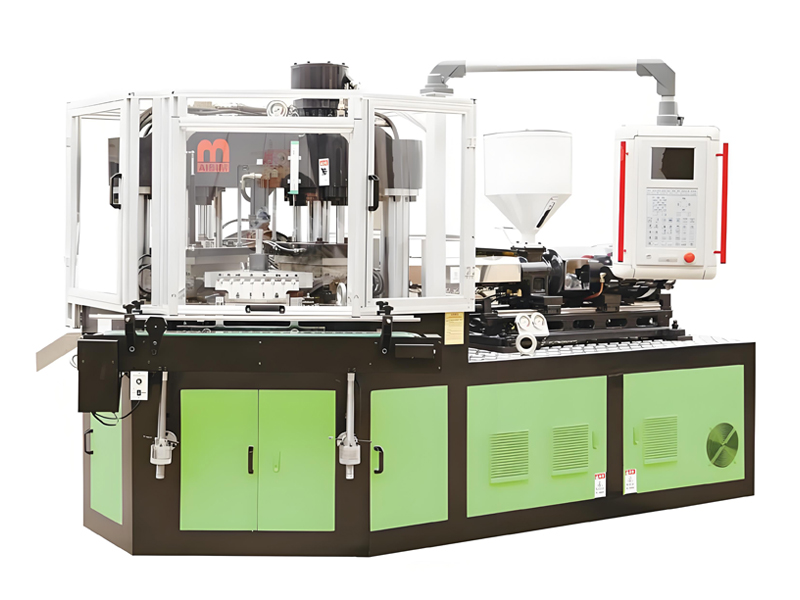
AiBiM has established itself as a leading manufacturer of injection blow molding machines for bucket production, with equipment operating in facilities worldwide. The company’s deep understanding of bucket manufacturing requirements has driven development of specialized machine configurations, mold designs, and processing technologies that optimize production performance. AiBiM machines incorporate advanced features including precise parison control, robust clamping systems, and efficient cooling systems that enable high-quality bucket production with exceptional productivity.
Characteristics of High-Quality Plastic Buckets
High-quality plastic buckets exhibit specific characteristics that enable reliable performance in demanding applications. These characteristics include uniform wall thickness, consistent mechanical strength, dimensional accuracy, and excellent surface finish. Understanding these characteristics is essential for selecting appropriate equipment and processing parameters to achieve desired product quality. The injection blow molding process provides exceptional control over these characteristics when properly configured and operated.
Uniform wall thickness represents one of the most important characteristics for plastic buckets, affecting both mechanical performance and material efficiency. Buckets with consistent wall thickness provide predictable strength characteristics throughout the product, preventing weak spots that could fail under load. Uniform wall thickness also ensures consistent cooling behavior, reducing internal stresses that could lead to warpage or dimensional instability. Injection blow molding enables precise control over wall thickness distribution through advanced parison programming and process control systems, making it ideal for applications requiring strict wall thickness tolerances.
Stackability represents another critical characteristic for plastic buckets, particularly for high-density storage and transportation applications. Stackable buckets require precise dimensional control of rim, bottom, and side wall profiles to ensure stable stacking behavior. The injection blow molding process provides the dimensional accuracy needed for reliable stacking while maintaining the strength characteristics required to support stacking loads. AiBiM machines incorporate precision control systems that ensure consistent dimensional accuracy across production runs, enabling production of buckets that stack reliably even when produced over extended periods.
Durability characteristics including impact resistance, crack resistance, and load-bearing capacity determine the service life of plastic buckets in demanding applications. The injection blow molding process enables optimization of material orientation and crystallinity to enhance these durability characteristics. Proper control of processing parameters including injection speed, blow pressure, and cooling rate enables production of buckets with mechanical properties optimized for specific application requirements. AiBiM processing expertise and equipment capabilities enable customers to achieve durability specifications that meet or exceed industry standards.
AiBiM Injection Blow Molding Machine Features for Buckets
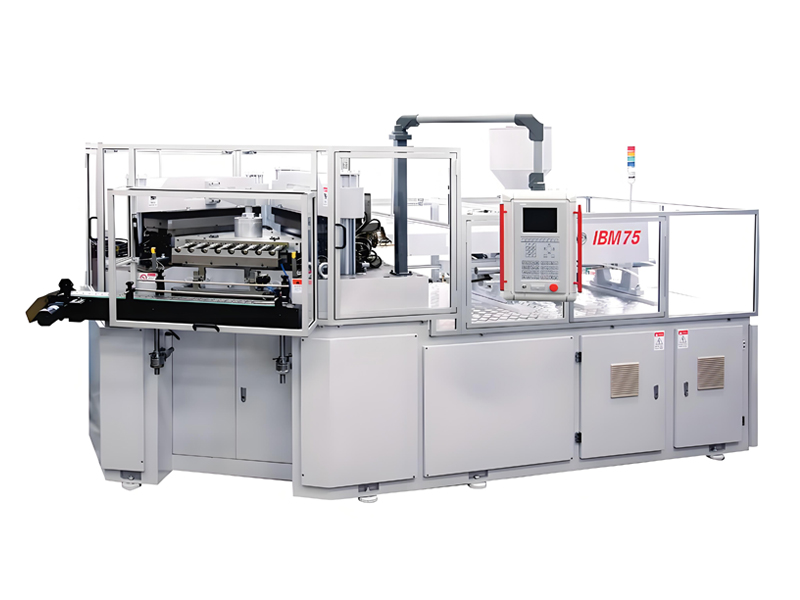
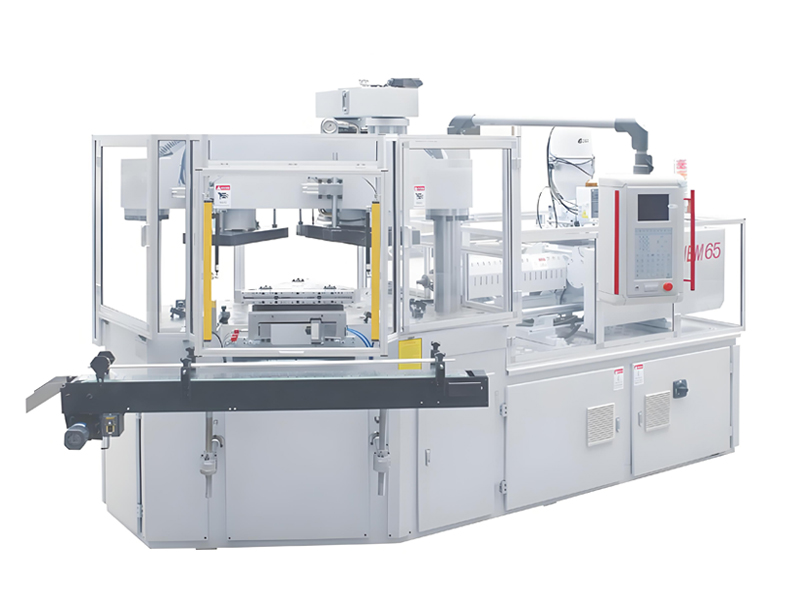
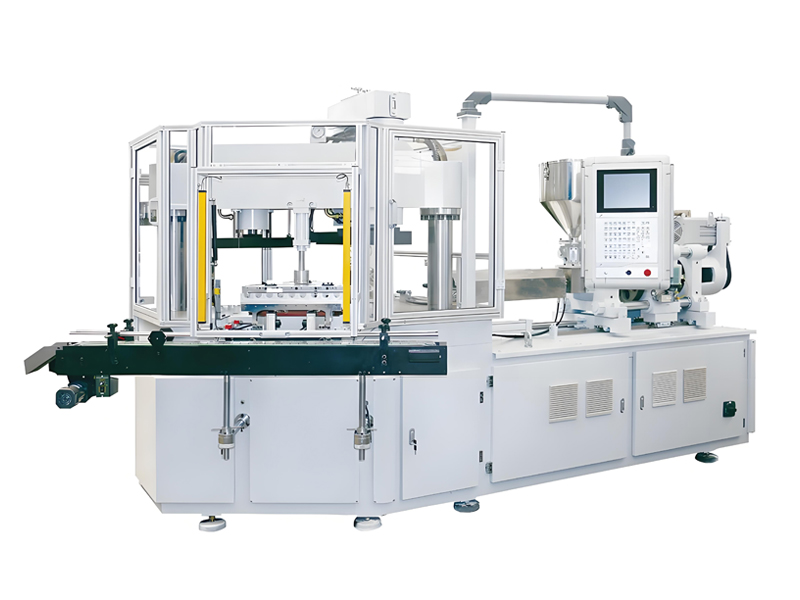
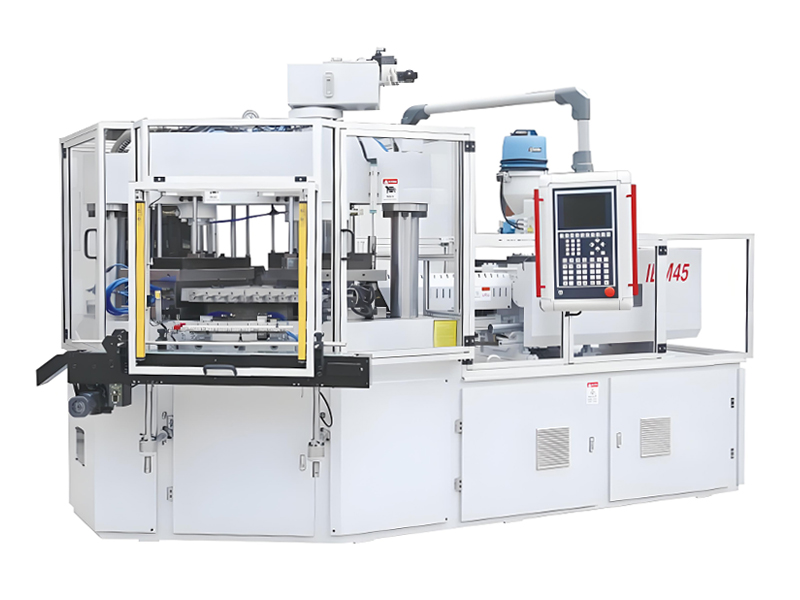
AiBiM injection blow molding machines incorporate specific features designed to address the unique requirements of bucket production. These features address challenges such as heavy part weight, large part dimensions, thick wall sections, and high clamping forces required for bucket manufacturing. The specialized design of AiBiM bucket machines enables reliable production of high-quality buckets with excellent productivity.
Robust clamping systems represent a fundamental feature of AiBiM bucket machines, providing the high forces necessary to mold thick-walled buckets with large cross-sectional areas. Clamping forces for bucket machines typically range from 200 to 800 tons depending on bucket size and material. The clamping system incorporates precision tie bars, rigid platen construction, and uniform pressure distribution to ensure consistent mold closure and prevent flashing. The heavy-duty design of AiBiM clamping systems ensures reliable operation under the high-cycle conditions typical of bucket production.
Precision parison control systems enable optimal material distribution in bucket walls, ensuring uniform wall thickness and consistent mechanical properties. AiBiM machines incorporate advanced parison programming with multiple adjustment points that compensate for material flow characteristics, cooling behavior, and part geometry. The control systems can store multiple parison programs for different bucket designs, enabling rapid changeovers while maintaining optimal material distribution. Precise parison control reduces material waste while ensuring that buckets meet strength and performance specifications.
Efficient cooling systems are essential for bucket production due to the large mass and thick wall sections typical of bucket designs. AiBiM bucket machines incorporate optimized cooling channel designs, high-capacity cooling systems, and mold temperature control to achieve appropriate cooling rates while maintaining dimensional stability. The cooling systems are designed to provide uniform cooling throughout the bucket, preventing warpage or distortion while enabling reasonable cycle times. Advanced cooling options including conformal cooling channels can reduce cycle times by 20-40% for challenging bucket designs.
Material Selection for Plastic Buckets
Material selection significantly impacts bucket performance, processing characteristics, and cost structure. Different materials offer varying combinations of mechanical properties, chemical resistance, thermal behavior, and cost that must be evaluated against specific application requirements. Understanding material characteristics enables selection of the optimal material for each bucket application while considering processing requirements and cost objectives.
Polypropylene represents one of the most commonly used materials for plastic buckets due to its excellent combination of properties and cost-effectiveness. Polypropylene provides good chemical resistance, high strength-to-weight ratio, and excellent crack resistance. The material exhibits good impact strength across a wide temperature range, making it suitable for both cold and hot fill applications. Polypropylene buckets typically cost between 3.50 and 6.00 dollars per gallon of bucket capacity depending on wall thickness and design complexity. The material processes well on injection blow molding machines with standard screw designs and temperature profiles.
High-density polyethylene offers superior chemical resistance compared to polypropylene, making it ideal for applications involving aggressive chemicals. HDPE provides excellent environmental stress crack resistance and good low-temperature impact strength. The material exhibits good chemical resistance to a wide range of acids, bases, and organic solvents. HDPE buckets typically cost between 4.00 and 7.00 dollars per gallon of capacity depending on wall thickness requirements. The material processes at slightly lower temperatures than polypropylene and requires appropriate screw design to achieve optimal melt homogeneity.
Engineering polymers such as nylon or polycarbonate may be selected for applications requiring enhanced mechanical properties or specific chemical resistance characteristics. These materials provide superior strength, stiffness, or temperature resistance compared to polypropylene or HDPE but come at significantly higher cost. Engineering polymer buckets typically cost between 8.00 and 15.00 dollars per gallon of capacity depending on material selection and design requirements. These materials may require specialized screw designs, temperature profiles, and mold coatings to achieve optimal processing results on injection blow molding machines.
Bucket Design Considerations
Bucket design must consider functional requirements, processing constraints, and economic objectives to achieve optimal performance and manufacturability. Design considerations include wall thickness distribution, rim design, bottom configuration, reinforcing features, and stacking geometry. Effective design balances these considerations to create buckets that meet performance requirements while enabling efficient production on injection blow molding equipment.
Wall thickness distribution must balance strength requirements against material usage and cooling efficiency. Minimum wall thickness must be sufficient to withstand service loads including stacking, impact, and internal pressure while maintaining structural integrity. Wall thickness typically ranges from 1.5mm to 5.0mm depending on bucket size, material, and application requirements. Uniform wall thickness distribution prevents weak spots and ensures consistent mechanical properties throughout the bucket. AiBiM parison control capabilities enable production of buckets with precisely controlled wall thickness distributions.
Rim design significantly impacts stacking behavior, handling characteristics, and overall bucket strength. The rim must provide sufficient structural support for stacking loads while maintaining dimensional accuracy for reliable stacking behavior. Rim designs often incorporate reinforcing ribs or profile variations that enhance strength without significantly increasing material usage. The rim profile must also accommodate pouring, handling, and attachment of accessories such as lids. Injection blow molding enables production of complex rim profiles with excellent dimensional consistency.
Bottom design affects stacking stability, structural integrity, and resistance to damage during handling. Flat bottoms with appropriate reinforcing features provide stable stacking behavior and resistance to deformation under load. Bottom designs may incorporate feet, reinforcing ribs, or other features that enhance performance without compromising stackability. The bottom must also resist puncture and damage during rough handling conditions. Injection blow molding enables production of complex bottom geometries with excellent dimensional accuracy.
Production Optimization Strategies
Optimizing production of plastic buckets on injection blow molding machines requires attention to multiple factors including cycle time, material usage, energy efficiency, and quality consistency. Implementing comprehensive optimization strategies can significantly improve production economics while maintaining or improving product quality. AiBiM provides extensive support and expertise to help customers optimize their bucket production operations.
Cycle time optimization represents one of the most significant opportunities for improving bucket production economics. Cycle times for bucket production typically range from 20 to 60 seconds depending on bucket size, wall thickness, and cooling efficiency. Reducing cycle time through optimized cooling system design, improved mold design, and process parameter optimization can increase daily production capacity by 20-40%. AiBiM cooling system expertise including conformal cooling channel design can provide substantial cycle time reductions while maintaining product quality. Even modest cycle time improvements yield significant productivity gains given the large part mass typical of bucket production.
Material optimization through precise parison control and minimal wall thickness requirements reduces material costs while maintaining product performance. Advanced parison programming enables production of buckets with optimized wall thickness distributions that use minimum material while meeting strength requirements. Material savings of 10-20% can be achieved through optimized design and processing without compromising product performance. For a bucket line producing 10,000 gallons of bucket capacity daily, material savings of 15% represent annual savings of 150,000 to 300,000 dollars depending on material selection and pricing.
Energy efficiency improvements through optimized processing parameters, machine design, and facility systems reduce operating costs and environmental impact. Injection blow molding machines for buckets consume significant energy due to the large part mass and thick wall sections. Energy-efficient motor systems, optimized heating profiles, and facility heat recovery systems can reduce energy consumption by 15-30%. For bucket production operations consuming 200,000 kWh annually, energy savings of 20% represent annual savings of 20,000 to 40,000 dollars depending on local energy costs.
Quality Control and Testing
Comprehensive quality control programs ensure that plastic buckets meet performance specifications and customer expectations. Quality requirements for buckets vary significantly based on application but typically include dimensional accuracy, strength testing, and performance under service conditions. Implementing thorough quality control procedures prevents defective products from reaching customers and identifies opportunities for process improvement.
Dimensional inspection verifies that buckets meet specifications for critical dimensions including rim diameter, bottom dimensions, overall height, and wall thickness. Dimensional tolerances typically range from plus or minus 0.5mm to plus or minus 2.0mm depending on bucket size and application requirements. Regular dimensional monitoring using precision measurement equipment ensures consistent production and detects process variations before they cause quality problems. AiBiM machines provide the dimensional consistency necessary to meet tight tolerance requirements across production runs.
Stack testing verifies that buckets can withstand specified stacking loads without excessive deformation or failure. Stack testing typically involves stacking buckets to specified heights and measuring deformation or detecting failure conditions. Stack loads vary based on application but typically range from 5 to 15 buckets high depending on design and material properties. Regular stack testing ensures that production maintains required stacking performance and detects material or process variations that could affect stackability.
Drop testing evaluates bucket durability under impact conditions encountered during handling and transportation. Drop testing typically involves dropping filled buckets from specified heights onto various surfaces and assessing damage. Drop heights vary based on application but typically range from 3 feet to 6 feet for filled buckets. Regular drop testing ensures that buckets maintain impact resistance requirements and detects material or process variations that could affect impact performance.
Leak testing verifies that buckets provide reliable containment without leaking. Leak testing methods may include water submersion, pressure testing, or dye penetration methods depending on application requirements. Leak testing is particularly important for applications involving liquids or where leakage could cause safety or environmental concerns. Regular leak testing ensures production maintains required containment performance.
Cost Analysis and Pricing
Understanding the cost structure of bucket production on injection blow molding machines is essential for pricing decisions, investment analysis, and operational planning. Production costs include equipment amortization, material costs, operating costs, and overhead expenses. Comprehensive cost analysis enables informed decisions about pricing, investment in equipment, and optimization of production processes.
Equipment investment for injection blow molding machines capable of bucket production varies significantly based on machine capacity and configuration. Machines for 2 to 5 gallon bucket production typically cost between 300,000 and 600,000 dollars depending on automation level and production rate. Machines for 10 to 20 gallon bucket production typically cost between 500,000 and 900,000 dollars depending on capacity and configuration. These investments provide production capacities ranging from 300 to 2,000 buckets per hour depending on size and design complexity.
Material costs represent the largest single component of bucket production costs, typically accounting for 60-70% of total production cost. Polypropylene material costs typically range from 1.50 to 2.50 dollars per pound depending on grade and volume. HDPE material costs typically range from 1.80 to 3.00 dollars per pound depending on grade and volume. For a 5 gallon bucket weighing 2 pounds, material cost typically ranges from 3.00 to 6.00 dollars depending on material selection and market conditions.
Operating costs including energy, labor, maintenance, and overhead typically account for 20-30% of total production cost. Energy costs for bucket production typically range from 0.15 to 0.40 dollars per bucket depending on size and local energy costs. Labor costs vary significantly based on automation level but typically range from 0.20 to 0.50 dollars per bucket. Maintenance costs typically average 3-5% of equipment value annually. Overhead costs including facility, administration, and indirect labor typically add 0.10 to 0.30 dollars per bucket.
Production cost examples help illustrate the cost structure for different bucket sizes and materials. A 5 gallon polypropylene bucket with typical wall thickness might have material cost of 4.00 dollars, energy cost of 0.25 dollars, labor cost of 0.30 dollars, and overhead cost of 0.20 dollars, resulting in total production cost of 4.75 dollars. A similar 5 gallon HDPE bucket might have material cost of 5.00 dollars with similar other costs, resulting in total production cost of 5.75 dollars.
Mold Design and Manufacturing
Mold design and manufacturing significantly impacts bucket quality, production efficiency, and tooling costs. Buckets present unique mold design challenges due to large size, thick wall sections, and high production volumes. Understanding mold design considerations enables selection of appropriate mold configurations and optimization of production economics.
Material selection for bucket molds must balance hardness, wear resistance, and cost requirements. P20 pre-hardened steel provides good performance for moderate volume production at reasonable cost. P20 molds typically cost between 25,000 and 60,000 dollars depending on size and complexity. H13 hot work steel provides superior wear resistance for high-volume production but costs significantly more. H13 molds typically cost between 50,000 and 120,000 dollars depending on size and complexity. The selection of mold material should be based on production volume, wear conditions, and total cost of ownership considerations.
Cavity configuration significantly impacts production capacity and per-unit tooling cost. Single cavity molds provide maximum flexibility but highest per-unit production cost. Two-cavity molds approximately double production capacity while increasing tooling cost by only 50-70%. Four-cavity molds quadruple production capacity while increasing tooling cost by 80-120% compared to single cavity. The optimal cavity configuration balances production requirements against tooling investment and changeover flexibility needs.
Mold features including cooling channels, venting, and surface finish significantly impact part quality and cycle time. Optimized cooling channel design is particularly important for buckets due to thick wall sections. Conformal cooling channels can reduce cycle times by 20-40% but increase mold cost by 30-60%. Proper venting prevents gas trapping that can cause burn marks or incomplete filling. Surface finish requirements vary by application but typically range from standard SPI B1 to SPI A2 for high-quality appearance applications.
Production Setup and Optimization
Production setup and optimization processes ensure that injection blow molding machines produce high-quality buckets with maximum efficiency. Proper setup includes material handling preparation, process parameter optimization, mold installation, and quality verification. Ongoing optimization ensures that production maintains peak efficiency as conditions change over time.
Material handling preparation ensures that materials are properly dried, cleaned, and fed to the machine. Polypropylene typically requires minimal drying but may benefit from pre-drying of 2-4 hours at 80-100°C for moisture-sensitive applications. HDPE typically does not require drying for standard grades but may require drying for filled or moisture-sensitive formulations. Proper material preparation prevents moisture-related defects and ensures consistent processing characteristics.
Process parameter optimization establishes the optimal combination of temperature profile, injection speed, blow pressure, and cooling time for specific bucket designs. Temperature profiles typically range from 180-230°C for polypropylene and 160-210°C for HDPE. Injection speeds must be optimized to achieve proper filling without excessive shear heating. Blow pressures typically range from 80-150 psi depending on material and wall thickness. Cooling time optimization balances production efficiency against dimensional stability requirements.
Mold installation procedures ensure proper alignment, sealing, and operation of mold components. Proper installation includes precise leveling of mold halves, verification of alignment pins, testing of cooling system operation, and verification of venting. Improper mold installation can cause flashing, dimensional problems, or premature mold wear. AiBiM provides detailed installation procedures and support to ensure proper mold setup.
AiBiM Support and Services
AiBiM provides comprehensive support and services designed to ensure successful bucket production operations. These services include equipment installation, process optimization, operator training, and ongoing technical support. Utilizing AiBiM support services helps ensure successful project implementation and optimal ongoing performance.
Installation and commissioning services ensure that equipment is properly installed, tested, and optimized before production begins. Installation typically takes 2-4 weeks depending on machine size and facility preparation requirements. Commissioning includes testing of all machine functions, process optimization for specific applications, and training of operators and maintenance personnel. Installation and commissioning services typically cost 5-10% of equipment value but prevent much larger costs associated with improper setup or delayed production startup.
Process optimization services from AiBiM help customers achieve optimal production efficiency and product quality. Optimization services may include cycle time reduction, material usage optimization, energy efficiency improvements, or quality enhancement projects. Optimization services are typically priced on a project basis ranging from 10,000 to 50,000 dollars depending on scope and complexity. However, optimization projects typically pay for themselves through improved productivity within 6-12 months.
Training programs from AiBiM ensure that operators and maintenance personnel have the knowledge and skills to operate and maintain equipment effectively. Training programs typically cover machine operation, basic troubleshooting, maintenance procedures, and process optimization techniques. Training can be conducted at customer facilities or at AiBiM training centers. Training programs typically cost 2,000-5,000 dollars plus travel expenses but pay dividends through improved equipment performance and reduced downtime.
Market Applications and Opportunities
Plastic buckets serve diverse market applications across multiple industry segments, each with specific requirements and characteristics. Understanding market applications helps manufacturers identify promising opportunities and develop appropriate product offerings. The versatility of plastic buckets and production flexibility of injection blow molding machines enable serving diverse market needs.
Food and beverage applications represent a significant market for plastic buckets, including food processing, ingredient storage, and transportation. Food grade buckets require compliance with FDA regulations and appropriate material selection. These applications typically require good chemical resistance, impact resistance, and cleanability. Food grade buckets typically command price premiums of 20-40% compared to industrial buckets due to regulatory compliance requirements.
Construction and industrial applications include storage and transportation of construction materials, chemicals, lubricants, and industrial products. These applications often require high load capacity, chemical resistance, and durability under rough handling conditions. Industrial buckets typically represent the largest volume segment but also have the most price pressure. Prices for industrial buckets typically range from 5.00 to 12.00 dollars depending on size and material.
Chemical and hazardous material applications require buckets with specific chemical resistance characteristics and regulatory compliance. These applications often require specialized materials such as HDPE with enhanced chemical resistance or fluoropolymers for aggressive chemicals. Regulatory compliance may include UN certification for transportation of hazardous materials. Chemical buckets typically command significant price premiums of 50-100% compared to standard industrial buckets.
Future Trends and Developments
The plastic bucket market continues to evolve driven by sustainability initiatives, material innovations, and market dynamics. Understanding future trends enables manufacturers to adapt their strategies and take advantage of emerging opportunities. AiBiM continues to develop technologies and capabilities that address emerging market requirements.
Sustainability initiatives are increasingly influencing bucket design and material selection. Recycled content requirements may mandate minimum percentages of recycled material in bucket production. Lightweight designs reduce material usage and transportation costs while maintaining performance requirements. Improved recyclability including material selection and design for recycling addresses end-of-life considerations. Sustainability initiatives create both challenges and opportunities for bucket manufacturers who can adapt to changing requirements.
Material innovations continue to expand performance capabilities and processing characteristics for bucket applications. Enhanced polymers with improved strength-to-weight ratios enable lighter bucket designs without performance compromise. Antimicrobial additives provide additional protection for food and medical applications. UV-resistant additives extend service life for outdoor applications. Material innovations provide opportunities for product differentiation and market expansion.
Automation and Industry 4.0 technologies are transforming bucket production operations. Automated mold handling systems reduce changeover times and labor requirements. Integrated quality inspection systems ensure 100% product inspection. Predictive maintenance systems anticipate maintenance needs before failures occur. Advanced data analytics optimize production processes and predict demand. These technologies improve production efficiency, quality, and flexibility.
Conclusion
Injection blow molding machines represent the ideal technology for producing high-quality plastic buckets that meet demanding performance requirements across diverse applications. AiBiM injection blow molding machines provide the precision, reliability, and performance needed for bucket production while offering production efficiency that ensures economic competitiveness. The combination of advanced machine features, material versatility, and comprehensive support services makes AiBiM the preferred choice for plastic bucket manufacturing worldwide.
The investment in injection blow molding equipment for bucket production requires careful consideration of production requirements, quality specifications, and economic objectives. Proper equipment selection, mold design, and process optimization enable production of buckets that meet market requirements while achieving favorable economics. AiBiM’s extensive experience and application expertise help customers navigate these decisions and achieve successful production operations.
As the plastic bucket market continues to evolve, manufacturers must adapt to changing requirements including sustainability initiatives, material innovations, and market dynamics. AiBiM continues to develop technologies and capabilities that address emerging market needs, ensuring that customers can maintain competitive advantage and capitalize on new opportunities. The combination of advanced equipment, application expertise, and comprehensive support services positions AiBiM as the ideal partner for plastic bucket manufacturing success.