The global plastic packaging industry has maintained steady growth over the past decade, driven by rising demand from pharmaceutical, food & beverage, cosmetics, and daily chemical sectors. For large-scale packaging manufacturers, production efficiency, product consistency, and unit cost are the three core factors determining market competitiveness. As a high-efficiency plastic molding solution, multi-cavity injection blow molding machines have become the preferred equipment for mass production of hollow plastic containers, thanks to their advantages of high output per unit time, excellent product uniformity, and low labor intensity. However, selecting a suitable multi-cavity injection blow molding machine is not a simple procurement decision. It involves comprehensive consideration of production needs, technical configuration, cost investment, supplier strength, and long-term operation benefits. A wrong choice may lead to problems such as low equipment utilization, high failure rate, unqualified product quality, and long investment payback period, which will bring huge losses to enterprises.
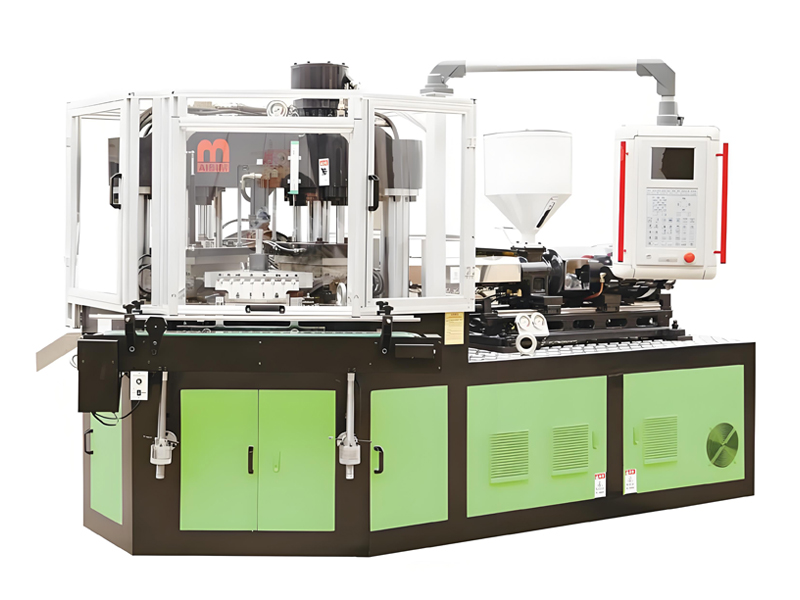
As a professional manufacturer focusing on R&D and production of injection blow molding equipment, AiBiM has many years of industry experience and a complete product matrix, providing high-performance, high-reliability multi-cavity injection blow molding solutions for customers around the world. This guide will systematically sort out the key points of purchasing multi-cavity injection blow molding machines for mass production, from demand definition, technical parameter evaluation, cost-benefit analysis, supplier selection to production optimization, to provide a comprehensive and practical reference for enterprises preparing to invest in such equipment. Whether you are a large packaging group expanding production capacity, a medium-sized manufacturer upgrading equipment, or an investor entering the plastic packaging industry, you can find valuable decision-making guidance in this article.
1. Core Advantages of Multi-Cavity Injection Blow Molding Machines for Mass Production
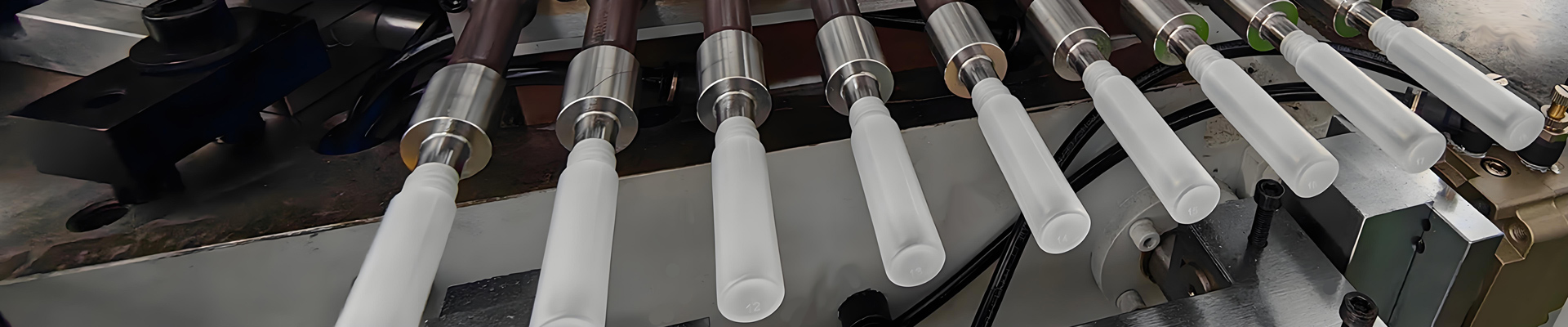
Before discussing the selection details, it is necessary to clarify the core value of multi-cavity injection blow molding machines for mass production scenarios. Compared with single-cavity machines or extrusion blow molding solutions, multi-cavity injection blow molding equipment has unique advantages in large-scale standardized production, which can help enterprises achieve higher production efficiency and better economic benefits.
1.1 Significantly Improved Output Per Unit Floor Area
The most direct advantage of multi-cavity injection blow molding machines is the multiplication of production capacity under the same floor space. A standard 16-cavity injection blow molding machine can produce 8 to 10 times more products per hour than a single-cavity machine with similar footprint. For production enterprises with limited plant space, adopting multi-cavity equipment can maximize production capacity without expanding the plant area, which greatly saves land investment and plant construction costs. For large-scale production bases, using multi-cavity machines can reduce the total number of equipment required, simplify production line management, and reduce the difficulty of production scheduling and personnel management.
Taking the production of 50ml pharmaceutical plastic bottles as an example, a single-cavity injection blow molding machine can produce about 800 to 1000 bottles per hour, while an 8-cavity machine of the same generation can produce 6000 to 7000 bottles per hour. Under the same annual output target, the number of equipment and plant area required by multi-cavity machines are only 1/6 to 1/7 of that of single-cavity machines, and the space utilization efficiency is greatly improved.
1.2 Reduced Unit Production Cost and Higher Profit Margin
Multi-cavity injection blow molding machines can significantly reduce the unit production cost of products, which is mainly reflected in three aspects. First, the labor cost per unit product is greatly reduced. One operator can manage one multi-cavity production line, and the output is equivalent to multiple single-cavity machines, which greatly reduces the number of operators required per unit of output and saves labor costs. Second, the energy consumption per unit product is lower. Although the total power of a multi-cavity machine is higher than that of a single-cavity machine, the energy consumption per thousand products is only 40% to 60% of that of single-cavity equipment, because the plasticizing system and control system share part of the energy consumption. Third, the raw material utilization rate is higher. The injection blow molding process itself has less flash and waste, and the multi-cavity machine with stable process can control the product qualification rate above 99%, which greatly reduces the raw material waste caused by defective products.
For mass-produced standardized products with relatively low profit margins, the reduction of unit cost directly means the improvement of profit margin and market price competitiveness. Enterprises with multi-cavity high-efficiency equipment can obtain more profit space under the same market price, or seize more market share through appropriate price reduction under the premise of ensuring profits.
1.3 Superior Product Consistency and Stable Quality
In mass production, the consistency of product quality between different batches and different cavities is a key indicator to measure the level of production technology. Multi-cavity injection blow molding machines produced by professional manufacturers adopt optimized runner design and precise temperature control system, which can ensure that the melt state and molding conditions of each cavity are highly consistent, so the dimensional accuracy, wall thickness uniformity, appearance quality and mechanical properties of products produced by each cavity can maintain high consistency.
For industries with strict quality requirements such as pharmaceutical packaging and food packaging, product consistency is directly related to compliance with regulatory standards and brand reputation. High-quality multi-cavity injection blow molding machines can ensure that the dimensional deviation of products in the same batch is controlled within ±0.05mm, and the weight deviation is less than ±0.3%, which fully meets the requirements of high-standard quality management systems such as GMP. Stable product quality can also reduce the inspection workload of finished products, improve the efficiency of downstream filling and packaging processes, and reduce the loss caused by unqualified products in downstream links.
1.4 Higher Automation Level and Lower Labor Dependency
Multi-cavity injection blow molding machines for mass production are usually equipped with a high degree of automated configuration, including automatic feeding system, automatic temperature control, automatic fault alarm, automatic product counting, and even online testing and automatic packaging functions. The highly automated production mode reduces the dependence on manual operation, and only a small number of operators are needed to manage multiple production lines, which not only saves labor costs, but also reduces the probability of product quality fluctuation and safety accidents caused by human error.
In the current environment of rising labor costs around the world, reducing labor dependency has important practical significance for production enterprises. Especially in regions with high labor costs, adopting highly automated multi-cavity equipment can greatly reduce production costs and improve the profitability of enterprises. At the same time, automated production can also reduce the contact between personnel and products, which is more in line with the hygienic requirements of food and pharmaceutical packaging production, and reduces the risk of product contamination.
2. Pre-Purchase Demand Definition: Clarify Core Requirements Before Sourcing
Before formally investigating equipment suppliers and technical parameters, enterprises must first clarify their own core needs, which is the premise of selecting the most suitable equipment. Blindly pursuing high configuration or low price will lead to mismatching between equipment and production needs, resulting in waste of investment or failure to meet production goals. Enterprises can sort out their own needs from the following aspects.
2.1 Product Attributes and Application Scenarios
First of all, enterprises need to clarify the specific attributes of the products to be produced, including product volume, shape structure, wall thickness requirements, and raw material types. Different products have different requirements for equipment specifications and mold design. For example, small-capacity products below 100ml are suitable for high-cavity equipment to maximize efficiency, while large-capacity products above 2L usually have a small number of cavities due to limitations of clamping force and mold size.
At the same time, the application industry of products should be clarified, because different industries have different compliance requirements for packaging and production equipment. For pharmaceutical packaging, it is necessary to meet GMP production specifications, and the equipment needs to adopt food-grade contact materials and be easy to clean and disinfect. For food packaging, it is necessary to meet FDA or EU food contact material standards to ensure that the equipment will not release harmful substances during production. For daily chemical packaging, there may be special requirements for product appearance and gloss. Clarifying the industry application and compliance requirements in advance can avoid the problem that the equipment cannot pass the industry certification after purchase.
2.2 Target Production Capacity and Output Scale
Production capacity demand is the core indicator for determining the number of equipment cavities and configuration level. Enterprises need to calculate the required annual output according to their own order volume and market development plan, then convert it into hourly output, and then determine the required number of cavities and equipment speed. When calculating, it is necessary to consider the actual equipment utilization rate, including downtime for mold change, maintenance time, and raw material replacement time. Generally, the comprehensive utilization rate of normal mass production equipment is about 80% to 85%.
It should be noted that when selecting the number of cavities, it is not the case that more cavities are better. It needs to match the actual order volume. If the order volume is small and the product specifications change frequently, too many cavities will lead to long mold change time and low equipment utilization, but will reduce production efficiency. For enterprises with many product types and small single-product batches, they can choose medium-cavity equipment with fast mold change function to balance production efficiency and production flexibility. For enterprises with few product types and large single-product batches, high-cavity equipment can be selected to maximize production efficiency and reduce unit production cost.
2.3 Plant Conditions and Supporting Facilities
The actual situation of the plant is also an important factor affecting equipment selection. Enterprises need to measure the available plant area, effective height, and entrance and exit dimensions in advance to ensure that the purchased equipment can be smoothly transported into the plant and installed normally. At the same time, it is necessary to confirm the supporting utility conditions of the plant, including the total power capacity, cooling water supply capacity, and compressed air pressure and flow. Different specifications of equipment have different requirements for utilities. If the supporting conditions are insufficient, it is necessary to transform the plant in advance, which will increase additional investment and time cost.
In addition, the environmental conditions of the plant should also be considered. For example, production workshops for food and pharmaceutical packaging need to meet certain cleanliness requirements, and the equipment should be designed with a fully enclosed structure to reduce dust pollution. If the plant is located in a region with high ambient temperature, it is necessary to consider increasing the cooling capacity of the equipment to ensure stable operation of the equipment in high temperature environment.
2.4 Budget Range and Expected Return on Investment
Enterprises should formulate a reasonable procurement budget based on their own financial situation and investment plan. The budget should not only include the cost of the main engine equipment, but also consider the cost of molds, auxiliary equipment, installation and commissioning, spare parts, and later operation and maintenance. Only calculating the price of the main engine and ignoring other costs will lead to budget overruns in actual procurement.
At the same time, enterprises should have clear expectations for the return on investment cycle. Generally, the investment return period of high-quality injection blow molding equipment is between 6 months and 18 months, depending on the product profit margin and equipment utilization rate. When selecting equipment, enterprises should not only pursue low prices, but also comprehensively consider the long-term total cost of ownership of the equipment and return on investment, and choose the scheme with the highest cost performance within the budget range.
3. Key Technical Parameters and Configuration Selection Points
After clarifying the basic needs, enterprises need to evaluate the technical configuration of the equipment in detail when inspecting different suppliers. The quality of technical configuration directly determines the production efficiency, product quality, operation stability and service life of the equipment. The following are the core technical links that need to be focused on when selecting multi-cavity injection blow molding machines.
3.1 Plasticizing and Injection System Performance
The plasticizing and injection system is the core part of the injection blow molding machine, which determines the melting quality of raw materials and the precision of material injection, and directly affects the product quality and production efficiency. When evaluating the plasticizing system, we should first focus on the design and material of the screw and barrel. The screw of high-quality equipment adopts optimized barrier type and mixing element design, which can achieve uniform plasticization and good mixing effect under relatively low shear strength, avoid material degradation caused by excessive shear heat, and ensure the stability of product performance. The screw and barrel should be made of high-quality alloy structural steel, treated by overall nitriding, with high surface hardness, good wear resistance and corrosion resistance, and long service life. For production scenarios with high filler content, bimetallic screw and barrel can be selected, which have better wear resistance and longer service life.
Secondly, the injection precision and stability should be investigated. The multi-cavity machine has high requirements for injection volume consistency. If the injection volume fluctuates greatly, it will lead to different product weights and even insufficient filling of individual cavities. High-quality equipment adopts closed-loop control injection system, which is driven by servo motor, with injection repetition accuracy up to ±0.3%, which can ensure consistent injection volume per cycle and stable product weight. At the same time, the injection pressure and injection speed should be adjustable in multiple stages to adapt to different raw materials and product process requirements.
AiBiM’s multi-cavity injection blow molding machines are equipped with independently developed high-efficiency plasticizing systems. The screw design is optimized for different raw materials such as PP, PE, PETG and PC, which can achieve excellent plasticizing effect while ensuring high output. The injection system adopts imported high-precision servo drive and closed-loop control, with stable injection pressure and accurate material volume, which fully meets the requirements of multi-cavity high-precision molding.
3.2 Clamping System Structure and Rigidity
The clamping system undertakes the functions of mold opening and closing and locking, and its structural rigidity and movement precision have an important impact on product quality and mold service life. For multi-cavity molds, the total projected area is large, and the required clamping force is also large. If the rigidity of the clamping system is insufficient, it will cause template deformation during high-pressure injection, resulting in product flash, uneven wall thickness, and even accelerated mold wear.
When evaluating the clamping system, we should first check the structural form of the clamping mechanism. At present, the mainstream high-quality multi-cavity injection blow molding machines mostly adopt double toggle clamping mechanism, which has the advantages of large clamping force, stable movement, high energy efficiency and good self-locking performance. The template should be made of high-quality cast steel, with thickened design and good rigidity, which can ensure uniform force distribution during mold locking and no deformation under long-term high-load operation. Secondly, the guiding precision of the clamping system should be investigated. High-precision guide pillars and guide sleeves can ensure accurate alignment of moving and fixed templates, avoid mold dislocation caused by template deflection, and extend the service life of molds.
AiBiM’s clamping system adopts optimized double toggle five hinge structure, which has been verified by finite element analysis to ensure uniform force distribution and sufficient structural rigidity. The template is made of high-quality cast iron as a whole, with high precision machining, and the parallelism error of the template is controlled within 0.03mm, which can fully meet the requirements of high-precision multi-cavity mold production. The guide part adopts high-precision alloy guide pillars, which are wear-resistant and durable, and can maintain stable movement precision for a long time.
3.3 Mold Design and Processing Quality
As an important part of the injection blow molding production system, the quality of the mold directly determines the appearance quality, dimensional accuracy and production efficiency of the product. When purchasing multi-cavity equipment, it is recommended to purchase the main engine and supporting molds from the same supplier as far as possible, which can avoid the problem of mismatching between the mold and the main engine, and also facilitate the overall after-sales service.
When evaluating the quality of multi-cavity molds, we should focus on the following points. First, the rationality of the gating system design. The runner design of multi-cavity molds should ensure that the melt reaches each cavity at the same time and with the same pressure, so as to ensure the consistency of products in each cavity. High-quality molds adopt balanced runner design, and through flow simulation analysis, the size and shape of each section of the runner are optimized to ensure balanced feeding of each cavity. Second, the cooling system design. Uniform and efficient cooling can shorten the molding cycle and improve production efficiency, while ensuring consistent product quality in each cavity. High-quality molds adopt optimized circulating water channel design, with uniform water channel distribution and reasonable flow rate, which can achieve rapid and uniform cooling of products. Third, the material and processing precision of the mold. The mold cavity should be made of high-quality mold steel, with high hardness, good wear resistance and long service life. The surface of the cavity should be polished with high precision to ensure smooth and beautiful product surface. The processing precision of each cavity should be consistent to ensure the interchangeability of products.
AiBiM can provide customized mold services according to customer product requirements. All molds are designed by experienced mold engineers and optimized by computer flow simulation. The molds are processed by high-precision CNC machine tools, with high dimensional precision and good consistency. Each set of molds will be tested and debugged on the machine before delivery to ensure that the produced products fully meet the customer’s quality requirements.
3.4 Control System and Automation Configuration
The control system is the brain of the injection blow molding machine, which determines the operation stability, parameter adjustment accuracy and operation convenience of the equipment. High-quality multi-cavity injection blow molding machines should adopt industrial-grade PLC control system, with stable performance, strong anti-interference ability, and can adapt to long-term continuous operation in industrial environments. The human-machine interface should adopt a large-size touch screen, with intuitive and clear interface, convenient parameter setting and status viewing, and easy for operators to learn and use.
The control system should have rich functions, including formula storage function, which can store multiple sets of process parameters for different products. When switching products, you only need to call the corresponding formula with one key, without resetting parameters one by one, which greatly shortens the product switching time and reduces the requirements for operator experience. It should also have a perfect fault diagnosis and alarm function, which can monitor the operating status of each component of the equipment in real time. When an abnormality occurs, it will automatically send an acousto-optic alarm and display the cause of the fault and treatment suggestions on the screen, helping operators quickly troubleshoot and reduce downtime. For large-scale production bases, the control system should also support networking functions, which can connect with the enterprise’s MES system to realize centralized monitoring and management of multiple production lines.
AiBiM’s multi-cavity injection blow molding machines are equipped with internationally renowned brand PLC and touch screen, with stable and reliable system performance. The independently developed control software has powerful functions, supports storage of up to 100 sets of production formulas, and has perfect fault self-diagnosis and remote diagnosis functions. With the authorization of the customer, after-sales engineers can remotely connect to the equipment control system to check the operating status and troubleshoot, which greatly improves the after-sales response speed and reduces the customer’s downtime loss.
3.5 Energy Efficiency and Long-Term Operating Cost
For mass production equipment that runs continuously for a long time, energy consumption is an important part of the operating cost, and the energy-saving performance of the equipment should be focused on when selecting. High-quality injection blow molding machines usually adopt a variety of energy-saving designs. The most core is the servo drive system. Compared with the traditional quantitative pump hydraulic system, the servo drive system can adjust the output power according to the actual load demand of the equipment, which can save 30% to 40% of electric energy, and has the advantages of low noise and stable operation. In terms of heating system, high-efficiency ceramic heating rings are adopted, which have high thermal efficiency, uniform heating and low heat loss, which can reduce heating energy consumption.
In addition to energy consumption, the loss of wearing parts and maintenance costs should also be considered. Equipment with reliable quality and reasonable design has low failure rate and long service life of wearing parts, which can save a lot of maintenance costs in long-term operation. When selecting suppliers, we can understand the service life of main wearing parts and the price of spare parts, and calculate the long-term total cost of ownership of the equipment, rather than only paying attention to the initial purchase price.
4. AiBiM Multi-Cavity Injection Blow Molding Machine Solutions: Cost and ROI Analysis
As a professional injection blow molding equipment manufacturer, AiBiM provides a full range of multi-cavity injection blow molding machine products for different production scales and application scenarios, which can meet the needs of various mass production. The following is a detailed introduction to AiBiM’s product line and a comprehensive cost-benefit analysis based on typical models to help customers intuitively understand the investment value of the equipment.
4.1 Product Portfolio for Different Mass Production Needs
AiBiM’s multi-cavity injection blow molding machine product line is divided into three series according to the applicable product size and output scale, covering all mainstream application scenarios from small-batch multi-variety production to large-scale high-volume mass production.
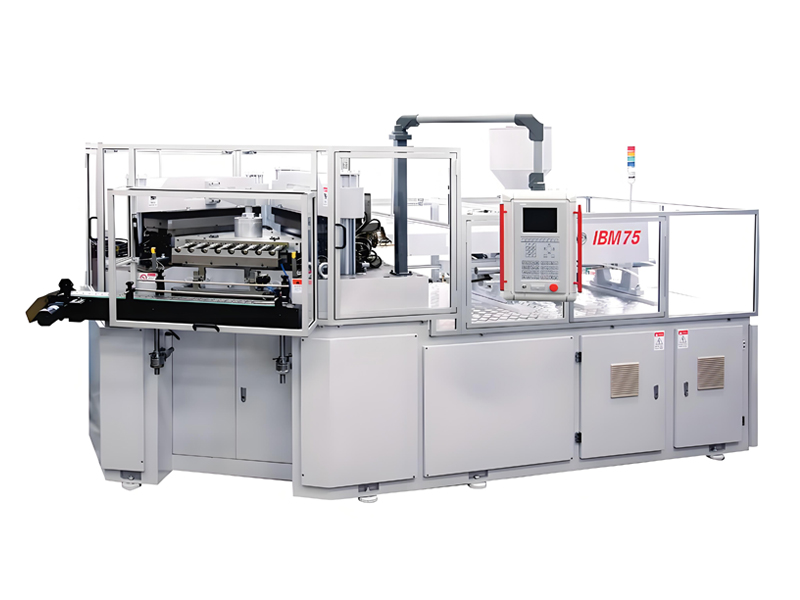
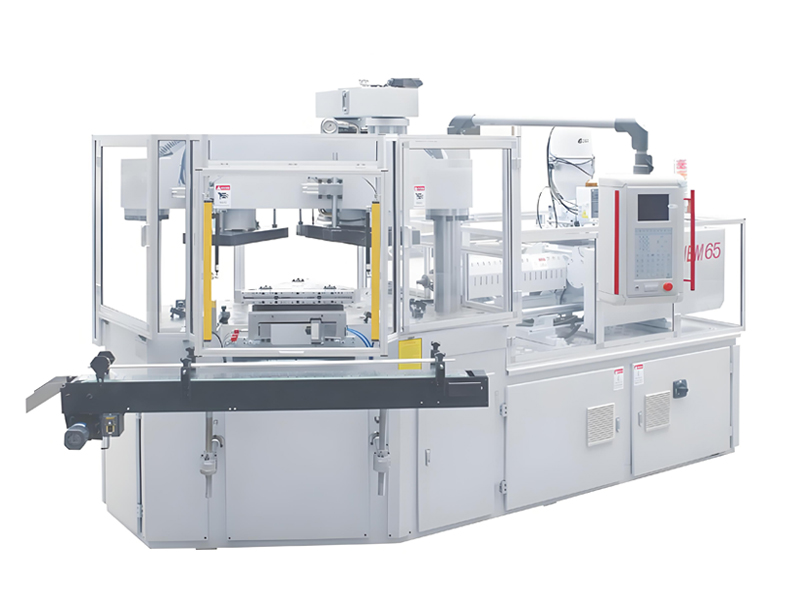
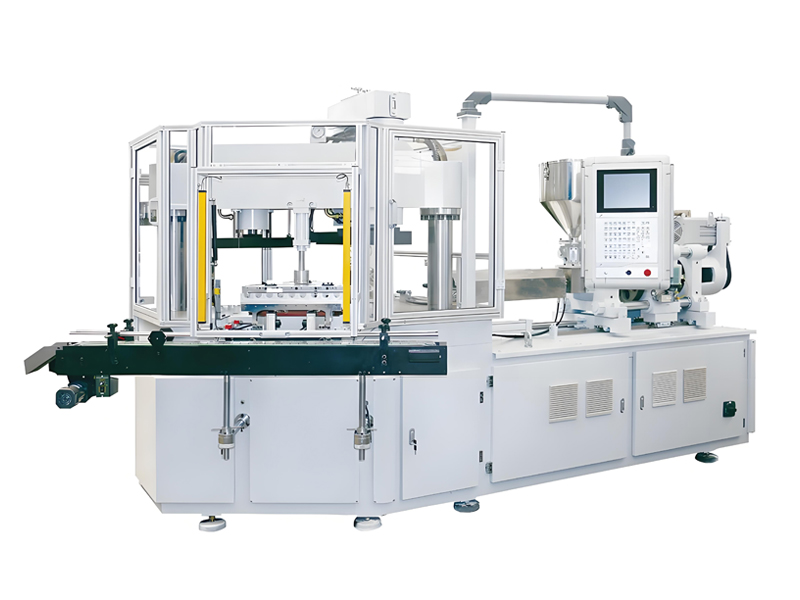
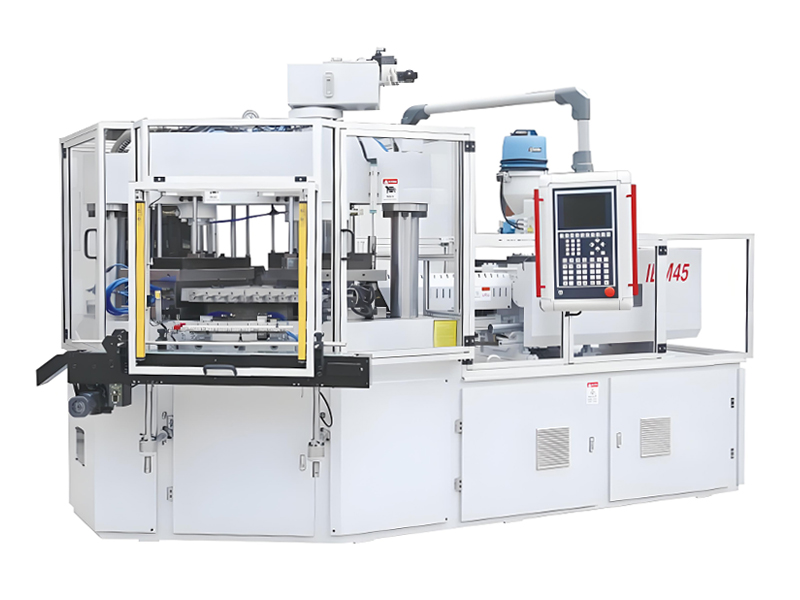
The first is the small-format multi-cavity series, with 2 to 8 cavities, which is mainly suitable for the production of small-capacity hollow products of 10ml to 500ml, such as pharmaceutical bottles, eye drop bottles, cosmetic sample bottles, and small daily chemical packaging bottles. This series of equipment has the characteristics of small footprint, fast production speed, high product precision, and easy mold change. It is suitable for small and medium-sized production enterprises and scenarios with many product specifications and relatively small single-product batches. The FOB Shanghai price of standard configuration models of this series ranges from 25,000 to 65,000 US dollars. The specific price varies according to the number of cavities, automation configuration and optional functions.
The second is the medium-format multi-cavity series, with 8 to 24 cavities, which is the most widely used mainstream model in mass production, suitable for producing products of 50ml to 2L, such as food packaging bottles, daily chemical bottles, cosmetic packaging bottles, and pharmaceutical large packaging bottles. This series of equipment balances production efficiency and production flexibility, and can adapt to the production needs of most standardized packaging products. It is the preferred model for medium and large-scale packaging manufacturers. The FOB Shanghai price of standard configuration models of this series ranges from 70,000 to 110,000 US dollars. Taking the most widely used 16-cavity standard model as an example, the price is about 85,000 US dollars. If you choose high-end configurations such as servo energy-saving system, automatic feeding system and online quality inspection device, the total price will increase accordingly, usually between 95,000 and 110,000 US dollars.
The third is the large-format high-output multi-cavity series, with 24 cavities and above, which is specially built for large-scale mass production scenarios with single product variety and huge order volume. It is suitable for producing small and medium-sized standardized products below 1L, with extremely high production efficiency and can maximize the reduction of unit product cost. This series of models is usually customized according to customer product characteristics and output requirements, with a high degree of automation, and can be connected with downstream filling and packaging equipment to realize fully automated production from raw materials to finished products. The FOB Shanghai price of this series of models ranges from 120,000 to 200,000 US dollars, depending on the number of cavities, configuration level and customized requirements.
4.2 Detailed Breakdown of Initial Investment
Taking the most widely used 16-cavity medium-format standard model as an example, we calculate the detailed initial investment cost for customers’ reference. The total initial investment mainly includes the following parts.
The first is the cost of the main engine equipment, including the injection system, clamping system, hydraulic system, control system and frame of the injection blow molding machine. The standard configuration is about 85,000 US dollars, which is the core part of the total investment.
The second is the mold cost. The price of a set of 16-cavity injection blow molding mold varies according to the complexity of the product structure, the precision requirements and the mold material. For ordinary regular-shaped products, the price of standard P20 steel mold is about 8,000 to 15,000 US dollars. If high-quality mold steel such as S136 is used, or the product structure is complex and requires high polishing precision, the mold price will increase to 18,000 to 25,000 US dollars. Enterprises can choose the appropriate mold material and configuration according to their own product positioning and budget. It is recommended to prepare at least one set of spare molds for mass production to cope with mold maintenance and replacement without affecting the production schedule.
The third is the cost of supporting auxiliary equipment. A complete injection blow molding production line also needs supporting equipment such as raw material dryer, vacuum automatic feeder, chiller, air compressor and finished product conveyor. The price of standard configuration auxiliary equipment is about 8,000 to 12,000 US dollars in total. If enterprises already have part of the general-purpose auxiliary equipment in their workshops, they can reuse it to save investment. For production lines with high automation requirements, optional equipment such as online visual inspection device and automatic packaging machine can also be added, with an additional cost of about 10,000 to 20,000 US dollars.
The fourth is the cost of installation, commissioning and technical training. AiBiM provides on-site installation and commissioning services for each set of equipment, and conducts systematic operation and maintenance training for customers’ operators and maintenance personnel. This part of the cost is usually included in the overall quotation of the equipment, and customers do not need to pay extra. For bulk orders or overseas customers with special needs, we can also provide extended on-site technical support services according to actual needs.
The fifth is the initial spare parts reserve cost. It is recommended that customers purchase a set of common wearing parts at the same time of purchasing equipment, including heating rings, seals, filter screens, cutting blades, proximity switches, etc., so as to replace them in time when equipment fails and reduce downtime loss. The standard spare parts package costs about 2,000 to 3,000 US dollars, which can meet the daily maintenance needs of the equipment for one year.
Taking all the above items together, the total initial investment of a standard 16-cavity medium-format injection blow molding production line is about 105,000 to 135,000 US dollars. The specific total price will fluctuate according to the customer’s selected configuration grade, mold quantity and optional functions.
4.3 Annual Operating Cost Composition and Calculation
After clarifying the initial investment, it is necessary to systematically calculate the long-term operating cost of the equipment to accurately evaluate the total cost of ownership of the project. Taking the 16-cavity standard model producing 100ml food-grade PP packaging bottles as an example, we calculate the annual operating cost based on 300 working days per year and 20 hours of effective operation per day.
Raw material cost accounts for the largest proportion, usually 70% to 80% of the total operating cost. The 16-cavity production line can produce about 12,000 bottles per hour, with a single bottle weight of 5 grams, so the hourly raw material consumption is 60kg, and the annual raw material consumption is about 360 tons. Calculated by the average price of food-grade PP raw material of 1,200 US dollars per ton, the annual raw material cost is about 432,000 US dollars. AiBiM’s high-precision injection blow molding process can control the product qualification rate above 99%, and the edge waste can be recycled after crushing, which greatly reduces the actual raw material loss.
Electricity cost is the second largest operating expenditure. The total installed power of the 16-cavity standard model is about 45kW. With the servo energy-saving system, the actual average operating power is about 32kW. Calculated by industrial electricity price of 0.1 US dollars per kWh, the annual electricity cost is about 19,200 US dollars. Compared with traditional quantitative pump equipment of the same specification, it can save 30% to 40% of electric energy, that is, about 8,000 to 10,000 US dollars of electricity bills can be saved every year, and the long-term energy-saving benefit is very significant.
Labor cost can be effectively controlled through automated configuration. A single production line only needs 1 operator per shift, and 3 operators are required for three-shift continuous production. Calculated by the average annual salary of 12,000 US dollars per person, the annual labor cost is about 36,000 US dollars. The equipment has a high degree of automation and simple operation. Ordinary workers can take up their posts after short-term training, which reduces the dependence on skilled workers and further reduces labor management costs.
In addition, there are equipment maintenance costs, plant rent and other management expenses. Under normal standardized maintenance, the annual maintenance cost of the equipment is about 2% to 3% of the main engine price, that is, 2,000 to 4,000 US dollars, mainly for the replacement of wearing parts and daily consumables. A production line plus raw material and finished product storage area requires about 150 square meters of workshop, with an annual rent of about 6,000 US dollars. Plus other utilities and management expenses, the annual total is about 8,000 US dollars.
Overall, the total annual operating cost excluding raw materials is about 69,200 US dollars, and the total annual operating cost including raw materials is about 501,200 US dollars.
4.4 Revenue Projection and Investment Payback Period
Combined with the initial investment and operating cost, we can calculate the actual return on investment of the project. Taking the production of ordinary 100ml food packaging bottles as an example, the ex-factory price of each bottle is about 0.08 US dollars, and the gross profit per thousand bottles is about 25 US dollars. The annual output of a 16-cavity production line is about 72 million bottles, and the annual gross profit is about 180,000 US dollars. After deducting operating costs other than raw materials (labor, electricity, rent, maintenance, etc.), the annual net profit is about 110,800 US dollars.
Calculated on the basis of the total initial investment of 120,000 US dollars for the standard configuration production line, the static investment payback period is about 13 months. If the enterprise produces high value-added products such as pharmaceutical grade packaging bottles or high-end cosmetic packaging bottles, the product gross profit margin will be higher, and the investment payback period can be shortened to 8 to 10 months. Even considering factors such as insufficient order volume and raw material price fluctuations, the investment can be recovered within 18 months under normal operating conditions, and the return on investment is very considerable.
It should be emphasized that the above income calculation is based on the premise of selecting high-quality and stable equipment such as AiBiM. If low-price equipment with uneven quality is selected, the actual return on investment will be greatly reduced due to high failure rate, high product scrap rate, high energy consumption and short service life. Many enterprises only focus on the initial purchase price when purchasing equipment, but ignore the long-term total cost of ownership, which is actually a very uneconomical choice.
5. Core Criteria for Selecting a Reliable Injection Blow Molding Machine Supplier
Choosing the right supplier is as important as choosing the right equipment parameters. A reliable supplier can not only provide high-quality equipment, but also provide long-term technical support and after-sales service to escort the production and operation of enterprises. When selecting suppliers, enterprises can focus on the following aspects.
5.1 Technical R&D Strength and Industry Experience
Suppliers with strong R&D strength can provide more advanced and stable equipment, and can also provide targeted solutions according to the special needs of customers. When investigating, enterprises can understand the supplier’s R&D team size, patent technology ownership, product technology iteration speed, etc. At the same time, industry experience is also very important. Suppliers with many years of experience in injection blow molding equipment have a more thorough understanding of process requirements and production pain points in different industries, and the equipment developed is more in line with actual production needs.
AiBiM has been focusing on the R&D and manufacturing of injection blow molding equipment for more than 15 years, and has a professional R&D team composed of senior engineers in the industry. It has mastered a number of core technologies such as high-precision injection blow molding process, servo energy-saving system and multi-cavity balanced molding, and its product performance has reached the international advanced level. Over the years, we have provided equipment and technical solutions for customers in dozens of countries and regions around the world, and have rich experience in serving different industries and different application scenarios.
5.2 Strict Quality Control System and Product Certification
Perfect quality control system is the guarantee of equipment quality. Regular suppliers should establish a complete quality management system covering the whole process from raw material procurement, parts processing, assembly and commissioning to factory inspection. Each link has clear quality standards and testing procedures to ensure that each set of equipment delivered to customers meets qualified standards.
In addition, product certification is also an important reference. For export equipment, it is necessary to confirm whether it has CE certification and other relevant regional access certifications to ensure that the equipment can pass customs smoothly and meet local safety production standards. For food and pharmaceutical packaging production equipment, it is also necessary to confirm that the materials in contact with raw materials meet the corresponding food contact safety standards. All AiBiM equipment strictly implements ISO9001 quality management system standards, and the whole series of products have passed CE certification. The food contact parts all use food-grade materials that meet FDA and EU standards, which can fully meet the compliance requirements of food and pharmaceutical packaging production.
5.3 Complete After-sales Service and Spare Parts Supply System
As large-scale industrial production equipment, injection blow molding machines will inevitably have some minor faults or require maintenance during long-term operation. The timeliness and professionalism of after-sales service directly affect the production efficiency and economic benefits of enterprises. When selecting suppliers, we should focus on investigating their after-sales service system, including response speed, on-site service capacity, spare parts supply speed, etc.
AiBiM has established a complete global after-sales service system. For all equipment sold, we provide a one-year free warranty service and lifetime technical support. When customers encounter problems, they can contact the after-sales team through phone, email and online channels. We promise to respond to customer feedback within 24 hours and give solutions. For problems that cannot be solved remotely, we will arrange engineers to visit the site as soon as possible. At the same time, we have a sufficient spare parts warehouse, and common wearing parts can be delivered quickly, minimizing the downtime loss of customers.