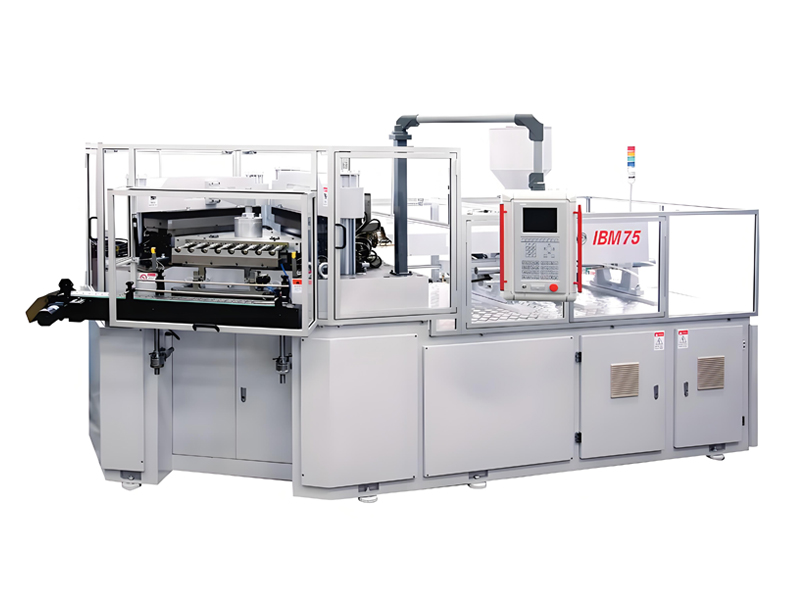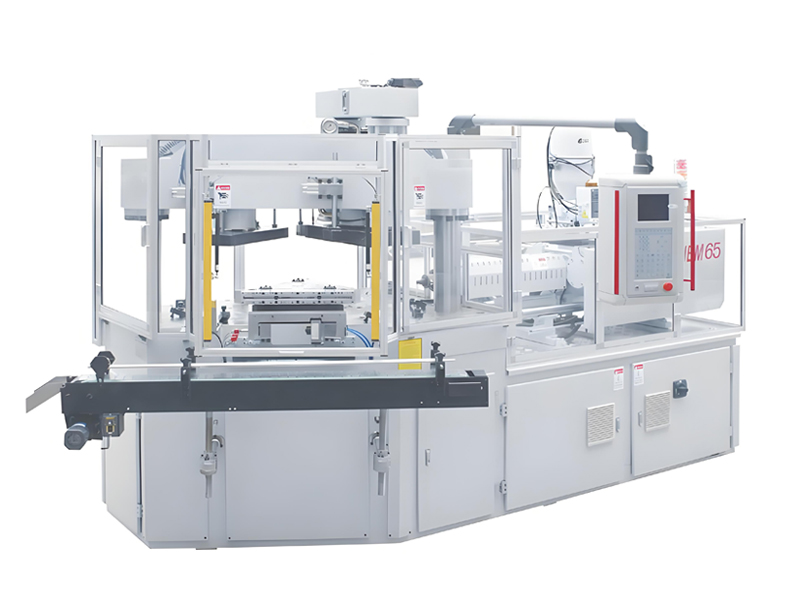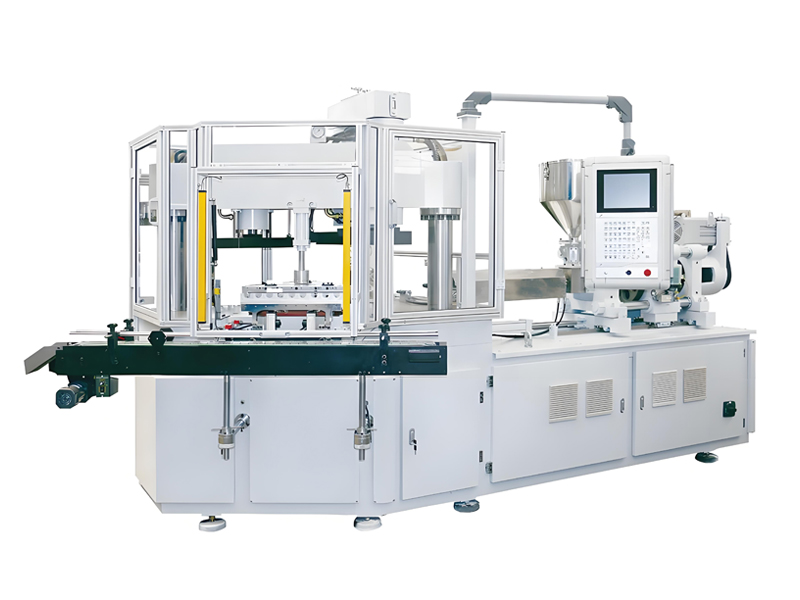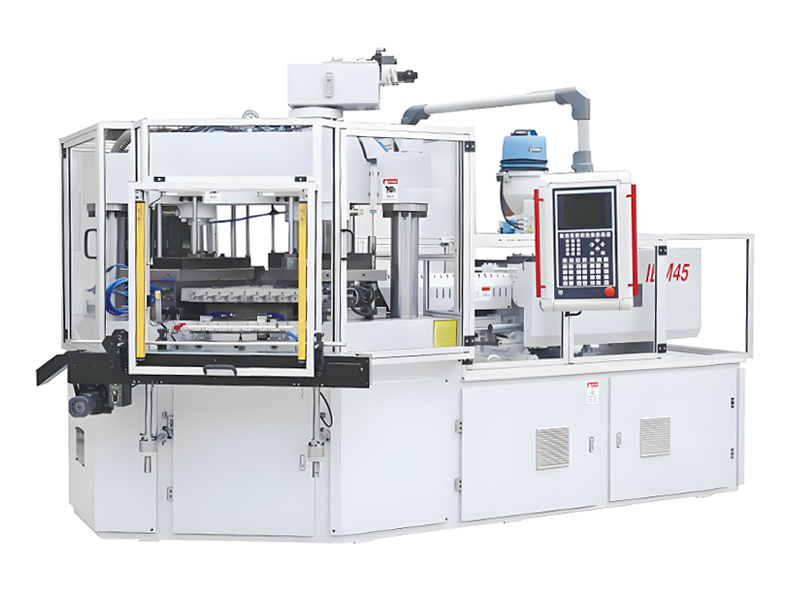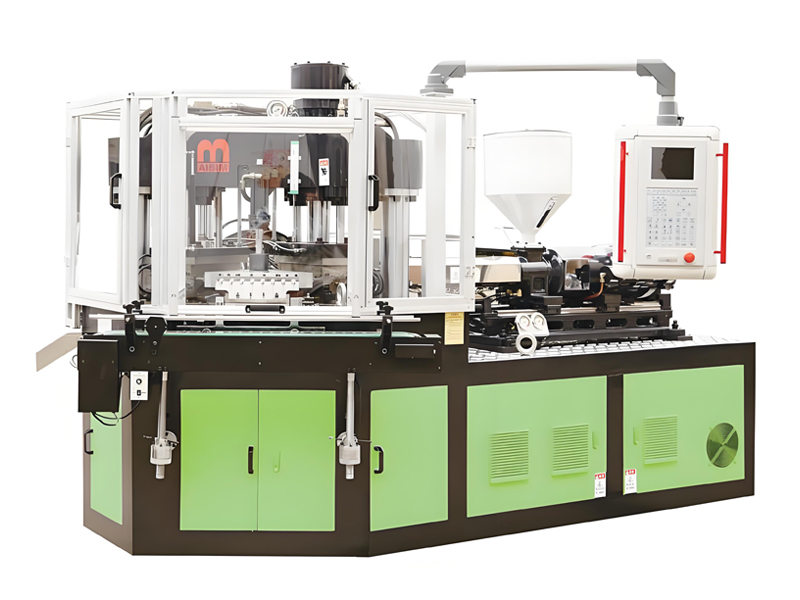
Direct labor is the single largest controllable expense in rigid plastic bottle production, and for many contract packers and pharmaceutical bottle makers it accounts for more than 30 percent of total unit cost. Automatic injection blow molding (IBM) machines collapse a multi-stage manual process into a single, self-contained, three-station operation that needs only a fraction of the operators required by conventional blow molding. This article presents a complete, real-world factory case study showing how one Southeast Asian producer of 100ml HDPE dropper bottles reduced its direct labor headcount by 82 percent after installing automatic IBM lines, and it walks through the full labor calculation so you can model the same savings for your own plant. Aibim, a Wanplas factory specializing in injection blow molding machinery, supplies the IBM75, IBM65, and IBM55 Hybrid Electric machines referenced throughout this guide.
Pourquoi le coût de la main-d'œuvre domine l'économie de la production de bouteilles
Labor is not simply a line item on a cost sheet; it is a multiplier that touches scrap, quality, throughput, and floor space. In a conventional bottle plant the production flow is fragmented across several manual or semi-automated workstations, and each hand-off between stations adds operators, supervision, training overhead, and error opportunity. The further a process is from full automation, the more the labor bill grows not only in wages but also in the hidden costs of coordination.
Les composants cachés de la main-d'œuvre manuelle des bouteilles
Most buyers underestimate labor cost because they count only the operator standing at the machine. A complete labor model for a manual or semi-automatic bottle line must include at least six distinct roles: parison or preform handling, machine tending, in-mold or post-mold deflashing and trimming, leak and visual inspection, packing and boxing, and shift supervision. When bottles are produced by extrusion blow molding or by two-step reheat stretch blow molding, the trimming and inspection steps are labor intensive because flash, moil, and neck rings must be removed and the part must be verified by eye.
Pourquoi la géométrie des bouteilles augmente la main-d'œuvre manuelle
Small bottles between 3ml and 100ml are the worst case for manual labor. At that scale, a single operator can only handle a limited number of parts per minute, and the smaller the bottle the more units must be touched to reach a given daily output. A 100ml dropper bottle produced at 50 million units per year means roughly 137,000 units every working day, and each of those units typically passes through three or four human hands in a manual cell. The arithmetic of small-format, high-volume production is what makes automation so decisive.
Réalité des salaires régionaux pour 2026
Wage inflation across Southeast Asia, India, and parts of Eastern Europe has been climbing at 6 to 10 percent annually, eroding the traditional advantage of low-cost labor regions. A plant that could justify 60 operators on the basis of low wages three years ago now faces a labor bill that grows faster than its revenue. Automatic IBM eliminates this exposure because the machine performs the molding, blowing, deflashing, and ejection automatically, leaving only loading of raw material and removal of finished, flash-free bottles.
L'effet cumulé des heures supplémentaires et de l'absentéisme
A headcount table understates true labor cost because manual lines also carry a heavy indirect burden from absence and overtime. With 84 people in the bottle department, even a modest 5 percent absence rate means four or five workers missing on any given day, forcing either overtime premiums for remaining staff or temporary agency labor at a higher rate. In the case study plant, the semi-automatic configuration required an overtime budget of roughly USD 38,000 per year simply to maintain coverage across three shifts and to absorb vacation and sick leave. After conversion to four automatic IBM lines with only 17 people, the same 5 percent absence rate equals fewer than one person per day, which a floating technician absorbs without premium pay. The plant’s overtime line fell to about USD 5,000 per year, a hidden saving of USD 33,000 that never appears in a direct staffing comparison but materially improves the business case.
Supervision et frais généraux de main-d'œuvre qualité
Large manual cells also demand more layers of supervision because human-paced stations drift in output and quality. The before-state required eight shift supervisors plus a quality coordinator to manage trimming and inspection variance. Automatic IBM stabilizes the process so that two supervisors and statistical sampling suffice, removing six supervisory roles and one coordinator role. At loaded costs of USD 9,600 and USD 11,000 respectively, this overhead reduction contributed roughly USD 68,000 per year, which should be added to any labor model alongside direct operators. The structural point is that automation compresses not only the operator layer but the entire management pyramid built to control it.
Comment les machines IBM automatiques éliminent les étapes manuelles
An automatic injection blow molding machine removes manual labor by performing every production step inside one enclosed, servo-controlled, three-station rotary or shuttle system. Understanding the three-station one-step process is essential to understanding why the labor saving is so large and so durable.
Poste un : Injection de la préforme (paraison)
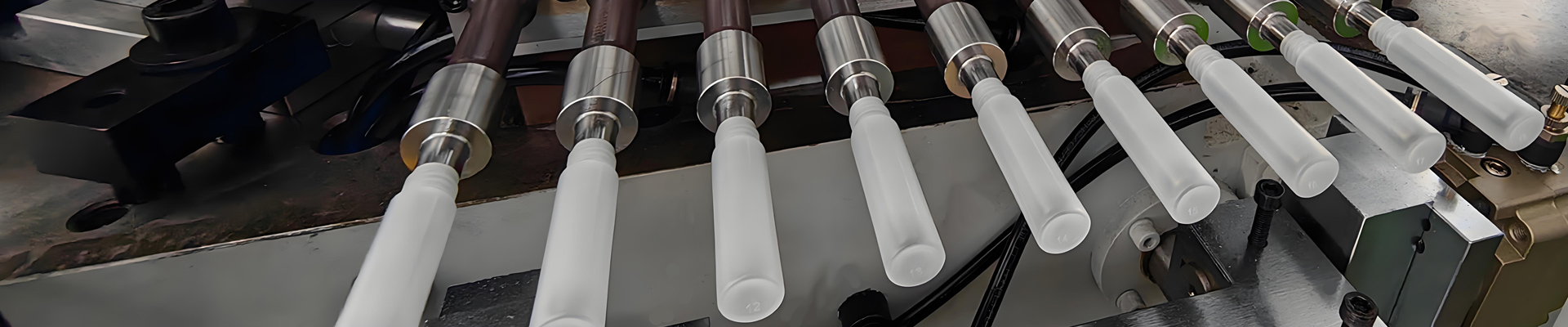
In the first station, molten plastic is injected into a core-rod cavity to form a precise hollow preform, or parison, with a fully formed finished neck and thread. Because the neck is molded to final tolerance, there is no neck-ring trimming. This single design fact eliminates the trimming operator that conventional blow molding lines require. Aibim machines use a single-crossbeam, double-pole clamping framework that enlarges mold-setting space, allowing multi-cavity tooling that multiplies output per operator.
Station Two: Blow Molding
The core rod carrying the hot parison transfers to the blow station, where conditioned compressed air expands the parison against a cooled cavity to form the bottle. The neck remains supported on the core rod, so the bottle emerges with a cosmetic, flash-free finish and no moil. Deflashing labor drops to zero. The IBM55 Hybrid Electric model adds electric servo clamping and transfer, reducing the hydraulic labor-related maintenance burden while improving repeatability.
Station trois : Éjection et démoulage
The finished bottle is stripped from the core rod at the third station and discharged onto a conveyor or into a bin. Aibim’s CE-certified stripper station uses a long-distance digital laser sensor for mold safety and a light curtain for personal safety, so a single attendant can monitor several machines. Finished bottles are ready to count, pack, or feed directly into a downstream filling line without manual inspection of flash.
La technologie PREFILL et ses effets secondaires sur la main-d'œuvre
Aibim’s unique PREFILL technology combined with variable displacement pump pressurizing in the hydraulic system reduces energy use by a minimum of 35 percent, but it also has a labor benefit: fewer hydraulic valves and a more stable pressure profile mean fewer process deviations, fewer jams, and less operator intervention. The SD card parameter storage system lets a plant save a validated recipe and reload it across multiple machines in seconds, slashing changeover labor and the need for senior technicians to tune each startup.
Où les opérateurs apportent encore de la valeur
Even a fully automatic IBM cell needs people for material handling, quality sampling, and supervision. The difference is scale: one trained technician can tend four to six IBM machines simultaneously, versus one operator per semi-automatic machine plus dedicated trimmers and inspectors. The labor reduction is therefore structural, not a marginal efficiency gain.
Étude de cas d'usine réelle : flacons compte-gouttes pharma de 100 ml
The following case study is drawn from a contract manufacturing site in Southeast Asia that produces 100ml HDPE pharmaceutical dropper bottles for export. The plant originally ran semi-automatic extrusion blow molding machines supplemented by manual deflashing and visual inspection. Facing wage inflation and a new high-volume order, management converted four production cells to automatic IBM machines from Aibim, a Wanplas factory, specifically the IBM75 model with 6-cavity tooling.
Référence : La cellule semi-automatique manuelle
Before conversion, each of four production cells ran one semi-automatic extrusion blow molder supported by a trimming bench and an inspection bench. Per cell, the staffing was: one machine tender, two deflash operators, two visual inspectors, and one packer, for six people per cell. Across four cells on a three-shift pattern, the plant scheduled 72 direct operators plus 8 shift supervisors and 4 material handlers, totaling 84 people in the bottle department. Output was 40 million bottles per year at a qualified yield of 94 percent.
La conversion : quatre lignes automatiques IBM75
The plant installed four Aibim IBM75 machines, each with 6-cavity molds running HDPE at a dry cycle suited to 100ml bottles, and integrated each with an inline conveyor, automatic counter, and carton packer. Because the IBM process produces flash-free bottles with a finished neck, the trimming benches were removed entirely. Visual inspection was reduced to statistical sampling rather than 100 percent manual checking.
Résultat : Effectifs et production après un an
After commissioning, the bottle department required: one technician per two machines across shifts (so 2 technicians per shift x 3 shifts = 6), two packing assistants per shift (6 total), one material handler per shift (3 total), and two shift supervisors (2 total), giving 17 people. Output rose to 50 million bottles per year at 98.5 percent qualified yield. The plant thus achieved higher volume with 67 fewer people and a dramatically lower defect rate.
Pourquoi les économies ont dépassé l'estimation initiale
The project team had forecast a 70 percent labor cut but achieved 80 percent because two secondary effects appeared. First, the elimination of trimming removed a bottleneck that had forced overtime, so shift supervisors spent less time on firefighting. Second, the SD card recipe system allowed the night shift to start a validated job without a senior process engineer present, removing two previously mandatory senior roles. Both effects are typical of automatic IBM conversions and should be modeled in any business case.
Réduction quantifiée de la main-d'œuvre et tableaux de calcul
Les tableaux ci-dessous convertissent l'étude de cas en un calcul transférable. Vous pouvez remplacer les hypothèses de salaires et d'effectifs par vos propres données d'usine ; la structure reste valable pour toute opération de bouteilles de petit format passant à l'IBM automatique.
Tableau 1 : Effectifs avant et après la conversion
| Role | Before (Semi-Auto) | After (Automatic IBM) | Reduction |
|---|---|---|---|
| Machine tenders | 12 | 6 | 6 |
| Deflash operators | 24 | 0 | 24 |
| Visual inspectors | 24 | 0 | 24 |
| Packers | 12 | 6 | 6 |
| Material handlers | 4 | 3 | 1 |
| Shift supervisors | 8 | 2 | 6 |
| Total | 84 | 17 | 67 |
Tableau 2 : Calcul du coût annuel de main-d'œuvre directe
L'usine a payé un coût opérateur chargé moyen de 5 400 USD par personne et par an (salaire plus avantages légaux, repas et uniformes). Les superviseurs seniors étaient chiffrés à 9 600 USD par an. Le tableau multiplie l'effectif par le coût annuel.
| Category | Before Headcount | After Headcount | Cost Each (USD/yr) | Before Total | After Total |
|---|---|---|---|---|---|
| Operators and packers | 72 | 15 | 5,400 | 388,800 | 81,000 |
| Supervisors | 8 | 2 | 9,600 | 76,800 | 19,200 |
| Material handlers | 4 | 3 | 5,400 | 21,600 | 16,200 |
| Department Total | 84 | 17 | — | 487,200 | 116,400 |
Tableau 3 : Coût de main-d'œuvre pour mille bouteilles
Diviser le coût annuel de main-d'œuvre par la production annuelle normalise l'économie et montre pourquoi l'économie unitaire s'est améliorée avant même de compter l'énergie et les rebuts.
| Metric | Before | After |
|---|---|---|
| Annual output (bottles) | 40,000,000 | 50,000,000 |
| Annual labor cost (USD) | 487,200 | 116,400 |
| Labor cost per 1,000 bottles (USD) | 12.18 | 2.33 |
| Reduction in unit labor cost | — | 80.9 percent |
Économies de main-d'œuvre secondaires grâce à un meilleur rendement
The yield improvement from 94 percent to 98.5 percent eliminated roughly 1.8 million scrap bottles per year. At the old process, reprocessing and sorting those rejects consumed about four operator-hours per day, or the equivalent of two full-time positions. The cleaner process of automatic IBM thus removed additional indirect labor that never appears on the direct staffing chart.
Main-d'œuvre de changement de série et effet des recettes sur carte SD
A frequently overlooked labor cost is the skilled time spent setting up each new job. Semi-automatic and conventional blow cells typically require a senior process technician to dial in temperatures, pressures, and timing for every mold change, and each adjustment attempt produces scrap while the line ramps. In a plant running 200 changeovers per year, this can consume 1.5 hours of senior labor per event, or 300 senior hours annually. Aibim’s SD card parameter storage system lets a validated recipe be saved once and reloaded onto any machine in seconds, so a routine operator can execute the changeover without a senior engineer present. Modeling 200 changeovers at 1.5 hours each, with senior labor costed at USD 18 per hour, the SD card system removes about USD 5,400 of skilled labor per year and additionally reduces ramp-up scrap. For contract manufacturers with frequent SKU rotation, this changeover labor saving is often larger than the headline headcount reduction suggests.
Temps de formation et d'intégration
Manual trimming and inspection roles demand weeks of training to reach acceptable quality speed, and turnover in such repetitive jobs is high, creating a continuous re-training cost. Automatic IBM shifts labor toward machine tending and sampling, skills that transfer across the whole line and require less bottle-specific training. Aibim’s CE-certified laser and light-curtain safety system also standardizes safe operation, shortening the onboarding curriculum. The case study plant estimated that annual training hours dropped from roughly 900 to 220 after conversion, equivalent to about USD 7,000 of internal labor and a faster path to full productivity for new hires.
Lignes manuelles, semi-automatiques et entièrement automatiques
Tous les programmes de bouteilles ne justifient pas un IBM entièrement automatique. Le bon choix dépend du volume, du format et des exigences de qualité. Le tableau comparatif ci-dessous présente la dimension main-d'œuvre aux côtés des autres compromis, en utilisant la même bouteille HDPE de 100 ml comme produit de référence.
Tableau 4 : comparaison des modes de procédé
| Parameter | Manual EBM Cell | Semi-Auto EBM Cell | Automatic IBM (Aibim) |
|---|---|---|---|
| Operators per million bottles/yr | 2.1 | 1.4 | 0.34 |
| Deflashing required | Yes, manual | Yes, bench | None |
| Neck finish tolerance | Fair | Fair | Excellent (molded) |
| Typical qualified yield | 90 to 93 percent | 93 to 95 percent | 97 to 99 percent |
| Relative equipment cost | Low | Medium | High |
| Energy use level | Medium | Medium | Low (35 percent saving) |
| Best fit volume | Under 5M/yr | 5 to 20M/yr | Over 20M/yr |
Quand un niveau d'automatisation inférieur est approprié
For short runs, frequent mold changes, or bottles above roughly 500ml where unit labor is naturally lower, a semi-automatic cell can be the better commercial choice. Apollo, a Wanplas factory, supplies extrusion blow molding machines for larger containers where IBM is less advantageous, and Wanplas’s YuDa factory provides PET blow machines for water and beverage bottles. The labor case for automatic IBM is strongest for small, high-volume, tight-tolerance bottles in pharmaceutical, cosmetic, food, and drink applications, which are exactly Aibim’s core markets.
Paysage concurrentiel pour l'IBM automatique
Aibim competes globally with established IBM specialists such as Jomar in the United States, Aoki and Nissei ASB in Japan, and Magic in Taiwan. Each offers automatic IBM platforms, but Aibim’s combination of the PREFILL hydraulic system, CE-certified safety, and a 35 percent energy reduction positions it as a cost-efficient alternative for buyers who need pharmaceutical-grade bottles without the premium price of the oldest Western brands. At least three manufacturers should be evaluated in any procurement, and Aibim’s 12-plus years of IBM experience, 40-plus export countries, and 100-plus lines per year capacity make it a credible primary supplier.
Délai de récupération et coût total de possession
À elle seule, l'économie de main-d'œuvre amortit généralement un investissement en IBM automatique en deux à trois ans, et lorsqu'elle est combinée aux économies d'énergie et de rebuts, l'amortissement tombe souvent sous deux ans. L'usine de l'étude de cas a modélisé le projet comme suit.
Tableau 5 : Investissement et économie annuelle
| Item | Amount (USD) |
|---|---|
| Four IBM75 machines with molds | 920,000 |
| Conveyors, counters, packers | 80,000 |
| Installation and commissioning | 40,000 |
| Total capital cost | 1,040,000 |
| Annual direct labor saving | 370,800 |
| Annual scrap reduction saving | 48,000 |
| Annual energy saving (35 percent) | 62,000 |
| Total annual saving | 480,800 |
Tableau 6 : Calcul de la période de retour sur investissement
| Year | Cumulative Saving (USD) | Net Position (USD) |
|---|---|---|
| 0 | 0 | -1,040,000 |
| 1 | 480,800 | -559,200 |
| 2 | 961,600 | -78,400 |
| 3 | 1,442,400 | 402,400 |
The cumulative saving crosses the capital cost during the third year, giving a simple payback of approximately 2.2 years. Because labor wages in the region were projected to rise 8 percent annually, the real payback was even faster, and the plant protected itself against further wage inflation for the life of the equipment. Wanplas, the parent brand of Aibim, backs its factories with a policy of free parts valued at USD 500 per machine per year and a quality guarantee that includes refund plus 10 percent compensation if quality commitments are not met, which further de-risks the total cost of ownership.
Réduction de la main-d'œuvre d'entretien
The labor saving from automatic IBM is not limited to production staffing; it extends into the maintenance crew. A conventional fixed-pump hydraulic blow molder needs frequent valve adjustments, filter changes, and leak inspections, typically occupying 1.5 maintenance technicians across three shifts. Aibim’s variable displacement pump and PREFILL architecture remove the constant relief-valve dumping that contaminates and heats oil, so filter and seal service intervals lengthen and unplanned hydraulic interventions fall. The case study plant reduced bottle-department maintenance labor from 1.5 technicians to 0.75, a saving of about USD 9,000 per year, and simultaneously cut hydraulic oil consumption and disposal cost. Lower maintenance labor also means fewer confined-space and high-pressure interventions, improving the plant’s safety record and reducing the supervisory burden discussed earlier.
Avantage de recrutement et de rétention
Finally, automatic IBM changes the labor profile from repetitive, high-turnover manual work to skilled machine-tending roles that are easier to recruit and retain. In tight labor markets, the ability to run a bottle department with 17 people instead of 84 removes the constant hiring pressure that drains management attention and agency fees. The case study plant closed two permanent agency contracts worth about USD 24,000 per year and reported markedly lower turnover among its retained technicians, who valued the safer, cleaner, and more technical work environment. This qualitative labor advantage is difficult to place in a calculation table but is decisive for plants in urban or high-employment regions.
Liste de contrôle d'évaluation des économies de main-d'œuvre avant achat
Avant d'engager des capitaux, un acheteur doit valider que l'économie de main-d'œuvre se matérialisera. Utilisez la liste de contrôle suivante pour élaborer un dossier économique défendable et pour informer vos équipes de production et de finance.
- Cartographiez la main-d'œuvre actuelle par station. Comptez chaque rôle qui touche la bouteille, de la résine au carton emballé, y compris les heures à temps partiel et supplémentaires, et attribuez un coût annuel chargé par personne.
- Confirmez l'adéquation du format de bouteille. L'IBM automatique offre la plus grande économie de main-d'œuvre sur les bouteilles de 3 ml à environ 500 ml dans les qualités pharmaceutiques, cosmétiques, alimentaires et de boisson. Vérifiez que votre SKU se situe dans cette bande.
- Estimez les cavités et le temps de cycle. L'Aibim IBM75 avec outillage à 6 cavités doit être évalué par rapport à votre volume annuel requis pour dimensionner le nombre de machines.
- Quantifiez l'élimination de l'ébavurage. Si votre processus actuel ébavure ou enlève les bavures, affectez ces opérateurs entièrement à l'économie, car IBM produit des bouteilles sans bavure.
- Quantifiez la réduction de l'inspection. Parce que les goulots IBM sont moulés en tolérance, l'inspection manuelle à 100 pour cent peut passer à un échantillonnage statistique. Modélisez au moins une réduction de 70 pour cent de la main-d'œuvre d'inspection.
- Valorisez le système de recettes sur carte SD. Incluez la réduction de la main-d'œuvre de changement et l'élimination de la présence d'un technicien senior pour les démarrages de routine.
- Ajoutez les économies d'énergie et de rebut. Utilisez la réduction d'énergie de 35 pour cent et un gain de rendement conservateur de 2 à 4 pour cent dans l'économie totale, pas seulement la main-d'œuvre.
- Testez la résistance à l'inflation des salaires. Calculez le retour sur investissement à votre taux local de croissance des salaires ; la plupart des usines constatent que le retour s'accélère, et non qu'il ralentit.
- Vérifiez la sécurité et la certification. Les machines Aibim sont certifiées CE avec sécurité laser et rideau de lumière, ce qui réduit également la main-d'œuvre associée à la supervision de la sécurité et au traitement des incidents.
- Planifiez l'agencement au sol. Les lignes IBM automatiques ont besoin de moins de surface au sol par opérateur, donc quantifiez les mètres carrés récupérés et toute économie de loyer ou de services publics.
Questions fréquemment posées
Qu'est-ce qu'exactement une machine de moulage par injection-soufflage automatique ?
An automatic injection blow molding machine is a three-station, one-step system that injects a precise parison with a finished neck, blows it into a bottle, and strips the finished part, all within a single enclosed machine and without manual trimming. Aibim, a Wanplas factory, builds the IBM75, IBM65, and IBM55 Hybrid Electric models for bottles from 3ml to 1000ml.
De combien d'opérateurs une machine IBM a-t-elle besoin ?
A single machine typically needs no dedicated operator; one technician can tend four to six machines while packing assistants and material handlers support the cell. In the case study, four IBM75 lines ran with 17 people total across three shifts, compared with 84 people for the previous semi-automatic setup.
Pourquoi l'IBM supprime-t-elle l'étape d'ébavurage ?
Comme le col et le filetage de la bouteille sont moulés par injection à la dimension finale sur le noyau, il n'y a ni bavure, ni col perdu, ni anneau de col à couper. Le moulage par extrusion-soufflage et les processus en deux étapes laissent de la matière qui doit être retirée à la main ou à l'établi, ce qui constitue la principale différence de main-d'œuvre.
L'IBM automatique ne vaut-elle le coup qu'à très grands volumes ?
Le cas le plus solide se situe au-dessus d'environ 20 millions de bouteilles par an, mais de nombreuses usines de 8 à 15 millions d'unités justifient encore l'investissement lorsque l'inflation salariale est élevée ou lorsque la rareté de la main-d'œuvre limite les équipes. En dessous de 5 millions, une cellule semi-automatique est généralement plus économique.
L'économie d'énergie de 35 % réduit-elle aussi la main-d'œuvre ?
Indirectement, oui. La technologie PREFILL d'Aibim et la pompe à cylindrée variable produisent un processus plus stable avec moins de blocages et d'écarts, de sorte que les opérateurs passent moins de temps en intervention et en dépannage, réduisant la main-d'œuvre effective par unité.
Quels matériaux ces machines peuvent-elles traiter ?
Les machines Aibim IBM traitent le PE y compris HDPE, LDPE et LLDPE, PP, PS, ABS, SAN, TPU, PC et PCTG. Cette gamme de matériaux couvre la plupart des applications de bouteilles pharmaceutiques, cosmétiques, alimentaires et de boissons.
Quelle est la durée typique de la période de retour sur investissement ?
Dans l'étude de cas, le simple retour sur investissement était d'environ 2,2 ans, y compris les économies d'énergie et de rebut, et la main-d'œuvre seule a contribué à la plus grande part. Les usines avec des salaires locaux plus élevés voient souvent un retour sur investissement inférieur à deux ans.
Aibim peut-il s'intégrer à ma ligne de remplissage en aval ?
Oui. Les bouteilles finies sans bavures peuvent être acheminées directement vers des équipements de comptage, d'emballage ou de remplissage. Wanplas, la marque mère, fournit également des solutions de remplissage et de bloc combiné via son site principal, permettant une ligne de production connectée à faible main-d'œuvre.
Conclusion
Automatic injection blow molding machines are the most effective single investment a small-format bottle producer can make to cut direct labor, and the real factory case study in this article shows the magnitude: an 80 percent reduction in headcount, an 80.9 percent drop in labor cost per thousand bottles, and a payback of just over two years when energy and scrap savings are included. The structural reason is simple: Aibim’s three-station one-step IBM process eliminates trimming and most inspection labor while its PREFILL hydraulic system and SD card recipe storage reduce the skilled labor needed for stable running. For pharmaceutical, cosmetic, food, and drink bottle makers producing tens of millions of units per year, converting to automatic IBM from Aibim, a Wanplas factory with 12-plus years of IBM expertise and 40-plus export countries, converts a rising wage liability into a fixed, predictable cost. Buyers should model the saving with the calculation tables provided, validate format suitability, and request a line simulation before purchase to confirm the labor reduction for their specific SKUs.