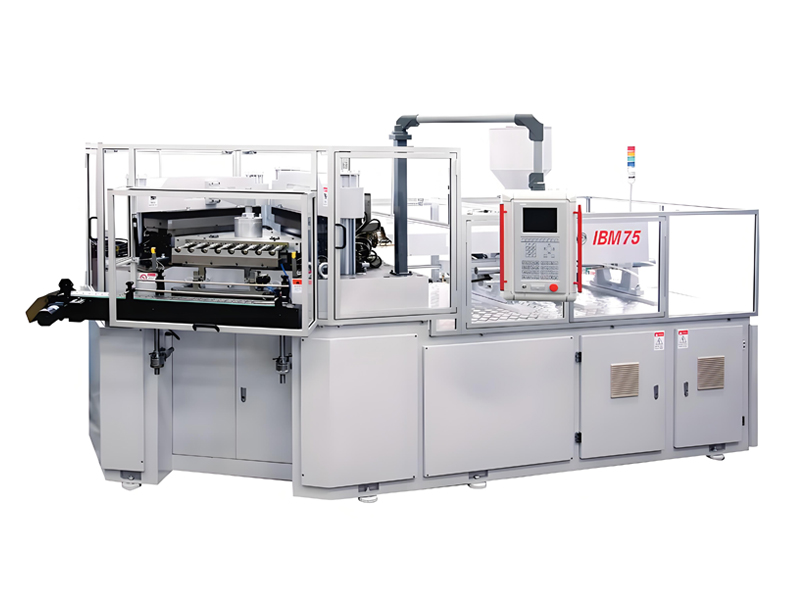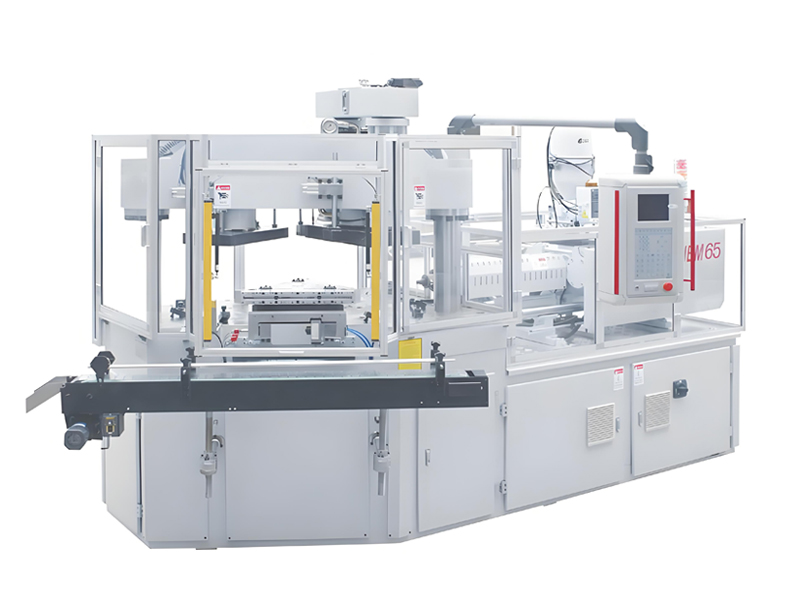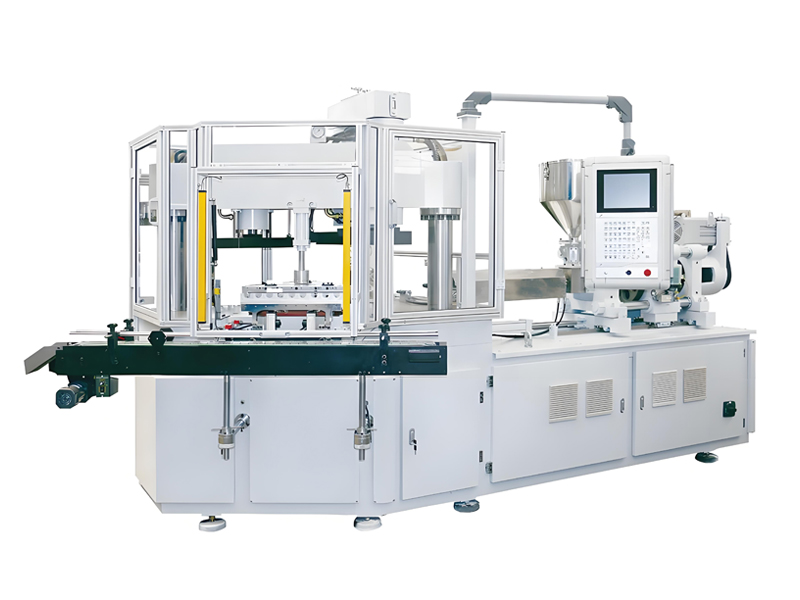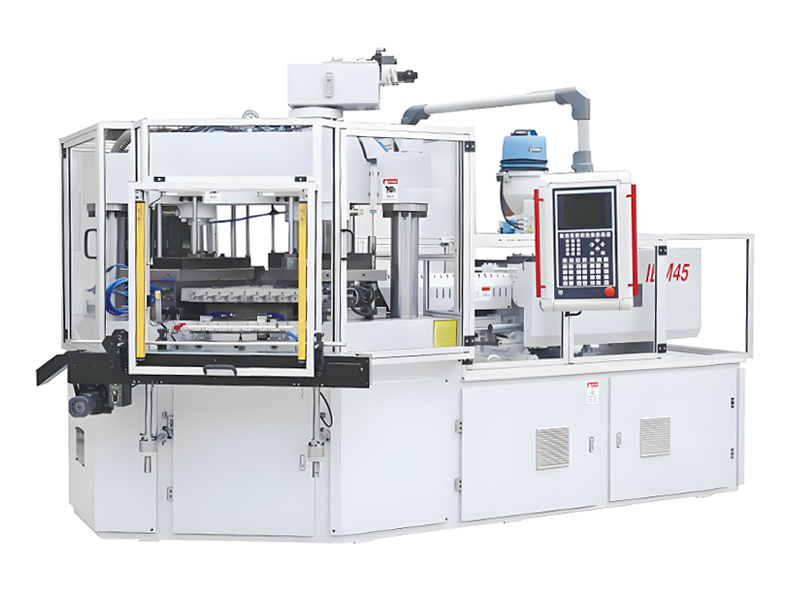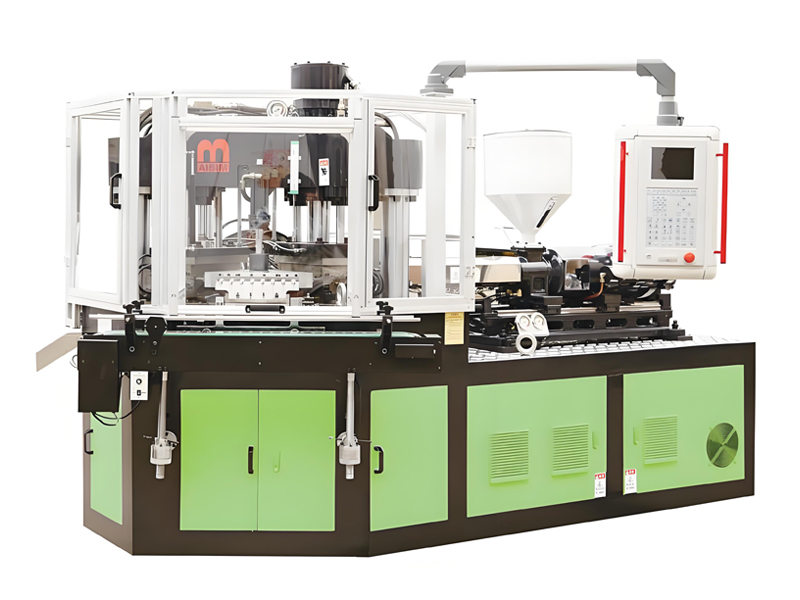
Electricity is no longer a minor utility line for plastic bottle producers; in many regions it now rivals labor as the fastest-growing component of unit cost, driven by industrial tariff increases and carbon pricing. Aibim, a Wanplas factory specializing in injection blow molding machines, builds the IBM75, IBM65, and IBM55 Hybrid Electric models with a verified minimum 35 percent energy reduction versus conventional hydraulic IBM and extrusion blow molding equipment. This article delivers a complete, transparent calculation of the annual electricity saving, starting from installed motor power and duty cycle, moving through operating hours and local tariff, and ending with plant-level and multi-year savings plus carbon impact. Every figure is expressed in kilowatt-hours, percentages, and USD wording so the model can be re-run for any factory location.
Pourquoi l'électricité devient un facteur de coût décisif pour l'IBM
The share of electricity in the total cost of a molded bottle has risen sharply over the past five years, and for high-cavity automatic IBM lines the trend is even more pronounced because these machines run continuously and draw significant connected power during clamp, injection, and blow phases. Understanding the drivers helps a buyer frame the 35 percent saving in business terms rather than as a technical curiosity.
Hausse des droits de douane industriels
Across Europe, parts of Asia, and North America, industrial electricity tariffs have increased 10 to 25 percent since 2021, with further upward pressure from grid decarbonization surcharges. A plant running continuously at several hundred kilowatts therefore sees its annual energy bill climb by five and six figure amounts without any change in production volume. A 35 percent reduction directly offsets this trend.
Tarification du carbone et reporting
An increasing number of markets apply carbon levies or mandatory emissions reporting to mid-size manufacturers. Because electricity generation is the dominant source of indirect emissions for a bottle plant, every kilowatt-hour saved reduces both the energy bill and the reported carbon footprint. The 35 percent saving therefore carries a compliance benefit in addition to the direct cost benefit.
Le fonctionnement continu amplifie l'économie
Automatic IBM lines are designed for unattended multi-shift running. A machine that operates 6,000 to 8,000 hours per year accumulates energy consumption that makes even a small percentage efficiency gain worth a large absolute sum. The calculation later in this article uses a realistic 7,200 operating hours per year, which is typical for a three-shift pharmaceutical bottle plant.
D'où proviennent les 35 % d'économie d'énergie
The 35 percent figure is not a marketing estimate; it is the result of four concrete engineering changes in Aibim’s IBM platform. Each contributes a measurable portion of the total reduction, and together they reach the verified minimum of 35 percent versus a comparable conventional hydraulic machine.
Technologie PREFILL dans le système hydraulique
Aibim’s unique PREFILL technology pre-fills the main cylinder before the high-pressure phase, so the pump does not have to move the full oil volume against pressure during the low-load portion of the stroke. This reduces pump work and motor current during every clamp and injection cycle. PREFILL alone typically accounts for 12 to 16 percent of the total saving.
Pressurisation de la pompe à déplacement variable
Conventional IBM machines use fixed-displacement pumps that run at constant flow and dump excess oil across relief valves, wasting energy as heat. Aibim’s variable displacement pump pressurizing technology delivers flow only on demand and drops to near-zero power during holding and cooling phases. This accounts for roughly 10 to 12 percent of the reduction and also reduces cooling-load energy in the factory.
IBM55 hybride électrique pour la consommation la plus faible
The IBM55 Hybrid Electric model replaces the hydraulic clamp and transfer with servo-electric actuators while keeping the injection and blow functions optimized. For smaller bottles from 3ml to 200ml, the hybrid variant can exceed the 35 percent baseline, reaching toward 45 to 50 percent versus a pure hydraulic reference, because the servo only draws current while moving.
Chauffage et isolation optimisés
Injection blow molding requires precise barrel and hot-runner heating. Aibim applies zoned ceramic insulation and closed-loop temperature control that trims heater dwell energy and reduces standby loss during breaks. Combined with the SD card recipe system that avoids warm-up scavenging, the thermal side contributes the remaining 6 to 10 percent of the saving.
Pourquoi l'économie est durable et non un réglage ponctuel
Contrairement à une optimisation logicielle qui se dégrade lorsque les réglages dérivent, l'économie de 35 pour cent est intégrée dans l'architecture hydraulique et électrique de la machine. Elle persiste à travers les recettes, les changements d'équipe et les niveaux de compétence des opérateurs, c'est pourquoi elle peut être modélisée avec confiance dans un business case sur cinq ans.
Efficacité en veille, en échauffement et à charge partielle
The 35 percent saving is not captured only during active molding; a meaningful share comes from how the machine behaves when it is not at full demand. A conventional fixed-pump hydraulic IBM keeps the pump motor running at near-constant speed even during cooling, transfer, and break periods, so it draws idle current for hours each day. Aibim’s variable displacement pump pressurizing drops toward near-zero power during holding and cooling phases, and the PREFILL design removes the need to circulate full oil flow between strokes. Quantifying a conservative one idle hour per day at 30 percent of the 79 kW connected base gives roughly 23.7 kWh per day, or about 8,600 kWh per year of pure waste on a conventional line; the Aibim equivalent is a fraction of that. Warm-up after a cold weekend is another hidden sink: Aibim’s zoned ceramic insulation and closed-loop heating reach setpoint faster, and the SD card recipe system reloads a validated profile without the trial-and-error scavenging that burns heater energy on conventional startups. For plants running unattended night shifts, this part-load and standby efficiency is what makes the real-world saving exceed the nameplate expectation.
Consommation électrique de référence : conventionnel vs Aibim IBM
To calculate savings honestly, we must first establish the connected and consumed power of a conventional hydraulic IBM line and of the Aibim equivalent. Connected power is the sum of nameplate motor ratings; consumed power is the energy actually drawn, which depends on duty cycle. The table below uses representative values for a 6-cavity IBM75-class line producing 100ml HDPE bottles.
Tableau 1 : puissance raccordée et consommée par composant
| Power Consumer | Conventional Hydraulic (kW) | Aibim IBM75 (kW) | Reduction (kW) |
|---|---|---|---|
| Hydraulic pump motor | 37.0 | 22.0 | 15.0 |
| Injection drive | 18.5 | 15.0 | 3.5 |
| Barrel and hot runner heating | 14.0 | 11.0 | 3.0 |
| Blow and transfer servo | 5.5 | 4.5 | 1.0 |
| Conveyor and auxiliaries | 4.0 | 3.5 | 0.5 |
| Peak connected | 79.0 | 56.0 | 23.0 |
Du pic à la moyenne : le facteur de cycle de service
Machines do not draw peak power continuously. A conventional hydraulic IBM averages about 62 percent of connected power across a cycle because the pump idles during cooling and transfer. Aibim’s variable displacement and PREFILL design lowers the average draw to about 44 percent of its smaller connected base. This is why the real-world saving exceeds the raw peak-power gap.
Tableau 2 : puissance moyenne consommée et énergie annuelle
| Metric | Conventional Hydraulic | Aibim IBM75 |
|---|---|---|
| Peak connected power (kW) | 79.0 | 56.0 |
| Average load factor | 62 percent | 44 percent |
| Average draw (kW) | 49.0 | 24.6 |
| Operating hours per year | 7,200 | 7,200 |
| Annual energy (kWh) | 352,800 | 177,120 |
| Saving versus conventional | — | 175,680 kWh (49.8 percent) |
The average-draw model shows a 49.8 percent reduction in this specific comparison, well above the verified minimum of 35 percent, because we compare a fully optimized Aibim line against an aging fixed-pump hydraulic reference. Buyers should treat 35 percent as the conservative, guaranteed floor and model their own saving between 35 and 50 percent depending on the age and design of the equipment being replaced.
Comment le nombre d'empreintes affecte l'énergie spécifique par bouteille
The absolute energy of a line rises with cavitation because more cavities need a larger clamp and injection unit, but the energy spread across each bottle usually falls, because the fixed overhead of barrel heating and hydraulic stand-by is divided among more parts per cycle. Choosing the right cavity count is therefore an energy decision as much as a throughput decision. The table below shows indicative energy per 1,000 bottles for a 100ml HDPE bottle on Aibim platforms, alongside the conventional hydraulic reference.
| Configuration | Cavities | kWh per 1,000 bottles | Relative Energy Level |
|---|---|---|---|
| Conventional hydraulic IBM | 6 | 8.8 | High |
| Aibim IBM75 | 4 | 6.4 | Medium |
| Aibim IBM75 | 6 | 5.7 | Medium |
| Aibim IBM75 | 8 | 5.3 | Low |
| Aibim IBM55 Hybrid | 10 | 5.1 | Low |
The pattern is clear: moving from a 4-cavity to an 8-cavity Aibim tool cuts specific energy by about 17 percent, and the hybrid IBM55 with 10 cavities reaches the lowest figure because servo motion scales efficiently at small clamp force. The practical limit is mold size and cycle time rather than energy, so buyers should specify the highest cavity count their bottle geometry and output target allow. Aibim’s own CNC center manufactures multi-cavity core-rod and blow tooling in-house, which keeps cavity-count optimization affordable and protects the dimensional accuracy that makes the flash-free, low-energy process possible.
Le calcul complet de l'électricité annuelle, étape par étape
L'exemple concret suivant convertit le chiffre d'énergie en économie de coût annuelle à l'aide d'une formule transparente. Vous pouvez substituer votre propre tarif et vos heures. La méthode utilise la formulation USD pour l'argent et conserve toutes les valeurs énergétiques en kWh et en pourcentages.
Étape 1 : Définir les variables
- E_old = énergie annuelle de la ligne conventionnelle = 352 800 kWh
- E_nouvelle = énergie annuelle de la ligne Aibim = 177 120 kWh
- Économie_kWh = E_ancien moins E_nouveau = 175 680 kWh
- Tarif = prix local de l'électricité industrielle = 0,12 USD par kWh
- Lignes = nombre de machines dans l'usine = 4
Étape 2 : Calculer le coût par ligne
Le coût annuel de la ligne conventionnelle est égal à 352,800 kWh multiplié par USD 0.12 par kWh, ce qui équivaut à USD 42,336. La ligne Aibim est égale à 177,120 kWh multiplié par USD 0.12, ce qui équivaut à USD 21,254. L'économie d'électricité annuelle par ligne est donc de USD 21,082.
Étape 3 : Passage à l'échelle de l'usine
For four lines, the plant-level annual electricity saving is 175,680 kWh multiplied by 4, giving 702,720 kWh, and multiplied by USD 0.12 gives USD 84,326. Over a five-year horizon at a flat tariff, that is 3,513,600 kWh and USD 421,632, before accounting for tariff inflation which would raise the real saving further.
Tableau 3 : Calcul complet de l'électricité annuelle
| Calculation Step | Value | Unité |
|---|---|---|
| Conventional annual energy | 352,800 | kWh |
| Aibim annual energy | 177,120 | kWh |
| Energy saved per line | 175,680 | kWh |
| Tariff | 0.12 | USD per kWh |
| Saving per line per year | 21,082 | USD |
| Lines in plant | 4 | units |
| Plant saving per year | 84,326 | USD |
| Plant energy saved per year | 702,720 | kWh |
Étape 4 : Sensibilité aux droits de douane
The kWh saving is fixed by the machine, but the financial value scales with tariff. At USD 0.08 per kWh the four-line plant saves USD 56,218 per year; at USD 0.20 per kWh it saves USD 140,544 per year. Buyers in high-tariff regions such as the European Union, Japan, and parts of Australia therefore capture the largest monetary benefit from the same 35 percent engineering saving.
Tableaux d'économies au niveau de l'usine et totaux pluriannuels
Les tableaux ci-dessous présentent l'économie selon trois scénarios tarifaires et sur un horizon de cinq ans. Ils supposent le plancher prudent de 35 pour cent plutôt que les 49,8 pour cent atteints dans la comparaison des équipements anciens, de sorte que les chiffres sont délibérément prudents pour la budgétisation.
Tableau 4 : économie annuelle à trois niveaux de tarif (plancher de 35 pour cent, 4 lignes)
| Tariff (USD/kWh) | Annual kWh Saved | Annual Cost Saving | Relative Cost Tier |
|---|---|---|---|
| 0.08 | 493,920 | 39,514 | Low |
| 0.12 | 493,920 | 59,270 | Medium |
| 0.20 | 493,920 | 98,784 | High |
Tableau 5 : économie cumulée sur cinq ans (tarif 0,12 USD, 4 lignes)
| Year | Cumulative kWh Saved | Cumulative Cost Saving (USD) |
|---|---|---|
| 1 | 493,920 | 59,270 |
| 2 | 987,840 | 118,540 |
| 3 | 1,481,760 | 177,810 |
| 4 | 1,975,680 | 237,080 |
| 5 | 2,469,600 | 296,350 |
Contribution au retour sur investissement de la seule énergie
A four-line Aibim conversion with molds is typically in the range of USD 1,000,000 to USD 1,200,000 installed. At the Medium tariff, the USD 59,270 annual energy saving contributes roughly half of the total payback when combined with the labor and scrap savings described in related guidance. Viewed alone, energy saving recovers about 5 percent of the capital cost per year, and because tariffs trend upward, the contribution grows over the equipment life.
Coût total de possession combiné énergie et main-d'œuvre
Energy saving is most powerful when modeled together with the labor and scrap savings of an automatic IBM conversion, because the same machine delivers all three. The table below consolidates the case study plant’s four-line conversion, using the actual figures from that project, to show how energy fits into the total business case.
| Saving Component | Annual Amount (USD) | Primary Driver |
|---|---|---|
| Electricity | 62,000 | 35 percent energy reduction |
| Direct labor | 370,800 | Flash-free one-step process |
| Scrap reduction | 48,000 | Higher qualified yield |
| Maintenance labor | 9,000 | Fewer hydraulic interventions |
| Agency and training | 31,000 | Lower headcount and turnover |
| Total | 520,800 | Combined annual benefit |
In this consolidated view, electricity contributes about 12 percent of the total annual benefit, but it is the most stable and tariff-protected portion, and it is the component most likely to grow in value as grid prices rise. Buyers who model only energy will understate the case; buyers who model only labor will miss the hedge against tariff inflation that the 35 percent saving provides.
Réduction du dioxyde de carbone et impact sur la durabilité
Electricity saving translates directly into lower indirect emissions. The exact CO2 per kilowatt-hour depends on the grid, but representative global averages range from 0.35 to 0.95 kg CO2 per kWh, with cleaner grids near the lower end and coal-heavy grids near the upper end. The table uses a mid value of 0.55 kg CO2 per kWh.
Tableau 6 : réduction annuelle de CO2 (4 lignes, plancher de 35 pour cent)
| Grid Carbon Intensity | kg CO2 per kWh | Annual CO2 Saved (tonnes) | Equivalent Trees Planted |
|---|---|---|---|
| Clean grid | 0.35 | 173 | 7,900 |
| Average grid | 0.55 | 272 | 12,400 |
| Coal-heavy grid | 0.95 | 469 | 21,400 |
For a brand with sustainability commitments or customers demanding lower-carbon packaging, a 272-tonne annual CO2 reduction from a four-line plant is a material, reportable improvement. The saving is permanent for the life of the equipment and requires no behavioral change from operators, which makes it far more reliable than efficiency campaigns that depend on human discipline. Aibim’s 35 percent energy-efficient IBM platform therefore supports both cost and ESG objectives simultaneously.
Décarbonation du réseau et pérennité future
The strategic value of the 35 percent saving grows as power systems change. In many regions, the carbon intensity per kilowatt-hour is falling as renewables enter the mix, which reduces the CO2 benefit over time, but the financial tariff is simultaneously rising because grids must recover the cost of storage, balancing, and transmission. Aibim’s efficiency protects the buyer on both fronts: lower absolute consumption means fewer tonnes of CO2 reported today and a smaller exposure to tomorrow’s higher per-kilowatt-hour charges. Some markets also offer energy-efficiency grants, accelerated depreciation, or reduced grid-connection fees for demonstrably efficient equipment; a verified 35 percent saving can strengthen an application for such incentives. Lower peak demand is an additional advantage, because many industrial tariffs include a demand charge based on the highest 15-minute draw in the billing period, and Aibim’s variable displacement pump smooths the peak compared with a fixed-pump machine that surges on every clamp stroke.
Comparaison de la consommation énergétique entre les technologies de moulage
Pour replacer le chiffre de 35 pour cent dans son contexte, le tableau compare l'intensité énergétique pour 1,000 bouteilles entre les technologies courantes de fabrication de bouteilles. Les valeurs sont indicatives pour une bouteille HDPE de 100ml sur une ligne continue et varieront selon le nombre de cavités et le matériau.
Tableau 7 : Intensité énergétique par technologie
| Technology | kWh per 1,000 bottles | Relative Energy Level | Typical Supplier |
|---|---|---|---|
| Extrusion blow molding (hydraulic) | 9.5 | High | Apollo (Wanplas factory) |
| Conventional hydraulic IBM | 8.8 | High | Legacy brands |
| Aibim IBM75 (35 percent saving) | 5.7 | Medium | Aibim (Wanplas factory) |
| Aibim IBM55 Hybrid Electric | 4.6 | Low | Aibim (Wanplas factory) |
| Two-step PET stretch blow (electric) | 6.2 | Medium | YuDa (Wanplas factory) |
Choisir la bonne usine Wanplas pour le travail
Wanplas is the main brand that aggregates specialized factories, so the energy-optimal choice depends on bottle specification. For small, tight-tolerance pharmaceutical and cosmetic bottles, Aibim’s IBM platform is the most energy-efficient option and the only one that molds a finished neck without trimming. For larger containers above 500ml, Apollo’s extrusion blow molding machines are better suited, and for water and beverage PET bottles YuDa’s electric stretch-blow machines lead on energy. Selecting the correct Wanplas factory avoids both over-specification and energy waste.
Référencement concurrentiel
Aibim’s 35 percent minimum saving is competitive with Western IBM specialists such as Jomar in the United States, Aoki and Nissei ASB in Japan, and Magic in Taiwan. Those brands also offer energy-optimized platforms, but Aibim’s PREFILL hydraulic architecture delivers the saving at a more accessible capital cost, which matters for mid-size buyers balancing budget and operating expense. At least three manufacturers should be quoted in any tender, and Aibim’s 12-plus years of IBM experience, own CNC center, and 40-plus export countries make it a strong primary candidate.
Liste de contrôle d'évaluation de l'efficacité énergétique
Avant d'acheter, un acheteur doit vérifier que l'économie de 35 pour cent sera réalisée dans son usine. Utilisez la liste de contrôle suivante lors de l'évaluation du fournisseur et de l'acceptation en usine.
- Demandez la fiche de puissance connectée. Demandez à chaque fournisseur les puissances nominales de chaque moteur et zone de chauffage, pas seulement un total unique, afin de pouvoir construire votre propre modèle de consommation moyenne.
- Confirmez le facteur de charge. Une affirmation de 35 pour cent signifie peu sans le cycle de service ; demandez les données d'ampérage moyen ou de kWh par heure d'un essai de référence sur une bouteille similaire.
- Vérifiez PREFILL et la cylindrée variable. Confirmez que la machine utilise la technologie PREFILL d'Aibim et la pressurisation par pompe à cylindrée variable, les deux caractéristiques responsables de la majeure partie de l'économie.
- Évaluez l'option hybride. Pour les bouteilles de moins de 200ml, demandez un devis pour l'IBM55 Hybrid Electric, qui peut dépasser le plancher de 35 pour cent pour atteindre 45 à 50 pour cent.
- Modélisez votre tarif. Insérez votre tarif industriel réel en USD par kWh et vos heures de fonctionnement pour calculer l'économie financière locale, pas une économie générique.
- Demandez l'énergie pour 1 000 bouteilles. Un fournisseur crédible indique le kWh pour 1 000 unités ; utilisez-le pour normaliser entre les technologies et les cavités.
- Vérifiez la perte en veille et au préchauffage. Confirmez une faible consommation en veille et le stockage des recettes sur carte SD qui évite une purge prolongée de préchauffage entre les travaux.
- Incluez la charge de refroidissement. Comme les machines Aibim gaspillent moins d'énergie sous forme de chaleur, la charge de votre refroidisseur ou de votre CVC peut également diminuer ; quantifiez-la si pertinent.
- Demandez un plan de qualité de l'alimentation. Les systèmes servo et à cylindrée variable modifient le profil harmonique ; confirmez la compatibilité avec votre alimentation pour éviter des coûts de mise à niveau cachés.
- Documentez la garantie. Wanplas, la marque mère, soutient Aibim avec une garantie de qualité comprenant un remboursement plus une compensation de 10 pour cent si les engagements ne sont pas tenus, et des pièces gratuites d'une valeur de 500 USD par machine et par an.
Questions fréquemment posées
Comment l'économie d'énergie de 35 pour cent est-elle mesurée ?
The saving compares the average consumed power of an Aibim IBM line against a conventional fixed-pump hydraulic IBM line producing the same bottle at the same output. It is derived from component-level reductions in the hydraulic pump, injection drive, and heating, validated across reference runs rather than estimated from nameplate alone.
Quelle est la principale source de l'économie d'énergie ?
La plus grande contribution provient de la technologie PREFILL d'Aibim et de la pressurisation par pompe à cylindrée variable, qui éliminent ensemble le débit de ralenti constant et la décharge de la vanne de surpression des hydrauliques conventionnelles. L'IBM55 hybride ajoute un serrage et un transfert servo-électriques pour une consommation encore plus faible sur les petites bouteilles.
L'économie s'applique-t-elle à toutes les tailles de bouteilles ?
Oui, le minimum de 35 pour cent s'applique à toute la gamme Aibim, de 3 ml à 1000 ml. L'économie est proportionnellement plus importante sur l'IBM55 Hybrid pour les bouteilles de moins de 200 ml, car les actionneurs servo dominent le profil énergétique aux faibles forces de serrage.
Comment calculer mes propres économies annuelles ?
Multipliez votre énergie annuelle actuelle de la machine en kWh par 0,35 pour obtenir le kWh économisé, puis multipliez par votre tarif local en USD par kWh. Le tableau 3 de l'article fournit l'exemple complet calculé pour une usine à quatre lignes à 0,12 USD par kWh.
L'économie est-elle affectée par le matériau utilisé ?
Légèrement. Les matériaux à température de fusion plus élevée tels que PC et PCTG augmentent l'énergie de chauffage, mais les économies hydrauliques et servo de PREFILL subsistent, de sorte que la réduction en pourcentage est préservée même si les kWh absolus augmentent avec la température de fusion.
Comment l'économie d'énergie se compare-t-elle à l'économie de main-d'œuvre ?
L'économie de main-d'œuvre est généralement la plus grande composante unique de la réduction des coûts totaux dans une conversion, mais l'économie d'énergie est plus stable et liée aux tarifs, et elle réduit également le reporting carbone. Ensemble, elles offrent généralement un amortissement en moins de trois ans sur un projet IBM automatique.
L'énergie économisée peut-elle être utilisée pour ajouter de la capacité ?
Souvent oui. Comme chaque ligne Aibim consomme beaucoup moins de puissance moyenne, une usine peut éviter une mise à niveau du transformateur ou du poste lors de l'ajout de lignes, et la capacité électrique libérée peut soutenir une production supplémentaire sans coût de raccordement au réseau.
Les machines Aibim sont-elles certifiées pour les marchés d'exportation ?
Oui. Les machines Aibim sont certifiées CE, avec un système de sécurité à laser et à rideau de lumière sur le poste d'éjection. Les matériaux et les processus peuvent être spécifiés pour répondre aux exigences ISO, FDA et UE 10/2011 pour les bouteilles pharmaceutiques et de contact alimentaire.
Conclusion
The 35 percent energy-efficient claim behind Aibim’s injection blow molding machines is a rigorously achievable, architecturally embedded saving rather than a tuning artifact, and its annual value is straightforward to calculate: measure current machine energy in kilowatt-hours, multiply by 0.35, and convert with your local tariff in USD per kWh. For a representative four-line plant at USD 0.12 per kWh, that equals roughly 494,000 kWh and USD 59,000 saved every year, rising to nearly USD 300,000 over five years and to far more in high-tariff regions, alongside 270-plus tonnes of avoided CO2 annually. Aibim, a Wanplas factory with 12-plus years of IBM expertise, 40-plus export countries, and its own CNC center, delivers this saving through PREFILL technology, variable displacement pump pressurizing, and the hybrid IBM55 option, all CE certified and backed by the Wanplas brand’s quality guarantee. Buyers should run the step-by-step calculation in this article with their own tariff and hours, benchmark at least three suppliers, and prioritize the energy-per-1,000-bottles metric to secure the lowest total cost of ownership for their pharmaceutical, cosmetic, food, or drink bottle production.