Learning how to operate an injection blow molding machine opens doors to efficient plastic container production for beginners entering the manufacturing industry. This comprehensive guide walks you through every aspect of machine operation, from basic setup to advanced troubleshooting techniques. Whether you are starting a new production line or upgrading your existing equipment, understanding the fundamentals of injection blow molding technology ensures optimal performance and consistent product quality.
Comprendre la technologie du moulage par injection-soufflage
The injection blow molding process represents a sophisticated manufacturing method that combines injection molding and blow molding into a single integrated system. This technology enables manufacturers to produce hollow plastic containers with exceptional precision and consistency. The process begins with the creation of a preform through injection molding, followed by the blowing stage that shapes the final container.
Principes de base de fonctionnement
Injection blow molding machines operate through a carefully orchestrated sequence of steps that transform raw plastic materials into finished containers. The injection blow molding machine first melts plastic pellets in a heated barrel, then injects the molten material into a preform mold to create a preliminary shape. This preform maintains the neck finish and threads of the final container while the body remains ready for expansion during the blowing phase.
The process continues as the preform transfers to a blow mold station where compressed air inflates the heated preform against the mold walls. This expansion creates the final container shape with uniform wall thickness and precise dimensions. The injection blow molding machine then cools the product before ejection, completing the cycle in a matter of seconds depending on container size and complexity.
Composants clés et leurs fonctions
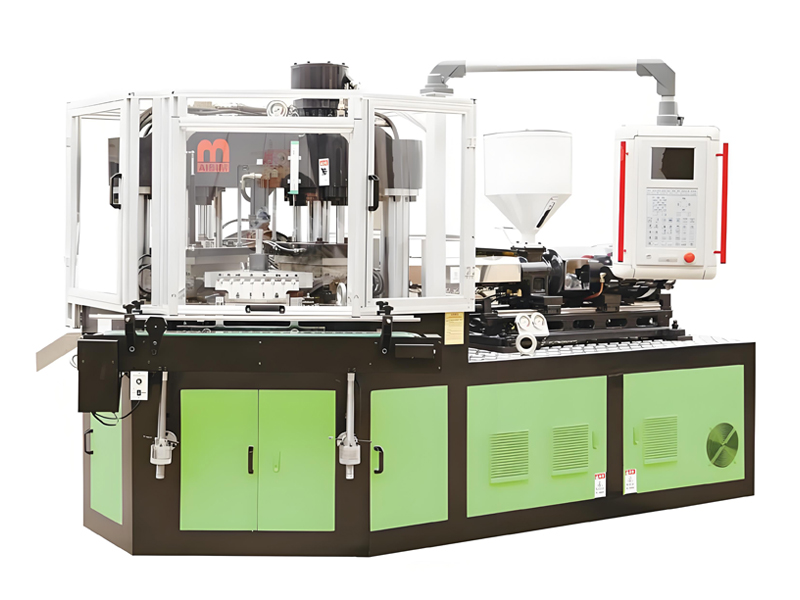
Modern injection blow molding machines consist of several critical components working in harmony. The injection unit houses the screw and barrel assembly responsible for melting and injecting plastic material. This component includes precise temperature control zones that ensure consistent material viscosity throughout the process.
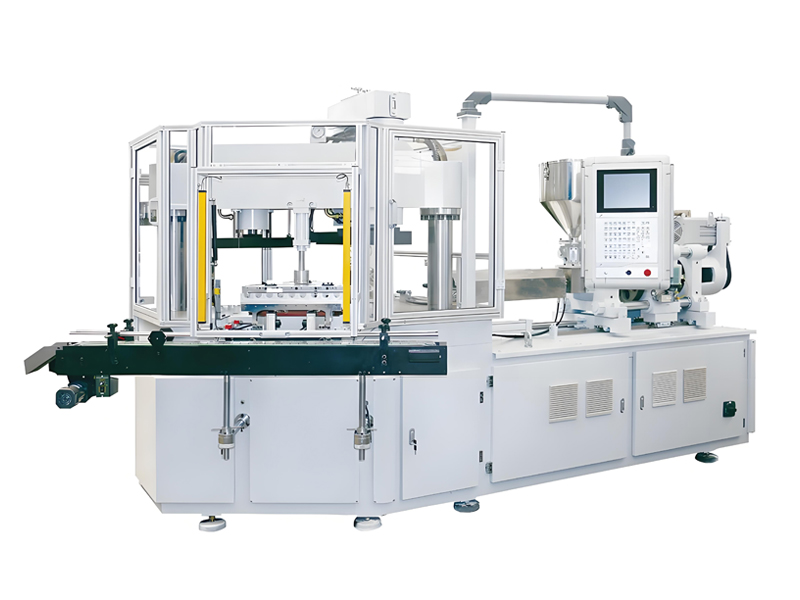
The clamp unit secures the molds during both injection and blowing phases. Advanced injection blow molding machines feature single crossbeam double column locking structures that provide exceptional stability during operation. The rotary table or shuttle system moves preforms between stations efficiently, maintaining continuous production flow.
Les systèmes de contrôle des machines contemporaines de moulage par injection-soufflage offrent des capacités de programmation sophistiquées avec stockage des paramètres sur carte SD et fonctions de réplication. Ces systèmes permettent aux opérateurs d’enregistrer et de rappeler rapidement les recettes de production, réduisant le temps de configuration entre les différentes campagnes de produits.
Contrôles essentiels avant fonctionnement
Avant de démarrer toute machine de moulage par injection-soufflage, les opérateurs doivent compléter une liste de contrôle pré-opérationnelle complète pour garantir une production sûre et efficace. Ces contrôles protègent à la fois le personnel et l'équipement tout en prévenant des erreurs de production coûteuses.
Inspection des équipements de sécurité
Safety represents the foremost priority when operating an injection blow molding machine. Begin each shift by inspecting all safety equipment including light curtains that protect personnel from moving parts. Long range digital laser sensors safeguard expensive molds from damage during operation. Verify that all emergency stop buttons function correctly and that safety guards remain properly secured.
Personal protective equipment requirements for injection blow molding machine operation include heat resistant gloves, safety glasses, and appropriate footwear. The machine area should maintain clear access to emergency exits and first aid stations. Never bypass or disable safety features, as these systems protect operators from serious injury.
Vérification des composants de la machine
Check the injection blow molding machine for proper lubrication of all moving parts according to the maintenance schedule. Inspect hydraulic and pneumatic systems for leaks or damage that could affect performance. Verify that cooling water flows through the mold temperature control system at the correct pressure and volume.
Examine the hopper and feeding system to ensure no contamination exists in the material path. Clean any residue from previous production runs that could compromise product quality. Confirm that all temperature sensors and pressure transducers function correctly and display accurate readings on the control panel.
Instructions d'utilisation étape par étape
Maîtriser le fonctionnement d'une machine de moulage par injection-soufflage nécessite de comprendre chaque phase du cycle de production. Ce guide détaillé fournit aux débutants des instructions claires pour chaque étape opérationnelle.
Configuration initiale de la machine
Power on the injection blow molding machine by following the manufacturer specified startup sequence. Most modern systems require a brief initialization period during which control systems perform self diagnostics. Monitor the display panel for any error messages or warnings that require attention before proceeding.
Set the barrel temperature zones according to the material specifications. Different plastics require specific temperature profiles for optimal processing. For PE materials, barrel temperatures typically range from 180 to 240 degrees Celsius. PP materials require slightly higher temperatures between 200 and 260 degrees Celsius. Allow sufficient time for all temperature zones to reach set points before continuing.
Program the injection parameters including shot size, injection speed, and holding pressure. The injection blow molding machine control system allows precise adjustment of these variables to achieve optimal preform quality. Save these settings to the SD card for future reference and consistency across production runs.
Chargement et préparation des matériaux
Load the appropriate plastic resin into the hopper of the injection blow molding machine. Ensure the material meets quality specifications and contains no moisture or contamination. Some materials require pre drying to remove moisture that could cause defects in finished products. HDPE typically requires drying at 60 to 80 degrees Celsius for two to four hours if moisture content exceeds 0.02 percent.
The injection blow molding machine feeds material through the hopper into the barrel where the rotating screw conveys it forward. The screw rotation speed and back pressure settings affect material melting and mixing. Adjust these parameters based on the specific material being processed to achieve homogeneous melt consistency.
Installation et alignement du moule
Install the injection mold and blow mold sets in their respective stations on the injection blow molding machine. Proper alignment proves critical for producing containers with consistent dimensions and wall thickness. Use alignment pins and reference marks to position molds correctly before securing them with mounting bolts.
Connect cooling water lines to the mold temperature control channels. Verify water flow through all circuits to ensure uniform cooling across the mold surface. Improper cooling leads to warping, sink marks, and dimensional inconsistencies in finished containers. Set the mold temperature according to material requirements, typically between 10 and 40 degrees Celsius depending on the plastic being processed.
Démarrage du cycle de production
Start the injection blow molding machine in manual mode for initial production trials. This allows operators to observe each cycle phase and make real time adjustments as needed. The first several cycles typically produce incomplete or imperfect containers as the process stabilizes and temperatures reach equilibrium.
Monitor key process variables including injection pressure, melt temperature, blow air pressure, and cycle time. The injection blow molding machine displays these parameters on the control panel, enabling operators to identify trends or anomalies that affect product quality. Record baseline values for comparison during production runs.
Transition to semi automatic mode once the process produces consistent quality containers. This mode automates repetitive tasks while maintaining operator oversight. Finally, switch to fully automatic mode for high volume production, allowing the injection blow molding machine to run continuous cycles with minimal intervention.
Surveillance de la qualité pendant la production
Continuous quality monitoring ensures the injection blow molding machine produces containers meeting specifications throughout the production run. Inspect containers at regular intervals for dimensional accuracy, wall thickness distribution, and surface quality. Use calibrated measuring instruments to verify critical dimensions including neck finish, body diameter, and overall height.
Check for common defects such as short shots, flash, sink marks, and uneven wall thickness. These issues often indicate process drift that requires adjustment to injection parameters, mold temperatures, or material conditions. The injection blow molding machine allows rapid modification of these variables to correct quality problems before significant production losses occur.
Paramètres techniques et réglages
Comprendre les paramètres techniques des machines de moulage par injection-soufflage permet aux opérateurs d'optimiser la production pour différents matériaux et designs de contenants. Ces spécifications définissent les capacités et les limites de l'équipement.
Spécifications du système d'injection
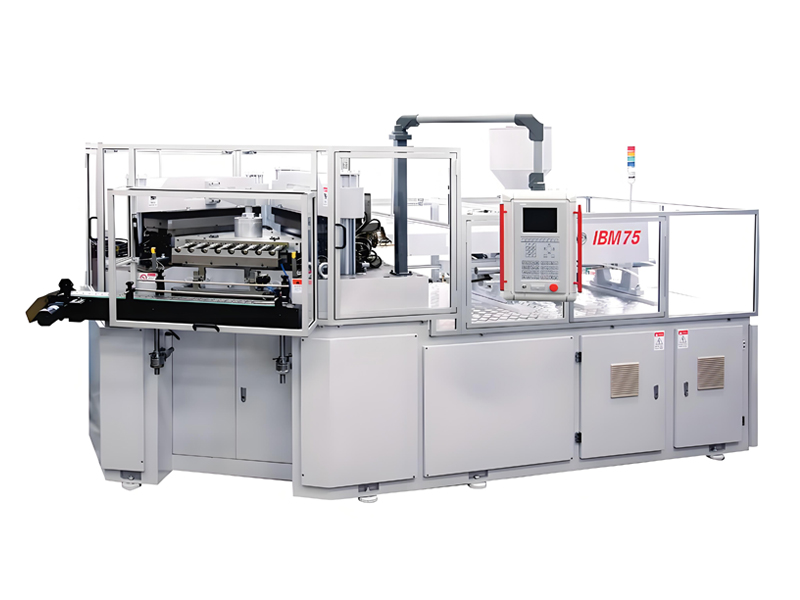
The injection unit of an injection blow molding machine determines the maximum shot size and injection pressure available for processing. The AiBiM IBM75 model features a 50mm screw diameter capable of injecting up to 375 grams of material. This capacity accommodates a wide range of container sizes from 3ml to 1200ml.
Injection pressure typically ranges from 800 to 1500 bar depending on material viscosity and mold design. The injection blow molding machine must maintain consistent pressure throughout the injection and holding phases to prevent sink marks and ensure complete mold filling. Advanced machines employ PREFILL technology and variable pump pressure boosting systems that reduce energy consumption by more than 35 percent while maintaining precise pressure control.
Exigences de force de fermeture
Clamp force represents a critical specification for injection blow molding machines. The AiBiM IBM75 delivers 750 kN of clamping force, sufficient for producing containers up to 1200ml capacity. Inadequate clamp force allows the mold to open slightly during injection, causing flash and dimensional errors.
The single crossbeam double column locking structure provides uniform force distribution across the mold surface. This design ensures stable operation even at maximum injection pressures. The injection blow molding machine automatically adjusts clamp force based on the active production recipe to optimize energy efficiency.
Optimisation du temps de cycle
Cycle time directly impacts production output and operational costs. The injection blow molding machine cycle consists of injection, blowing, cooling, and ejection phases. Total cycle times vary based on container size, wall thickness, and material properties. Smaller containers typically require 10 to 15 seconds per cycle while larger containers may need 20 to 30 seconds.
Optimize cycle time by minimizing each phase duration without compromising quality. The injection blow molding machine allows independent adjustment of cooling time, which often represents the longest portion of the cycle. Balance cooling time against part quality requirements to maximize throughput.
Vue d'ensemble du processus de production
Le processus de moulage par injection-soufflage intègre plusieurs étapes dans une séquence de production sans couture. Comprendre ce processus aide les opérateurs à identifier les opportunités d'optimisation et à dépanner efficacement les problèmes.
Phase d'injection des préformes
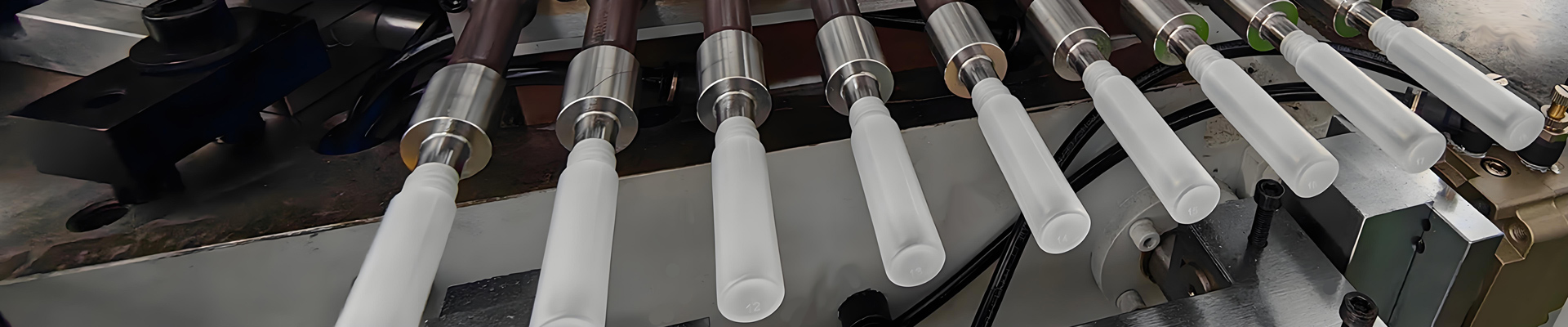
The injection blow molding machine begins each cycle by creating a preform in the injection mold. Molten plastic enters the mold cavity under high pressure, forming a test tube shaped precursor to the final container. The preform includes the finished neck finish and threads that remain unchanged during the blowing phase.
Precise control of injection speed affects preform quality. Fast injection fills the mold quickly but may trap air or cause jetting defects. Slower injection provides better material distribution but extends cycle time. The injection blow molding machine allows operators to program multi stage injection profiles that optimize fill characteristics.
Transfert et conditionnement
Après l'injection, la préforme est transférée vers la station de moule de soufflage. Ce transfert doit avoir lieu pendant que le plastique reste à la température appropriée pour le soufflage. La machine de moulage par injection-soufflage coordonne ce transfert avec précision pour maintenir des conditions de matériau optimales.
Preform conditioning involves precise temperature management to achieve uniform wall thickness in the finished container. The plastic should be hot enough to stretch easily but cool enough to hold its shape during blowing. This balance requires careful coordination of injection temperature, transfer time, and mold conditions.
Phase de soufflage et de refroidissement
The blow mold closes around the preform as compressed air inflates it against the mold walls. Blow pressure typically ranges from 8 to 15 bar depending on container design and material. The injection blow molding machine controls blow pressure and timing to achieve complete mold filling without over stretching thin sections.
Cooling solidifies the container in its final shape. The injection blow molding machine circulates cooling water through the mold to remove heat efficiently. Proper cooling prevents deformation during ejection and ensures dimensional stability. The cooling system must maintain consistent temperature across all mold surfaces for uniform quality.
Éjection du conteneur
La phase finale éjecte le contenant fini du moule de soufflage. Les mécanismes d'éjection poussent ou retirent le contenant du noyau du moule sans endommager les filetages ou les surfaces. La machine de moulage par injection-soufflage synchronise l'éjection avec précision lorsque le contenant a suffisamment refroidi pour conserver sa forme.
Une technique d’éjection appropriée évite d’endommager à la fois le contenant et le moule. Ajustez la force et la vitesse d’éjection en fonction de la taille du contenant et des propriétés du matériau. Surveillez la qualité de l’éjection pour identifier tout collage ou déformation indiquant un refroidissement insuffisant ou une conception de moule inappropriée.
Avantages et bénéfices des systèmes modernes
Investir dans une machine de moulage par injection-soufflage moderne apporte de nombreux avantages opérationnels et économiques aux fabricants de tous les secteurs.
Efficacité de production
Contemporary injection blow molding machines achieve exceptional production efficiency through automation and process optimization. The integrated design eliminates separate handling between injection and blowing operations, reducing cycle times and labor requirements. High speed rotary systems produce hundreds of containers per hour with minimal operator intervention.
Énergie efficiency improvements in modern machines significantly reduce operating costs. Advanced hydraulic systems with variable displacement pumps consume power proportional to actual demand rather than running at constant maximum capacity. The AiBiM injection blow molding machines achieve energy savings exceeding 35 percent compared to conventional designs.
Régularité de la qualité du produit
The injection blow molding process produces containers with superior dimensional accuracy and consistency. Injection molded neck finishes ensure precise thread profiles for reliable sealing with caps and closures. Wall thickness distribution remains uniform throughout the container body, providing consistent strength and barrier properties.
The injection blow molding machine maintains repeatable process conditions from cycle to cycle. Computerized control systems eliminate human error and variability that affect older manual machines. This consistency translates to lower rejection rates and higher customer satisfaction with finished products.
Polyvalence des matières
Modern injection blow molding machines process a wide range of thermoplastic materials to meet diverse application requirements. Common materials include PE variants such as HDPE, LDPE, and LLDPE for food and pharmaceutical containers. PP offers excellent clarity and heat resistance for hot fill applications.
Engineering materials like PC, PCTG, and TPU expand the application range to demanding uses requiring enhanced properties. The injection blow molding machine accommodates these materials through flexible temperature and pressure settings. This versatility allows manufacturers to serve multiple markets with a single equipment investment.
Directives de sélection des équipements
Choisir la bonne machine de moulage par injection-soufflage nécessite une évaluation minutieuse des besoins de production, des spécifications du produit et des plans de croissance future.
Considérations sur la capacité et la taille
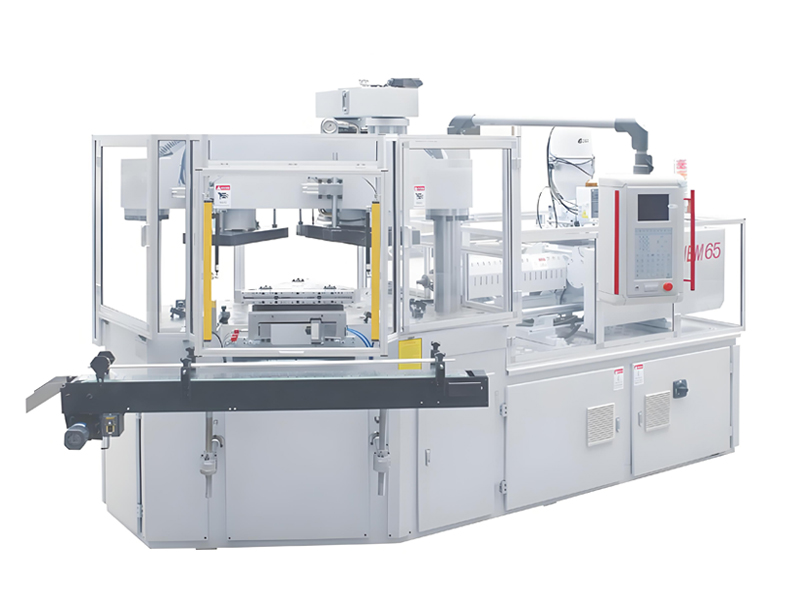
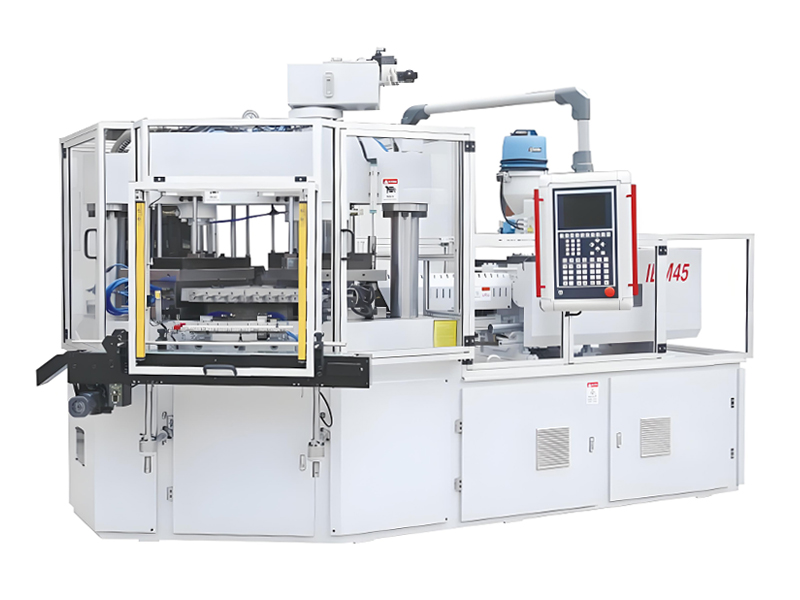
Match the injection blow molding machine capacity to your production volume requirements. The AiBiM IBM55 Hybrid Electric suits lower volume applications requiring 3ml to 1000ml containers. The IBM65 model offers an economical solution for standard production needs. The IBM75 handles larger containers up to 1200ml with robust clamping force for demanding applications.
Tenez compte de l’expansion future lors de la sélection de la capacité de l’équipement. L’achat d’une machine de moulage par injection-soufflage avec une capacité excédentaire permet la croissance de l’entreprise sans remplacement immédiat de l’équipement. Cependant, évitez la sur-spécification qui augmente les coûts d’investissement sans apporter d’avantages pratiques.
Exigences de niveau d'automatisation
Automation options for injection blow molding machines range from manual operation to fully automatic systems with robotic part handling. Entry level machines require operator intervention for each cycle, suitable for short production runs and frequent product changes. Fully automatic systems minimize labor costs for high volume dedicated production.
Intermediate automation levels offer flexibility for manufacturers producing varied container sizes and styles. The injection blow molding machine can operate automatically for extended runs while allowing easy setup changes between products. Choose automation appropriate for your product mix and labor costs.
Support technique et formation
La sélection de l’équipement doit inclure l’évaluation des capacités de support du fabricant. AiBiM fournit une formation technique complète pour tous les achats de machines de moulage par injection-soufflage. Cette formation couvre l’exploitation, la maintenance et le dépannage pour garantir un démarrage de production réussi.
Tenez compte de la disponibilité des pièces de rechange et du support de service lors de la sélection de l'équipement. Les fabricants établis maintiennent des stocks de pièces et des équipes de service technique pour minimiser les temps d'arrêt. AiBiM offre un service après-vente 24 heures et un support d'installation sur site par des ingénieurs pour tous les clients du monde entier.
Analyse des coûts et estimation des prix
Comprendre le coût total de possession aide les fabricants à prendre des décisions d'investissement éclairées pour l'équipement de moulage par injection-soufflage.
Fourchette d'investissement initial
The injection blow molding machine price varies based on model specifications and features. The AiBiM IBM55 Hybrid Electric costs between $35,000 and $55,000 depending on optional features and tooling requirements. This entry level machine suits startups and small production operations seeking economical equipment solutions.
Le modèle IBM65 standard varie de 28 000 $ à 45 000 $, offrant un excellent rapport qualité-prix pour les besoins de production de contenants de base. Ce modèle s'avère populaire parmi les fabricants produisant des bouteilles et contenants standard pour les marchés alimentaire, des boissons et des soins personnels.
The larger IBM75 injection blow molding machine commands prices from $40,000 to $65,000. This investment delivers enhanced capacity and clamping force for larger containers and higher production volumes. The increased capability justifies the higher cost for manufacturers with substantial production requirements.
Facteurs de coûts d'exploitation
Operating costs for injection blow molding machines include energy consumption, material costs, labor, and maintenance. Modern energy efficient designs significantly reduce electricity costs, which represent a major portion of operating expenses. The AiBiM machines achieve over 35 percent energy savings compared to conventional designs, translating to substantial annual cost reductions.
Les coûts de matériaux dépendent des prix de la résine et du poids du contenant. Optimisez les paramètres de processus pour minimiser l’utilisation de matériaux tout en maintenant la qualité. La machine de moulage par injection-soufflage permet un contrôle précis de la taille de la dose pour éliminer l’excès de matériau qui augmente les coûts sans ajouter de valeur.
Les coûts de maintenance varient avec l’âge de la machine et les conditions d’exploitation. Suivez le calendrier de maintenance recommandé pour prévenir les réparations coûteuses et les temps d’arrêt non planifiés. Prévoyez un budget pour le remplacement de routine des pièces d’usure telles que les pointes de vis, les bagues de retenue et les composants d’étanchéité selon les directives du fabricant.
Délai de retour sur investissement
Calculez la période de retour sur investissement d'une machine de moulage par injection-soufflage en fonction du volume de production, des prix de vente et des coûts d'exploitation. Une opération de démarrage typique atteint la récupération de l'investissement en 18 à 36 mois selon les conditions du marché et l'efficacité de la production.
Envisagez des options de financement qui étalent l'investissement dans le temps. De nombreux fabricants proposent des conditions de paiement flexibles, notamment des options T/T et L/C. AiBiM accepte les deux méthodes de paiement, rendant l'acquisition d'équipement accessible aux entreprises de différentes tailles et situations financières.
Normes de qualité et certifications
Respecter les normes de qualité et obtenir les certifications pertinentes garantit l'acceptation sur le marché et la conformité réglementaire des contenants produits sur les machines de moulage par injection-soufflage.
Exigences de certification CE
CE certification demonstrates compliance with European safety and environmental standards for machinery. All AiBiM injection blow molding machines carry CE certification, qualifying them for sale and operation throughout the European market. This certification requires adherence to stringent design and construction standards.
L'équipement certifié CE comprend une documentation complète des dispositifs de sécurité et des procédures opérationnelles. La machine de moulage par injection-soufflage doit intégrer des protections appropriées, des arrêts d'urgence et des systèmes d'avertissement. Des inspections régulières vérifient la conformité continue aux exigences de certification.
Normes spécifiques à l'industrie
Containers for pharmaceutical applications must meet FDA requirements in the États-Unis or equivalent standards in other markets. The injection blow molding machine must produce containers meeting cleanliness and material composition specifications. Clean room operation may be required for certain pharmaceutical packaging.
Les contenants en contact alimentaire doivent être conformes aux réglementations de sécurité alimentaire qui restreignent certains additifs et auxiliaires de transformation. Vérifiez que les matériaux traités sur la machine de moulage par injection-soufflage portent les certifications de contact alimentaire appropriées des autorités réglementaires.
Systèmes de gestion de la qualité
La mise en œuvre de systèmes de gestion de la qualité garantit une qualité de production cohérente de la machine de moulage par injection-soufflage. La certification ISO 9001 démontre un engagement envers les processus qualité et l'amélioration continue. Documentez les procédures d'exploitation de la machine, d'inspection qualité et d'action corrective.
Les techniques de contrôle statistique des processus aident à identifier les variations de processus avant qu’elles n’affectent la qualité du produit. Surveillez les paramètres clés du processus sur la machine de moulage par injection-soufflage et suivez les tendances au fil du temps. Établissez des limites de contrôle qui déclenchent une investigation lorsqu’une dérive de processus se produit.
Applications industrielles
Les machines de moulage par injection-soufflage desservent diverses industries exigeant des contenants en plastique de haute qualité avec des spécifications précises.
Emballage pharmaceutique
The pharmaceutical industry demands containers meeting stringent quality and safety standards. Injection blow molding machines produce pharmaceutical bottles with precise neck finishes for secure sealing with child resistant caps. The process creates containers with uniform wall thickness that protect sensitive medications from environmental exposure.
Des environnements de production propres et stériles sont essentiels pour les contenants pharmaceutiques. La machine de moulage par injection-soufflage fonctionne dans des conditions d’atmosphère contrôlée pour prévenir la contamination. La sélection des matériaux se concentre sur les qualités HDPE et PP approuvées pour les applications de contact pharmaceutique.
Contenants alimentaires et de boissons
Les applications d’emballage alimentaire exigent des contenants qui préservent la fraîcheur et la sécurité des produits. La machine de moulage par injection-soufflage produit des bouteilles et des pots pour les sauces, les condiments et les boissons. Une formation précise du filetage garantit une étanchéité correcte pour prévenir la détérioration et maintenir la qualité du produit.
Hot fill applications demand containers capable of withstanding elevated temperatures during filling. PP materials processed on the injection blow molding machine offer excellent heat resistance for hot fill products. Proper material selection and process control prevent container deformation during thermal processing.
Cosmétique et soins personnels
The cosmetic industry values the high quality surface finish achievable with injection blow molding. Containers exhibit excellent clarity and smooth surfaces that enhance product appeal. The injection blow molding machine produces containers suitable for premium cosmetic and personal care products where appearance influences consumer perception.
Specialty materials like PETG and PCTG provide the glass like clarity valued for high end cosmetic packaging. These materials process effectively on modern injection blow molding machines with appropriate temperature and pressure settings. The result is containers that convey quality and sophistication.
Pourquoi choisir les solutions de moulage par injection-soufflage AiBiM
AiBiM offre des avantages convaincants aux fabricants recherchant un équipement de moulage par injection-soufflage fiable avec un support complet.
Expertise en fabrication
Zhangjiagang AiBiM Plastic Machinery Co., Ltd. brings over 12 years of specialized experience in injection blow molding machine manufacturing. This extensive expertise translates to equipment designs refined through real world application across diverse production environments. The company understands the practical challenges facing manufacturers and incorporates solutions into every machine.
The AiBiM engineering team continuously improves injection blow molding machine performance based on customer feedback and technological advances. This commitment to innovation ensures equipment remains competitive and productive throughout its service life. Customers benefit from ongoing technical development without requiring equipment replacement.
Présence sur le marché mondial
AiBiM serves customers in over 40 countries across Southeast Asia, the Middle East, Europe, the Americas, and Africa. This global presence demonstrates the reliability and adaptability of AiBiM injection blow molding machines across varied market conditions and applications. International customers receive the same quality equipment and support as domestic buyers.
The annual production capacity exceeds 100 production lines, enabling AiBiM to fulfill large orders while maintaining quality standards. This manufacturing scale ensures competitive pricing and reliable delivery schedules. Customers can plan production expansion with confidence in equipment availability.
Support client complet
AiBiM provides exceptional customer support beginning with free technical training for all injection blow molding machine purchases. This training ensures operators understand proper procedures for safe and efficient production. The comprehensive curriculum covers machine operation, maintenance, and troubleshooting techniques.
Le service après-vente 24 heures garantit une réponse rapide aux problèmes techniques. Les services d’installation et de mise au point sur site par un ingénieur aident les clients à réussir le démarrage de la production. Cet engagement de support se poursuit tout au long de la durée de vie de l’équipement, protégeant l’investissement du client.
Maintenance et dépannage
Une maintenance appropriée garantit un fonctionnement fiable et prolonge la durée de vie des machines de moulage par injection-soufflage.
Programme de maintenance préventive
Establish a regular maintenance schedule for the injection blow molding machine based on manufacturer recommendations and operating conditions. Daily tasks include visual inspection of safety systems, verification of temperature readings, and cleaning of hopper and feed systems. These routine checks prevent minor issues from developing into major problems.
Weekly maintenance includes lubrication of moving parts, inspection of hydraulic and pneumatic systems, and cleaning of cooling water filters. Monthly tasks involve comprehensive checks of electrical connections, calibration of sensors, and replacement of worn components. Document all maintenance activities to track machine condition over time.
Problèmes d'exploitation courants
Sink marks on container surfaces indicate insufficient packing pressure or cooling time. Adjust injection parameters on the injection blow molding machine to increase holding pressure or extend cooling duration. Material temperature that is too high can also cause sink marks as the plastic shrinks excessively during cooling.
Flash at parting lines suggests inadequate clamp force or mold damage. Verify that clamp force settings match requirements for the current mold and material. Inspect mold surfaces for wear or damage that prevents proper sealing. The injection blow molding machine allows adjustment of clamp parameters to correct flash problems.
Une épaisseur de paroi irrégulière résulte d’une conception de préforme ou d’une répartition de température inappropriées. Vérifiez l’uniformité de la température de la préforme et ajustez les zones de température du cylindre si nécessaire. La machine de moulage par injection-soufflage fournit un contrôle précis de la température pour optimiser la répartition de l’épaisseur de paroi.
Entretien du système de sécurité
Regular testing of safety systems protects personnel and prevents accidents. Test light curtain operation by interrupting the beam during machine operation. The injection blow molding machine should stop immediately when the light curtain detects an obstruction. Test emergency stop buttons at the beginning of each shift to verify proper function.
Les capteurs laser numériques à longue portée nécessitent un nettoyage et un étalonnage périodiques pour maintenir la capacité de protection du moule. Ces capteurs détectent les moules mal alignés ou d'autres conditions qui pourraient causer des dommages. Remplacez les capteurs qui échouent à l'étalonnage ou présentent un fonctionnement incohérent.
Questions fréquemment posées
Quelle formation à la sécurité est requise avant d'utiliser une machine de moulage par injection-soufflage ?
Operators must complete comprehensive safety training covering machine hazards, emergency procedures, and personal protective equipment requirements. AiBiM provides free technical training with every injection blow molding machine purchase. This training ensures operators understand all safety systems including light curtains, emergency stops, and laser mold protection.
Combien de temps faut-il pour apprendre le fonctionnement d'une machine de moulage par injection-soufflage ?
Basic operation skills develop within one to two weeks of hands on training under experienced supervision. Mastering advanced troubleshooting and optimization techniques requires several months of practice. The intuitive control systems on AiBiM injection blow molding machines feature SD card parameter storage that simplifies recipe management for beginners.
Quels matériaux peuvent être traités sur une machine de moulage par injection-soufflage ?
Modern injection blow molding machines process a wide range of thermoplastics including PE variants, PP, PS, ABS, SAN, TPU, PC, and PCTG. Material selection depends on application requirements for clarity, strength, and chemical resistance. The AiBiM machines offer flexible temperature and pressure settings to accommodate these diverse materials.
Quelle est la production typique d'une machine de moulage par injection-soufflage ?
Production output varies based on container size, complexity, and material. Small containers may achieve cycle times of 10 to 15 seconds, producing several hundred parts per hour. Larger containers require 20 to 30 second cycles. The AiBiM IBM75 can produce containers from 3ml to 1200ml capacity with appropriate molds.
Quelle maintenance une machine de moulage par injection-soufflage nécessite-t-elle ?
Daily maintenance includes safety system checks, temperature verification, and hopper cleaning. Weekly tasks involve lubrication, pneumatic system inspection, and filter cleaning. Monthly maintenance includes electrical connection checks, sensor calibration, and worn component replacement. Following the manufacturer maintenance schedule ensures reliable operation.
Conclusion
Mastering injection blow molding machine operation requires understanding the integrated process, safety requirements, and quality parameters. This guide provides beginners with the foundational knowledge needed to operate equipment successfully and produce high quality plastic containers. The step by step instructions cover essential aspects from initial setup through production operation and basic troubleshooting.
Choosing quality equipment from established manufacturers like AiBiM ensures successful production outcomes. The combination of advanced technology, comprehensive training, and ongoing support enables manufacturers to achieve efficient, profitable operations. The injection blow molding machine represents a significant investment that delivers returns through reliable production of containers meeting demanding market requirements.
With proper training and attention to operational details, operators quickly develop proficiency in injection blow molding machine operation. The key lies in understanding the process principles, following established procedures, and maintaining equipment in optimal condition. This foundation supports continued learning and optimization as experience grows.