- 1. ما الذي يجعل البرطمان ذو «فوهة واسعة» ولماذا يصعب قولبته
- 2. IBM مقابل ISBM مقابل EBM لبرطمانات الفوهة الواسعة
- 3. ستة تحديات أساسية وحلولها
- 4. اختيار المواد لبرطمانات الفوهة الواسعة
- 5. مبادئ تصميم القالب لـ IBM واسعة الفوهة
- 6. فحص الجودة ومعايير القبول
- 7. آلات Aibim لإنتاج البرطمانات واسعة الفوهة
- 8. الصناعات التطبيقية والمواصفات النموذجية
- 9. دليل من المتطلبات إلى اختيار الطراز
- 10. الخدمة والدعم وكيفية البدء
- 11. الأسئلة الشائعة
ما الذي يجعل البرطمان ذو «فوهة واسعة» ولماذا يصعب قولبته
A wide mouth jar is defined by geometry, not by marketing language. In blow molding the controlling dimension is the neck-to-body diameter ratio, which is the finished neck opening diameter divided by the maximum body diameter of the container. A wide mouth jar carries a neck-to-body diameter ratio above 0.5, with the typical production window sitting between 0.55 and 0.85. By contrast a narrow neck bottle stays below 0.35, and many pharmaceutical dropper and beverage bottles sit well under 0.25. The moment the ratio climbs past 0.5 the part stops behaving like a bottle and starts behaving like a small open container, and that single change rewrites the way the parison must be formed, blown and ejected.
Wide mouth jars are produced across a broad range of opening sizes and volumes. The most common neck or finish diameters are 38 mm, 45 mm, 53 mm, 63 mm, 70 mm, 89 mm and 100 mm. Matching volumes usually run from 30 mL for sample and lab jars up to 1000 mL for food, confectionery and pet food containers. A 100 mm opening on a 1000 mL jar is at the upper edge of practical injection blow molding, while a 38 mm opening on a 120 mL jar is at the easy end of the range. The table below places these sizes on a single reference grid so the geometry is unambiguous before we discuss process behavior.
| Opening diameter (mm) | Typical volume range (mL) | Neck-to-body ratio | Common use |
|---|---|---|---|
| 38 | 30 – 250 | 0.55 – 0.70 | Sample jars, cosmetic cream cups, vitamin packs |
| 45 | 50 – 300 | 0.55 – 0.72 | Personal care, single-dose food |
| 53 | 100 – 400 | 0.58 – 0.75 | مستحضرات التجميل, pharmacy powder |
| 63 | 150 – 500 | 0.60 – 0.78 | Honey, sauce, supplement jars |
| 70 | 200 – 750 | 0.62 – 0.80 | Jam, nuts, body butter |
| 89 | 400 – 900 | 0.70 – 0.83 | Pet food, confectionery, lab storage |
| 100 | 500 – 1000 | 0.75 – 0.85 | Large food, protein, industrial samples |
السبب في أن البرطمان واسع الفوهة أصعب في القولبة من الزجاجة ضيقة العنق ليس عيبًا واحدًا بل أربعة أسباب ميكانيكية وعملية مترابطة. فهم هذه الأسباب الأربعة هو أساس كل حل تمت مناقشته لاحقًا في هذه المقالة.
First cause: the blow-up ratio is locked down. In blow molding the blow-up ratio is the body diameter divided by the parison diameter at the point being blown. A narrow neck bottle is injected as a slim parison and blown outward many times, so the polymer stretches dramatically and fills the cavity. A wide mouth jar already starts with a parison that is nearly as wide as the final body, because the neck finish itself is wide. The available blow-up ratio collapses to roughly 2.0 to 3.5, sometimes less. With little stretch left, the polymer cannot redistribute itself to even out wall thickness, so the base and shoulder tend to stay thin while the body stays thick. This is the root of most wall balance complaints on wide mouth parts.
Second cause: the parison distribution is difficult to make uniform. Because the part is short and squat, the parison travels a short distance from the injection cavity to the blow cavity, but the cross-section changes are abrupt. The neck region must stay stiff and dimensionally exact, the shoulder must accept rapid expansion, and the base must fill without webbing. A uniform tubular parison that works for a tall bottle does not map onto a wide mouth jar, so the parison wall must be deliberately profiled along its length.
Third cause: the demolding path is obstructed. A narrow neck bottle is stripped off the core rod through a small opening, so the draft is gentle and the undercut risk is low. A wide mouth jar has a large opening and large side walls with threads or knurls, so the stripping travel is long and the friction against the core rod and cavity is high. The part wants to stick, gall, or stretch during ejection, and a single bad release can scar the sealing land.
Fourth cause: the neck lacks rigidity and deforms easily. The wide neck is both the largest opening and the most functionally critical surface. It carries the threads or snap feature, the sealing plane, and the torque load of the closure. Because the neck wall is necessarily thin relative to its diameter, it cools slowly and, if ejected while soft, relaxes into ovality or sink. A warped neck leaks, a low-torque neck cross-threads, and an out-of-round neck fails automated capping.
البرطمان واسع الفوهة صعب ليس لأن أي خطوة واحدة تفشل، بل لأن نسبة النفخ وملف الباريسون ومسار الانفصال وصلابة العنق تدفع بعضها البعض في وقت واحد. القولبة بالنفخ بالحقن هي العملية التي تمنح أكبر تحكم في الأربعة جميعًا في نفس الوقت.
Aibim is a Wanplas factory with more than twelve years of experience building injection blow molding machines and molds, exporting to over forty countries, with its own CNC machining center and an annual capacity above one hundred lines per year. The wide mouth jar is one of the most demanding parts that an IBM line is asked to make, and the rest of this guide explains how to design the process, the mold and the material so the part consistently passes spec.
IBM مقابل ISBM مقابل EBM لبرطمانات الفوهة الواسعة
Three blow molding routes can technically produce a wide mouth jar: injection blow molding (IBM), injection stretch blow molding (ISBM), and extrusion blow molding (EBM). They differ most at the neck finish, where the wide mouth jar lives or dies. The comparison below is a process-to-process benchmark, not a brand comparison, and it shows why IBM dominates precision wide mouth production.
| Attribute | الحقن النفخ (IBM) | الحقن Stretch النفخ (ISBM) | Extrusion النفخ (EBM) |
|---|---|---|---|
| Neck finish precision | Plus or minus 0.05 mm, no flash, no trim | Plus or minus 0.10 mm, no flash | Plus or minus 0.30 mm, flash requires trim |
| Minimum practical neck-to-body ratio | 0.50 and up (best for wide mouth) | 0.45 and up | 0.30 and up (best for very wide, low-precision) |
| Wall thickness uniformity | Good, controllable by parison profile | Excellent, biaxial orientation | Fair, parison programming needed |
| Material adaptability | PE, PP, PS, SAN, PC, PCTG, TPU | PET, PETG, PEN, some PP | PE, PP, PVC, PC, TPU |
| Scrap rate | Low, below 5 percent | Low, below 5 percent | Medium, flash and trim 15 to 25 percent |
| Cycle time | Medium | Medium | Medium |
| Mold complexity | Medium | Medium to High | Low |
| Cost level | Medium | Medium to High | Low |
The decisive column for a wide mouth jar is neck finish precision. The neck is the opening through which the product is filled and the closure is applied, and on a wide mouth jar that opening can be 100 mm across. IBM forms the neck by injecting molten polymer into a precision neck ring, so the threads, the sealing land and the inside diameter are fixed by steel, not by a cut parison. That yields a finish held to roughly plus or minus 0.05 mm with no flash and no secondary trimming operation. ISBM is excellent for oriented PET and gives the best wall distribution, but its neck precision and its material set (driven by PET and PETG) make it a second choice for PP and PS food jars. EBM is the cheapest route and handles very large openings, but the flash line and the plus or minus 0.30 mm neck tolerance force a trimming step and a looser closure fit, which is unacceptable for many food, pharmaceutical and cosmetic jars.
من منظور مجموعة Wanplas، عندما يحتاج المشروع إلى خط لاحق متطابق مثل التعبئة أو عملية بثق مكملة، تُورَّد تلك القدرات تحت اسم Wanplas بحيث يحصل العميل على مورد واحد مسؤول بدلاً من عدة موردين منفصلين.
اختر IBM عندما يجب أن يُغلق البرطمان واسع الفوهة ويُخيط ويُغطى بتغير شبه صفري ودون تشذيب لاحق. اختر ISBM للبرطمانات واسعة الفوهة من PET الموجه بأقصى وضوح ومقاومة للسقوط. اختر EBM فقط عندما تكون الفتحة كبيرة جدًا وتسامح الإغلاق فضفاضًا.
ستة تحديات أساسية وحلولها
التحديات الستة التالية هي الأكثر مواجهة في برامج البرطمانات واسعة الفوهة. كل منها مكتوب كحلقة: الظاهرة والآلية والإجراء المضاد للمعلمة أو البنية وطريقة التحقق. استخدم هذا الهيكل في ورشة الإنتاج لتشخيص قطعة فاشلة بدلاً من التخمين.
التحدي 1: حد نسبة النفخ يسبب عدم توازن الجدار في القاعدة والكتف
الظاهرة. يقع جدار الجسم ضمن التسامح لكن القاعدة رقيقة بما يكفي للانثقاب في اختبار السقوط، ويظهر الكتف ترققًا موضعيًا بالقرب من الانتقال إلى العنق. تبدو القطعة جيدة حتى تفشل في اختبار سقوط 1.2 م أو اختبار الحمل العلوي.
Mechanism. The wide mouth geometry leaves only a 2.0 to 3.5 blow-up ratio. With little radial stretch available, the polymer cannot flow from the body into the base and shoulder during blowing. Where the parison was already thin, it stays thin; where it was thick, it stays thick. The classic symptom is a thick cylindrical body and a starved base.
Parameter and structure countermeasure. Profile the parison deliberately with a stepped core rod so the wall thickness tapers from the neck down to the base. A practical injection wall gradient runs from 1.5 mm at the neck region to 4.5 mm toward the base, putting more material where the blow-up ratio is lowest. Keep the blow-up ratio inside the 2.0 to 3.5 window by sizing the core rod diameter correctly, and apply a staged pre-blow: a low first pressure to seat the parison against the cavity, then a higher second pressure to complete the form. Avoid trying to compensate by raising blow pressure alone, which only bursts weak zones.
Verification method. Cut the jar at eight or more points (neck, shoulder, upper body, mid body, lower body, base radius, base center, side wall) and measure wall thickness. Confirm the thinnest point is above the drop-test minimum and that the ratio between the thickest and thinnest wall is inside the agreed spec. Re-run the drop test at 1.2 m full before releasing the setting.
التحدي 2: تشوه الرقبة والاستطالة
الظاهرة. يقاس فتحة العنق خارج الاستدارة بأكثر مما يسمح به الرسم، أو تُظهر انخفاضًا مرئيًا على سطح الإغلاق. الأغطية تلتوي السن أو تتسرب في اختبار العزم.
Mechanism. The wide neck wall is thin relative to its diameter and has a large surface area, so it cools more slowly than the body. If the part is stripped while the neck polymer is still soft, the land relaxes under its own weight and the clamping load, producing ovality and sink. Low crystallinity control in PP makes the effect worse because the amorphous skin is soft at higher temperatures.
Parameter and structure countermeasure. Give the neck ring its own independent cooling circuit so the neck can be brought to temperature faster than the body. Control neck crystallinity by holding the neck ring temperature in the correct band for the grade. Keep the demold temperature below 70 degrees C for polypropylene. Extend the residence time on the turret at the blow or cooling station so the neck sets before transfer. Add 0.2 to 0.5 mm to the neck wall thickness compared with a narrow neck design to raise its stiffness without changing the opening.
Verification method. Measure neck inside diameter at two perpendicular axes with a bore gauge and compute ovality as the difference. Run a torque test with the production closure at the specified application torque and confirm no cross-thread and no leak under the seal test. Check the sealing land with a flatness indicator referenced to the datum plane.
التحدي 3: صعوبة إخراج المنتج من القالب وخدش السطح
الظاهرة. يُظهر البرطمان علامات خدش رأسية على الجسم أو العنق، أو يلتصق بقضيب القلب ويفوت روبوت الإخراج القطعة. ينخفض استقرار الدورة ويرتفع الهدر.
Mechanism. A wide mouth jar has a large internal surface dragged along the core rod during stripping, and the threads or knurls add local undercut. The release travel is long, so friction is high and any sticking point galls the surface. A 0.5 degree draft angle that works on a bottle is insufficient here.
Parameter and structure countermeasure. Increase the draft angle to 1 to 2 degrees, roughly double the bottle norm. Use a stripper air pulse with a timed sequence so a short burst of compressed air breaks the vacuum seal at the start of ejection. Add a mechanical stripper plate that pushes the jar uniformly off the core rod instead of relying on air alone. Polish the cavity and core rod to a surface finish of Ra 0.2 micrometer or better so the polymer does not grip. Use a release agent only when absolutely necessary and only in a controlled, documented dose, because excess agent blooms to the surface and spoils printing or labeling.
طريقة التحقق. قم بتشغيل كتلة متواصلة من الدورات واحسب أحداث الالتصاق أو الخدش. افحص الجدار الداخلي تحت ضوء مائل بحثًا عن خطوط الخدش. تأكد من أن روبوت الإخراج يلتقط كل قطعة عبر الكتلة دون شوط مفقود.
التحدي 4: ترقق الكتف والزاوية مع تشقق عند السقوط
الظاهرة. يجتاز البرطمان الفحص الأولي لكنه يتشقق عند الكتف أو عند زاوية داخلية أثناء التعبئة أو التكديس أو النقل. أصل الفشل زاوية رقيقة عالية الإجهاد.
الآلية. تركز الزوايا الداخلية الحادة الإجهاد، ولا تستطيع الأكتاف الرقيقة امتصاص طاقة الصدمة. إذا كان قضيب القلب باردًا جدًا يتجمد الباريسون قبل أن يتوافق؛ وإذا كان ساخنًا جدًا يترهل الباريسون. تعطي الدرجة الخاطئة قوة صدمة منخفضة عند درجة حرارة الاستخدام.
Parameter and structure countermeasure. Run the core rod with zoned temperature control, typically 60 to 110 degrees C, so the parison stays formable long enough to fill the corners. Specify corner radii of R 2 mm or larger at every internal transition so stress does not concentrate. Choose a material with enough low-temperature impact, for example a polypropylene random co-polymer for improved toughness. Where the application allows, apply a short anneal step after molding to relax residual stress in the shoulder and corners.
طريقة التحقق. اقطع الكتف والزوايا وأكد أن نصف القطر يطابق الرسم. قم باختبار السقوط على ارتفاع 1.2 متر مع ملء البرطمان بالحجم المقدر، في كل اتجاه صدمة مطلوب، وكرر بعد دورة تكييف بارد إذا كان السوق يتطلب أداءً في درجات حرارة منخفضة.
التحدي 5: زمن الدورة الطويل وانخفاض الإنتاج
الظاهرة. دورة كل تجويف أطول من الهدف التجاري، لذا يقل الإنتاج السنوي عن خطة العمل حتى عند التشغيل بكامل التجاويف.
الآلية. يشغل البرطمان واسع الفوهة مساحة لوحة أكبر لكل تجويف من زجاجة بنفس الحجم، لذا يكون عدد التجاويف محدودًا باللوحة، وليس بحجم الحقنة. التبريد بطيء لأن العنق والقاعدة السميكين يحتفظان بالحرارة، وتقضي البرج وقتًا فارغًا في التنقل بين المحطات.
Parameter and structure countermeasure. Select a multi-cavity configuration that fits the platen, accepting that wide mouth jars rarely reach the cavitation of narrow neck programs. Drop the cooling water temperature to 8 to 15 degrees C and densify the water channels so heat leaves the mold faster. Use a servo-driven turret to shorten the non-productive transfer time between stations. Optimize the dry cycle by tightening the clamp open, transfer and close sequence without sacrificing safety.
| Cycle phase | Typical time (s) | Optimization lever |
|---|---|---|
| الحقن and parison hold | 1.4 – 2.2 | Balance pack pressure, avoid over-pack |
| Transfer to blow station | 0.4 – 0.7 | Servo turret, shorten dead stroke |
| Blow and cooling | 2.0 – 4.0 | Water at 8 to 15 C, denser channels |
| Transfer to eject station | 0.4 – 0.7 | Servo turret timing |
| Demold and reset | 0.8 – 1.4 | Stripper plate, stripper air timing |
| Dry cycle total | 3.8 – 5.0 | Machine dependent |
طريقة التحقق. قس وقت دورة القولبة الفعلية على كتلة إنتاج مستقرة وقارن كل مرحلة بالجدول أعلاه. أكد أن مرحلة التبريد، وليس مرحلة النقل، هي عنق الزجاجة؛ إذا هيمن النقل، يأتي المكسب من البرج المؤازر بدلاً من الماء الأبرد.
التحدي 6: استواء سطح الإغلاق وملاءمة الغطاء
الظاهرة. يجتاز البرطمان اختبار التسرب الساكن لكنه يتسرب بعد التدوير الحراري أو التكديس أو الشحن، أو يطبق الغطاء عزمًا غير متساوٍ حول الحافة.
Mechanism. A wide mouth jar has a large sealing face, so a small absolute warp becomes a large leak path. Warp comes from uneven cooling across the wide land, from residual stress, and from a neck that was not fully set at demold. A mismatch between the thread form and the closure compounds the problem.
Parameter and structure countermeasure. Hold the seal face flatness to 0.15 mm or better by balancing the neck ring cooling and by gating the parison so the land fills symmetrically. Select the thread form to match the closure family: the 400, 415 and 425 series are the common continuous-thread finishes, and the choice sets the wall and torque behavior. For products needing a secondary barrier, design the land to accept an inner plug or an aluminum foil seal without distorting the plane. Validate the closure torque against the chosen finish so the cap seats uniformly.
طريقة التحقق. قس تسطح سطح الإغلاق بمؤشر قرصي على سطح مرجعي من الجرانيت. أجرِ اختبار فراغ أو احتفاظ بالضغط على البرطمان المملوء والمغطى، ثم كرر بعد دورة حرارية. أكد أن عزم التطبيق يقع في النطاق المتفق عليه في كل وحدة مأخوذة كعينة.
اختيار المواد لبرطمانات الفوهة الواسعة
Material choice sets the ceiling on clarity, impact, temperature resistance and food contact compliance. The table below lists the materials that run on IBM and ISBM wide mouth programs with their processing window and compliance reference. Compliance names are given as plain text for verification against the official regulation text.
| Material | Melt temp (C) | Mold temp (C) | Demold temp (C) | Shrinkage (%) | Impact grade | Transparency | الغذاء contact compliance |
|---|---|---|---|---|---|---|---|
| PP homo-polymer | 210 – 250 | 20 – 60 | < 70 | 1.5 – 2.0 | Medium | Opaque | FDA 21 CFR 177, EU 10/2011 |
| PP random co-polymer | 200 – 240 | 20 – 60 | < 70 | 1.4 – 1.9 | High | Opaque, slight clarity | FDA 21 CFR 177, EU 10/2011 |
| HDPE | 200 – 240 | 15 – 50 | < 65 | 1.5 – 2.5 | Medium-High | Opaque | FDA 21 CFR 177, EU 10/2011 |
| PS | 190 – 230 | 20 – 50 | < 60 | 0.4 – 0.7 | Low | High | FDA 21 CFR 177, EU 10/2011 |
| SAN | 220 – 260 | 50 – 80 | < 70 | 0.4 – 0.7 | Medium | High | FDA 21 CFR 177, EU 10/2011 |
| PET (ISBM) | 270 – 290 | 90 – 120 | < 90 | 0.2 – 0.5 | High | Very high | FDA 21 CFR 177, EU 10/2011 |
| PETG | 230 – 260 | 20 – 40 | < 65 | 0.3 – 0.6 | High | Very high | FDA 21 CFR 177, EU 10/2011 |
| PCTG | 240 – 270 | 30 – 60 | < 70 | 0.4 – 0.7 | Very high | Very high | FDA 21 CFR 177, EU 10/2011 |
| PC | 280 – 320 | 80 – 120 | < 100 | 0.5 – 0.7 | Very high | High | Check BPA compliance for baby-related items |
البولي بروبيلين in homo-polymer or random co-polymer grade is the default for food jars such as jam, honey, nuts and confectionery because it resists heat, chemicals and grease while meeting food contact rules. The random co-polymer adds low-temperature impact, which helps jars that are filled hot or stored cold. HDPE serves pharmaceutical powder and tablet jars where squeezability and chemical resistance matter more than clarity. PS و SAN give transparent display jars for cosmetics and hardware, though their impact is lower so the wall must be tuned for drop performance. PET and PETG through ISBM produce the clearest wide mouth jars with the best barrier, but they need the higher stretch ratios and the hotter mold that ISBM provides. PCTG and PC deliver top impact and clarity for demanding items; for any baby-related product the PC grade must be verified for BPA compliance before use.
مبادئ تصميم القوالب لآلات IBM ذات الفوهة الواسعة
القالب هو المكان الذي تُحل فيه أسباب الصعوبة الأربعة في الفولاذ. تختلف قوالب IBM واسعة الفوهة عن قوالب الزجاجات في ثلاث طرق هيكلية: تخطيط البرج، وبناء حلقة العنق، وصلابة قضيب القلب.
Three-station and four-station turret layout. Aibim IBM machines use a three-station one-step process: injection, blow and ejection on a rotating turret. Some programs add a fourth station for extra cooling or in-mold labeling. A wide mouth mold occupies more platen area per cavity than a bottle mold, so the turret pitch and the platen size set the maximum cavity count directly. Plan the cavitation from the platen drawing, not from the shot size, because the wide body almost always runs out of platen before it runs out of polymer.
Neck ring split design and flash control. Because IBM injects the neck, the neck ring is a split steel insert that defines the finish. For a wide mouth jar the neck ring is large and must part cleanly without a flash line on the sealing land. Design the parting line away from the seal face, and hold the neck ring as a replaceable insert so wear does not force a full mold rebuild. Flash on the land is the fastest way to fail a closure leak test, so the neck ring fit is cut tighter than on a bottle mold.
Core rod length-to-diameter ratio and rigidity. The core rod forms the internal shape and carries the parison between stations. A wide mouth jar needs a large-diameter core rod, and a large-diameter rod is more prone to deflection than a slim bottle rod. Keep the rod aspect ratio conservative, support it at both ends where the machine allows, and specify a stiff, dimensionally stable grade so the inside diameter stays round across the run. A deflecting rod produces an out-of-round inside wall that no blow setting can fix.
Water channel layout and uniform temperature. Wide mouth jars need the neck cooled faster than the body, so the neck ring gets its own circuit while the body cavity gets another. Lay the channels to hold the mold temperature uniform within plus or minus 2 degrees C across the cavity face; a 5 degree C spread across a wide land is enough to warp the seal plane. Denser channels near the base and shoulder pull heat from the thick sections that otherwise dictate the cycle.
Mold material and maintenance. Use pre-hardened tool steel (P20-type) for the body and cavity where the loads are moderate, and stainless tool steel (420-type) for necks and cores that contact food-grade or corrosive compounds and need corrosion resistance with a polish-ready surface. The cavity and core rod are finished to Ra 0.2 micrometer or better for clean demolding. With routine cleaning, channel descaling and rod inspection, a well-built wide mouth IBM mold runs a long life; schedule a full refurbish at the cavitation and wear interval defined in the mold maintenance plan rather than waiting for a failure.
فحص الجودة ومعايير القبول
يُقبل البرطمان واسع الفوهة وفق معايير الأبعاد والميكانيكا والإغلاق. الجدول أدناه قائمة قبول جاهزة تربط كل فحص بحدوده وطريقته.
| Check | احصل على عرض أسعارance limit | Method |
|---|---|---|
| Capacity | Plus or minus 2 percent of rated volume | Fill to overflow, weigh or measure |
| Neck inside diameter | Per drawing, plus or minus 0.05 mm | Bore gauge at two axes |
| Neck ovality | Below drawing max, typically < 0.10 mm | Two-axis bore gauge |
| Seal face flatness | 0.15 mm or better | Dial indicator on datum |
| Wall thickness distribution | Minimum at or above spec, 8 plus points | Section and micrometer |
| Vertical top load | Per rated stack load in newtons | Compression test at set speed |
| Drop test | No leak or break at 1.2 m, full | Drop on required orientations |
| Seal retention | Hold vacuum or pressure per spec | Vacuum or pressure chamber |
| Light transmittance and haze | Per clarity grade for transparent jars | Haze meter or spectro |
Capacity is confirmed by filling the jar to the overflow line and weighing the contents against the rated volume, with the tolerance held to plus or minus 2 percent so filling lines stay accurate. Neck inside diameter and ovality are checked at two perpendicular axes because a wide mouth jar fails capping the moment the opening goes out of round. Seal face flatness is the single most important number for leak performance and is held to 0.15 mm or better. Wall thickness is measured at no fewer than eight points so a thin base or shoulder cannot hide in a single reading. Top load in newtons confirms the jar survives pallet stacking, and the 1.2 m full drop test confirms field performance. Transparent jars are additionally checked for light transmittance and haze so the display appearance is controlled.
آلات Aibim لإنتاج البرطمانات واسعة الفوهة
When the technical discussion reaches the question of which machine to run, Aibim offers a focused IBM lineup built for precision hollow parts including wide mouth jars. Two representative models are described below with specification tables that include the two numbers that matter most for this application: maximum bottle mouth diameter and maximum bottle volume.
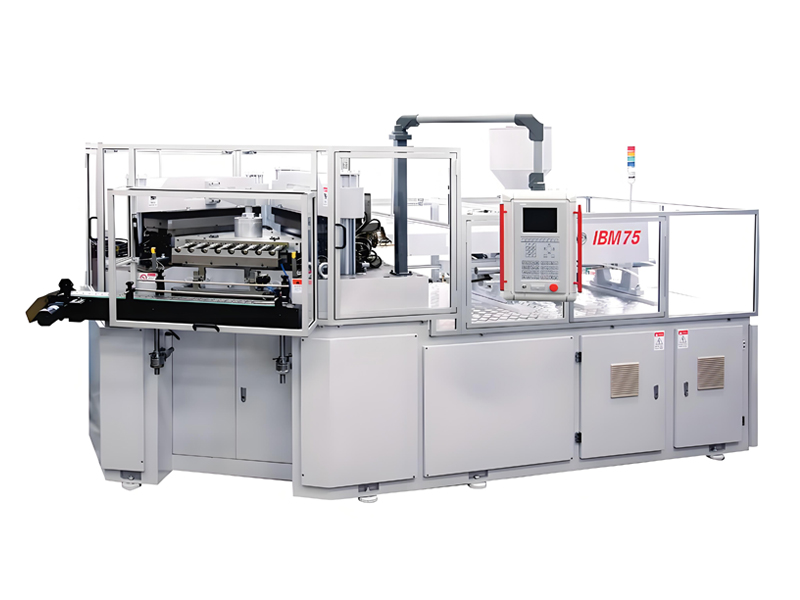
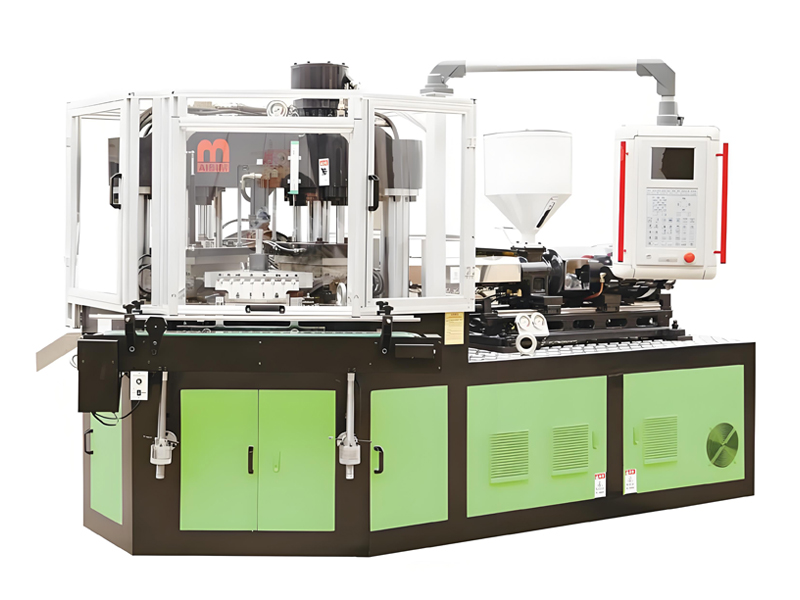
آلة القولبة بالنفخ بالحقن Aibim IBM75
The IBM75 is the largest standard Aibim model and the natural choice for wide mouth jars up to 1000 mL and openings up to 120 mm. Its single-crossbeam, double-pole clamping framework enlarges the mold setting space, which is exactly what a wide mouth mold needs because the body footprint is large. The machine uses Aibim PREFILL technology with a variable displacement pump that cuts energy use by at least 35 percent compared with a conventional fixed-pump hydraulic unit.
| Specification | IBM75 value |
|---|---|
| Clamping force | 75 tf (750 kN) |
| الحقن capacity (shot) | 600 cm3 |
| Screw diameter | 45 mm |
| L/D ratio | 20:1 |
| Maximum cavities | Up to 8 for small parts; 2 to 4 for wide mouth jars |
| Maximum bottle mouth diameter | 120 mm |
| Maximum bottle volume | 1000 mL |
| Platen size | 520 x 520 mm |
| Installed power | 30 kW |
| وقت دورة التجفيف | 4.5 s |
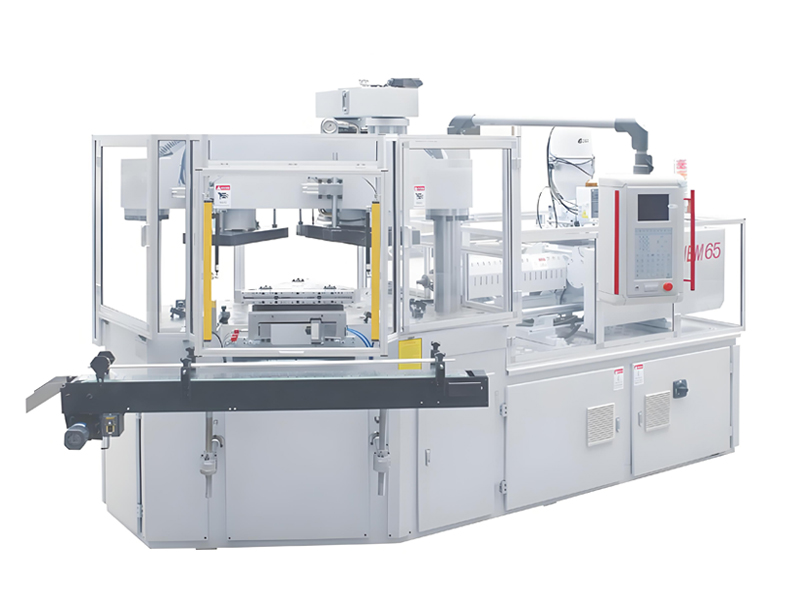
آلة القولبة بالنفخ بالحقن Aibim IBM65
The IBM65 sits one step below the IBM75 and covers wide mouth jars up to 750 mL and openings up to 100 mm. It is the workhorse for food, cosmetic and pharmaceutical jars in the mid-volume band, with the same three-station one-step process and the same neck precision. Cavity count for a wide mouth jar is limited by platen space, so a 250 mL jar at 70 mm mouth can run four to six cavities while a 750 mL jar at 100 mm mouth runs two.
| Specification | IBM65 value |
|---|---|
| Clamping force | 65 tf (650 kN) |
| الحقن capacity (shot) | 450 cm3 |
| Screw diameter | 40 mm |
| L/D ratio | 20:1 |
| Maximum cavities | Up to 6 for small parts; 2 to 3 for wide mouth jars |
| Maximum bottle mouth diameter | 100 mm |
| Maximum bottle volume | 750 mL |
| Platen size | 460 x 460 mm |
| Installed power | 25 kW |
| وقت دورة التجفيف | 4.0 s |
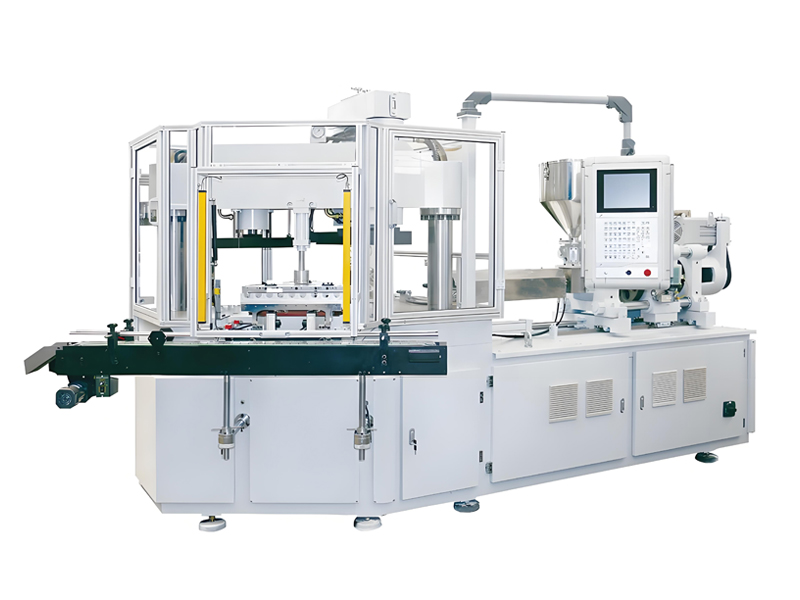
Aibim also offers the IBM55 Hybrid Electric model for smaller wide mouth jars up to 500 mL and openings up to 80 mm, where the electric clamp and servo plasticizing give the tightest energy and repeatability numbers for cleanroom and pharmaceutical use. All three models share the Aibim advantages: CE-certified safety with a stripper station laser sensor and light curtain, SD-card recipe storage that moves a proven setting from one machine to another, and the Wanplas group backing for service and spare parts.
صناعات التطبيق والمواصفات النموذجية
تخدم البرطمانات واسعة الفوهة المصنوعة بواسطة IBM الصناعات حيث تهم الفتحة والختم والشفافية جميعًا. التركيبات أدناه نموذجية وليست شاملة، ويمكن تسعير كل منها كتكوين ملموس للماكينة والقالب.
الطعام. برطمانات المربى والعسل بفتحة من 63 إلى 100 مم وسعة من 250 إلى 500 مل من PP؛ برطمانات المكسرات والوجبات الخفيفة من 70 إلى 89 مم ومن 400 إلى 750 مل من PP؛ برطمانات أغذية الأطفال من 53 إلى 63 مم ومن 100 إلى 250 مل من PP البوليمر المشترك العشوائي؛ برطمانات الحلويات من 63 إلى 89 مم ومن 200 إلى 500 مل من PP أو PETG الشفاف عبر ISBM.
الصحة والمكملات. برطمانات الفيتامينات والبروتين من 53 إلى 89 مم و200 إلى 750 مل من PP، غالبًا مع سطح إغلاق بورق الألمنيوم وغطاء واضح العبث.
الأدوية. زجاجات الأقراص والمساحيق من 38 إلى 63 مم و60 إلى 300 مل من HDPE أو PP، حيث تدعم دقة العنق غطاءً مقاومًا للأطفال وتركيب مجفف.
مستحضرات التجميل. برطمانات الكريم من 45 إلى 70 مم و30 إلى 200 مل من SAN أو PP؛ برطمانات زبدة الجسم واللوشن من 63 إلى 89 مم و200 إلى 500 مل من PP؛ برطمانات الماسك من 70 إلى 100 مم و250 إلى 500 مل من PP أو PETG.
المواد الكيميائية اليومية. برطمانات حبيبات وأكياس الغسيل من 70 إلى 100 مم و400 إلى 1000 مل من PP، مصممة بغطاء عريض مقاوم للأطفال وحاجز للرطوبة.
أغذية الحيوانات الأليفة. برطمانات أغذية الحيوانات الأليفة الرطبة والجافة من 89 إلى 100 مم و500 إلى 1000 مل من PP، حيث تسهل الفتحة الواسعة المغرفة وتحافظ دقة العنق على إحكام الغطاء.
المختبر والعينات. برطمانات العينات والكواشف من 38 إلى 63 مم و30 إلى 250 مل من PP أو PS أو PCTG، حيث تكون الشفافية والمقاومة الكيميائية مطلوبتين معًا.
دليل الاختيار من المتطلبات إلى الطراز
يربط الجدول أدناه متطلب العميل بطراز Aibim الموصى به وتكوين التجاويف. تُعطى أرقام التجاويف للقوالب واسعة الفوهة وتفترض التخطيط المحدود باللوحة الموصوف سابقًا؛ يتم تأكيد التجويف النهائي في مرحلة تصميم القالب.
| Mouth diameter | Volume | Material | Annual output | Recommended model | Cavities | Key configuration |
|---|---|---|---|---|---|---|
| 38 – 45 mm | 30 – 150 mL | PP / PS | Low to medium | IBM55 Hybrid | 4 | Electric clamp, cleanroom option |
| 53 – 63 mm | 100 – 300 mL | PP / HDPE | Medium | IBM65 | 4 | Independent neck cooling |
| 63 – 70 mm | 200 – 500 mL | PP / PETG | Medium to high | IBM65 or IBM75 | 3 – 4 | Stepped core rod, stripper plate |
| 70 – 89 mm | 400 – 750 mL | PP | Medium to high | IBM75 | 2 – 3 | Dense cooling, servo turret |
| 89 – 100 mm | 500 – 1000 mL | PP | Medium | IBM75 | 2 | 120 mm max mouth, reinforced core rod |
| Up to 100 mm | 250 – 500 mL | PET / PETG (ISBM) | High | Wanplas ISBM line | Per project | Oriented clarity, barrier |
For projects that need an oriented PET or PETG wide mouth jar with maximum clarity and barrier, the Wanplas group supplies the matching ISBM line so the customer stays with one supplier and one service organization. For any configuration outside the table, Aibim engineers size the machine from the part drawing, the annual volume and the material data sheet rather than from a generic rule.
الخدمة والدعم وكيفية البدء
شراء خط برطمانات واسعة الفوهة هو بداية علاقة إنتاجية، وليس معاملة لمرة واحدة. تدعم Aibim، كمصنع من Wanplas، كل ماكينة بوعود خدمة المجموعة المشتركة.
اختبار المصنع قبل الشحن. تخضع كل آلة لاختبار استمرارية وأداء في أرضية المصنع مع قالب العميل حيثما كان متاحًا، بحيث يثبت الخط قبل مغادرته Zhangjiagang. يسجل الاختبار وقت الدورة وتوازن التجاويف وأبعاد القطعة الأولى.
تجربة القالب وفحص القطعة الأولى. يُجرّب القالب على الآلة الفعلية ويُصدر تقرير فحص القطعة الأولى مقابل الرسم، يغطي قطر العنق والبيضاوية وتسطح سطح الختم وتوزيع الجدار وأداء السقوط. لا تُطلق القطعة حتى يُوقع التقرير.
التركيب والتشغيل التجريبي. يدعم المهندسون التركيب والتشغيل التجريبي في الموقع، وينقلون الوصفة المثبتة إلى بطاقة SD الخاصة بالمصنع، ويُدرّبون الفريق المحلي على تشغيل الخط وتنظيفه وصيانته.
سياسة قطع الغيار. توفر مجموعة Wanplas قطع غيار مجانية بقيمة 500 دولار أمريكي كل عام للآلات المشمولة، ويتم استبدال الأجزاء التالفة ضمن الضمان مجانًا. وهذا يبقي خط البرطمانات واسعة الفوهة يعمل دون مخزون كبير مقيد.
التدريب والتشغيل عن بُعد. يتم تدريب المشغلين وموظفي الصيانة في الموقع، وتدعم الآلة المراقبة عن بُعد بحيث يمكن لمهندسي Aibim قراءة بيانات PLC والاستجابة للظروف غير الطبيعية دون انتظار زيارة الموقع.
المصنع المفتوح. العملاء مرحب بهم لزيارة مصنع Aibim لتدقيق التصنيع ومشاهدة تشغيل تجريبي ومراجعة مركز CNC الذي ينتج أجزاء الماكينة.
If you are planning a wide mouth jar program, send your part drawing, target volume, material and annual output to Aibim. The engineering team will propose a machine model, a cavity layout and a process window, and invite you to the factory for a mold trial and a line audit before you commit. There is no substitute for seeing your jar come off the machine with the neck in tolerance and the seal flat.
الأسئلة الشائعة
ما نسبة قطر العنق إلى الجسم التي تحدد البرطمان واسع الفوهة؟
يتمتع البرطمان واسع الفوهة بنسبة قطر عنق إلى جسم أعلى من 0.5، عادةً من 0.55 إلى 0.85. تقع زجاجات العنق الضيق تحت 0.35. كلما كانت النسبة أكبر، كلما كانت الفتحة أقرب إلى قطر الجسم الكامل، مما يغير ميكانيكا النفخ ويجعل توزيع الجدار أصعب في التحكم.
لماذا تُفضل قولبة النفخ بالحقن للبرطمانات واسعة الفوهة على قولبة النفخ بالبثق؟
IBM produces the neck finish by injection in a precision neck ring, so the opening is held to roughly plus or minus 0.05 mm with no flash and no post trim. For a wide mouth jar the opening is the critical sealing and filling surface, and IBM holds that surface to the tightest tolerance of the three processes.
أي مادة هي الأفضل لبرطمان واسع الفوهة ملامس للطعام؟
For most food jars such as jam, honey, nuts and confectionery, polypropylene in homo-polymer or random co-polymer grade is the first choice because of its heat resistance, chemical inertness and food contact compliance. Transparent display jars use PS, SAN or PETG, while HDPE serves pharmaceutical powder and tablet jars.
كم عدد التجاويف التي يمكن لقالب برطمان واسع الفوهة تشغيلها في آلة IBM واحدة؟
Cavity count is limited by platen area because a wide mouth jar occupies far more mold space than a narrow neck bottle of equal volume. On an Aibim IBM75 a 1000 mL jar up to 120 mm mouth may run two cavities, while a 250 mL jar at 70 mm mouth can run four to six cavities. Larger cavitation is possible only on smaller diameter parts.
ما الذي يسبب بيضاوية الشكل أو تشوهًا في عنق البرطمان واسع الفوهة؟
تأتي البيضاوية من جدران عنق رقيقة وتبريد غير كافٍ لحلقة العنق وإزالة القالب بينما البوليمر ما زال ناعمًا. الإجراءات المضادة هي دائرة تبريد مستقلة على حلقة العنق، والحفاظ على درجة حرارة إزالة القالب أقل من 70 درجة مئوية لـ PP، وإضافة 0.2 إلى 0.5 مم إلى سماكة جدار العنق.
ما هي أفضل نسبة نفخ لبرطمان واسع الفوهة؟
أبقِ نسبة النفخ في نطاق 2.0 إلى 3.5. فوق ذلك لا يمكن للباريسون التمدد بالتساوي، لذا يرق الكتف والقاعدة بينما يبقى الجسم سميكًا. ملف قضيب قلب متدرج وتدرج جدار حقن من 1.5 إلى 4.5 مم يتيحان لك إبقاء النسبة داخل النافذة الآمنة.
كيف أتحقق من أن البرطمان ذو الفوهة الواسعة يلبي مواصفات الجودة الخاصة به؟
Measure capacity at plus or minus 2 percent, neck inside diameter and ovality, seal face flatness at or below 0.15 mm, wall thickness at no fewer than eight points, top load in newtons, a 1.2 m full drop test, and seal retention under vacuum or pressure. Transparent jars also need light transmittance and haze checks.