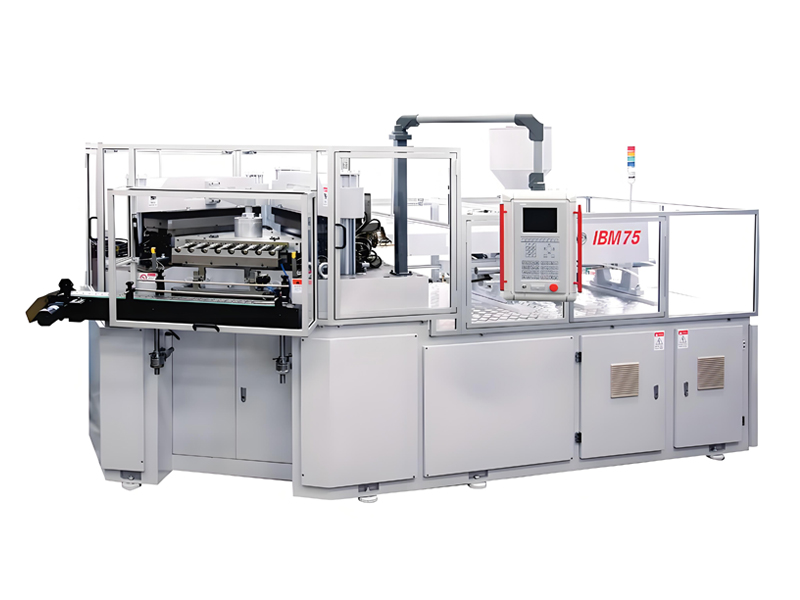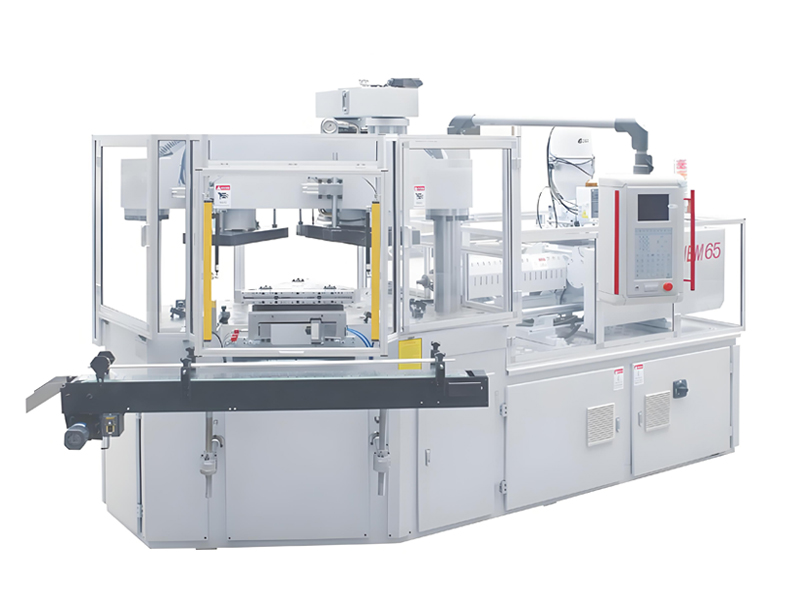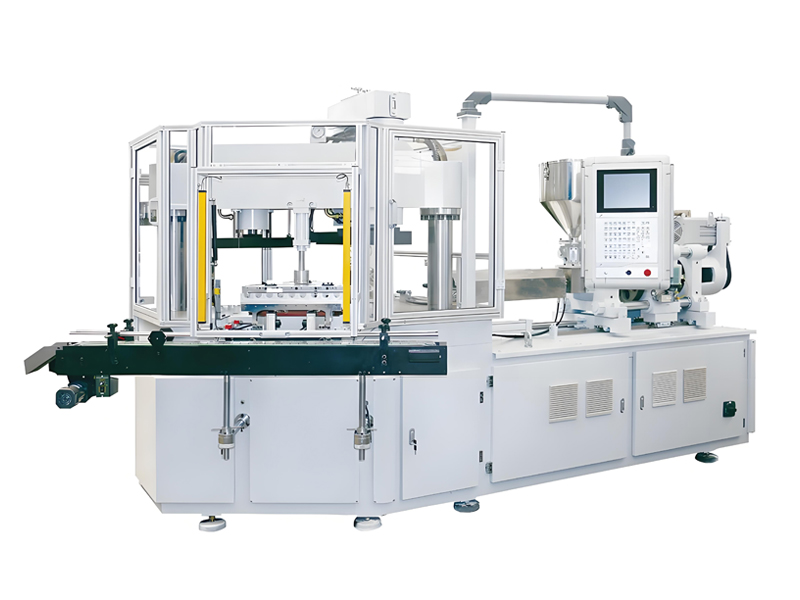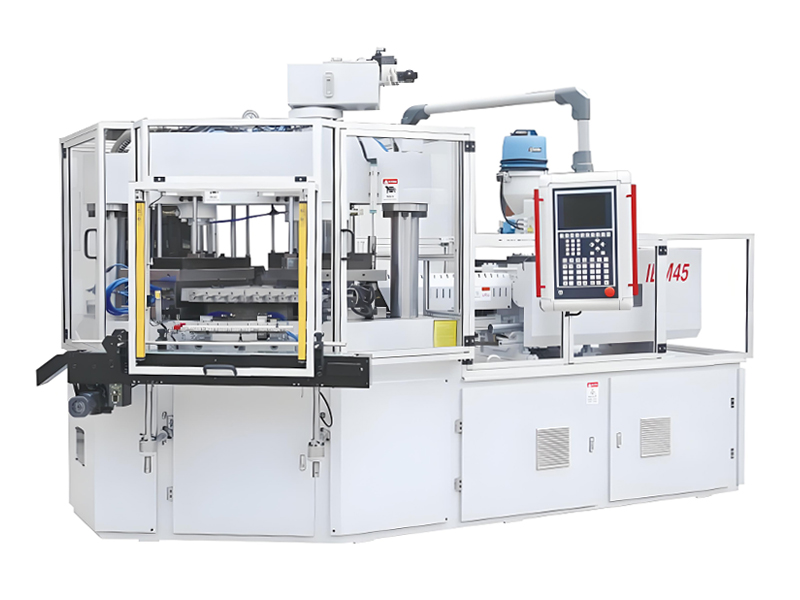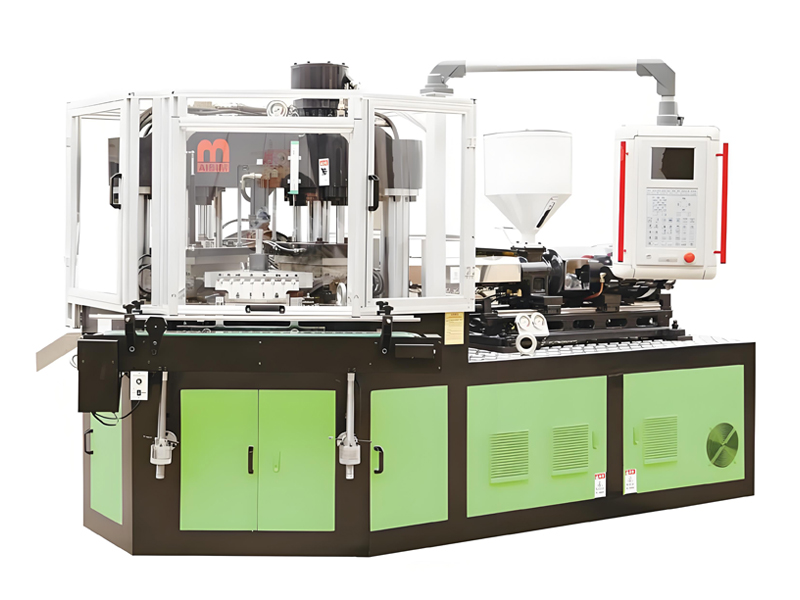
الحقن blow molding (IBM) is the preferred process when a brand needs small, precise, neck-finished containers for pharmaceutical, cosmetic and daily-chemical packaging. Aibim, a Wanplas factory, builds three-station one-step IBM machines in the IBM55 Hybrid, IBM65 and IBM75 ranges, producing bottles from 3 ml to 1000 ml in PE, PP, PS, ABS, SAN, TPU, PC and PCTG. Behind those smooth, flash-free articles sits a control system that decides whether the machine runs at high yield or spends its life fighting drift, scrap and unplanned downtime. This article explains how a Siemens-based control architecture operates an IBM line, how the major building blocks interact, and how to perform a firmware and software upgrade without losing production records or breaking regulatory compliance. The guidance applies to new installations and to retrofits where an older controller is replaced with a SIMATIC S7-1500 platform.
لماذا تهم منصة PLC الحديثة لآلات IBM
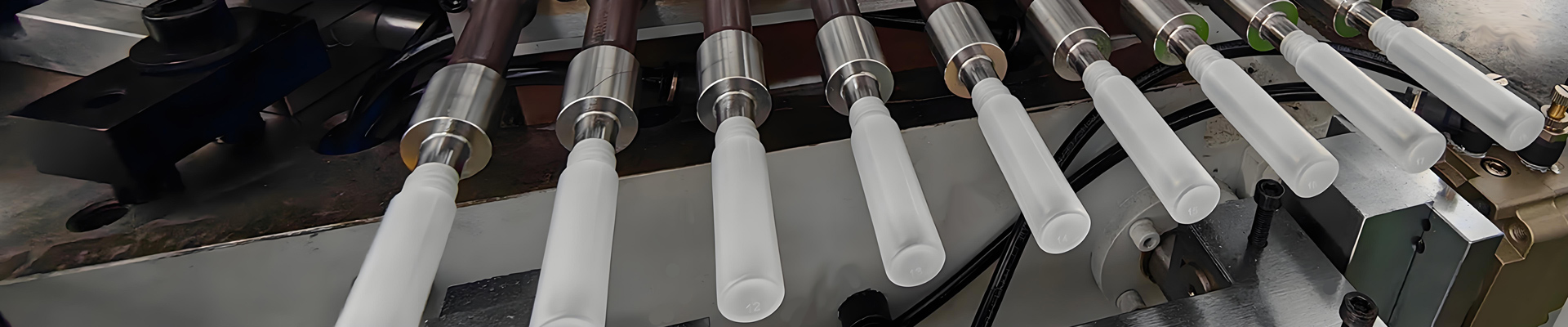
An IBM cycle is short and unforgiving. In a three-station machine the injection station forms a preform or parison on a core rod, the rod transfers to the blow station where the parison is inflated against a cooled cavity, and the finished bottle is stripped at the third station. Each station is mechanically indexed, but the timing, temperature, hydraulic pressure and servo motion must be synchronized within tight windows measured in milliseconds. A control system that cannot hold that synchronization produces eccentric walls, short shots, flash at the parting line or, in the worst case, a stuck core rod that halts the whole line.
A modern programmable logic controller (PLC) brings deterministic scan times, distributed I/O over a real-time fieldbus, and an engineering environment where motion, safety, visualization and data logging live in one project. For an IBM75 machine running multiple SINAMICS servo axes, the difference between a legacy relay-logic panel and a SIMATIC platform is the difference between reacting to faults after they happen and predicting them from trend data before they cause scrap. Aibim positions its IBM series with PREFILL hydraulic technology and a claimed minimum 35 percent energy saving, and those gains are only fully realized when the controller executes the variable-displacement pump logic with precise closed-loop regulation.
Independently of Aibim, the broader market offers IBM machines from several established builders, and most now standardize on a mainstream PLC brand rather than proprietary boards. That trend matters because spare parts, engineering talent and cybersecurity patches are easier to source when the controller is a catalog product from Siemens, rather than a closed module unique to one machine generation.
بنية SIMATIC S7-1200 مقابل S7-1500
The first decision for any IBM control project is the controller family. Siemens offers the SIMATIC S7-1200 as a compact, cost-effective PLC and the SIMATIC S7-1500 as a high-performance platform for demanding automation. Both are programmed in TIA Portal, but their capacity, communication options and motion performance differ enough to affect machine design.
The S7-1200 suits compact IBM55-class hybrid machines where I/O counts are moderate, motion is handled by one or two SINAMICS drives, and the operator interface is a small KTP panel. It supports PROFINET, basic motion control and integrated safety on selected CPUs. The S7-1500 is the better fit for an IBM75 line with multiple servo axes, a high-speed indexing table, redundant safety, extensive recipe sets and an OPC UA historian feeding a site manufacturing execution system.
| Attribute | SIMATIC S7-1200 | SIMATIC S7-1500 |
|---|---|---|
| Typical IBM application | IBM55 Hybrid, single drive group | IBM65 / IBM75, multi-axis servo |
| Program memory | Up to 150 KB work memory | Up to 750 KB to several MB |
| PROFINET ports | 1 to 2, integrated switch | 2, with optional PN/PN coupler |
| Motion axes (Technology Object) | Up to ~8 axes | Up to 128 axes |
| Integrated safety | F-CPU on selected models | Full F-CPU, F-DI/F-DO, PROFIsafe |
| Trace and diagnostics | Basic integrated trace | High-speed trace, multicore diagnostics |
| OPC UA server | Optional, limited | Native, with method calls and alarms |
| Relative control cost | Low to Medium | Medium to High |
For Aibim machines serving pharmaceutical customers, the S7-1500 is usually selected because the extra headroom supports the audit-trail buffers, role-based access and OPC UA historian that GAMP 5 and 21 CFR Part 11 expect. A cosmetic packaging line with simpler traceability needs can run comfortably on S7-1200 to keep the control budget at a Low to Medium level.
الهندسة باستخدام TIA Portal وتنظيم المشروع
TIA Portal (Totally Integrated Automation Portal) is the single engineering framework where the PLC, HMI, drives, safety and networking are configured. For an IBM project this means one project file contains the S7-1500 CPU, the KTP or Comfort Panel, the SINAMICS drives, the PROFINET topology and the safety program. Engineers avoid the version-mismatch errors that plagued older, separate-software workflows.
Good project organization pays off across the machine lifecycle. Aibim recommends a folder structure that separates the injection-station sequence, the blow-station sequence, the strip-station sequence, the hydraulic pump control, the temperature zones, the alarm blocks and the recipe data blocks. Each station is a technology function block with standardized inputs and outputs, so a new operator screen or a modified cycle can be added without disturbing unrelated logic.
TIA Portal also manages device proxies and offline/online comparison. Before any software upgrade, the engineer performs an “online backup” that captures the actual running project, not just the last saved offline version. This distinction is critical: the offline file on the engineer laptop may differ from what is loaded in the controller after years of field adjustments. Aibim’s service practice is to retrieve the live project, archive it with the hardware serial number and firmware version, and store it in a controlled location before any change begins.
أرشيف المشروع المأخوذ قبل دقائق من الترقية هو الأصل الأكثر قيمة للتعافي على خط IBM. خطة التراجع جيدة بقدر النسخة الاحتياطية التي تسبقها.
Version discipline matters. TIA Portal projects are tied to a specific engineering version and to device firmware. Mixing a newer TIA Portal with older device GSD files, or loading a CPU firmware that the project was not compiled against, can produce download errors or, worse, runtime faults that appear only after a production run starts. The upgrade section below turns this discipline into a repeatable procedure.
واجهة الإنسان والآلة: لوحات KTP و Comfort
The human-machine interface (HMI) is where operators set recipes, watch cycle status, acknowledge alarms and read trend curves. Siemens offers the KTP series as a basic panel with integrated keys and touch, and the Comfort Panel series as a higher-resolution, larger-format panel with richer graphics and stronger processing for complex visualizations.
| HMI factor | KTP Panel | Comfort Panel |
|---|---|---|
| Screen size range | 4 to 15 inch | 7 to 22 inch |
| Interface style | Key + touch, basic graphics | Projected touch, vector graphics |
| Recipe handling | Limited recipe memory | Large recipe store, USB and card |
| Audit / logging | Basic alarm buffer | Extended log, user administration |
| Typical IBM fit | IBM55, small footprint cell | IBM65 / IBM75, multi-page dashboards |
| Relative HMI cost | Low | Medium to High |
On an IBM machine the HMI does more than show numbers. It is the front end of the recipe management system, the alarm acknowledgement point, and the place where the operator selects a product and the controller loads the right parison weight, melt temperature, blow pressure and cooling time. For pharmaceutical lines, the Comfort Panel’s stronger user-administration features support the role-based login that 21 CFR Part 11 expects, separating what an operator, a process engineer and a quality supervisor may do.
Aibim machines carry CE certification with a light curtain at the stripper station for personal safety and a long-distance digital laser sensor for mold safety. The HMI is the surface that reports those safety states to the operator and records their reset, an important link in the traceability chain.
تكامل ناقل الحقل PROFINET و PROFIBUS
Fieldbus choice determines how fast the controller talks to drives, I/O blocks and remote stations. PROFINET is the Ethernet-based real-time network used on current Siemens machines, while PROFIBUS DP remains common on older drives and distributed I/O. Aibim’s newer IBM lines use PROFINET as the backbone, with the S7-1500 CPU acting as the controller (IO controller) and the SINAMICS drives, ET 200 distributed I/O and the HMI as IO devices.
PROFINET supports isochronous real-time communication, which keeps servo motion tightly coupled to the PLC scan. For an IBM index table that must stop within a fraction of a degree, that timing precision prevents mechanical shock and core-rod misalignment. PROFIBUS, by contrast, is a robust fieldbus for devices that do not need microsecond synchronization, such as older temperature controllers, valve terminals or third-party gauges.
| Property | PROFINET | PROFIBUS DP |
|---|---|---|
| Physical medium | Industrial Ethernet, RJ45 | RS-485, 9-pin D-sub |
| Typical cycle | Sub-millisecond to a few ms | A few ms to tens of ms |
| Topology | Line, ring, star | Daisy chain, bus |
| Best use on IBM | Servo, HMI, fast I/O | Legacy drives, auxiliaries |
| Diagnostics | Rich, per-device topology view | Basic station status |
A practical integration pattern is to keep PROFINET for motion-critical nodes and reserve PROFIBUS for legacy or low-speed devices bridged through a PN/DP coupler. This protects an existing investment in instrumentation while moving the core control to a modern network. During commissioning, the TIA Portal network view shows every device’s IP or station address, and a single mouse click runs a topology check that flags a missing node before production starts.
محركات السيرفو SINAMICS والتحكم في الحلقة المغلقة
SINAMICS is the Siemens drive family that powers the IBM servo axes: the injection plasticizing and clamp motion, the core-rod transfer, the blow-station actuation and the indexing table. Closed-loop control means the drive continuously compares a setpoint (position, speed or torque) against encoder feedback and corrects within each control loop, typically with current, speed and position loops running at microsecond to millisecond rates.
On an IBM machine, precise core-rod transfer is everything. If the rod arrives at the blow station a few degrees off, the parison enters a cold cavity misaligned and the finished bottle shows wall variation. SINAMICS closed-loop positioning, combined with the S7-1500 motion Technology Object, holds the transfer within tight tolerance, repeatably, across millions of cycles. The control loop bandwidth also determines how quickly the system rejects a disturbance such as a brief hydraulic pressure dip.
| Drive parameter | Typical IBM setting context | Why it matters |
|---|---|---|
| Position loop update | Sub-ms servo cycle | Accurate rod transfer and indexing |
| Speed loop | Few ms bandwidth | Stable plasticizing without overshoot |
| Torque limit | Set per station | Protects mold and core rod from overload |
| Encoder resolution | High-count absolute | No re-homing after power loss |
| Blow pressure regulation | Up to ~40 bar typical | Defines bottle wall distribution |
| الطاقة recovery | Regenerative supply option | Supports Aibim 35 percent saving claim |
The hydraulic side also benefits. Aibim’s PREFILL technology and variable-displacement pump pressurizing reduce idle power, and the SINAMICS or a coordinated drive controller modulates pump output against the actual pressure demanded by the cycle. The result is lower kWh per thousand bottles and less heat dumped into the workshop. Competitors in the IBM space use comparable closed-loop servo concepts from other drive brands, but the Siemens ecosystem keeps motion, safety and visualization in one engineering environment, which simplifies training and support.
السلامة المدمجة ودوائر السلامة
Safety on an IBM machine is not optional. The injection station operates at high pressure and temperature, the transfer moves heavy tooling, and the stripper station exposes operators during part removal. Siemens Safety Integrated embeds safety functions into the same controller and fieldbus rather than relying on a separate hardwired relay system. Safety-rated inputs and outputs (F-DI, F-DO) communicate over PROFIsafe, a fail-safe profile on PROFINET, so the safety chain stays digital and diagnosable.
Typical safety functions on an Aibim IBM line include an emergency stop that removes motion power within defined time, a light curtain at the stripper that stops the cycle when the beam is broken, a muting sequence for legitimate part removal, and a guard interlock on the injection clamp. The long-distance digital laser sensor at the mold area confirms the core rod is clear before clamp close, preventing a costly mold crash. Each safety event is time-stamped and logged, which supports both internal audit and customer qualification.
| Safety function | Implementation | Benefit |
|---|---|---|
| Emergency stop | F-DI + safety relay logic | Fast, certified stop |
| Light curtain, stripper | PROFIsafe over PROFINET | Personal protection at part out |
| Laser mold-clear sensor | Digital input, interlock | Prevents clamp damage |
| Safe torque off (STO) | Drive-integrated | Holds axis without contactor |
| Door interlock | F-DO controlled guard | Restricts access during cycle |
Because safety is part of the same project, a configuration error is detected in TIA Portal rather than discovered during a dangerous manual test. Aibim’s CE certification is built on exactly this integration: the machine is designed so that safety states are visible, logged and verifiable, which shortens the path to customer site acceptance in regulated industries.
إدارة الوصفات والتبديل السريع
An IBM contract packer may run a 50 ml PETG cosmetic jar in the morning and a 100 ml PP pharmaceutical bottle in the afternoon. Recipe management stores the full parameter set for each product, mold and material: parison weight, melt temperature profile, injection speed and pressure, transfer timing, blow pressure and duration, cooling time, stripper settings and quality tolerances. The operator selects a recipe by name, the controller validates mold compatibility, and the machine reconfigures automatically.
Aibim machines use an SD card for parameter storage and re-installation across machines, so a proven recipe can move from one IBM65 to another without re-keying hundreds of values. On the Siemens side, recipe data lives in data blocks that the HMI reads and writes through a controlled interface. For regulated lines, recipe changes are versioned and require an electronic signature, so a quality supervisor approves a new setpoint before it enters production.
| Recipe element | Example range | Effect on product |
|---|---|---|
| Melt temperature | 180 to 260 deg C by resin | Flow, clarity, neck finish |
| الحقن speed | Tuned per cavity | Parison fill, shear heat |
| Blow pressure | Up to ~40 bar | Wall distribution, definition |
| Cooling time | Seconds, mold dependent | Cycle, dimensional stability |
| Clamp force | Tuned to projected area | Flash control |
Fast changeover is a commercial advantage. When the controller manages recipes consistently, the time lost between jobs drops from a long manual reset to a short validated switch, and the first articles after changeover are within tolerance instead of requiring a long warm-up scrap run. For a plant running many SKUs, this reduced non-productive time is often the largest controllable gain, more significant than the raw cycle improvement alone.
معالجة الإنذارات وتسجيل التتبع
No machine runs forever without an event. The difference between a manageable incident and a compliance crisis is whether the system captured what happened. Siemens alarm handling groups messages by station and severity, presents them on the HMI with plain-language text, and records them in a buffer with a time stamp and, where relevant, the active recipe and batch identifier.
Traceability logging extends beyond alarms. For pharmaceutical packaging the controller can record, per batch or per shift, the melt temperatures, cycle counts, reject counts, major setpoint changes and operator actions. This data becomes the electronic batch record that quality reviews before release. Aibim machines feeding regulated lines therefore store enough process history to demonstrate that each container was made under controlled conditions, supporting ISO 15378 for primary packaging materials for medicinal products and GMP expectations.
The engineering discipline here is to define alarm classes early: which faults stop the machine, which warn the operator, and which are purely informational. Over-alarming buries real problems; under-alarming hides risk. A well-tuned IBM project keeps the operator’s attention on the few signals that matter, while the full log quietly accumulates the evidence needed for audits.
التشخيص عن بعد والاتصال عبر OPC UA
Modern IBM lines rarely stand alone. They connect to a site manufacturing execution system or a cloud dashboard for overall equipment effectiveness tracking, predictive maintenance and remote support. OPC UA is the cross-vendor, secure communication standard that exposes machine data without revealing the controller’s internals. Aibim’s philosophy of remote monitoring, where engineers can review PLC data from the China headquarters, mirrors the capability that OPC UA and secure VPN access provide.
Through OPC UA the S7-1500 publishes selected tags, alarms and methods. A higher-level system subscribes to cycle counts, reject rates, energy kWh, temperature trends and fault states. Because OPC UA carries its own address space and security model, the integration does not require opening the PLC project to the IT network. Remote diagnostics then let a support engineer see the same trend curves the local operator sees, shortening mean-time-to-repair when a fault is subtle.
Cybersecurity is part of this story. Aibim and Wanplas, the parent brand, advise keeping the machine network segmented from the corporate office network, applying firmware patches on a schedule, and controlling who can reach the controller. OPC UA with certificate-based authentication is preferred over flat, unauthenticated protocols for any connection that leaves the cell.
سير عمل ترقية البرامج الثابتة والبرمجيات
تتلقى وحدات التحكم وواجهات HMI والمحركات جميعها تحديثات البرامج الثابتة والبرامج التي تصلح الأخطاء وتسد الثغرات الأمنية وتضيف ميزات. في خط IBM الإنتاجي، الترقية حدث مضبوط وليست نقرة عابرة. يحافظ الإجراء أدناه على مخاطر منخفضة واسترداد سريع.
| Step | Action | Purpose |
|---|---|---|
| 1. Read live project | Online backup of running CPU, HMI, drives | Capture field adjustments |
| 2. Record versions | Note firmware, TIA version, GSD files | Define compatibility baseline |
| 3. Verify compatibility | Cross-check release notes, device support | Avoid mismatch faults |
| 4. Stage offline | Compile project against target firmware | Catch errors before downtime |
| 5. Plan window | Schedule, notify quality, freeze recipes | Protect batch records |
| 6. Upgrade | Load firmware, download project | Apply change |
| 7. Validate | Dry run, check safety, sign off | Confirm correct operation |
| 8. Rollback reserve | Keep prior backup ready | Fast recovery if issues appear |
Version compatibility is the most common failure point. A CPU firmware newer than the TIA Portal project was built for may refuse the download or behave inconsistently; a drive firmware older than the project expects may not support a motion function. The rule is simple: decide a target version set, confirm every device in the network supports it, and upgrade all nodes in the supported order. Rollback is the safety net: if a newly loaded firmware exposes an incompatibility that cannot be resolved in the maintenance window, the prior backup is restored and production resumes, with the issue escalated to a planned re-attempt.
Software upgrades also carry a validation obligation on regulated lines. Under GAMP 5 a change to the control software is a change to a regulated system, so it needs impact assessment, testing and a recorded approval. Aibim supports this by keeping the project archive, the version record and the validation note together, so the upgrade is auditable rather than improvised.
الامتثال لـ GAMP 5 و 21 CFR Part 11
التغليف الصيدلاني operates under strict electronic-record rules. GAMP 5 (Good Automated Manufacturing Practice) is the industry framework for validating automated systems, classifying software by risk and defining the documentation, testing and change-control needed. 21 CFR Part 11 is the الولايات المتحدة FDA regulation on electronic records and electronic signatures, requiring that records be attributable, legible, contemporaneous, original and accurate, with secure signatures.
A Siemens control system contributes the technical building blocks: the PLC and HMI can enforce role-based login, the audit trail can record who changed which setpoint and when, recipe approval can require an electronic signature, and the historian can export tamper-evident batch data. But the hardware alone does not make a line compliant. Compliance is the combination of the technology with documented procedures, a validated state, controlled change management and periodic review. Aibim machines intended for medicinal product packaging are designed to support ISO 15378 and GMP contexts, and the Siemens layer is selected and configured to fit that intent.
| Requirement | Siemens capability | User responsibility |
|---|---|---|
| Audit trail | Logged alarms, setpoint changes | Define what is logged, retain per policy |
| Role-based access | HMI user administration | Assign roles, review accounts |
| Electronic signature | Recipe approval workflow | Approval matrix, training |
| Validation | Consistent, documented project | IQ/OQ, change control per GAMP 5 |
| البيانات integrity | OPC UA secure export | Backup, archive, access control |
The practical message for a packaging buyer is to treat the control system as a validated asset. Specify the required audit scope in the purchase order, confirm Aibim configures the HMI roles and export paths accordingly, and keep the upgrade workflow above as part of the site’s standard operating procedure. Done well, the same Siemens platform that improves cycle consistency also simplifies the documentation auditors expect.
Wanplas, the parent brand of Aibim, brings the group’s shared quality standards and service promises to every IBM line, including open-factory visits and a structured after-sales program. That backing matters when a pharmaceutical customer qualifies a new supplier and wants evidence of engineering discipline, not just a competitive machine price.
الأسئلة الشائعة
هل يمكن لوحدة تحكم SIMATIC S7-1200 تشغيل آلة IBM كاملة ثلاثية المحطات؟
نعم لآلات فئة IBM55 المدمجة ذات الإدخال/الإخراج المعتدل ومجموعة محرك SINAMICS واحدة. لخطوط IBM75 ذات محاور المؤازرة المتعددة والسلامة الزائدة وسجل OPC UA، فإن S7-1500 هي البنية الموصى بها بسبب ذاكرة البرنامج الأكبر وعدد المحاور الأعلى وقدرات التدقيق الأصلية.
كم يستغرق وقت توقف ترقية البرنامج الثابت المخطط لها؟
مع نسخة احتياطية موثقة وخطة مرحلية، يشغل تحديث البرامج الثابتة للمتحكم وواجهة الإنسان والآلة (HMI) عادةً نافذة صيانة مخططة من بضع ساعات، بينما يحافظ احتياطي التراجع على مخاطر منخفضة إذا ظهرت مشكلات توافق. الوقت المهيمن هو التحقق، وليس التنزيل نفسه.
هل تكفي أجهزة Siemens وحدها للامتثال لـ 21 CFR Part 11؟
لا. توفر وحدة التحكم وواجهة HMI سجل التدقيق والوصول القائم على الأدوار ولبنات التوقيع الإلكتروني، لكن الامتثال للجزء 11 يتطلب أيضًا إجراءات موثقة وتحققًا ونظام إدارة تغيير خاضعًا للتحكم متوافقًا مع GAMP 5. التقنية ضرورية لكنها غير كافية.
لماذا استخدام PROFINET بدلاً من الإبقاء على PROFIBUS؟
يوفر PROFINET اتصالاً دون الميلي ثانية وواعيًا بالطوبولوجيا يحافظ على مزامنة محكمة لحركة المؤازرة والإدخال/الإخراج السريع، وهو ما يهم دقة نقل قضيب القلب. يظل PROFIBUS مفيدًا للمحركات القديمة والأجهزة منخفضة السرعة المرتبطة عبر مقترن PN/DP، محافظًا على الاستثمار السابق.
كيف يقلل إدارة الوصفات من الهالك أثناء التحويل؟
تخزن الوصفات مجموعة المعلمات الكاملة والموثقة لكل منتج وقالب. اختيار وصفة يعيد تكوين الآلة تلقائيًا وبشكل متسق، لذا تكون القطع الأولى بعد التبديل ضمن التفاوت بدلاً من الحاجة إلى دورة إحماء طويلة بالهالك، مما يقلل الوقت غير الإنتاجي بين وحدات SKU.
ما هي الطريقة الأكثر أماناً للتراجع عن ترقية فاشلة؟
استعد النسخة الاحتياطية عبر الإنترنت الملتقطة قبل الترقية في الخطوة الأولى من سير العمل، وأعد تحميل مجموعة البرامج الثابتة السابقة بالترتيب المدعوم، واستأنف الإنتاج. نظرًا لأن الإصدارات الأساسية سُجلت، يعيد التراجع الخط إلى حالة معروفة ومتحقق منها دون تخمين.
الخلاصة
A Siemens control architecture turns an Aibim IBM machine from a capable mechanical system into a consistent, observable and compliant production asset. The SIMATIC S7-1500 handles multi-axis servo motion and audit logging, TIA Portal keeps the whole project in one place, the KTP or Comfort Panel gives operators a clear window into the process, PROFINET synchronizes motion, SINAMICS closes the control loop, and Safety Integrated protects people and tooling. Recipe management shortens changeover, traceability logging builds the electronic batch record, and OPC UA connects the cell to higher-level systems without exposing the controller. A disciplined firmware and software upgrade workflow, backed by rollback reserves and version compatibility checks, keeps the line current and secure. For pharmaceutical packaging, the same platform supplies the technical half of GAMP 5 and 21 CFR Part 11 compliance, with Aibim and the Wanplas brand providing the engineering and service discipline behind it. When specifying an IBM line, treat the control system as a validated, long-life component, and the return will show in yield, uptime and audit readiness rather than in any single headline number.