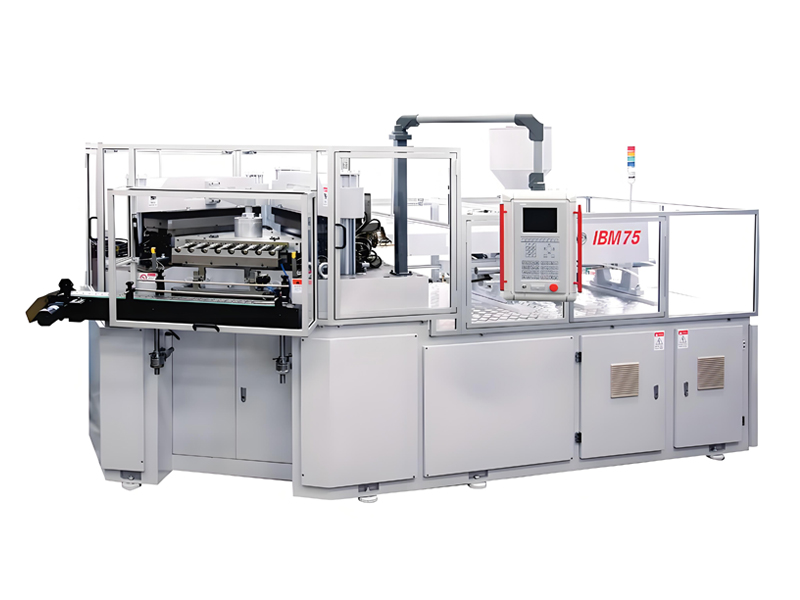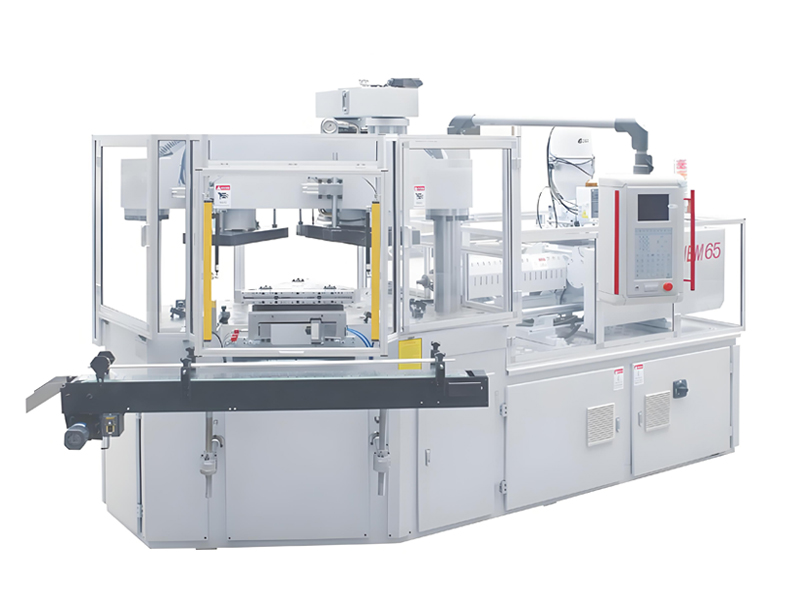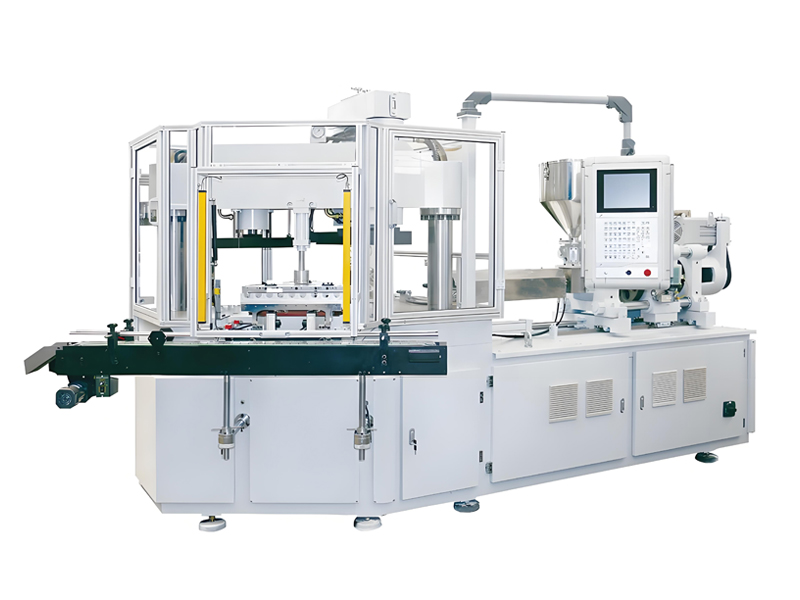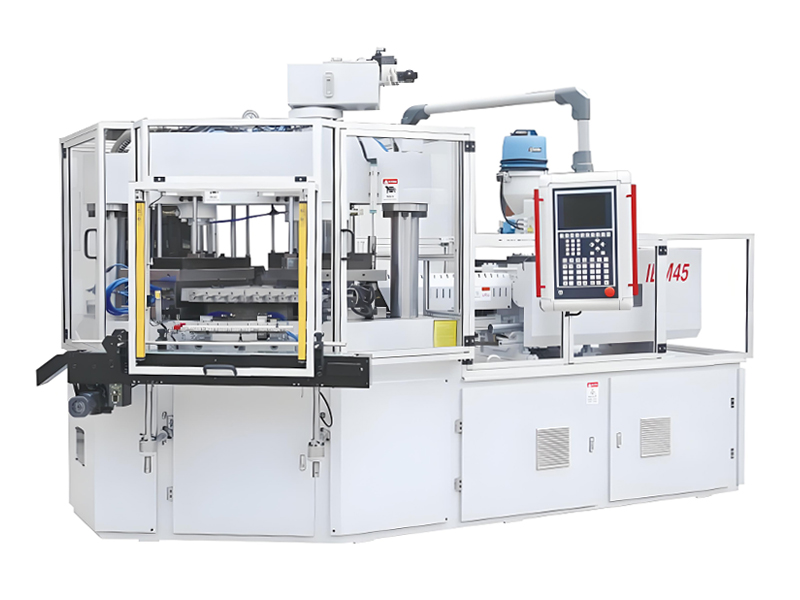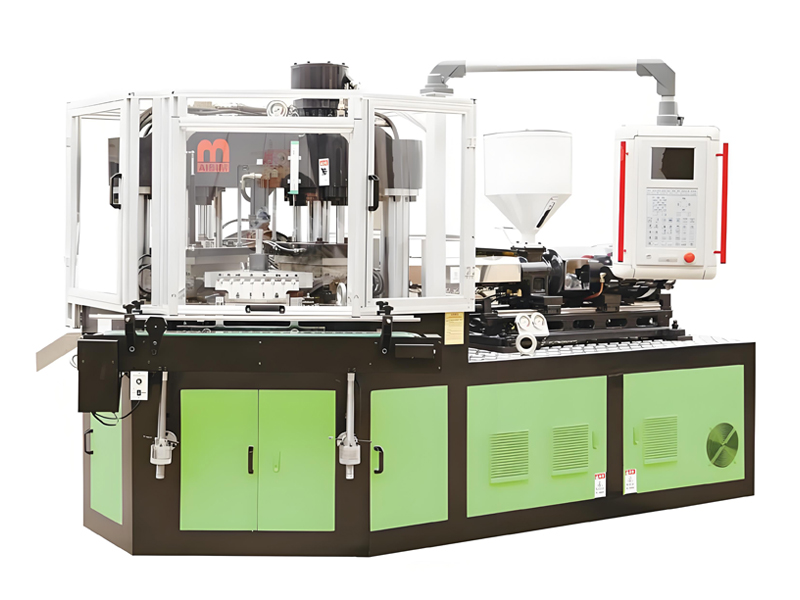
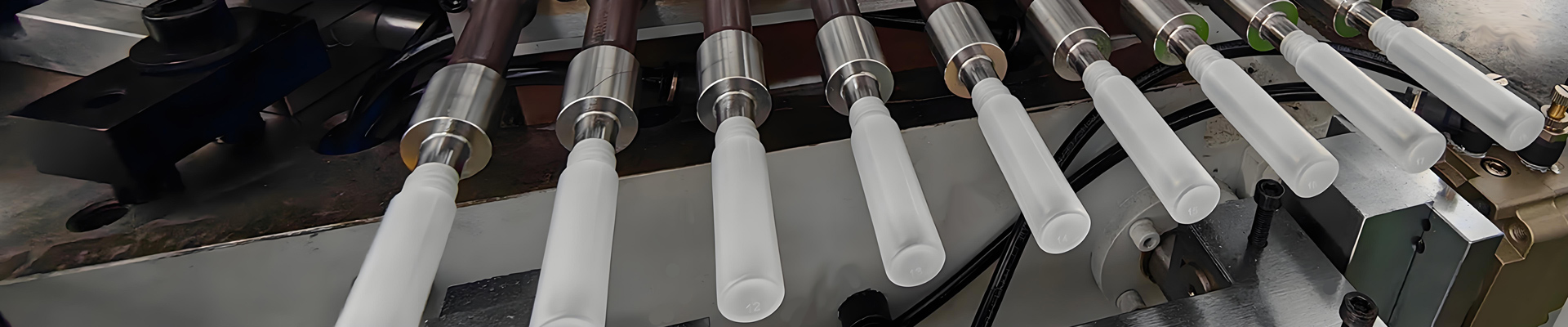
A Schneider electrical component is the nervous system of an injection blow molding machine, switching the power that drives the hydraulic pump, sequencing the three-station transfer, and closing the servo loop that controls injection velocity. For a plant running an Aibim IBM75, IBM65, or the IBM55 Hybrid, an electrical fault does not merely stop one cycle; it can freeze a core rod mid-transfer and force a full mold strip, which is why reliability of contactors, circuit breakers, the PLC, and the servo drive sits at the center of any maintenance plan. Aibim, a Wanplas factory with more than twelve years in injection blow molding, equips its three-station one-step IBM lines with internationally recognized electrical brands so that spares are globally sourced, the design meets IEC 60947 low-voltage switchgear practice, and CE conformity for the stripper and personal-safety light curtain is preserved. This guide explains how each Schneider device functions inside an IBM machine, how IP ratings and IEC 60947 apply, how overload, harmonics, and surge degrade the system, and how to build a replacement strategy that favors original documented spares over unknown compatibles. After reading, a maintenance lead will know which devices to stock, which rating to specify, and how to keep the electrical cabinet inside its safe operating envelope for the full service life of the machine.
لماذا تشكل أجهزة Schneider أساس النظام الكهربائي لـ IBM
The injection blow molding cycle is a tightly timed sequence: plasticize and inject the parison, index the core rod to the blow station, inflate, cool, index to ejection, and strip. Every one of those steps is triggered by a control output that ultimately closes a contactor or fires a servo amplifier. Aibim selects Schneider devices because the brand offers a coherent low-voltage range, from miniature circuit breakers through contactors to programmable logic controllers and servo drives, all engineered to share the same coordination logic and the same diagnostic language. That coherence matters when a fault occurs at 2 a.m. and the night shift needs a code that points to a real component, not a vague alarm.
Reliability in an IBM machine is not only about the component count but about the duty. A contactor that switches the hydraulic pump motor may operate a few times per hour, while a contactor that handles a high-speed auxiliary may cycle thousands of times per shift. Schneider’s rated mechanical and electrical endurance figures let Aibim’s designers match the device to the duty rather than oversizing everything, which keeps the cabinet compact and the heat load manageable. From the Wanplas brand standpoint, standardizing the electrical platform across factories means that an electrician trained on an Aibim IBM line can read the panel of a sister factory’s machine with minimal relearning, and the group’s shared spare-parts policy can cover the common devices.
The IBM55 Hybrid deserves a special note. By replacing a large part of the hydraulic power with servo-electric axes, it removes the inrush-heavy pump contactor and reduces the harmonic load on the supply, which in turn lowers stress on the upstream breaker and the power quality equipment. The trade is that the servo drive amplifier becomes the most critical and most expensive electrical item, so the replacement guide later in this article weights the Hybrid differently from a fully hydraulic IBM75.
وظائف الموصل وقاطع الدائرة في آلة IBM
A contactor is an electrically controlled switch for a power circuit; a circuit breaker is a protective device that opens automatically on over-current. In an IBM machine the two work as a pair: the breaker sets the ceiling, the contactor does the switching. The table below maps the typical Schneider devices in an Aibim IBM cabinet to their role and relative cost tier.
| Schneider Device | Role in IBM Machine | Protection or Function | Relative Cost Tier |
|---|---|---|---|
| Miniature Circuit Breaker (MCB) | Branch protection for control and auxiliaries | Over-current, short-circuit | Medium |
| Molded Case Circuit Breaker (MCCB) | Main incoming protection for pump motor | High breaking capacity | Medium |
| Contactor | Switches pump, heater, and transfer motors | Remote on/off switching | Medium |
| Thermal Overload Relay | Protects motor against sustained over-current | Phase loss, overload | Low |
| Auxiliary Relay | Interlocks, signal isolation to PLC | Logic switching | Low |
| Surge Protective Device | Clamps incoming transients | Transient suppression | Low |
The contactor’s weakness is its contacts: every closing event draws an arc that slowly erodes the silver-alloy surface. After enough operations the contact resistance climbs, the device runs hot, and eventually it welds shut or fails to pull in. The thermal overload relay is the quiet guardian of the pump motor; if a seized bearing or a phase imbalance pushes current above the set point, the relay trips the contactor before the winding burns. Matching the relay’s trip class to the motor’s starting profile is part of the IEC 60947 coordination discussed later.
بنية PLC ومحركات السيرفو
The PLC is the brain; the servo drive is the muscle for the motion axes. On an Aibim IBM machine the PLC reads the digital laser sensor at the stripper station, the light curtain for personal safety, the mold-closed confirmation, and the core-rod position encoders, then issues the sequence that moves the machine through its stations. The injection axis on higher-spec machines uses a Schneider servo drive that receives a speed or position command from the PLC and drives the injection servo motor with tightly regulated current, giving the velocity profile that sets parison weight.
A servo drive is far more than a contactor. It rectifies the incoming AC to DC, switches it at ultrasonic frequency through insulated-gate transistors, and regulates the motor current to a fraction of a percent. That precision is why the IBM55 Hybrid can hold injection velocity steady without the oil-temperature sensitivity of a pure hydraulic valve. The cost of that precision is sensitivity: the drive’s thin-film capacitors and insulated-gate transistors dislike heat, humidity, and voltage transients, so the cabinet cooling and surge protection directly set drive life. The architecture split is summarized below.
| Layer | Device | Key Vulnerability | Relative Cost Tier |
|---|---|---|---|
| Control | PLC controller and HMI | ESD, humidity, program corruption | High |
| Motion | Servo drive amplifier | Heat, surge, harmonic current | Very High |
| Switching | Contactor and relay | Contact wear, coil burn | Medium |
| Protection | Breaker and surge device | Nuisance trip, end of life | Low to Medium |
Aibim stores the complete process recipe, including the contactor timing, proportional and servo parameters, on an SD card, so a controller swap does not mean re-tuning the machine from scratch. That single feature turns a High-tier controller replacement from a multi-day re-commissioning into a same-shift swap, which is a measurable reliability advantage for a line producing validated pharmaceutical containers.
تصنيف الحماية IP وبيئة ورشة القولبة
The IP code, defined in IEC 60529, tells you how well an enclosure keeps solids and water out. Aibim builds the main IBM cabinet to IP54 for a standard molding shop, which means limited dust ingress and protection against splashing water from any direction. That is appropriate because a blow molding hall carries fine plastic dust from trimming and occasional coolant splash, but not a directed hose. In a pharmaceutical or cosmetic wash-down line the local operator panel may be specified to IP65, sealed against low-pressure jets, and the rating must match the cleaning method because a higher rating also traps more heat and demands better cooling.
The mistake plants make is assuming the IP rating of the cabinet protects the devices inside from the environment that matters most: heat. Schneider devices are rated for an ambient of up to 40 or 60 degrees Celsius depending on series, but a cabinet with blocked filters or a failed fan can exceed that in a summer hall, and every 10 degrees Celsius of extra temperature roughly halves electrolytic capacitor life in the PLC and drive. The practical rule is to treat cabinet cooling as a reliability item, not a comfort item: keep intake filters clean, verify fan rotation, and log the internal temperature trend. The table below links environment to the envelope decision.
| Environment | Recommended Enclosure | Cooling Note | Extra Action |
|---|---|---|---|
| Standard molding shop | IP54 cabinet | Filtered forced air | Monthly filter clean |
| Wash-down line | IP65 local panel | Heat exchanger, no open vent | Sealed gasket check |
| Hot climate, no HVAC | IP54 with air con | Cabinet air conditioner | Condensate drain watch |
| Dusty trimming area | IP54 with positive pressure | Positive pressure purge | Pressure switch alarm |
تستحق الخزائن ذات الضغط الموجب ذكرًا: من خلال الحفاظ على الداخل عند ضغط زائد طفيف بهواء نظيف، تمنع غبار البلاستيك الناعم من الترسب على أطراف الملامسات ولوحات PLC الخلفية، وهو أرخص تأمين ضد الأعطال المتقطعة التي يصعب تتبعها.
معيار IEC 60947 والتنسيق الوقائي
IEC 60947 is the international standard for low-voltage switchgear and controlgear, and it is the document that lets a plant specify a breaker and contactor as a coordinated pair rather than two unrelated boxes. The standard defines the rated operational current, the utilisation category such as AC-3 for motor switching, the breaking capacity, and the short-circuit withstand. When Aibim designs the IBM panel, the MCCB upstream and the contactor downstream are chosen so that under a short circuit the breaker clears the fault without the contactor fusing shut, a property called coordination type 1 or type 2 depending on whether the contactor must remain reusable.
For the maintenance lead, IEC 60947 matters at replacement time. Fitting a breaker with a lower breaking capacity than the original, or a contactor of the wrong utilisation category, silently breaks the coordination: a fault that the original design would have contained safely could now damage the panel or injure the operator. Schneider parts carry the IEC 60947 ratings on the nameplate, which is why the replacement guide insists on matching the exact catalogue number rather than a “similar size” part. The same logic applies to the thermal overload relay, whose trip class must suit the pump motor starting current. Coordination itself is graded, and the grade decides what happens after a fault. Type 1 acceptance permits the contactor to be damaged and need replacement after a short circuit, provided the enclosure, wiring, and surrounding parts survive without creating a hazard; Type 2 requires the contactor to remain usable afterward, which is the stricter target Aibim designs toward for the IBM line so that a fault does not force a full contactor swap on a validated production cell. The grade is only valid for the exact breaker and contactor pairing listed in the manufacturer coordination table, which is another reason the catalogue number, not the frame size, is the thing to match. A plant that keeps the original Schneider pairing preserves Type 2 behavior; a mixed pairing may drop silently to an unverified condition that the CE documentation no longer covers, exposing the line to both downtime and compliance risk on pharmaceutical or food contact production.
CE marking of the machine builds on this: the IBM line carries CE conformity that includes the stripper station’s long-distance digital laser sensor and the personal-safety light curtain, both fed through the Schneider control devices. Substituting an uncertified component can invalidate that conformity for a line producing food or pharmaceutical contact parts, so original documented spares protect more than uptime.
الحماية من الحمل الزائد والتوافقيات والتيار المفاجئ
Three electrical stresses quietly shorten component life on an IBM machine: sustained overload, harmonic current, and voltage surge. Overload is the simplest and is handled by the thermal relay as described. Harmonics are subtler: the servo drive rectifies the supply and draws current in non-sinusoidal pulses, injecting harmonic current back into the plant network. At low levels this only heats transformers and breakers a little, but on a line with several IBM55 Hybrid machines sharing one transformer the cumulative harmonic current can overheat the neutral conductor and nuisance-trip breakers. A line reactor or an active front-end on the drive, plus a harmonic-rated breaker, keeps the panel within its thermal design.
Surge is the sudden one. A lightning strike on the grid, a nearby welder, or the switching of a large motor elsewhere in the plant sends a fast voltage spike down the cable. Without protection, that spike can avalanche the insulated-gate transistors in the servo drive or corrupt the PLC memory. The layered defense is type 2 surge protective devices at the main incoming panel and at the machine distribution board, line reactors or dV/dt filters on the drives, and an isolated, EMC-filtered supply for the PLC. The cost of that package is a one-time Medium investment that protects the Very High and Premium drive and controller.
The symptom pattern helps diagnosis. A breaker that trips only when three machines start together points to harmonic or inrush summation, not a single faulty device. A drive that faults on “over-voltage DC bus” during a storm points to inadequate surge protection. A contactor that chatters and drops out under a specific neighboring load points to a sagging supply that needs a wider tolerance or a voltage monitor. Reading these patterns from the Schneider diagnostic codes is the difference between replacing a symptom and fixing a cause.
دليل الاستبدال: Schneider الأصلي مقابل المتوافق
The replacement decision balances first price against lifecycle risk. A compatible contactor may cost one tier less, but its rated endurance, the consistency of its coil voltage band, and the reliability of its auxiliary contact can differ from the original, and on a safety interlock that difference is not acceptable. The comparison below weighs the routes on the factors a plant manager should care about.
| Factor | Original Schneider Spare | Unverified Compatible Part |
|---|---|---|
| IEC 60947 rating on nameplate | Full, traceable | Often incomplete |
| Coordination with upstream breaker | Validated by design | Not validated |
| CE conformity of machine | Preserved | At risk |
| Diagnostic code compatibility | Native | May mismatch |
| Relative purchase cost | Medium to Very High | Low to Medium |
The pragmatic rule used by many Aibim customers is to fit original Schneider devices on every safety-relevant and motion-critical path, the contactors for the transfer, the breakers, the PLC, and the servo drive, and to keep original low-tier auxiliaries as the routine stock so that a burnt relay never stops a line. Aibim, as a Wanplas factory, supplies original Schneider spares with the catalogue number tied to the machine serial, which keeps the IEC 60947 coordination intact and the CE status clean. Where a compatible is used as a temporary bridge, it should be logged and replaced at the next planned stop, never left as the permanent fix on a validated line.
جدول الصيانة الكهربائية الوقائية
Electrical preventive maintenance is mostly inspection and thermal checking rather than parts swapping, because solid-state devices either work or fail. The schedule below assumes two-shift operation; compress it for continuous running. The goal is to catch a warming contactor or a dusty filter before it becomes a downtime event.
| Interval | Task | Target | Cost Tier |
|---|---|---|---|
| Daily | Check cabinet temperature, alarm log, listen for chatter | Internal under 45 C | Low |
| Every 3 months | Clean filters, torque terminals, IR scan hotspots | No hotspot over 60 C | Low |
| Every 12 months | Test breaker trip, verify surge device status | Trip within tolerance | Medium |
| Every 1,000,000 ops or 5 years | Replace duty contactors preventively | Avoid welded contacts | Medium |
| Every 5 to 7 years | Capacitor and fan review in drive and PLC | Pre-empt bus fault | High |
The Wanplas brand’s shared service promise, including the annual free spare-parts allowance and warranty replacement, lets a plant absorb the low and medium-tier contactor, relay, and filter costs within the group policy and reserve budget for the high-tier controller and the very high to premium servo drive. Because Aibim keeps original Schneider spares matched to its IBM models, a documented replacement is usually a same-week action rather than a long import wait.
تخطيط الخزانة والتأريض وممارسة الأسلاك للتوافق الكهرومغناطيسي
The physical layout of the IBM electrical cabinet is a reliability factor in its own right, because how Schneider devices are mounted, grounded, and separated decides how much electrical noise and heat they endure. Aibim arranges the cabinet so that the power devices, the contactors and the servo drive, sit away from the sensitive PLC and signal wiring, with the drive’s fan drawing air along a path that does not first pass over the controller. Vertical separation matters: noise-generating devices at the bottom, control at the top, so that induced interference from long motor cables does not couple into the low-voltage sensor lines that read the stripper laser sensor and the safety light curtain.
Grounding is the foundation of EMC. The cabinet has a single bonded frame ground to the plant earth, and the servo drive, the PLC, and the shielded motor cables all return their noise to that point through short, thick conductors rather than through a chain of terminal strips. Motor and encoder cables are run in steel conduit or with their own shields, kept physically apart from the 24-volt sensor cables by at least the recommended separation, because crossing them at right angles only is the discipline that keeps the safety inputs free of false trips. A loose ground lug is a common, elusive fault: a cabinet that passes every test early in the week trips intermittently a few days later because a vibration-loosened lug raised the noise floor just enough to flip a safety input, and finding that lug is far harder than preventing it with a torque check.
The PLC and HMI sit on a filtered, often isolated supply so that a sag or a spike on the plant bus does not reach the logic directly. Schneider’s own EMC filters and the drive’s built-in chokes do most of the work, but the cabinet wiring discipline is what lets them perform to rating. Torque on every terminal at the planned interval is therefore an electrical task, not a mechanical afterthought; a terminal at sixty percent of spec heats, oxidizes, and eventually drops the contactor it feeds. Treating layout, grounding, and separation as design specifications rather than installation conveniences is what lets the original Schneider devices reach their rated endurance inside a busy molding hall.
التشخيص وأكواد الإنذار وإجراءات الاستجابة الأولى
When an IBM machine faults, the Schneider diagnostic ecosystem turns a blank stop into a traceable event, and the first-response procedure should follow the code rather than the guess. The PLC alarm text names the failed condition, the drive shows a fault number on its display, and the breaker or surge device may show a mechanical flag. The first response is always safe: isolate the axis, confirm no trapped core rod, and relieve hydraulic pressure before opening the cabinet, because the servo drive bus can hold dangerous voltage for minutes after shutdown and the light curtain must stay active during any cabinet work.
A drive fault such as over-current or over-temperature points to the motion axis, not the logic; check the motor cable for insulation damage, the encoder for a dislodged connector, and the heatsink for blocked airflow before swapping the amplifier, because a new drive fitted to a shorted motor fails the same afternoon. A breaker trip with no drive fault points upstream, either a harmonic sum from several machines or a supply sag, and the response is to read the plant power quality rather than to upsize the breaker, which would break the IEC 60947 coordination. A contactor that drops out under a specific neighbor load points to a voltage sag the relay cannot tolerate, solved by a wider-tolerance device or a voltage monitor, not by cleaning contacts that are not the cause. Reading the code points to the layer; guessing points to the parts bin.
The discipline that pays off is logging. Every alarm, its time, the ambient temperature, and the fix is recorded against the machine serial, building a failure history that predicts the next weak component. Plants using Aibim’s remote monitoring can have the engineering team read the PLC data and suggest the likely Schneider part before the local electrician opens the panel, which shortens the Very High-tier drive outage from a day to a shift. Keeping the SD-card recipe and the original spare catalogue numbers in that log is what makes the replacement guide in this article actionable on the floor, and it is the difference between a plant that reacts to electrical failures and one that stays ahead of them.
الأسئلة الشائعة
كيف أعرف متى يجب استبدال موصل شنايدر قبل حدوث العطل؟
Listen for chatter and measure the coil voltage under load; a contactor that buzzes, runs hot above 60 degrees Celsius on the body, or shows pitted contacts at the planned inspection is due for replacement. On an IBM machine the mold-safe and stripper-station interlocks depend on clean contactor switching, so replace at the 1,000,000 operation mark or at the five-year interval, whichever comes first.
ما تصنيف IP الذي يجب أن يتمتع به الغلاف الكهربائي لآلة IBM؟
Aibim IBM machines are built to IP54 for the main cabinet in a typical molding shop, which keeps dust and splash away from Schneider devices. In wash-down pharmaceutical or cosmetic lines the local panel may need IP65; the rating must match the cleaning method, because a higher rating also raises cooling demand.
هل تقلل IBM55 الهجينة المدفوعة بسيرفو التآكل الكهربائي مقارنة بالآلة الهيدروليكية؟
The IBM55 Hybrid replaces much of the hydraulic power with servo-electric axes, which removes inrush-heavy contactors for the pump motor and cuts harmonic load, lowering the stress on breakers and the supply. It shifts wear from oil seals toward bearings and encoders, so the maintenance plan moves from hydraulic to motion-control checks.
ماذا يعني الامتثال لـ IEC 60947 لاختيار قطع الغيار؟
IEC 60947 defines the rating, short-circuit coordination, and testing of low-voltage switchgear. Choosing Schneider parts that carry IEC 60947 ensures the rated operational current, breaking capacity, and utilization category match the original design, so the protective coordination with the upstream breaker stays valid.
كيف يجب ترتيب الحماية من التيارات المفاجئة والتوافقيات لخط IBM؟
Fit type 2 surge protective devices at the main incoming panel and at the machine distribution board, use line reactors or dV/dt filters on the servo drives, and keep the PLC supply on an isolation transformer with EMC filtering. That layering protects the Schneider controller and servo amplifiers from both grid transients and drive-generated noise.
ما المستوى النسبي لتكلفة قطع الغيار الكهربائية من Schneider لآلات IBM؟
Auxiliary relays and pushbuttons sit at Low tier, contactors and miniature circuit breakers at Medium, the main PLC controller and HMI at High, and the servo drive amplifier at Very High to Premium. A harmonic filter and surge protection package is a Medium one-time investment that protects the higher-tier drives.
الخلاصة
A Schneider electrical component is the decision-maker inside an injection blow molding machine, switching power, sequencing the three stations, and closing the servo loop that fixes parison weight. Aibim, a Wanplas factory, builds its IBM75, IBM65, and IBM55 Hybrid lines on Schneider devices so that the design meets IEC 60947 coordination, the enclosure matches the shop environment from IP54 to IP65, and the CE conformity covering the stripper laser sensor and safety light curtain stays intact. Keeping that electrical system reliable means choosing original documented spares on the safety and motion paths, fitting surge and harmonic protection as a one-time Medium investment that shields the Very High and Premium drives, holding the cabinet under 45 degrees Celsius to protect the PLC and drive capacitors, and replacing duty contactors on a counted-operation or five-year basis. Plants that follow this guide turn unpredictable electrical downtime into a planned, mostly low-cost routine, and they can draw on the Wanplas group spare-parts policy to keep the IBM line producing pharmaceutical, cosmetic, and food containers without interruption.