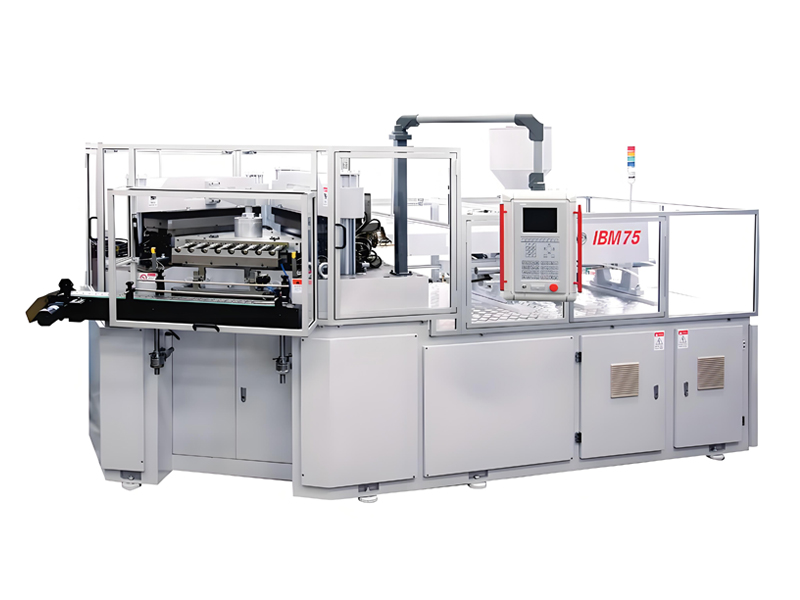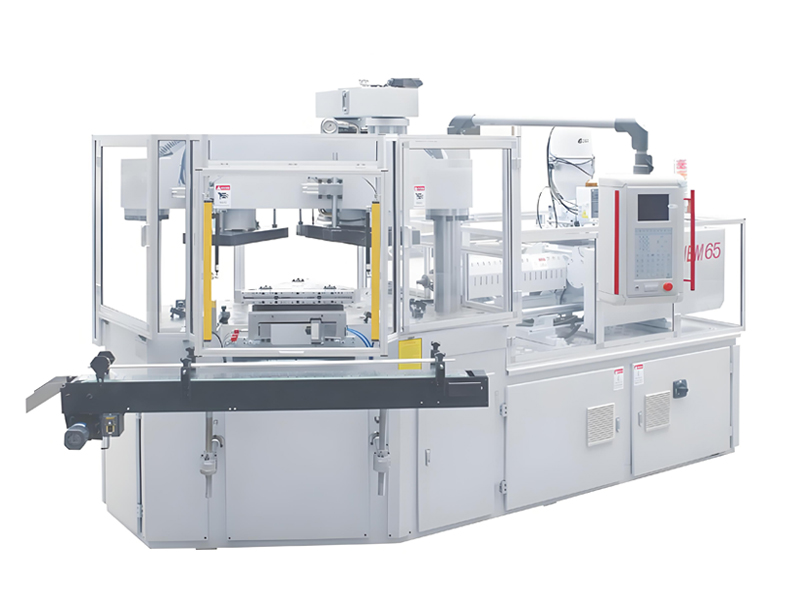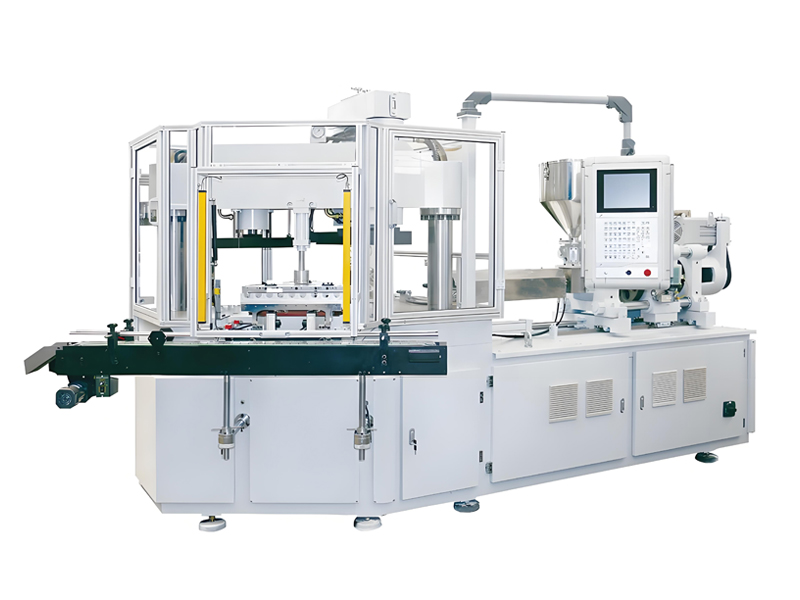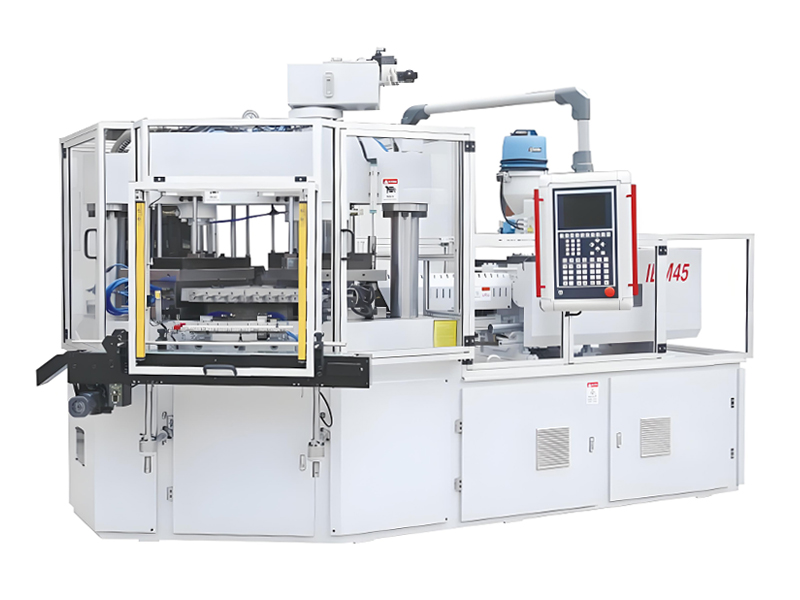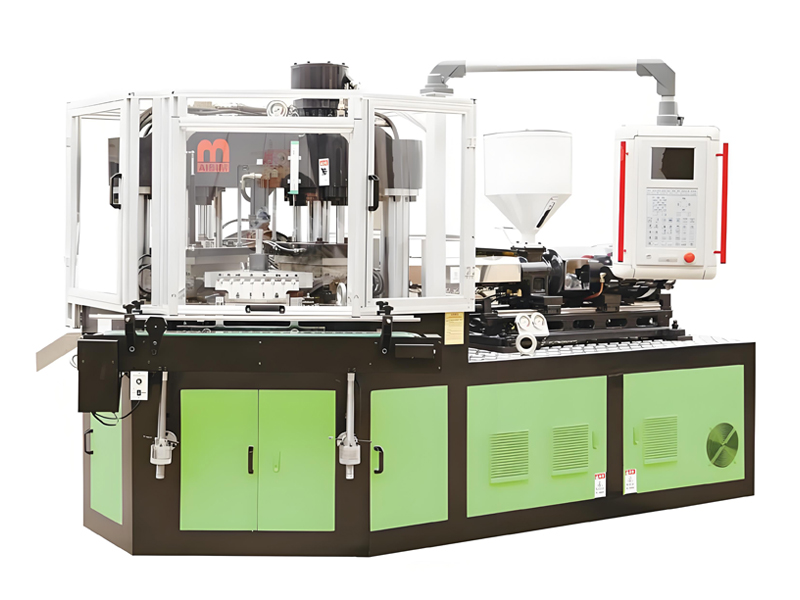
The IBM75 injection blow molding machine is built for one demanding job: producing precision wide-mouth jars and containers from 50ml up to 1000ml in polypropylene and high-density polyethylene, with the finish accuracy, wall uniformity, and material yield that cosmetic, pharmaceutical, food, and personal-care brands expect from a modern production line. Aibim, a Wanplas factory, developed the IBM75 as the large-capacity member of its three-station, one-step injection blow molding family, extending the proven platform from the small 3ml vials up to the 1000ml jar class that conventional machines often struggle to mold cleanly. If your product line needs consistent neck threads, a flash-free body, and a repeatable cycle across a wide range of jar sizes, this guide explains how the IBM75 is engineered, what it can produce, which material to choose, and how to decide whether the IBM75 or the medium-capacity IBM65 is the right fit for your volumes.
Throughout this article we use concrete, production-relevant numbers rather than vague marketing language. You will find the IBM75 specification table, a cavity-and-output matrix for 50ml, 250ml, 500ml, and 1000ml jars, a material selection table for PP and HDPE, a side-by-side comparison with the IBM65, an application map from industry to end product, and a practical selection table that matches your requirement to a recommended model. Every figure reflects Aibim’s documented machine design and typical processing behavior; where a number depends on resin grade, mold design, or cooling layout, we say so explicitly and recommend validation by sample trial.
الحقن blow molding differs from extrusion blow molding in a way that matters most for jars: the parison is injected inside a closed cavity, so the threaded finish and neck are molded to tight tolerance before the part is transferred and blown. That single design choice removes flash, eliminates the bottom pinch weld, and gives the IBM75 a measurable edge in finish quality and scrap reduction for wide-mouth containers. The rest of this article explains how that translates into throughput, cost, and quality on your factory floor.
ماذا يعني الحقن والنفخ للبرطمانات كبيرة السعة
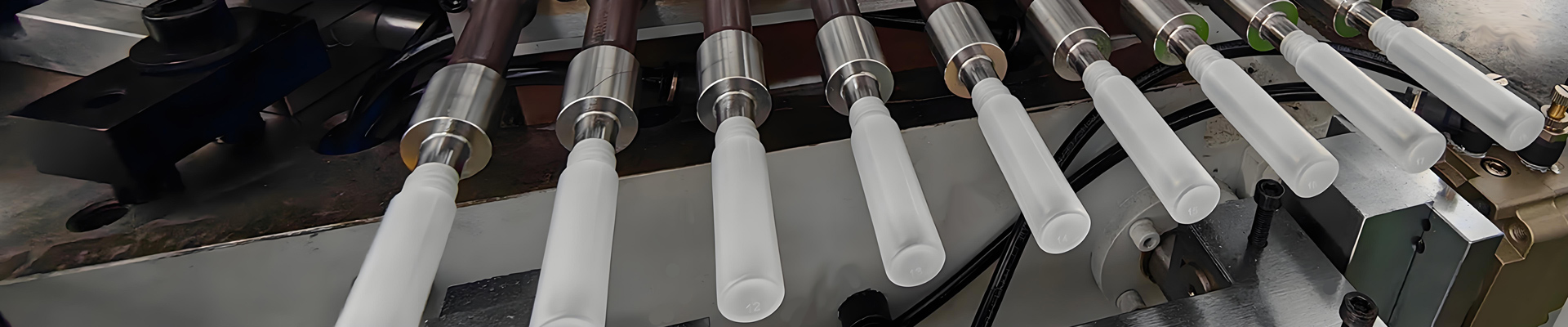
الحقن blow molding combines injection molding and blow molding into a single, continuous sequence performed across three stations on a rotary table. In the first station, the injection unit plasticizes the resin in the barrel and injects a precisely weighted parison around a core rod inside a neck or finish cavity. In the second station, the heated parison on its core rod is transferred into a blow cavity, where compressed air expands it against the cooled mold wall to form the jar body, shoulder, and base. In the third station, the finished, cooled container is stripped from the core rod and ejected. Because the parison is created by injection rather than by extrusion, its weight, wall distribution, and finish geometry are controlled to a degree that extrusion-based processes cannot match for small-to-medium containers.
For large-capacity jars in the 500ml to 1000ml range, this process discipline becomes especially valuable. A wide-mouth jar carries a larger neck and shoulder load, and cosmetic or pharmaceutical users expect a lid to seat squarely without cross-threading. الحقن blow molding molds the neck and thread in a closed cavity, so thread form, seat angle, and inside diameter are repeatable container to container. The body wall can be tuned for stiffness where the jar is handled and thinned where material cost matters, which directly lowers resin consumption on a high-volume line.
The IBM75 extends this principle to the upper end of the Aibim range. Where the IBM65 is positioned for the medium-capacity band, the IBM75 adds clamping force, a larger mold platen, and a bigger injection unit so that 500ml to 1000ml jars can be run with two to four cavities while still holding cycle and finish quality. The machine keeps the same three-station, one-step philosophy, the same PREFILL hydraulic concept, and the same Wanplas service backbone, which means an operator trained on one Aibim machine transitions easily to the other.
النفخ بالحقن هو العملية الصحيحة عندما تهم التشطيب أكثر من المقبض. للبرطمانات واسعة الفوهة حيث يجب أن يغلق الغطاء ويُبرشم بشكل نظيف في كل مرة، يتفوق قولبة العنق بالحقن على قرصه بالبثق.
A practical way to decide between processes is to look at the product shape. Containers with a narrow neck, a simple cylindrical body, and a requirement for a tamper-evident or threaded closure are ideal candidates for injection blow molding. المنتجات that need a built-in handle, an asymmetric profile, or a very large volume beyond roughly one liter may favor extrusion blow molding or other routes. The IBM75 sits squarely in the sweet spot: precise, flash-free jars and containers from 50ml to 1000ml where finish quality and material yield drive the business case.
The rotary indexing of the three-station table is synchronized so that one container is being injected while another is being blown and a third is being ejected, which keeps the IBM75 producing a finished jar on every index rather than only at the end of a long single-stage cycle. The core rod that carries the parison is heated and controlled to a set temperature so the parison stays in the optimal stretch window as it moves from the injection station to the blow station; if it is too cold the wall will not lay out evenly, and if it is too hot the finish can deform before blow. Aibim stores these temperatures as part of the product recipe, so the operator calls up the jar program and the machine returns to the validated window without manual guesswork. Consistency across cavities is the other discipline that separates a production-grade IBM75 from a laboratory machine. Because every cavity shares the same injected parison weight and the same blow air, weight variation between cavities stays tight, and the absence of a pinch weld removes the classic weak point of extrusion-blown containers. For brands that fill by weight or by volume, this uniformity protects fill accuracy and reduces the risk of a short-fill or over-fill at the filling line downstream.
بنية آلة IBM75 والمواصفات الرئيسية
The IBM75 is engineered around a 75-ton clamping system mounted on a single-crossbeam, double-pole clamping framework. This structure enlarges the mold-setting space relative to a conventional frame, which is exactly what a 1000ml jar mold needs: a wider platen, a deeper daylight, and stable force distribution across the parting line. Aibim machines its own structural parts in-house using an owned CNC center, which keeps critical dimensions consistent from machine to machine and shortens the lead time for customized mold bases.
The injection unit uses a reciprocating screw inside a barrel sized for the shot weights that large jars require. Plasticizing capacity is tuned so that the parison is ready within the station dwell time, avoiding the starve or over-shear conditions that degrade PP and HDPE. Aibim’s PREFILL technology, paired with a variable displacement pump pressurizing system in the hydraulic circuit, fills the clamp and injection actuators only when needed, cutting idle losses and contributing to the machine’s minimum 35 percent energy saving over conventional hydraulic machines of the same class.
Below is the core specification set for the IBM75. These values describe the machine as a platform; final cavity count, shot weight, and cycle are confirmed against your specific jar drawing and resin during factory acceptance testing. Treat the table as the engineering baseline for quoting and plant layout.
The enlarged mold-setting space of the single-crossbeam frame is not a cosmetic feature; it lets the IBM75 accept molds with wider platens and deeper cavities than a conventional frame of the same tonnage would allow, which is exactly what a 1000ml jar mold needs for a stable parting line and a well-supported blow cavity. Aibim sizes the tie-pole spacing and guide length so that even a heavy multi-cavity jar mold indexes true, protecting both finish centering and mold life. This structural margin is one of the reasons the IBM75 can scale from eight small jars to a pair of large jars on the same machine without requiring a different clamp design, which simplifies capacity planning for a growing jar portfolio.
المواصفات الفنية الرئيسية لـ IBM75
| Specification | IBM75 Value | Notes for Jar Production |
|---|---|---|
| Clamping force | 75 tons (approx. 735 kN) | Stable parting-line force for 500ml to 1000ml molds |
| Process stations | 3 stations (injection, blow, ejection) | One-step rotary table, no intermediate handling |
| Cavity range | 2 to 8 cavities | Fewer cavities for 1000ml, more for 50ml jars |
| الحقن shot volume (PS) | approx. 280 cm³ | Covers multi-cavity parison weight for large jars |
| Screw diameter | 45 mm | Balanced plasticizing for PP and HDPE |
| Plasticizing capacity | approx. 60 g/s | Sustains cycle without parison starve |
| Max injection pressure | approx. 180 MPa | Fills thin finish sections cleanly |
| Mold platen (H x V) | approx. 380 x 360 mm | Enlarged setting space for wide-mouth molds |
| وقت دورة التجفيف | approx. 6 s | Machine-only baseline, excludes cooling |
| Hydraulic pump motor | 22 kW | Variable displacement pump with PREFILL |
| Heating power | approx. 12 kW | Barrel and nozzle zones for PP/HDPE |
| Total connected power | approx. 34 kW | Actual draw lower with PREFILL savings |
| وزن الماكينة | approx. 4500 kg | Foundation and floor-load planning |
| Footprint (L x W x H) | approx. 3500 x 1500 x 2200 mm | Plan with crane and service clearance |
Safety and compliance are built into the station layout. The stripper station uses a long-distance digital laser sensor for mold safety, and a light curtain guards the personal safety zone, supporting CE certification expectations for the machine. From an operator perspective, the single-crossbeam frame is easy to access for core-rod maintenance, and an SD card stores process parameters so a proven recipe can be carried between machines and re-installed without re-tuning from scratch.
Because Aibim operates its own CNC center for machine parts, structural and motion components are held to a consistent internal standard rather than sourced to the lowest bid. This matters for the IBM75 because a large jar mold exerts meaningful side and clamp loads; tight platen flatness and guide accuracy keep the parting line sealed and the finish centered across the life of the tool. Aibim also designs molds for practical service, with core rods and blow needles that can be removed and inspected without stripping the whole station, which shortens planned maintenance and keeps the line available.
مصفوفة الإنتاج للبرطمانات من 50 مل إلى 1000 مل
Throughput on the IBM75 is governed by two linked variables: how many cavities the jar size allows, and how long the blow-and-cool portion of the cycle takes. Smaller jars accept more cavities and shorter cooling; larger jars need fewer cavities and longer cooling because more mass must solidify before ejection. The matrix below is a typical planning reference for PP and HDPE jars with standard wall sections. Your actual numbers will shift with wall thickness, resin grade, mold cooling channel design, and chiller capacity, so use the table for line balancing rather than as a guaranteed rate.
مرجع تجاويف IBM75 والإنتاج في الساعة
| Jar size | Typical cavities | Cycle time | Pieces per hour | Best-fit material |
|---|---|---|---|---|
| 50 ml jar | 8 cavities | approx. 8 s | approx. 3600 | PP or HDPE |
| 250 ml jar | 6 cavities | approx. 10 s | approx. 2160 | PP or HDPE |
| 500 ml jar | 4 cavities | approx. 12 s | approx. 1200 | PP or HDPE |
| 1000 ml jar | 2 cavities | approx. 15 s | approx. 480 | HDPE or PP |
Reading the matrix, the 50ml jar line is the throughput champion because eight cavities run a short cycle. The 1000ml jar is the opposite end: two cavities and a longer cycle, but each piece carries far more value and resin, and the finish precision is what the customer pays for. A mixed line that runs several sizes across a week should plan changeovers around cavity inserts rather than full mold swaps where possible, because Aibim molds are designed for practical interchange and the SD-card recipe system restores settings instantly after a change.
Cooling dominates the cycle for HDPE in particular, because high-density polyethylene has a slower crystallization and set rate than thin-wall PP. Investing in a properly sized chiller and well-placed mold cooling channels is the single highest-leverage upgrade for IBM75 output. Aibim’s installation and commissioning team reviews cooling demand as part of line setup, and the remote monitoring system can flag when cycle drift suggests a cooling or temperature deviation before it becomes scrap.
When planning a line around the IBM75, most buyers run two or three jar sizes rather than a single size, so changeover time is part of the real output number. Aibim organizes molds so that moving between, say, a 250ml and a 500ml jar can be done with cavity inserts and a recipe call-up instead of a full mold strip, which keeps non-producing time short. Pairing the machine with a central feeding system and a regrind loop for any start-up rejects further improves material efficiency, though the closed parison path already keeps scrap low compared with processes that generate trim flash. A realistic capacity plan therefore counts running cavities, not just the nameplate, and Aibim reviews this with the buyer during line design.
اختيار المادة: PP و HDPE للبرطمانات
For large-capacity jars, polypropylene and high-density polyethylene are the two workhorse resins, and the IBM75 is tuned to run both cleanly. The choice between them is not arbitrary: it flows from the jar’s service condition, the closure type, the need for clarity or opacity, and the regulatory path for food or pharmaceutical contact. The table below summarizes the practical decision factors. Values are typical ranges and shift with grade and additive package, so confirm the selected grade against the resin supplier’s data sheet.
PP مقابل HDPE لبرطمانات IBM75
| Property | البولي بروبيلين (PP) | High-density polyethylene (HDPE) |
|---|---|---|
| Density | approx. 0.90 to 0.91 g/cm³ | approx. 0.94 to 0.97 g/cm³ |
| Stiffness / rigidity | Higher, good stand-up body | Slightly lower, more flexible wall |
| Heat resistance | Higher (hot-fill friendly up to grade limit) | Moderate, lower softening point |
| Chemical resistance | Good for many cosmetics | Excellent, broad chemical tolerance |
| Clarity | Transparent grades available | Naturally opaque |
| Barrier | Better moisture and aroma retention | Good moisture barrier |
| Typical jar use | مستحضرات التجميل cream, pharma, food tubs | Personal care, supplement, food pails |
Process-wise, PP and HDPE share the same IBM75 hardware but want different thermal windows. البولي بروبيلين is processed with a melt temperature typically in the range of 200 to 230 degrees Celsius, while HDPE runs lower, often around 180 to 220 degrees Celsius, with melt temperature confirmed against the grade. Both resins are semi-crystalline, so cooling rate controls warpage and surface quality; PP shrinks a little more than HDPE in finished parts, which the mold designer compensates for in cavity dimensioning. Aibim’s application engineering reviews your resin choice during mold design so the parison weight and blow profile match the material rather than forcing a generic setting.
الغذاء and pharmaceutical contact add a compliance layer. When the selected PP or HDPE grade is a compliant food-contact resin, the IBM75 process yields containers suitable for those applications, with references such as FDA food-contact expectations in the الولايات المتحدة and EU 10/2011 for plastics intended to contact food in Europe. Pharmaceutical secondary packaging and certain primary containers may call for additional documentation and cleanroom handling that sit outside the molding cell. Aibim recommends validating the final container with official test reports from the resin supplier and, where required, from an accredited laboratory, because material compliance is a property of the grade and the quality system, not of the machine alone.
Color and additive integration on the IBM75 follows standard practice for PP and HDPE: a color masterbatch or additive package is metered at the throat, and the screw plasticizes the blend uniformly before injection. Because the parison is injected rather than extruded, color dispersion is consistent from the first cavity to the last, which avoids the shade banding that can appear on long extruded parisons. Buyers running pigmented cosmetic jars should agree the masterbatch let-down ratio and the regrind allowance with Aibim during mold and recipe development, since too high a regrind fraction can shift surface gloss and impact strength on a thin jar wall. Clean color changeover is managed through a purge recipe so one shade does not contaminate the next.
IBM75 مقابل IBM65: اختيار فئة السعة المناسبة
Aibim offers the IBM75 and the IBM65 as two capacity classes of the same three-station platform. The IBM65 is the medium-capacity machine, well suited to jars and containers below roughly 500ml where higher cavity counts and faster cycles per cavity drive throughput. The IBM75 is the large-capacity machine, engineered for 500ml to 1000ml jars that need more clamping force, a wider mold platen, and a larger injection unit. Choosing between them is mostly a question of your dominant product size and your annual volume target, not a question of quality.
مقارنة المواصفات جنبًا إلى جنب
| Parameter | IBM65 (medium capacity) | IBM75 (large capacity) |
|---|---|---|
| Target volume band | 3ml to approx. 500ml | 50ml to 1000ml |
| Clamping force | 65 tons | 75 tons |
| Max cavities (small jar) | Up to 12 (small vials) | Up to 8 (50ml jar) |
| الحقن shot volume (PS) | Smaller parison capacity | approx. 280 cm³ |
| Mold platen | Compact | Enlarged for wide-mouth molds |
| Best use | Medium jars, vials, bottles | Large jars, tubs, containers |
| Shared platform | 3-station, PREFILL, Wanplas service | 3-station, PREFILL, Wanplas service |
The selection table below turns that comparison into a direct recommendation. Match your dominant product and volume to a model, and use the note column to decide when to step up to the IBM75 even if your average size is borderline. If your portfolio spans both bands heavily, Aibim can configure one IBM75 for the large jars and one IBM65 for the medium jars on the same Wanplas service plan, which keeps spare parts and recipes interchangeable.
Requirement to جدول اختيار الموديل
| Your requirement | Recommended model | Why |
|---|---|---|
| Jars 50ml to 250ml, high volume | IBM75 (multi-cavity) | Up to 8 cavities maximize pieces per hour |
| Jars 300ml to 500ml, mixed run | IBM75 or IBM65 | IBM75 for headroom, IBM65 for max cavities |
| Jars 500ml to 1000ml | IBM75 | Only the 75-ton class fits large molds |
| Mostly below 300ml, cost focus | IBM65 | Lower investment, higher cavity count |
| Wide-mouth, heavy-wall tubs | IBM75 | Shot volume and platen support thick walls |
| Future expansion to 1000ml | IBM75 | Avoids a second machine purchase later |
The IBM65 and IBM75 are deliberately built as one platform rather than two unrelated machines, which protects the buyer who grows from medium jars into large jars. The operator interface, the recipe structure, the core-rod format, and the spare-parts list overlap substantially, so a technician trained on the IBM65 is productive on the IBM75 within a shift. For a plant that runs both sizes, this shared platform means one training program, one spare-parts pool, and one service relationship under the Wanplas group, instead of two separate supplier engagements. It also makes a future capacity step less disruptive, because the second machine feels familiar from day one.
الصناعات التطبيقية والمنتجات النهائية
The IBM75 serves four core application fields that Aibim serves across its injection blow molding range: pharmaceuticals, food, drink, and cosmetic and personal care. Within those fields, the large-capacity class is most often specified for jars and containers where the user opens the package by hand, scoops or pumps product, and expects the lid to reseal. The table below maps each industry to concrete end products and the typical material choice on the IBM75.
خريطة من الصناعة إلى المنتج النهائي
| Industry | End product on IBM75 | Typical material | Key requirement |
|---|---|---|---|
| مستحضرات التجميل | Face cream jar, mask jar, balm jar | PP, HDPE | Thread finish, decoration friendly |
| Pharmaceutical | Ointment jar, tablet pot, secondary pack | PP, HDPE | Clean finish, traceable grade |
| الغذاء | Spice tub, honey jar, condiment tub | PP, HDPE | الغذاء-contact compliance |
| Personal care | Body butter jar, scrub jar, sample tub | PP, HDPE | Stiff wall, print surface |
| المشروبات (dry) | Powder tub, scoop container | HDPE, PP | Moisture barrier, reseal |
مستحضرات التجميل brands value the IBM75 because the injected finish supports high-quality printing, hot stamping, and labeling on a flat, flash-free shoulder. Pharmaceutical and food users value the lack of trim scrap and the closed parison path, which reduces the chance of loose flash contaminating the product. Personal-care makers often run the same mold family across 50ml travel jars and 250ml flagship jars, using the IBM75’s cavity flexibility to balance the line. Across all of these, the Wanplas group’s shared quality standards and the open-factory policy let buyers audit the process before committing volume.
تحسين العملية والتحكم في العيوب
Getting consistent jars from the IBM75 is mostly about controlling three things: parison weight and temperature, blow pressure and timing, and cooling uniformity. The parison must be hot enough to stretch but cool enough to hold the finish; blow air must arrive at the right moment and pressure to lay the wall against the cavity; and cooling must be even across all cavities so the batch does not warp or vary in weight. Aibim’s recipe system stores these settings per product, which removes much of the trial-and-error during changeovers.
Common defects in injection blow molding and their typical fixes are summarized below. None of these require the operator to fight the machine; most are resolved by returning the process to the validated window. Because the IBM75 molds the finish by injection, flash is rare, but it can appear if clamp force is set too low for a large mold or if the parison weight is oversized, so those two settings are the first to check on a wide-mouth jar.
مرجع استكشاف أخطاء العيوب وإصلاحها
| Defect | Likely cause | Action on IBM75 |
|---|---|---|
| Short shot / incomplete body | Low melt temp or insufficient shot | Raise barrel temp, verify parison weight |
| Sink mark on base | Local wall too thick, slow cooling | Tune wall profile, increase cooling |
| Warpage after ejection | Uneven cavity cooling | Balance mold cooling channels, chiller check |
| Poor thread / finish | Parison too cold at transfer | Adjust station timing, core-rod temp |
| Surface silver streak | Moisture or trapped gas | Dry resin, check venting and back pressure |
| Flash at parting line | Clamp force low or oversized parison | Raise clamp, trim parison weight |
Wall thickness optimization deserves special attention on large jars because resin is the dominant cost. The IBM75 lets the blow profile thin the side wall where stiffness is not critical while keeping the neck and shoulder robust. Aibim’s mold design team simulates this distribution during development so the finished jar passes drop and stack tests at the lowest practical weight. The result is a lower cost per jar without sacrificing the premium look that cosmetic and pharmaceutical buyers expect.
الجودة control on the IBM75 line should be built into the routine, not reserved for complaints. Aibim recommends a per-shift check of jar weight, finish inside diameter, and thread function on a sample from each cavity, plus periodic drop testing for the target fill and a simple leak or squeeze test for the sealed wall. Because the process stores recipes per product, any drift in weight or dimension shows up first as a recipe deviation that the remote monitoring system can surface, letting the line be corrected before a full batch is at risk. Documenting these checks supports the traceability that food and pharmaceutical buyers expect from their packaging supplier, and it shortens any later investigation if a field issue appears.
كفاءة الطاقة والتزام خدمة Wanplas
The IBM75 is designed to be economical to run, not just to buy. Aibim’s PREFILL technology, combined with a variable displacement pump pressurizing system in the hydraulic circuit, presses the clamp and injection actuators only when the process demands flow. Compared with conventional hydraulic machines of the same clamping class, the IBM75 delivers a minimum energy saving of 35 percent. On a line running two or three shifts, that saving compounds into a meaningful operating-cost reduction over the machine’s life, and it also lowers heat load on the shop floor, which eases the air-handling burden.
Remote operation and maintenance is supported through a monitoring system that lets Aibim engineers review PLC data and process trends, so abnormal drift can be flagged and addressed before it turns into scrap. This is part of the broader Wanplas group approach to connected support, where the same service backbone covers the IBM75, the IBM65, and the IBM55 hybrid electric machine. Owners gain a single point of contact for spare parts, recipes, and upgrades across the Aibim range.
Aibim, a Wanplas factory, backs the IBM75 with a concrete service package rather than vague promises. Before shipment, every machine undergoes factory acceptance testing so the buyer sees it run on the agreed jar and resin. On-site installation and commissioning put the line into production with Aibim engineers present. Operator training covers setup, changeover, and routine maintenance. Remote operation and maintenance support keeps the machine optimized after handover. The shared Wanplas group commitment provides USD 500 free spare parts per year and warranty replacement of damaged parts, and the open-factory policy welcomes buyers to audit the workshop and quality system in person. These commitments are written into the Wanplas brand promise of free parts, transport guarantee, production capacity guarantee, and quality standards, with a refund plus compensation path if quality fails to meet the agreed standard.
ملخص الخدمة والدعم
| الخدمة element | What Aibim provides |
|---|---|
| Factory acceptance test | Run on agreed jar and resin before shipment |
| Installation and commissioning | Engineers on site to start production |
| Spare parts | USD 500 free spare parts per year |
| Training | Setup, changeover, routine maintenance |
| Remote operation and maintenance | PLC data review and drift alerting |
| Open factory | Buyers welcome to audit the workshop |
| Warranty | Free replacement of damaged parts in warranty |
الأسئلة الشائعة
ما نطاق القدرة الإنتاجية لآلة قولبة النفخ بالحقن IBM75؟
The IBM75 covers finished container volumes from 50ml up to 1000ml, with cavity counts scaling from eight cavities for 50ml jars down to two cavities for 1000ml jars. Typical hourly output ranges from roughly 480 pieces per hour for single-pair large jars to about 3600 pieces per hour for multi-cavity small jars, depending on material, wall thickness, and cooling configuration.
ما المواد التي يمكن لـ IBM75 معالجتها للبرطمانات والحاويات؟
For large-capacity jars the IBM75 is optimized for polypropylene (PP) and high-density polyethylene (HDPE), both of which deliver the rigidity, chemical resistance, and food-contact compliance required for cosmetic, pharmaceutical, and food packaging. The broader injection blow molding process also supports PE, PS, ABS, SAN, TPU, PC, and PCTG when configured for other product families.
كيف تختلف قولبة النفخ بالحقن عن قولبة النفخ بالبثق للبرطمانات واسعة الفوهة؟
الحقن blow molding injects a precise parison in a closed mold before blowing, so the finish, neck, and thread are molded to tight tolerance with no flash and no trim scrap. Extrusion blow molding forms a parison by extrusion and pinches a bottom weld, which is well suited to handled or asymmetric bottles but produces flash and a welded base. For precision wide-mouth jars, injection blow molding gives superior finish accuracy and material yield.
ما هي قوة الإغلاق وعدد التجاويف التي يدعمها IBM75؟
The IBM75 uses a 75-ton clamping system built on a single-crossbeam, double-pole clamping framework with an enlarged mold-setting space. It runs a three-station rotary table and supports cavity layouts from two up to eight depending on container size, with a maximum shot volume around 280 cubic centimeters in polystyrene and a plasticizing capacity near 60 grams per second.
كيف أختار بين IBM65 وIBM75؟
Choose the IBM65 when your products sit in the medium-capacity band below roughly 500ml and you prioritize higher cavity counts and throughput per cavity. Choose the IBM75 when your jars reach 500ml to 1000ml, require a wider neck and larger mold platen, or when you need the additional clamping force and shot volume that the larger machine provides. Both share the same three-station one-step process and Wanplas service platform.
ما دعم ما بعد البيع الذي توفره Aibim؟
Aibim, a Wanplas factory, provides factory acceptance testing before shipment, on-site installation and commissioning, operator training, remote operation and maintenance support, an open-factory visit policy, and a shared Wanplas group commitment of USD 500 free spare parts per year plus warranty replacement of damaged parts.
هل IBM75 مناسبة لتطبيقات ملامسة الطعام والمستحضرات الصيدلانية؟
Yes. When running compliant PP or HDPE grades, IBM75 containers meet the material and process requirements for food and pharmaceutical contact applications. Relevant references include FDA food-contact expectations and EU 10/2011 for plastics intended to contact food. Final compliance depends on the selected resin grade and the buyer’s documented quality system, which should be validated with official test reports.
كم توفر آلة IBM75 من الطاقة مقارنة بالآلات الهيدروليكية التقليدية؟
The IBM75 applies Aibim’s PREFILL technology together with a variable displacement pump pressurizing system in the hydraulic circuit, which reduces idle and pumping losses. The result is a minimum energy saving of 35 percent compared with conventional hydraulic machines of equivalent clamping class, with the exact figure varying by cycle, cooling load, and auxiliary configuration.
الخلاصة
The IBM75 injection blow molding machine is Aibim’s answer to the large-capacity jar problem: precision wide-mouth containers from 50ml to 1000ml in PP and HDPE, molded on a three-station, one-step platform that removes flash, controls wall thickness, and repeats the finish every cycle. Its 75-ton clamping system, enlarged mold platen, and roughly 280 cubic centimeter injection unit give it the headroom that 500ml to 1000ml jars demand, while the cavity-and-output matrix shows a clear path from 3600 small jars per hour down to 480 large jars per hour depending on size and cooling.
Material choice between PP and HDPE is settled by the service condition, with PP favored for stiffness and heat resistance and HDPE favored for chemical tolerance and opacity, both running cleanly on the same machine with grade-appropriate thermal windows. The IBM75 pairs naturally with the IBM65 for mixed portfolios, and the selection table in this guide points you to the right class based on your dominant jar size and volume. Aibim, a Wanplas factory, completes the package with factory acceptance testing, installation and commissioning, training, remote operation and maintenance, an open-factory policy, and the shared Wanplas commitment of USD 500 free spare parts per year backed by warranty replacement.
From a total-cost perspective, the IBM75 rewards buyers who look past the purchase price. The flash-free process cuts resin scrap, the PREFILL hydraulics cut energy, the stored recipes cut changeover loss, and the Wanplas service commitment caps spare-parts surprise through the USD 500 free parts allowance. For a brand scaling from a few hundred thousand jars a year toward several million, those savings compound faster than the headline machine cost, which is why Aibim positions the IBM75 as a capacity investment rather than a single purchase. The right way to see the number is cost per good jar, not cost per machine.
If you are planning a 50ml to 1000ml jar or container line and want to confirm cycle, cavity count, and cost per piece for your specific product, send your jar drawing and target volume to the Aibim team. We will recommend the right IBM model, run a sample on the agreed resin, and invite you to visit the factory to witness the process and review the quality system before you commit. That is the most reliable way to turn the specifications in this article into a production line that meets your finish, throughput, and budget targets.