What a Full Turnkey IBM Solution Means
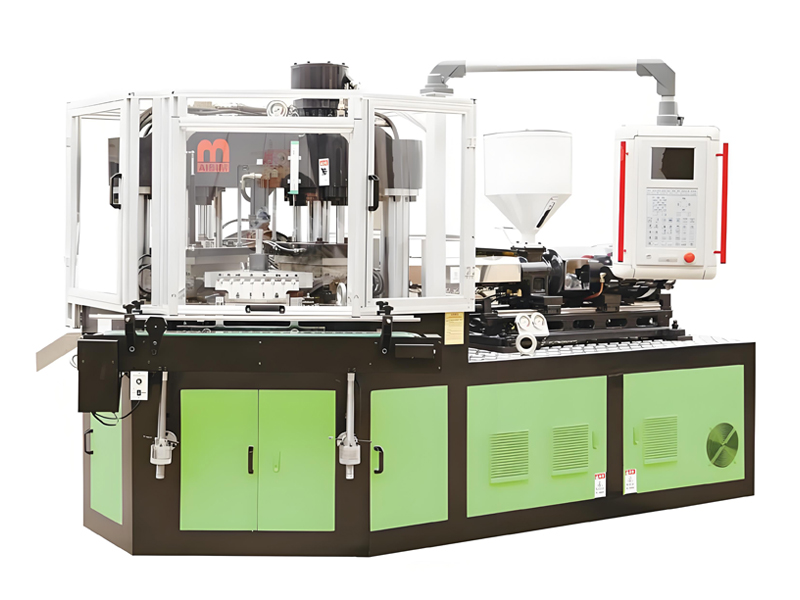
A full turnkey IBM solution is more than a single injection blow molding machine sitting on a truck. It is a complete, production-ready system that hands the buyer a running line rather than a collection of loose components. Aibim, a Wanplas factory with 12+ years of experience in plastic machinery manufacturing, positions the turnkey offer as the fastest and lowest-risk route from a product concept to commercial bottles. With its own CNC machining center, a new factory purchased in 2022, and an annual production capacity of more than 100 lines, Aibim treats the turnkey package as a single accountable deliverable: one supplier, one responsibility boundary, one acceptance point.
The core idea of turnkey delivery is accountability. When a buyer sources the machine from one vendor, the mold from another, the auxiliary equipment from a third, and the process know-how from somewhere else, every interface becomes a finger-pointing opportunity the first time a bottle comes out with a defect. Aibim closes those gaps by bundling the host machine, the full mold set, the validated process formula, the auxiliary equipment, the training, the installation, and the acceptance testing into one scope. The buyer receives a line that has already produced good bottles under agreed conditions before it leaves the factory, and a team that knows how to run it after it arrives.
This article explains every element of that bundle. It covers the three-station one-step injection blow molding principle, the real Aibim machine series and their specifications, the mold design rules, the material-specific formula pack, the operator training system, the installation and acceptance workflow, defect troubleshooting, capacity planning, model selection, application industries, and the service commitments that protect the investment. By the end, a procurement or engineering manager should be able to scope a project, brief a team, and evaluate a supplier proposal with confidence.
Turnkey Delivery Scope at a Glance
The table below defines exactly what a standard Aibim turnkey IBM package includes, what is offered as an option, and what remains the customer’s responsibility. The boundary is stated up front so that project planning, utility preparation, and budget allocation are unambiguous.
| Scope Item | Included | Optional | Customer-Supplied |
|---|---|---|---|
| IBM host machine (injection + blow + ejection) | Yes | Higher cavitation variants | — |
| Preform mold (injection cavity block) | Yes | Spare cavity set | — |
| Blow mold (bottle forming cavity) | Yes | Multi-cavity upgrade | — |
| Core rods (transfer mandrels) | Yes, full set + spares | Coated upgrade | — |
| Hopper dryer / dehumidifying dryer | Yes | Central drying | — |
| Vacuum loader / feeder | Yes | Central feeding | — |
| Mold temperature controller | Yes | Oil unit for high temp | — |
| Industrial water chiller | Yes | Larger capacity | — |
| Blow air compressor | Optional | Oil-free high-pressure | Often customer-supplied |
| Conveyor and bottle collector | Yes | Inline inspection | — |
| Process formula and parameter pack | Yes | Color masterbatch tuning | — |
| Operator training program | Yes | Extended on-site | — |
| Installation and commissioning | Yes (engineer on-site) | Remote-first option | Foundations, utilities |
| Acceptance testing (FAT and SAT) | Yes | Third-party witness | — |
| First-year spare parts support | Yes (USD 500 free parts/year) | Extended kit | — |
The boundary between “optional” and “customer-supplied” is the most important planning item. Aibim typically supplies the blow air compressor as an option rather than standard, because many factories already operate a plant air system; the buyer should confirm available pressure and flow before contract signature so the line is not delayed by a missing utility.
How the Three-Station One-Step IBM Process Works
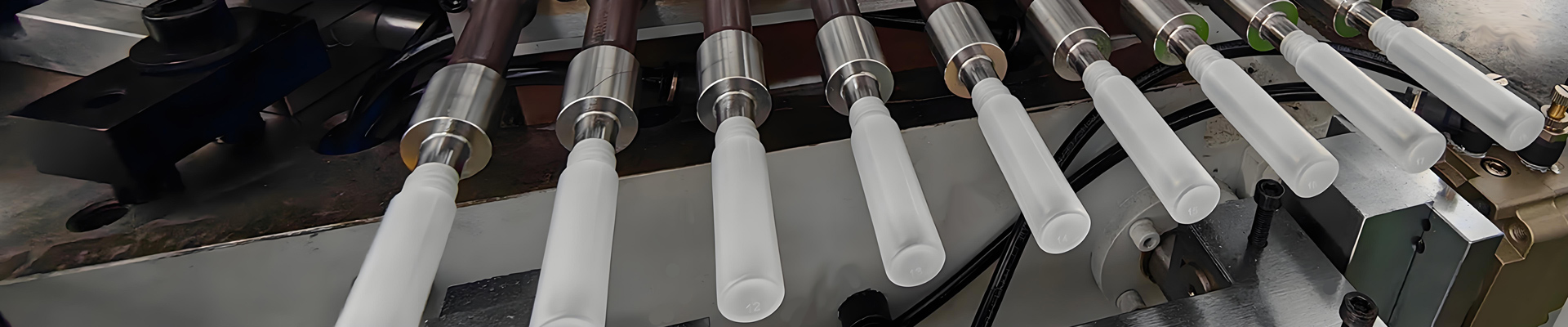
Injection blow molding is a one-step, three-station process that combines injection molding and blow molding into a single closed loop on one machine. The defining feature is the core rod, a precision mandrel onto which the parison is injected and on which the parison travels between stations. Because the bottle is formed entirely inside steel cavities, the process produces containers with excellent neck finish accuracy, tight dimensional control, and no flash that would require trimming. This is the central reason pharmaceutical, cosmetic, and food brands choose IBM over processes that leave a scrap tail.
Injection Station: Parison and Preform Formation
In the first station, the injection unit plasticizes the resin in the barrel and injects it into the preform mold around the core rod. The preform mold shapes the neck finish, the thread, and the tamper-evident band with full steel-surface fidelity, while the body is formed as a thick-walled parison sized to be blown out later. The core rod acts as the internal cavity for the parison interior and as the transfer device between stations. Gate design here determines where the material enters and whether a cold slug or needle-valve cut is used. Because the neck is molded, not cut or welded, its geometry is reproducible bottle after bottle.
Blow Station: Bottle Forming by Inflation
After the injection station, the rotating table indexes the core rod (still carrying the warm parison) to the blow station. Here the parison is inflated against the cooled blow mold cavity by compressed air at a typical pressure between 0.6 MPa and 1.0 MPa. For machines configured as injection stretch blow molding, a stretch rod extends to orient the polymer biaxially, which improves clarity, barrier, and top-load for materials such as PET. The bottle cools against the steel wall and sets to the final shape. There is no scrap, no cutoff, and no post-mold trimming step.
Ejection Station: Demolding and Discharge
The third station receives the finished bottle on the core rod and strips it off, usually by an air-assisted stripper or mechanical take-off, then drops or conveys it to the collection point. Aibim machines use a stripper station with a long-distance digital laser sensor for mold safety and a light curtain for personal safety, consistent with CE certification requirements. The empty core rod returns to the injection station and the cycle repeats. One rotation of the indexing table produces one finished bottle per cavity per cycle.
Why Neck Accuracy Beats Extrusion Blow Molding
In extrusion blow molding, the parison is extruded from a die head and pinched at the base, which leaves a weld line and a tail that must be removed by deflashing. The neck is formed by a blow pin rather than a steel cavity, so thread accuracy and sealing consistency are harder to control. By contrast, IBM molds the neck as a precision injection-molded feature, giving pharmaceutical and cosmetic customers a container whose cap seals predictably on every unit. For tamper-evident and child-resistant closures, that repeatability is not a luxury; it is a compliance requirement.
Aibim Machine Series for Turnkey Projects
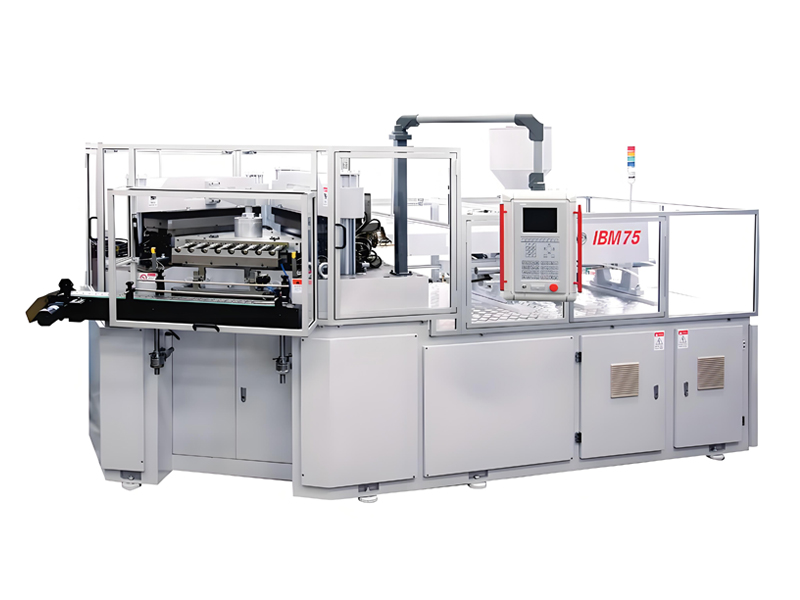
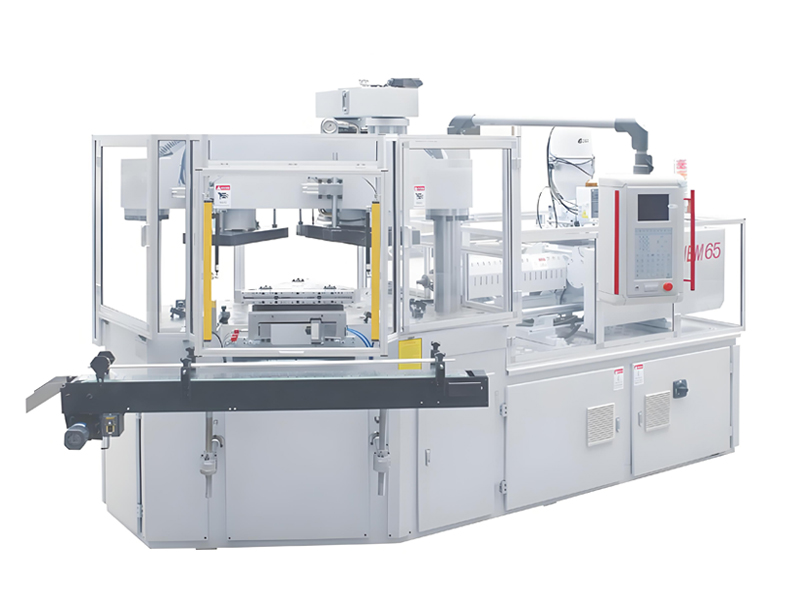
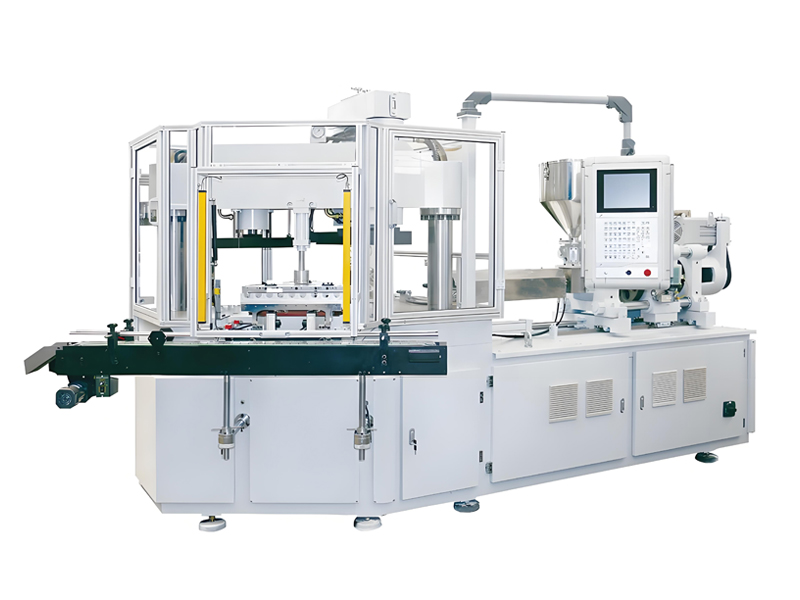
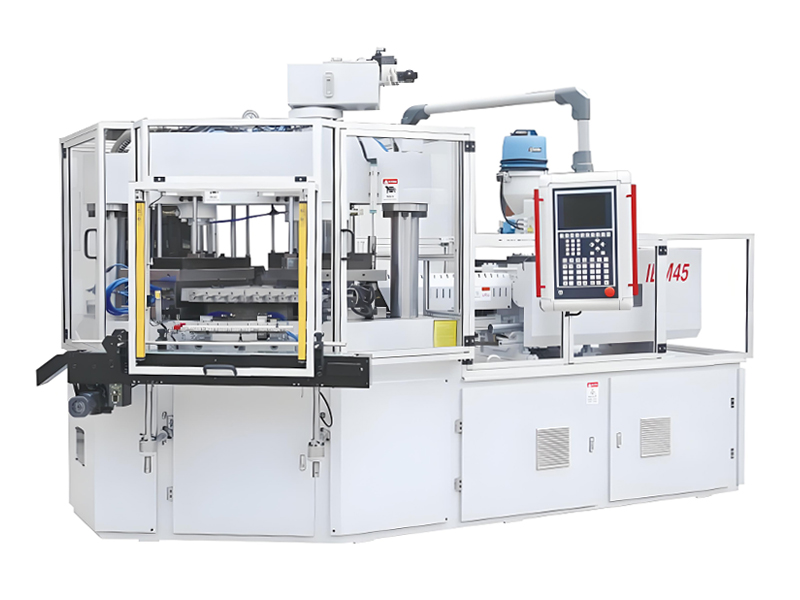
Aibim builds three core platforms for the turnkey IBM program: the IBM75, the IBM65, and the IBM55 Hybrid Electric. All three are three-station, one-step machines covering containers from 3 ml to 1000 ml. The IBM75 is the high-output, large-format platform; the IBM65 is the mid-range workhorse; and the IBM55 Hybrid Electric is the compact, energy-efficient platform for small medical, cosmetic, and oral-care bottles. The specifications below are typical values for standard configurations and will be confirmed against the exact mold and material in the project quotation.
IBM75 Injection Blow Molding Machine
The IBM75 is the largest standard platform in the Aibim range, built for containers from 50 ml to 1000 ml and for high cavitation where output matters more than floor-space economy. Its single-crossbeam, double-pole clamping framework enlarges the mold-setting space and stabilizes the platen during high-speed cycling. With PREFILL technology and a variable-displacement pump in the hydraulic system, it saves a meaningful share of energy compared with conventional hydraulic machines, while the SD-card parameter storage lets recipes be saved and re-installed across multiple machines.
| Parameter | IBM75 Typical Value |
|---|---|
| Clamping force | 75 ton (approximately 750 kN) |
| Screw diameter | 45 mm |
| Shot size (max) | approximately 270 cm³ / 245 g (PP) |
| Cavity number range | 2 to 12 |
| Product volume range | 50 ml to 1000 ml |
| Installed power | approximately 38 kW |
| Cycle time | 10 to 14 seconds |
| Machine dimensions (L x W x H) | 4.3 x 1.6 x 2.3 meters |
| Machine weight | approximately 9.8 ton |
IBM65 Injection Blow Molding Machine
The IBM65 is the balanced mid-size platform, covering 15 ml to 500 ml containers with flexible cavitation for both pharmaceutical and cosmetic runs. It shares the same clamping framework philosophy as the IBM75 and the same PREFILL hydraulics, making it a common choice when a plant needs one machine that can serve several product families. The wider useful cavity range lets a buyer standardize on a single model for most of the catalog.
| Parameter | IBM65 Typical Value |
|---|---|
| Clamping force | 65 ton (approximately 650 kN) |
| Screw diameter | 40 mm |
| Shot size (max) | approximately 190 cm³ / 172 g (PP) |
| Cavity number range | 2 to 10 |
| Product volume range | 15 ml to 500 ml |
| Installed power | approximately 30 kW |
| Cycle time | 9 to 12 seconds |
| Machine dimensions (L x W x H) | 3.9 x 1.45 x 2.2 meters |
| Machine weight | approximately 7.6 ton |
IBM55 Hybrid Electric Injection Blow Molding Machine
The IBM55 Hybrid Electric is the compact platform for small containers from 3 ml to 250 ml, where precision and energy efficiency matter more than maximum cavitation. The hybrid electric drive reduces installed power and stabilizes repeatability, which is valuable for low-volume, high-value medical and cosmetic items where color and dimension consistency are scrutinized. It is the natural starting point for a new entrant that wants a turnkey line without committing to the footprint and power of the larger platforms.
| Parameter | IBM55 Hybrid Typical Value |
|---|---|
| Clamping force | 55 ton (approximately 550 kN) |
| Screw diameter | 35 mm |
| Shot size (max) | approximately 130 cm³ / 118 g (PP) |
| Cavity number range | 2 to 8 |
| Product volume range | 3 ml to 250 ml |
| Installed power | approximately 22 kW (hybrid servo) |
| Cycle time | 8 to 11 seconds |
| Machine dimensions (L x W x H) | 3.5 x 1.35 x 2.05 meters |
| Machine weight | approximately 6.2 ton |
All three platforms are engineered and manufactured with Aibim’s own CNC center, which shortens lead time for spare parts and allows tight control over the precision components that determine bottle quality. The new 2022 factory expands this capacity to more than 100 lines per year.
Mold Design and Tooling Package
The mold set is the heart of any IBM turnkey project. It consists of three coordinated components: the preform mold that shapes the parison and neck on the core rod, the blow mold that forms the final bottle, and the core rods that carry the parison between stations. Aibim designs and builds these as a matched set so that the neck transfer, cooling balance, and wall distribution are optimized together rather than bolted together from mismatched sources.
Core Rod Design and Coating
The core rod is the most stressed and most critical tooling element. It must withstand repeated thermal cycling, injection pressure, and the mechanical force of stripping the finished bottle. Core rods are typically made from a through-hardened hot-work steel and finished to a fine surface so the bottle interior releases cleanly. For sticky or clear materials, a hard functional coating reduces adhesion and extends the interval between maintenance sessions. Because the core rod defines the internal shape and the neck bore, its dimensional stability directly controls whether caps seat correctly.
Preform Mold Gate and Runner System
The preform mold uses either a needle-valve hot runner or a cold runner. A needle-valve hot runner gives a clean gate with minimal vestige and is preferred for cosmetic and medical bottles where any gate blemish is unacceptable. A cold runner is simpler and lower cost but leaves a small cold slug that must be managed. Cavity count and balanced runner layout decide whether every preform fills at the same pressure and temperature; an unbalanced runner produces cavitation-to-cavitation weight variation that shows up later as bottle-weight standard deviation. Aibim balances the runner hydraulically and thermally during mold validation.
Neck Thread, Tamper Band, Venting, and Cooling
The neck thread and tamper-evident band are formed in the preform mold with full steel fidelity, which is why IBM neck quality is superior to cut-neck processes. Venting must be placed so air escapes as the parison forms; poor venting causes short shots and burn marks at the neck. Cooling is decisive: the blow mold is water-cooled, and the core rod has internal cooling channels that pull heat from the parison interior. Balanced cooling shortens the cycle and reduces residual stress that can cause post-mold warpage. Mold steel is selected by duty: pre-hardened mold steel for general cavities, stainless grades for corrosive or medical applications, and hardened hot-work steel for core rods.
Mold Life and Maintenance Interval
Mold life depends on material abrasiveness, runner type, and maintenance discipline. A well-maintained preform and blow mold set will run for a very large number of cycles before rework. The practical limit is usually surface wear and dimensional drift rather than sudden failure. Aibim supplies a maintenance schedule as part of the turnkey package: routine cleaning, core rod inspection, gate tip checks, and cooling-channel descaling at defined intervals. Keeping to that schedule is the single biggest factor in holding bottle-weight consistency over years of production.
Process Formula and Parameter Pack
A process formula is the complete set of machine settings that reliably makes a good bottle from a specific resin. Delivering it as part of the turnkey package means the buyer does not start from a blank screen. Aibim provides a validated starting recipe for the contracted material, tuned on the actual mold during factory acceptance, and stored on the SD card for re-installation. The table below gives representative parameter windows for the main IBM materials; the final values are optimized per mold and confirmed during acceptance.
Material-Specific Drying Requirements
Hygroscopic materials must be dried before they enter the barrel, because moisture turns to steam in the melt and causes splay, hazing, and weak neck definition. PET is the strictest case: it must be dried to below 50 ppm moisture at a dew point of -40 degrees C, typically for four to six hours, before stretch blow. PETG, PLA, and some clear styrenic resins also need desiccant drying, while PP and PE are essentially non-hygroscopic and need only hopper warming to drive off surface moisture. The formula pack states the exact dryer setpoint and residence time for the contracted resin.
| Material | Barrel Temp (feed to front, C) | Melt Temp (C) | Injection Pressure (MPa) | Holding Pressure (MPa) | Cooling Time (s) | Blow Pressure (MPa) | Drying Requirement |
|---|---|---|---|---|---|---|---|
| PP | 200 / 220 / 230 / 240 | 230 to 250 | 80 to 120 | 40 to 70 | 4 to 8 | 0.7 to 0.9 | Hopper warm, 80 C, 2 h (optional) |
| HDPE / LDPE | 160 / 180 / 200 / 210 | 200 to 220 | 70 to 110 | 35 to 60 | 5 to 9 | 0.6 to 0.8 | Not required |
| PET (via stretch) | 260 / 270 / 280 / 285 | 270 to 285 | 90 to 130 | 50 to 80 | 3 to 6 | 0.8 to 1.0 | Dew point -40 C, below 50 ppm, 4 to 6 h |
| PETG / PCTG | 220 / 230 / 240 / 245 | 230 to 250 | 80 to 120 | 40 to 70 | 4 to 7 | 0.7 to 0.9 | 65 C, 3 to 4 h, dew point -40 C |
| PS | 180 / 200 / 210 / 220 | 200 to 230 | 70 to 110 | 35 to 60 | 4 to 7 | 0.6 to 0.8 | 70 C, 1 to 2 h (optional) |
| PLA (bio-based) | 170 / 180 / 190 / 195 | 185 to 205 | 60 to 100 | 30 to 55 | 4 to 8 | 0.6 to 0.8 | 80 C, 3 to 4 h, dew point -40 C, below 250 ppm |
These windows are starting points, not final recipes. The barrel profile, injection speed, and holding pressure are fine-tuned during factory acceptance against the real mold so the buyer receives numbers that already produce good bottles. Saving those numbers to the SD card means a second identical machine can be brought online with the same recipe in minutes.
Material Adaptation for Regulated Applications
Injection blow molding serves markets where material purity and consistency are regulated, not optional. The turnkey formula pack is therefore written around the behavior of each resin family and the cleanliness the application demands. Aibim machines process PE, PP, PS, ABS, SAN, clear styrenic resin, PC, PETG/PCTG, and, in stretch configuration, PET and bio-based PLA.
Medical-Grade PP and Clear Styrenic Resin
Medical and pharmaceutical bottles are most often made from medical-grade PP with a melt flow rate in the range of 20 to 40 g per 10 minutes, which balances flow for thin necks with enough stiffness for the body. Clear styrenic resin (often called K-resin in the trade) is used where glass-like clarity is needed for unit-dose and diagnostic vials, though it is softer and less chemical-resistant than PP. For containers that contact the body or medication, biocompatibility is documented against USP Class VI and ISO 10993 as applicable; the resin supplier provides the official test data and the molder maintains a clean, controlled process so extractables stay within the validated envelope.
PET and PETG via Stretch Blow
PET is processed on Aibim I(S)BM machines with in-line stretch, which orients the polymer and yields clear, strong bottles suitable for water, beverage, and some pharmaceutical applications. The intrinsic viscosity is typically in the range of 0.72 to 0.84 dL/g; outside that window the stretch behavior and bottle properties shift. PETG and its copolymer PCTG are processed without stretch for clarity and impact, useful for cosmetic and diagnostic packaging where a glossy, amorphous look is wanted. Both require strict drying, and both reward a clean, low-shear barrel profile that avoids thermal degradation.
Cleanliness, Extractables, and Compliance
For pharmaceutical and food contact, the documented chain is resin certification, clean conveyance, controlled drying, and a validated process with minimal residence time at temperature. The buyer should request the resin’s food-contact and biocompatibility documentation and confirm the local regulatory framework, because the machine maker supplies the process, not the regulatory certificate. Aibim supports this by keeping the material path clean, avoiding unnecessary shear, and documenting the process window that was accepted during factory testing.
Operator Training System
A line is only as good as the people who run it. The turnkey package includes a structured operator training program so the buyer’s team can start production confidently and maintain quality without depending on the supplier for every adjustment. Training is modular, hands-on, and assessed, and it is delivered both at the factory during acceptance and on-site during commissioning.
| Training Module | Duration | Assessment Method | Target Position |
|---|---|---|---|
| Safety and lockout procedure | 0.5 day | Written quiz + demonstration | All operators |
| Start-up and shut-down SOP | 0.5 day | Supervised run | Line operator |
| Parameter adjustment and recipe call-up | 1 day | Practical test on live machine | Senior operator |
| Mold change and color change | 1 day | Timed changeover | Mold technician |
| Daily maintenance and lubrication | 0.5 day | Checklist audit | Maintenance staff |
| Fault diagnosis and troubleshooting | 1 day | Scenario drill | Senior operator / technician |
| Quality judgment and sampling | 0.5 day | Defect identification test | QC inspector |
The program totals roughly five days of combined instruction, scaled up or down by the buyer’s staffing plan. Every trainee receives the standard operating procedures in writing, and the recipe used for acceptance is documented so the team can reproduce the validated window without guesswork.
Installation and Commissioning Workflow
Installation and commissioning convert a shipped machine into a running line. Aibim dispatches an engineer for on-site work, and the buyer prepares the foundation, power, water, air, and drainage in advance so the window is not lost to utility gaps. The sequence below is the standard turnkey flow.
- Arrival acceptance. Check the shipment against the packing list, inspect for transit damage, and confirm the scope items are present.
- Positioning and leveling. Place the machine on the prepared foundation and level the frame so the indexing table rotates true.
- Utility connection. Connect power, cooling water, plant air, and any drains per the supplied utility schedule. (The dedicated workshop power, floor area, and environment plan for this line are handled as a separate, lighter preparation topic and are summarized only briefly here.)
- No-load running. Run the machine without molds to verify motion, safety devices, and control logic.
- Trial with molds. Mount the preform mold, blow mold, and core rods, then run with material to confirm filling and blowing.
- First-article confirmation. Inspect the first bottles for neck, wall, weight, and appearance against the drawing.
- Continuous run acceptance. Run the agreed number of cycles and record output, good rate, and stability.
- Capacity and yield sign-off. Confirm the line meets the contracted cavitation, cycle, and good-bottle targets, then hand over.
This workflow is mirrored at the factory during FAT, so by the time the machine reaches the buyer’s floor, the process is already proven and the on-site step is verification rather than discovery.
Factory and Site Acceptance Standards
Acceptance is where the turnkey promise is measured. Aibim applies two gates: factory acceptance testing at the Aibim plant before shipment, and site acceptance testing after installation at the buyer’s plant. The criteria are agreed in the contract and recorded in a report signed by both sides.
| Acceptance Metric | Typical Target | How It Is Measured |
|---|---|---|
| Continuous run duration | Several hours at contracted cavitation | Timed production log |
| Good-bottle rate | High, contract-defined percentage | Sampled inspection |
| Cycle time attainment | Within agreed tolerance | Cycle counter over the run |
| Bottle-weight standard deviation | Tight, cavity-to-cavity | Weighing sampled bottles |
| Visual appearance | No flash, no haze, clean neck | Visual and gauge check |
| Noise and energy | Within declared envelope | Sound meter and power meter |
Because the same criteria are checked at both FAT and SAT, a passing factory test is a strong predictor of a smooth site test. The report also becomes the baseline for future maintenance: if bottle weight starts to drift, the acceptance standard tells the team what good looked like.
Common Defects and Countermeasures
Even a validated process can drift, and the operator training covers how to read the early signs. The table below maps the most common IBM defects to their likely causes and the first corrective action, so a line can be recovered quickly without a service call.
| Defect | Likely Cause | Countermeasure |
|---|---|---|
| Neck flash or fin | Worn neck cavity, excess injection pressure | Inspect and refurbish cavity; lower injection pressure |
| Core rod sticking | Resin buildup, poor coating, insufficient cooling | Clean rod, check coating, raise internal cooling |
| Wall thickness variation | Unbalanced runner, off-center parison | Rebalance runner, check core rod alignment |
| Bottle haze | Moisture, overheat, degraded resin | Verify drying, lower melt temp, shorten residence |
| Sink mark | Insufficient holding, hot local section | Raise holding pressure or time, improve cooling |
| Bottom pinhole | Trapped gas, contamination, thin base | Improve venting, clean resin, adjust parison |
| Ejection difficulty | Under-cooled bottle, stripped too early | Extend cooling, verify stripper timing |
| Color difference | Masterbatch letdown drift, batch change | Standardize let-down, re-confirm recipe |
Most of these defects trace back to three variables: temperature balance, cooling time, and resin condition. The formula pack sets the proven window, and the training teaches operators to move one variable at a time rather than chase the symptom.
Capacity Calculation and Output Planning
Capacity is the product of cycle time, cavity count, and effective operating hours, discounted by the real-world efficiency known as overall equipment effectiveness. A simple planning formula is: bottles per hour equals cavities multiplied by 3600 divided by cycle time in seconds. Effective output then applies the operating hours and an efficiency factor that accounts for changeovers, minor stops, and planned maintenance.
| Model | Cavities | Cycle (s) | Bottles / Hour | Per 8h Shift | Per Month (2 shifts, 25 days) |
|---|---|---|---|---|---|
| IBM75 | 8 | 12 | 2400 | 19200 | 960000 |
| IBM65 | 6 | 11 | 1963 | 15709 | 785450 |
| IBM55 Hybrid | 4 | 10 | 1440 | 11520 | 576000 |
The monthly figures above are theoretical maxima at continuous running. In practice, overall equipment effectiveness of 75 to 85 percent is a realistic planning assumption once changeovers, start-up loss, and scheduled maintenance are included. Changeover time between products is a major lever: a faster, better-documented mold change directly raises effective output more than a slightly shorter cycle. That is why the training program drills timed changeovers and why the SD-card recipe storage matters for repeatability.
Selection Guide: Match Your Product to an Aibim Model
Choosing the right model starts from the product, not the machine. Volume, target output, material, and cavitation together point to one Aibim platform. The table below is a planning aid; the final recommendation is confirmed by Aibim engineering against the real bottle drawing and resin.
| Product Volume | Target Output | Material | Cavity Range | Recommended Aibim Model |
|---|---|---|---|---|
| 3 to 30 ml | Medium to high | PP, PE, PS, clear styrenic | 2 to 8 | IBM55 Hybrid Electric |
| 15 to 150 ml | Medium to high | PETG, PET (stretch), PP | 2 to 10 | IBM65 |
| 150 to 500 ml | Medium | PP, HDPE, PETG | 2 to 10 | IBM65 or IBM75 |
| 500 to 1000 ml | High | HDPE, PP, wide-mouth | 2 to 12 | IBM75 |
| Cosmetic vial, any small size | Flexible | PETG, clear styrenic, PP | 2 to 8 | IBM55 Hybrid or IBM65 |
| Pharma pill or oral bottle | Medium to high | PP, HDPE | 2 to 12 | IBM65 or IBM75 |
When output is the dominant constraint, move up a platform and add cavities; when precision and energy are dominant, the IBM55 Hybrid is usually the right answer even at lower volume. Aibim engineers will confirm the exact cavitation that fits the platen and shot size so the quoted cycle is achievable.
Application Industries and End Products
Aibim’s turnkey IBM lines serve applications where the neck, hygiene, and appearance of a small container decide product quality. The real application fields built into the Aibim program are pharmaceuticals, food, drink, and cosmetics, and they translate into concrete end products that buyers recognize immediately.
In pharmaceuticals, the lines make medicine bottles, oral liquid bottles for syrup and suspension, and eye drop bottles where a precise dropper neck is essential. In health products, they make supplement and vitamin bottles in the 50 ml to 250 ml range with tamper-evident necks. In cosmetics, they make small mascara, lip gloss, serum, and sample vials where clarity and a clean neck sell the brand on the shelf. In daily chemical packaging, they make travel-size shampoo, conditioner, and lotion bottles, plus single-use sachet-style mini bottles for hotels and airlines. In food and drink, they make unit-dose and condiment bottles where a tight-sealing neck protects flavor and prevents leakage.
The common thread is the small container with a demanding neck. That is exactly the geometry IBM produces best, and it is why a turnkey IBM line is often the most economical route to pharmaceutical- and cosmetic-grade bottles compared with processes that require downstream trimming and inspection.
Service and Support Commitments
The turnkey relationship does not end at shipment. As a Wanplas factory, Aibim applies the group’s shared service promises, and the project package is backed by specific, documented commitments that protect the buyer’s uptime and output.
- Testing before shipment. Every line passes factory acceptance testing on the contracted mold and material before it leaves the plant, with a recorded report.
- Installation and commissioning. Aibim engineers travel to the buyer’s site to install, align, connect utilities, and run the line to the acceptance standard.
- Spare parts. The first year includes USD 500 free parts per year, and warranty covers free replacement of damaged parts within the warranty period.
- Training. The modular operator training program is delivered at the factory and on-site, with written procedures and the validated recipe.
- Remote operation and maintenance. The control system supports remote monitoring and parameter backup, and the SD-card recipe storage lets settings be shared across machines; engineers can review process data remotely to shorten fault diagnosis.
- Open factory. Aibim welcomes customer visits to the Zhangjiagang plant to inspect manufacturing, the CNC center, and sample running lines before and after purchase.
These commitments are part of the Wanplas brand-level promise to its customers: free parts, transport guarantee, production capacity guarantee, and quality standards. For a turnkey buyer, they mean one accountable partner from contract to commercial production and through the first year of operation.
Project Timeline Overview
A turnkey project is a sequence of staged gates, each with its own duration. The table below is a typical gantt-style view in weeks; exact durations shift with customization, mold complexity, and destination. No monetary amounts are shown because the engagement is scoped by configuration, not by a single published price.
| Stage | Typical Duration (weeks) | Key Output |
|---|---|---|
| Contract and specification | 1 | Locked scope and acceptance criteria |
| Manufacturing and mold build | 8 to 12 | Machine and matched mold set |
| Factory acceptance testing | 1 | Validated recipe and report |
| Shipment | 2 to 5 by region | Delivered to site |
| Installation and commissioning | 1 to 2 | Line running on-site |
| Operator training | 1 | Certified operators |
| Mass production | Ongoing | Commercial output |
Relative investment level for the complete turnkey package rises from Low for a basic IBM55 single-cavity starter line, through Medium for a standard multi-cavity IBM65, to High for a high-cavitation IBM75, and Very High or Premium for fully customized multi-cavity medical-grade lines with extended validation. The right level is set by the product and the regulatory load, not by a fixed list price.
Frequently Asked Questions
What exactly is included in a full turnkey IBM solution from Aibim?
A full turnkey package covers the injection blow molding machine, the complete mold set (preform mold, blow mold and core rods), auxiliary equipment, a validated process formula and parameter pack, operator training, on-site installation and commissioning, acceptance testing, and the first year of spare parts support. The buyer receives a running line and a trained team rather than separate components to integrate alone.
How does the three-station one-step IBM process avoid flash and post-processing?
The parison is injected onto a core rod in the injection station, rotated to the blow station where it is inflated against a cold blow mold, then rotated to the ejection station. Because the bottle is formed inside a closed mold with no cutoff scrap, there is no flash and no deflashing or trimming step is required, which removes a whole downstream operation and its quality risk.
Which Aibim model should I choose for small medical and cosmetic bottles?
For containers from 3 ml to 250 ml in PP, PE, PS, PETG or clear styrenic resin, the IBM55 Hybrid Electric is the recommended platform thanks to its precision and energy efficiency. For 15 ml to 500 ml volumes and higher cavitation, the IBM65 is the better fit, while the IBM75 covers 50 ml to 1000 ml wide-mouth and high-output jobs.
Can Aibim machines process PET and bio-based PLA?
Yes. Aibim machines are built as I(S)BM units, meaning they support injection stretch blow molding. PET is processed with in-line stretch for biaxial orientation and must be dried to below 50 ppm at a dew point of -40 degrees C. PLA is processed with careful temperature and drying control to avoid thermal degradation, and both reward a clean, low-shear barrel profile.
What acceptance standards confirm the line is ready for mass production?
Acceptance is confirmed through factory acceptance testing and site acceptance testing: a continuous run of several hours at the agreed cavitation, a defined good-bottle rate, cycle time within tolerance, tight bottle-weight standard deviation, clean visual appearance, and measured noise and energy consumption. The same criteria are checked at both gates for consistency.
How long does a turnkey IBM project take from contract to mass production?
A typical project runs from contract signature through manufacturing, factory acceptance, shipment, installation, training and into mass production. The machine-build window is usually several weeks, with shipment, installation and training adding further weeks depending on destination and customization scope. The exact gantt is confirmed in the project plan.
Do I need to source the mold separately from the machine?
No. In the Aibim turnkey scope the preform mold, blow mold, and core rods are designed and built as a matched set and validated together on the machine during factory acceptance. Sourcing them together is what guarantees the neck transfer, cooling balance, and wall distribution are optimized as one system rather than bolted from mismatched suppliers.
Conclusion
A full turnkey IBM solution from Aibim, a Wanplas factory, is the most direct path from a bottle concept to a validated, running production line. It bundles the IBM machine, the matched mold set, the auxiliary equipment, a material-specific process formula, structured operator training, on-site installation, and documented acceptance into a single accountable deliverable. With 12+ years of plastic machinery experience, its own CNC machining center, a new factory opened in 2022, and an annual capacity above 100 lines, Aibim builds the IBM75, IBM65, and IBM55 Hybrid Electric platforms that cover containers from 3 ml to 1000 ml across pharmaceutical, food, drink, and cosmetic applications.
The three-station one-step process gives these lines a built-in advantage for small, neck-critical bottles: precision molded necks, no flash, and no trimming step. The formula pack and training turn that hardware into capability, and the Wanplas group service promises, including USD 500 free parts per year and open-factory visits, protect the investment long after commissioning. For a buyer evaluating suppliers, the practical next step is to share the bottle drawing, target output, and material so Aibim can confirm the right model, cavitation, and acceptance criteria. We welcome you to send your product specifications for a tailored configuration, to visit our factory to see the lines running, and to request a sample trial run on your resin before you commit.