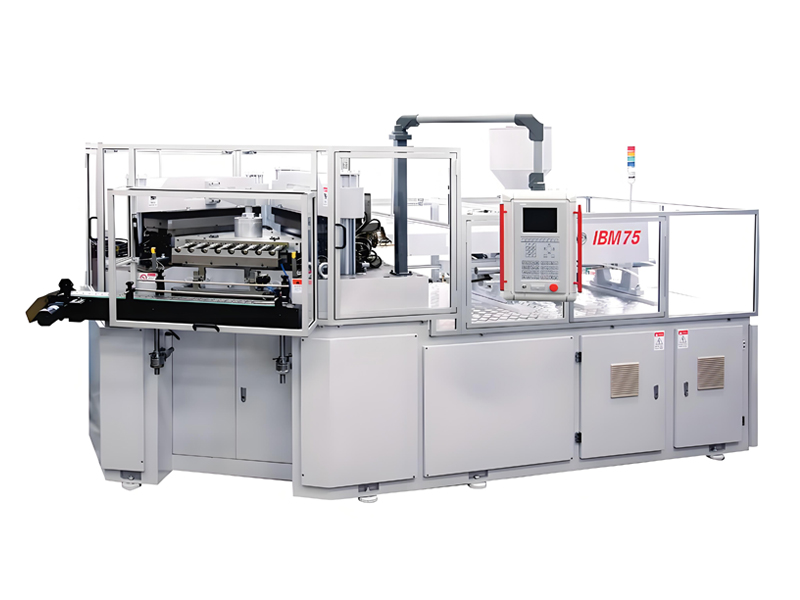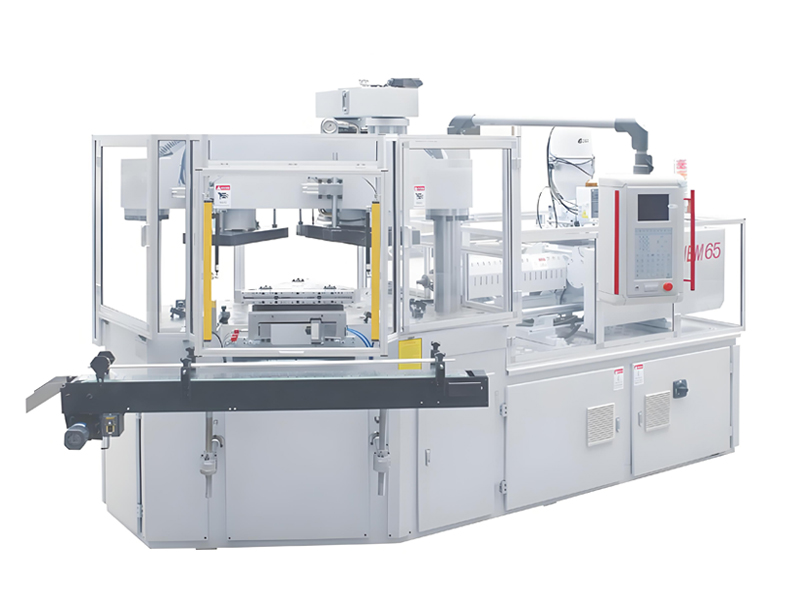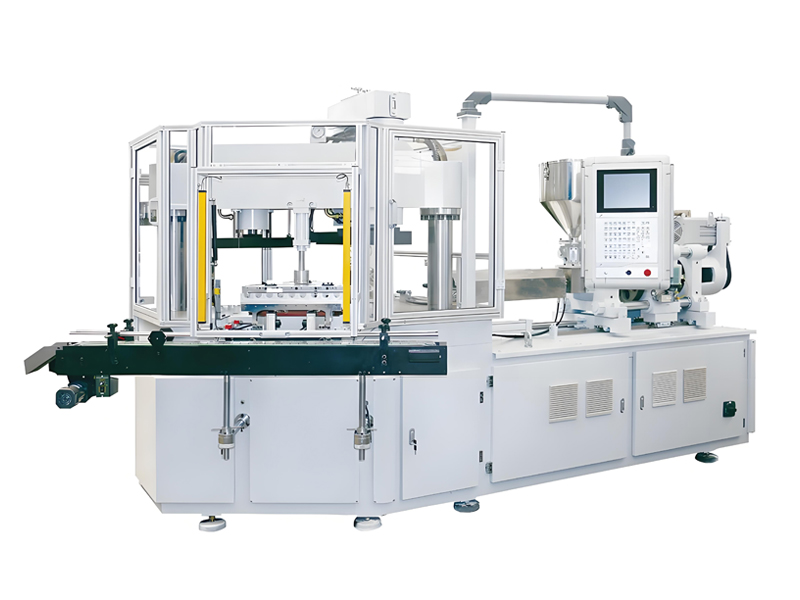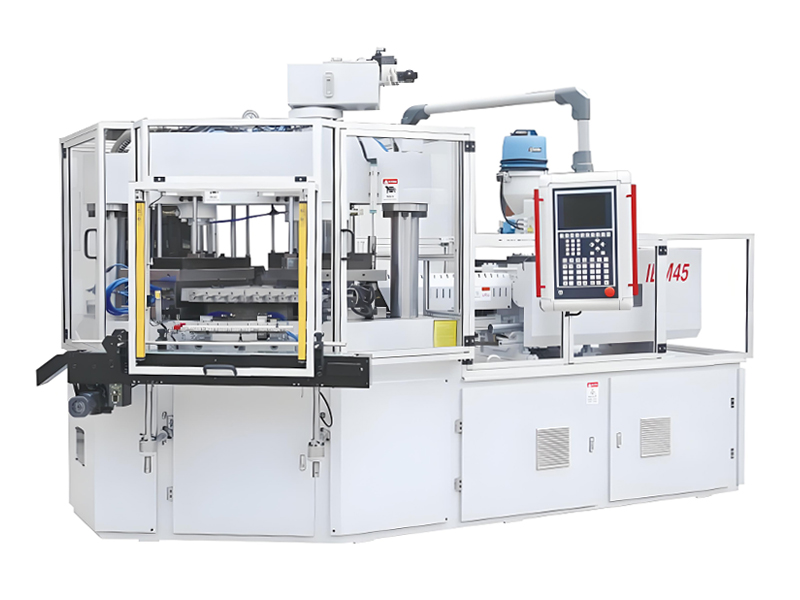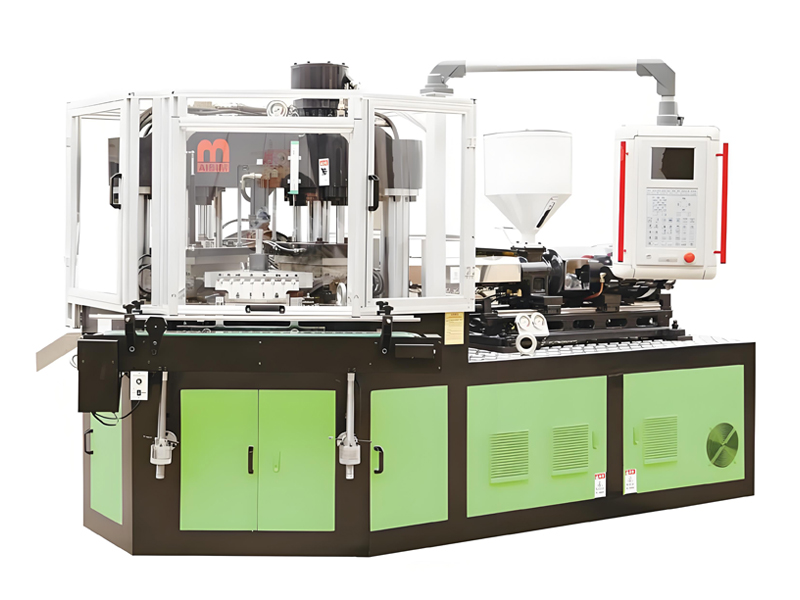
A light curtain safety device is the primary perimeter safeguard that keeps operators out of the moving hazard zone on an injection blow molding machine. As pharmaceutical, cosmetic, food, and drink packaging lines adopt more automation in 2026, the interface between people and high-tonnage clamping, rotating index tables, and hot manifolds remains the most serious workplace risk in IBM production. Aibim, a Wanplas factory, equips its IBM series with a safety light curtain for personal safety, working alongside the long-distance digital laser sensor that protects the mold at the stripper station. This article explains what a light curtain is, how it protects operators at the machine perimeter, how to select the right resolution and height, how safety distance is calculated under ISO 13855 and ANSI B11.19, how the curtain integrates with the three-station one-step cycle and PREFILL hydraulics, and how to troubleshoot the most common faults. The goal is to give plant safety officers and engineers a clear framework for specifying and validating operator protection that meets CE certification and international safeguarding standards.
Understanding the Light Curtain Safety Device
A light curtain safety device, sometimes called a safety light barrier or optical guarding, is an active optoelectronic protective device consisting of a transmitter and a receiver mounted facing each other across a machine opening. The transmitter emits a series of parallel infrared beams; the receiver detects them. Together they form an invisible screen. When a person or object breaks one or more beams, the receiver registers the interruption and signals the machine controller to stop the hazardous motion.
The defining property of a safety-rated light curtain is that it is evaluated by a certified safety system, not merely by a generic input. The transmitter and receiver are themselves type-rated, and their output is processed by a safety relay or a safety PLC that follows the performance-level logic of ISO 13849. On Aibim machines this safety chain is part of the same CE-certified controller that manages the clamp and the index table, so a beam break is treated as a stop command with deterministic response rather than a soft alarm.
It helps to separate the light curtain from other safeguards. Fixed guards and interlocking doors physically block access; a light curtain allows access but instantly stops the machine the moment the beam is crossed. This makes it ideal for loading, unloading, and setup points where an operator must reach toward the machine but where a solid door would slow every changeover. For IBM lines, the curtain is typically placed at the part-removal and core-rod service areas, while fixed guards cover the rest of the rotating transfer.
The light curtain is also distinct from the in-mold laser sensor discussed in the companion article. The laser sensor watches for retained parts inside the cavity to protect tooling; the light curtain watches the perimeter to protect people. They operate at different hazard layers and are complementary. Aibim’s CE-certified design includes both, reflecting the principle that a complete safeguarding concept addresses asset protection and personal safety together.
From a standards perspective, a light curtain used on an IBM machine must satisfy the machinery safety framework that underpins CE marking. That framework begins with ISO 12100, which requires a documented risk assessment, and continues through ISO 13855 for positioning and ISO 13849 for the control system. In North America, ANSI B11.19 and ANSI B11.15 provide the parallel guidance. Understanding these references is essential before selecting or installing a curtain, which the later sections cover in detail.
How a Safety Light Curtain Protects Operators at the Machine Perimeter
The protection mechanism is straightforward but engineered for reliability. During automatic production the guards are closed and the curtain beams are intact, so the controller sees a continuous “safe” signal and runs the cycle. When an operator opens the service area or reaches across the beam to clear a jam, one or more beams break. The receiver detects the missing beam, the safety controller evaluates the fault, and within milliseconds it removes power from the clamp and index drives and engages the brake.
The three-station, one-step nature of IBM production shapes where the curtain matters most. The index table rotates the core-rod stack between injection, blow, and strip stations, and a rotating transfer presents a pinch and crush hazard at its edge. The light curtain is positioned to cover the access openings to that rotating zone so that any reach toward it stops rotation before contact. Because the parison never leaves the core rod in IBM, the transfer is always moving tooling, which makes perimeter guarding especially important compared with processes that handle parts separately.
Modern safety curtains also support muting and blanking functions. Muting temporarily disables specific beams when a known object, such as a conveyor of finished bottles, must pass without stopping the machine. Blanking permanently ignores a beam that is always obstructed by fixed tooling. Both functions must be implemented so they cannot be defeated by an operator casually reaching in; certified designs use directional sensors or sequenced muting to ensure a person cannot sneak through a muted zone. Aibim configures these functions only where the CE risk assessment justifies them, keeping the safeguard effective.
The human factor is the reason the curtain exists. Even well-trained operators make mistakes during long shifts, especially during urgent clearing of a stuck container. A light curtain removes reliance on reaction time and procedure by making the machine itself refuse to move while a body part is in the zone. This is the essence of defense-in-depth: engineering control backs up administrative control. For pharmaceutical and food plants with strict occupational-safety audits, a certified curtain is also documentary evidence of due diligence.
Practical experience on Aibim lines shows that the curtain pays for itself by preventing a single pinch injury, which would otherwise mean lost time, investigation, and potential line shutdown. The cost tier of a certified curtain is Medium relative to the total machine investment, and it is far lower than the cost of an incident or a damaged clamp. Wanplas, the parent brand, reinforces this with group-wide service promises including an annual free spare-parts allowance and on-site engineer support.
Environmental Rating and Installation Quality
Beyond the three core parameters, the curtain’s environmental rating matters on IBM lines where cleaning agents, condensation, and plastic dust are present. Aibim specifies curtains with a suitable ingress-protection rating for the molding environment and adds purge air where volatiles from PETG or PC could fog the optics. The emitter and receiver are mounted on rigid brackets isolated from clamp vibration, and the cable is routed in protective conduit so repeated door motion does not fatigue the harness. Selecting for the real factory environment, not just the catalog value, is what separates a curtain that runs for years from one that faults weekly.
Selection Criteria: Resolution, Height, and Response Time
Choosing a light curtain is a specification exercise, not a commodity purchase. The three parameters that decide suitability are resolution, protected field height, and response time. Each must be matched to the hazard and the access point on the IBM machine.
Resolution
Resolution is the beam spacing, which determines the smallest object the curtain can detect. A 14 millimeter resolution detects a finger; a 30 millimeter resolution detects a hand or wrist; coarser resolutions detect an arm or whole body. For operator access points on IBM machines running 3 to 1000 milliliter containers, finger-resolution curtains are standard at the stripper and loading areas because the hazard is close and fine. The resolution is selected during the CE risk assessment based on the anticipated reach and body part.
Protected Field Height
The protected height must cover the full opening the operator could use. If the curtain is shorter than the access gap, a person could reach over or under it. On the IBM75, which handles larger wide-mouth jars up to 1000 milliliters, the service opening can be taller, so a correspondingly taller curtain or a curtain plus fixed guard combination is used. The table below lists typical selections across the Aibim IBM series.
Light Curtain Specification by Aibim Model
| Model | Container Range | Typical Resolution | Protected Height | Response Time |
|---|---|---|---|---|
| IBM55 Hybrid | 3 to 350 ml | 14 mm (finger) | 300 to 600 mm | Less than 15 ms |
| IBM65 | 10 to 500 ml | 14 mm (finger) | 400 to 800 mm | Less than 18 ms |
| IBM75 | 50 to 1000 ml | 14 to 30 mm | 600 to 1200 mm | Less than 20 ms |
Response Time and Stopping Performance
Response time is the curtain’s own delay before signaling, but the real safety depends on total stopping time: the curtain response plus the controller reaction plus the mechanical stop of the clamp or index. A faster curtain helps, but if the machine stopping time is long, the safety distance must be larger. On Aibim machines the PREFILL hydraulics and servo indexing are tuned so stopping is prompt, which lets the curtain sit closer to the hazard while still meeting the calculated distance. The selection must therefore consider the whole stop chain, not the curtain alone.
Restart Interlock and Production Monitoring
A certified light curtain does more than stop the machine; it also governs the restart. After a beam break and a safe stop, the controller requires a deliberate reset before motion resumes, which prevents a machine from restarting automatically while an operator is still leaning into the zone. On Aibim IBM lines this reset is logged with a timestamp, giving plant managers a simple record of how often the curtain was triggered and whether those events correlate with specific molds, shifts, or operators. Over time that data supports targeted training and fixture improvements rather than treating every stop as an unexplained nuisance. When the curtain is integrated with the line monitoring used across the Wanplas group, the same event feed can flag a worn stripper tool or a mis-set mold that repeatedly causes accesses, turning a safety device into a process-quality sensor.
Positioning, Safety Distance, and Operator Protection Standards
The single most misunderstood aspect of light curtain installation is safety distance. A curtain placed too close to the hazard fails its purpose because the machine cannot stop before a reaching person is struck. The correct distance is calculated, not guessed, using the device response time, the machine stopping time, and a defined approach speed.
The ISO 13855 Calculation
Under ISO 13855, the minimum safety distance is derived from the formula that adds the approach speed times the total response time to a fixed offset for detection limits. In plain terms: the faster a person can move into the zone, and the slower the machine stops, the farther the curtain must sit from the hazard. ISO 13855 is the European reference invoked by CE marking, and Aibim’s CE documentation applies it during design and installation validation.
ANSI B11.19 and ANSI B11.15
In North America, ANSI B11.19 defines performance criteria for safeguards such as light curtains, while ANSI B11.15 addresses safety requirements for injection molding machines specifically, which IBM falls under as an injection-based process. These standards use a similar stopping-time and reach-speed model, so a curtain positioned per ISO 13855 generally satisfies ANSI as well, provided the stopping-time measurement is documented. Buyers exporting to both regions benefit from this alignment.
Standards and Safeguarding Reference
| Standard | Scope | Role in IBM Operator Protection |
|---|---|---|
| ISO 12100 | Machinery risk assessment | Identifies the hazard and the need for perimeter guarding |
| ISO 13855 | Positioning of safeguards | Calculates the required safety distance for the curtain |
| ISO 13849 | Safety-related control systems | Defines performance level of the stop chain |
| ANSI B11.19 | Safeguarding performance | North American criteria for light curtains |
| ANSI B11.15 | Injection molding safety | Regional requirements for IBM-type machines |
| CE marking | EU conformity | Umbrella that binds the above into Aibim certification |
Positioning also involves beam orientation. The curtain should face the hazard squarely so the beams cross the access path, not run parallel to it. If an operator could approach from the side, a second curtain or a fixed guard closes the gap. Aibim’s installation practice is to validate the safety distance with a measured stopping-time test on the actual machine, then label the calculated distance on the guard so it is inspectable during audits.
A subtle but important point is that the safety distance protects against reaching, not against defeating the device. The standards assume the curtain is used as intended. That is why muting and blanking are restricted, and why the CE risk assessment must show that the curtain cannot be trivially bypassed. A well-designed IBM cell pairs the curtain with fixed guards and interlocking doors so the only unguarded access is exactly where the curtain watches.
It is also worth noting that no single safeguard eliminates risk completely; the standards framework expects layered protection. The light curtain handles the perimeter, the laser sensor handles the mold, fixed guards cover the remainder, and the emergency stop provides a manual override. ISO 12100 explicitly treats this combination as the correct way to reach an acceptable residual risk level, which is why Aibim documents the full set rather than relying on the curtain alone.
Integration with the Three-Station One-Step Cycle and PREFILL Controls
On Aibim IBM machines the light curtain is not a bolt-on box but part of the machine’s certified safety architecture. The curtain output feeds the same safety controller that manages the clamp, the index table, the PREFILL hydraulics, and the in-mold laser sensor. This unified design is what makes the stop both fast and auditable.
The three-station one-step cycle imposes a specific stopping requirement. Because the index table carries the core rod through injection, blow, and strip in one rotation, a stop command must halt rotation and clamp simultaneously to avoid trapping tooling or exposing a hot core. The safety controller sequences the brake on the index servo and the decompression of the clamp together. PREFILL technology helps here: because the hydraulic cylinder is only at high pressure during the final tonnage, a beam break during the open or transfer phase avoids a high-pressure dump, reducing stress on the system and shortening recovery.
Energy management is another integration benefit. Aibim’s minimum 35 percent energy saving from PREFILL means the machine is already efficient; the light curtain prevents wasted cycles by stopping the line only when a person actually enters, rather than requiring a full guard-door open and re-home for every minor intervention. Used correctly, the curtain improves both safety and uptime. The SD-card parameter storage lets the safety configuration travel with the mold set, keeping the safeguarding logic consistent when a cavity moves between IBM65 and IBM55 Hybrid machines.
Commissioning, Validation, and Audit Practice
Correct operation depends on commissioning discipline. Aibim’s procedure measures the actual machine stopping time on the delivered IBM55 Hybrid, IBM65, or IBM75, recalculates the safety distance with that measured value, and labels the result on the guard so it is visible during safety audits. The beam alignment is verified, the blanking pattern is confirmed against the risk assessment, and the reset logic is tested by simulating a beam break. These steps are repeated after any service that moves the guard or changes the mold. For plants supplying pharmaceutical or food customers, this documented validation is often a prerequisite for site approval, and the SD-card parameter storage keeps the safeguarding setting consistent when a cavity is transferred between machines. Treating the curtain as a controlled, audited parameter rather than a static accessory is what keeps the protection effective for the full service life of the equipment.
How Leading IBM Builders Implement Light Curtains
Aibim is one of several builders treating the light curtain as standard operator protection. Comparing approaches shows convergence on certified, integrated guarding.
Manufacturer Operator-Protection Comparison
| Builder | Perimeter Safeguard | Integration Style | Certification Context |
|---|---|---|---|
| Aibim (Wanplas) | Light curtain plus laser mold sensor | Unified CE safety controller | CE certified |
| Jomar | Light curtain and guard options | Safety PLC based | CE and ANSI B11 context |
| Aoki | Integrated optical guarding | Digital control platform | CE certified |
| Nissei ASB | Curtain with interlocked access | Servo safety integrated | CE certified |
For the buyer, the differentiator is whether the curtain is a validated part of the CE safety file or a separately sourced accessory. Aibim’s advantage is that the light curtain, the laser mold sensor, the PREFILL hydraulics, and the safety controller ship as one certified package, supported by Wanplas group service. Sister factories such as Kerke for extruders and Apollo for extrusion blow molding follow the same Wanplas safeguarding philosophy, which simplifies multi-machine plants.
Common Faults and Troubleshooting
Like any optical device, a light curtain can fault. Most problems are environmental or configuration related rather than device failure. The table below maps the common symptoms to causes and corrective actions.
Light Curtain Fault Diagnosis Table
| Observed Fault | Likely Cause | Corrective Action |
|---|---|---|
| Curtain will not reset after beam clear | Misalignment or dirty optics | Clean lenses, re-align transmitter and receiver |
| Frequent nuisance stops | Vibration or reflective surface in beam | Relocate curtain, shield reflective panels |
| Safety controller lockout on start | E-stop or interlock not cleared | Reset E-stop, verify door interlock chain |
| Dead zone at top or bottom | Protected height too short | Add curtain height or fixed guard extension |
| Intermittent beam loss | Cable or connector damage | Inspect harness, secure conduit routing |
Misalignment is the most frequent cause of a curtain that will not reset. The transmitter and receiver must be precisely opposite; a bump during mold change or cleaning can shift one by a few millimeters and break the beam. Aibim’s commissioning checklist includes a beam-alignment verification and a stop-distance confirmation after any service that moves the guard.
Reflective surfaces cause nuisance stops when a shiny stripper plate or stainless steel frame bounces a beam around the receiver. Shielding the reflective area or selecting a curtain with suppressed specular response resolves most cases. Vibration from the clamp can also walk a loosely mounted bracket out of alignment, so brackets should be tightened to spec and checked during preventive maintenance.
Configuration errors appear when muting or blanking is set incorrectly. If a beam is permanently blanked but the fixed tooling it ignored is later removed, the zone becomes unguarded. The CE risk assessment and the machine’s documented configuration must stay in sync; Aibim records the active blanking pattern in the machine data set so it is reviewed at each audit. Treating the curtain configuration as a controlled parameter prevents silent loss of protection.
Frequently Asked Questions
What is a light curtain safety device on an IBM machine?
A light curtain safety device is an active optoelectronic protective device made of a transmitter and receiver that create an invisible grid of infrared beams across the machine opening. When an operator’s hand or body interrupts one or more beams, the device sends a stop signal to the controller, halting clamp, index, or robot motion before contact with the hazard.
How is the safety distance calculated?
The safety distance is calculated from the device response time, the machine stopping time, and a defined approach speed, following ISO 13855 for European installations and ANSI B11.19 for North America. The formula ensures the hazardous motion stops before a person reaching into the zone can be struck, so the curtain must be mounted far enough from the hazard.
Which standards apply to light curtains on injection blow molding machines?
Aibim machines are CE certified under the Machinery Directive framework, which references ISO 12100 for risk assessment, ISO 13855 for safeguarding positioning, and ISO 13849 for the safety-related control system. In North America, ANSI B11.19 defines performance criteria for the safeguarding and ANSI B11.15 addresses injection molding machine safety.
Does the light curtain slow down production?
No. A correctly specified light curtain only acts when the beam is interrupted during a manual intervention. During automatic running with guards closed, the cycle is unaffected. The stopping event is reserved for operator access, and on Aibim machines the curtain is integrated so it does not add time to normal three-station one-step production.
Can a light curtain replace the laser mold-protection sensor?
No. The light curtain protects people at the perimeter, while the long-distance digital laser sensor at the stripper station protects the mold from retained parts. They address different hazard layers and are complementary. Aibim equips its IBM machines with both: the laser for mold safety and the curtain for personal safety.
What resolution light curtain is needed for IBM operation?
Resolution depends on the smallest body part to be detected. For finger protection a 14 millimeter resolution is typical, while hand protection uses about 30 millimeters. Aibim machines running 3 to 1000 milliliter containers at the stripper and loading areas generally use finger-resolution curtains at operator access points, selected during CE risk assessment.
Conclusion
A light curtain safety device is the cornerstone of operator protection on an injection blow molding machine. By creating an invisible, certified stop screen at the machine perimeter, it prevents contact with the rotating three-station transfer and the high-tonnage clamp on every Aibim IBM line. Correct selection of resolution, protected height, and response time, combined with a safety distance calculated under ISO 13855 and documented under the CE framework alongside ANSI B11.19 and ANSI B11.15, turns a simple beam into a validated safeguard. Integrated with PREFILL hydraulics and the in-mold laser sensor on the IBM55 Hybrid, IBM65, and IBM75 machines, the curtain protects people without sacrificing the 35 percent energy saving or the 3 to 1000 milliliter production range that Aibim, a Wanplas factory, is known for. Compared with peers such as Jomar, Aoki, and Nissei ASB, Aibim’s strength is a single CE-certified safety package rather than piecemeal add-ons. For safety officers specifying IBM cells in 2026, the recommendation is to commission the curtain with a measured stopping-time test, document the safety distance, and review the blanking configuration at every audit so the protection remains effective for the life of the machine.