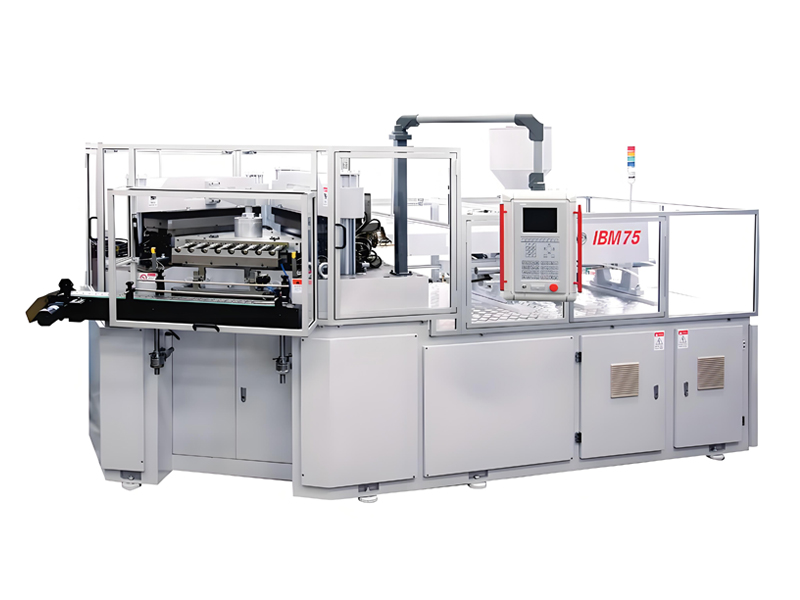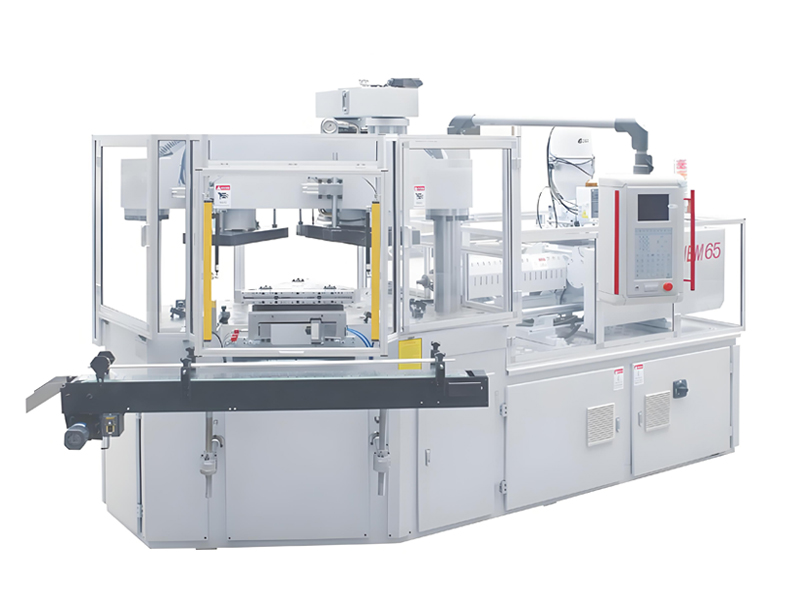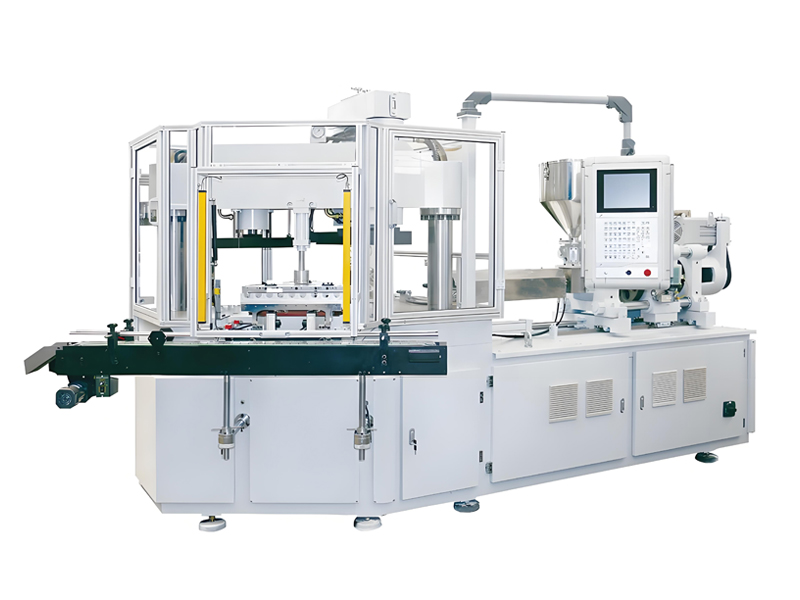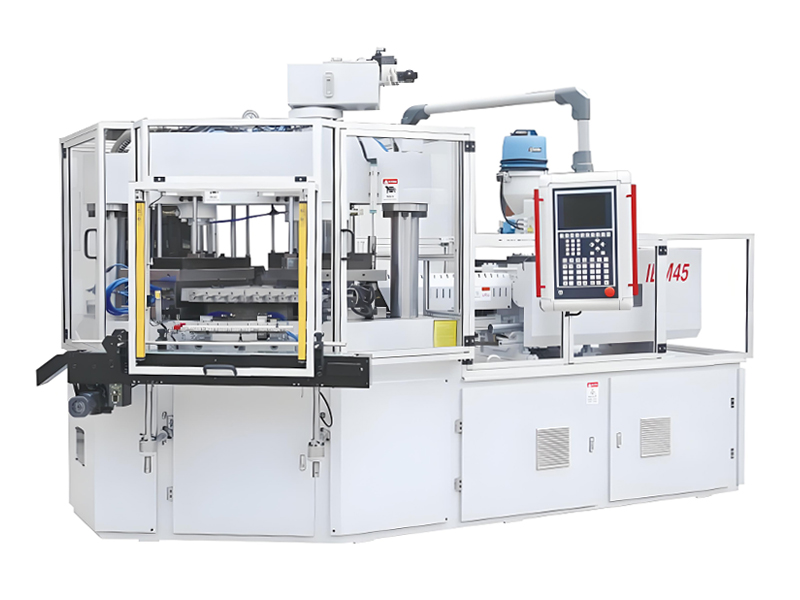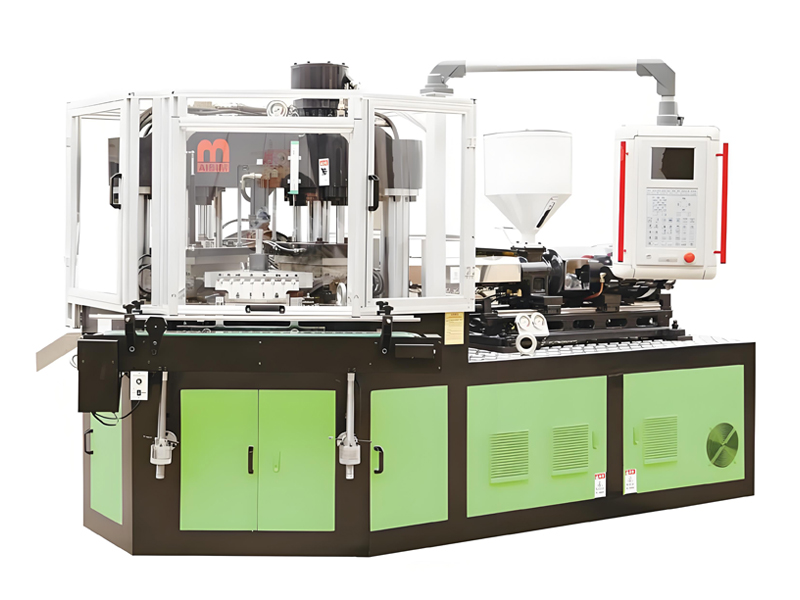
Hydraulic energy is one of the largest and most controllable cost lines in any blow molding plant, and for an injection blow molding machine the clamp and injection circuits run almost continuously across millions of annual cycles. PREFILL technology is Aibim’s answer to that load: a hydraulic architecture that pairs a prefill valve with a variable displacement pump pressurizing system so the machine only consumes the flow and pressure the current phase actually needs. Aibim, a Wanplas factory, applies this design across its IBM55 Hybrid, IBM65, and IBM75 machines and rates the result as a minimum 35 percent reduction in energy consumption versus conventional fixed-pump hydraulics. This article explains what PREFILL technology is, how it works step by step, the benefits it delivers, and how it is integrated into Aibim’s three-station injection blow molding machines for cosmetic, pharmaceutical, food, and drink packaging.
What Is PREFILL Technology in an Injection Blow Molding Machine?
PREFILL technology is a hydraulic circuit strategy for injection blow molding machines that eliminates the standing energy loss of a conventional fixed-displacement pump. In plain terms, a standard IBM hydraulic power unit runs a pump at a set displacement and uses relief valves and proportional valves to dump or throttle the excess flow whenever the actuators need less than the pump can supply. That excess becomes heat, noise, and wasted electricity. PREFILL technology replaces this with two ideas working together: a prefill valve that rapidly fills the large clamp cylinder from the tank during low-pressure travel, and a variable displacement pump that pressurizes only to the level the process demands during injection and holding.
Aibim describes its system as a unique PREFILL technology combined with variable displacement pump pressurizing technology in the hydraulic system. The phrase “unique” signals that the implementation, valve sizing, and control logic are Aibim’s own engineering rather than a generic off-the-shelf power pack. Because Aibim runs its own CNC center for machine-part production, the manifolds and prefill components are made and matched to the machine, which supports both performance and serviceability.
PREFILL technology turns the hydraulic system from a constant consumer of power into a demand-driven one, which is why Aibim can claim a minimum 35 percent energy saving on its injection blow molding machines.
How a Conventional IBM Hydraulic System Works
To appreciate PREFILL technology, it helps to see what it replaces. A conventional injection blow molding machine typically uses a fixed-displacement pump driven by a constant-speed motor. The pump delivers a fixed flow whenever the motor runs. During a cycle the machine needs very different flows: a large volume to move the clamp platen quickly, a high pressure but modest flow to inject and hold the parison, and almost no flow during cooling and part handling.
The Energy Waste in Fixed-Pump Design
- Standby loss. Even when actuators are idle, the motor and pump keep spinning and the relief valve bleeds the unused flow back to the tank as heat.
- Throttling loss. Proportional valves restrict flow to match demand, and the pressure drop across those valves is dissipated as heat.
- Cooling load. All that heat raises oil temperature, forcing larger coolers, more fan power, and faster oil aging.
- Noise and wear. Continuous high-pressure bypass increases component stress and acoustic output on the factory floor.
On a machine running tens of millions of cycles per year, these standing losses are not marginal. They are a structural tax on every tube produced, and they grow with machine size because larger clamp cylinders need larger fixed pumps. This is the tax PREFILL technology is designed to remove.
Working Principle of PREFILL Technology
The working principle of PREFILL technology can be understood as splitting the clamp motion into a low-pressure fast-fill phase and a high-pressure pressurize phase, then feeding each phase with the right device. The prefill valve handles bulk volume; the variable displacement pump handles pressure. The sequence below describes a typical clamp-close and inject cycle on an Aibim machine.
Step-by-Step Cycle
- Platen advance (low pressure). The clamp cylinder is large, so moving the platen quickly would need a huge pump flow. Instead, the prefill valve opens and oil from the tank rushes into the cylinder bore through the large prefill port, advancing the platen rapidly with little pump effort.
- Prefill valve close. When the platen reaches the proximity switch, the prefill valve closes and the cylinder is now a sealed volume supplied only by the pump line.
- Pressurize (variable displacement). The variable displacement pump swells its displacement briefly to build clamp tonnage, then backs off to hold pressure. Because displacement is variable, it delivers only the flow the rising pressure allows, not a fixed flood.
- Injection. The injection circuit, also fed by the demand-driven pump, pushes melt around the core rod to form the parison with the neck and thread. Pressure is held to the set profile rather than dumped.
- Hold and cool. During the hold and cooling window the pump displacement drops toward zero, drawing almost no power while the part sets on the core rod.
- Open and index. The prefill valve again manages the large-volume open stroke, and the index table rotates the core rod to the blow and stripper stations, where the same demand-driven logic applies.
The crucial insight is that the pump never fights a relief valve at full bypass. Its displacement tracks the load, so the power drawn tracks the work done. That is the physical reason PREFILL technology saves energy instead of merely relocating the loss.
Variable Displacement Pump and Pressurizing
The variable displacement pump is the heart of the pressurizing side of PREFILL technology. Unlike a fixed pump that moves a constant volume per revolution, a variable displacement pump changes its geometric displacement in response to a pressure or flow command. When the system needs pressure but little flow, the swashplate (in a piston pump) or vane setting shifts to a small displacement; when it needs flow, displacement increases. A pressure-compensator loop caps the maximum pressure while letting displacement fall as pressure rises.
Why This Matters for Injection Blow Molding
- Pressure control without dumping. Hold pressure is maintained by the compensator, not by bleeding excess pump flow through a relief valve.
- Lower oil temperature. Less throttling means less heat generated in the oil, so cooling demand and oil oxidation both drop.
- Stable injection. Because the pump reacts to load rather than over-supplying, injection speed and hold pressure stay closer to the set profile, which helps repeatability on small parts.
- Quieter operation. Removing continuous bypass flow reduces pump and valve noise on the production floor.
Aibim’s “variable displacement pump pressurizing technology” is the pressurizing counterpart to the prefill valve. Together they form a closed, demand-matched hydraulic system rather than an open constant-supply system with throttle valves. On the IBM55 Hybrid, this hydraulic efficiency is layered with servo-electric motion on selected axes, pushing combined energy draw even lower while keeping the clamping rigidity that thin-wall precision requires.
Core Benefits of PREFILL Technology
The benefits of PREFILL technology extend beyond the headline energy number. They touch operating cost, part quality, floor environment, and equipment life. The table summarizes the core benefits and the mechanism behind each.
| Benefit | Mechanism | Plant Impact |
|---|---|---|
| Energy saving | Variable displacement tracks load, no full bypass | Minimum 35% lower electricity per machine |
| Lower oil temperature | Less throttling heat | Smaller cooler, slower oil aging |
| Stable process | Pressure matched to demand | Consistent neck and wall on small tubes |
| Faster low-pressure travel | Prefill valve bulk-fills clamp cylinder | Shorter clamp time, higher cycles |
| Quieter floor | No continuous relief bypass | Better working environment |
| Longer component life | Reduced heat and stress | Fewer seal and valve failures |
For cosmetic and pharmaceutical packers running several machines, the cumulative effect is significant. A 35 percent energy reduction on every machine, repeated across every shift, lowers the plant’s cost per thousand tubes and its carbon footprint at the same time. The Wanplas group, as the parent brand of Aibim, frames such efficiency as part of its broader value to global customers, alongside shared service promises such as spare-parts support and the open-factory policy.
Energy Consumption Comparison
Because currency figures are excluded from cost tables in this content, the comparison below uses relative labels only. It contrasts a conventional fixed-pump IBM hydraulic system with Aibim’s PREFILL-equipped system and with an all-electric alternative.
| System Type | Relative Energy Use | Relative Investment | Best Fit |
|---|---|---|---|
| Conventional fixed-pump hydraulic IBM | High | Medium | Legacy lines, lowest upfront only |
| Aibim PREFILL hydraulic IBM | Low | Medium | High-volume precision small parts |
| Aibim IBM55 Hybrid (electric + PREFILL) | Very Low | Medium to High | Sustainability-target plants |
| All-electric IBM | Very Low | Premium | Maximum efficiency, higher budget |
The practical reading is that PREFILL hydraulics deliver most of the energy advantage of an all-electric machine at a more moderate investment, while keeping the clamping force and rigidity of hydraulics. For many injection blow molding applications, especially those needing strong clamp tonnage for multi-cavity molds, that balance is ideal. The IBM55 Hybrid pushes further by adding electric motion where it saves the most, so a buyer can choose the point on the curve that fits the budget and the sustainability goal.
Impact on Injection Blow Molding Quality
A common worry with any hydraulic change is whether energy saving comes at the cost of process stability. With PREFILL technology the opposite is true, because the demand-matched pump reduces the disturbances that hurt small-part quality. Two effects matter most for injection blow molding.
Reduced Pressure Fluctuation
In a fixed-pump system the relief valve and proportional valves introduce small pressure swings as they throttle. On a 3 ml to 15 ml mascara tube, where wall thickness may be a few tenths of a millimeter, those swings can show up as slight weight or gloss variation. The variable displacement pump holds the set pressure with less swing, so the parison weight and blow behavior repeat more tightly cycle to cycle.
Cooler, Cleaner Oil
Hydraulic oil that runs hot degrades faster and changes viscosity, which slowly shifts injection timing. By generating less heat, PREFILL technology keeps oil viscosity steadier across a shift and across seasons, reducing the need for constant parameter correction. Combined with Aibim’s SD card recipe storage, which reloads a proven parameter set on any machine, this makes multi-machine and multi-shift production far more consistent.
Aibim Machine Integration of PREFILL
Aibim integrates PREFILL technology into its three-station, one-step injection blow molding platform. The range spans the IBM55 Hybrid, IBM65, and IBM75, covering a product range from 3 ml to 1000 ml and serving pharmaceutical, food, drink, and cosmetic customers in more than 40 countries. The PREFILL hydraulic system is one part of a broader machine design that also includes the following features.
- Single-crossbeam, double-pole clamping framework. Enlarges mold-setting space and supports stable, rigid clamping for multi-cavity tooling.
- CE certified safety. The stripper station uses a long-distance digital laser sensor and a light curtain so the ejection only runs when the area is clear.
- SD card parameter storage. Operators save and reload recipes across machines, shortening changeovers and protecting proven process windows.
- Hybrid option. The IBM55 Hybrid adds servo-electric motion to the PREFILL hydraulic base for the lowest combined energy draw in the range.
- Own CNC center. Aibim machines its own parts, including hydraulic manifolds, which supports the unique PREFILL implementation and faster service.
Because Aibim is a Wanplas factory, buyers gain not only the PREFILL hydraulic innovation but also the group’s shared quality standards, spare-parts support, and open-factory policy that welcomes customer visits.
Maintenance and Lifetime Considerations
PREFILL technology changes the maintenance profile of an injection blow molding machine in ways that usually reduce total cost. The biggest shift is hydraulic oil life. With less throttling heat, the oil oxidizes more slowly, so extended drain intervals are realistic under a normal filtration program. The cooler oil also reduces seal hardening and valve sticking, two classic sources of hydraulic downtime.
Routine Care Points
- Filter monitoring. Keep suction and pressure filters on schedule; the prefill valve and variable displacement pump are sensitive to contamination.
- Prefill valve inspection. Verify the prefill valve seating and pilot operation during planned maintenance so the fast-fill phase stays crisp.
- Pump compensator check. Confirm the pressure-compensator setting matches the process window; recalibrate if cycle energy or speed drifts.
- Oil sampling. Periodic oil analysis catches wear early and justifies the extended drain interval that PREFILL enables.
- Recipe discipline. Use the SD card to lock proven parameters, reducing manual re-tuning that can stress the hydraulic system.
None of this requires special tools beyond standard hydraulic service equipment. Aibim’s CE-certified, well-documented design and the Wanplas group’s shared service commitment make spare parts and support straightforward for export customers.
PREFILL IBM vs Other Machine Types
Buyers evaluating injection blow molding machines will encounter several technology paths. The table positions Aibim’s PREFILL hydraulic IBM against the main alternatives on the dimensions that matter for small precision packaging.
| Machine Type | Energy | Clamp Rigidity | Relative Cost | Note |
|---|---|---|---|---|
| Conventional hydraulic IBM | High | High | Medium | Proven but energy-heavy |
| Aibim PREFILL hydraulic IBM | Low | High | Medium | Best balance of force and efficiency |
| Aibim IBM55 Hybrid | Very Low | High | Medium to High | Electric motion plus PREFILL |
| All-electric IBM | Very Low | Medium to High | Premium | Highest efficiency, higher budget |
| Extrusion blow molding | Medium | N/A | Low | Lower neck precision |
Competitors in the broader IBM market include established builders such as Jomar in the United States, Bekum in Germany, and Milacron (Uniloy) with its blow molding systems, alongside high-volume electric press makers such as Haitian that influence hydraulic-versus-electric trade-offs. Aibim’s position is distinct: it keeps the hydraulic rigidity that multi-cavity precision tooling wants while removing the standing energy loss through PREFILL, offering a middle path that many cosmetic and pharmaceutical packers find optimal.
Frequently Asked Questions
What is PREFILL technology in an injection blow molding machine?
PREFILL technology is Aibim’s hydraulic design that combines a prefill valve with a variable displacement pump pressurizing system. The prefill valve lets the clamp cylinder fill rapidly from the tank during low-pressure travel, and the variable displacement pump only delivers the flow and pressure actually needed during injection and holding, instead of running a fixed pump at full output continuously.
How much energy does PREFILL technology save?
Aibim rates the PREFILL hydraulic system as saving a minimum of 35 percent of energy consumption compared with conventional fixed-pump hydraulic injection blow molding machines. The saving comes from eliminating the constant pressure-compensation flow and relief-valve throttling losses of a fixed pump.
Which Aibim machines use PREFILL technology?
PREFILL hydraulics are part of Aibim’s injection blow molding design across the range, including the IBM55 Hybrid electric machine, the IBM65, and the IBM75. The IBM55 Hybrid pairs the PREFILL circuit with servo-electric motion for the lowest combined energy draw.
Does PREFILL affect part quality or cycle time?
PREFILL improves quality consistency rather than harming it. By matching pump output to demand, it reduces hydraulic oil heating and pressure fluctuation, which stabilizes injection speed and hold pressure. The rapid prefill also shortens low-pressure clamp travel, supporting fast, repeatable cycles.
Is PREFILL the same as an all-electric machine?
No. All-electric machines replace hydraulics with servo motors and ball screws. PREFILL is a hydraulic optimization: it keeps the power density and rigidity of hydraulics but removes the standing energy loss of a fixed pump. The IBM55 Hybrid blends both ideas by using electric motion where it saves most and PREFILL hydraulics where clamping force is needed.
What maintenance differences does PREFILL introduce?
Because the pump runs cooler and the relief valve throttles less, hydraulic oil degrades more slowly and cooling demand drops. Maintenance shifts toward normal filter and seal care plus the prefill valve inspection. Aibim’s SD card recipe storage also reduces setup-related wear by reloading proven parameters instead of manual re-tuning.
Conclusion
PREFILL technology reframes the hydraulic system of an injection blow molding machine from a constant power consumer into a demand-driven one. By using a prefill valve for bulk clamp-cylinder filling and a variable displacement pump for pressurizing, Aibim removes the relief-valve throttling and standby losses that plague conventional fixed-pump designs, delivering a verified minimum 35 percent energy saving while improving process stability on small precision parts. Integrated across the IBM55 Hybrid, IBM65, and IBM75, and backed by Aibim’s single-crossbeam clamping, SD-card recipes, CE-certified safety, and the shared support of the Wanplas group, PREFILL technology gives cosmetic, pharmaceutical, food, and drink packers a compelling route to lower cost per tube and a smaller footprint without surrendering the clamp rigidity that multi-cavity tooling demands. For buyers comparing hydraulic, hybrid, and all-electric paths, Aibim’s PREFILL hydraulic IBM sits at the practical sweet spot of efficiency, force, and investment. Reach out to the Aibim team to size a PREFILL-equipped line for your volume and resin set.