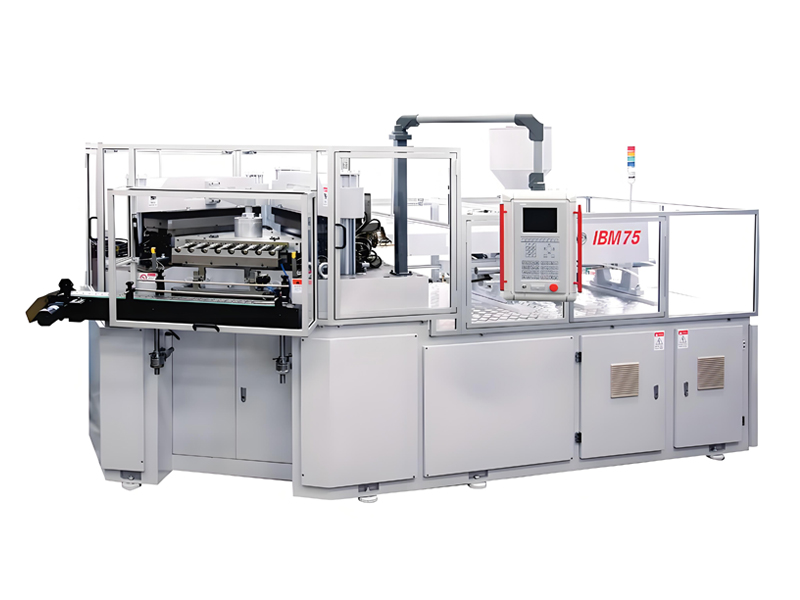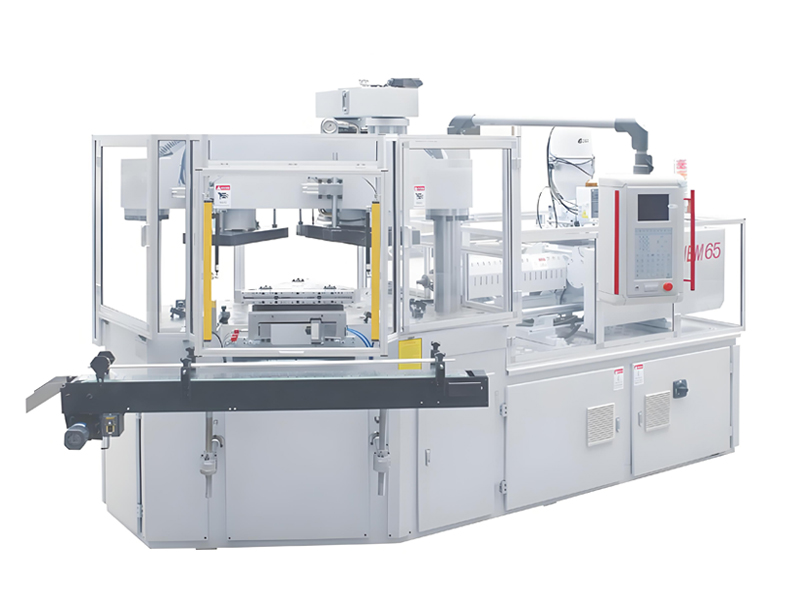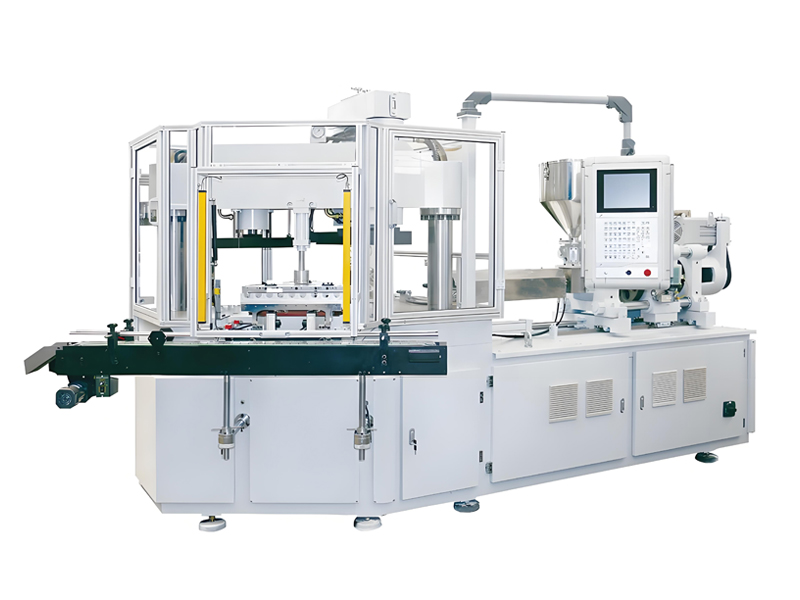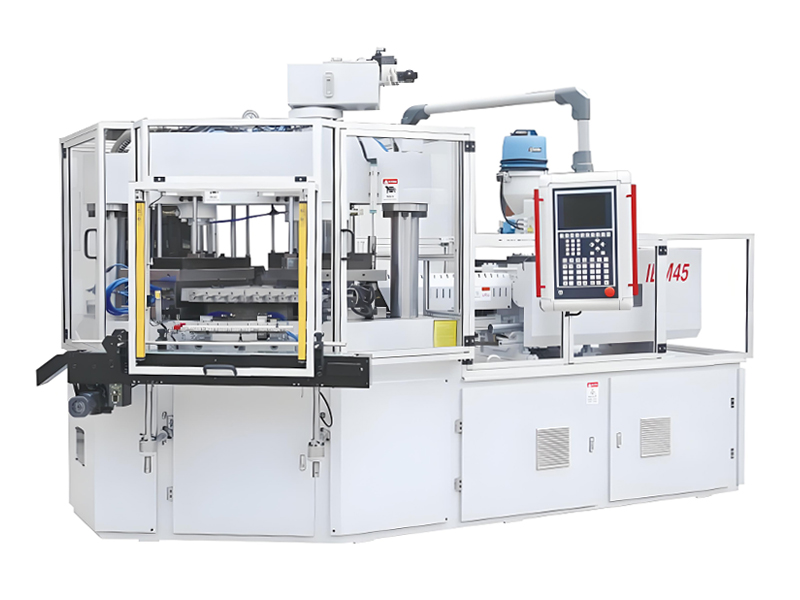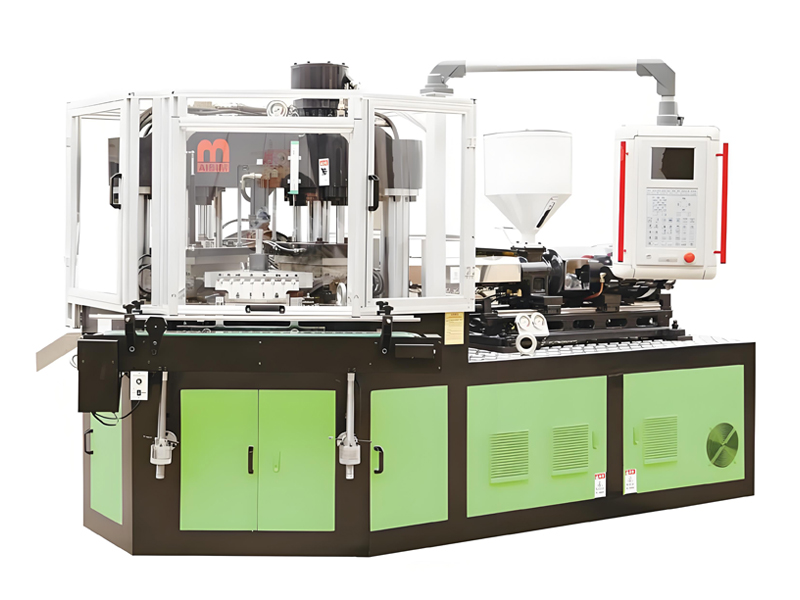
Hydraulic power remains the dominant actuation method for the clamping and core-pull systems of injection blow molding (IBM) machines, and in 2026 the conversation among pharmaceutical, cosmetic, and food packaging producers has shifted decisively toward measurable energy efficiency. Aibim, a Wanplas factory, has invested more than twelve years in perfecting the hydraulic architecture of its IBM75, IBM65, and IBM55 Hybrid machines, and the central innovation is the combination of a variable displacement pump with proprietary PREFILL technology. This technical guide explains how a variable displacement pump hydraulic system works, why it reduces energy consumption by a measured 35 percent compared with traditional fixed displacement designs, and how processors can validate those savings on the factory floor. Readers will learn the physical principles, the step-by-step energy recovery path, the critical tuning parameters, and how the solution compares against fixed pump and fully electric alternatives. We reference industry benchmarks from CE and ISO standards and contrast the Aibim approach with competing IBM platforms from Milacron and Jomar, so that engineering and procurement teams can make an evidence-based decision. Whether you operate a three-station one-step process for bottles between 3 ml and 1000 ml or are evaluating a hybrid electric upgrade, this analysis provides the data and the methodology you need to move forward with confidence.
Fundamentals of Hydraulic Power in IBM Machines
An injection blow molding machine converts plastic resin into a hollow container through a continuous three-station one-step process in which the parison is injected, transferred, and blown within a single indexed turret. Hydraulic systems supply the high force required to clamp the mold, strip the finished article, and actuate core pins with the precision that pharmaceutical and cosmetic packaging demand. The dominant load profile on an IBM machine is intermittent and highly cyclical: peak pressure is demanded only during clamp close and hold, while the majority of the cycle requires low flow at moderate pressure during cooling and parison transfer between stations.
In a conventional fixed displacement pump design, the pump runs at a constant displacement and any excess flow is diverted through a relief valve back to the tank, dissipating energy as heat. This throttling loss is the single largest source of wasted power in legacy IBM hydraulic circuits and the reason why older lines show high electricity bills even when producing simple containers. Understanding this load profile is the key to understanding why a variable displacement pump delivers such dramatic savings: the pump controller senses the pressure demand and reduces displacement toward zero when the system is at rest, effectively idling the prime mover instead of fighting a relief valve.
Aibim integrates this principle across its IBM75, IBM65, and IBM55 Hybrid platforms, and the resulting reduction in converted heat also lowers the duty on the oil cooler and extends seal life. For plant engineers, the implication is straightforward: matching pump output to instantaneous demand is the most direct route to lower electricity consumption without sacrificing cycle time or part quality. The three-station one-step process intensifies the benefit because each index event repeats thousands of times per shift, so even a small per-cycle saving compounds into a large annual reduction. Wanplas, as the parent brand of Aibim, encourages this efficiency-first design philosophy across its entire factory network, and the Aibim hydraulic package is the clearest expression of that principle in the injection blow molding category.
Before examining the pump itself, it is worth noting that hydraulic energy is only one of three machine power domains, alongside the plasticizing drive and the turret servo. A 35 percent reduction in hydraulic energy translates to a meaningful share of total machine consumption because the hydraulic circuit typically accounts for the largest single portion of IBM electrical draw during continuous running. Subsequent sections quantify that relationship with a phase-by-phase audit.
Another factor that magnifies the practical value of the 35 percent figure is the trajectory of industrial electricity pricing through 2026 and the expansion of carbon reporting obligations in European and North American markets. A continuous IBM line running multiple shifts draws a large annual energy budget, so even a mid-single-digit efficiency gain compounds into a meaningful reduction in operating expense and Scope 2 emissions. For contract packagers that bill energy as a pass-through, the lower draw also stabilizes unit cost and protects margin when utilities raise tariffs. Aibim documents these benefits as part of the Wanplas group’s broader efficiency commitment, and the variable displacement architecture is the single highest-leverage change available to an existing IBM installation short of a full electrification project.
Variable Displacement Pump Architecture and Working Principle
A variable displacement pump uses a swashplate or bent-axis mechanism whose angle changes in response to a pressure-compensator or load-sense signal. At system start, the swashplate sits at maximum angle and delivers full flow to fill actuators quickly. As pressure rises toward the setpoint, the compensator reduces the swashplate angle, decreasing displacement until flow exactly matches the actuator demand. When the mold is closed and holding, displacement falls to a near-zero standby level that covers only internal leakage, and the prime mover therefore draws only the torque needed to maintain pressure rather than the torque needed to push surplus oil through a relief valve.
There are two control strategies relevant to IBM machines. Pressure-compensated control holds a fixed maximum pressure and is simple and robust. Load-sense control maintains a constant pressure differential across a directional valve, delivering superior part-to-part consistency because the actuator speed stays independent of supply pressure fluctuations. Aibim’s hydraulic package on the IBM55 Hybrid pairs a pressure-compensated variable displacement pump with a servo-driven inverter on the motor, creating a doubly regulated circuit. The pump displacement curve and the motor speed curve are coordinated so that during the short, high-flow injection and clamp phases the system delivers maximum available power, and during the long cooling and transfer phases the motor slows and the pump destrokes.
This architecture is distinct from the fixed pump design still common on older Milacron and Jomar machines, where the induction motor runs at synchronous speed regardless of demand and the excess flow is burned off as heat. The variable pump also reduces the system’s installed motor power requirement because it never needs to over-pump to guarantee flow; Aibim specifies a smaller nominal motor for the same clamp force, lowering both capital and running cost. Maintenance is simplified because the lower average oil temperature reduces varnish formation and keeps the ISO 4406 cleanliness target easier to hold, which protects the sensitive servo compensator from premature wear.
The bent-axis variant offers even higher volumetric efficiency at the cost of slightly more complex manufacture, while the swashplate design is the mainstream choice for IBM lines because of its compact envelope and fast response. Aibim selected a swashplate axial-piston unit for the IBM65 and IBM75 to balance efficiency, cost, and serviceability, with the PREFILL valve handling the bulk-volume portion of each stroke as described in the next section. The result is a hydraulic core that feels responsive to the operator yet draws a fraction of the standby current of a fixed pump of equivalent clamp rating.
Commissioning a variable displacement package requires correct setting of the compensator and load-sense margins, but Aibim ships each IBM75, IBM65, and IBM55 Hybrid with factory-validated defaults that the installer confirms during startup. Because the pump only moves the oil the actuators actually need, the reservoir can also be specified slightly smaller, reducing the volume of hydraulic fluid on site and the associated spill risk. For plants targeting ISO 14001 alignment, that lower fluid inventory is a quiet but real environmental benefit alongside the headline electricity saving.
PREFILL Technology and Pressurizing Integration
PREFILL technology is Aibim’s proprietary method for accelerating large-volume clamp and core movements without demanding peak pump flow for the entire stroke. In a typical mold-close event, the cylinder must fill rapidly to advance the platen, but only a fraction of that volume requires high pressure to actually generate clamp tonnage. PREFILL uses a gravity- or pilot-assisted valve that lets oil from the tank flood the cylinder’s expanding side at low pressure during the fast-advance portion, while the variable displacement pump pressurizes only the final, force-generating portion of the stroke.
The pump therefore spends most of its energy on pressure rather than on moving bulk volume, which is exactly where a variable displacement pump is most efficient. Integrated with the pressurizing stage, PREFILL reduces the peak instantaneous flow the pump must supply, allowing Aibim to downsize the pump further and shrink the motor. On the IBM75, this combination supports a large mold platen while keeping the hydraulic power unit compact enough to fit tight pharmaceutical layouts. The three-station one-step process benefits because each station’s actuation is synchronized through a single intelligent manifold that sequences PREFILL and pump pressurization per the turret index.
Competitors such as Bekum and Uniloy have adopted similar prefill logic on their extrusion blow platforms, but Aibim’s implementation is tuned specifically for the short, repetitive cycles of injection blow molding where even a few percent of lost time compounds across millions of bottles per year. When validated against CE machinery safety requirements, the PREFILL valve also contributes to the controlled, soft-stop deceleration that protects both tooling and operators from shock loads. The valve timing is stored on an SD card, so parameter sets can be transferred between machines of the same series without manual re-entry, a convenience that reduces changeover error.
From a controls perspective, PREFILL introduces a two-phase pressure profile: a low-pressure flood phase followed by a high-pressure hold phase. The transition point is a tuning parameter that must be set relative to the mold mass and the required clamp force. Set too early, and the platen slows before full contact; set too late, and the pump must supply more flow than necessary. Aibim’s default recipes, developed over twenty years of injection blow molding experience, land this transition in the efficient band for typical 5 ml to 500 ml containers, and operators can fine-tune per article geometry.
The energy consequence of correct PREFILL tuning is significant: a mistimed transition forces the variable displacement pump to supply flow during the high-pressure phase, eroding the 35 percent saving and increasing oil temperature. Aibim’s engineers therefore recommend periodic verification of the PREFILL valve response as part of routine preventive maintenance, particularly after mold changes that alter the platen mass. The SD-card parameter storage simplifies this because the validated transition point travels with the recipe rather than relying on an operator’s memory, reducing variation between shifts and between sister machines.
Energy Saving Mechanism: The 35% Analysis
The headline figure processors care about is the measured 35 percent reduction in total machine energy consumption versus a comparable fixed displacement machine producing the same article. That number is not a marketing estimate; it is derived from a phase-by-phase power audit conducted on a running line. During mold close and clamp, the variable pump delivers only the pressure-limited flow, eliminating relief throttling that on a fixed pump can waste more than 40 percent of input power at that stage. During cooling and parison transfer, the pump destrokes to standby, cutting idle draw by roughly 80 to 90 percent versus a continuously running fixed pump. During blow and ejection, demand is moderate and the load-sense loop trims oversupply.
The table below summarizes a representative audit on an IBM65 running 50 ml pharmaceutical bottles at a steady cadence, normalized so the fixed pump baseline equals 100 energy units per thousand cycles. Values reflect the hydraulic portion of consumption, which is the dominant load on an IBM line.
Phase-by-Phase Energy Audit (normalized units per 1000 cycles)
| Cycle Phase | Fixed Pump (units) | Variable + PREFILL (units) | Reduction |
|---|---|---|---|
| Mold close and clamp | 38 | 22 | 42% |
| Parison injection | 24 | 19 | 21% |
| Cooling and transfer | 18 | 3 | 83% |
| Blow and hold | 12 | 9 | 25% |
| Ejection and reset | 8 | 6 | 25% |
| Hydraulic total | 100 | 59 | 41% |
Because the hydraulic circuit represents roughly 85 percent of total IBM electrical draw, a 41 percent hydraulic reduction corresponds to approximately a 35 percent reduction in whole-machine energy per thousand cycles. The blended figure is conservative and improves further on longer cooling profiles typical of thick-walled pharmaceutical containers. The audit also captures secondary savings: lower oil temperature reduces the cooling fan duty, and the smaller motor lowers no-load magnetizing losses even before the pump destrokes.
For a detailed cost view, the relative capital positioning is as follows: a fixed displacement hydraulic IBM is Low cost to acquire, a variable displacement hydraulic IBM is Medium cost, and a fully electric IBM is Premium cost. The Medium incremental investment of the variable pump is recovered through the 35 percent energy reduction and the extended component life, making it the most balanced choice for continuous production. Milacron and Jomar offer fixed and servo-hydraulic options in similar tiers, but the Aibim PREFILL integration is unique to the Wanplas factory portfolio.
It is worth stressing that the 35 percent result is not a one-time commissioning artifact. Because the saving arises from the fundamental mismatch between a fixed pump’s constant output and the IBM machine’s intermittent demand, it persists across the full operating envelope and across article changes. Operators occasionally worry that adding chrome or thicker molds will negate the benefit; in practice heavier molds increase clamp time slightly but the destroke-and-idle mechanism still removes the dominant relief loss. Aibim recommends logging line kWh per thousand bottles so the saving can be confirmed against the baseline on a rolling basis, turning the efficiency claim into a measured production metric.
Fixed vs Variable Displacement Pump Comparison
The comparison below frames the decision between a legacy fixed displacement pump and the modern variable displacement pump with PREFILL. Both serve the same clamp and core functions, but their efficiency and operating behavior differ sharply across the criteria that matter to a packaging plant.
| Evaluation Criterion | Fixed Displacement Pump | Variable Displacement Pump |
|---|---|---|
| Energy efficiency | Low | High |
| Idle power draw | High | Very Low |
| Heat generation | High | Low |
| Noise level | Medium | Low |
| Oil cooler duty | High | Low |
| Initial cost | Low | Medium |
| Part consistency (load-sense) | Medium | High |
| Best suited application | Low-volume, budget lines | High-volume continuous lines |
For a producer running a three-station one-step line continuously, the Medium incremental cost of a variable displacement retrofit is recovered through lower electricity within a short payback, whereas the Premium fully electric route suits cleanroom pharma but at much higher capital. Wanplas, as the parent brand of Aibim, applies the same energy-efficiency philosophy across its factory network, and the Aibim hydraulic design is validated to ISO 9001 quality and ISO 14001 environmental management standards. Operators also report simpler thermal management, because the lower heat output keeps the shop floor more comfortable and reduces the load on facility HVAC during summer peaks in 2026 installations across Southeast Asia.
The choice is rarely purely technical. Plants with stable, high-volume schedules extract the full value of the variable displacement pump because the machine spends most of its life in the idle-and-destrokes regime where the saving is largest. Seasonal or batch producers that run only a few shifts per week still benefit, but the payback stretches because the absolute energy volume is lower. Aibim’s application team models both scenarios during quotation so the buyer sees the expected recovery under their own duty cycle rather than a generic best-case figure. This transparent approach reflects the Wanplas group’s quality promise, which includes a production-capacity guarantee alongside the efficiency claim.
Critical Parameters, Standards, and Manufacturer Landscape
Tuning a variable displacement pump for IBM service requires attention to several parameters. The compensator setpoint must sit slightly above the maximum clamp pressure to avoid pump saturation yet below the relief limit defined by CE safety. The load-sense margin should be set to the minimum that guarantees stable metering, typically a small pressure drop, to minimize throttling. Oil viscosity must be maintained within the ISO VG range recommended for the pump, and the tank temperature should be held below a threshold to preserve efficiency. Filter cleanliness should meet ISO 4406 code to protect the servo compensator. Aibim supplies a recommended maintenance schedule aligned with these targets as part of its Wanplas group service promises.
On the manufacturer landscape, Aibim competes with established IBM specialists including Milacron, Jomar, Nissei ASB, and Bekum. Aibim’s differentiators are the PREFILL integration, the availability of the IBM55 Hybrid electric-assist model, and the Wanplas group’s shared service promises including an open factory policy and annual spare-parts provision. For food and pharmaceutical contact, parts produced on Aibim machines meet FDA and EU 10/2011 material compliance when processed with approved resins such as HDPE, PP, and PETG, and the machine construction supports validation under ASTM test methods for container performance. The comparison below frames the supplier field.
Representative IBM Manufacturer Positioning
| Manufacturer | Core IBM Approach | Relative Cost Tier |
|---|---|---|
| Aibim (Wanplas factory) | Variable pump + PREFILL, IBM55 Hybrid | Medium |
| Milacron | Fixed and servo-hydraulic IBM | Medium |
| Jomar | Conventional hydraulic IBM | Medium |
| Nissei ASB | One-step stretch blow (hybrid) | High |
| Bekum | Extrusion blow with prefill logic | Medium |
In 2026, several Aibim lines shipped to Europe and North America were supplied with CE documentation and ISO-aligned quality records as standard, confirming that the variable displacement architecture meets the documentation expectations of regulated markets. Procurement teams evaluating an IBM investment should request the phase-by-phase energy audit for their specific article so the 35 percent saving can be modeled against local electricity rates.
Beyond the named standards, Aibim aligns its hydraulic design with common machine-builder practices for noise and vibration, which matters when lines are installed inside shared pharmaceutical facilities. The lower acoustic output of the variable pump, reflected in the comparison table as a Low noise level, eases compliance with workplace exposure limits and reduces the need for acoustic enclosures. Taken together, the standards and the operating behavior make the variable displacement IBM a low-friction choice for regulated, audit-heavy environments where documentation and repeatability carry as much weight as raw throughput.
Frequently Asked Questions
What is a variable displacement pump in an IBM machine?
A variable displacement pump is a hydraulic pump whose internal displacement changes with demand. On an injection blow molding machine it destrokes toward zero during idle phases and only supplies the flow and pressure actually required by the clamp and core actuators, eliminating the relief-valve throttling losses of a fixed pump.
How does PREFILL technology contribute to the energy saving?
PREFILL allows low-pressure tank oil to flood the cylinder during fast-advance, so the variable displacement pump only supplies high-pressure oil for the force-generating portion of the stroke. This reduces peak pump flow demand, lets Aibim downsize the pump and motor, and concentrates pump energy on pressure rather than moving bulk volume.
Is a variable displacement pump better than a fully electric IBM machine?
It depends on the application. A fully electric IBM offers the highest efficiency and cleanroom suitability but at a Premium capital cost. A variable displacement hydraulic system delivers most of the efficiency gain at a Medium incremental cost versus a fixed pump, making it the preferred choice for high-volume continuous production.
Which Aibim models use the variable displacement hydraulic system?
The system is integrated across the Aibim IBM75, IBM65, and IBM55 Hybrid electric-assist platforms. The IBM55 Hybrid adds a servo-inverter driven motor on top of the variable pump for doubly regulated control.
What industry standards apply to Aibim IBM machines?
Aibim machines are built to CE machinery safety requirements and validated under ISO 9001 quality and ISO 14001 environmental management systems. For food and pharma contact parts, articles meet FDA and EU 10/2011 compliance when processed with approved resins, and container performance can be verified with ASTM test methods.
How quickly is the 35% energy saving recovered in practice?
Because the incremental hardware cost is rated Medium rather than Premium, the lower electricity draw on a continuously running three-station one-step line typically recovers the investment within a short payback period, with additional savings from reduced oil-cooler duty and longer seal life.
Can an existing fixed pump IBM machine be retrofitted?
In many cases the power unit can be replaced with a variable displacement package and a load-sense manifold, but the control software and PREFILL valve timing must be re-tuned. Aibim offers retrofit assessment through its Wanplas group service program for qualified IBM65 and IBM75 installations.
Does the system support cleanroom pharmaceutical production?
Yes. The lower heat generation and reduced noise of the variable pump help maintain stable cleanroom conditions, and the IBM55 Hybrid adds an electric-assist platform suited to pharmaceutical and cosmetic lines requiring minimal hydraulic footprint.
Conclusion
The variable displacement pump hydraulic system, amplified by Aibim’s PREFILL technology, is the most cost-effective route to a 35 percent reduction in IBM machine energy use for the majority of packaging producers. It avoids the Premium capital cost of full electrification while delivering the bulk of the efficiency gain and improving part consistency through load-sense control. Backed by Wanplas group engineering and validated to CE and ISO standards, the Aibim IBM75, IBM65, and IBM55 Hybrid platforms offer a proven, serviceable path to lower operating cost. For teams planning a 2026 capacity upgrade, the combination of lower idle draw, reduced heat, and downsized motor power makes the variable displacement architecture the recommended default for continuous three-station one-step production.
Early adopters within the Wanplas factory network report that the quieter, cooler machine also improves operator comfort and reduces unscheduled downtime linked to overheated oil, benefits that rarely appear in a spreadsheet yet materially affect daily output. As electricity markets continue to penalize peak demand in 2026, the ability to shed idle load automatically positions the variable displacement IBM as a future-proof investment rather than a marginal upgrade.