Polycarbonate (PC) resin is a high-performance engineering thermoplastic widely utilized in high-end transparent product manufacturing, renowned for its exceptional impact resistance, excellent optical clarity, high-temperature stability, and superior dimensional accuracy. Compared with conventional PET, PETG, and PCTG transparent plastics, PC resin delivers stronger mechanical toughness, higher heat resistance, and better weather resistance, making it the ideal material for premium transparent containers, medical device housings, cosmetic packaging, optical accessories, and food-grade transparent vessels. In modern precision plastic manufacturing, crystal-clear surface quality without flow marks, streaks, or wave defects has become the core standard for qualified PC finished products, directly determining product market value and customer recognition.
However, PC resin features high melt viscosity, strict moisture sensitivity, and narrow optimal molding parameter windows, making it extremely prone to flow marks, melt lines, surface fogging, and uneven light transmission during traditional blow molding processing. These surface defects are the primary obstacles that reduce the yield rate of PC transparent products, increase production costs, and restrict product grade upgrading. Most ordinary blow molding equipment cannot achieve precise parameter control required for PC processing, resulting in long-term low yield and poor surface consistency in mass production.
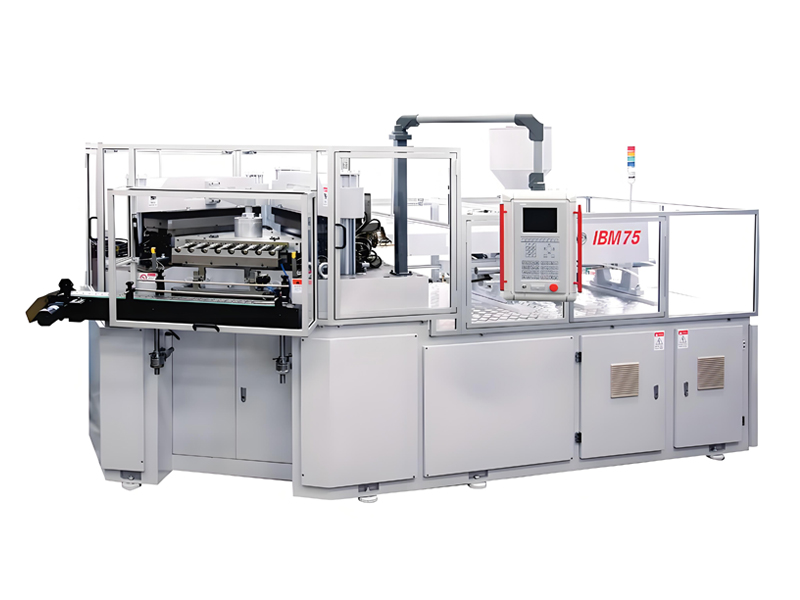
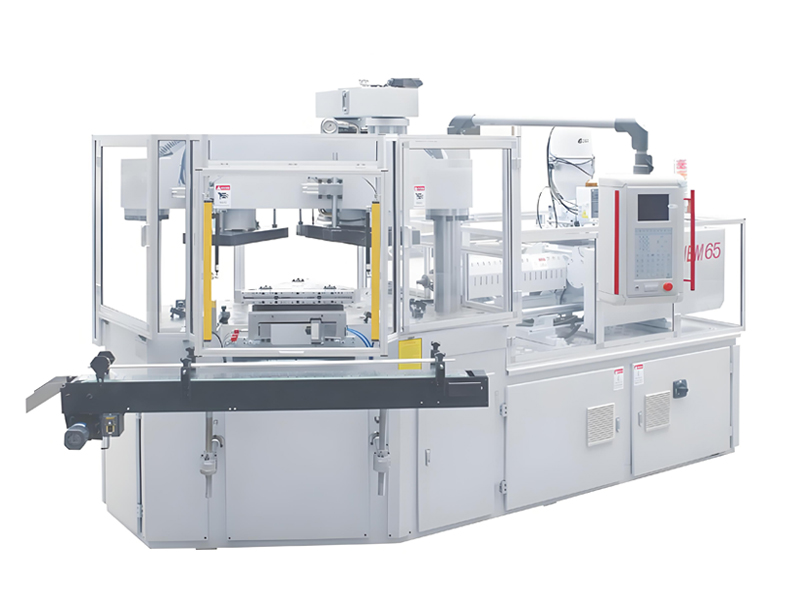
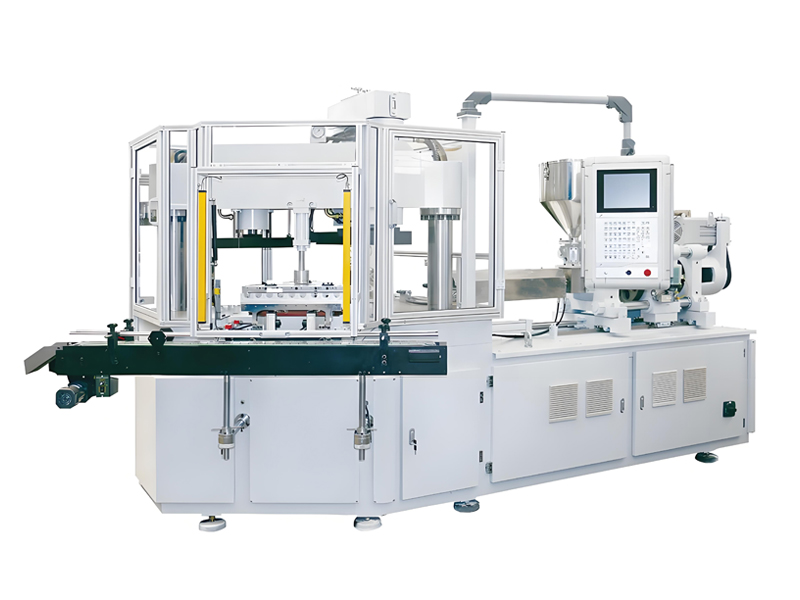
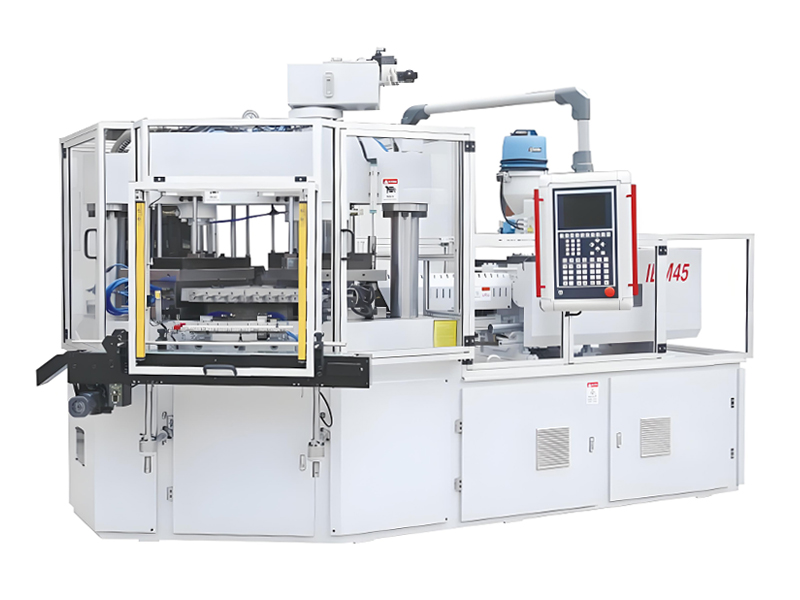
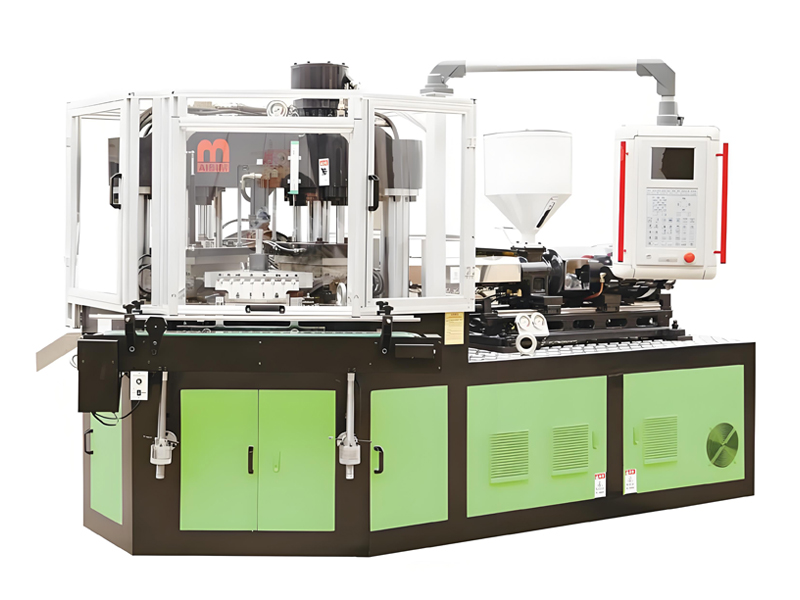
Professional Injection Blow Molding Machine has become the core equipment to solve PC surface defect problems and achieve crystal-clear molding. The integrated injection and blow molding structure of the Injection Blow Molding Machine realizes one-time parison injection, precise stretching, and uniform blow molding shaping, avoiding secondary parison cooling and flow turbulence that cause flow marks. As a professional manufacturer of high-precision molding equipment, AiBiM independently optimizes dedicated Injection Blow Molding Machine configurations for PC resin processing, matching exclusive process parameter systems to completely eliminate flow marks and realize full crystal-clear surface molding of PC products. This article comprehensively analyzes the root causes of PC flow mark defects, optimal molding parameter settings, equipment matching advantages, standardized operation processes, defect troubleshooting, and production cost budgeting, providing systematic technical guidance for high-yield and high-quality PC transparent product mass production.
1. Basic Characteristics and Molding Difficulties of PC Resin
1.1 Core Performance Advantages of PC Resin for Transparent Products
PC resin is an amorphous engineering plastic with a light transmittance of up to 91%, comparable to high-grade glass, and it maintains stable optical performance without yellowing or fogging under long-term use. In terms of mechanical performance, PC material has ultra-high impact resistance, effectively resisting drop impact and extrusion deformation, which is why it is widely known as bulletproof plastic. Its continuous use temperature ranges from -40℃ to 120℃, with excellent high and low temperature resistance, far exceeding the temperature tolerance of conventional transparent plastic materials.
In terms of production and application advantages, PC resin has stable molecular structure, low shrinkage rate, and excellent dimensional stability, which can meet the precision size requirements of high-end transparent products. It also complies with international food-grade and medical-grade safety standards, with non-toxic and harmless characteristics, suitable for high-standard packaging and medical equipment manufacturing scenarios. These comprehensive performance advantages make PC the preferred material for high-value transparent products, putting forward higher requirements for molding surface quality and defect control.
1.2 Root Causes of Flow Marks and Surface Defects in PC Processing
Flow marks are the most common and influential surface defect in PC blow molding production, referring to the wavy streaks and uneven texture on the product surface formed by unbalanced melt flow and uneven cooling. Different from ordinary plastic surface scratches, PC flow marks are formed inside the melt molding process, which cannot be eliminated by post-polishing and will directly affect product light transmission and appearance grade.
The fundamental causes of PC flow marks include multiple core factors. First, PC resin has high melt viscosity and poor fluidity. Unreasonable injection speed and pressure will cause turbulent flow and layered flow of the melt in the mold cavity, forming alternating dense and sparse melt flow traces. Second, PC materials are extremely sensitive to moisture. Residual moisture exceeding 0.02% will cause vaporization during high-temperature molding, disrupting melt flow uniformity and generating flow streaks and silver lines. Third, mismatched mold temperature and melt temperature lead to inconsistent cooling speed of the melt front, resulting in premature local condensation and flow mark accumulation. In addition, unstable equipment pressure output and unreasonable mold exhaust structure will also aggravate surface flow mark defects.
1.3 Processing Differences Between PC Resin and Ordinary Transparent Plastics
Compared with PET and PCTG materials commonly used in transparent product production, PC resin has completely different molding logic and parameter requirements. PET and PCTG have low melt viscosity, good fluidity, and wide processing parameter tolerance, which can adapt to ordinary blow molding equipment and loose process settings. In contrast, PC resin has high viscosity, slow melt flow speed, and strict parameter sensitivity, requiring ultra-precise temperature, pressure, and speed matching throughout the entire molding process.
In terms of defect characteristics, PET and PCTG are prone to yellowing and whitening defects, while PC is mainly troubled by flow marks, wave lines, and internal stress cracks. Ordinary two-step blow molding equipment cannot control PC melt flow stability and cooling uniformity, making it impossible to eliminate flow mark defects fundamentally. Only high-precision Injection Blow Molding Machine with integrated injection and blow molding functions can realize one-time stable molding of PC melt and achieve crystal-clear surface quality without flow marks.
2. Why Injection Blow Molding Machine Eliminates PC Flow Marks Fundamentally
2.1 Structural Advantages of Integrated Injection Blow Molding Process
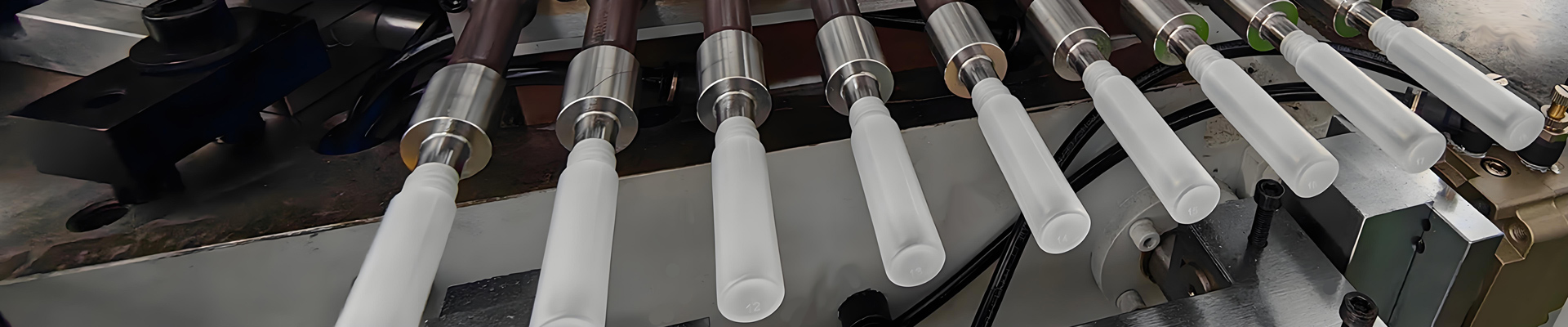
The traditional two-step blow molding process separates parison injection and blow molding, resulting in long parison transfer time, natural cooling of the parison surface, and inconsistent internal and external temperature. When the cooled parison enters the blow molding stage, the melt flow resistance is uneven, which inevitably produces flow marks and surface waves during stretching and blowing. Different from traditional processes, the Injection Blow Molding Machine integrates injection parison forming, mold clamping, stretching blowing, and demolding in one continuous cycle. The whole process is completed inside the same equipment without secondary transfer and cooling of the parison.
The one-time molding process ensures uniform temperature and consistent fluidity of the PC parison. The melt maintains a stable molten state during injection and blowing, avoiding layered flow and turbulent flow caused by temperature difference. The synchronous stretching and blowing structure makes the PC melt fit the mold cavity evenly and smoothly, completely eliminating the flow trace defects caused by unbalanced flow, which is the core process advantage to realize crystal-clear PC surface molding.
2.2 AiBiM Injection Blow Molding Machine Dedicated PC Molding Configuration
AiBiM professional Injection Blow Molding Machine is specially optimized for PC resin high-precision molding characteristics, with targeted upgrades in temperature control, pressure stabilization, speed regulation, and mold matching systems. The equipment adopts a multi-stage independent precise temperature control system, with temperature control accuracy up to ±1℃, which can accurately lock the optimal melting temperature range of PC resin, avoiding local overheating or insufficient plasticization that affect melt flow stability.
Equipped with a high-precision servo constant-pressure system, the AiBiM Injection Blow Molding Machine realizes stepless adjustable injection speed and stable blowing pressure output, effectively solving the turbulent flow problem of high-viscosity PC melt. The intelligent PLC system stores exclusive PC molding parameter formulas, which can realize one-click calling of optimal parameters, avoid manual debugging errors, and ensure consistent melt flow state and surface quality of each batch of products. In addition, the equipment is matched with a high-efficiency mold exhaust system and constant-temperature cooling system, completely eliminating flow marks, wave lines, and fogging defects of PC products.
2.3 Equipment Price and Production Cost Budget Analysis
The professional PC-grade Injection Blow Molding Machine has higher configuration precision than ordinary general-purpose models, with more stable operating performance and lower defect rate. In 2026, the FOB price of AiBiM standard Injection Blow Molding Machine suitable for mass production of PC transparent containers is 33,000 to 40,000 US dollars. This model is fully equipped with multi-stage temperature control, servo pressure stabilization, and intelligent parameter locking functions, fully meeting the high-precision molding requirements of PC resin and completely solving flow mark defects.
For high-end ultra-thin PC transparent products and medical-grade PC containers that require ultra-high surface clarity, the upgraded customized AiBiM Injection Blow Molding Machine is priced at 41,000 to 47,000 US dollars, with higher pressure stability and temperature control precision, ensuring zero flow mark and zero haze high-standard molding. The equipment has a service life of more than 10 years, with an average daily depreciation cost of 9 to 13 US dollars, and the long-term fixed investment cost is controllable.
In terms of daily operating costs, AiBiM servo energy-saving technology reduces equipment idle power consumption by more than 23% compared with ordinary equipment. Professional PC molding parameters reduce the product defective rate from the industry average of 8% to below 0.7%, greatly saving raw material waste and rework costs. The comprehensive daily operating cost including water, electricity, equipment maintenance, and wearing parts replacement is 36 to 49 US dollars, with extremely low comprehensive production cost and significant long-term cost performance advantages.
2.4 Auxiliary Equipment Matching and Cost Budget
PC resin processing has extremely strict moisture control requirements, and supporting professional auxiliary equipment is essential to ensure crystal-clear products without flow marks. The necessary supporting equipment includes a high-temperature dehumidifying dryer, constant-temperature mold cooling water machine, and high-precision air pressure stabilizer. The total one-time procurement cost of the complete auxiliary equipment set is 9,800 to 13,200 US dollars.
The high-temperature dehumidifying dryer ensures that PC raw materials are fully dried to control moisture content below 0.02%, eliminating flow marks and silver lines caused by moisture vaporization. The constant-temperature cooling water machine stabilizes the mold temperature to ensure uniform melt cooling, and the air pressure stabilizer avoids blowing pressure fluctuation leading to uneven surface molding. Complete auxiliary equipment matching is an indispensable part of zero-flow-mark PC production.
3. Optimal Full-Process Parameters for PC Resin Zero-Flow-Mark Molding
3.1 Raw Material Preprocessing Parameter Standards
Raw material pretreatment is the first key step to eliminate PC flow marks. PC resin is highly hygroscopic, and even tiny residual moisture will cause severe surface defects during high-temperature molding. The standard drying parameters for PC raw materials are set at a drying temperature of 110℃ to 120℃ and continuous drying time of 4 to 6 hours, which can completely remove internal moisture and control the moisture content within the qualified range below 0.02%.
It is forbidden to use insufficiently dried PC materials for production, and secondary drying is required for materials placed in the air for more than 2 hours after drying. Before feeding, clean the equipment feeding system and barrel to avoid mixing residual materials of other plastics, which will affect PC melt purity and surface clarity. Standardized raw material pretreatment can eliminate 40% of PC surface flow mark defects from the source.
3.2 Barrel Segmented Temperature Optimal Settings
Temperature parameter directly affects PC melt viscosity and flow uniformity, which is the core factor determining whether flow marks are generated. PC resin adopts segmented gradient temperature heating on the Injection Blow Molding Machine barrel, realizing gradual melting and uniform plasticization to avoid melt flow turbulence.
The feeding section temperature is set at 240℃ to 250℃, which is used for preheating and softening PC particles to ensure stable feeding and avoid unsoftened particles scratching the melt and causing flow traces. The compression section, the core plasticization area, is set at 250℃ to 260℃, which completely melts PC particles and ensures uniform melt viscosity. The metering section temperature is controlled at 255℃ to 265℃ to further homogenize melt temperature and stabilize output flow. The nozzle temperature is set at 250℃ to 255℃, preventing melt wire drawing and nozzle residual carbonization, ensuring smooth and uniform melt injection.
The overall PC melt processing temperature is strictly controlled between 240℃ and 270℃. Excessively high temperature will cause PC molecular degradation and yellowing, while excessively low temperature will increase melt viscosity, poor fluidity, and severe flow mark defects. AiBiM Injection Blow Molding Machine’s independent multi-stage temperature control system ensures temperature accuracy of each section, providing stable melt conditions for zero-flow-mark molding.
3.3 Mold Temperature and Cooling System Parameters
Mold temperature is a key parameter affecting PC melt cooling uniformity and surface smoothness. Too low mold temperature will cause rapid cooling of the melt front, premature condensation, and flow mark accumulation; too high mold temperature will lead to slow cooling, product deformation, and reduced production efficiency. The optimal mold temperature range for PC crystal-clear molding is 80℃ to 100℃.
Stable high mold temperature can maintain the fluidity of the PC melt front, make the melt fill the cavity smoothly and evenly, eliminate layered flow traces, and ensure ultra-smooth surface texture. Matching with a constant-temperature circulating cooling system, after the completion of blow molding and shaping, the product is cooled uniformly at a stable speed to avoid internal stress and surface wave defects. For conventional thin-walled PC transparent products with a wall thickness of 1mm to 3mm, the optimal cooling time is 10 to 15 seconds; for thick-walled products, the cooling time is extended to 15 to 20 seconds to ensure full shaping and uniform cooling.
3.4 Injection Speed and Pressure Precision Matching Parameters
Unreasonable injection speed and pressure are the main artificial causes of PC flow marks. PC high-viscosity melt is prone to turbulent flow and layered flow under single-speed and unstable pressure filling. AiBiM Injection Blow Molding Machine adopts segmented multi-stage injection technology, which perfectly adapts to PC melt flow characteristics.
The first stage adopts low-speed and low-pressure filling, with an injection speed of 25% to 35% of the rated speed and injection pressure of 60 to 65 bar, which slowly pushes the melt into the mold cavity to avoid rapid impact and turbulent flow. The middle stage adopts medium-speed and medium-pressure stable filling, with speed increased to 40% to 50% and pressure stabilized at 65 to 70 bar, ensuring uniform and continuous melt flow. The final stage adopts low-speed pressure holding to eliminate cavity pressure difference and surface flow traces.
This segmented speed and pressure matching method completely avoids the flow disorder phenomenon of PC melt, ensures consistent flow state in the whole filling process, and fundamentally eliminates flow mark and wave line defects on the product surface.
3.5 Blow Molding Pressure and Cycle Time Parameters
The optimal blowing pressure for PC transparent products is 0.4 to 0.55 MPa. Stable and moderate air pressure can make the high-viscosity PC melt evenly attach to the high-precision mirror mold surface, ensuring smooth and flat product surface without wrinkles and flow marks. Insufficient blowing pressure will lead to incomplete product molding and uneven surface; excessive blowing pressure will cause excessive stretching of local thin walls and dimensional deviation.
The optimal blowing time is 4 to 7 seconds, ensuring that the PC melt is fully fitted and shaped. The total cycle time of conventional PC transparent products is 22 to 30 seconds. Reasonable cycle time matching balances production efficiency and molding quality, avoiding insufficient shaping caused by blind speed increase and ensuring 100% crystal-clear surface without flow marks for each product.
4. Key Technical Measures to Achieve Zero-Flow-Mark Crystal-Clear Surface
4.1 High-Precision Mirror Mold Polishing and Exhaust Optimization
Mold surface precision and exhaust performance are important auxiliary factors for PC crystal-clear molding. AiBiM supporting PC dedicated molds adopt high-precision mirror polishing technology, with surface roughness controlled below Ra 0.05μm, eliminating microscopic scratches and uneven mold surface that cause light scattering and virtual flow marks. The smooth mold surface enables the PC melt to fit perfectly, presenting ultra-high transparency and flatness.
In terms of exhaust optimization, set uniform fine exhaust grooves at the melt filling end and product edge of the mold to timely discharge air bubbles in the cavity, avoiding air trapping leading to melt flow stagnation and flow mark formation. Reasonable mold exhaust structure ensures that the PC melt flows smoothly without dead ends, completely eliminating hidden dangers of surface defects.
4.2 Eliminate Melt Degradation and Carbonization Residues
Long-term high-temperature operation of equipment is prone to residual carbonized materials in the barrel and nozzle. These tiny carbon particles will mix into the PC melt during production, disrupting the uniform flow state and forming irregular flow streaks and dark marks on the product surface. Regular equipment cleaning and residue removal are essential maintenance measures for zero-flow-mark production.
Clean the barrel and nozzle thoroughly before batch production of PC products, and empty the residual materials from the previous production. For long-term continuous production, perform material replacement and cleaning every 24 hours to avoid material aging and carbonization. The stable heating and anti-carbonization design of AiBiM Injection Blow Molding Machine barrel effectively reduces residual material degradation, maintaining the purity and uniform fluidity of PC melt.
4.3 Intelligent Parameter Locking and Stable Production Control
Parameter drift during long-term continuous production is a key factor leading to intermittent flow mark defects. Ordinary equipment has poor parameter stability, and temperature and pressure will drift with the extension of operation time, resulting in inconsistent melt flow state. AiBiM Injection Blow Molding Machine is equipped with a closed-loop intelligent parameter locking system, which can permanently store PC exclusive molding parameters and automatically calibrate temperature and pressure in real time.
The system ensures zero deviation of core parameters such as barrel temperature, mold temperature, injection pressure, and blowing speed during 24-hour continuous production, maintaining consistent PC melt flow and molding effect in each cycle, realizing batch zero-flow-mark crystal-clear production and greatly improving product batch consistency.
5. Common PC Flow Mark Defects and Targeted Solutions
5.1 Overall Wavy Flow Marks on Product Surface
Overall wavy flow marks are mostly caused by low mold temperature, unstable injection speed, and uneven melt cooling. The targeted solution is to increase the mold temperature to 85℃ to 100℃, adopt segmented multi-stage injection speed to avoid single rapid or slow filling, and appropriately extend the cooling time to ensure uniform melt cooling. Calibrate the equipment servo pressure system to stabilize injection and blowing pressure, eliminate flow turbulence, and restore surface flatness and clarity.
5.2 Local Linear Flow Streaks
Local linear flow streaks are usually caused by insufficient raw material drying, nozzle residual carbonization, and poor mold local exhaust. The solution is to extend the PC drying time to ensure complete moisture removal, clean nozzle carbonized residues and barrel residual materials, optimize the local exhaust structure of the mold, and eliminate air trapping and melt flow stagnation. Adjust the nozzle temperature to avoid melt wire drawing and local viscosity difference, ensuring uniform melt flow in all areas.
5.3 Alternating Light and Dark Flow Marks
Alternating light and dark flow marks are caused by inconsistent barrel temperature and uneven melt plasticization. It is necessary to check and calibrate the temperature control accuracy of each barrel section, eliminate local temperature deviation, ensure full and uniform plasticization of PC melt, and avoid layered viscosity difference of the melt. Match stable blowing pressure to make the melt fit the mold evenly, eliminate alternating light and dark textures, and restore crystal-clear surface consistency.
6. Production Efficiency and Yield Benefit Analysis
6.1 Yield Improvement Effect of Zero-Flow-Mark Molding Technology
By adopting AiBiM Injection Blow Molding Machine and exclusive PC zero-flow-mark parameter system, the product defective rate caused by flow marks can be reduced from the industry average of 7%-9% to below 0.7%. The ultra-low defect rate eliminates a large amount of raw material waste and rework labor costs. For factories with a daily output of 8,000 to 12,000 PC transparent products, the daily qualified product quantity is increased by more than 600 pieces, greatly improving effective output and production efficiency.
6.2 Comprehensive Cost Saving and Profit Improvement
The standardized PC molding process reduces raw material loss, rework costs, and waste product disposal costs. The intelligent parameter locking function reduces manual debugging time and human error loss, saving daily labor and time costs. At the same time, zero-flow-mark crystal-clear products belong to high-grade finished products, with higher market unit price and customer recognition, effectively improving the added value and profit margin of PC products. In the long-term mass production process, the comprehensive cost-saving and profit-increasing benefits are extremely significant.
7. Standard Operation and Maintenance Specifications for Long-Term Stable Crystal Molding
7.1 Pre-Production Debugging Standard Process
Before PC batch production, preheat the barrel in sections according to the optimal temperature parameters, and keep warm for 30 minutes after reaching the set temperature to ensure uniform temperature of each section and full plasticization of the melt. Complete raw material drying and equipment cleaning work, turn on the constant-temperature cooling system to stabilize the mold temperature within the optimal range, and calibrate injection and blowing pressure parameters. Conduct trial production of 30 to 50 samples, inspect the surface for flow marks and defects, fine-tune parameters appropriately, and lock all parameters for formal mass production after the products are fully qualified.
7.2 Daily Production Stability Maintenance
During continuous production, check the equipment temperature control accuracy, pressure stability, and raw material drying status every 2 hours to avoid parameter drift and moisture residue. Keep the production environment temperature stable at 20℃ to 30℃ to prevent ambient temperature interference with mold cooling and melt flow. Regularly check the mold exhaust and surface smoothness to ensure long-term stable crystal-clear molding of products.
7.3 Shutdown and Material Replacement Maintenance
After PC production is completed, lower the barrel temperature to below 200℃ in time to avoid long-term high-temperature carbonization of residual PC materials. Thoroughly clean the barrel and nozzle to prevent residual degraded materials from affecting subsequent production quality. Record the optimal PC zero-flow-mark parameter formula for one-click invocation in the next production, reducing repeated debugging time and material waste.
8. Conclusion
PC resin high-end transparent product molding has always been troubled by flow mark defects, which restrict product quality upgrading and factory profit improvement. The fundamental solution lies in adopting professional high-precision Injection Blow Molding Machine and matching exclusive process parameters to stabilize PC melt flow state and eliminate unbalanced cooling and turbulent flow phenomena. AiBiM Injection Blow Molding Machine, with its dedicated temperature control system, servo pressure stabilization technology, and intelligent parameter locking function, perfectly adapts to the high-viscosity and high-precision molding characteristics of PC resin.
Through standardized raw material pretreatment, segmented temperature matching, multi-stage speed and pressure regulation, and high-precision mold optimization, enterprises can completely eliminate PC surface flow marks and achieve 100% crystal-clear smooth surface molding. While improving product grade and market competitiveness, it greatly reduces production defect costs and improves comprehensive production benefits. For long-term mass production of high-end PC transparent products, professional Injection Blow Molding Machine configuration and standardized zero-flow-mark process parameters are the core guarantees for stable quality, high yield, and sustainable profit growth.