Pharmaceutical vials are core packaging containers for medical liquids, lyophilized powders, vaccines, and biological reagents, requiring ultra-high dimensional accuracy, zero contamination risk, stable chemical inertness, and consistent batch quality. Unlike ordinary plastic packaging products, pharmaceutical-grade vials must comply with strict GMP clean production standards, FDA food and drug safety regulations, and international pharmaceutical packaging quality specifications. The overall performance, precision control capability, and clean production adaptability of injection blow molding equipment directly determine the qualification rate and market compliance of finished pharmaceutical vials. As a professional model of AiBiM series injection blow molding machines, the IBM65 injection blow molding machine is specially optimized and upgraded for high-standard pharmaceutical vial production scenarios. It integrates high-precision molding technology, fully enclosed clean production structure, and intelligent stable control system, perfectly solving the pain points of traditional molding equipment such as low dimensional accuracy, easy contamination, unstable batch quality, and poor sanitary compatibility. This article comprehensively elaborates the core performance advantages, structural design features, pharmaceutical production adaptation capabilities, complete production processes, equipment configuration prices, project investment cost benefits, selection standards, and after-sales support services of the AiBiM IBM65 machine, providing systematic and professional reference for global pharmaceutical packaging manufacturers to select high-quality injection blow molding equipment.
1. Overview of IBM65 Injection Blow Molding Machine for Pharmaceutical Vial Production
1.1 Basic Equipment Positioning and Applicable Scope
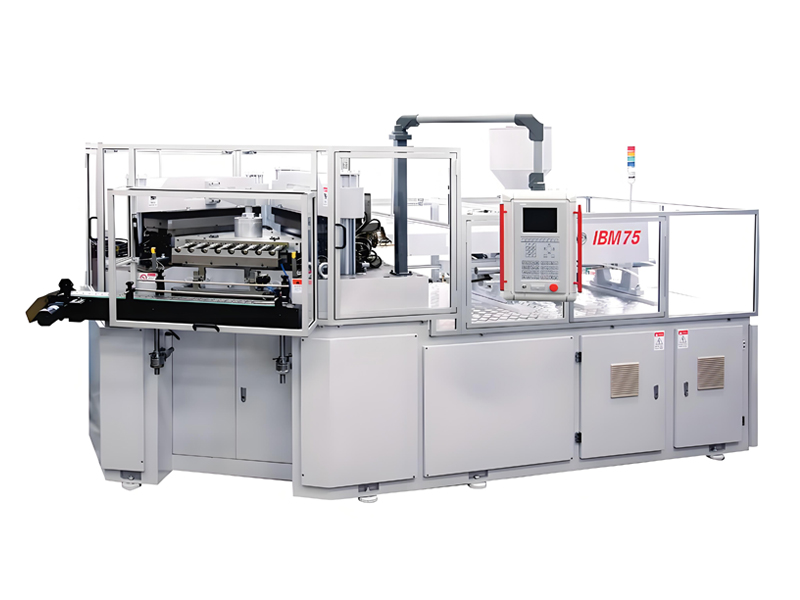
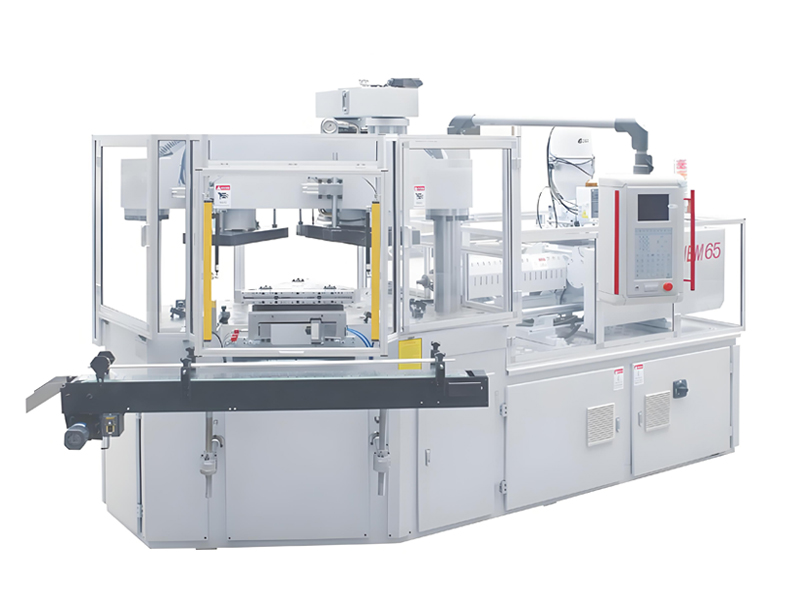
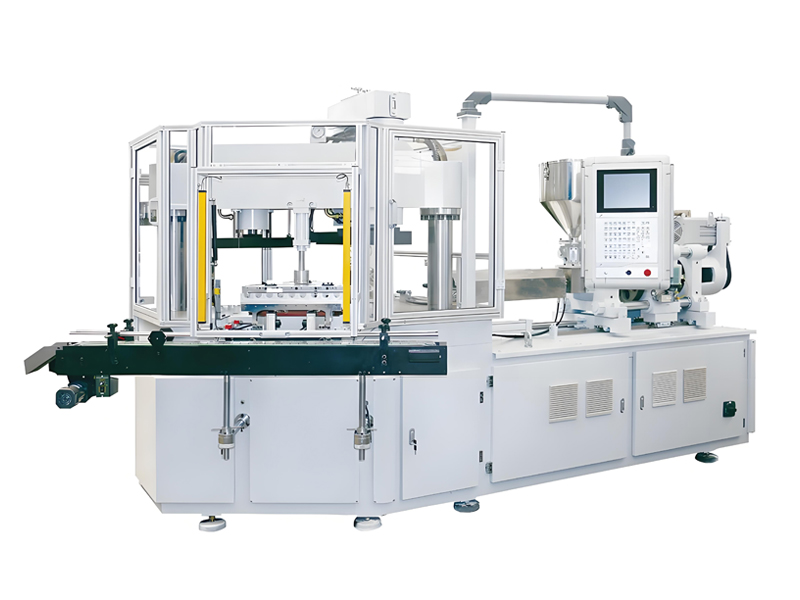
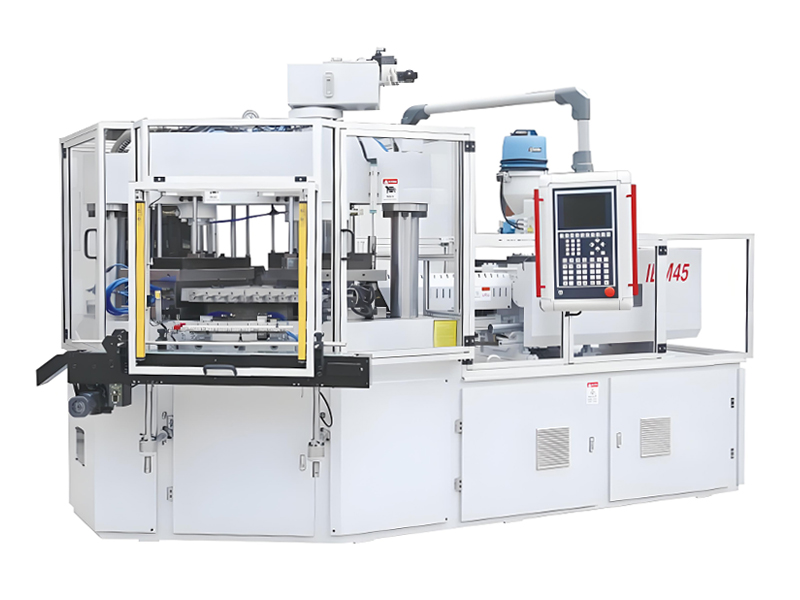
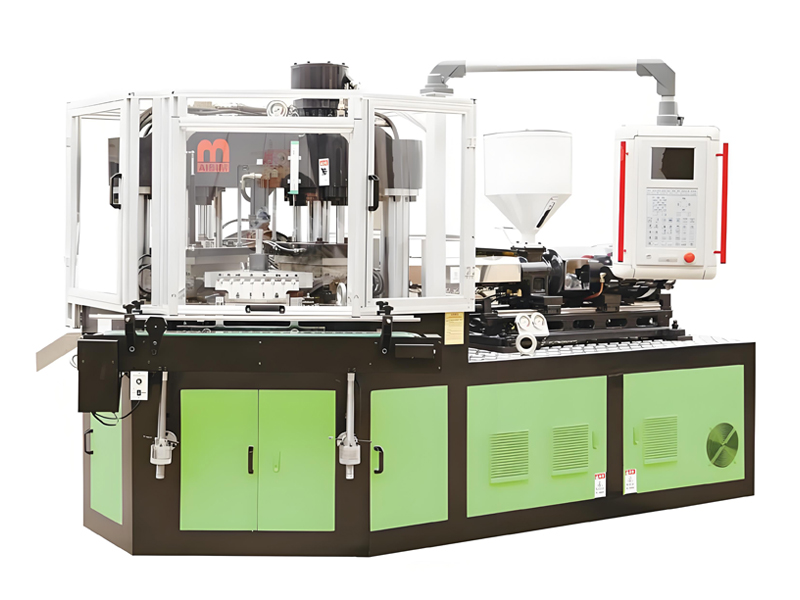
The AiBiM IBM65 injection blow molding machine is a medium-sized high-precision three-station rotary injection blow molding equipment independently developed and manufactured by AiBiM, specially tailored for mass production of high-standard pharmaceutical vials. It fills the market gap between small-capacity precision injection blow molding equipment and large-scale industrial molding equipment, focusing on the production of pharmaceutical vials with specifications ranging from 200ml to 1000ml, covering mainstream specifications of medical reagent vials, vaccine storage vials, lyophilized powder vials, and oral liquid pharmaceutical vials in the pharmaceutical industry. With a stable cycle time of 16 to 24 seconds, the equipment realizes integrated automatic production of injection parison molding, blow molding shaping, and finished product demolding, eliminating intermediate manual transfer links and effectively avoiding secondary contamination of pharmaceutical vials.
Different from ordinary injection blow molding machines for daily chemical packaging, the IBM65 machine has undergone comprehensive sanitary optimization and precision upgrading for pharmaceutical production scenarios. All parts in contact with raw materials and finished products adopt medical-grade safe materials, and the whole machine structure is designed for dust-free and easy cleaning, fully adapting to GMP-grade clean workshops. It can stably process multiple medical-grade raw materials including HDPE, LDPE, PP, and PETG, ensuring that the produced pharmaceutical vials have excellent chemical stability, low temperature resistance, and barrier properties, meeting the long-term storage and transportation requirements of pharmaceutical products.
1.2 Core Industry Pain Points Solved by IBM65 Machine
Traditional pharmaceutical vial production equipment faces many technical and production bottlenecks in actual operation. First, low molding precision leads to inconsistent vial wall thickness and uneven caliber, resulting in poor sealing performance of finished vials, which is prone to liquid leakage and bacterial invasion during pharmaceutical storage. Second, open structural design leads to easy accumulation of dust and impurities inside the equipment, failing to meet clean production standards and causing excessive microbial indicators of finished vials. Third, unstable parameter control leads to large batch quality differences, with a high defective rate, increasing raw material waste and production costs. Fourth, low automation requires manual intervention in multiple links, greatly improving the risk of artificial contamination.
The AiBiM IBM65 machine targets the above industry pain points for targeted technical optimization. Through servo closed-loop precision control, it realizes ultra-stable molding of pharmaceutical vials; through fully enclosed clean structural design, it eliminates dust and impurity pollution; through intelligent formula storage and parameter locking function, it ensures consistent batch quality; through full-process automatic production, it reduces manual operation links, comprehensively improving the production qualification rate and compliance of pharmaceutical vials. It has become the preferred core equipment for medium and large pharmaceutical packaging enterprises to upgrade clean production lines.
1.3 Core Compliance Certifications for Pharmaceutical Production
To adapt to the strict quality requirements of the global pharmaceutical industry, the AiBiM IBM65 injection blow molding machine has passed multiple international authoritative certifications. The whole machine complies with CE safety certification, ISO9001 quality management system certification, and ISO14644 clean room equipment standards. All material contact parts meet FDA medical-grade material specifications and EU RoHS environmental protection standards, ensuring no precipitation of harmful substances and no chemical reaction with pharmaceutical liquids. The equipment’s production process and finished product quality fully meet GMP pharmaceutical production management specifications, helping pharmaceutical enterprises quickly pass factory inspection and market compliance certification, and smoothly expand global pharmaceutical packaging market business.
2. Core Technical Advantages of IBM65 Machine for Pharmaceutical Vial Production
2.1 Ultra-High Precision Molding Technology for Standard Vial Dimensions
Pharmaceutical vials have extremely strict requirements on dimensional accuracy and wall thickness uniformity, which directly affect the assembly tightness, sealing stability and pressure resistance of finished products. The IBM65 machine adopts AiBiM’s independently developed three-station rotary synchronous control technology, equipped with high-precision servo drive system and microcomputer closed-loop parameter adjustment module. The injection pressure, blow molding pressure, rotation speed and molding temperature are all controlled in real time with high precision, and the pressure fluctuation error is controlled within ±1%, realizing zero-error stable molding of pharmaceutical vials.
In terms of dimensional control, the outer diameter tolerance of finished pharmaceutical vials produced by IBM65 machine is controlled within ±0.15mm, and the wall thickness uniformity deviation is less than 2%, far exceeding the ordinary industry standard of ±0.5mm tolerance. The caliber roundness and bottom flatness of the vial reach the highest international pharmaceutical packaging standards, ensuring perfect matching with medical stoppers and aluminum-plastic caps, effectively avoiding sealing gaps and liquid leakage problems. The precise molding technology eliminates defective products such as eccentric walls, deformed calibers and uneven bottom surfaces, and the product qualification rate is stably maintained above 99.2%, greatly reducing the scrap loss of high-value medical raw materials.
2.2 GMP-Compliant Clean Production Structural Design
Cleanliness is the most critical indicator of pharmaceutical vial production equipment. The IBM65 machine adopts a fully enclosed integrated clean structure design, which is completely different from the open frame structure of traditional blow molding equipment. The whole production area is isolated from the external environment through transparent dust-proof baffles, effectively preventing external dust, bacteria and impurities from entering the molding area. The equipment surface is made of 304 stainless steel with mirror polishing treatment, which is smooth and non-sticky dust, and can be quickly cleaned and disinfected without residual dirt and bacteria.
All rotating parts, transmission parts and dead corners of the equipment are optimized with a seamless structure, avoiding dust accumulation and dead corners that are difficult to clean. The material feeding, injection, blow molding and demolding links are all closed automatic operations, without manual contact with semi-finished and finished products. The equipment is equipped with a built-in micro negative pressure dust removal system, which can continuously discharge fine dust and material scraps generated during production, ensuring that the cleanliness of the production area reaches Class 10000 clean room standards. This professional clean design completely meets the daily disinfection and sterile production requirements of pharmaceutical workshops, ensuring that the produced vials have zero microbial contamination and zero foreign impurities.
2.3 Multi-Stage Precision Constant Temperature Plasticization System
Medical-grade plastic raw materials such as PP and HDPE have sensitive melting characteristics, and improper temperature control will easily lead to material degradation, impurity precipitation and uneven plasticization, affecting the safety and stability of pharmaceutical vials. The IBM65 machine is equipped with a multi-stage zoning independent temperature control system, with a temperature control accuracy of ±0.3℃, realizing segmented precise temperature control for the feeding section, compression section, plasticization section and die head section.
According to the melting characteristics of different medical raw materials, the system can automatically match the optimal temperature gradient, ensuring that the raw materials are fully and uniformly plasticized at constant temperature, avoiding local overheating carbonization and under-melting crystal point defects. The optimized special screw for medical materials strengthens the low-shear uniform mixing function, which can fully disperse medical-grade additives and antioxidants without destroying the molecular structure of raw materials. The melt extruded has uniform viscosity and stable performance, ensuring that the finished pharmaceutical vials have consistent chemical inertness, no harmful substance precipitation, and can adapt to long-term low-temperature storage and high-temperature sterilization of pharmaceuticals.
2.4 Stable Three-Station Rotary Automatic Production
The IBM65 machine adopts a mature three-station rotary integration design, integrating injection parison, blow molding shaping and finished product demolding into one automatic cycle. The rotary turntable runs stably with low vibration and low noise, and the station conversion precision is accurate without offset, ensuring synchronous coordination of each production link. The whole production process does not require manual intervention, realizing fully automatic continuous production from raw material feeding to finished product output.
Compared with two-stage molding equipment and semi-automatic production lines, the integrated three-station structure shortens the production cycle, avoids parison cooling deformation and secondary contamination caused by intermediate transfer, and greatly improves production efficiency and product stability. The equipment supports 24-hour uninterrupted full-load production, with stable hourly output of 180 to 220 qualified pharmaceutical vials, which can fully meet the large-batch and standardized production needs of pharmaceutical packaging enterprises. At the same time, the automatic production mode reduces manual operation links, effectively cuts down labor contamination risks, and meets the strict sterile production requirements of the pharmaceutical industry.
2.5 Intelligent Anti-Error and Quality Traceability System
To adapt to the standardized quality management of pharmaceutical enterprises, the IBM65 machine is equipped with an intelligent PLC touch control system, supporting one-key start and stop, automatic parameter matching and production data real-time monitoring. The system pre-stores mature production formulas for various specifications of pharmaceutical vials, realizing one-key switching of different products, avoiding quality fluctuations caused by manual parameter debugging errors.
The equipment has automatic fault diagnosis and early warning functions, which can monitor abnormal parameters such as temperature deviation, pressure fluctuation and station offset in real time, and automatically alarm and stop the machine to prevent defective products from flowing into the market. In addition, the system supports real-time recording of production data, including production time, product specifications, equipment operating parameters and output, realizing full-process quality traceability of each batch of products, which is convenient for pharmaceutical enterprises to complete quality inspection and filing, and meet the supervision requirements of pharmaceutical packaging quality traceability.
2.6 Energy-Saving and Low-Consumption Operating Performance
While ensuring high precision and clean production, the IBM65 machine is optimized for energy-saving performance. The whole machine adopts full servo energy-saving drive, and the motor power output is automatically adjusted according to the actual production load, avoiding invalid energy consumption of fixed-power motors. The heating system adopts far-infrared energy-saving heating rings, with high thermal efficiency and low heat loss, reducing heating energy consumption by more than 25% compared with traditional ordinary heating systems.
The optimized mechanical transmission structure reduces operating friction loss, and the equipment runs stably with low energy consumption. Long-term mass production can effectively reduce the enterprise’s electricity cost and comprehensive operating cost. At the same time, the low heat generation and low noise operation of the equipment improve the production environment of the clean workshop, reducing the load of workshop temperature control and noise reduction equipment, and realizing green and low-carbon production that meets pharmaceutical workshop standards.
3. Complete Production Process of Pharmaceutical Vials by IBM65 Machine
3.1 Medical-Grade Raw Material Pretreatment and Batching
The production of pharmaceutical vials puts forward ultra-high requirements on raw material purity and dryness. Before production, medical-grade PP, HDPE or PETG raw materials and food-grade auxiliary additives are accurately proportioned through an automatic closed batching system. The system realizes precise weighing without manual operation, avoiding raw material contamination and proportion deviation. For raw materials that are easy to absorb moisture, a special dehumidifying and drying device is used to control the raw material moisture content below 0.01%, preventing bubble defects inside the vial caused by moisture and ensuring the compactness and barrier performance of the finished product.
The whole batching and feeding process adopts fully closed pipeline transportation, no dust overflow, no external impurity mixing, ensuring the purity of raw materials. The system can store multiple sets of raw material proportion formulas, which can be quickly switched according to different pharmaceutical vial specifications and material requirements, realizing flexible production of multiple products and improving production flexibility.
3.2 Precision Injection Parison Molding
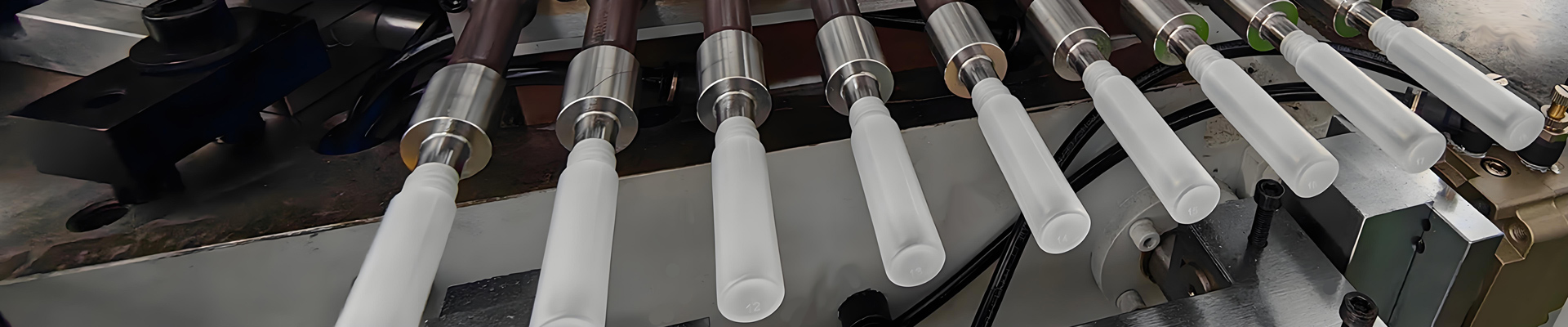
The pretreated pure raw materials are stably transported to the extruder barrel through a vacuum automatic feeding system. Under the action of multi-stage precise temperature control and low-shear screw stirring, the raw materials are fully and uniformly plasticized into high-purity melt. The servo injection system pushes the melt into the precision parison mold at constant pressure and constant speed to complete parison injection molding.
In this link, the IBM65 machine’s closed-loop pressure control system ensures stable melt injection pressure and uniform parison wall thickness. The medical-grade parison mold is polished with high precision, with smooth inner wall and no dead corners, ensuring that the surface of the molded parison is flat and smooth without impurities and scratches, laying a solid foundation for subsequent high-quality vial molding. The whole injection process is completed in a closed sterile environment, effectively avoiding secondary contamination of the parison.
3.3 Rotary Transfer and Closed Blow Molding Shaping
After the parison is molded, the three-station rotary turntable accurately transfers the parison to the blow molding station at a fixed angle, realizing seamless station switching without position deviation. The blow molding station adopts a fully enclosed sterile structure, and high-precision filtered clean compressed air is used for constant-pressure blow molding, ensuring uniform stress on the parison and tight fitting with the mold wall.
The constant-pressure blow molding technology of the IBM65 machine avoids local thin walls, deformation and wrinkles of the vial. The graded cooling and shaping mode makes the vial cool evenly, eliminating internal residual stress, ensuring stable dimensional accuracy and mechanical properties of the finished vial, and avoiding deformation and cracking during subsequent use and storage. The clean blow molding air source is filtered layer by layer to ensure no bacteria and dust, maintaining the sterile state of the vial during molding.
3.4 Automatic Demolding and Sterile Output
After the blow molding and cooling shaping are completed, the turntable transfers the finished vial to the demolding station. The equipment adopts a non-contact automatic demolding mechanism, which smoothly pushes out the finished vial without scratching or damaging the vial surface. The whole demolding process is automatically completed by mechanical structure, without manual contact, effectively avoiding artificial contamination.
The demolded finished pharmaceutical vials are directly output to the closed sterile conveying channel, and are automatically transported to the finished product sorting and packaging area. The equipment is equipped with a real-time online detection device, which automatically eliminates defective products with unqualified dimensions, surface defects and abnormal appearance, ensuring that all outgoing products meet pharmaceutical-grade quality standards.
3.5 Online Quality Inspection and Batch Packaging
The supporting online detection system of IBM65 machine continuously monitors the dimensional accuracy, wall thickness uniformity, surface smoothness and internal integrity of pharmaceutical vials in real time. All detection data is automatically recorded and uploaded to the system to form batch quality reports, realizing full-process quality traceability. Qualified finished vials enter the automatic sterile packaging link through the closed channel, avoiding exposure to the external environment and ensuring the cleanliness of finished products before leaving the factory.
4. Equipment Configuration and Detailed Price Analysis of IBM65 Machine
4.1 Standard Complete Equipment Configuration
The AiBiM IBM65 pharmaceutical-grade injection blow molding machine adopts a complete set of high-standard configuration tailored for pharmaceutical vial production, including core host system, precise mold system, closed feeding system, constant temperature control system, servo drive system, online detection system and sterile protection system. The core components such as screw, barrel and mold are made of high-purity medical-grade alloy materials, with wear resistance, corrosion resistance and no harmful precipitation, meeting long-term stable production requirements of pharmaceutical products. The whole machine is equipped with GMP-grade clean structural accessories and intelligent control modules, without additional modification for clean workshop production.
4.2 Detailed Price Quotation of Complete Machine
The FOB price of the standard configuration of AiBiM IBM65 pharmaceutical vial injection blow molding machine ranges from 68,000 US dollars to 79,000 US dollars. The specific price fluctuates according to mold quantity, customized functions and accessory configuration. The standard complete machine package includes the main injection blow molding host, one set of standard pharmaceutical vial mold (supporting conventional 200-1000ml vial production), automatic closed feeding system, multi-stage constant temperature control system, servo energy-saving drive system, online quality detection device and GMP clean protection structure.
Optional customized configurations include multi-cavity mold upgrading, intelligent automatic sorting system, sterile air purification system, remote monitoring module and personalized parameter formula customization, with the optional configuration price ranging from 3,000 to 8,000 US dollars. The equipment price includes factory commissioning and basic technical training services, with no hidden charges, ensuring transparent and cost-effective investment for customers.
4.3 Auxiliary Equipment Investment Cost
The supporting auxiliary equipment required for the IBM65 machine production line includes raw material dehumidifying and drying equipment, sterile air supply system, finished product automatic packaging machine and workshop dust removal and purification equipment, with a total auxiliary equipment investment of 7,500 to 10,500 US dollars. Compared with traditional pharmaceutical vial production lines that require multiple auxiliary modifications, the IBM65 machine has high integration, fewer supporting equipment, and lower one-time auxiliary investment, effectively reducing the overall project investment threshold.
5. Full Project Investment and Operating Cost Benefit Analysis
5.1 One-Time Fixed Total Investment
Taking the standard IBM65 complete production line as an example, the total one-time fixed investment of the project includes main equipment cost, auxiliary equipment cost, installation and commissioning cost and workshop adaptation cost. The main equipment investment is 68,000 to 79,000 US dollars, the auxiliary equipment investment is 7,500 to 10,500 US dollars, and the free on-site installation, commissioning and operator training services are provided by AiBiM. The workshop only needs to meet conventional GMP clean workshop standards, with a low adaptation cost of about 3,000 to 5,000 US dollars.
The total one-time investment of the entire pharmaceutical vial production project is 78,500 to 94,500 US dollars. The investment covers all links from equipment commissioning to formal mass production, realizing one-stop project launch and rapid production and profit.
5.2 Annual Power Consumption Operating Cost
The installed power of the IBM65 machine is 92kW. Due to the full servo energy-saving design, the actual hourly power consumption is only 62 to 68kWh. Calculated based on 16-hour daily production and 300-day annual working hours, the annual total power consumption is 297,600 to 326,400kWh. Based on the global average industrial electricity price of 0.12 US dollars per kWh, the annual electricity cost is 35,712 to 39,168 US dollars.
Compared with traditional non-energy-saving pharmaceutical blow molding equipment of the same specification, the IBM65 machine saves 22% to 28% of electricity every year, with an annual electricity cost saving of more than 10,000 US dollars, and the long-term energy-saving benefit is very significant.
5.3 Raw Material and Maintenance Cost
The main raw materials for pharmaceutical vials are medical-grade PP and HDPE particles, with a comprehensive market price of 1.4 to 1.7 US dollars per kilogram. Relying on the ultra-high precision molding technology of IBM65 machine, the product scrap rate is controlled below 0.8%, far lower than the 5% to 8% scrap rate of traditional equipment. Based on the annual output of 108,000 to 132,000 qualified pharmaceutical vials, the annual raw material saving is 35 to 60 tons, equivalent to a cost saving of 49,000 to 102,000 US dollars.
The IBM65 machine has stable structural performance and low failure rate. The annual routine maintenance cost including vulnerable parts replacement, equipment cleaning and technical inspection is only 3,200 to 4,200 US dollars, which is far lower than the maintenance cost of traditional pharmaceutical production equipment. The modular design of the equipment makes vulnerable parts replacement convenient and fast, reducing maintenance time and shutdown loss.
5.4 Labor Cost Saving Benefit
The IBM65 machine realizes full-process automatic production, and only 1 operator is needed for single-shift production, and double-shift production only requires 2 workers in total. Calculated based on the average monthly salary of 1,700 US dollars per worker, the annual labor cost is 40,800 US dollars. Traditional semi-automatic pharmaceutical vial production lines require 3 to 4 workers for normal operation, and the IBM65 machine can save more than 40,000 US dollars in annual labor costs for enterprises, greatly reducing manual management costs and artificial contamination risks.
5.5 Production Capacity and Investment Payback Period
The stable annual output of qualified pharmaceutical vials of the IBM65 production line is 108,000 to 132,000 pieces. The average market selling price of high-standard GMP-compliant pharmaceutical vials is 0.9 to 1.3 US dollars per piece. After deducting all costs of raw materials, electricity, labor and equipment depreciation, the annual net profit of a single production line is 280,000 to 460,000 US dollars. The comprehensive investment payback period is only 4 to 6 months, with ultra-high investment return rate.
The equipment has a service life of more than 15 years under standardized maintenance. After recovering the initial investment, it can bring long-term stable high profits for pharmaceutical packaging enterprises, with extremely prominent long-term investment value.
6. Main Application Scenarios of IBM65 Pharmaceutical Vial Production
6.1 Vaccine and Biological Reagent Packaging
Vaccine vials and biological reagent vials have the highest requirements on equipment cleanliness and product stability. The IBM65 machine’s GMP-compliant clean production design and ultra-precision molding performance can produce sterile, impurity-free and high-barrier pharmaceutical vials, which can effectively isolate external air and bacteria, ensuring the stability and safety of vaccines and biological reagents during long-term storage. It is the core equipment for professional production of high-end biological pharmaceutical packaging containers.
6.2 Lyophilized Powder and Medical Oral Liquid Packaging
Lyophilized powder vials require uniform wall thickness and strong pressure resistance to adapt to vacuum freeze-drying production and storage environments. Medical oral liquid vials require high chemical inertness to avoid chemical reaction with liquid medicines. The IBM65 machine’s stable molding quality and medical-grade material compatibility can fully meet the production requirements of the above two types of pharmaceutical vials, ensuring no harmful substance precipitation and stable product performance.
6.3 Medical Disposable Packaging Vials
Disposable medical pharmaceutical vials require low cost, high qualification rate and batch stable quality. The IBM65 machine’s high-efficiency automatic production and low scrap rate can realize large-scale low-cost production of disposable vials, while ensuring that the product meets medical safety standards, balancing production efficiency, cost control and product quality, and adapting to the large market demand for disposable medical packaging products.
7. Professional Selection Guide for IBM65 Pharmaceutical Grade Injection Blow Molding Machine
7.1 Match Production Specifications and Capacity Requirements
Enterprises mainly engaged in medium and large-capacity pharmaceutical vials (200-1000ml) and pursuing high-standard clean production are very suitable for selecting the IBM65 machine. It is necessary to confirm the daily output demand of the enterprise in advance. The IBM65 machine’s stable hourly output of 180-220 vials can fully meet the daily production demand of 3000-40000 pieces, which is suitable for medium-scale pharmaceutical packaging production projects. For small-batch and multi-specification customized production, the equipment’s one-key formula switching function can flexibly meet the demand.
7.2 Focus on Clean Production and Compliance Performance
When selecting pharmaceutical blow molding equipment, the primary consideration is whether the equipment meets GMP clean production standards and international medical safety certifications. The IBM65 machine’s full stainless steel clean structure, closed dust-free production design and complete medical-grade safety certifications can help enterprises quickly pass pharmaceutical factory inspections and product compliance certifications. Avoid selecting ordinary civil blow molding equipment modified simply, which cannot meet long-term pharmaceutical production compliance requirements and brings market supervision risks.
7.3 Evaluate Comprehensive Cost Performance
When evaluating equipment cost performance, it is necessary to comprehensively consider one-time investment cost and long-term operating cost. Although the initial investment of IBM65 machine is slightly higher than that of ordinary equipment, it has ultra-low scrap rate, low energy consumption and low maintenance cost. The comprehensive operating cost saved every year is far higher than the initial price difference, and the long-term total cost of ownership is lower. At the same time, high-quality pharmaceutical vials can obtain higher market premium and wider market access qualifications, with stronger comprehensive profit advantages.
7.4 Confirm Equipment Customization and After-Sales Support
According to the enterprise’s special production needs, confirm whether the equipment supports personalized customization such as multi-cavity mold upgrading and sterile system optimization. At the same time, pay attention to the manufacturer’s after-sales service capability. Professional after-sales technical support can ensure stable equipment operation, timely fault solving and long-term technical upgrading, avoiding production stagnation caused by equipment failure and affecting order delivery.
8. AiBiM Brand Service and After-Sales Support System
As a professional manufacturer of high-end injection blow molding machines focusing on pharmaceutical and food packaging equipment, AiBiM has rich R&D and manufacturing experience in the field of medical-grade blow molding equipment. All series of equipment including IBM65 undergo strict 72-hour full-load continuous trial operation and precision testing before delivery to ensure that each set of equipment meets pharmaceutical-grade production standards.
In the pre-sales stage, AiBiM professional technical teams provide one-on-one personalized solution customization according to customers’ production specifications, workshop conditions, capacity requirements and budget, and provide accurate project investment analysis and profit assessment reports to help customers avoid blind investment. Before equipment delivery, all parameters and functions are fully debugged to ensure stable performance after customer acceptance.
In the after-sales stage, AiBiM provides free on-site installation, commissioning and professional operator training services to help customers quickly master equipment operation, daily cleaning and maintenance skills, and realize rapid mass production. The equipment enjoys a 2-year full-machine free warranty and lifelong paid maintenance services. The 24-hour remote technical support system can quickly respond to customer faults and technical consultation needs, ensuring zero delay in production and effectively reducing customer operation risks and maintenance costs.
9. Conclusion
With the continuous upgrading of global pharmaceutical packaging safety standards, pharmaceutical vial production is developing towards higher precision, cleaner production, more stable batch quality and lower comprehensive cost. Traditional ordinary injection blow molding equipment can no longer meet the strict GMP production requirements and high-quality product standards of the pharmaceutical industry due to insufficient precision, poor cleanliness and unstable performance.
As a professional pharmaceutical-grade injection blow molding equipment, the AiBiM IBM65 machine relies on ultra-high precision molding technology, GMP-compliant clean structural design, intelligent stable control system and low-energy high-efficiency operating performance to solve various production pain points in the pharmaceutical vial industry. It has the advantages of high product qualification rate, low comprehensive operating cost, short investment payback period and perfect compliance certification, which can help pharmaceutical packaging enterprises effectively improve product quality, meet international medical safety standards, expand high-end pharmaceutical market share, and create stable and long-term economic benefits. For global enterprises engaged in pharmaceutical vial production, the AiBiM IBM65 machine is the most cost-effective professional high-precision clean injection blow molding equipment choice.