In the rapidly evolving cosmetics industry, manufacturers are increasingly turning to sustainable packaging solutions that balance environmental responsibility with consumer convenience. The injection blow molding machine has emerged as a game-changing technology for producing cosmetic spray bottles with refillable designs that meet both regulatory requirements and market demands. This comprehensive guide explores how modern injection blow molding technology enables the creation of high-quality, refillable cosmetic spray bottles while addressing the technical, economic, and environmental considerations that influence purchasing decisions for cosmetics packaging manufacturers worldwide.
The global cosmetics packaging market is experiencing a significant shift toward sustainable solutions, with refillable packaging representing one of the fastest-growing segments. Consumers are becoming increasingly environmentally conscious and actively seeking products that minimize waste and reduce their carbon footprint. This shift in consumer behavior has created substantial demand for cosmetic companies to adopt refillable packaging solutions, which in turn drives the need for advanced manufacturing equipment capable of producing high-quality, durable containers designed for multiple use cycles. The injection blow molding machine offers the precision, consistency, and versatility required to manufacture these sophisticated packaging solutions at scale while maintaining the aesthetic and functional standards expected in the premium cosmetics market.
Understanding Injection Blow Molding Technology for Cosmetic Packaging
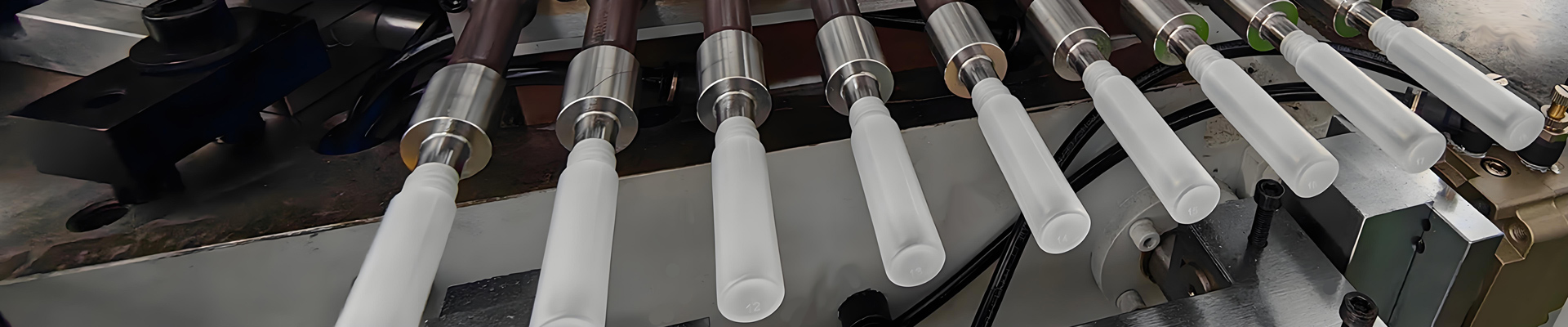
Injection blow molding represents a sophisticated manufacturing process that combines the precision of injection molding with the shaping capabilities of blow molding to create hollow plastic containers with exceptional quality and consistency. The process begins with molten plastic being injected into a core rod to form a preform, which is then transferred to a blow mold where compressed air expands the material against the mold cavity walls. This combination of processes produces containers with superior dimensional accuracy, smooth inner and outer surfaces, and consistent wall thickness distribution throughout the bottle geometry. For cosmetic spray bottles, these characteristics are essential for ensuring proper functionality, leak-free operation, and aesthetic appeal that meets the exacting standards of the beauty industry.
The technology has evolved significantly over the past decades, with modern injection blow molding machines incorporating advanced control systems, precision temperature management, and automated quality monitoring capabilities. These technological advancements have expanded the range of applications for injection blow molded containers and enabled manufacturers to produce increasingly sophisticated designs that were previously impossible or economically unfeasible. The ability to produce complex geometries with precision-molded threads, integral hinges, and specialized neck finishes makes injection blow molding particularly well-suited for cosmetic packaging applications where both functionality and visual appearance are critical success factors.
The Three-Station Rotary Injection Blow Molding Process
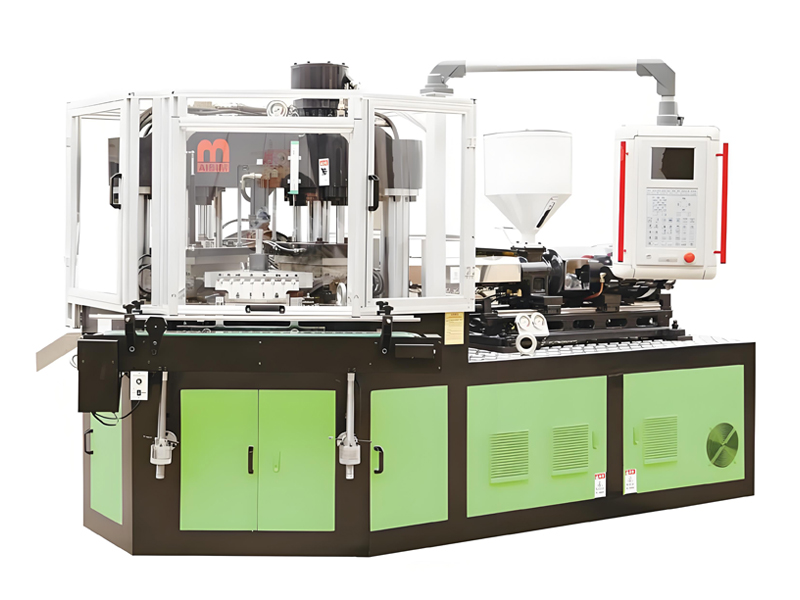
The three-station rotary injection blow molding machine represents the most advanced configuration for high-volume cosmetic bottle production. This system features separate stations for injection, blowing, and ejection, with a rotating carousel design that enables continuous production with minimal material waste and maximum throughput efficiency. The rotary configuration reduces cycle times compared to linear machines, making it ideal for manufacturers with high-volume production requirements or those seeking to optimize their manufacturing economics for competitive global markets. The precision engineering of these machines ensures consistent quality across millions of cycles, which is essential for cosmetics manufacturers who cannot compromise on product consistency.
The injection station forms the preform with exceptional precision, controlling variables such as injection speed, pressure, and temperature to achieve optimal material distribution and molecular orientation in the preform structure. This control is particularly important for cosmetic bottles that will undergo subsequent processing steps such as coating, printing, or filling. The preform quality directly influences the final bottle properties, including clarity, strength, and resistance to chemical attack from cosmetic formulations. Modern control systems can monitor and adjust these parameters in real-time, ensuring consistent quality even when processing different materials or bottle designs on the same production line.
Materials Suitable for Cosmetic Spray Bottle Manufacturing
Material selection plays a crucial role in determining the performance characteristics and sustainability credentials of refillable cosmetic spray bottles. High-density polyethylene remains the most widely used material for cosmetic packaging due to its excellent chemical resistance, durability, and processing characteristics. HDPE offers superior resistance to a wide range of cosmetic formulations including water-based products, oil-based preparations, and alcohol-containing solutions commonly found in perfumes and fragrances. The material can withstand the repeated use cycles required for refillable designs without significant degradation in mechanical properties or visual appearance.
Polyethylene terephthalate has gained significant popularity for transparent cosmetic packaging applications where product visibility is a key marketing consideration. PET offers exceptional clarity and glass-like appearance while providing excellent barrier properties against moisture and oxygen transmission. The material is fully recyclable and has an established recycling infrastructure, enhancing the sustainability credentials of cosmetic products packaged in PET containers. Modern injection blow molding grades of PET have been specifically developed for improved processing characteristics in the blow molding environment, offering faster cycle times and better consistency than traditional bottle-grade resins.
Cyclic olefin copolymer represents a premium material option for high-end cosmetic packaging applications requiring exceptional clarity, chemical resistance, and design flexibility. COC offers unique optical properties that exceed those of both glass and standard plastics, making it ideal for products where visual presentation is paramount. The material also provides excellent barrier properties against oxygen and moisture while maintaining compatibility with a wide range of cosmetic formulations. Although COC commands a premium price compared to standard resins, the enhanced product protection and premium aesthetic qualities justify the additional cost for luxury cosmetics manufacturers seeking to differentiate their products in competitive markets.
Designing Refillable Cosmetic Spray Bottles
The design of refillable cosmetic spray bottles requires careful consideration of multiple factors including durability, ease of use, aesthetic appeal, and manufacturing feasibility. Unlike single-use containers, refillable bottles must withstand repeated filling and cleaning cycles without compromising their functional or visual properties. This durability requirement influences every aspect of the design from wall thickness specifications to thread design and surface finish selection. Engineers must balance the need for robust construction against material costs and overall container weight, which directly impacts both manufacturing economics and environmental footprint.
Wall Thickness Optimization for Repeated Use Cycles
Refillable spray bottles require optimized wall thickness specifications that provide sufficient structural integrity for multiple use cycles while minimizing material consumption and manufacturing costs. The injection blow molding process enables precise control over wall thickness distribution, allowing designers to add material in high-stress areas such as the neck finish and spray mechanism attachment points while reducing thickness in low-stress regions to minimize weight and material costs. Typical wall thickness for refillable cosmetic bottles ranges from 0.8mm to 2.0mm depending on the bottle size, intended use cycles, and material selection.
Finite element analysis and simulation tools enable designers to optimize wall thickness distributions by identifying stress concentrations and predicting failure modes under expected use conditions. These analytical approaches reduce the need for extensive physical prototyping and enable faster design iterations, accelerating time-to-market for new refillable bottle designs. The simulation process considers factors such as drop resistance, pressure resistance from spray mechanism operation, and fatigue from repeated opening and closing cycles. The resulting optimized designs achieve the required durability with minimum material usage, improving both manufacturing economics and environmental sustainability metrics.
Neck Finish and Thread Design for Repeated Access
The neck finish design of refillable cosmetic bottles must accommodate repeated opening and closing cycles without thread degradation or seal failure. Unlike single-use containers with twist-off caps, refillable bottles require robust thread designs capable of maintaining secure closures through hundreds of use cycles. The injection blow molding process enables production of precision-molded threads with consistent dimensions that ensure reliable sealing performance throughout the product lifetime. Thread designs may incorporate multiple lead starts for faster closure operation or reinforced thread sections for enhanced durability in high-use applications.
Modern neck finish designs often incorporate bayonet-style closures or specialized quick-connect fittings that provide secure seals while enabling rapid container access for refilling. These closure systems distribute sealing forces more evenly than traditional threaded closures, reducing wear on sealing surfaces and extending product lifetime. The injection blow molding process can produce these complex closure geometries with high precision, ensuring consistent performance across production volumes. Designers must also consider compatibility with standard filling equipment and spray mechanisms, which often requires coordination with component suppliers to ensure proper fit and function.
Leak Prevention and Seal Technology
Leak prevention represents a critical design requirement for cosmetic spray bottles, particularly those containing valuable formulations that could cause damage or staining if spilled. Refillable designs face additional challenges as seals may degrade over repeated use cycles and cleaning processes. Modern seal technologies address these challenges through advanced material formulations and innovative geometric designs that maintain sealing performance despite wear and environmental exposure. Injection blow molding enables production of complex seal geometries that would be difficult or impossible to achieve with other manufacturing methods.
The selection of elastomeric sealing materials must consider compatibility with cosmetic formulations, resistance to cleaning agents, and performance over the expected temperature range of storage and use conditions. Common seal materials include silicone rubber for general-purpose applications, fluorocarbon elastomers for aggressive formulations containing solvents or oils, and specialized compounds developed for specific cosmetic ingredients. The sealing geometry must maintain consistent compression throughout the closure cycle while accommodating dimensional variations that occur with thermal expansion and material aging. Careful design of the sealing system ensures reliable leak-free performance throughout the hundreds of fill cycles expected from refillable cosmetic packaging.
Manufacturing Considerations and Cost Analysis
Successful implementation of injection blow molding for refillable cosmetic bottle production requires careful evaluation of equipment specifications, production economics, and quality control requirements. The investment in injection blow molding equipment represents a significant commitment that must be justified through production volume, product margins, and competitive positioning. Manufacturers must balance capital investment against production capacity requirements and per-unit manufacturing costs to determine the optimal configuration for their specific market circumstances.
Equipment Investment and Capacity Planning
Entry-level single-station injection blow molding machines suitable for small-scale production or product development typically range from thirty thousand to fifty thousand dollars depending on specifications and manufacturer. These machines offer reduced throughput compared to rotary configurations but provide the flexibility and lower capital commitment appropriate for initial market entry or specialized niche production. Single-station machines are particularly suitable for manufacturers producing multiple bottle designs in smaller quantities or those requiring frequent product changeovers during production runs.
High-performance rotary injection blow molding machines designed for high-volume production typically range from one hundred fifty thousand to three hundred thousand dollars depending on cavity count, automation level, and control system sophistication. These machines can produce thousands of bottles per hour per cavity, with multi-cavity configurations enabling production rates exceeding ten thousand bottles per hour. The per-unit manufacturing cost advantage of rotary machines becomes significant at production volumes exceeding one million units annually, making this equipment configuration the preferred choice for established cosmetics packaging suppliers serving major brand customers.
Total manufacturing facility costs extend beyond equipment purchase to include installation, tooling, auxiliary equipment, and facility modifications required for production operations. Tooling costs for injection blow molds range from twenty thousand to one hundred thousand dollars depending on cavity complexity, material requirements, and quality specifications. The mold represents a long-term investment that can produce tens of millions of bottles over its operational lifetime, making tooling cost a relatively minor factor in overall manufacturing economics for high-volume production scenarios. Manufacturers should also budget for quality control equipment, material handling systems, and production management software as part of a complete manufacturing solution.
Production Cost Breakdown and Optimization
Raw material costs represent the largest component of injection blow molding production economics, typically accounting for forty to sixty percent of total per-unit manufacturing cost depending on material selection and bottle specifications. Material prices fluctuate based on petroleum feedstock costs, supply-demand dynamics, and regional market conditions. HDPE resin prices typically range from one dollar to one dollar fifty cents per kilogram while PET grades suitable for injection blow molding range from one dollar twenty cents to two dollars per kilogram. Premium materials such as COC command significantly higher prices, ranging from five dollars to ten dollars per kilogram depending on grade and supplier.
Energy consumption in injection blow molding operations varies based on machine efficiency, production rates, and facility configuration. Modern variable-frequency drive systems and energy recovery technologies have significantly reduced energy requirements compared to older equipment generations. Energy costs typically range from five to fifteen percent of total manufacturing cost, representing a relatively minor factor in overall production economics but still worthy of optimization through equipment selection and operational practices. Machine selection should consider energy efficiency ratings and the availability of energy-saving features that can reduce operating costs over the equipment lifetime.
Labor costs depend heavily on regional market conditions and the degree of automation incorporated into the production system. Fully automated production lines with minimal human intervention can achieve labor costs below five percent of total manufacturing cost while maintaining consistent quality and high throughput. Semi-automated configurations may require additional operators for material handling, quality inspection, and equipment adjustment, increasing labor costs to fifteen to twenty-five percent of total production cost. The optimal balance between automation investment and labor costs depends on local wage rates, production volume requirements, and the availability of skilled operators in the manufacturing region.
Quality Control and Assurance Requirements
Cosmetic packaging quality requirements mandate comprehensive inspection and testing protocols to ensure that bottles meet functional, safety, and aesthetic specifications throughout production. Visual inspection systems can detect surface defects, flash, and dimensional variations that might compromise product appearance or function. Automated vision systems provide consistent inspection quality while reducing labor requirements for routine quality verification tasks. More sophisticated inspection technologies including X-ray and ultrasonic testing can verify internal wall thickness distribution and detect internal defects that might not be visible from external inspection alone.
Functional testing of spray bottles must verify proper operation of spray mechanisms, secure closure sealing, and resistance to leakage under expected use conditions. Testing protocols should simulate actual use conditions including repeated opening and closing cycles, pressure cycling from spray operation, and exposure to temperature variations during storage and transport. Regulatory compliance testing may also be required depending on target markets, including child-resistance testing for certain product categories and compatibility testing with specific cosmetic formulations. Investment in comprehensive quality control infrastructure ensures that production meets customer requirements and regulatory standards while minimizing costly quality failures and product returns.
Market Trends and Business Opportunities
The shift toward sustainable packaging in the cosmetics industry creates substantial market opportunities for manufacturers capable of producing high-quality refillable containers. Major cosmetics brands have announced ambitious sustainability commitments that include increasing the proportion of refillable or reusable packaging in their product portfolios. These commitments translate into growing demand for sophisticated refillable packaging solutions that can meet consumer expectations for quality, convenience, and environmental responsibility. Manufacturers who invest in injection blow molding capabilities now position themselves to capture market share in this rapidly expanding segment.
Consumer Preferences and Market Drivers
Research indicates that a significant and growing proportion of consumers consider environmental sustainability when making purchase decisions, with younger demographic segments showing particularly strong preferences for sustainable products and packaging. This consumer sentiment drives brand owner investment in sustainable packaging solutions, creating pull-through demand for refillable cosmetic containers at the retail level. Premium positioning around sustainability enables brands to justify price premiums that support the higher manufacturing costs associated with refillable packaging designs.
The convenience factor of refillable packaging has also improved significantly as refill systems and infrastructure have become more widely available. Major retailers now offer refill stations for cosmetic products, enabling consumers to conveniently replenish their favorite products without purchasing new containers. This retail infrastructure development removes the primary barrier to refillable packaging adoption by making the refilling process as convenient as purchasing new products. As refill infrastructure continues to expand, demand for refillable cosmetic packaging will likely accelerate, creating substantial growth opportunities for injection blow molding manufacturers positioned to serve this market.
Regulatory Environment and Compliance Considerations
Regulatory requirements for cosmetic packaging vary by market but generally include provisions for material safety, labeling, and child-resistance for certain product categories. Refillable packaging must meet the same regulatory requirements as single-use containers, with additional considerations around durability testing and refill process validation. The injection blow molding process produces containers from materials that are generally recognized as safe for cosmetic contact, but manufacturers should verify compliance with specific regulatory requirements in target markets including REACH compliance in Europe and FDA regulations in the United States.
Extended producer responsibility regulations in various jurisdictions create additional incentives for refillable packaging adoption by requiring producers to take responsibility for end-of-life packaging disposal. These regulations make refillable packaging increasingly attractive from a total cost perspective by reducing or eliminating producer responsibility fees for containers designed for reuse. Manufacturers should monitor regulatory developments in their target markets to anticipate policy changes that might accelerate demand for refillable packaging solutions and position their manufacturing capabilities accordingly.
AiBiM Injection Blow Molding Machine Solutions for Cosmetic Packaging
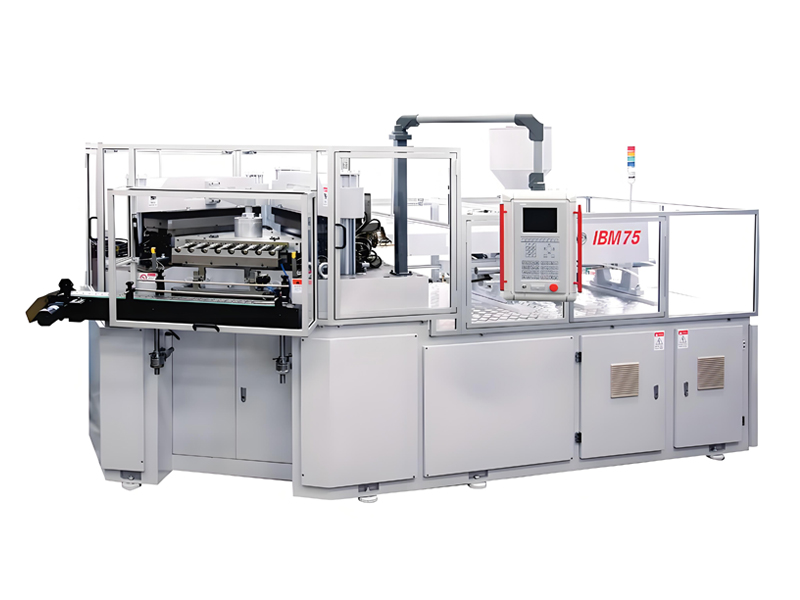
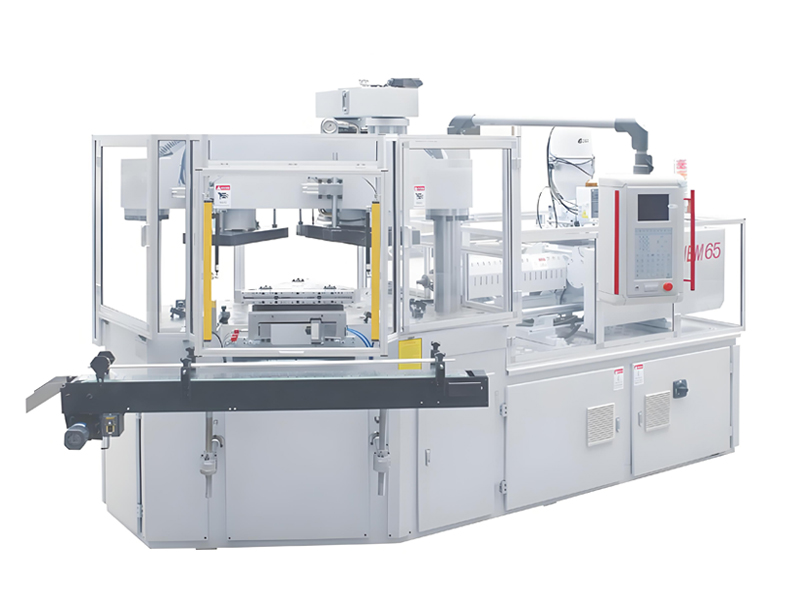
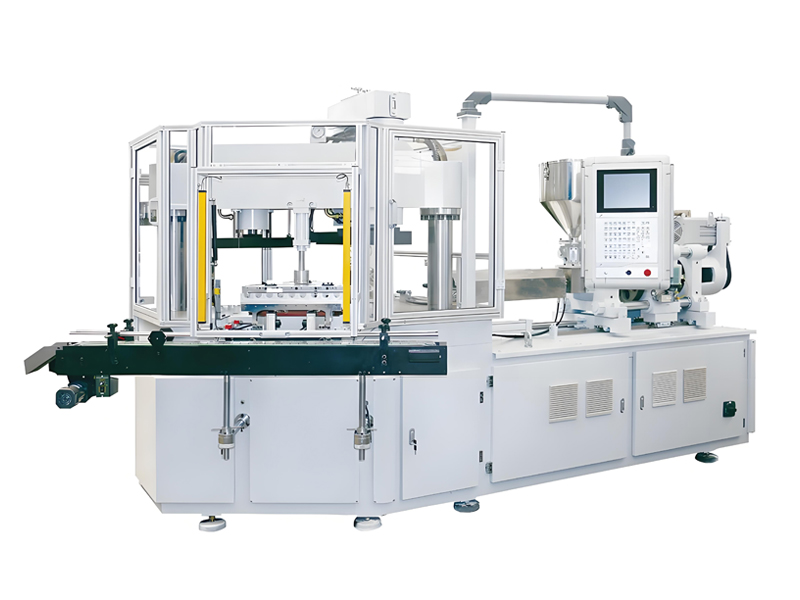
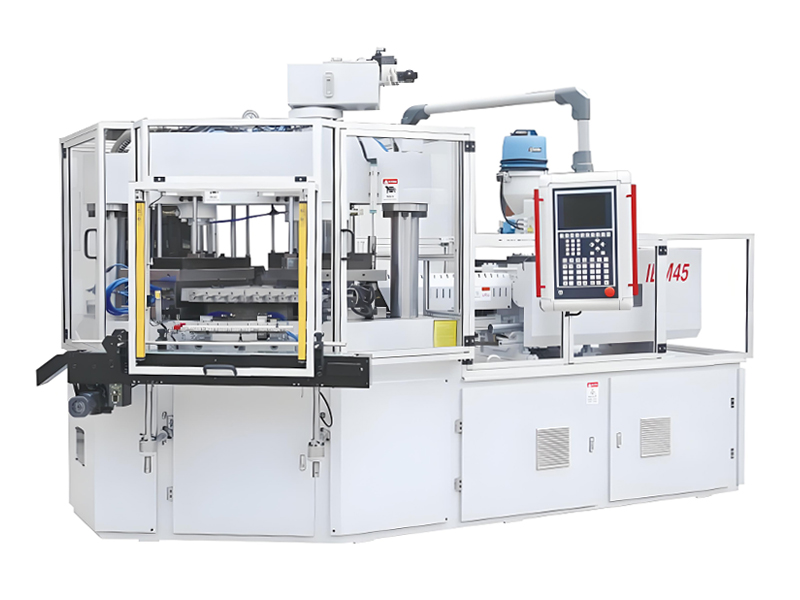
AiBiM specializes in manufacturing injection blow molding machines optimized for cosmetic packaging production, offering equipment configurations that address the specific requirements of this demanding application sector. The company combines advanced engineering with manufacturing expertise to deliver equipment that meets the quality, efficiency, and reliability expectations of cosmetics packaging producers. AiBiM machines incorporate precision control systems, durable construction, and operator-friendly interfaces that enable consistent production of high-quality cosmetic containers while minimizing waste and maximizing equipment utilization.
Equipment Features for Cosmetic Bottle Manufacturing
AiBiM injection blow molding machines feature precision temperature control systems that ensure optimal material processing conditions throughout the production cycle. Consistent temperature management is essential for achieving the material properties and surface quality required for premium cosmetic packaging applications. The control system monitors and adjusts heating and cooling parameters in real-time, compensating for variations in material properties, ambient conditions, and equipment status to maintain consistent product quality.
The robust construction of AiBiM machines ensures long-term reliability in demanding production environments, with components selected for durability and ease of maintenance. The mechanical systems incorporate precision-machined platens, hardened guide systems, and high-quality hydraulic or servo-electric drive systems that provide consistent performance through millions of production cycles. This equipment durability translates into lower maintenance costs and higher equipment availability, contributing to improved manufacturing economics over the equipment lifetime.
Technical Support and Service Capabilities
AiBiM provides comprehensive technical support services that enable customers to maximize the performance and productivity of their injection blow molding equipment. The technical support team includes experienced engineers who can assist with process optimization, troubleshooting, and equipment configuration to meet specific production requirements. Remote diagnostic capabilities allow support engineers to analyze equipment performance and identify optimization opportunities without requiring on-site visits, reducing downtime and support costs for customers worldwide.
Training programs ensure that customer operators develop the skills and knowledge required to operate injection blow molding equipment effectively and safely. Comprehensive operator training covers equipment controls, process setup, troubleshooting procedures, and preventive maintenance practices. Ongoing technical education resources help operators maintain their skills and stay current with new equipment capabilities and process developments. This investment in operator development contributes to consistent quality and efficient production operations over the equipment lifetime.
Conclusion and Implementation Recommendations
The production of refillable cosmetic spray bottles using injection blow molding technology represents a compelling opportunity for manufacturers seeking to serve the growing sustainable packaging market. The combination of process capabilities, material options, and design flexibility enables production of high-quality containers that meet consumer expectations while addressing environmental concerns driving market transformation. Successful implementation requires careful planning across equipment selection, process development, and market positioning to capture the full potential of this market opportunity.
Manufacturers considering investment in injection blow molding capabilities should begin with comprehensive market and technical assessments that evaluate production requirements, competitive positioning, and investment economics. Equipment selection should consider current production volumes, anticipated growth, and the specific requirements of target customers in the cosmetics packaging sector. Process development should include extensive trials with actual materials and bottle designs to verify capability and optimize parameters before committing to full-scale production.
The partnership with an experienced equipment supplier such as AiBiM can significantly reduce implementation risk and accelerate time-to-market for new injection blow molding capabilities. Comprehensive technical support, process expertise, and equipment reliability enable manufacturers to focus on their core competencies while building the manufacturing capabilities required to compete in the dynamic cosmetics packaging market. The combination of sustainable packaging trends, consumer preferences, and regulatory drivers creates favorable market conditions for manufacturers prepared to invest in injection blow molding technology for cosmetic spray bottle production.