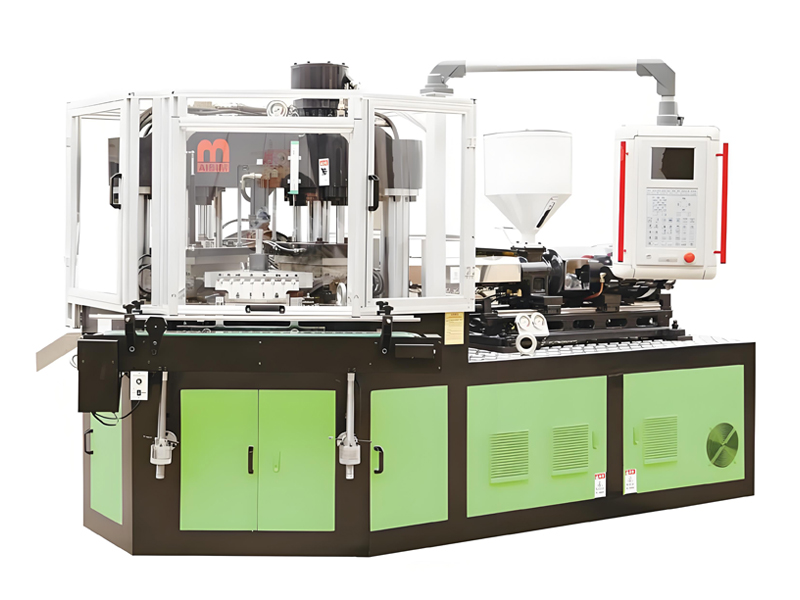
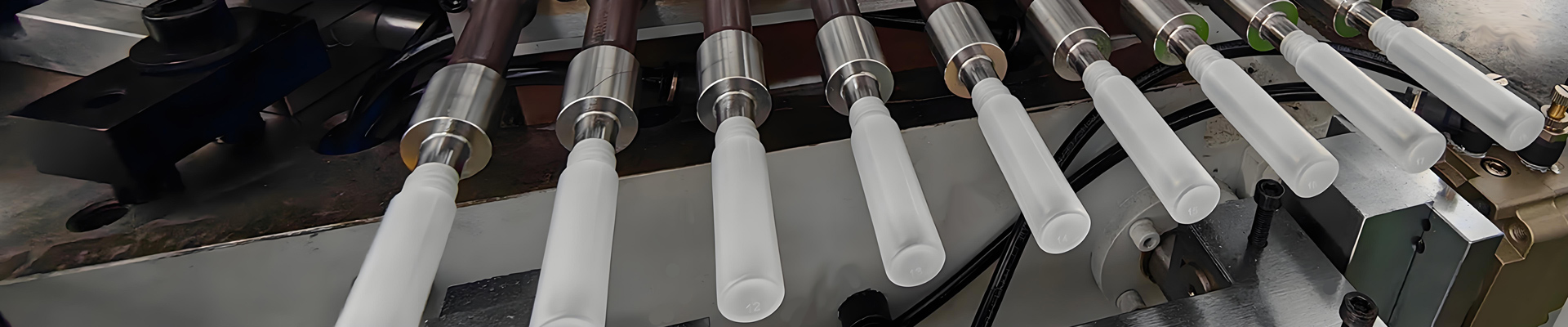
Industrial sample bottles represent critical components across chemical processing, pharmaceutical manufacturing, quality control laboratories, and research facilities where leak-proof performance is absolutely essential. AiBiM injection blow molding machines provide advanced technological solutions for manufacturing industrial sample bottles with exceptional leak-proof characteristics, meeting the most stringent quality requirements for hazardous material containment and precision sample preservation. These specialized machines combine precision engineering, advanced processing control, and quality assurance systems to produce sample containers that maintain product integrity under demanding storage and transportation conditions.
The leak-proof performance requirements for industrial sample bottles vary significantly based on application requirements, from general chemical sample storage to hazardous material containment requiring UN certification for transport. AiBiM machines address these diverse requirements through configurable processing parameters, mold design capabilities, and material selection options that enable production of sample bottles optimized for specific application requirements. The result is sample containers that provide reliable leak-proof performance while maintaining dimensional accuracy, material compatibility, and cost-effectiveness.
Industrial Sample Bottle Requirements
Leak-Proof Performance Standards
Leak-proof performance requirements for industrial sample bottles are governed by multiple standards and regulations depending on application and transportation requirements. For general laboratory use, sample bottles must maintain integrity during storage and handling without leakage that would compromise sample validity or create safety hazards. More stringent requirements apply to hazardous material containers that must meet UN packaging standards for safe transportation, including specific testing protocols for leak-proof performance under various conditions.
AiBiM injection blow molding machines produce sample bottles capable of meeting UN packaging standards including UN 3H1 classification for plastic containers used for solid hazardous materials and UN 3H2 for liquid hazardous materials. These classifications require containers to pass rigorous testing including drop tests, stacking tests, and leak testing at specific pressure levels. The precision capabilities of AiBiM machines enable production of containers that consistently pass these demanding tests, providing manufacturers with confidence that their products meet regulatory requirements.
Leak testing standards for industrial sample bottles typically require containers to withstand internal pressures without leakage, with requirements varying based on application. Pharmaceutical sample bottles often require leak testing at 0.3-0.5 MPa, while chemical sample bottles may require testing at 0.6-1.0 MPa depending on material compatibility and transportation requirements. AiBiM machines produce bottles with neck finishes and sealing surfaces that meet or exceed these requirements, ensuring reliable performance under testing and use conditions.
Material Compatibility Considerations
Industrial sample bottles must be compatible with diverse chemical substances ranging from mild aqueous solutions to aggressive organic solvents and acids. Material selection represents the primary factor in ensuring chemical compatibility, with different materials offering resistance characteristics to various chemical classes. AiBiM machines process a wide range of materials including HDPE, PP, PVC, and PC, enabling selection of optimal materials for specific sample compatibility requirements.
High-density polyethylene (HDPE) represents the most common material for general sample bottle applications due to its excellent chemical resistance and cost-effectiveness. AiBiM machines process HDPE with precision control that maintains consistent wall thickness and dimensional accuracy, critical for leak-proof performance. The processing control ensures that HDPE containers meet dimensional specifications without variations that could affect cap engagement or sealing surface quality, both critical factors for leak-proof performance.
Polypropylene (PP) provides enhanced chemical resistance to higher temperature applications and certain organic solvents. AiBiM machines process PP with temperature control that maintains material properties while achieving dimensional accuracy. The precision processing ensures that PP containers maintain consistent material properties throughout production, preventing variations in chemical resistance or physical properties that could affect leak-proof performance with specific sample types.
Polyvinyl chloride (PVC) provides excellent resistance to acids and oxidizing agents, making it suitable for specific industrial sample applications. AiBiM machines process PVC with precise temperature control that prevents thermal degradation that could compromise chemical resistance or cause discoloration. The processing control maintains material integrity while achieving the dimensional accuracy required for reliable cap engagement and leak-proof sealing.
Dimensional Accuracy Requirements
Dimensional accuracy represents a critical factor for leak-proof sample bottle performance, as variations in neck diameter, thread profile, or sealing surface quality can prevent proper cap engagement and create leak paths. Industrial sample bottles typically require neck diameter tolerances within 0.05mm to ensure consistent cap fit across production runs. AiBiM machines maintain these tolerances through precision core rod positioning and neck mold design that ensures consistent neck formation.
Thread profile accuracy represents another critical dimensional requirement, as thread variations can prevent proper cap engagement or create leak paths at thread interfaces. Industrial sample bottles typically require thread tolerance within 0.02mm to ensure reliable cap engagement across multiple cap types. AiBiM machines achieve this thread accuracy through precision neck mold inserts and core rod positioning that maintains alignment within 0.01mm, ensuring consistent thread formation across production runs.
Sealing surface quality represents the third critical dimensional factor for leak-proof performance. The area where the cap makes contact with the bottle must be smooth and dimensionally consistent to create an effective seal. AiBiM machines maintain sealing surface quality within surface finish requirements of Ra 0.4 or better, ensuring consistent contact between cap and bottle without surface irregularities that could create leak paths.
AiBiM Sample Bottle Machine Specifications
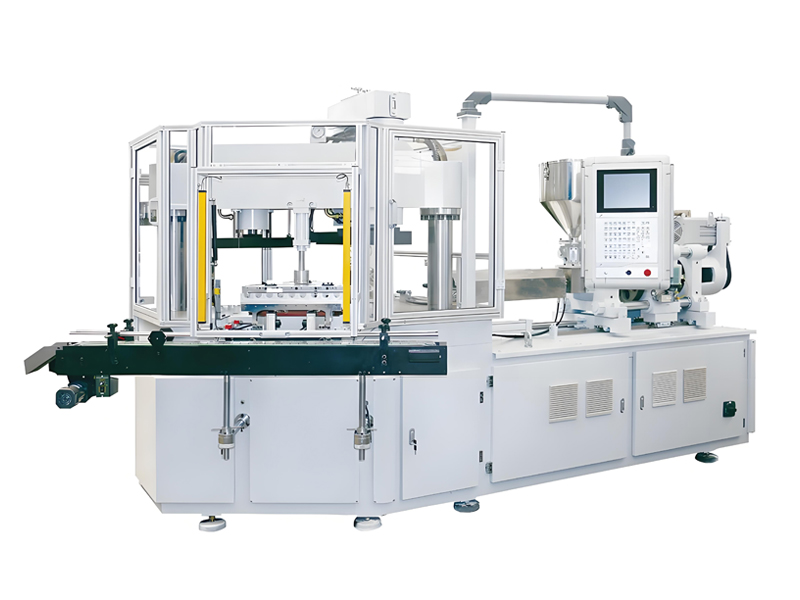
IBM35 Small Sample Bottle Model
The IBM35 represents AiBiM’s compact solution for small sample bottle production, ideal for containers ranging from 3ml to 600ml with exceptional precision for leak-proof performance. This model features a 40mm screw diameter with maximum injection capacity of 220cm3, providing adequate capacity for small sample bottles while maintaining precise control over material delivery. The machine’s injection clamping force of 350kN and blow clamping force of 30kN provide appropriate force levels for small containers while maintaining precise control.
Technical specifications for the IBM35 include temperature control across multiple heating zones with accuracy within 1 degree Celsius, ensuring consistent material flow and solidification for leak-proof performance. The machine’s compact dimensions of 3100x1200x2200mm make it suitable for laboratories and production facilities with limited space while maintaining the precision capabilities required for reliable sample bottle production. Total power consumption of 25kW provides energy-efficient operation for continuous production.
The IBM35 incorporates precision core rod positioning systems that maintain alignment within 0.01mm, ensuring consistent neck formation for leak-proof performance. The machine’s rotary indexing system maintains precise positioning accuracy across millions of cycles, ensuring long-term precision consistency without degradation that could affect leak-proof performance over time. The control system stores parameter sets for different sample bottle types, enabling rapid changeovers while maintaining precision across product lines.
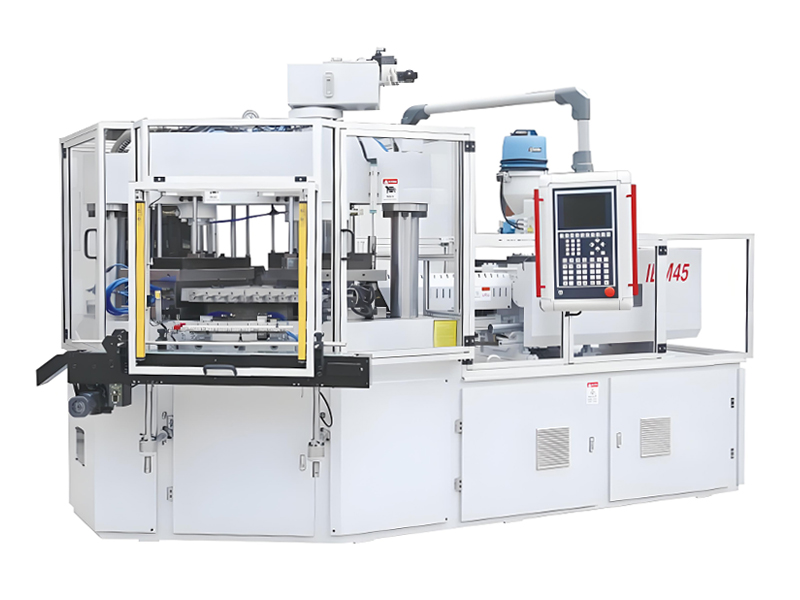
IBM45 Mid-Range Sample Bottle Model
The IBM45 extends AiBiM’s sample bottle production capabilities to containers ranging from 5ml to 600ml with increased capacity for medium-sized sample bottles. This model features a 45mm screw diameter with maximum injection capacity of 260cm3, providing enhanced material throughput while maintaining precise control. The machine’s injection clamping force of 450kN and blow clamping force of 78kN provide increased force capacity for larger sample bottles while maintaining precise control for leak-proof performance.
Technical specifications for the IBM45 include enhanced temperature control with 3 heating zones plus mold heating capability, enabling precise temperature profiling for materials requiring specific processing characteristics. The machine’s dimensions of 3500x1400x2300mm provide adequate capacity for multiple cavity molds while maintaining compact efficiency. Total power consumption of 35kW balances increased capacity with reasonable energy efficiency.
The IBM45 features advanced process monitoring systems that track critical parameters affecting leak-proof performance including injection pressure, blow pressure, and material temperature. These monitoring systems detect parameter variations that could affect dimensional accuracy or material properties that could compromise leak-proof performance. The systems provide real-time alerts enabling operators to take corrective action before defects occur, maintaining consistent leak-proof performance.
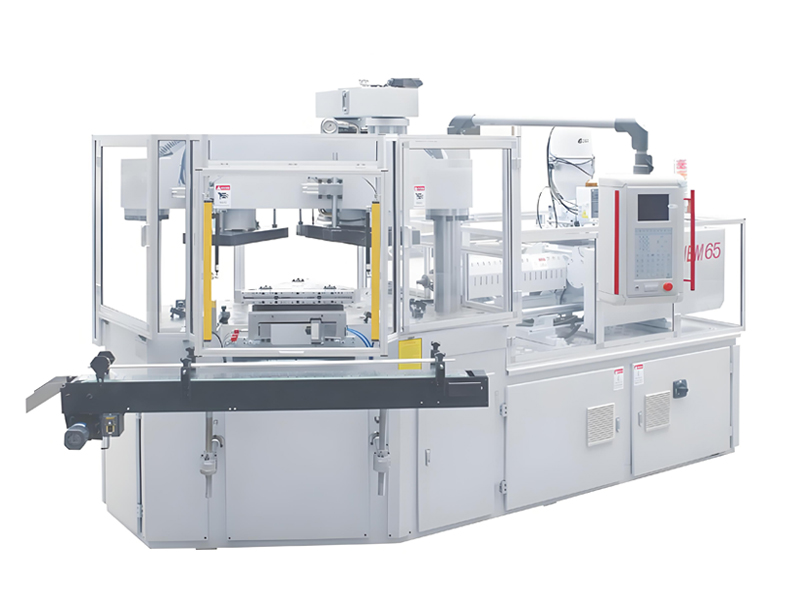
IBM60 High-Capacity Sample Bottle Model
The IBM60 provides high-capacity production for sample bottles ranging from 5ml to 800ml with maximum efficiency while maintaining exceptional precision for leak-proof performance. This model features a 50mm screw diameter with maximum injection capacity of 314cm3, providing substantial material throughput for high-volume sample bottle production. The machine’s injection clamping force of 600kN and blow clamping force of 89kN provide substantial force capacity for larger sample bottles.
Technical specifications for the IBM60 include servo-driven systems that provide precise control over motion and positioning with 0.01mm accuracy, ensuring consistent mold alignment and core rod positioning critical for leak-proof performance. The machine’s dimensions of 4000x1280x2350mm accommodate large molds and multiple cavity configurations for high-volume production. Total power consumption of 45kW includes mold heating, providing comprehensive functionality.
The IBM60 incorporates automated quality inspection systems that verify critical leak-proof performance characteristics including neck dimensions, thread quality, and sealing surface quality. These inspection systems can be configured for different sample bottle types with adjustable sensitivity based on specific quality requirements. The automated inspection reduces manual inspection requirements while ensuring that only bottles meeting leak-proof specifications reach customers.
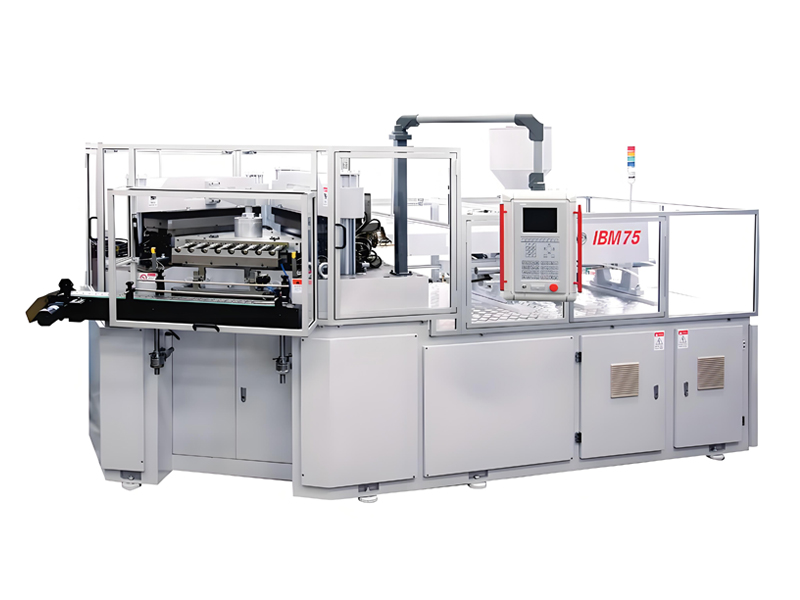
IBM75 Large-Capacity Sample Bottle Model
The IBM75 provides maximum capacity for sample bottles ranging from 5ml to 1000ml with highest production efficiency while maintaining precision for leak-proof performance. This model features a 50mm screw diameter with maximum injection capacity of 400cm3, providing the highest material throughput in the AiBiM sample bottle line. The machine’s injection clamping force of 750kN and blow clamping force of 150kN provide maximum force capacity for large sample bottles.
Technical specifications for the IBM75 include the most advanced precision features in the AiBiM line, including multi-zone temperature control with independent control for up to 5 heating zones plus mold heating. This comprehensive temperature control enables precise thermal profiling for large sample bottles requiring complex temperature management. The machine’s data logging system records processing parameters for every cycle, enabling traceability and quality analysis that supports leak-proof performance verification.
The IBM75 features enhanced core rod cooling systems that maintain precise temperature control for consistent neck formation, critical for leak-proof performance. The core rod cooling systems enable production of sample bottles with consistent neck dimensions across production runs, preventing variations that could affect cap engagement and leak-proof performance. The machine’s hydraulic system maintains consistent pressure delivery within 0.5% variation, preventing defects caused by pressure fluctuations.
Leak-Proof Design Technologies
Precision Neck Formation
Neck formation represents the most critical aspect of leak-proof sample bottle design, as neck quality directly affects cap engagement and sealing performance. AiBiM machines incorporate multiple technologies that ensure precision neck formation with consistent dimensions and surface quality essential for leak-proof performance. The neck mold inserts are manufactured to tolerance levels of 0.01mm to ensure precise dimensions across production runs.
Core rod positioning accuracy represents a critical technology for precision neck formation. AiBiM machines utilize servo-driven core rod positioning systems that maintain alignment within 0.01mm, ensuring consistent neck formation without flash or incomplete threads that could create leak paths. The core rod systems incorporate precision guides and feedback systems that maintain positioning accuracy across millions of cycles, preventing dimensional drift that could affect leak-proof performance over time.
Neck temperature control represents another critical technology for precision neck formation. The core rod temperature control systems maintain optimal thermal conditions for neck material solidification, preventing defects caused by overheating that could create dimensional variations or surface quality problems. The temperature control accuracy within 1 degree Celsius ensures consistent neck formation across production runs, maintaining leak-proof performance regardless of ambient conditions.
Thread Profile Precision
Thread profile accuracy represents another critical factor for leak-proof performance, as thread variations can prevent proper cap engagement or create leak paths at thread interfaces. AiBiM machines achieve exceptional thread profile accuracy through precision neck mold inserts that reproduce thread profiles with tolerance levels of 0.02mm, ensuring consistent thread formation across production runs.
Thread surface finish represents an important characteristic for leak-proof performance, as surface roughness can prevent complete cap engagement or create leak paths at thread interfaces. AiBiM machines produce threads with surface finish of Ra 0.2 or better, ensuring smooth thread surfaces that enable complete cap engagement without leak paths. The surface finish consistency across production runs ensures that all bottles maintain leak-proof performance regardless of production variations.
Thread dimensional consistency represents the third critical thread characteristic for leak-proof performance. AiBiM machines maintain thread dimensions within 0.02mm tolerances across production runs, ensuring consistent cap engagement across multiple cap types. This dimensional consistency enables reliable sealing with various cap types including standard closures and specialized caps designed for specific applications.
Sealing Surface Quality
The sealing surface where the cap makes contact with the bottle represents a critical factor for leak-proof performance, as surface irregularities can prevent effective sealing regardless of cap quality. AiBiM machines produce sealing surfaces with exceptional flatness and surface finish, ensuring consistent cap contact across the entire sealing surface. The sealing surface flatness is maintained within 0.03mm, ensuring complete contact with cap sealing surfaces.
Surface finish quality represents another critical sealing surface characteristic. AiBiM machines produce sealing surfaces with surface finish of Ra 0.2 or better, ensuring smooth surfaces that enable effective cap sealing without micro-leak paths. The surface finish consistency ensures that all bottles achieve leak-proof performance regardless of minor variations in cap quality.
Sealing surface dimensional accuracy represents the third critical characteristic for leak-proof performance. AiBiM machines maintain sealing surface dimensions within 0.05mm tolerances, ensuring that caps can achieve appropriate compression against the sealing surface. This dimensional accuracy enables reliable sealing across various cap types and designs, maintaining leak-proof performance regardless of cap source variations.
Material Property Control
Material property control represents a fundamental technology for leak-proof performance, as material variations can affect dimensional stability, cap engagement, and sealing performance. AiBiM machines maintain precise material property control through accurate temperature management, consistent processing parameters, and appropriate material handling that prevents degradation or contamination.
Temperature control accuracy within 1 degree Celsius ensures consistent material flow and solidification characteristics that affect dimensional accuracy and sealing surface quality. The multi-zone temperature control enables optimization of thermal profiles for specific materials and bottle designs, preventing material property variations that could affect leak-proof performance. The temperature consistency across production runs ensures uniform material properties regardless of ambient conditions.
Processing parameter consistency represents another material property control factor. AiBiM machines maintain consistent injection pressures, blow pressures, and cycle timing through advanced control systems that compensate for minor variations in material properties or ambient conditions. This processing consistency ensures uniform material properties across production runs, preventing variations that could affect dimensional accuracy or sealing performance.
Material handling systems prevent contamination or degradation that could affect material properties critical for leak-proof performance. The conveying and drying systems maintain material cleanliness and appropriate moisture content, preventing defects caused by contaminants or moisture that could compromise material properties. The material handling precision ensures that material properties remain consistent from initial startup through extended production runs.
Application-Specific Solutions
Chemical Sample Bottles
Chemical sample bottles require exceptional leak-proof performance combined with chemical compatibility for diverse substances ranging from mild aqueous solutions to aggressive organic solvents. AiBiM machines provide solutions for chemical sample bottles through material compatibility options, dimensional precision, and processing control that ensure reliable performance with various chemical substances.
HDPE represents the most common material choice for general chemical sample bottles due to its broad chemical resistance and cost-effectiveness. AiBiM machines process HDPE with precise control that maintains wall thickness consistency within 0.05mm, ensuring dimensional accuracy critical for leak-proof performance. The processing control maintains consistent material properties that ensure chemical resistance across production runs, preventing material property variations that could affect chemical compatibility.
PVDF represents a premium material choice for chemical sample bottles requiring enhanced chemical resistance to aggressive substances. AiBiM machines process PVDF with temperature control systems that maintain optimal processing conditions, preventing thermal degradation that could compromise chemical resistance. The processing precision ensures consistent material properties across production runs, maintaining chemical resistance regardless of minor material batch variations.
Fluoropolymer materials including PFA and FEP provide the highest chemical resistance for the most demanding chemical sample applications. AiBiM machines process these advanced materials through specialized screw designs and temperature profiles optimized for fluoropolymer characteristics. The processing control ensures consistent material properties that provide reliable chemical resistance while maintaining dimensional accuracy for leak-proof performance.
Pharmaceutical Sample Vials
Pharmaceutical sample vials require the highest level of leak-proof performance combined with material compliance with regulatory requirements and dimensional accuracy for pharmaceutical packaging standards. AiBiM machines provide solutions for pharmaceutical sample vials through precision manufacturing capabilities, material handling systems for pharmaceutical-grade materials, and quality assurance systems that meet pharmaceutical requirements.
Pharmaceutical-grade HDPE represents the most common material for pharmaceutical sample vials, requiring exceptional material handling and processing control to maintain pharmaceutical-grade characteristics. AiBiM machines incorporate stainless steel material contact surfaces and HEPA filtration of conveying air to prevent contamination, ensuring that material maintains pharmaceutical-grade characteristics throughout processing. The processing control maintains dimensional accuracy within 0.02mm required for pharmaceutical packaging.
Polycarbonate provides clarity advantages for pharmaceutical sample vials where sample visibility is important. AiBiM machines process PC with moisture control that maintains material below 0.01% moisture content, preventing hydrolytic degradation that could compromise material properties or cause defects. The processing control maintains clarity and dimensional accuracy while achieving the leak-proof performance required for pharmaceutical applications.
Cyclic olefin copolymer (COC) provides enhanced clarity and chemical resistance for premium pharmaceutical sample vials. AiBiM machines process COC with specialized temperature profiles that maintain material properties and dimensional accuracy. The processing control ensures consistent clarity and leak-proof performance across production runs, meeting the stringent quality requirements for pharmaceutical sample vials.
Laboratory Sample Containers
Laboratory sample containers require leak-proof performance combined with dimensional accuracy for automated handling systems and material compatibility for diverse laboratory applications. AiBiM machines provide solutions for laboratory sample containers through precision manufacturing capabilities, automated quality inspection systems, and material options optimized for laboratory requirements.
PP represents an excellent material choice for laboratory sample containers due to its broad chemical resistance and autoclave compatibility for sterilization. AiBiM machines process PP with temperature control that maintains material properties while achieving dimensional accuracy within 0.03mm required for automated handling systems. The processing consistency ensures leak-proof performance across production runs while maintaining material compatibility for diverse laboratory applications.
HDPE provides cost-effective solutions for general laboratory sample containers where chemical resistance requirements are moderate. AiBiM machines process HDPE with precision control that maintains wall thickness consistency within 0.05mm, ensuring dimensional accuracy critical for automated handling and cap engagement. The processing control maintains consistent material properties that ensure chemical resistance across production runs.
PVC provides enhanced resistance to acids and oxidizing agents for specific laboratory sample applications. AiBiM machines process PVC with temperature control that prevents thermal degradation and discoloration, maintaining material clarity when required. The processing control maintains dimensional accuracy while achieving leak-proof performance required for laboratory sample containers.
Quality Assurance and Testing
Automated Leak Testing
Automated leak testing systems represent a critical quality assurance component for industrial sample bottle production, ensuring that every bottle meets leak-proof performance requirements before reaching customers. AiBiM machines can be equipped with automated leak testing systems that test every bottle using pressure decay or vacuum decay methods depending on bottle design and application requirements.
Pressure decay testing represents the most common method for liquid sample bottles, where bottles are pressurized with air and pressure decay indicates leakage. AiBiM leak testing systems apply pressures from 0.3 to 1.0 MPa depending on application requirements, with sensitivity capable of detecting leaks as small as 0.01 cc per minute. The automated systems reject defective bottles while maintaining production efficiency at rates exceeding 12,000 bottles per hour.
Vacuum decay testing provides an alternative method particularly suited to bottles with small neck openings where pressurization is difficult. AiBiM vacuum decay testing systems place bottles under vacuum and monitor for pressure increase that indicates leakage. The systems provide sensitivity comparable to pressure decay testing while accommodating bottle designs that are challenging for pressure testing methods.
Helium mass spectrometry testing represents the most sensitive leak testing method, capable of detecting extremely small leaks that other methods might miss. AiBiM machines can be integrated with helium testing systems for applications requiring the highest leak detection sensitivity, such as pharmaceutical or hazardous material sample bottles. The helium testing systems detect leaks as small as 10-9 cc per second, providing exceptional leak-proof assurance.
Dimensional Inspection
Dimensional inspection ensures that sample bottles maintain the dimensional accuracy required for leak-proof performance and proper cap engagement. AiBiM machines incorporate automated dimensional inspection systems that verify critical dimensions including neck diameter, thread profile, and overall bottle dimensions. The inspection systems utilize optical or laser measurement technology to achieve accuracy within 0.01mm.
Neck diameter inspection verifies that bottles meet dimensional specifications for cap engagement. AiBiM inspection systems measure neck diameter at multiple points to detect ovality or dimensional variations that could affect cap engagement. The systems reject bottles with dimensions outside specified tolerances, preventing defective bottles from reaching customers while providing data for process adjustment if dimension trends indicate developing problems.
Thread profile inspection ensures that threads meet specifications for proper cap engagement and leak-proof performance. AiBiM inspection systems utilize optical systems to verify thread dimensions including pitch, major diameter, and minor diameter. The systems detect thread defects including incomplete threads, damaged threads, or dimensional variations that could prevent proper cap engagement and create leak paths.
Overall dimensional inspection verifies that bottles meet all critical dimensional specifications for leak-proof performance and automated handling compatibility. AiBiM inspection systems can measure multiple bottle dimensions including overall height, shoulder diameter, and base dimensions. The systems provide comprehensive dimensional verification while maintaining production efficiency through high-speed inspection capabilities.
Visual Quality Inspection
Visual quality inspection detects surface defects that could affect leak-proof performance or bottle appearance quality. AiBiM machines incorporate camera-based visual inspection systems that detect surface defects including flash, sink marks, surface blemishes, and dimensional variations. The inspection systems utilize multiple cameras to inspect bottle surfaces from different angles, ensuring comprehensive defect detection.
Neck area inspection represents a critical visual inspection area, as neck defects directly affect leak-proof performance. AiBiM visual inspection systems utilize high-resolution cameras to inspect neck areas for flash, incomplete threads, or surface defects that could affect cap engagement or create leak paths. The systems detect defects as small as 0.1mm, ensuring that only bottles with acceptable neck quality reach customers.
Body inspection detects surface defects on the bottle body that could affect structural integrity or create leak paths. AiBiM visual inspection systems detect defects including sink marks, surface blemishes, and wall thickness variations that could create weak spots or leak paths. The systems provide adjustable sensitivity to accommodate different quality requirements for various applications.
Base inspection detects defects in the bottle base that could affect stability or create leak paths. AiBiM visual inspection systems detect defects including incomplete formation, surface irregularities, or thickness variations that could affect bottle integrity. The systems ensure that bottles maintain structural integrity and leak-proof performance regardless of orientation during storage or transportation.
Production Efficiency and Cost Analysis
Equipment Investment Costs
Investment in injection blow molding equipment for industrial sample bottles represents a significant capital expenditure that must be justified through quality improvements and market differentiation. AiBiM machines for industrial sample bottles range in price from $23,000 for entry-level IBM35 models to $48,000 for high-capacity IBM75 models, representing competitive pricing given the advanced capabilities and leak-proof performance assurance.
Cost justification for sample bottle equipment focuses on quality improvement benefits including reduced customer returns from leak failures, enhanced market positioning through reliable product quality, and compliance with regulatory requirements that might otherwise require expensive testing or certification. The competitive advantage of consistent leak-proof performance enables premium pricing opportunities in markets where sample integrity represents a critical purchasing factor.
The equipment longevity represents another important cost consideration, as AiBiM machines are designed for 10+ years of service with minimal performance degradation. The robust construction and premium components ensure that precision characteristics are maintained throughout equipment life, avoiding the quality decline that typically occurs with lower-quality equipment after 3-5 years of service. This longevity reduces replacement costs and maintains quality benefits over extended periods.
Operating Cost Analysis
Operating costs for AiBiM sample bottle machines include energy consumption, material usage, labor, maintenance, and consumables. Energy consumption varies by model from 25kW for IBM35 to 50kW for IBM75, representing competitive energy efficiency given the precision capabilities provided. For continuous operation at 6000 hours annually, energy costs at $0.15 per kWh range from $5,625 to $22,500 depending on model size and local energy costs.
Material costs represent the largest operating expense, but precision IBM machines optimize material usage through consistent wall thickness control that minimizes excess material while maintaining required container strength. The precise control enables optimal material usage with typical material efficiency rates exceeding 98%, compared to 95-96% for less precise equipment. For a facility consuming 50 tons of HDPE annually at $1.20 per kg for sample bottle production, this represents annual material savings of $2,400 through improved material efficiency.
Labor costs for sample bottle machine operation vary based on automation level and quality assurance requirements. AiBiM machines include automated systems that reduce direct labor requirements to 1-2 operators per machine, compared to 3-4 operators for less automated equipment. This labor reduction represents annual savings of $40,000-$80,000 based on labor rates, contributing significantly to operating cost efficiency despite the higher equipment investment.
Quality Cost Benefits
Quality improvement benefits represent the most significant economic advantage of precision sample bottle equipment, though these benefits extend beyond direct cost savings to include market positioning and regulatory compliance advantages. Reduced customer returns from leak failures provide direct cost savings, but improved quality also enhances customer satisfaction and repeat business that represents long-term revenue benefits.
Customer return reduction represents a substantial quality benefit, as leak failures reaching customers create significant costs beyond the material replacement value. These costs include customer service time, return processing, replacement shipping, and potential loss of future business. AiBiM precision machines dramatically reduce customer returns through consistent leak-proof performance, with many customers reporting return rate reductions exceeding 95% after implementing precision IBM equipment.
Regulatory compliance benefits represent another quality advantage, as consistent product quality enables compliance with UN packaging standards, pharmaceutical regulations, and industry specifications without requiring additional testing or certification costs. Products manufactured on precision IBM equipment consistently meet regulatory requirements, eliminating compliance issues that could otherwise require expensive remediation and create market access barriers.
Technical Support and Service
Installation and Commissioning
Successful implementation of AiBiM sample bottle machines requires professional installation and commissioning to ensure optimal performance from initial startup. AiBiM provides comprehensive installation services including equipment positioning, utility connections, control system configuration, and initial production setup. Professional installation ensures that equipment operates under optimal conditions from initial startup, preventing startup problems that could delay production and affect quality.
Commissioning services include process development for specific sample bottle types, parameter optimization for material characteristics, and quality system setup for automated inspection. These services ensure that equipment achieves optimal performance for specific application requirements rather than generic settings that might not provide optimal results. The commissioning process typically requires 5-7 days for standard applications and up to 2 weeks for complex applications with specialized requirements.
Training services for operators and maintenance personnel ensure that production teams maximize equipment capabilities and maintain optimal performance. AiBiM provides comprehensive training programs covering equipment operation, parameter adjustment, quality monitoring, maintenance procedures, and troubleshooting. Training programs typically require 1-2 weeks depending on trainee experience and application complexity.
Technical Support Services
Technical support services provide ongoing assistance to maintain optimal equipment performance and resolve operational issues that may arise during production. AiBiM provides technical support through multiple channels including telephone support, remote diagnostics via internet connectivity, and on-site service for issues that cannot be resolved remotely. The comprehensive support network ensures rapid response to technical issues, minimizing production downtime.
Remote technical support enables rapid diagnosis of issues without waiting for technician travel, often resolving problems within hours rather than days. AiBiM machines include remote connectivity capabilities that enable technical experts to access equipment data and diagnostic information, facilitating rapid problem diagnosis and resolution. The remote support capability reduces support costs while accelerating problem resolution.
On-site technical support provides hands-on assistance for complex issues requiring physical intervention. AiBiM maintains a network of trained service technicians positioned to provide timely on-site service across major markets. The technicians receive regular training on equipment updates and common issues, ensuring that they can efficiently diagnose and resolve problems while minimizing equipment downtime.
Spare Parts and Maintenance
Spare parts availability and maintenance support ensure that equipment maintains optimal performance over extended service life. AiBiM maintains comprehensive spare parts inventory for all machine models, enabling rapid replacement of wear parts and components. The spare parts network includes strategically located distribution centers that provide timely parts delivery across global markets.
Maintenance services include scheduled preventive maintenance visits, predictive maintenance services based on equipment operating data, and emergency maintenance for unscheduled failures. AiBiM maintenance technicians perform comprehensive inspections and preventive maintenance according to manufacturer schedules, preventing component failures that could affect production quality or equipment availability.
Predictive maintenance services analyze equipment operating data to identify developing problems before they cause failures or quality issues. AiBiM machines include data logging capabilities that support predictive maintenance analysis through trend identification and anomaly detection. The predictive maintenance approach prevents unexpected failures while optimizing maintenance schedules based on actual equipment condition rather than fixed intervals.
Future Technology Developments
Advanced Leak Detection Technologies
Leak detection technology continues to advance with new sensors and detection methods that provide improved sensitivity and reliability. AiBiM machines incorporate the latest leak detection technologies including advanced pressure sensors, vacuum decay systems, and helium mass spectrometry integration. These advanced technologies provide improved leak detection capabilities while maintaining high production efficiency.
Acoustic leak detection represents an emerging technology that uses sound analysis to detect leaks with exceptional sensitivity. AiBiM is developing integration of acoustic leak detection systems that can detect leaks as small as 10-6 cc per second, providing leak detection sensitivity that exceeds traditional pressure or vacuum decay methods. The acoustic systems provide rapid testing without requiring pressure changes that could affect bottle integrity.
Optical leak detection uses advanced imaging technology to detect small leaks through visualization of escaping gases or liquids. AiBiM is developing optical leak detection systems that can detect and locate leaks with exceptional accuracy, providing both detection and diagnosis capabilities in a single system. The optical systems enable detection of extremely small leaks while providing information about leak location for process improvement.
Material Innovation Integration
Material innovation continues to create new opportunities for sample bottle applications with enhanced chemical resistance, improved barrier properties, or specialized performance characteristics. AiBiM machines incorporate processing capabilities for these advanced materials through flexible control systems and appropriate component materials that accommodate diverse material characteristics.
Multi-layer materials provide enhanced barrier properties for applications requiring improved oxygen or moisture barrier performance. AiBiM machines process multi-layer materials through co-injection systems that combine multiple materials in a single bottle structure. The multi-layer capabilities enable production of sample bottles with enhanced performance characteristics while maintaining the precision required for leak-proof performance.
Barrier coatings provide alternative methods for enhancing material properties without multi-layer complexity. AiBiM machines can be integrated with coating systems that apply thin barrier coatings to interior or exterior bottle surfaces. The coating systems provide enhanced chemical resistance or barrier performance while maintaining the precision characteristics required for leak-proof sample bottle production.
Automation Enhancement
Automation advancements continue to reduce labor requirements and improve consistency in sample bottle production. Automated material loading, automated quality inspection, and robotic packaging systems reduce manual intervention while improving quality consistency. These automation enhancements provide economic benefits through labor reduction while further improving leak-proof performance consistency.
Integrated automation systems provide comprehensive automation across material handling, production, inspection, and packaging. AiBiM machines can be integrated with complete automation systems that require minimal operator intervention while maintaining comprehensive quality control. The integrated systems provide production efficiency while ensuring that every bottle meets leak-proof performance requirements.
Flexible automation systems enable production of various bottle types with automated changeover capabilities. AiBiM automation systems include automated mold change, automated parameter adjustment, and automated quality system configuration that enable rapid changeover between different sample bottle types. The flexible automation enables production flexibility while maintaining automated quality assurance across product variations.
Conclusion
AiBiM injection blow molding machines provide comprehensive solutions for industrial sample bottle production with exceptional leak-proof performance capabilities. The advanced precision technologies, comprehensive quality assurance systems, and material processing flexibility enable production of sample containers that meet the most demanding application requirements. The economic benefits through quality improvement, market positioning advantages, and regulatory compliance support provide compelling justification for investment in precision sample bottle production equipment.
As quality requirements continue to increase across all sample bottle applications, the competitive advantage of precision equipment becomes increasingly significant. Manufacturers implementing AiBiM precision technology today position themselves for future success in markets where leak-proof performance and sample integrity represent critical purchasing factors. The comprehensive AiBiM machine range provides options for all capacity requirements while maintaining the precision characteristics that enable consistent leak-proof performance.
Continued technological advancements including enhanced leak detection technologies, advanced material processing, and integrated automation will further improve sample bottle production capabilities. These developments will enable production of sample bottles with enhanced performance characteristics while maintaining cost-effectiveness. Manufacturers investing in AiBiM precision technology today position themselves to leverage these advancements as they emerge, maintaining competitive advantage in evolving sample bottle markets.