Understanding the Fundamental Differences
When investing in injection blow molding machinery, manufacturers must make critical decisions between automatic and semi-automatic systems based on production requirements, budget constraints, and long-term business goals. The fundamental difference between these two categories lies in the level of human intervention required throughout the production cycle, which directly impacts production efficiency, labor costs, and overall operational consistency.
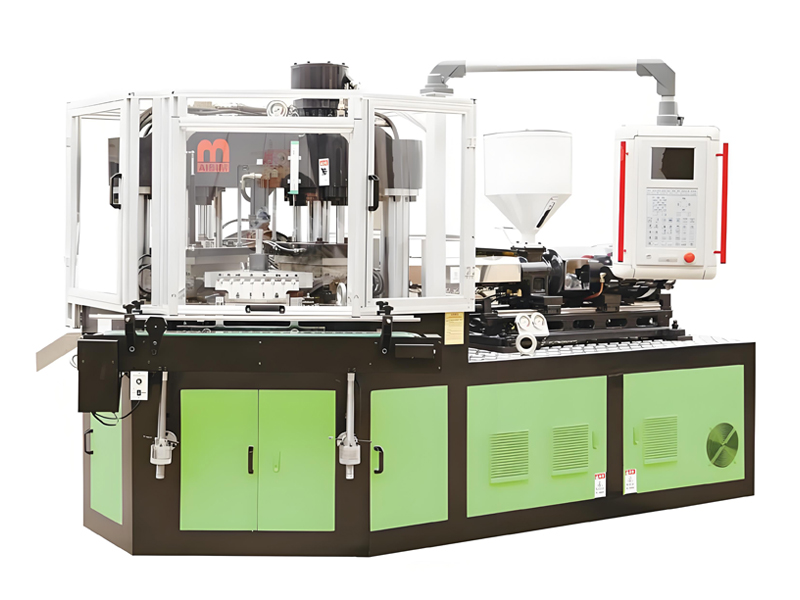
Automatic injection blow molding machines feature fully integrated automation systems that handle all aspects of the production process from material loading and injection to blow molding, container ejection, and quality inspection. These sophisticated systems require minimal operator intervention, primarily limited to material replenishment, periodic maintenance, and quality monitoring. Automatic systems typically incorporate PLC controls, servo motors, automated mold changing mechanisms, and integrated quality inspection systems that work together to create a seamless manufacturing process.
Semi-automatic injection blow molding machines require significant operator involvement at various stages of production. While these machines handle the injection and blow molding processes automatically, operators must manually perform tasks such as mold loading, container ejection, and sometimes mold position adjustments. Semi-automatic systems offer lower initial investment costs and greater flexibility for small batch production but require more labor and typically achieve lower production outputs compared to fully automatic systems.
Production Capacity and Efficiency Analysis
Production capacity represents one of the most significant factors influencing the choice between automatic and semi-automatic injection blow molding machines. Automatic systems from AiBiM typically achieve production rates of 500-800 containers per hour depending on machine size and container specifications, while semi-automatic machines generally produce 200-400 containers per hour under optimal conditions.
The efficiency advantage of automatic systems stems from reduced cycle times and continuous operation capabilities. Automatic injection blow molding machines typically complete production cycles in 10-15 seconds for medium-sized containers, whereas semi-automatic machines require 20-30 seconds per cycle due to manual intervention requirements. This difference becomes increasingly significant when calculating annual production volumes and potential revenue generation.
For manufacturers producing over 1 million containers annually, automatic systems provide clear advantages in production efficiency. The continuous operation capability eliminates downtime associated with manual tasks, enabling 24-hour production with minimal staffing. Semi-automatic systems typically achieve 6-8 hours of actual production time per 8-hour shift due to operator limitations and manual intervention requirements.
Investment Cost Comparison
Initial investment costs vary significantly between automatic and semi-automatic injection blow molding machines. Automatic systems from AiBiM typically range from $45,000 to $85,000 depending on machine size and automation level, while semi-automatic machines generally cost between $25,000 and $40,000 for similar production capacities.
The price premium for automatic systems reflects the additional components and advanced technology incorporated into these machines. Servo motor systems, automated mold changing mechanisms, integrated quality inspection systems, and sophisticated PLC controls contribute to higher initial costs. However, these features also deliver significant operational advantages that often justify the investment through reduced labor costs and increased production output.
Financing considerations also differ between automatic and semi-automatic systems. Automatic machines typically offer better return on investment over longer periods, making them suitable for businesses with access to capital financing. Semi-automatic machines require lower upfront investment but may generate lower returns over time due to higher operational costs and limited production capacity.
Equipment Cost Breakdown
Automatic injection blow molding machines include several advanced components that contribute to their higher cost structure. Servo motor systems represent the most significant premium, typically adding $8,000-$15,000 to equipment costs compared to traditional hydraulic drives. Automated mold changing systems add $5,000-$10,000, while integrated quality inspection systems contribute $3,000-$7,000 to total equipment costs.
Semi-automatic machines eliminate many of these advanced features to reduce costs. Manual mold changing systems reduce costs by $4,000-$8,000, while hydraulic drives instead of servo systems reduce costs by $6,000-$12,000. However, these cost savings come at the expense of production efficiency and operational capabilities that may limit business growth potential.
Labor Requirements and Operational Costs
Labor requirements differ substantially between automatic and semi-automatic injection blow molding machines, representing a critical factor in total cost of ownership calculations. Automatic systems typically require 1-2 operators per machine for material handling, quality monitoring, and general supervision. These operators can often manage multiple machines simultaneously due to the high level of automation.
Semi-automatic machines require 2-3 operators per machine for full production operation. Operators must manually load molds, position molds for different production stages, remove finished containers, and perform various quality control tasks throughout the production cycle. This increased labor requirement directly impacts operational costs and limits the number of machines a single workforce can operate efficiently.
Labor cost calculations demonstrate the financial impact of these differences. Assuming an average labor cost of $15 per hour including benefits, automatic machines incur $240-$480 in daily labor costs for 8-hour operation. Semi-automatic machines require $480-$720 in daily labor costs for similar production periods. Over a year of continuous operation, this difference amounts to $87,600-$175,200 in additional labor costs for semi-automatic systems.
Production Volume Considerations
Annual production volume requirements significantly influence the choice between automatic and semi-automatic injection blow molding machines. Manufacturers with annual production requirements below 500,000 containers may find semi-automatic systems more cost-effective due to lower initial investment and adequate production capacity for their needs.
For manufacturers producing 500,000-2 million containers annually, the decision requires careful analysis of various factors including labor costs, production schedules, and business growth plans. Automatic systems typically provide better economics at these production levels due to lower labor requirements and higher production efficiency that reduce unit production costs.
Manufacturers producing over 2 million containers annually almost always benefit from automatic injection blow molding systems. The combination of high production efficiency, reduced labor requirements, and consistent quality control makes automatic systems essential for maintaining competitiveness at this production scale. Semi-automatic systems would require excessive labor costs and multiple shifts to achieve similar production volumes.
Product Quality and Consistency
Product quality consistency represents another important consideration when choosing between automatic and semi-automatic injection blow molding machines. Automatic systems incorporate advanced process control systems that maintain consistent production parameters throughout extended production runs, resulting in superior product quality consistency.
Integrated quality inspection systems in automatic machines detect dimensional variations, surface defects, and other quality issues automatically, rejecting substandard containers before they reach packaging. This automated quality control reduces waste by 40-60% compared to manual inspection methods typically used with semi-automatic machines.
Manual operations associated with semi-automatic machines introduce variability that can affect product quality. Differences in mold positioning, timing variations during manual operations, and inconsistent manual inspection can lead to quality variations between production batches. For applications requiring tight tolerances and consistent appearance, automatic systems provide superior results.
Flexibility and Setup Considerations
Semi-automatic injection blow molding machines offer advantages in production flexibility and setup speed for manufacturers producing multiple products with small batch sizes. The simpler manual systems enable faster mold changes and easier adjustments for different container designs, making these machines ideal for custom production and product development applications.
Setup times for semi-automatic machines typically range from 30-60 minutes for mold changes, while automatic machines require 60-120 minutes due to more complex systems requiring adjustment. However, automatic machines incorporate automated mold changing systems on higher-end models that can reduce changeover times to 20-30 minutes, offsetting this advantage.
For manufacturers with stable product lines and large production volumes, automatic systems provide better economics despite longer setup times. The increased production efficiency and quality consistency across large batch sizes offset the initial setup time investment. Manufacturers with frequent product changes and small batch sizes may benefit from the flexibility of semi-automatic systems.
Return on Investment Analysis
Return on investment calculations reveal significant differences between automatic and semi-automatic injection blow molding machines over their operational lifetimes. While automatic machines require higher initial investment, their superior production efficiency and lower operational costs often deliver better returns over 5-10 year planning horizons.
A comprehensive ROI analysis considering equipment costs, labor costs, production output, and product quality reveals that automatic machines typically achieve payback in 18-36 months for manufacturers producing over 1 million containers annually. After the initial payback period, automatic systems generate significantly higher profits due to lower unit production costs.
For example, a manufacturer producing 1.5 million containers annually might invest $65,000 in an automatic machine versus $35,000 in a semi-automatic machine. The automatic machine generates $120,000-$180,000 in annual labor cost savings and $15,000-$30,000 in reduced waste costs, resulting in net additional profits of $135,000-$210,000 annually compared to the semi-automatic system.
Five-Year Cost Comparison
Over a five-year period, the total cost of ownership differences between automatic and semi-automatic machines becomes dramatic. Automatic machines typically incur total costs including equipment, labor, maintenance, and energy of $150,000-$250,000 for high-volume production scenarios. Semi-automatic machines incur total costs of $280,000-$420,000 for the same production volumes due to significantly higher labor costs and lower production efficiency.
These calculations demonstrate that while automatic machines require higher initial investment, they often represent the more economical choice for manufacturers with substantial production requirements. The savings in labor costs, reduced waste, and increased production efficiency combine to create substantial financial advantages over the equipment’s operational lifetime.
Energy Consumption Comparison
Energy consumption represents an important operational cost factor that differs between automatic and semi-automatic injection blow molding machines. Modern automatic machines from AiBiM incorporate servo motor systems that reduce energy consumption by 30-40% compared to traditional hydraulic drives commonly found in semi-automatic machines.
Automatic machines typically consume 15-25 kWh of electricity per hour during operation, while semi-automatic machines with hydraulic systems consume 25-35 kWh per hour for similar production capacities. At an average electricity rate of $0.12 per kWh, this difference amounts to $12-24 in daily energy cost savings or $4,380-$8,760 annually per machine.
The energy efficiency advantages of automatic machines extend beyond direct cost savings to include environmental benefits and potential sustainability certifications. Reduced energy consumption helps manufacturers meet environmental regulations and sustainability goals while simultaneously lowering operational costs.
Maintenance and Reliability Considerations
Maintenance requirements differ between automatic and semi-automatic injection blow molding machines, affecting operational availability and long-term costs. Automatic machines incorporate more complex systems that require specialized maintenance expertise, but these systems are designed for high reliability and long service intervals.
Annual maintenance costs for automatic machines typically range from $3,000-$5,000, including preventive maintenance services and component replacement. Semi-automatic machines have lower annual maintenance costs of $1,500-$3,000 due to simpler designs, but these machines may require more frequent maintenance stops due to less robust construction.
Equipment availability and uptime represent another consideration. Automatic machines typically achieve 95-98% operational availability due to robust construction and preventive maintenance systems. Semi-automatic machines typically achieve 90-95% availability due to more frequent maintenance requirements and potential issues associated with manual operation components.
Space Requirements and Installation
Installation requirements and space needs differ between automatic and semi-automatic injection blow molding machines. Automatic systems typically require 20-30% more floor space due to additional automation components and safety systems. However, their higher production efficiency means less total floor space may be required to achieve production targets.
Installation costs for automatic machines typically range from $5,000-$10,000, including electrical system upgrades, compressed air system installation, and safety system integration. Semi-automatic machines typically cost $2,000-$5,000 to install due to simpler requirements. Installation timelines for automatic machines generally require 1-2 weeks compared to 3-5 days for semi-automatic systems.
For facilities with limited space or budget constraints, semi-automatic machines may offer advantages. However, manufacturers should consider the space and installation costs in the context of total production requirements and long-term business plans to ensure the chosen equipment supports future growth.
AiBiM Product Line Options
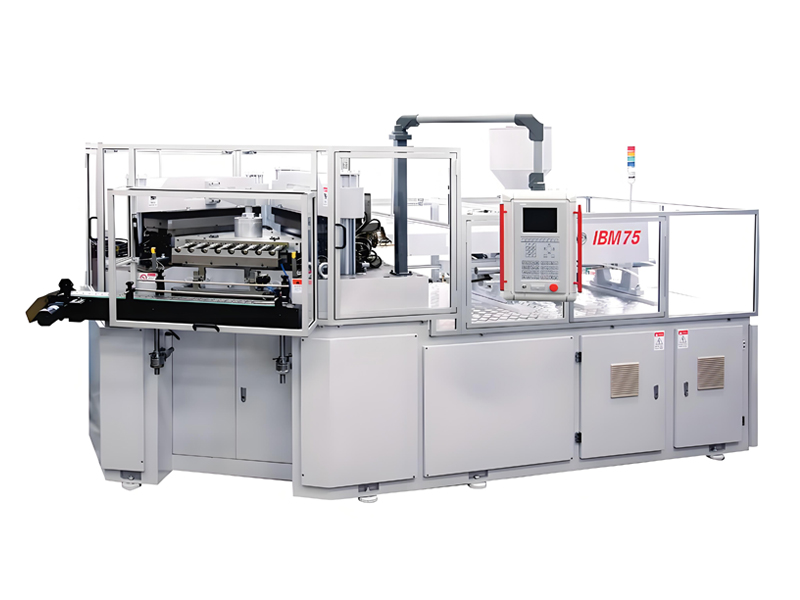
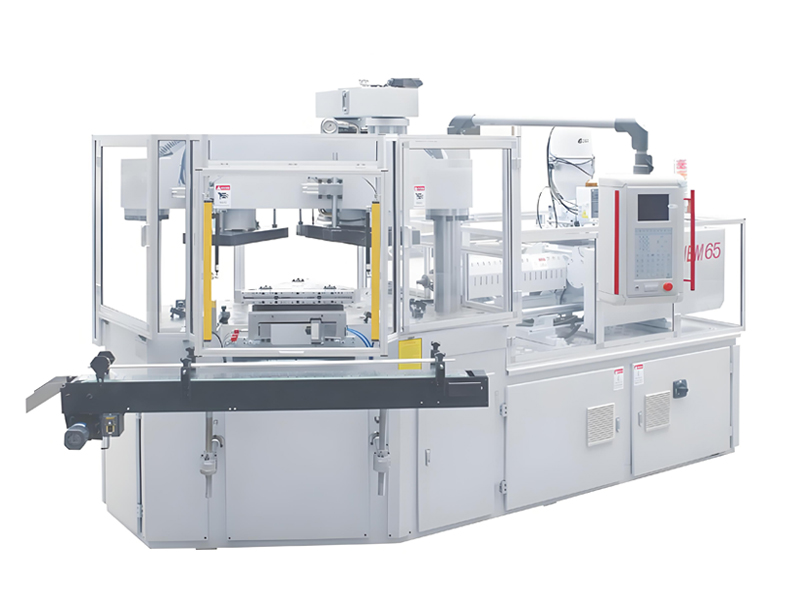
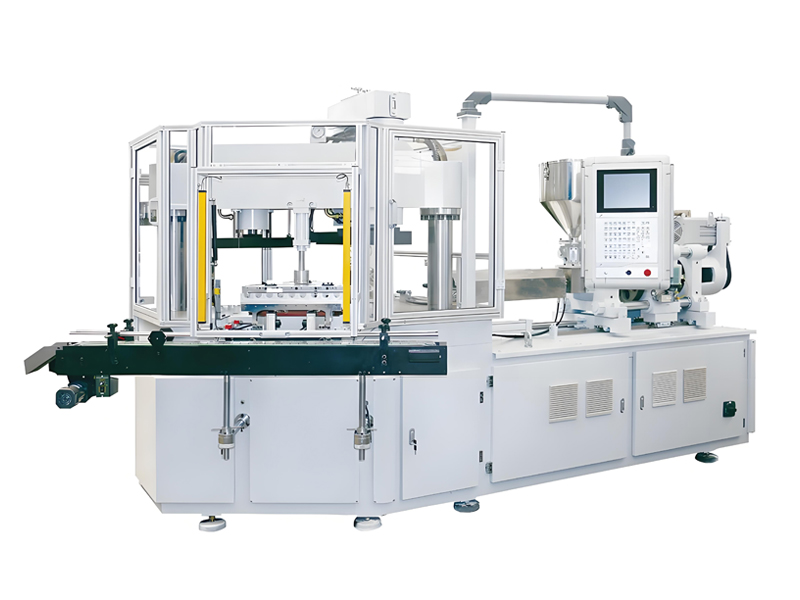
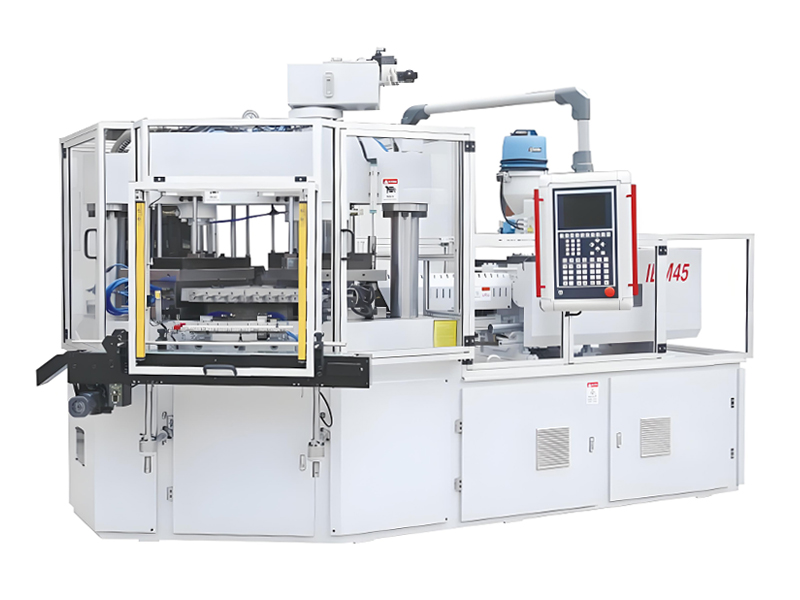
AiBiM offers both automatic and semi-automatic injection blow molding machine models to accommodate various production requirements and budget considerations. The automatic product line includes the IBM35A, IBM45A, IBM65A, and IBM75A models, featuring servo motor systems, automated quality control, and advanced PLC controls.
Automatic models from AiBiM range in price from $45,000 for the IBM35A model to $85,000 for the largest IBM75A model. These machines feature production capacities from 500-800 containers per hour and are designed for continuous operation with minimal operator intervention. Automatic models are ideal for manufacturers producing large volumes of standardized products.
Semi-automatic models include the IBM35S, IBM45S, and IBM65S models, featuring hydraulic drives, manual mold changing systems, and simplified control interfaces. These machines range in price from $25,000 to $40,000 and offer production capacities of 200-400 containers per hour. Semi-automatic models are ideal for manufacturers producing smaller volumes or requiring frequent product changes.
Market Applications and Industry Requirements
Different market applications have varying requirements that influence the choice between automatic and semi-automatic injection blow molding machines. Pharmaceutical packaging typically requires automatic systems due to strict quality control requirements and large production volumes. The precision and consistency of automatic machines meet pharmaceutical industry standards for container quality and dimensional accuracy.
Cosmetic packaging applications often benefit from automatic systems for premium brands requiring consistent high-quality appearance across large production volumes. However, boutique cosmetic brands producing smaller batches may find semi-automatic machines more suitable due to their flexibility and lower initial investment requirements.
Food packaging applications typically require automatic systems due to food safety regulations requiring consistent quality control and traceability. The integrated quality inspection systems and documentation capabilities of automatic machines support compliance with food safety regulations including HACCP and ISO 22000 standards.
Decision Framework and Selection Criteria
Selecting the appropriate injection blow molding machine requires a systematic evaluation of multiple factors relevant to your specific business situation. Begin by analyzing your current and projected production volumes over the next 3-5 years. Consider production growth plans and market expansion strategies that may increase future production requirements.
Evaluate your budget constraints and financing options available for equipment investment. Calculate the total cost of ownership over a 5-10 year period rather than focusing solely on initial equipment costs. Consider factors such as labor costs, maintenance expenses, energy consumption, and potential revenue from increased production capacity.
Assess your product line complexity and production flexibility requirements. Manufacturers with stable product lines and large batch sizes benefit from automatic systems, while those with frequent product changes and small batch sizes may prefer the flexibility of semi-automatic machines. Consider your target markets and quality requirements, as some industries have stricter quality control standards that favor automatic systems.
Implementation Timeline and Training
Implementation timelines differ between automatic and semi-automatic injection blow molding machines, affecting production ramp-up and initial productivity. Automatic machines typically require 2-3 weeks for complete installation and operator training, while semi-automatic machines typically require 1-2 weeks for similar setup.
Training requirements also differ significantly between machine types. Automatic machines require comprehensive training on PLC operation, quality inspection systems, and automated maintenance procedures. This training typically takes 5-10 days for operators and additional training for maintenance technicians. Semi-automatic machines require 3-5 days of training focused on machine operation and basic maintenance procedures.
The longer implementation and training periods for automatic machines represent an initial investment that pays dividends through improved long-term performance and reduced operational costs. The comprehensive training ensures operators can maximize machine performance and minimize downtime through proper operation and maintenance.
Future Scalability and Technology Advancement
Future business growth and technological advancement considerations should influence machine selection decisions. Automatic injection blow molding machines typically offer better scalability for production expansion through potential integration with additional automation, robotic systems, and Industry 4.0 technologies.
AiBiM automatic machines are designed for compatibility with emerging manufacturing technologies including IoT connectivity, predictive maintenance systems, and advanced data analytics capabilities. These future-proofing features ensure the equipment remains valuable as manufacturing technology continues evolving. Semi-automatic machines offer more limited upgrade potential and may require replacement to accommodate future technological requirements.
Consider your business growth plans and technology strategy when selecting equipment. Manufacturers planning significant production expansion or digital transformation initiatives should prioritize automatic systems that offer greater compatibility with advanced manufacturing technologies.
Conclusion and Strategic Recommendations
Choosing between automatic and semi-automatic injection blow molding machines requires careful consideration of multiple factors including production requirements, budget constraints, and long-term business objectives. Automatic systems offer superior production efficiency, quality consistency, and lower operational costs for manufacturers with substantial production volumes.
For manufacturers producing over 1 million containers annually or planning significant production growth, automatic injection blow molding machines from AiBiM represent the optimal investment despite higher initial costs. The combination of reduced labor requirements, lower energy consumption, reduced waste, and higher production efficiency delivers compelling return on investment over the equipment’s operational lifetime.
Semi-automatic machines provide appropriate solutions for manufacturers with limited production volumes below 500,000 containers annually, frequent product changes requiring flexibility, or constrained budgets that limit initial investment capabilities. These machines offer lower entry costs while still delivering capable production performance for smaller scale operations.
The decision ultimately depends on your specific business situation, market requirements, and strategic objectives. Careful analysis of production requirements, total cost of ownership, and future growth plans will ensure you select the injection blow molding machine that best supports your business success in the competitive plastic manufacturing market.