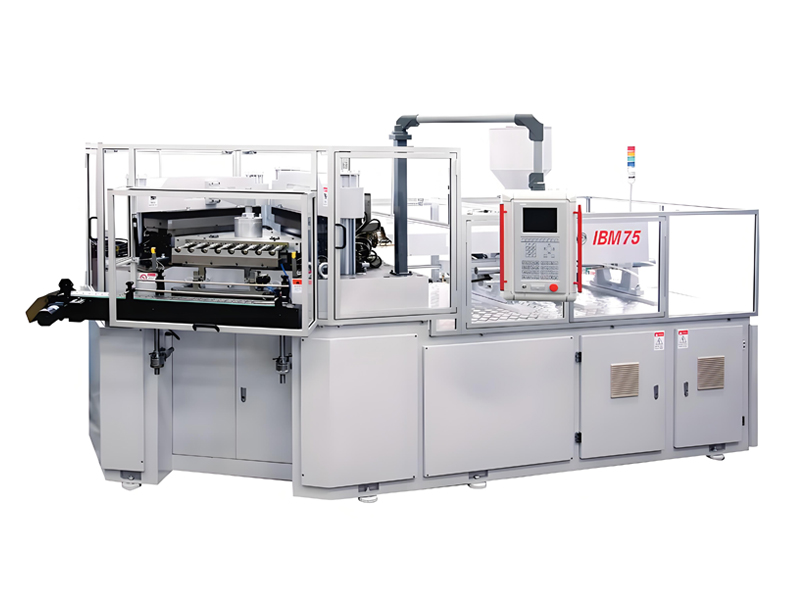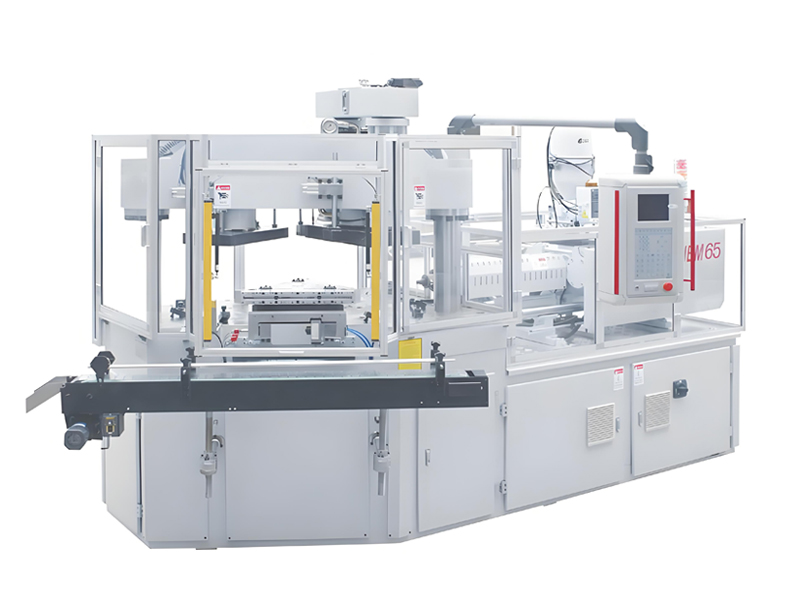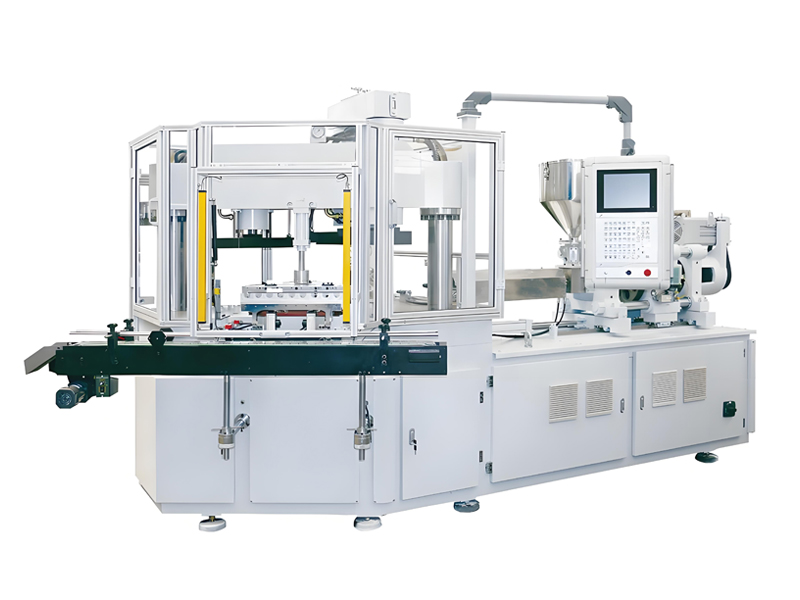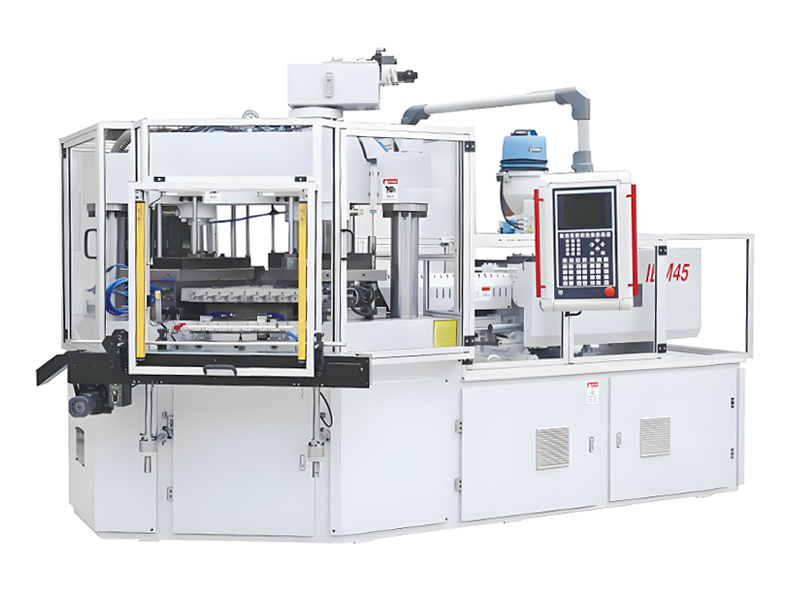
Energy cost and cycle speed are two numbers that decide whether an injection blow molding line is profitable. As electricity prices rise and pharmaceutical, food, drink, and cosmetic buyers demand tighter tolerances, the drive technology behind the machine matters more than ever. Servo motor injection blow molding answers both pressures at once: servo drives deliver near-instant response and draw power only when the axis is actually moving. Aibim, a Wanplas factory, builds this thinking into its range, pairing servo and hybrid electric motion with the unique PREFILL hydraulic system on machines covering 3ml to 1000ml containers. This article breaks down how servo response speed and energy efficiency work in IBM, compares drive technologies head to head, and shows where Aibim’s IBM55 Hybrid electric machine and PREFILL-equipped IBM75 and IBM65 models fit in 2026 production planning.
Ép phun thổi servo motor là gì?
Servo motor injection blow molding is an IBM process in which electric servo motors, controlled by closed-loop feedback, drive the clamping, injection, and stripper motions instead of relying solely on fixed-speed hydraulic pumps. A servo motor knows its exact position, velocity, and torque at every instant, because an encoder reports back to the controller many times per second. That feedback loop is what gives servo drives their defining trait: they accelerate, hold, and reverse with precision that hydraulic valves cannot match.
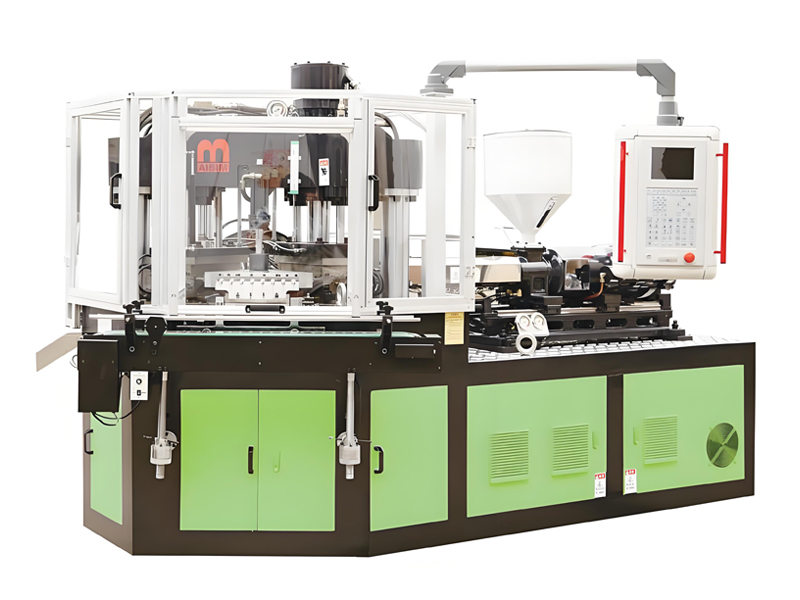
In a three-station one-step IBM machine, the parison is injected on station one, transferred to station two for blowing, and moved to station three for stripping, all without manual handling. Each transfer and each clamp stroke benefits from servo control, because the motion profile can be tuned to the millisecond. Aibim applies this philosophy across its IBM series, where the IBM55 Hybrid electric model uses a hybrid electric drive and the IBM75 and IBM65 models use Aibim’s PREFILL hydraulic system refined for efficiency.
Ý tưởng cốt lõi cho người mua rất đơn giản: một bộ truyền động servo hoặc hybrid chỉ tiêu tốn năng lượng cho chuyển động hữu ích, trong khi một bơm thủy lực thông thường thường chạy ở tốc độ đầy đủ ngay cả khi máy chạy không tải giữa các mũi phun. Sự khác biệt đơn lẻ đó là gốc rễ của hầu hết các lợi thế về năng lượng và tốc độ phản hồi được thảo luận dưới đây.
To see how a servo actually governs an IBM machine, follow one cycle. The controller issues a target position for the clamp; the servo drive accelerates the motor, the encoder reports real position back thousands of times per second, and the drive trims torque continuously until the platen settles exactly where commanded. During the short molding dwell, the servo holds torque with almost no current because there is no flow to waste through a relief valve. At transfer, the same tight loop moves the core rod and parison with repeatable timing. This closed loop—command, measure, correct—is what hydraulic open-loop valves approximate but cannot match. On Aibim’s IBM55 Hybrid electric machine the loop runs on direct servo axes, while on the IBM75 and IBM65 the PREFILL hydraulic system uses a servo-controlled variable-displacement pump to approach the same efficiency without sacrificing clamp force for larger 3ml to 1000ml containers.
Vì sao tốc độ phản hồi quan trọng trong sản xuất IBM
Tốc độ phản hồi là thời gian một bộ truyền động cần để đạt đến vị trí hoặc lực được lệnh sau khi bộ điều khiển phát lệnh. Trong ép thổi phun, phản hồi nhanh hơn nén các phần không tạo ra sản phẩm của mỗi chu kỳ và siết chặt khả năng lặp lại.
Cycle time reduction. Clamp open-close, core-rod advance, and stripper ejection all contain dead time while the drive accelerates and settles. A servo reaches target velocity in a fraction of the time a hydraulic cylinder needs to build pressure, shaving fractions of a second from every shot. Across millions of annual cycles, those fractions become meaningful output.
Repeatability and part quality. Fast, accurate response means station two receives the parison at the same position and temperature window every time. That consistency reduces flash, neck ovality, and wall-thickness variation, which are exactly the defects that spoil pharmaceutical and cosmetic containers. Aibim’s single-crossbeam, double-pole clamping framework, with enlarged mold-setting space, relies on precise, repeatable motion to keep cavities aligned.
Process adaptability. When a recipe changes between a 3ml dropper bottle and a 1000ml jar, servo profiles can be reloaded from the SD-card parameter storage and the machine settles into the new motion immediately. Hydraulic systems need more manual valve tuning, slowing changeovers. Faster response therefore supports both speed and flexibility.
Energy correlation with speed. Response and efficiency are linked, not separate. A slow hydraulic acceleration forces the operator to extend dwell time to let pressure build, which both wastes energy and lengthens the cycle. A fast servo reaches target velocity immediately, so the productive part of the cycle starts sooner and the idle part shrinks. On a line running continuously across multiple shifts, this coupling means a responsiveness upgrade pays back simultaneously as throughput and as a lower utility bill. Aibim’s single-crossbeam, double-pole clamping framework, with its enlarged mold-setting space, is engineered so that this faster motion does not introduce deflection, keeping the precision that pharmaceutical and cosmetic customers demand.
Phân tích hiệu quả năng lượng: Servo, thủy lực, Hybrid
Hiệu quả năng lượng trong IBM không phải là một con số duy nhất mà là một biên dạng trên toàn chu kỳ. Hiểu biên dạng này giải thích vì sao truyền động servo và lai chiến thắng.
Conventional hydraulic drives. An induction motor spins a pump continuously, and flow is diverted through valves to the needed axis while excess oil circulates through a relief valve as heat. Energy is wasted whenever the machine is not at full demand, which is most of the cycle. Cooling loads rise, and component temperatures drift, adding to wear.
Servo hydraulic or hybrid drives. A servo motor spins the pump only when flow is needed and varies its speed to match demand. During holding and transfer pauses, the motor nearly stops, drawing minimal power. Aibim’s PREFILL technology amplifies this on the IBM75 and IBM65 by using a variable-displacement pump and a prefill valve that builds clamp pressure efficiently, cutting total energy consumption by at least thirty-five percent versus a fixed pump.
All-electric and hybrid electric. The IBM55 Hybrid electric machine replaces much of the hydraulics with direct servo axes, eliminating oil heating and leakage paths. Residual hydraulic functions, where kept, use servo-controlled pumps. The hybrid design captures most of the all-electric efficiency gain while retaining the force density hydraulic clamping provides for larger molds.
The efficiency story does not end at the drive itself. Servo and hybrid machines generate far less waste heat, which lowers the load on factory cooling and air handling, an often-overlooked saving that compounds in warm climates or crowded plants. They also run quieter, reducing operator fatigue on long shifts, and they avoid the slow oil-degradation cycle that gradually degrades hydraulic efficiency even on well-maintained conventional machines. Aibim’s PREFILL system compounds these gains on the IBM75 and IBM65 by matching pump output to demand through a variable-displacement pump and prefill valve, so the machine is never pushing oil through a relief valve just to hold pressure. In total, the combined architecture typically cuts IBM energy consumption by at least thirty-five percent, a figure that should be read as a floor rather than a ceiling once servo motion profiles are optimized for the specific container.
Kiến trúc điều khiển servo và phản hồi
Understanding the architecture helps buyers separate genuine servo benefits from marketing claims. A true servo axis combines three elements: a motor with low inertia, a high-resolution encoder, and a drive that closes the loop in microseconds. Remove any one and the response advantage collapses. Aibim specifies encoders with fine resolution on its hybrid and servo-controlled axes so that position error is corrected before it becomes visible as a part defect.
The feedback also enables diagnostics that hydraulic machines lack. Because the drive knows torque and position at every instant, a rising current to hold a fixed position signals mechanical resistance—a worn bushing, a sticking rod, or a misaligned platen—long before a human would notice. This predictive signal turns unexpected breakdowns into scheduled maintenance, protecting both uptime and the components’ lifespan. It also shortens fault-finding: instead of guessing which valve is sticking, the technician reads the axis that reports abnormal load and inspects exactly that station. For plants running validated pharmaceutical lines, this traceability aligns with quality systems built around ISO and GMP expectations, because every anomaly is recorded rather than experienced.
A subtle but important point is tuning. A servo drive must be tuned to the machine’s mechanical resonance; poor tuning causes oscillation or sluggishness that mimics a weak axis. Aibim performs this tuning at the factory and stores the resulting profiles on the SD card, so the customer receives a machine already settled, and any replacement unit can be brought to the same behavior by reinstalling the profile. This is where the Wanplas group’s engineering discipline shows: the efficiency claim is backed by a repeatable, documented commissioning process rather than a hope that field staff will tune it well.
Phương pháp truyền động servo và hybrid của Aibim
Aibim, một nhà máy Wanplas, không coi hiệu quả như một công tắc đơn lẻ mà như một thiết kế phân lớp. Kết quả là một dòng sản phẩm nơi mỗi mẫu phù hợp với một ưu tiên sản xuất khác nhau.
IBM55 Hybrid electric. Built for precision pharmaceutical and cosmetic volumes, the IBM55 Hybrid uses hybrid electric drive for fast, quiet, low-energy operation while keeping the three-station one-step process that defines Aibim IBM machines. Its servo axes deliver the response speed needed for small, high-value containers where scrap cost is high.
IBM75 and IBM65 with PREFILL hydraulics. For larger containers up to 1000ml, Aibim applies the PREFILL hydraulic system with a variable-displacement pump. This keeps the powerful clamping needed for bigger cavities while still cutting energy by at least thirty-five percent. The machines process PE, PP, PS, ABS, SAN, TPU, PC, and PCTG across food, drink, cosmetic, and pharmaceutical fields.
Shared intelligence. All models store parameters on an SD card for transfer and reinstallation, so a tuned servo or hybrid profile moves from one machine to another without re-deriving it. CE-certified safety, including the long-distance digital laser sensor at the stripper station and a light curtain for personal safety, comes standard. The Wanplas brand’s quality standards and annual free spare-parts support back every unit.
Why hybrid rather than all-electric everywhere. A purely electric clamp is excellent for small, precise parts but becomes bulky and expensive at the force needed for 1000ml containers. Aibim’s decision to keep PREFILL hydraulics on the IBM75 and IBM65, while making the IBM55 Hybrid electric, reflects a pragmatic reading of where each technology wins. The hybrid captures most servo efficiency for the high-volume small-container segment, and the PREFILL hydraulics deliver efficient large-container clamping without the premium of an all-electric large frame. This tiered strategy lets a buyer match drive type to product mix instead of overpaying for capability they do not need, or under-buying and hitting a force ceiling later.
So sánh công nghệ truyền động
Bảng dưới đây so sánh ba kiến trúc truyền động trên các thuộc tính ảnh hưởng nhiều nhất đến tốc độ phản hồi và hiệu quả năng lượng trong ép phun thổi.
Bảng so sánh: Truyền động IBM thủy lực so với điện lai so với toàn điện
| Attribute | Conventional Hydraulic | Hybrid (Aibim PREFILL + servo) | All-Electric Servo |
|---|---|---|---|
| Response speed | Low to Medium | Medium to High | High |
| Energy efficiency | Low | High (thirty-five percent plus saving) | Very High |
| Oil heating and cooling load | High | Medium | Very Low |
| Clamp force for large molds | High | High | Medium |
| Maintenance complexity | Medium | Medium | Low |
| Relative machine cost | Low to Medium | Medium to High | High to Premium |
The hybrid column is where Aibim concentrates, because it captures most efficiency and response benefits while keeping the clamping force that larger IBM containers require. All-electric wins on pure efficiency but at a higher cost tier and with less force density, which is why Aibim positions the IBM55 Hybrid as its electric-leaning model rather than going fully electric across the whole range.
Các chỉ số phản hồi và năng lượng theo loại truyền động
Bảng dữ liệu sau đây đưa ra các mối quan hệ mang tính tham khảo mà người mua có thể sử dụng khi mô hình hóa tổng chi phí sở hữu. Các giá trị mang tính tương đối vì số liệu tuyệt đối phụ thuộc vào kích thước bao bì, chu kỳ và giá tiện ích, nhưng mô hình này nhất quán trên các hệ thống lắp đặt IBM.
Bảng Dữ liệu: Hồ sơ Hiệu suất Truyền động Tham khảo
| Metric | Conventional Hydraulic | Aibim Hybrid (PREFILL) | All-Electric Servo |
|---|---|---|---|
| Idle power draw | High | Low | Very Low |
| Acceleration to target velocity | Slow | Fast | Very Fast |
| Energy saving versus fixed pump | Baseline | At least thirty-five percent | Forty percent plus |
| Position repeatability | Medium | High | Very High |
| Best container range | Up to 1000ml | 3ml to 1000ml | Small to mid |
Notice that the Aibim hybrid row already delivers the thirty-five percent floor from PREFILL alone, with servo motion adding further part-load savings. For a line running multiple shifts, that combined profile is usually enough to justify the move away from conventional hydraulics without paying the premium of a fully electric large-frame machine.
Các mức chi phí và tổng chi phí sở hữu
Drive technology choice is fundamentally a cost-of-ownership decision, best expressed in relative tiers. A conventional hydraulic IBM machine sits at a Low to Medium upfront tier but carries higher lifetime energy and cooling cost, because the pump runs whether or not flow is needed. A hybrid machine such as Aibim’s PREFILL-equipped IBM75 and IBM65, or the IBM55 Hybrid electric, occupies a Medium to High tier and recovers much of that premium through at least thirty-five percent energy saving plus lower cooling load. A fully all-electric servo platform from premium suppliers such as Aoki reaches a High to Very High tier, justified by maximum efficiency and longevity for demanding applications.
The right comparison is cost per qualified container over the machine’s life, not sticker price. On a multi-shift line, the energy delta between a fixed hydraulic pump and Aibim’s servo-hybrid profile compounds every hour, and the reduced heat load shrinks chiller and maintenance spend. Add the Wanplas annual free spare-parts support and the open-factory visit policy, and the ownership picture favors the efficient drive even when its purchase tier is higher. Procurement teams should model a seven-to-ten-year horizon, include energy, cooling, and spare-part lines, and weigh the PREFILL thirty-five percent floor as a guaranteed saving rather than a best-case claim. For most 3ml to 1000ml IBM applications in 2026, the hybrid tier delivers the strongest balance of response speed, efficiency, and capital outlay.
Cách các nhà sản xuất IBM triển khai công nghệ servo
Truyền động servo và lai hiện phổ biến trong ngành IBM, nhưng các nhà sản xuất khác nhau về mức độ tích cực áp dụng chúng. Nhận biết bối cảnh giúp người mua đặt kỳ vọng thực tế.
Aibim (a Wanplas factory, China). Aibim combines PREFILL hydraulics on the IBM75 and IBM65 with a hybrid electric drive on the IBM55, targeting energy saving and response speed for 3ml to 1000ml containers. As a focused IBM specialist inside the Wanplas network, Aibim competes on efficiency and value rather than the highest price tier.
Jomar (Hoa Kỳ). Jomar cung cấp các máy IBM đùn liên tục và trục vít chuyển động qua lại với các tùy chọn servo và điều khiển tiên tiến, nổi tiếng với kết cấu chắc chắn do Mỹ chế tạo và sự hiện diện mạnh mẽ trên thị trường dược phẩm. Việc áp dụng servo của họ đã trưởng thành, được định vị ở mức chi phí cao cấp.
Aoki (Nhật Bản). Các dòng máy thổi kéo giãn và IBM của Aoki nhấn mạnh kiểm soát servo cực kỳ chính xác và tuổi thọ máy rất cao, thuộc mức giá rất cao đến cao cấp. Trọng tâm là tính đồng nhất và tốc độ cho các ứng dụng mỹ phẩm và y tế khắt khe.
Milacron (Hoa Kỳ / toàn cầu). Milacron tích hợp các lựa chọn servo và điện trên một danh mục đúc phun và đúc thổi rộng, mang lại cho người mua các nền tảng tiêu chuẩn hóa và dịch vụ toàn cầu. Dòng sản phẩm servo IBM của hãng là một phần của danh mục rộng hơn thay vì trọng tâm duy nhất.
The pattern is clear: focused IBM houses such as Aibim push efficiency through proprietary hydraulics like PREFILL, while broader or premium suppliers lead with all-electric servo at higher cost. The right choice depends on container size, output, and budget, not on a single technology being universally best.
Tối ưu hóa tốc độ phản hồi và hiệu quả trong thực tế
Mua một máy IBM servo hoặc lai chỉ là một nửa lợi ích. Nửa còn lại đến từ việc vận hành nó đúng cách, vì các biên dạng được điều chỉnh kém lãng phí chính hiệu quả mà phần cứng mang lại.
Tune motion profiles per container. A 3ml vial and a 1000ml jar need different acceleration and dwell. Store both profiles on the SD card and switch cleanly between them. Over-aggressive acceleration wastes energy and stresses the frame; too soft slows the cycle. Aibim’s parameter storage makes A/B testing across shifts straightforward.
Right-size the clamp. Running a small container on an oversized hydraulic clamp wastes force and oil. Where volumes allow, the IBM55 Hybrid keeps clamp energy proportional to the part. For large jars, the PREFILL IBM75 and IBM65 build only the pressure the cavity needs, avoiding the fixed-pump penalty.
Duy trì sức khỏe của hệ thống làm mát và dầu. Ngay cả hệ thống thủy lực hiệu quả cũng mất ưu thế nếu dầu chạy nóng. Giám sát nhiệt độ và tình trạng bộ lọc; dầu sạch giữ cho bơm lưu lượng biến thiên và van prefill hoạt động ở hiệu suất thiết kế. Ít nhiệt hơn cũng có nghĩa là ít mòn hơn trên các manifold gia công CNC.
Sử dụng dữ liệu chẩn đoán. Các bộ truyền động servo báo cáo lỗi mô-men xoắn và vị trí dự đoán sự cố. Xem xét dữ liệu này trong các lần dừng theo kế hoạch biến các sự cố bất ngờ thành các lần thay thế theo lịch trình, bảo vệ cả thời gian hoạt động và tuổi thọ của linh kiện.
Engage operators in the efficiency loop. Even the best servo profile is undermined if an operator manually overrides dwell times or leaves the machine idling with axes enabled. Aibim recommends short operator training on reading the energy and torque displays, so the team understands that a settled axis draws almost no current and that unnecessary motion is paid for twice—in cycle time and in electricity. This human factor is often the missing link between a spec-sheet efficiency gain and the number on the utility bill.
Validate after any mold change. Because Aibim stores profiles on the SD card, a mold change should end with reloading the correct profile and a short verification run, not with ad-hoc valve tweaks. Treating the profile as the source of truth keeps the machine operating at its designed response and efficiency rather than drifting into a slower, thirstier state that nobody formally approved. Over years, this discipline preserves the original equipment lifespan and the part-quality consistency that pharmaceutical and cosmetic customers audit for.
Câu hỏi thường gặp
Ép phun thổi servo motor là gì?
Đây là quy trình IBM trong đó động cơ servo điều khiển các chuyển động kẹp, ép phun và tháo sản phẩm với điều khiển vòng kín, mang lại phản hồi nhanh hơn và tiêu thụ năng lượng thấp hơn so với truyền động thủy lực tốc độ cố định.
Máy IBM servo hoặc lai có thể tiết kiệm bao nhiêu năng lượng?
Riêng thiết kế thủy lực PREFILL của Aibim đã giảm tiêu thụ ít nhất ba mươi lăm phần trăm, và kết hợp nó với truyền động servo hoặc điện lai trên IBM55 Hybrid còn giảm thêm năng lượng chạy không tải và tải một phần.
Những mẫu máy Aibim nào sử dụng công nghệ servo hoặc hybrid?
Máy ép-thổi điện lai IBM55 Hybrid sử dụng truyền động điện lai, trong khi các mẫu IBM75 và IBM65 sử dụng hệ thống thủy lực được trang bị PREFILL của Aibim để đạt hiệu suất cao trên dải 3ml đến 1000ml.
Tốc độ phản hồi có ảnh hưởng đến chất lượng sản phẩm không?
Có. Phản hồi servo nhanh hơn và chính xác hơn giúp siết chặt độ lặp lại chu kỳ, giảm ba via (flash) và khuyết tật cổ chai, đồng thời ổn định độ dày thành, điều quan trọng nhất đối với bao bì dược phẩm và mỹ phẩm.
Máy IBM servo có khó bảo trì hơn không?
Nhìn chung chúng đơn giản hơn để bảo trì so với máy thủy lực vì có ít dầu hơn, ít gioăng bị rò rỉ hơn và dữ liệu chẩn đoán từ truyền động servo xác định lỗi nhanh chóng.
Wanplas hỗ trợ dòng máy IBM servo của Aibim như thế nào?
Aibim là một nhà máy Wanplas. Thương hiệu Wanplas cung cấp các tiêu chuẩn chất lượng chung, thăm nhà máy mở cửa và hỗ trợ phụ tùng miễn phí hàng năm trên mạng lưới nhà máy chuyên dụng của mình.
Kết luận
Servo motor injection blow molding reshapes the two metrics that matter most on the factory floor: response speed and energy efficiency. Servo and hybrid drives accelerate faster, hold position tighter, and draw power only on demand, while Aibim’s PREFILL hydraulic system adds a guaranteed floor of at least thirty-five percent energy saving on the IBM75 and IBM65. The IBM55 Hybrid electric model extends those gains with hybrid electric motion for small, high-value containers from 3ml to 1000ml. Against conventional hydraulics and all-electric rivals from Jomar, Aoki, and Milacron, Aibim’s focused, Wanplas-backed approach delivers a strong efficiency-and-speed profile at a competitive cost tier.
For 2026 capacity planning, the practical recommendation is to match drive type to container size and shift profile rather than chasing a single headline number. Contact the Aibim technical team to model servo and hybrid IBM options against your current energy and cycle data, and visit the Wanplas CNC center to see the machines built for faster, cleaner production.
The longer view matters most. A servo or hybrid IBM machine purchased today will still be running in the early 2030s if its drive and hydraulic components are treated as the engineered systems they are. The efficiency saving compounds yearly, the response speed protects part quality against tightening specifications, and the diagnostic data keeps maintenance planned rather than reactive. Aibim, a Wanplas factory, supports that decade-long arc with in-house machining, PREFILL hydraulics, hybrid electric motion on the IBM55, and the Wanplas group’s shared quality standards and annual free spare-parts program. For buyers weighing conventional hydraulics against the servo tier, the question is no longer whether the efficient drive pays back, but how soon—and for most multi-shift IBM lines, the answer is comfortably inside the first years of operation.