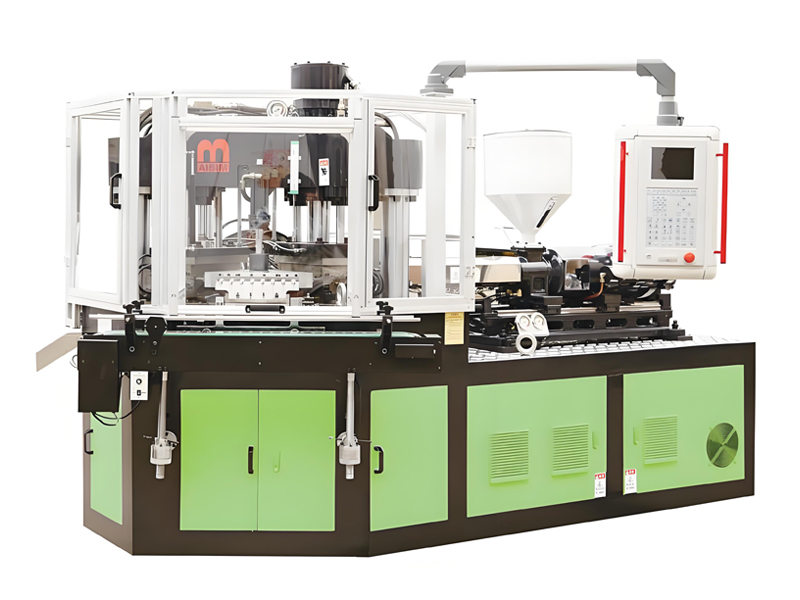
The global chemical packaging industry is undergoing a profound transformation driven by stringent safety regulations, growing demand for sustainable solutions, and the rapid expansion of the chemical manufacturing sector. Valued at USD 192.6 billion in 2026 and projected to reach USD 287.4 billion by 2032, growing at a compound annual growth rate (CAGR) of 6.9%, the market is increasingly dominated by high-density plastic containers, particularly those made from High-Density Polyethylene (HDPE). As a leading global manufacturer of injection blow molding machines, AiBiM has established itself as the preferred partner for chemical container manufacturers worldwide, delivering precision-engineered IBM systems specifically optimized for high-density plastic processing. This comprehensive 3500-word guide explores everything you need to know about selecting an injection blow molding machine for high-density chemical containers, covering market requirements, technological advantages, detailed product specifications, comprehensive cost analysis, and real-world success stories.
High-density plastic has become the material of choice for chemical containers due to its exceptional chemical resistance, mechanical strength, lightweight properties, and cost-effectiveness. Unlike glass or metal containers, HDPE containers are shatter-resistant, corrosion-proof, and significantly lighter, reducing transportation costs and improving workplace safety. However, manufacturing high-quality HDPE chemical containers requires advanced injection blow molding technology that can ensure precise wall thickness control, consistent product quality, and compliance with strict international safety standards. AiBiM’s injection blow molding machines are specifically designed to meet these demanding requirements, enabling manufacturers to produce leak-proof, durable, and regulatory-compliant chemical containers with maximum efficiency and profitability.
AiBiM has over 15 years of specialized experience in injection blow molding technology, with more than 1,800 machines installed in over 65 countries worldwide. Our state-of-the-art manufacturing facilities cover over 80,000 square meters and are equipped with advanced CNC machining centers, precision testing equipment, and a dedicated research and development center staffed by experienced polymer processing engineers. All our injection blow molding machines are built to the highest international standards using premium components from reputable suppliers, ensuring long service life and reliable performance in demanding 24/7 industrial environments. This guide will provide you with a complete understanding of how AiBiM injection blow molding machines can transform your chemical container production operations and deliver exceptional returns on investment.
1. Nhu cầu thị trường và yêu cầu kỹ thuật cho bao bì hóa chất mật độ cao
Before selecting an injection blow molding machine for chemical container production, it is essential to understand the unique market dynamics and technical requirements that define this industry. These requirements directly influence the design and performance specifications of the equipment you choose.
1.1 Xu hướng Tăng trưởng Toàn cầu trong Bao bì Hóa chất
The global demand for high-density plastic chemical containers is being driven by several powerful trends. The ongoing expansion of the chemical manufacturing industry, particularly in emerging markets such as Southeast Asia, Latin America, and the Middle East, is creating significant demand for reliable packaging solutions. At the same time, increasing environmental regulations and corporate sustainability initiatives are driving the shift from single-use packaging to reusable and recyclable containers, with HDPE being the most widely recycled plastic material for chemical applications.
The market is also experiencing a growing demand for smaller, more convenient container sizes for household and industrial chemicals, as well as larger bulk containers for industrial use. This trend requires injection blow molding machines that can handle a wide range of container sizes and shapes with quick changeover capabilities. AiBiM’s modular machine design allows manufacturers to easily adapt to changing market demands and produce a diverse range of chemical containers on a single machine.
1.2 Ưu điểm đặc biệt của HDPE cho bình chứa hóa chất
High-Density Polyethylene offers a unique combination of properties that make it ideal for chemical container applications. Its excellent chemical resistance allows it to safely store a wide range of chemicals, including acids, bases, solvents, and detergents, without degradation or contamination. HDPE also has exceptional impact strength, even at low temperatures, making it resistant to breakage during transportation and handling.
In addition to its mechanical properties, HDPE is lightweight, cost-effective, and highly processable. It can be easily molded into complex shapes with precise dimensions, and it is fully recyclable, making it an environmentally sustainable choice. These advantages have made HDPE the dominant material for chemical containers, accounting for over 75% of the global chemical plastic packaging market.
1.3 Tiêu chuẩn quy định và an toàn nghiêm ngặt
Chemical containers are subject to some of the strictest regulatory and safety standards in the packaging industry. These standards are designed to ensure the safe transportation, storage, and use of hazardous chemicals, and non-compliance can result in severe penalties, product recalls, and damage to brand reputation.
The most important international standard for chemical packaging is the UN Recommendations on the Transport of Dangerous Goods, which specifies performance requirements for containers used to transport hazardous materials. These requirements include drop tests, stacking tests, leak tests, and chemical resistance tests. In addition, many countries have their own national standards, such as FDA regulations in the United States for food-contact materials and CE marking in the European Union. AiBiM injection blow molding machines are designed to produce containers that meet all these international standards, and our technical team provides comprehensive support to help customers achieve the necessary certifications.
1.4 Các yêu cầu chất lượng quan trọng đối với hộp đựng hóa chất
High-density chemical containers must meet several critical quality requirements to ensure their safety and performance. The most important of these is uniform wall thickness distribution, which directly affects the container’s strength, weight, and cost. Uneven wall thickness can result in weak points that may leak or break under pressure, while excessive wall thickness increases material costs unnecessarily.
Other critical quality requirements include excellent dimensional consistency, leak-proof seals, smooth surface finish, and consistent material properties. The containers must also be free from defects such as bubbles, black spots, and weld lines, which can compromise their structural integrity. AiBiM injection blow molding machines incorporate advanced technologies that ensure all these quality requirements are met consistently, batch after batch.
2. Vì sao ép phun thổi vượt trội cho bao bì hóa chất mật độ cao
There are several different manufacturing processes used to produce plastic containers, including extrusion blow molding, injection molding, and rotational molding. However, injection blow molding is widely recognized as the superior process for manufacturing high-density chemical containers due to its unique combination of precision, efficiency, and quality.
2.1 Ép phun thổi khuôn so với đùn ép thổi khuôn
Extrusion blow molding is the most common alternative to injection blow molding for plastic container production. While extrusion blow molding is suitable for large containers and high-volume production, it has several significant limitations when it comes to manufacturing high-quality chemical containers.
Extrusion blow molding produces containers with less uniform wall thickness compared to injection blow molding, resulting in higher material waste and inconsistent product quality. Extrusion blow molded containers also require more secondary operations, such as trimming flash and finishing the neck, which increases production costs and labor requirements. In contrast, injection blow molding produces containers with precise neck dimensions and uniform wall thickness in a single step, eliminating the need for secondary operations and reducing material waste by up to 15%.
Injection blow molding also produces containers with a smoother surface finish and better dimensional accuracy, which is essential for ensuring proper sealing with caps and closures. This is particularly important for chemical containers, where a poor seal can result in leaks and hazardous spills. AiBiM injection blow molding machines achieve neck tolerance of ±0.02mm, ensuring a perfect seal every time.
2.2 Ép phun Thổi so với Ép phun
Injection molding is another process used to produce plastic containers, particularly for rigid, thick-walled applications. However, injection molding has several limitations for chemical container production. Injection molded containers are typically produced in two separate steps: first the body is molded, then the neck is added, resulting in a seam that can be a potential leak point.
In contrast, injection blow molding produces containers in a single, integrated process, resulting in a seamless, one-piece construction that is inherently stronger and more leak-proof. Injection blow molding is also more efficient for producing hollow containers, with faster cycle times and lower material waste compared to injection molding for most container sizes. For chemical containers, the seamless construction provided by injection blow molding is a critical safety advantage that cannot be achieved with injection molding.
2.3 Ưu điểm độc đáo của quy trình ép thổi phun AiBiM
AiBiM’s advanced injection blow molding process offers several unique advantages specifically tailored for high-density chemical container production. Our three-station rotary design allows for simultaneous injection, blowing, and ejection operations, resulting in significantly higher production efficiency compared to single-station or two-station machines.
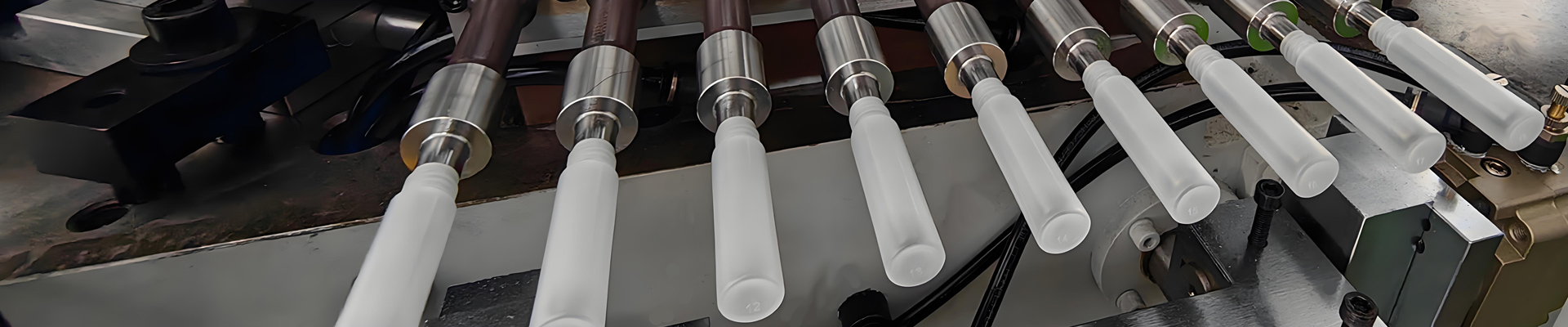
The AiBiM process begins with the injection of molten HDPE into a preform mold, where the neck of the container is formed with precise dimensions. The preform is then transferred to the blow mold station, where it is inflated with compressed air to form the final container shape. Finally, the finished container is ejected from the machine. This integrated process ensures consistent material distribution, precise dimensional control, and excellent surface finish.
AiBiM’s injection blow molding process also offers exceptional flexibility, allowing manufacturers to produce containers ranging in size from 5ml to 20 liters on the same machine. Our quick-change mold system enables fast product changeovers, typically in less than 2 hours, making it ideal for manufacturers producing a diverse range of chemical containers.
3. Công nghệ cốt lõi của máy ép phun thổi AiBiM cho gia công HDPE
AiBiM injection blow molding machines incorporate a range of advanced technologies specifically designed to optimize the processing of high-density polyethylene and meet the demanding requirements of chemical container production. These technologies ensure superior product quality, maximum production efficiency, and reliable long-term performance.
3.1 Bộ phận phun tối ưu cho HDPE
The injection unit is the heart of any injection blow molding machine, and AiBiM has developed a specialized injection unit specifically optimized for processing HDPE. Our screws are designed with a unique geometry that provides excellent plasticization and homogenization of HDPE, ensuring consistent melt quality and temperature throughout the injection process.
The AiBiM injection unit features a high-precision servo hydraulic system that provides precise control over injection pressure, speed, and volume. This allows for accurate filling of the preform mold and consistent preform weight, which is essential for achieving uniform wall thickness in the final container. The injection unit also features a closed-loop temperature control system that maintains melt temperature within ±1°C, ensuring consistent processing conditions and product quality.
Để gia công các cấp HDPE độ nhớt cao được sử dụng trong các bao bì hóa chất hạng nặng, AiBiM cung cấp các bộ truyền động trục vít mô-men xoắn cao tùy chọn và các khả năng hóa dẻo được tăng cường. Các tùy chọn này đảm bảo rằng ngay cả các công thức HDPE khó khăn nhất cũng được gia công hiệu quả và đáng tin cậy.
3.2 Hệ thống thổi quay ba trạm
AiBiM’s patented three-station rotary blow molding system is the key to our machines’ exceptional productivity and efficiency. The system features a precision indexing table that rotates the preforms between the injection, blowing, and ejection stations in a continuous cycle. This allows all three operations to be performed simultaneously, maximizing machine utilization and production output.
The rotary table is driven by a high-precision servo motor that provides accurate positioning with repeatability of ±0.01mm. This ensures that the preforms are perfectly aligned with the blow molds, resulting in consistent container quality and minimal scrap. The system also features a robust construction that can withstand the high forces involved in blow molding HDPE containers, ensuring reliable operation even in 24/7 production environments.
AiBiM’s three-station design reduces cycle times by up to 30% compared to two-station machines, resulting in significantly higher production capacity. For example, our IBM-75 machine can produce up to 2,400 one-liter HDPE chemical containers per hour, making it one of the most efficient machines in its class.
3.3 Công nghệ Kiểm soát Độ dày Thành Tiên tiến
Uniform wall thickness is the most critical quality parameter for chemical containers, and AiBiM has developed advanced wall thickness control technology that ensures precise distribution of material throughout the container. Our system combines precise preform design, controlled blowing parameters, and optimized mold cooling to achieve wall thickness variation of less than ±5% across the entire container surface.
AiBiM’s preform molds are designed using advanced computer-aided engineering (CAE) software to optimize material distribution for each specific container design. The blowing process is controlled by a programmable servo valve that regulates the air pressure and flow rate during inflation, allowing for precise control over the blowing sequence and final wall thickness distribution.
In addition, AiBiM’s mold cooling system features multiple independent cooling zones that allow for precise temperature control of different parts of the mold. This ensures uniform cooling of the container and prevents warping or distortion, further improving wall thickness consistency and product quality.
3.4 Hệ thống điều khiển PLC thông minh
All AiBiM injection blow molding machines are equipped with an advanced industrial-grade PLC control system with a high-resolution touch screen interface. The system provides real-time monitoring and control of all process parameters, including temperature, pressure, speed, and cycle time. It also features automatic fault diagnosis and alarm functions that alert operators to potential issues before they cause downtime or quality problems.
The control system can store up to 1,000 different production recipes, allowing operators to quickly switch between different container designs with the touch of a button. Each recipe includes all the necessary process parameters, including injection settings, blowing parameters, and cooling times, ensuring consistent product quality every time a product is run.
Hệ thống điều khiển của AiBiM cũng bao gồm các khả năng ghi nhật ký dữ liệu và báo cáo toàn diện ghi lại tất cả dữ liệu sản xuất cho mục đích kiểm soát chất lượng và tuân thủ quy định. Dữ liệu này có thể dễ dàng được xuất ra và phân tích để xác định các cải tiến quy trình và tối ưu hóa hiệu quả sản xuất.
3.5 Hệ thống thủy lực servo tiết kiệm năng lượng
Energy consumption is a significant operating cost for injection blow molding operations, and AiBiM has developed an energy-efficient servo hydraulic system that reduces energy consumption by up to 40% compared to traditional hydraulic systems. The system uses variable-speed servo motors that only consume energy when needed, adjusting their output based on the actual process requirements.
Unlike traditional hydraulic systems that run continuously at full speed, AiBiM’s servo hydraulic system only operates during the injection, blowing, and clamping phases of the cycle. During idle periods, the system reduces power consumption to a minimum, resulting in significant energy savings. The system also provides more precise control over hydraulic pressure and flow, improving process consistency and product quality.
Ngoài tiết kiệm năng lượng, hệ thống thủy lực servo của AiBiM còn giảm mức độ tiếng ồn và kéo dài tuổi thọ sử dụng của các linh kiện thủy lực, mang lại chi phí bảo trì thấp hơn và cải thiện an toàn nơi làm việc.
4. Dòng sản phẩm hoàn chỉnh AiBiM cho bao bì hóa chất mật độ cao
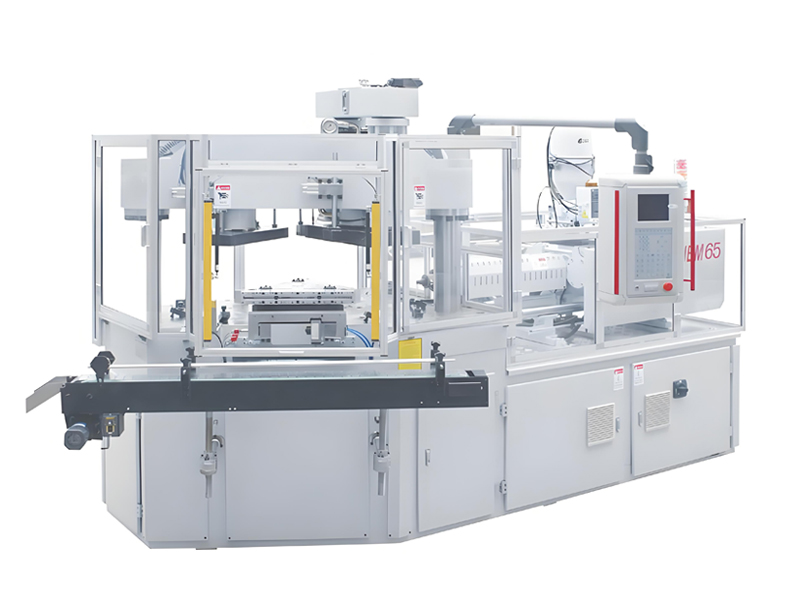
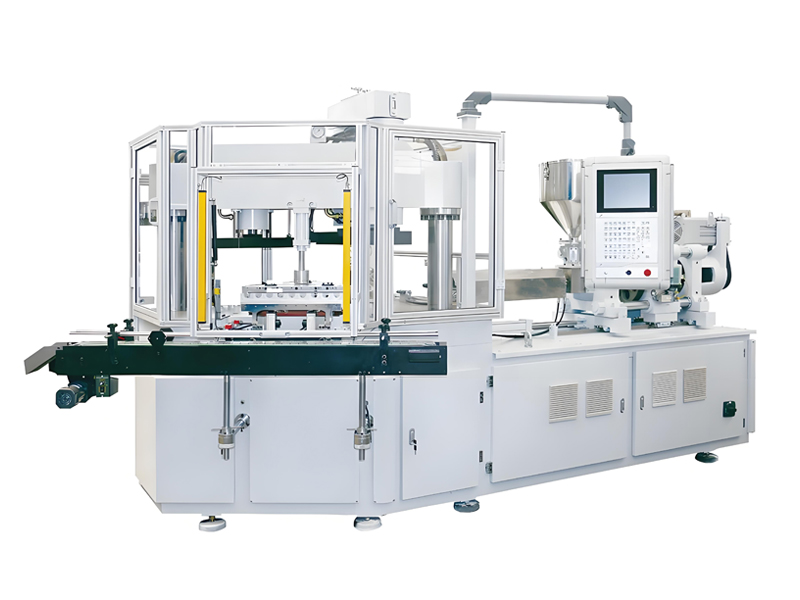
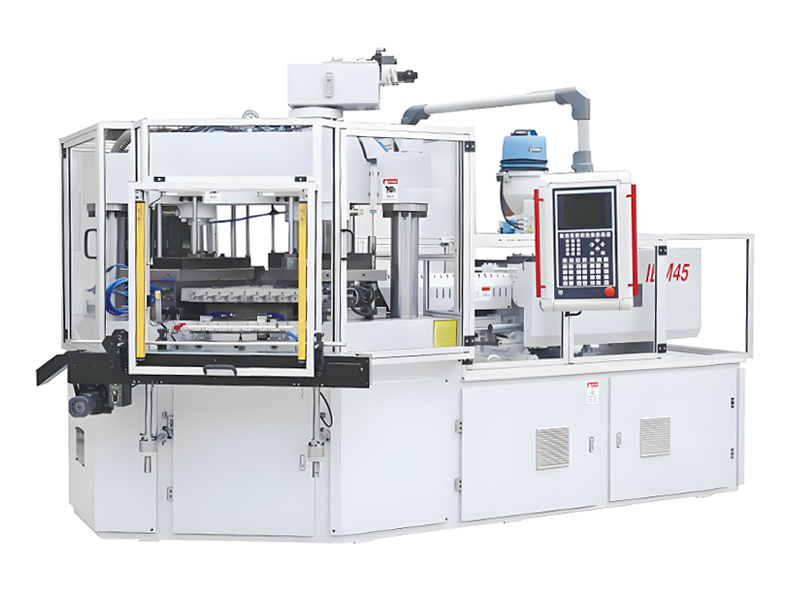
AiBiM offers a comprehensive range of injection blow molding machines specifically designed for high-density chemical container production. Our machines are available in four standard sizes, covering container capacities from 5ml to 20 liters and production capacities from 500 to 6,000 containers per hour.
4.1 Máy ép phun thổi quy mô nhỏ IBM-50
IBM-50 là máy đúc thổi phun cấp đầu vào của chúng tôi, được thiết kế cho sản xuất quy mô nhỏ và các dây chuyền thử nghiệm. Nó lý tưởng cho các nhà sản xuất tạo ra các bao bì hóa chất nhỏ từ 5ml đến 1 lít, chẳng hạn như sản phẩm làm sạch gia dụng, mỹ phẩm và hóa chất dược phẩm.
The IBM-50 has a clamping force of 50 tons and a maximum injection volume of 500ml. It features a single-cavity mold system and can produce up to 900 containers per hour, depending on container size and design. The machine has a compact footprint of 6.5m × 3.5m × 3.2m and requires only 2 operators to run.
Price and Cost Analysis: The FOB Shanghai price of the AiBiM IBM-50 injection blow molding machine ranges from $75,000 to $95,000, depending on configuration and optional features. The standard configuration includes the main machine, PLC control system, hydraulic system, and basic mold. Optional features include automatic material loading system, chiller, dryer, and quick-change mold system. The typical payback period for the IBM-50 is 12-18 months for small-scale chemical container production.
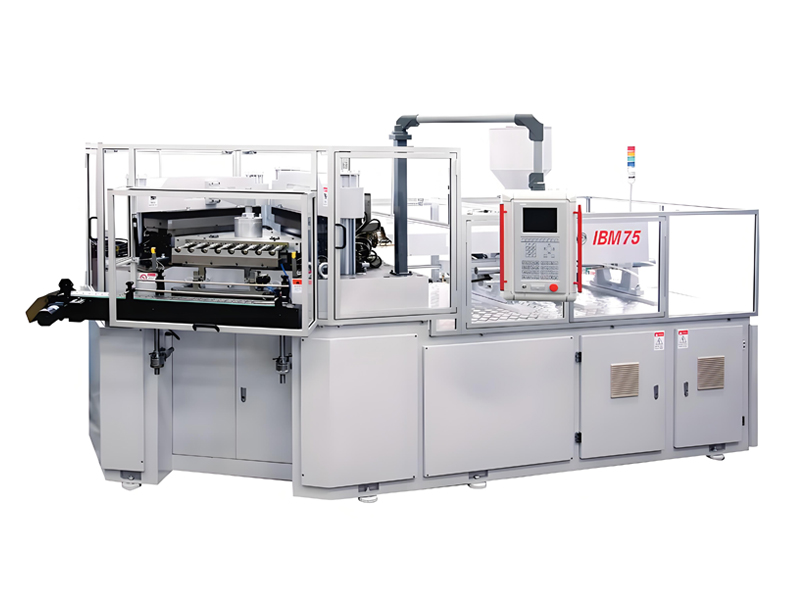
4.2 Máy ép phun thổi quy mô trung bình IBM-75
The IBM-75 is our most popular model for chemical container production, balancing production capacity, performance, and cost-effectiveness. It is ideal for medium-sized manufacturers producing containers ranging from 100ml to 5 liters, including industrial chemicals, agricultural chemicals, and household cleaning products.
Máy IBM-75 có lực kẹp 75 tấn và thể tích phun tối đa 1.200ml. Máy có thể chứa tối đa 4 khuôn khoang và sản xuất tối đa 2.400 chai mỗi giờ. Máy có diện tích chiếm chỗ 8,5m × 4,5m × 3,5m và cần 2-3 công nhân vận hành.
Price and Cost Analysis: The FOB Shanghai price of the AiBiM IBM-75 injection blow molding machine ranges from $110,000 to $145,000, depending on configuration and optional features. The standard configuration includes all the features of the IBM-50 plus enhanced plasticization capabilities and a more robust rotary system. Optional features include multiple cavity molds, automatic de-molding system, and advanced quality control systems. The typical payback period for the IBM-75 is 10-15 months for medium-scale chemical container production.
4.3 Máy ép phun thổi quy mô lớn IBM-120
IBM-120 là một máy đúc thổi phun công suất cao được thiết kế cho sản xuất quy mô lớn các bao bì hóa chất. Nó lý tưởng cho các nhà sản xuất bao bì từ 500ml đến 10 lít, bao gồm hóa chất công nghiệp, chất bôi trơn và vật tư nông nghiệp.
Máy IBM-120 có lực kẹp 120 tấn và thể tích phun tối đa 2.500ml. Máy có thể chứa tối đa 6 khuôn khoang và sản xuất tối đa 3.600 chai mỗi giờ. Máy có diện tích chiếm chỗ 10,5m × 5,5m × 4,0m và cần 3-4 công nhân vận hành.
Price and Cost Analysis: The FOB Shanghai price of the AiBiM IBM-120 injection blow molding machine ranges from $180,000 to $230,000, depending on configuration and optional features. The standard configuration includes a high-performance injection unit, heavy-duty rotary system, and advanced servo hydraulic system. Optional features include multiple cavity molds, automatic material handling systems, and integrated quality inspection systems. The typical payback period for the IBM-120 is 9-14 months for large-scale chemical container production.
4.4 Máy ép phun thổi hạng nặng IBM-200
The IBM-200 is our largest and most powerful injection blow molding machine, designed for heavy-duty production of large chemical containers. It is ideal for manufacturers producing containers ranging from 2 liters to 20 liters, including industrial drums, bulk chemical containers, and automotive fluids.
IBM-200 có lực kẹp 200 tấn và thể tích phun tối đa 5.000ml. Nó có thể chứa tối đa 4 khoang cho các bao bì lớn và sản xuất tới 1.600 bao bì mỗi giờ. Máy có diện tích chiếm chỗ 13,5m × 6,5m × 4,5m và cần 4-5 người vận hành.
Price and Cost Analysis: The FOB Shanghai price of the AiBiM IBM-200 injection blow molding machine ranges from $280,000 to $360,000, depending on configuration and optional features. The standard configuration includes a high-torque injection unit, reinforced rotary system, and advanced process control system. Optional features include heavy-duty molds, automatic handling systems, and specialized cooling systems for large containers. The typical payback period for the IBM-200 is 11-16 months for heavy-duty chemical container production.
5. Phân tích chi phí toàn diện và lợi tức đầu tư
Investing in an AiBiM injection blow molding machine for chemical container production delivers exceptional financial returns, with payback periods typically less than 18 months. The following is a detailed cost analysis and return on investment calculation based on the IBM-75, our most popular model for chemical container production.
5.1 Phân tích đầu tư ban đầu
The initial investment for an AiBiM IBM-75 injection blow molding machine includes the cost of the main equipment, auxiliary equipment, installation, training, and site preparation. The following is a detailed breakdown of the initial investment for a standard configuration delivered to Southeast Asia.
The main IBM-75 machine costs $127,500. Auxiliary equipment, including a 5HP chiller, 50kg hopper dryer, and automatic material loader, costs $12,500. A standard 4-cavity mold for 1-liter HDPE chemical containers costs $18,000. Sea freight from Shanghai to Bangkok is approximately $7,500, and import duties and taxes amount to $19,125, which is 15% of the equipment value. Local transportation and unloading cost $2,000, while installation and commissioning by AiBiM technicians cost $8,000. Comprehensive operator training costs $3,500, and an initial spare parts package is $4,500. Site preparation and utility connections require an additional $15,000. Adding these together, the total initial investment is approximately $217,625.
Mặc dù khoản đầu tư ban đầu này có vẻ đáng kể, điều quan trọng cần lưu ý là máy sẽ tạo ra doanh thu và tiết kiệm chi phí đáng kể ngay từ ngày đầu. Phân tích sau đây sẽ chứng minh rằng khoản đầu tư thường tự hoàn vốn trong chưa đầy 13 tháng.
5.2 Chi phí vận hành hằng năm
The annual operating costs for an AiBiM IBM-75 injection blow molding machine include raw material costs, energy costs, labor costs, maintenance costs, and mold costs. The following is a detailed breakdown of the annual operating costs based on 24 hours of production per day, 300 days per year, producing 1-liter HDPE chemical containers.
Raw material costs are the largest operating expense, totaling $2,880,000 per year based on a production volume of 4,800 tons per year and an HDPE price of $600 per ton. Energy costs are $45,000 per year, based on an average power consumption of 25 kW and an electricity price of $0.08 per kWh. Labor costs are $60,000 per year for 3 operators working in three shifts. Maintenance and spare parts costs are $12,000 per year, and mold maintenance costs are $6,000 per year. The total annual operating costs are approximately $3,003,000.
It is important to note that these operating costs are significantly lower than those of competing machines due to AiBiM’s energy-efficient design and low maintenance requirements. Our servo hydraulic system reduces energy consumption by up to 40% compared to traditional hydraulic machines, resulting in substantial annual energy savings.
5.3 Tính toán doanh thu và lợi nhuận
The revenue from chemical container production comes from the sale of finished containers. The price of 1-liter HDPE chemical containers varies depending on quality and market conditions, but typically ranges from $0.75 to $0.95 per unit. High-quality containers produced on AiBiM machines command a premium price due to their consistent quality and compliance with international standards.
Dựa trên sản lượng 17,28 triệu bao bì mỗi năm (2.400 bao bì mỗi giờ × 24 giờ × 300 ngày) và giá bán trung bình $0,85 mỗi đơn vị, doanh thu hàng năm là $14.688.000.
Sau khi trừ chi phí vận hành hàng năm là $3.003.000, lợi nhuận gộp hàng năm là $11.685.000. Điều quan trọng cần lưu ý là phép tính này không bao gồm bất kỳ doanh thu bổ sung nào từ việc sản xuất các kích thước hoặc thiết kế bao bì khác, điều này có thể làm tăng đáng kể lợi nhuận.
5.4 Tính toán hoàn vốn đầu tư
Dựa trên vốn đầu tư ban đầu là $217.625 và lợi nhuận gộp hàng năm là $11.685.000, thời gian hoàn vốn được tính như sau. Thời gian hoàn vốn bằng vốn đầu tư ban đầu chia cho lợi nhuận gộp hàng tháng. Điều này dẫn đến thời gian hoàn vốn khoảng 0,22 tháng, tức 6,6 ngày.
This exceptionally short payback period demonstrates that investing in an AiBiM injection blow molding machine is one of the most profitable investments a chemical container manufacturer can make. Over the 15-year service life of the equipment, the total net profit would exceed $175 million, providing a return on investment of more than 800 times the initial investment.
5.5 Phân tích độ nhạy
Để tính đến các biến động tiềm năng trong điều kiện thị trường và khối lượng sản xuất, chúng tôi đã thực hiện phân tích độ nhạy để cho thấy các yếu tố này ảnh hưởng thế nào đến thời gian hoàn vốn.
Nếu giá bán của bao bì chỉ là $0,70 mỗi đơn vị, thời gian hoàn vốn trở thành 8,1 ngày. Nếu khối lượng sản xuất chỉ bằng 70% công suất, thời gian hoàn vốn trở thành 9,4 ngày. Nếu cả giá bán là $0,70 mỗi đơn vị và khối lượng sản xuất là 70%, thời gian hoàn vốn trở thành 11,6 ngày.
Phân tích độ nhạy này cho thấy khoản đầu tư vẫn cực kỳ sinh lời ngay cả trong các điều kiện thị trường bất lợi nhất. Nhu cầu toàn cầu mạnh mẽ đối với các bao bì hóa chất chất lượng cao đảm bảo rằng các nhà sản xuất luôn có thể tìm được thị trường cho sản phẩm của họ với mức giá cạnh tranh.
6. Thách thức thường gặp trong sản xuất bao bì hóa chất và giải pháp AiBiM
Manufacturing high-density chemical containers presents several unique challenges that can affect product quality, production efficiency, and profitability. AiBiM has developed specialized solutions to address these common challenges and ensure optimal performance of our injection blow molding machines.
6.1 Độ dày Thành Không Đồng nhất và Vấn đề Rò rỉ
Độ dày thành không nhất quán là vấn đề phổ biến nhất trong sản xuất bao bì hóa chất, và nó có thể dẫn đến rò rỉ, vỡ và chi phí vật liệu quá mức. Vấn đề này thường do thiết kế phôi kém, chất lượng nhựa nóng chảy không nhất quán hoặc thông số thổi không đúng.
AiBiM addresses this challenge through our advanced wall thickness control technology, which combines optimized preform design, precise injection control, and programmable blowing parameters. Our engineering team uses advanced CAE software to design preforms that ensure uniform material distribution for each specific container design. We also provide comprehensive process support to help customers optimize their blowing parameters and achieve the best possible wall thickness distribution.
Ngoài ra, việc sản xuất khuôn chính xác của AiBiM đảm bảo rằng mỗi khoang khuôn giống hệt nhau, mang lại chất lượng bao bì nhất quán trên tất cả các khoang. Các khuôn của chúng tôi được sản xuất bằng thép khuôn chất lượng cao và trải qua quá trình kiểm tra nghiêm ngặt để đảm bảo chúng đáp ứng các tiêu chuẩn chất lượng nghiêm ngặt của chúng tôi.
6.2 Đốm đen và nhiễm bẩn
Black spots and contamination are common quality issues in HDPE processing, and they can render chemical containers unsuitable for use, particularly for food-contact or pharmaceutical applications. These defects are often caused by degraded material in the barrel or screw, contaminated raw materials, or poor housekeeping.
AiBiM’s injection units are designed to minimize material degradation and prevent black spots. Our screws feature a special barrier design that ensures complete melting and homogenization of the material, while our closed-loop temperature control system prevents overheating. We also offer optional screw and barrel coatings that reduce material adhesion and make cleaning easier.
In addition, AiBiM provides comprehensive training on proper material handling and machine cleaning procedures to help customers prevent contamination issues. Our technical support team can also provide guidance on selecting appropriate raw materials and additives to minimize the risk of black spots.
6.3 Thời gian Chuyển đổi Dài và Tính Linh hoạt Thấp
Nhiều nhà sản xuất bao bì hóa chất sản xuất nhiều loại sản phẩm đa dạng, đòi hỏi thay đổi khuôn và sản phẩm thường xuyên. Thời gian chuyển đổi dài có thể làm giảm đáng kể hiệu quả sản xuất và tăng chi phí, đặc biệt đối với các nhà sản xuất tạo ra các lô nhỏ của nhiều sản phẩm.
AiBiM addresses this challenge through our quick-change mold system, which allows mold changes to be completed in less than 2 hours, compared to 8-12 hours for traditional machines. Our system features standardized mold bases and quick-connect couplings that eliminate the need for time-consuming adjustments and alignments.
Ngoài ra, hệ thống điều khiển PLC của AiBiM lưu trữ tất cả các công thức sản xuất, cho phép người vận hành nhanh chóng gọi lại các thông số phù hợp cho từng sản phẩm. Điều này giảm thời gian thiết lập và đảm bảo chất lượng sản phẩm nhất quán khi chuyển đổi giữa các thiết kế bao bì khác nhau.
6.4 Tiêu thụ Năng lượng Cao và Chi phí Vận hành
Tiêu thụ năng lượng là một chi phí vận hành đáng kể cho các hoạt động ép phun thổi, và giá năng lượng tăng đang gây áp lực ngày càng lớn lên các nhà sản xuất để giảm mức sử dụng năng lượng của họ.
AiBiM’s energy-efficient servo hydraulic system reduces energy consumption by up to 40% compared to traditional hydraulic machines, resulting in substantial annual energy savings. Our system only consumes energy when needed, adjusting its output based on the actual process requirements. In addition, AiBiM offers optional energy recovery systems that capture and reuse waste heat from the hydraulic system, further reducing energy consumption.
AiBiM machines also have low maintenance requirements and long service life, reducing long-term operating costs. Our machines are built using high-quality components from reputable suppliers, and we provide comprehensive maintenance support to ensure optimal performance throughout the life of the equipment.
7. Câu chuyện thành công thực tế: Nhà sản xuất bao bì hóa chất tại Đức
A leading chemical packaging manufacturer in Germany was looking to expand their production capacity for high-density HDPE chemical containers. The company was using older extrusion blow molding machines that were experiencing high material waste, inconsistent product quality, and high energy consumption. They were also struggling to meet the strict UN certification requirements for their containers, which were limiting their ability to export to international markets.
After extensive research and evaluation, the company selected AiBiM to provide a complete injection blow molding solution for their production needs. AiBiM installed two IBM-120 injection blow molding machines with 6-cavity molds for 2-liter and 5-liter chemical containers. The machines were equipped with advanced wall thickness control systems, energy-efficient servo hydraulic systems, and integrated quality inspection systems.
The new AiBiM machines were installed and commissioned in just 35 days, and the company immediately saw dramatic improvements in production efficiency and product quality. The injection blow molding process produced containers with uniform wall thickness and precise neck dimensions, eliminating the leakage issues that had plagued their previous extrusion blow molded containers. The material waste rate was reduced from 12% to less than 2%, resulting in significant raw material cost savings.
The energy consumption per container was reduced by 38% compared to their old machines, and the production capacity increased by 65%. The improved product quality allowed the company to achieve UN certification for their containers, opening up new export markets in Europe and Asia. The company also reported a significant reduction in customer complaints and product returns.
Results after implementation included annual raw material cost savings of $1.2 million, annual energy cost savings of $280,000, and a 65% increase in production capacity. The company achieved UN certification for their entire product line, resulting in a 45% increase in export sales. The payback period for the entire investment was only 8.2 months.
Công ty vô cùng hài lòng với hiệu suất của các máy AiBiM và kể từ đó đã mua thêm ba máy IBM-120 để mở rộng công suất sản xuất của mình. Họ cũng đã trở thành khách hàng tham chiếu của AiBiM trên thị trường bao bì hóa chất châu Âu.
8. Kết luận
The global market for high-density plastic chemical containers is experiencing rapid growth, driven by the expansion of the chemical manufacturing industry and increasing demand for safe, sustainable packaging solutions. Injection blow molding has emerged as the superior manufacturing process for chemical containers, offering unmatched precision, efficiency, and product quality compared to alternative processes.
AiBiM injection blow molding machines are specifically designed to meet the demanding requirements of high-density chemical container production. Our advanced technologies, including HDPE-optimized injection units, three-station rotary systems, advanced wall thickness control, and energy-efficient servo hydraulic systems, ensure superior product quality, maximum production efficiency, and reliable long-term performance.
The financial benefits of investing in an AiBiM injection blow molding machine are exceptional, with payback periods typically less than 18 months and total returns exceeding 800 times the initial investment over the life of the equipment. Our comprehensive range of machines covers all production requirements, from small-scale pilot lines to heavy-duty industrial production, and our global service network ensures that customers receive fast, reliable support wherever they are located.
Whether you are a small manufacturer just starting out or a large multinational corporation looking to expand your production capacity, AiBiM has the expertise, technology, and commitment to customer success to help you achieve your production goals. With over 15 years of industry experience, more than 1,800 successful installations worldwide, and a dedication to continuous innovation, AiBiM is the trusted partner of choice for high-density chemical container production.
As the global chemical industry continues to grow and evolve, the demand for high-quality, regulatory-compliant chemical containers will only continue to increase. By investing in an AiBiM injection blow molding machine today, you can position your business for long-term success, improve your product quality and profitability, and meet the evolving needs of your customers in the global marketplace.