Sản xuất IBM đạt chứng nhận tiếp xúc thực phẩm FDA: Hướng dẫn tuân thủ vật liệu và quy trình
Một tài liệu tham khảo kỹ thuật cho các kỹ sư bao bì dược phẩm, thực phẩm và mỹ phẩm khi chỉ định ép phun thổi (IBM) theo luật tiếp xúc thực phẩm FDA Hoa Kỳ.
Ép phun blow molding (IBM) has become the preferred one-step process for small, high-precision, food- and pharma-grade bottles ranging from 3 ml dropper containers to 1000 ml personal-care and condiment jars. The reason is structural as much as regulatory: because the preform is injection molded onto a core rod and then blown in the same machine, there is no scrap parison, no flash, and no post-molding trim that could shed particles into the article. For brand owners shipping product into the Hoa Kỳ, however, the machine is only half the story. The other half is proving that every gram of polymer, every additive, every colorant and every contact surface meets the U.S. Thực phẩm and Drug Administration food-contact rules. This guide explains the regulatory architecture, the material choices, the testing regime, and the way the IBM process itself must be controlled so that a finished bottle can be described, honestly and defensibly, as FDA food-contact compliant. It is written for engineers, quality managers and procurement specialists who already understand blow molding but need the compliance detail in one place.
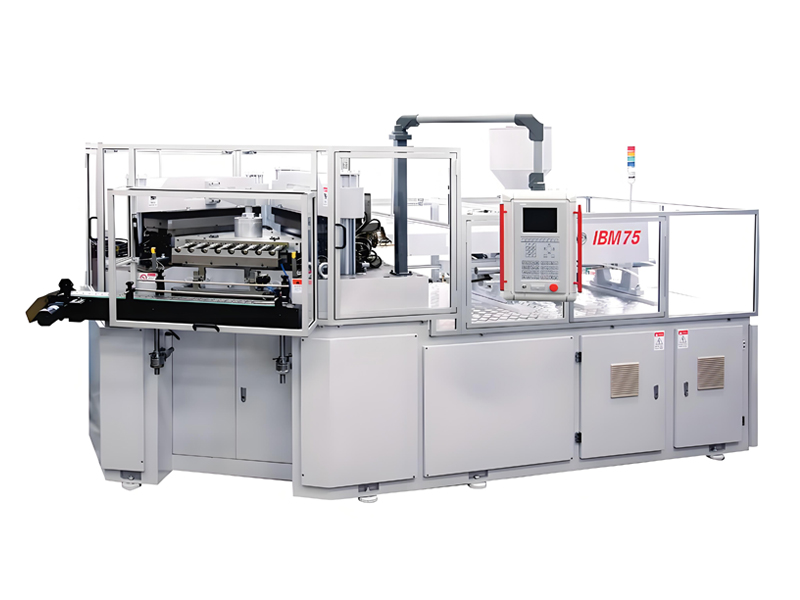
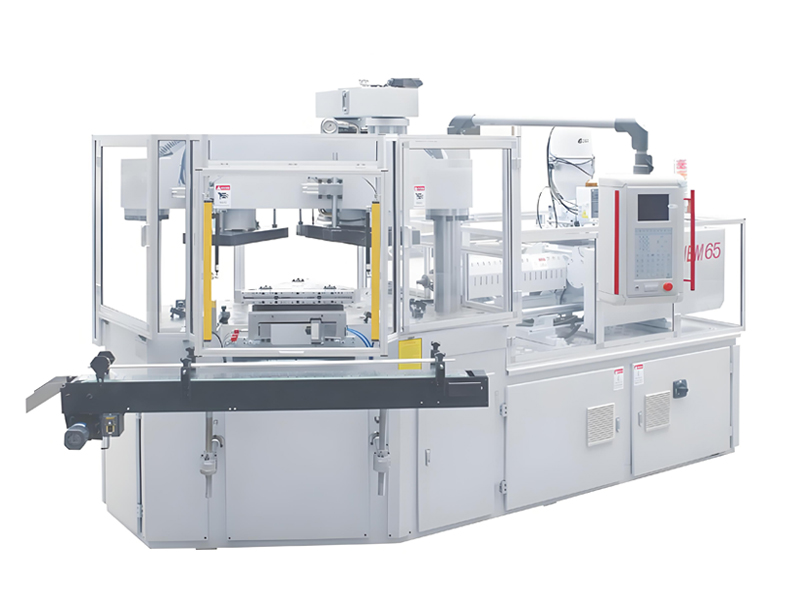
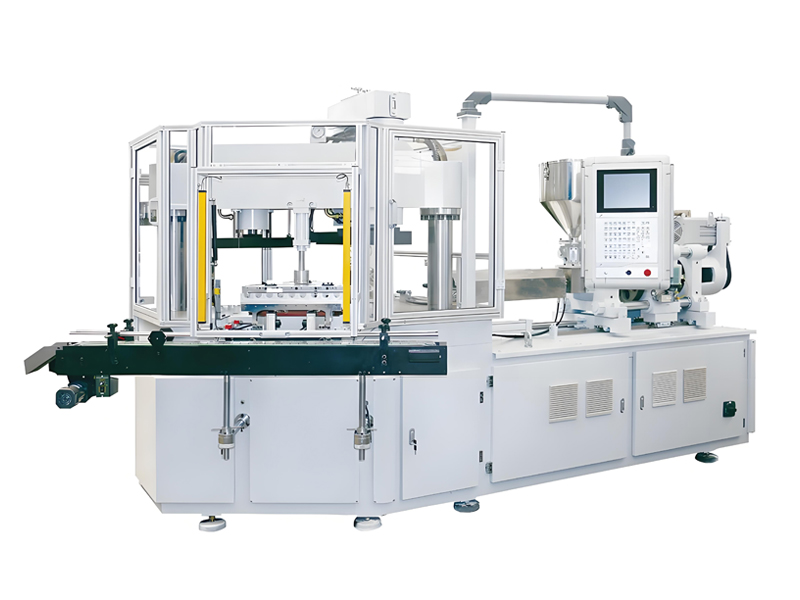
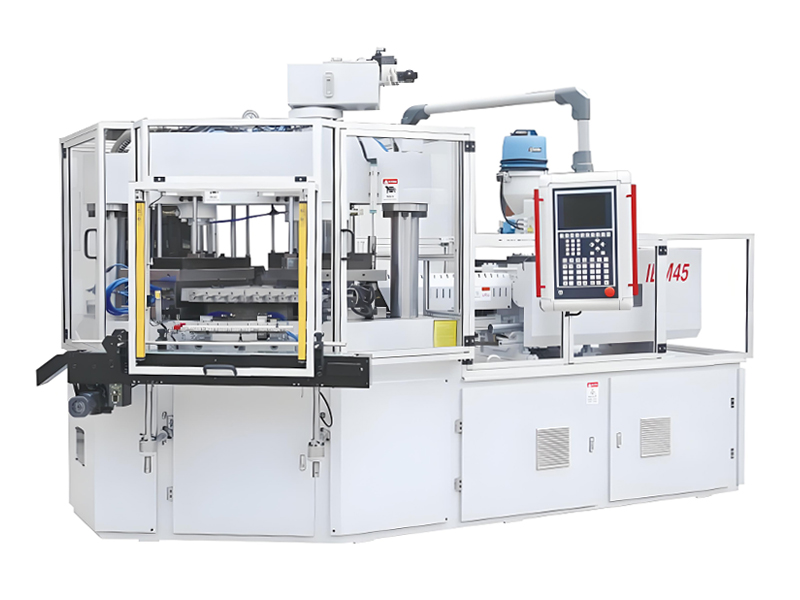
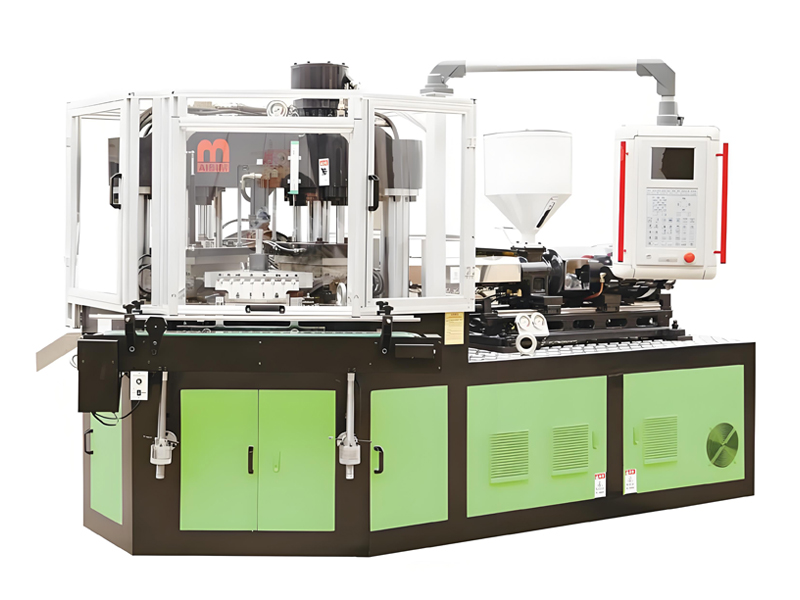
Throughout this document the term injection blow molding (IBM) is used consistently, the resin shaping cavity is described as a mold, the heated shaping pin is the core rod, and the resin is plasticized inside the barrel of the injection unit. These are the correct American English terms for this process and for U.S. regulatory filings. Aibim, a Wanplas factory, designs and builds IBM machines — including the IBM55 Hybrid, IBM65 and IBM75 series and the PREFILL prefill injection system — for converters serving the pharmaceutical, food and cosmetic packaging markets, and the guidance below reflects how compliant production is engineered on that equipment.
1. Khung quy định tiếp xúc thực phẩm của FDA (21 CFR 170–199)
The U.S. Thực phẩm and Drug Administration does not issue a single certificate that says “this bottle is approved.” Instead, food-contact compliance is built from a layered set of regulations in Title 21 of the Code of Federal Regulations, specifically chapters 170 through 199. Understanding the architecture of 21 CFR 170–199 is the first task for any converter that wants to make defensible claims about FDA compliance, because each subchapter answers a different question: what substances are permitted, under what conditions, with what limits, and through which authorization route.
1.1 Tiêu chuẩn an toàn chung và khái niệm phụ gia gián tiếp
At the top of the framework sits 21 CFR 170, which establishes the general safety clause: any substance that may become a component of food through its intended use is subject to premarket authorization, and it is unsafe unless it is used in conformity with a regulation or effective Thực phẩm Contact Notification. The key legal idea is that a packaging material is treated as an indirect food additive. The polymer, the antioxidant, the slip agent, the colorant and even the low-molecular-weight oligomers that migrate from the plastic into the food are all, in principle, food additives. Therefore they must each be authorized, and their migration must be negligible or within defined limits. This is why a converter cannot simply choose a commodity resin and assume it is compliant — the resin must be a grade intended for food contact, and the total additive package must be reviewed substance by substance.
1.2 Các chương cụ thể theo chất: 177, 178 và các chương tiếp theo
Chapter 21 CFR 177 covers indirect food additives: polymers. This is the section most relevant to IBM bottle producers because it lists the base resins that may contact food and the conditions attached to each. The most important polymer clauses for small bottle production are:
- 21 CFR 177.1520 — polyme olefin, bao gồm polyethylene (PE) và polypropylene (PP), gồm cả giới hạn mật độ và chất chiết xuất theo dung môi.
- 21 CFR 177.1630 — polyethylene terephthalate (PET), với giới hạn về dimethyl terephthalate, antimon, germani và tổng chất chiết xuất.
- 21 CFR 177.1500 — nhựa nylon (polyamide), liên quan đến bao bì chống thấm cao và chịu nhiệt.
- 21 CFR 177.1580 — polycarbonate (PC), mặc dù việc sử dụng trong tiếp xúc thực phẩm đã thu hẹp vì lo ngại về bisphenol A và nhiều chủ thương hiệu hiện tránh dùng nó.
- 21 CFR 177.1440 — polyme acrylic và acrylic biến tính, liên quan đến nhựa trong suốt loại PETG.
- 21 CFR 177.2420 — nhựa polyester, bao gồm copolyester như PETG.
Chapter 21 CFR 178 covers indirect food additives: adjuvants, production aids and components of coatings. The additives that appear in a typical IBM formulation are authorized here:
- 21 CFR 178.2010 — các tổ hợp chất chống oxy hóa và/hoặc chất ổn định được phép sử dụng trong polyme tiếp xúc thực phẩm.
- 21 CFR 178.3297 — chất tạo màu cho polyme, tham chiếu các sắc tố tổng hợp và tự nhiên được phép.
- 21 CFR 178.3570 / 178.3620 / 178.3910 — chất bôi trơn, chất trượt và chất chống dính được phép trong các ứng dụng tiếp xúc thực phẩm.
- 21 CFR 178.3400 — chất khử bọt và các chất hỗ trợ gia công khác.
Other chapters round out the system: 21 CFR 175 covers adhesives and coatings, 21 CFR 176 covers paper and paperboard components, and 21 CFR 179 covers irradiation for polymer treatment. For a closed plastic bottle made by IBM, the operative chapters are 177 (polymers) and 178 (additives), with 170 (general) sitting above them.
1.3 Ba con đường ủy quyền: được chấp thuận trước, GRAS và FCN
Beyond the enumerated regulations, the FDA recognizes three ways a substance can be lawful for food contact. Prior-sanctioned substances are those the FDA or USDA explicitly approved for food-contact use before the 1958 Thực phẩm Additives Amendment. GRAS (Generally Recognized as Safe) substances are those whose safety is generally recognized by qualified experts under the conditions of use; many traditional food-contact polymers and additives sit here. The modern route is the Thực phẩm Contact Notification (FCN) system under 21 CFR 170.100: a manufacturer submits a notification to the FDA, and if the agency does not object within 120 days the substance becomes lawful for the specific notifier and the specific conditions described. A crucial feature of the FCN system is that the authorization is company-specific — it protects the notifier, not the whole industry — so a converter must confirm that the particular resin or additive it buys is covered by an FCN held by its supplier (or is otherwise listed in 21 CFR or GRAS). This is why supplier documentation is not optional; it is the legal backbone of a compliant IBM bottle.
1.4 Ngưỡng điều chỉnh (TOR) và thư không phản đối
When a substance’s dietary concentration from food contact is below a defined threshold, the FDA may apply the Threshold of Regulation (TOR) and decline to require full premarket authorization, issuing a letter that effectively clears the use. Separately, converters sometimes receive a supplier no-objection letter — a statement that a material is suitable for food contact under named regulations. A no-objection letter is a commercial assurance, not an FDA certificate, but it is a useful piece of the compliance file when backed by extractables data and the underlying 21 CFR or FCN references. The practical message for engineers: build the compliance case from the regulation number, the FCN or GRAS status, the extractables data and the supplier’s CoA/CoC, not from a single marketing claim.
Bảng dưới đây ánh xạ các điều khoản FDA chính đến các vật liệu chúng quản lý và các giới hạn mà nhà chuyển đổi phải tôn trọng khi chọn hệ thống nhựa và phụ gia cho chai IBM tiếp xúc thực phẩm.
Bảng 1. Các điều khoản quy định FDA — Vật liệu áp dụng — Giới hạn chính
| 21 CFR Clause | Applicable Material / Substance | Key Compliance Limit / Condition |
|---|---|---|
| 21 CFR 170.100 | General safety / FCN route | Substance unsafe unless authorized; FCN effective after 120-day non-objection |
| 21 CFR 177.1520 | Olefin polymers (HDPE, LDPE, PP) | Extractives limits by solvent (xylene, n-heptane, etc.); density range |
| 21 CFR 177.1630 | PET | Limits on dimethyl terephthalate, antimony, germanium; total extractives |
| 21 CFR 177.1500 | Nylon (polyamide) resins | Extractives and specific monomer limits; use-condition classes |
| 21 CFR 177.1580 | Polycarbonate (PC) | Residual bisphenol A and extractives limits; declining use |
| 21 CFR 177.2420 | Polyester (PETG / copolyester) | Total extractives; heavy-metal residue limits |
| 21 CFR 178.2010 | Antioxidants / stabilizers | Only listed antioxidant combinations at permitted levels |
| 21 CFR 178.3297 | Colorants for polymers | Permitted pigment list; some subject to certification |
| 21 CFR 178.3570 | Lubricants / slip agents | Listed substances only; limits on extracted amounts |
2. Lựa chọn vật liệu tuân thủ cho bao bì thực phẩm IBM
Choosing a resin for an IBM food-contact bottle is never only about mechanical performance. It is a simultaneous optimization of regulatory status, extractables profile, thermal behavior in the barrel, optical clarity, barrier, and cost. The table below compares the six polymers most often run on IBM machines for pharmaceutical, food and cosmetic packaging, with the regulatory anchor for each and the properties that drive selection.
Bảng 2. So sánh lựa chọn vật liệu tuân thủ (HDPE / PP / PET / PETG / COC / LDPE)
| Polymer | Regulatory anchor | Dịch vụ temperature | Clarity | Barrier | Typical IBM application |
|---|---|---|---|---|---|
| HDPE (e.g., HD5502-type) | 21 CFR 177.1520 | Up to ~110 deg C short term | Opaque / transl. | Good moisture, poor O2 | Vitamin, supplement, dairy, personal-care jars |
| PP homopolymer / random copolymer | 21 CFR 177.1520 | Up to ~120 deg C | Translucent / clear | Good moisture, fair O2 | Hot-fill, sauce, medical, baby-care bottles |
| PET (IV 0.76–0.84) | 21 CFR 177.1630 | Up to ~70 deg C | Clear | Good O2, good moisture | Edible-oil, vitamin, cough-syrup, cosmetics |
| PETG (copolyester) | 21 CFR 177.2420 | Up to ~60 deg C | Very clear | Moderate | Mỹ phẩm jars, sampling vials, display packs |
| COC / COP (cyclic olefin) | 21 CFR 177.1520 / FCN | Up to ~130 deg C (COP) | Excellent | High moisture, low extractables | Pharma dropper, diagnostic, high-purity bottles |
| LDPE | 21 CFR 177.1520 | Up to ~80 deg C | Translucent | Good moisture, flexible | Squeeze bottles, droppers, soft dispensers |
2.1 Polyethylene: HDPE và LDPE
High-density polyethylene (HDPE) is the workhorse of opaque, chemical-resistant small bottles. A resin such as the HD5502 family (a bimodal blow-molding grade) is widely used because its narrow molecular-weight distribution and high melt flow rate (MFR) give clean injection of the preform and stable blowing. Under 21 CFR 177.1520, HDPE must meet extractives limits when extracted with solvents such as xylene and n-heptane, and the converter must use a grade certified for food contact. Low-density polyethylene (LDPE) is chosen when flexibility and a soft squeeze are required, for example in dropper bulbs and dispenser bodies, but its lower stiffness limits it to smaller formats. Both must be free of heavy-metal catalysts above the permitted residue and must not contain recycled content that has not itself been cleared for food contact.
2.2 Polypropylene: homopolymer và copolymer ngẫu nhiên
PP is the material of choice when the bottle must survive hot fill or pasteurization. A PP homopolymer gives rigidity and high heat resistance, while a random copolymer (with a small ethylene comonomer) improves clarity and impact at low temperature, which is valuable for refrigerated or frozen product. PP is regulated under 21 CFR 177.1520 and is generally low in extractables, but it is sensitive to oxidative degradation at the high melt temperatures used in IBM; the antioxidant package is therefore critical, and the stabilizer must be on the 21 CFR 178.2010 list. PP also has a higher mold shrinkage than HDPE, which the bottle neck and thread tolerance must absorb — a point addressed later in the process section.
2.3 PET, PETG và olefin vòng (COC/COP)
PET with an intrinsic viscosity (IV) of 0.76 to 0.84 is the standard for clear bottles that need good oxygen and moisture barrier, such as edible-oil and vitamin containers, and is authorized under 21 CFR 177.1630 with strict limits on residual antimony catalyst, dimethyl terephthalate and total extractives. PETG, a copolyester, is easier to process on IBM because it does not crystallize as aggressively as PET and gives excellent clarity without the need for tight thermal control, but its use-temperature ceiling is lower and its barrier is moderate; it is covered under 21 CFR 177.2420. For the highest-purity pharmaceutical and diagnostic bottles, cyclic olefin copolymers (COC) and cyclo-olefin polymers (COP) are increasingly specified: they combine glass-like clarity, very low extractables and strong moisture barrier, and their low polarity reduces adsorption of sensitive actives. These are typically authorized through an FCN and are positioned at the Premium end of the cost spectrum.
2.4 Danh sách trắng phụ gia và các chất bị cấm
Một công thức IBM tuân thủ quy định không chỉ là polyme nền. Hệ thống phụ gia cũng phải được phê duyệt, và đối với tiếp xúc thực phẩm chỉ một danh sách trắng hẹp được phép. Các thành phần được phép điển hình bao gồm:
- Các chất chống oxy hóa như Irganox 1010, Irganox 1076 và chất ổn định phosphite 168, được sử dụng kết hợp trong giới hạn của 21 CFR 178.2010 để ngăn chặn phân hủy nhiệt-oxy trong xi lanh.
- Các chất trượt như erucamide (có nguồn gốc từ amide axit erucic) để giảm ma sát trên bề mặt chai và cải thiện việc tháo khuôn khỏi trục lõi.
- Các chất tạo mầm để kiểm soát tính kết tinh, co ngót và độ mờ của PP và HDPE, cải thiện cả ngoại hình và độ ổn định kích thước của cổ chai.
- Chất tạo màu chỉ giới hạn ở các bột màu có số Color Index (CI) được phép theo 21 CFR 178.3297; bột màu hữu cơ và vô cơ phải có tài liệu chứng minh hàm lượng kim loại nặng dưới ngưỡng quy định.
Equally important is the list of substances that must never appear. Phthalate plasticizers, bisphenol A (BPA) and heavy metals such as lead, cadmium, mercury and hexavalent chromium are prohibited or tightly restricted in food-contact applications. A converter must obtain a written confirmation from every supplier that the resin, masterbatch and process aid are free of these substances, and must verify it through periodic heavy-metal screening. The color masterbatch itself is frequently the weakest link in an otherwise compliant formulation, because off-spec pigment or a non-food carrier resin can introduce unauthorized extractables.
Quy tắc ngón tay cái lựa chọn vật liệu: xác định một cấp độ tiếp xúc thực phẩm của polyme nền, một gói phụ gia được lấy hoàn toàn từ 21 CFR 178, một masterbatch màu có các số CI được ghi chép và sàng lọc kim loại nặng, và một chuỗi trạng thái FCN hoặc GRAS được ghi chép cho bất cứ thứ gì không được liệt kê rõ ràng trong 21 CFR.
3. Yêu cầu thử nghiệm chiết tách, di chuyển và NIAS
Selecting compliant materials is necessary but not sufficient. The FDA’s concern is not the material in isolation but what transfers from the material into the food. That transfer is measured through extraction and migration testing, and it is the part of the compliance file that converters most often underestimate. Migration testing answers two questions: how much total material moves into food (overall migration), and whether any single substance of concern exceeds its specific limit (specific migration).
3.1 Chất mô phỏng thực phẩm
Vì không thực tế để thử nghiệm mọi loại thực phẩm thật, các cơ quan quản lý sử dụng các chất mô phỏng thực phẩm tiêu chuẩn hóa mô phỏng khả năng chiết xuất của các loại thực phẩm khác nhau. Các chất mô phỏng phổ biến dùng cho chai nhựa là:
- 10 phần trăm ethanol — mô phỏng thực phẩm dạng nước, ít cồn và ít béo.
- Axit axetic 3 phần trăm — mô phỏng thực phẩm có tính axit như nước sốt và xốt làm từ giấm.
- Ethanol 50% — mô phỏng thực phẩm nhiều chất béo và nhiều cồn.
- Miglyol 812 hoặc triglyceride chuỗi trung bình khác (dầu thực vật) — mô phỏng thực phẩm béo.
- Tenax — một chất hấp phụ polyme xốp dùng cho thực phẩm khô và để đo các chất dễ bay hơi mà nếu không sẽ thoát vào khoảng không phía trên.
The choice of simulant is driven by the nature of the food the bottle will hold. A vitamin bottle destined for tablets may be tested with the dry-food approach using Tenax, while a sauce bottle is tested against 3 percent acetic acid and 50 percent ethanol. The engineering implication is that the most aggressive simulant the product could encounter must be included, or the compliance claim is incomplete.
3.2 Điều kiện Thử nghiệm và Biểu đồ Nhiệt độ/Thời gian
Mức độ nghiêm trọng của quá trình chiết xuất phụ thuộc vào nhiệt độ và thời gian tiếp xúc. Các điều kiện tiêu chuẩn áp dụng cho sản phẩm nhựa cứng tiếp xúc thực phẩm bao gồm:
- 40 độ C trong 10 ngày — mô phỏng lưu trữ lạnh hoặc môi trường dài hạn.
- 60 độ C trong 10 ngày — mô phỏng lưu trữ môi trường và ấm tăng tốc.
- 70 độ C trong 2 giờ — mô phỏng chiết nóng hoặc thanh trùng ngắn hạn.
- 100 độ C dưới điều kiện hồi lưu — mô phỏng nước sôi hoặc xử lý nhiệt nghiêm ngặt cho các sản phẩm sẽ được chiết nóng hoặc khử trùng.
For IBM bottles, the relevant conditions are typically the 40 deg C / 10 day and 60 deg C / 10 day profiles for shelf-stable products, plus the 70 deg C / 2 h profile when hot fill is intended. The reflow condition is reserved for bottles that must withstand boiling or retort. Selecting the wrong condition under-tests the article and can invalidate the compliance claim.
3.3 Giới hạn di trú tổng thể, di trú riêng phần và NIAS
The overall migration limit (OML) caps the total mass of all substances that can transfer, expressed either as 10 mg per square decimeter of food-contact surface (10 mg/dm²) or, for small and irregular articles where area is hard to define, as 60 mg per kilogram of food simulant (60 mg/kg). The specific migration limit (SML) sets a ceiling for a named substance — for example a particular antioxidant, a residual monomer, or a heavy metal — and is usually far lower than the OML. Beyond the named substances, regulators increasingly require assessment of non-intentionally added substances (NIAS): impurities, reaction by-products, oligomers and degradation products that were never deliberately formulated but can migrate. NIAS assessment demands a deep understanding of what the polymer and additive system can generate under processing heat, which ties directly back to the IBM process window discussed in the next section.
3.4 Phương pháp phát hiện phân tích
Quantifying migrated substances requires modern instrumentation. GC-MS (gas chromatography with mass spectrometry) identifies and quantifies volatile and semi-volatile organics such as residual monomers, solvents and degradation fragments. LC-MS (liquid chromatography with mass spectrometry) handles non-volatile, thermally labile substances such as oligomers and certain additives. ICP-MS (inductively coupled plasma mass spectrometry) detects and quantifies trace heavy metals down to parts-per-trillion levels, which is essential for the heavy-metal screening demanded by both FDA and EU 10/2011. A credible compliance file pairs migration testing with these analytical methods and reports both detected values and method detection limits, so that a “not detected” result is meaningful rather than merely unscreened.
Bảng 3. Dung môi mô phỏng thử nghiệm di chuyển — Điều kiện — Giới hạn — Phương pháp
| Thực phẩm simulant | Represented food | Test condition | Limit | Detection method |
|---|---|---|---|---|
| 10% ethanol | Aqueous / mild alcohol | 40 deg C / 10 d; 60 deg C / 10 d | OML 10 mg/dm² or 60 mg/kg | GC-MS, LC-MS |
| 3% acetic acid | Acidic foods | 40 deg C / 10 d; 60 deg C / 10 d | OML 10 mg/dm² or 60 mg/kg; SML | GC-MS, ICP-MS |
| 50% ethanol | High-fat / high-alcohol | 40 deg C / 10 d; 60 deg C / 10 d | OML 10 mg/dm² or 60 mg/kg; SML | GC-MS, LC-MS |
| Miglyol 812 / veg. oil | Fatty foods | 40 deg C / 10 d; 60 deg C / 10 d | OML 10 mg/dm² or 60 mg/kg | GC-MS |
| Tenax (dry) | Dry foods / volatiles | 40 deg C / 10 d | SML for volatiles; NIAS | GC-MS (headspace) |
| Boiling water (reflux) | Hot-fill / sterilized | 100 deg C under reflux | OML 10 mg/dm² or 60 mg/kg | GC-MS, LC-MS, ICP-MS |
4. Quy trình IBM gắn kết với tuân thủ như thế nào
This is the section where IBM engineering and food-contact compliance meet most directly. The injection blow molding (IBM) process is unique because the preform is injection molded in a first station, transferred on a core rod to a second blowing station, and ejected at a third — and on four-station machines a fourth station handles inspection or deflashing. Because the preform is never a free extruded parison, the process is inherently flash-free, which removes a whole class of trimming debris and particle-contamination risk. But the same heat and shear that shape the bottle can also create the very low-molecular-weight volatiles and degradation products that migration testing is designed to catch. Process control is therefore not merely a quality issue; it is a compliance control.
4.1 Chu kỳ IBM ba trạm và bốn trạm
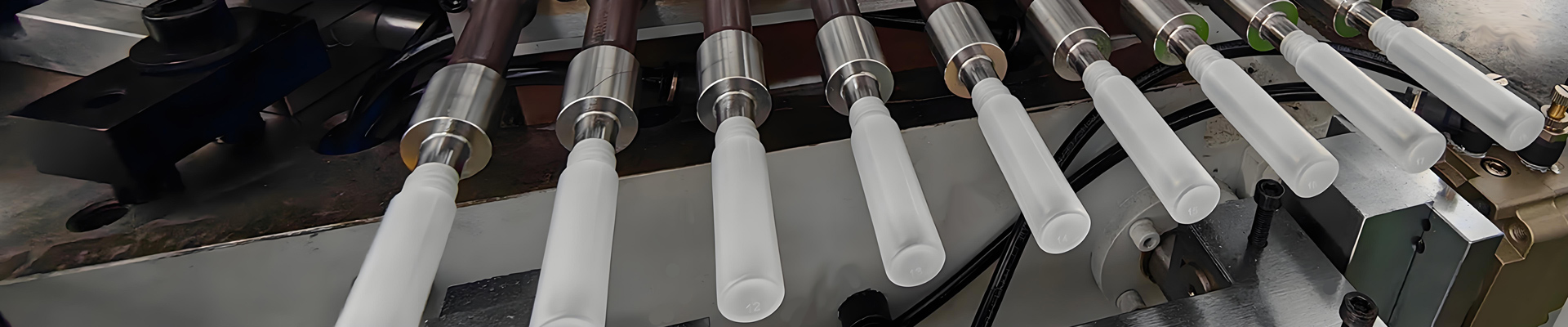
In the classic three-station IBM machine, station one injects the molten polymer into a preform mold wrapped around a heated core rod. The core rod is then rotated to station two, where the preform is blow-molded against the bottle cavity with compressed air, forming the body, shoulder and neck in a single flash-free operation. At station three the finished bottle is stripped from the core rod and ejected. A four-station configuration inserts an additional station — often for in-mold inspection, leak testing, or removal of the small gate/vestige — which improves outgoing quality for high-value pharmaceutical and diagnostic bottles. Aibim’s IBM machines, including the IBM55 Hybrid, IBM65 and IBM75 series, operate this indexed core-rod transfer, and the PREFILL prefill injection technology improves shot consistency and reduces melt hesitation at the gate, which in turn improves neck definition.
The core rod is central to both bottle quality and compliance. Its temperature is actively controlled, typically in the range of 60 to 95 deg C, depending on the resin. A core rod that is too cold causes the preform to freeze unevenly and produces a rough or short bottle neck; a core rod that is too hot prevents the preform from releasing cleanly and can leave residual melt on the neck finish. Both conditions degrade the precision of the bottle neck and thread, and a poorly formed neck can trap process residues or cleaning media. Holding the core rod in the correct window is therefore a direct contributor to a clean, dimensionally precise, inspection-passing bottle.
4.2 Nhiệt độ nhựa nóng chảy, phun và giữ áp
Xi lanh hóa dẻo và làm nóng chảy nhựa trước khi nó được phun. Mỗi polyme có một cửa sổ nhiệt độ nóng chảy cân bằng giữa nóng chảy hoàn toàn và đồng nhất hóa với phân hủy nhiệt:
- PE: 190 to 230 deg C
- PP: 200 to 250 deg C
- PET: 265 to 290 deg C
Running below the window leaves unmelted particles and poor filling; running above it accelerates oxidative and thermal degradation, generating acetaldehyde in PET, oligomers in polyolefins, and low-molecular-weight volatiles that become NIAS candidates. Ép phun pressure and holding (packing) pressure must be set high enough to fill the thin neck threads without over-packing, which would create internal stress and sink marks. The mold temperature (the temperature of the preform and blow cavities) is set to control crystallinity and surface finish, while the cycle time for a small IBM bottle typically falls between 8 and 20 seconds, with faster cycles on multi-cavity machines and slower cycles on thick-wall or heat-sensitive resins.
4.3 Rủi ro suy giảm, cắt và mùi
Two failure modes connect process to migration. The first is thermal degradation from excessive barrel temperature or residence time: a polymer sitting too long in a hot barrel breaks down into fragments that can later migrate into the food. The second is mechanical degradation from excessive shear — too-high screw speed or back pressure — which can also scission polymer chains and create odor and off-taste compounds. Both are controlled by keeping the melt in its proper window, minimizing residence time, and using the correct antioxidant loading. Because COC/COP and PET are particularly sensitive to heat history, their process windows are narrower and their compliance depends even more heavily on disciplined setpoints.
4.4 Flash-free advantage and neck precision vs. EBM
Compared with extrusion blow molding (EBM), IBM’s flash-free operation removes the need for a post-mold trim station, which in EBM generates flash that must be reground or discarded and can introduce particulate contamination if not contained. More importantly for food contact, IBM holds the bottle neck and thread to approximately plus or minus 0.05 mm, whereas EBM necks are typically less precise because the parison is clamped rather than injection-molded. That precision matters for tamper-evident closures, for leak-tight seals, and for avoiding micro-crevices where residues could accumulate. The trade-off is that IBM is best suited to small, precision containers (bottles up to roughly 1000 ml), while EBM remains competitive for larger industrial containers — but for the small pharmaceutical, food and cosmetic bottles this guide addresses, IBM’s cleanliness profile is a genuine compliance advantage.
4.5 Thực phẩm-grade consumables: release agents, greases, compressed air
Compliance extends to everything that touches the process. Demolding and release agents, if used, must be food-contact permitted. Lubricating greases on moving parts and core-rod mechanisms must be NSF H1 food-grade, meaning they are acceptable for incidental food contact and will not introduce unauthorized substances. Critically, the compressed air that blows the bottle must be oil-free and meet ISO 8573-1 Class 1.2.1 at the point of use — that is, virtually no oil aerosol, minimal water and minimal particulate. Contaminated compressed air is a common and avoidable source of non-compliant bottles, because oil mist deposits directly on the interior bottle surface where it cannot be cleaned after molding.
Bảng 4. Cửa sổ thông số quy trình IBM và các điểm rủi ro tuân thủ
| Parameter | Typical window | Compliance risk if off-window | Control action |
|---|---|---|---|
| Core rod temperature | 60–95 deg C | Poor neck finish, residue trapping | Closed-loop rod heating; per-cavity check |
| Melt temperature (PE) | 190–230 deg C | Degradation volatiles if too high | Zone control; barrel temp log |
| Melt temperature (PP) | 200–250 deg C | Antioxidant depletion; odor | Antioxidant verification; residence time |
| Melt temperature (PET) | 265–290 deg C | Acetaldehyde; IV drop | Dry resin; tight zone control |
| Ép phun / holding pressure | Per resin; fill + pack | Short shot or over-pack stress | Profile tuning; clamping force match |
| Mold temperature | Per resin; 10–80 deg C | Haze, warpage, stress | Mold temp controller; logging |
| Cycle time | 8–20 s | Residence time if unstable | Stable cycle; avoid stop-start |
| Compressed air | ISO 8573-1 Class 1.2.1 | Oil deposit on bottle interior | Oil-free compressor; point-of-use filter |
| Grease / release aid | NSF H1 only | Unauthorized additive migration | Approved consumables list |
5. Môi trường sản xuất phòng sạch
Even a perfectly formulated, perfectly processed bottle can be compromised by the environment in which it is made. For food- and pharma-grade IBM production, the cleanroom is the last line of defense against particulate, microbial and cross-contact contamination. The governing standard is ISO 14644, which classifies cleanrooms by the number of particles of 0.5 micrometer and larger per cubic meter of air.
5.1 ISO 14644 Cấp 7 và Cấp 8
For most food-contact IBM bottle production, converters run the molding and bottle-ejection area at ISO 14644 Class 7 (approximately the older “ten-thousand-class” or 10,000-class cleanroom) or Class 8 (approximately the “hundred-thousand-class” or 100,000-class cleanroom). Class 8 is often sufficient for non-sterile food bottles, while Class 7 is preferred for pharmaceutical and diagnostic containers where particulate control is tighter. The classification is verified by particle counting at rest and in operation, and the room must be re-qualified periodically and after any change that could affect airflow or filtration.
5.2 Áp suất, lọc và thay đổi không khí
A compliant cleanroom maintains a positive pressure relative to adjoining, dirtier areas — generally at least 10 Pa — so that air always flows outward and contaminants cannot enter. Air is supplied through Fan Filter Đơn vịs (FFU) carrying HEPA filters rated H13 or H14, which remove the large majority of particles down to the sub-micron range. The room is designed for 20 to 60 air changes per hour, with the higher rate applied where more particulate generation or stricter control is expected. Personnel and material flows are separated: staff gown in a changing sequence (hair cover, coverall, boots, gloves) and pass through an air shower, while resin and packaging enter through a separate clean corridor so that raw material does not cross the path of finished bottles.
5.3 Kiểm soát tĩnh điện và hạt bụi
Because bottles are lightweight and easily statically charged, which attracts dust, the cleanroom uses ionizers, conductive flooring and grounded equipment to control static. Bottles are typically transferred in closed tote or on clean conveyor within the controlled zone, and final packing happens inside the clean area so the bottle never re-enters an uncontrolled space before sealing. For pharmaceutical grades, an additional microbial monitoring program (settle plates, contact plates, airflow visualization) supplements the particle monitoring, and the room is cleaned with validated procedures using food-grade or pharma-grade detergents.
Bảng 5. Cấp phòng sạch — Thông số — Sản phẩm áp dụng — Hạng mục thẩm định
| Cleanroom grade | Key parameters | Applicable product | Validation items |
|---|---|---|---|
| ISO 14644 Class 8 | Positive pressure ≥10 Pa; 20–40 ACH; HEPA H13 | Non-sterile food, cosmetic bottles | Particle count; airflow; recovery |
| ISO 14644 Class 7 | Positive pressure ≥10 Pa; 30–60 ACH; HEPA H14 | Pharma, diagnostic, high-purity bottles | Particle count; microbial; smoke study |
| Class 7 + microbial | As Class 7; active microbial monitoring | Sterile or aseptic-fill adjunct bottles | Settle/contact plates; trending |
Phòng sạch không làm cho vật liệu không tuân thủ trở nên tuân thủ, nhưng một căn phòng bẩn có thể làm cho vật liệu tuân thủ trở nên không tuân thủ. Kiểm soát môi trường là lớp vỏ bảo vệ công thức và công việc quy trình.
6. Hệ thống chất lượng và truy xuất lô hàng
Material and process controls only deliver a defensible compliance claim when they are embedded in a recognized quality system. For food-contact packaging, the relevant frameworks include GMP (Good Manufacturing Practice), HACCP (Hazard Analysis and Critical Control Points), FSSC 22000, BRCGS Bao bì, and ISO 22000. These systems turn individual good practices into a documented, auditable management system.
6.1 Bức tranh tổng thể về hệ thống quản lý
GMP is the foundational discipline of clean, controlled, documented production and is mirrored in EU law by EC 2023/2006 GMP for food-contact materials. HACCP requires the producer to identify the critical control points — for an IBM bottle these include resin acceptance, additive verification, melt temperature, compressed-air quality and cleanroom classification — and to monitor them with defined limits and corrective actions. FSSC 22000 and ISO 22000 build a full food-safety management system on top of these principles, while BRCGS Bao bì is a widely audited standard specifically for packaging manufacturers supplying retailers and brand owners. Many pharmaceutical-adjacent producers also align with ISO 10993 for biological evaluation and USP Class VI for plastic materials intended for biomedical use, and with GB 4806.7 for food-contact plastics in the Chinese market. Holding these certifications is frequently a contractual prerequisite for supplying multinational food and pharma brands.
6.2 Truy xuất nguồn gốc lô hàng
Traceability is what allows a compliance claim to be defended after the fact. A robust IBM bottle program links, for every production batch, the resin lot number to the machine, the mold (with cavity identification), the shift, and the case or pallet code. That chain means that if a migration test later flags an issue, the producer can isolate exactly which resin lot, which machine setting and which mold were involved, and can recall only the affected cases. The data is captured through the machine control system and a manufacturing execution system (MES), and it is retained for the period required by the relevant standard and by the customer agreement.
6.3 Tài liệu: CoA, CoC, đánh giá nhà cung cấp, kiểm soát thay đổi
Every incoming resin and additive shipment should arrive with a Certificate of Analysis (CoA) stating the food-contact grade, the relevant 21 CFR or FCN reference, and the extractables and heavy-metal results. The converter issues a Certificate of Compliance (CoC) to the customer, summarizing that the finished article was produced from compliant materials under controlled conditions. Supplier audits confirm that the resin maker’s own system is sound, and change control ensures that any switch of resin grade, additive supplier, masterbatch color, mold or machine setting is re-evaluated for compliance before it reaches production. A retained sample (retained bottle) of each batch supports later retesting. Together, these documents form the compliance dossier that regulators, brand owners and auditors expect to see.
FDA 21 CFR 177.1520 · 21 CFR 177.1630 · EU 10/2011 · EC 1935/2004 · EC 2023/2006 GMP · ISO 14644 · ISO 8573-1 · ISO 10993 · USP Class VI · GB 4806.7 · FSSC 22000 · BRCGS
7. Thẩm định và định tính (DQ/IQ/OQ/PQ)
Trụ cột cuối cùng của một chương trình tuân thủ có thể bảo vệ được là xác nhận giá trị sử dụng. Xác nhận chứng minh rằng thiết bị và quy trình luôn tạo ra sản phẩm tuân thủ, không chỉ là có thể làm được một lần. Cấu trúc được chấp nhận là vòng đời bốn giai đoạn DQ/IQ/OQ/PQ.
7.1 Định tính thiết kế, lắp đặt, vận hành và hiệu suất
DQ (Design Qualification) confirms that the machine and cleanroom design are suitable for food-contact production — correct materials of construction, accessible cleaning, appropriate filtration. IQ (Installation Qualification) verifies that the IBM machine, the compressed-air system, the mold-temperature controllers and the cleanroom utilities were installed as specified and are documented. OQ (Operational Qualification) demonstrates that the process operates correctly across its setpoint ranges — melt temperature, core rod temperature, injection and holding pressure, cycle time — and that alarms and interlocks function. PQ (Performance Qualification) runs the validated parameters on commercial batches and confirms, through inspection and testing, that the output consistently meets specification, including migration and physical-quality targets.
7.2 Năng lực quy trình và thẩm định vệ sinh
During OQ and PQ the producer establishes process capability, commonly expressed as Cpk, and for critical characteristics such as neck diameter and wall thickness a capability of Cpk ≥ 1.33 is the usual expectation. Cleaning validation proves that the changeover cleaning between campaigns removes residues to an acceptable level, which matters both for hygiene and for preventing cross-contamination of flavors, actives or colors. Where a line runs multiple products, the cleaning validation defines the acceptable residue limit and the swab or rinse method used to verify it.
7.3 Chuyển đổi Màu và Xác nhận Thay đổi Vật liệu
Because color masterbatch is a frequent source of non-compliant extractables and cross-contamination, the color changeover between runs must itself be validated. The validation confirms that the previous color is purged below a defined threshold before the new color is accepted, using visual, spectroscopic or extraction checks. Similarly, a change of resin grade or supplier triggers re-qualification of the affected parameters and, where the material is novel, fresh migration testing. These validations are revisited on a defined schedule and whenever a significant change occurs, ensuring the compliance claim remains current rather than a one-time event.
From a competitive standpoint, Aibim, a Wanplas factory, supports this lifecycle by designing its IBM55 Hybrid, IBM65 and IBM75 machines with closed-loop temperature and pressure control, recipe management for locked parameter sets, and data logging suitable for IQ/OQ/PQ evidence capture. As part of the Wanplas brand’s network of specialized factories, Aibim positions its injection blow molding (IBM) lines for converters that must document every stage from resin lot to finished, inspected bottle. This engineering support reduces the burden of validation because the machine already produces the consistent, logged process data that auditors require.
Câu hỏi thường gặp
Chứng nhận tiếp xúc thực phẩm FDA thực sự yêu cầu gì cho chai IBM?
The FDA does not certify the finished bottle. It regulates the materials and articles that contact food under 21 CFR 170 to 199. Compliance means every resin, additive, colorant and process aid is permitted, migration into food stays within limits, and the manufacturing environment is controlled. The converter demonstrates this through documentation, testing and a quality system rather than through a single certificate.
Ép phun thổi (IBM) có vốn dĩ tuân thủ tốt hơn đùn thổi (EBM) không?
IBM is flash-free and yields bottle neck and thread tolerances around plus or minus 0.05 mm, which reduces trimming debris and particle contamination and improves seal integrity. That supports cleaner production, but neither process is compliant by itself; material selection, additive control and the cleanroom still decide the result. IBM’s advantage is structural cleanliness, not automatic regulatory approval.
Loại nhựa nào tốt nhất cho chai nhỏ giọt dược phẩm 50 ml theo quy định FDA?
For high clarity and very low extractables, COC or COP and PET or PETG are common choices. HDPE and PP homopolymer are preferred when chemical resistance and low extractables matter more than transparency. The final choice depends on the drug vehicle, the required barrier and the filling temperature, and each option must be a food-contact grade supported by 21 CFR or FCN status.
Các giới hạn di chuyển như OML 10 mg/dm² được thực thi và kiểm nghiệm như thế nào?
Overall migration is measured by exposing the article to food simulants such as 10 percent ethanol, 3 percent acetic acid, 50 percent ethanol and vegetable oil under defined time and temperature conditions, then quantifying the transferred mass per area (10 mg/dm²) or per kilogram (60 mg/kg). GC-MS, LC-MS and ICP-MS identify and quantify the migrated substances, including heavy metals.
FDA có phê duyệt trước chai thành phẩm hay chỉ phê duyệt vật liệu?
FDA pre-approves substances and issues Thực phẩm Contact Notifications for new ones, but the converter is responsible for demonstrating that the finished article is compliant through formulation control, migration testing and documentation. A supplier no-objection letter supports the claim but is a commercial assurance rather than an FDA certificate.
Cần cấp phòng sạch nào cho sản xuất IBM tiếp xúc thực phẩm?
Many producers run ISO 14644 Class 7 or Class 8 environments with positive pressure of at least 10 Pa, HEPA H13 or H14 filters, and 20 to 60 air changes per hour. Class 8 suits non-sterile food and cosmetic bottles, while Class 7 is preferred for pharmaceutical and diagnostic containers where tighter particulate and microbial control is required.
Masterbatch màu ảnh hưởng đến tuân thủ tiếp xúc thực phẩm như thế nào?
Only pigments with permitted Color Index numbers and compliant carriers may be used, and the masterbatch must be documented for extractables and heavy metals. Color changeover must be validated so previous colors do not cross-contaminate the next run. Because masterbatch is a frequent weak point, it deserves the same scrutiny as the base resin.
Nhà cung cấp phải cung cấp những tài liệu nào để tuân thủ FDA?
The resin and additive supplier should provide a Certificate of Analysis stating the food-contact grade, the relevant 21 CFR or FCN reference, and extractables and heavy-metal results. The converter then issues a Certificate of Compliance to the customer summarizing that the article was made from compliant materials under controlled conditions, supported by batch records and retained samples.
Nhựa tái chế có thể được sử dụng trong chai IBM tiếp xúc thực phẩm FDA không?
Recycled content is permitted only when it meets the same food-contact safety criteria as virgin material, typically through an established recycling process with its own FDA clearance or through rigorous testing demonstrating no unsafe migration. Most compliant small IBM bottles for pharma and food today use virgin food-contact grade resin, with recycled content adopted only where a specific cleared pathway exists.
Việc xác nhận làm sạch và định tính lại phải được lặp lại bao lâu một lần?
Cleaning validation is repeated on a defined schedule, after any significant equipment or process change, and whenever a new product or material is introduced. PQ is re-established when parameters move outside the validated range. The exact frequency is set by the quality system (FSSC 22000, BRCGS Bao bì or ISO 22000) and by customer requirements, but the principle is that validation is a maintained state, not a one-time event.
Tại sao khí nén không dầu quan trọng trong đúc tiếp xúc thực phẩm IBM?
The compressed air blows the preform into the bottle and contacts the interior food-contact surface directly. If it contains oil aerosol, the oil deposits on that surface and cannot be removed after molding, becoming an unauthorized additive. Meeting ISO 8573-1 Class 1.2.1 at the point of use therefore protects the bottle interior from a contamination source that no downstream washing can fix.
Kết luận
Producing an FDA food-contact certified bottle by injection blow molding (IBM) is the product of four coordinated disciplines: a correct reading of the 21 CFR 170–199 framework, a fully whitelisted material and additive selection, a migration-and-NIAS testing program built on proper simulants and methods, and an IBM process and cleanroom environment engineered so that the bottle is shaped without generating or accumulating contaminants. The flash-free, precision-neck nature of IBM — with core rod control in the 60 to 95 deg C range, melt windows of 190 to 230 deg C for PE, 200 to 250 deg C for PP and 265 to 290 deg C for PET, and oil-free air at ISO 8573-1 Class 1.2.1 — gives converters a strong structural starting point, but only a documented quality system (GMP, HACCP, FSSC 22000, BRCGS Bao bì, ISO 22000), full batch traceability and a maintained DQ/IQ/OQ/PQ validation lifecycle turn that starting point into a defensible compliance claim.
For converters specifying equipment, the practical takeaway is to choose an IBM platform that supports the evidence auditors demand: locked recipes, closed-loop temperature and pressure control, data logging, and the flexibility to run the resins — HDPE, PP, PET, PETG, COC/COP and LDPE — that their customers require. Aibim, a Wanplas factory, builds the IBM55 Hybrid, IBM65 and IBM75 series and the PREFILL prefill injection system for exactly this segment of small, high-precision, regulated bottles, and as part of the Wanplas brand it supports customers through qualification and documentation. FDA compliance is never a single certificate; it is the visible result of disciplined material, process and environmental control, sustained batch after batch.