İçindekiler
- Şeffaf IBM Şişeleri Neden Bulanır veya Akış İzleri Gösterir
- Şeffaflığın Fiziği: Bulanıklık, Berraklık ve Işık Saçılımı
- Enjeksiyon Üfleme Kalıplama Şeffaf Şişeleri Nasıl Üretir
- Bulanıklık: Beş Kök Neden ve Her Birinin Nasıl Ortadan Kaldırılacağı
- Akış İzleri: Kök Nedenler ve Önlemler
- Dört Boyutlu Kusur Önlem Matrisi
- Malzeme Kurutma Parametreleri
- Enjeksiyon ve Üfleme Kalıplama Proses Penceresi
- Şeffaflığı Kontrol Eden Kalıp ve Ekipman Faktörleri
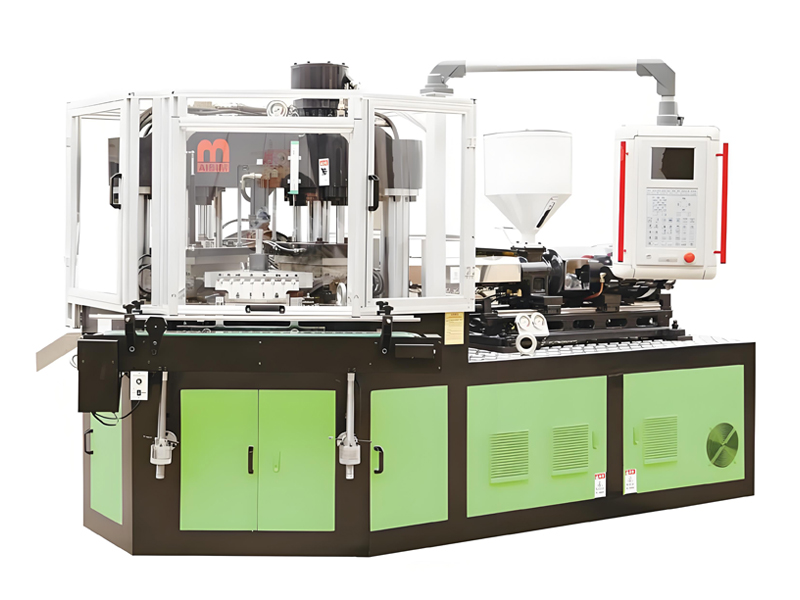
- Şeffaf Şişeler için Aibim IBM Makine Serisi
- Malzeme Şeffaflık Karşılaştırması
- İhtiyaçtan Modele Seçim Rehberi
- Şeffaflık Muayenesi ve Kalite Kontrol
- Kusur-Neden-Önlem Hızlı Başvuru
- Önlemlerin Göreli Maliyeti ve Yatırımı
- Aibim Hizmet ve Destek
- Sıkça Sorulan Sorular
- Sonuç ve Davet
Şeffaf IBM Şişeleri Neden Bulanır veya Akış İzleri Gösterir
Transparent bottles produced on injection blow molding (IBM) lines are in high demand for pharmaceutical, cosmetic, food, and beverage packaging because they let the consumer see the product and signal purity. Yet many producers discover that a bottle that should be crystal clear comes out cloudy, milky, or marked with wavy streaks called flow marks. Aibim, a Wanplas factory (Zhangjiagang AiBiM Plastics Machinery Co., Ltd.), has specialized in injection (stretch) blow molding machines for more than 12 years in machinery manufacturing and 20 years in the IBM field. Our three-station, one-step IBM lines run in 40-plus countries, are built with our own CNC center, and our 2022 new factory ships 100-plus lines per year for containers from 3 mL to 1000 mL. The slogan on every machine we build is simple: “Enjeksiyonlu Üfleme Kalıplama Makinesi Manufacturer.”
The single most useful fact for any engineer chasing clarity is this: core idea cloudiness and flow marks on an IBM transparent bottle are never one problem. They are four families of problems — crystallization, orientation and stress, cooling, and melt flow — and each family has its own machine, mold, process, and material countermeasures. A bottle can be cloudy because its polymer spherulites are too large, because residual moisture hydrolyzed the resin, because internal stress caused stress whitening, because the mold surface scattered light, or because trapped gas formed bubbles. Likewise, flow marks can come from the injection station, the blow station, the gate design, or the parison temperature profile. If you treat all “haze” as one defect, you will chase the wrong lever.
This article is a complete field manual. It explains the physical basis of transparency, walks through the IBM process, then breaks cloudiness and flow marks into their individual root causes with concrete fixes across the four dimensions of machine, mold, process, and material. It includes the four-dimension countermeasure matrix, a material drying table, an injection and blow process window, a defect quick-reference table with more than 14 rows, product specification tables for the IBM75, IBM65, and IBM55 Hybrid Electric machines, a requirement-to-model selection table, and a relative cost ranking so you can plan investment. By the end, you will be able to read a cloudy or streaked bottle like a diagnostic chart and pick the right correction.
Şeffaflığın Fiziği: Bulanıklık, Berraklık ve Işık Saçılımı
Transparency is not a single number; it is the result of how a polymer transmits and scatters light. Two measurements matter most. Clarity (or light transmittance) describes how much light passes straight through the wall. Haze is the percentage of transmitted light that is scattered more than 2.5 degrees from the straight path. A bottle can have high light transmittance yet still look milky if its haze is high, because the scattered light diffuses the image behind it. For a transparent pharmaceutical or cosmetic bottle, both high transmittance and low haze are required.
Light is scattered by any interface where the refractive index changes. In a clear amorphous polymer with no crystals, the refractive index is uniform and light passes through. In a semi-crystalline polymer, the crystalline regions have a different refractive index from the amorphous regions, so every spherulite boundary becomes a tiny scattering site. The larger and more numerous the spherulites, the higher the haze. This is why polypropylene, a semi-crystalline resin, tends to look translucent or milky unless it is quenched rapidly or modified with a clarifying agent, while polystyrene, SAN, PC, PCTG, and PMMA are naturally transparent because they are largely amorphous.
IBM şeffaf şişesinde saçılan veya kaybolan ışığın ana kaynakları şunlardır:
- Yarı kristal reçinelerde kristal küreselitler (kristalize olduğunda PP, PE, PET).
- Eşit olmayan soğutma veya yönlenmeden kaynaklanan iç gerilim ve çift kırılım; ışığı duvar boyunca farklı şekilde büker.
- Yüzey kusurları — zayıf kalıp cilası, portakal kabuğu görünümü, sürtünme izleri — duvar yüzeyinde ışığı dağıtan.
- Hapsedilmiş gaz veya uçuculardan kaynaklanan, her biri mikroskobik mercek görevi gören kabarcıklar ve boşluklar.
- Silindirde kirlenmiş malzeme veya bozunmuş reçineden kaynaklanan safsızlıklar ve karbonize lekeler.
- Kurutulmamış PET, PC veya PCTG'nin hidrolitik bozunması; beyaz, kırılgan ve bulanık bir duvar oluşturur.
Two more physical effects deserve attention before moving to process. The first is refractive-index mismatch. Even within one amorphous resin, a region that is stretched (oriented) has a slightly different refractive index from a relaxed region. Where these regions meet at a sharp boundary, light bends and a faint line appears. This is the optical signature of frozen-in orientation, and it is why a bottle can look clear in the center yet show faint rings near the neck or shoulder where shear was highest. The second is surface scatter versus volume scatter. Surface scatter comes from the mold finish and is corrected by polishing; volume scatter comes from crystals, bubbles, and stress inside the wall and is corrected by material and process. A quick diagnostic is to wet the bottle surface with a clear oil: if the haze disappears, the problem is surface (mold) finish; if it remains, the problem is inside the wall (volume). This single test tells you whether to send the mold to the polisher or to re-tune the process and material.
Measurement discipline also matters. A haze meter gives a repeatable number, but the number is meaningless without a defined sample, light path, and reference. Establish a master sample for each bottle and measure it on the same instrument under the same conditions, then hold production parts to a tolerance band around that master. Visual grading under a standard light box is a useful secondary check, but it should never replace the numeric haze reading for release decisions. Remember that haze and light transmittance move independently: a bottle can stay bright yet grow hazier, so track both.
Aşağıdaki tablo, yaygın IBM malzemelerinin nasıl davrandığını özetler. "Şeffaflık sınıfının" bir malzeme özelliği olduğunu, ancak gerçek şişe berraklığının onu nasıl işlediğinizle belirlendiğini unutmayın. Doğal olarak berrak bir reçine, kötü kurutma veya yavaş soğutma ile yine de bozulabilir.
| Material | Transparency class | Key clarity risk | IBM relevance |
|---|---|---|---|
| PP (homopolymer / copolymer) | Semi-crystalline | Spherulite growth, milky haze | Very common for pharmaceutics and food; needs quench + clarifier |
| HDPE / LDPE / LLDPE | Semi-crystalline | Naturally translucent, not clear | Used when clarity not required |
| PS | Amorphous | Brittle, low chemical resistance | Naturally clear, easy haze control |
| SAN | Amorphous | Needs drying; stress crack risk | Clear, rigid, good for cosmetics |
| ABS | Amorphous (with rubber) | Rubber phase scatters light slightly | Translucent, not fully clear |
| PC | Amorphous | Hydrolysis whitening if wet | Premium clear, high heat |
| PCTG / PETG | Amorphous copolyester | Hydrolysis; needs drying | Excellent clarity, tough, cosmetic-grade |
| PET (rare in IBM) | Semi-crystalline | Crystallizes fast, turns opaque | Usually ISBM; if IBM, control crystallization |
| TPU | Segmented, often hazy | Inherent softness/cloud | Specialty soft-touch bottles |
Enjeksiyon Üfleme Kalıplama Şeffaf Şişeleri Nasıl Üretir
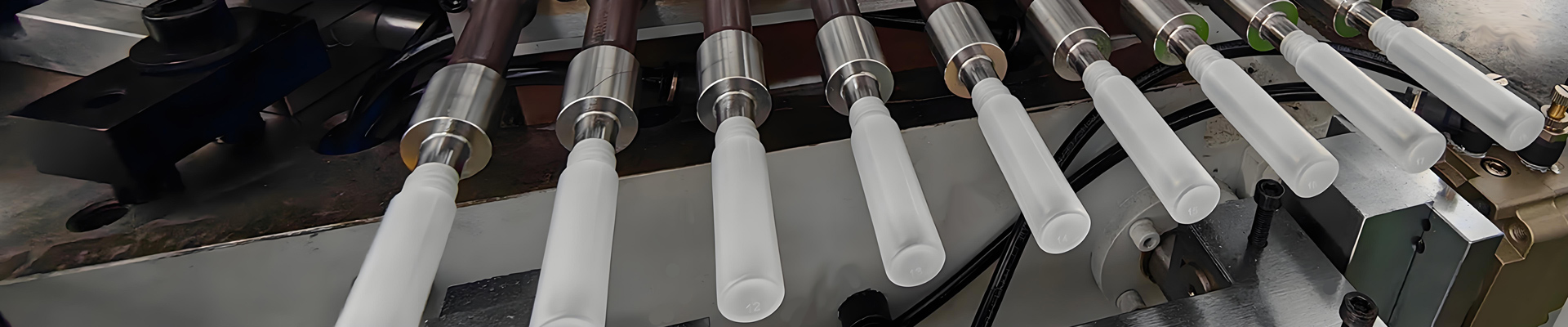
Enjeksiyon blow molding is a one-step, three-station process that combines injection molding and blow molding on a single rotating machine. In the first station, the machine injects the melt into a parison (also called a preform) cavity around a core rod. In the second station, the heated parison on its core rod is transferred to the blow station, where compressed air expands it against a cold blow mold to form the bottle. In the third station, the finished bottle is stripped off the core rod. There is no flash, the neck finish is molded to high precision, and the parison wall thickness is uniform by design.
The core rod is the silent hero of IBM clarity. The parison is molded around a heated core rod at the first station, then the rod carries that parison, still at a controlled temperature, to the blow station. Because the parison never leaves the rod and is never dropped or re-gripped, its temperature profile is preserved and its surface is not scuffed by handling. At the blow station the rod acts as the internal blow mandrel: compressed air enters through it and expands the warm parison against the cold mold. The rod temperature, therefore, directly sets the parison temperature that the blow station sees — and parison temperature is the single biggest driver of even wall stretch and mark-free surfaces. Aibim machines hold this temperature with dedicated control so the parison arrives at blow neither too cold (which marks) nor too hot (which sags and thins).
This structure matters for clarity. Because the parison is injection-molded rather than extruded, its wall is consistent and free of the thickness variations and weld lines that often appear in extrusion blow molding. Because the whole cycle is one step inside the machine, the parison is not handled, cooled, and reheated as in a two-step process, so contamination and moisture pickup are minimized. The trade-off is that IBM is best suited to small, high-precision containers from 3 mL to 1000 mL — exactly the transparent pharmaceutical, cosmetic, and single-serve bottles where clarity is most valuable.
Ekstrüzyon şişirme kalıplama ve iki aşamalı yeniden ısıtmalı şişirmeyle karşılaştırıldığında IBM, eşit ışık geçişinin temeli olan duvar homojenliği üzerinde en sıkı kontrolü sağlar. Aşağıdaki karşılaştırma teknoloji-teknolojiye karşıdır, marka-markaya karşı değil:
| Process | Parison formation | Flash | Wall uniformity | Typical clarity control | Best container size |
|---|---|---|---|---|---|
| Enjeksiyon blow molding (IBM) | Enjeksiyon, 3-station one-step | None | Excellent | Very high, controlled parison temp | 3–1000 mL |
| Two-step blow (reheat) | Enjeksiyon preform, then reheat-blow | None | Good | High, but reheating variance | 100 mL–2 L |
| Extrusion blow molding | Extruded parison | Some | Fair | Lower, wall variation | 50 mL–20 L+ |
Bulanıklık: Beş Kök Neden ve Her Birinin Nasıl Ortadan Kaldırılacağı
Bulanıklık, istenmeyen pus için genel bir terimdir. IBM şeffaf şişelerde genellikle beş nedenden birine dayanır. Pusun nerede ve hangi koşulda göründüğüne göre teşhis edin, ardından uygun önlemi uygulayın.
Neden 1: Kristalleşme Bulanıklığı (PP, PE, PET)
PP and PE are semi-crystalline. If the parison or bottle wall cools slowly, spherulites have time to grow into large light-scattering structures, and the bottle looks milky instead of clear. The fix is to force rapid, uniform cooling and to keep crystals small. Lower the blow mold temperature, increase coolant flow, and consider a nucleating or clarifying agent that multiplies the number of crystal nuclei so each spherulite stays tiny. For PET processed by IBM, control residence time and temperature so it does not crystallize into an opaque wall.
Neden 2: Hidroliz ve Bozunma Bulanıklığı (PET, PC, PCTG, SAN)
PET, PC, PCTG, and to a lesser degree SAN are hygroscopic. If they are not dried to a low moisture level before plasticizing, water reacts with the polymer chain during melt processing, breaking it and producing a white, brittle, hazy wall. The cure is disciplined drying in a dehumidifying dryer at the correct temperature, dew point, and residence time (see the drying table in section 7). Barrel temperature must also stay within the safe window so the melt does not degrade.
Neden 3: Stres Beyazlaması ve İç Stres
When a bottle is cooled too fast or the parison temperature is uneven, frozen-in orientation and internal stress create birefringence that scatters light, and in severe cases visible stress whitening. Balance the holding pressure and cooling, keep the parison temperature profile even across the core, and avoid over-cooling that locks in stress. A polarized-light inspection (section 13) reveals stress you cannot see with the eye.
Neden 4: Safsızlıklar ve Siyah Noktalar
Contaminated regrind, dust on pellets, or carbonized material baked onto the barrel wall or screw shows up as black dots and gray haze. Clean the material path, use a dehumidifying dryer with a clean hopper, purge the barrel regularly, and control barrel temperature so the resin does not over-shear and degrade. Material that has sat in a humid warehouse should be screened and re-dried.
Neden 5: Kabarcıklar ve Splay (Gümüş Çizgiler)
Water or volatile trapped in the melt becomes bubbles or silver streaks inside the wall, scattering light and looking foggy. The remedies are thorough drying, adequate barrel decompression and venting, and a segmented injection speed that prevents the melt front from trapping air. Excess back pressure that packs volatiles into the melt should also be reduced.
Bulanıklık için Pratik Bir Teşhis Sırası
When a bottle comes out hazy, do not change five things at once. Work the cheapest, highest-probability cause first. Step one: confirm the material was dried to spec and the dryer dew point is correct — most “mystery haze” on PET, PC, and PCTG is simply water. Step two: wet the surface with clear oil; if haze stays, the problem is internal, so move to cooling and crystallization. Step three: check mold temperature and coolant flow; for PP, drop the mold temperature and add a clarifier. Step four: inspect the barrel and screw for carbon and contamination. Step five: only then consider mold re-polish or a new mold. This order fixes the majority of cases with the least spent, and it keeps your process change history clean so you can trust the result.
Akış İzleri: Kök Nedenler ve Önlemler
Akış izleri, şişe üzerindeki yüzey çizgileri, dalgalanmalar veya dalgalardır — en çok omuz ve gövdede görünür. Bunlar bir akış geçmişi kusurudur: eriyik veya parison, görünür bir iz bırakacak şekilde hareket etmiştir. Yönlü ve yerel oldukları, tekdüze bir pus olmadıkları için bulanıklıktan farklıdırlar.
Parison Üzerinde Enjeksiyon İstasyonu Akış İzleri
The parison is formed by injection, so its surface quality is set first. If the melt-front temperature is uneven, if injection speed or pressure is wrong, if the gate is poorly sized, or if cold material enters the cavity, the parison carries a snake-like mark that later appears on the bottle. Countermeasures: use segmented (profiled) injection speed, keep the hot runner and nozzle at a stable temperature, enlarge or reposition the gate to reduce shear, and make sure the mold temperature is uniform around the cavity.
Şişirme İstasyonu Akış İzleri ve Germe Çizgileri
At the blow station, an uneven parison temperature profile or a poor wall-thickness transition causes the air to stretch the wall unevenly, leaving stretch lines. Control the parison temperature distribution, tune the pre-blow timing so the wall begins to expand before full pressure, and match blow pressure to the parison temperature. A parison that is too cold flows sluggishly and marks; one that is too hot sags and thins.
Jetting (Yılan Benzeri veya Spiral İzler)
Jetting happens when melt enters the cavity as a narrow jet through a gate that is too small or at too high an initial speed, freezing a worm-like pattern before the cavity fills. Enlarge the gate, lower the initial injection speed, and raise the melt temperature slightly so the front spreads instead of shooting.
Kaynak Çizgileri
Where melt fronts meet — around the core rod or at multiple gates — a weld line can form. It is a thin ridge that catches light. Raise melt and mold temperature to improve fusion, improve venting so gas does not block the meeting front, and design the gate and runner so fronts meet in a low-visibility area.
Enjeksiyon Akış İzlerini Şişirme Akış İzlerinden Ayırt Etme
A fast way to localize a flow mark is to look at where it sits and how it runs. Marks that follow the parison injection direction and appear as regular ripples or a snake pattern are almost always set at the injection station and copied onto the bottle. Marks that run circumferentially or appear only after expansion, often on the body away from the gate, are set at the blow station by an uneven parison temperature or wrong pre-blow timing. Because the parison is formed first, any injection-station defect is “locked in” and cannot be removed by blow tuning — you must fix it where it started. This is why Aibim’s stable hot-runner temperature control and segmented injection profiling are central to a clean surface: they prevent the mark before the parison ever reaches the blow mold.
Dört Boyutlu Kusur Önlem Matrisi
Bir kusura müdahale etmenin en güvenilir yolu, onu dört boyutta — makine parametreleri, kalıp, proses ve malzeme — değerlendirmek ve her birinde kolu seçmektir. Aşağıdaki matris, yaygın şeffaflık kusurlarını somut eylemlere eşler.
| Defect | Machine / parameter | Mold | Process | Material |
|---|---|---|---|---|
| Cloudiness (crystallization) | Higher cooling capacity, stable barrel temp | More uniform cooling circuits, low Ra polish | Lower mold temp, faster cooling | Nucleating / clarifying agent for PP |
| Cloudiness (hydrolysis) | Dryer control, dew-point monitor | Clean feed, sealed hopper | Lower melt temp, shorter residence | Thorough drying of PET/PC/PCTG/SAN |
| Stress whitening | Even parison temp control | Balanced cooling | Lower holding pressure, balanced cooling | Lower-orientation grade if needed |
| Black specks | Barrel clean, temp control | Clean cavity | Regular purge, lower shear | Clean, screened resin; no wet regrind |
| Bubbles / splay | Back-pressure tuning, vent | Vent slots | Segmented speed, dry material | Dry resin; reduce volatiles |
| Enjeksiyon flow marks | Stable hot runner, nozzle temp | Gate size/position, polish | Segmented injection speed | Proper viscosity grade |
| Blow flow marks | Parison temp zones | Blow mold surface | Pre-blow timing, blow pressure | Consistent lot |
| Jetting | Enjeksiyon profiling | Larger gate | Lower initial speed, higher melt temp | Right MFI grade |
| Weld line | Temp control | Gate/runner design, vents | Higher melt/mold temp | Clean, dry resin |
| Surface roughness / orange peel | Stable clamp, temp | Mirror polish, Ra control | Adequate pack, cooling | Low-contamination resin |
Malzeme Kurutma Parametreleri
Drying is the cheapest, highest-leverage clarity step for hygroscopic resins. The values below are typical engineering ranges for a dehumidifying dryer; the exact setting depends on the resin grade and the dryer model. Always confirm against the material supplier’s data sheet. PP is shown for completeness because light drying removes surface moisture even though PP is hydrophobic.
| Material | Dry temp (°C) | Dew point (°C) | Time (h) | Melt / process temp (°C) | Clarity note |
|---|---|---|---|---|---|
| PET (if used in IBM) | 150–180 | ≤ -40 | 4–6 | 260–290 | Must dry or hydrolyzes white |
| PC | 110–130 | ≤ -30 | 3–4 | 280–320 | Hydrolysis causes brittle haze |
| PCTG / PETG | 65–80 | ≤ -30 | 3–4 | 250–290 | Dry well; sensitive to moisture |
| SAN | 70–85 | ≤ -20 | 2–3 | 200–250 | Dry to avoid splay |
| PS | 70–80 | ≤ -20 | 1–2 | 180–240 | Low moisture need, easy clarity |
| ABS | 80–90 | ≤ -20 | 2–3 | 200–250 | Dry to prevent silver streaks |
| PP | 80–100 | ≤ -20 | 1–2 | 200–260 | Hydrophobic; light drying for surface moisture |
Enjeksiyon ve Üfleme Kalıplama Proses Penceresi
The table below gives typical windows for the injection and blow phases of an IBM cycle. Treat these as starting points; optimize per material, bottle geometry, and cavity count. The blow pressures in IBM are generally lower than in stretch blow molding because the parison is already at blow temperature and only needs to be formed, not biaxially stretched.
| Parameter | Typical window | Purpose / effect on clarity |
|---|---|---|
| Rear barrel zone | 200–240 °C | Stable plasticizing, avoid degradation |
| Middle barrel zone | 220–255 °C | Uniform melt, fewer flow marks |
| Front / nozzle zone | 230–265 °C | Melt front quality at gate |
| Enjeksiyon speed | 30–70% (segmented) | Too fast → jetting; too slow → cold flow marks |
| Enjeksiyon pressure | 80–140 MPa (800–1400 bar) | Fill without over-shear |
| Holding pressure | 40–70% of injection | Pack without stress whitening |
| Mold (blow) temperature | 10–90 °C by material | PP low for clarity; PC/PCTG higher |
| Parison temperature | Near melt, 100–200 °C window | Even temp → even stretch, no marks |
| Pre-blow pressure | 6–12 bar | Start expansion before full pressure |
| Blow pressure | 8–20 bar | Form wall; too high can stress |
| Cooling time | 2–8 s | Quench crystals; longer for thick walls |
Şeffaflığı Kontrol Eden Kalıp ve Ekipman Faktörleri
No amount of process tuning rescues a poor mold. For transparent bottles the blow mold cavity should be polished to a high mirror finish — measured as low Ra (surface roughness). The lower the Ra, the less the surface scatters light. Visible orange peel or drag marks come straight from the mold surface and must be corrected by re-polishing, not by changing parameters.
Other mold factors include vent slots that let air escape so the wall seats fully against the cavity, uniform cooling circuits so the wall cools evenly without stress, and a temperature-controlled core rod that sets the parison temperature profile entering the blow station. On the machine side, the stability of the injection unit (steady shot, steady melt temperature), the precision of barrel temperature control, and the clamping accuracy that keeps wall thickness even all contribute to clarity. Aibim machines are built with our own CNC center so mold and core-rod precision are held tightly, and the single-crossbeam, double-pole clamping framework gives an enlarged, stable mold-setting space for even clamping.
Şeffaf Şişeler için Aibim IBM Makine Serisi
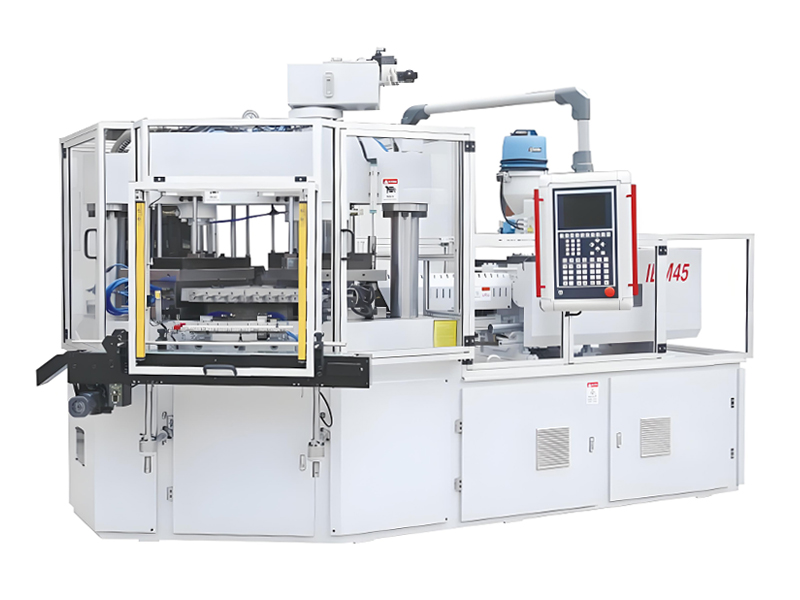
Aibim offers three IBM platforms that cover the full 3 mL to 1000 mL transparent container range. Each is a three-station, one-step machine with the PREFILL hydraulic technology, SD-card parameter storage, and the energy-saving package. The specification values below are typical engineering ranges for each model family; final figures are confirmed against the ordered configuration and cavity count.
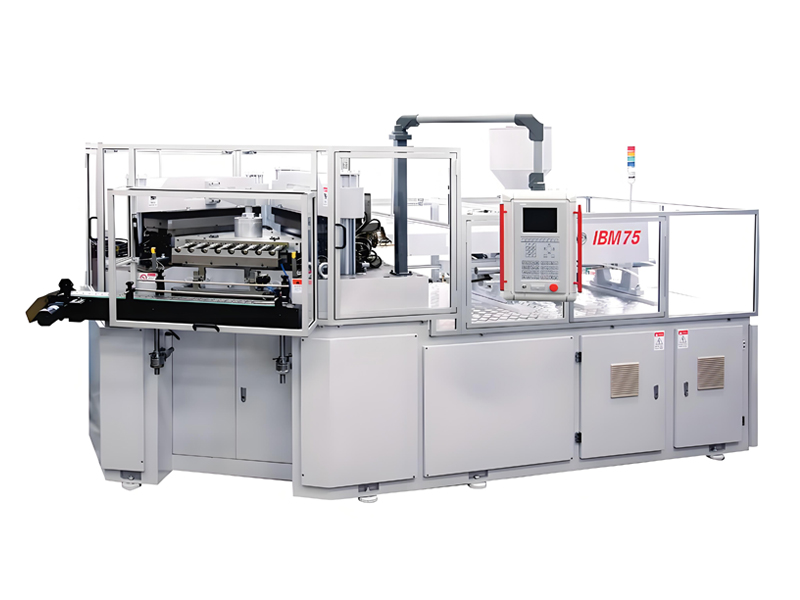
IBM75 Enjeksiyon Üfleme Kalıplama Makinesi
IBM75, 1000 mL'ye kadar orta ve büyük boy şeffaf şişeler için iş makinesidir — kozmetik esans şişeleri, ilaç şurubu şişeleri ve içecek numune şişeleri. Daha büyük enjeksiyon ünitesi ve sıkma kuvveti, daha büyük parisonları ve daha fazla gözü destekler.
| Specification | IBM75 (typical range) |
|---|---|
| Model | IBM75 |
| Enjeksiyon screw diameter | 45–55 mm |
| Shot size (injection weight) | 200–400 g |
| Clamping force | 450–750 kN (approx. 45–75 ton) |
| Container volume range | 50–1000 mL |
| Stations | 3 stations, one-step (injection / blow / ejection) |
| Drying / heating zones | 4–6 zones (dehumidifying dryer + barrel) |
| Cycle time / output | 6–12 s cycle, output scales with cavities |
| Installed power | 30–55 kW |
| Dimensions & weight | approx. 4.5 × 1.8 × 2.2 m; 8–12 ton |
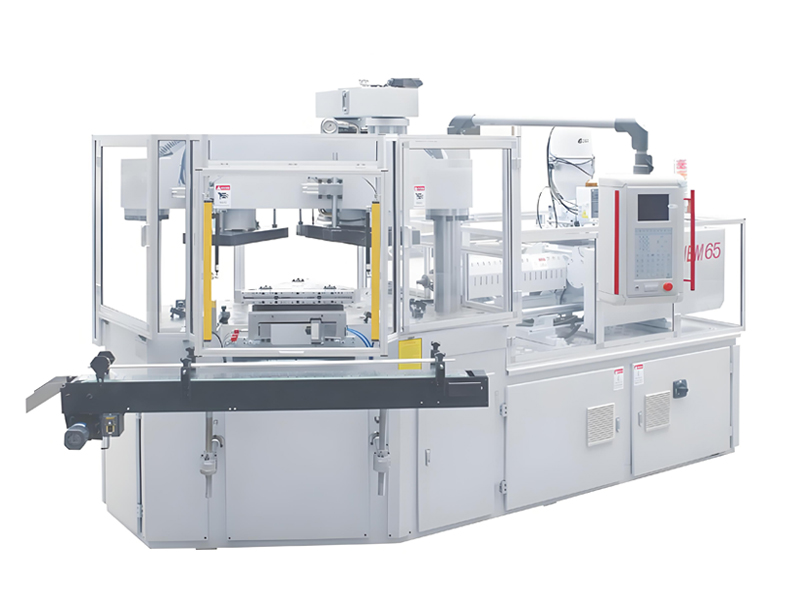
IBM65 Enjeksiyon Üfleme Kalıplama Makinesi
IBM65, 10 mL'den 500 mL'ye kadar küçük ve orta boy şeffaf şişelere uyar — göz damlası şişeleri, oral sıvı şişeleri ve kozmetik damlalıklar. Hassas parison kontrolünü kompakt bir ayak iziyle birleştirdiği için ilaç berraklığı işlerinde en yaygın seçimdir.
| Specification | IBM65 (typical range) |
|---|---|
| Model | IBM65 |
| Enjeksiyon screw diameter | 38–48 mm |
| Shot size (injection weight) | 120–260 g |
| Clamping force | 350–550 kN (approx. 35–55 ton) |
| Container volume range | 10–500 mL |
| Stations | 3 stations, one-step (injection / blow / ejection) |
| Drying / heating zones | 3–5 zones |
| Cycle time / output | 5–11 s cycle, output scales with cavities |
| Installed power | 22–40 kW |
| Dimensions & weight | approx. 4.0 × 1.6 × 2.0 m; 6–9 ton |
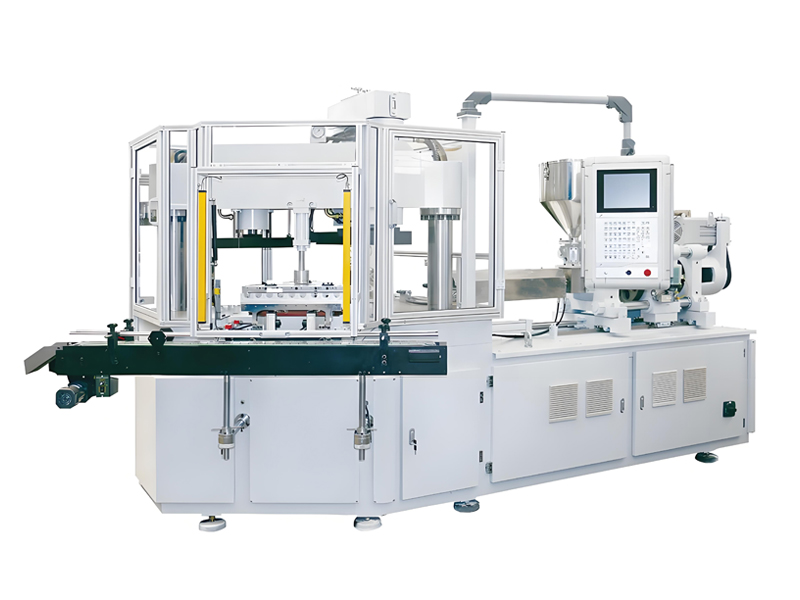
IBM55 Hibrit Elektrikli Enjeksiyon Üfleme Kalıplama Makinesi
The IBM55 Hybrid Electric adds electric clamping and metering to the hybrid hydraulic package, giving the finest parison repeatability for the smallest, most demanding transparent bottles from 3 mL to 250 mL — micro-dose pharmaceutical vials and precision cosmetic samples. Its lower installed power and fast response suit clean-room and high-consistency production.
| Specification | IBM55 Hybrid (typical range) |
|---|---|
| Model | IBM55 Hybrid Electric |
| Enjeksiyon screw diameter | 30–40 mm |
| Shot size (injection weight) | 60–150 g |
| Clamping force | 250–400 kN (approx. 25–40 ton) |
| Container volume range | 3–250 mL |
| Stations | 3 stations, one-step; hybrid electric/hydraulic |
| Drying / heating zones | 2–4 zones |
| Cycle time / output | 4–10 s cycle, output scales with cavities |
| Installed power | 15–30 kW |
| Dimensions & weight | approx. 3.5 × 1.4 × 1.9 m; 4.5–7 ton |
Malzeme Şeffaflık Karşılaştırması
Tablo, IBM ile işlenebilir malzemeleri gerçekçi şeffaf şişe performansına göre sıralar; böylece reçineyi berraklık hedefiyle eşleştirebilirsiniz. "Berraklık sınıfı" malzemenin doğal davranışıdır; "IBM berraklık sonucu" ise iyi işletilen bir Aibim hattının tipik olarak sağladığı sonuçtur.
| Material | Clarity class | IBM clarity result | Effort to stay clear | Typical transparent use |
|---|---|---|---|---|
| PCTG / PETG | Amorphous, very clear | Excellent | Medium (dry well) | Premium cosmetic, display bottles |
| PC | Amorphous, clear | Excellent | Medium-High (dry, temp) | High-heat pharma, reusable |
| SAN | Amorphous, clear | Very good | Medium (dry) | Kozmetik, rigid clear |
| PS | Amorphous, clear | Very good | Low | Single-use pharma, sampling |
| PP + clarifier | Semi-crystalline | Good (with quench) | Medium-High | Pharma, food, droppers |
| ABS | Amorphous, slightly hazy | Fair | Medium | Translucent, not fully clear |
| TPU | Soft, often hazy | Fair | High | Soft-touch specialty |
| HDPE / LDPE | Semi-crystalline, opaque | Poor (by nature) | Very High | Used when clarity not needed |
İhtiyaçtan Modele Seçim Rehberi
Bir şişe gereksiniminden önerilen bir Aibim modeline geçmek için bu tabloyu kullanın. Öneri, berrak ve kusursuz bir hedef ile standart bir göz sayısı varsayar; çok yüksek üretim veya alışılmadık geometri seçimi değiştirebilir.
| Container volume | Material | Transparency target | Output need | Recommended model |
|---|---|---|---|---|
| 3–50 mL | PP, PS, SAN, PC, PCTG | High | High | IBM55 Hybrid Electric |
| 10–250 mL | PP, PS, SAN, PC, PCTG | High | Medium-High | IBM65 or IBM55 Hybrid |
| 50–500 mL | PP, PS, SAN, PC, PCTG | High | Medium | IBM65 |
| 100–1000 mL | PP, PS, SAN, PC, PCTG | High | Medium-High | IBM75 |
| 250–1000 mL | PP, PCTG, PC | Premium | High | IBM75 |
| Micro-dose <15 mL | PP, PS, PC | Critical (pharma) | High repeatability | IBM55 Hybrid Electric |
Şeffaflık Muayenesi ve Kalite Kontrol
Clarity must be measured, not guessed. A haze meter quantifies the percentage of scattered light and is the standard instrument for release testing of transparent bottles. Pair it with a light-transmittance measurement and a visual comparison against an approved master sample under defined lighting. Wall-thickness uniformity should be checked with a thickness gauge, because even a clear wall looks uneven if thickness varies. Internal stress is best seen with a polarized-light (polariscope) inspection, which reveals frozen-in orientation invisible to the naked eye.
For production control, Aibim recommends a first-article confirmation on every new mold and material lot, then periodic batch sampling of haze, wall thickness, and visual clarity. Because Aibim machines store full process recipes on an SD card, the validated clarity recipe for a bottle can be saved and reloaded on any same-model machine, removing operator drift between shifts and between lines.
Kusur-Neden-Önlem Hızlı Başvuru
Aşağıdaki tablo bir bakışta teşhis tablosudur. Belirtiyi eşleştirin, olası nedeni okuyun, çözümü uygulayın. 14'ten fazla satır kapsadığı için sahadaki çoğu durum ele alınır.
| # | Symptom | Likely cause | Primary countermeasure |
|---|---|---|---|
| 1 | Milky PP bottle | Spherulite growth (crystallization) | Lower mold temp, faster cooling, add clarifier |
| 2 | White brittle PET/PC wall | Hydrolysis from wet resin | Dry to spec; check dew point |
| 3 | General stress whitening | Internal frozen-in stress | Balance holding/cooling; even parison temp |
| 4 | Black specks / gray haze | Contamination or barrel carbon | Clean path, purge, control barrel temp |
| 5 | Bubbles inside wall | Trapped moisture / volatiles | Dry resin; vent; reduce back pressure |
| 6 | Silver streaks (splay) | Gas in melt front | Dry, segment injection speed, vent |
| 7 | Snake-like shoulder mark | Jetting at gate | Enlarge gate; lower initial speed |
| 8 | Wavy body ripples | Enjeksiyon flow mark | Segmented speed; stabilize hot runner |
| 9 | Stretch lines on body | Uneven parison temp at blow | Control parison temp; tune pre-blow |
| 10 | Thin ridge (weld line) | Melt fronts meet poorly | Raise temp; improve venting; gate design |
| 11 | Orange peel surface | Mold surface roughness | Re-polish cavity to low Ra |
| 12 | Drag marks | Mold finish / ejection | Polish, check ejection, draft |
| 13 | Cloudy only on thick sections | Slow cooling in thick areas | Improve cooling circuits; reduce thickness |
| 14 | Haze after storage | Post-crystallization or moisture | Stable material; dry storage; clarifier |
| 15 | Gloss loss vs. master | Mold polish or process drift | Recalibrate recipe via SD card; repolish |
| 16 | Cloudy ring at neck | Orientation / shear at gate area | Tune gate, speed, holding pressure |
Önlemlerin Göreli Maliyeti ve Yatırımı
Her çözüm aynı maliyete sahip değildir. Aşağıdaki sıralama, standart berraklık-optimize IBM kurulumu için 100 taban endeksi kullanır; göreli yatırım bir seviye, tabanın üzerinde tahmini bir yüzde ve bir kat olarak gösterilir. Para birimi tutarları verilmemiştir; amaç önceliklendirmenize yardımcı olmaktır.
| Countermeasure | Investment level | vs. baseline | Multiple | Index points |
|---|---|---|---|---|
| Process tuning (speed, pressure, temp) | Low | +0% | 1.0× | 100 |
| Material drying upgrade (dehumidifying dryer) | Low | +5% | 1.05× | 105 |
| Mold re-polish to mirror Ra | Medium | +15% | 1.15× | 115 |
| Clarifying / nucleating agent (per lot) | Low | +3% | 1.03× | 103 |
| Cooling circuit redesign | Medium | +20% | 1.20× | 120 |
| Gate / runner rework | Medium | +18% | 1.18× | 118 |
| New high-precision mold (CNC) | High | +60% | 1.60× | 160 |
| IBM55 Hybrid Electric upgrade | High | +70% | 1.70× | 170 |
| Full turnkey clarity cell (machine+mold+dryer) | Very High | +120% | 2.20× | 220 |
| Premium closed-loop optical QC line | Premium | +200% | 3.00× | 300 |
Aibim Hizmet ve Destek
Doğru makineyi seçmek işin yalnızca yarısıdır; her vardiyada onu berrak çalıştırmak diğer yarısıdır. Aibim, her hattı Wanplas grubu hizmet taahhütleri ve Aibim'e özgü yeteneklerle destekler:
- Sevkiyat öncesi deneme ve muayene: Her hat, teslimattan önce fabrikada çalıştırılıp doğrulanır; buna CE sertifikalı güvenlik de dahildir — sıyırıcı istasyonu kalıbı korumak için uzun mesafeli dijital lazer sensör kullanır ve ışık perdesi personeli korur.
- Yerinde kurulum ve devreye alma: Aibim mühendisleri, üzerinde anlaşılan berraklık ve üretim hedeflerine göre hattı kurmak, ayarlamak ve teslim etmek için müşteri sahasına gider.
- Yedek parça politikası: Yılda 500 USD ücretsiz parça, ayrıca garanti süresi içinde hasarlı parçaların ücretsiz değişimi.
- SD kart reçete yönetimi: Doğrulanmış berraklık ayarları dahil proses reçeteleri bir SD kartta saklanır ve makineler arasında yeniden yüklenebilir, operatör sapmasını ortadan kaldırır.
- Enerji tasarrufu: PREFILL teknolojisi ve değişken deplasmanlı pompa, geleneksel hidrolik ünitelere kıyasla minimum %35 enerji tasarrufu sağlar.
- Kalıp ve numune geliştirme: Aibim, seri üretimden önce berraklık hedefinin kanıtlanması için kalıpları tasarlar ve dener, şişe numuneleri üretir.
- Eğitim ve açık fabrika: Operatörler yerinde eğitilir ve müşteriler, atölyeyi denetlemek ve deneme çalışmalarını izlemek için Zhangjiagang fabrikasını ziyaret edebilir.
- Nakliye, kapasite ve kalite garantileri: Wanplas grubu, nakliye garantisi, üretim kapasitesi garantisi ve kalite başarısız olursa tazminatlı kalite standartları vaat eder.
Sıkça Sorulan Sorular
Şeffaf PP şişem neden şeffaf yerine süt gibi görünüyor?
PP yarı kristal bir polimerdir. Parison veya şişe duvarı yavaş soğursa, küreselitler ışığı dağıtacak kadar büyür ve sütlü bir pus üretir. Soğutma hızını artırın, kalıp sıcaklığını düşürün ve kristalleri küçük, duvarı berrak tutmak için bir berraklaştırıcı veya çekirdeklendirici ajan kullanın.
Enjeksiyon şişirme kalıplama parçasının şişe omzunda akış izlerine ne neden olur?
Flow marks on the shoulder usually originate at the injection station. Uneven melt-front temperature, too-high initial injection speed, a small gate, or cold material produces a visible snake-like ripple. Use segmented injection speed, enlarge or relocate the gate, and stabilize hot-runner and mold temperature.
Enjeksiyon şişirme kalıplamadan önce PP kurutmam gerekir mi?
PP hidrofobiktir ve yüzey nemini gidermek için yalnızca hafif kurutma gerektirir, ancak PET, PC, PCTG, SAN, PS ve ABS, nem alma kurutucusunda düşük nem seviyesine kadar kurutulmalıdır. Kurutulmamış higroskopik reçineler hidrolize olur ve beyaz veya buğulu hale gelir.
PETG'den 100 mL şeffaf kozmetik şişesi için hangi Aibim makinesini seçmeliyim?
100 mL'lik bir PETG kozmetik şişesi için IBM75, 1000 mL'ye kadar kapsar ve standart seçimdir; IBM65 ise 10 ila 500 mL'yi işler. PETG, kapsamlı kurutma ve orta düzeyde bir kalıp sıcaklığı gerektirir; her ikisi de Aibim kurutma ve sıcaklık kontrol paketleri tarafından desteklenir.
Kalıp yüzey işlemi tek başına bulanıklığı giderebilir mi?
Kalıp cilası gerekli ancak yeterli değildir. Ayna yüzeyi yüzey saçılımını azaltır, ancak iç kristalleşme, nem ve gerilim beyazlaması malzeme ve prosesten gelir. Dört boyutlu bir yaklaşıma ihtiyacınız var: makine, kalıp, proses ve malzeme birlikte.
Berraklık açısından enjeksiyon şişirme kalıplama iki adımlı şişirme kalıplamadan nasıl farklıdır?
IBM forms the parison by injection in the first station, so the parison wall is uniform, flash-free, and precisely controlled, giving better wall consistency and fewer weld lines than many two-step or extrusion blow routes. The one-step three-station process also reduces contamination and handling haze.
Aibim IBM makinelerinin minimum enerji tasarrufu nedir?
Aibim IBM makineleri PREFILL teknolojisi ve değişken deplasmanlı pompa kullanır ve hat, benzer boyuttaki geleneksel hidrolik ünitelere kıyasla minimum %35 enerji tüketimi tasarrufu sağlar.
Sonuç ve Davet
Cloudiness and flow marks on transparent injection blow molding bottles are solvable once you stop treating them as one problem. They are the visible result of four underlying families — crystallization, orientation and stress, cooling, and melt flow — and each has a clear lever across the machine, mold, process, and material dimensions. Dry hygroscopic resins, quench semi-crystalline walls, polish the mold to a mirror finish, segment the injection, and control the parison temperature, and clarity follows.
Whether you run pharmaceutical vials, cosmetic essence bottles, food sampling bottles, or transparent health-product containers, Aibim — a Wanplas factory with 12-plus years of machine-building experience, 20 years in the IBM field, and 100-plus lines shipped per year from our 2022 Zhangjiagang plant — can configure the right IBM75, IBM65, or IBM55 Hybrid Electric line for your clarity target. We invite you to send us your bottle sample, the material you plan to use, and your transparency goal. Our engineers will propose the process and machine configuration to eliminate haze and flow marks, and we welcome you to send samples for molding trials and to visit our factory for a live test run and audit.