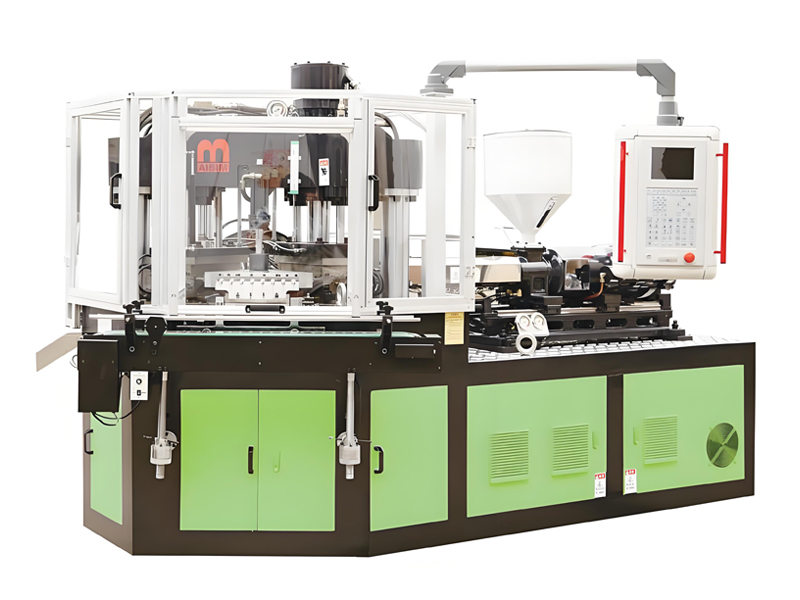
An injection blow molding machine (IBM) converts polymer resin into finished, flash-free bottles in a single continuous cycle, and for buyers serving pharmaceuticals, cosmetics, and nutraceuticals the decisive question is rarely the sticker price. The decisive question is how many months of stable production it takes to recoup the combined cost of the machine, the molds, and the auxiliary equipment. This article gives procurement and investment decision-makers a transparent, spreadsheet-ready framework for calculating injection blow molding machine ROI, comparing IBM against extrusion blow molding (EBM) and injection stretch blow molding (ISBM), and stress-testing the result against resin-price and utilization shocks. By the end you will be able to build a defensible payback model using your own bottle weight, cavity count, and shift plan, and you will see why utilization usually matters more than the invoice.
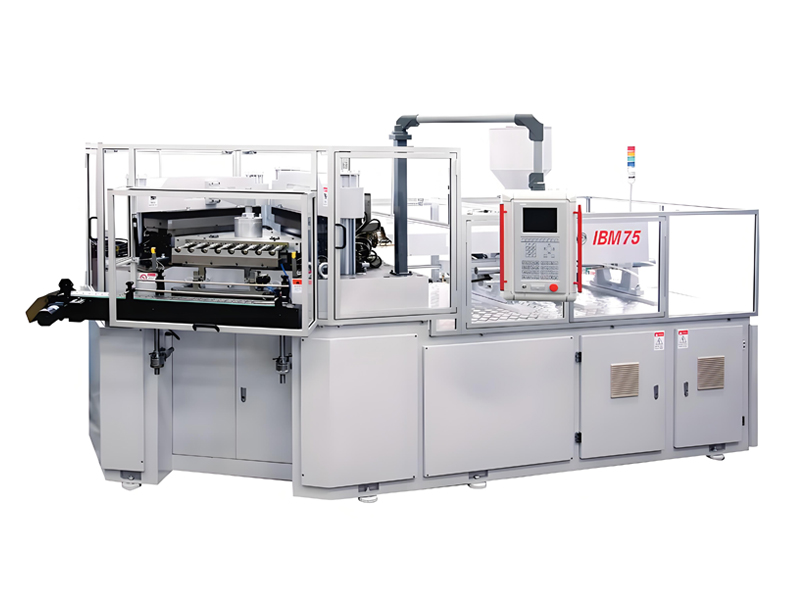
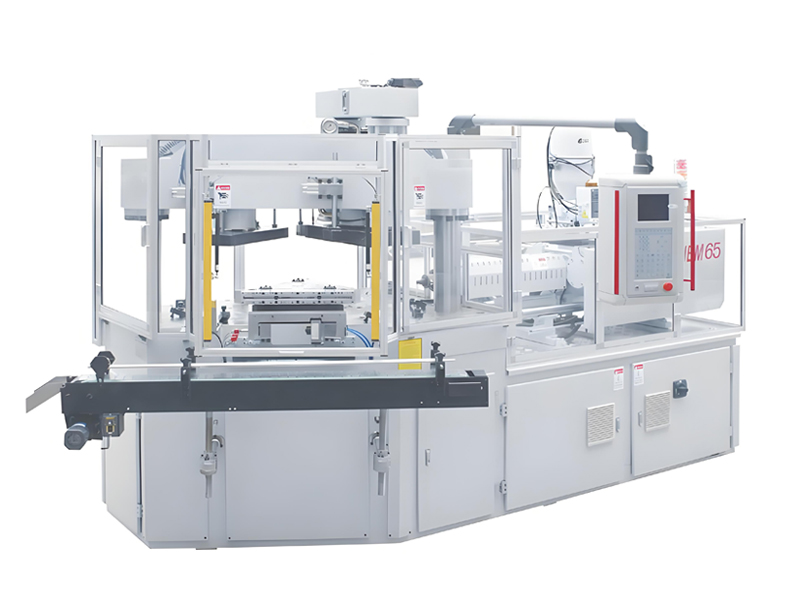
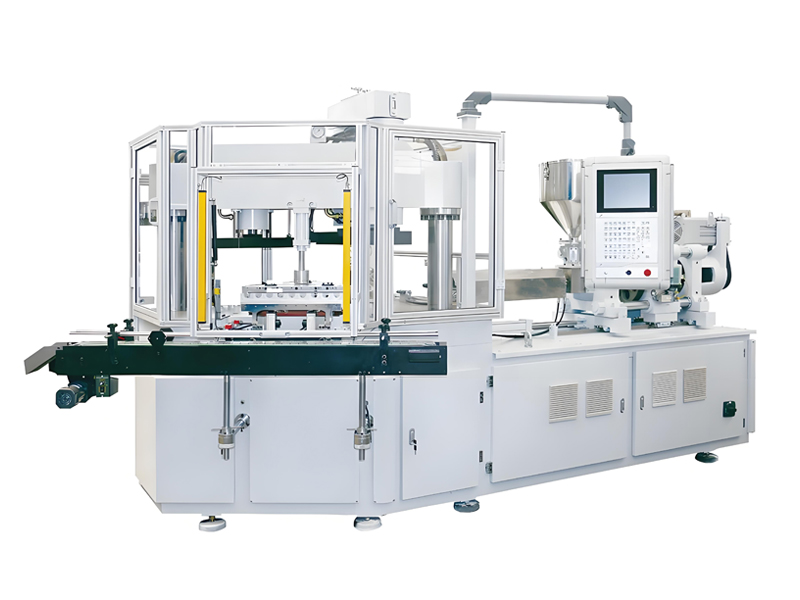
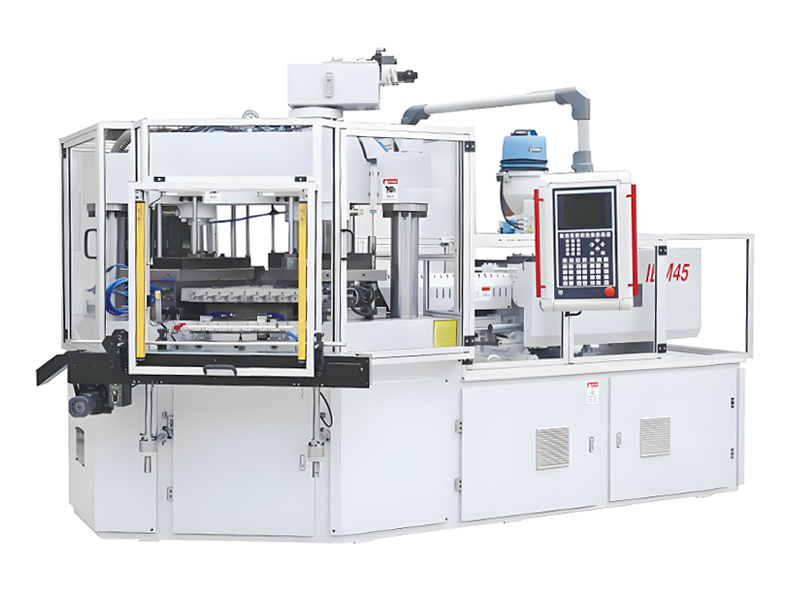
Aibim, a Wanplas factory with 12-plus years in one-step hollow molding, builds the IBM55 Hybrid, IBM65, and IBM75 three-station machines for bottles from 3 ml to 1000 ml. The models and numbers in this guide are drawn from that product range and from typical market data for comparable European, Japanese, and American IBM lines, so the methodology transfers directly to competitor equipment from Jomar, Bekum, Aoki, Milacron, or Sumitomo as well.
Enjeksiyon Şişirme Kalıplama Nedir ve ROI Matematiğini Neden Değiştirir
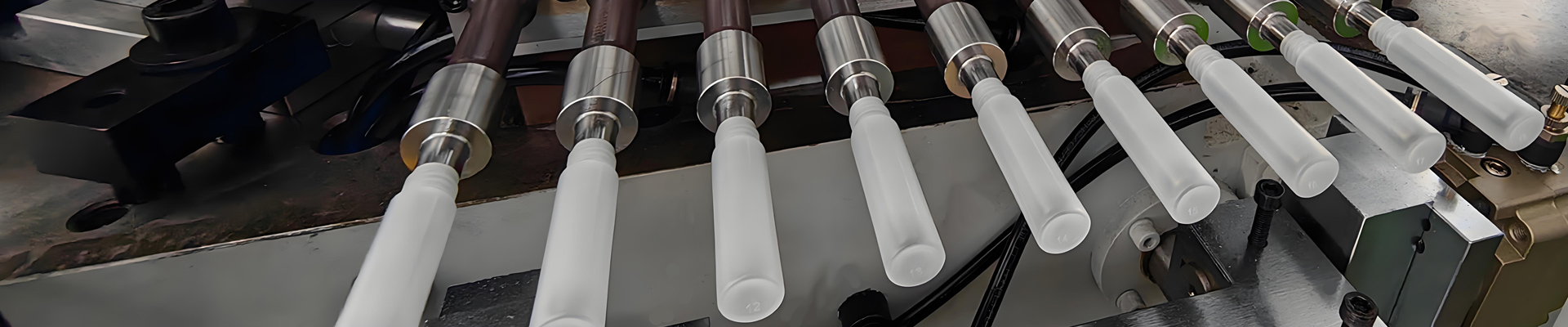
Injection blow molding is a three-station, one-step process in which polymer is first injected to form a preform-like parison, then the parison is blow-molded into the final bottle, and finally the finished part is ejected. Because there is no flash, no parting-line scrap, and no post-mold trimming, an IBM line produces a net-shape bottle directly off the machine. That single characteristic is the foundation of the entire ROI case.
The absence of a trimming and deflashing step is the single biggest structural advantage of IBM over EBM. Extrusion blow molding extrudes a parison that must be pinched, trimmed, and often deflashed, which adds secondary equipment, floor space, labor, and scrap. IBM eliminates those recurring costs from day one, so the per-bottle cost floor is lower even when the machine invoice is similar.
For the investment model, three consequences follow. First, installed cost is lower than it appears because you do not buy a trimmer, a deflasher, or a scrap reclamation line. Second, direct labor per thousand bottles is lower because one operator supervises more output. Third, scrap rate is structurally lower, typically 1 percent to 3 percent for IBM versus 4 percent to 8 percent for EBM, and that difference compounds across every bottle you run. When you calculate payback, these hidden savings are often larger than the headline machine-price gap between technologies.
IBM vs EBM vs ISBM: İlk Yatırım Karşılaştırması
Yanlış süreci seçmek, üretim başlamadan önce geri ödeme süresini şişirir. Aşağıdaki tablo, ROI göstergesini hareket ettiren boyutlarda üç içi boş kalıplama yolunu karşılaştırır. Karşılaştırmanın para birimleri arasında ve zaman içinde geçerli kalması için göreceli yatırım bantları kullanır.
| Dimension | Injection Blow Molding (IBM) | Extrusion Blow Molding (EBM) | Injection Stretch Blow Molding (ISBM) |
|---|---|---|---|
| Machine invoice band | Medium to High | Medium | High to Very High |
| Downstream trimming equipment | None required | Required (trimmer, deflasher) | None required |
| Typical scrap rate | 1 percent to 3 percent | 4 percent to 8 percent | 1 percent to 3 percent |
| Bottle finish quality | Excellent, no flash | Good, flash removed | Excellent, clear for PET |
| Best bottle size | 3 ml to 1000 ml | 50 ml to 1000 ml plus large | 100 ml to 3000 ml (PET) |
| Materials | PP, HDPE, PS, SAN, ABS, PC, PCTG | PE, PP, PVC, PETG | PET, PP (stretched) |
| Total installed cost | Medium to High | Medium to High (with trim line) | Very High to Premium |
EBM wins on the lowest machine invoice, but once you add the trimming and deflashing cell it needs, the total installed cost converges with IBM. ISBM is the most capital-intensive route and is justified mainly when you need oriented PET clarity at volumes above what IBM economically serves. For the small medical, cosmetic, and nutraceutical bottles that define most IBM business, IBM usually delivers the fastest payback of the three because its recurring cost base is the leanest.
Ekipman ve Kalıp Yatırım Kademeleri
Yatırımın iki ayrı parçası vardır: makine ve kalıplar. Kalıp maliyetini küçümsemek, bir IBM geri ödeme modelinde en yaygın ilk kez yapılan hatadır; çünkü çok gözlü bir şişe programı her göz konfigürasyonu için bir kalıp gerektirir ve her göz seti hassas bir takımdır.
Makine Yatırım Kademeleri
Aşağıdaki bantlar, Aibim IBM55 Hybrid, IBM65 ve IBM75 ile karşılaştırılabilir yeni IBM hatları için 2025 ila 2026 pazar fiyatlandırmasını yansıtır; temel hidrolik veya hibrit güç ünitesi, kontrol sistemi ve standart soğutma paketi dahildir ancak kalıplar ve navlun hariçtir.
| Tier | Typical Model Class | Sıkma Kuvveti | Machine Investment |
|---|---|---|---|
| Entry | IBM55 Hybrid, 4 to 8 cavities | 550 kN | USD 75,000 to 95,000 |
| Mid | IBM65, 6 to 12 cavities | 650 kN | USD 90,000 to 130,000 |
| High | IBM75, 8 to 16 cavities | 750 kN | USD 120,000 to 170,000 |
| Premium | Multi-station high-cavity lines | 1000 kN plus | USD 180,000 to 260,000 |
Kalıp Yatırım Kademeleri
IBM kalıpları üç parçalıdır: enjeksiyon çekirdeği, şişirme boşluğu ve sıyırıcı. Göz sayısı maliyeti kabaca doğrusal olarak çarpar ve tıbbi sınıf yüzey kalitesi bir prim ekler.
| Mold Type | Cavities | Mold Investment | Typical Life |
|---|---|---|---|
| Single-cavity prototype | 1 | USD 3,000 to 6,000 | 5 to 8 million shots |
| Standard production | 4 to 8 | USD 12,000 to 28,000 | 8 to 15 million shots |
| High-cavity medical | 10 to 16 | USD 30,000 to 55,000 | 10 to 20 million shots |
Kapasite, Gözler ve Kullanım Varsayımları
Geri ödeme modeli, çıktı varsayımına bağlı olarak yaşar veya ölür. Başlık formülü basittir, ancak her terim etiket pazarlama rakamları yerine gerçek atölye koşullarına dayanmalıdır.
Annual output equals cycles per hour multiplied by cavities, multiplied by operating hours, multiplied by effective utilization. Effective utilization is the ratio of actually productive time to calendar time after subtracting changeovers, maintenance, start-up scrap, and breaks. It is the most abused number in the industry.
| Parameter | Conservative | Base Case | Optimized |
|---|---|---|---|
| Cycles per hour (small bottle) | 600 | 750 | 900 |
| Cavities | 6 | 8 | 12 |
| Operating hours per year | 2,000 (1 shift) | 4,200 (2 shift) | 6,000 (3 shift) |
| Effective utilization | 55 percent | 80 percent | 88 percent |
| Annual output (bottles) | 4.0 million | 20.2 million | 57.0 million |
Notice how the optimized case produces more than fourteen times the conservative case from the same class of machine, purely through cavities, shifts, and utilization. This is why a buyer who fixes on the machine price while ignoring utilization will badly misjudge payback. Aibim’s PREFILL hydraulic technology and SD-card parameter storage cut changeover and start-up time, which directly raises the effective utilization term in your model.
İşletme Maliyetleri: Enerji, İşçilik ve Amortisman
Şişe başına işletme maliyeti, her YG (ROI) oranının paydasıdır. Üç bileşen baskındır: enerji, işgücü ve amortisman; reçine ayrı ele alınır çünkü şişe fiyatına yansır.
Enerji
IBM is an energy-efficient process. Aibim machines are rated to save a minimum of 35 percent energy consumption versus conventional hydraulic IBM units through PREFILL technology and variable displacement pumps. Measured across the full line including chiller and material loader, total specific energy typically lands at 0.35 to 0.55 kWh per kg of plastic processed. For a 12 g bottle, that is roughly 0.0042 to 0.0066 kWh per bottle. At an industrial electricity rate of 0.10 to 0.15 USD per kWh, energy cost per small bottle sits around 0.0005 to 0.0010 USD.
İşgücü
IBM lines are intrinsically low-labor. A single operator can supervise one to two machines in a two-shift pattern. Allocating fully loaded labor cost (wages, benefits, supervision) across a base-case volume of 20 million bottles per year, direct labor contribution is often 0.002 to 0.004 USD per bottle. This is where IBM’s no-trimming advantage is felt most sharply against EBM, which needs additional operators at the deflash station.
Amortisman
Model the machine over a 7 to 10 year straight-line life and the mold over its shot life converted to years. A USD 150,000 machine over 8 years is roughly 18,750 USD per year, or 0.0009 USD per bottle at base-case volume. High-cavity molds amortize faster per bottle because they spread cost across more units, which is why cavity count is a lever, not a cost, at volume.
| Operating Cost Element | Typical per Bottle (12 g) | Main Driver |
|---|---|---|
| Energy (machine plus aux) | 0.0005 to 0.0010 USD | Specific kWh per kg, electricity rate |
| Direct labor | 0.002 to 0.004 USD | Shifts, operators per machine |
| Machine depreciation | 0.0007 to 0.0015 USD | Investment, depreciable years |
| Mold amortization | 0.001 to 0.003 USD | Cavities, shot life, volume |
| Maintenance and spares | 0.0005 to 0.0010 USD | Preventive plan, Wanplas 500 USD/yr policy |
Aibim'in ana kuruluşu olan Wanplas markası, yılda 500 USD değerinde ücretsiz yedek parça payı ve bir kalite garantisi (kalite başarısız olursa iade artı %10 tazminat) sunar; bu, bakım kalemlerinin bir kısmını sınırlar ve geri ödeme programınızın öngörülebilirliğini artırır.
Nakit Akışı ve Geri Ödeme Modelinin Oluşturulması
Bir geri ödeme modeli yalnızca beş girdi ve bir çıktı gerektirir. Bunu bu satırlarla bir elektronik tabloda oluşturun.
Beş Girdi
- Önceki bölümdeki kapasite formülünden elde edilen yıllık çıktı (yıllık şişe).
- Şişe başına net katkı = satış fiyatı eksi reçine, renklendirici, enerji, işgücü, amortisman, kalıp ve genel gider.
- Toplam kurulu yatırım = makine artı kalıplar artı soğutucu, yükleyici, navlun ve kurulum.
- Şişe başına henüz dağıtılmamış yıllık sabit genel giderler (kira, yönetim, QA).
- Makine kiralanırsa veya krediyle finanse edilirse işletme sermayesi ve finansman maliyeti.
Çözülmüş Temel Durum Örneği
Saatte 750 çevrim, iki vardiya, yüzde 80 kullanım oranı ve yılda 4.200 çalışma saatiyle 12 g HDPE ilaç şişesi üreten bir IBM65 sekiz gözlü hat varsayalım.
- Yıllık çıktı = 750 x 8 x 4.200 x 0,80 = 20.160.000 şişe.
- 12 g x kg başına 1,30 USD reçine = şişe başına 0,0156 USD.
- Renklendirici ve katkı maddeleri = şişe başına 0,0015 USD.
- Enerji artı işçilik artı amortisman artı kalıp artı bakım = şişe başına 0,0060 USD.
- Ayrılan genel gider = şişe başına 0,0030 ABD Doları.
- Marj hariç toplam maliyet = şişe başına 0,0261 USD.
- Dolum tesisine sözleşmeli satış fiyatı = şişe başına 0,0520 USD.
- Net katkı = şişe başına 0.0259 USD.
- Yıllık net nakit akışı = 20.160.000 x 0,0259 = 522.144 USD.
- Toplam kurulu yatırım = 130.000 (makine) + 22.000 (kalıp) + 18.000 (yardımcı ve kurulum) = 170.000 USD.
- Basit geri ödeme = 170.000 bölü 522.144 = 0,33 yıl, yani yaklaşık 4 ay.
In this base case the injection blow molding machine pays back in roughly four months, because bottle molding at stable volume carries a structurally high contribution margin. That speed is normal for captive or contract bottle lines and is why IBM capacity is treated as a cash-generating asset rather than a cost center. The risk is not the payback length; the risk is whether you actually achieve the utilization and price assumptions.
Çözümlü Örnek 2: Üç Vardiyada 30 g Kozmetik Kavanozu
Yukarıdaki temel durum küçük bir farma şişesidir. Ölçeğin matematiği nasıl değiştirdiğini göstermek için, saatte 820 çevrimde 30 g PP kozmetik kavanozu çalıştıran, üç vardiya, yüzde 88 kullanım ve yılda 6.000 çalışma saati olan bir IBM75 on iki gözlü hattı modelleyin.
- Yıllık çıktı = 820 x 12 x 6.000 x 0,88 = 51.955.200 şişe.
- 30 g x kg başına 1,20 USD reçine = şişe başına 0,0360 USD.
- Renklendirici ve katkı maddeleri = şişe başına 0,0030 USD.
- Enerji artı işgücü artı amortisman artı kalıp artı bakım = şişe başına 0,0065 USD (sabit hatlar bu hacimde keskin şekilde seyrelir).
- Ayrılan genel gider = şişe başına 0,0040 ABD Doları.
- Marj hariç toplam maliyet = şişe başına 0,0495 USD.
- Marka sahibine sözleşmeli satış fiyatı = şişe başına 0,0850 USD.
- Net katkı = şişe başına 0.0355 USD.
- Yıllık net nakit akışı = 51.955.200 x 0,0355 = 1.844.400 USD.
- Toplam kurulu yatırım = 160.000 (makine) + 40.000 (kalıp) + 25.000 (yardımcı ve kurulum) = 225.000 USD.
- Basit geri ödeme = 225.000 bölü 1.844.400 = 0,12 yıl, yani yaklaşık 1,5 ay.
This second example makes the central lesson unavoidable: at high volume and high utilization the machine pays back in weeks, not months, because fixed cost per bottle collapses. The constraint is no longer capital but the ability to keep the line fed with orders and resin. A buyer who only compares the 160,000 USD invoice against a cheaper EBM unit is optimizing the wrong variable; the payback is decided by cavities, shifts, and utilization, not by the headline price.
Finansmanlı ve Peşin Satın Alma Karşılaştırması
If you finance the 170,000 USD at 8 percent over five years, the annual debt service is roughly 42,000 USD, leaving 480,000 USD of pre-finance cash flow and still a sub-twelve-month effective recovery of equity. Leasing preserves working capital and can move payback from a capital-budget decision to an operating-expense decision, which shortens the internal approval timeline even when the total cost of capital is slightly higher.
Duyarlılık Analizi: Reçine Fiyatı ve Kullanım Oranı Dalgalanmaları
Tek bir nokta tahmini bir karar değildir. İki duyarlılık çalıştırın: reçine fiyatı ve kullanım oranı. Bunlar, siparişi imzaladıktan sonra hareket etme olasılığı en yüksek değişkenlerdir.
Reçine Hassasiyeti
Resin is the largest single cost component but it is usually passed through to the bottle price under index-linked contracts. If resin rises 20 percent (from 1.30 to 1.56 USD per kg) and you cannot pass it through, cost per 12 g bottle rises by 0.0031 USD, cutting contribution from 0.0259 to 0.0228 USD, a 12 percent drop in annual cash flow and a payback move from 4.0 to 4.5 months. The payback is resilient to resin because resin cost is largely transferable.
Kullanım Hassasiyeti
Utilization is the dangerous variable. Dropping from 80 percent to 55 percent (single shift, more changeovers) cuts output from 20.16 million to 13.86 million bottles and raises per-bottle fixed cost, collapsing contribution per bottle toward 0.0200 USD. Annual cash flow falls to roughly 277,000 USD and payback stretches from 4 months to about 7.4 months. Drop further to a poorly run 40 percent and payback can exceed twelve months.
| Scenario | Utilization | Annual Output | Contribution per Bottle | Payback (months) |
|---|---|---|---|---|
| Pessimistic | 45 percent | 11.3 million | 0.0190 USD | 9.4 |
| Conservative | 55 percent | 13.9 million | 0.0200 USD | 7.4 |
| Base case | 80 percent | 20.2 million | 0.0259 USD | 4.0 |
| Optimized | 88 percent | 22.2 million | 0.0270 USD | 3.6 |
Ders nettir: kullanım oranını koruyun ve makine, reçineden neredeyse bağımsız olarak bir yıldan kısa sürede kendini amorti eder. Kullanım oranını kaybederseniz, ucuz bir fatura bile geri ödemeyi kurtaramaz.
ROI Geri Ödeme Hızlı Referans Tablosu
Bir elektronik tablo açmadan önce hızlı tarama için, iş modeline göre aşağıdaki geri ödeme bantlarını kullanın. Bunlar, endeks bağlantılı reçine geçişini ve stabil bir şişe fiyatını varsayar.
| Business Model | Shift Pattern | Utilization | Payback Range |
|---|---|---|---|
| Captive pharma, single SKU | 1 shift | 50 to 60 percent | 14 to 22 months |
| Contract molder, mixed SKU | 2 shift | 70 to 82 percent | 6 to 12 months |
| High-volume cosmetics | 3 shift | 84 to 90 percent | 3 to 7 months |
| Nutraceutical, dedicated line | 2 shift | 75 to 85 percent | 5 to 10 months |
Üç aydan kısa geri ödeme vaat eden her teklif, gerçekçi olmayan kullanım oranı veya satış fiyatı açısından incelenmelidir; yirmi dört aydan uzun gösteren her model genellikle az kullanılan bir makineyi veya hatalı bir maliyet tabanını gizler. İyi işletilen bir IBM hattı için dürüst orta nokta dört ila on iki aydır.
İşletme Sermayesi, Vergi Kalkanları ve Amortisman Programı
A payback model that stops at operating cash flow overlooks three financial levers that materially change the true recovery period: working capital, tax depreciation, and the time value of money. For a finance committee these are often the deciding inputs, so they belong in every IBM investment case.
Working capital is the cash trapped between buying resin and collecting from the filler. A line consuming 80 tonnes of resin per year at 1.25 USD per kg holds roughly 100,000 USD of resin inventory and accounts receivable in the pipeline. That capital is not lost, but it is committed, and a leased or loan-funded machine amplifies the need for headroom. Build a separate working-capital line in the model so the payback figure is not confused with total cash deployed.
Tax depreciation is a genuine shield. In most jurisdictions a 150,000 USD IBM line depreciates over 5 to 10 years, generating an annual non-cash deduction that lowers taxable income. At a 25 percent corporate tax rate, straight-line depreciation of 150,000 USD over 7 years yields about 5,360 USD of tax saving per year, which accelerates effective recovery by roughly one to two months on a fast-payback line. Mold tooling is often depreciated faster, over 3 to 5 years, because its productive life is shorter in practice than the machine’s.
The time value of money matters when payback is long. Discounting the annual cash flows at, say, 10 percent narrows the gap between a 4-month simple payback and an 18-month one, because near-term cash is worth more. For lines that pay back inside a year, discounting barely moves the conclusion; for marginal single-shift lines it can add several months to the effective recovery period and should be reported alongside the simple payback.
| Financial Factor | Base-Case Impact | Effect on Payback |
|---|---|---|
| Tax depreciation (7 yr, 25 percent) | ~5,360 USD per year saved | Faster by 1 to 2 months |
| Working capital commitment | 80,000 to 120,000 USD tied up | No P&L effect; affects liquidity |
| 10 percent discounting | Reduces NPV of later years | Adds 1 to 3 months if slow |
| Loan interest (8 percent, 5 yr) | ~42,000 USD per year service | Small if payback under 12 mo |
Yaygın ROI Abartma Hataları
Reddedilen IBM yatırım tekliflerinin çoğu aynı nedenlerle başarısız olur. Finans komitesine ulaşmadan önce bu hatalardan kaçının.
Hata 1: Plaka Çevrimlerini Modelleme
Satıcı broşürleri saatte 900 ila 1.100 çevrim belirtir, ancak gerçek küçük şişe hatları soğutma, elleçleme ve sıyırıcı limitlerinden sonra 600 ila 900'ü sürdürür. Broşür numaralarına dayalı modelleme, çıktıyı yüzde 15 ila yüzde 25 oranında fazla gösterir ve geri ödemeyi orantılı olarak eksik gösterir.
Hata 2: Değişim Süresini Göz ardı etme
Çok SKU'lu bir sözleşmeli kalıpçı, değişim başına 2 ila 6 saat kaybeder. Haftada üç değişimde bu, 6 ila 18 saatlik kayıp üretimdir; takvim zamanının kabaca yüzde 3 ila 8'i kadardır ve çıktı hesaplanmadan önce kullanımdan çıkarılmalıdır.
Hata 3: Toplam Maliyette Kalıbı Unutmak
Alıcılar yalnızca makine faturalarını karşılaştırır ve EBM'nin daha ucuz olduğu sonucuna varır; EBM'nin çapak alma hücresini ve kırpma için ihtiyaç duyduğu ek kalıpları unutur. Toplam kurulu maliyet yakınsar ve IBM'in daha düşük yinelenen maliyeti daha sonra geri ödemede kazanır.
Hata 4: Reçine Geçişinin Her Zaman Çalıştığını Varsaymak
Endekse bağlı reçine maddeleri teoride marjı korur, ancak pratikte dolgu maddeleri fiyat hareketlerine bir ila üç ay direnir. Geri ödeme esnekliğini test etmek için en az bir çeyreklik karşılanamayan reçine artışını modelleyin.
Hata 5: Tek Nokta Tahmini
Tek bir iyimser senaryo bir karar değildir. Bu kılavuzdaki duyarlılık tablosunun yaptığı gibi kötümser, temel ve optimize edilmiş durumları birlikte sunun; böylece komite umut verici bir sayı yerine aralığı görür.
Hata 6: Wanplas Hizmet Ödeneğini Hariç Tutmak
Wanplas markası, yılda 500 ABD doları değerinde ücretsiz yedek parça ödeneği ve bir kalite garantisi (iade artı yüzde 10 tazminat) sağlar. Bunu hariç tutmak, modelde çalışma süresi desteğini eksik ve bakım riskini fazla gösterir.
Sıkça Sorulan Sorular
Bir enjeksiyonlu şişirme kalıplama makinesinin kendini amorti etmesi ne kadar sürer?
For a typical single-cavity to eight-cavity IBM line running small pharma or cosmetics bottles, payback ranges from 6 months at three-shift high utilization to 24 months at single-shift low utilization. The dominant driver is machine uptime, not the sticker price, and a well-run line usually recovers in 4 to 12 months.
IBM başlangıçta ekstrüzyon şişirme kalıplamadan daha mı pahalıdır?
IBM makinesinin kendisi genellikle orta sınıf bir EBM ünitesiyle aynı banttadır, ancak IBM, EBM'nin gerektirdiği sonraki kırpma, çapak alma ve hurda taşıma ekipmanını ortadan kaldırır; bu da genellikle toplam kurulu maliyeti ve şişe başına işgücünü düşürür.
Modelde hangi kullanım oranını varsaymalıyım?
Kararlı iki ila üç vardiya operasyonu için gerçekçi bir yüzde 75 ila yüzde 85 etkin kullanım ve tek vardiyalı başlangıç hattı için yüzde 45 ila yüzde 60 kullanın. Değişim ve bakım süresini düşmeden asla saat başına anma plakası çevrimleri üzerinde modelleme yapmayın.
Geri ödeme hesabında kalıp maliyeti gider mi yoksa amorti mi edilmeli?
Kalıpları, yıllık hacme dönüştürülen atış ömürleri üzerinden amorti edin. 12 milyon atış için derecelendirilmiş 22.000 ABD doları değerindeki sekiz gözlü bir kalıp, şişe başına yalnızca yaklaşık 0,001 ila 0,003 ABD doları ekler; bu nedenle bir yük değil, hacimle iyileşen bir kaldıraçtır.
Enerji verimliliği ROI'yi (yatırım getirisini) nasıl etkiler?
Aibim'in PREFILL hidrolik teknolojisi ve değişken deplasmanlı pompaları, geleneksel IBM'e kıyasla enerji tüketimini en az yüzde 35 azaltır. İşlenen kg başına 0.35 ila 0.55 kWh'de enerji, şişe başına küçük bir maliyettir; ancak tasarruf, yüksek hacimli üç vardiyalı hatlarda geri ödemeyi hızlandırır.
Hangi üreticileri kıyaslamalıyım?
Aibim'in IBM55, IBM65 ve IBM75 modellerini, Amerika Birleşik Devletleri'nden Jomar ve Milacron, Almanya'dan Bekum ve Japonya'dan Aoki ile kıyaslayın. Yalnızca makine faturasını değil, toplam kurulu maliyeti karşılaştırın ve her satıcının hurda oranını ile enerji derecesini tartın.
Şişe ağırlığı geri ödeme hesabını değiştirir mi?
Daha ağır şişeler birim başına reçine maliyetini artırır ancak katkı payı oranı genellikle benzer kalır; daha büyük etki, şişe boyutu büyüdükçe düşen saat başına çevrim sayısıdır. Genel bir varsayım yerine gerçek ağırlık ve çevrim süresiyle çıktı modelleyin.
Sonuç
The injection blow molding machine ROI case is won on utilization, cavities, and the elimination of downstream trimming, not on a marginally lower machine invoice. Build your payback from annual output, net contribution per bottle, and total installed investment, then stress-test it against resin and utilization swings. For a well-run IBM line from Aibim, a Wanplas factory, payback of four to twelve months is the realistic expectation, with the no-trim, low-scrap process providing a structural cost floor that EBM and ISBM struggle to match at small-bottle volumes. Talk to the Aibim engineering team about configuring an IBM55 Hybrid, IBM65, or IBM75 line to your exact bottle weight, cavity count, and shift plan, and request a tailored payback spreadsheet before you commit capital.