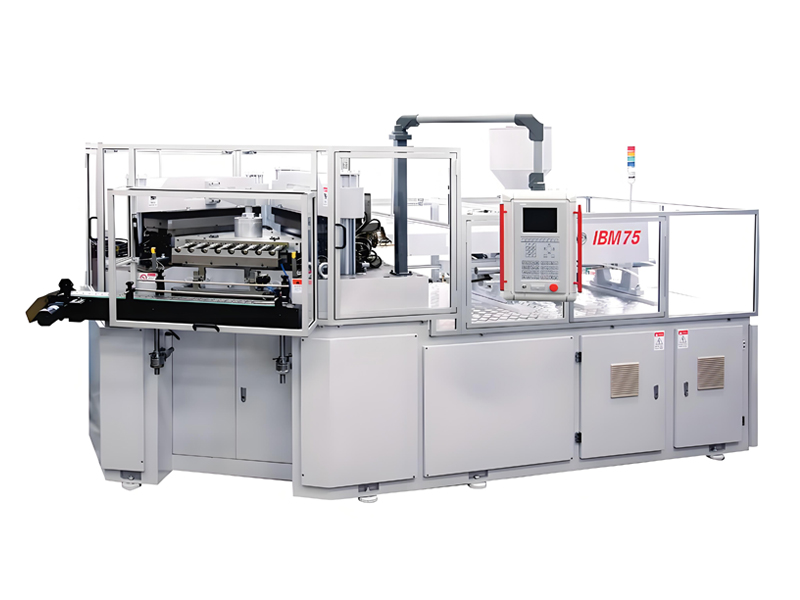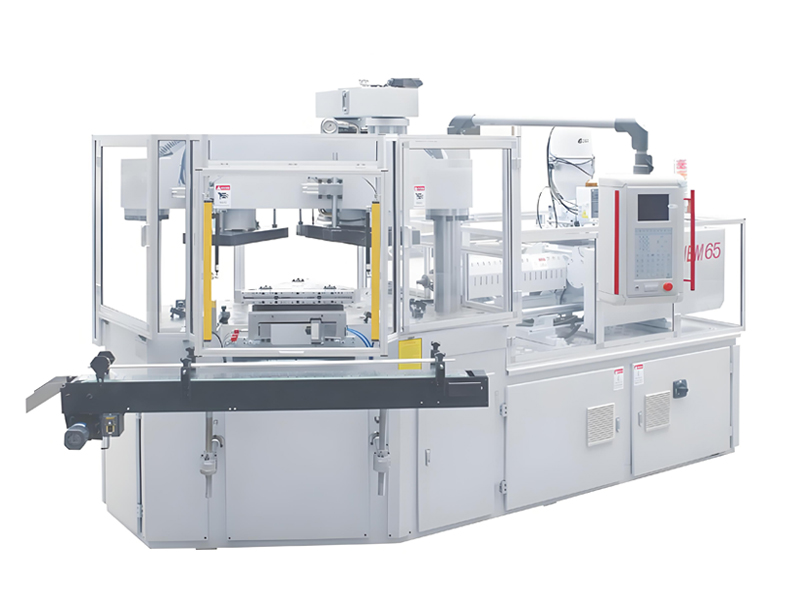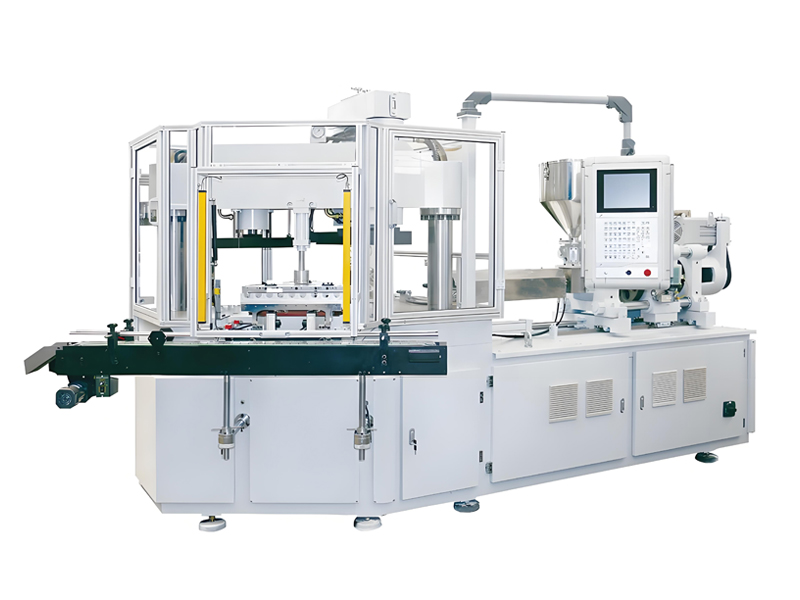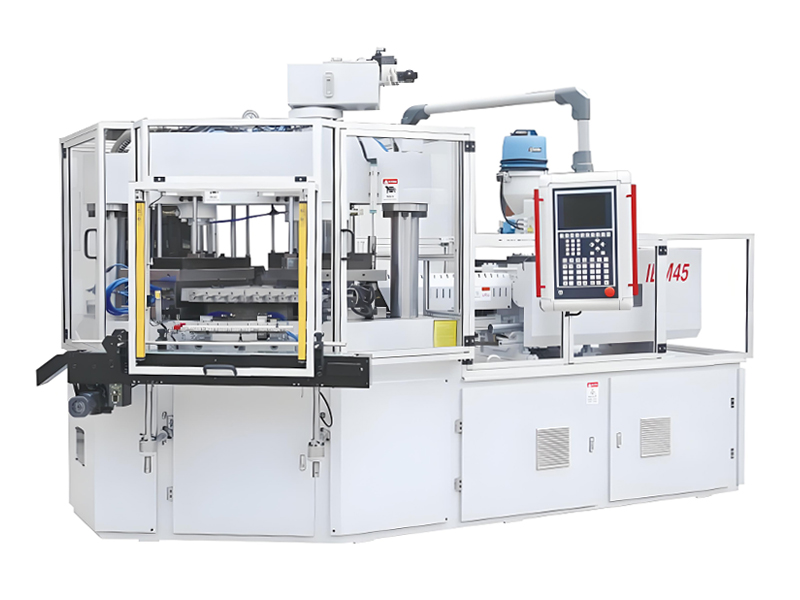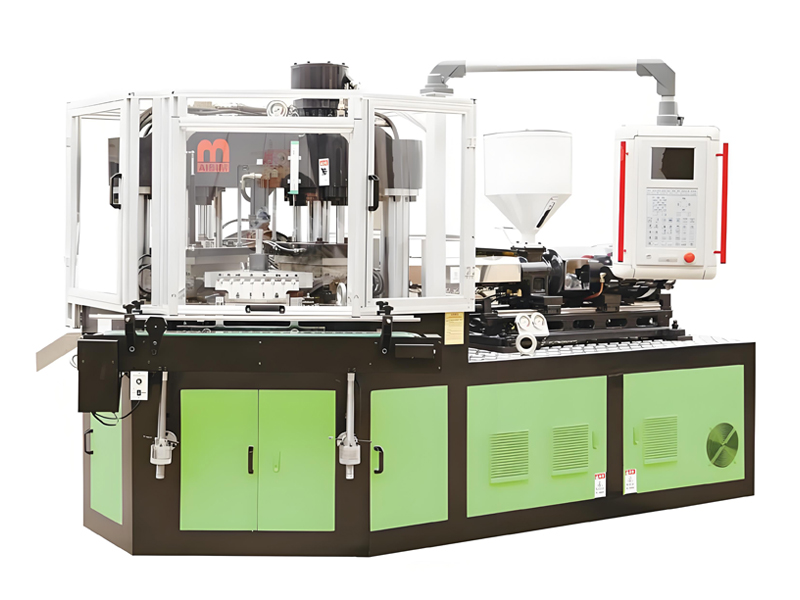
A heater band for IBM injection unit applications is one of the most overlooked yet most critical consumable components on an injection blow molding machine. The injection unit of an IBM machine must convert solid polymer pellet or powder into a precisely controlled, homogeneous melt before the parison is formed, and that transformation is driven almost entirely by the heat supplied through the barrel heater bands. When a band loses power density, develops an air gap, or drifts in temperature, the parison becomes non-uniform, the bottle wall distribution suffers, and scrap rate climbs. For operators running Aibim machines, a Wanplas factory specializing in injection blow molding equipment, understanding how to select, maintain, and replace these bands is a direct route to lower energy consumption and higher first-pass yield. This guide explains heater band construction, the types most relevant to IBM injection units, how to rate them by power density and maximum temperature, how they fail, how to diagnose faults with instruments, how to replace them safely using lockout and tagout, and which energy-saving options deliver the best return. By the end, a maintenance engineer should be able to build a practical specification and a spare-parts plan for an IBM75, IBM65, or IBM55 Hybrid machine without guesswork.
IBM Enjeksiyon Ünitelerinde Isıtıcı Bantları Anlamak
A heater band, sometimes called a barrel heater or nozzle heater, is a clamp-on resistive heating element that wraps around the cylindrical surface of the injection unit barrel, the adaptor, the nozzle, or the hot runner. In an injection blow molding machine the injection unit performs the plastication step: polymer is fed from the hopper, conveyed by the screw, sheared and heated until it reaches a uniform melt, and then injected into the blow mold cavity to form the parison. The heater bands supply the conductive and radiative heat that raises the barrel wall to the setpoint, while the screw shear adds a smaller but significant fraction of the total thermal energy. The quality of the final bottle depends on how evenly that temperature field is held along the length of the barrel.
On Aibim IBM series machines, the injection unit is engineered as a three-station, one-step system in which the parison is produced and immediately transferred to the blow station. Any temperature inconsistency in the first station propagates directly into the finished container. The company’s IBM75, IBM65, and IBM55 Hybrid models process a range of materials including PE, PP, PS, ABS, SAN, TPU, PC, and PCTG, each with a different melt temperature window and therefore a different demand on the heater bands. Aibim, a Wanplas factory with its own CNC machining center and more than twelve years in plastic machinery, designs its injection units with multiple independently controlled barrel zones so that the rear feed section stays cooler to protect the hopper throat while the front metering section runs hotter to stabilize the melt.
The physics are straightforward but unforgiving. A heater band converts electrical energy into heat through Joule heating of a resistance wire or ribbon. That heat must cross the interface between the band inner surface and the barrel outer surface, and any air gap at that interface acts as a thermal insulator that forces the band to run hotter than the barrel, accelerating ageing. The design objective is therefore twofold: maximize the contact area and clamping force, and choose a band whose maximum temperature and power density match the process without chronic over-temperature operation. When those conditions are met, a band can run for many thousands of hours; when they are not, failure arrives quickly.
In practical terms, the heater band is the component that most directly determines warm-up time, steady-state power draw, and the stability of the melt temperature from shot to shot. Because IBM machines are valued for producing pharmaceutical, food, drink, and cosmetic containers with tight wall tolerance, the heater band is not a commodity part to be bought on price alone. Its specification should be treated as a process decision, not a procurement afterthought.
IBM Enjeksiyon Üniteleri için Isıtıcı Bant Tipleri
Several distinct heater band technologies are available for plasticizing units, and each trades maximum temperature, power density, responsiveness, and cost in a different way. Selecting the right type for each zone of an IBM injection unit is the first step toward reliable operation and contained energy use.
Mika Isıtıcı Bantlar
Mica bands are the traditional workhorse. A resistive ribbon is wound around a mica insulating card and sandwiched between two mica sheets, then enclosed in a steel housing. They are inexpensive, easy to manufacture, and tolerant of a wide range of barrel diameters. Their limitation is the mica itself, which begins to degrade above roughly 300 degrees Celsius and loses dielectric strength as it absorbs moisture. For IBM machines running PP or PE at moderate barrel temperatures, mica bands are usually adequate, but for PC, PCTG, or SAN at the higher end of the range they age quickly.
Seramik Isıtıcı Bantları
Ceramic bands replace the mica card with interlocking ceramic tiles that support the resistance coil. The ceramic withstands higher temperatures and provides better thermal shock resistance, while the open structure allows a small air space that actually improves radiative transfer to the barrel. Ceramic bands typically support higher power density than mica and remain a strong choice for the metering and nozzle zones of an IBM machine where temperatures approach or exceed 300 degrees Celsius. They also pair well with removable insulation jackets.
Mineral Yalıtımlı Paslanmaz Çelik Isıtıcı Bantlar
Also known as MI bands or stainless steel armored bands, these use a seamless stainless steel sheath with magnesium oxide powder compacted around the resistance element. The result is a rugged, fully sealed element with excellent resistance to moisture, resin fumes, and mechanical abuse. MI bands tolerate high power density and high surface temperature while offering long service life, which makes them attractive for the high-duty front zones and nozzles of IBM machines. Their cost is higher, but the failure rate is lower.
Kızılötesi Seramik Isıtıcı Elemanları
Infrared ceramic elements use a coiled resistor inside a grooved ceramic block that radiates heat toward the barrel or nozzle. They heat quickly and are often used on nozzles and small-diameter sections where clamp-on bands are awkward. Their efficiency depends heavily on the gap and reflectors, and they are less common as the primary barrel heating on IBM units, but they are a useful option for localized heating.
Dökme Alüminyum Isıtıcı Bantları
Cast aluminium bands embed the resistance element in a solid aluminium body poured around it. The massive metal mass gives excellent heat distribution and a long life, and the flat machined inner face can be fitted with locating features for a tight barrel fit. They run at moderate maximum temperature but offer very good contact and durability, and they are frequently chosen where thermal mass helps stabilize the zone.
Dökme Bakır Isıtıcı Bantları
Cast copper bands are similar in concept to cast aluminium but use copper for even higher thermal conductivity. They are more expensive and heavier, and they are typically reserved for zones where rapid, uniform heat transfer is critical and the budget allows a premium component. For most IBM injection units, cast aluminium provides the better balance of cost and performance.
| Heater Band Type | Typical Max Surface Temp (deg C) | Typical Power Density (W per cm2) | Relative Cost | Best IBM Application |
|---|---|---|---|---|
| Mica band | 260 to 300 | 2.5 to 4.0 | Low | Rear feed and metering zones at low melt temp |
| Ceramic band | 350 to 450 | 3.0 to 6.0 | Medium | Metering, adaptor, and nozzle zones |
| Mineral-insulated stainless steel | 400 to 650 | 5.0 to 9.0 | High | High-duty front zones, nozzles, engineering resins |
| Infrared ceramic element | 400 to 600 | Up to 8.0 (radiant) | Medium to High | Nozzle and small-diameter local heating |
| Cast aluminium | 300 to 350 | 3.0 to 5.0 | Medium | General barrel zones needing thermal mass |
| Cast copper | 300 to 350 | 4.0 to 6.0 | Premium | Premium uniform-heat zones |
The table above is a planning reference rather than a fixed specification. Actual ratings vary by manufacturer, by the precise alloy of the resistance wire, and by the cooling effect of the polymer flowing inside the barrel. Aibim engineers typically recommend ceramic or mineral-insulated bands for the front of the barrel where PCTG and PC demand the highest temperatures, and more economical mica or cast aluminium bands for the rear feed section that runs cooler.
Güç Yoğunluğu ve Maksimum Çalışma Sıcaklığı
Power density, expressed in watts per square centimetre of band surface area, is the single most important electrical rating when sizing a heater band. Too low a density and the band cannot reach setpoint under load; too high a density and the band overheats between control cycles, shortening life. Maximum operating temperature is the second axis: it must exceed the zone setpoint with margin but stay below the insulation breakdown point.
For an IBM injection unit, the rear zones that merely pre-warm the pellet typically sit around 180 to 220 degrees Celsius, the compression zone around 200 to 240 degrees Celsius, and the metering and nozzle zones for PC or PCTG can reach 260 to 300 degrees Celsius at the barrel wall. The heater band surface temperature is always higher than the barrel wall by an amount set by the heat flux and the contact quality. A band rated at 4 watts per square centimetre on a well-clamped barrel may run only 30 to 60 degrees Celsius above the wall, but the same band with an air gap may exceed its rating and fail within weeks.
| IBM Zone | Typical Barrel Setpoint (deg C) | Recommended Power Density (W per cm2) | Band Surface Limit (deg C) | Suitable Band Type |
|---|---|---|---|---|
| Rear feed zone | 180 to 220 | 2.5 to 3.5 | 300 | Mica or cast aluminium |
| Compression zone | 200 to 240 | 3.0 to 4.5 | 350 to 400 | Ceramic or cast aluminium |
| Metering zone | 230 to 280 | 4.0 to 6.0 | 450 | Ceramic or MI stainless |
| Adaptor and nozzle | 250 to 300 | 5.0 to 8.0 | 500 to 600 | MI stainless or infrared ceramic |
| Hot runner or manifold | 220 to 290 | 4.0 to 7.0 | 450 to 550 | Cartridge or MI coil |
As a rule of thumb for maintenance planning, choose a band whose rated power density is at least 20 percent above the calculated steady-state demand so that the controller spends most of its time in a proportional band rather than saturated on or off. Saturated-on operation is the fastest route to element burnout. Where energy saving is a priority, the same zone density can be met with lower losses by adding insulation, which is discussed later in this guide.
Sıkma Yöntemleri ve Mekanik Montaj
The best heater band in the world performs poorly if it is not clamped tightly to the barrel. Heat transfer across the band-to-barrel interface is governed by contact, and an air gap of even 0.5 millimetre can raise band temperature by tens of degrees. Three clamping methods dominate IBM and general plasticizing units.
Silindir Kelepçesi (Cıvatalı Şerit Kelepçe)
The most common method uses a stainless steel strap with a screw or nut that pulls the two halves of the band tight against the barrel. Correct torque is essential: under-tightening leaves a gap, over-tightening can distort the band housing or crack ceramic. Aibim service documentation for IBM series machines specifies a torque range, typically in the region of 8 to 15 newton metres for standard bands, and the exact figure should be taken from the machine manual for the specific diameter.
Kama Kelepçe
Wedge clamps use a tapered wedge that is driven between the band ends to force them together. They give very high clamping force and are favoured where vibration or thermal cycling tends to loosen bolted clamps. The disadvantage is that the wedge must be seated squarely or it cocks the band and creates a local gap. Wedge systems are common on larger diameter barrels and on cast bands.
Yaylı Kelepçe
Spring-loaded clamps maintain constant pressure as the band and barrel expand and contract through heat cycles. They are excellent at preventing the loosening that causes gaps to open after the first few cycles, and they are often used on nozzle bands where thermal cycling is severe. The spring rate must be matched to the expected expansion so that it does not bottom out or lose preload.
Regardless of method, the barrel surface under the band should be cleaned of oxide, old grease, and resin residue before fitment. A thin layer of heat-transfer compound is sometimes applied, though many modern bands are designed for dry metal-to-metal contact and an excess of compound can actually trap heat. The decisive check is the gap: after tightening, a feeler gauge should not pass between the band inner face and the barrel. Eliminating that gap is the single most effective action an operator can take to extend band life and improve temperature stability.
Kablolama Konfigürasyonları, Terminaller ve Bağlantılar
The electrical termination of a heater band determines both safety and serviceability. Most IBM injection unit bands terminate in either flexible lead wires, stud terminals, or a quick-disconnect block, and the zone is wired back to the temperature controller through a contactor or solid-state relay.
Single-phase bands are the norm on small and medium IBM machines, with the resistance element sized so that at the line voltage the band draws the design current. For example, a 480-watt band on 240 volts draws 2 amperes, while a 1000-watt band on 240 volts draws about 4.2 amperes. Three-phase delta or star arrangements appear on very high-power barrels. The resistance of a healthy band can be estimated from its nameplate wattage and voltage using the relation resistance equals voltage squared divided by wattage; a 240-volt 1000-watt band should measure about 57.6 ohms. A reading far below that suggests a shorted turn or coil, while an open reading means a broken element.
Terminal choices matter for reliability in the plastics environment. Screw terminals on a stud are robust but can loosen under thermal cycling; crimped lugs with spring washers reduce this risk. Flexible leads with high-temperature fibreglass or silicone insulation resist the radiant heat better than ordinary PVC. The junction box or terminal cover should carry a degree of ingress protection against the dust and occasional fluid found around molding cells. Critically, the earth or ground connection of the band housing must be intact so that a sheath fault trips protection rather than energizing the barrel.
When wiring zones in parallel from a shared supply, the current per conductor must be balanced and the controller output rating respected. Aibim control cabinets group the injection unit zones on dedicated modules so that a single failed band can be isolated without shutting down the whole machine, and the wiring diagram in the machine manual should always be the reference before any reconnection.
IBM Makineleri için Sıcaklık Bölgesi Mimarisi
A modern IBM injection unit is not heated as a single block but as a sequence of independently controlled zones, each with its own heater band, thermocouple, and control loop. A typical Aibim IBM machine divides the barrel into three to five zones, then adds a nozzle zone, and may add a hot-runner or manifold zone and a mold temperature zone depending on the tool and the product.
The rear feed zone is kept relatively cool, often 30 to 60 degrees Celsius below the front, to prevent bridging at the hopper throat and to begin gentle pre-heating. The middle compression zone raises the melt, and the front metering zone brings it to the final processing temperature. The nozzle zone is the hottest and the most demanding because it is short, highly stressed, and exposed. On machines with a heated manifold or hot runner feeding the parison cavity, that manifold is an additional zone with its own band or cartridge heaters. Finally, the blow mold itself may have a separate temperature loop, though that is usually served by a mold-temperature controller rather than barrel bands.
Why the segmentation matters is best understood through process control. If the whole barrel were one zone, the rear would overheat while the front under-heated, and the parison would be uneven. Independent zones let the controller hold a temperature profile that tracks the polymer’s journey from solid to melt. For energy saving, this also means only the zones that need heat receive it at the required level; the feed zone can run lean, and the metering zone can be insulated to hold its setpoint with less power. Operators should map each band to its zone label in the controller and keep a zone-to-band table at the machine, because a mislabeled replacement band leads directly to scrap.
Termokupl Eşleştirme ve PID Otomatik Ayar
A heater band is only as good as the sensor that measures its result. IBM injection units use thermocouples embedded in the barrel wall near each band, and the two common types are J and K. Type J uses iron-constantan and is suitable up to about 750 degrees Celsius with good sensitivity in the plastics range; type K uses chromel-alumel and is more robust and linear over a wider span, also rated to about 1000 degrees Celsius. The controller must be set to the correct thermocouple type, because a mismatch produces a large, constant offset in the reading and therefore in the actual barrel temperature.
The control loop that balances the band heat against the thermocouple signal is normally a PID controller, meaning it uses proportional, integral, and derivative action. Proportional action reduces power as the setpoint is approached, integral removes steady-state offset, and derivative anticipates overshoot. On commissioning a new band or after a zone has been opened for service, the loop should be autotuned. Autotuning cycles the band on and off while observing the thermal response, then computes the gain, reset, and rate values that give fast settling without oscillation.
A poorly tuned loop wastes energy and degrades the parison. If the proportional band is too narrow, the band chatters on and off and suffers thermal fatigue; if too wide, the zone drifts. Derivative action that is too aggressive amplifies sensor noise from a loose thermocouple, causing the controller to throttle the band incorrectly. After replacing a band, the prudent step is to re-run autotune on that zone rather than copy values from a neighbouring zone, because the new band’s mass and contact will differ slightly. Aibim control software supports zone-by-zone autotuning so that a single changed band does not require re-tuning the entire unit.
Isıtıcı Bantların Arıza Modları
Isıtıcı bantlar öngörülebilir şekillerde arızalanır ve modu erken tanımak plansız duruşları önler. IBM enjeksiyon ünitelerinde en yaygın arıza modları açık devre, kısa devre, izolasyon yaşlanması, nem emilimi, zayıf temas, aşırı ısınma renk bozulması ve reçine sızıntısı saldırısıdır.
Açık Devre
An open circuit means the resistance element has broken, usually from repeated thermal expansion and contraction or from local overheating that melted a section of wire. The zone goes cold, the controller calls for full power that never arrives, and the melt temperature falls. Measured with a multimeter, the band shows infinite resistance.
Kısa Devre
A short circuit occurs when the element touches the sheath or when internal insulation breaks down, dropping the resistance far below nameplate. The band may draw excessive current, trip the protection, or in a worst case overheat locally. It is detected by a resistance reading much lower than expected combined with elevated current draw.
Yalıtım Yaşlanması
Termal çevrimle birlikte mika veya seramik yalıtım yavaşça dielektrik dayanımını kaybeder. Bant hâlâ ısınabilir, ancak kılıfa kaçak akım artar ve sonunda rahatsız edici atmalara veya şok riskine neden olur. Kılıfa ölçülen megaohm aralığındaki yalıtım direnci teşhis yöntemidir.
Nem ve Emilim
Özellikle mika, özellikle bir makine nemli bir tesiste boşta kaldıktan sonra havadaki nemi emer. Nemli bir bant düşük yalıtım direnci gösterir ve ilk enerji verildiğinde ark yapabilir veya duman çıkarabilir. Bandı fırınlamak veya sızdırmaz mineral yalıtımlı tipler kullanmak bu arızayı önler.
Zayıf Temas ve Gevşek Sıkma
Gevşemiş bir bant, bir hava boşluğu geliştirir, silindirden daha sıcak çalışır ve erken yaşlanır. Bu, elektriksel bir arıza değil, aynı sonuca sahip bir montaj arızasıdır: yanmış bantlar ve kararsız sıcaklık.
Aşırı Isınma Renk Değişimi
Kronik aşırı sıcaklık, çelik muhafazayı mavi veya saman rengine çevirir ve kaplamayı kabartabilir. Bu, hem aşırı güç vermenin bir belirtisi hem de hızlandırılmış arızanın bir nedenidir; çünkü yaşlanmış izolasyon daha sonra arızalanır.
Reçine Sızıntısı Erozyonu
Bir meme veya adaptör contasının erimiş polimer sızdırdığı yerde, sızan reçine bant kenarına, kablolara ve sonlandırmaya saldırır. Reçine bir yalıtkandır, ancak aynı zamanda ısıyı hapseden ve terminalleri aşındıran bir kirleticidir. Contaları sıkı tutmak, bantları korur.
| Failure Mode | Typical Symptom | Diagnostic Method | Corrective Action |
|---|---|---|---|
| Open circuit | Zone cold, full power called, melt temp drops | Multimeter resistance infinite | Replace band, check clamp and setpoint |
| Short circuit | Over-current trip, local hot spot | Resistance far below nameplate | Replace band, verify earth |
| Insulation ageing | Nuisance trips, leakage current | Insulation resistance below 1 megohm | Replace, improve cooling and duty |
| Moisture absorption | Smoking or arcing on start-up | Low megger reading after idle | Bake dry or use sealed MI band |
| Poor contact or loose clamp | Scorched band, unstable temperature | Feeler gauge passes at interface | Clean, retighten to torque, remove gap |
| Overheating discolouration | Blue or straw steel, blistering | Visual plus high surface temp | Reduce duty or uprate band type |
| Resin leakage erosion | Polymer on leads, terminal corrosion | Visual inspection at seal | Repair seal, clean, replace if damaged |
Arıza Teşhisi ve Durum İzleme
Teşhis, en ucuz ve en güvenli kontrolden en invaziv olana doğru ilerlemelidir. Disiplinli bir yaklaşım, çoğu bant arızasını hurda üreten acil durumlara dönüşmeden önce yakalar.
The first instrument is the clamp meter. By measuring the AC current drawn by a band while it is energised, an operator can confirm whether it is consuming near its rated amperage. A band that draws zero current is open; one that draws far above nameplate is shorted or has a ground fault. Current should be logged per zone so that a slow drift upward, indicating rising resistance or a developing fault, is visible trend.
The second instrument is the insulation tester, or megger. With the band isolated and cooled, a test voltage of 500 volts applied between the element and the sheath should return a reading well above 1 megohm; values below that indicate moisture or ageing insulation. This test is fast, non-destructive, and should be part of every planned maintenance visit.
The third instrument is the thermal imaging camera. A scan of the barrel at operating temperature reveals cold spots where a band has failed, hot spots where a band is over-powering, and the characteristic gradient along the zones. Thermal imaging is especially valuable because it shows the problem before the controller alarm triggers, and it documents the temperature field for trend analysis. A sudden temperature deviation alarm from the controller is the final trigger: it tells the operator that a zone has left its window, and the camera then localizes the cause.
Together, these tools let a plant move from reactive replacement to predictive maintenance. By recording current, insulation resistance, and a thermal image every quarter, the maintenance team can see a band degrading and schedule its change during a planned stop rather than during a production run. For Aibim machines running pharmaceutical or cosmetic lines where unplanned stops are costly, this discipline protects both output and quality.
Isıtıcı Bant Değiştirme Prosedürü ve Güvenliği
Bir IBM enjeksiyon ünitesinde ısıtıcı bandı değiştirmek, planlanması gereken yüksek sıcaklık, yüksek enerjili bir görevdir. Aşağıdaki prosedür, kilitleme ve etiketleme ilkelerini izler ve erken yeniden arızanın yaygın nedenlerini ortadan kaldırır.
Adım 1: Kilitleme ve Etiketleme
Isolate the machine from electrical supply at the main disconnect and apply a personal lock and tag. Verify zero energy by attempting a start and by measuring voltage at the zone terminals. Heating elements store no dangerous electrical charge, but the supply and the controller must be dead before any lead is touched. This is the non-negotiable first step.
Adım 2: Artık Isının Dağılmasına İzin Verin
Even after power is removed, the barrel and band remain hot enough to burn. Wait until the zone can be touched with the back of the hand at a safe distance, or use a probe thermometer to confirm the surface is below roughly 60 degrees Celsius before handling. Rushing this step causes burns and also risks distorting a new band if fitted onto a still-expanded barrel.
Adım 3: Bağlantıyı Kesin ve Çıkarın
Referans için kablolamayı fotoğraflayın, ardından uçları veya terminalleri ayırın; polarite dirençli bir bant için kritik değildir ancak bölge etiketini not etmek kritiktir. Kelepçeyi, kamayı veya yayı serbest bırakın ve eski bandı kaydırarak çıkarın. Silindir yüzeyini kalıntı açısından inceleyin.
Adım 4: Silindiri Temizleyin ve Oksidi Giderin
Pişmiş reçineyi, eski gresi ve koyu oksit tabakasını çıkarmak için metalik olmayan bir kazıyıcı ve uygun bir temizleyici kullanın. Oksit bir ısı yalıtkanıdır; bırakılması yeni bantta hava boşluğu sorununu yeniden yaratır. İnce aşındırıcı kağıtla hafif bir zımparalama ve ardından silme, parlak bir metal temas yüzeyi bırakır.
Adım 5: Yeni Bandı Boşluk Olmadan Yerleştirin
Position the new band and begin clamping. The objective is zero air gap between the band inner face and the barrel. Tighten the clamp bolts progressively and evenly to the torque specified in the Aibim manual, typically in the 8 to 15 newton metre range for standard bands, and re-check with a feeler gauge that no gap remains around the circumference. A wedge or spring clamp is seated squarely so it does not cock the band.
Adım 6: Yeniden Bağlayın ve Doğrulayın
Kabloları referans fotoğrafa göre yeniden bağlayın, topraklama bağlantısını doğrulayın ve yalnızca son bir görsel kontrolün ardından gücü geri verin. Bölgeye güvenilmeden önce kontrollü bir ısıtma çalıştırın ve akım ile sıcaklığı izleyin; sağlıklı bir bant, set noktasına düzgün şekilde yükselmeli ve otomatik ayar sonrasında onu korumalıdır.
| Replacement Step | Key Action | Tool or Check | Pass Criteria |
|---|---|---|---|
| 1. Lockout and tagout | Isolate supply, personal lock | Lock, tag, voltage test | Zero voltage at terminals |
| 2. Cool down | Wait for safe touch | Probe thermometer | Below about 60 deg C |
| 3. Remove old band | Photo, disconnect, release clamp | Camera, hand tools | Zone label recorded |
| 4. Clean barrel | Remove oxide and resin | Scraper, abrasive, cloth | Bright metal contact face |
| 5. Fit new band | Clamp, eliminate gap | Torque wrench, feeler gauge | No gap, torque to spec |
| 6. Reconnect and verify | Rewire, heat up, autotune | Clamp meter, controller | Smooth ramp to setpoint |
Safety cannot be overstated. Working on a heated barrel without lockout risks electric shock and severe burns. Even a cool-looking band may sit on a barrel at 250 degrees Celsius. The Wanplas group and Aibim follow a strict safety culture, and any band service should be done by trained personnel using appropriate personal protective equipment and following the machine manual.
IBM Isıtıcı Bantları için Enerji Tasarrufu Seçenekleri
Namlu ısıtması, makine sıcak olduğunda çalışan sürekli bir yüktür, bu nedenle küçük verimlilik kazanımları bile bir yıllık operasyon boyunca birikir. Birkaç seçenek, proses penceresini değiştirmeden IBM enjeksiyon ünitesi ısıtıcı bantları tarafından çekilen enerjiyi azaltır.
Seramik Yalıtım Ceketleri
A removable insulation jacket wraps the barrel and bands in a layered thermal blanket, typically mineral wool or silica fibre inside a high-temperature fabric. By trapping the heat at the barrel, the jacket cuts radiant and convective loss so the band needs less power to hold setpoint. On an IBM machine the jacket can reduce zone energy use by a moderate to high margin and also lowers the ambient temperature on the shop floor. Cost is Low to Medium, and payback is often quick on machines running long shifts.
Döküm Alüminyum ve Döküm Bakır Bantlar
Because cast bands present a large, flat, well-machined contact face, they transfer heat to the barrel more efficiently than a looser mica band and waste less through the back. Their higher thermal mass also smooths the control cycle. The saving is modest compared with insulation, but the longer life reduces replacement frequency. Cost is Medium to Premium depending on material.
İndüksiyonlu Isıtma
Induction heating places a coil around the barrel and induces current directly in the steel, heating the barrel itself rather than through a resistive band. The advantages are fast warm-up, high efficiency, and excellent zone isolation because only the barrel under the coil heats. Relative to resistance bands, induction can reduce heating energy by roughly 20 percent to 50 percent, a Very High saving, though the capital cost is Premium and the retrofit requires a compatible power supply and thermal design. For high-duty IBM lines running engineering resins, the payback can still be attractive.
Nano Yalıtım Battaniyeleri
Nano-porous insulation uses engineered silica aerogel-like material with extremely low thermal conductivity, allowing a thin blanket to achieve the same or better performance than a thick traditional jacket. This is valuable where space around the barrel is tight. Cost is Medium to High, but the thin profile and strong performance make it a good retrofit for crowded injection units.
| Enerji-Saving Option | Typical Enerji Tasarrufu | Relative Cost | Effect on Stability | Effect on Warm-Up |
|---|---|---|---|---|
| Ceramic insulation jacket | Moderate to High | Low to Medium | Improves stability | Neutral to slightly faster |
| Cast aluminium band | Low to Moderate | Medium | Improves via thermal mass | Neutral |
| Cast copper band | Low to Moderate | Premium | Improves via conductivity | Neutral |
| Induction heating | 20 percent to 50 percent | Premium | Strong improvement, zone isolation | Faster warm-up |
| Nano-insulation blanket | Moderate to High | Medium to High | Improves | Neutral to slightly faster |
Expressing the benefit in operational terms, a conventional IBM line might consume a certain number of kWh per 1000 parts just to maintain barrel temperature, and an insulation or induction retrofit can reduce that figure by a meaningful percentage. The precise number depends on the resin, the cycle, and the ambient, so plants should measure before and after rather than assume. Aibim machines already incorporate energy-saving hydraulic and drive design, and pairing the base machine with insulated bands compounds the advantage.
Yalıtım Tadilatı Sonrası Stabilite ve Isınma Süresi
Bir IBM enjeksiyon ünitesine yalıtım eklemek, kalite ve verim için önemli olan iki operasyonel parametreyi değiştirir: sıcaklık stabilitesi ve ısınma süresi. Geriye dönük donanım doğru yapıldığında her ikisi de olumlu yönde hareket eder.
Stability improves because the insulated zone loses less heat to the surroundings, so the controller makes smaller corrections and the band spends more time in its proportional band. The melt temperature variation shot to shot decreases, which directly tightens the wall-thickness distribution of the parison and reduces scrap. Plants often report that after fitting jackets they can hold the metering zone within a tighter window and that over-temperature alarms on that zone disappear.
Warm-up time behaves slightly differently depending on the method. A passive insulation jacket around resistance bands typically leaves warm-up time roughly neutral or marginally faster, because the retained heat offsets standby losses but the band still has to raise the mass. Induction heating, by contrast, shortens warm-up noticeably because it couples energy directly into the barrel and reaches temperature with less thermal inertia in the element. In practice, the dominant benefit of insulation is steady-state saving, while induction delivers both saving and speed. Either way, the machine reaches its operating window reliably and holds it, which is the condition under which an IBM unit produces consistent containers.
One caution: insulation must not trap heat against a component that was designed to shed it, such as a thrust bearing or a seal. The jacket should cover only the heated barrel and band sections, leaving mechanical interfaces exposed. Aibim application engineers can advise on the correct coverage for each IBM model so that the retrofit improves the thermal loop without shifting the mechanical load.
Bakım Aralıkları ve Yedek Parça Stratejisi
A heater band is a wear item, and treating it as such is the foundation of uptime. The interval depends on duty, resin, and ambient, but a sound baseline for continuous IBM operation is a visual and electrical inspection every three to six months, with insulation-resistance and current checks forming part of that visit.
Bands on the hottest, highest-duty zones, typically the metering and nozzle, should be considered for replacement on a planned schedule before they fail, because their failure stops the line. Rear feed bands run cooler and last longer, so they can be inspected less aggressively. A practical spare-parts strategy stocks at least one of every band type and size used on the machine, prioritized by the zones with the shortest life. For a plant running several identical Aibim machines, a shared pool of the common sizes reduces both inventory cost and risk.
Records matter. Each machine should carry a log of band installation dates, zone labels, part numbers, and the measured resistance and insulation value at fitment. Over time this reveals the true life of each zone and lets the team move from calendar-based to condition-based replacement. The Wanplas group supports its factories, including Aibim, with a shared service promise that includes a yearly allocation of free spare parts, which helps plants keep critical consumables like heater bands on hand without inflating the maintenance budget.
Training is the final element. Operators who can read a thermal image, use a clamp meter, and tighten a band to torque will catch most problems early. Aibim provides commissioning and training as part of its machine supply, and the investment in a half-day hands-on session pays back the first time a band is changed during a planned stop instead of an emergency.
Güvenlik Standartları ve Sertifikalar
Isıtıcı bantlar ve onları taşıyan makineler, pazara göre değişen elektrik ve makine güvenliği çerçevelerine tabidir. İlgili referansları anlamak, bir alıcının uyumlu ekipman belirlemesine ve maliyetli yeniden işlemeden kaçınmasına yardımcı olur.
IEC 60519 is the international series covering electrical safety of electrical resistance heating equipment, including requirements for the heating elements, controls, and protection. It is the baseline many national standards derive from and is directly relevant to how an IBM injection unit’s heating circuits must be designed and guarded. CE marking indicates conformity with applicable European directives, including the Low Voltage and Machinery directives, and Aibim machines are built and tested to applicable CE requirements as part of their export configuration.
For the North American market, UL listing of components and the overall machine evaluation under relevant UL and NFPA guidance is the expectation, and bands with UL-recognized elements simplify compliance. In China, GB standards govern both the machinery safety and the electrical aspects, and Aibim, as a Chinese manufacturer serving more than 40 countries, builds its machines against the applicable GB requirements for domestic and export models. ISO quality management underpins the manufacturing process, and the broader Wanplas group applies consistent quality discipline across its specialized factories.
For the food, drink, pharmaceutical, and cosmetic containers that IBM machines produce, the material and process certifications sit alongside the electrical ones; resin choice and machine hygiene must meet the relevant food-contact and pharma expectations for the destination market. The heater band itself is a supporting component, but its reliable, safe operation is part of the chain that delivers a compliant container.
Sıkça Sorulan Sorular
Bir IBM enjeksiyon ünitesinde hangi ısıtıcı bant türleri kullanılır?
IBM injection units most often use mica, ceramic, and mineral-insulated stainless steel heater bands, with cast aluminium or cast copper bands on high-output barrels and infrared ceramic elements on nozzles. The choice depends on the required maximum temperature, power density, and cycle duty, with ceramic and mineral-insulated types preferred for the hotter front zones.
Bir ısıtıcı bandın arızalandığını nasıl anlarım?
Common symptoms are an open or short circuit measured with a multimeter, drifting zone temperature, repeated over-temperature alarms, visible discolouration or blistering of the band, and uneven melt. Insulation resistance below 1 megohm to ground usually indicates ageing or moisture ingress, and a thermal image will show a cold or hot spot on the affected zone.
Isıtıcı bandını değiştirmek için güvenli prosedür nedir?
Apply lockout and tagout, allow the barrel to cool to a safe touch temperature, clean oxide from the barrel surface, mount the new band with no air gap, tighten clamp bolts to the specified torque, and verify the gap is closed before re-energising the zone. Only trained personnel should perform the task, and the machine manual torque values must be followed.
Bir IBM enjeksiyon ünitesinde indüksiyonla ısıtma kullanılabilir mi?
Induction heating is viable on cylindrical barrel sections and can reduce heating energy by roughly 20 percent to 50 percent compared with resistance bands, with faster warm-up and improved zone isolation. It requires a compatible power supply and careful thermal design, and the capital cost is at the Premium level, so it suits high-duty lines where the saving recurs every shift.
Plastik makinelerindeki ısıtıcı bantlar için hangi standartlar geçerlidir?
Relevant references include IEC 60519 for electrical safety of heating equipment, CE marking for the European market, UL listing for North America, and GB standards for China. Machines from Aibim are built and tested to applicable CE and GB requirements, and the manufacturing process follows ISO quality management.
Isıtıcı bantlar ne sıklıkla kontrol edilmelidir?
A visual and electrical inspection every three to six months is typical for continuous operation, with insulation-resistance and current-draw checks forming part of the planned maintenance plan. Spare bands should be stocked for the highest-duty zones, and the metering and nozzle bands are usually the first considered for planned replacement.
Yalıtım eklemek ısınma süresini değiştirir mi?
A passive insulation jacket usually leaves warm-up time neutral or marginally faster while improving steady-state stability, whereas induction heating shortens warm-up noticeably. The main benefit of insulation is a tighter temperature window and lower energy per 1000 parts, which improves parison consistency and reduces scrap.
Hava boşluğu ısıtıcı bandın ömrünü neden kısaltır?
An air gap at the band-to-barrel interface acts as a thermal insulator, forcing the band to run hotter than the barrel to deliver the same heat. That chronic over-temperature accelerates insulation breakdown and element fatigue, leading to early open or short circuit failure. Eliminating the gap with correct clamping and a clean contact face is the most effective life-extending action.
Sonuç
The heater band for IBM injection unit service is a small component with an outsized effect on product quality, energy use, and uptime. Selecting the right type by power density and maximum temperature, clamping it without an air gap, pairing it with a correctly typed thermocouple and a tuned PID loop, and diagnosing faults early with a clamp meter, megger, and thermal camera will keep an Aibim IBM75, IBM65, or IBM55 Hybrid running within its process window. When the time comes to change a band, a disciplined lockout, cool-down, clean, fit, and verify sequence prevents the premature re-failures that cost production. For plants chasing lower operating cost, insulation jackets, cast bands, nano-blankets, and induction heating offer a ladder of savings from Low to Very High, with induction capable of cutting heating energy by 20 percent to 50 percent. As a Wanplas factory, Aibim brings more than twelve years of injection blow molding focus, its own CNC manufacturing, and a group-wide service commitment to every machine it ships. For tailored advice on specifying, retrofitting, or maintaining heater bands on your IBM line, the Aibim technical team is ready to help you build a practical plan that protects both your containers and your energy budget.