สารบัญ
- บทนำ: Aibim และแพลตฟอร์มไฮบริด IBM55
- สถาปัตยกรรมระบบขับเคลื่อนไฟฟ้าแบบไฮบริด
- โครงสร้างสามสถานีและความแม่นยำของการหมุนตำแหน่ง
- ความท้าทายด้านความแม่นยำและแนวทางแก้ไขในช่วง 3–300 มล.
- ข้อมูลจำเพาะหลักของ IBM55
- การเปรียบเทียบกับซีรีส์ IBM75
- การแยกองค์ประกอบรอบเวลาและการคำนวณกำลังการผลิต
- ความเข้ากันได้ของวัสดุ
- อุตสาหกรรมที่ประยุกต์ใช้และผลิตภัณฑ์ขั้นสุดท้าย
- จากความต้องการสู่คำแนะนำการกำหนดค่า
- การผลิตที่สอดคล้องตามข้อกำหนดสำหรับยาและเครื่องสำอาง
- โซลูชันแม่พิมพ์
- การติดตั้ง การทดสอบเดินเครื่อง และการยอมรับ (FAT/SAT)
- ตารางการบำรุงรักษาและการตรวจสอบ
- การวินิจฉัยปัญหาทั่วไป
- การเปรียบเทียบเส้นทางเทคโนโลยี
- เศรษฐศาสตร์และผลตอบแทน
- บริการและการสนับสนุน
- คำถามที่พบบ่อย
- บทสรุป
บทนำ: Aibim และแพลตฟอร์มไฮบริด IBM55
Aibim, a Wanplas factory, is a specialized manufacturer of injection blow molding machines with more than 12 years of experience building plastic machinery and two decades of accumulated know-how in the injection blow molding (IBM) process. Based in Zhangjiagang and operating its own CNC machining center, Aibim ships to more than 40 countries and runs a new production facility purchased in 2022 with an annual capacity of over 100 complete lines. The company’s product focus is narrow and deep: three-station, one-step injection blow molding machines that convert plastic resin directly into finished, flash-free bottles in a single continuous cycle.
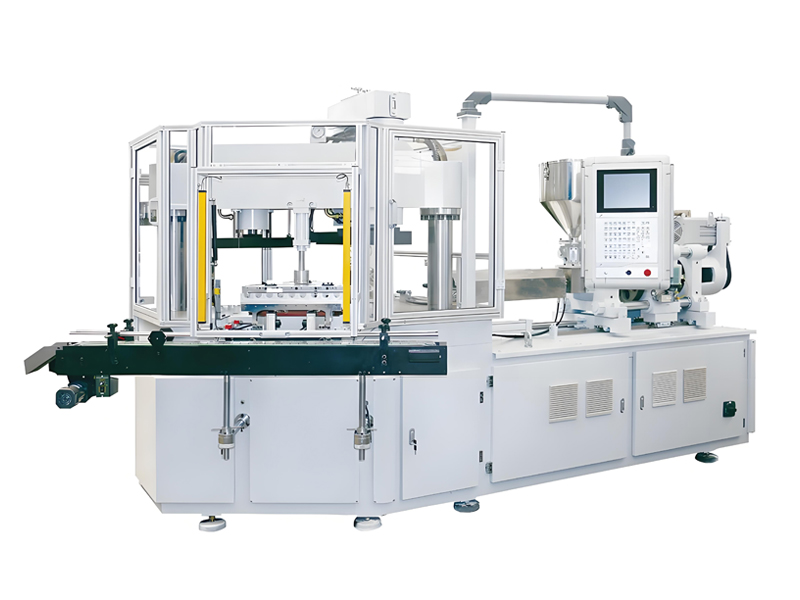
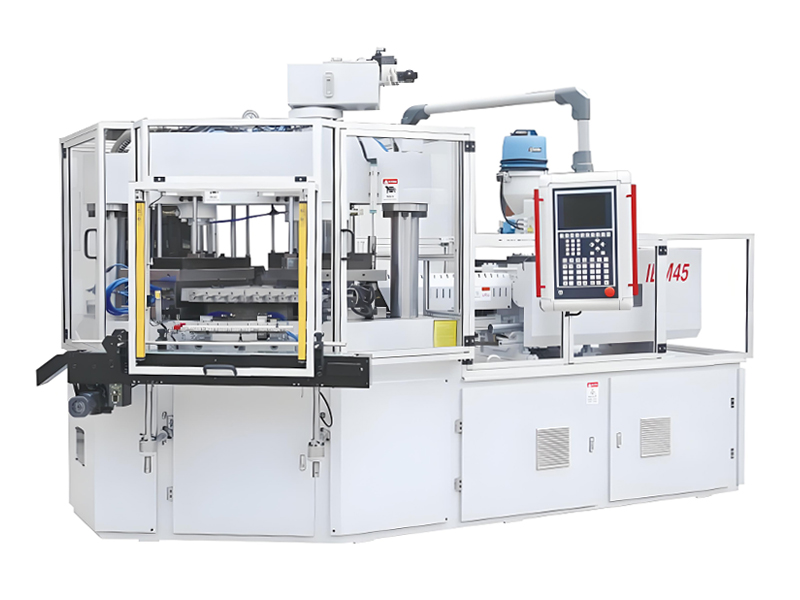
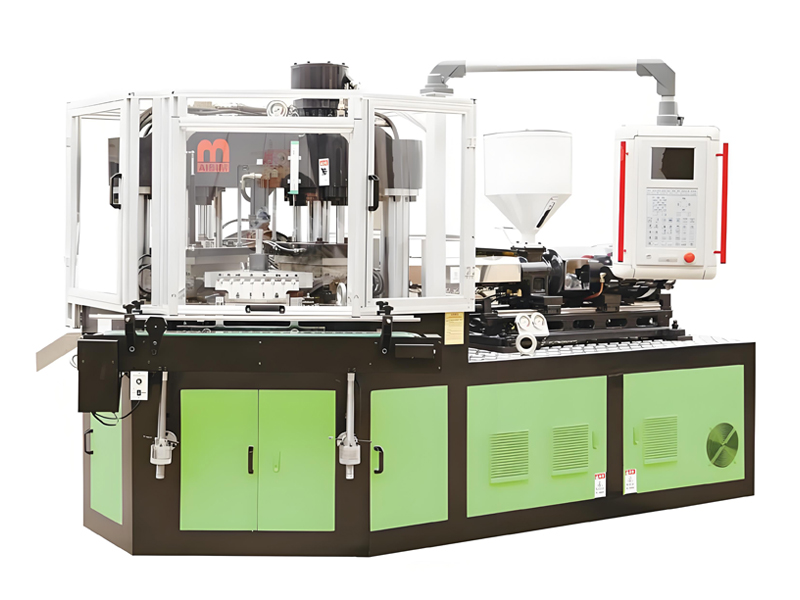
This article is a single-machine technical deep-dive on the เครื่องฉีดแบบไฮบริดไฟฟ้า IBM55, the model built for high-precision small bottle production from 3 ml to 300 ml. Where the broader Aibim range covers containers from 3 ml up to 1000 ml, the IBM55 Hybrid is tuned specifically for the demanding low-volume, high-cavity, tight-tolerance segment: eye-drop bottles, oral-liquid vials, reagent tubes, essential-oil and perfume flacons, sample vials, and small lotion or emulsion bottles. The “Hybrid Electric” designation means the machine pairs a servo-driven variable-displacement pump hydraulic system with electrically optimized plasticizing and injection control, delivering the rigidity of hydraulics where it matters and the precision and efficiency of servo control where it pays back.
Two engineering facts frame everything that follows. First, Aibim cites a minimum energy saving of 35 percent versus conventional hydraulic designs, an outcome of its PREFILL technology and variable-displacement pump pressurizing architecture. Second, the machine is CE certified, with a stripper station protected by a long-distance digital laser sensor and a light curtain for personnel safety. Throughout this article we explain how the hybrid architecture delivers on those claims, and where the real precision value is created in the 3–300 ml window.
Whether you run a pharmaceutical packaging line that needs validated, low-particulate output, or a cosmetic brand that needs consistent neck threads and crystal-clear walls, the IBM55 Hybrid is designed around one goal: repeatable, clean, small-bottle production with the lowest practical energy and labor footprint. The sections below cover drive architecture, station mechanics, precision technique, specifications, capacity math, materials, applications, compliance, tooling, commissioning, maintenance, troubleshooting, competitive fit, and economics.
สถาปัตยกรรมระบบขับเคลื่อนไฟฟ้าแบบไฮบริด
The hybrid drive is the single most important differentiator of the IBM55, and understanding it is the key to understanding the machine’s energy, precision, and noise profile. A true hybrid does not simply bolt a servo motor onto an old hydraulic circuit. It re-partitions the work: high-force, low-frequency motions stay on hydraulics for rigidity and safety, while high-frequency, precision-critical motions move to servo-controlled, on-demand power.
ปั๊มแปรผันขับเคลื่อนด้วยเซอร์โวเทียบกับปั๊มคงที่และวาล์วระบาย
Conventional full-hydraulic IBM machines use a fixed-displacement pump running at constant speed, dumping excess flow across a relief valve whenever the system demand is below pump capacity. That bypassed oil is not free: it is heated, filtered, cooled, and pumped again, continuously. The IBM55 Hybrid replaces this with a servo motor driving a variable-displacement pump. The controller commands the servo to spin only as fast as the current phase requires, and the pump swashplate trims displacement to match the instantaneous flow demand. This is on-demand flow: when the clamp is idle during the blow phase, the pump output falls toward zero rather than circulating through relief.
Operationally, the difference shows up as lower average motor speed, lower flow to tank, and far less heat generated inside the circuit. The hydraulic power unit behaves like a load-following supply instead of a always-on generator. Aibim’s PREFILL technology complements this by pre-charging the clamp cylinder rapidly during the closing stroke, so the high-flow demand is met without oversizing the pump, after which the variable-displacement pump holds tonnage with minimal flow. The net effect is a hydraulic system that is quieter, cooler, and smaller in installed power than an equivalent fixed-pump design.
การเปรียบเทียบการใช้พลังงาน
เมื่อวัดเทียบกับเกณฑ์ไฮดรอลิกเต็มรูปแบบที่มีแรงจับยึดและผลผลิตเท่ากัน IBM55 Hybrid โดยทั่วไปลดการใช้พลังงานทั้งหมด 30 ถึง 50 เปอร์เซ็นต์ โดยมีพื้นล่างที่บันทึกไว้ของ Aibim ที่ 35 เปอร์เซ็นต์ การประหยัดไม่ใช่ตัวเลขเดียวแต่เป็นชุดของผลกระทบ ซึ่งแต่ละอย่างสามารถตรวจสอบได้บนพื้นที่โรงงาน:
- การดึงพลังงานขณะเดินเบาและสแตนด์บาย: เนื่องจากการไหลตามความต้องการ เฟสสแตนด์บายและความต้องการต่ำจึงใช้พลังงานเพียงเศษเสี้ยวของกำลังสแตนด์บายของปั๊มคงที่ พลังงานไฮดรอลิกสแตนด์บายสามารถลดลงได้มากกว่าครึ่ง
- อุณหภูมิน้ำมัน: อุณหภูมิการทำงานของน้ำมันไฮดรอลิกโดยทั่วไปลดลงจากช่วง 50-58 °C บนสายการผลิตแบบทั่วไปเป็นช่วง 40-48 °C บนเครื่องไฮบริด ซึ่งเป็นการลดที่ปกป้องซีล รักษาความหนืด และลดภาระการหล่อเย็น
- น้ำหล่อเย็น: ด้วยความร้อนที่ต้องระบายน้อยลง ปริมาณการใช้น้ำหล่อเย็นของโรงงานสำหรับชุดกำลังลดลง ลดทั้งการใช้สาธารณูปโภคและภาระของชิลเลอร์กลาง
- อายุน้ำมัน: อุณหภูมิน้ำมันที่ต่ำลงและเสถียรขึ้นชะลอการเกิดออกซิเดชันและยืดอายุการใช้งานของของเหลว ลดความถี่ในการเปลี่ยนและปริมาณน้ำมันเสีย
- ความต้องการสูงสุด: เนื่องจากเซอร์โวหลีกเลี่ยงกระแสพุ่งเข้าและการหมุนเกินความเร็วต่อเนื่องของปั๊มคงที่ โรงงานจึงเห็นการดึงไฟฟ้าสูงสุดที่นุ่มนวลกว่า ซึ่งสำคัญในที่ที่เรียกเก็บค่าความต้องการใช้ไฟฟ้า
ตัวเลขพลังงานทั้งหมดในบทความนี้แสดงเป็นเปอร์เซ็นต์และปริมาณทางกายภาพเท่านั้น ไม่ใช้จำนวนเงินสกุลเงิน ข้อได้เปรียบด้านต้นทุนถูกประเมินผ่านดัชนีพลังงาน ผลผลิต และดัชนีต้นทุนการแปรรูปที่อธิบายในส่วนเศรษฐศาสตร์
ความสามารถในการทำซ้ำและความแม่นยำ
พลังงานเป็นเพียงครึ่งหนึ่งของเรื่อง สถาปัตยกรรมไฮบริดได้ตำแหน่งในสายการผลิตยาและเครื่องสำอางเพราะทำให้การทำซ้ำของกระบวนการแน่นขึ้น กลไกสามอย่างมีความสำคัญ:
- ความเสถียรของเวลาวงจร: การควบคุมเซอร์โวรักษาความผันแปรระหว่างวงจรไว้ภายในประมาณ ±1 เปอร์เซ็นต์ ดังนั้นอุปกรณ์เติมและตรวจสอบปลายน้ำจึงเห็นกระแสที่สม่ำเสมอแทนที่จะเป็นแบบเป็นจังหวะ
- วงจรปิดแรงดันฉีด: เฟสการฉีดทำงานภายใต้การควบคุมแรงดันแบบวงจรปิดแทนที่จะเป็นการไหลแบบวงจรเปิด ซึ่งทำให้น้ำหนักพาริซอนสม่ำเสมอทุกช็อต
- การกดค้างแบบแบ่งช่วง: โปรไฟล์การกดค้าง (packing) ถูกแบ่งออกเป็นช่วงๆ ทำให้ผู้ปฏิบัติงานปรับแรงดันการอัดเทียบกับแรงดันในช่องแม่พิมพ์ตลอดช่วงการหล่อเย็น แทนที่จะใช้การกดค้างแบบคงที่เดียว
- ความคลาดเคลื่อนของน้ำหนักขวด: ด้วยการตวงและการกดค้างที่เสถียร น้ำหนักขวดสำเร็จโดยทั่วไปจะอยู่ในช่วง ±1 เปอร์เซ็นต์ระหว่างชิ้นต่อชิ้น ซึ่งช่วยลดการใช้เรซินโดยตรงและปรับปรุงความสม่ำเสมอของปริมาณการบรรจุ
นี่คือความแม่นยำที่ทำให้เครื่องจักรนี้คุ้มค่าสำหรับขวดไมโครขนาด 3–15 ml ซึ่งการเปลี่ยนแปลงน้ำหนักหนึ่งเปอร์เซ็นต์มองเห็นได้ทั้งในต้นทุนและพฤติกรรมการเติม การรวมกันของระบบไฮดรอลิกแบบ on-demand และการฉีดแบบวงปิดเปลี่ยน “ดีพอ” ให้เป็น “ผ่านการตรวจสอบแล้ว”
คุณค่าด้านเสียงและห้องสะอาด
เสียงรบกวน is rarely the headline reason a buyer chooses a machine, but in a cleanroom or a shared production hall it becomes a compliance and comfort issue. Fixed-pump hydraulics produce a steady broadband whine plus relief-valve chatter; the IBM55 Hybrid, by trimming pump speed to demand, typically reduces operating noise by several decibels A-weighted, commonly landing in a lower dB(A) band than an equivalent full-hydraulic unit. Lower noise improves the human environment at the operator station and reduces the acoustic isolation burden when the machine is placed inside a controlled clean area. Combined with the cooler oil and smaller cooling load, the hybrid is materially easier to site within pharmaceutical and cosmetic clean production zones.
ขอบเขตระหว่างระบบไฮดรอลิกและระบบไฟฟ้า
A well-designed hybrid draws a clear line. Clamping uses hydraulics on purpose: the mold must be held rigid under injection and blow pressure, and hydraulic clamp gives the low-pressure mold-protection and high-tonnage hold that small, delicate cores and neck inserts need. Plasticizing and injection move toward servo control because that is where speed, pressure, and position precision convert directly into bottle quality. The blow and transfer motions are engineered for smooth, controlled indexing rather than raw force. The result is a machine that keeps the safety and rigidity of hydraulics while capturing most of the efficiency and repeatability gain normally associated with all-electric systems, at a lower total cost than a fully electric press of equal capability.
โครงสร้างสามสถานีและความแม่นยำของการหมุนตำแหน่ง
การฉีด blow molding is defined by its three-station, one-step layout. The IBM55 rotates a central transfer system through injection, blow, and ejection without the parison ever leaving the core rod. This structural choice is the root of IBM’s signature advantages: no flash at the parting line, an integral neck finish, and consistent wall distribution.
ลำดับการฉีด การเป่า และการดีดชิ้นงาน
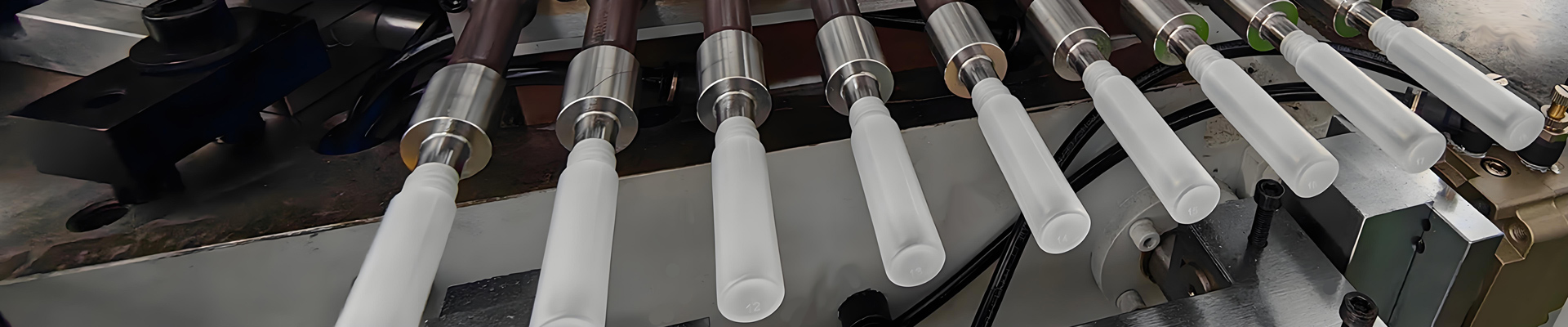
At the first station, the injection unit plasticizes resin and injects it onto the heated core rod to form a parison — a hollow tube of molten polymer sized to the final bottle. At the second station, the parison-carrying core rod indexes into the blow cavity, where conditioned air expands the parison against the cooled mold wall to set the bottle shape and surface. At the third station, the finished bottle is stripped from the core rod and discharged. Because the parison is molded onto the core rod rather than extruded and cut, the neck is created by the injection mold, which is why IBM neck finishes are dimensionally tight and flash-free by design.
ความสามารถในการทำซ้ำของการหมุนตำแหน่งแกนกลาง
The heart of quality in this layout is the transfer index. Each core rod must return to the same position in the injection, blow, and ejection stations within tight limits, shot after shot, for the life of the tool. The IBM55 platform is built around a rigid rotating platen and a precision index mechanism so that core rod repeat positioning stays within the small tolerance window the neck and body demand. Poor indexing shows up as neck eccentricity, wall variation between cavities, and intermittent hang-up at strip. Aibim’s single-crossbeam, double-pole clamping framework enlarges the mold-setting space and keeps the station geometry stable, which protects index accuracy under continuous running. Index repeatability is maintained through periodic lubrication of the transfer mechanism, verification of the indexing cam or servo, and inspection of core rod wear.
การควบคุมอุณหภูมิแกนกลาง
The core rod is both a molding surface and a heat exchanger. It must be hot enough to keep the injected parison soft for the brief transfer to the blow station, yet cool enough that the finished bottle releases cleanly at ejection. In practice the core rod runs warmer than the blow cavity wall, with a controlled temperature difference commonly in the 20–60 °C range depending on material and bottle geometry. Stable core rod temperature is what prevents sticking, neck deformation, and inconsistent wall thickness. The IBM55 supports dedicated core rod cooling and temperature zoning so that each rod is held at its process setpoint; this is especially important in high-cavity layouts where a single hot rod can spoil an entire shot.
ความท้าทายด้านความแม่นยำและแนวทางแก้ไขในช่วง 3–300 มล.
กลุ่ม 3–300 มล. เป็นจุดที่การฉีดขึ้นรูปเป่าเหนือกว่ากระบวนการทางเลือก แต่ก็เป็นจุดที่วินัยในกระบวนการสำคัญที่สุด ขวดเล็กขยายทุกข้อผิดพลาด: ความเบี่ยงเบนคอขวด 0.1 มม. เป็นข้อผิดพลาดการปัดเศษบนขวด 1 ลิตรและเป็นฝาที่ถูกปฏิเสธบนขวดยา 5 มล.
การฉีดไมโครช็อตสำหรับชิ้นส่วน 3–15 ml
At the low end of the range, the mass of polymer in a single parison is tiny. Metering that small a shot repeatably demands fine screw control. Key techniques on the IBM55 include a small minimum screw stroke so the machine is not trying to meter a pea-sized shot with a barrel built for much more, a reliable non-return valve (check ring) that prevents backflow during hold, controlled residual (cushion) melt so each shot starts from the same condition, and injection speed profiling that slows the fill as the parison approaches full to avoid flash and jetting. For 3–15 ml parts, cavity count rises (often 16–24 cavities) to keep the per-station shot meaningful while the individual bottle stays minute. The payback is uniform micro-bottles with stable weight and clean necks.
ความแม่นยำของปากขวดและการขึ้นรูปไร้เสี้ยน
The neck is the functional interface of every bottle: it carries the thread or snap, the sealing land, and often a tamper band. IBM creates the neck by injection, so its thread completeness, land flatness, and diameter are set by steel, not by a secondary trimming operation. On the IBM55, neck outer diameter is typically held within ±0.05–0.1 mm and perpendicularity (verticality) is controlled by rigid core rod guidance. Because there is no bimodal parting line across the neck, the bottle is flash-free by process — a structural advantage over extrusion blow molding, which must trim a parison tail. Flash-free necks mean no secondary deflashing, lower particulate generation, and immediate compatibility with standard caps and droppers.
ความสม่ำเสมอของความหนาผนัง
Wall uniformity drives both appearance and performance. Too thin and the bottle collapses or leaks; too thick and you waste resin and extend cooling. Uniformity starts with parison design and is finished by the blow step. The IBM55 works with blow-up ratios in the practical 2:1 to 4:1 range, blow air pressure around 0.4–0.8 MPa, and a tuned blow delay so the parison is at the right temperature when air enters. Core rod and cavity geometry are matched so the parison contacts the wall evenly; air delay and exhaust are set so no zone is starved or over-blown. The result is balanced wall distribution from shoulder to base, which matters for drop resistance and for clear cosmetic bottles where thick-and-thin streaks are visible.
ความสมดุลของช่องแม่พิมพ์สูง
At 8–24 cavities, balance is the difference between a profitable line and a troubleshooting marathon. Fill imbalance above a few percent means some cavities short-weight while others flash, and the spread grows with cavity count. The IBM55 addresses balance through a thermally zoned manifold, symmetric runner geometry, and validated flow distribution. Two shop-floor methods confirm balance: the short-shot method, where a partially filled shot reveals which cavities fill last, and the weigh method, where finished bottles from each cavity are weighed to quantify the spread. A well-tuned IBM55 layout keeps cavity-to-cavity fill imbalance below 3 percent, which is the threshold at which downstream filling and inspection stay simple.
ข้อมูลจำเพาะหลักของ IBM55
The figures in the table below are typical/indicative values for the IBM55 Hybrid platform. The source profile confirms the model name, the 3 ml to 300 ml volume range stated in the article title, the material list, the PREFILL hybrid hydraulic architecture, and a minimum 35 percent energy saving. Specific numeric ratings (clamping force, shot size, screw diameter, and so on) are not published in the profile and are presented here as reasonable industry-typical values for the platform class; final specifications are confirmed at quotation.
| Parameter | IBM55 Hybrid (typical / indicative) | Reference basis |
|---|---|---|
| Clamping force | 550 kN (≈55 ton) | Model designation, typical class |
| Shot size (theoretical) | 250 g | Typical for class |
| Screw diameter | 40 mm | Typical for class |
| Screw L/D ratio | 20:1 | Typical for class |
| Container volume range | 3–300 ml | Article title / product definition |
| Mold stations | 3 (injection / blow / ejection) | Three-station one-step IBM |
| Cavity number | 8–24 | Typical for 3–300 ml segment |
| Dry cycle (index) time | 3.5 s | Typical for class |
| Installed power | 38 kW | Typical for class |
| Machine dimensions (L×W×H) | 3500 × 1500 × 2200 mm | Typical for class |
| น้ำหนักเครื่อง | 6500 kg | Typical for class |
| Drive architecture | Hybrid electric, servo variable-displacement pump | Profile: PREFILL + variable-displacement pump |
| พลังงาน saving vs full hydraulic | ≥35% (minimum, per Aibim) | Profile claim |
| Processable materials | PE (HDPE/LDPE/LLDPE), PP, PS, ABS, SAN, TPU, PC, PCTG | Profile material list |
| Safety / certification | CE; digital laser sensor at stripper; light curtain | Profile claim |
การเปรียบเทียบกับซีรีส์ IBM75
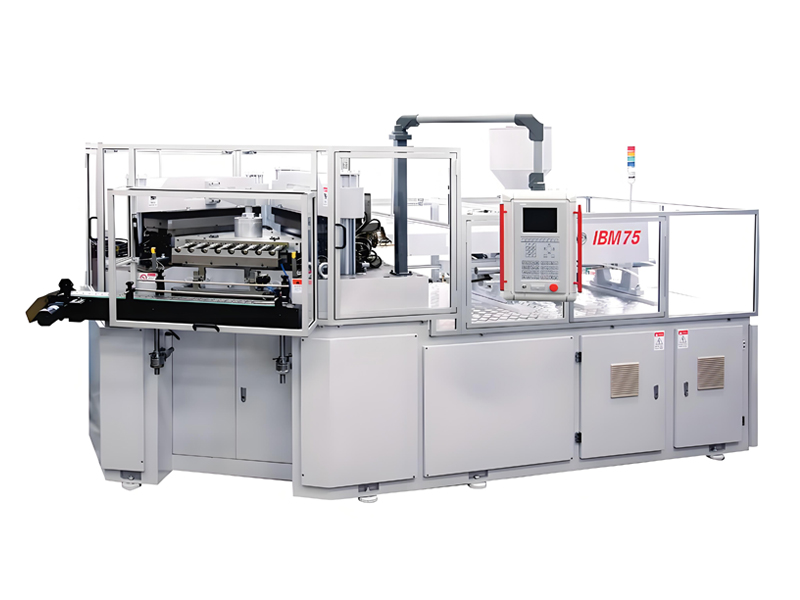
To help buyers choose between the small-bottle specialist and the larger sibling, the table below places the IBM55 Hybrid next to the IBM75, a real model in the same Aibim series. The IBM75 is positioned for bigger containers and higher per-station output, while the IBM55 stays focused on the 3–300 ml precision window. As with the IBM55, numeric ratings for the IBM75 are presented as typical/indicative values because the profile lists the model name but not its detailed ratings.
| Parameter | IBM55 Hybrid (typical) | IBM75 (typical / indicative) |
|---|---|---|
| Clamping force | 550 kN (≈55 ton) | 750 kN (≈75 ton) |
| Shot size (theoretical) | 250 g | 400 g |
| Screw diameter | 40 mm | 45 mm |
| Screw L/D ratio | 20:1 | 20:1 |
| Container volume range | 3–300 ml | 50–750 ml (typical; up to 1000 ml class) |
| Mold stations | 3 | 3 |
| Cavity number | 8–24 | 12–32 |
| Dry cycle (index) time | 3.5 s | 4.0 s |
| Installed power | 38 kW | 52 kW |
| Machine dimensions (L×W×H) | 3500 × 1500 × 2200 mm | 4200 × 1700 × 2400 mm |
| น้ำหนักเครื่อง | 6500 kg | 9000 kg |
| Best-fit application | Micro to small precision bottles, 3–300 ml | Mid-size bottles and higher cavitation |
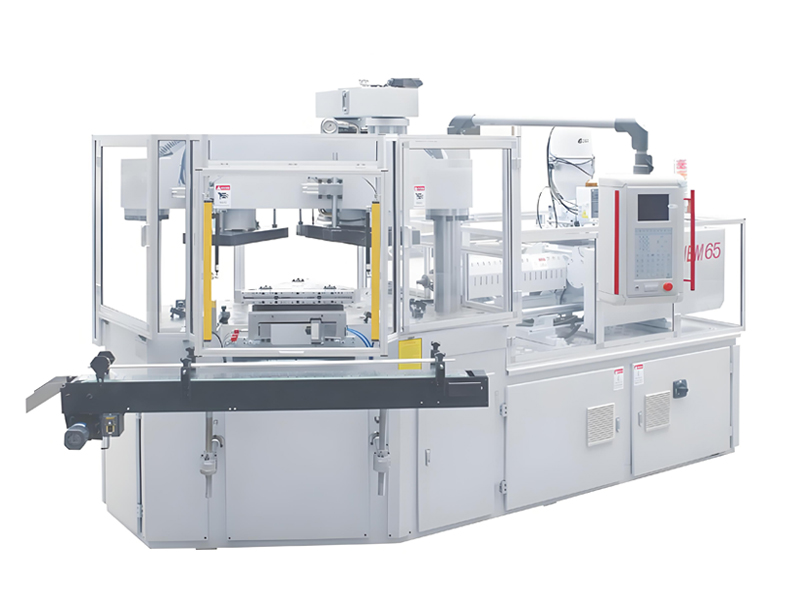
สำหรับโครงการที่อยู่ระหว่างสองแบบ ซีรีส์ของ Aibim ยังรวมถึง IBM65 ให้เส้นทางแบบค่อยเป็นค่อยไปจากหน้าต่างความแม่นยำขนาดเล็กขึ้นไปจนถึงภาชนะขนาดใหญ่โดยไม่ทิ้งแพลตฟอร์มสามสถานีขั้นตอนเดียวและปรัชญาการควบคุมเดียวกัน
การแยกองค์ประกอบรอบเวลาและการคำนวณกำลังการผลิต
Capacity on an IBM machine is governed by the index cycle and the cavity count, because each index produces a full set of bottles equal to the cavity number. A practical capacity estimate uses: pieces per hour = cavities × 3600 ÷ cycle time (seconds). The table below shows typical relationships for the 3–300 ml window on the IBM55 Hybrid. Numbers are indicative and assume stable cooling and a clean process; actual output depends on bottle geometry, material, and cavitation.
| Volume segment | Typical cycle time (s) | Cavities | Capacity (pcs/h, indicative) | พลังงาน (kWh per 1000 pcs, indicative) |
|---|---|---|---|---|
| 3–15 ml (micro) | 8 | 24 | 10,800 | 2.1 |
| 10–30 ml (vial) | 9 | 20 | 8,000 | 2.9 |
| 30–100 ml | 10 | 16 | 5,760 | 4.0 |
| 100–300 ml | 14 | 12 | 3,090 | 7.4 |
To read the table: a 5 ml eye-drop bottle at 24 cavities and an 8-second index yields roughly 10,800 bottles per hour. พลังงาน per 1000 pieces rises as bottles get larger because more resin must be plasticized and cooled, but the hybrid drivetrain keeps the absolute number well below a comparable full-hydraulic line. When planning a line, always add changeover, minor stoppage, and maintenance allowances; a realistic operating utilization of 80–90 percent is a sound planning assumption.
ความเข้ากันได้ของวัสดุ
The IBM55 processes a broad resin set, making it suitable across pharmaceutical, cosmetic, food, and laboratory consumable applications. The table below pairs each material with practical processing temperature, typical shrinkage, drying guidance, and representative end products. Temperatures for PP, HDPE, PETG, and PC follow the standard windows for these resins; shrinkage and drying are typical ranges that shift with grade and additive package.
| Material | Processing temp (°C) | Shrinkage (%) | Drying requirement | Typical application |
|---|---|---|---|---|
| PP (random copolymer, medical) | 200–240 | 1.5–2.0 | Generally not required; 80 °C optional | Eye-drop, oral-liquid bottles |
| HDPE | 180–220 | 2.0–2.5 | Not required | Milk vials, cosmetic jars |
| LDPE / LLDPE | 170–210 | 1.5–2.5 | Not required | Squeeze bottles, soft tubes |
| PETG | 220–250 | 0.4–0.7 | 65 °C / 4 h dehumidifying | เครื่องสำอาง, display bottles |
| PS | 190–230 | 0.4–0.7 | 70 °C / 2 h | Lab vials, sampling bottles |
| SAN | 210–250 | 0.4–0.7 | 80 °C / 3 h | Clear cosmetic bottles |
| PC | 270–300 | 0.5–0.7 | 120 °C / 4 h dehumidifying | Premium medical, cosmetic |
| TPU | 190–220 | 1.0–1.8 | 80 °C / 3 h | Soft-touch droppers, flex bottles |
| PCTG | 230–260 | 0.4–0.7 | 65 °C / 4 h dehumidifying | Premium cosmetic flacons |
| COC / COP | 240–280 | 0.5–0.7 | 90 °C / 3 h | Diagnostic, pharmaceutical vials |
Material selection drives both machine setup and compliance pathway. Medical PP random copolymer is the workhorse for pharmacopoeia contact; PETG and PCTG deliver clarity for cosmetic and premium lines; PC and COC/COP serve high-clarity or high-barrier medical needs. Drying discipline is non-negotiable for the hygroscopic grades (PETG, PC, SAN, COC/COP) because moisture turns into splay, haze, and weakened necks.
อุตสาหกรรมที่ประยุกต์ใช้และผลิตภัณฑ์ขั้นสุดท้าย
เครื่องฉีดเป่าขึ้นรูปของ Aibim ให้บริการตลาดยา อาหาร เครื่องดื่ม และเครื่องสำอาง ภายในจุดโฟกัส 3–300 มล. ของ IBM55 ผลิตภัณฑ์ปลายทางที่เป็นรูปธรรม ได้แก่:
- เภสัชภัณฑ์: ขวดยาหยอดตาในช่วง 5-15 มล., ขวดน้ำยารับประทานในช่วง 10-30 มล., ขวดน้ำยาหน่วยเดี่ยว และหลอดตัวอย่างวินิจฉัย ซึ่งความแม่นยำของคอขวดและการผลิตที่สะอาดเป็นสิ่งจำเป็น
- วัสดุสิ้นเปลืองในห้องปฏิบัติการ: หลอดรีเอเจนต์ ขวดตัวอย่าง และขวดทดสอบที่ต้องการความพอดีของคอขวดที่แน่นสำหรับจุกและฝา และการเกิดอนุภาคต่ำ
- เครื่องสำอาง: ขวดน้ำมันหอมระเหย ขวดน้ำหอม และขวดเซรั่มหรืออิมัลชันในช่วง 30–200 มล. ซึ่งความใสของผนังและคุณภาพเกลียวกำหนดความน่าดึงดูดบนชั้นวาง
- อาหารและเครื่องดื่ม: ขวดจิ๋วสำหรับรสชาติและเครื่องปรุง หยดแบบแบ่งส่วน และตัวอย่างน้ำมันบริโภคชนิดพิเศษ ซึ่งต้องปฏิบัติตามข้อกำหนดการสัมผัสอาหารและคอขวดที่ไม่รั่ว
- เคมีภัณฑ์รายวัน: ขวดโลชั่นและอิมัลชันขนาดพกพา รูปแบบซองใช้ครั้งเดียวในขวด และแพ็กมินิส่งเสริมการขาย
เนื่องจากคอถูกขึ้นรูป ไม่ใช่ถูกตัดแต่ง ทุกผลิตภัณฑ์เหล่านี้จึงออกจากเครื่องพร้อมสำหรับการปิดฝา การติดฉลาก และการเติมโดยไม่ต้องมีขั้นตอนการลบครีบ คุณสมบัติเดียวนี้คือเหตุผลที่ IBM ครองรูปแบบขวดยาและเครื่องสำอางขนาดเล็ก
จากความต้องการสู่คำแนะนำการกำหนดค่า
The table below maps a representative set of customer requirements to a concrete IBM55 (or sibling) configuration. Volume, monthly output, material, and required cleanliness drive the model choice, cavity count, and option list. Figures are planning guidance; final cavitation is validated during trial and tooling design.
| Requirement (volume / monthly / material / clean class) | Recommended model | Cavities | Key options |
|---|---|---|---|
| 5–15 ml eye drops / 3M / PP / ISO 8 | IBM55 Hybrid | 16–24 | Core rod temp control, cleanroom kit, hopper dryer |
| 10–30 ml oral liquid / 5M / PP / ISO 8 | IBM55 Hybrid | 12–20 | Cleanroom kit, in-line inspection, recipe management |
| 5–20 ml reagent vials / 4M / PS / ISO 8 | IBM55 Hybrid | 16–24 | Drying, core rod zoning, color sorter interface |
| 30–200 ml lotion / 2M / HDPE or PETG / general | IBM55 Hybrid | 8–16 | Surface polish, striped or clear option |
| 10–30 ml essential oil / 1M / PETG / general | IBM55 Hybrid | 8–12 | High-polish cavity, low-haze setup |
| 50–300 ml cosmetic / 1.5M / PETG or PC / ISO 8 | IBM75 | 12–24 | Cleanroom kit, drying, multi-zone hot runner |
การผลิตที่สอดคล้องตามข้อกำหนดสำหรับยาและเครื่องสำอาง
ขวดขนาดเล็กสำหรับยาและเครื่องสำอางแทบไม่ใช่แค่ภาชนะ พวกมันเป็นส่วนหนึ่งของระบบสัมผัสที่ผ่านการตรวจสอบแล้ว IBM55 Hybrid สามารถกำหนดสำหรับการผลิตที่ควบคุมได้ผ่านการผสมผสานของมาตรการด้านสิ่งแวดล้อมและด้านเครื่องจักร:
- สภาพแวดล้อมที่สะอาด: จัดวางภายในห้องคลีนรูม Class 100000 (ISO 8) หรือตู้ลมไหลแบบลามินาร์เฉพาะจุดเหนือโซนการดีดและการเก็บขวด โดยมีความดันบวกเทียบกับพื้นที่โดยรอบเพื่อกันอนุภาคออก
- ลมอรรถประโยชน์สะอาด: ลมอัดปราศจากน้ำมันสำหรับการเป่าและการใช้งานเสริม เพื่อไม่ให้ละอองน้ำมันถึงภายในขวดหรือโซนสะอาด
- พื้นผิวเครื่องจักรที่ถูกสุขอนามัย: เกราะเหล็กกล้าไร้สนิมและรูปทรงที่ทำความสะอาดง่ายซึ่งต้านทานคราบตกค้างและทำให้การทำความสะอาดระหว่างแคมเปญง่ายขึ้น
- การปฏิบัติตามข้อกำหนดด้านวัสดุและการสัมผัส: การเลือกเรซินสอดคล้องกับกรอบข้อกำหนดการสัมผัสอาหารและการแพทย์ รวมถึง FDA, EU 10/2011, GB 4806 และสำหรับเกรดทางการแพทย์ USP Class VI และ ISO 10993 ตามความเหมาะสม
- การสอดคล้องระบบคุณภาพ: บรรจุภัณฑ์ปฐมภูมิสำหรับยา สามารถอ้างอิงกับ ISO 15378 ซึ่งขยาย ISO 9001 ด้วยข้อกำหนด GMP สำหรับวัสดุบรรจุภัณฑ์
- การตรวจสอบย้อนกลับ: การจัดเก็บและเรียกคืนสูตร (ชุดพารามิเตอร์) การจัดการสิทธิ์ผู้ปฏิบัติงาน และการบันทึกข้อมูลกระบวนการ เพื่อให้แต่ละล็อตการผลิตสามารถสร้างใหม่และตรวจสอบได้
These measures are configuration and facility choices layered on the base machine; none change the fundamental three-station process, which is already flash-free and low-particulate by design. The SD-card parameter storage on Aibim machines supports recipe portability and repeat setups across multiple lines.
โซลูชันแม่พิมพ์
เครื่องมือคือจุดที่คุณภาพขวดและความเร็วการเปลี่ยนรุ่นจะได้หรือเสีย IBM55 ทำงานร่วมกับแม่พิมพ์หลายช่องที่สร้างขึ้นรอบแนวคิดแกนคอร์สามสถานี:
- การจัดวางหลายช่องแม่พิมพ์: จำนวนช่องแม่พิมพ์ถูกเลือกเพื่อสร้างสมดุลระหว่างการฉีดต่อสถานีกับวงจรเป้าหมาย ช่วง 8–24 ช่องเป็นเรื่องปกติสำหรับช่วง 3–300 มล.
- ฮอตรันเนอร์ / แมนิโฟลด์: แมนิโฟลด์แบบแบ่งโซนความร้อนป้อนสถานีฉีดอย่างสม่ำเสมอ ซึ่งเป็นรากฐานของเป้าหมายความสมดุลการเติมต่ำกว่า 3 เปอร์เซ็นต์
- การระบายความร้อนแกนคอร์: ช่องระบายความร้อนเฉพาะยึดแกนคอร์แต่ละแกนไว้ที่ค่าที่ตั้งไว้ ปกป้องรูปทรงคอขวดและการปลดชิ้นงาน
- การระบายอากาศและการขัด: การระบายอากาศ (venting) ที่เหมาะสมและการขัดผิวสูงป้องกันรอยไหม้ ก๊าซติดค้าง และผนังขุ่น โดยเฉพาะในเกรดเครื่องสำอางใส
- อายุแม่พิมพ์: เครื่องมือที่บำรุงรักษาอย่างดีวิ่งได้ถึงหลายล้านรอบ; อายุการใช้งานขึ้นอยู่กับความขัดสีของเรซิน การบำรุงรักษา และการจัดการ
- การเปลี่ยนเร็ว (SMED): การออกแบบเปลี่ยนแม่พิมพ์เร็วและอินเทอร์เฟซมาตรฐานกำหนดเป้าหมายหน้าต่างเปลี่ยนรุ่นสั้น ลดเวลาหยุดเครื่องเมื่อสลับรูปแบบขวด
- การจัดการคลังแม่พิมพ์: การจัดเก็บพารามิเตอร์ บันทึกการบำรุงรักษา และประวัติต่อแม่พิมพ์สนับสนุนการสตาร์ทที่ทำซ้ำได้และการปรับปรุงตามแผน
Aibim ดำเนินศูนย์ CNC ของตนเอง ซึ่งสนับสนุนการกลึงชิ้นส่วนเครื่องจักรและชิ้นส่วนที่เกี่ยวข้องกับแม่พิมพ์อย่างแม่นยำภายในองค์กร ลดระยะเวลารอและรักษารูปทรงให้สอดคล้องกันทั่วทั้งแม่พิมพ์อะไหล่และแม่พิมพ์ผลิต
การติดตั้ง การทดสอบเดินเครื่อง และการยอมรับ (FAT/SAT)
ลำดับการทดสอบเดินเครื่องที่มีระเบียบวินัยช่วยลดความเสี่ยงในการเริ่มต้นและให้ค่าฐานที่บันทึกไว้สำหรับทั้งสองฝ่าย โดยทั่วไป IBM55 จะได้รับการตรวจสอบในขั้นตอนที่เพิ่มระดับขึ้น ตั้งแต่การทำงานแบบไม่มีโหลดไปจนถึงการผลิตเต็มช่องแม่พิมพ์อย่างต่อเนื่อง:
| Stage | Criterion | ติดต่อ aibimance judgment |
|---|---|---|
| No-load run | 30 min continuous, no alarm, low noise and temperature rise | Pass if clean run, stable hydraulics |
| Single cavity | 200 shots, stable weight and dimensions | Weight capability (Cpk) ≥ 1.33 |
| Full cavitation | 2 h continuous at target cavities | Cavity fill balance < 3% |
| 8 h stability | Continuous production, monitored | Cycle variance ±1%, yield ≥ 98% |
| Final inspection | Sampled bottle measurement | Neck dimension ±0.05–0.1 mm, no flash |
Utilities planning matters before the machine arrives: a level foundation within specified tolerance, clean and dry compressed air at the required pressure and volume, cooling water at a stable temperature and flow, and an electrical supply sized to the installed power with appropriate kVA headroom. Factory ติดต่อ aibimance Test (FAT) is performed at Aibim before shipment; Site ติดต่อ aibimance Test (SAT) confirms the same behavior in the customer plant after installation and commissioning.
ตารางการบำรุงรักษาและการตรวจสอบ
เครื่องจักรไฮบริดให้ผลตอบแทนแก่การบำรุงรักษาที่มีวินัย เนื่องจากข้อได้เปรียบขึ้นอยู่กับน้ำมันที่สะอาดและการควบคุมที่เสถียร ตารางการบำรุงรักษาที่ใช้ได้จริงสำหรับ IBM55:
| Interval | Key tasks |
|---|---|
| Daily | Check oil level and temperature; verify safety light curtain and laser sensor; clear ejection area; confirm no abnormal noise or leak |
| Weekly | Inspect core rods for wear or coating loss; verify indexing lubrication; check heating bands and thermocouples; review cycle and weight trends |
| Monthly | Sample and assess hydraulic oil cleanliness (target ISO 4406 class per specification); inspect and replace filter elements as needed; check non-return valve and screw wear |
| Quarterly | Full lubrication of transfer and clamp linkages; calibrate pressure and temperature sensors; verify safety circuit function; review mold condition and planned maintenance |
ความสะอาดของน้ำมันเป็นตัวขับเคลื่อนความน่าเชื่อถือของเครื่องไฮบริดอย่างเงียบ ๆ การติดตามของเหลวเทียบกับรหัสความสะอาด ISO 4406 และการเปลี่ยนไส้กรองก่อนถึงขีดจำกัดช่วยให้ปั๊มแปรผันปริมาตรและวาล์วสัดส่วนทำงานได้ดี ซึ่งปกป้องความแม่นยำที่ซื้อเครื่องจักรมาเพื่อจุดประสงค์นี้
การวินิจฉัยปัญหาทั่วไป
แม้สายการผลิตที่ดำเนินงานดีก็เบี่ยงเบนเป็นครั้งคราว ตารางด้านล่างจับคู่อาการทั่วไปกับสาเหตุต้นตอที่น่าจะเป็นและการดำเนินการแรก ในกรอบปรากฏการณ์ → สาเหตุต้นตอ → การดำเนินการ
| Phenomenon | Root cause | Action |
|---|---|---|
| Bottle weight drift | Non-return valve wear, unstable cushion, temperature shift | Check check ring, stabilize barrel and core rod temp, verify metering |
| Neck flash | Excess injection pressure, worn neck insert, low clamp | Reduce pack pressure, inspect neck steel, confirm tonnage |
| Neck whitening / stress | Over-high injection speed or hold, cold core rod | Slow fill, raise core rod temp within window, review profile |
| Core rod sticking | Core rod too hot, contamination, poor release | Adjust core rod cooling, clean, check resin and additive |
| Wall eccentricity | Index repeatability loss, parison asymmetry | Verify indexing, balance manifold, inspect core rod alignment |
| Poor clarity / haze | Moisture in hygroscopic resin, trapped gas | Improve drying, add venting, lower melt temperature slightly |
| Cycle time instability | Oil temperature rise, sensor drift, utility fluctuation | Check cooling, recalibrate sensors, stabilize air and power |
การเปรียบเทียบเส้นทางเทคโนโลยี
การเลือก IBM คือการตัดสินใจด้านกระบวนการ ตารางด้านล่างเปรียบเทียบ IBM55 Hybrid กับ IBM ไฮดรอลิกเต็มรูปแบบทั่วไป การอัดรีดขึ้นรูปเป่า (EBM) และการฉีดขึ้นรูปเป่ายืดสองขั้นตอน (ISBM) ไม่มีการใช้ชื่อแบรนด์ นี่คือเทคโนโลยีเทียบกับเทคโนโลยี
| Criterion | IBM55 Hybrid (this machine) | Conventional full-hydraulic IBM | Extrusion blow molding (EBM) | Two-step ISBM |
|---|---|---|---|---|
| Neck precision | การฉีด-molded, flash-free, ±0.05–0.1 mm | การฉีด-molded, flash-free | Cut parison tail, needs trimming | การฉีด-molded preform neck |
| Wall uniformity | Good, 2:1–4:1 blow-up | Good | Variable, parison control needed | Very good with orientation |
| พลังงาน | 30–50% below full hydraulic (≥35% per Aibim) | Baseline | Lower machine cost, higher per-bottle energy varies | Higher, two machines plus reheater |
| Best volume | 3–300 ml precision | Small to mid | Mid to large, also irregular shapes | Mostly PET, mid volumes |
| Clean production | Flash-free, low particulate, cleanroom-ready | Flash-free | Trim waste, more particulates | Two-stage handling, more transfer |
| Material range | PP/PE/PS/ABS/SAN/TPU/PC/PCTG | Same broad range | PE-heavy, broad polyolefins | PET-dominant, some PP |
| Capital cost | Medium-High | Medium | Low-Medium | High |
สำหรับขวดขนาดเล็ก ความแม่นยำสูง ไม่มีครีบใน PP, PE และเกรดอสัณฐานใส IBM — และโดยเฉพาะรุ่นไฮบริด — เหมาะสมที่สุด EBM ชนะในรูปทรงขนาดใหญ่มากหรือไม่สม่ำเสมอและต้นทุนเริ่มต้นที่ต่ำกว่า ISBM สองขั้นตอนชนะในที่ที่ต้องมีการจัดเรียง PET และความทนทานคาร์บอเนชัน
เศรษฐศาสตร์และผลตอบแทน
ส่วนนี้ประเมินต้นทุนผ่านดัชนี เปอร์เซ็นต์ และปริมาณทางกายภาพเท่านั้น ไม่เคยใช้สกุลเงิน ค่าฐานสำหรับดัชนีต้นทุนการแปลงถูกตั้งไว้ที่ 100 จุดสำหรับ IBM ไฮดรอลิกเต็มรูปแบบแบบทั่วไปที่มีผลผลิตเทียบเท่า
- ดัชนีพลังงานต่อหน่วย: IBM55 Hybrid โดยทั่วไปอยู่ในช่วง 60–70 เทียบกับเกณฑ์พื้นฐาน 100 สะท้อนการลดพลังงาน 30–50 เปอร์เซ็นต์
- ประสิทธิผลโดยรวมของอุปกรณ์ (OEE): เซลล์ที่เดินเครื่องอย่างดีถึง 80–90 เปอร์เซ็นต์ สนับสนุนโดยความเสถียรของวงจร ±1 เปอร์เซ็นต์และอัตราผลผลิตสูง
- อัตราผลผลิต: อัตราขวดดีที่ยั่งยืน 98 เปอร์เซ็นต์ขึ้นไปเป็นไปได้จริงด้วยจำนวนช่องแม่พิมพ์ที่สมดุลและกระบวนการที่ควบคุมได้
- เวลาเปลี่ยนรุ่น: เครื่องมือที่เน้น SMED และอินเทอร์เฟซมาตรฐานกำหนดเป้าหมายการเปลี่ยนรุ่นในช่วง 1.5–3 ชั่วโมง ปกป้องอัตราการใช้เครื่องจักรบนสายผลิตภัณฑ์หลาย SKU
- ดัชนีต้นทุนการแปรรูป: รวมพลังงาน การสูญเสียเรซิน แรงงาน และการบำรุงรักษา เครื่องไฮบริดโดยทั่วไปได้คะแนนอยู่ในช่วง 70–85 เทียบกับเกณฑ์ฐาน 100
- ระยะเวลาคืนทุน: สำหรับสายการผลิตที่ทำงานหลายกะโดยมีต้นทุนพลังงานสูงหรือข้อกำหนดห้องสะอาดที่เข้มงวด การลงทุนเพิ่มเติมเหนือหน่วยไฮดรอลิกเต็มรูปแบบโดยทั่วไปจะคืนทุนภายในช่วง 12–36 เดือน ขึ้นอยู่กับการใช้งานและราคาพลังงานในท้องถิ่น
กรณีทางเศรษฐกิจแข็งแกร่งขึ้นในที่ที่ต้นทุนพลังงาน ภาระการทำความเย็นห้องสะอาด หรือประสิทธิภาพแรงงานเป็นส่วนแบ่งที่มีความหมายของต้นทุนรวม เนื่องจากเครื่องจักรยังลดการสูญเสียเรซินผ่านการควบคุมน้ำหนักที่เข้มงวดขึ้น ส่วนหนึ่งของผลตอบแทนมาจากการประหยัดวัสดุมากกว่าพลังงานเพียงอย่างเดียว
บริการและการสนับสนุน
Aibim ในฐานะโรงงานของ Wanplas สนับสนุน IBM55 ด้วยพันธสัญญาบริการร่วมของกลุ่ม โมเดลการสนับสนุนครอบคลุมตลอดอายุของสายการผลิต:
- การทดสอบก่อนจัดส่ง: เครื่องแต่ละเครื่องถูกเดินเครื่องและทดลองที่โรงงาน รวมถึงการทดลองแม่พิมพ์และการผลิตทดลอง เพื่อให้ลูกค้าได้รับค่าฐานเริ่มต้นที่ผ่านการตรวจสอบและบันทึกไว้ แทนที่จะเป็นเครื่องเปล่าๆ
- การติดตั้งและทดสอบเดินเครื่อง: วิศวกรสนับสนุนการติดตั้งหน้างาน การเชื่อมต่อสาธารณูปโภค และการทดสอบรับมอบหน้างาน (SAT) เพื่อยืนยันพฤติกรรมตามการทดสอบรับมอบที่โรงงาน (FAT) ในโรงงานของลูกค้า
- นโยบายอะไหล่ฟรี: อะไหล่ฟรีมูลค่า 500 เหรียญสหรัฐต่อปีภายใต้นโยบายกลุ่ม Wanplas เสริมการเปลี่ยนชิ้นส่วนที่เสียหายตามประกัน
- การฝึกอบรม: การฝึกอบรมผู้ปฏิบัติงานและการบำรุงรักษาแม่พิมพ์ครอบคลุมการเดินเครื่อง การจัดการสูตร การทำความสะอาด และการตรวจสอบประจำ เพื่อให้ทีมลูกค้าเป็นเจ้าของกระบวนการ
- การดำเนินงานและการบำรุงรักษาระยะไกล: ระบบควบคุมรองรับการตรวจสอบและการวินิจฉัยระยะไกล ให้วิศวกรโรงงานตรวจสอบข้อมูลกระบวนการและแนะนำการแก้ไขโดยไม่ล่าช้า
- โรงงานเปิด: Aibim ยินดีต้อนรับการเยี่ยมชมโรงงานของลูกค้าที่เมืองจางเจียกั่ง รวมถึงศูนย์ CNC และพื้นที่ทดลอง ซึ่งเป็นส่วนหนึ่งของนโยบายโรงงานเปิดของ Wanplas
ข้อผูกพันเหล่านี้ใช้ทั่วทั้งกลุ่มผลิตภัณฑ์ Aibim และสะท้อนคำสัญญาระดับกลุ่มของแบรนด์ Wanplas ด้านอะไหล่ฟรี การรับประกันการขนส่ง การรับประกันกำลังการผลิต และมาตรฐานคุณภาพ
คำถามที่พบบ่อย
ช่วงปริมาณที่ IBM55 ไฮบริดออกแบบมาสำหรับคือเท่าใด?
IBM55 Hybrid ถูกออกแบบทางวิศวกรรมสำหรับขวดความแม่นยำขนาดเล็กตั้งแต่ 3 มล. ถึง 300 มล. หน้าต่างนี้ครอบคลุมขวดยาหยอดตาและของเหลวรับประทานที่ปลายล่าง และโลชัน อิมัลชัน และขวดน้ำหอมเครื่องสำอางที่ปลายบน สำหรับภาชนะขนาดใหญ่ IBM75 ในซีรีส์เดียวกันขยายความจุขึ้นไป
ระบบขับเคลื่อนไฮบริดประหยัดพลังงานได้จริงเท่าใด?
Against a full-hydraulic IBM of equal output, the hybrid reduces total energy consumption by 30 to 50 percent, with Aibim documenting a minimum saving of 35 percent. The saving comes from a servo-driven variable-displacement pump that delivers flow on demand instead of continuously bypassing oil through relief, plus the PREFILL rapid clamp pre-charge.
ทำไมขวด IBM จึงไม่มีครีบที่คอขวด?
In injection blow molding the neck is created by injection onto the core rod, so its thread and land are defined by steel rather than by cutting a parison. There is no parting line across the neck and no tail to trim, which is why IBM bottles are flash-free by process and ready for capping without deflashing.
IBM55 แปรรูปวัสดุใดได้บ้าง?
เครื่องแปรรูป PE (HDPE, LDPE, LLDPE), PP, PS, ABS, SAN, TPU, PC และ PCTG แต่ละชนิดมีกรอบอุณหภูมิ การหดตัว และการอบแห้งของตัวเอง เกรดดูดความชื้น เช่น PETG, PC, SAN และ COC/COP ต้องมีการอบแห้งแบบลดความชื้นที่เหมาะสมก่อนการผลิต
ตรวจสอบความสมดุลของโพรงบนแม่พิมพ์หลายโพรงอย่างไร?
ใช้สองวิธีปฏิบัติ: วิธีช็อตสั้น ซึ่งช็อตที่เติมบางส่วนเผยลำดับการเติมข้ามช่อง และวิธีชั่งน้ำหนัก ซึ่งขวดสำเร็จรูปจากแต่ละช่องถูกชั่งเพื่อวัดปริมาณการกระจาย ผัง IBM55 ที่ปรับอย่างดีรักษาความไม่สมดุลการเติมระหว่างช่องต่ำกว่า 3 เปอร์เซ็นต์
ต้องมีการกำหนดค่าคลีนรูมแบบใดสำหรับขวดเภสัชกรรม?
Small pharma bottles are typically produced inside a Class 100000 (ISO 8) cleanroom or under a laminar-flow hood at the ejection zone, with positive pressure, oil-free compressed air, stainless-steel guarding, and recipe-managed traceability. Material selection then aligns with FDA, EU 10/2011, GB 4806, USP Class VI, ISO 10993, and ISO 15378 as applicable.
การทดสอบเดินเครื่องและการยอมรับใช้เวลานานเท่าใด?
Commissioning runs from no-load verification through single-cavity, full-cavitation, and an 8-hour stability run, with acceptance judged on cycle variance, fill balance, yield, and neck dimensions. With utilities prepared in advance, a structured FAT and SAT can be completed within a short on-site window, after which the line enters routine production.
นโยบายอะไหล่ฟรีมูลค่า 500 ดอลลาร์สหรัฐครอบคลุมอะไรบ้าง?
ภายใต้นโยบายของกลุ่ม Wanplas ลูกค้าจะได้รับอะไหล่ฟรีมูลค่า 500 ดอลลาร์สหรัฐต่อปี ซึ่งเสริมการเปลี่ยนชิ้นส่วนที่เสียหายภายใต้การรับประกัน เป็นความมุ่งมั่นร่วมกันของแบรนด์ทั่วเครือข่าย Aibim และ Wanplas โดยมีจุดประสงค์เพื่อให้การเปลี่ยนวัสดุสิ้นเปลืองและชิ้นส่วนสึกหรอตามปกติเป็นเรื่องง่ายและคาดเดาได้
บทสรุป
เครื่องฉีดเป่าขึ้นรูปแบบไฮบริดไฟฟ้า IBM55 is a focused answer to a focused problem: producing 3–300 ml bottles with injection-grade neck precision, flash-free walls, and validated repeatability, while cutting energy and cooling load through a servo-driven hybrid hydraulic architecture. Its three-station, one-step process, tight core-rod indexing, and balanced high-cavity manifolds make it the right platform for pharmaceutical vials, cosmetic flacons, laboratory consumables, and small food and daily-chemical bottles.
Backed by Aibim’s two decades of injection blow molding experience, its own CNC center, shipment to more than 40 countries, and the shared Wanplas service promises — including pre-shipment trial production, installation and commissioning, USD 500 free parts per year, training, remote support, and open-factory visits — the IBM55 Hybrid is built to run as a dependable production asset rather than a one-time purchase.
If your project involves small precision bottles in the 3–300 ml range and you want to discuss cavity count, material choice, cleanroom configuration, or a trial run on your own resin and bottle design, Aibim welcomes your specifications for a tailored configuration proposal and an invitation to visit the factory for a live demonstration.