80ml IBM Machine: Honey Sample Jar & Pill Bottle Stable Manufacturing Line
Aibim is a Wanplas factory with more than twelve years of experience in building injection blow molding machines, and today our lines run in over forty countries with an annual capacity above one hundred complete systems. As a Wanplas factory we share the group engineering standards, the open-factory visit policy, and the unified after-sales commitment that protects every buyer from first trial run to long-term production. This article explains how an 80ml IBM machine builds a stable manufacturing line for two demanding small containers: the honey sample jar and the pill bottle. Both products look simple, yet both place strict requirements on neck precision, wall uniformity, hygiene, and batch-to-batch consistency that conventional blow molding routes struggle to hold at scale. The injection blow molding process answers those requirements in a single, three-station, one-step cycle that removes flash, removes trimming, and delivers a finished bottle straight from the mold. When you specify an 80ml honey sample jar or an 80ml pill bottle, the geometry, the material, and the closure all push the design toward IBM rather than extrusion blow molding or stretch blow molding, and the rest of this article shows exactly why, and how to configure the line.
How Iniezione Stampaggio a soffiaggio Builds an 80ml Container
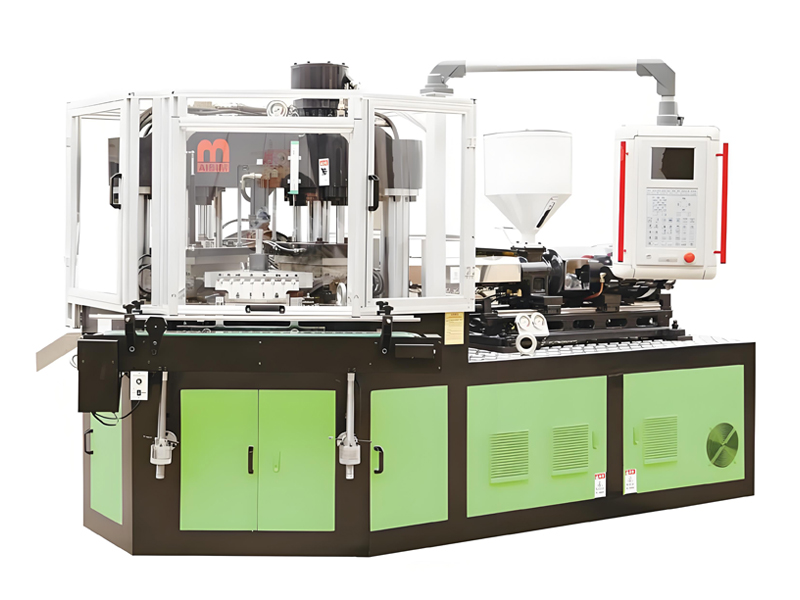
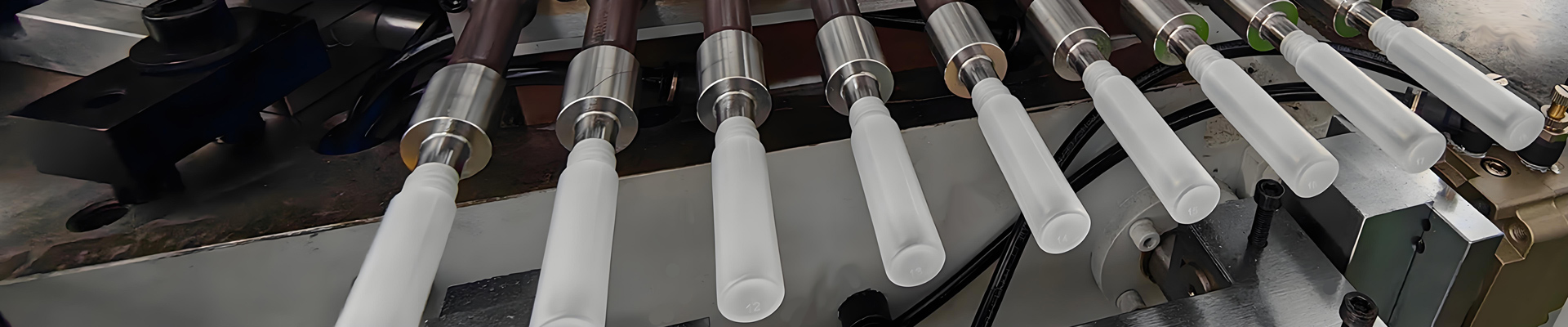
Iniezione blow molding is a one-step hollow molding process that starts from plastic pellets and ends with a finished bottle without any secondary trimming operation. The machine has three stations arranged around a central transfer hub. At the injection station, a measured shot of melt is injected around a heated core rod to form a parison whose neck finish, threads, and sealing land are already molded to final tolerance. At the blow station, the core rod carrying the hot parison moves into a blow cavity where low-pressure air expands the soft parison against the cold cavity wall, setting the body, shoulder, and base of the 80ml jar or bottle. At the ejection station, the cooled part is stripped from the core rod and dropped or conveyed to inspection and packing. Because the neck is injection molded, its threads are crisp and repeatable, which is the single most important reason IBM dominates pharmaceutical and precision food containers where a tamper-evident or child-resistant closure must seat perfectly on every unit. The same core-rod transfer also keeps the parison wall centered, so the final wall thickness distribution is far more uniform than what an extruded parison can deliver, and that uniformity protects the product against weak spots and saves material at the same time.
Stability is the word that separates a production line from a prototype cell, and IBM earns its stability from the repetition built into the three-station layout. Each core rod follows the same timed path on every cycle, so the injection, blow, and cooling phases never compete for the same platens the way they do in a shuttle or wheel machine with moving molds. The one-step sequence also removes the human handling and reheating steps that multi-stage routes introduce, which means fewer thermal shocks, fewer contamination points, and fewer variables for the quality team to control. For an 80ml honey sample jar, where the customer expects a clean wide mouth and a leak-free lid after months on a shelf, and for an 80ml pill bottle, where a regulator may audit the closure torque and the surface cleanliness, this closed and contained process is the foundation of a stable line. Wanplas group engineering supports the same clamping framework, the same servo and hydraulic options, and the same control logic across the Aibim range, so a buyer who grows from one machine to a battery of machines keeps the same operator skills and spare-part pool throughout.
Why Honey Sample Jars and Pill Bottles Favor IBM
The honey sample jar and the pill bottle share a profile that fits IBM better than any other blow process. Both are small, both sit near 80ml, both need a precise neck for a screw cap, and both are filled with products that care about cleanliness and protection rather than carbonation pressure or hot-fill shock. Extrusion blow molding can make small bottles, but it leaves a flash line and a tail that must be trimmed, and its neck threads are formed by pinch-off rather than injection, so thread accuracy is weaker and scrap is higher. Stretch blow molding is excellent for PET water and beverage bottles, yet it is built around preforms and high-speed orientation of polyester, not around the polyolefin and clear amorphous resins that honey jars and pill bottles often use. IBM bridges this gap: it molds the neck by injection for accuracy, blows the body for light weight, and handles PP, HDPE, LDPE, PETG, PC, PS, SAN, ABS, and TPU without changing the core concept. For an 80ml container the cavity count can be high relative to the part size, so the cost per unit stays competitive even though IBM tooling costs more up front than a simple extrusion blow mold.
A honey sample jar carries its own special needs that IBM satisfies cleanly. Honey is a viscous, mildly acidic, moisture-active food that can crystallize, so the jar must resist flavor pickup, must not leak under cap torque, and should present a wide enough mouth for a spoon or a sample spatula. IBM lets the molder choose a clear amorphous resin such as PETG for shelf appeal or a tough PP for lower cost and better impact resistance, and the injected neck guarantees the lid seals on a flat, flash-free land. A pill bottle is even stricter because it is a pharmaceutical primary package. The neck must accept a child-resistant closure and often a tamper-evident ring, the wall must be uniform so a tablet count or a fill weight stays predictable, and the surface must meet cleanliness expectations for a product that touches medicine. IBM produces both containers on the same platform by swapping only the blow cavity and the core-rod set, which is why contract packers and private-label brands like the flexibility of one machine family covering food and pharma jars in the 3ml to 1000ml range that Aibim serves.
Selezione del materiale for Alimentare and Pharmaceutical Contact
Choosing the resin is the first engineering decision for an 80ml honey jar or pill bottle, because the material sets the permitted certifications, the barrier, the clarity, and the processing window. Polipropilene is the workhorse for both products: it is light, chemically quiet, tolerant of most foods and many pharmaceuticals, and easy to injection blow mold with a broad melt temperature window. High-density polyethylene gives even better moisture barrier for pills that must stay dry, while PETG and PC give clarity for a honey sample jar that must show color and fill level on a shelf. For sensitive pharma fills, the selected grade should carry the right compliance documentation, and the molder should keep the certificate of analysis on file for every lot. The table below summarizes the common choices Aibim machines process for 80ml containers, with the properties that drive the decision rather than a single recommended resin for every case.
| Material | Clarity | Moisture Barrier | Typical Use | Key Compliance |
|---|---|---|---|---|
| PP | Translucent | Medium | Pill bottle, honey jar | FDA, EU 10/2011 |
| HDPE | Opaque | High | Pill bottle | FDA, ISO 10993 |
| PETG | Clear | Medium | Honey sample jar | FDA, EU 10/2011 |
| PC | Clear | Medium | Premium jar | FDA where permitted |
| PS | Clear | Low | Sample cup | FDA, EU 10/2011 |
Beyond the short list, the molder must match the melt flow rate to the IBM screw and the cavity count, because an 80ml part with a fine neck thread needs a resin that fills the injected parison without freeze-off yet still holds the blow shape without sag. Polipropilene for pharma is usually a controlled-rheology grade with stable MFR, supplied with a food or medical certificate, and the same grade logic applies to PETG where the supplier declares the food-contact status. Color masterbatch, if used, should be added at a calibrated let-down ratio so the neck land and the body keep the same shade and the same surface, and any regrind policy must separate pharma and food streams to avoid cross-contamination. Aibim as a Wanplas factory recommends qualifying one resin per product with a documented trial, then locking the grade and the let-down so the stable line stays stable instead of drifting with every new raw-material lot.
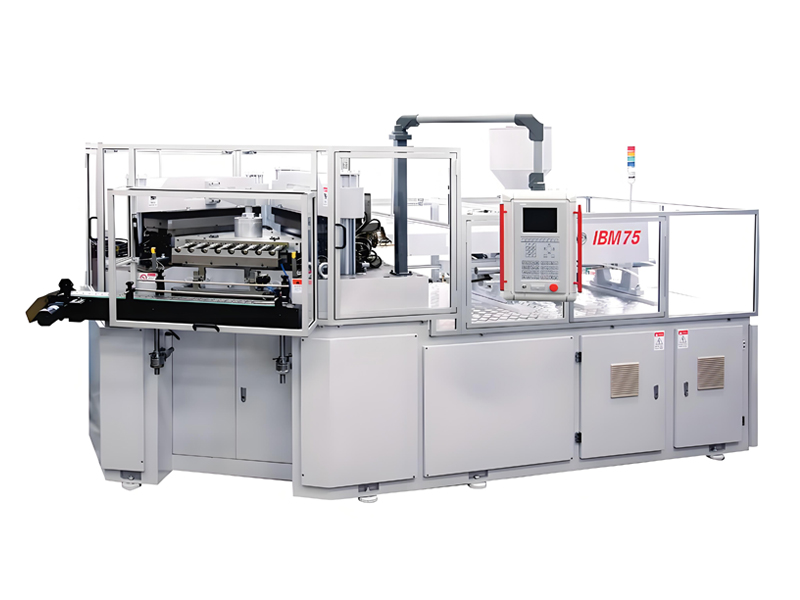
Aibim IBM75 Macchina per stampaggio a iniezione e soffiaggio
The Aibim IBM75 is the flagship of our IBM range and the natural choice when an 80ml honey jar or pill bottle is produced at full commercial volume. The model designation reflects a robust clamping class suited to multi-cavity tooling, and the machine carries the single-crossbeam, double-pole clamping framework that Aibim uses to enlarge mold-setting space while keeping the platens aligned through millions of cycles. Its hydraulic system uses our PREFILL technology together with a variable displacement pump pressurizing design that fills the clamp quickly and then drops to holding flow, which is the main reason an IBM75 saves at least thirty-five percent of energy against conventional hydraulic lines of the same clamp size. For an 80ml part the IBM75 typically runs a four to eight cavity mold depending on the resin and the cycle target, and the three-station turret keeps injection, blow, and ejection overlapping so the effective cycle stays short even at high cavity counts.
| Item | IBM75 | Unitàà | Note |
|---|---|---|---|
| Clamp class | 75 | ton-class | Multi-cavity ready |
| Cavity @80ml | 4 to 8 | cavities | By resin |
| Output | 1800 | BPH | Typical PP |
| Installed power | 25 | kW | With servo pump |
| Stations | 3 | steps | One-step |
| Part range | 5 to 500 | ml | Covers 80ml |
Operation of the IBM75 centers on a PLC with a touch-screen HMI where the molder stores recipes for each jar and bottle, and the convenient SD-card parameter storage lets the same recipe move from one IBM75 to another without re-tuning by hand. The stripper station is protected by a long-distance digital laser sensor and a light curtain, supporting the CE certification that Aibim holds, and these guards also protect the operator during core-rod changeover. For a stable 80ml line the IBM75 is usually paired with a take-out robot, a conveyor, and an inline inspection point, and because the part leaves the mold finished, the downstream is simple compared with trimmed-bottle routes. Wanplas group service covers the IBM75 with the shared USD 500 free parts per year policy and on-site commissioning, so a buyer gets a supported production asset rather than a bare machine.
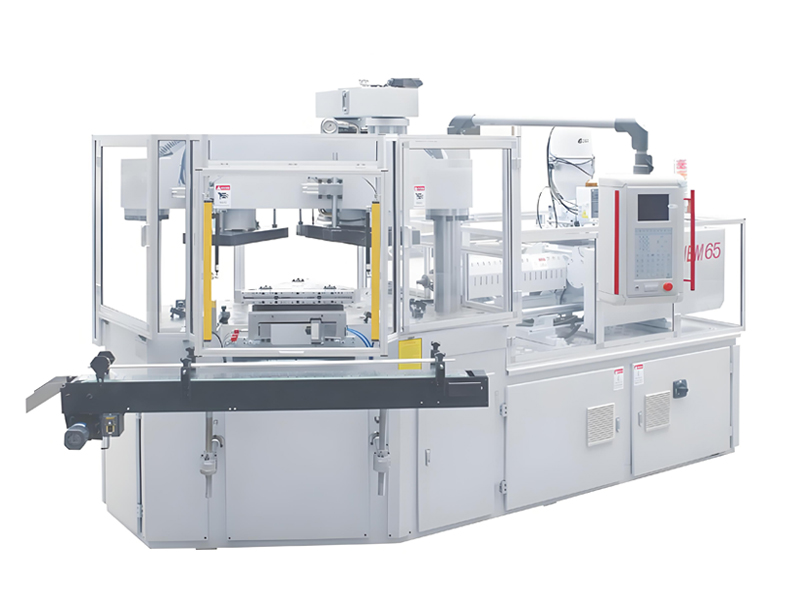
Aibim IBM65 Macchina per stampaggio a iniezione e soffiaggio
The Aibim IBM65 is the mid-size member of the family and fits plants that need strong output yet a smaller footprint or a lower installed power than the IBM75. It keeps the same three-station, one-step principle, the same PREFILL hydraulic concept, and the same SD-card recipe portability, so operators trained on one Aibim model move to another with almost no relearning. For an 80ml honey jar or pill bottle the IBM65 commonly runs a three to six cavity mold, which still delivers commercial volumes for regional brands, pharmacy chains, and private-label fillers without the higher clamp of the 75. The machine is a frequent choice for a second line that mirrors a lead IBM75, because the part quality and the neck accuracy are identical while the capacity scales with cavity count and clamp class.
| Item | IBM65 | Unitàà | Note |
|---|---|---|---|
| Clamp class | 65 | ton-class | Compact frame |
| Cavity @80ml | 3 to 6 | cavities | By resin |
| Output | 1400 | BPH | Typical PP |
| Installed power | 18 | kW | Lower load |
| Stations | 3 | steps | One-step |
| Part range | 3 to 300 | ml | Covers 80ml |
Energia use on the IBM65 follows the same variable displacement pump logic, so it also reaches the Aibim minimum thirty-five percent saving against older fixed-pump hydraulic lines, and the smaller clamp reduces both floor load and cooling demand in the molding shop. When a buyer plans a stable 80ml line, the IBM65 is the model we propose for a pilot or for a product with seasonal demand, because it protects cash while preserving the option to add an IBM75 later for peak volume. Aibim as a Wanplas factory builds both models on the same control platform and the same spare-part philosophy, which keeps the maintenance budget predictable and lets one technician crew run a mixed cell of IBM65 and IBM75 machines without carrying two separate part inventories.
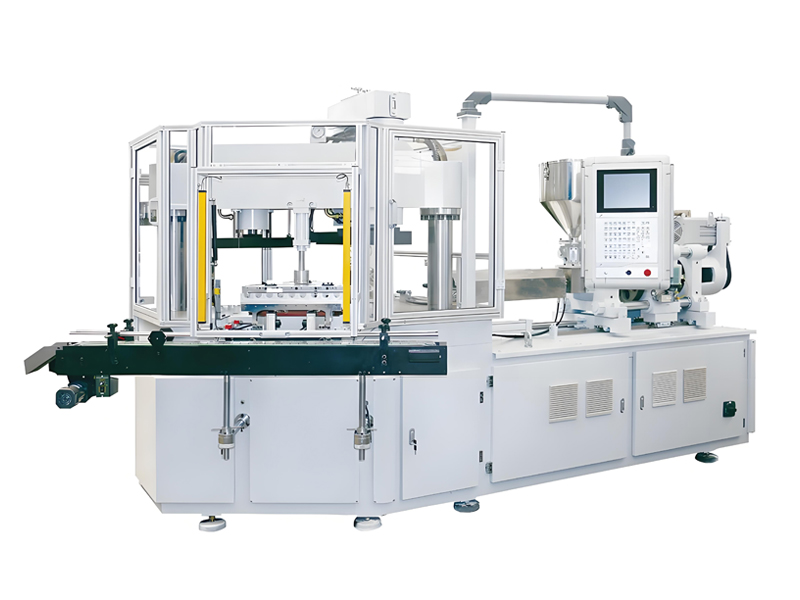
Aibim IBM55 macchina di iniezione a soffiaggio elettrica ibrida
The Aibim IBM55 Hybrid Electric brings servo-electric motion to the IBM family for buyers who rank energy, cleanliness, and repeatability above maximum cavity count. The hybrid design drives the clamp and the transfer with servo motors while keeping a managed hydraulic circuit for the injection pack, which removes the oil heat and the slow response of a fully hydraulic clamp and tightens the cycle consistency that pharma auditors look for. For an 80ml pill bottle made in a controlled clean area, the lower hydraulic load means less oil mist and less heat in the room, which helps the surrounding environment stay within plant hygiene limits. The IBM55 typically runs a two to four cavity mold at 80ml, so it is ideal for clinical trial supplies, low-volume specialty pharma, and premium honey jars where the run size does not justify a larger clamp.
| Item | IBM55 | Unitàà | Note |
|---|---|---|---|
| Clamp class | 55 | ton-class | Hybrid servo |
| Cavity @80ml | 2 to 4 | cavities | By resin |
| Output | 1100 | BPH | Typical PP |
| Installed power | 12 | kW | Lowest load |
| Stations | 3 | steps | One-step |
| Part range | 3 to 200 | ml | Covers 80ml |
The IBM55 shares the CE-rated stripper safety, the SD-card recipe storage, and the Wanplas group service promise with its siblings, so choosing the hybrid model never means giving up support or spare-part access. Its lower installed power makes it attractive where utility cost is High or where the local grid limits a larger machine, and the electric clamp motion reduces the audible noise that hydraulic pumps generate on a long shift. For a stable 80ml manufacturing line built around premium or regulated products, the IBM55 is the model Aibim positions as the precision cell, while the IBM65 and IBM75 scale the same part to higher daily output when the market grows.
Building a Stable 80ml Manufacturing Line
A stable line is more than one machine, and the Aibim proposal treats the cell as a system from resin to packed case. The core is the IBM machine with its three-station turret, the selected core-rod and blow-cavity tooling, and the PLC recipe that holds injection, blow, and cooling in lockstep. Around it we place a drying and feeding unit for hygroscopic resins, a take-out robot that removes finished jars without finger marks, a conveyor that buffers parts before inspection, and an optional inline check for missing threads or short shots. Because IBM parts need no flash trimming, the downstream is shorter than an extrusion blow line, yet the same discipline applies: every transfer is a chance to add a variable, so the stable line minimizes transfers and standardizes them. Wanplas group engineering reviews the layout with the buyer so the operator path, the maintenance aisle, and the material flow all support uninterrupted runs rather than ad-hoc fixes.
Mold and core-rod care is where 80ml line stability is won or lost. The core rod sets the parison wall and the internal neck, so its surface and its temperature must stay in a tight band; Aibim uses its own CNC center to make these parts to a repeatable standard and supplies spares under the group policy so a worn rod is replaced before it drifts the wall. The blow cavity defines the outer shape, the label panel, and the base support, and it should be polished and vented for the chosen resin so the 80ml jar releases cleanly without splay or silver streak. Cooling is the other lever: too little cooling and the bottle distorts on ejection, too much and the cycle stretches and the cost climbs, so the stable line sets a cooling time from the resin supplier data and confirms it on trial, then locks it in the recipe. With the same model family the buyer can run honey jars on one shift and pill bottles on the next by swapping only the tooling and loading the stored recipe, which keeps utilization high and changeover loss low.
Production Capacity and Selection Guide
Selecting the right Aibim model for an 80ml honey jar or pill bottle starts from the daily volume, the resin, and the closure spec, then maps to clamp class and cavity count. A boutique honey brand shipping a few hundred thousand jars a year can run an IBM55 or IBM65 and still meet shelf dates, while a pharmacy filler serving national demand needs the IBM75 multi-cavity cell to protect lead time. The table below gives a plain mapping from a typical requirement to the Aibim model we propose, using representative output for PP at 80ml; the final cavity count is confirmed on a tooling trial because resin rheology and cooling can shift the practical rate. Wanplas group advice is to size the machine for the steady demand plus a modest peak, not for the single best week, so the line runs stable instead of strained.
| Requirement | Model | Cavity | Output |
|---|---|---|---|
| Pilot, low volume | IBM55 | 2 to 4 | Up to 1100 BPH |
| Regional brand | IBM65 | 3 to 6 | Up to 1400 BPH |
| Full commercial | IBM75 | 4 to 8 | Up to 1800 BPH |
| Premium clear jar | IBM65 | 3 to 6 | PETG grade |
| Pharma CRC bottle | IBM75 | 4 to 8 | PP grade |
Cost posture follows the same ladder. Procurement cost rises from the IBM55 to the IBM75 with clamp and cavity, while the cost per finished bottle usually falls as cavity count rises, so the right choice balances capital against unit economics rather than chasing the biggest machine. Utility cost is lowest on the hybrid IBM55 and highest on a fully loaded IBM75, yet the IBM75 still cuts energy by the Aibim minimum thirty-five percent against legacy hydraulics, so the running cost stays Medium even at top output. Aibim as a Wanplas factory helps the buyer build this comparison from real resin data and real local power cost, then documents the chosen configuration so future expansion simply repeats a proven cell instead of restarting the engineering.
Process Parameters and Qualità Control
Holding an 80ml jar within tolerance depends on a small set of process windows that the Aibim recipe stores and the PLC holds cycle after cycle. For polypropylene the melt temperature typically sits in the two hundred to two hundred thirty Celsius band, the core-rod or blow-cavity temperature is set cool enough to freeze the neck quickly yet warm enough to let the body blow without strain, and the blow air pressure is moderate because IBM expands a hot parison rather than stretching a cold preform. Iniezione speed and pack pressure shape the neck land and the parison wall, so they are tuned on the first trial and then frozen; the holding pressure protects the thread against sink, and the cooling time sets the ejection rigidity. Because the neck is molded, the bottle needs no post-mold thread correction, and the uniform wall from core-rod transfer keeps the fill weight steady, which is exactly what a pill bottle audit wants to see.
Qualità control on a stable IBM line is built from three layers. The first layer is the machine recipe, which removes operator guesswork by storing every setpoint on the SD card. The second layer is inline inspection at the take-out, where a vision or gauge check catches a missing thread, a short shot, or a deformed base before the part reaches the conveyor. The third layer is the documented trial and the retained sample, so a complaint can be traced to a resin lot, a recipe, and a time window. Aibim and Wanplas recommend keeping the first-article approval for each new jar or bottle, then running periodic checks against that approved sample so the 80ml line stays within the original spec across seasons and resin suppliers. This disciplined loop is what turns a capable IBM machine into a stable manufacturing line that a food or pharma customer can audit with confidence.
Compliance and Certification for Alimentare and Pharma Contact
A honey sample jar is a food-contact article and a pill bottle is a pharmaceutical primary package, so the line must respect the compliance chain from resin to finished part. The resin grade should carry food-contact status such as FDA or EU 10/2011 for the honey jar, and pharmaceutical-relevant documentation such as ISO 10993 or USP Class VI where the market requires it for the pill bottle, with the supplier certificate kept on file for each lot. The machine itself carries CE certification from Aibim, covering the guards, the light curtain, and the laser sensor at the stripper, which matters for workplace safety during long runs and during tooling change. RoHS and REACH apply to the electrical and material choices in the build, and the buyer should confirm the exact standard set with the local authority before export, because the article gives general guidance and not a substitute for the official certificate on the shipped machine.
Cleanliness is a compliance theme as much as a quality theme. IBM helps because the one-step process keeps the parison inside the machine until the bottle is blown, so the inner surface that touches honey or tablets is never exposed on an open bench the way a cooled preform can be in a two-step route. The hybrid IBM55 lowers oil mist for sensitive rooms, and all Aibim models support a straightforward clean-down between a food jar and a pharma bottle when the tooling is swapped under a controlled procedure. Wanplas group policy is to supply the machine with the declared certifications and to support the buyer’s own site validation, yet the final responsibility for product registration and for matching the local food or drug rule stays with the filler, who knows the target market best.
Settori di applicazione Served by Aibim Machines
Although this article centers on the 80ml honey sample jar and the 80ml pill bottle, the same Aibim IBM platform serves a wider set of industries that value precision necks and clean small containers. In pharmaceuticals the machines make pill bottles, tablet jars, and unit-dose vials where the closure must seat every time. In food they make honey jars, sauce cups, and sample pots where the wide mouth and the clear or tough body meet the shelf. In drink they handle small shot bottles and concentrate vials, and in cosmetics they produce cream jars and serum bottles that need a fine thread for a dispensing cap. The shared trait across these fields is a small container with a job to do at the neck, and IBM is the process that molds that neck right while blowing the body light, which is why Aibim as a Wanplas factory has placed lines in over forty countries across these sectors.
For a contract manufacturer the breadth is a commercial advantage. One IBM75 cell can serve a honey brand in the morning and a pharma filler in the afternoon once the tooling and the recipe are swapped under a documented changeover, so the machine earns its keep across customers instead of sitting idle between campaigns. The 3ml to 1000ml part range of the Aibim family means the same plant can also take smaller dropper bottles or larger cosmetic jars on a different model without changing the control logic the crew already knows. Wanplas group application support helps match each new product to the right cavity, resin, and cooling time, so the stable line idea spreads from the 80ml example in this article to the full catalog of small hollow packages the buyer may win.
Servizio e supporto da Aibim and Wanplas
Buying an 80ml IBM line is the start of a relationship, and Aibim as a Wanplas factory backs every machine with the group service promise. Each machine is tested before shipment, and engineers support installation and commissioning at the buyer site so the first jars or bottles match the approved sample before volume runs begin. The shared after-sales policy includes USD 500 free parts per year and free replacement of damaged parts within warranty, which protects the buyer against the small failures that otherwise stop a line. Training covers operation, recipe management, and routine mold care so the local crew can run the cell without permanent outside help, and remote monitoring lets the Aibim team read PLC data and advise on abnormal trends before they become stoppages.
Wanplas also keeps an open-factory policy, and we invite every buyer to visit the Aibim plant to watch an IBM machine run, to inspect the CNC center that makes the core rods and cavities, and to confirm the build quality before accepting delivery. For a stable 80ml manufacturing line the practical supports matter as much as the spec sheet: fast spare parts, clear recipes, and a known contact turn a capable machine into a dependable asset. Whether the buyer chooses the IBM55 for a precision cell, the IBM65 for regional volume, or the IBM75 for full commercial output, the service frame is the same, and that consistency is part of why the Wanplas group has placed thousands of machines worldwide and why Aibim focuses only on injection blow molding as its specialization.
Frequently Asked Questions
Why choose IBM over extrusion blow molding for an 80ml jar?
Iniezione blow molding injects the neck so threads and sealing lands are accurate and flash-free, while extrusion blow leaves a trim tail and a weaker pinched neck. For an 80ml honey or pill container the precise neck matters for cap seating and leak control, and IBM also gives a more uniform wall, which saves material and steadies fill weight.
Which Aibim model fits a low-volume honey sample jar?
The IBM55 Hybrid Electric or the IBM65 suits pilot and regional runs, with two to six cavities at 80ml and output up to about 1400 BPH depending on resin. The IBM75 is reserved for full commercial volume where lead time and daily count demand four to eight cavities.
Can one machine make both honey jars and pill bottles?
Yes, the same Aibim IBM platform runs both by swapping the core-rod and blow-cavity set and loading the stored recipe. The resin changes from PETG or PP for honey to PP or HDPE for pharma, and a documented changeover keeps the line clean and traceable between campaigns.
What materials can the Aibim IBM machines process?
The family processes PE in HDPE, LDPE, and LLDPE forms, plus PP, PS, ABS, SAN, TPU, PC, and PCTG. For 80ml food and pharma containers the common picks are PP for toughness, HDPE for moisture barrier, and PETG for clear shelf appeal, each qualified with the right contact certificate.
How does Aibim keep the 80ml line stable over long runs?
Stability comes from the three-station one-step cycle, the locked PLC recipe on an SD card, CNC-made core rods and cavities, and inline inspection at take-out. Wanplas group service adds USD 500 free parts per year and remote monitoring so drift is caught before it stops production.
Is the Aibim IBM machine certified for food and pharma use?
The machine carries CE certification for its safety systems, and the resins used must bring their own food or pharma contact certificates such as FDA, EU 10/2011, ISO 10993, or USP Class VI. The buyer confirms the exact standard set with the local authority, since Aibim supplies the machine certification and supports site validation.
What power and output should I expect at 80ml?
Representative figures are about 1100 BPH and 12 kW for the IBM55, 1400 BPH and 18 kW for the IBM65, and 1800 BPH and 25 kW for the IBM75, all in PP with multi-cavity tooling. The final rate is confirmed on a tooling trial because resin and cooling can shift the practical number.
Build Your Stable 80ml Line With Aibim
If you are planning an 80ml honey sample jar or an 80ml pill bottle line, the Aibim team as a Wanplas factory can turn your target volume, resin, and closure spec into a concrete machine configuration and a tooling plan. Send us your drawing or your sample, tell us the daily count and the cap type, and we will propose the right IBM55, IBM65, or IBM75 cell with cavity count, output, and power sized to your plant. We welcome you to visit our factory to see the machine run, to inspect the CNC-made tooling, and to run a trial on your resin before you commit. Our engineers support installation, commissioning, and training, and the Wanplas group service promise of USD 500 free parts per year and warranty replacement stays with the line for its working life. Contact Aibim to start the configuration discussion and to schedule a trial that proves the stable 80ml manufacturing line on your own product.