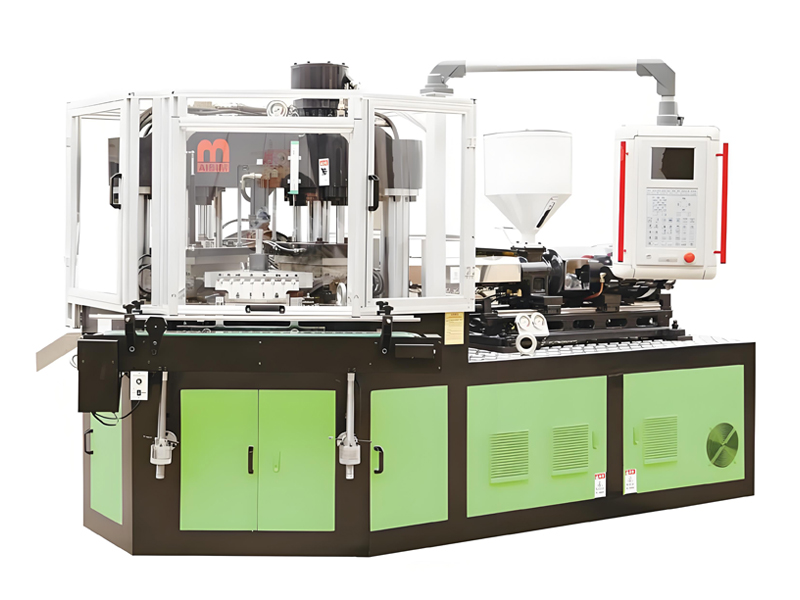
Buying an injection blow molding machine is one of the largest capital decisions a packaging manufacturer will make. The choice is not simply about purchasing a machine; it is about matching production capability to the bottles you make today and the bottles you will need to make tomorrow. Get it wrong, and you face slow cycles, poor clarity, wasted material, and a machine that struggles to meet order volume. Get it right, and you gain a reliable partner that pays for itself through consistent quality and lower energy use. This guide gives injection molding and blow molding buyers a practical decision framework based on bottle size, material, clarity requirements, output, energy cost, and after-sales support. We then walk through the Aibim IBM family and show which injection blow molding machine model fits which application.
Why the Right Injection Blow Molding Machine Matters
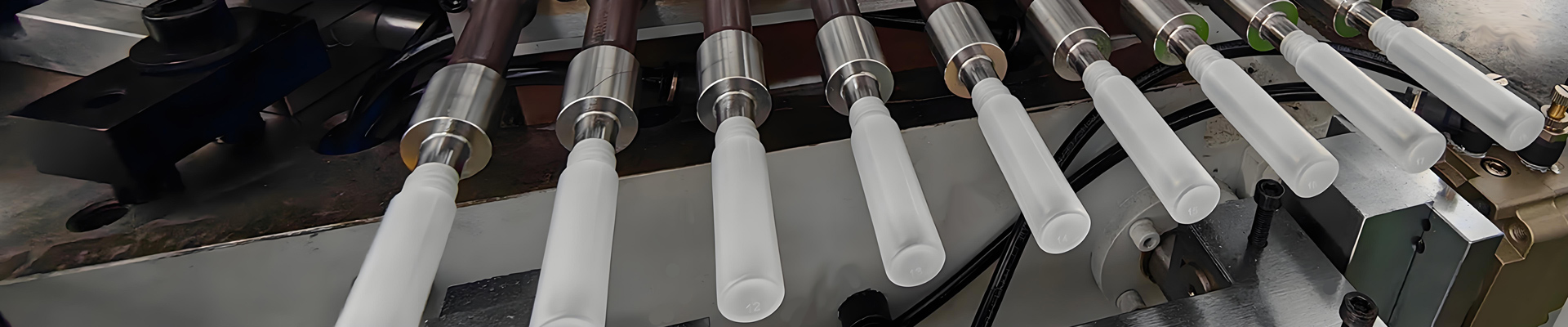
Injection blow molding produces bottles in two integrated stages within a single machine. First, a parison is injection-molded around a core rod, and then the conditioned parison is blow-molded to its final shape in the blow cavity. Because the neck finish is injection-molded rather than cut or trimmed, the result is a bottle with a precise, flash-free neck and a clean, reproducible finish. This makes the process ideal for small, high-precision containers such as pharmaceutical vials, eye-drop bottles, cosmetic droppers, and similar products where dimensional accuracy and clarity are non-negotiable.
The subtlety is that no single injection blow molding machine fits every application. A machine sized for 1-liter beverage bottles will be inefficient for 10-milliliter eye-drop vials, and a small budget model will not keep pace with a high-volume pharmaceutical line. Every design choice, from the injection unit to the clamping force to the number of cavities, shifts the machine away from some applications and toward others. Understanding these trade-offs before you sign the purchase order is what separates a smart capital investment from an expensive mistake.
How Injection Blow Molding Compares to Alternative Processes
Before committing to a process, it helps to see where injection blow molding fits among its alternatives. Extrusion blow molding is fast and economical for simple, lower-tolerance containers, but it leaves a pinch-off weld line and a less refined neck finish that can affect clarity and seal integrity. Stretch blow molding excels at carbonated and large-volume beverage bottles but typically runs as a separate injection-molding and stretch-blow step, adding machinery and handling. Injection stretch blow molding is its own discipline for the largest, high-clarity PET applications.
Injection blow molding sits squarely in the space between these methods. It delivers the de-flash precision and superior neck finish that small, high-value containers demand, and it does so in a single integrated machine, which reduces handling, saves floor space, and improves consistency. When your products are small, clean, and quality-driven, from pharmaceutical vials to premium cosmetic droppers, injection blow molding is often the right process. Understanding where it excels makes it easier to justify the investment and to explain the machine choice to your own stakeholders.
Start With Bottle Size and Volume
Bottle volume is the single most important starting point in your selection process. It determines the parison size, the required injection shot capacity, the clamping force, and ultimately which machine class you should evaluate. A common mistake is to buy a machine based on the current best-selling product and then discover it cannot accommodate the slightly larger bottle your customer requests next quarter. Leave headroom in every sizing decision because tooling and machine capacity are expensive to change after the fact.
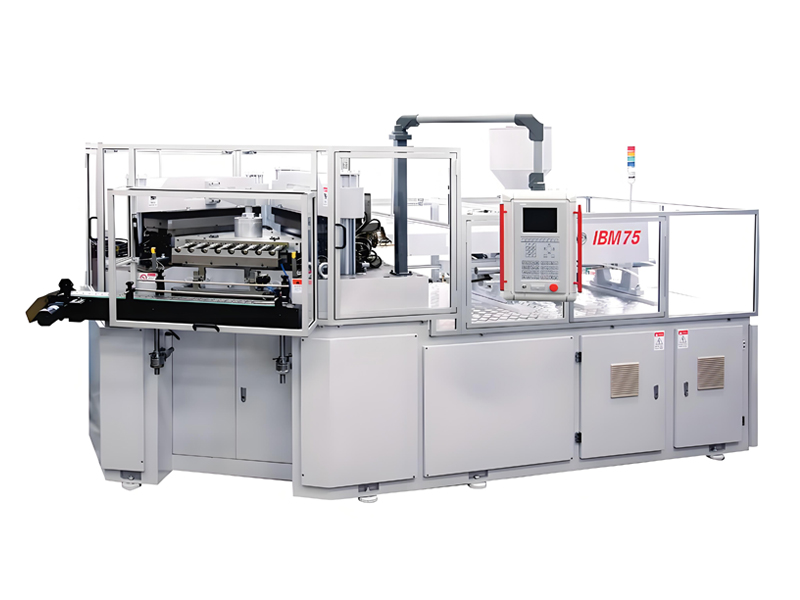
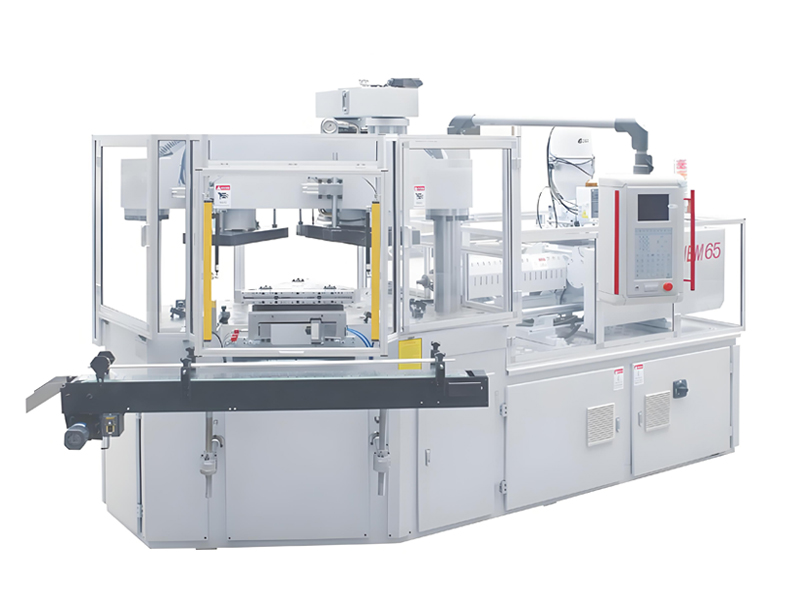
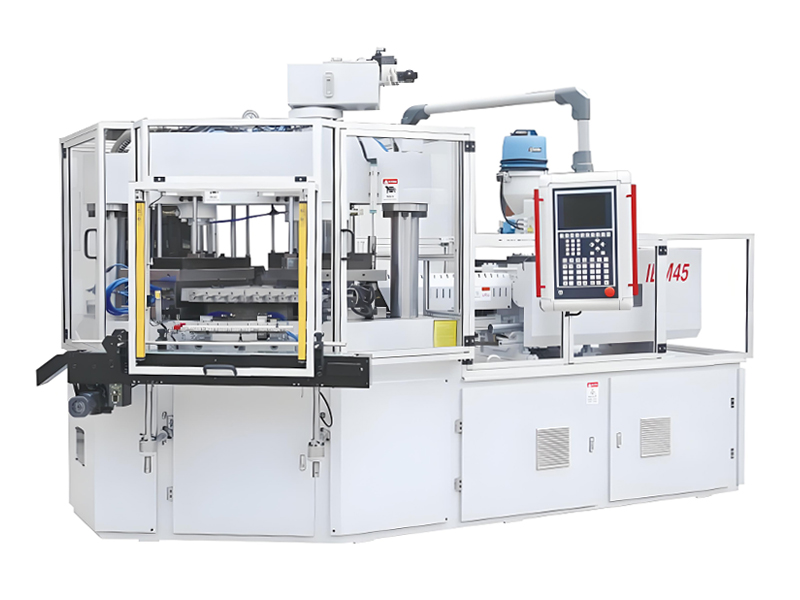
At Aibim we group the IBM lineup around practical bottle-size ranges so buyers can shortlist quickly. As a rough guide, the IBM75 handles bottles up to roughly 1000 milliliters; the IBM65 comfortably covers 10 to 500 milliliters; the IBM55 Hybrid Electric serves mid-range precision work with exceptional energy efficiency; and the smaller IBM35 and IBM45 models cover the compact, budget-conscious end of the range. Products across the Aibim range span roughly 10 milliliters to 5000 milliliters, so there is a clear path to grow as your catalogue does.
A Compact Size-to-Model Breakdown
- IBM75: up to roughly 1000 mL bottles, for cosmetic essence bottles, pharmaceutical syrup bottles, and beverage sampling bottles, with a larger injection unit and clamping force that support bigger parisons and more cavities for higher output.
- IBM65: roughly 10 to 500 mL, ideal for eye-drop bottles, oral-liquid bottles, and cosmetic droppers, and the most common choice for pharmaceutical clarity work with a compact footprint.
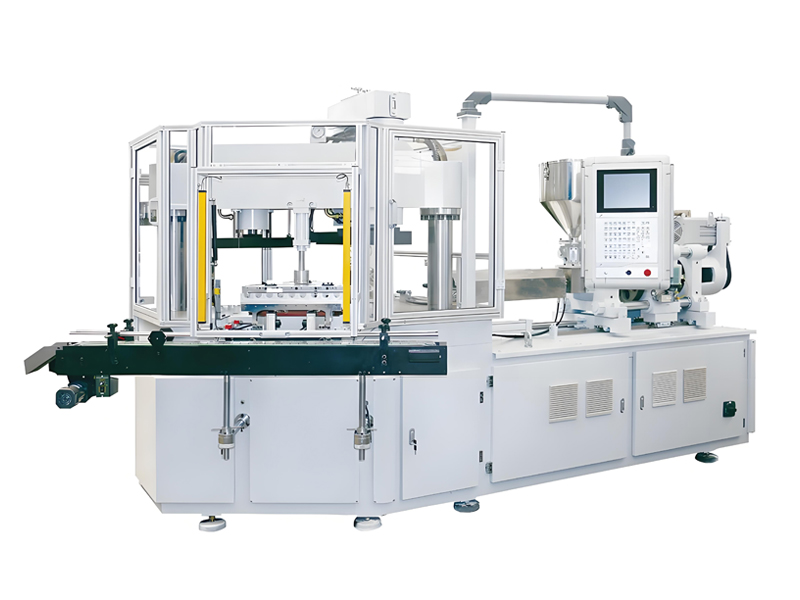
- IBM55 Hybrid Electric: precise parison control plus up to 40 percent lower energy versus hydraulic machines, ideal where energy savings and tight tolerances both matter.
- IBM35 and IBM45: smaller models for smaller bottles and lower output, offering a budget-friendly entry point into injection blow molding.
Match Material to Machine Capability
The resin you run is the next decision filter. Different polymers behave differently under heat, shear, and pressure, and your injection blow molding machine must be specified to handle the materials your product requires. Aibim machines process PP, HDPE, PET, PETG, barrier polymers, PC, and Nylon across the range. Each material demands particular temperature control, screw design, and parison conditioning, so confirm that the model you choose supports the full set of resins you expect to run today and may add later.
PP and HDPE are the workhorses of the industry, covering most dairy, cosmetic, and household containers. PET and PETG give crystal-clear, food-safe bottles where shelf appeal matters. Barrier polymers protect sensitive pharmaceutical and nutritional products from oxygen and moisture ingress. PC brings heat resistance and strength for more demanding clinical and industrial applications, while Nylon adds toughness and chemical resistance. When you map your current resin list to the machine specification, you protect yourself from discovering an incompatibility only after the machine is on the floor.
Common Applications and Industry Uses
The practical strength of injection blow molding shows up across a broad set of industries, and your own application should feel recognizable in this list. In pharmaceuticals, the process is standard for eye-drop vials, oral-liquid bottles, and sterile syrup containers, where the flash-free neck and repeatable closure make it the default choice for regulated clean production. In cosmetics and personal care, injection blow molding delivers the premium clarity and clean seams that brands want for droppers, essence bottles, and sampler packaging that sits directly on the retail shelf.
Food and beverage producers use the process for sampling bottles and single-serve containers where finish matters, while nutritional and specialty segments rely on barrier materials to protect sensitive contents. Household and chemical products, from small cleaning concentrates to detergent dosing bottles, benefit from the tough, leak-resistant containers the process produces. Because the Aibim lineup processes PP, HDPE, PET, PETG, barrier polymers, PC, and Nylon and spans roughly 10 to 5000 milliliters, it can be configured for nearly any of these applications without changing supplier.
Clarity Requirements Decide the Process Class
If your bottles must be crystal clear, the injection blow molding process already gives you a strong head start because the glass-clear finish comes naturally from the injection-molded neck and the controlled parison conditioning. However, clarity is not automatic; it depends on precise temperature control, proper parison distribution, and a machine and mold package engineered for transparency. For pharmaceutical clarity work, buyers typically select the IBM65, which is the most common choice for this application class because it pairs a compact footprint with the cycle control needed for glass-like results.
Migration from extrusion blow molding to injection blow molding is often driven by clarity. Extrusion blow molding leaves a pinch-off weld line and a less controlled neck finish, whereas injection blow molding produces a smooth, flash-free neck that looks better on the shelf and seals more reliably. If improved clarity and finish are the reason you are upgrading, make that goal explicit in your requirements and evaluate machines on their ability to hold tight temperature windows across the parison.
Estimate Output and Cavitation Needs
Output is the number of bottles you need per shift, and it is governed largely by cavitation, or the number of cavities in the mold. More cavities multiply production but demand a machine with sufficient injection capacity, clamping force, and overall rigidity to fill them consistently. A machine rated for six cavities for a 100-milliliter bottle may support only four for a much larger container. Your forecasted annual volume should drive both the machine size and the mold configuration you purchase.
Be realistic about peak demand rather than just average volume. If you have seasonal peaks or a growing export order book, choose a machine that can run at the highest expected cavitation without stressing the injection unit or the drive system. It is often more economical to buy a machine with headroom now than to add a second machine or a second shift later. The IBM75, with its larger injection unit and clamping force, supports bigger parisons and more cavities, which translates directly into higher output for larger bottles.
Set Your Budget and Understand the Real Price
When buyers search for injection blow molding machine price, they usually want a simple number, but the honest answer is that price depends on configuration. Machine base cost scales with size, injection capacity, clamping force, and whether the model is hybrid-electric or standard hydraulic. As a qualitative guide, the smaller IBM35 and IBM45 models are the most affordable entry point, the IBM55 Hybrid Electric and IBM65 sit in the mid-range, and the larger IBM75 commands a higher asking price because it moves more volume per cycle.
The critical insight for your budget is that the machine is only part of the total cost. Total cost of ownership includes the molds, the auxiliary equipment such as dryers and chillers, installation, commissioning, tooling that may need replacement over time, and the energy consumed over the life of the machine. Buyers who compare only machine base prices frequently understate their true project cost. Ask suppliers for a complete quotation that covers the mold package and auxiliaries so you can compare like for like.
A Cost-Focused Checklist
- Machine base price for the specific model and configuration you need.
- Mold package, because molds often rival the machine in cost and must be counted up front.
- Auxiliary equipment including dryers, chillers, and material handling systems.
- Installation, on-site commissioning, training, and any freight or duty.
- Lifecycle operating cost, especially energy consumption and maintenance intervals.
Account for Energy Cost From Day One
Energy is one of the largest recurring costs in bottle production, and it compounds over the working life of the machine. A hydraulically driven machine draws power continuously even when the pump is not doing useful work. A hybrid-electric injection blow molding machine replaces that constant draw with servo-driven systems that consume energy only when actuation is actually required. This difference is substantial over a multiple-shift production schedule running five or six days a week.
The Aibim IBM55 Hybrid Electric is built around this principle and delivers up to 40 percent lower energy consumption versus a comparable hydraulic machine while offering more precise parison control. For a manufacturer running high volumes, that 40 percent can translate into thousands of dollars saved every year, which directly improves the return on investment calculation. If energy prices in your region are high or rising, weight energy efficiency heavily in your decision rather than buying purely on initial price.
Look at the Supplier, Not Just the Machine
A machine is only as good as the company standing behind it. In a category as specialized as injection blow molding, the supplier's experience, manufacturing capacity, quality certification, and after-sales support determine whether you get years of trouble-free production or a sequence of downtime headaches. Buyers should evaluate the warranty, the availability of spare parts, the supplier's ability to train operators, and whether there is a local or regional service network that can respond quickly when something goes wrong.
At Aibim we encourage buyers to look past the brochure and examine the factory behind the brand. Aibim is part of the Wanplas group, a producer of plastic machinery with its own CNC machining center and an annual manufacturing capacity of more than 100 production lines. That infrastructure means machines are built in-house with tight control over quality rather than assembled from loosely sourced components. Buying from a manufacturer with in-house machining gives you consistency, traceability, and a dependable supply of spare parts over the machine's life.
How to Choose an Injection Blow Molding Machine: A Step-by-Step Framework
With the major considerations covered, the selection process can be reduced to a repeatable sequence. Following this order will keep you grounded and help you shortlist suppliers objectively instead of being led by whichever salesperson talks first. The sequence begins with your product portfolio and ends with a complete costed comparison of two or three concrete machine configurations.
The Seven-Step Decision Framework
- List every bottle you produce now and plan to produce in the next three to five years, including volume and neck finish.
- Rank your products by volume to identify your dominant container size, which anchors the machine class you need.
- Confirm the materials you must process, including any future resins, and verify each on the candidate machine.
- Identify clarity and dimensional tolerances, especially for pharmaceutical or premium cosmetic bottles.
- Set your output target including peak season and decide the cavitation required to hit it comfortably.
- Define your budget as total project cost rather than machine price alone, including molds and auxiliaries.
- Shortlist two or three supplier-machine candidates and request complete costed quotations plus energy figures before deciding.
Quality, Certification, and Process Consistency
For many buyers, especially those exporting pharmaceutical or food packaging, certification and documentation are as important as throughput. A machine that meets recognized safety standards simplifies the qualification process with your own customers and auditors. Aibim machines are CE certified, which signals compliance with the safety and conformity framework that buyers exporting into regulated markets expect, and it shortens the path to integrating the machine into a certified production line.
Consistency goes beyond certification into daily operation. Recipe management through an SD card means that once a validated process is proven for a given bottle, the exact parameters, including parison thickness, temperature zones, and blow pressure, can be stored and recalled instantly. This removes the guesswork when a repeat order returns to the floor and keeps quality stable across operators and shifts. In a high-value application where even a small variation means a rejected bottle, that level of repeatability is a measurable production advantage.
Which Aibim Injection Blow Molding Machine Should You Choose
Bringing the decision framework together, the right Aibim IBM model is a function of your dominant bottle size and your market's priorities. If you produce larger cosmetic essence bottles, pharmaceutical syrup bottles in significant volumes, or beverage sampling containers, the IBM75 is the natural fit, with its larger injection unit, higher clamping force, bigger parisons, and more cavities delivering the output that larger-bottle production demands.
If your business revolves around small precision containers, the IBM65 is the workhorse. Ranging roughly 10 to 500 milliliters, it handles eye-drop bottles, oral-liquid bottles, and cosmetic droppers, and it is the most common choice for pharmaceutical clarity work. Its compact footprint makes it a practical fit for production floors where space is at a premium, while still delivering the tight tolerance control that clarity and pharmaceutical applications require.
When energy costs and tight tolerances are both top priorities, the IBM55 Hybrid Electric stands apart. Its precise parison control and up to 40 percent lower energy consumption versus hydraulic machines make it a compelling choice for high-cycle producers who want to cut operating cost without compromising on dimensional accuracy. Finally, the IBM35 and IBM45 give smaller producers a budget-friendly route into injection blow molding, covering smaller bottles and lower output while keeping the entry investment modest.
Build for Growth With the Aibim IBM Family
One of the strongest arguments for choosing a family of machines rather than a one-off purchase is the ability to grow. Because Aibim offers a full IBM lineup from the IBM35 through the IBM75, you can start with a machine matched to today's volume and add capacity higher up the range as orders grow, all without re-learning a different brand or re-training operators on incompatible controls. The family also shares recipe management, which simplifies consistency across your production floor.
Aibim machines are CE certified, which confirms the safety and conformity standards exporters need when shipping finished goods into regulated markets. Recipe control is managed through an SD card, so operators can store proven process parameters for each bottle, save them easily, and reload them with a single action when a repeat order arrives. This removes a major source of variability and makes onboarding new products faster and more repeatable, a genuine advantage when you are running many bottle styles in one facility.
The Support That Keeps Your Line Running
The machine experience does not end at handover. Real production value comes from commissioning that is done properly and training that leaves your operators confident and self-sufficient. Aibim provides on-site commissioning and training so that when the machine is installed, the people running it understand the process, the recipe system, and the maintenance routine. This shortens the time to first good bottle and reduces the risk of damage caused by operator error in the first weeks of production.
Ongoing support matters even more in injection blow molding than in many other molding processes because the interdependence of parison conditioning, molds, and blow pressure is complex. A supplier with a stable spare-parts supply, clear documentation, and engineers who understand the process end to end will keep your downtime low and your consistency high. When you evaluate suppliers, ask specifically about response times, spare-part availability, and warranty coverage, because these factors have a direct effect on your profitability.
Make the Decision With Total Cost in Mind
Every supplier in this market will tell you their machine is the best value. The only way to protect yourself is to evaluate the full picture: machine price, mold package, auxiliaries, installation, energy, and support. When you search for injection blow molding machine price, remember that the cheapest machine on paper is rarely the cheapest over five years if it costs more energy, more downtime, and more rejected bottles. Price should be the final tie-breaker, not the first deciding factor.
The right approach is to define your dominant bottle size, clamp down on the materials and clarity requirements, set a realistic output target, and shortlist the Aibim IBM model that matches. From the compact IBM35 and IBM45 to the precision IBM55 Hybrid Electric, the versatile IBM65, and the high-output IBM75, Aibim has a machine for every bottle size and market. Compare complete costed quotations, demand energy figures, and verify the supplier behind the machine before you commit.
Speak With the Aibim Team
Because every application is different, the most useful next step is a conversation about your specific bottles, volumes, and materials. Aibim engineers can help you map your requirement to the right IBM model, scope an appropriate mold package and cavitation, and give you a complete costed picture of the project. Whether you are buying your first injection blow molding machine or expanding an existing line, working with a supplier that builds the machine in-house and stands behind it with real support is the surest route to a sound investment. Partner with Aibim and bring your bottle production to a higher level of quality, efficiency, and consistency.